



Abstract
Introduction:
While the current evidence base indicates that reading for pleasure facilitates many wellbeing related outcomes such as relaxation and escapism, little research has focused on the interplay between reading and wellbeing in detail. This review explores the evidence on reading for pleasure initiatives with a view of developing a theoretical understanding of the context and potential underlying causal mechanisms which support or inhibit wellbeing in adults.
Method:
We conducted a realist review whereby data collation, extraction, synthesis and analysis were conducted iteratively. The literature searches were conducted in January to February 2022 and May 2023.
Results:
In total, 43 papers were included. The literature highlighted seven interlinked mechanisms underlying reading for pleasure interventions at the level of the individual and as groups. These included reconnecting with reading, space away from daily stressors, perspective taking to enhance empathic abilities, creating and reawakening memories, intellectual stimulation, collective meaning-making and a conducive environment.
Conclusion:
Our findings suggest that reading for pleasure enhances processes such as feelings of positivity, self-understanding, empathic relations, which impact upon a reader’s salutogenic assets such as self-efficacy, emotional intelligence, and connectedness.
Plain Language Summary
There is a growing body of evidence suggesting that reading for pleasure improves mental health. However, they do not explain how reading for pleasure leads to improving wellbeing. We looked at the published research on reading activities, in an attempt to understand how reading for pleasure could impact on wellbeing.
We conducted a literature search and found 43 papers, which appeared relevant to our study. We brought the findings together through a realist approach, which helped to develop an understanding on who is being affected by reading interventions and how.
We found that participants who thought of reading in a positive way benefitted most from reading activities. For these participants, reading activities offered many opportunities to:
• Get away from daily stressors
• See the world through the eyes of the characters they meet in books
• Make new memories or reconnect with memories participants had of reading for pleasure
• Think about the story lines, their own lives and the world around them in different ways
• Make sense of storylines in a different way by talking about them in reading groups
These opportunities increased feelings of positivity, self-understanding and empathy in participants, which lead to a more positive sense of wellbeing.
Our findings are important because they show who reading interventions may appeal to and work for, if reading activities are used as a way to improve wellbeing. Our findings also highlight on how reading activities could improve wellbeing.
Introduction
Despite growing evidence demonstrating that reading for pleasure can positively affect wellbeing, little is known about how these impacts are achieved. Current evidence indicates that reading facilitates enjoyment, relaxation, escapism, increasing understanding of self and others, and empathy. 1 While this hints at the interplay between reading for pleasure and wellbeing, little research has explored the relationship in detail.
The theory of salutogenesis, which views health as a continuum from ease to disease, has been gaining traction in the field of health promotion in recent years. The theory proposes that a strong sense of coherence – a disposition that helps one to perceive life as comprehensible, manageable and meaningful – enables people to move towards ‘the ease’ end of the health spectrum as it increases their capacity to face diverse stresses while maintaining a status of good health. 2 Proponents of salutogenesis argue that people’s access and ability to mobilise generalised resistance resources, which in the context of reading could take the form of increased self-awaress, and their internal and external capacities to manage their encounters with various stressors result in a greater sense of coherence, and an increased sense of wellbeing.2–4
A realist review was undertaken to explore the evidence on reading for pleasure initiatives to develop a theoretical understanding of the context and potential underlying causal mechanisms which support or inhibit wellbeing in adults. The review investigated published literature on interventions focusing on reading (such as shared reading) and research examining the impact of reading for pleasure on wellbeing (such as research on empathic abilities) to identify what happens within reading for pleasure-based initiatives (underlying mechanisms), the contextual conditions surrounding the operationalisation of these mechanisms, and the outcomes produced as a result.
The primary research question guiding the review was: How, why, for whom and in what context can reading initiatives support, or inhibit, the promotion of wellbeing of adults? In addressing this question, we explored:
What are the wellbeing-related outcomes produced through reading for pleasure?
How are these outcomes produced?
In what contexts do they occur?
The review was registered on PROSPERO, the international prospective register of systematic reviews: CRD42021278489.
Methods
This study used a realist approach to explain how reading for pleasure-based initiatives work, by having a positive influence on adult wellbeing, for who, and in what context.
Realist Methodology
Realist review is a systematic, iterative, theory driven approach to organising data. It enables the combination of evidence from range of sources to explore relationships between different components of an intervention (in this case, reading for pleasure), to gain a deeper understanding of what is happening within the intervention and how it is affecting change.5–7 From a realist perspective, interventions operate through introducing new ideas and/or resources into existing contexts. In doing so, they create mechanisms for change by modifying capacities, resources, constraints and choices for participants and practitioners. 8 The realist framing uses programme theories (propositions about how an intervention is thought to work, under what conditions) 9 to convey ideas and assumptions underlying how, why and in what circumstances complex social interventions work. 6 This allows for plausible causal associations behind an intervention to be articulated, postulating how resources introduced through an intervention (Mechanism: resource) to a given context affect changes in reasoning in participants (Mechanism: reasoning) leading to an outcome. 5 The result of this review is therefore not a summary of existing literature, but instead an ‘explanatory model’ in the form of programme theory identifying key characteristics of reading interventions which make it ‘work’.
Review Process
Our review was based on the stages proposed by Rycroft-Malone et al. 10 The scope of the review was defined in consultation with a research advisory group, which comprised of academics from fields of literacy and linguistics, psychology, social care, public health, in addition to practitioners from public health and voluntary, community and social enterprise (VCSE) sectors and public members. Discussions with this group and consultations (n = 6) with leads from a local reading for wellbeing initiative informed the construction of 12 tentative explanatory statement of how, why, and in which contexts reading initiatives might impact on wellbeing of adults (see Table 1). These Initial Programme Theories (IPTs) were used to inform the search strategy for the collection of evidence which followed a purposive, iterative approach in line with realist methodology. 11
Initial explanatory statements
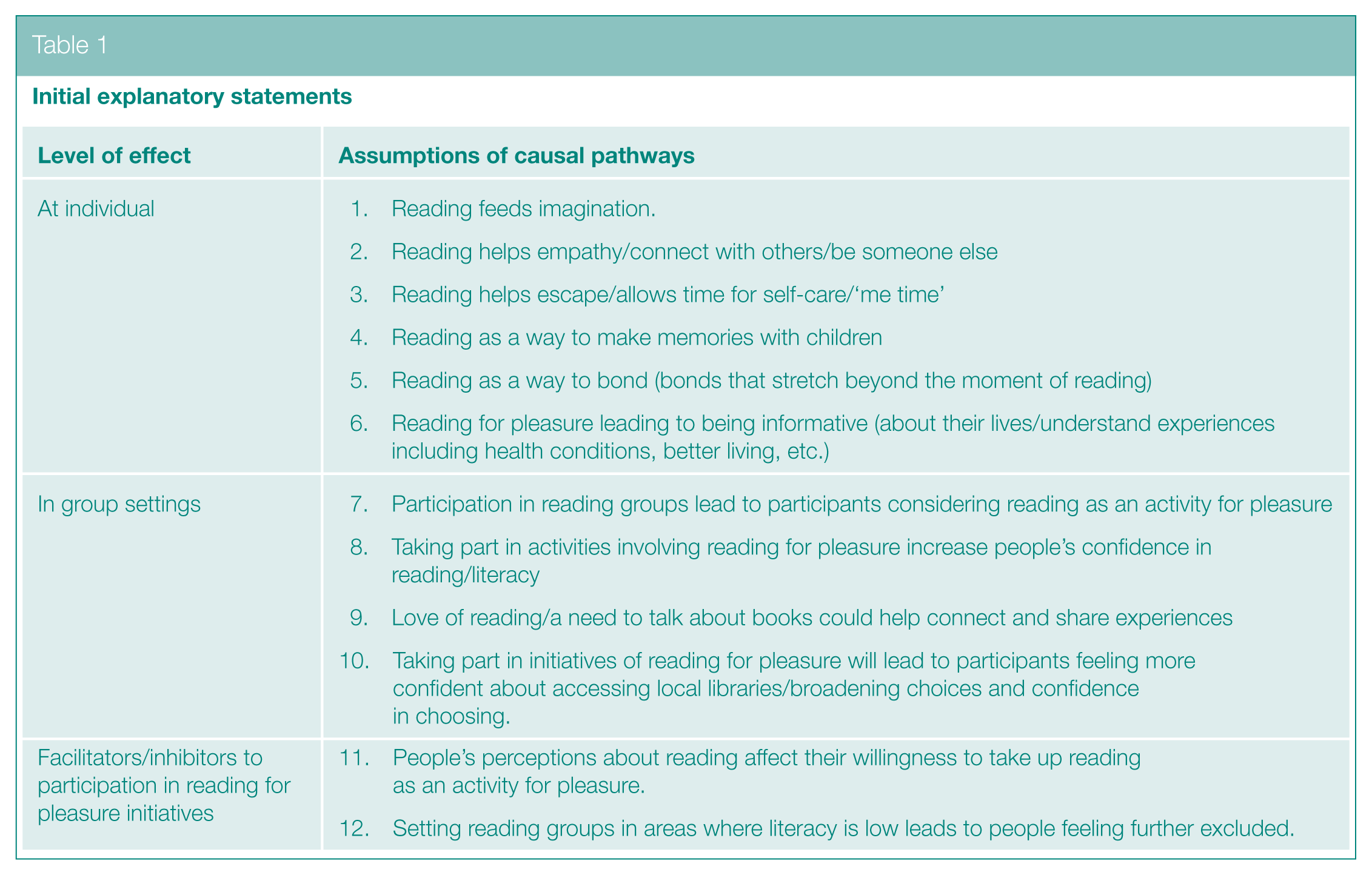
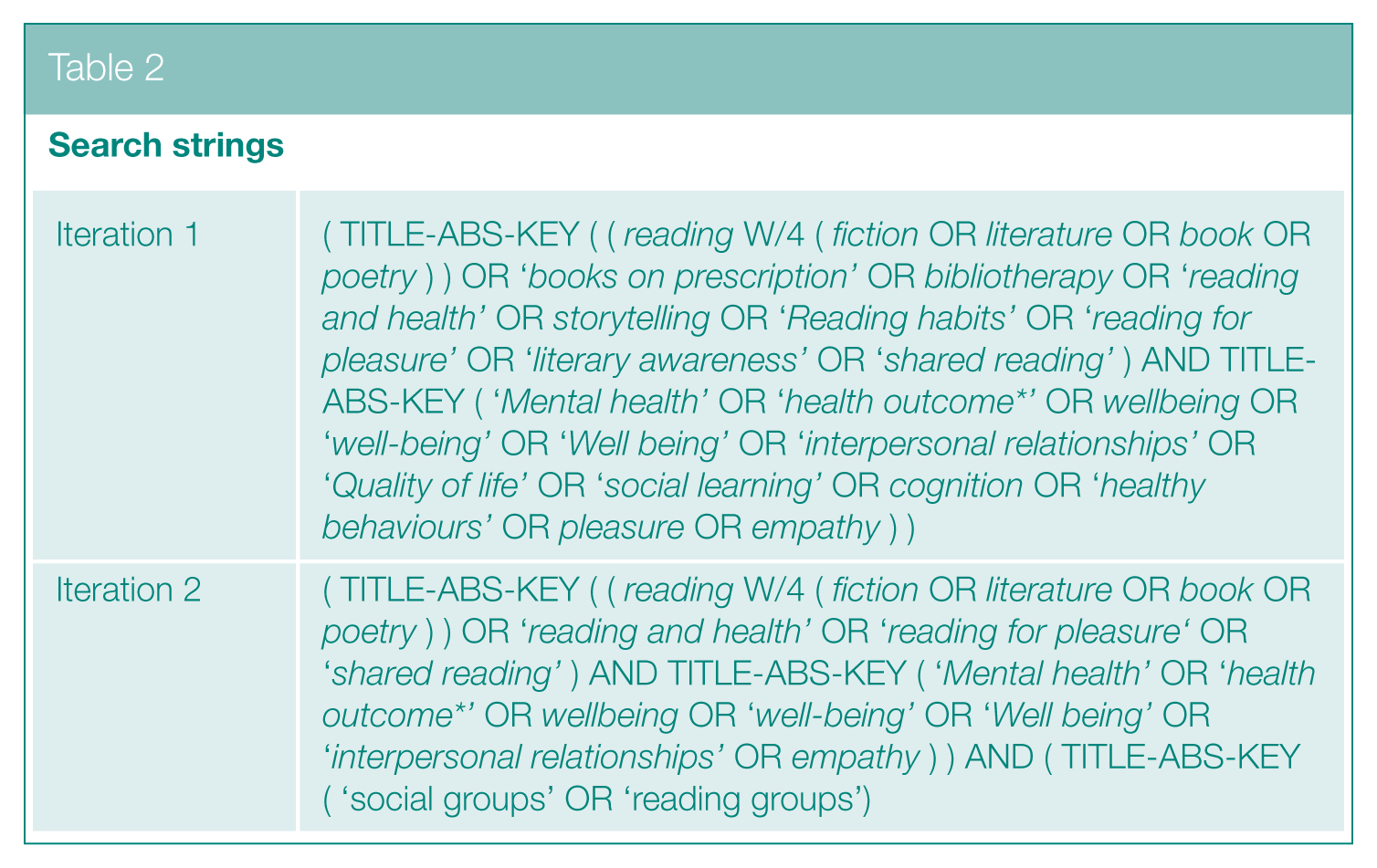
These initial explanatory statements informed the search strategy which was administered in four electronic databases: MEDLINE (OVID), PsycINFO (OVID), Web of Science (EBSCO), and SCOPUS from January to February 2022 (See Table 2 for search strings used). The databases were selected as they would enable access to a wide range of literature across disciplines. In total, 8693 records were identified through the initial search. These citations were screened for eligibility based on titles and abstracts by two independent reviewers. From these records, 204 titles were identified for full-text review. In all, 147 papers were excluded during full text review, with 57 papers selected for data extraction. Further 19 papers were excluded in the data extraction stage as they were proven to be less relevant in relation to the research question, leaving 38 papers (Figure 1 for a diagram presenting the search process).
Search strings
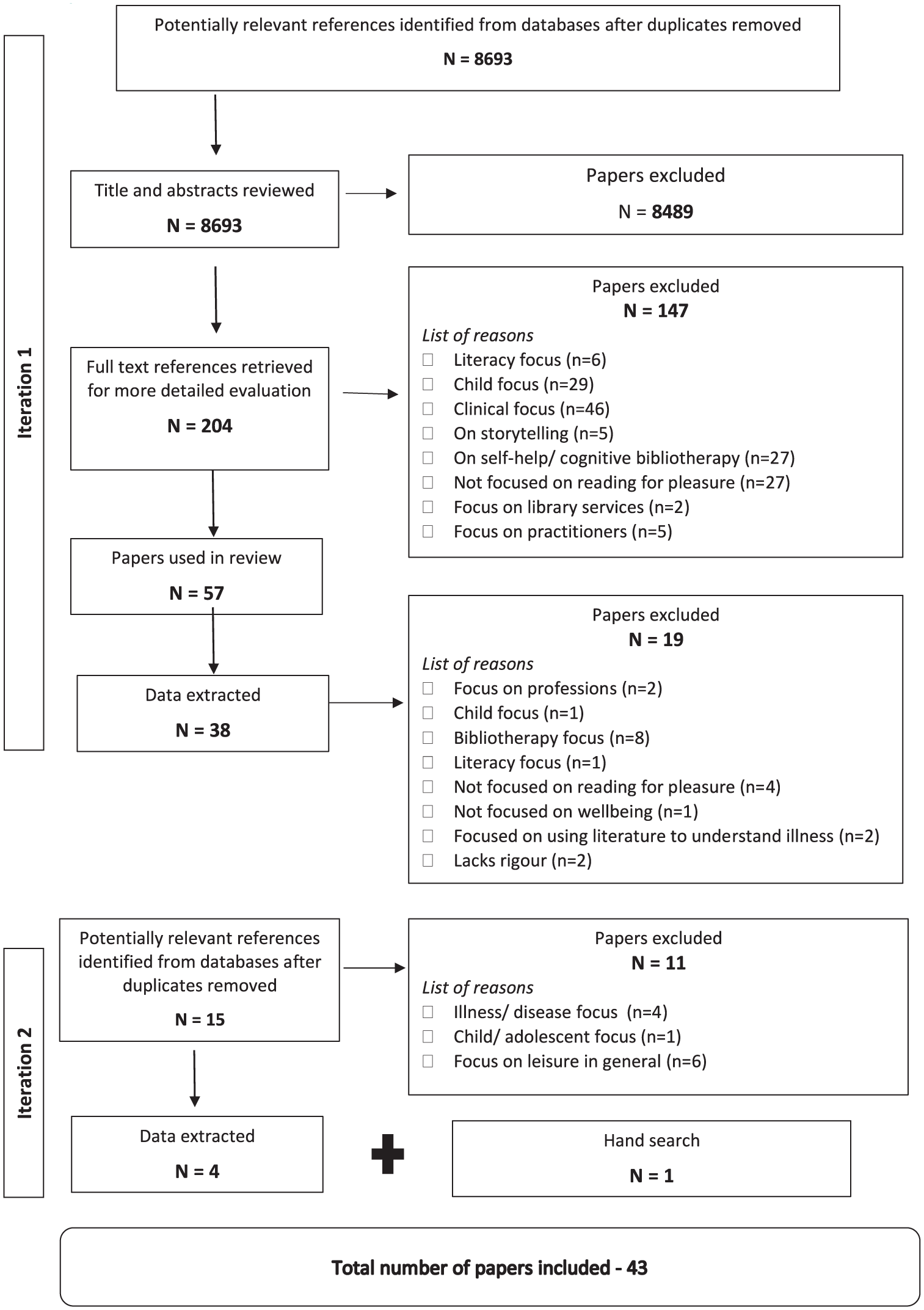
Study selection flow diagram
Following data extraction and initial analysis, and consistent with the iterative nature of realist reviews, a second iteration of the search strategy was conducted to further explore the impact of group settings for reading enjoyment. Search terms were devised based on elements of our analysis which required additional information. This search was applied to the same 4 databases in May 2023. The search identified 15 papers, of which 11 were excluded following a full text review, leaving 4 papers from which data were extracted. A summary of characteristics of included studies are presented in Supplement 1.
A template was devised to extract data, which allowed for reflection and comment on relevance, rigour, and richness of data extracted. 12 A paper’s ability to inform or develop the explanatory statements above determined relevance. Literature was categorised on a high to low scale, according to its ability to inform theory refinement. Trustworthiness and coherence evaluated the rigour of included papers. All papers considered to be trustworthy and relevant were retained and data extracted, and both ‘rich’ and ‘thin’ sources were used to triangulate Programme Theories. 25% (n = 12) papers were reviewed by two researchers to attest consistency.
The approach taken to synthesise extracted data was based on the principles of realist evaluation. 11 This included the organisation of extracted data into evidence tables of context, mechanism, outcome; theming of data; linking of the chains of inference within and between themes; development of the narrative; and programme theory formation.
Results
Characteristics of all included papers are presented in a supplementary file. The literature highlighted seven interlinked mechanisms, underlying causal pathways through which reading for pleasure influenced readers’ sense of wellbeing. These are presented in more detail below.
1. Reconnecting with reading.
Self-identification as a reader motivates participation in communal reading activities.13–19 This finding is particularly relevant for older adults in the UK for whom reading is one of the most common leisure activities. 19 Furthermore, reading is a leisure activity that is positively valued in British society. 18 Thus, for adults, particularly those facing difficult life circumstances such as chronic disease or long-term health conditions, reading activities present an opportunity to be re-associated with a positive aspect of their identity.17,19,20 Readers represented in studies embraced positivity associated with reading, which was contrasted with less positive experiences such as being defined by illness or limitations linked to illness. This positive association reduces psychological distress. 20
Programme Theory 1 is a new programme theory, which emerged from the data and postulates;
For people with difficult life circumstances (context), the opportunity to engage in reading for pleasure (resource) fosters a positive mindset (reasoning), leading to reduced feelings of distress (outcome).
2. Creating and reawakening memories.
For fiction readers, the experience of reading engaged memory at multiple levels. A reader creates a personal connection with the text and creates a positive memory.16,17,21–26 In addition, reading reawakens a reader’s associated memories of life events, and previous reading experiences and associated emotional experiences.17,21–24 Such associations enable the readers to create, renew and stimulate existing memories and emotion networks.22,27,28 When associations of memories are positive, it leads to the reader experiencing a sense of comfort.29,30 Furthermore, engaging memories and memory networks leads to improving neurological memory function and communication skills 31 and buttress the identity as readers. 19 However, a study conducted in the community with readers experiencing mild to moderate mental health concerns in the UK underscored that readers experience adverse effects when they find stories to be discomforting and/or when they are associated with uncomfortable life experiences. 32
Programme Theory 2 emerged from initial explanatory statement 4 and postulates:
For readers (context), memories associated with books (resource) reawaken positive as well as stimulating existing memory function and emotional network pathways (reasoning), leading to readers feeling comforted (outcome).
3. Enabling space away from daily stressors.
Escapism appeared as a predominant mechanism leading to an increased sense of wellbeing. Our findings highlight that fiction mobilises immersion and imagination,16,27,33–35 enabling the reader to become transported.20,21,36,37 Transportation allows the reader to escape the present moment. 17 When the present moment was associated with experiences of pain, hardship, everyday struggles, and anxieties about the present and future, escapism was experienced as a form of anaesthesia.18,20,21,23,31,34,36 Escapism also facilitates a sense of catharsis,17,29,32,38 where the readers engage with the story from a safe distance while being affected cognitively and emotionally.24,26,29,39,40 Escapism enables readers to find enjoyment15,18 and opportunity for reflection18,23,27,34,36,40,41 where they consider their views and understanding through comparing the story with real-world experiences.34,42
Studies proposed that this kind of reading experience affect the readers’ wellbeing32,42 as it leads to the reader feeling comforted, reassured, and hopeful; 37 a sense of increased confidence, feeling recharged, relaxed, and recuperated;21,29 and intellectually and creatively stimulated. 34
Programme Theory 3 merged initial explanatory statements 1 and 3, and postulates that
For fiction readers (context), stories enable transportation (resource) allowing space for escapism from stressful everyday experiences and anxieties (reasoning) leading to a better sense of wellbeing (outcome).
4. Perspective taking to enhance empathic abilities.
Readers make sense of a story through reflecting on it through their own experiences13,14,18,23,24,26,28,31,32,37,40,43–46 and through considering the events of the story from perspectives of the protagonists.18,26,41 Simulation of real-world experiences in stories33,35,36 and reading being an immersive process that engages imagination13,17,19,21,35,36,39 appear to buttress the connections a reader could form with a story. Some studies suggest that connection emerges from reading being an interaction between the reader and the text.16,37 This interaction encourages emotional reflexivity on reader’s part, 18 which enhances their ability to form empathic connections with the story, the characters and its author.21,25,26,36,39,47,48 This enhanced ability for perspective taking enables readers to relate to and connect with people with diverse views and backgrounds, leading to increased sense of social connection.35,36,41
Programme Theory 4 refined initial explanatory statement 2 and proposes:
For fiction readers (context), making sense of the story (resource) facilitates perspective taking (reasoning), leading to enhanced ability for empathy (outcome).
5. Intellectual stimulation.
Fiction readers appeared to engage with the texts at cognitive25,38,39,42 and affective levels,18,25,49,50 with reading nurturing a connection between the reader and their everyday experiences.21,22,24,34,36,38,48 Reading invites the reader to engage with a world beyond their immediate world,19,35 also while encouraging them to consider the events in the narrative from alternate perspectives.16,18,20,21,23,30,32,37,41,45 Studies demonstrate that such an engagement provides ‘intellectual inspiration’, 36 which enhances the reader’s ability to process dynamic models of meaning-making18,24,28 resulting in an expansion of the depth and breadth of their understanding of the text.16,21,30,32,37,38,41,45,46,51 The reader relates this learning to self-experience, which may lead to validation and self-recognition;15,16,23,24 developing an awareness of self-protection/preservation;20,28,37,38 developing the ability to self-modify due to discoveries made through perspective-taking;16,18,24,26,32,34,36–38,49 and feeling empowered to act,26,32,42,46 leading to developing a greater sense of self-efficacy. 46
Programme Theory 5 is a new programme theory that emerged from the data and proposes:
For readers of fiction seeking intellectual stimulation (context), the capacity of the text to facilitate cognitive and affective engagement (resource) enhances a reader’s self-understanding and their capacity to act (reasoning), leading to developing an increased sense of self-efficacy (outcome).
6. Collective meaning-making.
Reading in groups facilitates a space for group members to bring together their internal and external worlds. Interactions in reading groups enable readers to connect with each other14,18,26,30,31,41,45,46 and engage subjectivity alongside texts as they collectively interpret the text as a group.15,25,27,41,45 This enables them to bring together inner life of reading with the external world of collective meaning-making.18,22,26,27,41,51 Interactions make readers feel comfortable sharing views 27 and feel valued for their contributions.19,41 Furthermore, group interactions offered space for reflective mirroring of other’s thoughts and habits, which influences reader’s ability for self-reflexivity,15,27,30 their psychological flexibility and ability for perspective taking.18,24,30 Interchanges between internal and external worlds appeared to enable the group members to affirm their individual identity as readers as well as form a group identity of readers. 24
Furthermore, group interactions enable readers to maintain and increase the motivation to read through broadening choice 19 and improve communication skills, particularly when the group members were experiencing speech difficulties.15,17 Feelings of increased sense of social inclusion/less isolation/sense of belonging,15,19,22,24,30,31,41 a sense of increased confidence15,27,31 and an increased sense of self-worth as individuals and socially effective persons19,30 were highlighted as outcomes of reading in groups.
Programme Theory 6 emerged from merging initial explanatory statements 7 and 9 and proposes:
In a group setting (context), the ability to share and discuss interpretations of readings within a group (resource) allow the reader to engage in meaning making in an enriched way (reasoning) leading to an enhanced sense of confidence (outcome).
7. A conducive environment.
In reading group interventions, the facilitation of project activities appeared as a key mechanism in creating a conducive environment where readers felt at ease.
Literature highlighted a number of resources that were mobilised in the facilitation of a conductive environment, which included interpersonal skills and facilitator’s literary awareness. Facilitators mobilised interpersonal skills such as social awareness and communication to create a space in which participants, some of whom were vulnerable due to ill mental health, could feel safe. Some strategies were explicit such as creation of explicit boundaries such as separateness from lived world and non-judgement 30 and co-production of programmes of activities.20,30,31 Other strategies were implicit such as an awareness of interpersonal dynamics in the group 27 which enabled the facilitators to intervene when and where needed. Facilitators’ literary awareness 27 enabled them to connect, share vulnerabilities and guide participants, when it was needed. The environment facilitated through mobilising these resources created feelings of safety and trust;27,30,32,41,42,46 where readers felt comfortable to discuss sensitive topics such as emotional experiences17,24,46 and felt able to contribute to discussions in a manner they felt comfortable.30,31,46 The consequent outcomes highlighted in the literature include participants’ increased sense of confidence. 31
Programme Theory 7 is a new programme theory which emerged from the data and proposes:
For readers seeking social connection (context), a knowledgeable and attentive group facilitator (resource) who is able to create a safe and trusting space (reasoning) leading to increased confidence (outcome).
Discussion
Our analysis refined initial explanatory statements 2 and 4; merged initial explanatory statements 1 and 3 and 7 and 9; and discounted initial explanatory statements 5, 6, 8, 10, 11, and 12. Through a realist approach, we developed an explanatory model for how reading for pleasure interventions affect wellbeing. Our findings indicate that reading for pleasure impacts the reader wellbeing via engaging emotional (feeling), psychological (thinking) and cognitive (understanding) pathways (see Figure 2). Based on these findings, we postulate:
For people who have positive affiliations with reading for pleasure and are looking for opportunities to socialise (context), reading for pleasure interventions which are facilitated by attuned workers (resource) will give an opportunity to find a space to bring their external and internal world together (reasoning) leading to an increased sense of self-efficacy and connectedness (outcome).
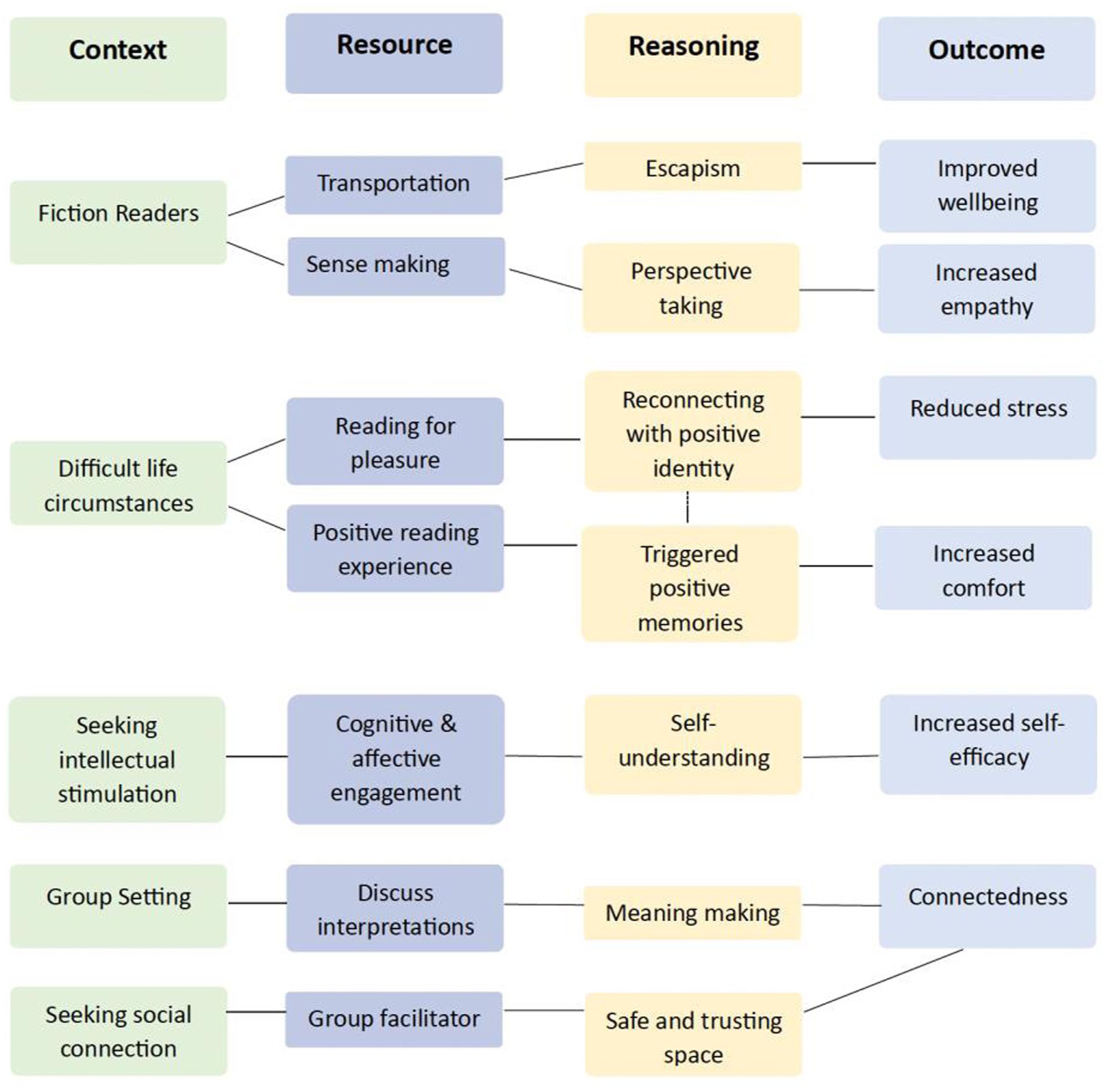
Overall explanatory model for reading for pleasure on wellbeing
What is already known on the topic
A growing evidence base indicate that reading for pleasure leads to a number of wellbeing related effects for adults such as relaxation, enjoyment, escapism and increasing self-awareness, empathy, connectedness, and increasing social capital. 1 Salutogenesis theory postulates that key assets that underpin a strong sense of wellbeing is access and ability to mobile generalised resistance resources and internal and external capacities, which enable people to cope with stressors and manage tensions affecting their wellbeing.2–4,52
What this study adds
Previous studies suggest reading for pleasure affect wellbeing. 1 Through a realist approach, this study probes into underpinning mechanisms of reading for pleasure and highlight that they lead to harnessing reader’s salutogenic assets such as self-efficacy, emotional intelligence, and connectedness. 52
At an individual level, reading for pleasure offers multiple pathways to wellbeing, emanating from readers interaction with the text. The relatability of the text makes reading an immersive experience, which facilitates opportunity for escapism, reflection, perspective taking, and engages memories, cognition, and affect. These lead to wellbeing-related outcomes such as relaxation, increased self-awareness, increased self-confidence, and improved sense of self-efficacy.
Reading in groups enable readers to link and re-interpret their inner life of reading in the context of experiences and perspectives of other readers. Such collective meaning-making processes enrich the reader’s understanding of the text and their experiences, as well as enabling them to form meaningful connections with other readers. Furthermore, the opportunity to participate in reading groups enables participants to form strong social identities as readers and develop a sense of connectedness. Findings of this study can inform initial logic models and assumptions for development of interventions aimed at increasing wellbeing for populations experiencing difficult life circumstances. Furthermore, this study highlighted that salutogenesis presents a useful lens as a broad theoretical framework to explore the relationship between reading and wellbeing. This learning can be applied to exploring the effects of other leisure-based activities on wellbeing.
Limitations of the study
The content of studies included in the review determined the explanatory model offered in the paper. The published studies focused broadly on positive effects of reading for pleasure on people who engaged with their research. Our review highlights that a positive affiliation with reading is a contextual dynamic that facilitated this outcome and does not offer scope for us to explore how reading interventions may have affected those who have less positive affiliations with reading or face barriers to reading for pleasure. The included studies offered little information about socio-economic or educational backgrounds of their participants, or the content of the reading. This limited our ability to reflect on associations between these aspects, reading for pleasure, and wellbeing. Our review highlights that exploration of less positive effects of reading for pleasure, the impact less positive afffiliations with reading have on readers’ experience, impact of content on reading for pleasure, and associations between readers’ socio-economic backgrounds and their reading experience are under studied themes that could be considered for future research.
Supplemental Material
sj-docx-1-rsh-10.1177_17579139251371961 – Supplemental material for Reading for wellbeing: a realist review of evidence
Supplemental material, sj-docx-1-rsh-10.1177_17579139251371961 for Reading for wellbeing: a realist review of evidence by M Sirisena, S Redgate, E Kaner, A Wearn, S Hackett, A Wojciechowska and M Lhussier in Perspectives in Public Health
Footnotes
Acknowledgements
The review was part of an evaluation of a reading project initiated and supported by Ann Cleeves and partner organisations including Local Authorities of County Durham, Gateshead, North Tyneside, Northumberland and South Tees (Covering Middlesbrough and Redcar and Cleveland), Office for Health Improvement & Disparities (formerly Public Health England), Voluntary Organisations’ Network North East (VONNE), NENC ICS Population Health & Prevention Board. The evaluation was supported by National Institute for Health and Care Research (NIHR) Applied Research Collaboration (ARC) North East and North Cumbria (NENC). EK is supported by a NIHR Senior Investigator Award.
Author’s Contribution
Data were screened for relevance by M.S., S.R. and O.W. and quality appraisal was conducted by M.S. and S.R. M.S. extracted data and composed the initial analysis. The initial analysis was revised and refined by M.S., S.R. and M.L. E.K., A.W. and S.H. provided feedback and comments on the refined draft. SR and ML are the project leads for this study.
Conflict of Interest
The authors declared the following potential conflicts of interest with respect to the research, authorship, and/or publication of this article: EK is the Director of the National Institute for Health and Care Research (NIHR) Applied Research Collaboration (ARC) North East and North Cumbria (NENC).
Funding
The authors disclosed receipt of the following financial support for the research, authorship, and/or publication of this article: The Reading for Wellbeing evaluation research was funded by the National Institute for Health and Care Research (NIHR) Applied Research Collaboration (ARC) North East and North Cumbria (NENC).
Ethical Approval
Approval for the research was obtained from Newcastle University Research Ethics Committee (Ref: 2215/14441/2021).

Supplemental Material
Supplemental material for this article is available online.
References
Supplementary Material
Please find the following supplemental material available below.
For Open Access articles published under a Creative Commons License, all supplemental material carries the same license as the article it is associated with.
For non-Open Access articles published, all supplemental material carries a non-exclusive license, and permission requests for re-use of supplemental material or any part of supplemental material shall be sent directly to the copyright owner as specified in the copyright notice associated with the article.
