




Abstract
Aims:
Polling indicates the public has fairly good knowledge of times when hygiene is needed in their homes and everyday life in public spaces, but limited understanding of hygiene risk; this results in omitting some key behaviours and incorrectly applying untargeted behaviours. This poll explores how the public responded to government advice, and information from other sources, to address a specific disease threat – that is, COVID-19 infection.
Methods:
An online poll was developed, and data were collected from 1730 respondents in England aged 18 and above.
Results:
Data suggest that the UK public has a high level of concern about the importance of hygiene to prevent spread of COVID-19. They had good recall of advice given during the pandemic and were able to identify routes of infection transmission. When asked to identify key times for handwashing, most people (86%–90%) identified ‘after coughing, sneezing etc., before eating food with fingers, after touching contact surfaces and when returning home’, but a similar number also identified using the toilet, food handling and pet handling, despite the fact that government advice does not identify these as risk actions for COVID-19. This suggests they were unable to use their knowledge of how the virus spreads to make informed decisions about when to practice hygiene. Despite government guidance, public practices are still influenced by a conviction that deep cleaning, including non-targeted disinfectant usage on environmental surfaces, gives added protection, leading them to practise additional cleaning and disinfection in situations where there is little benefit.
Conclusions:
New insights from public polling, together with the nine moments Targeted Hygiene approach, offer a more robust communications approach to enable the public to make cognitive links between when, where, how and why to practise good hygiene, and in doing so, promote more effective and sustainable behaviours.
Introduction
Since 1997, the International Scientific Forum on Home Hygiene (IFH) has been developing an approach to hygiene in our homes and everyday life in public spaces, based on the principles of risk management. This approach, known as Targeted Hygiene, focuses hygiene practices at the times when harmful microbes are most likely to spread, in order to break the chain of infection.1–3 Progressively, risk management is being accepted as a more practical approach for developing public health measures such as hygiene, which require a multibarrier approach.3,4 Getting the public to adopt Targeted Hygiene, however, requires an understanding of risk.
In the last 4 years, the IFH in collaboration with the Royal Society for Public Health (RSPH) and the International Association for Soaps, Detergents and Maintenance products (AISE) have carried out polls in UK (2018, 2000 people)5,6 and Europe (23 countries in 5 regions, 4500 people) 7 to investigate cognitive understanding of hygiene and hygiene risk. It was found that although the public’s actions are to some extent guided by their perception of risk, they have limited understanding of what Targeted Hygiene means in practice, resulting in untargeted behaviours with little health benefit. A fundamental concern is public confusion about what hygiene is and how it differs from cleanliness. The 2020 European Union (EU) poll showed that whereas 58%–68% of respondents across the five regions agreed hygiene is more than cleaning, it is about protection of health, a significant number (15%–20%) believed hygiene and cleaning are the same thing, while some (16%–28%) believe hygiene means using a disinfectant and cleaning means using detergent or soap.
This article describes polling carried out in England in April 2022, which used the pandemic as an opportunity to explore how the public responded to government advice, and information from other sources, to address a specific disease threat.
Methods
RSPH developed a survey to assess how public perceptions of hygiene, hygiene risk and hygiene behaviours have been shaped or reshaped by the COVID-19 pandemic. Data were collected between 12 and 14 April 2022 by Yonder, 8 using an online poll with an in-house panel of 1730 respondents in England, aged 18 and over, weighted to be representative of the population. Respondents recorded their answer as, for example, strongly agree, slightly agree (net agree), strongly disagree, and slightly disagree (net disagree). Data relating to age, gender, social grade, income, geographic region and employment sector were captured.
Results
Public perception about routes of transmission of COVID-19 infection
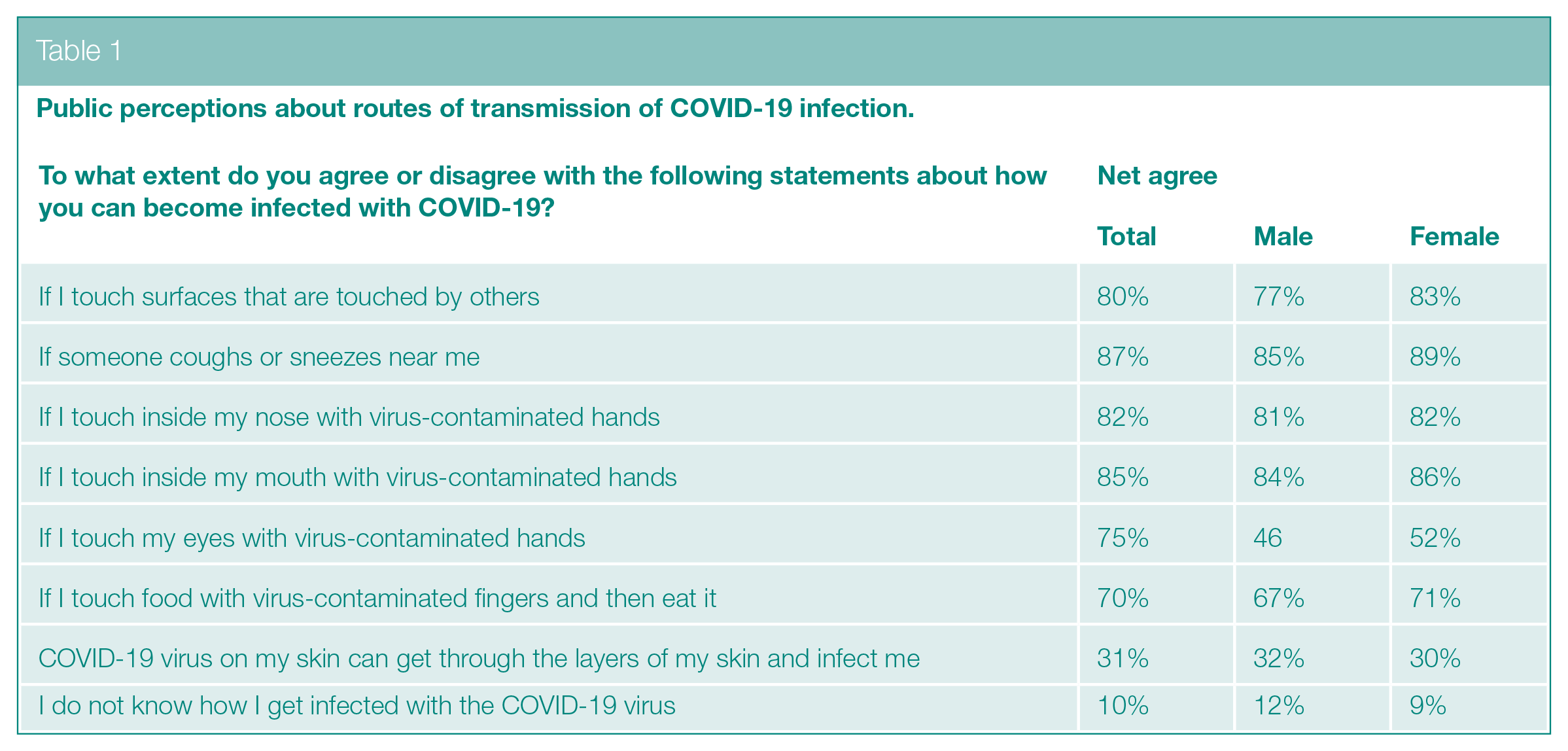
When questioned about how they thought they could be infected by COVID-19 virus, although 10% of respondents said they did not know, the data suggest that in line with government messaging, they had a relatively good level of knowledge (Table 1) of probable routes of transmission. Overall, 70%–87% said that COVID-19 can be spread via the air (coughing, sneezing, talking, shouting, etc.) or by touching surfaces frequently touched by others, or by eating food with contaminated fingers. This may derive from sayings like ‘coughs and sneezes spread diseases’, UK Government’s ‘catch it, bin it, kill it’ campaigns, 9 and animated graphics publicized during the early phase of the pandemic. Interestingly, 75% of respondents understood that as well as touching their nose or mouth with contaminated fingers, they could also be infected by touching their eyes. Why 31% thought they could be infected by a virus penetrating the skin of their hands is difficult to explain.
Public perceptions about routes of transmission of COVID-19 infection.
Public understanding about when to wash their hands
Table 2 shows that in line with government advice, when given a set of choices on important times to wash hands to prevent spread of COVID-19, 86%–90% correctly identified ‘after coughing, sneezing and nose blowing, before eating food with fingers, after touching surfaces frequently touched by others, and when returning home’.
Public understanding about when to wash their hands to prevent spread of COVID-19 and other infections.
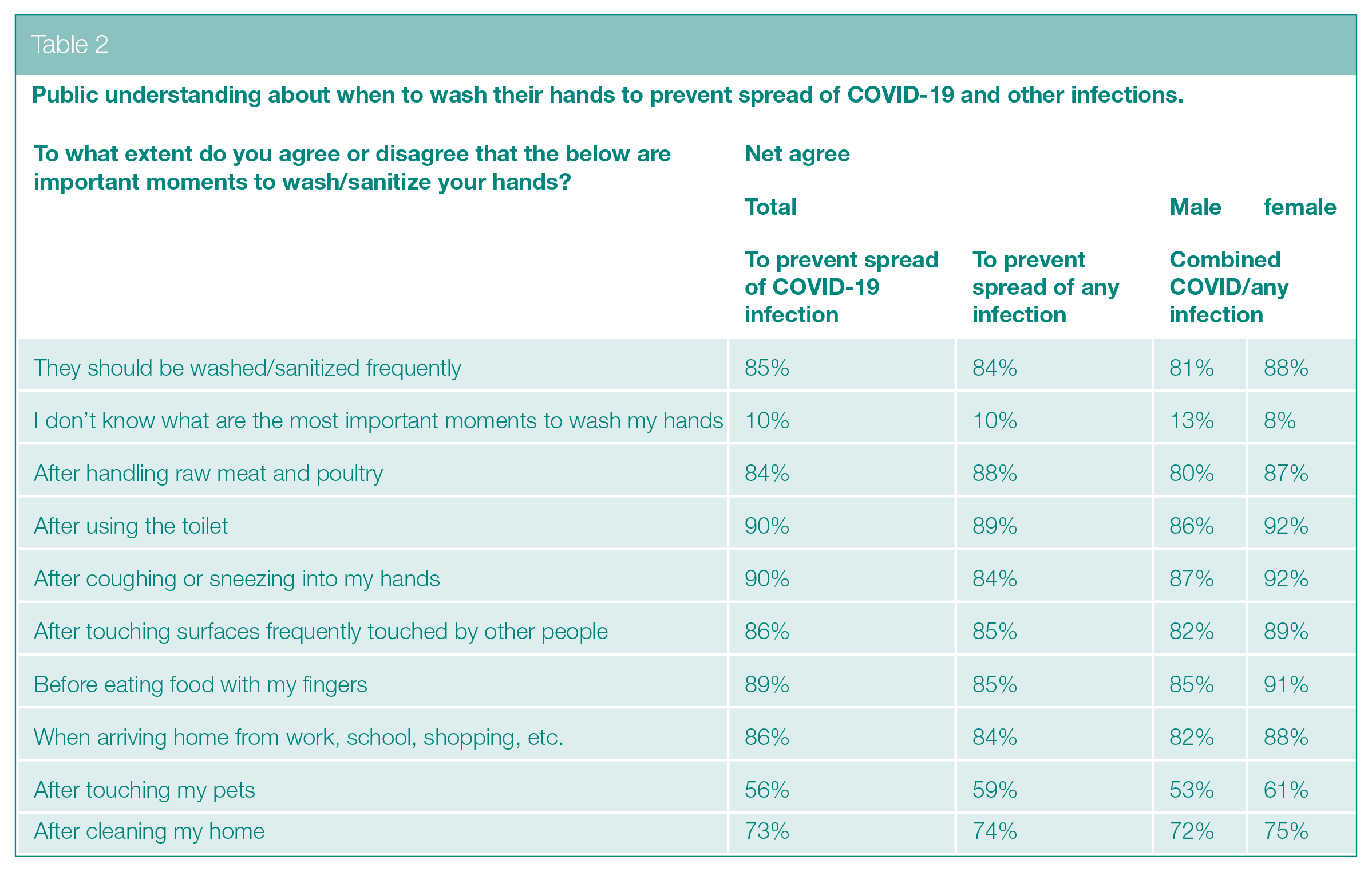
However, a similar number (84%–90%) also mistakenly identified washing hands after using the toilet and handling raw food as important for preventing spread of COVID-19, and 56% thought handwashing after handling their pets was important. Although hand hygiene after handling raw food and using the toilet are risk moments for spread of gastrointestinal infection, they are not identified as risk factors for spread of COVID-19. Respondents were asked the same set of questions about preventing spread of all types of infections. For each moment, the percentage expressing concern about the need for handwashing was almost identical regardless of whether the questions were about spread of infections in general or specifically about COVID-19.
Public understanding of handwashing and other behaviours to prevent spread of COVID-19
When asked to identify measures, in addition to handwashing, which they believed important for preventing spread of COVID-19 (Table 3), in line with government messaging, 81%–90% correctly identified social distancing, good ventilation, mask wearing, and cleaning and disinfection of hand contact surfaces.
Public understanding of the importance of different measures for preventing spread of COVID-19 infection.
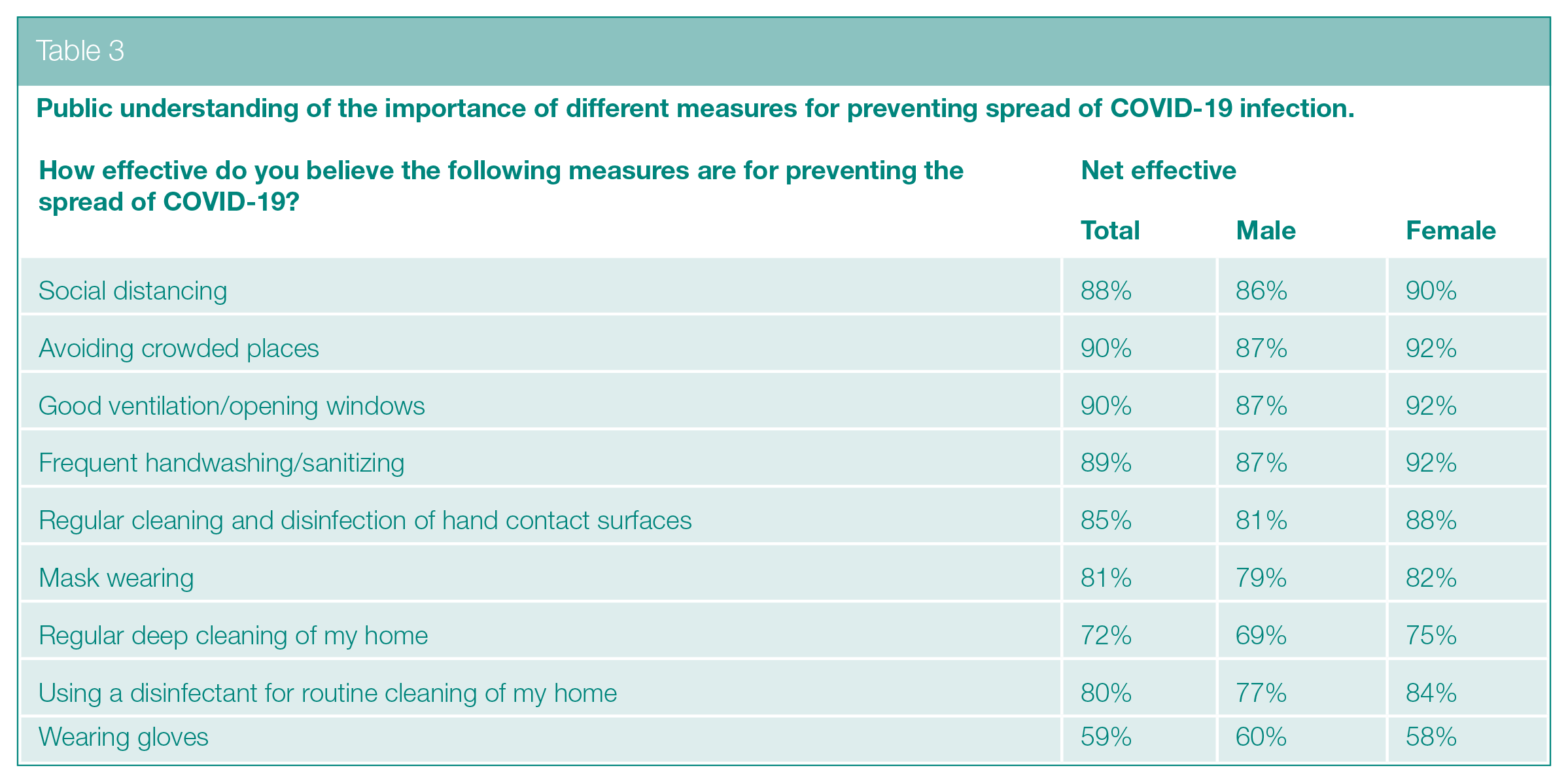
However, a significant proportion of people (59%) also believed that wearing gloves could protect against infection, failing to recognize that both gloved and ungloved hands, if contaminated, can transmit infection to the eyes, nose and mouth. A further concern is that 80% and 72%, respectively, agreed that regular deep cleaning of their home and using a disinfectant for routine home cleaning are important for preventing spread of COVID-19 infections between family members.
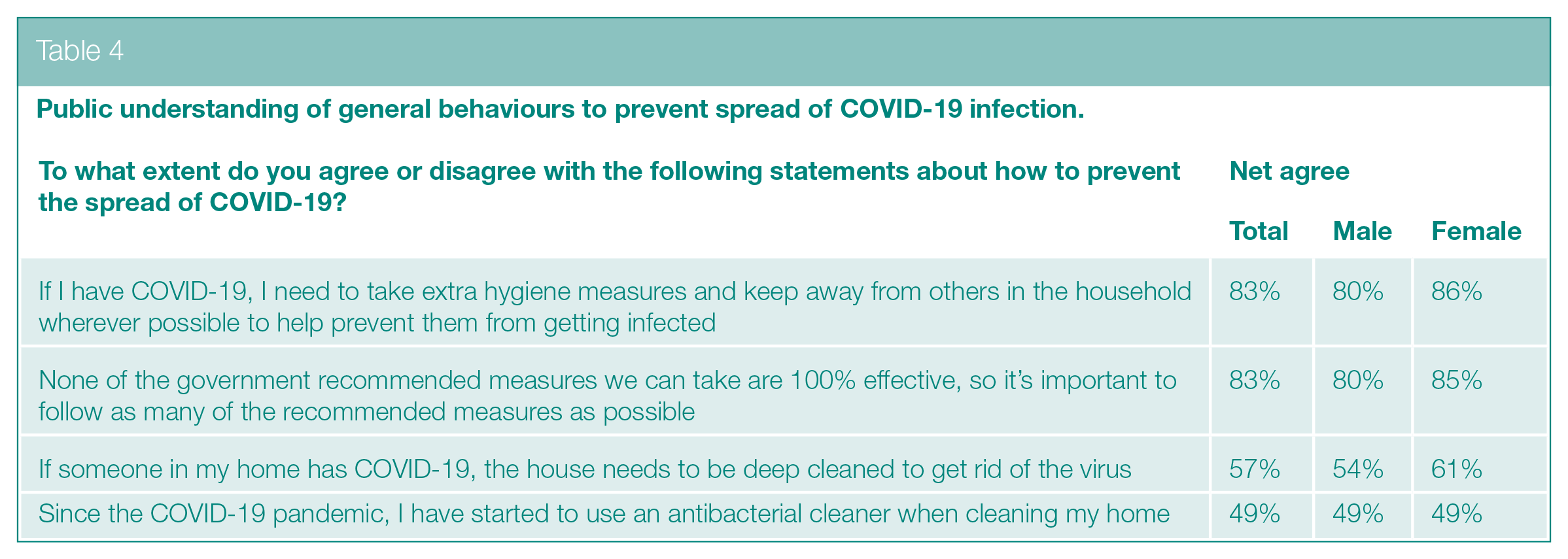
Further questioning about how to prevent spread of COVID-19 among family members (Table 4) shows the public were very aware of the need for enhanced hygiene measures when a family member became infected. They also recognized that no single action was 100% effective, and that the various behaviours work together to maximize protection. However, as in Table 3, 49% said that, since the onset of the pandemic, as a measure to prevention spread of infection, they had started to use an antibacterial cleaner when cleaning their home, and 57% said that homes should be ‘deep cleaned’ after someone in their home had been infected.
Public understanding of general behaviours to prevent spread of COVID-19 infection.
Public awareness of the importance of hygiene in their homes and everyday lives
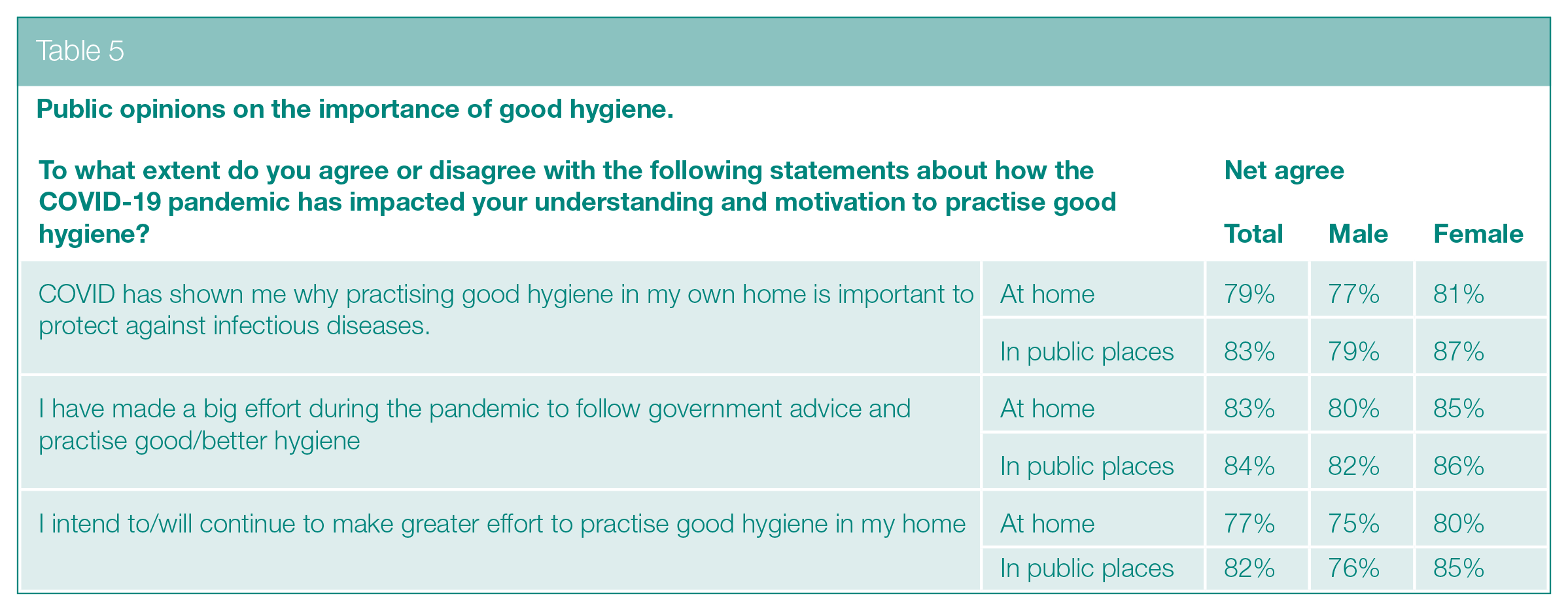
When respondents were questioned about the importance of hygiene (Table 5), more than 70% agreed that COVID-19 had shown them why practising good hygiene is important, both in their home and in shared public spaces, and intended to continue to practise good hygiene. This compares with the 2018 UK poll5,6 which indicated that hygiene awareness was already high, with 98% acknowledging the importance of hygiene in the home. The 2018 poll showed that people were also aware of current issues that make hygiene important. Half of those surveyed (50%) agreed that poor hygiene contributes to antimicrobial resistance (AMR), and almost three (74%) in four people believed hygiene is important because it reduces pressure on the National Health Service by preventing ill health.
Public opinions on the importance of good hygiene.
Are we suffering from hygiene fatigue?
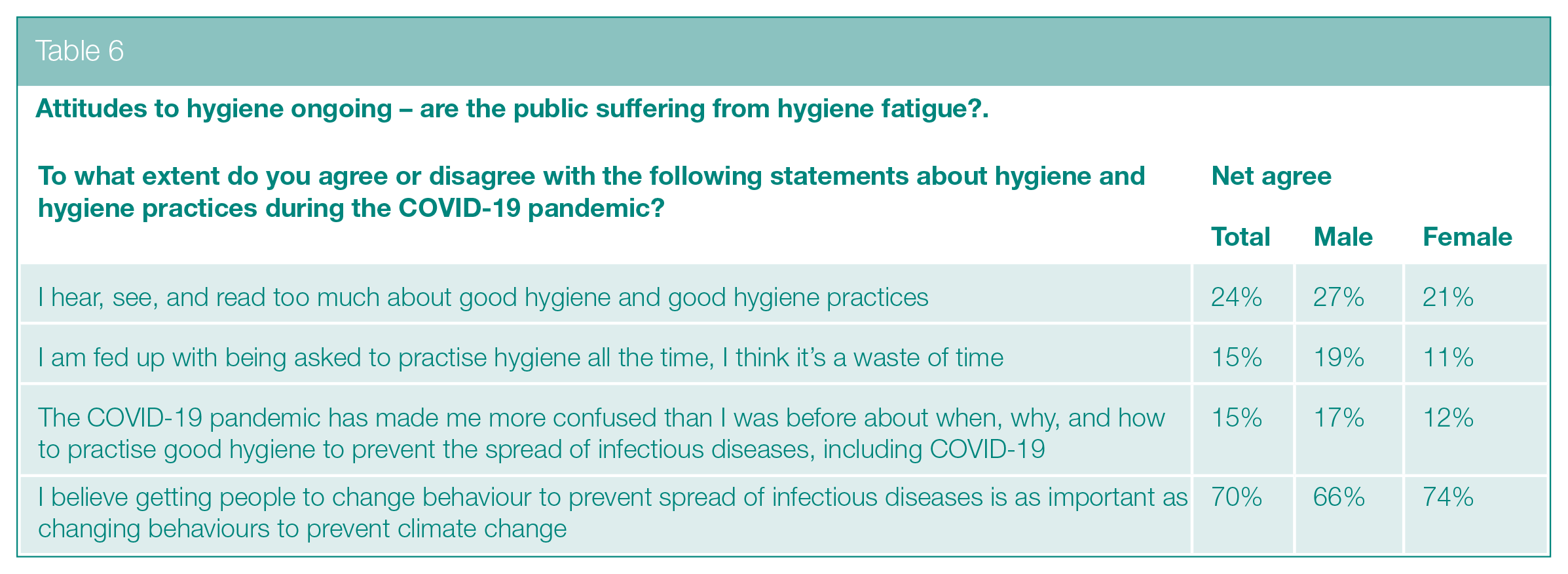
Although studies in the US suggest the public are suffering hygiene fatigue,10,11 polling suggests this is not the case in the UK. When respondents were asked whether they ‘saw, heard and read too much about good hygiene practices’ (Table 6), almost twice as many disagreed than agreed with the statement (40% vs. 24%). When questioned about ongoing attitudes to hygiene, data suggest that more than 75% disagreed that they were being given too much information, although 15% agreed they were tired of being constantly reminded about practicing good hygiene. Surprisingly, 70% said that they hold a similar level of concern about infectious disease threats as about global warming.
Attitudes to hygiene ongoing – are the public suffering from hygiene fatigue?.
Impact of demographic factors on hygiene understanding?
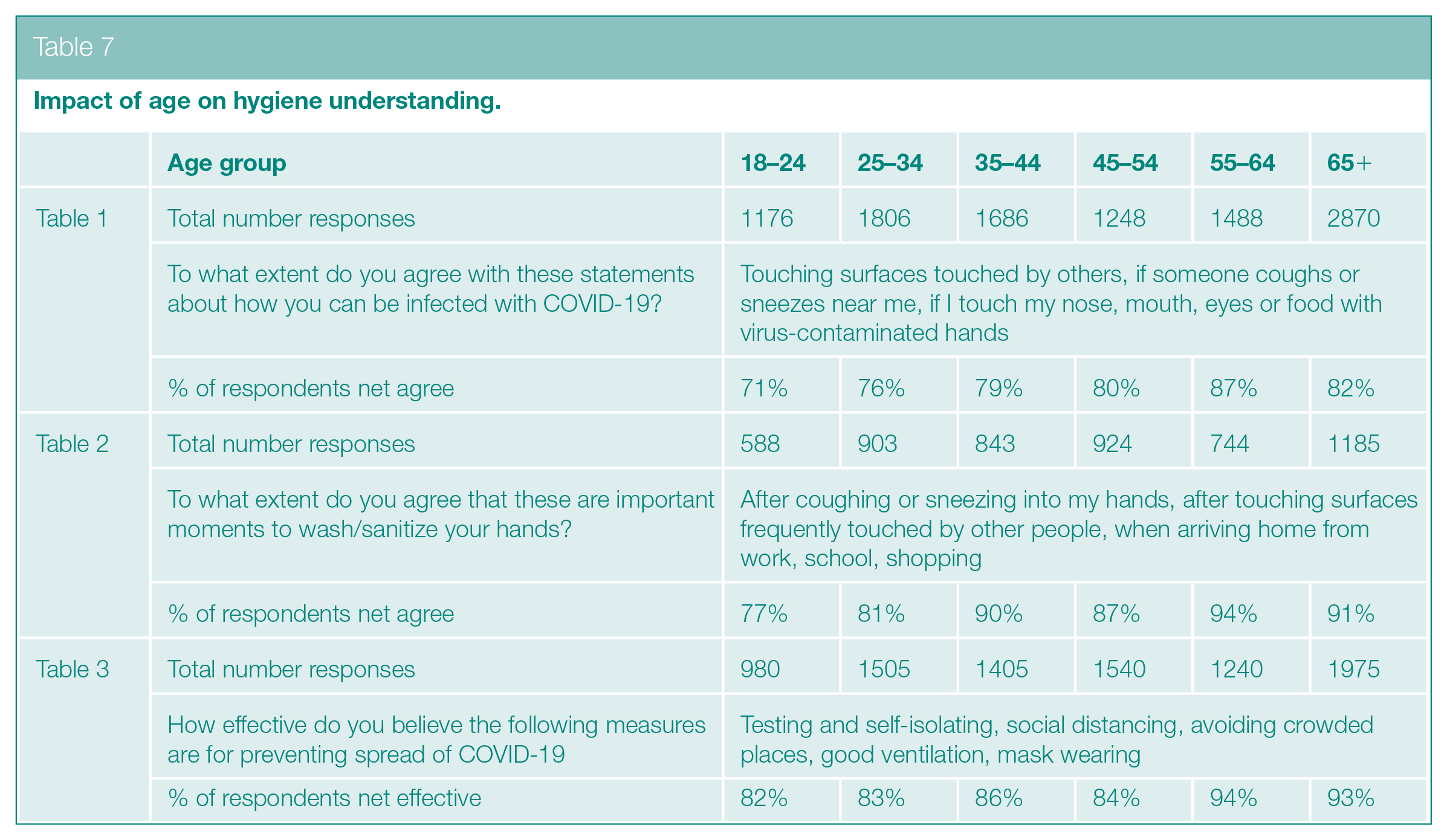
Demographic data indicated differences in social grade, income, geographic region, and employment sector had no observable impact on responses given. Tables 1, 2, 3, 4 and 5 show that females had a higher level of understanding of hygiene and hygiene practice than males, which ranged from 1 up to 7 points. Table 7 shows that the level of understanding of routes of transmission of COVID-19 and effective hygiene practice increased with age.
Impact of age on hygiene understanding.
Discussion
The importance of hygiene in our homes and everyday lives
In 2021, in response to the pandemic, the UK Government published its vision for a National Health Resilience Strategy, a ‘whole-of-society approach’ aimed at making the UK better able to adapt to new challenges. To achieve this, it must include building hygiene resilience.12,13 The need for greater hygiene resilience applies not only to addressing threats of future epidemics and pandemics, but also tackling AMR. Equally it includes supporting the ever-increasing population living in the community, who have to take responsibility for increased vulnerability to life-threatening infections.
Overall, this 2022 poll suggests that the English public have a high level of concern about the importance of hygiene to prevent spread of COVID-19 and its importance ongoing into the future, including 70% of respondents holding a similar level of concern about infectious disease threats as about global warming. Although the poll was specific to COVID-19 and the population of England, the questions were similar to those included in the 2018 RSPH UK poll5,6 and the 2020 poll across 25 European countries spanning North, South, East and Western Europe (including UK and Ireland). 7 The data showed that despite cultural differences, levels and nature of understanding of hygiene and hygiene risks were remarkably consistent across European regions, and were consistent with this 2022 poll.
Do the public understand advice and messaging to prevent spread of COVID-19
Data in Tables 1, 2 and 3 indicate the public had good recall of hygiene advice given during the pandemic. Given a range of options, they were able to identify key transmission routes for infection (Table 1). They were also able to identify key moments for handwashing and other actions important to prevent airborne spread as well as contact transmission (Tables 2 and 3). Although (Table 4) most people (75%) were also aware that ‘none of the government recommended measures we can take are 100% effective, so it’s important to follow as many of the recommended measures as possible, it failed to convince the public to continue wearing masks voluntarily in crowded places.
Of concern, however, when questioned about hand hygiene, there was a disconnect between knowledge of the routes of spread of infection (Table 1) and the moments for hand hygiene identified as important to prevent spread via these routes (Tables 2 and 3). Thus, when questioned about handwashing to prevent spread of COVID-19 (Table 2), as well as 86%–90% identifying moments related to airborne and contact surface hygiene, a similar number also identified toilet hygiene and food handling as risk moments, and 56% identified ‘after handling pets’. In addition, when also asked identical questions about risk moments for handwashing for ‘any or all infections’ as compared with COVID-19 (also Table 2), they gave very similar answers. Taken together, this suggests that, rather than using their knowledge of COVID-19 transmission routes to make informed decisions on when to practice hygiene, they reverted to memorized general advice.
A further concern is that hygiene behaviours during the pandemic were influenced by lack of understanding of the difference between hygiene and cleanliness. Despite government guidance on where to practise hygiene, data in Tables 3 and 4 show that practices are still influenced by an ongoing conviction that added protection may be gained by ‘deep cleaning and disinfection’ to eliminate Sars-CoV-2 from living environments, leading to non-targeted hygiene and disinfectant use in situations resulting in little benefit.
These results reinforce findings of the 2018 UK5,6 and 2020 European poll, 7 and a 1989–2017 IFH survey of media coverage, 14 all of which suggest we still largely see hygiene as synonymous with cleanliness aimed at eradicating dirt – inappropriately regarded as the main source of harmful microbes. The European poll 7 also identified increased usage of disinfectants for cleaning their homes as a result of the pandemic. Polling in February 2020 compared with repeat polling in June showed increased disinfectant usage compared with February, but this was not correlated with risk:
For situations considered most risky, for example, cleaning surfaces after handling raw food, cleaning toilet seat, flush handle and lid, and cleaning dishcloths, increased usage was of the order of 2%–3%.
For situations considered less risky, because we are less likely to be exposed to them 3 , that is, cleaning all bathroom and kitchen surfaces and floors, increased usage ranged from 5% to 9%.
Hygiene fatigue or hygiene confusion?
Although the public were concerned about hygiene and the need to continue to practise hygiene even after the pandemic, misleading and conflicting messaging during the pandemic may have had a negative impact, causing omission of some key behaviours and adoption of additional practices of little benefit. Fatigue from trying to sustain rigorous environmental cleanliness or frequent handwashing in places where there was little impact may have deflected hygiene practices at key moments where it was actually needed.
During the pandemic, the public were encouraged to ‘wash or sanitize their hands frequently’ but given no clear indication of when hand hygiene is needed and why, or that it needs to be applied in combination with other actions. 15 Table 1 shows that 10% of people were unclear about how they could be infected and 10% did not know when to wash their hands. Constantly being told to ‘wash hands’ without explanation of what ‘frequently’ means and how it prevents spread of infection may have encouraged the belief that skin penetration is a common route of infection. Although messages must be as simple as possible, they need to be tested to ensure the public do not misinterpret them. Frequent handwashing to prevent skin penetration may have been responsible for reports of skin problems due to excessive handwashing.16,17 Beliefs about skin penetration may also have prompted glove-wearing to prevent the hands becoming contaminated. Of respondents who believed wearing gloves is an effective measure, 77% believed the virus can infect by skin penetration. Of 31% who said they could be infected through the skin, 100% agreed glove-wearing is important.
Conflicting opinions between experts, communicated through the media, about ‘why I’m cutting back on hand washing but keeping my mask on’ 18 and ‘we need to double down on handwashing, everything else is irrelevant’ may also have fostered confusion and distrust. 19 At the start of the pandemic, public advice was against face coverings due to lack of clinical data supporting efficacy, 20 but this was later changed on the basis of risk modelling indicating significant infection risk reduction in community populations. 21 Ongoing scientific debate about routes of transmission of COVID-19 infection is also likely to have eroded public trust. 22
It is possible that the public’s belief about the need for deep cleaning and disinfection of environmental surfaces is partly the result of media images showing indiscriminate spraying of outdoor environmental surfaces and deep cleaning of indoor and outdoor premises, in the erroneous belief this can create a ‘COVID secure’ space.23–26
Failure of the public (and Public Health authorities) to understand that a risk-based approach means that, although a hazard (harmful microbes) may be present on hands, surfaces or in the air, the level of risk depends on likelihood of being exposed to them.3,27 Rather than trying to eliminate harmful microbes, hygiene advice needs to focus on reducing exposure throughout the day: those not exposed to microbes cannot become infected. This allows us to differentiate surfaces where pathogens represent a significant risk, from places where removal by cleaning and/or disinfection has little impact.1–3
Overall polling data generated in UK and Europe in the last 4 years5–7indicate the public would be receptive to more hygiene guidance but reveals that traditional methods of communication as used during COVID-19 are not fit for purpose. The need is, not for more guidance, but more effective guidance, to develop practical knowledge and hygiene risk understanding, thereby rebuilding trust, fostering compliance and creating resilience.
Developing home and everyday life hygiene behaviour that meets current and future needs requires an acceptance that infection control guidelines for clinical settings (e.g. deep cleaning, glove-wearing) are not necessarily appropriate in everyday life settings, and vice versa. Home and everyday life hygiene must be addressed as a public health issue, where hygiene is about reducing population infection risk to an acceptable level. 3
Getting change in hygiene behaviour through hygiene understanding
Since 1997, the IFH Targeted Hygiene approach has become widely accepted as a means to develop effective hygiene.1–3 During the 2018 study,5,6 however it became apparent that although the public said they understand Targeted Hygiene, they did not. They interpreted it as the need to ‘target hygiene practices in places (hands, surfaces) which they deemed to be risky’, failing to realize it means ‘targeting hygiene practices at the moments when there is risk of spread of harmful microbes’. Since 2018, IFH has been developing what has come to be known as the ‘moments’ approach as a means to overcome this misinterpretation.
Microbiological and behavioural assessment suggests there are nine key moments in our daily lives when harmful microbes are most likely to be spreading such that we can become exposed and infected (Figure 1).
28
Importantly, this approach communicates hygiene actions in the sequence in which the public need to receive them. It starts by identifying, first, the moments in our daily lives
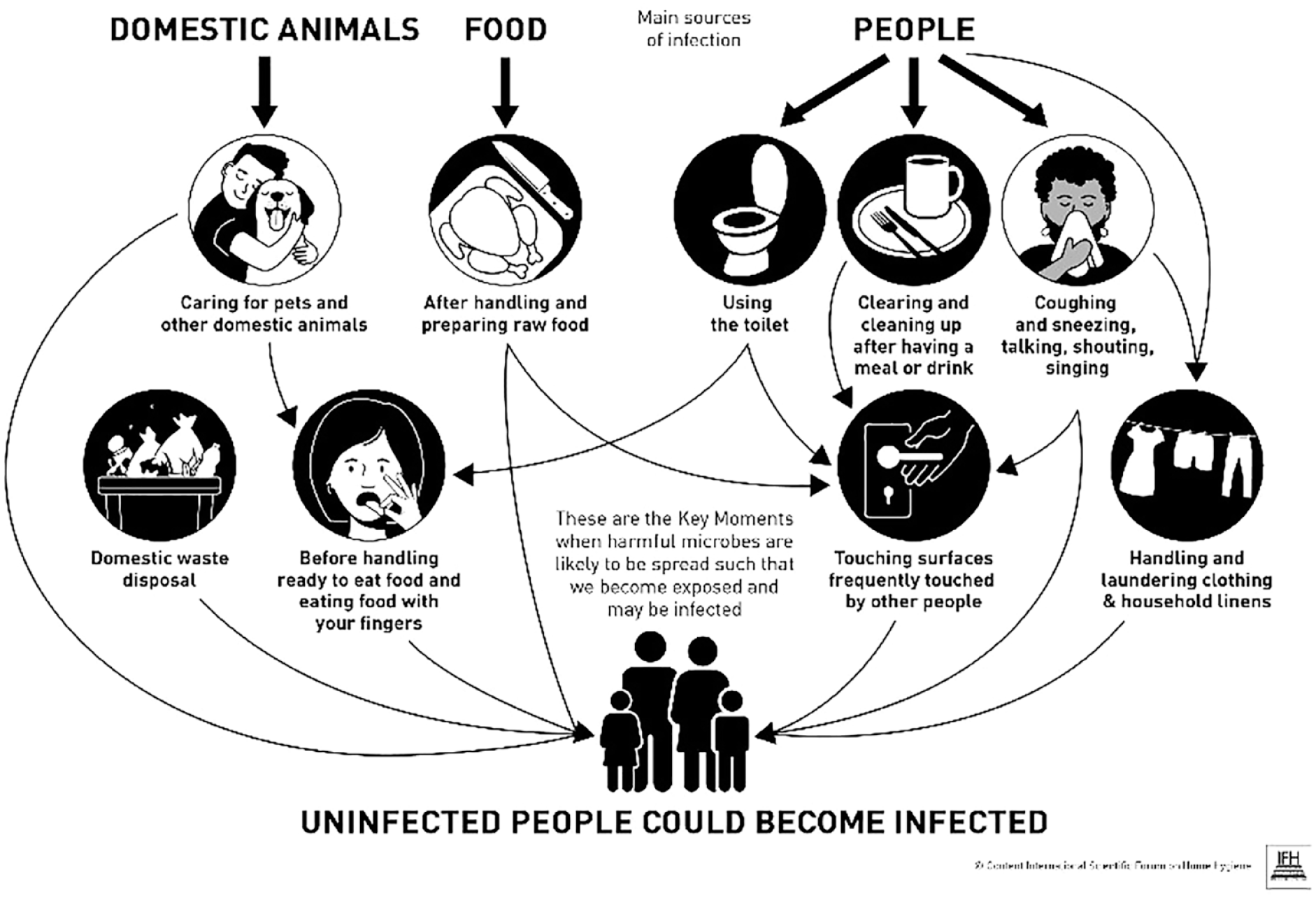
The key moments for hygiene in home and everyday life settings.
Targeted Hygiene works to communicate knowledge, that is, effective practice, in a way that builds cognitive understanding. Rather than prescriptive guidance, it can be communicated through visual images which work to tackle myths and misunderstandings, to engage, educate, nudge and empower the public to practice effective hygiene at each key moment. 28 An issue highlighted by COVID-19 is the importance of hygiene in our shared use of public spaces. After lockdown, offices, schools, restaurants, supermarkets and so on had to implement strategies to make facilities ‘COVID secure’. However, preventing spread of infection depends on the public practising effective hygiene; facility managers can only do so much to facilitate good hygiene in their premises. This requires venue managers to not only take responsibility for cleanliness, but also enabling and encouraging the public to adopt Targeted Hygiene, as a continuum of such behaviour in their homes. 29
In this way, hygiene helps build sustainable health by avoiding unnecessary use of chemical products, thereby reducing environmental impacts. It is also less time-consuming and costly, and less likely to lead to hygiene fatigue and failure to sustain hygiene behaviours.
Conclusions
Although data from this and other polling carried out across Europe in the last 4 years5–7 indicate the public have high awareness of the importance of hygiene, it also suggests that they are vulnerable because of poor understanding of risk and the difference between hygiene and cleanliness.
New insights from public polling, together with the nine moments Targeted Hygiene approach, offer the opportunity to develop a more robust communications approach that enables the public to make cognitive links between when, where, how and why to practice good hygiene, and in doing so, promote more effective and sustainable behaviours. The ‘when, where, how’ framework works to build resilience to change because it is common to all hygiene-related infectious diseases; it enables the public to easily understand, adapt and respond to ‘enhanced’, intensified or adjusted hygiene advice when necessary.
To be effective, behaviour change strategies must be accompanied by education on basic concepts of Targeted Hygiene and management of risk. This must include proactive communication to dispel convictions that routine cleaning (i.e. dirt removal) can keep homes hygienic (i.e. free from infection risks).
The last few years have seen development of the Health Belief Mode30,31 and COM-B
32
for changing hygiene behaviours. Targeted Hygiene provides a practice policy for use with these models to deliver a key aspect of behaviour change, that of ensuring that the practices that are promoted are effective in protecting against exposure to infection. Targeted Hygiene works to build
Although questions in this poll were carefully formulated to avoid confusion, respondents will have answered them based on their understanding of terms and concepts such as hygiene, cleaning, disinfection and deep cleaning. Although online polling provides valuable data about the public’s understanding of hygiene, further work is needed using direct approaches such as one-to-one interviews or focus groups, to get a more in-depth understanding than can be achieved by polling.
Footnotes
Conflict of Interest
The author(s) declared no potential conflicts of interest with respect to the research, authorship and/or publication of this article.
Ethical Approval
Not required for this study.
Funding
The author(s) disclosed receipt of the following financial support for the research, authorship and/or publication of this article: This work was supported by the International Scientific Forum on Home Hygiene (Registered UK Charity 1116912).
