




Abstract
Introduction
Several measures were taken globally to contain the spread of the coronavirus disease of 2019 (COVID-19), including lockdowns, travel restrictions, social distancing, and the closure of universities and schools (Koweyes et al., 2021; Fink et al., 2022). Alternative forms of education became essential, causing learning loss and disengagement with learning, in addition to inequalities between students due to a lack of resources, food insecurity, and health challenges (Reimers, 2022). Higher education in Lebanon, like in many other countries, was affected, and online learning became necessary to maintain adequate tuition (Alsoufi et al., 2020). Nevertheless, this transition to distance learning disrupted the lives of students and teachers (Baroud et al., 2022), who had a more positive perception of face-to-face education in terms of satisfaction, quality, and interaction (Nambiar, 2020). The reported challenges included limited experience, low connectivity, lack of online learning devices, and insufficient physical workplaces (Gómez-García et al., 2022).
In addition to the lack of academic support, social isolation affected students’ mental health and many were obliged to be separated from their families (Loades et al., 2020). Research found that students experienced higher stress, anxiety, and depression levels than in the pre-pandemic period (Racine et al., 2021). They also shared a substantial increase in uncertainty and fear of losing a family member, a loved one, or even their lives (Asbury et al., 2021; Elharake et al., 2022). Students in higher education endured emotional disorders, substantial concerns about their professional careers and studies, and financial constraints (Gómez-García et al., 2022; Reyes-Portillo et al., 2022). In particular, medical students were experiencing increasing anxiety (Chandratre, 2020) and had higher rates of mental issues, burnout, stress, and substance abuse (Molodynski et al., 2021). They were exposed to risk factors due to their extensive work in hospitals (Essangri et al., 2021), and the exhaustion of the health system (Hatem and Goossens, 2022). This made them more susceptible to the psychological consequences of the pandemic compared to same-age peers (Husnain 2017).
Moreover, the consecutive lockdowns and the prolonged school closure adversely influenced students’ physical health (Luciano et al., 2021). A significant decline in physical activities was reported in the literature (Rizal and Wibowo, 2022) in addition to a decrease in the time spent outdoors (Moore et al., 2020), an increase in screen time (Lawrence et al., 2022), and irregular sleep patterns (Maximova et al., 2022). An increase in body mass was reported in men, in total fat in women, and distribution of fat in both sexes (Chwałczyńska and Andrzejewski, 2021). Furthermore, a positive correlation was shown between physical activity and mental well-being (Maugeri et al., 2020). Since they were both affected during the pandemic, medical students’ Quality of Life (QoL) was correspondingly impacted.
Medical students’ overall health was also impacted due to the high risk of infection (Aebischer et al., 2020) and increased body pain leading to excessive use of analgesics (Yasmin et al., 2022). During the pandemic, the prevalence of depressive symptoms among university students was high in addition to financial challenges (Heumann et al., 2023). Moreover, medical students were directly involved in medical decision-making, which increased anxiety and burnout (Batra, 2023). Understanding the health and well-being implications on medical students allows better-informed decisions that can be applied in similar situations. In 2013, the 36-item Short Form (SF-36) survey was validated and used on medical students in Lebanon to exploit their QoL (Sabbah et al., 2013). Findings from the aforementioned study showed higher social functioning among younger age and lower mental health scores among women and smokers (Sabbah et al., 2013). Medical students were recruited as alternative resources due to the lack of medical staff and increase in healthcare demands (Ardakani et al., 2023). The imposed changes could have affected their QoL and may have long-term consequences. In this context, the present study aims to assess (i) the health-related QoL of medical students in Lebanon during the COVID-19 pandemic, (ii) its association with their general characteristics, and (iii) to investigate the combined effects of the predictors affecting the quality of life of students.
Methods
Study design
An observational cross-sectional study was carried out over a period of three months (August–October 2021), targeting medical students from six universities in Lebanon.
Study sample and sample size
Students were recruited from four faculties with no selection criteria based on sex, nationality, age, or ethnicity. These faculties were in both public (Lebanese university) and private universities (Lebanese American University, American University of Beirut, Saint Joseph University, Beirut Arabic University, and the University of Balamand). Since universities were closed during the first two months of data collection, students were targeted in their workplaces or internships in different hospitals. The sample size was determined using the Epi Info 7 software. The calculation assumed that the probability of having good mental and physical health was 50%. Considering a 95% confidence interval and a 5% acceptable margin of error, 401 participants were required, with a 5% loss to follow-up.
Data collection
Two pharmacists approached the students by explaining the study objectives orally and invited them to participate by filling out an online survey. The first page of the survey mentioned above included a written version of the objectives with an estimated 12 min to answer it.
Study tool
A validated questionnaire was used for data collection. It was available in English and Arabic based on the student’s preferences. The first part included questions about their general characteristics (sex, age (≤30 or >30), the governorate of residence, marital status, type of the university (public or private), faculty (public health, medical sciences, dentistry or pharmacy) and the academic year (1–2, 3–4, 5 or more). They were also asked if they smoked (cigarettes or shisha) and if they had any diagnosed comorbidities. In the second part, The SF-36 survey (validated on the Lebanese population) was used and the corresponding answers were afterward graded over 100. These questions will generate eight subscales as follows: 10 questions for physical functioning (PF), four questions for physical role (PR), two questions for bodily pain (BP), six questions for general health (GH), four questions for vitality (VT), two questions for social functioning (SF), three questions for role-emotional (RE), and five questions for mental health (MH). The first four scores lead to the physical composite score (PC) while the last four can be summed to create the mental composite score (MC). A minimum score of 0 represents the lowest QOL and a maximum of 100 represents the highest.
Statistical analysis
Statistical analyses were performed using Statistical Package for Social Sciences (SPSS Inc, Chicago, Illinois) Version 27. Categorical variables are presented through frequencies and percentages while the different scores are presented through means and standard deviations
Ethical considerations
The study protocol, survey, and consent form were reviewed and approved by the institutional review board of the faculty of pharmacy of the Lebanese University. Data were completely anonymous and non-identifiable. Written informed consent was obtained from each student. Participants were informed that they could withdraw their participation at any point during the interview and that their information will only be used for research purposes.
Results
General characteristics of the students
Distribution of the general characteristics of the students.
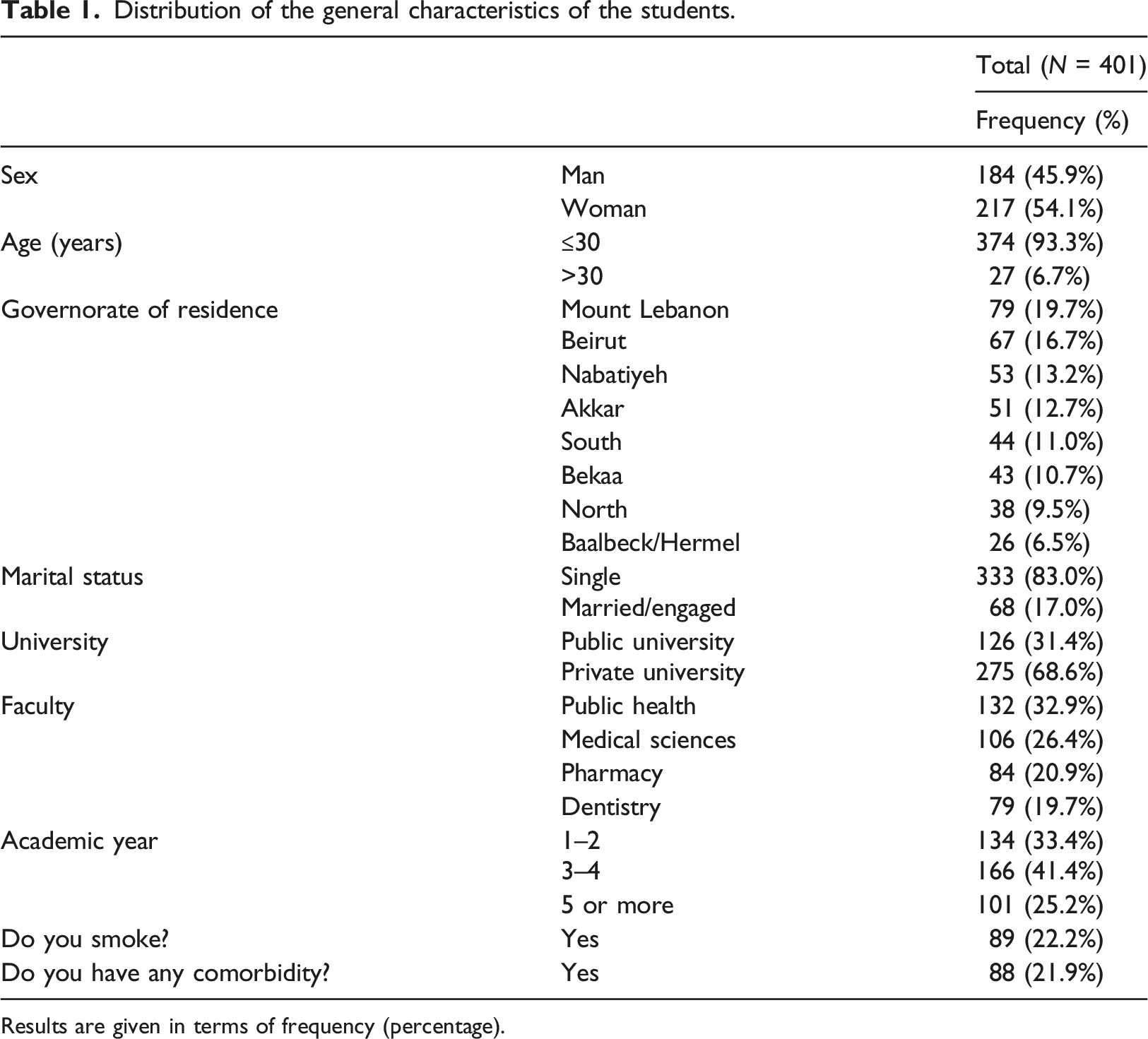
Results are given in terms of frequency (percentage).
Quality of life of medical students
Health-related quality of life of medical students: scores of the different domains.
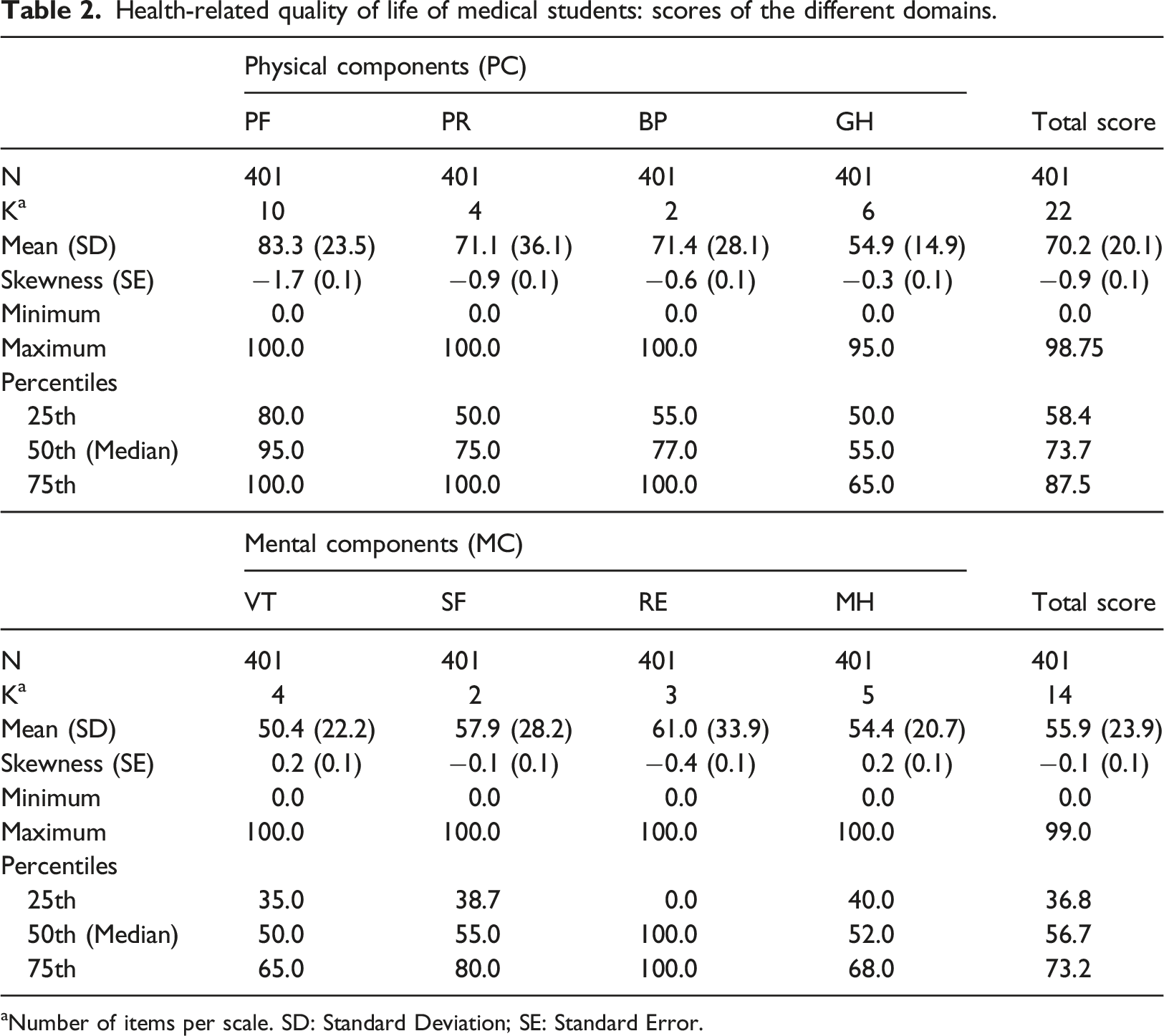
aNumber of items per scale. SD: Standard Deviation; SE: Standard Error.
Association between the health-related quality of life scores and the general characteristics of the students
Association between the health-related quality of life scores of the physical components and the general characteristics of the students.
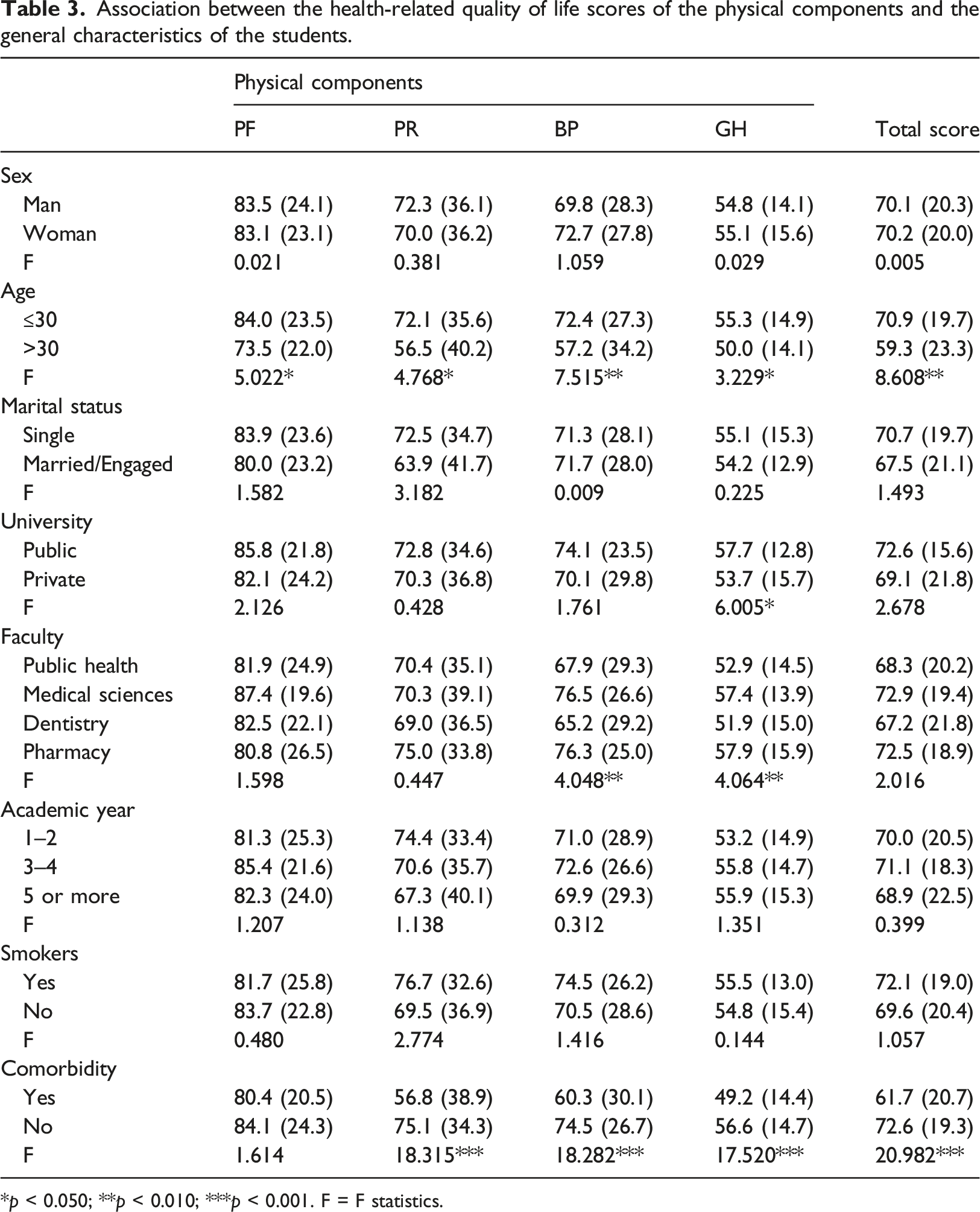
*p < 0.050; **p < 0.010; ***p < 0.001. F = F statistics.
Association between the health-related quality of life scores of the mental components and the general characteristics of the students.
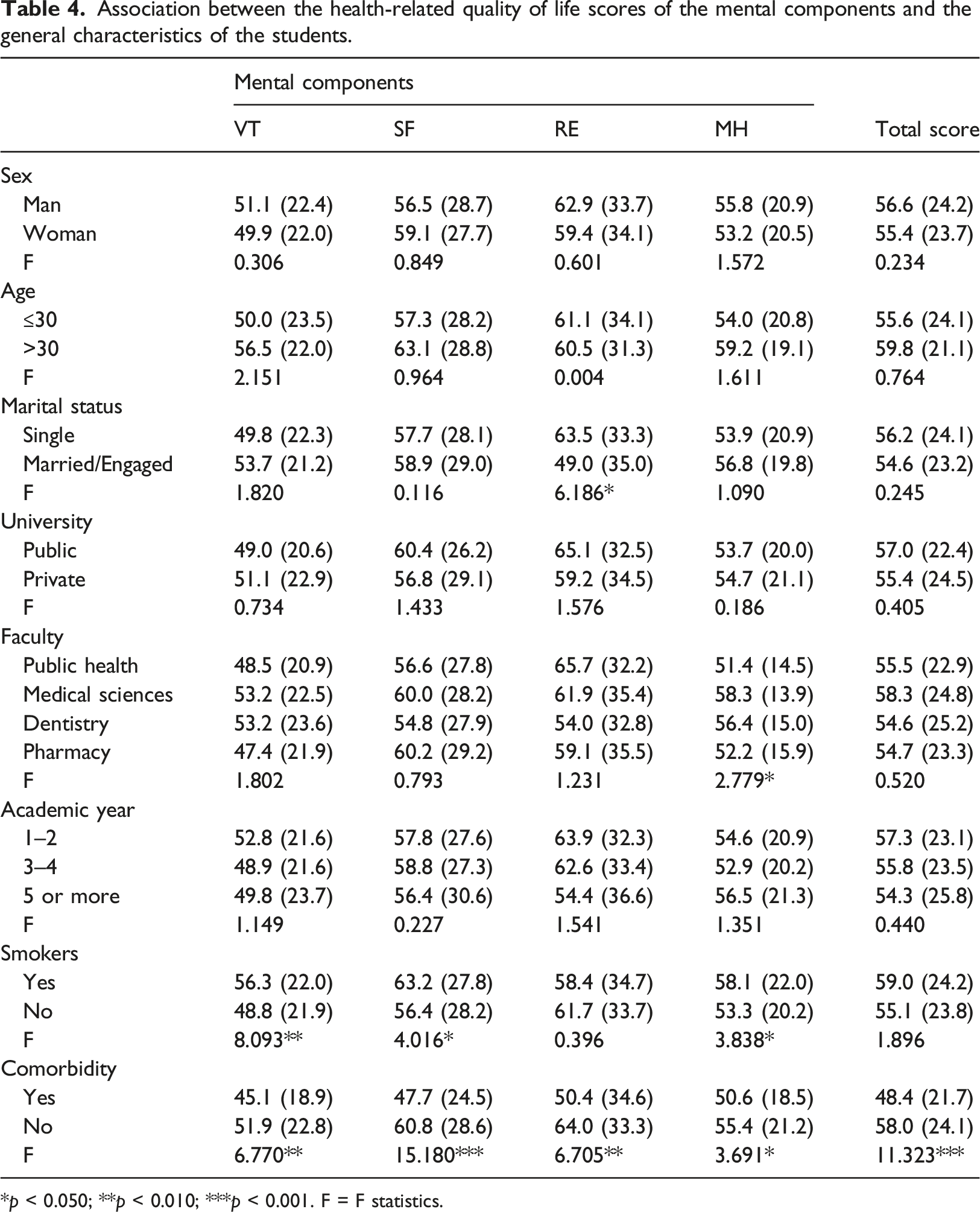
*p < 0.050; **p < 0.010; ***p < 0.001. F = F statistics.
The combined effect of the predictors affecting the health-related quality of life scores
The combined effect of the predictors affecting the health-related quality of life scores.
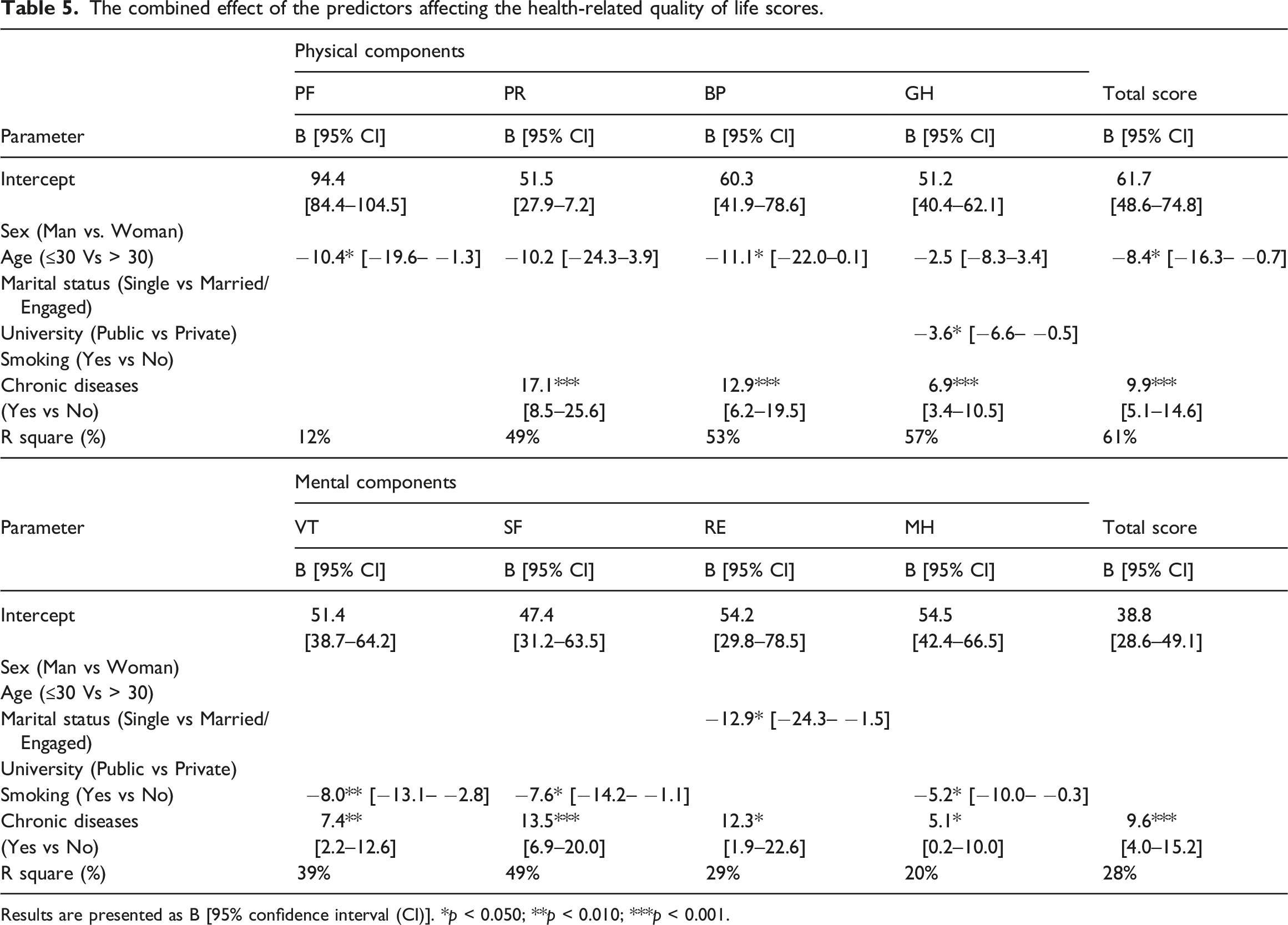
Results are presented as B [95% confidence interval (CI)]. *p < 0.050; **p < 0.010; ***p < 0.001.
Discussion
The present study aimed to assess the health-related QOL of medical students in Lebanon during the COVID-19 pandemic. The study sample included more women than men, two-thirds from private universities and the rest from public ones. Overall, the PC domains had higher scores than the MC domains. Among the PCs, students had higher PF and lower GH scores; among the MC, a higher score was noted for RE and a lower score for VT. Those aged 30 years or less had higher scores in all the PC domains than older students but comparable scores in the MC domains. Single students had a significantly higher RE score and those studying in public universities had greater GH scores. Those in the faculty of medical sciences had significantly higher MH scores compared to other faculties attendants. When testing the combined effect of the different predictors, younger age significantly increased most of the health-related PC scores and having chronic diseases decreased all the QoL scores except the MH score. Furthermore, being a smoker positively impacted the VT and SF of students and negatively influenced their MH.
Based on the values of the skewness of scores (Table 1), the data were normally distributed and converged to their expected values (Hatem et al., 2022). Overall, students’ mental health was more affected than their physical health, in agreement with other studies carried out in similar settings during the pandemic (Qiu et al., 2019; Thomas et al., 2021; Kosilov et al., 2021). In the pre-pandemic period, the MC scores were higher than in this study (Sabbah et al., 2013), which can highlight its impact on medical students’ mental health. Several studies also reported this finding showing the psychological distress among students in addition to their deteriorated emotional states (Passos et al., 2022; Taylor et al., 2022; Yabuki et al., 2022). The long-term consequences of this decline may affect medical students’ academic and professional performance and call for the need to support this sensitive group psychologically. Low GH scores were observed, indicating that medical students’ physical health also deteriorated. The excessive working hours, getting infected, and sleep disorders could have induced poorer general health (Bazan et al., 2021; Mehta et al., 2021). Furthermore, their vitality and SF scores were lower than the previously reported ones. Social isolation and consecutive lockdowns could have significantly impacted their interaction and incorporation within society (Leal Filho et al., 2021).
Students’ sex was not influencing any of the QoL domains, in contrast with a previous study showing that women had higher scores than men in the general and psychological domains (Baceviciene and Jankauskiene, 2021). Those 30 years and younger had significantly higher scores in the physical domains than their older peers, possibly due to their lower level of responsibility and obligations. The existence of comorbidities adversely impacted students’ physical and mental well-being. A result that was previously shown in a similar setting (Jenkins et al., 2021) highlighting the necessity of giving this specific population additional support. The combined effects model showed that older students and those with chronic diseases mainly had lower scores, while only comorbidities affected the overall mental domains.
This study has limitations. Selection bias may have been induced since the data collectors randomly selected students, and possibly only motivated ones were willing to participate. Nevertheless, uniform training was provided to pharmacists who used the same data collection form to reduce this bias, and a different researcher performed data coding and analysis. Recall bias may have also arisen since data collection was performed at the end of the academic year. The study sample was relatively small, which might not allow the extrapolation of the findings to all medical students. Nonetheless, the present study is the first one performed in public and private universities to explore the health-related QoL of medical students during the pandemic.
Conclusion
The QoL of medical students during the COVID-19 pandemic was negatively affected, particularly their mental health. The long-term effect of this impact can affect students’ abilities and academic performance. Age, faculties attended, comorbidities, and smoking status were the main covariates of the health-related QoL scores. Future investigations are recommended to explore the reasons and provide viable solutions to improve the QoL of medical students.
Footnotes
Acknowledgements
We thank Dr. Mathijs Goossens for his assistance with data analysis and his comments that significantly improved the manuscript.
Declaration of conflicting interests
The author(s) declared no potential conflicts of interest with respect to the research, authorship, and/or publication of this article.
Funding
The author(s) received no financial support for the research, authorship, and/or publication of this article.
Ethics approval and consent to participate
The study protocol and tool were reviewed and approved by the institutional review board of the Lebanese University faculty of pharmacy. Written informed consent was obtained from every participant.
