




Abstract
Thailand 4.0 is an ambitious reform strategy that seeks to offset the impact of the Thai aging population by transitioning the economy towards a knowledge-based society skilled in advanced technology. Education reforms are paramount for Thailand 4.0 to succeed; however, significant challenges exist that draw into question the capabilities and quality of the nation’s higher education institutions. The low perceived quality can be attributed to government inefficiencies, pronounced education inequality between rural and urban students, declining K12 students’ core curriculum performance, and a growing dependence on international students to support higher education institutions’ financial stability. This paper discusses the numerous challenges limiting higher education institutions from achieving an improved perception of academic quality both domestically and abroad. The recommendations proposed highlight the need for additional government oversight and educational funding. National and regional education policies must be promoted in a clear, consistent, and measurable method, emphasizing short, medium, and long-term goals. Improved national examinations and institutional collaboration will further support the necessary step to address festering conditions limiting any meaningful transition towards a knowledge-intensive workforce.
Introduction
Thai higher education institutions (HEIs) face a growing number of challenges in an increasingly saturated and hyper-competitive education sector. A rapidly aging society with a decreasing student population has forced numerous HEIs to reconceptualize their institutional designs to cope with declining domestic enrollment and increasing operational costs. The resulting excessive supply within the Thai tertiary level, coupled with increased international competition, has forced HEIs to undertake a marketized paradigm, competing for a limited number of individuals that act primarily as consumers rather than traditional students. Many Thai institutions face insolvency as potential students integrate a market-driven approach to their HEI selection process, forcing institutions to decrease per-student tuition revenue while increasing their per-student marketing costs (Scott and Asavisanu, 2021). Cost-cutting strategies to maintain institutional financial viability have decreased instructor recruitment (Fry and Bi, 2013) and increased instructor burnout (Jacobson, 2016). As Thai HEIs commodify their educational system, institutions become fixed on perceived value and neglect education quality (Savatsomboon, 2015).
In late 2018, Prime Minister General Prauth Chan-o-cha promoted the ambitious 20-years reform strategy “Thailand 4.0,” targeting economic growth by offsetting industries impacted by the aging population. The strategy aims to promote innovation and research-oriented studies, leading Thailand to become a knowledge-based society (Buasuwan, 2018). Thai HEIs must incorporate modernized student-centric pedagogical approaches emphasizing real-world problems to achieve the desired knowledge-based society. The broad outlines suggested in the policy seek to shed the reputation that the Thai education sector is outdated and substandard. Although the framework promotes quality, scant details about how quality assurance will be assessed and how institutions overwhelmed with financial instability will afford the required changes.
Numerous challenges faced by Thai HEIs are entrenched in the culture, reducing the effectiveness of policy reforms targeting the tertiary level. Systematic resistance by Thai educational stakeholders and politicians regularly impedes the integration of new policies, as restructuring may upend positions of authority (Goodman, 2013). In Thailand, external quality assurance oversight is highly bureaucratic that rarely provides a standardized assessment to all institutions due to inadequate resources and assessor training (Rattananuntapat, 2015). Thai HEIs are further challenged by declining K12 education standards, with many potential domestic applicants failing to achieve minimum reading, mathematics, and science standards. To remain competitive, Thai institutions are faced with requiring additional foundation courses that could potentially decrease enrollment in their programs. Thai HEIs have attempted to bypass the challenges of domestic recruitment by prioritizing international students; however, dependency on international students leaves Thai HEIs over-exposed to external conditions that can have dire ramifications with little warning (Scott and Mhunpiew, 2021). The realignment of Thai HEIs towards an international market can dissuade domestic students from enrolling due to insecurities with language or core subject competencies (Fry and Bi, 2013), leaving the institution to virtually abandon the local market.
This paper examines the structure of Thailand's tertiary education sector, followed by how educational reforms have impacted Thai education quality and financial stability. Education quality can be defined as an institution's ability to develop qualified graduates who respond to society's needs and requirements in an increasingly competitive global marketplace. However, education quality in higher education is multidimensional, requiring institutions to focus not only on the content of the curriculum but the context, process, and outcome. Higher education institution quality is not simply the type of services or courses offered but the transformative impact it has on students and society (Yilmaz, 2019). Financial stability is defined as an institutional policy that seeks to reduce direct public funding dependency through optimizing operation management, systematic cost reduction, and increased revenue generation through income diversification. The paper then discusses how Thai tertiary education quality is directly impacted by government inefficiencies that have fostered inequality at the K12 level. The declining education quality at the primary and secondary levels has directly impacted Thai HEIs recruitment, decreasing entry requirements for new applicants and diminishing education quality. This paper additionally explores how the dependency on international students for financial stability could negatively impact the long-term feasibility of the current Thai HEI system. This paper concludes with recommendations to policymakers and Thai HEI leadership on how to confront the challenges identified and effectively promotes quality education while maintaining long-term economic sustainability.
The Thai tertiary sector
Thai higher education comprises three institutional ownership forms: autonomous, public, and private. Autonomous HEIs are public institutions that have been permitted a significant degree of independence in managing internal institutional affairs by the government. In 2003, the Thai Government signaled that all public universities must strive for financial self-sufficiency and meet human resource benchmarks to transition towards autonomous status (Crocco, 2018). The Thai Government still supports autonomous HEIs; however, funding is offered through block grants with greater flexibility in budget allocation (Lao, 2015). The growing pressure on institutions to rely less on the government raises questions about leadership and resource allocation. Although the Ministry of Higher Education, Science, Research, and Innovation (MHESI) continues to check the 26 autonomous HEIs to ensure quality, skepticism persists about the curriculum's quality.
Public HEIs are subcategorized into four institutional structures, public universities (formally government universities), open universities, Rajabhat institutions, and Rajamangala institutions. Public universities are slowly being phased out as the Thai Government promotes a decentralized education policy. Public university leadership faces immense pressure to reduce dependency on government financial support, instead integrating a policy that will promote self-reliance, eventually transitioning to autonomous status (Charoenkul and Siribanpitak, 2012; Sangiumvibool and Chonglerttham, 2016). Thailand has two open universities: Sukhothai Thammathirat Open University (STOU) and the Open University at Ramkhamhaeng University. The founding of STOU, the first open-university in Southeast Asia, and the opening of the Open University at Ramkhamhaeng University sought to provide higher education to Thai citizens, especially in rural communities that previously had no opportunities (STOU, 2016). Rajabhat institutions were founded as teacher colleges, often in rural or small urban communities. King Bhumibol Adulyadej enacted the “Rajabhat University Act of 2004” that elevated the status of all 38 Rajabhat institutions to university status and allowed for an expansion of operations to serve better local communities (Grubbs et al., 2008). Rajabhat institutions are equal to traditional public universities but are considerably less competitive (Grubbs et al., 2008; Laksaniyanon, 2015). Rajamangala institutions represent the final category of the public HEI sector in Thailand. Like Rajabhat institutions, Rajamangala institutions were previously specialized schools focused on technical and engineering courses. Rajamangala institutions prioritize expanding Thai citizens’ technological capacities to better cope with the needs of a modern economy (Amatariyakul and Amatariyakul, 2012). Thus, many programs target adult learners seeking to expand existing skills and knowledge through formal professional development. In 2005, 40 Rajamangala schools were consolidated into nine institutions, receiving an elevated status of university (Kirtikara, 2012; Laksaniyanon, 2015).
Educational reforms and their impact on HEI education quality and financial stability
Private education in Thailand has been incorporated in the Thai education sector since 1940; however, it has evolved rapidly since the Private Colleges Act of 1969, which provided expanded degree accreditation to private institutions (Payap University, n.d.). Student protests spurred the 1969 reforms to reduce educational inequities and promote a broader range of relevant curricula (Fry and Bi, 2013). Private HEIs were promoted as an alternative to the existing public institutions, offering a more comprehensive range of niche courses that target specific individuals’ needs and educational goals. The government saw the increased choice as an effective method to grow an educated workforce and modernize the domestic economy (Praphamontripong, 2005). Private HEI expansion accelerated with the led-up and introduction of the National Education Act of 1999, where decentralization of the education sector sought to improve education quality through increased market forces and competition. Since 1997, the beginning of the third major national Thai education reform, Thailand has seen an increase of 118% in private HEI establishments compared to an 18% increase in the public sector (OHEC, 2021). The proliferation of private HEIs raises questions about promoting intense competition in the Thai education sector and its impact on program quality. Institutions facing intense competitive demands have less desire to innovate and engage in policies that mimic competitors (Praphamontripong, 2005).
The drafting of the new Constitution in 2017 led to the National Scheme of Education B.E. 2560–2579 (2017–2036), informally known as Education 4.0. Education 4.0 strives to effectively develop the Thai education system to equip Thais with the skills necessary in a rapidly evolving digital and technologically advanced global market. The Education 4.0 policy depends on universities bolstering their teaching, academic research, services, and student development opportunities to follow the blueprint set by the government (Buasuwan, 2018). The policies under Education 4.0 are often incongruent with existing policies and structures, demanding a reinvention of institutional behaviors. Many policies have sought to centralize the curriculum, teaching methodology, promotion criteria, and institutional mission statements (Buasuwan, 2018). Critics of the imposed Education 4.0 reforms state that imposing a unitary overarching structure on autonomous institutions reduces the effective dissemination of knowledge, especially when the government dictates what curriculum, topics, and methods of instruction must be used to propagate (Fumasoli et al., 2014).
Rigid regulations imposed by the government have financial implications on Thai HEIs. Each institution has varying levels of financial flexibility; however, most operate with relatively moderate operating budgets. Most Thai HEIs receive little or no financial support from the government. Therefore any regulatory changes that demand increased administrative expenses cause a budget reallocation from other areas like institutional investment, instructor training, or student services (Jarernsiripornkul and Pandey, 2018). Accountability and education quality are not mutually exclusive; regulations that seek to control the flow of information or impose undue conditions that impact operational effectiveness can be detrimental to education quality.
Impact of Thai tertiary massification and the demographic shift
The conversion of Rajbhat and Rajamangala institutions to university status in the early 2000s, coupled with the aggressive expansion of the private HEI sector, sought to address the demands of the labor sector by challenging the traditional elitist education model. Trow (2006) stated that the function of a massified education model is the expansion of transmitted skills to a broader range of individuals in the domestic market. Massification occurs when the gross domestic enrollment in tertiary education ranges between 15% and 50% (Trow, 2006), signaling improved domestic productivity and general socio-economic growth. Thailand achieved the 15% threshold in 1982 but was relatively stagnant until neoliberal education reforms in 1997. The early 2000s witnessed sharp increases in enrollment percentages, significantly correlating with the large-scale entry of private HEI providers, achieving 50% enrollment in 2010 (Figure 1). Gross enrollment percentages in Thailand. Source: UNESCO (2020a).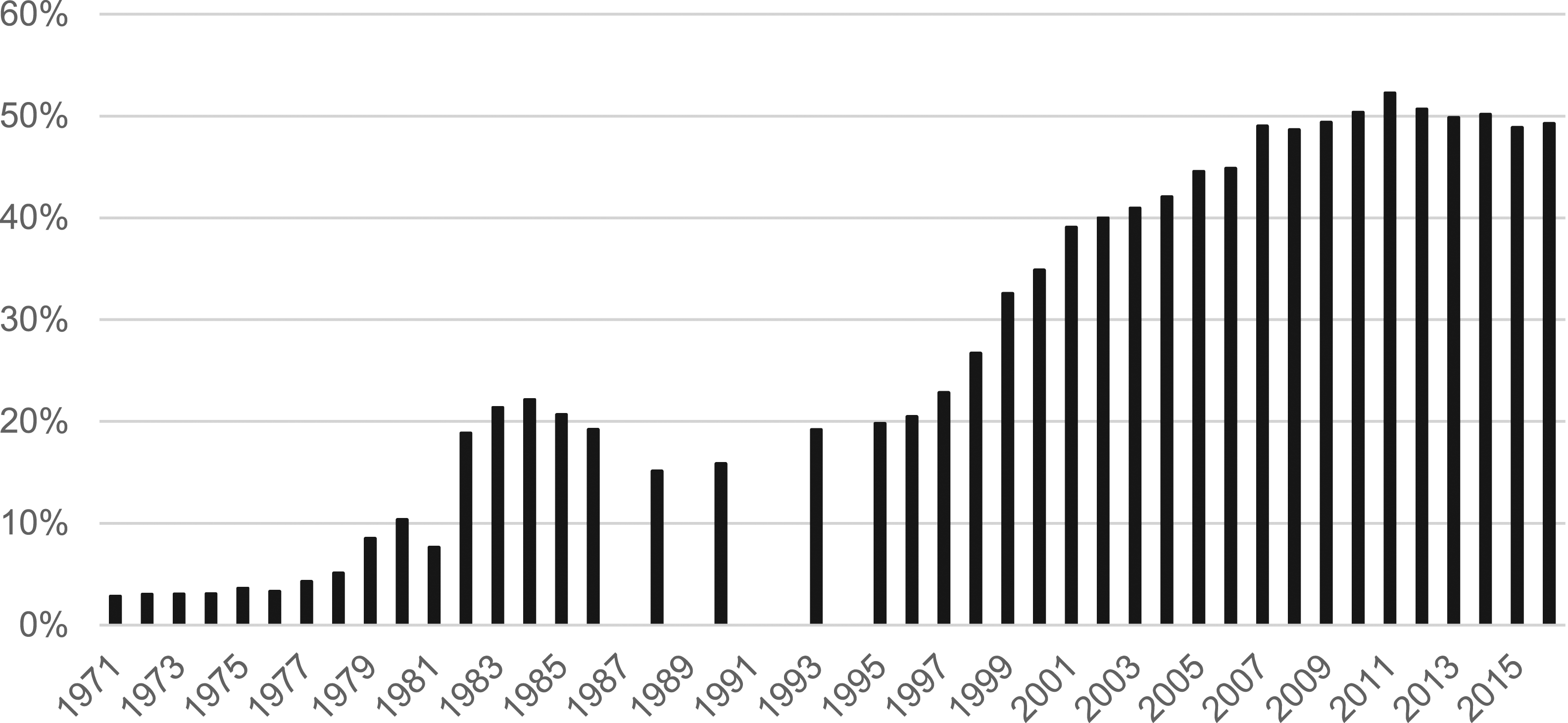
The push for massification has additionally raised questions about the sustainability of expansionary policies and the impact on classroom quality. To accommodate an increased number of students with decreasing resources, HEIs increased class sizes, leading to an average pupil-teacher ratio increasing from 16.2 in 1990 to 26.6 in 2016 (UNESCO, 2020b). Research has found that larger class sizes significantly correlate with a reduction in student performance due to declining quality from a reduced pupil-instructor interaction (Mulryan-Kyne, 2010) and increased surface learning emphasis, rote learning as opposed to critical thinking and discussion (Exeter et al., 2010). The lack of critical thinking afforded to students decreases the significance of their studies for real-world applications and fails to meet the goals of the Thai national reform policies that seek to develop a knowledge-based society (Buasuwan, 2018).
Thailand faces a demographic shift, with a rapidly aging society and decreasing birth rates. Thailand has experienced significant declines in its young population (0–14 years old), peaking at 44.1% of the total population in 1969 to a low of 16.8% in 2020 (UNESCO, 2020c). In Southeast Asia, Thailand has the second-lowest population growth rate (0.3%) and the second-lowest 0–14 and 15–24-year-old population categories, 16.8% and 13.4%, respectively (Appendix A). Demographic conditions directly impact the current and future enrollment in higher education, as the size of the young population is a primary determinant of the future domestic enrollment capacity. According to Vincent-Lancrin (2008), 80% of domestic higher education students are less than 25 years old, signaling that a Thai educational surplus will proliferate if a status quo approach to domestic recruitment continues. The rapid student declines have already raised alarms in Thailand, as the failing enrollment in Thai HEIs has sparked concerns that up to 75% of all HEIs could shutter operations due to financial insolvency (Mala, 2017). Private HEIs are especially at risk of declining enrollment populations, as the entire private tertiary market accounts for only 18% (325,387) of student HEI enrollment in 2018 (Australian Government, n.d.). Traditionally, private HEIs offered niche programs and curriculum that complemented public HEIs’ core specialization. However, public HEIs have expanded their program offerings to alternative subjects due to reduced government funding and the need for additional tuition-based revenue. Program changes have intensified the competition for students and exasperated significant cost-cutting measures that HEIs execute to remain in operation (Crocco, 2018). Reduced resources by HEIs to appropriately monitor academic quality and institutional directives that prioritize enrollment through decreased program entry requirements have led to the over-issuance of degrees (Noui, 2020). The decreased emphasis on performance to graduate has decreased the reputation of the Thai tertiary sector, affecting the recruitment and retainment of internationally recognized faculty members, reducing the Thai’s competitive ability in the Southeast Asian educational community (Crocco, 2018).
Government inefficiency and the decline of Thai K12 education
According to Suisse’s Global Wealth Report 2021 (Suisse Credit, 2021), 40% of Thai national wealth is controlled by 1% of the population, which ranks fourth worst for wealth equity. Wealth inequity is a significant indicator of future student academic engagement, with the bottom fifth (20%) four times less likely than the top 20% to attend any form of tertiary education (Tansakun, n.d.). Students in the lowest economic quintile graduated 55% less than those in the highest economic group (UNESCO, 2021). Extreme inefficiency in the administration, management, and assessment of K12 schools, especially in rural settings, reinforces redundancies in bureaucratic oversight (Fry and Bi, 2013). Budgetary limitations have decreased the appointment and training of educational auditors (Rattananuntapat, 2015), leaving many schools to their own devices. Although recent education reforms seek a shift to a student-centric problem-based curriculum, limited resources allotted to academic directors combined with teacher reluctance to evolve from traditional rote-learning designs have exasperated the educational gap between have and have not school (Noom-ura, 2013). Rural teachers are not allocated the same professional development opportunities; therefore, ICT usage is low, and dependency on a teacher-focused curriculum remains (Buasuwan, 2018).
The Ministry of Education is the primary agent promoting professional development for K12 education administrators and teachers in Thailand. However, inconsistent policies, uneven support, and questionable political motives have created an educational atmosphere skeptical of future progress (Vungthong et al., 2017). Since 2005, there have been 15 different Ministers of Education and seven Prime Ministers (including two military coups—2006 and 2014), each with different concepts and directives to reform and improve education. Without appropriate oversight, many subjects deteriorate or are sacrificed and are replaced with a less intensive curriculum that promotes educational achievement with limited transferable skills (Fry and Bi, 2013). Consistent assessment that is objective in evaluating student skills is necessary to promote educational growth; however, subjective grading that over-reports student achievement is ubiquitous in the Thai education system. Numerous education directors have promoted a no-fail policy within their schools, pushing teachers to increase student performance to appease parents and shield students from negative emotions (Halligan, 2011). Without adequate lessons and virtually no consequence for poor performance, students deemphasize the need to meet or make academic goals and ultimately develop ever-decreasing levels of academic resilience (Miller and Mills, 2019).
O-NET results for grade 12 Thai students (2014–2020).
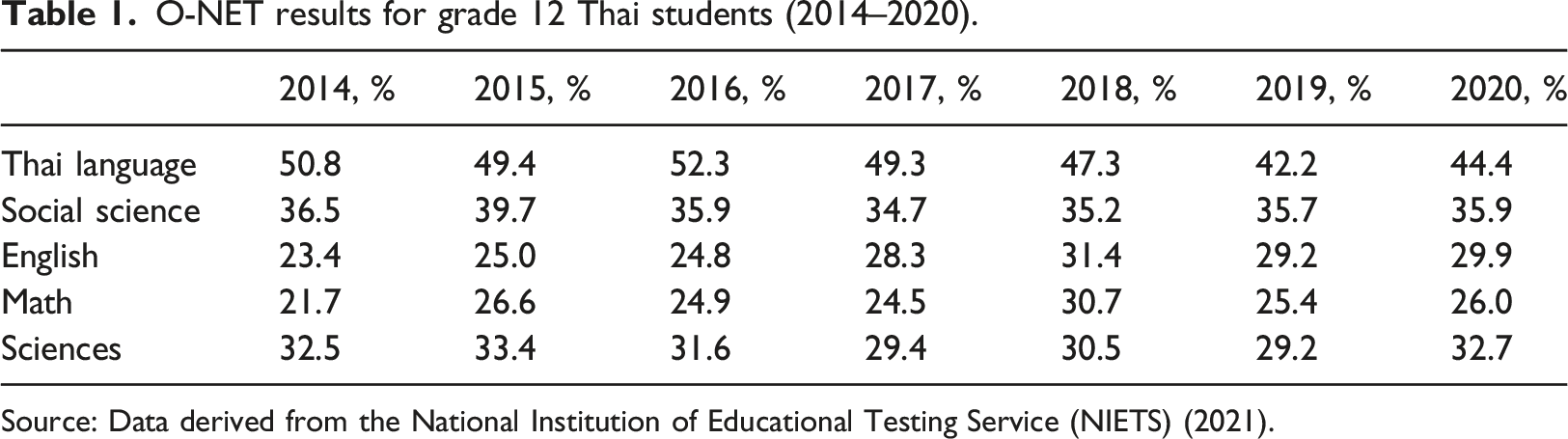
Source: Data derived from the National Institution of Educational Testing Service (NIETS) (2021).
Thai tertiary entry requirements and pursuit of international students
The declining quality of Thai K-12 education has created significant hardships for Thai HEIs, as they face a shrinking student population that lacks the foundational understanding to meet the prerequisite academic knowledge. Students who lack core competencies in communication, math, problem-solving, critical thinking, and social adaptability are far less likely to be successful in their academic programs (Du Plessis and Gerber, 2012). The systematic failings in O-NET achievements highlight the complexities faced by students and Thai HEIs. The lower awareness reduces student preparedness, potentially decreasing university performance and engagement and leading to an increased dropout risk (Rujichinnawong, 2018). University instructors expect incoming cohorts to have the necessary precursor skills (report writing, independence, and interpersonal communication) to participate in the classroom and actively engage the academic assignments (Barrie, 2007). Thai students are limited in recognizing tasks that are not explicit, performing operations beyond basic formulae, and interpreting outcomes. Thus, without significant remedial skill training, preparatory programs, and pronounced institutional–administrative support from the university, a substantial number of students will be unable to cope with their program's academic demands (Jansen and van der Meer, 2011).
Thai HEIs could reduce entry requirements to ensure adequate student enrollment, risking the overall academic quality of services offered or maintain existing requirements and risk significant shortfalls in recruitment targets. Both choices have considerable adverse effects on the operation of the HEI but provide marginal benefits. Schools that reduce entry requirements to attract student enrollment are tasked with providing foundational knowledge while increasing services to support (Campos, 2015). Both strategies increase the likelihood of budgetary shortfalls resulting in program downsizing, reduced scholarships, hiring freezes, and staff reduction (Mala, 2017). The cost of attending remedial courses can put additional financial stress on students, where many credits are not recognized for program graduation (Shults, 2000). The additional time added to complete a program, the increasing demands to participate in non-credit courses, and the costs are significant factors that have led to sizeable dropout rates among university students (Scott-Clayton et al., 2014). The quality of Thai university programs is often diminished by the adulterated content and lowered performance expectations (Nagi, 2016).
The expanded program offerings by public institutions have created a more pronounced overlap with private universities (Praphamontripong, 2005), leading to stronger direct competition. The increased competition in programs and dramatically declining student populations have left many Thai HEIs struggling to recruit the necessary number of students to maintain stability. The inability of Thai HEIs to differentiate their programs from others limits their ability to draw direct attention from students. Declining enrollment numbers have caused a significant shift from recruiting domestically to recruiting internationally. Thai HEIs, especially private HEIs, are increasingly dependent on international students to ensure the financial viability of their operations. According to Fry and Bi (2013), up to 70% of private HEIs enrollment is attributed to international students. International students are more critical of an institution’s brand and reputation, evaluating how opportunities associated with the affiliated school will benefit them economically through a cost–benefit analysis (Scott and Mhunpiew, 2021). Internationalizing Thai institutions requires reallocating resources to marketing efforts to stand out in the international marketplace.
Recruiting international students requires an institution to ensure a strong reputation for quality and services; these expectations may conflict with the desire to recruit domestic students requiring reduced entry requirements. Programs must be led in foreign languages with a curriculum suitable for foreign markets. Hiring qualified instructors competent in English (or Chinese) further strains resources that are already overwhelmed. Thai HEIs that substantially increase international student enrollment benefit from increased tuition revenue, often twice as expensive as domestic fees (Jareonsubphayanont, 2014), and increased accommodation and catering revenue. The surplus revenue from international student recruitment has substantial cross-subsidization importance, as the additional revenue allows for allocating resources for investment. An increased international student presence would improve domestic student opportunities through increased service offerings and an enhanced internationally tailored curriculum; however, with international programs being taught predominantly in English, most Thai students lack the skills to participate (Tantiniranat, 2020). With the over-representation of international students, institutions are at risk of external forces that may trigger large-scale de-enrollment without warning (Scott and Mhunpiew, 2021). The COVID pandemic is an example of an unforeseen external event that forces large-scale de-enrollment or engagement by international students. A social impact assessment of COVID-19 for Thailand by Oxford Policy Management (2020) indicated significant disruptions to the education sector with increased dropout rates, increased training and equipment costs, and greater inequity between institutions and their ability to cope with demands.
Recommendations
Issues concerning social education policies towards decreasing opportunity inequities, inefficiencies in policy management and institutional design, and HEI economic stability are extraordinarily complex and require a diversified strategy specific to the individual, institutional conditions, industry needs, and political demands. The following recommendations are not intended to serve as solutions but to encourage discussion and reflection.
Government policy inefficiencies
Clear, consistent, and achievable policies are necessary for growth in the education sector. Education reforms that are not universally adopted, ineffectively applied, or re-imagined by a revolving door of Ministers of Education will simply be disregarded as political talking points that are soon forgotten. The most effective method of creating a policy is by driving the message, promoting its merits, and proving to doubters the benefits of the stated points. Policies need to be obtainable for all parties involved, with short, medium, and long-term goals that can be measured. Neoliberal agendas promoting decentralized education can trigger improved conditions and quality in higher education institutions, but systematic measures must be installed to ensure the minimum standards are achieved. Dramatic reductions in government spending towards the recruitment and training of education assessors leave institutions to self-assess. Institutions will not undertake dramatic reconceptualization of institutional practices unless forced by need; Thai educational institutions that are financially at risk are more likely to bypass costly corrective measures. Often, small regional educational bodies and institutions are not financially ready to participate in reforms, ultimately hindering the quality of education offered to the most vulnerable. At the governmental level, increased spending in the short term on assessment and policy compliance will reap the rewards later. Increasing the availability and engagement of assessors and education ministers in rural districts and provinces will build trust toward reforms. A collaboration between educational bodies and institutions for quality assurance assessment at the school level will help build the sector’s reputation. The improvement in quality and services across all HEIs will benefit the financial capabilities of everyone involved.
K12 inequalities and performance
The declining academic performance of K12 students needs to be aggressively targeted, as current conditions have long festered under inequalities and insufficient support by the government. Results show from O-NET that the foundational knowledge in the core curriculum is nowhere near the necessary level to ensure an educated and skilled population. Blame for performance issues would be easy to assign to all stakeholders, as the issue is systemic. Thailand has a rural population of nearly 50% (Appendix A); thus, focusing on Bangkok and a few other urban areas provides a disservice to the nation. The government ensures equal access to quality education (enshrined in the 2017 constitution and 2018 national education strategy); this requires more focus on areas of need than on schools in an advantageous region. School leaders need to be held accountable for their students and overall performance; disregarding core subjects like math or science for other non-transferrable programs is unacceptable. Protecting children from needless stress in school is a complex but noble act; however, academic resilience is necessary to develop the character traits necessary to succeed in HEIs and the workplace. Preparing students with appropriate learning skills reduces anxiety as they have the tools and self-efficacy to combat future academic and professional demands. Simply passing students because it saves face only discredits those who worked hard to achieve their goals. Parents must hold schools and teachers accountable, working with their community to further their children’s opportunities. Teachers need to hold their peers and school leaders accountable, as blindly accepting substandard behavior will only encourage actions to persist. The government also needs to acknowledge that the O-NET test is exceptionally flawed, often with convoluted questions that negatively affect students and teachers. Engagement with a wider expert audience and inviting international auditors to provide feedback on instrument design is necessary for improved assessment design. As Thailand wants to improve its global education standing, asking an international team to participate in future instrument designs will aid this process. Government policies ensuring national tests effectively promote quality will allow for curriculum development and instructor methodologies to appropriately engage students so that their skills and knowledge are advantageous compared to their regional counterparts.
HEI student recruitment
Thai HEIs, public or private, should not only have to pick one type of student to recruit—domestic or international. Over-reliance on a single group creates over-exposure and risk to unexpected external forces. Potential domestic applicants’ relatively low knowledge base conflicts with quality education. Until dramatic reforms can occur at the K12 level, HEIs should create a broader range of foundation or pathway programs that advance the knowledge base of the prospective student before they enter traditional undergraduate programs. This approach has drawbacks, the cost to the student and the institution in these foundation programs and the fear that students do not want to participate for an additional year (or two) of pre-university training. Government support will be necessary for the success of foundation or pathway programs. Promotion by the Ministry of Education to students and parents of its merits and subsidized support will help reduce the financial burden on the institution and students. These subsidies can be reduced gradually with the improved performance of K12 students in a newly designed national test that accurately reflects the academic capabilities of Thai students. As HEIs maintain strict program entry requirements, the quality of courses will gradually improve. A reduced teacher-pupil ratio will also be critical in this process as it will allow for improved interaction and additional time for instructors to perform the decisive assessment of their students. Higher education institutions need to assist instructors with improved institutional support, providing professional development and quality leadership to improve instructor agency.
Institutions prioritizing international student enrollment to improve financial stability must diversify the potential student application pool to reduce the risk of adverse market shifts. Chinese students currently account for over 51% of all international students (MHESI, 2022) enrolled in Thai undergraduate programs. Though recruitment of Chinese students should continue, Thai HEIs should shift marketing efforts to potentially high-growth markets like the E.U. and African nations. Combined, these markets represent less than 6% (MHESI, 2022) of all undergraduate international students studying in Thai institutions. Thai institutions should utilize additional tuition revenue from international students to subsidize remedial courses for domestic students, offsetting the cost to both the institution and the student. The emphasis on core skill development will support domestic students and enrollment while improving educational quality and institutional reputation. Thai institutions with a strong representation of international and domestic students improve the academic and social experience students encounter during their studies. Academic and social environments are crucial to student integration (Tinto, 1982), strengthening student engagement and persistence.
Conclusion
Higher education quality is not simply a result of a single attribute or action but a myriad of internal and external policies. This paper discussed the challenges Thai HEIs currently face in promoting and maintaining quality education services and fiscal stability. Changing demographic conditions and the market saturation by HEIs over the past 20 years have resulted in a hyper-competitive environment targeting a declining number of inadequately prepared students. The drive to improve conditions through government reforms is riddled with inefficiency and hesitation, as policies lack a cohesive message and are supported disproportionately, heavily favoring urban areas. The education inequality for rural students further reinforced negative beliefs of limited upward social mobility potential. Rural schools often lack the appropriate oversight and leadership to bypass the challenges imposed by social inequality effectively, thus amplifying declining conditions. Higher education institutions are placed in a position where they must reduce their expectations and quality to meet the demands of the students not sufficiently educated in core skills or seek international students and effectively close their doors to the domestic market.
Although this paper has recommended various measures to improve quality education, the success or failure of those recommendations rests on the Thai government. Although not expected to disregard their neoliberal agenda, the Thai Government must acknowledge that quality issues are festering within their country. That strong, clear, and measurable actions need to be undertaken. These reforms would likely require additional short to medium-term budget allocations and the effective distribution of subsidies to various schools and institutions to ensure the planned reforms occur. Oversight is needed; however, with a revolving door of Ministers of Education and educational agendas, inconsistency will continue to limit student potential and Thai educational quality standards.
Footnotes
Declaration of conflicting interests
The author(s) declared no potential conflicts of interest with respect to the research, authorship, and/or publication of this article.
Funding
The author(s) received no financial support for the research, authorship, and/or publication of this article.

Appendix A
Population Growth and Youth Population Percentages in Southeast Asia (2019). Source: Data derived from UNESCO (2020c).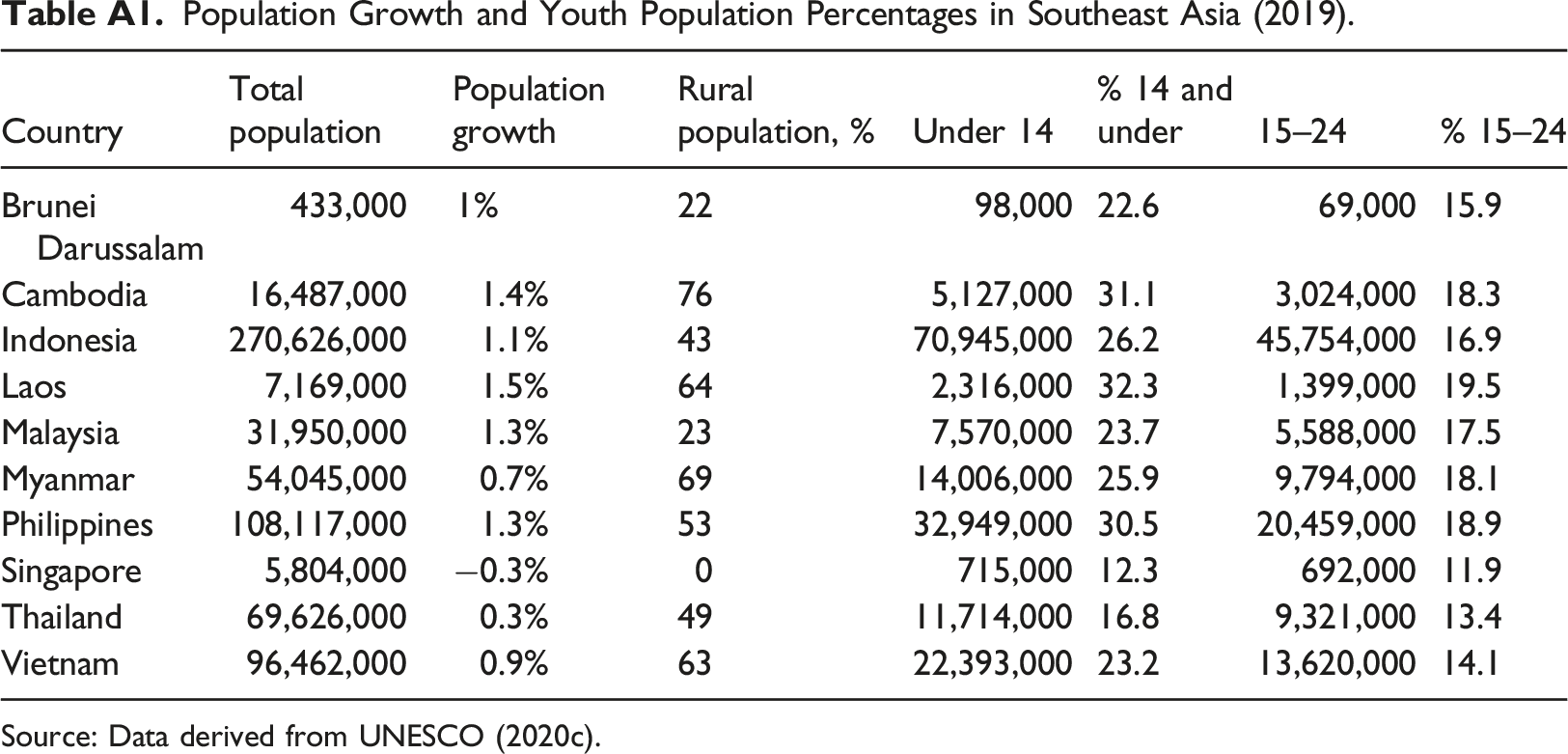
Country
Total population
Population growth
Rural population, %
Under 14
% 14 and under
15–24
% 15–24
Brunei Darussalam
433,000
1%
22
98,000
22.6
69,000
15.9
Cambodia
16,487,000
1.4%
76
5,127,000
31.1
3,024,000
18.3
Indonesia
270,626,000
1.1%
43
70,945,000
26.2
45,754,000
16.9
Laos
7,169,000
1.5%
64
2,316,000
32.3
1,399,000
19.5
Malaysia
31,950,000
1.3%
23
7,570,000
23.7
5,588,000
17.5
Myanmar
54,045,000
0.7%
69
14,006,000
25.9
9,794,000
18.1
Philippines
108,117,000
1.3%
53
32,949,000
30.5
20,459,000
18.9
Singapore
5,804,000
−0.3%
0
715,000
12.3
692,000
11.9
Thailand
69,626,000
0.3%
49
11,714,000
16.8
9,321,000
13.4
Vietnam
96,462,000
0.9%
63
22,393,000
23.2
13,620,000
14.1
Appendix B
O-NET Results for Grade 12 Thai Students, Sub-Categorized by Region (2018–2020). Source: Data derived from the National Institution of Educational Testing Services (NIETS) (2021).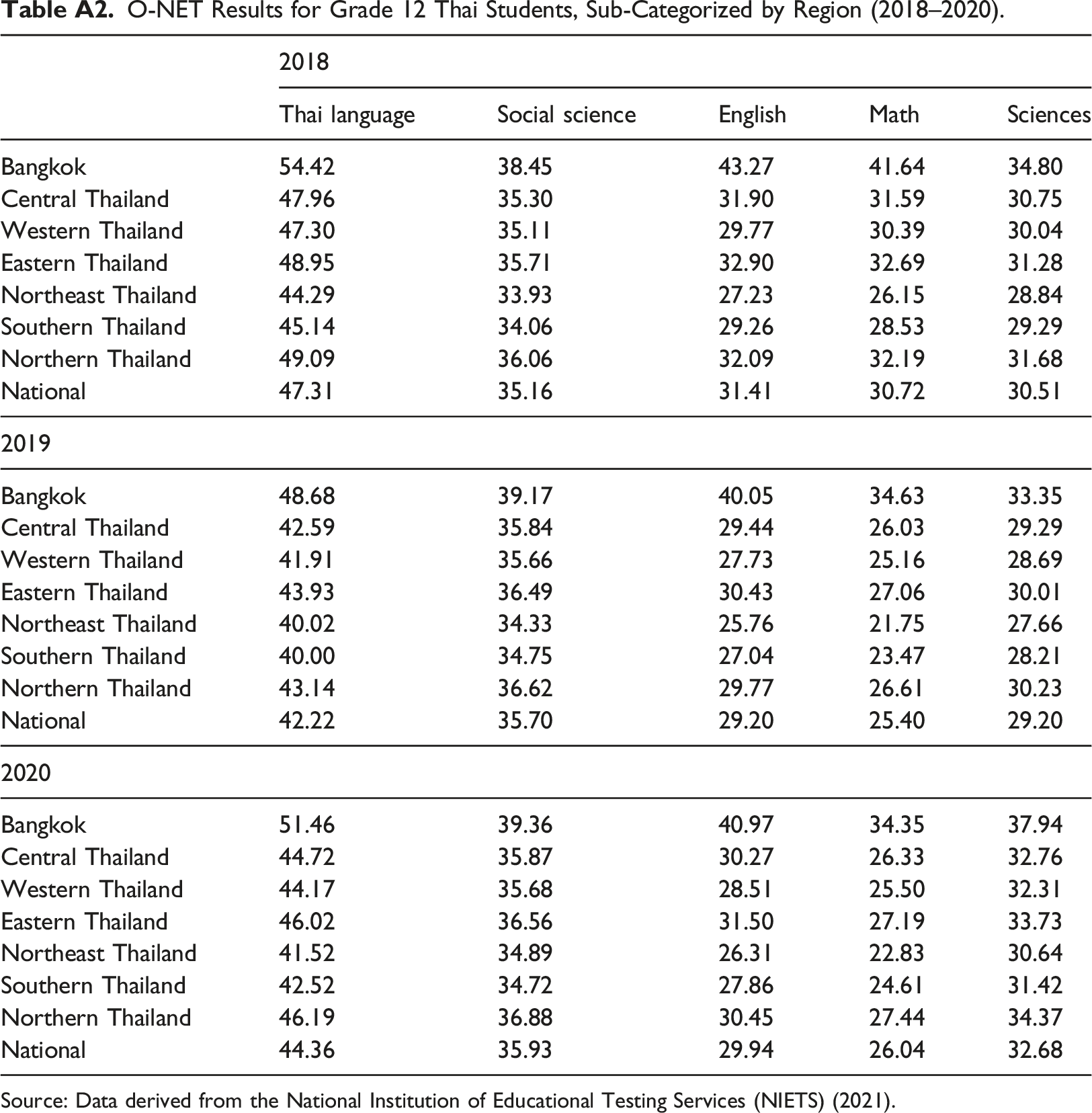
2018
Thai language
Social science
English
Math
Sciences
Bangkok
54.42
38.45
43.27
41.64
34.80
Central Thailand
47.96
35.30
31.90
31.59
30.75
Western Thailand
47.30
35.11
29.77
30.39
30.04
Eastern Thailand
48.95
35.71
32.90
32.69
31.28
Northeast Thailand
44.29
33.93
27.23
26.15
28.84
Southern Thailand
45.14
34.06
29.26
28.53
29.29
Northern Thailand
49.09
36.06
32.09
32.19
31.68
National
47.31
35.16
31.41
30.72
30.51
2019
Bangkok
48.68
39.17
40.05
34.63
33.35
Central Thailand
42.59
35.84
29.44
26.03
29.29
Western Thailand
41.91
35.66
27.73
25.16
28.69
Eastern Thailand
43.93
36.49
30.43
27.06
30.01
Northeast Thailand
40.02
34.33
25.76
21.75
27.66
Southern Thailand
40.00
34.75
27.04
23.47
28.21
Northern Thailand
43.14
36.62
29.77
26.61
30.23
National
42.22
35.70
29.20
25.40
29.20
2020
Bangkok
51.46
39.36
40.97
34.35
37.94
Central Thailand
44.72
35.87
30.27
26.33
32.76
Western Thailand
44.17
35.68
28.51
25.50
32.31
Eastern Thailand
46.02
36.56
31.50
27.19
33.73
Northeast Thailand
41.52
34.89
26.31
22.83
30.64
Southern Thailand
42.52
34.72
27.86
24.61
31.42
Northern Thailand
46.19
36.88
30.45
27.44
34.37
National
44.36
35.93
29.94
26.04
32.68