




Abstract
No dyslexic children are left behind; it takes a village to raise a child. Thus, fostering the achievement potential of dyslexic children and avoiding their engagement in delinquent conduct is none other than everyone’s responsibility. This research aimed to achieve a deeper understanding of the causes of delinquent behaviour in children with dyslexia and to provide solutions that would steer their attitudes and behaviour towards a more ethical and meaningful life. This qualitative study examined three samples representing dyslexic learning centres located in various places. The data were collected through online semi-structured interviews. Following that, the data were analysed utilising thematic analysis. It was discovered children with dyslexia face a variety of challenges. The community’s and parents’ stigma towards these children, such as being slow and lazy, were proven to have influenced them with deviant behaviour. It was recommended that children with learning difficulties get early detection and intervention, have a robust support system and adopt various pedagogical methods to ensure that all students could learn and guarantee dyslexics’ future success. In conclusion, early detection will enable children to get the proper intervention, preventing them from engaging in delinquent behaviours and assisting them in living in a more fulfilling life.
Introduction
Dyslexia is categorised under Specific Learning Difficulties (SLD). There are other terminologies used for the SLD, although children classified as SLD do not belong into the ‘disabled’ category; they just have difficulties and need a different approach to learning. The SLD children’s brains are as normal as those of any other children. SLD is not a terminology that is used to describe children whose educational history have been deprived and interrupted. Indeed, this is not a disability, but rather a characteristic of individuals who can read, write and count, and yet stigmatised as such.
Dyslexics are the term for children with dyslexia. It would be best for dyslexics to undergo dyslexia screening assessments as soon as possible prior to the commencement of school to obtain the proper education that suits their conditions and needs. Inability to identify their condition results in generalisations in educational provision. Due to their learning challenges, individuals are more likely to experience boredom in the classroom and lose interest in attending school. In addition, their academic performance will suffer, and they will be more susceptible to peer bullying.
Eventually, children will be left behind in school if neither educators nor parents take action. For successful early intervention, Kaye et al. (2022), Schelbe et al. (2021), Sanfilippo et al. (2020), Sienknecht (2020); and Nicolson and Fawcett (2015) highlighted school-based screening for children. According to research done by Huang et al. (2020) titled Personality, Behaviour Characteristics and Life Quality of Children with Dyslexia on 60 children with dyslexia from four primary schools in Shantou City, China, their academic performance was low. The children’s academic performance may be low. Nevertheless, they may thrive or have aptitude in other areas. In addition to emphasising only academics, children might also be educated in other 21st-century skills. According to the World Bank (2021), cognitive, socio-emotional, technical and digital skills are essential for success in the labour market of the 21st century.
Consequently, evaluating children’s achievement just by their academic achievement is blatantly unfair. Furthermore, a positive dyslexia journey, according to Nicolson and Fawcett (2015), must begin with a positive assessment, followed by positive aspirations and positive acceleration, which will lead to a positive career. This will be the obligation of not only educators and the school but also parents and the surrounding community.
Due to their lengthy exposure to learning dissatisfaction, children have developed low self-esteem, anxiety and emotional instability as a consequence of their negative school experiences, further diminishing their motivation and emotional state (Huang et al., 2020). Moreover, Huang et al. (2020) emphasised that negative personality features exacerbate dyslexia symptoms when students were reprimanded by teachers and parents, shunned by peers and experienced emotional distress. There was a possibility that these children may seek out adult friendships and get interested in social issues outside of school. Furthermore, Alexander-Passe (2016a) stated that “crime is a strategy of self-survival and finding a sense of fulfilment in a community that does not judge individuals by academic achievement” (p. 10). Winters (1997) stated that students with learning difficulties were more likely to fail in school and had low attendance.
What would have happened to these children if they had not been screened for learning difficulties earlier? According to Macdonald (2009), little study has been conducted on the effect of socioeconomic status on individuals with dyslexia who have been convicted. Caskey and Freney (2019) stated that their inability to read was associated with dyslexia and crime. Dyslexia is not a disability, but a learning difficulty. There are some who has succeeded in school, higher education and business. Indeed, they are well backed throughout by support system. On the other hand, some were unable to complete their education due to their learning disability must be understood, and a variety of teaching approaches must be employed. As a result, this research was conducted to elicit information from practitioners at selected agencies that engaged with children diagnosed with dyslexia and to address three research questions: what are the current issues faced by these children? Why they engaged in delinquent behaviour? How may these children have a more fulfilling life? As a result, this study sought to accomplish two research objectives: to better understand reasons children with dyslexia engage in delinquent behaviour and to recommend solutions for them to live in a more fulfilling life.
The significance of this research was to alert the public to the fact that dyslexia was not a disability but a learning difficulty. There are dyslexics who can succeed in school and higher education. Indeed, they were provided with an excellent support system throughout. On the other hand, some were unable to complete their education due to their difficulties in learning, needed to be emphasised. In addition, this research indicated that the education and support systems must be reformed if children engage in delinquent behaviour due to their learning difficulties. In an initial effort to achieve this objective, it is essential to screen children entering primary school, engage with their parents and simultaneously educate the public about learning difficulties.
Dyslexia in Malaysia
Beng (2010), in his research on dyslexia in Malaysia, discovered that between 5% and 10% of school-aged adolescents were diagnosed with learning difficulties. In 2008, Dyslexia Malaysia (2021) reported that 500,000 pupils had been diagnosed with dyslexia. Almost all Malaysians are familiar with or have heard about dyslexia. However, their knowledge and understanding are limited. This was proven by Ramli et al. (2019), who studied 138 Malaysian preschool teachers with a Diploma in Early Childhood Education. Teachers have a strong awareness of dyslexia in general but are less knowledgeable about the symptoms, diagnosis and interventions (Ramli et al., 2019). Unquestionably, average people would not know much about dyslexia if this scenario happened to teachers with expertise in early childhood. The teacher’s ignorance will have a significant influence on children with dyslexia (Rahman, 2019). Samsudin and Alias (2021) researched 30 parents at one of the schools in Putrajaya, Kuala Lumpur, and discovered they had limited awareness of dyslexia. The inability to focus for extended periods is one of the symptoms of dyslexia. It was as well found that there was a lower than average understanding of dyslexia among university students (Subramaniyan et al., 2020).
Dyslexia Malaysia (2021) describes dyslexia as the inability to convert the written images received through the eyes into meaningful thoughts; individuals with dyslexia seem ‘normal’ but struggle with reading, writing and mathematics. Individuals who have dyslexia as well have difficulty learning a new language (Dyslexia Malaysia, 2021). Adults and children are equally affected by dyslexia, but with suitable pedagogical approaches, they may learn effectively and efficiently (Dyslexia Malaysia, 2021). These descriptions demonstrate that individuals with dyslexia are normal but learn uniquely. They need to learn slowly to comprehend and decode words to become proficient, as they have difficulty reading words they have never seen before (Chung and Lam, 2020). Razak et al. (2021) conducted research on dyslexic Malaysian children. According to them, the children ‘exhibited a vivid imagination involving the production of language-related images or experiences from memory in order to create new images and bring life to the story’ (p. 189).
Stigmatisation among community towards children with reading difficulties
Children with reading difficulties have resulted in a stigma in the community. Alexander-Passe (2015) noted that dyslexia was viewed negatively and is not something they feel capable of assisting. They had been labelled as ‘lazy’ or ‘stupid’ prior to their diagnosis and thought that their classification of dyslexia counteracted for this experience (Gibby-Leversuch et al., 2019). Additionally, there is a perception that children that have learning difficulties will have less future success in life, less attractiveness and less emotional stability (Lisle, 2011). Regrettably, stigma occurs most often throughout the school years. This is due to the fact that student who are unable to read and write receive unfair treatments (Alexander-Passe, 2015). The truth is that students with dyslexia may have trouble to comprehend vocabulary or words, to recognise and explain their meaning, to grasp their relationship to other words and to understand their proper contextual application (Chung and Lam, 2020).
Strong social support from family and community is critical for these children to thrive in adulthood. Teachers in high school thought that teaching and learning using technology aided dyslexics by allowing them to spend more time online accessing course assignments and reading resources (Granzen, 2019). When an instructor at a higher learning institution is aware that a student has dyslexia, this fosters a favourable attitude toward the student and an interest in learning more about dyslexia-related difficulties (Stampoltzis et al., 2015). Stampoltzis et al. (2015) found that 58% of staff agreed that students should disclose their learning difficulties upon admission, while 42% disagreed due to concerns about confidentiality about special needs; however, this also depends on the university’s rules and regulations.
Delinquent behaviour among dyslexic children
Some children with dyslexia who have completed their school and college years are privileged to have avoided delinquent behaviour or social issues. They have overcome life obstacles as a result of a healthy environment and positive support from family members or guardians. Indeed, several of them struggled in school due to their challenges, and neither parents/guardians nor school employees offered assistance. Certain parents are unaware and unaccepting of dyslexia. According to Bajaj and Bhatia (2019), misinformation about dyslexia screening and treatment, as well as a lack of school assistance, contribute to dyslexia children’s inability to deal with education. Some parents are financially unable to send their children to specialists. Thus, parents from more affluent socioeconomic situations might draw the attention of such specialists to dyslexics (Chung and Lam, 2020). There is also a dearth of state support for assisting individuals with reading difficulties (Chung and Lam, 2020; Kirby, 2020). It is distressing that no solutions can be established and that individuals instead blame one another. As a result, these hapless children become the victim, as adults take no action.
While the spotlight is generally on successful individuals with dyslexia, it is critical to recognise those with dyslexia who struggled academically in school and the path they took. It is vital to intervene with children who have difficulty reading or who are at an increased risk of emotional and behavioural difficulties (Hall, 2000; Snowling et al., 2020). This encourages adults to take a more proactive role in assisting children with learning difficulties. All teachers in the school must be familiar with the indications of learning difficulties in children. As a result, when these children attend school, it is mandatory to run screening tests on them. According to Alexander-Passe (2016b), dyslexia in school is often misdiagnosed or late-diagnosed due to teachers' lack of awareness about learning disabilities, resulting in humiliation from peers and teachers due to low academic performance. Hence, these children should get required additional attention and should not be marginalised by the school’s larger agenda (Hall, 2000).
Learning difficulties may be linked to delinquent behaviours (Hassan, 2015; Sridevi et al., 2015; Zakopoulou and Georgiou, 2016). Additional behavioural issues that these children face include aggression, anti-social behaviour and hyperactivity (Hassan, 2015; Sridevi et al., 2015). As shown in Figure 1, children with learning difficulties who scored higher on all sub-scales, including aggressiveness, anti-social behaviour, hyperactivity, daydreaming and personality disorders, than children without learning difficulties. Sub-scales of children’s behaviour rating questionnaire for school children. Source: Sridevi et al. (2015).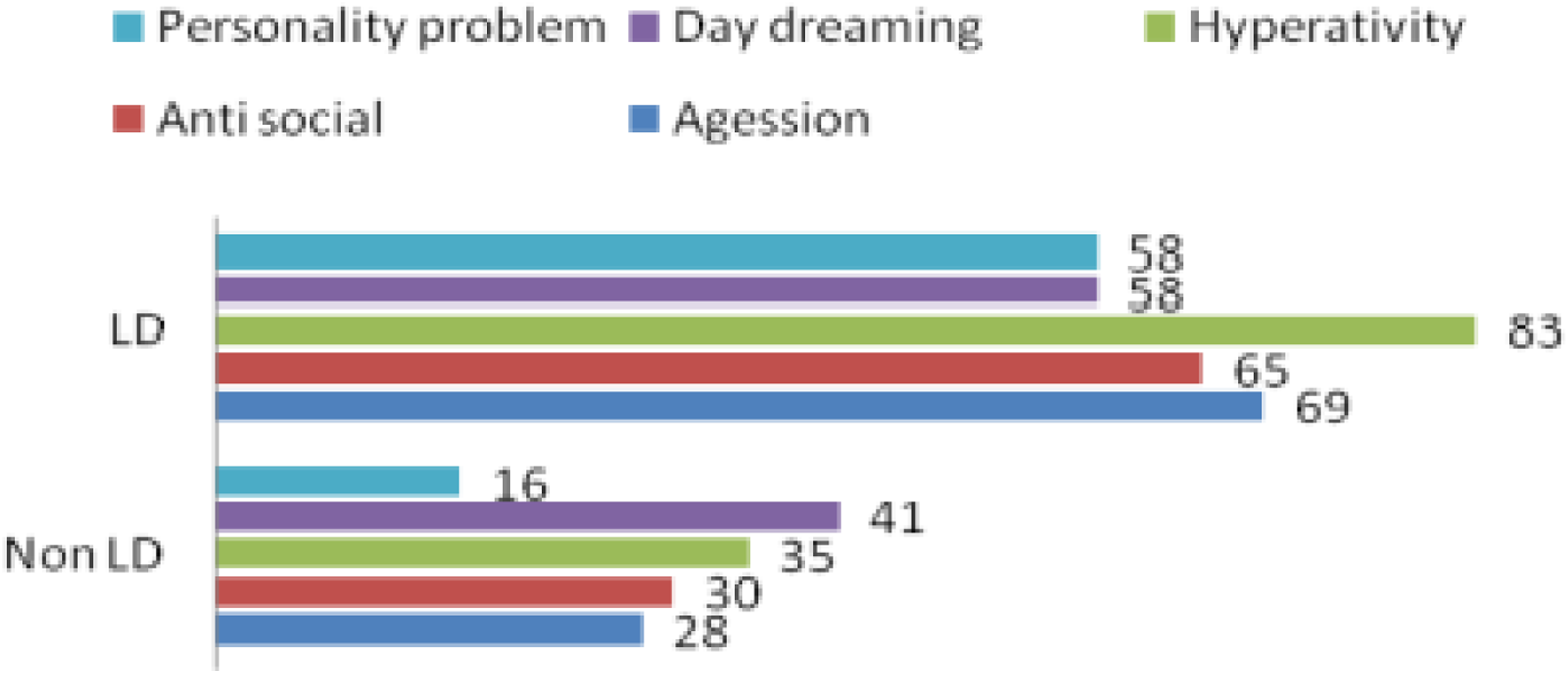
Winters (1997) noted more than two decades ago that students with learning difficulties may face future punishment if their impairment was not properly addressed. It is undoubtedly that students with learning disabilities are, in fact, brilliant, but their poor recall and exposure and experience with harsh rejection, emotional abuse and punishment hinder their potential (Zakopoulou and Georgiou, 2016). Therefore, nurturing based on individual potential is essential.
Foucauldian theory
Michel Foucault coined the concept of ‘knowledge and power’ in 1980. According to him, power does not flow from the top down nor does it flow from the dominant to the repressed; rather, it occurs in the daily interactions between social institutions and individuals (Eisler, 2007). His conceptual theories are very pertinent to practical social science because he views social work professions as a tool of governmentality, an agent that reproduces prevailing state discourses (Gilbert and Powell, 2010). According to Foucault, power is about productivity, not monopoly (Besley, 2001; Gilbert and Powell, 2010; Willcocks and Mingers, 2004).
Gordon (1980) reported that Michel Foucault claimed in an interview that institutions were obligated to define, govern and manage behaviours. As such, Eisler (2007) made a similar observation concerning the Foucauldian concept. Both institutions and societies advocate programmes (Gordon, 1980) through which this power exerts control over both actions (Eisler, 2007). Institutions such as the state, family, sciences and prisons encapsulate, coordinate and disseminate power (Willcocks and Mingers, 2004).
Eisler (2007) added that the ‘Foucauldian approach, which incorporates conceptions of power and knowledge, gave an essential and difficult chance to critically evaluate problems of youth, notably crime and delinquency within the realm of social control’ (p. 103). ‘Power must be evaluated via an analysis of how knowledge is generated and how it serves as the foundation for the formation and deployment of power relationships’ (Eisler, 2007: 104). While power and knowledge are intricately intertwined, their relationship is not equitable (Willcocks and Mingers, 2004).
According to Foucault concept, the goal is to ‘produce a dialectical relationship between knowledge, power and action that is productive in the sense that it generates new possibilities but also maintains an element of uncertainty and unpredictability in terms of actions, allowing for the exercise of discretion’ (Gilbert and Powell, 2010: 6). Eisler (2007) provided an example of Foucault’s notion for children in the school system, in which children who had emotional, behavioural or academic challenges were subjected to the surveillance of education system professionals. Additionally, staff members who deal with students who have special educational needs (SEN) must develop their capacity and understanding for the welfare and concern of SEN students' needs and growth (Allan, 1995). Besley (2001) remarked that employing a Foucauldian narrative method in school encourages constructive interactions in addition to negotiating power sharing between students and teachers.
As a result, power relations may begin to shift via consciousness and narrative processes, so altering the administration and structure of schools, classrooms and the broader community (Besley, 2001). According to Foucauldian, power is exercised over dyslexic children by providing them with emotional and social assistance in order to reintroduce them to school. The purpose of knowledge in this context is to educate everyone about dyslexia and those who are working/teaching with dyslexic children to meet their educational requirements. In the dyslexia setting, power and knowledge should go hand in hand to prevent the community’s stigmatisation of these children as lazy and unintelligent. Thus, as these children are marginalised and form a minority group, they will engage in deviant behaviour. According to Besley (2001: 85), ‘Foucauldian concept tackles concerns of minority representation and collaboration, pointing to an equitable distribution of speaking and acting opportunities for all voices in the community to be heard and acted upon’.
Methodology
The qualitative technique was adopted in the research. The data were gathered through online interviews with the study’s respondents selected through a convenient sampling technique. In Malaysia, there are 12 non-governmental organisations (NGOs) dedicated to dyslexia. The researcher chose five agencies, four of which are dyslexia centres and one of which is a community service centre that specialises in serving disabled individuals. Only three of the five agencies consented to be interviewed, while the other two dyslexic agencies declined.
Demography of the respondents.
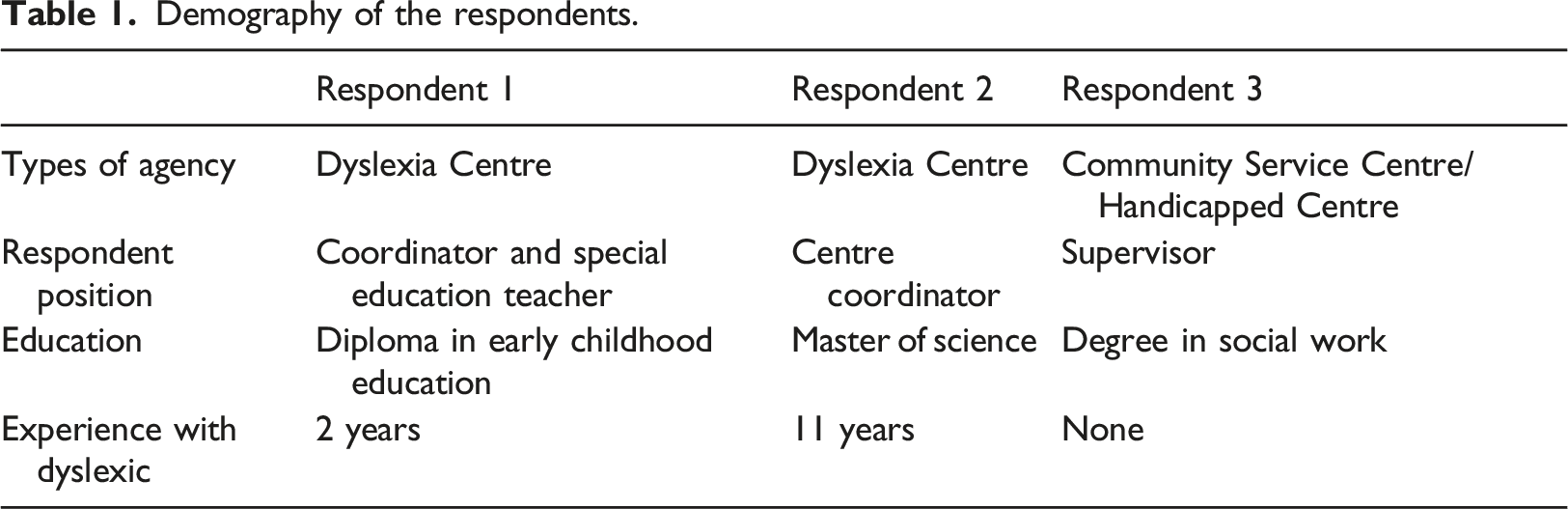
Semi-structured interviews were employed to gather data, and a questionnaire was used as the research instrument. The interview questions included the following topics: the agency’s profile, its activities and programmes, dyslexia characteristics and family and social issues.
Due to movement restriction orders during the COVID-19 pandemic, interviews were conducted through virtual conference calls. Prior to the interview, all respondents were informed of the research objectives in detail. Each interview lasted around 40 min. The interview was recorded with the respondents’ consent. The recorded interviews were transcribed and translated into English. Research fully complied with ethics. The data were analysed using thematic analysis to ascertain the most prominent issues raised by respondents.
Findings
A research’s primary focus was developing knowledge on dyslexia based on practitioner experiences and perspectives. As a result, this research focused on two distinct groups of dyslexics: those who involved in delinquent behaviour and those who had a better or more successful life. The dyslexia issues and stigma associated with them were the pinnacle of dyslexic with delinquent behaviour. While the focus of a dyslexic’s better or more successful life was on their strength and accomplishments. Another research concern was suggestions by the agencies.
Current issues in dyslexia
Numerous challenges were encountered, including different children with varying abilities in a remedial class, a lack of teacher comprehension of dyslexia needs, low self-confidence and a lack of assistance from other agencies regarding funding and learning facilities.
They learnt all the subjects. What’s the point? The kid has a problem with reading. But we don’t help the kid to read. This is why the kid is bored and has no motivation to come to school.
Respondent 1
Lack of awareness and comprehension of the nature of dyslexia was also cited as a factor in the dilemma, particularly as the number of children in need increased. Children with dyslexia have been enrolled in remedial classes, and without the appropriate strategy, they may suffer from multiple dyslexia and behavioural changes. Due to the inadequacy of the strategy and method, teaching and learning processes have become challenging and complicated for these children. Respondent 2 stated the following:
The school took an easy way, put students in a special education class because the student is slow. These students do not learn anything in this class. Sometimes the teacher told the student to just draw, watch TV and watch a video and we find that the student’s attitude has changed. More aggressive, sometimes speaks less because mixed with other slow learners or with speech delay that causing student to follow and that’s why this dyslexic student is multi-dyslexic, or even moderate we ask him if possible not to enter special education.
Respondent 2
Another challenge encountered by the agency’s personnel was the children’s lack of self-confidence because teachers at school often portrayed these students negatively due to their inability to read and write, which had a psychological effect on them. As a consequence, these children felt incapable of doing anything and lacked self-confidence. While self-confidence is critical for their learning experiences, a lack of confidence is becoming a serious concern for agency personnel.
Another significant concern in this research was a lack of assistance from connected agencies/organizations. Perhaps dyslexia is not perceived as a severe condition, and hence resources for slow learners in school are restricted. Respondent 1 stated as follows:
They only helped autistic, but we didn’t get anything because they don’t understand what dyslexic is suffering in school. For dyslexic, we know if we help them until they are able to read, they could become a lawyer, an accountant.
Respondent 1
Additionally, there was a dearth of support from other agencies, which reflected the agency’s lack of learning facilities for dyslexic children. This becomes more difficult if the dyslexia centre is unable to accommodate the large number of children in need. Respondents 2 opined as follows:
We do give a very good quality in terms of teaching and learning. But the teaching facilities do not follow and not as we expected. Sometimes, these children were dyslexic, but some other times, these students also portrayed other traits such as autism and so on.
Respondent 2
Stigma towards dyslexic
Students were stigmatised as slow learners, servile and incurable. These stigmas originated with the parents, teachers and community. There was evidence that some parents labelled their children as being lethargic and inattentive in comparison to other children, and hence they were prone to deviance. According to Respondent 1:
People labelled these students are lazy, stupid. When ask them to do things, they refuse to do so. Then we they grew up, they mingle with deviant kids – all problematic kids. Sometimes, parents did not realise their mistakes. When their kids are back home from school, parents do not ask anything.
Respondent 1
Additionally, teachers labelled students with dyslexia as lazy and slow learners. According to a respondent, some teachers make little attempt to provide these students with chances or possibilities for growth. Furthermore, Respondent 1 stated:
Teacher never give chances to these kids. Never. Sometimes, the children would say, teacher, I can do this. Teacher said, you want to do? But you are always late to school. The teacher scolded them. Supposedly we give them the opportunities. But no, they have been labelled as useless.
Respondent 1
According to Respondent 2, the issue was connected to the stigma imposed by parents, teachers, and the community. These groups define successful children as those who excel in examinations. Students who failed were labelled as foolish and troublesome. It was unfortunate, as they will be held accountable for any school or household problems. These stigmas compelled them to associate with adults or strangers who unconditionally accept them.
What more about society. If the students do not perform well, they will label them as problematic. For instance, if something was missing or being stolen, society will point the children as the culprits, which the stigma lingered in our society. We penalised them. These children are lack of guidance and they need our guidance. If no guidance or support from us adult, the children will find friends outside that would accept them.
Respondent 2
Dyslexia and juvenile delinquent
Apart from examining the difficulties faced by students with dyslexia, this research discovered some characteristics associated with dyslexia and how they were engaged in juvenile delinquency. Thus, lack of parental support and ignorance, children’s inability to read, which hampered their learning processes, community stigma and parents' low educational level were deemed to have pushed the children to engage in deviant behaviour.
According to Respondent 1, lack of parental support and a high degree of ignorance contributed in crime and deviant behaviour.
Definitely yes. Hundred percent. In the end they involve in crime. Keep disturbing others. Right? Then we blamed them. We do not realise it is actually our fault. What else when the support from parents was not there. The parents shown ‘don’t care’ attitude. At the end they will end up being a criminal. They will become an adult with problem. Psychologically they are not. But they keep instilling that they are not good.
Respondent 1
Limited reading abilities and learning difficulties may also contribute to developing delinquent and associated issues.
In some countries abroad, more than 60% prisoners are people with dyslexia. This means that people who go to prison are people who have reading problems. So, when he can’t read that is our trigger point, why can't he read? And back to the question, did this student not get school exposure? Or he has been exposed but he can't even learn.
Respondent 2
Above all, respondents stated that the stigma associated with the children contributes to their delinquent behaviour. Respondents admitted that this was especially true when they were labelled as problematic.
This society always isolate and stigmatise the children. People with social problems is the one who is not good at studying. So these children will be first having small problems. Down syndrome children hardly steal also children with and same goes for ADHD, but dyslexic is highly possible. Because the dyslexic boy is normal, his IQ is high, he just can’t read. When people can’t read, community say the children are stupid, but actually our intelligence is not just base in reading and writing.
Respondent 2
However, parents’ lack of education was a significant factor in explaining why children with dyslexia tended to engage in deviant behaviour. Parents who were unable to educate their children owing to a lack of education will cause their children to seek support from their peers.
It depends on parents’ educational level I would say. Look at family’s level of education. Whether the kid has a support from his family or not. Because, certain children are easily influenced by the peers. If his friend stealing things, they will accomplice.
Respondent 3
Strengths and achievements
If emphasis is on children’s strengths, their mental health will be healthy and they will be eager to study, which will likely result in their being successful persons or living a better life. This was also true for children suffering dyslexia. There was evidence that children with dyslexia thrived academically and at institutes of higher learning. They became engineer, accountant, architect, and artist. The following is what Respondent 1 responded.
We have few students that have surpassed the secondary level and the university level. Actually our first batch of student, we had six pupils attending our program. So, with that six of them, one is a pilot, one is an engineer, one became an accountant, one became an architect, and then, the other one is an artist. You know that KRU academy? Many of our students entered that academy. Because that academy helps students do animation and music and stuff like that.
Respondent 1
Additionally, there was evidence that the children began to regain their confidence while participating in the dyslexia centre’s learning process. Children were eager to learn and started attending school at an early age. A Respondent 1 stated the following:
Once this child can read, they are already on the way up. They gained confidence. Sometimes, they don’t want to go to school because they still don’t know what to do.
Respondent 1
Reading skill has also been regarded a strength, and it is a significant accomplishment for children. Although most children are illiterate, Respondent 2 remarked that the ability and attempt to read was a positive indicator, as follows:
So far, thank goodness, when the children were out from this centre, as least they can read although not fluently. At least they can read. If they see reading materials, they will absolutely read.
Respondent 2
Suggestions from the agency
From the agency’s perspective, the school should employ a variety of pedagogical methods to guarantee that suit all students. Additionally, the school should implement early detection and intervention strategies and establish a support structure that includes the school, teachers, parents and the community. Agencies engaged in this research recommended that parents to have an understanding of dyslexia and difficulties encountered by their children. The agency proposed that the community take a part in increasing their awareness of dyslexia and the individuals affected. The awareness campaign has been shown to have a positive effect on the difficulties faced by these children. Respondents recommended that students with dyslexia be encouraged and stimulated by teachers to think creatively, recognise their potential and improve their problem-solving skills. Furthermore, depending on how the surroundings react and respond, the children will either have a more productive and prosperous life or engage in delinquent behaviour in the future. Figure 2 summarises the findings. Nurturing dyslexic towards delinquent or fulfilling life.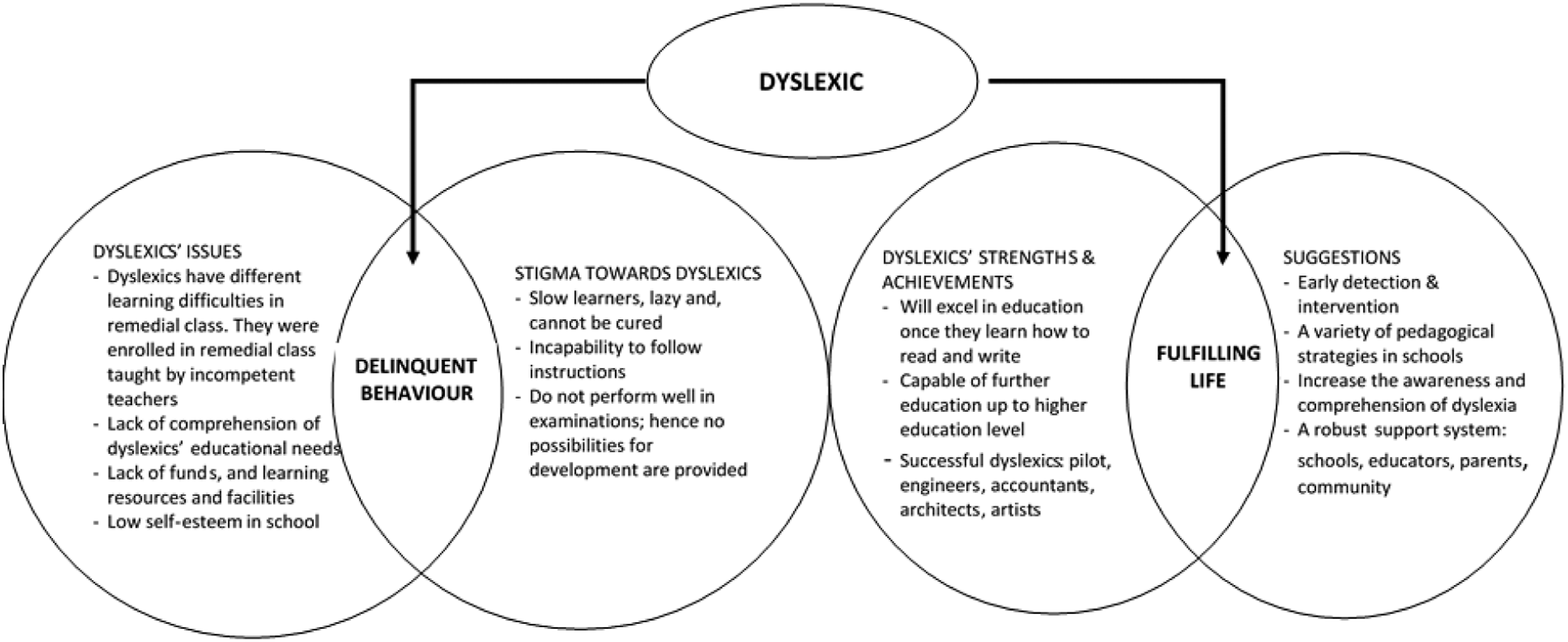
Discussion
The objectives of this research were to determine the reasons children with dyslexia engage in delinquent behaviour and to provide these children with better life options. The researcher determined that the Foucaldian’s concept, specifically the concepts of power and knowledge, was applicable. This will aid dyslexics by collaborating with several agencies and individuals to harness power and expertise.
Why children with dyslexia involved in delinquent behaviour?
Dyslexia is not frequently acknowledged, therefore, the community does not view it as a problem. Indeed, it is a concern for dyslexics whose dyslexia has hampered their ability to study in school and college. Typically, schools take an easy step by assigning children in Remedial Class. Parents who are aware of the dyslexia centre will enrol their kid in dyslexia learning centre; otherwise, the child will remain in the remedial class permanently. The children will get bored if they are constantly studying the same topic they do not comprehend. They need a unique method and intensive instruction in order to learn to read, write, and count. Without appropriate teaching techniques, they will never progress in education but stay in the last class and will be unable to progress academically in school. Sometimes, teachers stigmatise these children as being incapable of being assisted because they are unintelligent. As a result, the community stigmatises these children, assuming they are lazy, incapable of following instructions and should be denied chances due to their poor exam scores. Thus, all of these would result in delinquencies, as when they are not accepted, people try to exploit them for their personal gain in order to do their ‘dirty work.’ Foucault (1995) stated about school as a mechanism for training;
“train vigorous bodies, the imperative of health; obtain competent officers, the imperative of qualifications; create obedient soldiers, the imperative of politics; the imperative of morality”. (p.172)
Foucault already stated about training vigorous body Unfortunately, according to the findings, the teaching style and learning are not diverse; subsequently, it is assumed that all children would comprehend the teacher’s specific learning style. In contrast, different children learn differently, necessitating the teachers to employ a rigorous approach to teaching and learning in the classroom. Being a teacher at school is never easy, as they must not only teach but also touch their students’ hearts. Foucault emphasises the need to teach values in schools. The values should be taught and modelled by teachers and integrated into the school’s culture to instil excellent values in all children.
Children are unique in their ways and will be successful if given the opportunity and encouragement to learn the alphabet, read, and write. Once mastered, it will boost their self-esteem and willingness to acquire further knowledge and skills. Due to their learning difficulties, dyslexic children have often been mocked by their peers, teachers, and parents. Therefore, it is crucial to instil dyslexics with self-confidence. In an effort to improve their intrinsic and extrinsic motivation, it is vital to empower and acknowledge their strengths. Moojen et al. (2020) observed that individuals with dyslexia had a higher incidence of depressive symptoms throughout their school years and as adults. Currently, schools in Malaysia consist of a principal, teachers, counsellors and support staff. There is also a need to have social workers in schools, as no social workers are currently deployed in schools in Malaysia. Social workers in schools might investigate children’s difficulties, such as learning difficulties; thus, teachers can concentrate only on teaching. As Foucault emphasises, one of the school’s mechanisms is to ‘obtain competent officers, the imperative of qualifications’. It is ideal to assign additional staff to improve children or schools. Adding social workers to schools would thereby reduce the workload of teachers and counsellors. As indicated by the finding, school social workers should also participate in early screening tests for at-risk primary school children. This is also corroborated by Price et al. (2021) and other Malaysian researchers on early screening tests, such as Rahman (2019), Ramli et al. (2020) and Samsudin and Alias (2021), to help identify reading difficulties.
The community stigmatises children with dyslexia as slow learners or having permanent learning disabilities. This was also highlighted by Alexander-Passe (2015) that the community viewed it negatively and as something they could not improve. It is disheartening that they are also labelled slothful and unintelligent (Gibby-Leversuch et al., 2019). This will contribute to one of the reasons the children are disinterested in school, and as a result, they will join the group that welcomes them. The findings concurred with Rahman (2019) that ignorant teachers would have detrimental effects on children with dyslexia. Eventually, in school, the focus was only on the academically gifted students. Pupils with learning difficulties were assigned to the last class, and some were labelled as troublesome. Current study results confirmed that as an examination-oriented school cannot avoid reading, writing and getting more A’s on examinations. As a result, the dyslexic children are left behind and school is never enjoyable for them. Foucault highlighted the productivity in power and the importance of education and community. In addition, Foucault’s concept emphasises that every child is a unique individual and must not be generalised. Therefore, schools and communities should strive to be productive in order to accomplish their aspirations of providing education that suits their requirements. Instead of stigmatising dyslexics, the community members should educate themselves regarding the causes of children’s learning difficulties and determine how they can support those children. Furthermore, a sole emphasis on academics and exams is outdated. In addition, the study found that intelligence was not dependent solely on reading and writing skills. Therefore, schools should investigate and equip students with 21st-century skills such as communication, creativity, problem-solving, perseverance, cooperation, digital skills and more.
The dyslexia organisation claimed a lack of community and other agency assistance, as well as inadequate learning facilities. This is most likely due to a lack of dyslexia awareness in the community. This is definitely the case, as Samsudin and Alias (2021) performed a study on dyslexia awareness among city-dwelling parents with a child in primary school and Ramli et al. (2019) researched kindergarten teachers. They discovered that neither group was aware of dyslexia and its symptoms. Thus, to boost awareness of dyslexia and other learning difficulties, it is necessary to initiate aggressive awareness campaigns. They may benefit from enough assistance from their parents, school and agency as they navigate school life and further education. Unfortunately, dyslexic groups lack support from other relevant organisations, as they are primarily focused on other types of learning difficulties, such as autism. Dyslexia is not widely highlighted and discussed in the mainstream domains, and in certain communities, it may even remain taboo. As a result, the community is unaware and ignorant of it. Tare Zaman Paar, which translates as Stars on Earth, is a Bollywood film on dyslexia that is recommended for understanding dyslexia. It is in fact, manageable with the assistance of a specialist. As stated by Alexander-Passe (2018) their perceived lack of disability is misinterpreted which they actually battling with ‘hidden impairments’. As stated by Foucault (1995) below the effects of power in a negative terms:
it ‘excludes’, it ‘represses’, it ‘censors’, it ‘abstracts’, it ‘masks’, it ‘conceals’. In fact, power produces; it produces reality, it produces domains of objects and rituals of truth. (p.194)
As stated in the findings, it is appalling that some adult individuals exclude, repress, censor, mask and conceal children with learning difficulties from the wider population. By nature, dyslexics are averse to deviant behaviour, like other children. However, society and the system disregard them, as education is often geared towards academic excellence. In this case, their educational prospects are restricted. The negative power transmitted by adults makes them feel neglected and misfits in the community. They may join a group that accepts them, such as a group engaging in delinquent activities.
Indeed, there are successful dyslexics, but there are also dyslexics who were not accepted by their society, and therefore were involved in deviant behaviour.
Assisting dyslexics in living a rewarding life
After a diagnosis of dyslexia, children with dyslexia must initially get assistance with reading and writing to ensure a successful future. According to the findings, the dyslexia association will provide 3 months of intensive classes to the registered dyslexics. The children will learn the alphabet from scratch until they can read and write. Their classes will be prolonged for an additional 3 months, and so on if, after 3 months, the students still cannot master reading and writing skills. Eisler (2007) elaborated on Foucault’s school concept that academically challenged students were subjected to the supervision of education system professionals. Therefore, the school is responsible for enrolling students with specific learning difficulties in the dyslexia learning centre, such as remedial classes. In this circumstance, verifying that the teacher has the required training and credentials to teach children with dyslexia using the appropriate method is crucial. The school, especially the school social worker, is also responsible for monitoring the children’s progress until they can read and write.
Exam-oriented and purely academically-focused educational paradigms are no longer applicable today. This is due to the need to succeed in 21st-century skills, such as cognitive, socio-emotional, technical and digital (World Bank, 2021). In light of this, all schools should use a range of pedagogical methodologies. As stated in the fourth Sustainable Development Goals (SDGs) by the United Nations Educational, Scientific, and Cultural Organization (UNESCO), inclusive education is of great importance today. If dyslexics are unable to thrive in school, it necessitates an assessment of the inclusiveness of the school’s systems. Schools may also outsource the organisation of educational programmes or invite other organisations, governments or corporations to school. Corporate sector implementation of Corporate Social Responsibility (CSR) is possible. As recommended by schools, effective CSR educational programmes include English language programmes (for non-native speaker countries), information technology programmes, green programmes, motivating programmes and study visits (Azhar and Azman, 2021a). Aside from that, programmes like educational games, scientific talks and robotics contests are entertaining and beneficial for children. CSR educational projects have a tremendous influence on schoolchildren, teachers, the school and the surrounding community (Azhar and Azman, 2021b). In this context, according to Foucault’s concept of school as a training mechanism, everyone gathers in schools to educate children. It is essentially mutual and collaborative learning in which the children learn from the working adults as the adults have had a profound influence that might aid the children in setting future objectives.
Children with specific learning disabilities may not perform well academically in school, but they have other qualities and abilities that should be emphasised. Therefore, it is essential to look at the bright side and emphasise their skills, achievements and abilities. Foucault stresses negative terms in power that should not be utilised in schools but instead highlight children’s strengths, accomplishments and skills. After acquiring the ability to read and write, dyslexics may succeed as this is the prerequisite. They may also pursue a higher level of education.
Furthermore, it is suggested that schools implement early detection and intervention procedures and comprehensive support networks composed of schools, teachers, parents and community members. According to a dyslexia association, there are children with dyslexia who have great jobs, including pilots, engineers, accountants, architects and artists, as a result of the proper education and robust support system. Successful dyslexics have their learning difficulties addressed through their parents' support (Alexander-Passe, 2016a; Rahman, 2019).
Limitations and future directions
The Dyslexia Malaysia operates 10 dyslexia centres. The first constraint is that the researcher was only able to interview representatives from two dyslexia centres: the headquarters and a state centre. Other dyslexia centres were unwilling to be interviewed, stating that interviews with their corporate headquarters would sufficient. Additionally, they claimed to be following the same strategy as the headquarters. One respondent has been working with people with disabilities and has encountered individuals with dyslexia in the past. Though the two respondents interviewed were very experienced in dealing with dyslexia, their opinions may not represent those of other dyslexia agency personnel. The second constraint was that the researcher was required to conduct interviews with juvenile delinquents in detention facilities prior to writing this paper. This was performed in order to get more accurate data for comparing juvenile delinquents with dyslexia to the agency’s perspective. Regrettably, the organisation prohibits outsiders from entering the centre because of the epidemic. Due to the fact that the grant for this study is still active, the researcher must do the interview with the agency first in order to avoid prolonging the research. Dyslexia is certainly familiar to all special education and remedial education instructors. As a result, future research should examine how elementary schools and schools view the critical nature of early detection for all enrolled children. Early identification should be followed by an examination of the sorts of intervention provided to children identified with learning difficulties and the extent to which these interventions enhanced children’s learning ability. The gap identified by dyslexia agencies was discovered during this research.
Conclusion
This research identified various dyslexia challenges and the stigma associated with children with dyslexia. Additionally, this research emphasised the children’s strengths and achievements and made recommendations to help dyslexic youths live a more fulfilling life. Individuals, communities and parents were then responsible for allowing their children to become delinquents or vice versa. This was explicitly stated in Figure 1. For individuals with dyslexia who have previously engaged in delinquent behaviour, it is critical that everyone understands the challenges and they have been through. Additionally, for children in their early years who have just been diagnosed with dyslexia, it is the role of adults to appreciate their strengths and little achievements.
Additionally, children exhibiting symptoms of learning difficulties or delayed learning are encouraged for early identification and intervention if necessary. The research emphasised the need of society comprehending why these children engage in delinquent behaviour. They need understanding and support in order to have a better life. To summarise, children who experience learning difficulties at a young age should seek early diagnosis of dyslexia. Early identification will enable children to get the appropriate intervention, preventing them from engaging in delinquent behaviour and assisting them in living a more productive and successful life.
Footnotes
Acknowledgements
We would like to acknowledge Puan Sariah Amirin from Dyslexia Malaysia Association, Encik Saifuddin Hj Mohtaram from Dyslexia Association Batu Pahat, Johor, and Puan Wendy Mandau from PDK in Kota Samarahan, Sarawak, in cooperating and sharing of their experience and knowledge on dyslexia.
Declaration of conflicting interests
The author(s) declared no potential conflicts of interest with respect to the research, authorship, and/or publication of this article.
Funding
The author(s) disclosed receipt of the following financial support for the research, authorship, and/or publication of this article: This research is funded by Small Grant Scheme (F06/SGS/1950/2020) under Universiti Malaysia Sarawak.
