




Abstract
The investigation uses Popitz’s power theory (1992) to examine relationships among social power position, attractiveness, and verbal aggressiveness comparing social networks of high school and university students. 117 high school PE students and 195 university PE students participated in the research completing both a network and a joint non-network questionnaire. Visone 1.1 software was used for the processing of the network data and SPSS 26 was implemented for the non-network data. The results revealed in both settings that students demonstrating scientific/task attractiveness develop authoritative power/power of internalized control in their network and are protected from verbal aggressiveness and enforcement of instrumental power/power of externalized control. Social attractiveness enhances the development of authoritative power/power of internalized control in high school only. In this research, a type of powerful student is suggested who does not tend to concentrate power but rather to share power for empowering the powerless ones.
Introduction
Power has long been considered a fundamental dimension of interpersonal relationships (Burgoon and Hale, 1984; Dunbar, 2004; Dunbar and Burgoon, 2005; Fabo and Peplau, 1980). In social sciences, Russell (1938) pointed it to be equivalent to the concept of energy in physics. Power refers to an individual’s ability to affect others’ feelings, thoughts, or behavior while they stay unaffected (Huston, 1983; Simpson et al., 2015). Except for the concept of power as influence over others (French and Raven, 1959), it has also been thought of as ability to control or dominate others (Operario and Fiske, 2001). Power may not always be intentional (Huston, 1983) and though connected to dominance, it is differentiated from it in that power is perceived and dominance enacted in interpersonal relationships (Burgoon and Dunbar, 2000; Dunbar, 2004; Rogers-Millar and Millar, 1979). Popitz describes a model consisting of four types of power: (a) Power of action: bodily superiority or violence based on the potential vulnerability of human beings. (b) Instrumental power/power of external control: ability to give and take (resources, affection, knowledge, etc.) and the possibility to give gratification or punishment. (c) Authoritative power/power of internalized control, agreement of others due to the trust they show in one’s face. (d) Power of data constitution, the power to constitute and control data (Popitz 1992: 24–33; Teymoori, 2020).
This model of power is assimilated in everyday life (Dreher and López, 2015). Power structures are a human product with humans being formed socially with relation to power (Dreher, 2016).
Interpersonal attractiveness is conceived as three-dimensional, consisting of (a) physical attractiveness, liking based on outer characteristics; (b) social attractiveness, liking based on the tendency to befriend others; and (c) task or scientific attractiveness, liking based on the desire to collaborate or advise with others (Berscheid and Walster, 1978; Berscheid and Reis, 1998; Berscheid et al., 2004). Attractiveness correlates to power, since attractive individuals may draw power from attracting others around them. We may see a correlation between the dimensions of interpersonal attractiveness and Popitz’s theory of power, since physical attractiveness may intrigue power of action, social attractiveness, and scientific/task attractiveness may spawn authoritative power.
Aggressive behavior is defined as a behavior aiming to harm others who do not want to be harmed (Bushman et al., 2016) and it consists of two different forms: (a). physical aggressiveness which aims for bodily harm through using or threatening physical force and (b). relational aggressiveness that intends to harm through damage and manipulation of the social relationships (Crick et al., 2006). Verbal aggressiveness is a person’s inclination to attack the interlocutor’s self-awareness (Infante and Wigley, 1986) and it may co-exist with physical aggressiveness across relationship contexts (Mumford et al., 2019). One could assume that Popitz’s power of action and instrumental form of power seem to have a connection to aggressiveness.
Power is omnipresent and saturates any social relations, constituting a universal component in the function of human societies (Popitz, 1992). So far, research on networks gave rise to the concept of social/network power. This can be defined as the power that comes from the ability to access the power of others through social relationships. People with social/network power would have a better chance of success by asking a person with power to lend their power. Therefore, factors that create social capital could also create individual social/network power. An important factor used is the size of the relationship. This factor is important in determining trust when building a relationship. One factor influencing interpersonal confidence is the frequency and consistency of previous successful interactions between individuals (Cook and Wall 1980; Granovetter, 2011; McAllister, 1995; Zucker, 1986). This is because the personal nature of the interaction allows people to historically monitor the behaviors of the past. Another factor is whether the person sees the relationship with the other person as positive, negative or neutral. The attitude of the relationship would affect social capital, since people could monitor their behavior to each other and would consistently follow the principle of justice and reciprocity (Lindskold, 1978; McAllister, 1995; Stack, 1988). In a social system where people with significantly high power and people with power deficiency coexist, the probability that the social dynamics will malfunction is higher than in social systems where almost everyone has similar social power (Lamertz and Aquino, 2004). Social/network power has been an issue of research in organizations (Lamertz and Aquino, 2004; Pierro et al., 2013; Salehudin, 2009) but sparingly in education contexts (Bekiari et al., 2017; Bekiari and Spanou, 2018; Litsa et al., 2021; Spanou et al., 2021; Vasilou et al., 2020). Thus, investigating social/network power in highs school and university setting may answer research questions regarding social dynamics in the educational context:
RQ1: Is social/network power correlated to interpersonal attractiveness, and to which particular aspects of it.
RQ2: Is social/network power correlated to verbal aggressiveness and if yes, which forms of power are related to it.
RQ3: Potential correlations of social/network power and interpersonal attractiveness differ or not between high school and university students.
RQ4: Potential correlations of social/network power and verbal aggressiveness differ or not between high school and university students.
The main academic added value of network analysis lies in the fact that students will be examined in parallel and on equal terms (in a common hierarchy of the same kind of relationship) regarding power, attractiveness, and verbal aggressiveness. Consequently, an analysis of power will be attempted, for example, whether it consists of (a) trust, (b) inspiration of interest-emotion, (c) institutional pressure (e.g., threat or intervention), and (d) action (violence). The all-round quantitative examination based on network variables (the so-called complete network analysis) can describe the perceived characteristics as a system and a possible typology or correlations of these variables corresponding to specific types (profiles) of students can be formed.
The identification of the nodes of main influence in power through attractiveness and the main targets of aggressive behavior, is useful for taking preventive and pedagogical measures regarding these persons. Decisive factors will be proposed to limit aggressive behavior. At the same time, a typology of factors and structural (network) variables can be proposed that will make it easier to identify discrete types of behaviors related to power and attractiveness in education reality. In this way, teachers will be able to predict students who act as “stars” of example (positive or negative) for others and to take accordingly the pedagogical measures they deem necessary.
Methodology
Sampling and data collection
Complete social network analysis has been applied to 117 high school students, aged 12–15 in Trikala area, Thessaly, Greece (64 male, 53 female) and 195 students of Department of Physical Education and Sport Science, University of Thessaly, Greece, aged 20–21 (106 male, 88 female). Each student community is a network of relationships, for example, attractiveness, trust, and emotional dependence (Popitz, 1992). Standardized questionnaires for both network and non-network variables have been used. As network variables power, attractiveness, and verbal aggressiveness have been measured. Each network has been imprinted as a polygon where its vertices correspond to the respondents (members of the network) and the (existing) diagonals constitute the various relationships. At the same time, basic types of power, such as trust and sympathy have been measured. Essentially, network analysis is a functionalization of Systems Theory. According to it, each node (member) of the network acquires its properties (power or weakness) through the interactions it has with the other nodes.
Measures
Using older tested questionnaires as role models (McCroskey et al., 2006; Infante and Wigley, 1986; Popitz, 1992) standardized questionnaires of complete network analysis have been developed and improved after a pilot application (Author, 2015; Author, 2016). They include network variables (relationships of power, attractiveness, and aggressiveness), for example, “Who would you advise on study-related issues?” (trust-power), “Who has hurt or insulted you with their words?” (hurting-verbal aggressiveness), “Who is friendly with you? (social attractiveness), “Who would you ask to help you complete a task at school/university?”(task attractiveness) and non-network variables (personal characteristics such as age, gender, social class, urbanity etc.). For the network part of the questionnaire each student had a code number attached that replaced their name.
Statistical data processing
A plethora of algorithms, such as in-degree, Katz status, pagerank, authority
1
highlight obvious, as well as more latent targeting structures for verbal aggressiveness and hierarchies of trust, dependencies. Network analysis software (Visone 1.1) has been used to visualize the various structures (pyramid hierarchies), highlighting who is first or last in them. Also, SPSS 26.0 was used for statistical tests like Spearman (correlations) to identify factors that affect (strengthen or weaken) one’s position in each hierarchy. Spearman test was used (p ≤ .01 (*) and p
Approval required
In order to carry out the research, relevant permissions have been requested from the participants after ensuring special permission from Institute of educational policy for high school students and ethics committee of University of Thessaly for university students.
Criteria for participation in the study
The survey has been conducted on all participants, regardless of their gender, performance, particular interests, any duties, etc.
Exclusion criteria
The criterion for exclusion from the survey is only the possible refusal of individuals to participate in it.
Results
Figure 1 shows examples of high school student social power networks. Social network analysis or “community” analysis at first place depicts the density of the network and is represented by a general indicator that shows how extensively or not the individuals of the network are connected, that is, the ratio of direct connections in relation to the total possible number of connections, proving how intensive or not the presence of a particular activity within the network is. Therefore, high density values reflect densely connected networks and low prices sparsely connected networks (Scott, 1988; Tabassum et al., 2018; Wasserman and Faust, 1994). Social power networks of high school students seem equally dense with the sympathy network being the denser one (17.19%). The term “centrality” reflects the central role of each individual node by revealing its meaning or influence on the network. Therefore, the latter represents the core of social network analysis as there is possible dissolution of a network if a highly central node leaves (Barnes, 1954; Berkman and Glass, 2000). In the three networks of social power for the high school students, we see the same nodes at the top of hierarchies for academic, personal advice, and sympathy. Examples of high school student social power networks.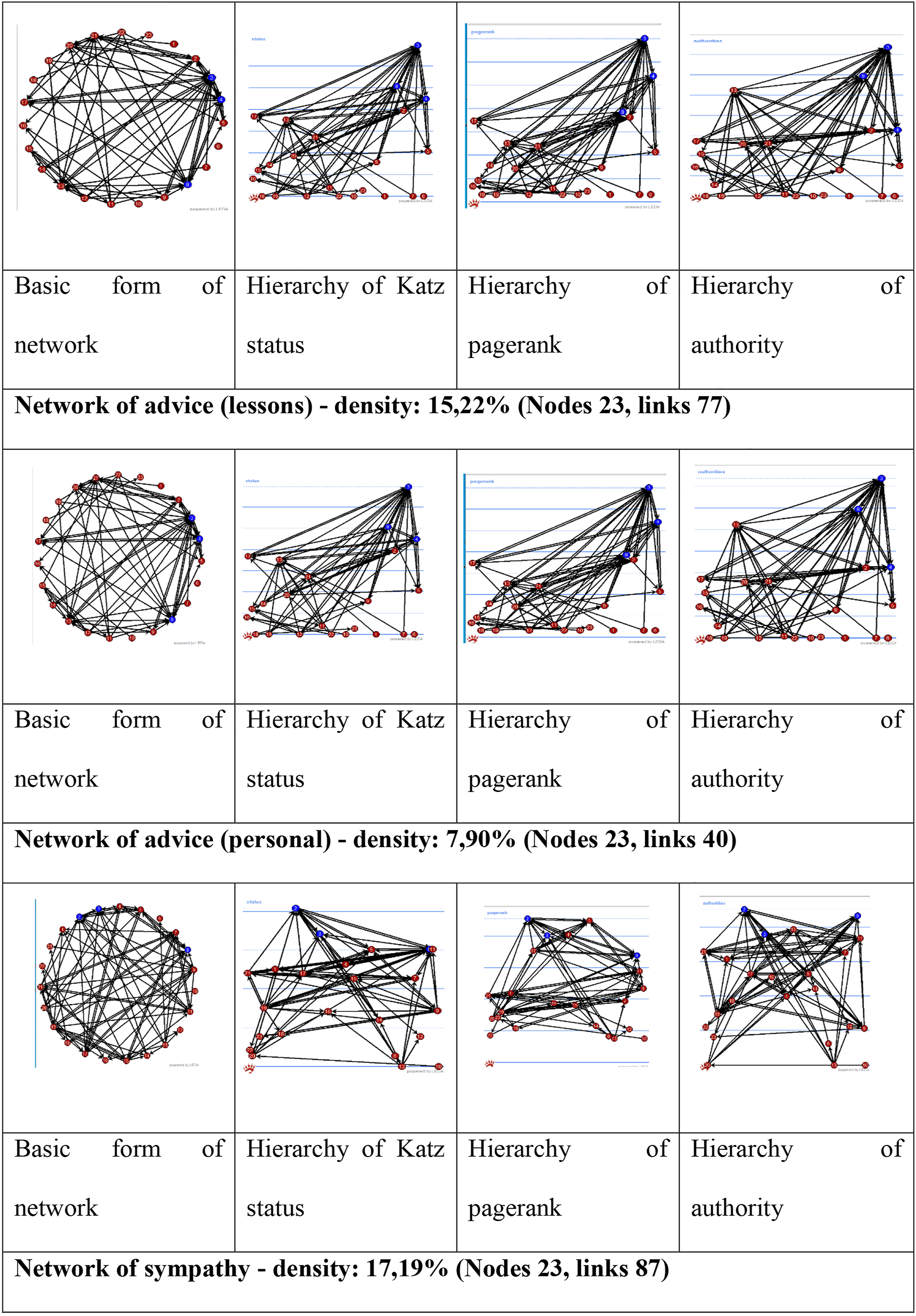
In Figure 2, we see examples of university student social power networks. Their density in university seems to diminish in comparison to high school above and the densest network is that of sympathy (4.27%) just as in the high school networks. Discrepancies in density may reveal that as students proceed in the educational system, they trust others based on different criteria according to their age and experience. It seems easier for high school students to trust others on academic issues and show sympathy in others than for university students who seem to be more selective, especially for personal issues (0.99%). However, all power hierarchies for university students share common nodes at their top as was the case for the high school student networks. Examples of university student social power networks.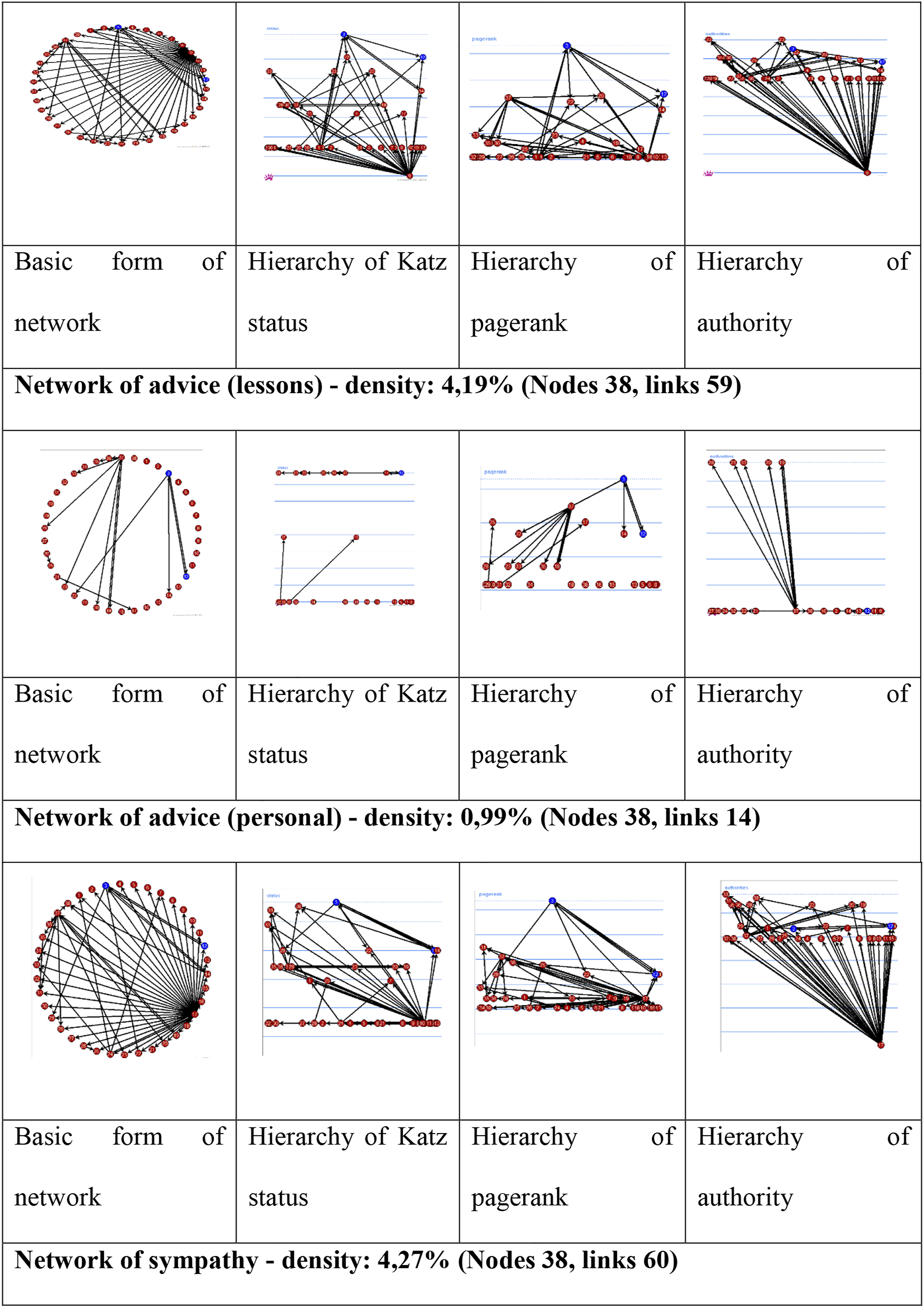
In Figure 3, we see attractiveness networks for high school students. The densest network is that of social attractiveness (50.39%), indicating that friendly relationships are a priority for high school students. The sparsest network is that of physical attractiveness (8.89%), showing that students mainly are attracted socially and scientifically (12.64%) from their peers. Regarding centrality, the nodes that appeared at the top of power networks (Figure 1), also appear at the top of attractiveness networks (Figure 3). We assume that power and attractiveness are related in that nodes accumulate power in their network from being attractive to other students mainly socially and scientifically. Examples of high school student attractiveness networks.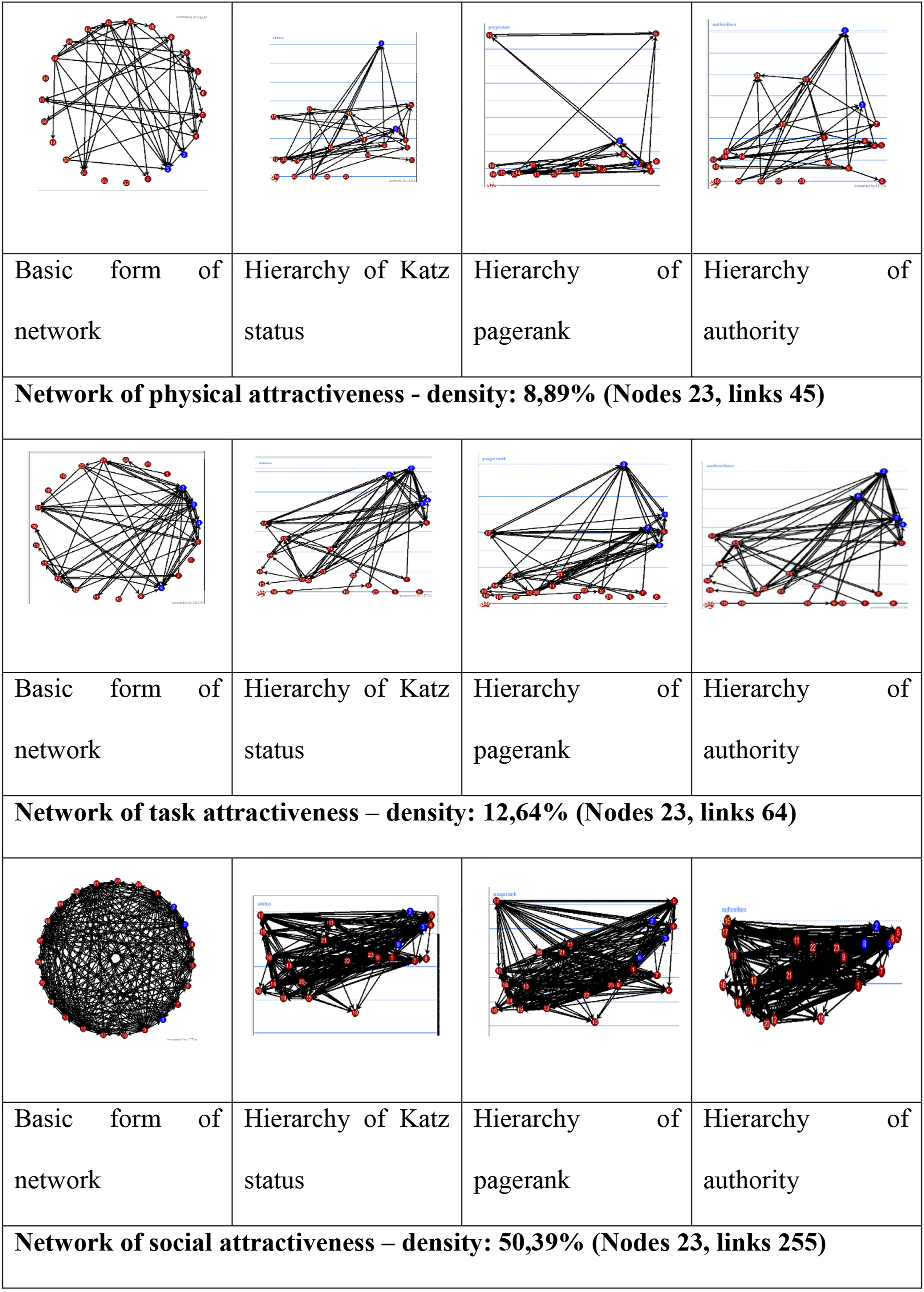
In Figure 4, networks of attractiveness for university students are sparser in comparison to those in high school, with the densest being the task attractiveness network (9.25%) and not the social attractiveness (50.39%) as was in high school above (Figure 3). Regarding centrality, nodes that appear at the top of power networks for university students (Figure 2) appear at the top of task attractiveness networks for university students in Figure 4, but in the middle of social attractiveness network and at the bottom of physical attractiveness network. We can assume that those who accumulate power in university are mainly those that attract their fellow students scientifically and those that others can rely on for the completion of tasks. Social attractiveness loosely affects the emergence of power and physical attractiveness seems to be of minor importance. Again, the comparison of networks between high school and university students reveals that university students are more selective in that they attribute power to those who are scientifically attractive at first place, in comparison to high school students who attribute power to those who combine all forms of interpersonal attractiveness. This can be explained by the fact that university is a more scientifically oriented setting in comparison to high school which aims at the comprehensive development of adolescents. Examples of university student attractiveness networks.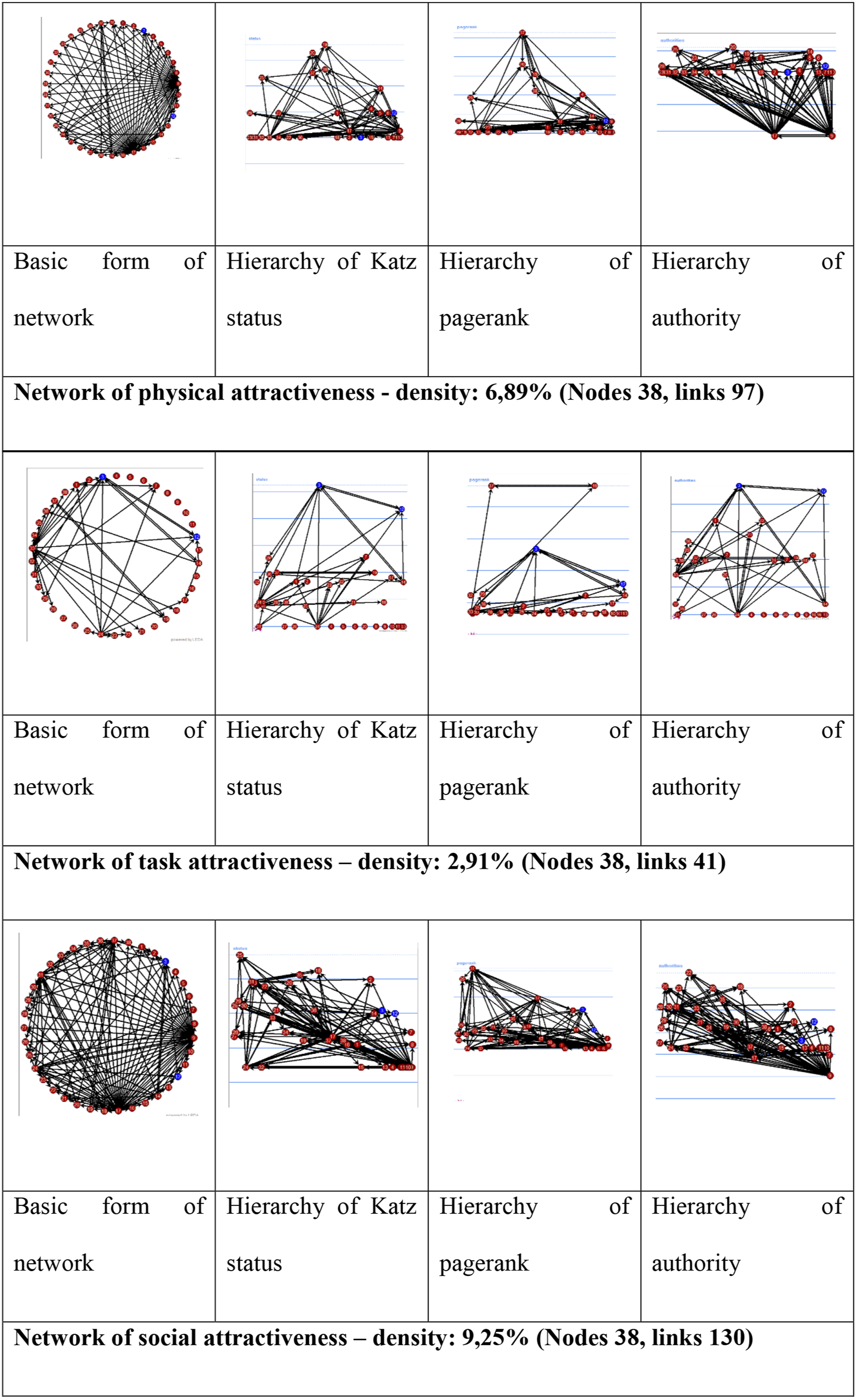
In Figure 5, we see examples of verbal aggressiveness networks in high school. Compared to the social power and attractiveness networks in Figures 1 and 3, respectively, these networks are low in density, with irony (4.15%) being the denser of the two. This means that targeting others verbally happens but sparingly among high school students. What worth mentioning is that nodes appearing to concentrate power in their network due to being attractive, appear in the middle or the bottom of verbal aggressiveness networks (Figure 5). This indicates that the powerful, attractive nodes are seldom targeted with insulting or ironic comments, thus protected to a great extent from verbal aggressiveness. Examples of high school student networks of verbal aggressiveness.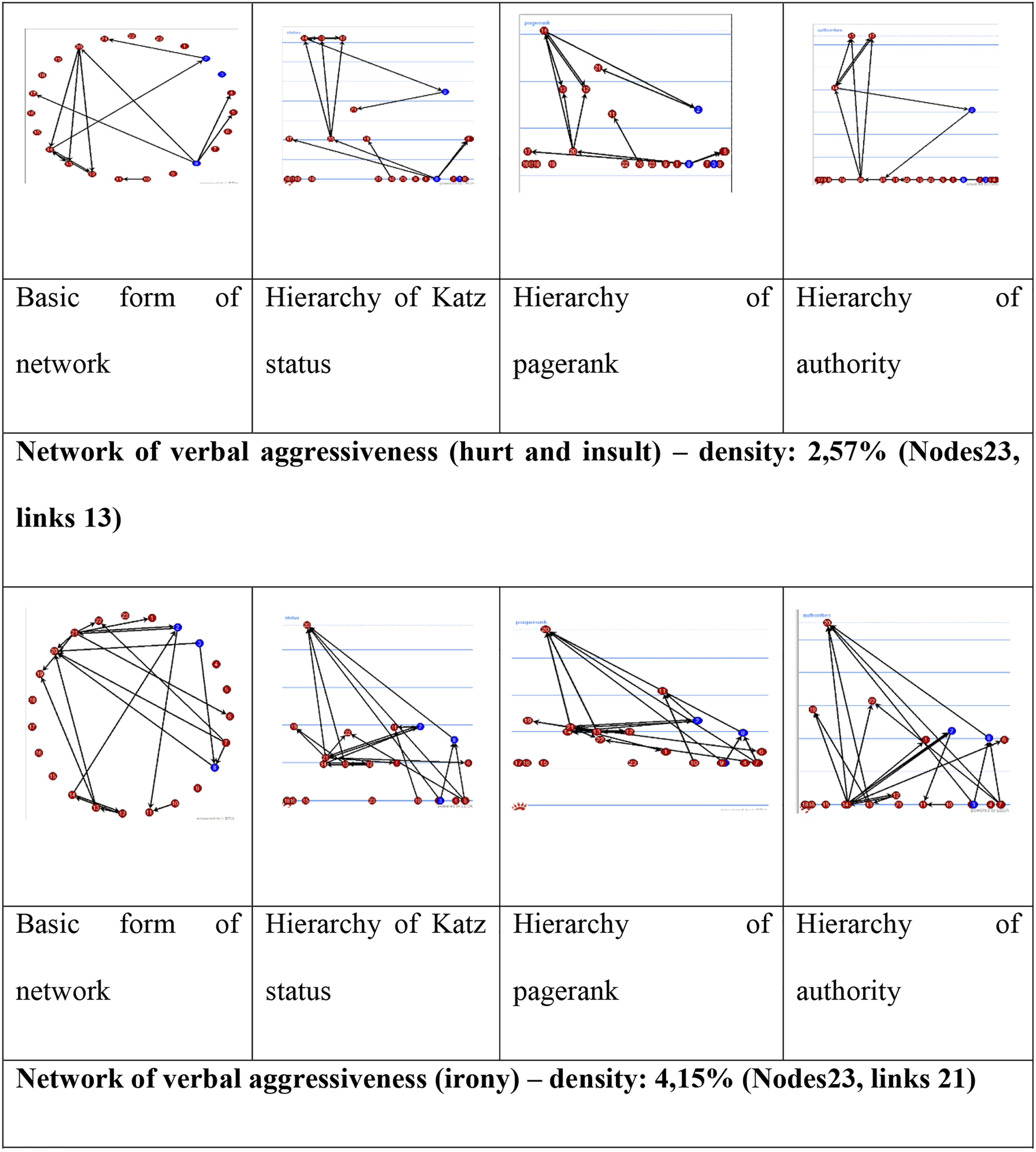
In Figure 6, we see an example of verbal aggressiveness network of university students. The density of verbal aggressiveness network in university is very low (0.007%) indicating that targeting verbally is rare, which can be attributed to the scientific orientation of the academic department which refines students. Also, the powerful, task attractive nodes of Figures 2 and 4, respectively, seem to be protected from verbal aggressiveness as they are at the bottom of the irony network. Comparing, Figures 5 and 6, we can assume that the power a student attracts due to scientific and social attractiveness both in high school and university, protects from verbal aggressiveness targeting. In high school, these nodes seem to be protected to a great extent and in university the power acquired seems to act as a shield against verbal aggressiveness. Examples of university student networks of verbal aggressiveness.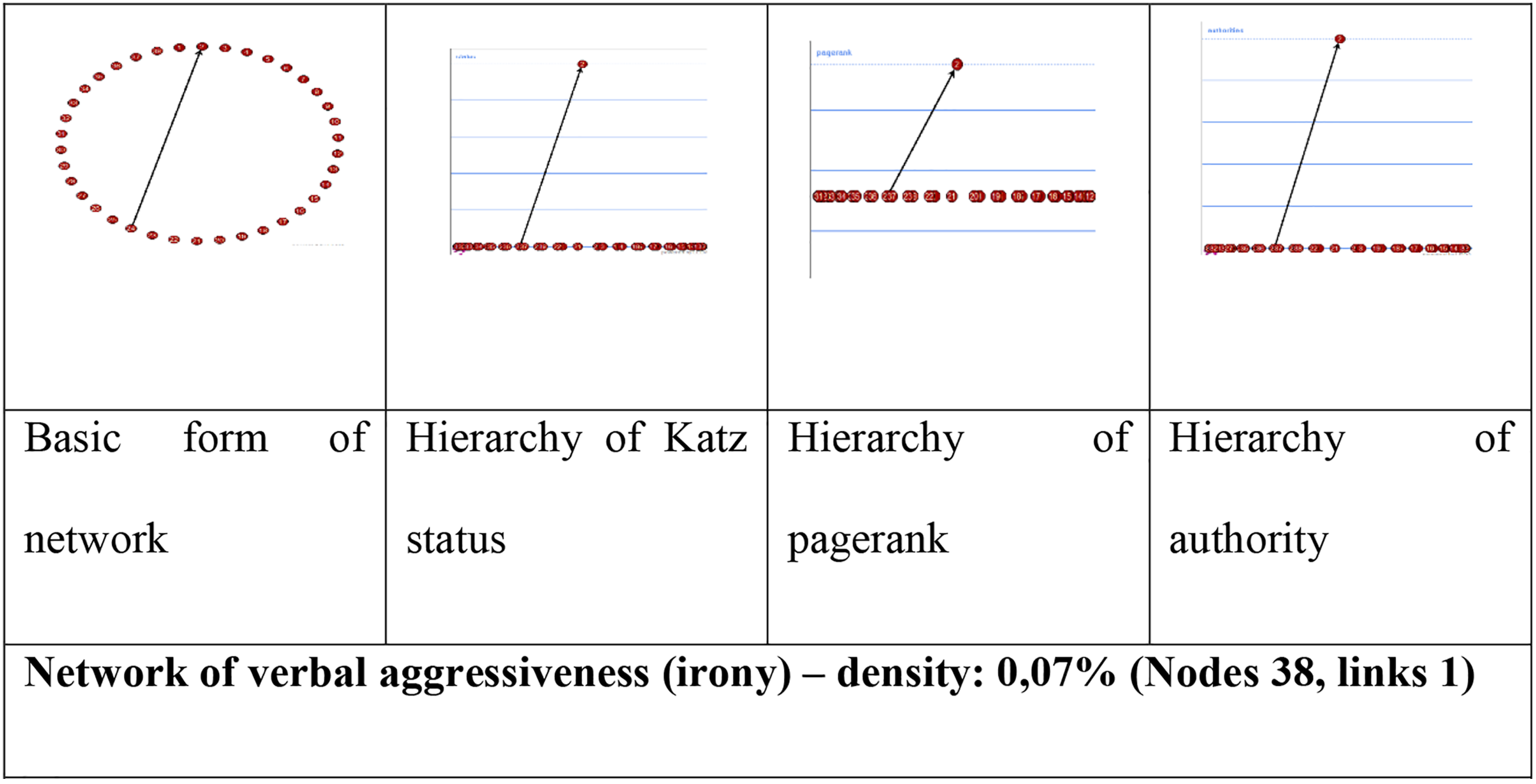
Relation among the network determinant of social power and non-network determinants for high school students.
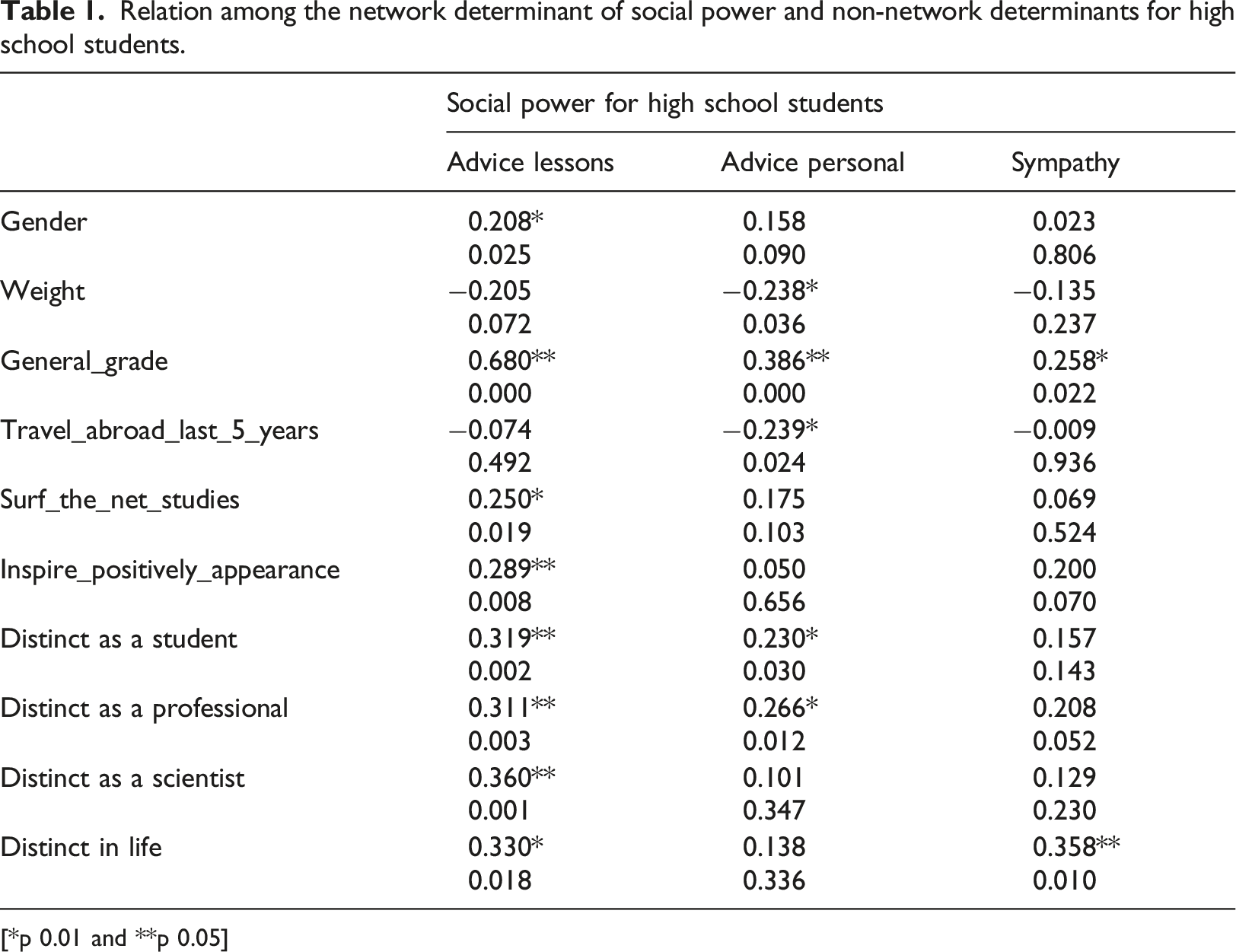
[*p 0.01 and **p 0.05]
Relation among the network determinant of social power and non-network determinants for university students.
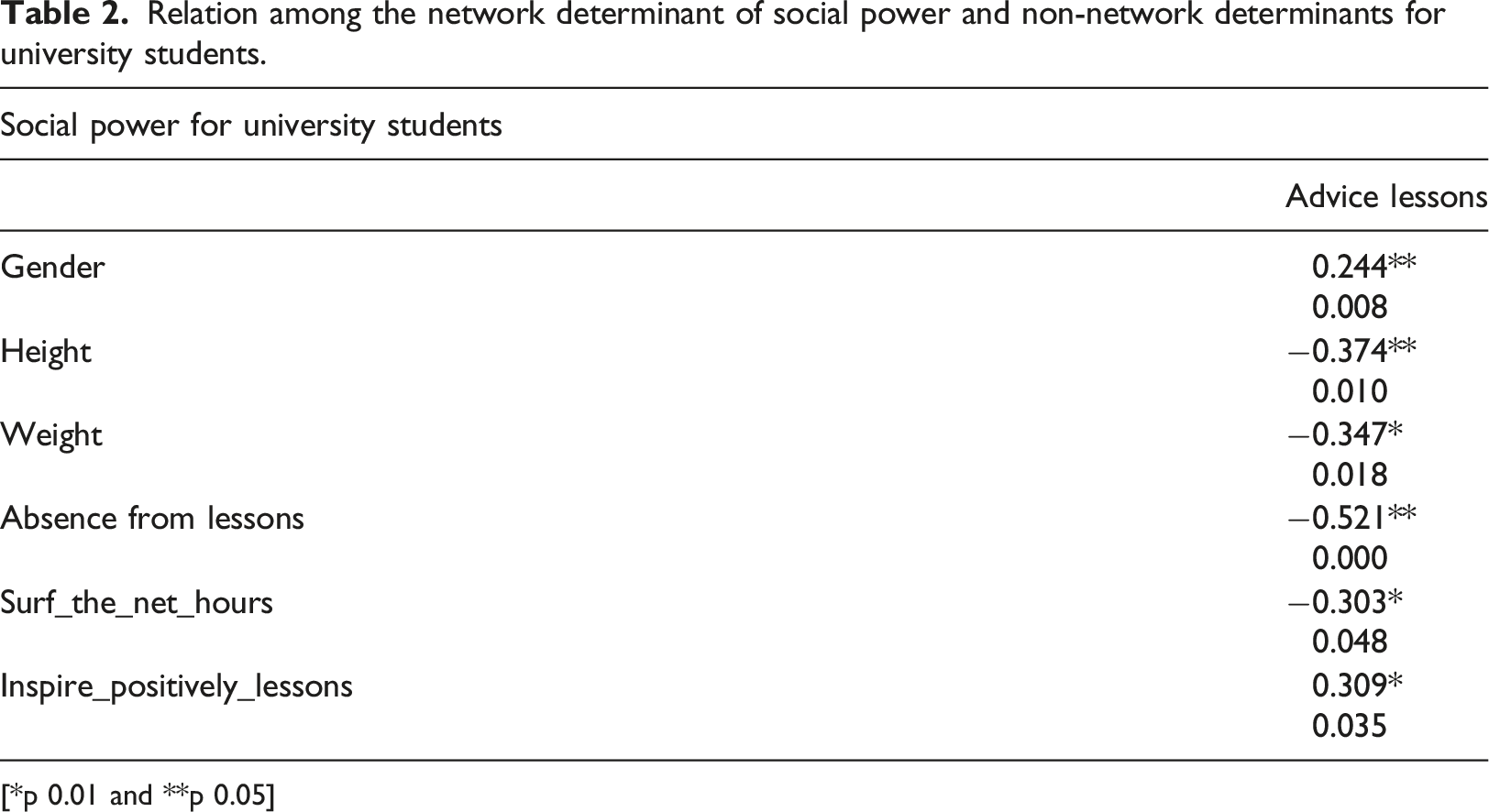
[*p 0.01 and **p 0.05]
Relation among the network determinant of social power and the network determinants of attractiveness and verbal aggressiveness for high school students.
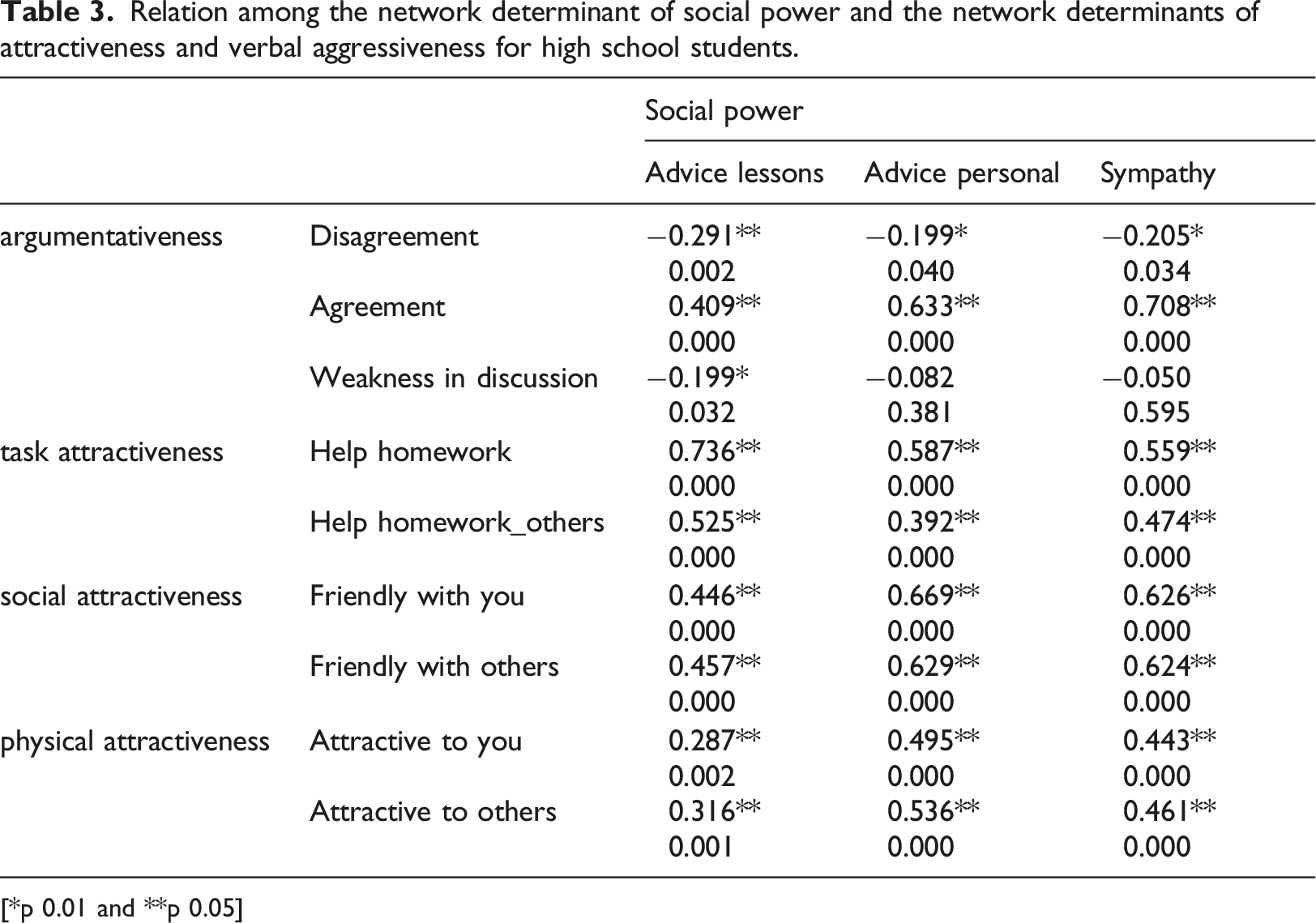
[*p 0.01 and **p 0.05]
Relation among the network determinant of social power and the network determinants of attractiveness and verbal aggressiveness for high school students.
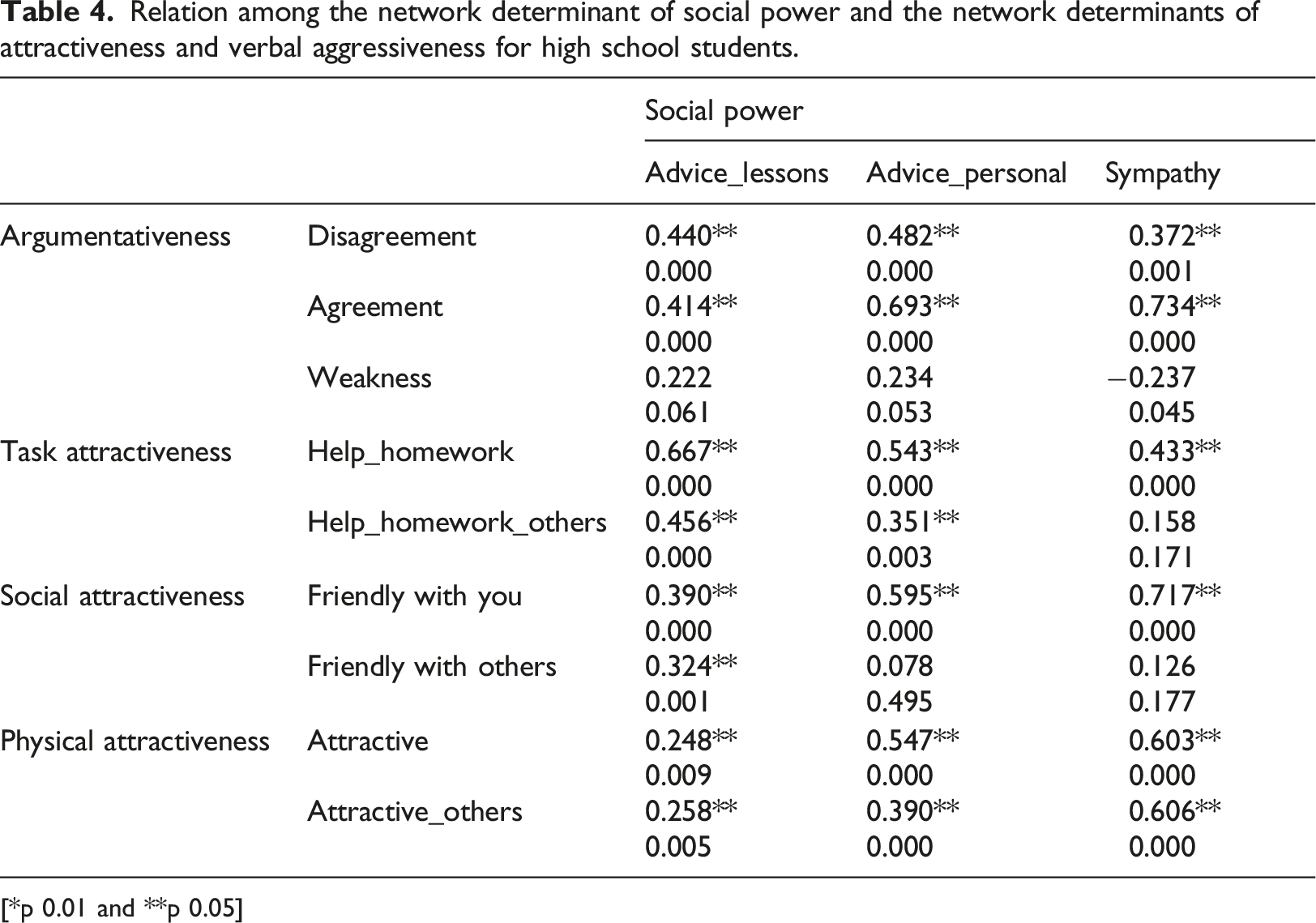
[*p 0.01 and **p 0.05]
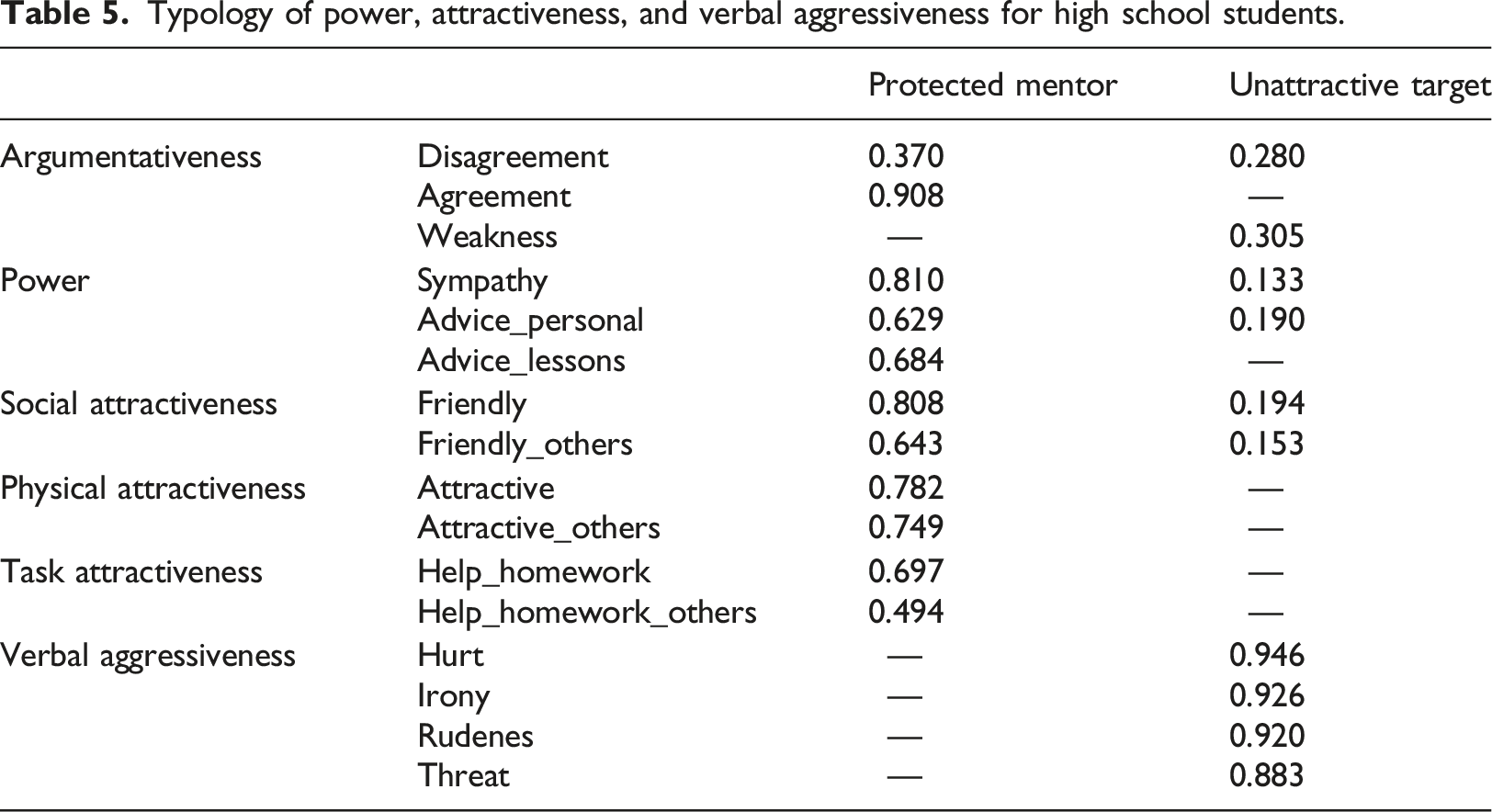
Typology of power, attractiveness, and verbal aggressiveness for high school students.
Typology of power, attractiveness, and verbal aggressiveness for university students.
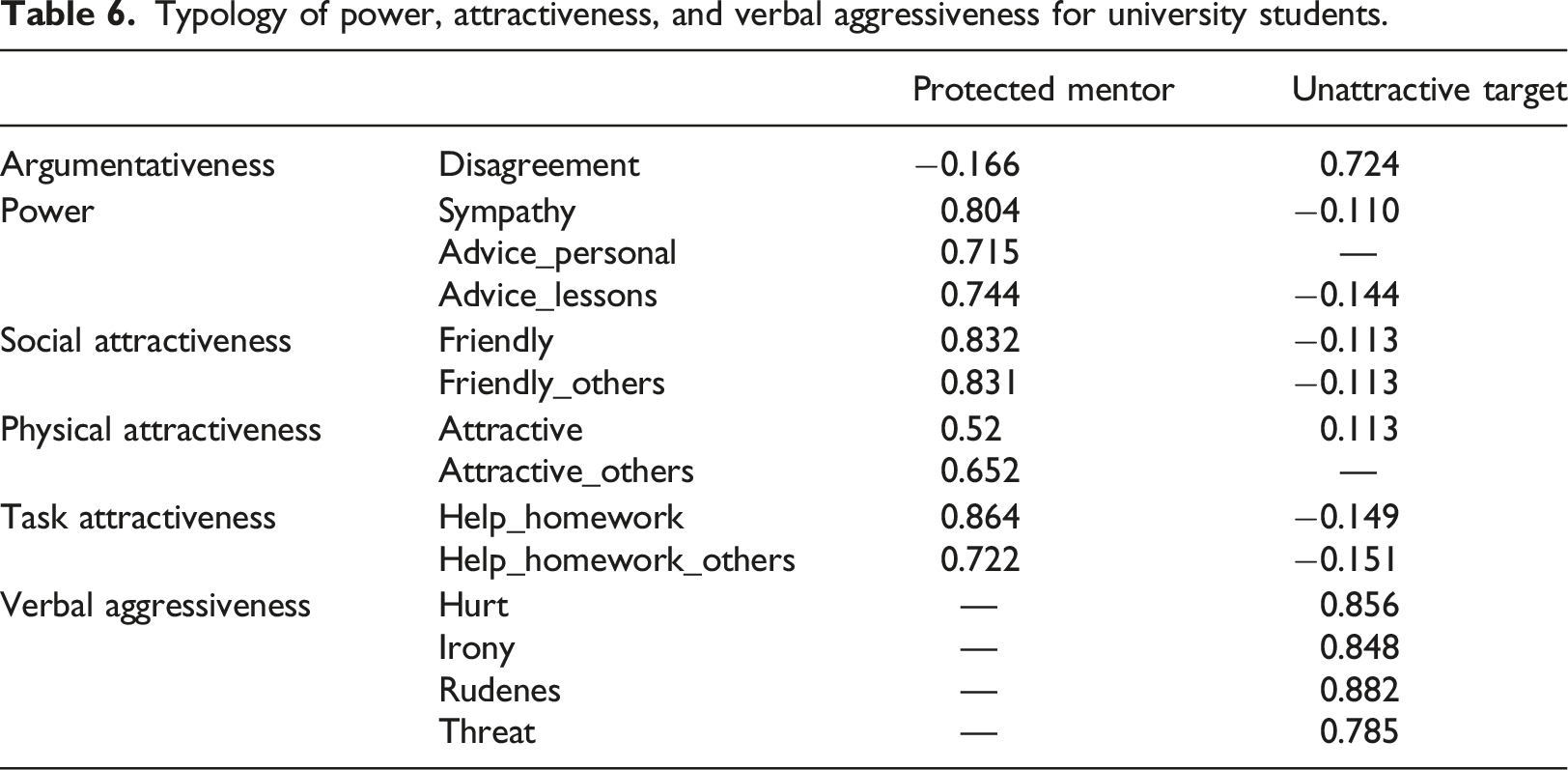
To sum up, key similarities between high school and university are the following: (a) power is attributed to task and socially attractive nodes, (b) the female are opted as powerful mentors, (c) argumentativeness predicts power, (d) body characteristics affect one’s power as a mentor, and (e) powerful students are protected from verbal aggressiveness targeting. The key difference between high school and university is that high school students tend to attribute power to those who combine social, task, and physical attractiveness, while for university students task attractiveness seems to be of primary importance.
Discussion
The power high school and university students concentrate can be described as Popitz’s authoritative power. It is mainly based on scientific/task attractiveness, that is, students in both educational settings show trust in scientific and task capacities of their co-students, which render them powerful authoritatively in their network. Social attractiveness adds to the development of power in high school setting as well, which again indicates the existence of authoritative power. Authoritative power is also called internalized control power and is divided into two subcategories: (a) the trust that is carried out effortlessly due to ignorance or insufficient knowledge such as the blind trust that someone shows in their doctor and receive the medication they prescribe without questioning for its effectiveness, and (b) emotional dependence that presents various forms of emotions such as “love,” “sympathy,” and “shame” towards teachers, friends, relatives, or colleagues (Popitz, 1992; Author, 2016). In our study, high school students attribute power to their classmates, based on both subcategories of authoritative power, that is, they trust them due to the knowledge and the capacities they showcase, but also they show some kind of emotional dependence due to selecting socially attractive classmates as powerful ones too. In university, emotional dependence seems not to relate to the matter of power and trust based on knowledge seems to determine the powerful ones in a network. The powerful act as role models that others in the network admire and respect. They exert influence because of the perceived scientific/task attractiveness and reputation. Here, the leader of university networks may not be able to reward or punish certain subordinates, but they may still be able to exercise power over them because they inspire respect or are appreciated. It is similar to expert power, a type of authoritative power based on reliability and clear proof of knowledge or expertise (French and Raven, 1959; Raven, 1959; Raven, 1959). This kind of authoritative power refers back to Foucault who recognized that power is not only a negative, compulsive or repressive “thing” that forces us to act against our desires, but can also be a necessary, productive, and positive force in society (Gaventa, 2003) stressing the knowledge and energy that can be produced and acquired by individuals in the process of power production (Foucault, 1991). The authoritative power that students concentrate in their networks is consistent with the interdependence theory where power is conceptualized as the reversed of dependence (Kelley and Thibaut, 1978; Rusbult et al., 2012; Thibaut and Kelley, 1959). According to Fiske (1993), power means greater access to resources. Socially invested people, see social ties as resources, and expect (and get) positive social interactions without the need to resort to coercion (Hawley et al., 2009)
Powerful students seem to have a special relationship to verbal aggressiveness targeting. They seem to be protected from verbal aggressiveness, obstructing, thus, the enforcement of Popitz’s instrumental form of power which refers to the threatened but latent power which can control others. The latter is based on the persuasion that characterizes the specific warning or threat and on the dependence of the controlled on their acquired rights such as deprivation of liberty, money, etc. Instrumental power, otherwise called externalized control power has a “covert” presence, for example, threat of imprisonment if the laws are violated (Bekiari and Hasanagas, 2016). Verbal aggressiveness acts covertly in the educational setting, reminding co-students the fear of enactment, especially in the case of threats. In our study, the powerful high school students, except for being attractive (socially and scientifically), they are also protected from verbal aggressiveness and are less likely to experience instrumental form of power. In university setting, chances of becoming targets for verbal aggressiveness are minimal. This is understandable as university students appear in class more rarely or less than school students who are obliged to be present in school much more time daily. So, under the more casual conditions of contacts which appear in university, the existence of internalized control power is not correlated with verbal aggressiveness. We could argue that the existence of internalized control power minimizes the use of verbal aggressiveness. The finding is consistent with research that suggests ways to reduce the negative effects of verbal aggression when it manifests itself (Infante, 1995; Rancer and Avtgis, 2006). Characteristically, Rancer and Avtgis (2006) report that the target of verbal attack should be polite and use calm attitude and empathy, while Infante (1995) points out the need for mutual understanding. Therefore, someone who may be exerting internalized control power does not accept verbal aggressiveness. This finding is consistent with research by Rocca and McCroskey (1999) who found that attraction and homophily are negatively linked to verbal aggressiveness. Thus, authoritative power or power of internalized control enfeebles instrumental power, which could turn into power of action.
Conclusions
Attractiveness and aggressiveness helped us clarify the form of power acquired in the educational setting. So, nodes who exhibit task/scientific attractiveness are likely to be preferred in a lead position. This could be explained because such individuals act as role models basing part of their power on reference power (French and Raven, 1959; Raven, 1959). Power, attractiveness, and verbal aggressiveness are not only based on the specific characteristics of individuals, but mainly on the connections that develop between them and the flows created. For this reason, social network analysis was chosen as a key methodological tool, since network methods focus on the relationships that are developed. The added value of the techniques of social network analysis is that they create a holistic approach that treats each individual not individually, but as part of a social whole. Network analysis is an empirical form of systems theory, and starts from the premise that many of the properties of each individual are not self-existent, but derive from their interactions with others. Thus, social network analysis gave a different perspective, focusing research interest on the relationships of individuals. The application of full analysis of social networks captures behaviors (power, trust, attractiveness, and verbal aggressiveness) related to school and university education which can improve the training and educational climate as well.
The task/scientific attractive student is the emergent type of “Powerful” student in our study. Students of this type, “the protected mentors” except for being attractive scientifically, powerful, and protected against verbal aggressiveness have an additional characteristic. They are the powerful network nodes as well as opted as such because they are capable of empowering others. It is the characteristic of task attractiveness that not only positions them at the top of power network hierarchies but allows them to distribute this power in their network as mentors, affecting and other students who are “powerless” and making them “Empowered.” In other words, the powerful students seem to function as a source of social power willing to empower the powerless ones. The “Powerful” type does not seem to concentrate but rather to share power. This skill that turns students into task attractive, and the fact that handling and distributing knowledge equals to power is the core conclusion of our study. The “Powerful” students of this study are nodes who affect others due to the scientific reputation they acquired and the fact that their knowledge is respected and distributed in their network, not withheld for themselves. The utilization of such students in school and university setting under the pedagogic supervision of the teachers or faculty members, respectively, should be prioritized, as it appears to be a key factor in the relationships developed and the communication between students.
Certain limitations which can constitute challenges for future research are the following: the expansion of the sample to more schools and academic departments so as to find out comparatively similarities or differences deriving from socio-epistemological determinants, formulating a typology of such or further social determinants, dynamic (diachronic) network analysis on the same classes (e.g., considering the beginning, the middle, and the end of a semester or a year) which could also reveal the relevance or not of the familiarity acquired through the time. etc. An additional important challenge in future research would also be to reveal determinants differentiating the powerful nodes who tend to oligarchize the network by steadily concentrating power for themselves. Finally, the combination of social network analysis with qualitative research, especially in larger samples of any future research, is the key to a meticulous approach attempting to provide insights in such social phenomena.
Footnotes
Declaration of Conflicting Interests
The author(s) declared no potential conflicts of interest with respect to the research, authorship, and/or publication of this article.
Funding
The author(s) received no financial support for the research, authorship, and/or publication of this article.
