




Abstract
This paper presents the findings of a comparative study carried out in 2018, which aimed to explore and compare teacher educators’ perceptions of initial teacher education (ITE) programmes in Jamaica, Greece and Nigeria. This study endeavoured to add intercultural perspectives to the study of ITE and to underlie the idea that ITE has become increasingly bound up in the processes of neo-liberalism and globalisation. A comparative research design was used to investigate the similarities and differences in ITE programmes available in these three countries. Specifically, this was a quantitative survey study, and the participants (n = 135) were teacher educators who were purposefully selected. Based on what the findings revealed, it is argued that, while features of national culture, tradition and institutional politics have a significant role to play in the detail of the approaches taken in ITE programmes, there is nevertheless evidence of significant convergence between the three countries in terms of the type, modality and duration of ITE, as well as the current issues facing ITE programmes and the areas that need improvement. This, it is suggested, reflects trends associated with neo-liberal ‘globalisation’.
Introduction
Initial Teacher Education (ITE) is defined as the ‘entry level qualification that is completed prior to entering service as a teacher’ (Yeigh and Lynch, 2017: 112). ITE, which is also referred to as ‘undergraduate teacher education’ (Yeigh and Lynch, 2017: 112), is said to play ‘a crucial role in ensuring that teachers are able to create an environment that best facilitates learning, and that they have adequate subject content knowledge and knowledge of how to present this content to learners of different ages and aptitudes’ (Deacon, 2016: 3). Deacon goes on to state that ITE programmes also ‘shape teachers’ attitudes towards the profession of teaching and their individual identities as professionals’ (p. 3). As professionals, teachers are required to be registered and licenced (Adey, 1998; Musset, 2010; Solbrekke and Sugrue, 2014).
ITE programmes around the world are diverse, and they are delivered through different modalities and in different tracks, including full-time and/or part-time as well as face-to-face and/or blended. Students can be admitted into ITE in a 2-year, 3-year or 4-year undergraduate or postgraduate programme. According to Yeigh and Lynch (2017), a bachelor’s degree programme offered in three to 4 years will expose student teachers to the content area, teaching practice and pedagogical skills. Regardless of the duration or modality, concerns have been expressed in different quarters about the quality of ITE programmes, and calls have been made for their reform. For instance, Tom (1997) was of the view that there is a limited amount of practical knowledge and skills involved in ITE programmes and refers to such programmes as superficial. To Fullan (2007), teacher training is not seen as a ‘serious endeavour’ (p. 267).
Due to the above criticisms, several scholars, including Darling-Hammond (2013), Ingvarson et al. (2014), Skilbeck and Connell (2003), Lynch et al. (2016) and Lynch (2012), to name a few, have called for the reform of ITE. Furthermore, teachers themselves have also expressed concerns about the quality of the initial education they received. Teachers’ concerns have led to several publications on teacher education programmes by authors such as Ferry et al. (2004), Kervin et al. (2006), Kirby et al. (2006), Wolfenden (2008), Johnson (2009), Mahon et al. (2010), Roofe and Miller (2013), Stronge et al. (2011) and Stavroulia (2015).
In this paper, we present a study carried out in 2018, which aimed to explore and compare teacher educators’ perceptions of ITE programmes in Jamaica, Greece and Nigeria, in order to add intercultural perspectives to the study of teacher education practices and to promote its evaluation and development. By using a cross-national and international comparative approach, the study focused on teacher educators’ perceptions of ITE programmes, their structure (types, modality and duration), and the issues and challenges experienced by teacher educators in Jamaica, Greece and Nigeria. The selection of these three countries was based in the ‘snowball sampling’ technique also termed ‘opportunity sampling’ (Patton, 2002). To clarify: it is a non-probability method that relies on referrals from initial subjects to generate additional subjects (Robson, 2002); in our case, referrals came from initial researchers to additional researchers who were interested in conducting this research study in their countries.
Teacher education in Jamaica, Greece and Nigeria
Jamaica
Teacher education in Jamaica is offered by teacher training colleges (TTC). Depending on their mandate, the institutions may offer teacher education programmes at the early childhood, primary and/or secondary level. The institutions may also offer initial teacher education, as well as postgraduate training in education in specialised subject areas. The curriculum typically consists of education courses (pedagogy), specialisation courses (teaching subjects), teaching practice and a capstone (research project).
In Jamaica, the ITE programmes offered by different institutions have evolved from the certificate in education, to the diploma, to the bachelor’s degree. Depending on the type of ITE programmes offered, the duration ranges from 3 to 4 years for the bachelor’s degree (Roofe and Miller, 2013). Entry into teacher education programmes in Jamaica is available to those who have successfully completed high school education and those who already have a teaching diploma but wish to matriculate to the universities (Evan, 2006). The ITE programmes are offered full-time and part-time. Each teacher education programme offers areas of specialisation (content), education courses and supervised practicum (Miller and Roofe, 2013). The practicum is an opportunity for student teachers to link the theory of what they learnt to practice (Walden, 2005).
After graduating, all teachers in Jamaica are required to register with the Ministry of Education to be eligible to teach, as well as with the Jamaica Teaching Council (JTC), the body responsible for regulating the teaching profession. Based on the ITE programme pursued, teachers may teach at the early childhood, primary (elementary) school, secondary (high school) or community college level. Teachers may seek employment with public or independent (non-public) schools.
Greece
Teacher education in Greece was introduced to the university sector in the early 1980s. Education departments were institutionalised in a gradual way in the central and regional universities of the country and operated alongside the ‘old’ Pedagogic Academies and Nursery Teachers’ Schools until 1991 (Sarakinioti and Tsatsaroni, 2015).
Today, teachers become qualified to teach by undertaking a 4-year study at Departments of Early Childhood Education and Departments of Primary Education, based in nine Greek universities. Secondary-school teachers are trained in undergraduate programmes of study offered by the university departments of science, humanities and social sciences, with subject specialisms in mathematics, physics, languages, foreign languages, among others. Education Departments, like the entire Greek tertiary sector, are autonomous in the design of their curricula. University curricula are developed by the academic staff of the departments, mainly according to their scientific and research profiles, but also according to special conditions related to differences in local and institutional contexts.
Most student teachers enter the ITE programmes at the age of 18 after taking the national higher-education entrance exam. The education departments also offer master’s and doctoral programmes. These programmes aim at the further specialisation of teachers and other professionals in various areas of educational research and practice (Sarakinioti and Tsatsaroni, 2015). After graduating, teachers in Greece are recruited into permanent or substitute positions when there are vacant posts to be filled and only after their successful participation in the Supreme Council for Civil Personnel Selection (ASEP) examination.
Nigeria
In Nigeria, institutional teacher education, with the establishment of a training school by the Church Missionary Society (CMS) (Fafunwa, 1974), preceded the establishment of the advanced teachers’ college otherwise known as the College of Education (Fafunwa, 1991). Graduate teacher education by way of studies in teaching subjects and education courses (pedagogy) was started by the University of Nigeria, Nsukka, in 1961 (Nwagwu, 2000). After the country gained independence in 1960, the National Certificate in Education (NCE) was decreed as the minimum entry requirement for the teaching profession in Nigeria (Odey, 2013).
Today, teacher education routes in Nigeria include the National Certificate in Education (NCE), Bachelor’s in Education (BA Ed or BSc Ed), Postgraduate Diploma in Education (PGDE), Master’s in Education (MEd) and Doctor of Philosophy (PhD). The Teachers Registration Council of Nigeria (TRCN) is the professional body that holds the register of qualified teachers in Nigeria and carries out the induction of new teachers at the point of graduation. TRCN identifies four categories (A-D) of teachers and emphasises the importance of experience. Nonetheless, the strong emphasis on academic qualifications makes possession of required qualifications a must for entry into any level of teaching in Nigeria. Teachers in categories A and B are postgraduate-trained teachers who have undergone an initial 4 years of university education, plus additional qualifications to train professionally as a teacher if the undergraduate degree was not in education and/or to progress to teach at higher levels should they desire. Category C is a graduate route that involves 4 years of academic and professional training at a university and incorporates a school placement to obtain practical teaching experience. Category D teachers are trained for 3 years, after which they obtain the NCE, which qualifies them to teach in primary schools or proceed to a BEd degree programme at a university if they wish to upgrade.
Entry into teacher education programmes in Nigeria occurs after successfully completing senior secondary school and obtaining the required grade in the Joint Admissions and Matriculations Board (JAMB) entrance examination for tertiary-level institutions. Teacher education institutions are expected to provide data on all students admitted into education programmes to TRCN, as well as data on all students who graduated successfully at the start and end of each academic session (TRCN, 2008).
Although Jamaica, Greece and Nigeria are located on different continents and in different parts of the world, all of them are under the influence of the neo-liberal shift in reform, as well as the impact of the global socio-economic crisis of 2008 and the political and social changes that followed. We postulate that although these three countries have heterogeneous system contexts, they are in similar economic situations, and their possible common features, their similar tendencies, but also their possible differences in the situational and social contexts of their ITE, will help us shed light on the most dominant discourse shaping education reform around the world today – that of neo-liberalism.
Worldwide, the education sector is undergoing a crisis, stemming from the neo-liberal reforms which have been introduced in the late 1970s and 1980s (first in the USA, the UK, some European countries and a few African countries). These reforms have resulted in the reshaping and restructuring of the education system at all levels and in all contexts, with substantive implications for the main actors of education – educators themselves (Chalari and Atta, 2021). Neo-liberalism is a theory of political economic practices which suggests that human well-being can best be advanced by liberating entrepreneurial freedoms and skills (Harvey, 2005). The ideology of neo-liberalism encompasses the principle that everything functions as a business (Tarnoff, 2016). Based on neo-liberal performativity (Ball, 2003), the performance and output of individuals are measured, emphasising efficiency and effectiveness, and allowing individualism and competitiveness to flourish.
Research questions
In this paper, we address the following research questions: 1. In what ways are the ITE programmes in Jamaica, Greece and Nigeria different or similar? 2. What are the similarities and differences in teacher educators’ perceptions of ITE programme structure (types, modality and duration) in Jamaica, Greece and Nigeria? 3. What are the issues and the factors experienced by teacher educators, such as work-related issues and external factors, that affect ITE in Jamaica, Greece and Nigeria?
This paper aims to contribute to the existing literature by providing new insights and a better understanding of the impact of neo-liberalism on ITE. Investigating the differences and similarities in ITE programmes in countries such as Jamaica, Greece and Nigeria may help us understand and propose strategies to challenge and transform schools, universities and, ultimately, societies. Moreover, it may provide information on teacher education, useful to programme managers and developers, and policymakers nationally and internationally. Furthermore, it might make the people of Jamaica, Greece and Nigeria realise how many aspects of their own education systems require change.
Methodology
Participants and procedures
A comparative (quantitative) research design was used to explore and compare teacher education from the perceptions of teacher educators in Jamaica, Greece and Nigeria. According to Mills, Van de Brunt and De Bruijn (2006), ‘the main goal of comparative research is to search for or identify variance or similarity’ (as cited in Bureau and Houlberg Salomonsen, 2012: 3); the unique value of such research lies in its capacity to engage in dialogue with people from different countries. Comparison brings out the complexity of cultural influences that might otherwise pass unremarked; just as a fish is unaware that it is swimming in the water, people may not appreciate the contextual influences on their own beliefs and practices unless they are given insights into another context (Adamson, 2012).
Population and sample sizes.
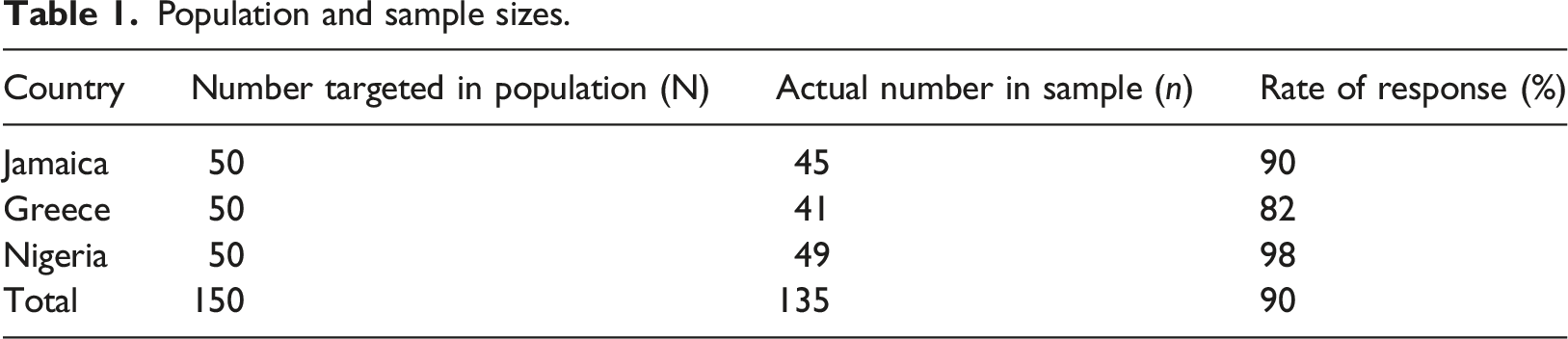
To gain access to the teacher educators in the institutions where data were collected, the departmental heads were contacted. The departmental heads identified potential participants for the study from among their colleagues. They also provided names and contact details. A letter was sent to all potential participants, informing them of the study in advance and explaining the method of sampling being used, as well as giving them a link to a questionnaire. The link remained active for 5 weeks. In Nigeria, a hard copy was also provided due to the limited access to power and the internet.
Before the study was conducted, ethical approval was sought and secured in Jamaica, Greece and Nigeria from the relevant public authorities. The study complied with international and national legislation and fundamental ethical principles, such as those reflected in the Charter for Fundamental Rights of the European Union, the Convention on Human Rights and its Supplementary Protocols, and the principles of regulation for the protection of natural persons with regard to the processing of personal data and the free movement of such data (GDPR). Moreover, voluntary informed consent was obtained from all participants involved.
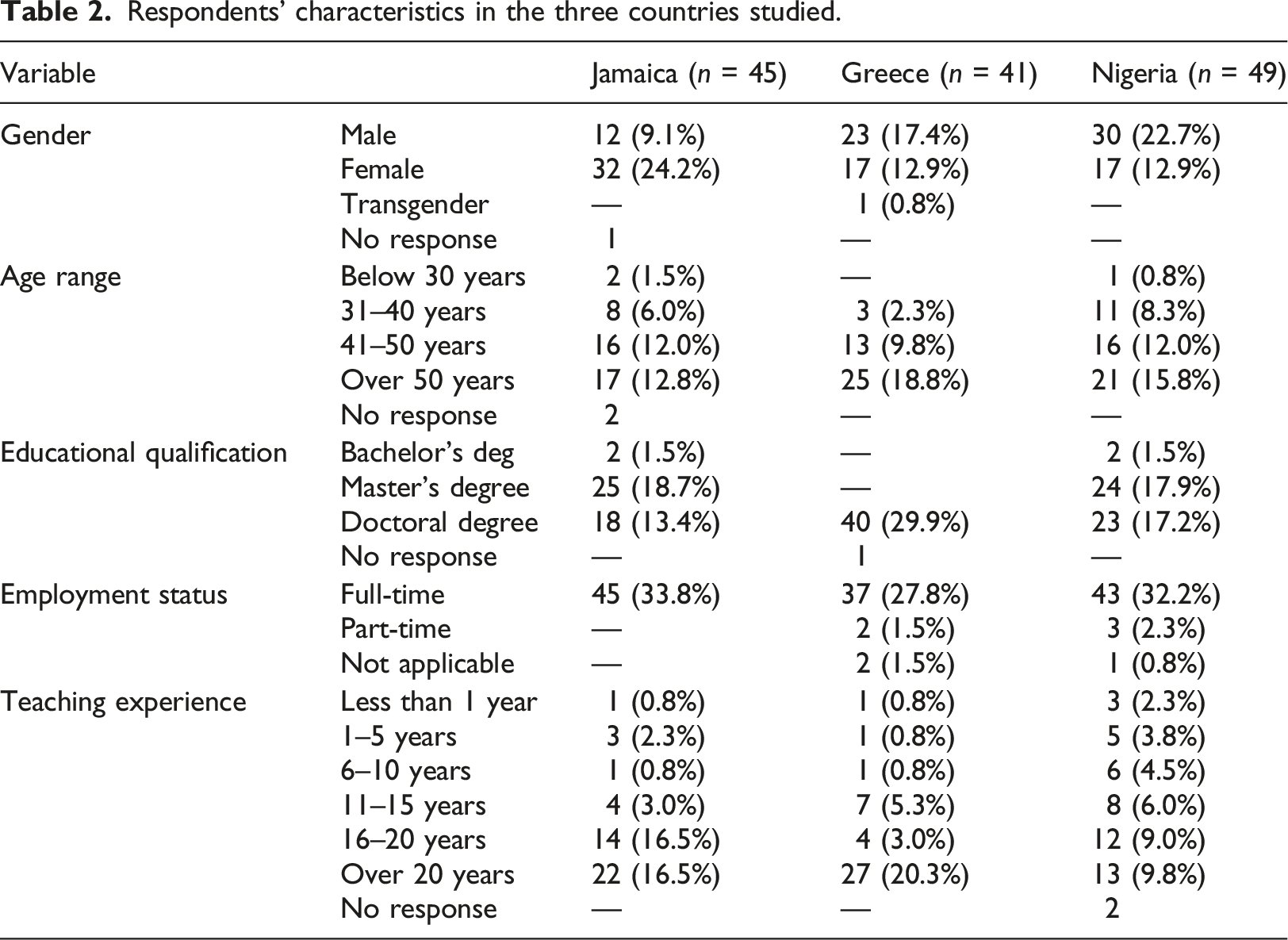
Respondents’ characteristics in the three countries studied.
Instruments and methods of analysis
An e-questionnaire, designed by the three researchers and based on the existing literature, was used to collect data. The e-questionnaire was compiled using a free online survey tool (Google Forms). Standard English was used because English is used as a second language in Jamaica and Nigeria and is very widespread in Greece. The e-questionnaire had four sections, and the teacher educators needed approximately 10 min to complete and submit it. Section A contained six demographic items: gender, age range, educational qualification, employment status, teaching experience and country of residence. Each of these items offered multiple choices responses. Section B comprised four close-ended and two open-ended items on the type, modality and duration of the ITE programme. Section C contained 15 four-point Likert-type items that measured participants’ perceptions of the ITE programme. This format was used because it allowed for inferential statistics such as analysis of variance and factor analysis. Section D contained two items designed to ascertain current issues in ITE programmes in each country, as well as areas that need improvement. The e-questionnaire was pilot tested in the three countries before its final distribution. The e-questionnaire was distributed among a selected number of retired teacher educators for comments on the nature and quality of the items. These participants were not part of the main study. Based on the comments received, certain items were revised in order to be acceptable in the three countries.
The e-questionnaire data were coded and imported from Excel into the SPSS program (Statistical Package for the Social Sciences) version 21. The analyses were done using descriptive statistics (cross-tabulation), one-way analysis of variance (ANOVA) and factor analysis. ANOVA was used to determine differences among the mean values of the teacher educators’ perceptions in the three countries. Factor analysis was used for three reasons. Firstly, it reduced the number of variables (also referred to as factors). Secondly, it established underlying dimensions between measured variables and latent constructs, thereby allowing the formation and refinement of theory. Thirdly, it provided construct validity evidence of self-reporting scales (Williams et al., 2010: 2). Both inferential statistics were done at the 0.50 level of significance to determine if the results were statistically significant.
Reliability and validity
Reliability coefficients for the participating countries.

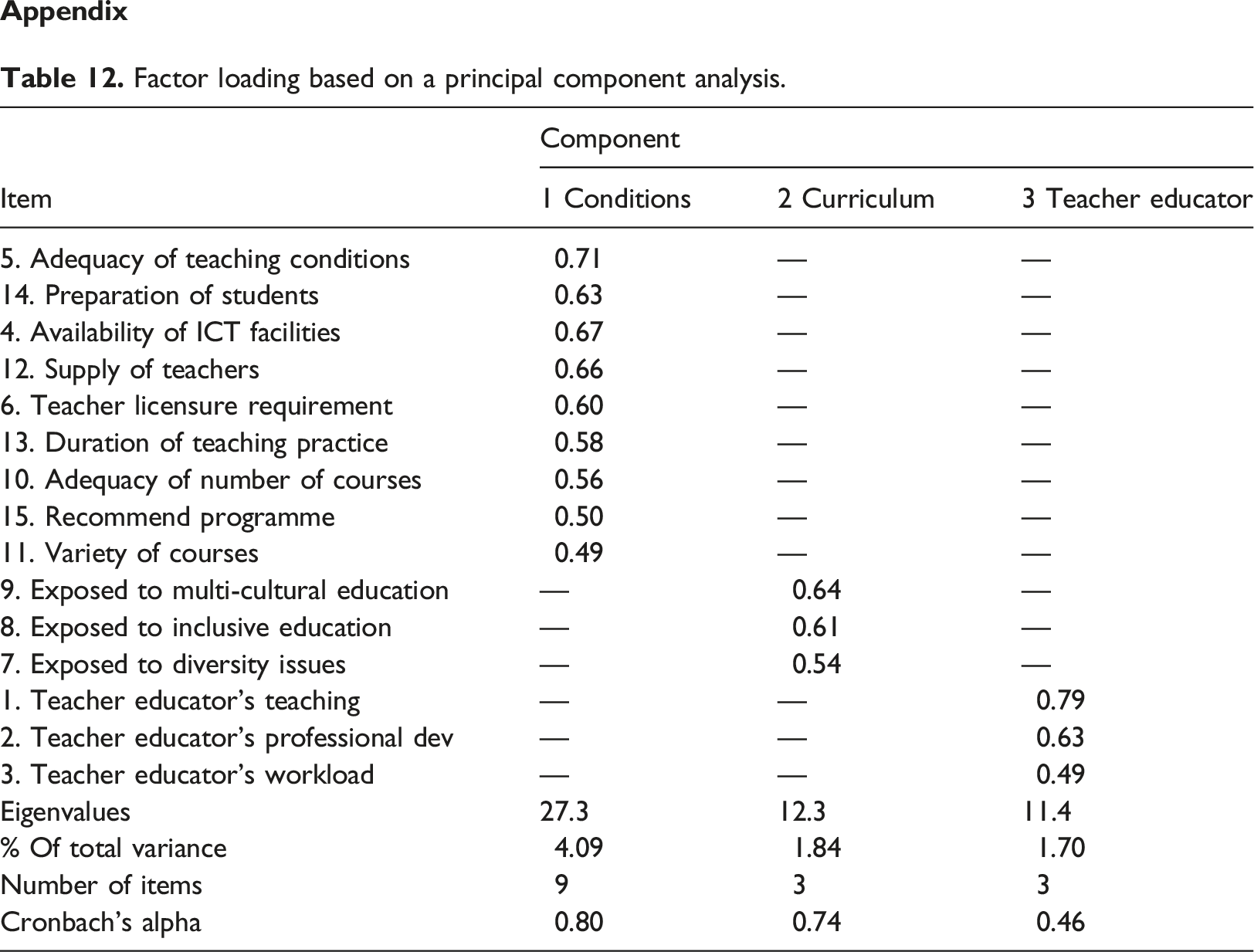
Content and construct validity were used to determine that the items in the e-questionnaire were designed to measure the content of interest (Yaghmale, 2003). First, a non-statistical approach (expert judgement) was used to establish content validity. This required the use of the opinions of three experts, who judged the accuracy, relevance and clarity of the items in the e-questionnaire. These were persons with expertise in statistics, educational psychology and educational research methods. Second, a statistical technique (factor analysis) was used. Exploratory factor analysis (EFA) was used to identify the underlying structure of variables, as well as the relationship between the variables, while confirmatory factor analysis (CFA) was used to investigate the construct validity. The suitability of the data for factor analysis was examined using the Kaiser–Myers–Olkin (KMO) measure of sampling adequacy. The KMO measure yielded a value of 0.70, indicating that the data set was suitable for factor analysis (Field, 2005; Stern, 2010). The principal components analysis procedure was used, and the findings showed that the e-questionnaire was multi-dimensional (i.e., containing three factors). Initial eigenvalues indicated that these three factors explained 27.3%, 12.3% and 11.34% of the variance, respectively. Using the extraction method (principal component analysis), all 15 items had a primary factor loading of 0.40 or above and contributed to the factor structure of the questionnaire. All items were related to the three factors (see Appendix). It should be noted that the feedback from the three experts supported the results of the construct validity.
Results
Initial teacher education programmes
In order to explore the ITE programmes, three items from the e-questionnaire were analysed: the types of initial teacher education programmes offered in the three countries, the modality, and the duration of said programmes.
Types of initial teacher education programmes
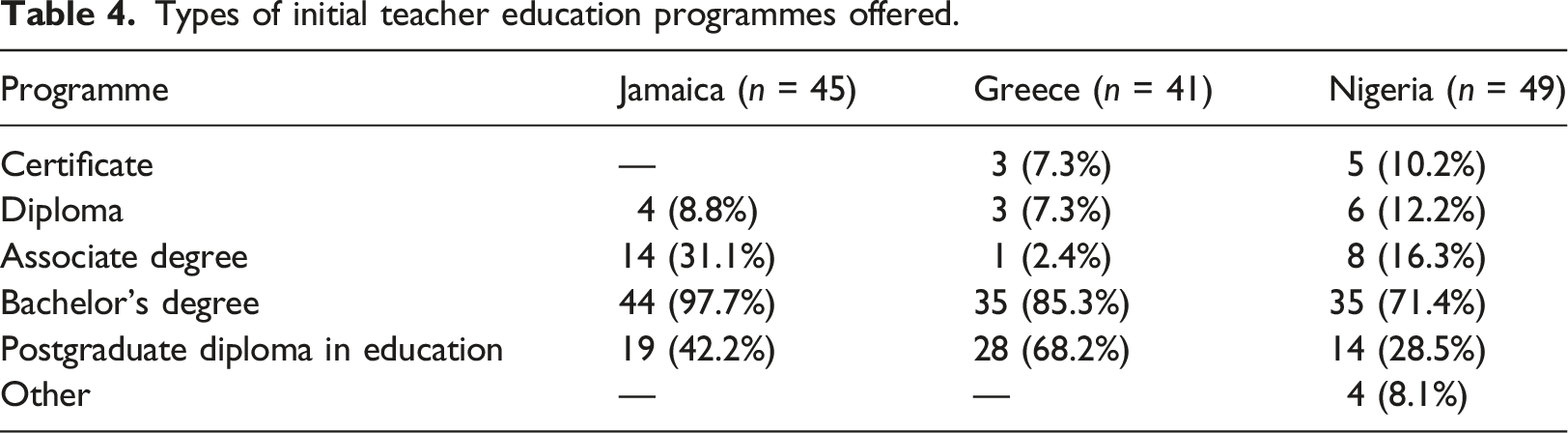
Types of initial teacher education programmes offered.
Modality
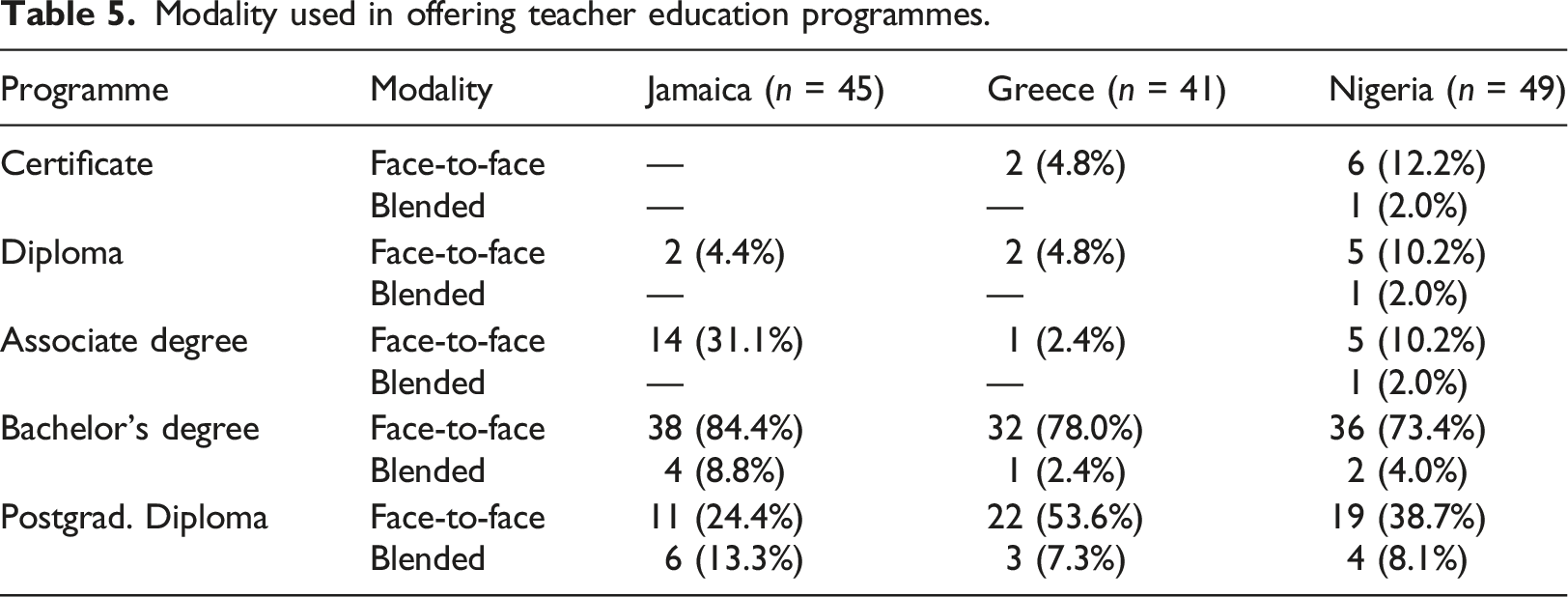
Modality used in offering teacher education programmes.
Programme duration
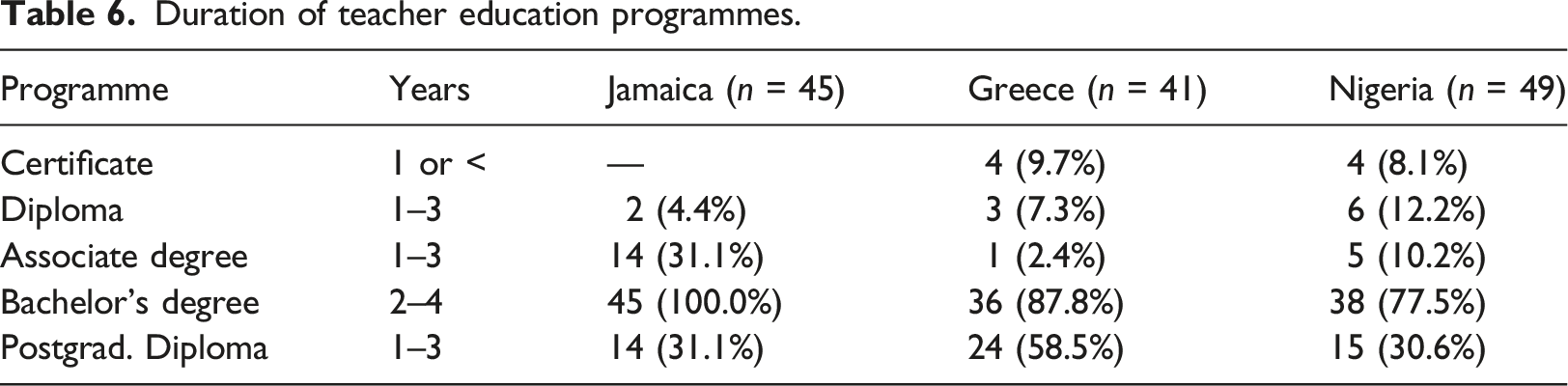
Duration of teacher education programmes.
Teacher educators’ perceptions of the initial teacher education programmes
Descriptive statistics for the three countries.
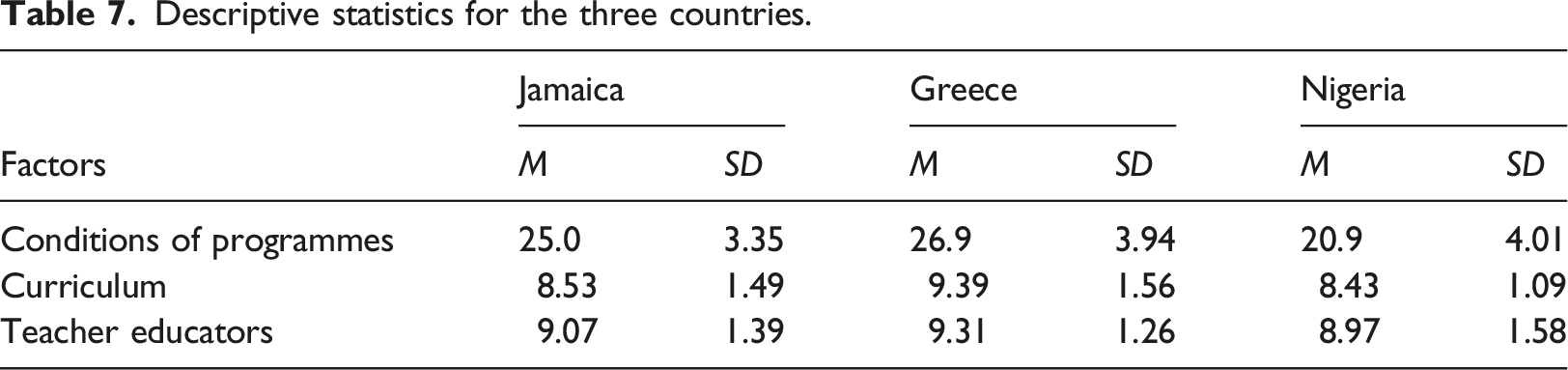
Greece had the highest mean value (M = 26.9; M = 9.39; M = 9.31) for all three factors when compared to the other two countries. However, there were variations in the responses from all the respondents in all three factors, indicating that some were in agreement while others disagreed with the items that measured their perceptions.
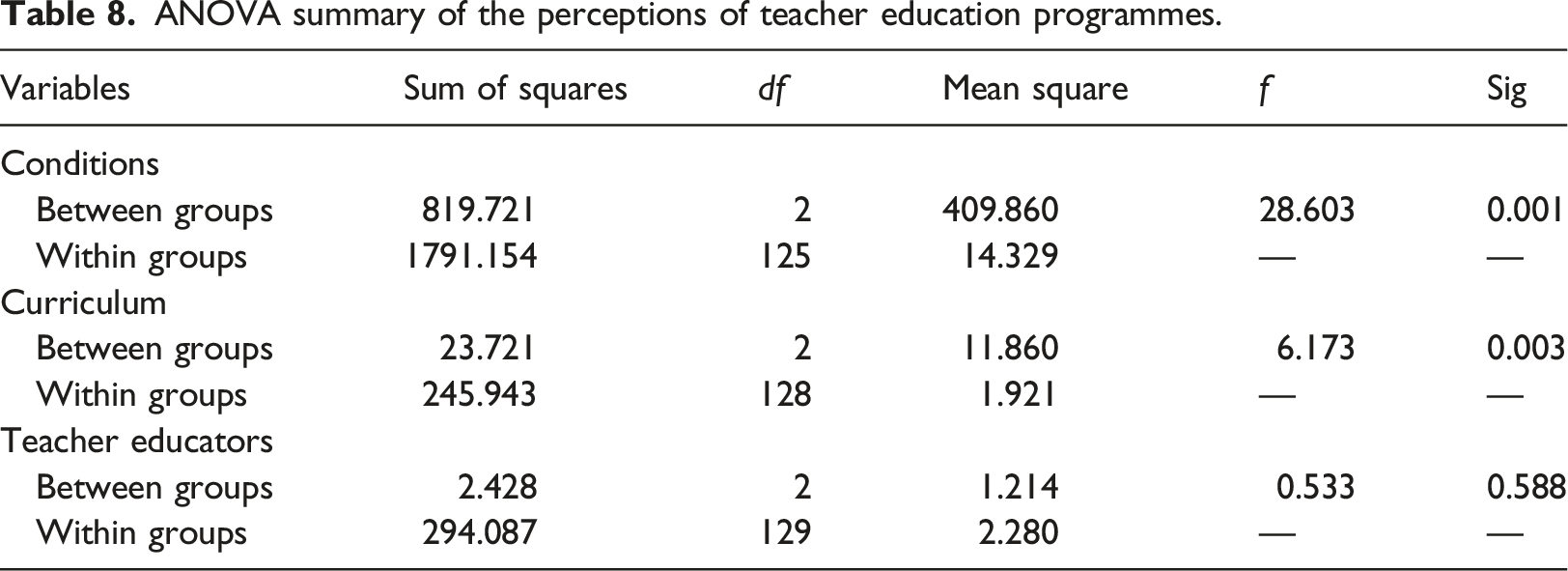
ANOVA summary of the perceptions of teacher education programmes.
Issues Affecting Initial Teacher Education Programmes
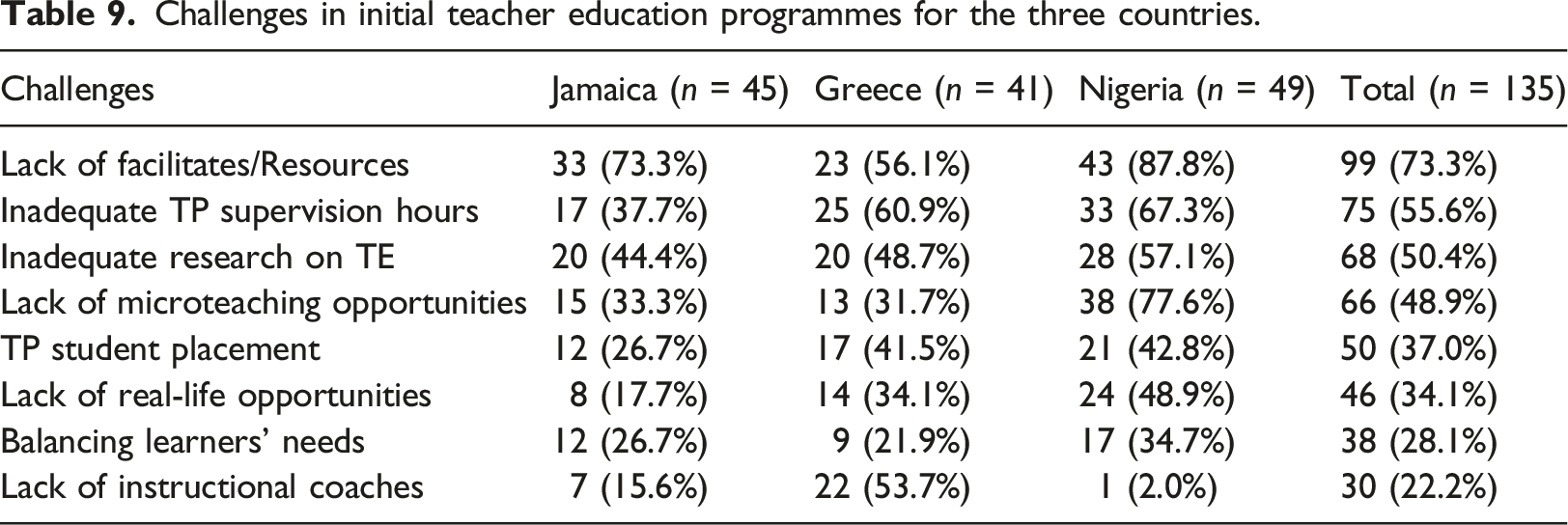
Challenges in initial teacher education programmes for the three countries.
Work-related issues in initial teacher education for the three countries.
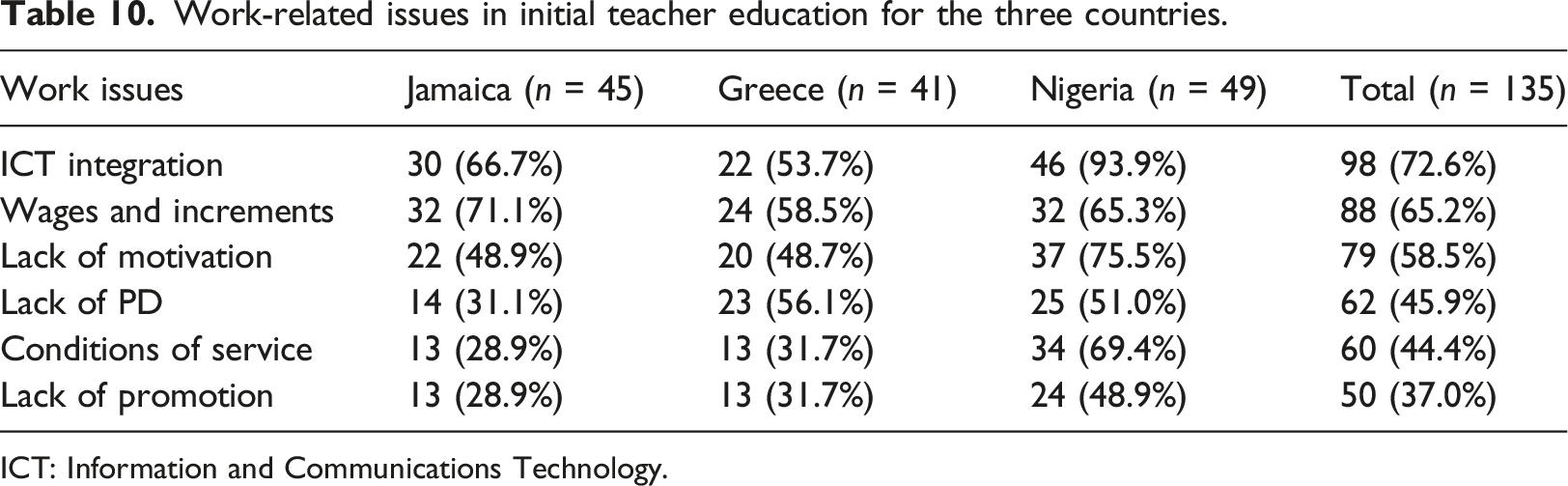
ICT: Information and Communications Technology.
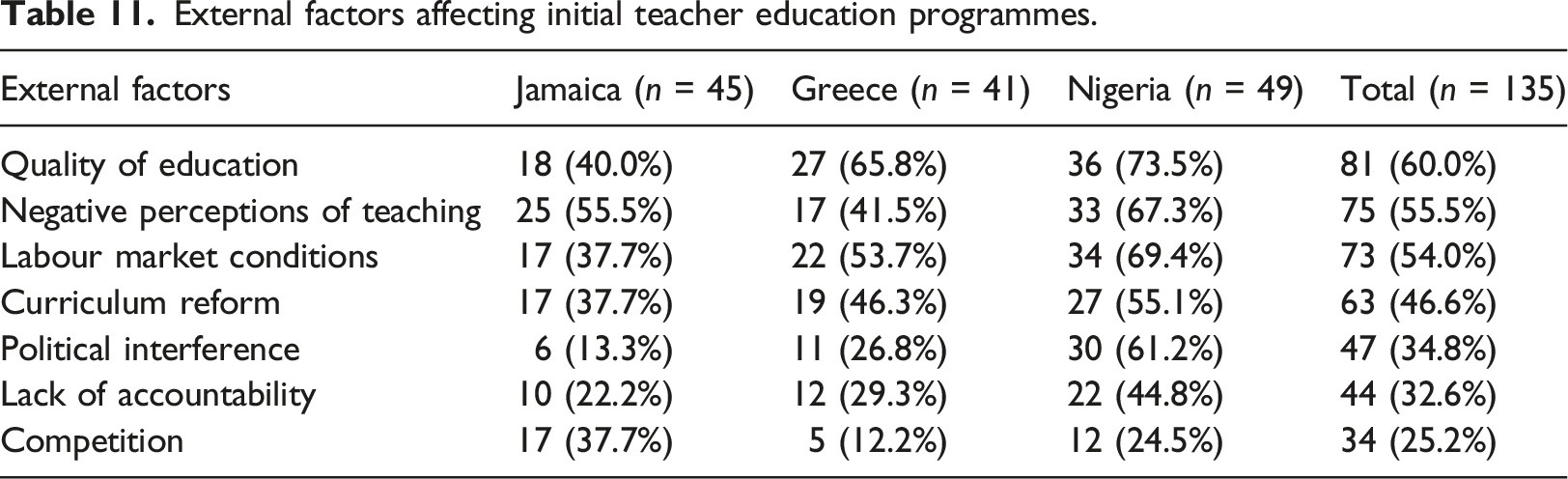
External factors affecting initial teacher education programmes.
Programme challenges
As shown in Table 9, the four main (current) challenges affecting ITE programmes in Jamaica, Greece and Nigeria are lack of facilitates/resources, inadequate teaching practicum supervision hours, inadequate research on teacher education, and lack of microteaching opportunities. The lack of instructional coaches was also considered an important issue among the respondents from Greece, although it was seen as a negligible challenge in Jamaica and Nigeria.
Work-related issues
Table 10 shows that the majority of respondents from the three countries identified ICT skills, resources, and wages and increments as current work-related issues affecting the initial teacher education programmes, while the issues affecting ITE programmes the least across the three countries were lack of accountability, competition from other institutions and lack of instructional coaches.
External factors
Table 11 shows that the three main external factors identified by respondents as affecting ITE programmes were quality of education, negative perceptions of teaching and labour market conditions. The least impactive external factors across the three countries were curriculum reform, political interference, lack of accountability and competition from other institutions.
Areas to improve
The majority of respondents from the three countries identified lack of facilitates/resources, lack of professional development opportunities, concerns regarding wages and increments, and ICT-related issues as common areas. In addition, curriculum reform, labour market conditions and lack of motivation were also identified by respondents from Greece and Nigeria as areas that need improvement.
Discussion
Most of the teacher educators that took part in this research project were over 40 years old and had postgraduate qualifications, full-time teaching jobs, and over 15 years of teaching experience. These findings are congruent with the findings of much of the relevant research and literature on the characteristics of teacher educators (see, for example, Lunenberg, 2010).
Regarding research question one: ‘In what ways are the ITE programmes in Jamaica, Greece and Nigeria different or similar?’, the findings showed that the most popular degree offered by initial teacher education institutions in Jamaica, Greece and Nigeria was the bachelor’s degree, followed by the postgraduate diploma programme. This is consistent with the findings of relevant research (see, for example, Adeosun, 2014). Although the certificate and diploma programmes are still offered in Nigeria and Greece, entry into teaching in Greece follows the graduate or postgraduate routes commonly found in most educational contexts around the world, where the move has been towards an all-graduate, all-trained requirement for teachers (Lai et al., 2002). The bachelor’s degree in ITE programmes offered in the three countries ranges from two to 4 years. This, again, is consistent with what happens in most countries around the world (Adeosun, 2014; Osuji, 2009; Roofe and Miller, 2013).
Concerning modality, the findings showed that a face-to-face approach was the most used approach in the initial teacher education programmes across the three countries that took part in the study. According to relevant literature, the infusion of Information Communication Technologies into learning and teaching has occurred in all sectors of education. It has changed the nature of face-to-face teaching and enabled the rapid growth of blended and online courses in higher education (Graham, 2013). Dziuban et al. (2018) indicated that ‘35% of higher education institutions offered blended courses, and that 12% of the 12.2 million documented distance education enrollments were in blended courses’ (p. 1). However, blended and online courses were not a frequent feature of ITE programmes in the three countries of study at the time of this study in 2018.
In research question two: ‘What are the similarities and differences in teacher educators’ perceptions of ITE programmes in Jamaica, Greece and Nigeria?’, the findings showed that there are significant differences between the three countries regarding teacher educators’ perceptions of the importance of the aforementioned factors (conditions) F(2, 125) = 28.603, p = .001, and (curriculum issues) F(2, 125) = 6.173, p = .003. The mean values for these factors were higher for Greece when compared to Jamaica and Nigeria and lowest for Nigeria. For example, the Nigerian teacher educators considered the ‘conditions’ the most difficult challenge, a finding congruent with the relevant literature (Omoreghie, 2006; Ogbiegbaen, 2005). However, the Greek teacher educators considered the lack of instructional coaches the most significant educational challenge.
These differences may be explained by the different working conditions of teachers in the three countries and the different features of national culture, tradition and institutional politics in each country. Perhaps, for teacher educators functioning in lower-resource environments, lacking instructional coaches may be less significant than the limited microteaching opportunities that trainee teachers have.
Regarding research question three: ‘What are the issues and factors that affect initial teacher education in Jamaica, Greece and Nigeria?’, the findings showed that lack of facilitates/resources, inadequate teaching practicum supervision hours, insufficient research on teacher education, and lack of microteaching opportunities were some of the programme challenges in ITE across the three countries. Although the lack of instructional coaches was a negligible challenge in Jamaica and Nigeria, it was considered a challenge by the respondents from Greece. The findings also showed that ICT integration, resources, wages and increments, lack of motivation, lack of professional development opportunities, conditions of service, and lack of promotion were work-related issues affecting the initial teacher education programmes.
Dhull and Gagan (2017) argued that challenges in teacher education include, among others, a lack of resources and lack of ICT integration and field visits. Chand (2015) also raised concerns about inadequate research. Richard (2016) drew attention to practice teaching being a problem area in teacher education – something that is common in teacher education programmes, especially in Nigeria (Adeyanju, 2005; Ahmed, 2006; Junaid and Maka, 2015; Johnson, 2009; Ottevanger et al., 2007).
Regarding the external factors, three main ones currently affecting the initial teacher education programmes were: the quality of education provided in the ITE programmes, negative public perceptions of the teaching profession, the low pay and labour market conditions, and the continual curriculum reforms.
The findings showed that the key areas that need improvement across the three countries were the lack of facilitates/resources, lack of professional development opportunities, concerns regarding wages and increments, and ICT-related issues. However, the respondents in Greece and Nigeria agreed that curriculum reform, labour market conditions and lack of motivation were also areas that need improvement.
Jusuf (2005) and Harding and Parson (2011) state the need for improvement in the quality of the teacher education curriculum and professional development of teachers. This is echoed by Adeosun (2014), who argues the need for improvements in ITE programmes. Indeed, the UNESCO global education monitoring report (2005) emphasised the need to reconsider training models for teachers if countries are serious about addressing the need for more and better-trained teachers. The report drew further attention to high-performing countries (Cuba, Canada, Finland and Korea) that have high esteem for the teaching profession, stating that these countries favour rigorous ITE and restrictive admissions onto ITE courses.
Conclusion
This study examined teacher educators’ perceptions of ITE programmes in Jamaica, Greece and Nigeria. Although these are countries with different socio-economic contexts, as well as different histories of ITE, the findings show that there are similarities between their ITE programmes: the popularity of the bachelor’s degree programme, as well as the face-to-face delivery modality. There is also consensus on the challenges experienced by the teacher educators and on proposed recommendations for improving teacher education in the three countries. These similarities may be a result of the predominance of neo-liberal discourses in education, as well as a result of the uniformity of policy goals reinforced by international measures of student performance such as PISA and IEA (Adamson, 2012). The findings show, however, significant differences in terms of conditions of work and curriculum issues between Greece, Jamaica and Nigeria.
This study comes at a time of increasing anxiety about the future. The potential contribution of cross-cultural research is greater in times when old verities are being questioned. We venture that understanding teacher educators’ perceptions may provide a platform for further research that could deepen the understanding of the complexity of contexts and the interaction between social cultures and individual countries’ approaches to learning. Such research could critically allow new insights, interpretations or evaluations to emerge, for example, about entry routes into teaching in different contexts.
The comparability of teacher educators’ perceptions about teacher education programmes in Jamaica, Greece and Nigeria shows that the challenges (lack of facilitates/resources, inadequate teaching practicum supervision hours, insufficient research on teacher education, among others) are not defined by boundaries. Rather, the significance of these challenges is conceived as being rooted in fundamental influences on the design and implementation of teacher education programmes and how this education is delivered.
Although small in scale, this study shows that programme challenges, work-related issues and external factors are issues affecting teacher education programmes in Jamaica, Greece and Nigeria. Specifically, problems with the quality of education, negative perceptions of teaching, political interference and labour market conditions are challenges faced by teacher educators across the three countries. Not only is it apparent that the teacher education models need to be considered in light of the need for more and better teachers, but the challenges described above could place a limit on Jamaican, Greek and Nigerian teacher educators’ capacities to meet the Sustainable Development Goal (SDG) 4c target for substantially increasing the supply of qualified teachers in order to achieve the purpose of free quality education for all by 2030 (SDG4).
The work that we undertook for the literature review of this study highlighted several areas where information was lacking. While the research detailed in this paper addressed some of these areas, others did not receive enough attention and remain unexplored (e.g., the portrayals in the current literature of cultural influences on teacher education programmes). These areas would benefit from further research. Moreover, we are of the opinion that a great deal of research needs to be done to map some of the broader social and political dimensions of what is taking place in teacher education programmes in Jamaica, Nigeria and Greece. A start has been made, but additional investigation is needed. Perhaps the following suggestions could form a basis for further research.
The findings provide insights into ITE programmes in Jamaica, Greece and Nigeria, but these originated from teacher educators’ perceptions and not the student teachers themselves. Hence, it would be worthwhile to interview student teachers to have a more comprehensive perspective of the phenomena.
In addition to using questionnaires to gather teacher educators’ and student teachers’ perceptions, focus group interviews with teacher educators and student teachers may reveal new dimensions of ITE yet unknown or unexplored in these contexts. This data collection strategy would promote a comfortable atmosphere of disclosure, in which the participants could share their perceptions, experiences, beliefs and attitudes in relation to teacher education. This would provide an opportunity to tap into the multiple realities of their viewpoints. Moreover, this strategy could generate rich data on the teacher education programmes, as well as new ideas about any radical changes that ITE needs.
One aspect that did not receive much attention in this study was the quality of ITE being offered. A study about the quality of ITE programmes in Jamaica, Greece and Nigeria could provide deeper insights into the institutional experiences and practices of teachers in these contexts. Moreover, such a study would offer insights into how ITE programmes equip teachers to deliver quality education and highlight required improvements in children’s learning outcomes in Jamaica, Greece and Nigeria. The link between the quality of teacher education programmes and the quality of children’s learning has been recognised as necessary for educational improvements, and access to free quality education for all is central to the purpose of SDG4.
To this end, our paper, despite its limitations, has created openings that permit us to think differently about ITE. It has also brought to the fore the voices of teacher educators who are strongly committed to ‘education in a wide sense’ namely, ‘reflection, meaning, critique, problematization, trust, paradoxes, and creativity – processes that seem completely beyond the logic [of neoliberalism] that quantifies and measures’, (Straume, 2011: 252), that of neo-liberalism.
Much has changed since the completion of this research project. However, despite the passage of time and the changes in the contexts under study because of the protracted lockdowns due to COVID-19, the findings of this project may still be significant. After all, not so much has changed in terms of the socio-economic circumstances of the respondents in the study. That said, the predominance of face-to-face learning in the three countries vis-à-vis the experience of virtual living as a result of the pandemic may be something to be discussed. The pandemic has redefined how the whole of humanity functions and how we live (Meléndez et al., 2020; Gatti and Procentese, 2021). Education in every sector of society has had to adopt new ways of delivery, and learners have had to adopt new ways of accessing education (OECD, 2020; UNESCO, UNICEF and the World Bank, 2020). Future uncertainties around COVID-19 may mean endless periods of home learning for children. How might this affect the subject of teaching practice which respondents highlighted as a challenge? It would seem that live, virtual and hybrid delivery is here to stay as a feature of learning in most education contexts. Thus, we need to explore what this might look/feel like in the ITE programmes of the three countries. We hope that the possibility for further research into this topic will arise soon.
Footnotes
Declaration of conflicting interests
The author(s) declared no potential conflicts of interest with respect to the research, authorship, and/or publication of this article.
Funding
The author(s) received no financial support for the research, authorship, and/or publication of this article.
Author’s note
The work described has not been published previously and it is not under consideration for publication elsewhere. Its publication is approved by both authors and by the responsible authorities where the work was carried out. If the work is accepted, it will not be published elsewhere in the same form, in English or in any other language, including electronically without the written consent of the copyright-holder.

Appendix
Item
Component
1 Conditions
2 Curriculum
3 Teacher educator
5. Adequacy of teaching conditions
0.71
—
—
14. Preparation of students
0.63
—
—
4. Availability of ICT facilities
0.67
—
—
12. Supply of teachers
0.66
—
—
6. Teacher licensure requirement
0.60
—
—
13. Duration of teaching practice
0.58
—
—
10. Adequacy of number of courses
0.56
—
—
15. Recommend programme
0.50
—
—
11. Variety of courses
0.49
—
—
9. Exposed to multi-cultural education
—
0.64
—
8. Exposed to inclusive education
—
0.61
—
7. Exposed to diversity issues
—
0.54
—
1. Teacher educator’s teaching
—
—
0.79
2. Teacher educator’s professional dev
—
—
0.63
3. Teacher educator’s workload
—
—
0.49
Eigenvalues
27.3
12.3
11.4
% Of total variance
4.09
1.84
1.70
Number of items
9
3
3
Cronbach’s alpha
0.80
0.74
0.46