




Abstract
Teachers’ learning in keeping abreast of groundbreaking instructional techniques is crucial for their continuous development of which the ultimate goal is meaningful learning for students. However, research on the extent teachers respond to the demand to change especially on their assessment practice is limited. This study investigated teachers’ resilience on a new educational innovation on formative assessment which is group oriented. The study engaged a cohort of 100 high school teachers joining a professionalism-related seminar and workshop for the expected change. The data were collected from a set of individual questionnaire. Mowbray’s insight on process of reacting to events was employed to analyse the data projected to describe the teachers’ resilience on an innovative assessment practice. The findings indicated teachers revealed resilience to a certain extent on the innovative assessment practice. The majority were open to the challenge to change; it is the novice teachers who revealed the greatest resilience.
Introduction
Present-day students need to learn new skills like cooperation, higher order thinking and effective use of innovative information technologies. These particular demands for students to learn new skills have called for new instructional methods to produce the respective skills (Hargreaves, 2000). This means that teachers are inevitable to prepare themselves for this particular claim. The demand for students entails the one for teachers as well.
Kunnari (2018: 15) puts it, ‘Teachers need to be learners themselves, as well as active agents in their own learning in the continuously changing environment’. The term of ‘teachers as co-learners’ (Daws, 2005; Farrell and Jacobs, 2010; Holbrook et al., 2012) implies that teachers are significantly learners themselves. Several researches performed to study teacher professionalism have similarly come up with the phrase ‘professional learning’ (Adendorff et al., 2010; Hargreaves, 2000; Louws et al., 2017; Pang and Wang, 2016; Pieters and Voogt, 2016) hence indicating that the world of learning is confined not only to learners but also to teachers as well. The most often paired words teacher-teach and learner-learn should then be diminished. In light of this, a new insight put forward has been to reconceptualise a career in teaching as ‘a journey’ and not ‘a destination’ (McMahon et al., 2013: 163).
Teaching literature has coined the term ‘an agent of change’ as a growing challenge faced by teachers (Priestley et al., 2010; Vandeyar, 2017). Teachers’ personal commitment for professional development is expected (Pettis, 2002). Teachers’ professional responsibility is inevitable. Teachers should unceasingly change themselves to empower students’ learning (Adendorff et al., 2010; Pang and Wang, 2016).
Some teachers face the changes eagerly revealing some degree of resilience, while some others might be more confused or resistant to transform their customary mode of teaching. This study is partly aimed at probing teachers’ resilience on an educational innovation on assessment practice. This study involving 100 teachers across 56 schools in East Java, Bali and Lombok islands in Indonesia focusses on how teachers responded to the challenge to change after attending a seminar and workshop. To be more specific, this study investigates teachers’ resilience to a set of innovative insights for formative test which is assessment oriented. This might in the long run contribute to the literature on professional development of teachers as an agent of change.
In particular, the questions to probe include the following: (1) How are the merits of innovative insights for formative test which is assessment oriented perceived by a cohort of teachers? (2) To what extent do the teachers reveal resilience on the newly introduced innovative insights?
Prior to revealing the method employed to get the answers, some theoretical issues will be presented.
Professionalism
Pettis (2002) points out that teachers must make a personal commitment. In other words, teachers need to possess professional accountability. This is actually headed toward teachers’ ongoing professional growth.
Professionalism, claimed by Ur (2002), is one’s preparation to do a competent job through learning. The learning process can be in the forms of in-service courses, discussions with colleagues or a reflection on experience. Ur (2002: 389 cited in Tamah 2008) puts forward: ‘Professionalism means preparing oneself to do a competent job through learning. This learning may take the form of presentation or in-service courses, refection on experience, reading, observation, discussion with colleagues …’.
Preparing oneself to be professional can take various forms. Keeping abreast of instructional knowledge by attending conferences is not uncommon. Various conferences are held creating a platform to researchers and academicians to share experiences, discuss research findings and acquire the desired knowledge.
Making reflection on teaching experience (Adendorff et al., 2010; Clemitshaw, 2013; Gozali et al., 2021; Harjanto and Tamah 2017; Nurfaidah et al., 2017; Richards and Ho, 1998; Tamah 2008, 2017; Ur 2002) has also been quite central in a teacher professional development issue mirroring critical pedagogy. Collaboration among teachers and partnership has been noticed (Fraser et al., 2007; Pieters and Voogt, 2016). One typical collaboration approach of professional development is a popular Lesson Study when teachers collaborate in analysing an on-going instruction (Areni and Syafri, 2018; Cajkler and Wood, 2016; Lewis, 2000; Rock and Wilson, 2005). Joining courses – inclusive of in-service workshop – is frequently endorsed, too. Indonesian government has provided Professional Development Programs covering teacher-training or in-service teacher professional education known as ‘PPG’ (Jalal et al., 2009; Kusumawardhani, 2017; Syahril, 2016) – a teacher certification programme which has now been expanded to include a hybrid learning framework. School Improvement Program is also another form of teacher professional development program (Fraser et al., 2007; Harjanto et al., 2018).
One particular program of professional development – funded by the Indonesian government through the Directorate of Research and Community Service – has been conducted to let teachers be informed about new insights of a formative-oriented assessment. It was conducted as a part of a two-year research of a competitive scheme. This program was in fact a short training to assist teachers to grow more professionally. They were presented with the real challenge – the focus of the next topic.
A piece of challenge to change
Two polarised issues have occurred regarding instructional practice on group work. On one side, it is argued that teacher-centeredness still dominates the mode of classroom teaching (Astuti and Lammers, 2017). On the other hand, it is found that quite a lot of teachers have altered their teacher-centeredness into student-centeredness (Mc.Donough & Shaw, 2003 in Tamah, 2011; Tamah and Prijambodo, 2014; Xethakis, 2016). One of the numerous reasons for this alteration is, as argued by Tamah and Wirjawan (2019), the willingness of classroom teachers to change.
With regards to group-oriented instruction, it has been found that most students are in favour of group work (Tamah and Prijambodo, 2014). Furthermore, group work has been found to be preferred by millennial students. Nicholas (2008) found about 72% students agreed to ‘I think doing group work in class is a valuable way to learn’. Millennial students prefer to collaborate and work in teams with their generational peers (Nicholas, 2008 citing Lancaster and Stillman, 2000; Skiba, 2006).
It is desolately found that though group-oriented teaching has been a shared occurrence, the individual formative test practice still dominates the class instruction. Tamah and Prijambodo (2014, 2015); and Tamah (2020) have introduced debatable insights for assessment-oriented formative test. They contain three unified assessment paradigms. The core of the first paradigm embodies the alteration from individual to group-oriented assessment. The second embodies the change from individual assessment into representative assessment emphasising on representativeness instead of individual-oriented test which is the characteristic of summative tests. The third highlights the presence of structured discussion during representativeness assessment.
The challenge to change from individual into group assessment is presented as it is arguably vital for teachers to perform formative test to summon up the teaching and learning practice in the regular basis (Tamah, 2017; Tamah and Prijambodo, 2015). This particular first paradigm is offered as a challenge to respond to the emerging discrepancy. The premise is obvious: it is inexorable to reconsider the prevalent practice of assessing students individually when in fact group work has been implemented in the regular basis. The ‘soul’ of cooperation should not be taken away.
The change from individual assessment into representativeness-oriented assessment requires that merely two students from each 3–4 student group become the quiz takers. These quiz takers work individually (illustrated in Figure 1 in the first column, that is, Step 1 column, notice Students A1 and A2 from red group work individually; similarly, Students A1 and A2 from each yellow, green, blue and purple groups also work individually). Meanwhile, the non-quiz takers work together to prepare themselves to support the quiz takers (see Figure 1 also in Step 1 column, the area after the broken lines: Students A3 and A4 from each group work together – as revealed by the side-by-side sitting arrangement). A three-phase design for formative assessment (Adapted from Tamah, 2017).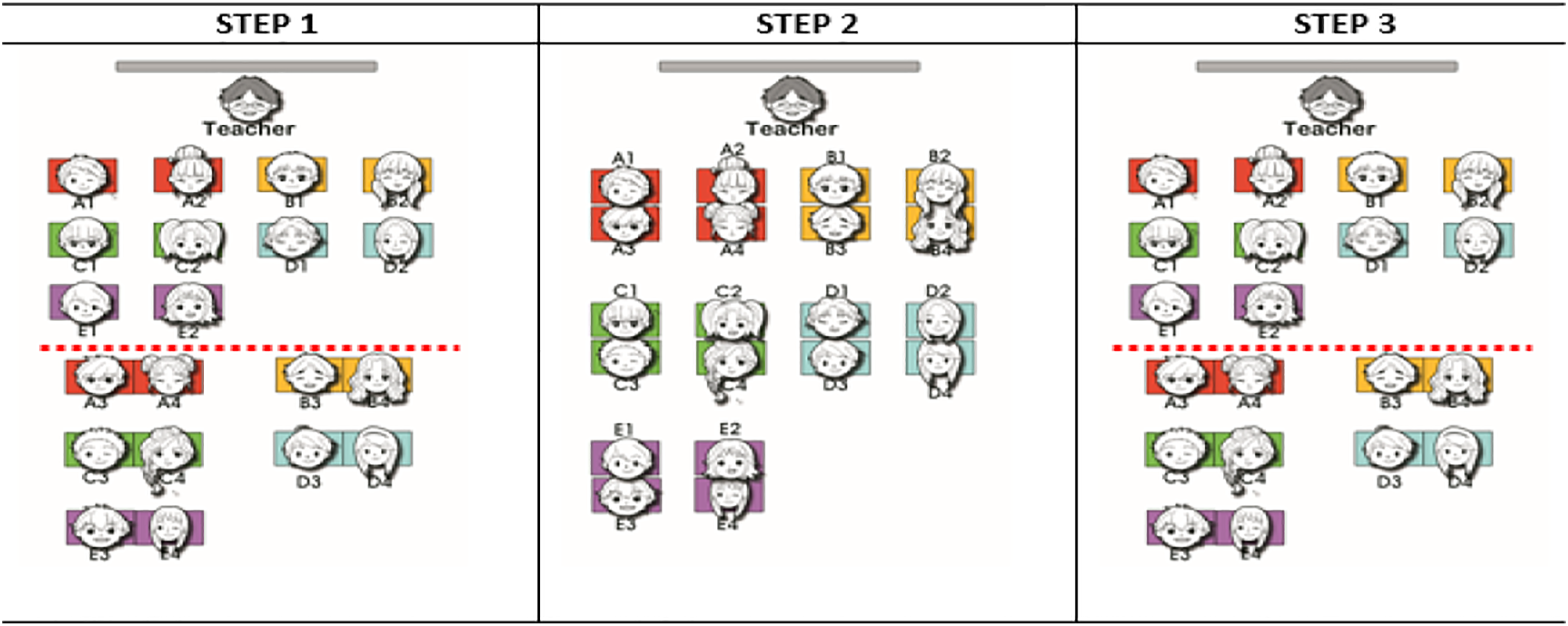
The inclusion of representativeness is associated with the execution of positive interdependence and individual accountability. This is structured in such a way that the time allocation follows this tenet: Firstly, 100% quiz time is for individual work for the quiz takers, while at the same time the non-quiz takers are permitted to discuss the quiz items. What follows is the 50% quiz time for each quiz taker to be paired with the non-quiz taker – thus designating the quiz takers can get support from the other group member(s) to discuss the items. This is structured in such a way that the time is spent merely on paired discussion. Eventually, some other time allotment namely 10–15% quiz time is set for the quiz takers to work on their own again. The non-quiz takers then leave the quiz takers to tidy their work and decide which answers to keep. The positive interdependence is more obviously indicated when the scores of the quiz takers are averaged. Each group member gets the average score.
The challenge to set the group-oriented formative test is illustrated in Figure 1.
The process in the three-phase design for formative assessment can now be briefly explained as follows. In Step 1, there are two areas: the area for the two chosen representatives of each group to work on the quiz individually and the one for the non-quiz takers to work together in pairs. In Step 2, the two areas do not appear as each group can get together but they work together only in pairs to discuss certain quiz items. In Step 3, which is actually the same as the one in Step 1, there are two areas again as the non-quiz takers go back to their area. The quiz takers are left alone to individually tidy their quiz answers.
The last paradigm – the change from individual assessment into representativeness assessment with structured discussion – reveals the concept that meaning is constructed through collaborative activities. Dialogue which is typical of exploratory talk with dialogic manner to, among others, ask for clarification, agree or disagree, and make possible self-correction is a type of classroom talk that benefits learning (Fishe, 2011). Efficient learning, similarly argued by Freedman and Ball (2004 in Murniati, 2008), occurs when dialogues are present in contextual circumstances. This paradigm also echoes the perspectives of social interactionists. New understanding takes place when it is communicated – constructed and negotiated through talk (Mercer, 1995 in Tamah, 2011) or through interaction (Wenger, 1998 in Murniati, 2008). Though the merit of exploratory talk has been claimed, students are rarely engaged in this exploratory talk (Lee, 2016).
Process of reacting to events
Mowbray’s (2011) Process of Reacting to Events forms the base of our theoretical discussion. Three features are involved (1) Who am I? (2) What does this event mean to me? and (3) What will be the outcome? indicating the three processes when one reacts to an event which brings about resilience. Mowbray (2011: 8) specifically puts it: (1) Who am I? – the answer lies in our personal features – features that make us who we are at the time of the event and inform our attitude towards the event. (2) What does this event mean to me? – the answer lies in our evaluation of the event from which we interpret the event into a meaning on which we base our reaction. This, also, informs our attitude towards an event. (3) What will be the outcome? – the answer lies in the skills, personal features and action we take to achieve an outcome that we want. This, also, informs our attitude towards an event.
In this study, the three elements are illustrated as follows: (1) Who am I? features who the teachers are at the time of the event. (2) What does this event mean to me? reveals the evaluation of the event from which the teachers interpret the event into a meaning. In this study, the seminar and workshop is meant to be the means to open the road to change. The core of the event is the challenge, that is, the new paradigms introduced. (3) What will be the outcome? features the skills, personal features and action teachers take to achieve an outcome. This particular element is determined by whether they are challenged to change or not.
Research method
This study is basically descriptive in nature. A set of questionnaire in which responses are collected on a 4-point Likert scale is used to answer the research questions. As Mowbray’s (2011) Process of Reacting to Events becomes the base in this study, there will be three main sections to present more in this method section. (1) Items in the questionnaire to collect The Who include the identity of the teachers who came to the seminar and workshop. (2) Items in the questionnaire to collect The Meaningful Event include the questions and responded statements that yield to the confirmation of the inventiveness or to the perceived merit of the new paradigm introduced. (3) Items in the questionnaire to collect The Outcome include the ones leading to the revelation of a portrait of teacher resilience.
The instrument to collect the data was a questionnaire involving both open and closed items. Consisting of four parts, the questionnaire which was written in Indonesian was a self-developed one which was a part of a larger research (Tamah and Wirjawan, 2018).
Part A deals with the subject identity: their name, gender, the subjects taught, the length of teaching experience and the daily instruction mode of teaching to ensure that group work was implemented as a regular basis. Their responses would remain anonymous and confidential.
Part B consists of items to reveal (1) whether the inventiveness was perceived and (2) the extent the subjects perceived the merit of the challenge presented – the meaningful event. For the first issue, one item formulated to ensure the challenge says: ‘The step-by-step quiz will be my first experience when it is implemented’. For the second issue, seven items were formulated to see the extent the subjects perceived the usefulness and necessity of the paradigm, the predicted preference of students, the anticipated learning of students and the representation of the nature of group work. Precisely, the following statements were provided: (1) The step-by-step quiz administration, structured discussion between quiz takers and non-quiz takers, and average score application is useful, (2) The step-by-step quiz administration is needed, (3) Representativeness quiz encourages the quiz takers to work maximally for the group depends on them, (4) Representativeness quiz encourages the non-quiz takers to work maximally because they get the chance to assist the quiz takers, (5) Learning happens when the quiz is administered because there is structured discussion, (6) Students will like the step-by-step quiz administration and (7) The step-by-step quiz administration is congruent with the nature of group work. The responses were collected on a 4-point Likert scale ranging from ‘strongly disagree’/‘1’ to ‘strongly agree’/’4’. The entry of ‘Comment’ was provided to get more information about why a certain answer was chosen.
Part C deals with the types of formative assessment. The item was formulated to reveal the assessment practice performed in a regular basis. The statement states “The expected result of group work I require from my students: (A) Written individual report from each student in the group, (B) Written report from only one member chosen to represent the group, (C) One written group report from the group, (D) Oral presentation from each student in the group, and/or (E) Oral presentation from only one group member chosen.” This particular item would direct the researchers to indicate that the subjects were more of group oriented or individual oriented in assessing their students.
Part D consists of an item requiring the subjects to opt only one of three answers provided. It was formulated to see the subjects’ preference on group vs individual-oriented assessment after being challenged. It asked the subjects to choose (A) Newly introduced paradigm of assessment-oriented formative test, (B) Individual formative test with average score taken or (C) Individual formative test without average score taken.
Parts A and C in the questionnaire were obtained before the subjects joined the seminar and workshop. Parts B and D were obtained after they joined it.
The instrument was tried out at a high school not included in the actual research. A test and retest method was employed. The answers were calculated using Excel, and its correlation was found to be valid. An r value obtained (0.718) bigger than the r table (0.423; df 22) indicated the criteria of ‘valid’ research instrument. By the help of ‘Pearson Correlation Coefficient Calculator’, the reliability of the research instrument was found to be 0.49 – a moderate coefficient (Ary et al., 2010).
The event for the presence of challenge took place in two different venues to reduce teachers’ travelling time. The one-day seminar and workshop was held in Surabaya, East Java province and in Mataram, (West Nusa Tenggara province). In the first year, it was held on 5 and 19 May 2018 respectively. In the second year, it was on 18 and 25 May 2019 respectively.
The seminar was spent on discussing (1) cooperative learning, (2) the nuts and bolts of group work and (3) the new paradigm on assessment-oriented formative test. The workshop covered two topics: the nuts and bolts of group work and the group work assessment. In the assessment topic, a model of assessment-oriented formative test was provided. The teachers acted as the researcher’s students of high school.
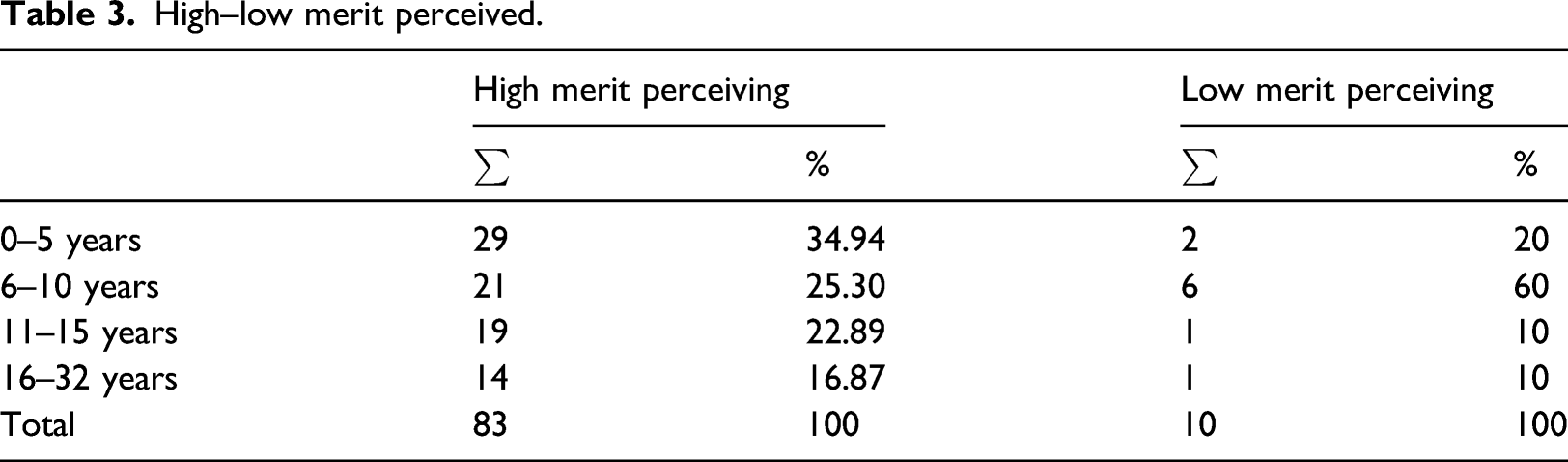
Data from Part A were tallied, and percentages were measured. Data from Part B revealing a Yes/No answer for confirmation of inventiveness were similarly tallied, and percentages were measured. The one dealing with Likert scale was averaged for each subject and coded as ‘Low’ (for 1.00–2.99) and ‘High’ (for 3.00–4.00). ‘Low’ coding indicated that no merit was perceived. ‘High’ coding indicated that the event was considered meaningful.
Data from Part C would reveal assessment practice in the regular basis. As stated previously, five constructs were mentioned: (A) Written report from each group member, (B) Written report from only one member, (C) One written group report from the group, (D) Oral evaluation from each group member and (E) Oral evaluation from only one group member. (A) and (D) would indicate the assessment practice in a daily basis which was individual oriented (IO). B, C and E would indicate the one which was group oriented (GO).
Answers (A) and (B) from a subject were coded IO and GO and eventually classified as Balanced. This means that the respective subject was ‘neutral’ performing both group and individual assessment equally. Likewise, answers (A), (B), (C) and (D) were coded IO, GO, IO and GO. This subject was classified as Balanced also. Answers (A), (B) and (C) were coded IO, GO, GO and eventually classified as GO. This means that the respective subject performed group assessment more than individual assessment in teaching. Another set of answers – (A), (C) and (D) – were coded IO, GO and IO. As more IOs were revealed, the subject was finally classified as IO indicating the respective subject performed individual assessment more than group assessment.
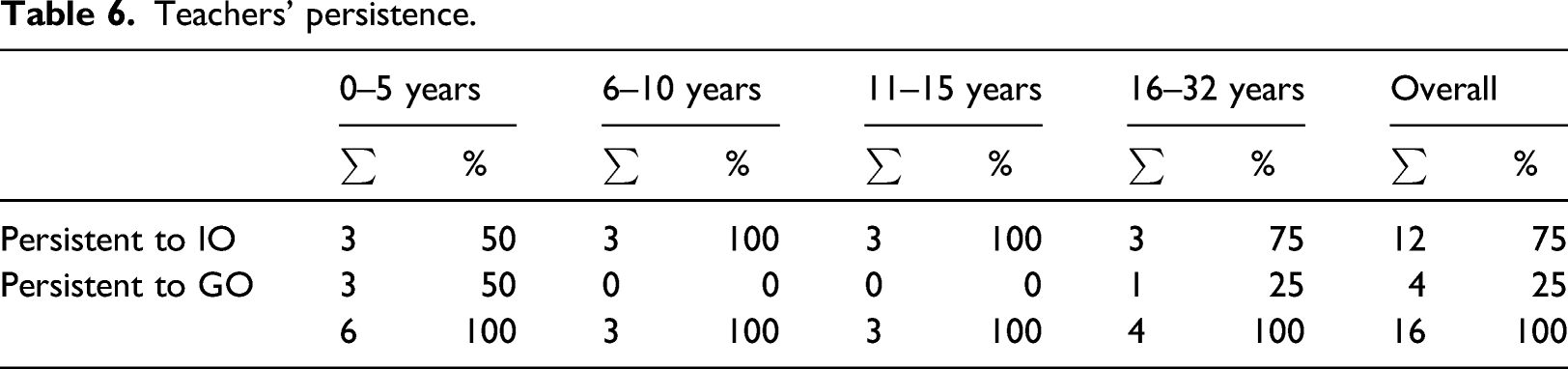
Data obtained from Part D were analysed as follows: Choice A ‘New paradigm of assessment-oriented formative test’ was coded GO. Choice B ‘Individual formative test with average score taken’ was coded IO and choice C ‘Individual formative test without average score taken’ was too. The case of teacher resilience was identified from the last two coded answers in Parts C and D. A Balanced teacher (Part C) who was identified GO (in Part D) was coded ‘change’. A GO teacher (Part C) who was identified GO (in Part D) was coded ‘persistent’. The subject indicated with a ‘change’ showed that he/she responded to the challenge to change. Meanwhile, the subject indicated with a ‘persistent’ showed that he/she was not affected by the challenge. The neutral attitude was revealed.
Research findings
The who
The 2018 seminar and workshop was attended by 46 teachers (One teacher did not provide complete answers). The 2019 seminar and workshop was attended by 57 teachers (Two teachers joined only half day of the event). Three teachers were then excluded. This brought about a number of 100 teachers (45 language teachers and 55 non-language teachers) becoming the subjects of this study under report. The teachers’ profiles are illustrated in Figures 2 Teachers’ gender.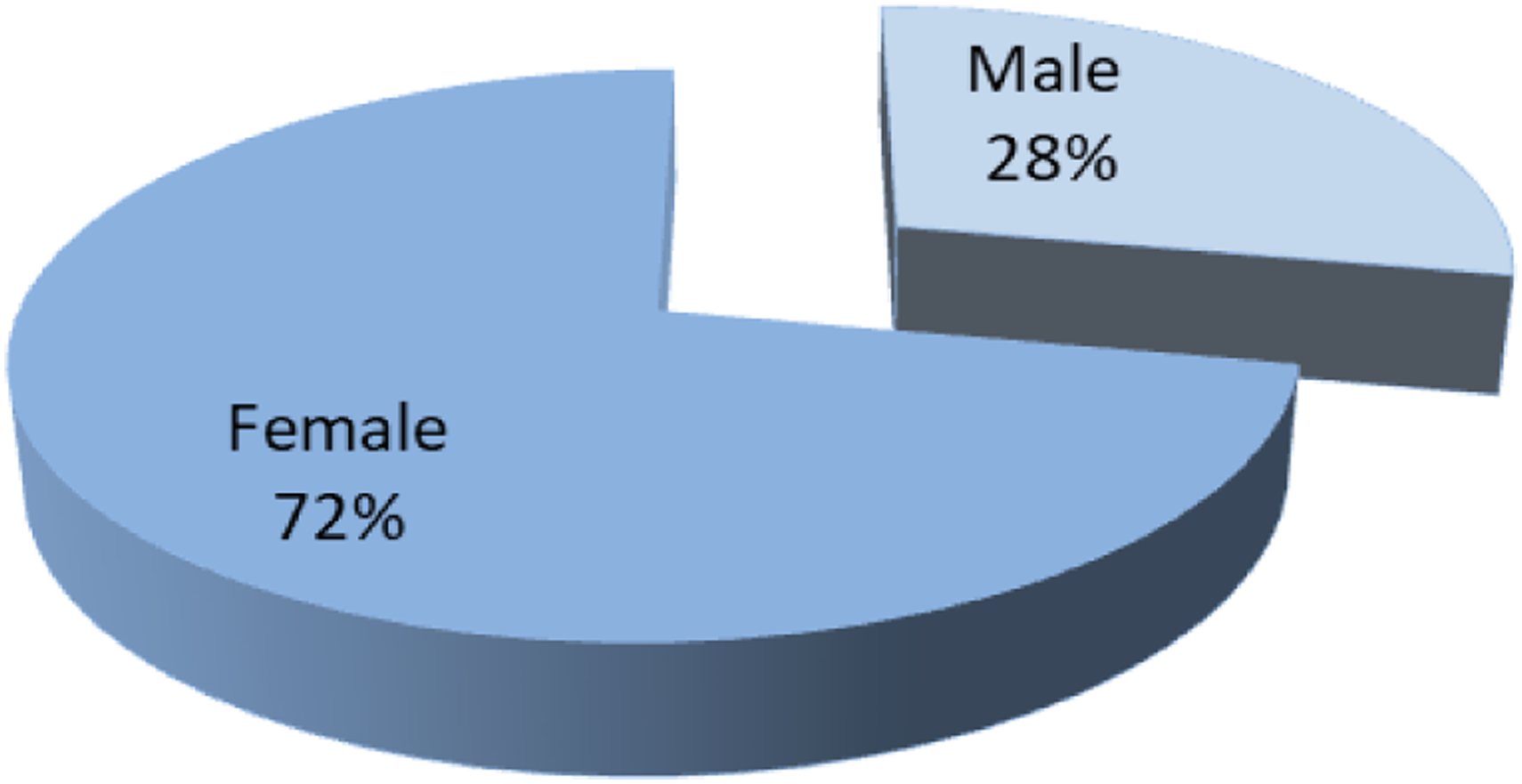
Of 100, 45 were language teachers (English, Indonesian, Javanese and German). Twenty seven were teachers of Natural Science. Fourteen were teachers of Social Science, and the remaining 14 were teachers of other subjects (Civics, Administration, Culinary Art, Agriculture, Religion, Life Skill and Culture). The majority (reaching 33%) had 0–5 years of teaching experience, and 27% teachers had 6–10 years of teaching experience. Those having 11–15 years and 16–32 years of teaching experience amounted to 22% and 18%, respectively. School level. Experience in administering the formative assessment.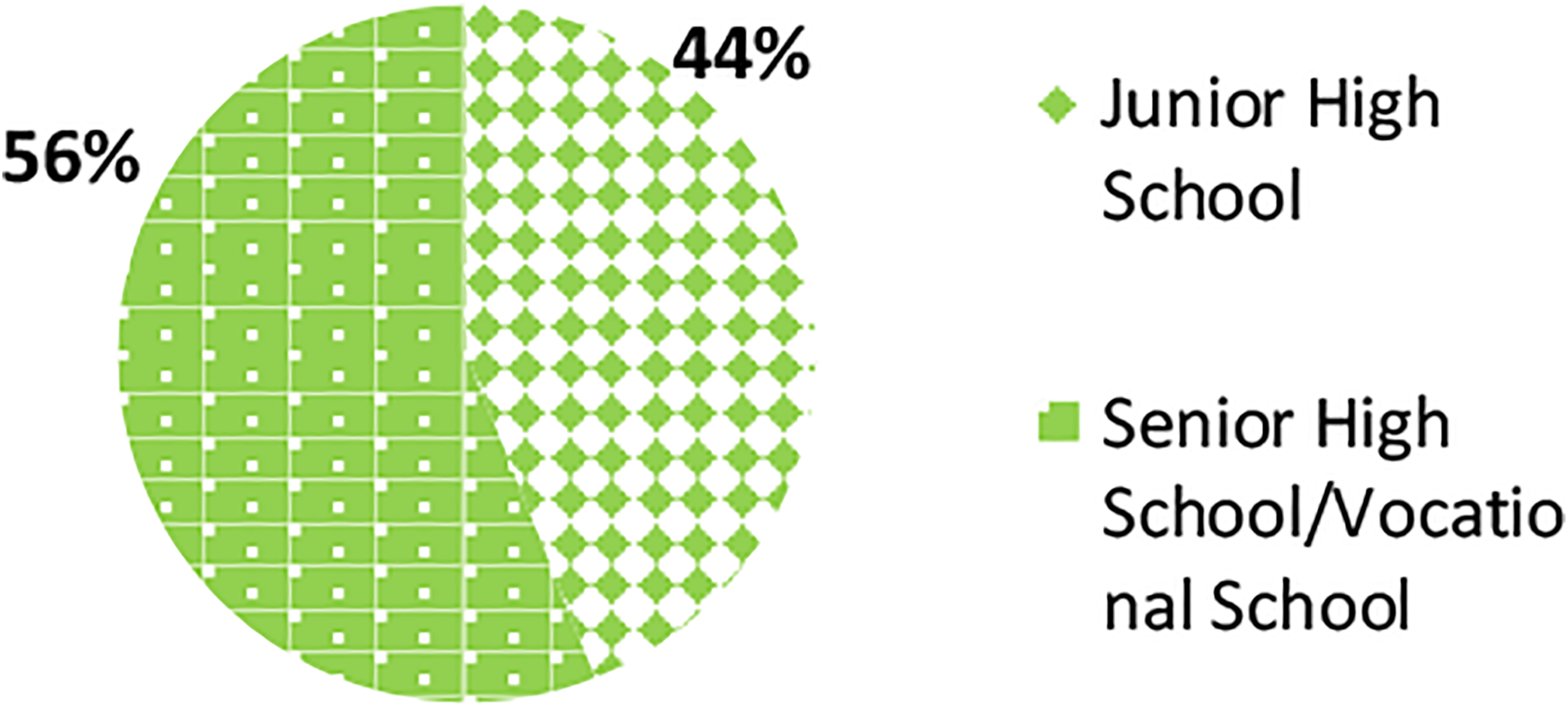
The meaningful event
Following Mowbray’s (2011) ideas illustrated previously, the researchers will depict how meaningful the workshop is. In fact, it is the insights of very structured assessment in the workshop which is the core of this section. This section is therefore presented to disclose the answer to the first research question: the perceived merits of the insights introduced or the inventiveness of the challenge.
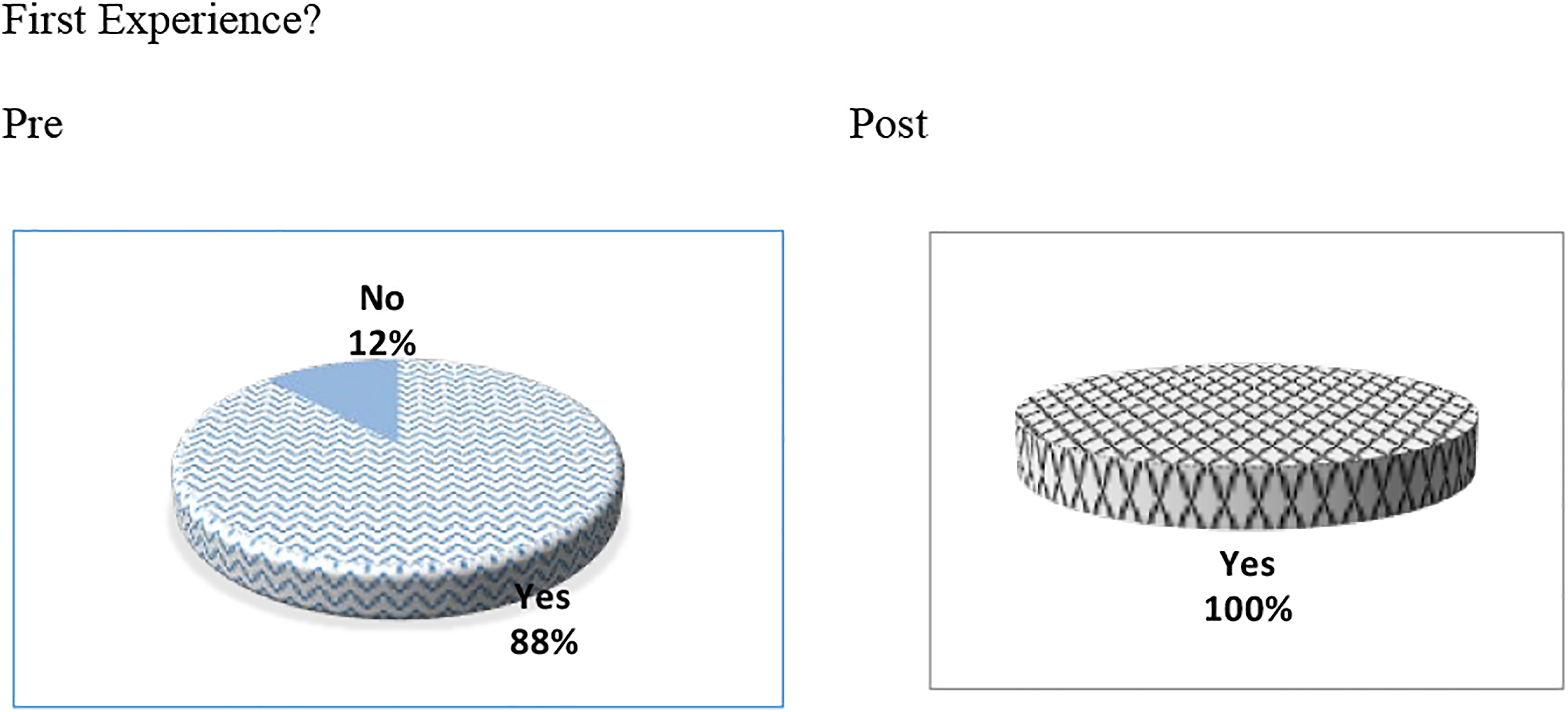
The teachers’ responses to The administration of this representativeness-oriented assessment will be the first experience for my students reveal that the majority of the subjects (88%) pointed out YES before they were introduced to the paradigm. After the workshop, the percentage for YES reached 100%. After experiencing the paradigm in the workshop, 100% agreed to the inventiveness. Before they were introduced to the insights, 12% teachers seemed to misunderstand it as revealed in the note obtained ‘I thought it was the usual group work I implement’ (Figure 4).
The degree of group work implementation.
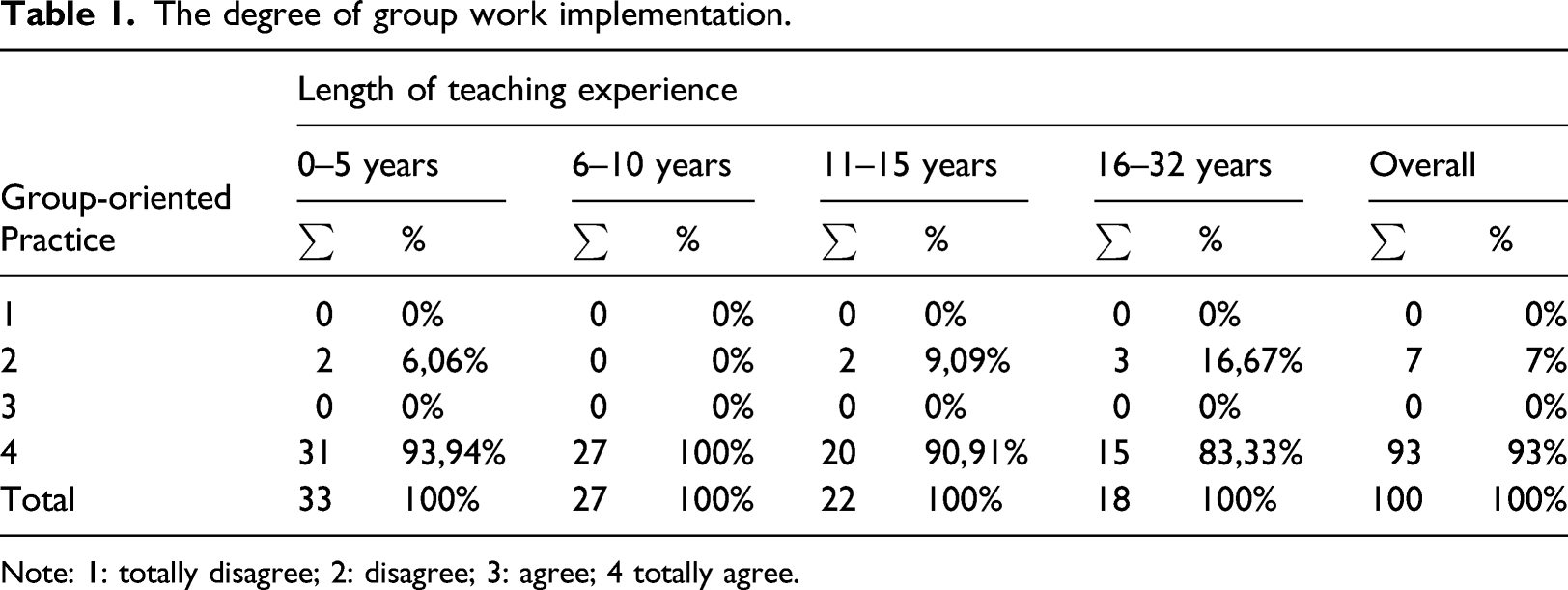
Note: 1: totally disagree; 2: disagree; 3: agree; 4 totally agree.
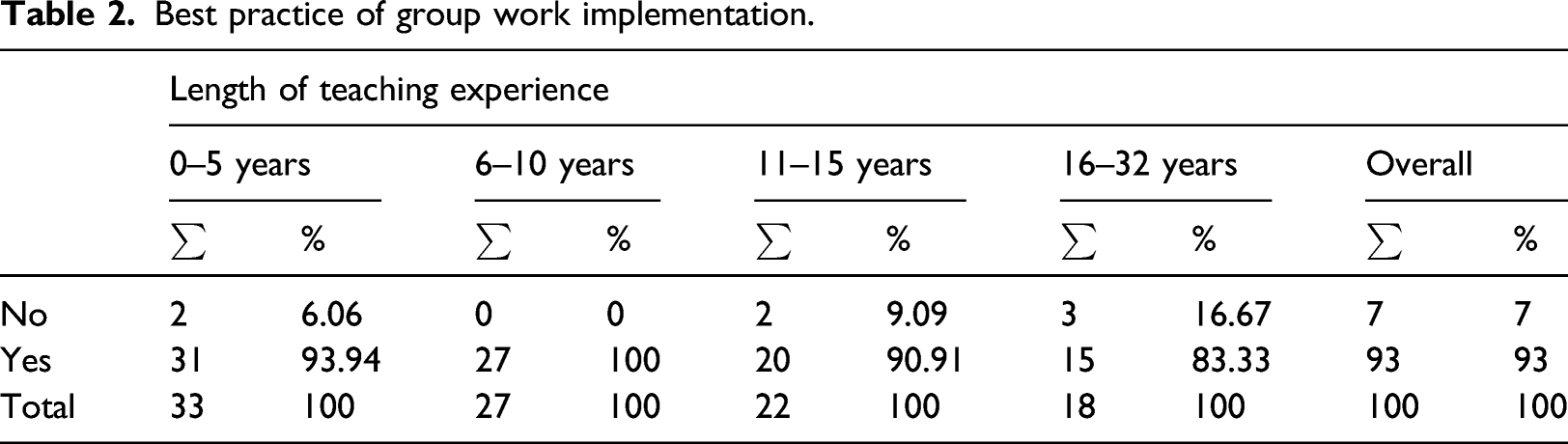
Best practice of group work implementation.
The outcome
This section is presented in order to lead the researchers to the revelation of a portrait of teacher resilience. It is intended to disclose the answer to the second predetermined research question.
As reported in the previous section, this study found that of 93, 83 subjects perceived the high merits of the assessment paradigm introduced. Almost 90% teachers were implicitly quite challenged. The remaining 10 (slightly below 11%) teachers did not think the new paradigm of assessment provided its significance.
High–low merit perceived.
Teachers’ best practice for formative assessment.
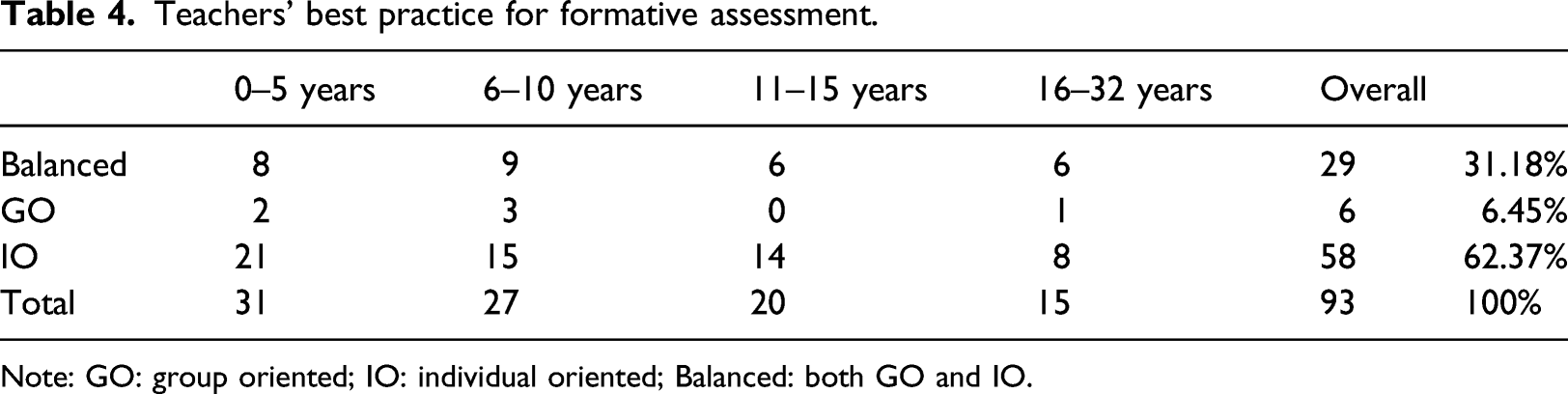
Note: GO: group oriented; IO: individual oriented; Balanced: both GO and IO.
Meanwhile, the 7-teacher cohort who applied non–group-oriented teaching in their classroom instruction could correspondingly be classified into three groups based on their assessment practice: (1) those Balanced teachers practicing both group and individual assessment amounted to 14.29%, (2) those GO teachers applying more group work oriented assessment amounted to 14.29% and (3) those IO teachers implementing more individual-oriented assessment occupied the highest percentage – about 71%. The data reveal that the majority of the teachers who were teacher-centred in daily classroom instruction implemented individual-oriented assessment more. Though covering only a very small number of data (7 teachers in total), this particular finding implicitly reveals that teacher-centred instruction has been consistent from the regular bases of instruction to the assessment practice.
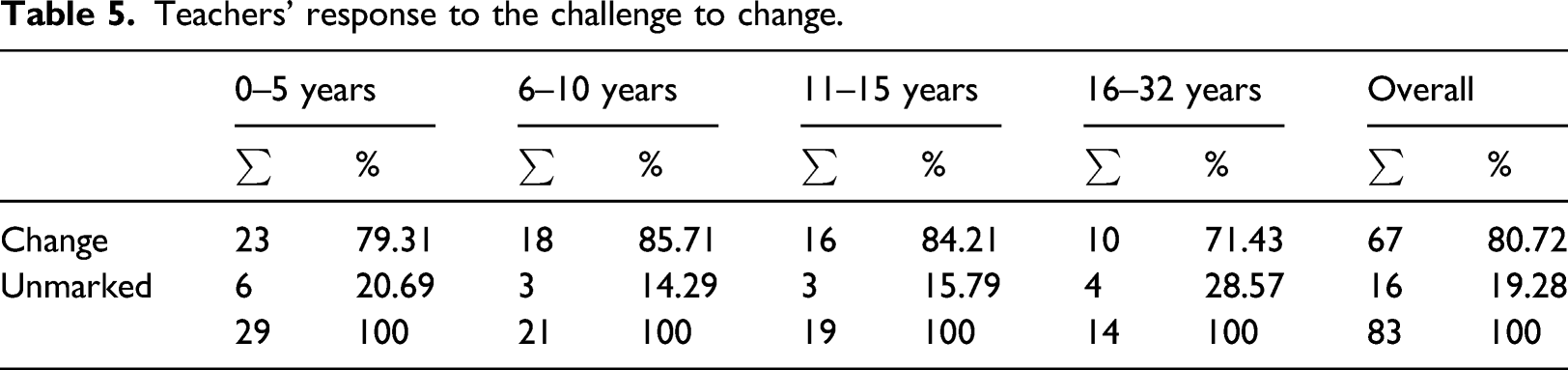
Teachers’ response to the challenge to change.
Teachers’ persistence.
Teachers’ resilience.
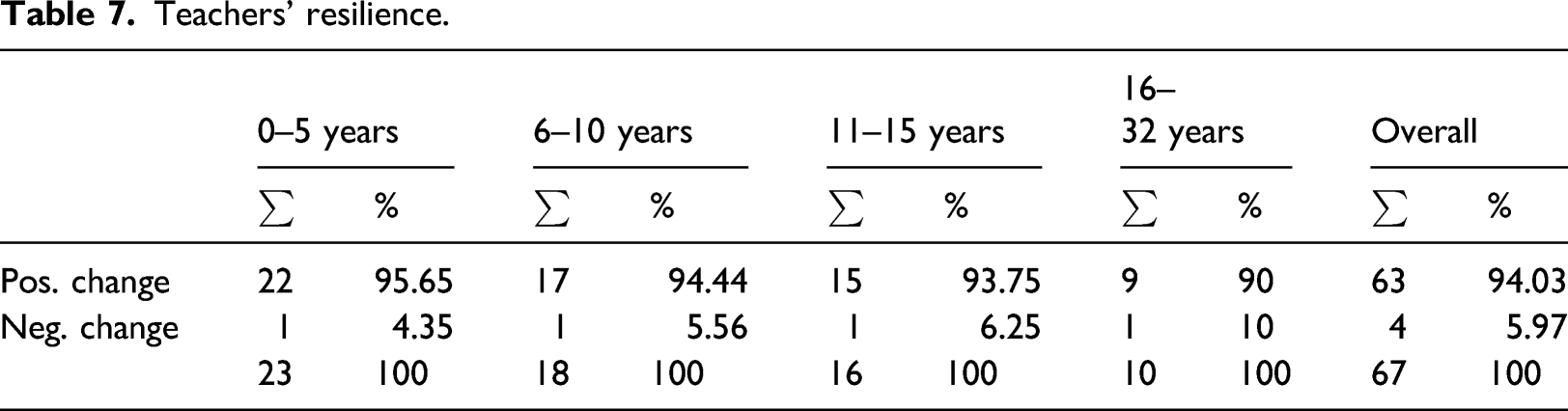
Furthermore, this study finds that the minority of teachers (not more than 6%) were affected unfavourably. They were initially balanced in their assessment practice. After being introduced to the assessment paradigm, they revealed that they became less group oriented as they did not choose ‘Newly introduced paradigm of assessment-oriented formative test’. The majority – amounting to slightly above 94% – were teachers who were affected favourably. It is designated that they responded to the challenge to change. This study reveals that the majority of teachers had shown resilience to a great extent. The majority are prone to try new things.
When the last analysis was carried out for those teachers who were prone to new things, this study finds that in descending order of resilience feature, the first rank went to teachers having 0–5 years of teaching experience and the second rank went to the ones of having 6–10 years of teaching experience. The third and the fourth ranks went to those having 11–15 and 16–32 years of teaching experience, respectively (Figure 5). The novice teachers demonstrated the greatest resilience to change. This might be due to the characteristics of novice teachers who might, as contended by Rohmah (2018), have greater optimism, fresh standpoints and dreams to contribute to the society. Novice teachers might become more competent and grow into a state of maturity as they converged their belief and practices (Mehrpoura & Moghadam, 2018). This study finding more particularly substantiates the study of Louws et al. (2017) reporting that early career teachers were alarmed with how to properly design classroom assessments to measure their students’ skills. Resilience by length of teaching experience.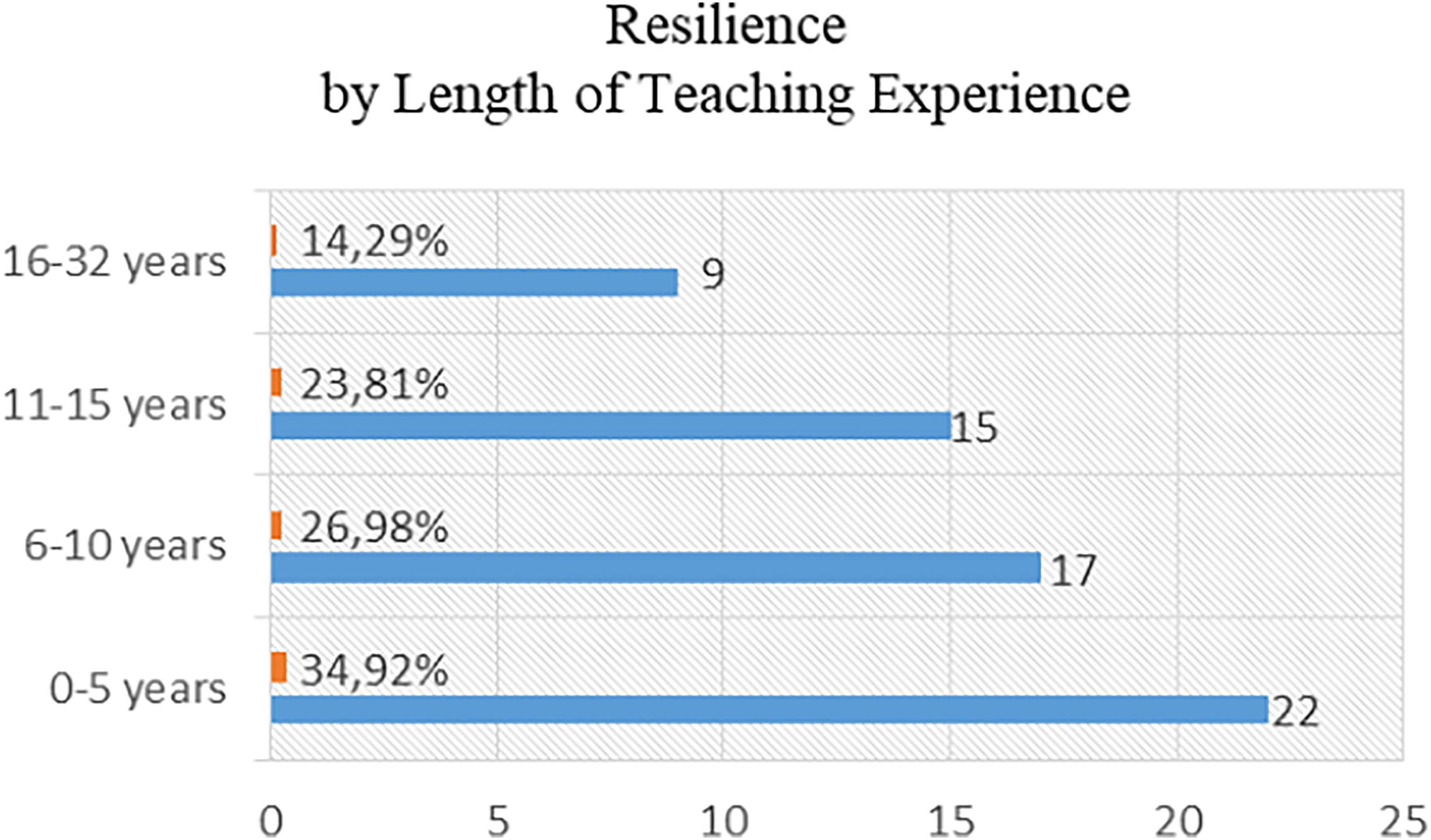
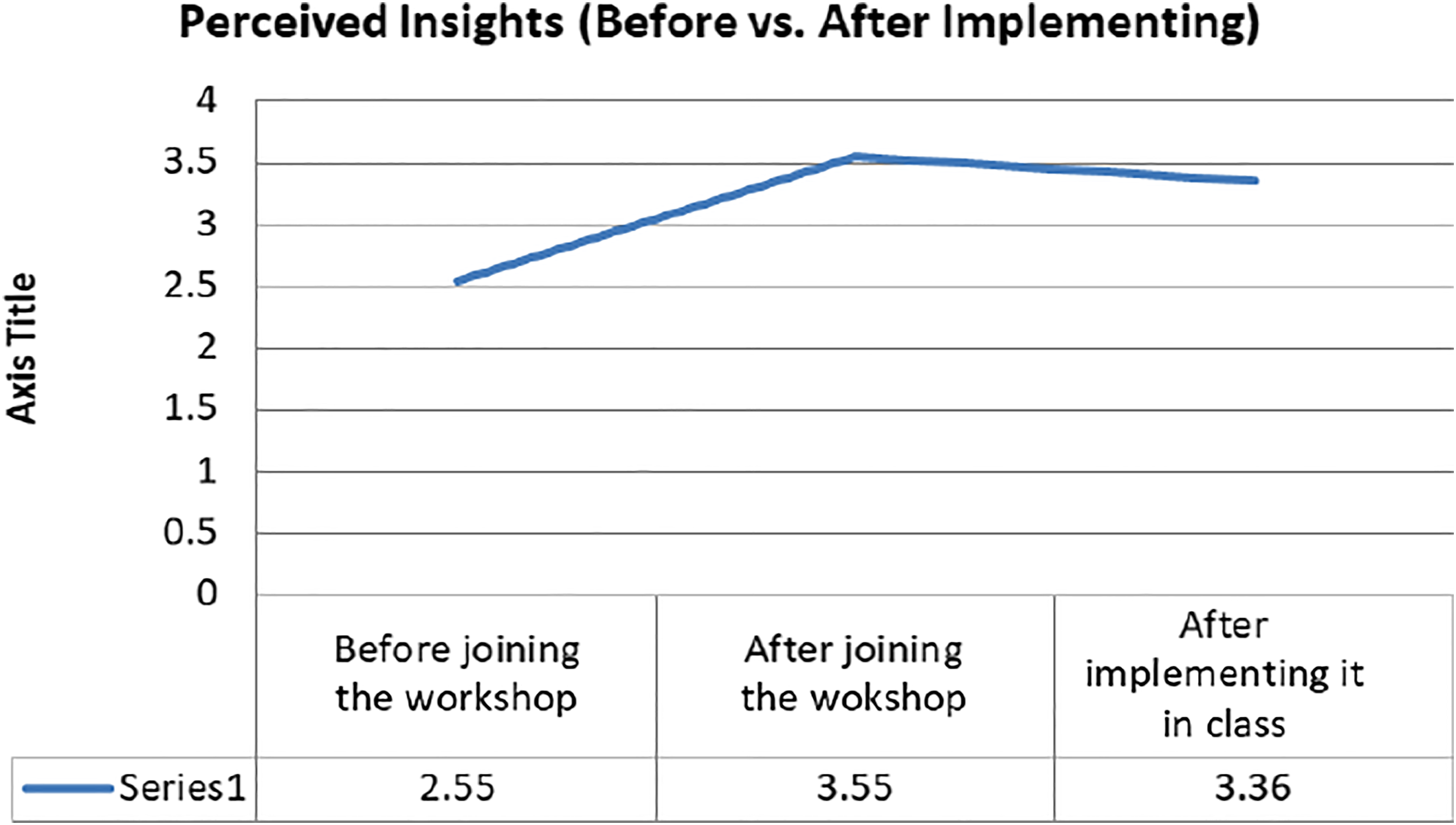
Of 100 teachers engaged in this study, 11 were successfully involved formally in the implementation in their actual classroom. In this manuscript, two major findings were reported. The teachers were consistent in their perception that the new insights were the ones to be maintained, though the Likert scale was slightly decreased by 0.19 point from two periods: after they joined and experienced the workshop and after they implemented it in their own class at school.
As indicated in Figure 6, the challenge was maintained after the 11 teachers implemented the new insights in their actual class. Surprisingly, though, a decrease of slightly above 18% was designated. This decrease was congruent to the decrease in their preference to the new insights as presented in Figure 7. One of the 11 teachers noted ‘Perlu kerja keras guru untuk mengatur siswa agar penerapan teknik bisa maksimal terutama untuk kelas besar. Mungkin tergantung juga dari karakteristik siswa masing-masing kebetulan di sekolah saya kebanyakan siswanya kurang termotivasi untuk disiplin dan belajar serius’. [Translation: The teacher’s hard work is needed to help students to apply the technique, especially for large classes. Maybe it also depends on the students of each school. In my school, most of the students are less motivated in disciplinary issue and in serious study]. The large class issue still hinders the implementation thus decreasing the level of resilience to the challenge to change. Students’ low motivation also slightly influences teacher’s decreasing resilience to a certain extent. Teachers’ long-term resilience on keeping the new insights. Teachers’ long-term perception on the nature of the new insights.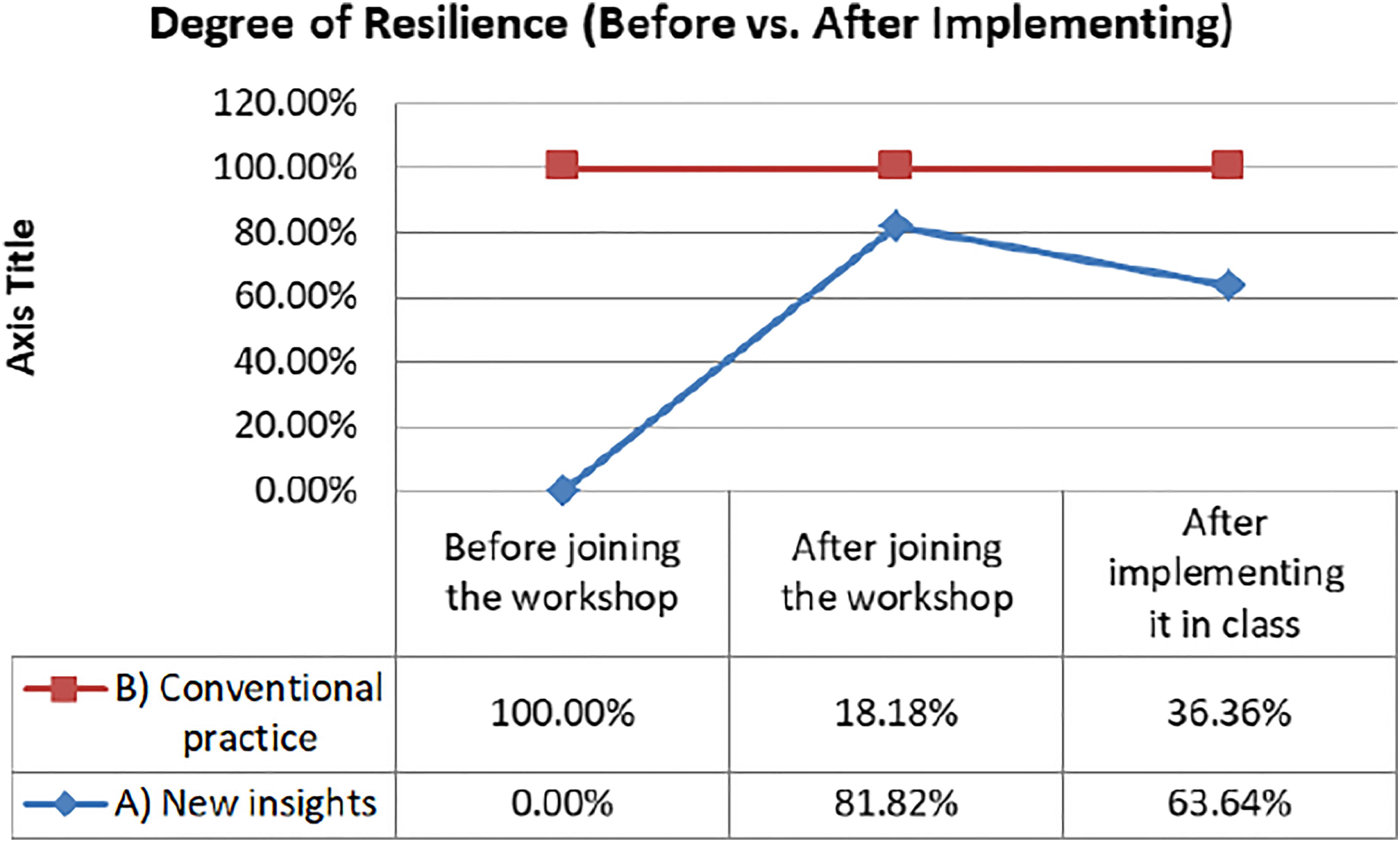
Conclusion
This research stems from the necessity of teacher professional growth. When a set of three unified paradigms was introduced, the majority of teachers in this study were driven to change to a certain extent.
One way to enhance teacher quality is being reflective. One characteristic of reflective teachers is, argued by McKay (2002 citing Zeichner and Liston, 1996), being involved in a school change effort. The schools sending the teachers to the seminar and workshop – implying the play of education power on the individual – had implicitly revealed the alertness to change effort. The school reactions had further been responded by the teachers who were sent to the event – the seminar and workshop, and who – slightly above 94% – further indicated they were open to change.
What we propose as a new learning paradigm might only result in a tiny contribution to a system change for the better education, yet it is worth of try. As a starting point, the willingness of educators to change is one of the significant stepping stones toward a new outcome. Otherwise, the current situation will go nowhere. To draw the readers’ attention, we need to highlight the existing resilience in the educators’ mindset.
This study is limited to the traditional practice of professional development. As particular personal resources (such as motivation) and use of coping strategies (such as solving problem, setting goal and maintaining work-life balance) enable teachers to demonstrate resilience (Mansfield et al., 2016), and as this study is merely a ‘short notice’ case of teacher resilience, further studies should pursuit the opportunity for teachers to reveal how open they are when they go back to their classroom. This study engaging a very small sample of those implementing it in actual classrooms indicated the resilience which was maintained to be still high (slightly below 64%) though revealing a surprising decrease of about 18% from the level when they initially faced with the challenge.
Support for teachers to change comes from optimal educational environment. Kunnari (2018) argues that studying what teachers can do to support students learning is not sufficient. More essential is the need to explore what teachers themselves need in the change and how they can sustain their motivation.
Referring to studies of others, Kunnari (2018) puts forward that teachers’ change is brought about by social support from colleagues and supervisors, a stimulating climate for innovation, enthusiasm and motivational characteristics including interest and intrinsic motivation. Likewise, through an in-depth study of one teacher subject, Rizqi (2017) found three key aspects influencing resilience are strong institutional support, collegial and family relationship, and positive personality. As teachers should nevertheless reject a narrow meaning of professionalism and hold a language of critique to ‘commodify education, turning it from a public good to a purely private good’ (Clemitshaw, 2013), further studies need conducting to offer a richer description of teacher resilience leading to a better understanding of this important construct in teaching field.
Footnotes
Declaration of conflicting interests
The author(s) declared no potential conflicts of interest with respect to the research, authorship, and/or publication of this article.
Funding
The author(s) disclosed receipt of the following financial support for the research, authorship, and/or publication of this article: This study is funded by Indonesia Directorate of Research and Community Service, Directorate General of Research Enhancement and Development and Ministry of Research, Technology and Higher Education. It is based on the agreement letter of 200E/WM01.5/N/2019.
