




Abstract
Formative assessment (FA) is an effective educational approach for optimising student learning and is considered as a promising avenue for assessment within physical education (PE). Nevertheless, implementing FA is a complex and demanding task for in-service PE teachers who often lack formal training on this topic. To better support PE teachers in implementing FA into their practice, we need better insight into teachers’ experiences while designing and implementing formative strategies. However, knowledge on this topic is limited, especially within PE. Therefore, this study examined the experiences of 15 PE teachers who participated in an 18-month professional development programme. Teachers designed and implemented various formative activities within their PE lessons, while experiences were investigated through logbook entries and focus groups. Findings indicated various positive experiences, such as increased transparency in learning outcomes and success criteria for students as well as increased student involvement, but also revealed complexities, such as shifting teacher roles and insufficient feedback literacy among students. Overall, the findings of this study underscore the importance of a sustained, collaborative, and supported approach to implementing FA.
Keywords
Introduction
Assessment plays a crucial role in education as it enables teachers to make decisions on learning progression and selection, while evidence of learning can also be used for accountability measures. For teachers to successfully engage with assessment, various authors propose that teachers develop assessment literacy (DinanThompson and Penney, 2015; Hay and Penney, 2013; Pastore and Andrade, 2019), which can be defined as an interrelated set of knowledge, skills, and dispositions that a teacher can use to design and implement a coherent and appropriate approach to assessment within the classroom context and the school system (Pastore and Andrade, 2019). More specifically, teachers should be able to:
define learning targets and assessment criteria and align them with the assessment aims; select and differentiate strategies and tools to gather data on student learning; collect and interpret evidence of student learning; use data on learning to adjust instruction and adapt curriculum (Pastore and Andrade, 2019).
Research shows, however, that within physical education (PE), assessment is primarily employed for performance grading and testing (Krijgsman et al., 2017; Ní Chróinín and Cosgrave, 2013), which is often referred to as summative assessment (SA) (Black and Wiliam, 2009). Although SA is essential to gain insight into the results of the learning process and to make decisions about progression or qualification, it does not provide learners with rich information to support further learning (Black and Wiliam, 2009). Also, SA can be perceived by students as being ‘high stakes’, resulting in feelings of external pressure and anxiety (Danthony et al., 2019; Krijgsman et al., 2017). A more integrated and ongoing mode of assessment aimed at guiding and supporting student learning, while simultaneously providing teachers with insights into the effectiveness of their teaching, is formative assessment (FA) (Black and Wiliam, 2009; Wiliam, 2011).
FA has been widely acknowledged as an effective approach for optimising student learning and promoting self-regulated learning (Panadero et al., 2018). It has been suggested that FA has a larger impact on the teaching–learning process than any other educational intervention (Wiliam and Leahy, 2018). In PE, FA also has the potential to enhance students’ motivational functioning and well-being (Haerens et al., 2018; Krijgsman et al., 2021; Slingerland et al., 2016). As a result, and in line with contemporary views within the broader educational domain (Birenbaum et al., 2015), a growing emphasis on FA in PE has been recognised as a promising avenue for enhancing student learning (AIESEP, 2020; Hay et al., 2013; Leirhaug et al., 2016; Moura et al., 2020; Ní Chróinín and Cosgrave, 2013). However, although PE teachers endorse the importance of FA (Barrientos Hernán et al., 2022; Ní Chróinín and Cosgrave, 2013), examples of successful implementation remain scarce (Borghouts et al., 2017; López-Pastor et al., 2013; Moura et al., 2020; Yan et al., 2021). To better position FA as a meaningful mode of assessment in PE, it is crucial to gain a deeper understanding of PE teachers’ experiences of engaging with FA in their lessons.
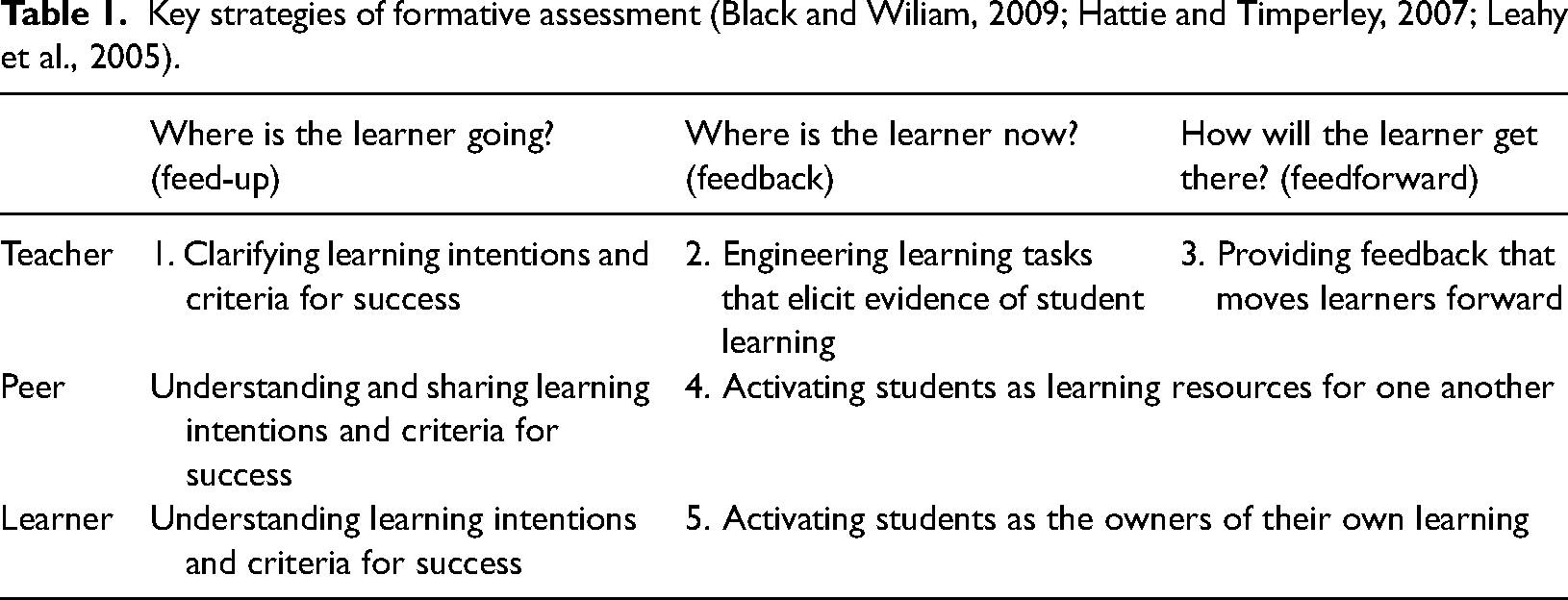
At its core, FA consists of three elements (Black and Wiliam, 2009; Hattie and Timperley, 2007; Leahy et al., 2005): (1) feed-up to establish ‘where the learner is going’ (i.e. the learning goals and criteria for success), (2) feedback to establish ‘where the learner is now’ (relative to the success criteria), and (3) feed-forward to establish for the learner ‘how to get there’ (i.e. what does the learner need to progress learning?). A key characteristic of FA is the active involvement of students in the assessment process, for example, through self-assessment or peer assessment. This results in five key strategies for FA, which are shown in Table 1.
Key strategies of formative assessment (Black and Wiliam, 2009; Hattie and Timperley, 2007; Leahy et al., 2005).
FA in PE
To date, there is little evidence to suggest that PE teachers frequently engage in FA activities (Chng and Lund, 2018; Leirhaug and Annerstedt, 2015) while studies that specifically examined the design and implementation of FA in PE are scarce. MacPhail and Halbert (2010) studied the development and implementation of authentic learning tasks in secondary school PE, which included aspects of FA. Despite concerns around increased planning and reduced movement time, teachers in the study indicated that learning in PE became more meaningful for students, while students perceived an increased focus on learning and experienced more involvement and ownership during lessons. Ni Chroínín and Cosgrave (2013) captured the experiences of five primary generalist teachers who were engaged in FA. They found that, although FA enhanced the quality of teaching and learning, it also confronted teachers with specific challenges, such as the need to differentiate in assessment to meet different ability levels, the need for access to sample assessments, and the perceived lack of time for planning and preparation. Moura et al. (2022) examined to what extent a scaffolding process influenced pre-service teachers’ assessment literacy. They found evidence that comprehension and application of assessment improved gradually over time with a shift in focus from assessment for grading to assessment for the benefit of student learning. In a similar study, Tolgfors et al. (2021a, 2021b) examined the transfer of skills and knowledge obtained during a university course on FA to a consecutive school placement period. They concluded that the use of FA was constrained by a profound focus on SA and a lack of critical engagement with PE teaching traditions. A follow-up study then focused on the implementation of FA during the induction phase of three PE teachers and found that the five key FA strategies (Table 1) were implemented differently according to challenges in the specific school context of each teacher (i.e. type of students and professional learning opportunities) (Tolgfors et al., 2021b). Macken et al. (2020) examined the extent to which four pre-service primary education teachers engaged in FA during school placement. It was found that, despite increases in assessment literacy and engagement with FA, teachers encountered difficulties analysing student responses and found the implementation of self- and peer assessment challenging. Taken together, the above-mentioned studies present an image of FA as a valued teaching practice that is challenging to implement within PE due to contextual and personal factors (Yan et al., 2021).
FA and professional development
Teachers are often unwilling to implement new teaching strategies until these have proven their added value to their daily educational practice (Borko et al., 2010; Clarke and Hollingsworth, 2002; Guskey and Yoon, 2009). Within this line of reasoning, teachers are more willing to employ FA activities if they have personal experiences that provide them with valuable insights into student learning and the effectiveness of their teaching (Black and Wiliam, 2010). Also, teachers are more likely to invest themselves in and engage with FA when they feel confident in their abilities to design and implement FA (Yan and Cheng, 2015; Yan et al., 2021). However, many in-service teachers lack the knowledge and skills to successfully integrate assessment into their daily teaching practice (DinanThompson and Penney, 2015; Pastore and Andrade, 2019), and the implementation of FA is often incomplete or suboptimal (Wylie and Lyon, 2015; Yan and Cheng, 2015). Therefore, to implement FA within PE lessons, PE teachers need support mechanisms such as professional development opportunities, training, and guidance (DinanThompson and Penney, 2015; MacPhail and Murphy, 2017; Ní Chróinín and Cosgrave, 2013; Yan et al., 2021). However, current professional development activities, often in the form of one-off ‘workshops’, have been found to be ineffective in changing teacher behaviour in the classroom and impacting student learning (Armour et al., 2015; Borko et al., 2010). For professional development to have a more meaningful impact on PE practice it has been suggested that a ‘hands-on’ approach is most effective, in which learning is situated in the workplace, learning content is aligned with the needs and interests of teachers, and where teachers have an active and collaborative role (Armour and Yelling, 2007; Parker and Patton, 2017). This supports the notion of organising professional learning around cycles of experimentation and reflection (Bakkenes et al., 2010; Korthagen, 2017) and warrants the involvement of a facilitator (i.e. an external expert) as an important catalyst to further support and empower PE teachers in the process of educational change (Goodyear and Casey, 2013; Slingerland et al., 2021). Largely in line with these recommendations, Wiliam and Leahy (2018) propose working in teacher learning communities to implement FA effectively. To date, the amount of research aimed at identifying successful approaches to enhance teachers’ FA skills and improve teachers’ FA practices is limited, especially for in-service teachers, who often lack formal training on this topic (Pastore and Andrade, 2019). Building on valuable insights from studies on engaging pre-service PE teachers with FA (Macken et al., 2020; Moura et al., 2022; Tolgfors et al., 2021a), our study seeks a better understanding of how in-service secondary school PE teachers engage with FA. The aims of this study are:
To examine secondary school PE teachers’ experiences when designing and implementing FA activities. To examine how FA strategies are implemented within the individual teaching context of secondary school PE teachers.
We expect this study to yield results that can be utilised to inform the design of professional development activities aimed at improving (formative) assessment literacy and implementation of FA into PE practice.
Methods
Participants
Participants were recruited from six schools that took part in a one-day professional development activity on the topic of assessment in PE, 1 led by the authors of this paper. Upon board approval from the school director (responsible for all schools), all six PE departments were offered the opportunity to take part in a continuous professional development project on FA. Three schools agreed and from these schools, 15 PE teachers were willing to participate and signed informed consent. The teachers’ average age was 41 years (standard deviation (SD) = 16), while their average PE teaching experience was 19 years (SD = 12). The project was launched in September 2019 and ran for 18 months. Unfortunately, due to the COVID-19 pandemic, all schools in the Netherlands closed between March and June 2020, and upon re-opening mostly offered adapted PE lessons with restricted possibilities for teachers to conduct project-related activities as planned (i.e. outside lessons only and non-contact activities ensuring social distancing). This caused a delay and might have impacted the first phase of the project, restricting some teachers in their possibilities to engage with FA as planned.
Study design
To successfully embed FA within PE practice, it is essential that knowledge acquired during formal training is adapted to teachers’ specific contexts and that learning occurs within an authentic setting (Moura et al., 2022). Therefore, this project was situated within the schools through a school–university partnership (Kershner et al., 2013). The project was divided into two phases (Figure 1). The aim of the first phase was to provide training and guidance for all teachers around the topic of FA and to establish teacher learning communities in which FA activities were to be designed, implemented, and evaluated. During the second phase, teachers again designed and implemented FA activities, albeit with gradually fading support. To provide teachers with a clear framework on how to engage with the design and implementation of FA activities the learning community approach was structured around elements of lesson study, which is an inquiry-based, practice-oriented approach to continuing professional development (CPD) in which a group of teachers work together to improve educational practice, working in iterative cycles of design, implementation, and reflection and involving student voices (Dudley, 2014). As an ‘all-out approach’ to lesson study has been found to be quite demanding for PE teachers in terms of time and resources (Slingerland et al., 2021), we adopted a more flexible approach as proposed by Takahashi and McDougal (2016), which includes: (1) working with clear goals and outcomes; (2) informing teachers and encouraging them to study materials; (3) working towards a written lesson plan; (4) implementing the lesson plan, reflection, and discussion; (5) involving knowledgeable others, collaborating; and (6) sharing of results.
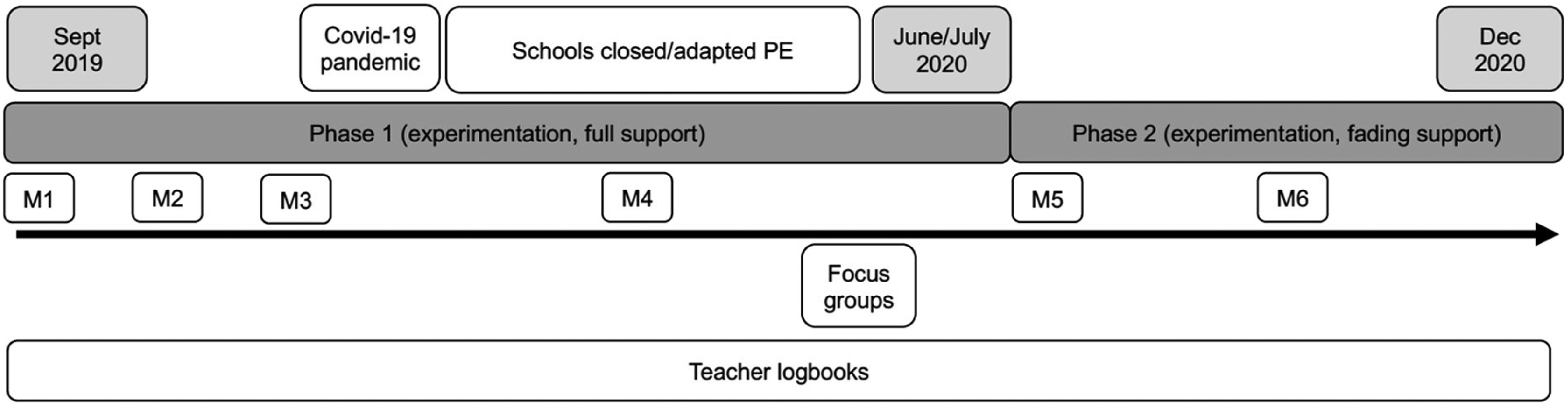
Study design. M1 is meeting 1, M2 is meeting 2, etc. M4 was a joint meeting with all three physical education (PE) departments together. M5 was an online meeting through Microsoft Teams.
All three PE departments were assigned a facilitator, which is regarded as an essential component in the process of teacher-learning communities (Goodyear and Casey, 2013; Slingerland et al., 2021). Facilitators in this project were the three authors who are experienced teacher-educators and experts on FA in PE, and all had prior experience in supervising lesson study groups. The role of the facilitator during this project was to chair project meetings, provide theory and examples of FA, and to support teachers during the development and preparation of FA activities. As proposed by Wiliam and Leahy (2018) facilitators provided (1) choice and flexibility (i.e. teachers could adapt FA activities to their specific context), promoted taking (2) small steps while providing (3) ample support and urged teachers to (4) base their FA activity designs on contemporary views and to capture this within a clear lesson plan.
Additionally, facilitators provided intermediate feedback on lesson plans and FA activities by email. In the first phase of our project, we organised and supervised three small group project meetings every four to eight weeks in each school and one joint meeting with all three schools and facilitators present, while PE departments were also expected to organise one non-supervised small group meeting per month. During Phase 2, we organised two meetings on the assumption that teachers would be able to engage in FA activities with diminished external support. An overview of the main topics per meeting is included in the supplemental material.
Data collection
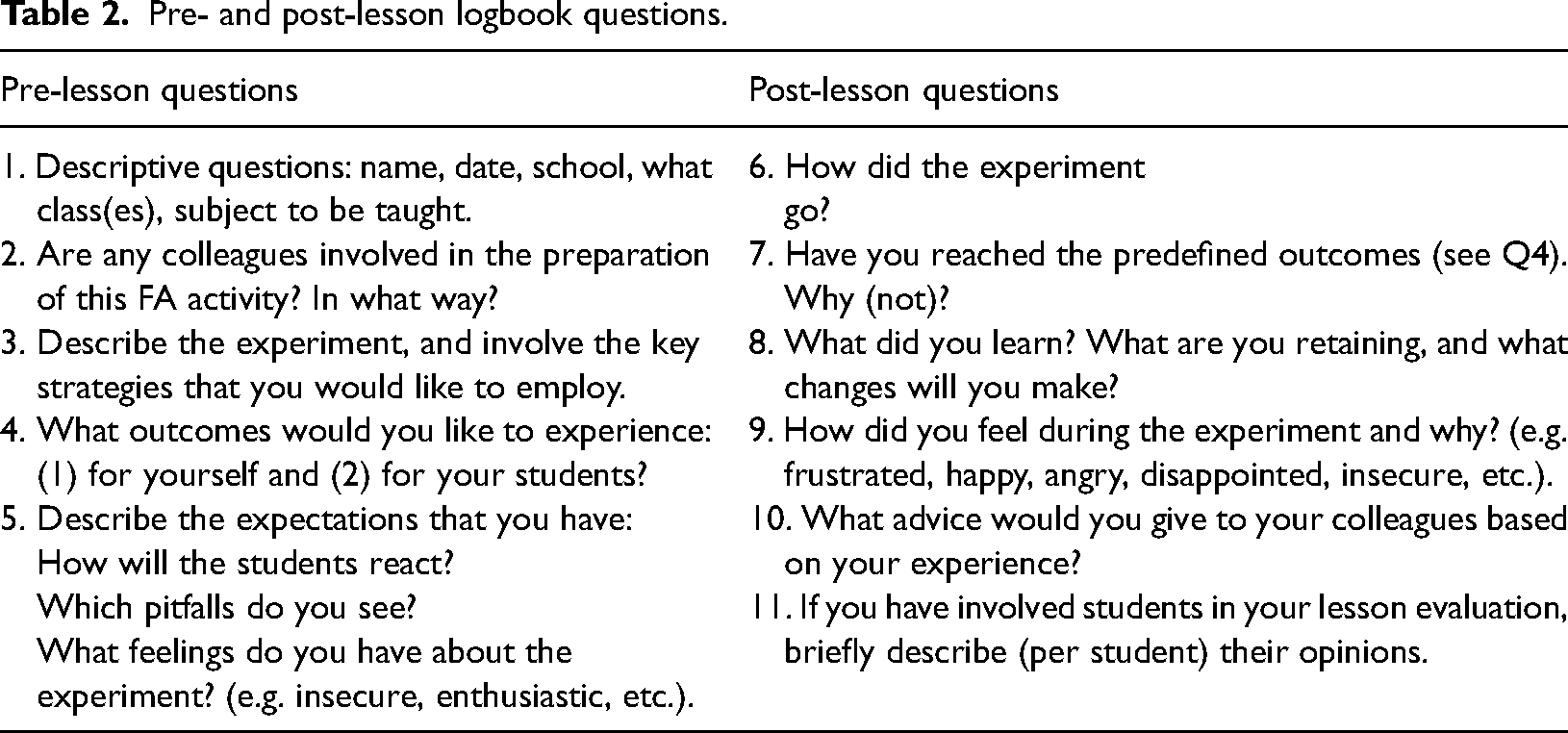
Teachers described their (learning) experiences in a digital logbook, which forms a good entry point into teachers’ personal experiences (van Meerkerk, 2017). The logbook used in this study was structured around a fixed set of questions based on Bakkenes et al. (2010) digital learning log, supplemented with questions based on professional reflection (Korthagen and Vasalos, 2006). The logbook was accessible through a protected cloud service within a personal folder, so teachers only had access to their own logbooks while the researchers had access to all logbooks. Teachers were asked to fill in a set of questions (see Table 2) before and after completing their FA experiment. Additionally, teachers were asked to upload their lesson plans in the same cloud folder and include any additional material they had used, such as success criteria, rubrics, and peer feedback forms.
Pre- and post-lesson logbook questions.
Logbooks are preferably complemented by other research methods to prevent decontextualisation caused by the potential subjectivity of the log (van Meerkerk, 2017). Therefore, focus groups with each PE department separately were planned at the end of Phases 1 and 2. Unfortunately, due to newly installed COVID-19 restrictions, we could not organise the Phase 2 focus groups. focus groups are useful for investigating what individuals believe or feel, and revealing underlying motives (Rabiee, 2007). To generate insights into how FA strategies were adapted to each teacher’s educational context as well as teachers’ experiences when engaging with FA, focus groups were thematically split into two parts. The first part focused on how the key FA strategies were implemented (Black and Wiliam, 2009). Examples of questions were: How did you employ feed-up/feedback/feedforward within your lessons? How did you employ students as learning resources for each other/themselves? The second part focused on capturing the dynamics of teachers’ experiences when engaging with FA for which we relied on the Extended Interconnected Model of Professional Growth (EIMPG; Clarke and Hollingsworth, 2002; Coenders and Terlouw, 2015). The EIMPG acknowledges the interactive and dynamic process of teacher learning through reflection and implementation between five distinctive domains of professional development: (1) the external domain, which entails all external resources utilised by the teachers (such as workshops, books, and literature), (2) the development domain, in which teachers discuss and select an appropriate approach and design a lesson plan, (3) the practice domain, in which ideas are put into practice and outcomes are observed, (4) the domain of consequence, in which it is decided to what extent the approach was effective and which adaptions are needed, and the (5) personal domain, which reflects sustained changes in teachers’ knowledge, beliefs, and attitudes. Questions were organised along these five domains to gain insight into teachers’ learning experiences. The average Fg duration was 85.7 minutes (range 80–91 minutes).
Data analysis
The present study employed the framework method for analysing qualitative data obtained from logbooks and focus groups. The framework method is a systematic and flexible approach to qualitative data analysis that allows for both inductive and deductive approaches to the data (Gale et al., 2013; Ritchie and Lewis, 2003). The Fg data was transcribed verbatim and analysed using Atlas.ti Mac Version 9.1.3, while the logbook data was first thematically organised and then entered into Atlas.ti for further analysis. The data analysis process was carried out by the first and second authors, who followed a systematic procedure to ensure transparency and optimise the trustworthiness of the data. With the pre-defined themes from the focus groups and teacher logbooks as a starting point, both authors independently constructed an initial set of codes (for focus groups and logbooks separately). Then, both authors independently applied these codes to the same logbook and Fg and subsequently compared and discussed the outcomes. This initial coding was done deductively while also providing room for new codes to be constructed from the data. This resulted in a provisional set of codes, the analytical framework, which was applied to the whole dataset. Next, both authors independently coded all focus groups and logbooks, again having the possibility of adding newly emerged codes. The resulting set of codes was again compared and discussed. During the final stage of the analysis, two Excel matrices were constructed, with participants on horizontals and codes on verticals, in which both authors filled their own matrix accordingly (separate ones for logbook and Fg data) and compared the results, focusing on differences and similarities. This resulted in a final matrix which formed the basis for the main findings and discussion. For dissemination purposes, the final matrix was translated into English by the first author and subsequently checked for content, spelling, and grammar by the second and third authors.
Results
In total, participants provided 27 (series of) lessons in which formative strategies were implemented. From the outset of the project, teachers adopted an iterative approach to lesson design with most teachers preferring to work in pairs during the design process, which allowed them to exchange ideas and divide tasks. An overview of lesson themes and FA strategies is provided as supplemental material. Themes resulting from qualitative analysis regarding PE teachers’ FA experiences (first research question) and FA strategies (second research question) are presented in Table 3. Quotes either originate from logbook (Lb) or focus group (Fg) data and are indicated by the first letter of the school's name (either T, Z, or M), accompanied by a number for each teacher. For Lb quotes, we also added the project phase, whereas focus groups were only held in Phase 1. For example, Lb-Z2 Phase 1 is a logbook quote from Teacher 2 in School Z during project Phase 1.
Overview of main themes and subthemes.
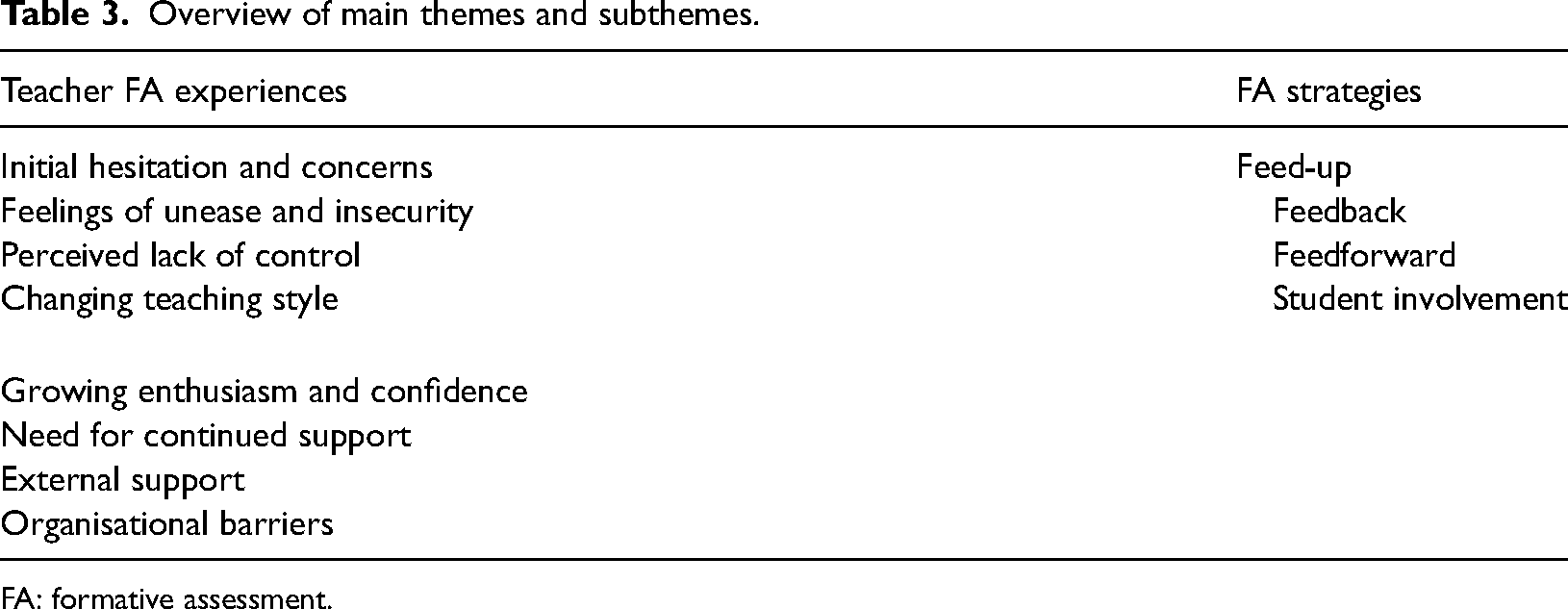
FA: formative assessment.
Teacher FA experiences
Initial concerns and growing enthusiasm
Initial logbook entries indicated that teachers’ main concerns revolved around students not taking FA seriously and about students’ unwillingness to cooperate, as well as being anxious about decreasing movement time. ‘Students will probably just want to be physically active. Filling in a rubric and having a discussion with a peer might be difficult for students’ [Lb-Z7 Phase 1]. However, post-lesson Phase 2 logbook entries uncovered a remarkable difference over time, from expressing feelings of unease and insecurity during Phase 1 to most PE teachers being enthusiastic about their FA experiments in Phase 2. This difference in attitude is aptly illustrated by PE teachers T3 and Z5: Insecure, tense, I don’t really know how it will go. [Lb-T3 Phase 1] I am really looking forward to this lesson, I am curious how it will turn out. [Lb-T3 Phase 2] I am a little insecure, I worry they will not like it. [Lb-Z5 Phase 1] I am enthusiastic. [Lb-Z5 Phase 2]
Despite the increasing enthusiasm about the new assessment approach, concerns about how to combine FA with SA remained: I think the more proficient students might be disappointed to not be obtaining summative grades anymore. [Lb-Z6 Phase 1] I find it very difficult to determine the summative assessment. [Fg-T4]
Several teachers reported experiencing difficulties adjusting to a more student-centred teaching style, as FA frequently required them to adopt a more passive role during lessons, which contradicted their typical teacher-focused approach. Particularly, teachers struggled to balance the provision of autonomy and structure without the sensation of losing control over the lesson. Especially during Phase 1, teachers expressed concerns about chaotic and unstructured lessons: Normally I teach very structured lessons. I had some trouble with that in the beginning, it is now more loose, more chaotic, but it is structured chaos. [Fg-T6] I am more within the group, and I have more interaction with students. However, this also sometimes means more chaos, I need to let go of that I guess. [Fg-T1]
Furthermore, teachers occasionally felt a lack of control over the lesson as they endeavoured to implement a more formative teaching approach, especially when granting students more options and autonomy to account for their varying abilities in the classroom. To illustrate, one teacher created a gymnastics lesson in which students rotated among several workstations tailored to various skill levels. However, this approach raised concerns about safety management, given the increased autonomy given to students: I am kind of a control freak, and I can’t be everywhere at once. So, I must trust my students that they are doing as told and that they will correct each other when it becomes too dangerous. [Lb-T3 Phase 1]
Despite these challenges, teachers expressed an overall favourable attitude towards the results of incorporating FA into their teaching, particularly following the second phase of the project. A prominent outcome was that teachers praised the willingness and enthusiasm of students to take up active roles within the FA process. ‘We were positively surprised about the diligence with which students went to work. They took up the task very seriously’ [Lb-T5 Phase 2]. Also, some teachers had the impression that their students were more aware of their own learning process, were more motivated, and had more fun than usual: ‘I am involving students much more in the process […] and for multiple students, their enthusiasm has increased’ [Fg-Z1].
Despite the increasing enthusiasm amongst most teachers, a small number of teachers remained somewhat hesitant, either because they were uncertain if FA would genuinely enhance the quality of their teaching or because they believed that their customary grading methods were crucial for motivating certain groups of students. Or as one teacher put it: I am still unsure, only if I see that my students are being more active and are having more fun, perhaps then I will change my assessment practice. But if I see students putting in more effort because they must obtain a grade, then I would not want to give that up. [Fg-M1]
The project influenced the perspectives and convictions of the teachers concerning FA. They particularly valued prioritising the student as the focal point of learning and by supporting the learning process instead of only handing out grades: I am especially happy that I can now value each student on his or her own level of proficiency instead of just grading a few tricks. [Fg-T2] We went from grading what we see to valuing growth in students. And that is a beautiful thing, very rich. [Fg-T5]
Need for continued support
Although teachers gradually grew more confident in applying FA strategies, they also expressed that they did not yet feel competent enough at the end of Phase 1 to successfully implement FA without further support. ‘Help is certainly still needed on this’ [Fg-T1]. ‘I think I need more support to implement this’ [Fg-T6]. It was therefore not surprising that teachers emphasised the pivotal role of continued external support through the involvement of the facilitator. Teachers valued the facilitator for transferring new knowledge, answering questions, providing support, moderating the discussion, and keeping an eye on the objectives. Some teachers pointed out that without this support, they probably would have never reached similar results: That [the facilitator] is like a big stick for us. Without planning these meetings, we would have never come so far, and each of us would have done their own thing and we would have been stuck in discussion. [Fg-T4]
Even though teachers were generally positive about implementing FA within their PE practice, they also identified certain barriers to further engaging with FA. For example, teachers expressed that time constraints due to other school demands limited the options to work collaboratively with colleagues on developing and implementing FA: We have to walk so many side paths, everybody has that, and it prevents us from collaborating. [Fg-M4] While this is very important, it is challenging to do this on top of my regular tasks. [Fg-M3]
Other concerns were paperwork and reduced movement time due to longer instruction. It generates so much paperwork if you have three classes in a row. [Fg-Z6] What I sometimes regret is that it is at the expense of movement time. [Fg-Z3]
FA strategies
Despite early project meetings that aimed to assist teachers in creating and implementing FA, the findings revealed that many teachers were encountering difficulties in applying these strategies. For instance, when asked to identify the methods they utilised during Phase 1, instead of naming one of the FA strategies by Black and Wiliam (2009) that were central to the project, teachers often responded ‘working with rubrics’, while neglecting to explain the rationale behind their actions (e.g. to give substance to FA techniques such as providing feedback and feedforward). However, during Phase 2, it seemed that most teachers started to grasp the essence of FA during lessons as they much more explicitly mentioned FA strategies and the student learning process within their logbook entries. ‘I am trying to provide more feedback and to provide insight into the learning process by using rubrics’ [Lb-T3 Phase 2]
Feed-up, feedback, and feedforward
A particular challenge for teachers, as part of learning to employ effective feed-up, was to define clear learning outcomes and success criteria. We therefore shifted the focus of the second project meeting to accommodate for support on designing learning outcomes and criteria. Teachers indicated that defining and communicating learning outcomes and success criteria to students were not a common part of their regular PE practice. This changed further into the project: ‘What I started doing completely differently is being very clear in what the learning outcome is, and what their [students’] own goal is and how to get there’ [Fg-M3]. Teachers valued being more transparent to their students about the learning outcomes, even though it was at the expense of lesson time: The students gained more insight into the goals and the way they were being assessed. [Lb-M1] It was really time-consuming [….] but in the end, it paid off, especially for students in determining their starting point. [Fg-T5]
Most teachers experimented with peer feedback strategies, for example, by employing video feedback with iPads, or students working in pairs while alternating between an observer and a movement role. Nevertheless, various teachers indicated that they still provided feedback themselves, leading to a mix of teacher- and peer feedback: ‘I used video feedback for gymnastics. Students self-regulated this, but I still pointed out certain important aspects’ [Fg-T5]. Interestingly, feedforward was not mentioned specifically by teachers as a separate formative strategy, probably because teachers did not discern between feedback and feedforward.
Active student involvement
A key aspect of FA that teachers quickly embraced was to actively involve students in the teaching–learning process. Teachers were especially enthusiastic about combining elements of feed-up with self-assessment by asking students early in the learning process to evaluate their skill level relative to one or more success criteria of the learning outcome. As a result, students became more involved in their own learning according to the teachers: ‘All in all, I think students were more self-critical because they were more aware of the criteria and what goals they have’ [Fg-T5]. Also, students demonstrated aspects of self-regulating their learning: ‘Students were very well able to reflect on their skill level or what they wanted to learn’ [Lb-T2]. Another approach to actively engage students was to facilitate peer feedback, usually by pairing students together so that they could observe and provide feedback to each other using success criteria within a condensed rubric. Although various teachers reported positive experiences, peer feedback was not without its limitations as teachers indicated that limited domain expertise in students impeded the provision of accurate and adequate peer feedback. ‘The feedback didn’t really contribute to what they were doing technically’ [Fg-T3]. Also, students did not want to spend too much time providing and receiving feedback: ‘…they just wanted to move on and play’ [Fg-T3]. Although the overall feedback experience was valued by teachers, they were also cautious not to employ it too often.
Discussion
The objective of our study was to investigate secondary school PE teachers’ experiences of employing FA activities in their respective teaching settings. Using the five key FA strategies (Black and Wiliam, 2009; Leahy et al., 2005) as a starting point, all teachers in our study designed and implemented various FA activities. Our findings indicate that our professional development programme effectively promoted critical engagement with assessment among PE teachers (Hay and Penney, 2013), leading to enhanced assessment literacy, particularly in terms of selecting and differentiating strategies for gathering data on student learning (Pastore and Andrade, 2019). However, this study also identified challenges in defining learning targets and success criteria, with limited evidence of using assessment data to inform instruction and curriculum adjustments (Hay and Penney, 2013; Pastore and Andrade, 2019). Below we first unpack findings on teachers’ experiences and then focus on how FA strategies were implemented.
Teacher experiences
In general, teachers in our study indicated that they learned much about FA and emphasised the added value it brought them in terms of PE lesson quality, student learning, and student involvement. The collaborative, systematic, and cyclical approach to professional learning in the present study aligned well with elements of effective professional development (Parker and Patton, 2017), which may have kindled a sense of ownership. Teachers also appreciated the opportunities for professional dialogue, sharing experiences and learning from each other, which is another important aspect of successfully engaging with FA (Black, 2015; Black and Wiliam, 2010; Yan et al., 2021). Nevertheless, implementing new elements into educational practice is not an easy task for teachers (Thurlings et al., 2015). Most teachers started to grasp the essence of FA only during the second phase of the study, which corresponds with earlier findings on implementing FA and developing assessment literacy (Macken et al., 2020; Yan et al., 2021). Teachers expressed the feeling that they were only at the beginning of a change in thinking and engaging differently with PE assessment. Our findings therefore confirm that educational change, and the implementation of FA in particular, is a gradual process that needs to be supported and often accelerates when teachers have experienced the benefits of a new approach, in turn leading to changes in professional opinions and beliefs (Clarke and Hollingsworth, 2002; Guskey and Yoon, 2009).
Teachers in our study noted a significant shift in their teaching role when designing and implementing FA activities (Black, 2015). This shift involved a move away from directive teaching towards a more guiding-oriented approach, similar to an earlier study of FA in PE (MacPhail and Halbert, 2010). This in turn provoked a sense of losing control over the lesson and probably contributed to the initial feelings of unease and insecurity in certain teachers, which is not uncommon during educational innovation (Korthagen, 2017). Providing students with more autonomy during lessons without establishing a clear structure within the lesson could easily result in such feelings (Aelterman et al., 2019). It was nonetheless encouraging to see that these sentiments mostly disappeared during Phase 2, which emphasises the need for prolonged and ongoing hands-on professional development on the topic of assessment.
Similar to Moura et al. (2022), teachers in our study became increasingly aware of supporting student learning through FA, rather than solely viewing assessment as the concluding (summative) activity within a learning process (Hay et al., 2013). Nonetheless, some teachers expressed that they maintained a predominantly summative-oriented assessment practice, relating to Tolgfors’ (2018) notion of FA as grade generation. Teachers may still have had a limited view of FA and not fully realised that the main goal of FA is to support learning (MacPhail and Halbert, 2010). Teachers’ beliefs and opinions on assessment in PE are influenced through acculturation experiences as a student, through formal training, and through years of experience in teaching PE (Richards et al., 2019; Starck et al., 2023). Professional development should therefore encourage in-service PE teachers to challenge their views on assessment, but also provide them with enough time to explore how these formative strategies would work within their educational context (i.e. experiment).
FA strategies
All teachers designed and implemented feed-up activities, either by simply communicating learning outcomes and success criteria at the beginning of a lesson or by using more elaborated worked examples. Since transparency of learning outcomes and success criteria in PE assessment leaves much to be desired (Borghouts et al., 2017; Redelius et al., 2015) it is promising that all teachers in our study focused on this in some form. Nevertheless, we also, and somewhat unexpectedly, found this expertise to be underdeveloped in our participants. This is problematic because defining learning outcomes and success criteria is considered foundational to working formatively (Black, 2015; Wylie and Lyon, 2015) and without clear outcomes, learning activities cannot be explicitly connected to overarching PE goals (Tolgfors, 2018). This finding is not unique to this study (Huizinga, 2014; Tolgfors, 2018), but it is nonetheless worrisome, as the Dutch education system is driven by broadly defined attainment goals in which further interpretation and contextual adaptation are placed in the hands of the teachers (Nieveen et al., 2013). This finding warrants further investigation into the design expertise of PE teachers as well as into the content and focus of PE teacher education (PETE) programmes and professional development opportunities.
Another prominent aspect of FA is to actively involve students in the assessment process. In our study, teachers frequently encouraged student involvement by organising peer feedback and by offering students choices in the assessment process. This might reflect a shift towards a more democratic approach to teaching and learning, in which the student is placed more at the centre of learning and is encouraged to take self-responsibility for learning (Hay and Penney, 2013; Lorente-Catalan and Kirk, 2014). Nonetheless, the implementation of peer feedback also raised concerns about the quality of feedback and the seriousness towards assigned feedback tasks, either as a provider or a receiver of feedback. This relates to the concept of developing feedback literacy, which is the ability to understand feedback and use it effectively to enhance learning (Winstone and Carless, 2020). Students need a general understanding of the purpose of feedback (Winstone and Carless, 2020) and what constitutes a quality performance (Black, 2015). In addition, Lorente-Catalan and Kirk (2014) highlight the importance of a favourable and safe learning environment since social and physical relations within classes and between students could complicate peer feedback tasks (Backman et al., 2023). To enhance peer feedback quality and to counteract any lack of subject-specific expertise, teachers can supply feedback scaffolds, such as task cards containing common errors and their corresponding solutions (Iserbyt and Byra, 2013), or employ prompts and rubrics containing success criteria (Alqassab et al., 2017). Also, PETE programmes could highlight how to identify and manage physical and social relations surrounding peer feedback activities (Backman et al., 2023). Although a key FA strategy, there was little evidence in our study that teachers explicitly planned or implemented feed-forward (‘how to improve’), which might reflect the notion that learning is usually more visible during PE class; therefore, feedback often takes the form of process feedback, which includes both a judgement on performance as well as relevant cues for improvement (Krijgsman et al., 2019).
Conclusions
Our study shows that adopting an inquiry-based, practice-oriented approach to professional development on FA can lead to a teacher-perceived increase in PE lesson quality, student learning and student involvement. Because of the longitudinal approach, we were able to note a significant shift in the participating teachers’ role from a directive to a more guiding-oriented approach when applying FA. This coincided with teachers’ feelings gradually changing from apprehensive to more confident. Despite the sustained, collaborative, and supported approach to FA implementation, teachers struggled with the design and implementation of key FA strategies such as feed-up and student involvement. Some teachers maintained a predominantly summative-oriented assessment practice. This further underscores the urgency of investing in (formative) assessment literacy for both initial teacher education and CPD.
Supplemental Material
sj-docx-1-epe-10.1177_1356336X241237398 - Supplemental material for Formative assessment in physical education: teachers’ experiences when designing and implementing formative assessment activities
Supplemental material, sj-docx-1-epe-10.1177_1356336X241237398 for Formative assessment in physical education: teachers’ experiences when designing and implementing formative assessment activities by Menno Slingerland, Gwen Weeldenburg and Lars Borghouts in European Physical Education Review
Footnotes
Declaration of conflicting interests
The authors declared no potential conflicts of interest with respect to the research, authorship, and/or publication of this article.
Funding
The authors disclosed receipt of the following financial support for the research, authorship, and/or publication of this article: This work was supported by the Fontys TEC for Society.

Supplemental material
Supplemental material for this article is available online.
Notes
Author biographies
References
Supplementary Material
Please find the following supplemental material available below.
For Open Access articles published under a Creative Commons License, all supplemental material carries the same license as the article it is associated with.
For non-Open Access articles published, all supplemental material carries a non-exclusive license, and permission requests for re-use of supplemental material or any part of supplemental material shall be sent directly to the copyright owner as specified in the copyright notice associated with the article.
