




Abstract
Background
During the COVID-19 pandemic, an abundance of literature relating to the efficacy of face masks on reducing transmission of COVID-19 in non-healthcare settings emerged.
Aim/objective
The aim of this scoping review was to allow the identification of: types of evidence conducted in this area; knowledge gaps and common concepts relating to mask efficacy in non-healthcare settings.
Methods
A comprehensive literature search was conducted in PubMed, CINAHL, MEDLINE, Embase and the Irish Management Institute bibliographic database on December 15th, 2021. All types of face masks were included. Of 722 records, 16 were included after full text screening.
Findings/results
Themes from an adapted model of Howard et al. framework were used to group results and identify common concepts. The grouped thematic results were then applied to the socio-ecological model. This illustrated the multifactorial elements determining the efficacy of masks themselves while also illustrating how other factors such as individual behaviours, social interactions, settings and national policy can influence the degree of the protective effect.
Discussion
The findings from this scoping review indicate that an abundance of experimental literature is available indicating that masks are effective at preventing COVID-19 transmission but their degree of efficacy is impacted by external factors. This review highlights that the quality of the evidence available is low.
Background
Nationally and internationally, the COVID-19 pandemic resulted in the introduction of non-pharmaceutical interventions (NPIs) in an attempt to reduce transmission of the disease. These NPIs included recommendations relating to social distancing, hand hygiene and personal protective equipment (PPE), which encompasses face masks. As there was no effective treatment or vaccine at the beginning of the pandemic, face masks were one of the earliest interventions introduced at population level to reduce transmission probability from an infected individual to an uninfected exposed individual (Ngonghala et al., 2020).
Following the WHO classification of COVID-19 as a Public Health Emergency of International Concern, evidence-based literature began to accumulate on treatment (Kory et al., 2021) and prevention strategies (World Health Organization, 2020), which included evolving evidence on the use of face masks and their efficacy as a prevention and protection tool. The primary aim of this scoping review is to map the body of literature available on efficacy of face masks and identify knowledge gaps.
Approach
When examining the impact of face masks, multiple studies on COVID-19 (systematic reviews and modelling studies) focused on the combined effects of NPIs including the use of face masks (Talic et al., 2021). These reviews reported that a combination of facemask wearing, enhanced hygiene measures, social distancing, contact tracing and lockdowns where necessary, all contributed to reducing transmission rates of COVID-19. Notably the overarching message from these reviews suggest that the efficacy of face mask wearing cannot be considered in isolation from any protection also afforded from vaccines and other NPIs. These reviews present important considerations. However, this review adopts an alternative approach by scoping the literature on efficacy of face masks and presenting the findings in a grouped format using scoping review methodology. To our knowledge, this is the first scoping review to map the literature relating to the efficacy of all types of face masks 1 across various non-healthcare settings. This is an important consideration as the findings may inform recommendations for future research and highlight gaps. Although a scoping review was previously carried out examining the efficacy of cloth face masks, it did not include other types of face masks (Jain et al., 2020).
Theoretical and analytical frameworks
Within scoping reviews, ‘mapping’ key concepts relating to a topic is an important aspect. To achieve ‘mapping’ in this review, Howard et al.’s (Howard et al., 2021) analytical framework was adapted to develop themes which enabled grouping of results. This analytical framework was developed in the context of the COVID-19 pandemic, to examine mask usage. Therefore, it was appropriate to apply this framework within this review. The adapted themes included: • source control, • wearer protection, • social networks, • environmental factors and • population impact.
The literature also noted that mask efficacy is dependent on individual behaviour, interactions with social circles, work life and public policy in the country (MacIntyre et al., 2021; Talic et al., 2021). To illustrate how patterns of behaviours affect mask efficacy, the themes from Howard et al.’s framework were applied to the different levels of McLeroy et al.’s Socio-Ecological Model (SEM) (McLeroy et al., 1988a) (see Figure 2). McLeroy et al. (McLeroy et al., 1988a) is built on a number of theories including Bronfenbrenner’s social ecological model to further develop a systemic approach to understanding how patterns of behaviours intersect and affect outcomes of public health promotion work. This framework was chosen as it emphasises the multifaceted levels of influence in determining an individual’s health, and supports the idea that behaviours both affect and are influenced by various contexts. It has been used widely in the literature to examine the complex interplay between individual behaviour, interactions with social circles, work life and public policy and how these influence health outcomes (Robinson, 2008; Scarneo et al., 2019). The SEM provides a framework to identify influential factors that contribute to the complexities and interdependencies between varying determinants that contribute to the efficacy of face masks in preventing transmission of COVID-19.
Methods
The Joanna Briggs Institute (JBI) scoping review methodology was used to conduct this scoping review (Khalil et al., 2021). A systematic search to identify literature concerned with the efficacy of face masks for preventing transmission of COVID-19 was undertaken.
Search strategy
A comprehensive scoping search of electronic databases was undertaken to explore existing literature on the efficacy of face masks in preventing COVID-19 transmission in different settings. Appropriate search terms were identified which included terminology and synonyms for COVID-19, face masks, transmission and efficacy. The search terms were identified based on the Population, Concept and Context framework which were discussed among reviewers and agreed.
A literature search was conducted on December 15th 2021 in core databases including PubMed, CINAHL, MEDLINE, Embase and the Irish Management Institute bibliographic database (S1 Search strategy). All results were screened independently by title and abstract, followed by full text screening by at least three reviewers. Discrepancies were resolved by discussion between the three reviewers.
Study source/evidence selection
Inclusion/exclusion criteria
Primary research studies that reported on the efficacy of face masks were included in this review. Furthermore, it comprised all types of face masks; however, only studies which focused on COVID-19 were selected. Studies with a primary focus on other, non-COVID-19 related respiratory illnesses were excluded. Peer-reviewed studies published in English between June 2020-December 2021, and involving human adult participants, were included in the review. These dates were chosen to allow time for the publishing of COVID-19 related evidence. Quantitative, qualitative and mixed methods studies were also included. The search was not limited by jurisdiction and all countries were included in the analysis.
Records identified in the search (n = 722) were imported into Endnote bibliographic software and duplicates were removed (n = 253). All results were screened independently by title and abstract and then by full text by at least three reviewers. To ensure consistency, reviewers screened 10% of the publications by title and abstract. Any conflicts were resolved through discussion. Identification of all relevant studies followed the Preferred Reporting Item for a Systematic Review and Meta-analysis (PRISMA) extension for Scoping Reviews reporting standards (Tricco et al., 2018) ((Figure 1). PRISMA flow diagram for the study selection process.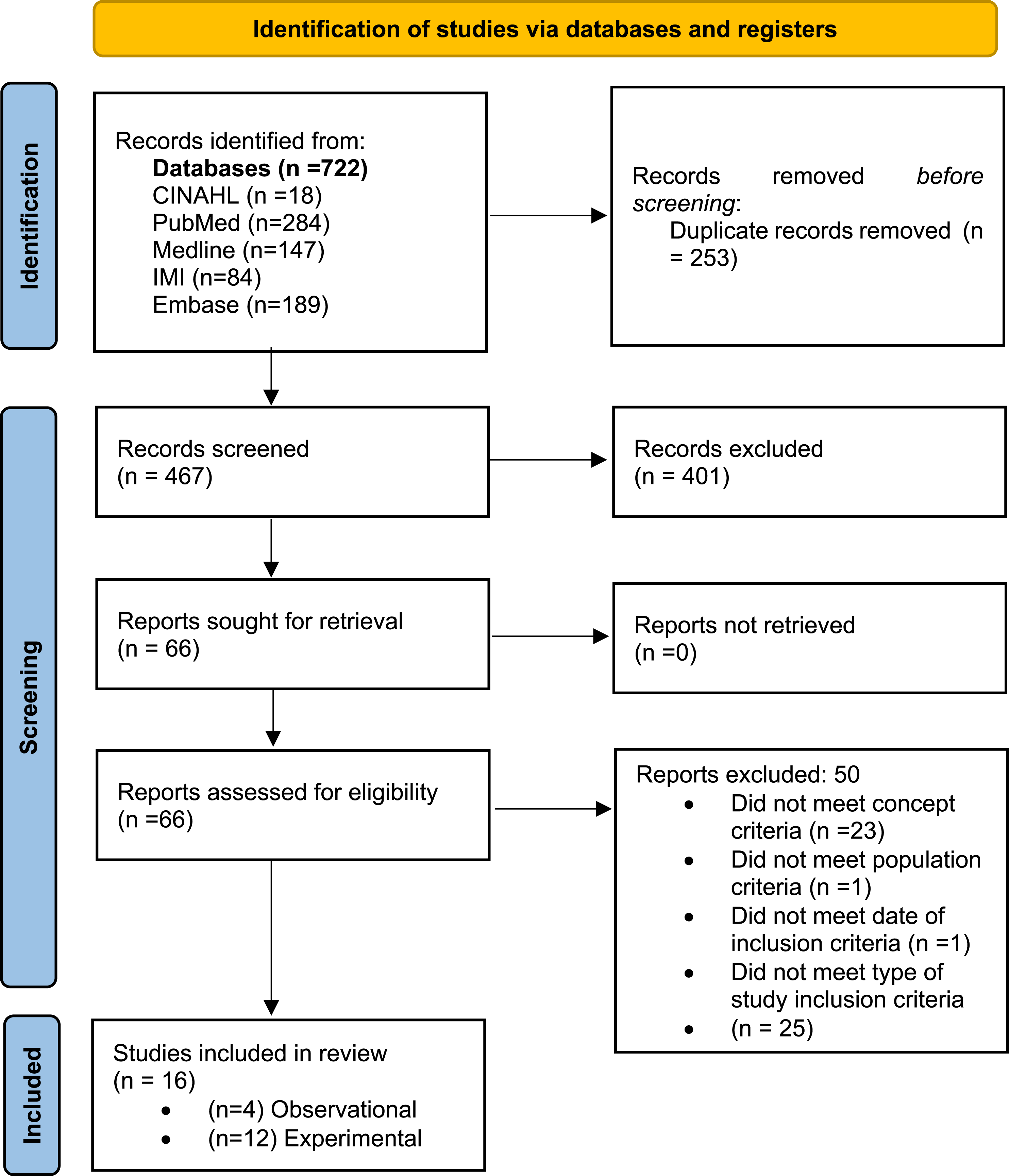
Information for full text screening was recorded using MS excel database. This database was piloted by at least three reviewers to ensure it captured all relevant data. Reviewers undertook full text screening independently. Following completion of full text screening, each reviewer was randomly assigned a further 10% of the studies to screen and verify for accuracy.
Data extraction
A data extraction form was developed using Excel to capture relevant information on key study characteristics, including setting, study design, types of face masks and primary outcome(s) relative to efficacy of face masks.
This form was piloted, and updated as a collaborative exercise, before each reviewer undertook individual data extraction on allocated papers. Each reviewer extracted data for these papers, with any discrepancies resolved by discussion and consensus.
Data analysis and presentation
The themes within Howard et al. (Howard et al., 2021) analytical framework were utilised and adapted to develop themes, enabling the grouping and subsequent mapping of results relating to face masks and their efficacy (S1 search strategy). Each study included in this scoping review was examined to identify which themes were discussed relative to mask efficacy. To illustrate how behaviours and societal influences impact mask efficacy, the themes were applied to the levels of the McLeroy et al. SEM (McLeroy et al., 1988a). The levels ‘interpersonal’ and ‘community’ from McLeroy et al., model were combined to one level in this study.
The adapted themes extracted based on Howard et al., analytical framework can be observed in supplementary materials (S3). The theme ‘transmission characteristics’ is split into two themes (social networks and environmental factors) within the adapted thematic element. To apply the themes to the different levels of the SEM (McLeroy et al., 1988a) a number of questions were developed, which are illustrated in within the supplementary materials (S3).
Results
Study selection
A search of five electronic databases yielded a total of 722 articles. After 253 duplicates were removed, 467 title and abstracts were screened against a predetermined inclusion and exclusion criteria (S1). Following title and abstract screening, 66 articles were selected for full-text review. Of the 16 articles included after full-text screening (Figure 1), four were observational studies (Kwon et al., 2021; Mitze et al., 2020; Pan et al., 2021; Sugimura et al., 2021) and 12 were experimental design studies (Bandiera et al., 2020; Catching et al., 2021; Cheng et al., 2021; Farthing and Lanzas, 2021; Goyal et al., 2021; Lindsley et al., 2021a, 2021b; Muthusamy et al., 2021; Scott et al., 2021; Sharma et al., 2021; Tomshine et al., 2021; Wendling et al., 2021). Experimental design studies comprised of six simulation studies (Bandiera et al., 2020; Lindsley et al., 2021a, 2021b; Sharma et al., 2021; Tomshine et al., 2021; Wendling et al., 2021) which used droplet dispensers or aerosol simulators to mimic real life speaking/coughing events. The remaining six studies used modelling simulations which examined the efficacy of face masks (Catching et al., 2021; Cheng et al., 2021; Farthing and Lanzas, 2021; Goyal et al., 2021; Muthusamy et al., 2021; Scott et al., 2021).
Of the fifty articles excluded at full-text screening stage, 23 studies did not meet the inclusion criteria in relation to the concept of the review, one article was outside the publication date, 25 articles did not meet the requirements for study type (i.e. primary literature) and one article did not meet the inclusion criteria in relation to the population under investigation.
Study characteristics
The general characteristics of the 16 included studies are highlighted in the supplementary materials (S4). These include sources of evidence and relevant data that was charted for each study as it relates to the review question and objectives.
Fourteen studies were published in 2021 with two studies published in December 2020. All 16 studies are original research (Figure 1,). Of the 16 included studies, nine were conducted in the USA (Catching et al., 2021; Cheng et al., 2021; Farthing and Lanzas, 2021; Goyal et al., 2021; Kwon et al., 2021; Lindsley et al., 2021a, 2021b; Muthusamy et al., 2021; Tomshine et al., 2021), one study did not specify the country (Sharma et al., 2021) and the remaining six studies were conducted in the UK (Bandiera et al., 2020), Australia (Scott et al., 2021), France (Wendling et al., 2021), Germany (Mitze et al., 2020), China (Pan et al., 2021) and Japan (Sugimura et al., 2021).
The sample sizes within each of the four observational studies varied. A prospective cohort study (Kwon et al., 2021) was undertaken with a sample size of 198,000 participants. This study collected information using a smartphone-based application that gathered self-reported, individual-level data on COVID-19. A second population-based cross sectional study (Pan et al., 2021) employed convenience sampling of individuals wearing face masks and enrolled approximately 6000 participants. A third cross sectional study retrieved data from 401 municipal districts in Germany, which was then used to estimate the effect of general mask mandates on the development of registered COVID-19 infections in the areas under investigation (Mitze et al., 2020). The fourth observational study extracted specific information on a COVID-19 reporting form, from 820 participants identified as close contacts of COVID-19 patients under active epidemiological surveillance (Sugimura et al., 2021).
Of the 16 studies, 10 studies used a mixture of masks to compare efficacy including surgical masks, N95/FFP2, multi-layered masks and cloth masks (Bandiera et al., 2020; Catching et al., 2021; Cheng et al., 2021; Farthing and Lanzas, 2021; Lindsley et al., 2021b; Pan et al., 2021; Scott et al., 2021; Sharma et al., 2021; Tomshine et al., 2021; Wendling et al., 2021), of these, two studies also included face shields in their experiments (Lindsley et al., 2021b; Wendling et al., 2021).
The remaining two studies reviewed cloth masks and reusable cloth masks in their experimental design (Lindsley et al., 2021a; Muthusamy et al., 2021). Four studies did not specify the particular type of mask used in their research (Goyal et al., 2021; Kwon et al., 2021; Mitze et al., 2020; Sugimura et al., 2021).
Thematic analysis
Results from included articles were grouped thematically based on an adapted model of Howard et al., analytical framework and then aligned to McLeroy et al., Socio-ecological Model illustrated in Figure 2. McLeroy’s SEM and Howard’s analytical framework themes combined.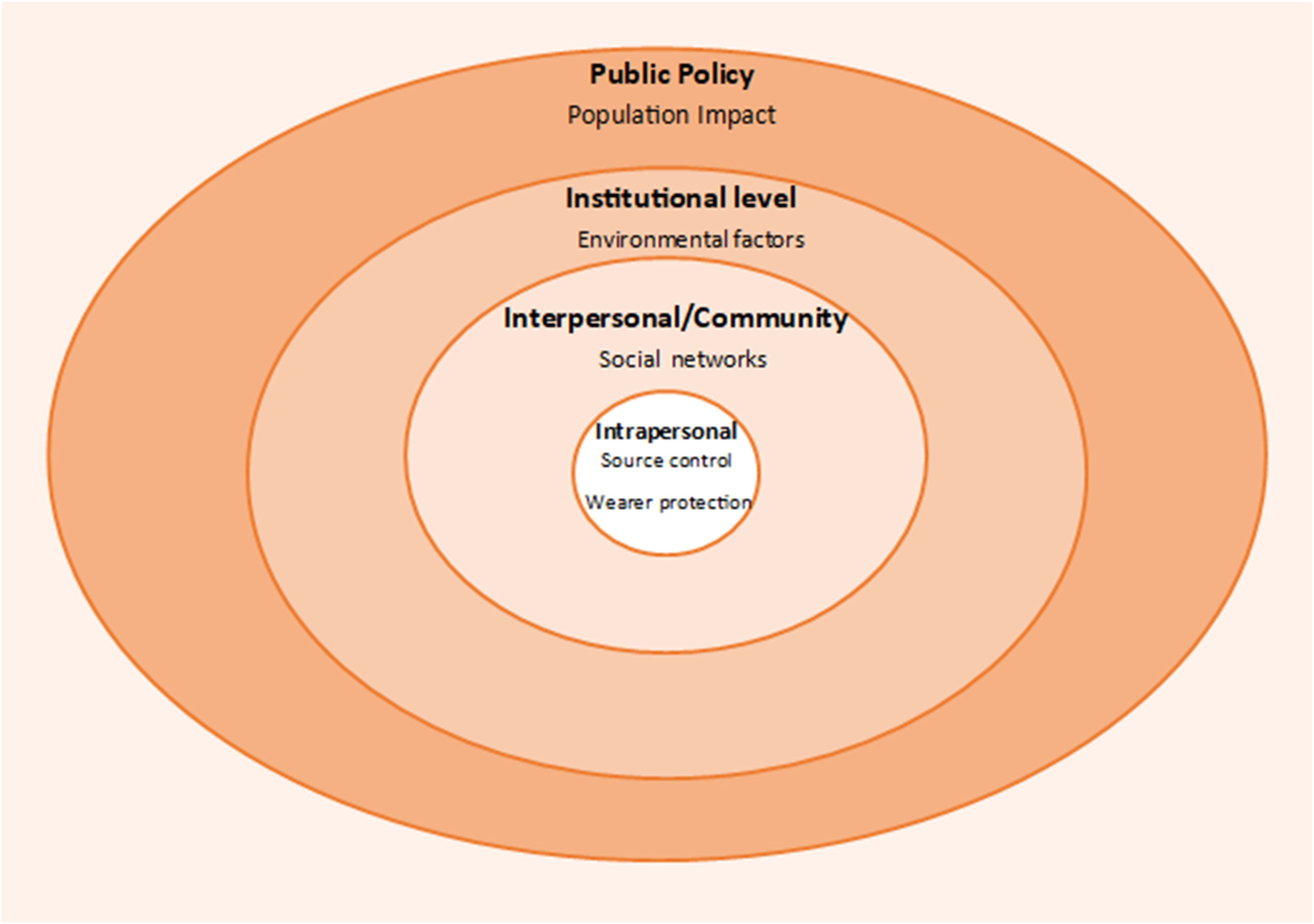
Intrapersonal level
The intrapersonal level of the SEM examines individual and personal characteristics such as individual knowledge, attitudes, skills and motivation to participate in mask wearing as a health behaviour. Within this scoping review, two sub-themes (source control and wearer protection) were assigned to the intrapersonal or individual level of the SEM (Figure 2).
Source control
The use of a face mask worn by potentially infectious people to block the release of exhaled respiratory particles into the environment is known as source control. Eight studies reviewed the efficacy of face masks as source control devices (Bandiera et al., 2020; Lindsley et al., 2021a, 2021b; Muthusamy et al., 2021; Pan et al., 2021; Sharma et al., 2021; Tomshine et al., 2021; Wendling et al., 2021) as part of their study design. These study designs included observational (cross sectional; n = 1) (Pan et al., 2021) and experimental study designs (modelling, n = 1; simulation; n = 6) (Bandiera et al., 2020; Lindsley et al., 2021a, 2021b; Muthusamy et al., 2021; Sharma et al., 2021; Tomshine et al., 2021; Wendling et al., 2021).
Simulation studies that measured the efficacy of face masks as source control devices used simulators (manikin heads, droplet dispensers or aerosol simulators) to mimic speaking/coughing events (Bandiera et al., 2020; Lindsley et al., 2021a, 2021b; Sharma et al., 2021; Tomshine et al., 2021; Wendling et al., 2021).
All experimental design studies (n = 7) reported that face masks are effective as source control devices in reducing exhaled respiratory droplets; however, efficacy varied between studies depending on the type of face mask and size of the respiratory droplets. Bandiera and Sharma reported that face masks are highly effective at reducing large respiratory droplets (>250 um) with multilayer masks more effective than single layer. This was further confirmed by Lindsley et al. who observed that medical face masks (three layers of cotton fabric with ear loops) are highly effective as source control devices and reduce exposure of recipients to respiratory aerosols by 96% (Lindsley et al., 2021a). A further simulated experiment by Lindsley et al. also found that an N95 respirator blocked 99% of the simulated cough aerosol, a medical grade procedure mask blocked 59%, a 3-ply cotton cloth face mask blocked 51% and a polyester neck gaiter blocked 47% as a single layer and 60% when folded into a double layer when used as source control devices (Lindsley et al., 2021b). Muthusamy et al. utilised validated computational fluid dynamics methodology and observed that wearing a cloth mask reduces the average contamination range by approximately two-thirds of the distance compared to coughing without a mask. Tomshine concluded that masking at source yields the greatest decrease in particle count (Muthusamy et al., 2021).
An observational study (Pan et al., 2021) used self-reported questionnaires which were then followed up with fit testing (airtightness of face mask) on a cohort of 6003 face mask (3047 females) wearers. While noting a high level of compliance with mask wearing amongst participants, the results concluded that the efficacy of face masks was compromised by poor fit which can reduce the airtightness and diminish protection.
Wearer protection (PPE)
Wearer protection (PPE) refers to the reduction in exposure to infectious droplets when an individual is wearing a face mask. Within this review, this theme was applied, when both the recipient or target simulators were masked. According to Howard et al., there are two considerations for the wearer in relation to the efficacy of the face masks which include filtration ability and the fit.
Three simulated experimental studies investigated a number of different wearer protection options with all concluding that when both the source and target were wearing a
Two studies comparatively evaluated the performance of face shields and surgical masks as both source control and wearer protection devices (Lindsley et al., 2021a; Wendling et al., 2021) with conflicting conclusions. When both the emitter (source control) and receiver (wearer protection) manikin heads wore a face shield, Wendling et al., (Wendling et al., 2021) results indicated a 98% reduction for the face shields versus 97.3% for the masks. The authors suggested that face shields offered a better barrier effect than the mask against small inhaled particles (<0.3 µm–0.3 to 0.5 µm–0.5 to 1 µm) in all configurations. This, however, is not consistent with results from Lindsley et al., (Lindsley et al., 2021a) who observed face shields were less effective as source control devices, blocking only 2% of the cough aerosol.
Interpersonal/community
The interpersonal/community level of the SEM is concerned with factors such as interactions with others, social networks, social supports including those of family, friends and workplace (McLeroy et al., 1988a). Within our adapted framework, studies which incorporated the following themes, (social networks including adhering to social distancing) were assigned to the interpersonal/community level of the SEM.
Social networks
A total of six studies explored social distancing within social networks as a confounding factor in determining the efficacy of face masks on COVID-19 transmission, through interpersonal and community interactions. The study designs of these six studies were experimental (modelling, n = 4; (Catching et al., 2021; Cheng et al., 2021; Farthing and Lanzas, 2021; Goyal et al., 2021) simulation, n = 1 (Tomshine et al., 2021) and observational (cross sectional; n = 1 (Kwon et al., 2021)). All six studies found that the efficacy of face masks improved when combined with other non-pharmaceutical interventions (NPIs), particularly social distancing. One modelling study (Catching et al., 2021) looked specifically at asymptomatic transmission, while another (Farthing and Lanzas, 2021) examined transmission among varying group sizes (smaller groups vs larger groups), with both concluding that facemask efficacy was increased when used in conjunction with social distancing. Similarly, Cheng et al. (Cheng et al., 2021) highlighted the non-linear dependence that mask efficacy has on transmission of COVID-19 and concluded that the more NPIs used, the more effective each measure will be at lowering virus transmission, thus lowering overall transmission of the virus. Further modelling studies included in this review concurred with these results (Goyal et al., 2021; Kwon et al., 2021; Tomshine et al., 2021). Throughout the studies included in this review, it was observed that the combined use of mask wearing and social distancing remain the most effective for reducing COVID-19 spread
Institutional
Studies that incorporated organisational and environmental factors were assigned to the institutional level of the SEM.
Environmental factors
Two modelling studies (Cheng et al., 2021; Muthusamy et al., 2021) identified environmental factors, including ventilation, as having a significant positive impact on the efficacy of face masks by reducing particle concentrations for aerosols and larger droplets. Cheng et al. explored virus abundance in order to examine mask efficacy. Consequently, founded upon an estimate of respiratory particles emitted by a typical person during a 30-min period, the authors observed that this would indicate a respiratory particle-rich regime. They determined that such virus rich regimes can be negated by improving ventilation, but also indicated that higher efficacy masks (such as N95 masks) should be used in virus rich regimes. Similarly, Muthusamy et al. concluded that wearing a cloth face mask in an adequately ventilated environment significantly reduced particle concentration of aerosols and larger droplets (>200 μm).
Public policy
Public policy level considers policies and laws that regulate or support health actions and practices. Throughout the COVID-19 pandemic, mask mandating became common throughout various countries worldwide (Masks4All, 2020). Mask mandating is where a decree was issued for the public to wear face masks in public settings to prevent transmission of COVID-19. The theme assigned to this level of the SEM model was the population impact of mask wearing.
Mitze et al., (Mitze et al., 2020), used real life data through a retrospective cross sectional analysis to examine the impact mask mandates have on COVID-19 infection rates, while in other studies, modelling was used to examine the potential impact increased mask using at population level would have (Catching et al., 2021; Goyal et al., 2021; Scott et al., 2021). These studies acknowledged the importance of public compliance with mask wearing to successfully achieve lower transmission rates of COVID-19 (Catching et al., 2021; Cheng et al., 2021; Goyal et al., 2021; Scott et al., 2021).
Catching et al. and Goyal et al. (Catching et al., 2021; Goyal et al., 2021) used modelling to quantify the effect of increased mask usage in the population on COVID-19 infections. Both studies found that as mask usage increased at population level, COVID-19 infections decreased. Goyal et al. (Goyal et al., 2021) also concluded that if 75% of people wore masks 75% of the time, COVID-19 infection rates would be reduced by 15%. Similarly, in a retrospective cross sectional study in Germany Mitze et al. (Mitze et al., 2020) concluded that 20 days after a mask mandate was introduced, the number of new infections of COVID-19 was reduced by around 45%. Examining the mandatory face mask wearing policy in Melbourne, Scott et al. (Scott et al., 2021) reported ‘strong evidence’ that this was effective in reducing COVID-19 cases when coupled with additional restrictions and NPIs already in place, accelerating the reduction of SARS-CoV-2 transmission.
Discussion
It is suggested that this is the first scoping review to carry out a descriptive thematic synthesis on evidence relating to the efficacy of facemasks in non-healthcare settings. It is also believed this is the first scoping review to be presented in an adapted model of Howard et al., in alignment with McLeroy et al.’s SEM. Howard et al.’s analytical framework was developed in the context of COVID-19 to review the evidence relating to face masks reducing transmission of the disease. As this is a new framework (2021), to our knowledge, this the first scoping review to utilise it to map the literature relative to the efficacy of all types of face masks.
Experimental and observational type studies appear to be the primary types of evidence available relative to mask efficacy as a consequence of few randomised controlled trials (RCTs) being conducted (Muller, 2021). According to the Cochrane handbook for systematic reviews of interventions (Cumpston et al., 2019) and the World Health Organisation (World Health Organization, 2014) for population health measures, controlled trials are generally not identified due to logistical and ethical reasons, and therefore, a wider evidence base should be considered. This explains the types of studies identified in this review. As a result of this, since the beginning of the pandemic, many other types of studies emerged examining the impact of masks on reducing COVID-19 infection (Álvarez-Pomar and Rojas-Galeano, 2021; Arumuru et al., 2020; Leung et al., 2020) which collectively may have influenced governmental and policy recommendations relating to mask wearing internationally.
The results of this scoping review illustrate the body of literature portraying the non-linear relationship that exists between mask efficacy and transmission of COVID-19 which highlights the multifactorial elements determining the efficacy of masks themselves (source control, wearer protection, fit and filtration), while also illustrating how other factors such as social networks, environmental factors and public policy can determine the degree of the protective effect. This scoping review illustrates that it is primarily experimental evidence available indicating that masks are effective at preventing COVID-19 transmission.
The intrapersonal level of the SEM, refers to knowledge and behaviours at the individual level which can influence behaviour and subsequently have a protective effect on individual health as well as the health of others in the community (McLeroy et al., 1988b). Articles in this review which examined source control reported that the degree of efficacy is related to layers, fit and filtration capacity of face masks (Bandiera et al., 2020; Lindsley et al., 2021a, 2021b; Muthusamy et al., 2021; Pan et al., 2021; Sharma et al., 2021; Tomshine et al., 2021; Wendling et al., 2021). These results concur with international evidence relative to masks preventing infectious respiratory diseases (Andrejko et al., 2022; Dugdale and Walensky, 2020). Articles in this review, that examined wearer protection concluded that the fit of the facemask was the most important element to consider when discussing facemask efficacy and was more important that the type of mask worn (Farthing and Lanzas, 2021; Goyal et al., 2021; Lindsley et al., 2021a; Pan et al., 2021). One of these studies (Pan et al., 2021) was a retrospective case control study. Cheng et al. (Cheng et al., 2021) also observed that N95 masks should be worn in virus rich settings to achieve adequate protection. This was confirmed in a recent systematic review conducted by Tran et al., who suggested that higher grade masks such as N95 and FFP2 masks should be worn in outbreak hotspots (Tran et al., 2021). These results present important considerations which support current evidence. To influence individual behaviour in this regard, providing information and training on how to effectively put on and remove a mask, and the information on the best type of mask to wear based on the environment is an important consideration from this review.
The findings indicate that at the institutional level, environmental factors such as improved ventilation can greatly contribute to the efficacy of face masks to lower COVID-19 transmission. Of the 16 studies included in this scoping review, eight studies (Catching et al., 2021; Cheng et al., 2021; Farthing and Lanzas, 2021; Goyal et al., 2021; Kwon et al., 2021; Muthusamy et al., 2021; Scott et al., 2021; Tomshine et al., 2021) highlight the non-linear dependence that mask efficacy has on transmission of COVID-19 and conclude that the more NPIs used, the more effective each measure will be at lowering virus transmission, thus lowering overall transmission. These findings align with current evidence. The introduction of additional NPIs will be important to aid the risk posed by improper fitted masks, which was previous highlighted at the intrapersonal level.
Introducing mask wearing policies at local and national level significantly reduced COVID-19 transmission (Catching et al., 2021; Goyal et al., 2021; Scott et al., 2021). The introduction of additional measures/policies emphasise the protective impact that universal masking can achieve. However, compliance is a crucial element to achieve successful policy implementation. The evidence indicates that as more people wear masks at individual and community level, national policies including mask wearing mandates will be more successful at lowering transmission of COVID-19. Goyal et al. (2021) and Mitze et al. (2020) support the statement that when mask wearing becomes mandatory, compliance improved. These studies highlight how individual behaviour collectively impact the effectiveness of masks at the interpersonal and community level. These results are supported by a cluster randomised controlled trial that took place in Bangladesh (Abaluck et al., 2022). The SEM model depicts the connection between each level of the model (individual, community and policy).
Strengths and limitations
There are several strengths to this study. Firstly, this review provides a detailed up to date analysis of primary research on the efficacy of all types of face masks in preventing transmission of COVID-19. To our knowledge, this is the first scoping review to apply an adapted model of Howard et al., analytical framework as well as the SEM to illustrate results, which is a unique and suitable approach for this topic. The application of Howard’s framework strengthens this study as it is a new framework which aims to specifically evaluate mask efficacy. An additional strength lies in the illustration that the efficacy of masks is determined by more than the mask itself through the SEM. These findings build on a previously published scoping review by Jain et al. (Jain et al., 2020). The effective application of scoping review methodology is a major strength of this study.
There are several limitations to consider. The literature identified during this review is lower quality due to the lack of randomised controlled trails available in this area. As a consequence, only observational and experimental design studies were identified throughout this review. This highlights gaps in research. Another limitation of this study relates to the extent that the search strategy solely focused on published literature. As grey literature was not included in this strategy, the review potentially overlooks important perspectives and information not yet published.
Conclusion
From the evidence presented within this scoping review it can be concluded that the body of research available relative to efficacy of face masks is primarily experimental. Therefore, the evidence available is of lower quality. Further research is required to strengthen the current evidence available within this area. In particular, retrospective cross sectional studies should be conducted from countries which introduced mask wearing as an isolated preventative measure. Most real life studies consider other NPIs rather than masks in isolation, so using real life data from countries who implemented mask wearing as an isolated measure alone would strengthen the findings. At all levels of the SEM, compliance and behaviour were observed as important factors in determining the efficacy of face masks, with fit and filtration of masks also noted as important considerations. These factors are important for future research. The non-linear relationship that exists between mask efficacy was apparent and should be a consideration for future research.
Supplemental Material
Supplemental Material - Efficacy of facemasks in preventing transmission of COVID-19 in non-healthcare settings: A scoping review
Supplemental Material for Efficacy of facemasks in preventing transmission of COVID-19 in non-healthcare settings: A scoping review by Chloe Enright, Claire Gilbourne, Rachel Kiersey, Randal Parlour, Paula Flanagan, Emer McGowan, Mairin Boland and Deirdre Mulholland in Journal of Infection Prevention
Supplemental Material
Supplemental Material - Efficacy of facemasks in preventing transmission of COVID-19 in non-healthcare settings: A scoping review
Supplemental Material for Efficacy of facemasks in preventing transmission of COVID-19 in non-healthcare settings: A scoping review by Chloe Enright, Claire Gilbourne, Rachel Kiersey, Randal Parlour, Paula Flanagan, Emer McGowan, Mairin Boland and Deirdre Mulholland in Journal of Infection Prevention
Supplemental Material
Supplemental Material - Efficacy of facemasks in preventing transmission of COVID-19 in non-healthcare settings: A scoping review
Supplemental Material for Efficacy of facemasks in preventing transmission of COVID-19 in non-healthcare settings: A scoping review by Chloe Enright, Claire Gilbourne, Rachel Kiersey, Randal Parlour, Paula Flanagan, Emer McGowan, Mairin Boland and Deirdre Mulholland in Journal of Infection Prevention
Footnotes
Author’s note
Authors have read and agreed to the published version of the manuscript.
Acknowledgements
Michelle Williams, for reviewing and giving feedback on the final draft.
Declaration of conflicting interests
The author(s) declared no potential conflicts of interest with respect to the research, authorship, and/or publication of this article.
Funding
The author(s) received no financial support for the research, authorship, and/or publication of this article.

Supplemental Material
Supplemental material for this article is available online.
Note
References
Supplementary Material
Please find the following supplemental material available below.
For Open Access articles published under a Creative Commons License, all supplemental material carries the same license as the article it is associated with.
For non-Open Access articles published, all supplemental material carries a non-exclusive license, and permission requests for re-use of supplemental material or any part of supplemental material shall be sent directly to the copyright owner as specified in the copyright notice associated with the article.
