




Abstract
Dysbiosis, a loss of balance between resident bacterial communities and their host, is associated with multiple diseases, including inflammatory bowel diseases (nonspecific chronic ulcerative colitis and Crohn’s disease), and digestive functional disorders. Probiotics, prebiotics, synbiotic organisms and, more recently, pharmabiotics, have been shown to modulate the human microbiota. In this review, we provide an overview of the key concepts relating to probiotics, prebiotics, synbiotic organisms, and pharmabiotics, with a focus on available clinical evidence regarding the specific use of a unique pharmabiotic, the strain Lactobacillus acidophilus LB (Lactobacillus boucardii), for the management of gastrointestinal disorders. Since it does not contain living organisms, the administration of L. acidophilus LB is effective and safe as an adjuvant in the treatment of acute diarrhea, chronic diarrhea, and antibiotic-associated diarrhea, even in the presence of immunosuppression.
Introduction
The complex interaction between microbiota and humans is currently recognized as fundamental for balance (eubiosis) and life development. Medical research has shown that the balance lost (dysbiosis) between resident bacterial communities and their host can lead to multiple diseases.1,2 There are many conditions associated with dysbiosis, including metabolic diseases (e.g. obesity, fatty liver, cardiovascular conditions, etc.), infectious processes (acute diarrhea, antibiotic-associated diarrhea and Clostridium difficile infection), malignancies (e.g. colon cancer), inflammatory bowel diseases (nonspecific chronic ulcerative colitis and Crohn’s disease), as well as digestive functional disorders (especially irritable bowel syndrome).1,2
Since dysbiosis was recognized as a pathophysiological mechanism, it has been proposed that microbiota modulation through drugs and food (probiotics, prebiotics, synbiotic organisms and, recently, pharmabiotics) may aid in restoring the eubiotic condition. Moreover, the subject has drawn interest from the scientific community as well as among the general public. Recommendations are usually heard in the media promoting the use of ‘probiotics’ as a helpful measure to maintain a healthy condition.1–3
It is essential to acknowledge that each previously stated term is different from the other, and the evidence for their benefit is heterogeneous; meaning that not all of them work in the same way and it should not be assumed that the effects of a strain, a prebiotic or pharmabiotic, will be similar in all conditions. This article presents a detailed review of dysbiosis-related concepts frequently associated with gastrointestinal conditions, and the specific use of the strain L. acidophilus LB (Lactobacillus boucardii), as a pharmabiotic for the management of such diseases.
Generalities and definitions
The human microbiota consists of a wide variety of bacteria, viruses, fungi, and other unicellular microorganisms. Bacteria control the gut microbiota, and these are represented mainly by the phyla Firmicutes and Bacteroidetes, and the secondary phyla Actinobacteria, Proteobacteria, Synergistetes, Fusobacterium, and Verrucomicrobia. The most significant population of microorganisms resides in the intestine (accounting for around 1.8 kg of biomass), mainly inside the colon. It is also known as the intestinal microflora. However, the human microbiota has other important habitats, including the mouth, upper respiratory tract, skin, and genitals.4–8 The relationship between humans and their microbiota is symbiotic; this means, it is mutually beneficial. 8 Moreover, the microbiota performs several functions:6,7
nutrient degradation and absorption;
degradation of non-digestible carbohydrate (e.g. plant polysaccharides);
intestinal barrier maintenance;
protection against pathogens (inhibition of pathogen attachment to the intestinal epithelium);
modulation and correct maturation of the immune system;
participation in intestinal health;
production of a variety of metabolites, such as vitamins and short-chain fatty acids (SCFAs).
Each human houses around 10–100 quintillion microorganisms (~1000 different species). The gut microbiota is composed of indigenous members which colonize the intestinal mucosa, and by the transitory microbiota derived from ingested food.4,7,8 The human microbiome is the group of genes inside the microbial cells which influences four health areas: (a) nutrition, (b) immunity, (c) behavior, and (d) disease. 8
The human microbiota starts its development at birth. Cesarean section, a milk formula nutrition, a diet high in fat and sugar, the use of antibiotics, and excessive hygiene, adversely affect the health of the microbiota. Infant gut microbiota matures in the first 3 years of life. 9
Prebiotic
Under the auspices of the International Scientific Association for Probiotics and Prebiotics (ISAPP), an expert panel recently reviewed the definition and scope of prebiotics. 10 A prebiotic is defined as a non-viable substrate that serves as a microbiota nutrient and is selectively fermented by the microbiota, leading to specific changes in the host’s gastrointestinal microbiota composition and/or activity, resulting in a health benefit.10,11
The definition expands the concept of prebiotics in order to include potential non-carbohydrate substances, making it possible to apply the concept to body parts other than the digestive system (e.g. vagina, skin), and multiple food categories. Thus, other substances fall within the updated definition, such as polyphenols and polyunsaturated fatty acids converted to their respective conjugated fatty acids, assuming that convincing evidence is presented in favor of their beneficial health effect. 10
The difference between dietary fiber and prebiotics is that defined groups of microorganisms exclusively ferment the latter, while dietary fiber (pectins, cellulose, and xylan) is used by most colonic microorganisms. 12
Prebiotics have health benefits in the digestive tract (e.g. pathogen inhibition, stimulation of the immune system), the cardiovascular system (e.g. reduced blood lipid counts, impact on insulin resistance), mental health (e.g. metabolites that have an effect on brain function, energy and cognition), and the bone system (e.g. mineral bioavailability), among others. Therefore, prebiotics can improve human health and reduce the risk of diseases mediated by aberrations in the microbiota. 10
Probiotic
When administered in adequate amounts, live microorganisms (bacteria or fungus), provide health benefits to the host, for example, species of Lactobacillus and Bifidobacterium, Saccharomyces boulardii, Clostridium butyricum, and some species of Escherichia and Bacillus.11,13
Lactobacilli belong to the group of lactic acid bacteria (LAB) and are Gram-positive non-pathogenic, non-toxigenic, fermenting bacteria. They are associated with lactic acid production from carbohydrates, making them useful for food fermentation (e.g. species of Lactobacillus, Lactococcus, and Streptococcus thermophilus). Several LABs are probiotics. 11 Probiotic microorganisms mainly used in human nutrition are types of Lactobacillus and Bifidobacterium. Other probiotic LABs and microorganisms are shown in Table 1. 12
Probiotic microorganisms used in human nutrition. 12 Reproduced with permission from MDPI.

Mostly used in pharmaceutical products.
Mostly used as food additives.
Qualified presumption of safety microorganisms.
Synbiotic
A product containing probiotics and prebiotics which facilitates the in vivo activity and survival of probiotics, and stimulates indigenous anaerobic bacteria. Working synergistically, they provide combined health benefits.11,13 Synbiotic organisms contribute to: 12
increased count of Lactobacillus and Bifidobacterium genuses;
maintenance of the microbiota balance;
improved hepatic function in cirrhotic patients;
increased immunomodulating capacities;
bacterial translocation prevention and reduction of nosocomial infections in surgery. 14
Synbiotic microorganisms used in nutrition are: 12 Lactobacillus + inulin; Lactobacillus and genus Bifidobacterium + inulin; Lactobacillus and Bifidobacterium + oligofructose; Lactobacillus, Bifidobacterium and Enterococcus + fructooligosaccharides (FOS); and Lactobacillus, Streptococcus, and Bifidobacterium + FOS.
Postbiotic
Non-viable bacterial products or metabolic bioproducts of probiotic microorganisms with biological effects on the host. They are considered an effective alternative method to increase the potential and functionality of each probiotic strain. As the understanding of the host–microbiota metabolic axis advances, the usage of postbiotic molecules has become a prominent strategy to treat many inflammatory diseases, since these molecules mimic the beneficial therapeutic effects of probiotics while avoiding the risk of administering live microorganisms into a host with a compromised immune system. Most SCFAs (⩾95%) are primarily generated in the colon; the microorganisms’ metabolic bioproducts, including acetate (two carbons, C2), propionate (three carbons, C3), and n-butyrate (four carbons, C4), have been shown to generate multiple modulatory effects within the host. The metabolic pathways that modulate such beneficial effects act by altering cytokine release, cell recruitment, and survival at the inflammatory site to induce pro-resolutive activities.9,10
Figure 1 shows the distinction between a prebiotic and a non-prebiotic based on the ISAPP consensus; namely, selective use distinguishes prebiotics from other substances. Prebiotics must be selectively utilized and have adequate evidence of a health benefit for the target host. In addition, they must not be degraded by target host enzymes. The main prebiotics are FOS and galactooligosaccharides (GOS). Certain soluble fermentable fibers are possible prebiotics and some other types of dietary fiber can be prebiotics.
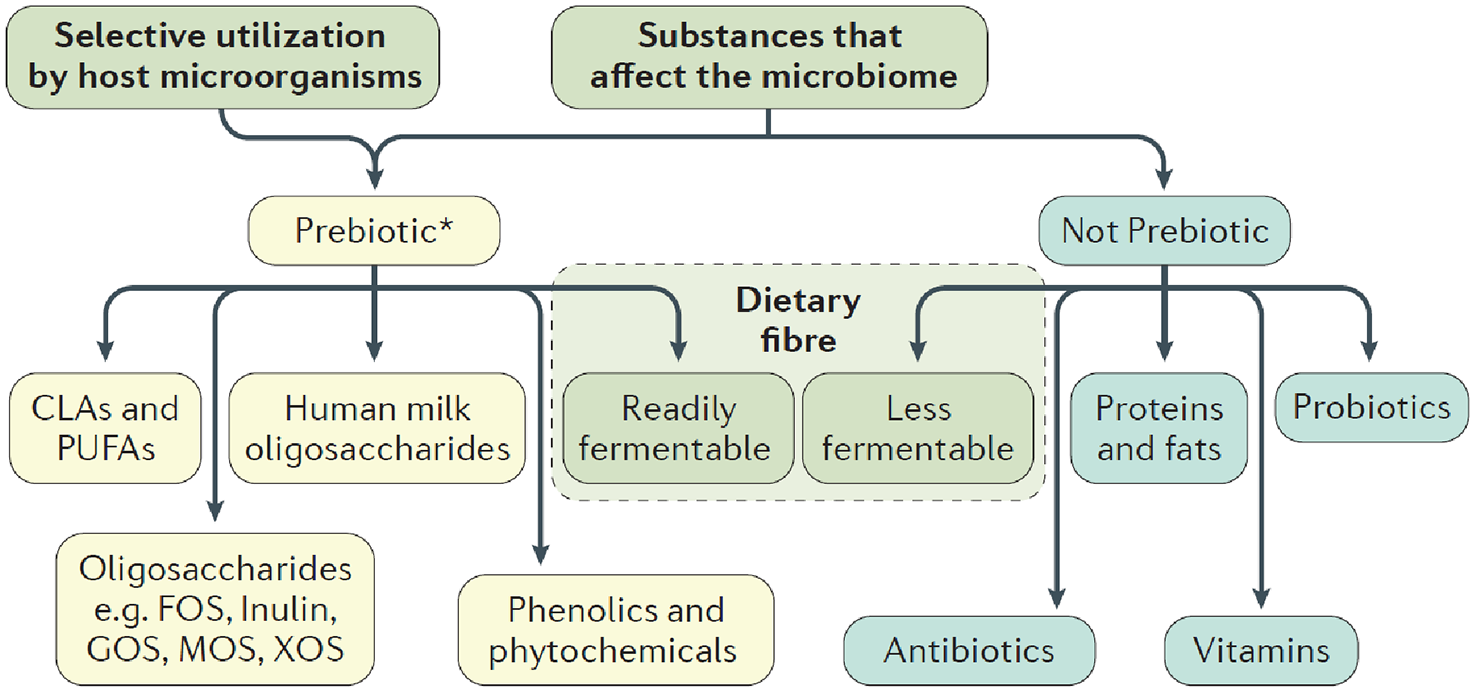
The distinction of a prebiotic based on the proposed definition. Reproduced with permission from Macmilllan/Springer Nature. 10
Pharmabiotic
This term was introduced to comprise any biological entity that is extracted from the microbiota and can exert influence in the microbiota to produce a therapeutic benefit. Therefore, this concept goes beyond live organisms and encompasses dead organisms, their components, and bioproducts. 15 Thus, some postbiotics can be pharmabiotics, but not all postbiotics are pharmabiotics. It has been suggested that pharmabiotics include pharmaceutical probiotics with specific evidence of generating health benefits and with proven positive physiological effects, or with the capacity to play a pharmacological role in diseases.15,16 Hence, pharmabiotics comply with two criteria: 16 (a) they provide physiological and pharmacological health benefits against diseases; and (b) they serve as prevention and treatment for medical conditions.
Dysbiosis and reinstatement of microbiota
Dysbiosis of the intestinal ecosystem (any compositional change in the intestinal resident commensal communities in relation to the community of healthy subjects) contributes to the development of certain diseases that can be reversed with favorable alterations caused by probiotics.1,13
As in other organs, the proper function of the gut microbiota depends on a stable cell composition; in this case, it consists primarily of the bacteria phyla Bacteroidetes, Firmicutes, Actinobacteria and, to a lesser degree, Proteobacteria. Dysbiosis occurs due to a significant deviation in the ratio of the above phyla or the expansion of new bacteria groups which leads to an imbalance that promotes disease. 17 A reduction in microbial diversity and the overgrowth of Proteobacteria are two cardinal characteristics of dysbiosis. 17
Environmental impacts, such as the use of antibiotics or diet itself, can result in structural changes of the microbial community. Such variations can lead to the loss of organisms that are beneficial to their host and to a subsequent overgrowth of pathobionts (organisms that, under normal circumstances, live as commensals or symbionts but whose overgrowth could harm). There are three types of dysbiosis in the intestinal ecosystem: 1
loss of beneficial microorganisms;
pathobionts expansion;
loss of the total diversity of microorganisms.
When dysbiosis occurs, the need to restore a healthy microbiota becomes evident. It can be carried out through a fecal microbiota transplant from a healthy donor, although the easiest way is through the administration of dietary supplements, which can be done through multiple mechanisms (fecal microbiota transplant, consumption of prebiotics, probiotics, and postbiotics), as shown in Figure 2.1,9
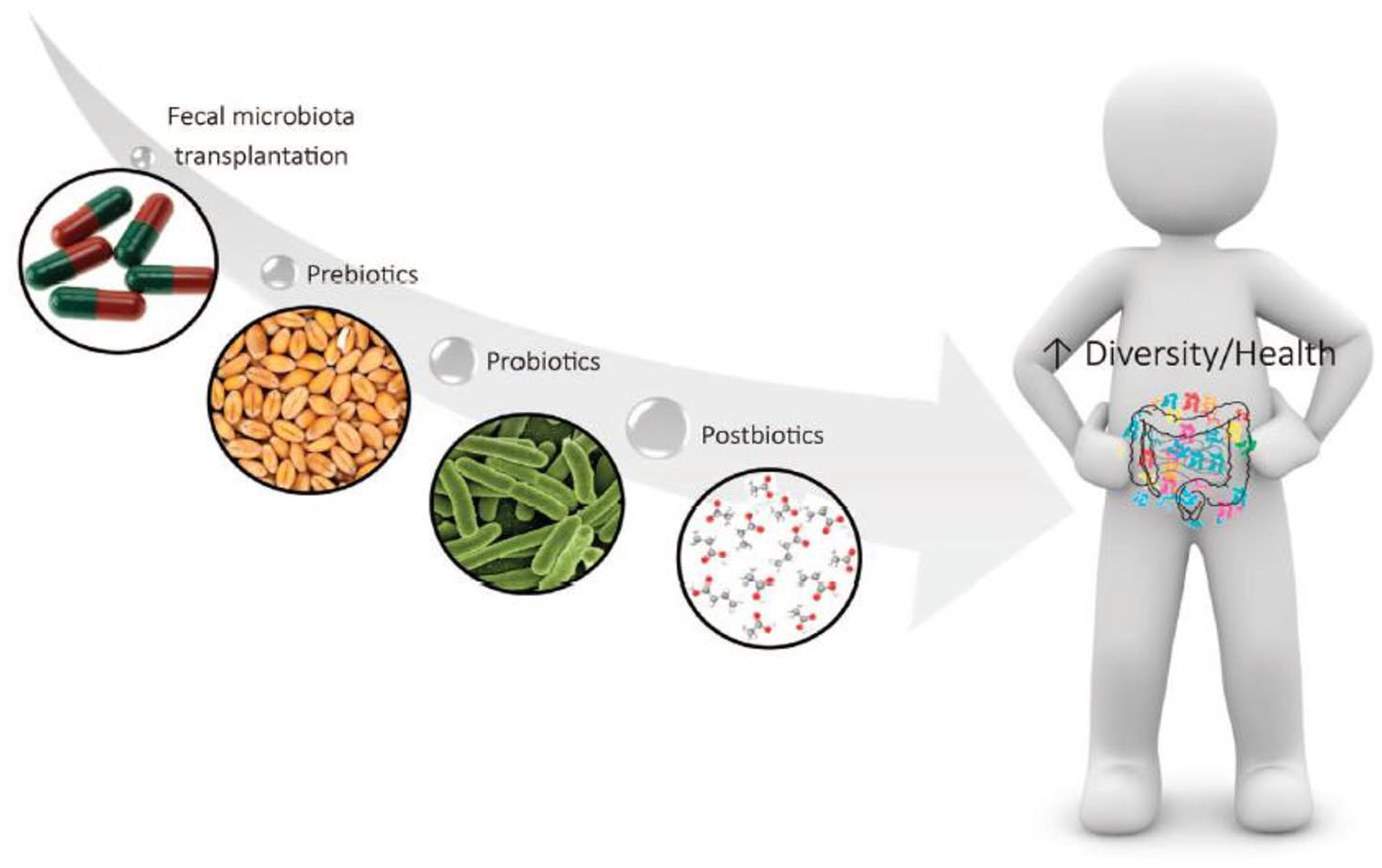
Mechanisms of gut microbiota modulation. 9 Reproduced with permission from Wiley–Blackwell.
The microbiota microorganisms can be grown; therefore, they can be used as probiotics in pills, or they can be included with food. Given the importance of microbial diversity, a single microorganism may not work effectively, but rather an entire group of microorganisms will provide maximum health benefit. Currently, yogurts and probiotics are beginning to introduce multiple strains of microorganisms. 1 The ability to modify the composition and the metabolic signatures of this microbial population is now possible through dietary and non-dietary interventions.10,18 Components which can beneficially modify the microbiota have been studied in the last 20 years. Currently, FOS, inulin and GOS are the most widely studied for their favorable effects on the growth of Lactobacillus and/or Bifidobacterium spp. 10
All interindividual variability of the gut microbiota can be classified into three groups, called enterotypes, which can be defined as a network of microbial populations dominated by the presence of one of these three genuses: Bacteroides (enterotype type 1), Prevotella (enterotype type 2), and Ruminococcus (enterotype type 3), probably related to long evolutionary dietary patterns. Enterotype type 1 has been associated with a diet rich in protein and fat, and enterotype type 2 is more often associated with the consumption of carbohydrates. Specialized enterotype 3 is the breakdown of mucin, which also stimulates mucous secretions in the body and favors the absorption of beneficial nutrients. Although the bacterial composition changes over 24 h, the enterotypes remain stable during a 10-day diet.6,7,19,20
Benefits of probiotics, nutribiotics, and pharmabiotics
There are six general mechanisms through which probiotics perform their beneficial effects, and there are essential differences between probiotic species and their strains.3,7,12,13
(1) Antimicrobial effects: probiotics can have the following antimicrobial effects: intestinal lumen alterations, production of antimicrobial molecules, inhibition of pathogen adhesion and cell invasion, competitive inhibition of pathogens, and antitoxin effects. These effects can result in intestinal pH reduction, production of bacteriocins, defensins and conjugated bile acids, competition for adhesion sites and resources (iron and nutrients), production of antitoxins, toxin expression prevention, and interference with the host’s response to toxins, thereby preventing C. difficile-associated diarrhea (CDAD), antibiotic-associated diarrhea (AAD), and infectious diarrhea (Figure 3).
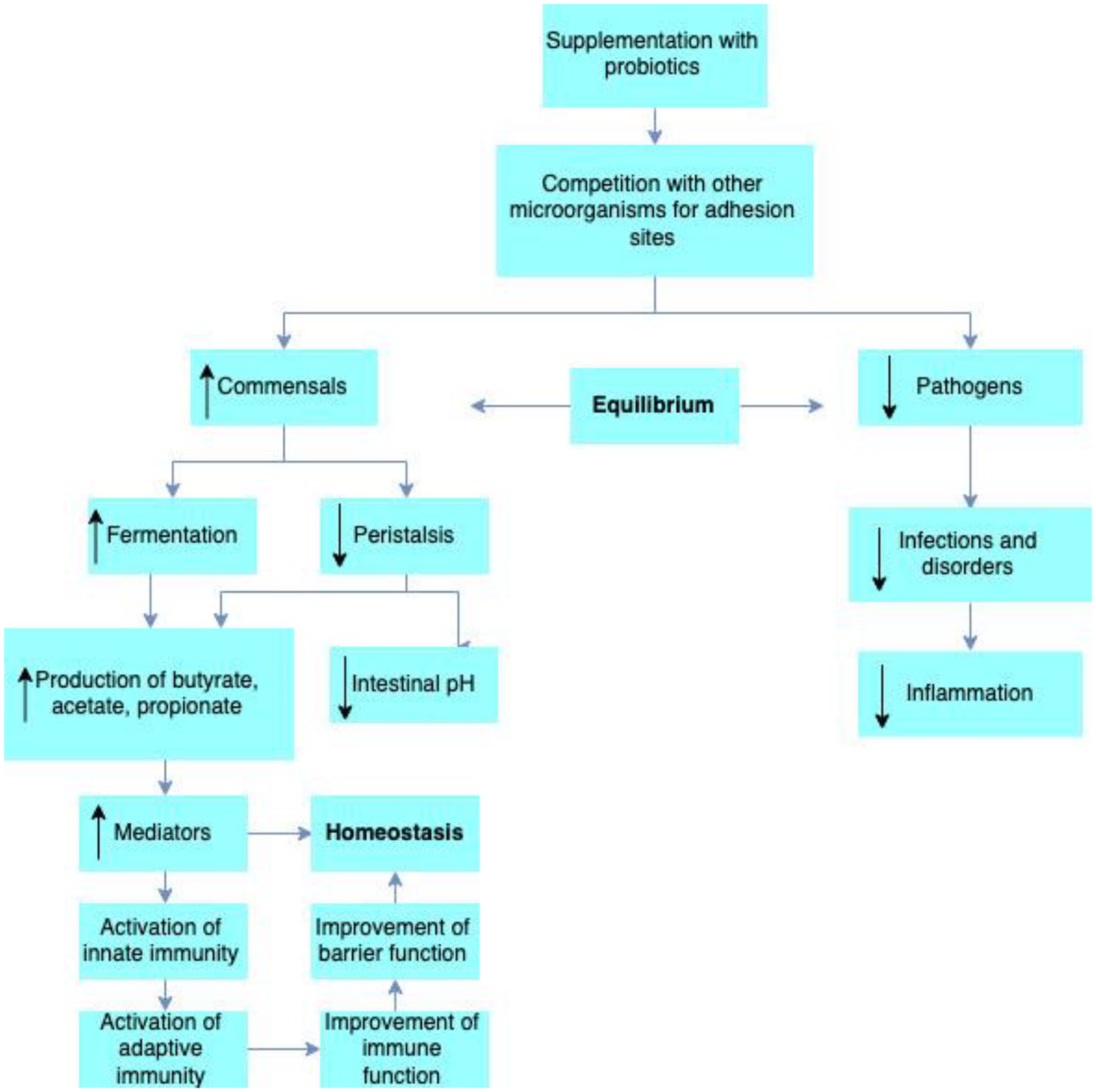
Probiotics’ action mechanisms in homeostasis maintenance. Modified, with permission from Wageningen Publishers. 3
(2) Inhibition of bacterial toxins production: probiotics can absorb and fix toxins to their cell wall, resulting in less intestinal absorption of toxins. Probiotics can also metabolize mycotoxins (e.g. aflatoxins).
(3) Competition with pathogens for adhesion to the epithelium and nutrients: coaggregation of probiotic strains can lead to the formation of a protective barrier over the intestinal epithelium which prevents colonization with pathogenic bacteria.
(4) Strengthening of the mucosal barrier integrity: increased mucus production can reinforce the epithelium barrier, disturbing the surface proteins, and leading to strengthening of the narrow intercellular joints and secretion of water and chloride, which, in turn, has an influence over the mucus interaction between cells and cell stability, and increases the function of the intestinal epithelium.
(5) Influence over other body organs through the immune system and production of neurotransmitters: gamma-amino-butyric acid (GABA), tryptophan, catecholamine, acetylcholine, and 5-hydroxytryptamine (5-HT or serotonin).
(6) Immunomodulation: adhesion of probiotics to the epithelium results in SCFA production with a consequent reduction in the production of pro-inflammatory cytokines, increased anti-inflammatory cytokines, priming of dendritic cells, induction of regulatory T lymphocytes, and an impact on B lymphocytes. These events can lead to a reduction of apoptosis mediated by tumor-necrosis-factor-alpha, increase production of interleukin-10 and antibodies, as well as an increase in secretory immunoglobulin A, resulting in the prevention of atopic dermatitis, CDAD, AAD, infectious diarrhea, and cancer.
The immunostimulant effect which is induced by probiotics is also displayed by increased immunoglobulin production, increased activity of macrophages and lymphocytes, as well as stimulation of interferon production. The immunomodulatory effects of the gut microbiota, including probiotic bacteria, are based on three apparently contradictory phenomena:
induction and maintenance of immunotolerance to environmental antigens (ingested and inhaled);
induction and control of immunological reactions to bacterial or viral pathogens;
inhibition of auto aggressive and allergic reactions.
The positive effects of probiotics can be used to restore the natural microbiota after antibiotic therapy. Another function is to counterattack pathogenic intestinal microbiota activity introduced by food and contaminated environmental elements. Therefore, probiotics can effectively inhibit the development of pathogenic bacteria such as Clostridium perfringens, Campylobacter jejuni, Salmonella, Escherichia coli, several species of Shigella, Staphylococcus, and Yersinia, thus preventing food poisoning. 12
A positive effect of probiotics has also been confirmed in digestive processes, the management of food allergies, candidiasis, and tooth decay. Probiotic microorganisms such as Lactobacillus plantarum, Lactobacillus reuteri, Bifidobacterium adolescentis, and Bifidobacterium pseudocatenulatum are natural producers of B-group vitamins. Likewise, they increase the efficiency of the immune system, the absorption of vitamins and minerals, and stimulate the generation of organic and amino acids. Moreover, probiotic microorganisms can produce enzymes such as esterase, lipase, and coenzymes A, Q, NAD, and NADP. Some products of probiotic metabolism can also have antibiotic (acidophilin, bacitracin, lactacine), anticancer, and immunosuppressant properties. 12
Thus, probiotics can present nutritional and/or therapeutic properties. For this reason, the concepts of nutribiotics and pharmabiotics emerged. A nutribiotic comprises probiotic microorganisms or its bioproducts, which are considered to have nutritional properties. Nutribiotics can be present in food, food products, or dietary supplements, and they are subject to sanitary regulations required to guarantee food safety and nutritional guidelines. Consequently, nutribiotics satisfy three criteria: (a) they provide benefits in the form of food or dietary supplements; (b) they work as a therapy for nutritional problems and, (c) they contribute to the maintenance of human health. 16
Nutraceuticals are defined as food or dietary components that play a beneficial role in modifying and maintaining physiological function in order to sustain human health; hence, nutribiotics can be classified as nutraceuticals.
What are lactobacilli?
Lactobacillales represent one of the most diverse and heterogeneous orders of lactic-acid-producing bacteria that include the genus Lactobacillus, among other producers of lactic acid (e.g. Streptococcus and Bifidobacteria). Lactic acid is the final product of the fermentation of carbohydrates. Lactobacillus spp. are facultative anaerobic, catalase-negative, Gram-positive, and non-spore-forming bacilli. 21
Along with other aerobic and anaerobic bacteria, Lactobacillus spp. are the first to colonize the human gut after birth. Lactobacilli are typical components of the gut and vaginal microbiota and, only occasionally, they play a role as pathogens. Lactobacilli have long been used to produce various milk derivatives, such as cheese and yogurt. They have a high resistance to very low pH conditions, which eases their passage through the stomach. Important characteristics of lactobacilli which confer therapeutic potential in humans include: 22
Resistance to pH. The pH of the human stomach is typically between 2 and 2.5. Lactobacillus delbrueckii and Lactobacillus gasseri survive in such conditions for at least 90 min, which is enough time for them to reach their site of action in the intestine. 23 The survival of lactobacilli in acid depends on the strain studied.
Resistance to bile. Conjugated and unconjugated bile acids show antibacterial activity and inhibit the in vitro growth of E. coli, Klebsiella spp., and Enterococcus spp. Although many lactobacilli show some resistance to bovine and porcine bile in vitro, they are resistant to human bile, which correlates with survival in the gastrointestinal tract. 24
Adhesion to the mucosa. Many probiotics do not colonize the hosts to whom they are administered; however, it has been shown that Lactobacillus rhamnosus GG and other lactobacilli can colonize the host for a significant period. 24
Inhibition of other bacterial growth. Lactobacilli inhibit the growth of several Gram-positive and Gram-negative bacteria by producing lactic acid, acetic acid, hydrogen peroxide, bacteriocins, and possibly biosurfactants. 23 In addition, the adhesion of lactobacilli to the mucosa can prevent other pathogenic bacteria from adhering, promoting their elimination. 16 For example, it has been shown that L. acidophilus ATCC4356 protects human cell lines from adhesion and invasion by enteroinvasive E. coli. These bacilli also protect the mucosa by inducing the production of intestinal mucins that act as a barrier. Mucins can inhibit viral replication. 22
Immunomodulation. One of the most interesting characteristics of lactobacilli is their ability to immunomodulate in order to initiate an anti-inflammatory response. There are multiple effects of different lactobacilli on immunity, including increased phagocytosis, the production of defensins, the secretion of lysosomal enzymes, increased vaccine immunogenicity, the induction of pro- and anti-inflammatory interleukins, the induction of T cells, and a reduction in intestinal permeability. 22
Indications for and safety of lactobacilli
The Mexican Consensus on Probiotics notes that gastrointestinal disorders in which the benefit of lactobacilli has been demonstrated include the following: 25
AAD;
acute infectious diarrhea in children and adults;
prevention of nosocomial diarrhea in children;
prevention of recurrence of diarrhea in children and adults due to C. difficile;
avoiding adverse events from the eradication of Helicobacter pylori;
irritable bowel syndrome;
chronic constipation in adults;
lactose intolerance;
concomitant use with standard therapy for the induction or maintenance of remission in mild or moderate chronic non-specific ulcerative colitis in adults;
use after treatment with antibiotics, induction or maintenance of remission of pouchitis in adults;
prevention of necrotizing enterocolitis in preterm infants;
fatty liver;
hidden and manifest hepatic encephalopathy;
in lactating women or infants at high risk of developing an allergy.
Safety of lactobacilli
Probiotics are used widely and their safety has been proven in millions of individuals for many years. Nevertheless, it is important to consider that, since they are bacteria, there is always the possibility that probiotics can behave as infectious agents. Reports of severe infections are rare in the literature and are almost always associated with comorbidity (cancer, cirrhosis, cholecystolithiasis). In a study of 1176 patients, bacteremia associated with probiotics occurred in 0.2%. 26
Lactobacillus acidophilus
L. acidophilus, originally named Bacillus acidophilus, was initially isolated from the human gastrointestinal tract (infant stools) in 1900 by Moro. 27 Almost 80% of the yogurts produced in the USA contain L. acidophilus. Isolates of L. acidophilus are also part of the natural human microbiota and have been cultivated from the oral, digestive, and vaginal areas. 27
L. acidophilus is a short (2–10 μm), Gram-positive bacillus that grows optimally from 37 to 42°C and can develop at temperatures as high as 45°C. It reaches its highest growth with a pH between 5.5 and 6.0, and its growth ceases at pH 4.0. L. acidophilus is an obligate homofermentative organism that ferments carbohydrates to produce lactic acid, and is one of the least tolerant LABs to oxygen. 27
Even though L. acidophilus has been isolated from multiple origins associated with humans, Claesson’s characterization established that its environmental space is the gastrointestinal tract. Studies show that dietary ingestion is the main factor in acquiring human carriage of L. acidophilus. 27
L. acidophilus is one of the main commercial species of LAB available in products that include milk, yogurt, infant formulas, and dietary supplements with probiotic effects. 27 Its slow growth in milk means that most fermentation in dairy products is achieved with an initial culture of yogurt (e.g. L. delbrueckii subspecies bulgaricus and S. thermophilus), and L. acidophilus is subsequently added for its probiotic value. 27
The strain L. acidophilus LB constitutes the strains Lactobacillus fermentum and L. delbrueckii. Both strains were isolated by the National Collection of Cultures of Microorganisms of the Pasteur Institute, where they are registered with reference number MA65/4E, and characterized in Germany by the Deutsche Sammelung von Mikroorganismen und Cell Culturen. In additionally, the Faculty of Pharmacy of the National Institute for Health and Medical Research confirmed that its pharmacological activity is sustained. 28
It is important to differentiate between probiotics (live organisms) and heat-treated strains, where the organisms are dead.27,29
The characterization of heat-treated strains can be divided into two broad categories. The first category includes probiotic physiology that can be demonstrated in vitro, such as product stability, resistance to bile, resistance to low pH, adhesion to human colonocytes in cell cultures, antimicrobial production, and lactase activity. The second category includes the main probiotic effect that can be observed in the context of nutrition studies, such as mediation of the immune response, decreased serum cholesterol, improved lactose metabolism, and the prevention or treatment of infections. 27
As mentioned previously, when L. acidophilus LB is heat-treated (inert organisms) and lyophilized, it cannot be considered a probiotic since it does not fit the definition;29,30 however, it fulfills two previously mentioned criteria of probiotics; that is, it provides physiological and pharmacological benefits (prophylactic and therapeutic) for certain diseases.15,16
L. acidophilus LB owes its antibacterial activity mainly to the mechanisms of action detailed below and illustrated in Figure 4: 29
It has similar activity to antibiotics. Secreted molecules present in the culture of L. acidophilus LB exert a time-dependent killer activity against the main enterovirulent bacteria (Salmonella typhimurium, Listeria monocytogenes, Shigella flexneri, Yersinia enterocolitica, enteropathogenic E. coli, and H. pylori), luminally localized and bacterial pathogens attached at the brush border or internalized in polarized intestinal epithelial cells.
It has intravacuolar bactericidal activity. Demonstrated effect against S. typhimurium.
It has adhesive and cytoprotective properties. Creation of a biofilm that protects enterocytes against diffusely adherent E. coli associated with diarrhea, enterovirulent E. coli, S. typhimurium, L. monocytogenes, and Yersinia pseudotuberculosis.
It has bacteriostatic action; its effect against S. typhimurium has been demonstrated.

Summary of the mechanisms of action of Lactobacillus acidophilus LB. Reproduced with permission from SAGE. 29
Safety of L. acidophilus LB, scientific support
A review of 57 clinical trials showed that the administration of probiotics and/or synbiotic organisms in immunocompromised adults (human immunodeficiency virus infection, critical, surgical, autoimmune disease patients) is safe. 14 In particular, the safety of heat-treated and lyophilized L. acidophilus LB has been demonstrated in two controlled clinical trials, with no adverse events being reported. 29
In addition, the use of heat-treated and lyophilized L. acidophilus induces protection against Candida albicans in immunodeficient mice. 31 The administration of dead organisms as probiotics has the enormous advantage of being a safer option. 31 In Peru, a controlled clinical trial was conducted in 80 infants, aged between 3 months and 4 years, with acute diarrhea of presumably infectious etiology lasting less than 72 h. Individuals received 20 trillion units/day of the Lactobacillus LB strain and 320 mg of culture medium used with neutralized supernatant or placebo. At the time of enrollment in the study, children with diarrhea of more than 24 h had a shorter duration of diarrhea than the control group (p < 0.044). Lactobacillus LB was well tolerated, and only two patients, one in each group, experienced an adverse event. 32
In another controlled clinical trial, conducted in Ecuador, 80 infants aged 1–24 months with acute diarrhea, probably infectious, lasting less than 72 h, received 10 billion L. acidophilus LB plus 160 mg of spent culture medium, or placebo. In children who received L. acidophilus LB, the disease was shortened by 1 day compared with those who received placebo. No adverse events were reported. 33
In Thailand, a controlled clinical trial was also conducted in 73 infants aged 3–24 months with acute diarrhea of less than 5 days’ duration, who received L. acidophilus LB or placebo. The mean duration of diarrhea was lower with L. acidophilus LB, especially in infants who had not received antibiotics before their enrollment in the study. No adverse events were reported. 34
On the other hand, Xiao et al. conducted a controlled clinical trial with L. acidophilus LB in subjects older than 16 years with chronic diarrhea. Patients received either lyophilized heat-killed L. acidophilus LB or a reference drug of the same class containing living lactobacilli. No between-group difference was found in the frequency of adverse events (p > 0.05). 35 Likewise, in another controlled clinical trial conducted in 200 adults with acute diarrhea, the administration of heat-treated and lyophilized L. acidophilus LB and its culture medium, reduced the duration of diarrhea compared with patients who only received antibiotics. 29
Benefits of L. acidophilus LB in different gastrointestinal pathologies
Acute diarrhea
Probiotics are used as a supplement to rehydration therapy in the treatment of infectious diarrhea. Results have been positive and remarkably consistent in terms of shortening the duration of the episode and reducing the frequency of evacuation.7,33
Randomized and non-randomized clinical trials have demonstrated the therapeutic efficacy of lyophilized and heat-treated cells and culture media together with oral rehydration solution therapy for the treatment of acute, well-established rotavirus-induced acute watery diarrhea in infants (Table 2).32,34–39 Thus, for example, in children with infectious diseases treated with L. acidophilus LB, Boulloche et al. 36 showed a reduction in the duration of diarrhea. In two studies with children with rotavirus-induced acute diarrhea managed with L. acidophilus LB, it was possible to reduce the number of stools per day and the duration of diarrhea. In two studies of bacteria-induced acute diarrhea in children treated with L. acidophilus LB, the authors reported a shortening in the duration of diarrhea.
Overview of clinical therapeutic effects of Lactobacillus acidophilus LB. Reproduced with permission from SAGE. 29

Drug: sachet or capsule pharmaceutical forms (Lacteol®) containing lyophilized and heat-treated combination of 10 billion L. acidophilus LB cells [L. fermentum (LB-f) + L. delbreuki (LB-d); ratio 95/5] and 160 mg of concentrated neutralized spent culture medium.
ORS, oral rehydration solution.
In a controlled clinical trial, oral rehydration plus placebo, and oral rehydration plus S. boulardii, were compared against oral rehydration plus a compound of L. acidophilus, L. rhamnosus, Bifidobacterium longum, and S. boulardii in infants aged 1–23 months with acute rotavirus diarrhea. Although both probiotics improved the condition, the mean duration of diarrhea and fever was lower with products containing a single probiotic. 40
A systematic review and meta-analysis of controlled clinical trials documented that the use of L. acidophilus LB, compared with placebo, reduces the duration of diarrhea associated with acute gastroenteritis in hospitalized infants. 41 The European Society of Pediatric Gastroenterology, Hepatology, and Nutrition recommends the use of L. acidophilus LB in the management of acute diarrhea, among other conditions, in addition to oral rehydration. 30
Chronic diarrhea
A controlled, randomized clinical trial of 137 patients with chronic diarrhea compared the administration of two capsules per day of L. acidophilus LB versus five live Lactobacillus chewable tablets three times a day for 4 weeks. The frequency of evacuations and stool consistency, abdominal pain, distension, and rectal urgency were recorded. At the second and fourth weeks of therapy, the evacuation rate was significantly lower in the group treated with L. acidophilus LB than in the comparator group (1.88 ± 1.24 versus 2.64 ± 1.12 and 1.39 ± 0.92 versus 2.19 ± 1.05, respectively, p < 0.05). At the end of therapy, symptoms improved markedly in L. acidophilus LB recipients, which indicates that it is more effective than lactobacilli in the treatment of chronic diarrhea. 35
Antibiotic-associated diarrhea
Antibiotic therapy alters the gut microbiota and results in diarrhea. In clinical studies that demonstrated their effectiveness, several types of probiotics were started 1–2 days after initiating antibiotic therapy with doses that ranged from 107 to 1010 per day and continued for 1–4 weeks after the discontinuation of the antibiotic. 42
In around one third of cases, diarrhea is related to the overgrowth of C. difficile, causing CDAD, but it can result in a more severe disease (colitis, pseudomembranous colitis, colon enlargement) with high mortality rates. Its incidence continues to increase in hospitals and long-term care institutions. 42
C. difficile is found in up to 50% of asymptomatic children and 15% of healthy adults. Its mere presence does not predict inflammation in the gut. Progression to the condition requires the vegetative growth of C. difficile and the secretion of its toxins. The single activity of toxins is enough to trigger the condition when they are released into the gastrointestinal tract. 17 Based on controlled clinical studies, a combination of probiotics, including L. acidophilus, is used in some Canadian hospitals. 42
Discussion
Even when there are studies showing the efficacy and safety of L. acidophilus in diarrheal diseases, these studies have some issues.36,40 Thus, in their classic double-blind controlled study, Boulloche et al. showed the efficacy of L. acidophilus, but they did not analyze the safety. 36 Grandy used a compound containing L. acidophilus, L. rhamnosus, Bifidobacterium longum, and Saccharomyces boulardii, making it difficult to differentiate their individual effects on the disease. 40 The Peruvian study only showed a marginal statistical difference in efficacy. 32 In the French study, Liévin reported good efficacy for L. acidophilus LB in the treatment of well-established, non-rotavirus diarrhea. 33
In its recent guidelines, the American Gastroenterological Association (AGA) suggests avoiding the use of probiotics in children with acute infectious gastroenteritis (conditional recommendation). In adults and children with antibiotic treatment, the AGA suggests the use of S. boulardii or L. acidophilus in some combinations over none or other probiotics for the prevention of C. difficile infection (conditional recommendation). In preterm (gestational age less than 37 weeks) and low-birthweight infants, the guidelines suggest using a combination of Lactobacillus with other species for the prevention of necrotizing enterocolitis over none or other probiotics (conditional recommendation). 43
However, in a recent systematic review, the authors found a total of four randomized clinical trials using non-viable L. acidophilus LB for the treatment of acute diarrhea in 224 children from different locations. The average time of treatment was 4.3 ± 0.47 days. Compared with the placebo group, the L. acidophilus LB group had a significant reduction in the duration of diarrheal episodes. 44 Only one study reported an evaluation of adverse events. 32 There were no significant differences between the experimental and control groups in regard to adverse effects. 32 The authors concluded that there is a need for more studies to determine the effects of different postbiotics.
Conclusion
Nowadays, it is recognized that it is important to maintain the gut microbiota through diet and, when, as a result of disease, antibiotic use, or other causes, dysbiosis develops through the use of supplements. These can be nutraceuticals or pharmabiotics. Currently, there is sufficient evidence to consider that the administration of L. acidophilus LB is effective and safe as an adjuvant in the treatment of acute diarrhea, chronic diarrhea, and AAD, even in the presence of immunosuppression, since it does not contain living organisms.
Footnotes
Acknowledgements
Under the direction of the authors, technical editorial assistance was provided by David P. Figgitt, PhD, ISMPP CMPP™, Content Ed Net, with funding from Laboratorios Carnot.
Conflict of interest statement
José María Remes Troche is a member of advisory boards for Asofarma, Takeda and Laboratorios Carnot and has given lectures for Asofarma, Takeda, Alfa Sigma, Sanfer, Menarini, and Laboratorios Carnot.
Enrique Coss Adame declares being a member of advisory boards for Takeda Mexico, Asofarma Mexico, and Grünenthal Mexico, and a speaker for Takeda, Asofarma, Grünenthal, and Alfa Sigma.
Miguel Ángel Valdovinos Díaz declares no conflicts of interest associated with this manuscript.
Octavio Gómez Escudero declares no conflicts of interest associated with this manuscript
María Eugenia Icaza Chávez declares no conflicts of interest associated with this manuscript
José Antonio Chávez-Barrera declares no conflicts of interest associated with this manuscript.
Flora Zárate Mondragón declares no conflicts of interest associated with this manuscript.
José Antonio Ruíz Velarde Velasco declares no conflicts of interest associated with this manuscript
Guillermo Rafael Aceves Tavares declares being a speaker for Laboratorios Carnot.
Marco Antonio Lira Pedrín declares no conflicts of interest associated with this manuscript.
Eduardo Cerda Contreras declares no conflicts of interest associated with this manuscript.
Ramón Isaías declares no conflicts of interest associated with this manuscript.
Héctor Guerra López and Rodolfo Solana Ortiz are employees of Laboratorios Carnot.
Funding
The authors received no financial support for the research, authorship, and/or publication of this article.