




Abstract
The barebow archery shooting style previously limited the stabilisation system to weights connected to the riser, which is the central part of the bow, but recently the use of damping devices has been allowed. No scientific study is available to evaluate the effect of damping on the archers’ shooting experience. A human-centred methodology was developed to address this problem. Objective metrics (measurable quantities) and subjective metrics (archers’ sensations using the equipment) were defined. These metrics were correlated to obtain a deeper understanding of the problem. Fifty-one weight configurations were tested for mechanical vibrations and sound of the bow on shooting. The mechanical vibration was measured at five positions on the bow. Fifteen configurations were selected and tested by eight archers to evaluate the subjective metrics. The results show that dedicated vibration-damping devices are capable of significantly reducing the mechanical vibrations and the intensity and pitch of the sound of the bow on shooting. A strong correlation exists between reduced vibrations, lower intensity and pitch* of the sound of the bow and the quality of the shooting experience. The methodology used in this work was successful in fostering an understanding of the relationship between objective and subjective metrics on shooting. The results of this analysis could be used to improve existing designs or create new products for archery.
Keywords
Introduction
World Archery (WA) is the international federation responsible for the Olympic and Paralympic sport of archery. WA also organises international events, including a world championship, 1 for the three archery styles: compound, recurve and barebow. Recurve and barebow archers use the same type of bow, but in the barebow style use of the sight and the clicker are not allowed and the V-Bar stabilisation system of the recurve style is limited to simple weights attached to the riser (the central, rigid part of the bow). 2
The main functions of a stabilising system (weights added to the bow to stabilise its motion during shooting) are the control of the movement of the bow during the aiming phase, the control of vibrations, 3 and control of the dynamic action of the bow on string release.4,5
The dynamic behaviour of the bow on release is related to the weight configuration in comparison to the position of the centre of gravity (CoG) of the bow. A Cartesian coordinate system is defined as centred on the pressure button
6
(Figure 1). The
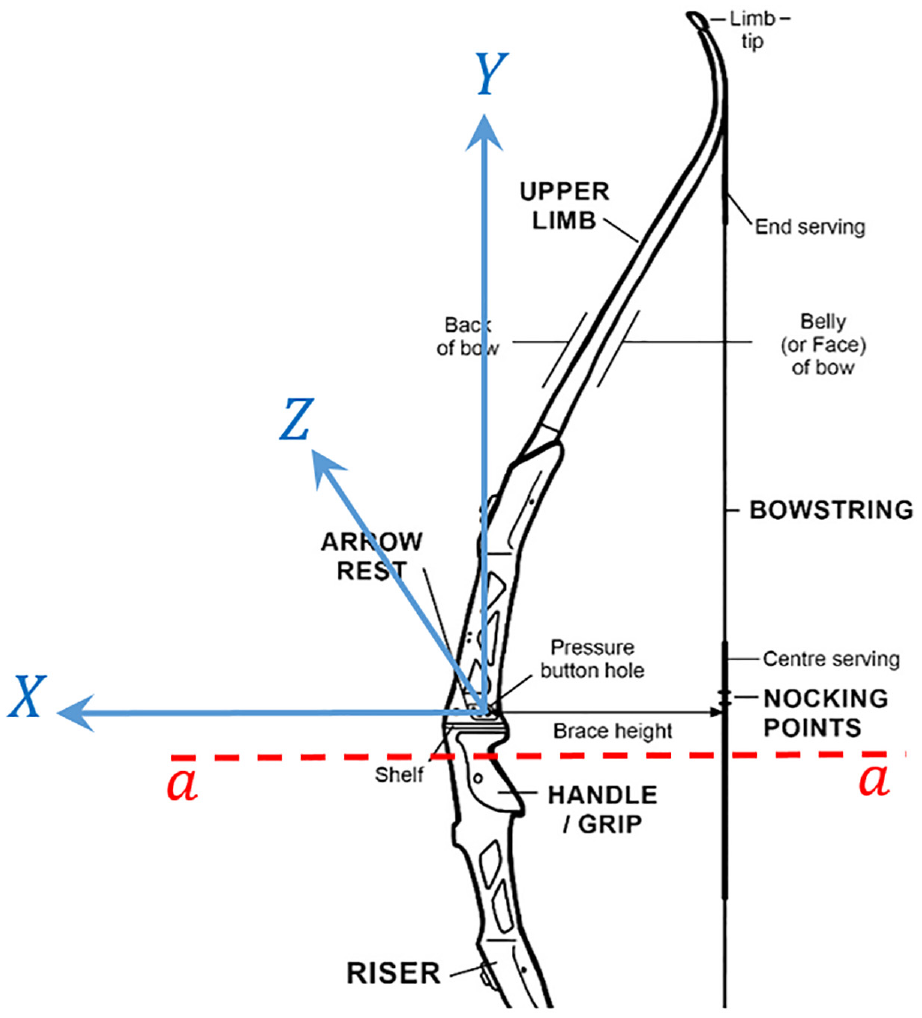
Global coordinate system. 7
Without stabilisation, the CoG of the bow is positioned at the same height as the handle (line
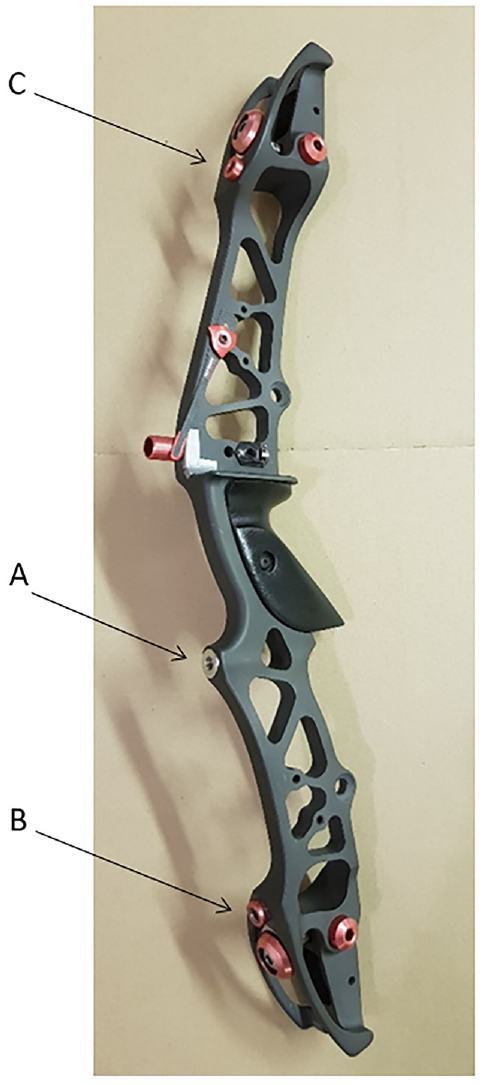
Weight attachment points A, B and C.
On the 7th of February 2020, WA introduced a new rule regarding weights and dampeners on the barebow style (Book 3, Version 2020-02-07):
11.4.6 No stabilisers are permitted.
11.4.6.1 Vibration dampeners are permitted. They may be installed in the riser by the manufacturer, or by attaching aftermarket dampeners directly to the riser or to weight(s). Any combination of weight(s) and vibration dampener(s) must pass through a ring with an inside diameter of 12.2 cm (+/- 0.5mm) without having to flex vibration dampeners to fit through the 12.2 cm ring. […] Weight(s) and dampener(s) may be added below and above the riser’s grip, but must not aid the athlete in aiming or ranging in any way.
2
Rule 11.4.6 opened the possibility for barebow archers to use damping devices on their bows together with the previously permitted weights. As found by Pietra et al., 9 there is an inverse correlation between the amplitude of the vibrations recorded on the bow and the comfort of shooting. It was expected by the authors that barebow archers would have adopted damping devices on their bow to take full advantage of the new rule. Nevertheless, of the 32 barebow finalists in the 2022 Lancaster Archery Classic for men 10 and women, 11 and the 2023 Lancaster Archery Classic for men 12 and women, 13 not a single archer introduced any damping in the bow apart from limb dampers.
In this paper, the effect of damping the weights attached to the riser is studied from both an objective point of view (measurement) and a subjective point of view (physical sensation while shooting) to understand what effects damping has on the behaviour of the bow, on the different phases of the shooting sequence and, ultimately, on the archer’s shooting experience.
Methods
In the following work, a two-fold methodology is developed to evaluate the effects of the introduction of damping on the barebow style. Initially, an engineering approach is developed which considers the effects of weight distribution and damping on the level of vibration in the bow and the sound of the bow. Subsequently, an archer-centred approach is developed to evaluate the impact of damping on the shooting sequence and the archers’ shooting experience. This two-fold approach is deemed to be necessary when trying to understand problems that involve human experiences. 9 The measurement of the effect of damping on the bow is useful from the engineering point of view (design of new equipment, optimisation) but does not describe the archer’s experience. Without considering the human aspect of the problem, the solution will be an interesting engineering exercise of limited value for the archery community.
The engineering approach was developed by defining objective metrics to be measured during the shooting of the arrow. The weight distribution on the riser affects the behaviour of the bow in three different ways: weight balance (affecting the aiming phase), vibrations (due to the release of the arrow) and dynamic behaviour (how the bow behaves after the release of the arrow). 9 Adding dampers to the weight affects principally the vibrations of the bow which can be further divided into mechanical vibrations and the sound of the bow on shooting. Consequently, the mechanical vibration and the sound of the bow on release were defined as objective metrics. The objective metric precision on target was not selected because the dampers do not affect the aiming phase and the impractical number of shots necessary to have statistical significance.14,15
Various weight configurations and levels of damping were analysed to understand the effect of damping on the vibration of the bow. The archer-centred approach was developed by administering a questionnaire to archers asking about their experience using the bow under a selection of weight configurations and damping levels previously studied in the scientific approach. The questionnaire asked about the physical sensation of shooting with a particular configuration of the stabilisation system. For this particular study, the archers were asked to evaluate the level of mechanical vibration of the bow, the sound of the bow on release for both intensity and pitch of the sound and to evaluate the overall quality of the tested configuration (subjective metrics). The study of the correlation between objective and subjective metrics gives insight into this problem seeking a relationship between what is measured and what is perceived by the archers.
Experimental set-up
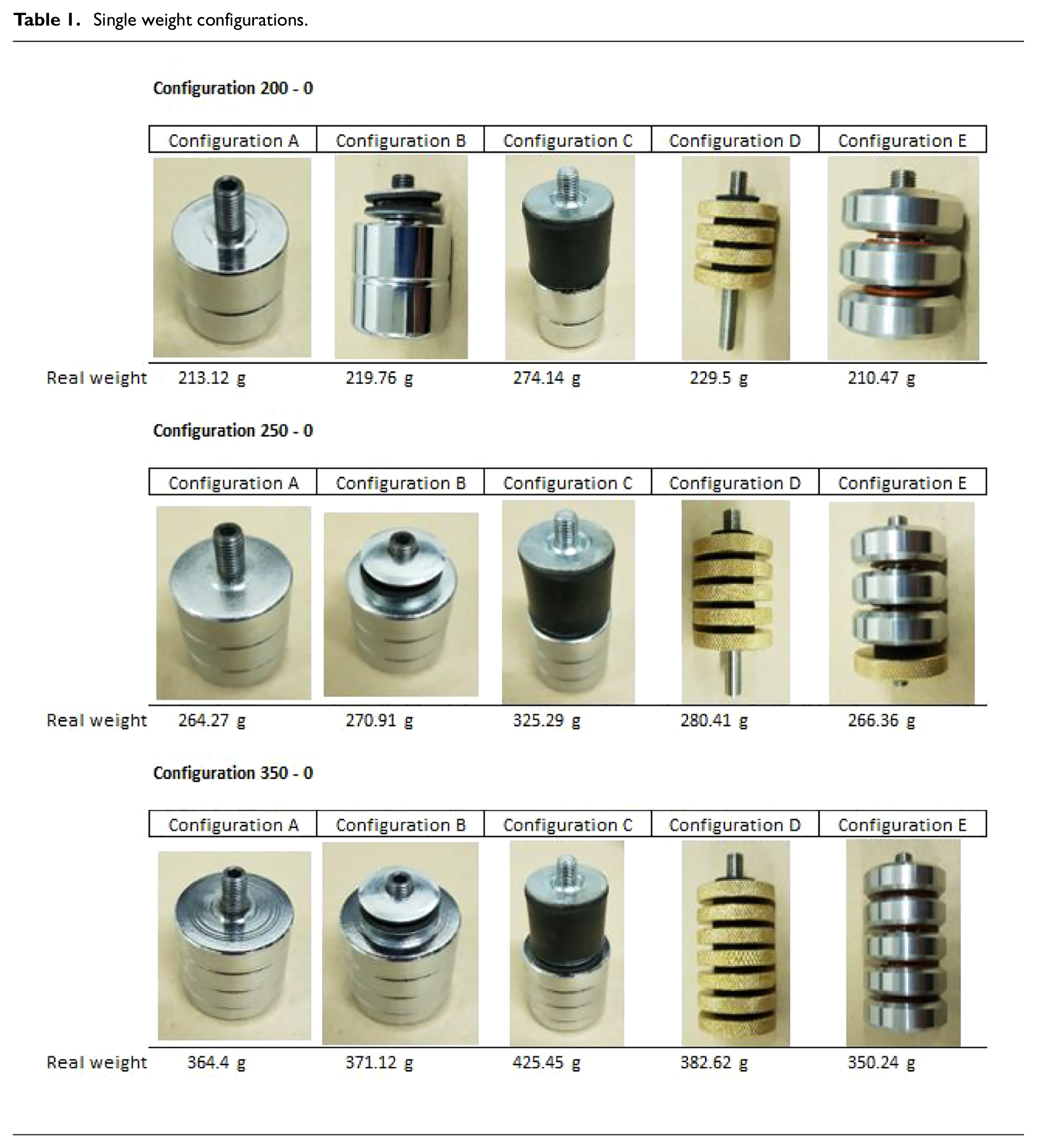
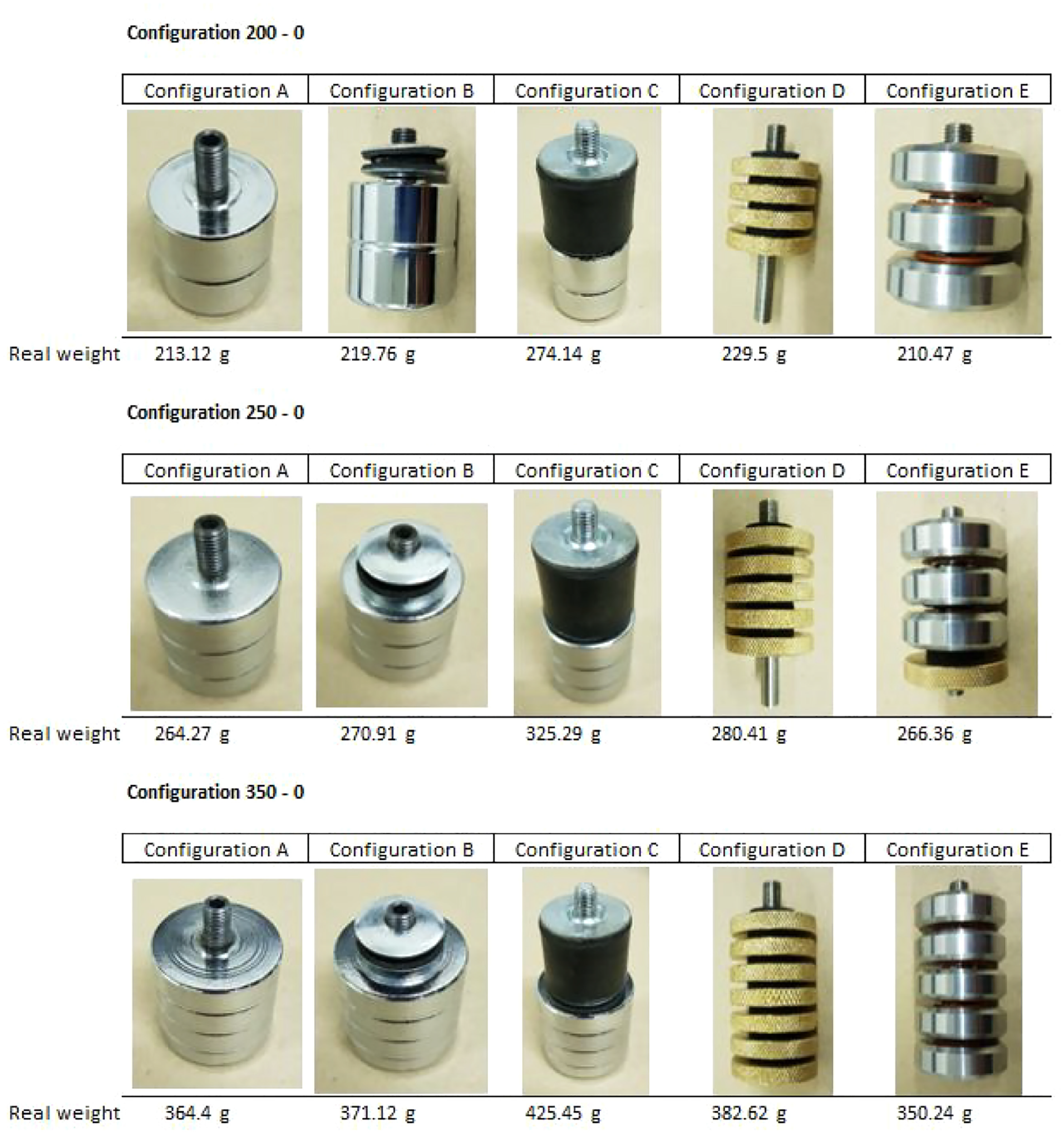
The riser used in the experiments was the Gray AIX 2019, 16 which is considered within the South African barebow community to be one of the best risers for this style. 17 The limbs were the Win&Win Limbs Wiawis NS Wood (long version, 32 lb nominal poundage). 18 Five different configurations, each with three different masses, were analysed for the single-weight configuration problem. In all cases, the weights were attached only to the centre attachment (Figure 2, ‘A’). Configuration A used a Gas Pro Barebow Weight 19 and served as a baseline. Configuration B added a 3.3 mm rubber washer enclosed by two steel washers and Configuration C added a vibration damper to the Gas Pro weight. Configuration D was created with 50 g brass discs separated by 3.3 mm rubber washers. Configuration E was created by stacking the Gray Dampering. 16 These configurations are presented in Table 1. The vibration damper available for testing is not compliant with the rules for the barebow style (WA rule 11.4.6.1, 12.2 cm ring rule 2 ) when connected to the Gas Pro weights (Configurations C). Configurations D and E in the 350-0 weight configurations are also not compliant. All these configurations were tested as technology demonstrators to compare the results with the baseline configurations. The real weight referred to in Table 1 measures the effective weight attached to the riser.
Single weight configurations.
Six different damper configurations, each having six different combinations of weights on the central and lower attachments (Figure 2, ‘A’ and ‘B’, respectively) were analysed for the double-weight configuration problem.
The first number in the configuration name refers to the nominal weight attached to the centre attachment, and the second number refers to the nominal weight attached to the lower attachment (Figure 2). Configuration A used two Gas Pro Barebow Weights, 19 which are weights that do not include damping, and was used as a baseline to compare the effects of damping. Configurations B to F had different damping elements included. Configuration B had a 3.3 mm rubber washer enclosed by two steel washers added onto each weight. Configuration C was created by stacking 50 g brass discs between 3.3 mm rubber washers. Configuration D was created by stacking the Gray Dampering. 16 Configurations E and F each used a Gas Pro weight and Gray Dampering weights: the (D) in Configurations E and F indicates which of the two weights was the damped one. These configurations are documented in Table 2.
Double weight configurations.
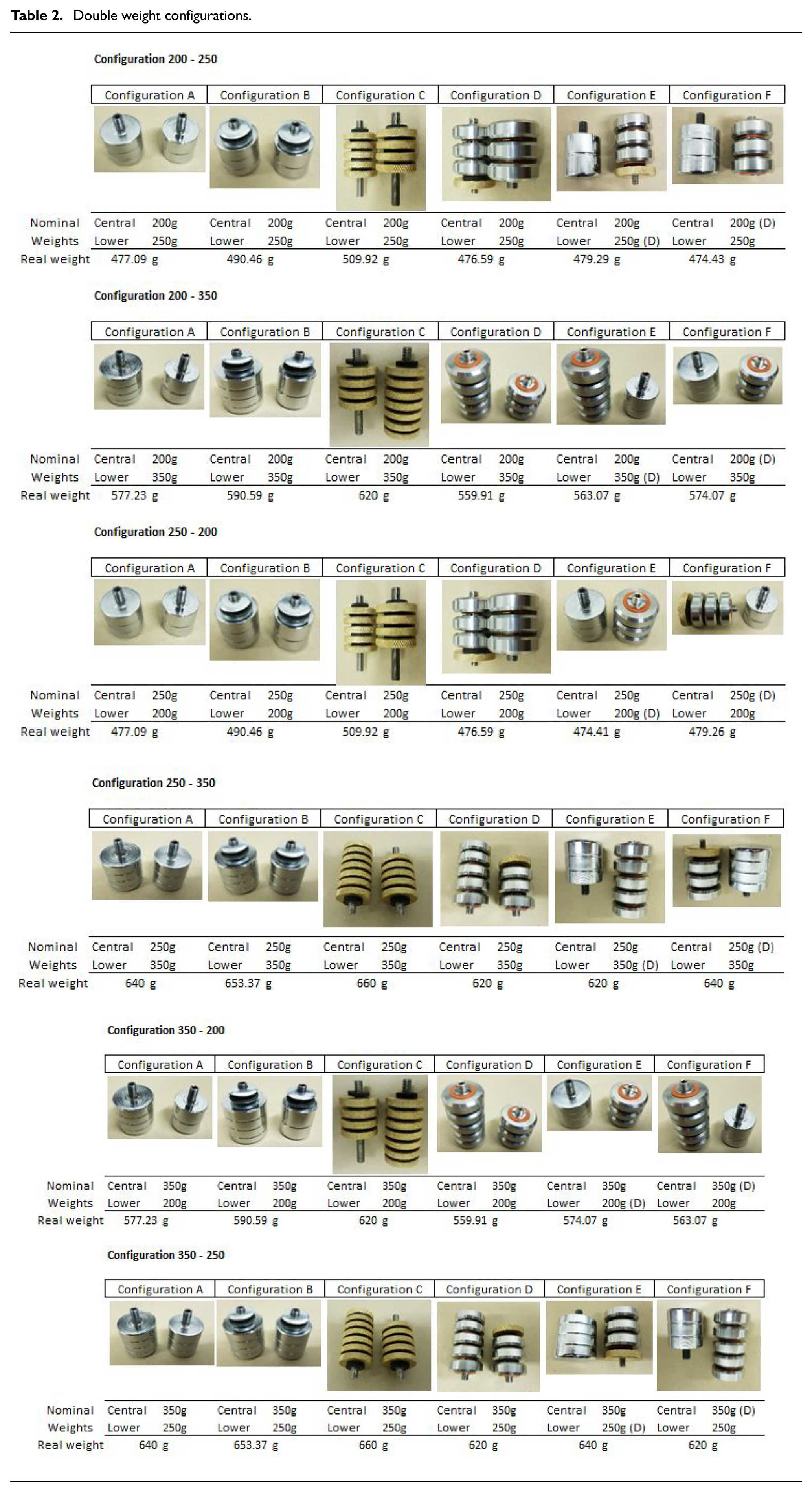
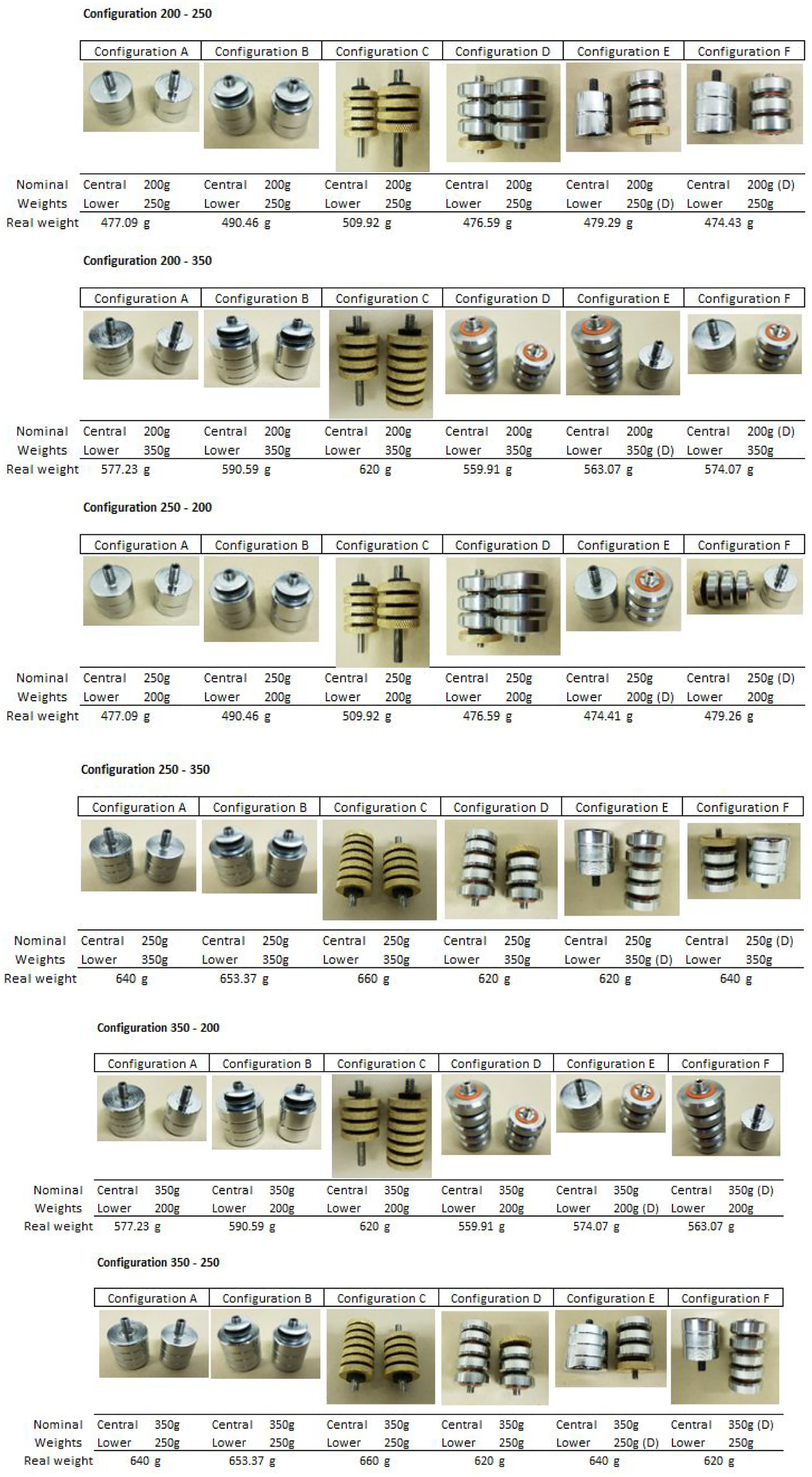
The maximum number of Gray Damperings that can be stacked on the Gray riser according to WA rules (12.2 cm ring rule 2 ), is four on the central attachment and three on the lower attachment, so the five Damperings necessary for the 350 g weight exceeds the maximum dimensions allowed by WA rules. The same problem arises with the 350 g weight created by stacking 50 g brass discs. Nevertheless, these configurations were tested for comparison with the undamped baseline configuration.
The nominal weight reported for the 36 double-weight configurations recorded in Table 2, refers to the mass of the attached weight while the real weight measures the sum of the effective weights attached to the riser.
Of all the proposed configurations, only the Gray Dampering is a commercially available solution designed for archery. Three years after the first publication of the 11.4.6 WA rule, the major archery brands do not offer any damped weights for the barebow style.
The arrows were shot using the standard hooking for the barebow style: the three-fingers-under-the-arrow style. To avoid inconsistency between the tests, gap-shooting was preferred as the aiming style compared to string-walking. 20 In the gap-shooting aiming style, the archer places the point of the arrow on a different area of the target to compensate for the shooting distance. In the string-walking aiming style, the archer places the point of the arrow on the centre of the target and increases the distance between the arrow and the index finger to compensate for the shooting distance. This latter aiming system was not utilised because it could change the tension of the lower limb (the limbs are the flexible part of the bow) and its mechanical vibrations. The bow was set up for the barebow style and tuned using the procedure described by Kaminsky. 21
Objective metric: Mechanical vibrations of the bow on shooting
As reported by Pietra et al., 9 archers perceive the vibration of the bow in two different ways: airborne sound and mechanical vibration of the riser. The sound is assumed to originate from the vibrating part of the bow, mainly the string and the limbs. The mechanical vibration of the riser is perceived through the archer’s fingers, wrist, arm and shoulder and only a low-frequency vibration lower than 500 Hz can be perceived. Accordingly, the researchers for this paper decided to measure the mechanical vibration of the bow independently from the sound of the bow.
The vibrations associated with the shooting phase were recorded using a triaxial accelerometer from PCB Piezotronics 22 and a data acquisition (DAQ) system from National Instruments. 23 The nominal signal sampling rate was 12,000 Hz and the signal was recorded over a period of 15 s.
The three acceleration signals were captured at five different positions on the bow (Figure 3). The test was repeated three times for each position of the accelerometer and every weight configuration defined in Tables 1 and 2. Position 1 of the accelerometer was defined on the upper limb, at a distance of 350 mm from its attachment bolt. Position 2 was defined on the riser, 40 mm from the top of the riser. Position 3 was defined on the riser, next to the second hole of the pressure button. This position is close to the archer’s hand position on the bow. Position 4 is symmetric to Position 2 on the lower section of the riser. Position 5 is symmetric to Position 1 on the lower limb.
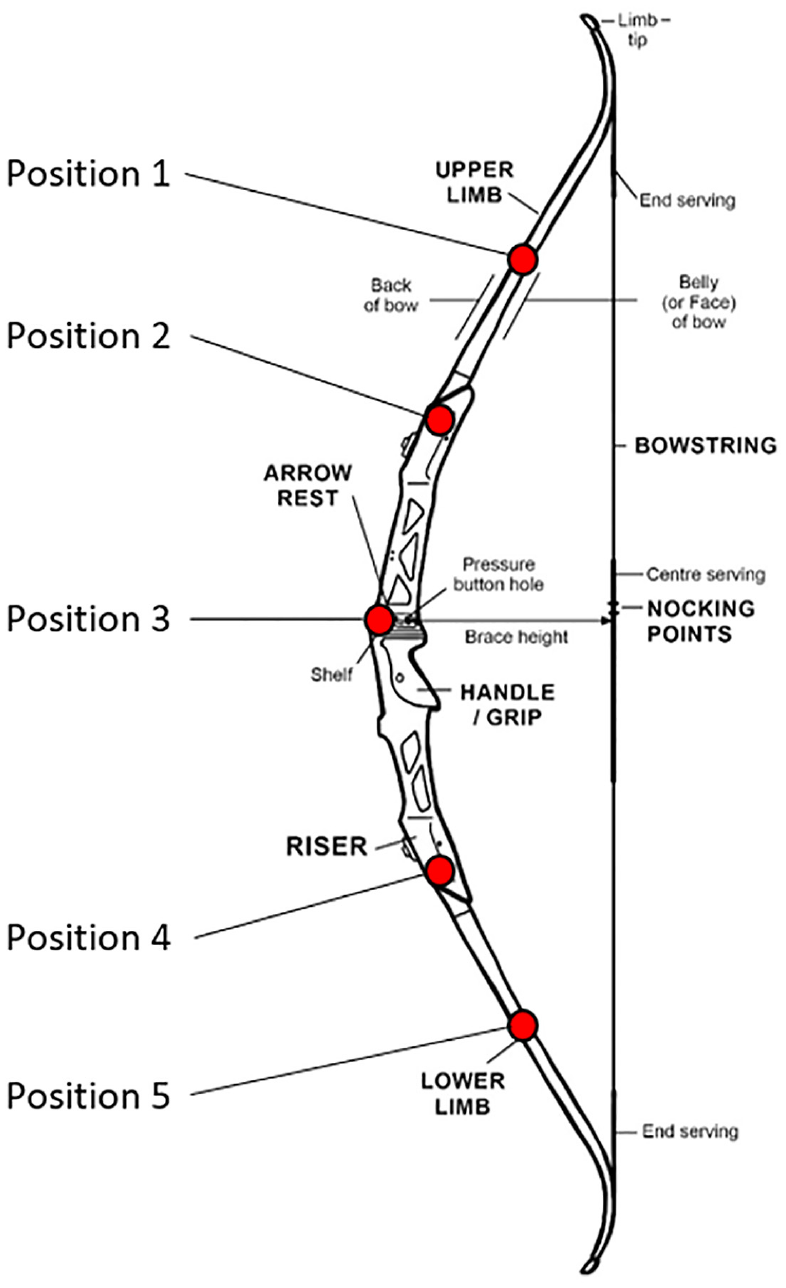
Positioning of the triaxial accelerometer on the bow. Definition of the five measuring positions.
The vibration measurement procedure and signal processing methods developed in prior work of the authors
9
were used. The mechanical vibration data were filtered with a lowpass filter at 500 Hz.24,25 The following data statistics were calculated: the Maximum to Minimum Difference (P2P), which is a measure of the maximum amplitude of the signals, in units of
P2P, RMS, Damage and Decay Time data were averaged across the three shots. Because the five measuring positions have different local coordinate systems, the data were rotated into the global coordinate system defined in Figure 1.
The following data are for Position 3 which is the closest to the archer’s hand (Table 3). All data, for the other positions, are reported in Appendix A.
Mechanical vibration, Position 3, data filtered with a lowpass filter at 500 Hz.
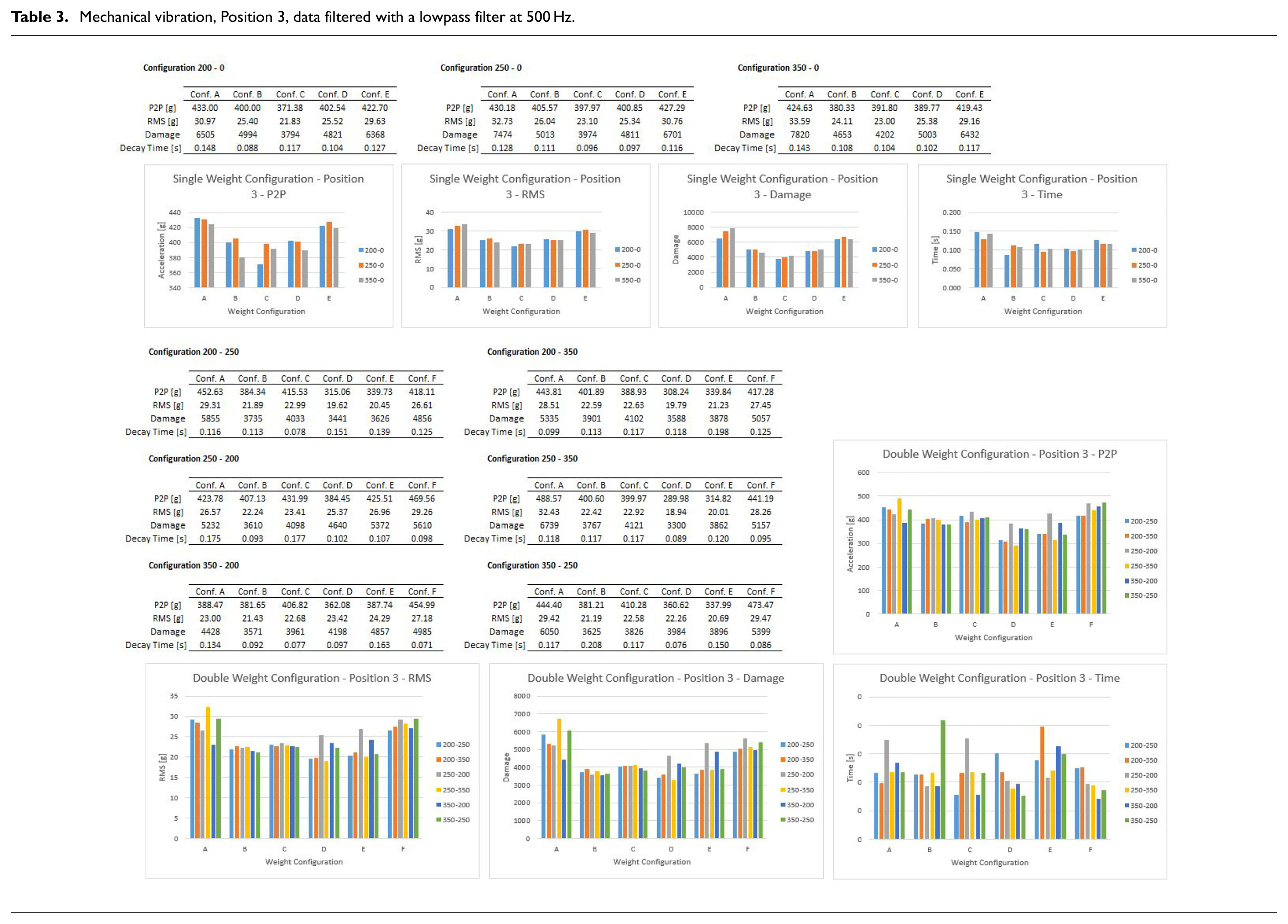
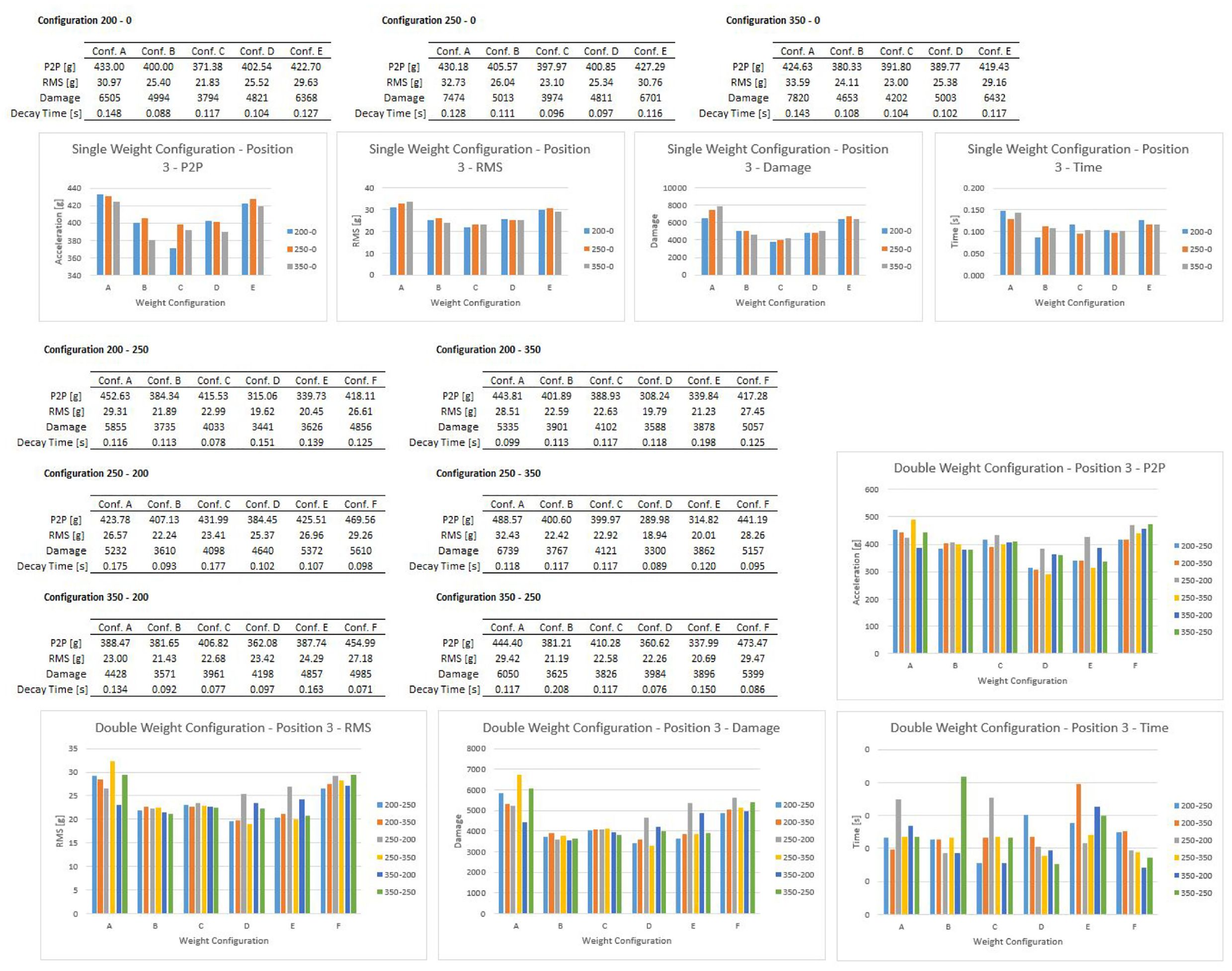
The data analysis for the single-weight configurations shows that every damped configuration performs better than the undamped baseline configuration (Configuration A) from the mechanical vibration point of view. The best-performing configuration is Configuration C (vibration damper). Although this technology demonstrator is not compliant with WA rules (12.2 cm ring rule), this configuration indicates the kind of solution required for barebow archers to minimise the mechanical vibration of the bow. For the double-weight configurations, Configurations B, C, D and E have better performance than Configuration A (undamped weights), with Configuration D (Gray Dampering) the best-performing of the solutions. Configuration F (damped weight on the centre attachment), performs similarly to Configuration A and is significantly worse than Configuration E (damped weight on the lower attachment). The data for the Decay Time do not follow the same trend as for the other measures.
Objective metric: The noise of the bow on shooting
The sound emitted by the bow on shooting was recorded with the GRAS 40PH-10 CCP Free-field Array Microphone 27 and a data acquisition (DAQ) system from National Instruments. 23 Three shots were recorded for each weight configuration and the recordings were trimmed to 0.5 s around the release (event duration). The measurements were recorded outdoors at the Archers of the Zoo Lake Club range (Johannesburg, South Africa) early in the morning to avoid other sources of sound. The three shots for the 200-0 weight version of Configuration A are shown in Figure 4. As reported in the figure, the three measurements of the sound of the bow on shooting are fairly repeatable and representative of each weight configuration.
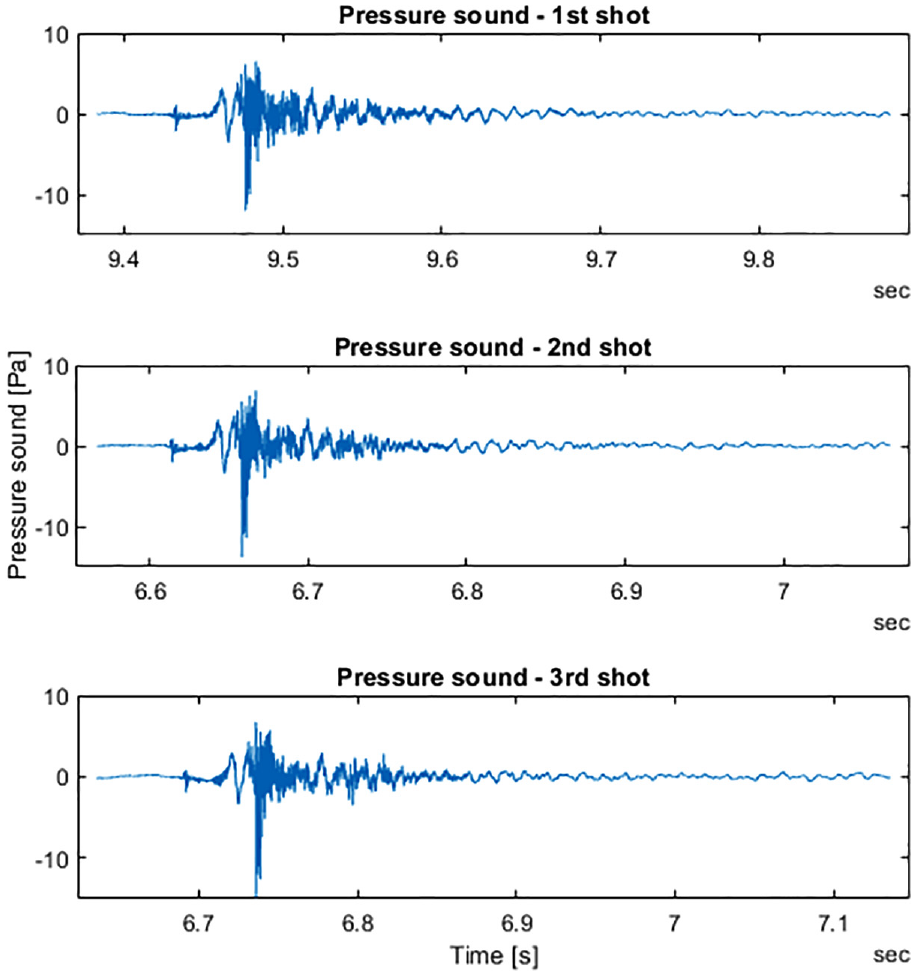
The three shots for the 200-0, Configuration A. 0.5 s recording.
The sound signal was filtered with an A-Weighted filter to account for the different sensitivity of the microphone compared to the human ear. The A-Weighted filter is a bandpass filter designed to simulate the perceived loudness of low-level tones to a human listener. The filter progressively de-emphasises frequencies below 500 Hz 28 as illustrated in Figure 5. The filter characteristics roughly represent the inverse of the hearing level curve with 30 dB at 1 kHz. The A-Weighting function is standardised in EN 60651. 29 The effect of the A-Weighting filter on the sound signal is shown in Figure 6 for the time domain, and in Figure 7 for the frequency domain.
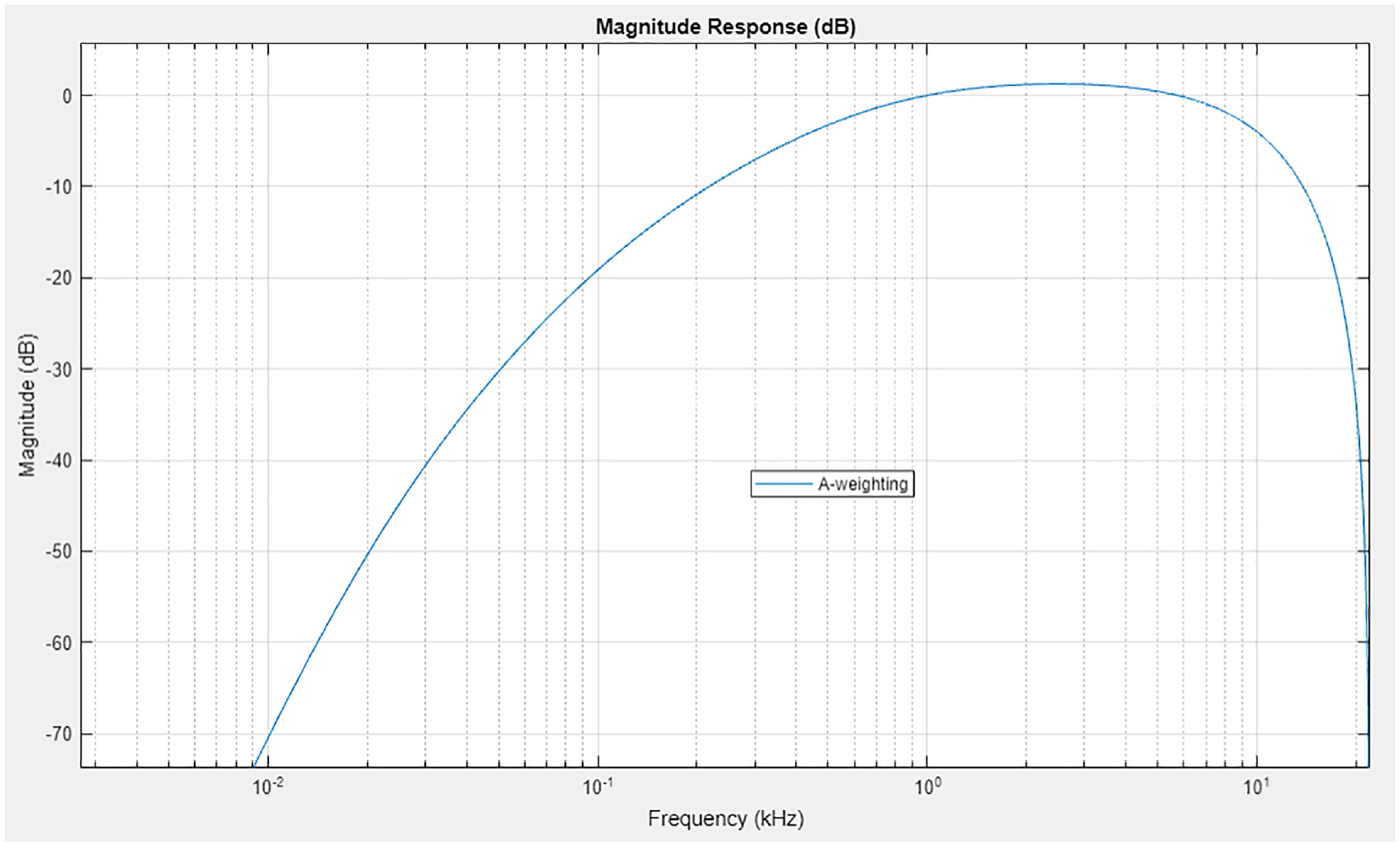
A-weighting filter. 28
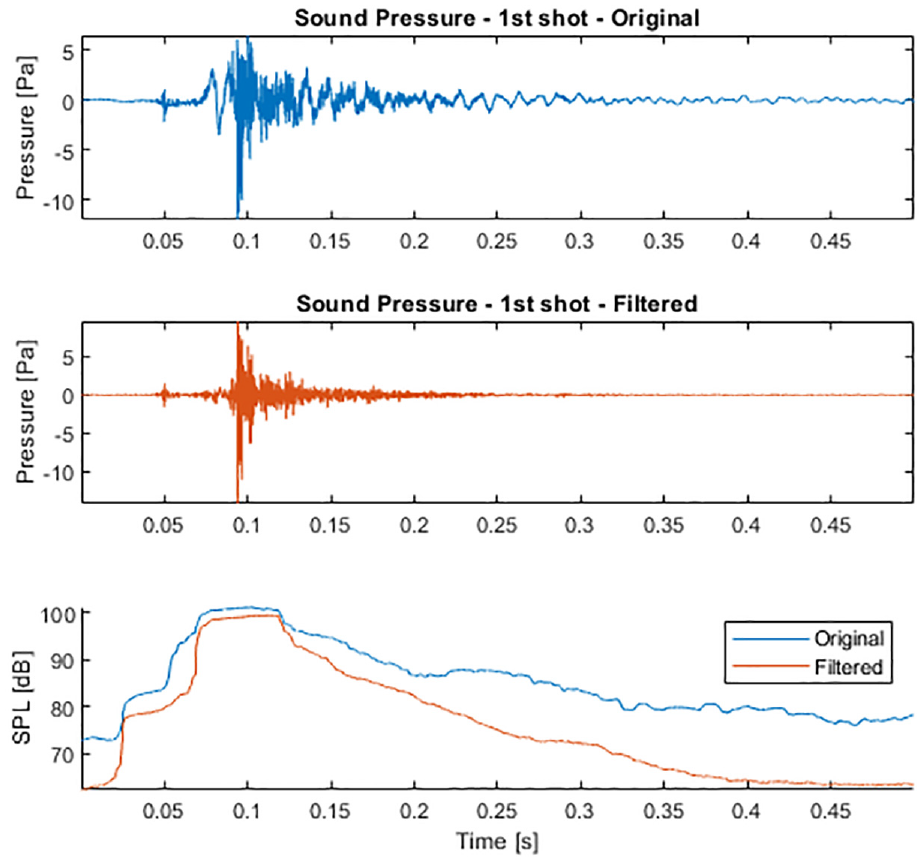
200-0, Configuration A – first shot signal filtered with an A-Weighted filter. Time domain.
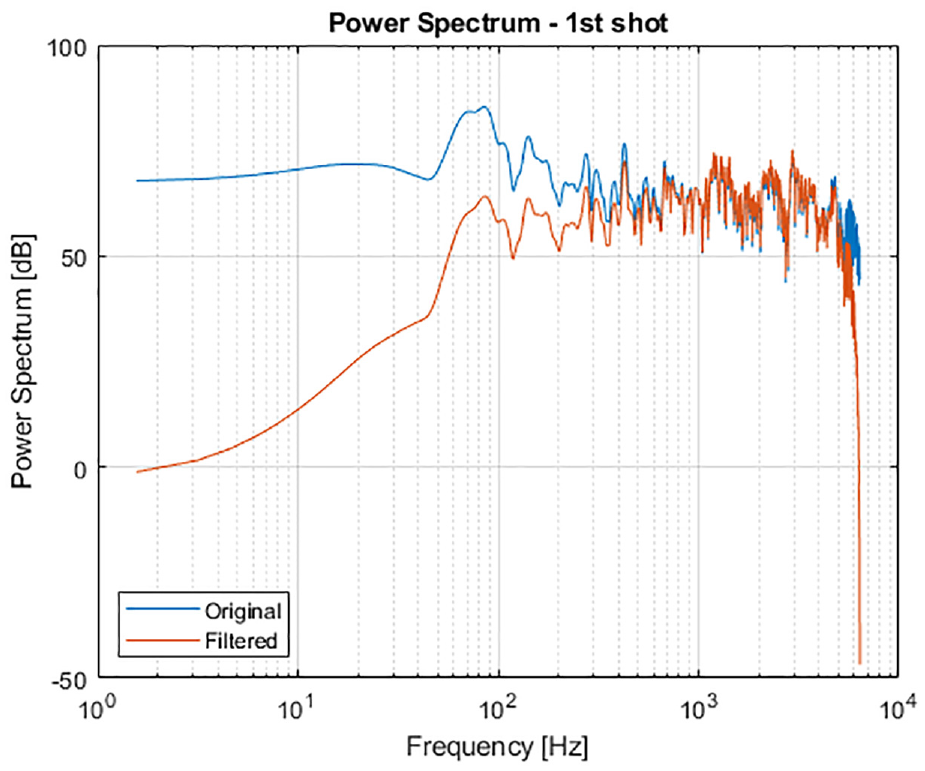
200-0, Configuration A – first shot signal filtered with an A-Weighted filter. Frequency domain.
The Maximum Sound Pressure Level (Max SPL) and the Equivalent Continuous Sound Level (
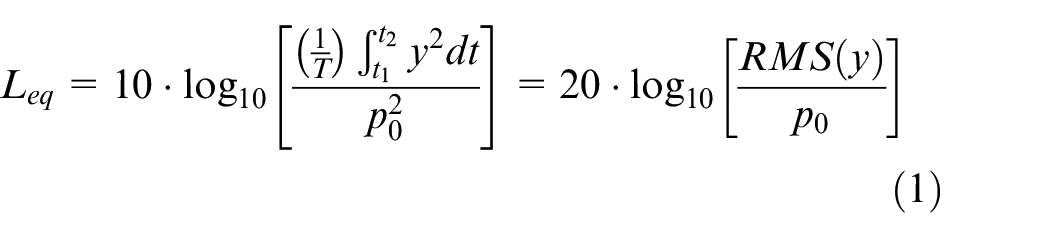
where
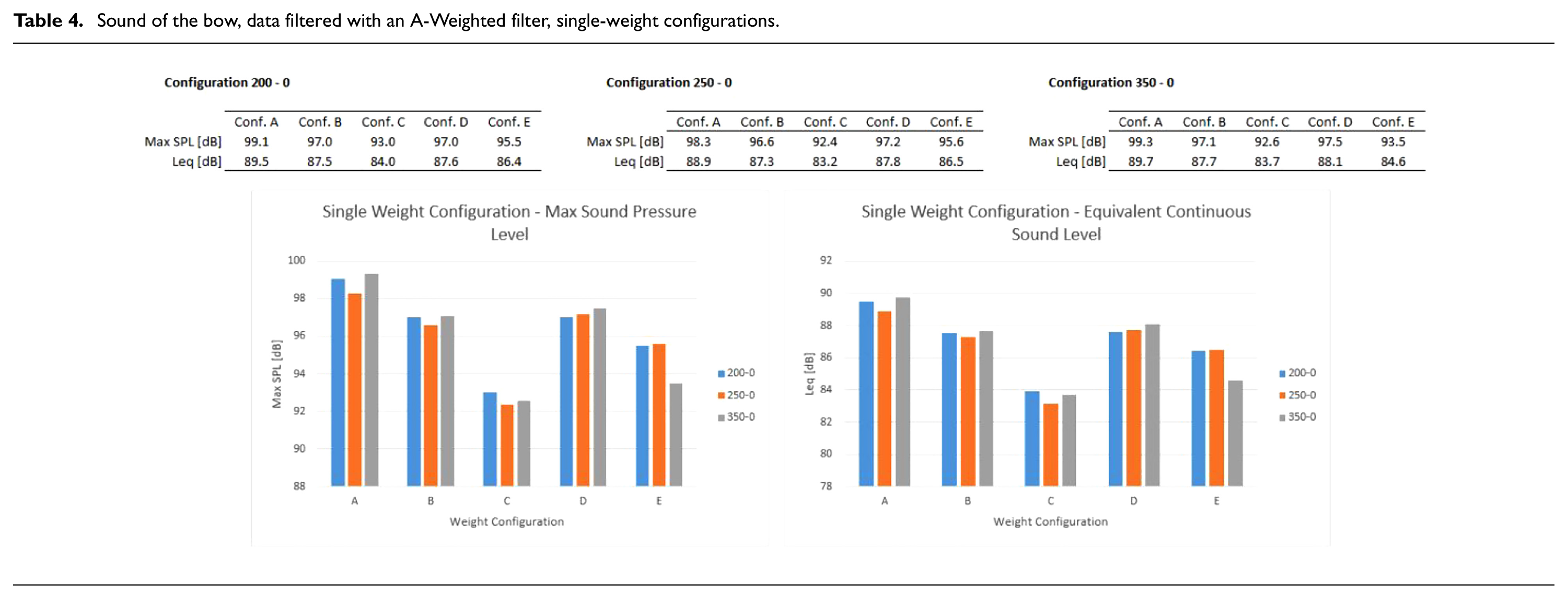
Sound of the bow, data filtered with an A-Weighted filter, single-weight configurations.
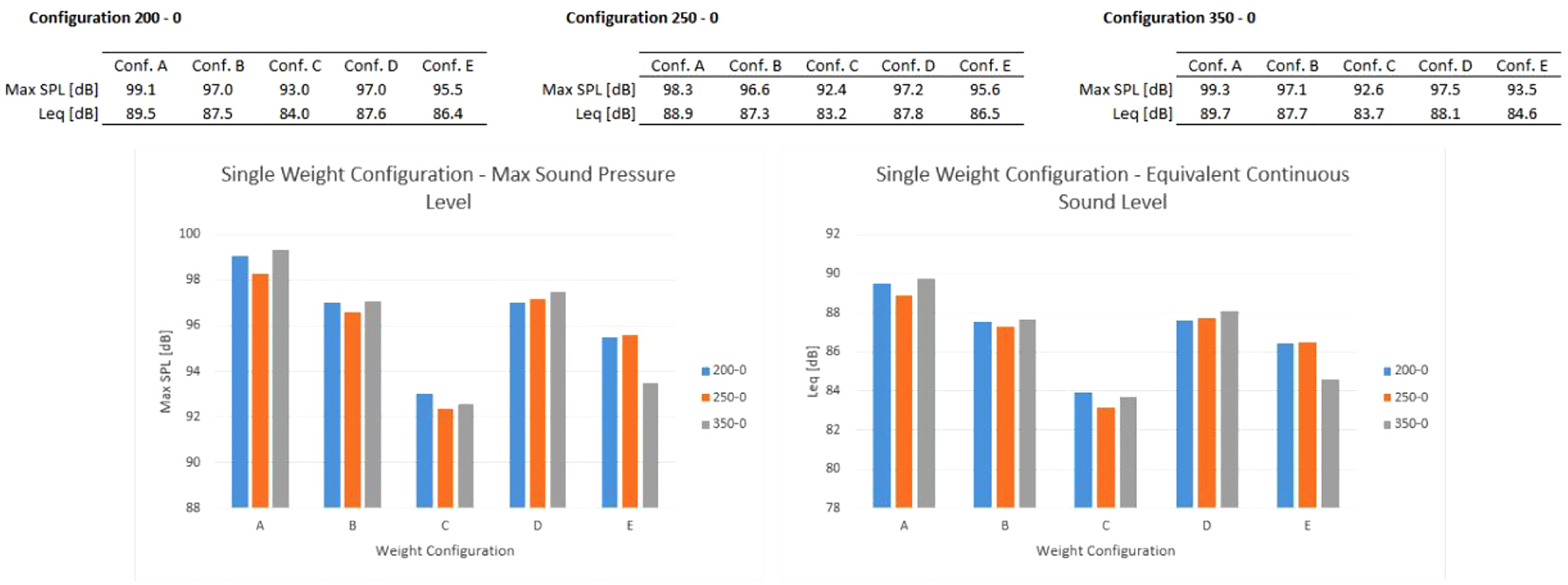
Sound of the bow, data filtered with an A-Weighted filter, double-weight configurations.
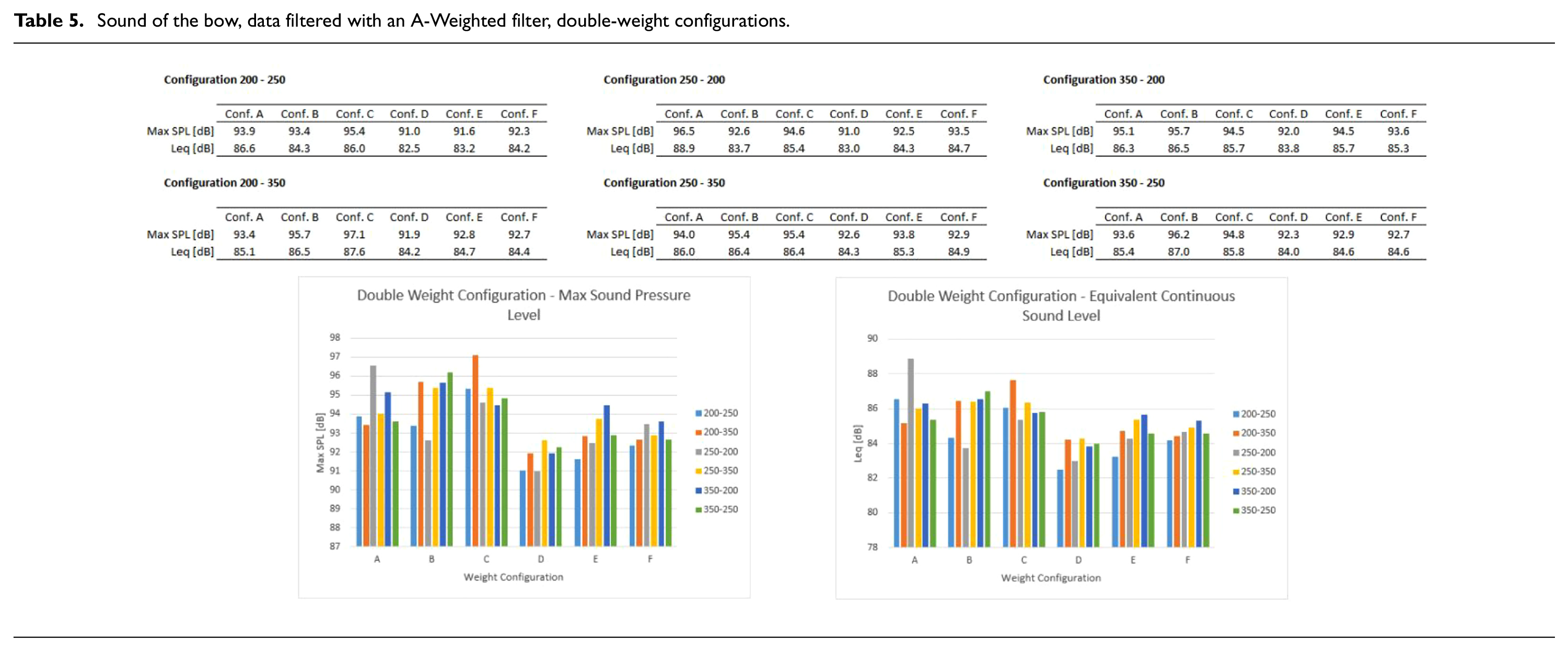
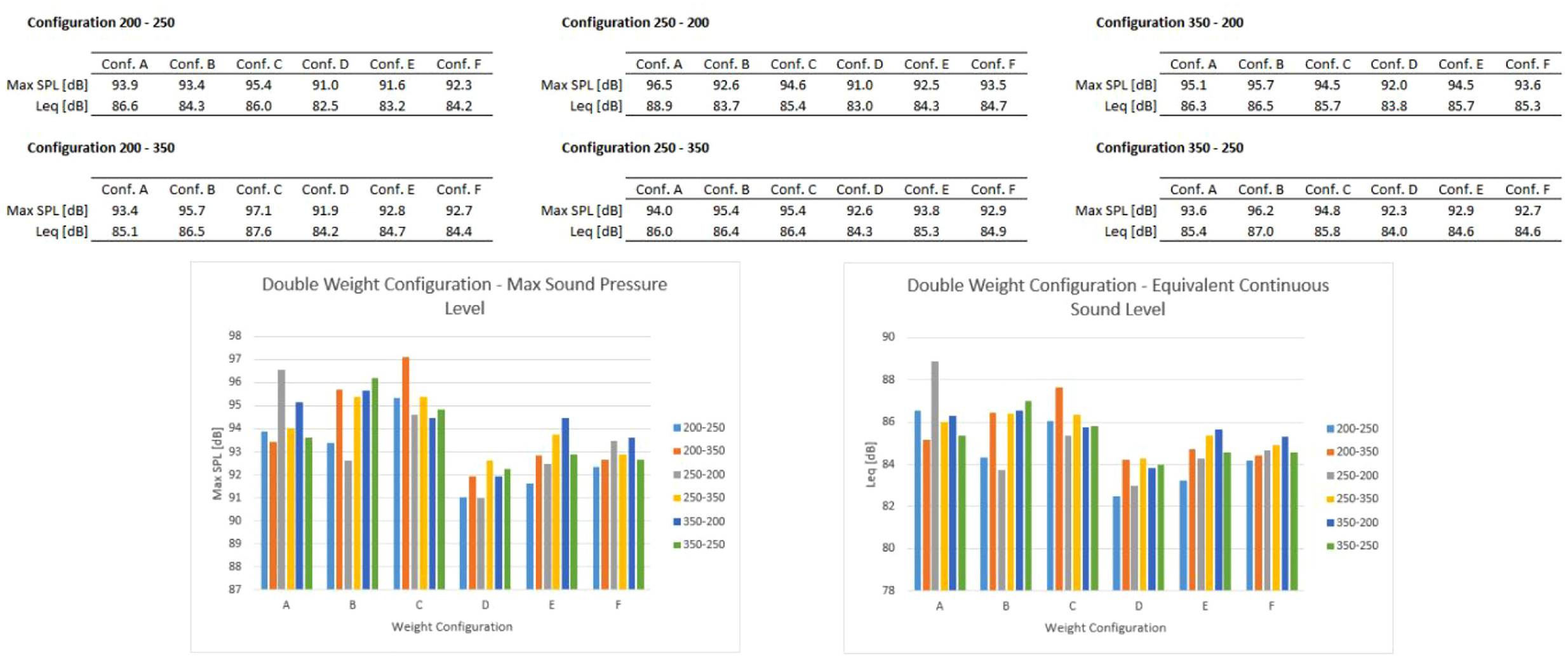
Data analysis shows that Configuration C is the quietest amongst the single-weight configurations with a reduction in Max SPL from a minimum of 5.9 dB to a maximum of 6.8 dB compared to Configuration A; followed by Configuration E with a reduction in Max SPL from a minimum of 2.7 dB to a maximum of 5.8 dB compared to Configuration A. For double-weight configurations, the quietest is Configuration D with a reduction in Max SPL from a minimum of 1.4 dB to a maximum of 5.9 dB compared to Configuration A.
Regarding the frequency content of the filtered sound for the single-weight configurations, Configurations C and E have a significant reduction in SPL mainly for frequencies greater than 1000 Hz compared to Configuration A. Figure 8 reports the power spectrum of three single-weight configurations, namely A, C and E, for the 250-0 weight configuration. The damped single-weight configurations C and E are seen to significantly reduce the SPL, especially at higher frequencies. Figure 9 reports the power spectrum of four double-weight configurations, namely A, D, E and F, for the 250-200 weight configuration. It can be also seen that for the double-weight configurations, Configurations D, E and F have a significant reduction in SPL for frequencies greater than 700 Hz compared to Configuration A. The double-weight configuration without damping (Configuration A) had higher SPL below 1500 Hz and lower SPL above 1500 Hz compared to the single-weight configuration without damping. The addition of the second weight have significantly reduced the higher-frequency sound radiation. The power spectrum of all configurations is reported in Appendix B.
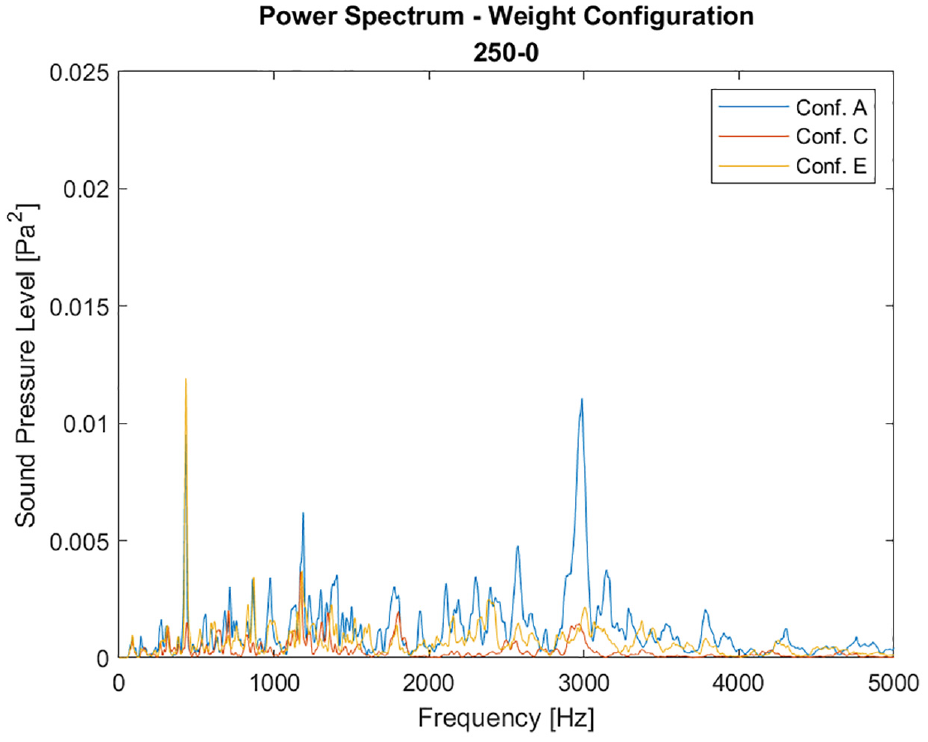
250-0 – Power Spectrum of the filtered sound of Configurations A, C and E.
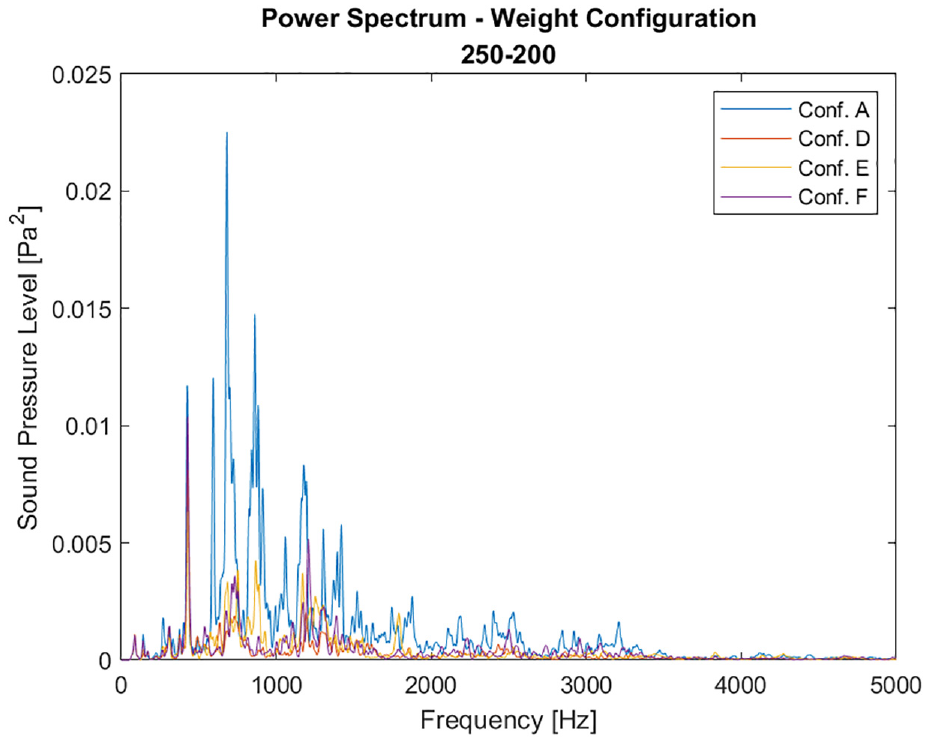
250-200 – Power Spectrum of the filtered sound of Configurations A, D, E and F.
Comparison of the mechanical vibration and the noise of the bow on shooting
Figures 10 to 13 compare the power spectrum of the mechanical vibrations recorded at Position 3 and the sound of the bow for the 250-0 weight version of Configuration A (no damping) and Configuration D. Figures 10 and 11 show the recorded signals with no filters applied to the vibrations. Figures 12 and 13 show the effect of filtering the mechanical vibrations (lowpass filter at 500 Hz) and the sound (A-Weighted filter) to approximate the human perception of the vibrations of the bow. Analysing Figure 11 compared to Figure 10, illustrates that introducing damping on the bow reduces the amplitude of the vibrations and sound over the entire frequency range. Figure 13 compared to Figure 12 shows the effect of introducing damping on the bow as perceived by the archer. The introduction of damping reduces the vibrations in the high-frequency range for both the mechanical vibrations (for frequencies higher than 400 Hz) and the sound (for frequencies higher than 600 Hz). Considering human physiology, the archer is sensitive to mechanical vibrations lower than 500 Hz (on the hand-wrist-arm-shoulder structure) and the sensitivity of the human ear is strongly dependent on the tonal pitch, 29 with the highest sensitivity between 2000 and 5000 Hz. 31 According to this analysis, the archer should find it easier to appraise the change in sound intensity from an undamped to a damped configuration than the change in mechanical vibrations.
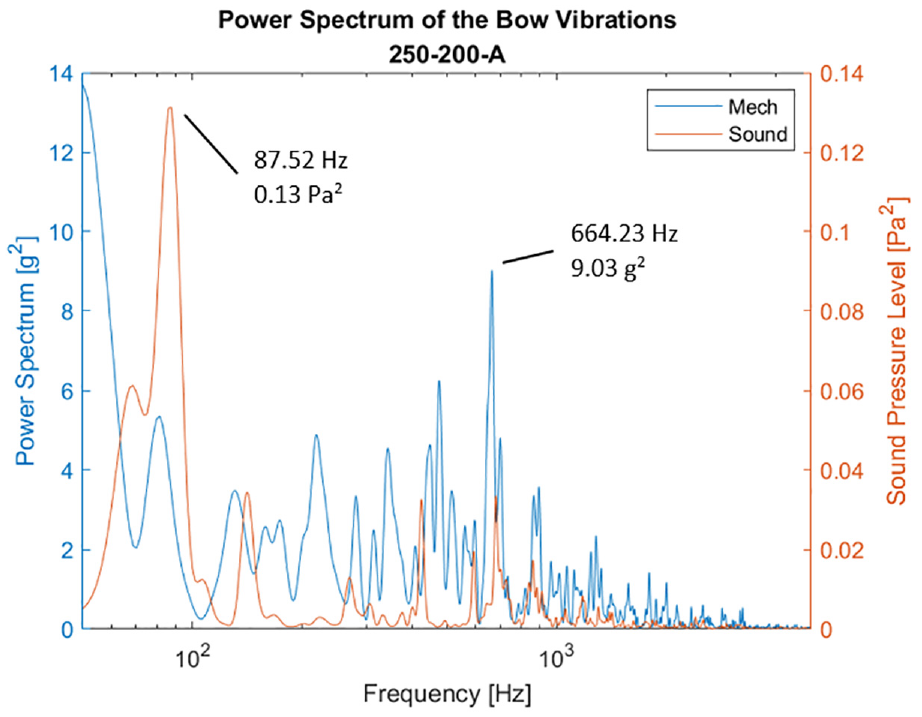
Power spectrum of the mechanical vibrations (blue) and sound (red) for Configuration 250-200-A, no filter applied.
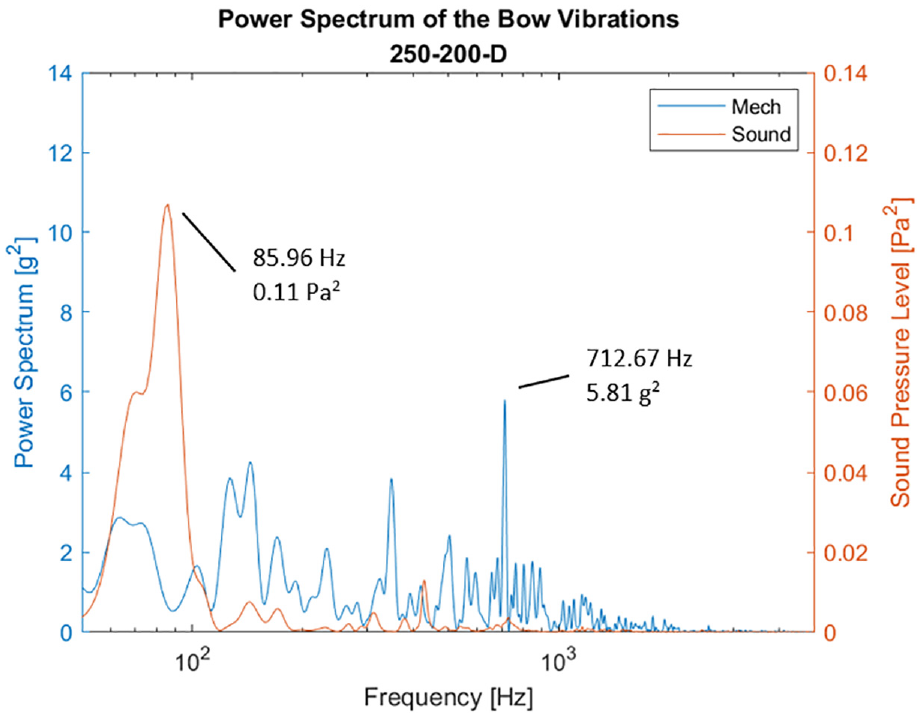
Power spectrum of the mechanical vibrations (blue) and sound (red) for Configuration 250-200-D, no filter applied.
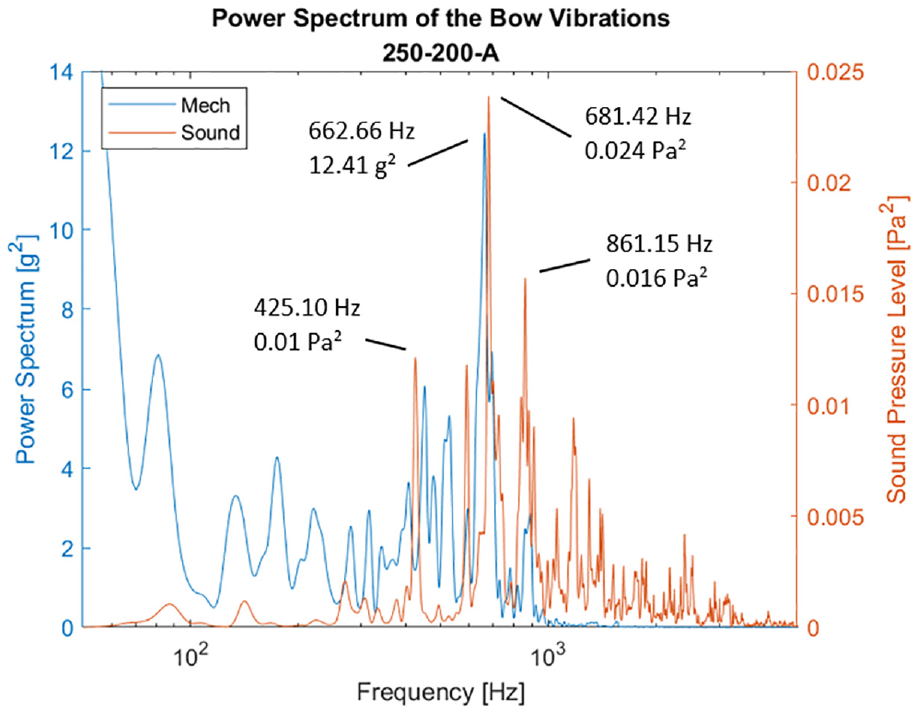
Power spectrum of the mechanical vibrations (blue) and sound (red) for Configuration 250-200-A, lowpass filter at 500 Hz and A-Weighted filter applied.
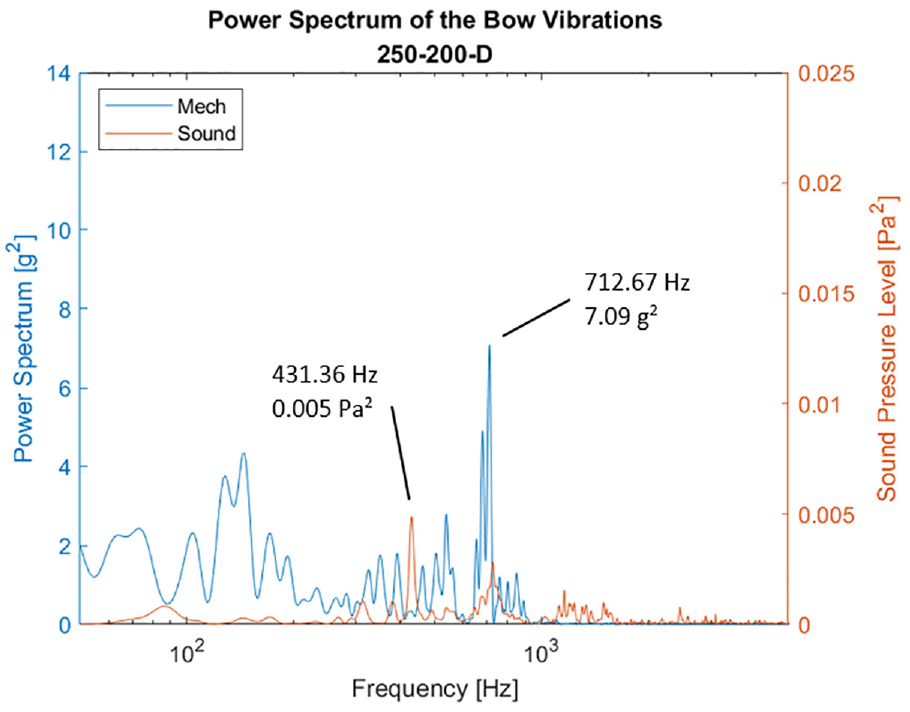
Power spectrum of the mechanical vibrations (blue) and sound (red) for Configuration 250-200-D, lowpass filter at 500 Hz and A-Weighted filter applied.
The other weight configurations show similar behaviour.
Subjective metrics: Perceived mechanical vibrations and sound
To correlate subjective and objective matrices, a questionnaire, divided into four questions, was prepared:
The perceived vibration level of the bow on shooting was evaluated using a Likert scale ranging from 1 ‘very high vibrations’ to 5 ‘very low vibrations’.
The perceived sound level of the bow on shooting was evaluated using a Likert scale ranging from 1 ‘very noisy’ to 5 ‘very quiet’.
The perceived sound quality of the bow on shooting was evaluated using a Likert scale ranging from 1 ‘very high pitch’ sound (corresponding to a sound with a high-frequency content) to 5 ‘very low pitch’ sound (corresponding to a sound with a low-frequency content).
The perceived overall quality of the weight configuration on shooting was evaluated using a Likert scale ranging from 1 ‘very low quality’ to 5 ‘very high quality’. The quality of the weight configuration refers to how much the archer appreciated the weight configuration, and how he/she liked the shooting experience.
It is assumed that a 5-point Likert scale is sensitive enough to capture the archers’ experiences in shooting the different weight configurations. Furthermore, it is assumed that the scale is equally spaced between the five steps. This assumption is necessary to calculate the correlations between subjective and objective metrics and to answer the research questions, but it is an approximation of a more complex reality.
Eight archers from Archers of the Zoo Lake Club, Johannesburg, South Africa participated in the study, all of them considered to be at the Intermediate Level (proficiency evaluations based on the Archers of the Zoo Lake Club guidelines 32 ). To better differentiate between vibration perception and sound perception, the archers were divided into pairs: one archer shooting the bow (‘archer’) and the other archer listening to the sound of the bow (‘observer’). The ‘archer’ wore earplugs to reduce the sound of the bow on shooting and was requested to evaluate the vibration level of the bow and the quality of the weight configuration. The ‘observer’ was requested to evaluate the sound of the bow both in intensity and pitch. After the conclusion of the tests, the pair swapped roles and the tests were run again.
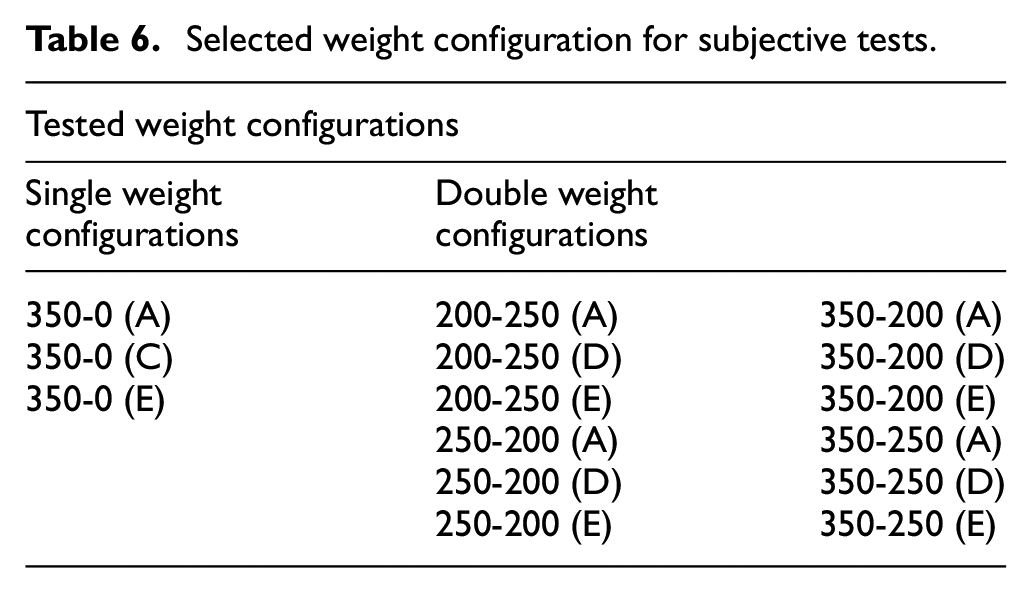
Due to limited testing time, not all fifty-one weight configurations could be tested. Based on previous work by the authors, 9 five good-performing weight configurations were selected, one single-weight (350-0) and four double-weight configurations (200-250, 250-200, 350-200 and 350-250). Regarding the damped configurations, Configurations A, C and E (refer to Table 1) were chosen for the single-weight configuration while Configurations A, D and E (refer to Table 2) were chosen for the double-weight configuration. Configuration A was chosen as a reference (configuration with no damping) while Configurations C and E (single weight), and D and E (double weight) were chosen as the best-performing configurations in terms of vibration measurement at Position 3 for single and double tests, respectively. Table 6 reports the selected weight and damping configurations.
Selected weight configuration for subjective tests.
During the tests, the weight and damping configurations on the central and lower attachments were covered so that the ‘archer’ and the ‘observer’ could not see the configuration being tested. The testing sequence of the weight configurations was randomised for each test. The reference weight configuration used as the baseline for the subjective tests was Configuration B. The collected data are reported in Appendix C. Table 7 reports the mode, median and mean of the answers collected in the questionnaire, where the mode is the value of the most frequent score, the median is the middle value when observations are ordered from least to most and the mean is the average of all scores, calculated by adding all scores and then dividing by the number of scores. 33
Questionnaire results.
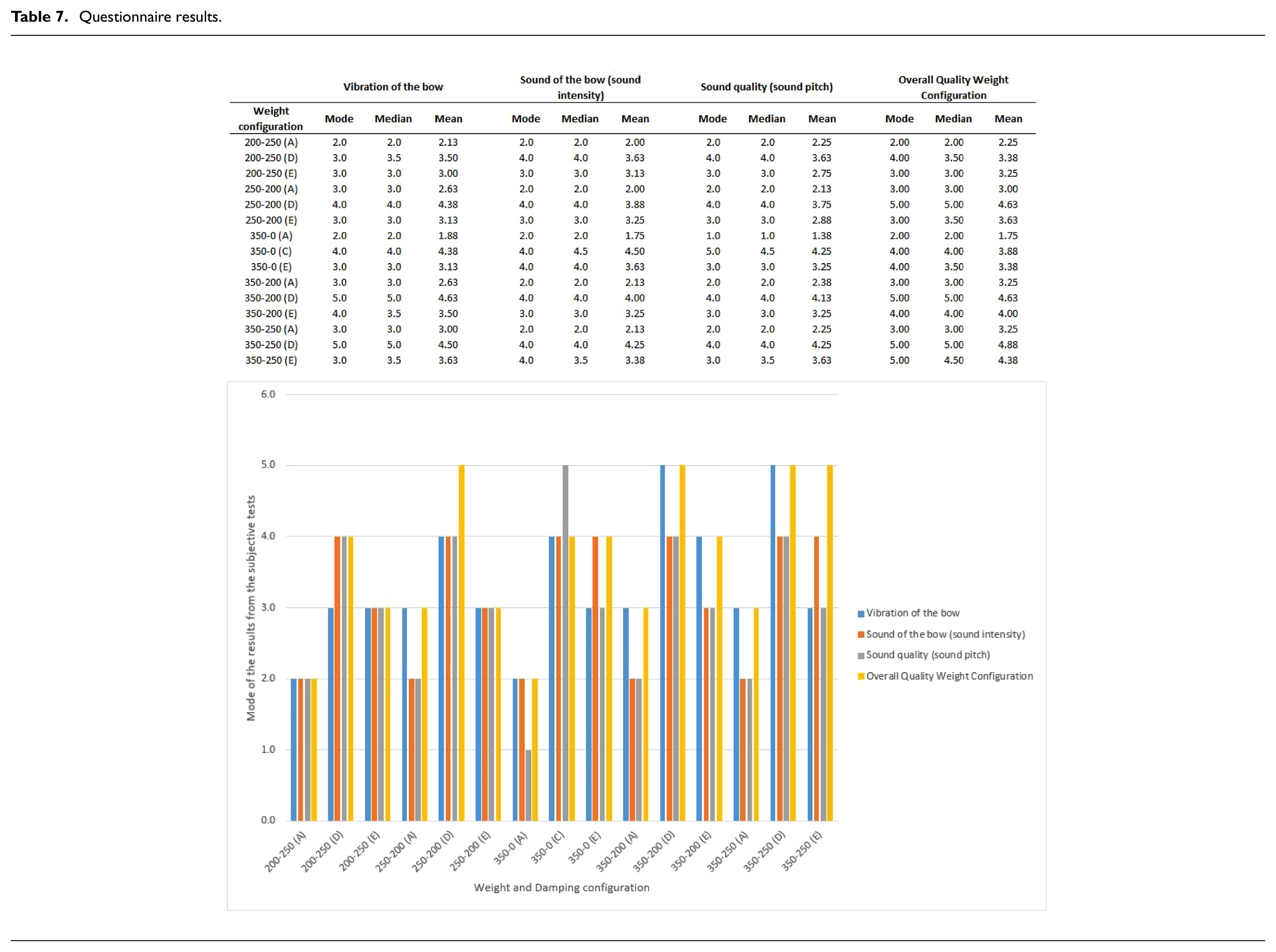
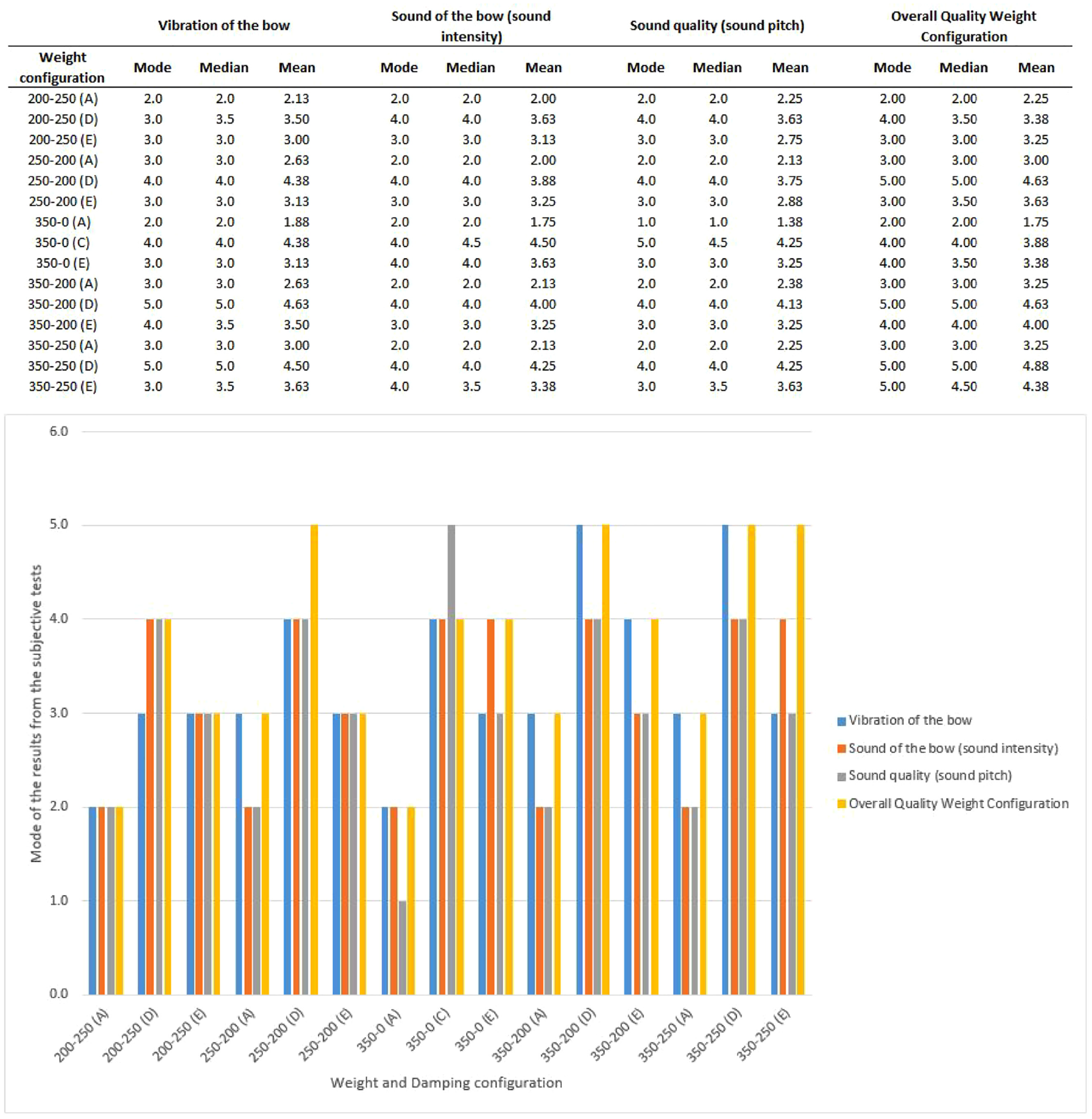
Data analysis shows that the damped configurations scored better than the undamped Configuration A in all four subjective metrics. The ‘archer’ perceived reduced mechanical vibrations for the damped configurations and appreciated these configurations more. The ‘observer’ perceived a quieter bow and a lower frequency sound for the damped configurations. Regarding the single-weight configurations, both ‘archer’ and ‘observer’ consider Configuration C to be better than Configuration E, and Configuration D to be better than Configuration E for the double-weight configurations.
Discussion
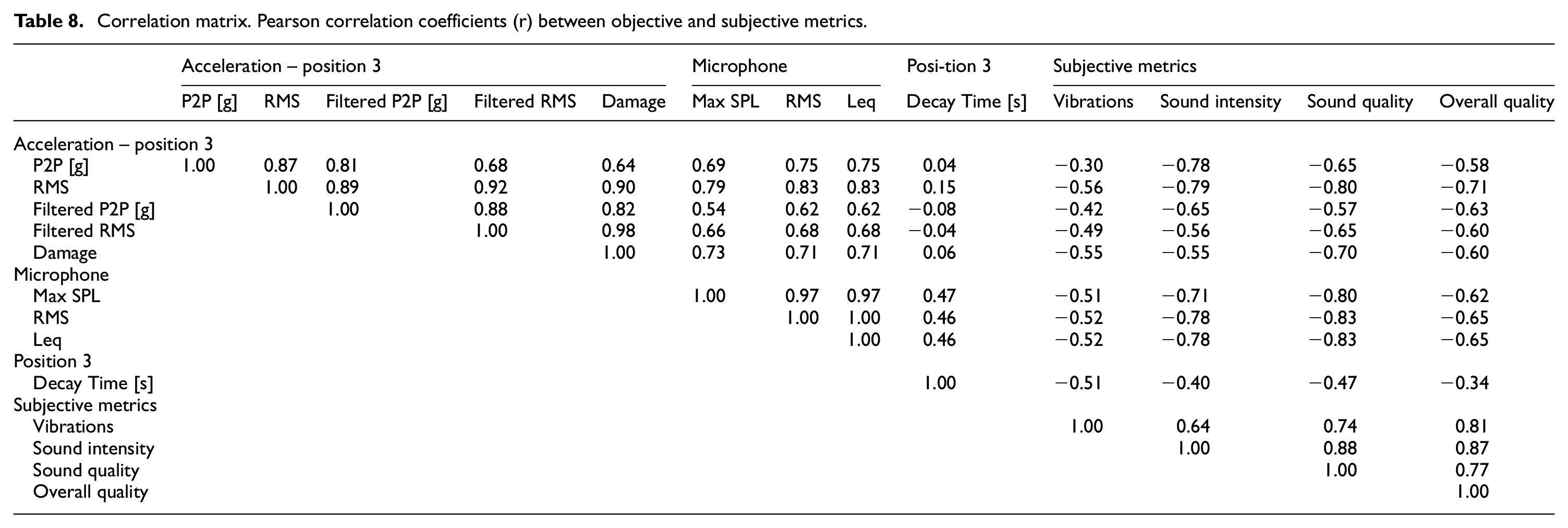
The correlation between objective and subjective metrics was studied by evaluating the Pearson correlation coefficient
Correlation matrix. Pearson correlation coefficients (r) between objective and subjective metrics.
Coefficients of determination (V) between objective and subjective metrics.
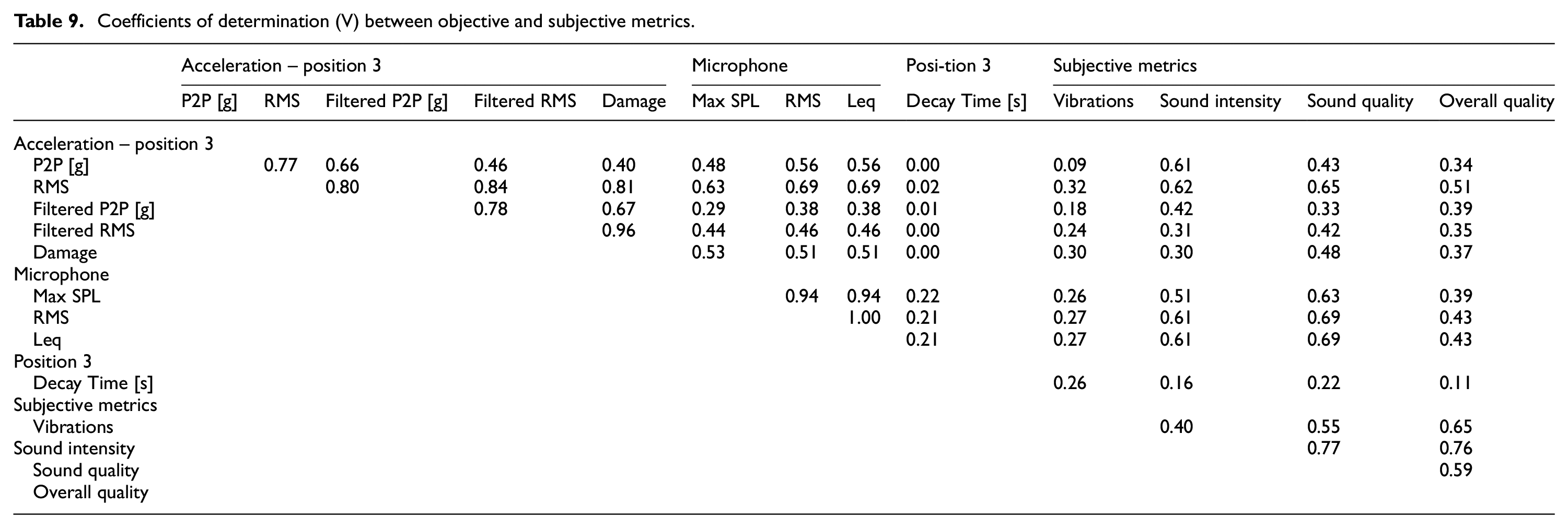
All objective metrics show a high level of correlation within the same group. The metric ‘Decay Time’ shows only a moderate correlation with the ‘Microphone’ metrics. The ‘Microphone’ metrics and the ‘Acceleration’ metrics also show a high degree of correlation. All subjective metrics show a high level of correlation within that group; the archer perceived the quality of the weight configuration as an inverse function of the mechanical vibration of the bow on shooting, the intensity of the sound of the bow on shooting and the pitch of the sound of the bow on shooting where the lower the pitch, the better the quality.
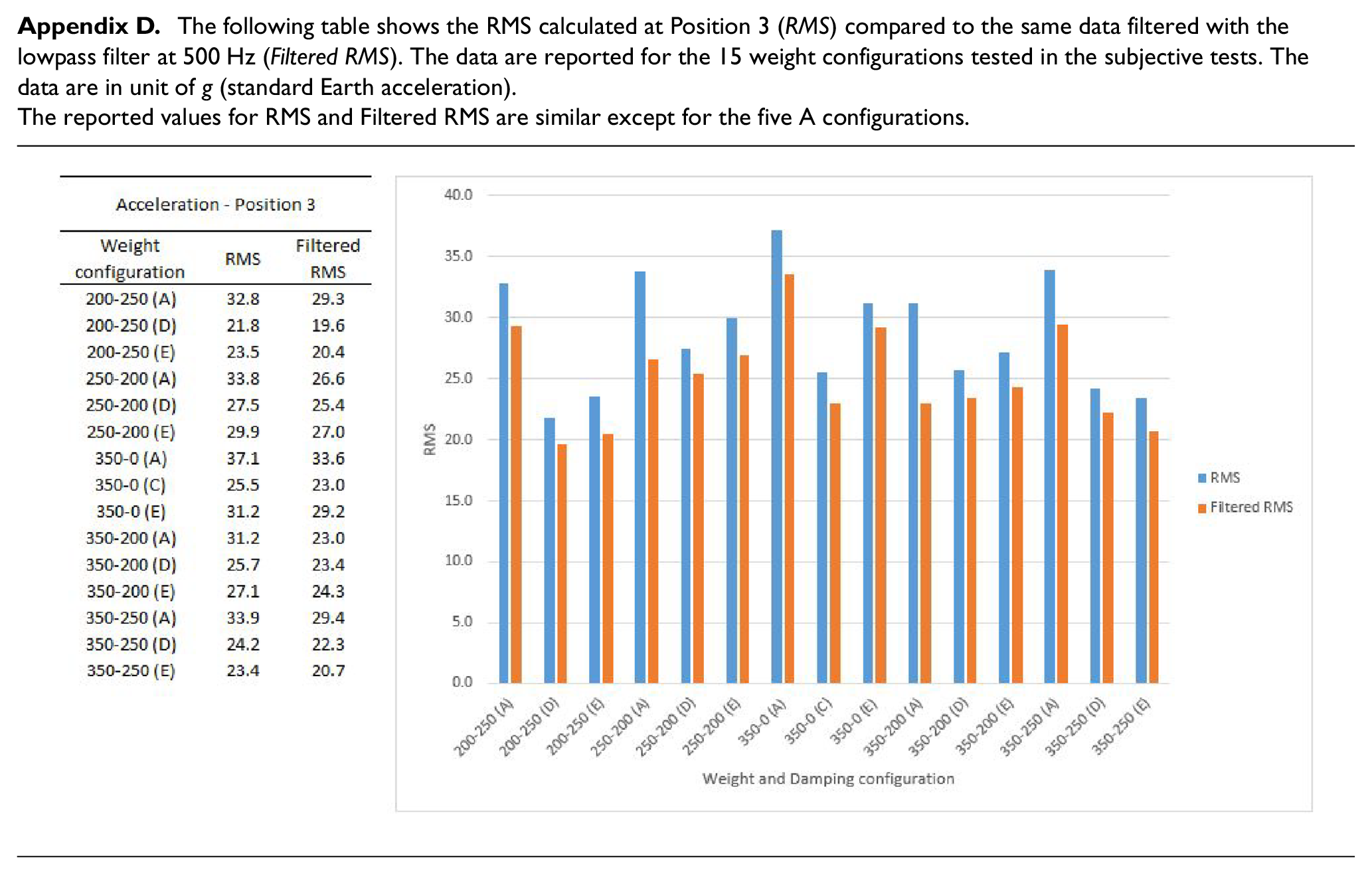
The analysis of the correlation between objective and subjective metrics (Table 8) shows interesting results. The subjective ‘Vibrations’ and the objective ‘Accelerations’ show a mixed moderate-to-strong inverse correlation, due to the scoring method decided for the subjective metric. ‘Filtered P2P’ shows a relatively higher correlation than the unfiltered ‘P2P’, in agreement with the results of earlier work, 9 while the ‘Filtered RMS’ shows a lower correlation compared to the unfiltered ‘RMS’. The proposed explanation is that for the damped configurations, the difference between filtered and unfiltered RMS is too small to be appreciated by the archer (the data are reported in Appendix D). The subjective ‘Sound Intensity and Quality’ and the objective ‘Microphone’ metrics show an inverse correlation due to the scoring method decided for the subjective metric. The archer is capable of discerning the intensity and frequency content of the sound of the bow on shooting, and the quieter the bow, and the lower the frequency of the sound, the better the shooting experience. The same conclusions could be drawn by analysing the correlation between the subjective ‘Overall Quality’ and the objective ‘Microphone’ metrics. The analysis of the correlation between the subjective ‘Overall Quality’ and the objective ‘Acceleration’ metrics shows that a better-perceived quality of the weight configuration is related to the unfiltered RMS on Position 3. Interestingly the correlation between ‘Overall Quality’ and ‘Accelerations’ is similar to the correlation between ‘Overall Quality’ and ‘Sound’, meaning that the perceived quality of the weight configuration depends on both the mechanical vibration of the bow and the sound of the bow on shooting. The metrics ‘Sound Intensity’, ‘Sound Quality’ and ‘Acceleration’ show a stronger inverse correlation compared to the metrics ‘Vibrations’ and ‘Microphone’. These results suggest that is easier for the archer to perceive the vibration of the bow as radiated sound on shooting, instead of as mechanical acceleration on the riser. The subjective metric ‘Vibrations’ shows a strong inverse correlation with the objective metric ‘Decay Time’, while ‘Sound Intensity’ and ‘Sound Quality’ show a medium inverse correlation with the ‘Decay Time’. The archers are aware of the time-to-rest of the string and the longer the time, the worse the shooting experience. The archers evaluate the vibration of the bow considering both mechanical vibrations (‘RMS’ and ‘Filtered RMS’) and the time-to-rest of the bow (‘Decay Time’). The metric ‘Damage’ is strongly correlated to all other metrics (apart from the metric ‘Decay Time’) as a demonstration of its importance as an objective metric.
The analysis of the coefficients of determination
Conclusion
The effect of damping was studied by considering both subjective and objective metrics to evaluate the effect of different damped configurations on the vibration and sound of a bow, and the archer’s perceptions of the overall shooting experience. The results show that any form of damping on the bow decreases the mechanical vibrations and the sound intensity, with the best results for specifically designed damping devices, such as the vibration damper for the single-weight configuration and the Dampering for the double-weight configuration. The introduction of damping to the bow tends to effectively reduce the high-frequency components of the mechanical vibration and of the radiated sound while having little influence on the low-frequency components of the vibrations. The results for the subjective metrics show that the archers perceive a reduction in vibrations, sound intensity and sound pitch for the damped solutions. The reduction in these subjective metrics is associated with a better experience in shooting the bow. This research clearly shows that the introduction of damping improves the shooting experience.
This work also shows that a pure performance-based approach (objective metrics) is not enough to capture the complexity of the archer-bow interaction. Analysis of the correlations between objective and subjective metrics provides a deeper insight into the problem. This knowledge can be used to design better archery equipment from both the performance and user experience perspectives.
Footnotes
Appendix
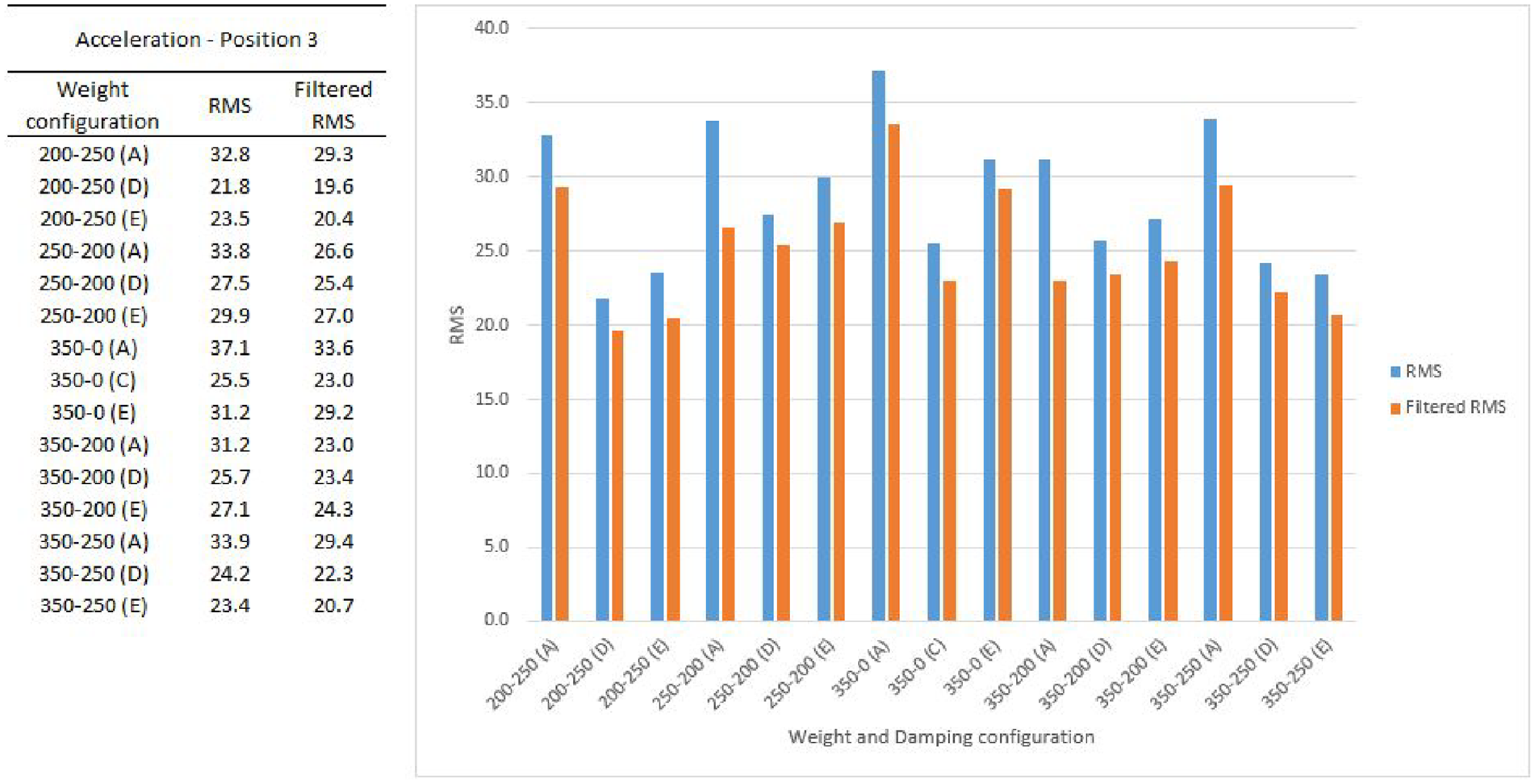
The following table shows the RMS calculated at Position 3 (RMS) compared to the same data filtered with the lowpass filter at 500 Hz (Filtered RMS). The data are reported for the 15 weight configurations tested in the subjective tests. The data are in unit of g (standard Earth acceleration).
The reported values for RMS and Filtered RMS are similar except for the five A configurations.
|
Notation
CoG Centre of gravity
DAQ Data acquisition system
MSV Mean squared value
P2P Maximum to minimum difference
RMS Root mean squared value
WA World Archery Federation
Max SPL Maximum sound pressure level
SPL Sound pressure level
Acknowledgements
The authors would like to acknowledge the staff of the Archers of the Zoo Lake Club, Johannesburg, for the access to their facilities and to all the archers from the Archers of the Zoo Lake Club, for the hours spent testing the equipment.
Ethical approval
The study was approved by the Human Research Ethics Committee (Non-Medical) of the University of the Witwatersrand to include the use of human participants. The three documents used in this study, the Introduction letter, the Consent form and the Questionnaire, are part of the ethics protocol defined in the Research Ethics document H22/01/25 which was approved by the Human Research Ethics Committee (Non-Medical) of the University of the Witwatersrand on the 28th of January 2022. All participants in the research were fully aware of being part of the tests for the collection of data for this academic study, and all participants signed the Consent form reported in the Research Ethics document H22/01/25.
Declaration of conflicting interests
The author(s) declared no potential conflicts of interest with respect to the research, authorship, and/or publication of this article.
Funding
The author(s) received no financial support for the research, authorship, and/or publication of this article.

Data availability
All data used in the paper will be available on request. Please contact the main author by email.