



Abstract
The barebow archery shooting style limits the stabilisation system to weights connected to the riser, which is the central part of the bow. No scientific study is available to guide the barebow archer in the choice of the best weight configuration. In the following work, a human-centred methodology was developed to address this problem from both a scientific and user-oriented perspective. The proposed methodology is based on subjective metrics (archers’ sensations using the equipment), objective metrics (measurable quantities) and precision. The study sought a correlation between the subjective and objective metrics to provide insight into the problem of configuring a bow. Eleven weight configurations were considered. The vibration was measured at five positions on the bow and the 3D dynamic motion was measured using an inertial measurement unit. Seven archers completed a questionnaire to evaluate the subjective shooting sensations. The results show that the two best weight configurations are the 250–200 g and the 350–200 g, at the central and lower attachment points, respectively. A strong correlation exists between the vibration level of the bow and the feeling archers associated with the shooting, and between the dynamic motion of the bow and the comfort of the shooting. No correlation was found between the vibration time and the physical sensations felt by the archers. Determining the influence of the weight configuration on shooting accuracy, with statistical significance, would require an impractically large number of arrows to be shot for each weight configuration. A new methodology was developed to correlate the archers’ physical sensations to measurable parameters and this was applied to understand the barebow weight selection problem. This methodology could be further developed to correlate additional subjective and objective metrics. An understanding of these correlations would allow objective metrics, which can be simulated in the design process, to be used to ensure satisfaction of subjective metrics by the final design.
Introduction
The World Archery Federation (WA) is the international federation for the Olympic and Paralympic sport of archery. 1 The WA recognises three styles for archery: the recurve bow – which is the style used at the Olympic games, the compound bow and the barebow style. 2 Recurve and barebow archers use the same type of bow, but in the barebow style the sight and the clicker are not allowed and the V-Bar stabilisation system of the recurve style is limited to simple weights attached to the riser (the central, rigid part of the bow). 3
The main functions of an archery stabilising system (weights added to the bow to stabilise its motion during shooting) are control of the displacement and the rotation of the bow during the aiming phase, control of the vibrations, 4 and control of the dynamic action of the bow on string release.5,6 This set of requirements defines the shape of the stabilisation system.
The dynamic behaviour of the bow on release is related to the weight distribution of the stabilising system (weight configuration) in comparison to the position of the centre of gravity (CoG) of the bow.
A Cartesian coordinate system is defined as centred on the pressure button
7
(Figure 1). The
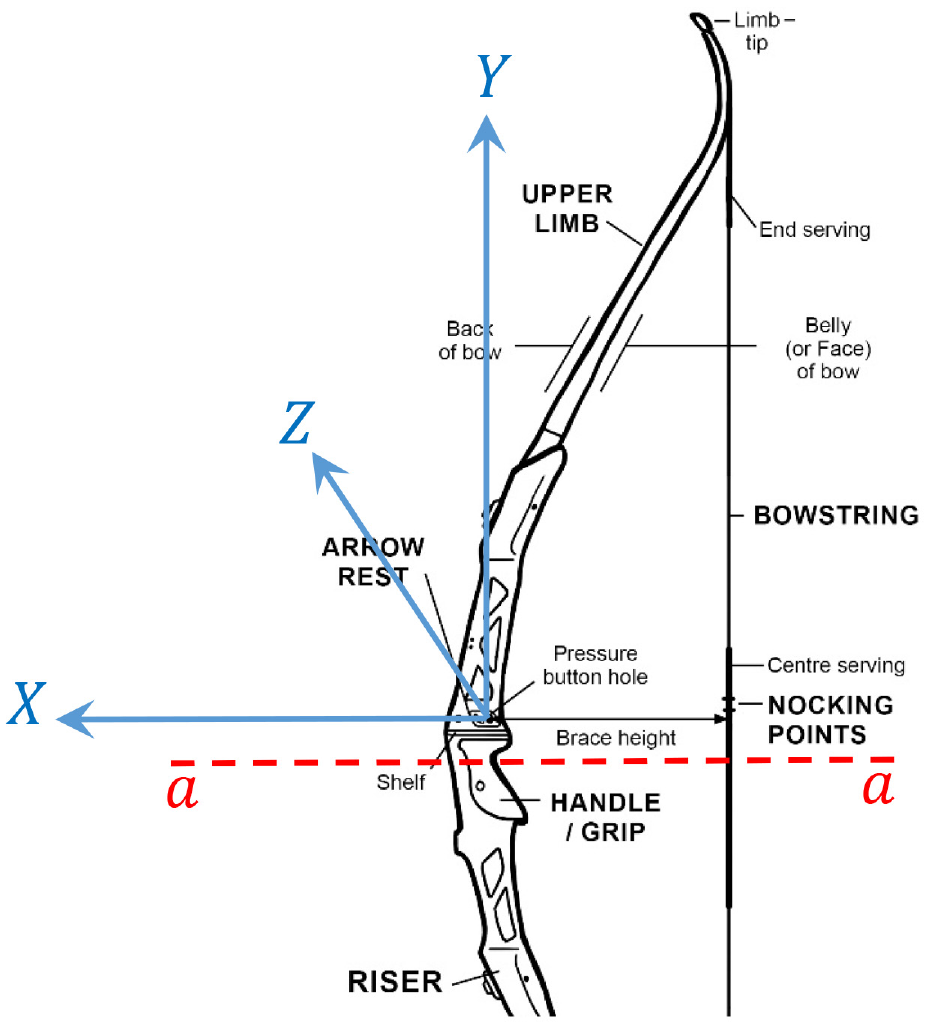
Global coordinate system. 8
Without stabilisation, the CoG of the bow is positioned at the same height as the handle (line
The stabilisation system is designed to move the CoG ahead of the handle and along the
In the barebow style, the stabilisation system is limited to weight(s) and/or dampeners that may be added to the riser (WA Rulebook no. 3 published on 7/3/20221). Within this rule, it is possible to attach weights to the riser in two different positions: the centre attachment point (Figure 2, ‘A’) and the lower attachment point (Figure 2, ‘B’). The upper attachment point (Figure 2, ‘C’) is never used because the CoG of the bow needs to be moved in the
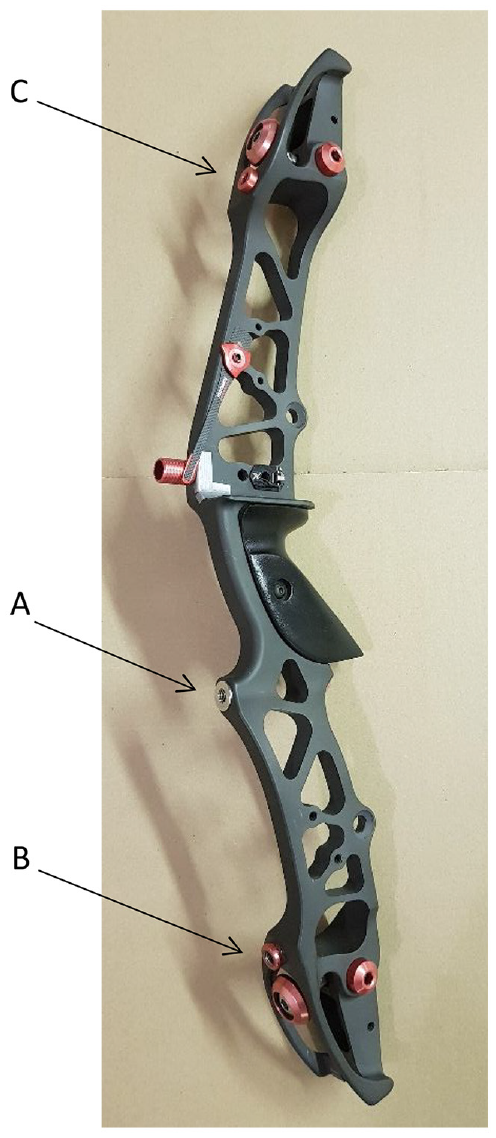
Riser Gray AIX. A, B and C are the attachment points.
Methods
The following work develops a methodology using an archer-centred approach and a scientific approach to define the best weight configuration for the barebow shooting style. The problem with the design of sporting equipment is that it cannot be based purely on performance, because the user’s experience in using the equipment is a necessary part of the design. Considering archery, archers are not interested in pure performance (efficiency of the bow, speed of the arrow, etc.) but in the precision of their equipment. The best weight configuration will then be decided by considering performance (objective metrics), the personal experience of the archer (subjective metrics) and the effect that the weight configuration has on precision (bow-archer interaction).
To analyse the barebow weight distribution problem, it was decided to consider subjective metrics, objective metrics and precision. The subjective metrics were the physical sensations associated with shooting: the static behaviour of the bow in the aiming phase, and on shooting, the level of perceived vibrations and the dynamic behaviour of the bow. A questionnaire was prepared and administered to collect the archers’ physical sensations on release.
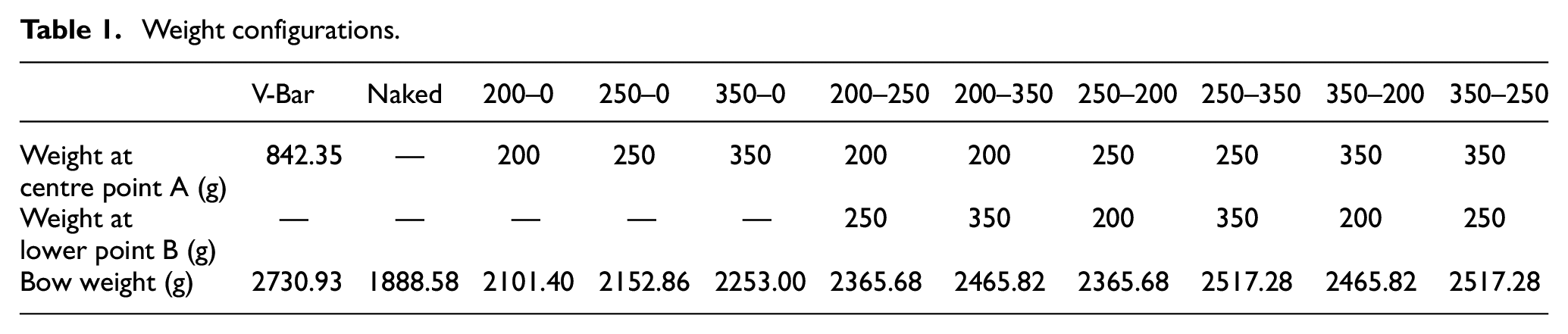
The objective metrics were the vibrations of the bow during the shooting and the dynamic behaviour of the bow on release. Eleven weight configurations (Table 1) were tested for vibrations in five areas of the bow: upper and lower limb, upper and lower limb pocket on the riser and centre of the riser (Figure 3).
Weight configurations.
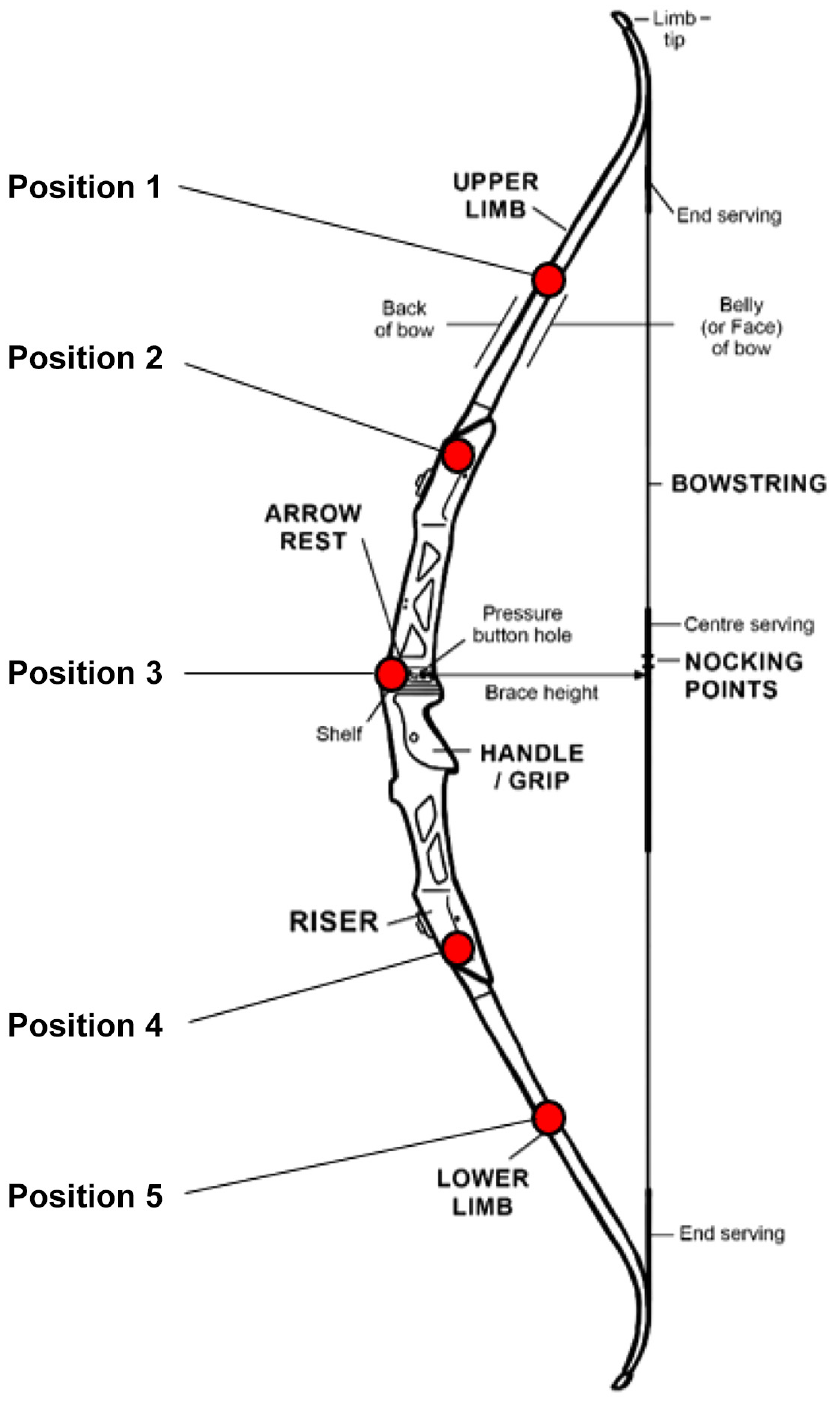
Positioning of the accelerometer on the bow.
The precision of each weight configuration was measured by the score of 30 arrows. The arrows were shot over a distance of 50 m, at a WA – 122 cm, 10-ring target. The distance and target size were chosen according to the standards for a WA barebow competition.
Experimental set-up
The riser used in the experiments was the Gray AIX 2019, 10 which is considered within the South African barebow community, to be one of the best risers for this style. 11 The limbs were the Win&Win Limbs Wiawis NS Wood (long version, 32 lb nominal poundage). 12 The weights were the Gas Pro Barebow Weights, with nominal weights of 350, 250 and 200 g. 13 The arrows were shot using the standard hooking for barebow style: the three-fingers-under-the-arrow style. For consistency between the tests, gap-shooting was adopted as the aiming style. 14
The bow was set up for the recurve style and tuned using the procedure described by Kaminski. 15 The 11 weight configurations tested are listed in Table 1.
Subjective metrics: The questionnaire
A questionnaire was administered to seven archers from Archers of the Zoo Lake Club, Johannesburg, South Africa. The archers were classified as two Intermediate and five Advanced archers (proficiency evaluations based on the Archers of the Zoo Lake Club guidelines 16 ). The archers were asked to evaluate the proposed 11 weight configurations using a numerical scale ranging from ‘very bad’ (numerical score 1) to ‘very good’ (numerical score 5). The questionnaire was divided into three questions exploring the archer’s sensations for three different phases of the shooting, namely:
The weight balance of the bow during the drawing and aiming phases
The vibrations of the bow during the shooting of the arrow
The dynamic behaviour of the bow after the shooting of the arrow
During the administration of the questionnaire, the weights on the central and lower attachments were covered so that the archers could not see the weight configuration being tested. The averaged collected data are reported in Appendix A.
The data analysis shows the complexity of this problem: the same weight configuration scores differently across the proposed questions. Nevertheless, some general conclusions can be drawn from the overall quality analysis. Adding weight to the riser is beneficial from the shooting sensation point of view. A two-weight configuration is better than the single-weight configuration, with the heaviest weight attached to the centre attachment point (closer to the CoG). Unfortunately, increasing the weight of the stabilisation system has negative consequences on the archer’s fatigue during competition shooting. The four weight configurations 200–250, 250–200, 350–200 and 350–250 (refer to Table 1) were the top-rated configurations. Because the archers decided on the best weight configurations based on their user experience, a baseline is available to correlate the subjective and objective metrics.
Objective metric: Vibrations
The vibrations associated with the shooting phase were recorded using a triaxial accelerometer from PCB Piezotronics 17 and a data acquisition (DAQ) system from National Instruments. 18 The nominal signal rate was defined as 12,000 Hz for 180,000 samples (15 s measurement duration).
The three acceleration signals were captured at five different positions on the bow (Figure 3), with six tests for each position of the accelerometer. Position 1 was defined on the upper limb, at a distance of 350 mm from the end of the limb (main bolt attachment area) along the limb itself. Position 2 was defined on the riser, 40 mm from the top of the riser. Position 3 was defined on the riser, next to the secondary pressure button’s hole. This is close to the archer’s hand position on the bow. Position 4 is symmetric to Position 2 but on the lower section of the riser. Position 5 is symmetric to Position 1 but on the lower limb.
The three acceleration signals shown in Figure 4 were captured by the accelerometer in Position 1 for the Naked weight configuration (refer to Table 1). The data from the other weight configurations and measured positions have the same form. The reported accelerations are in
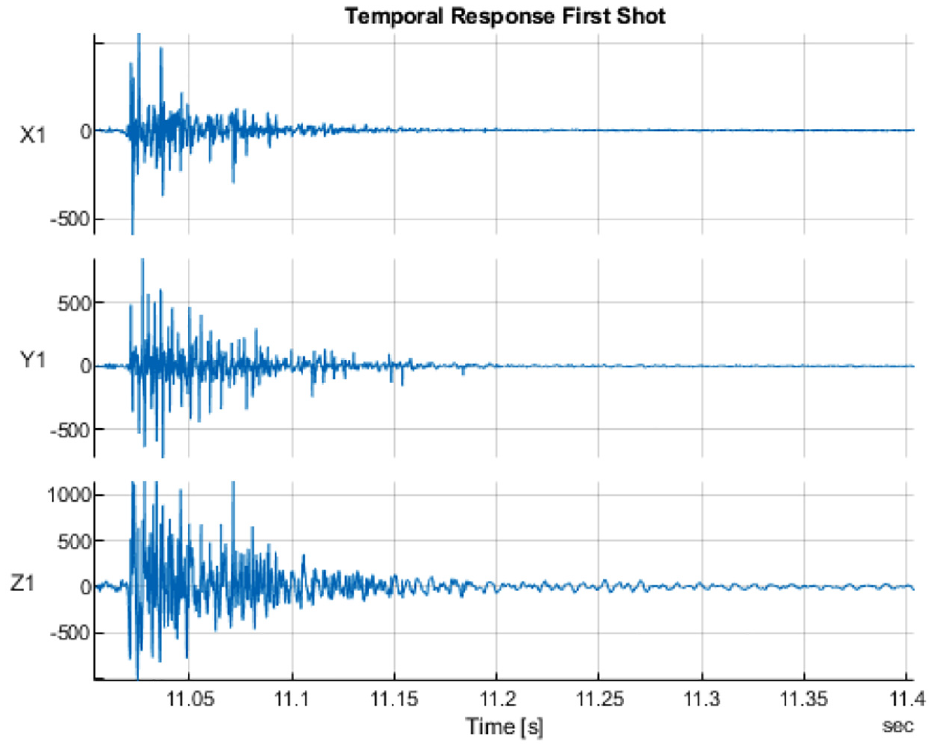
Recorded 3-axis acceleration signal, Position 1, Naked configuration, first shot. Y scale in g.
The data are reported in the local coordinate system defined by the accelerometer (
The signal is non-zero from about 11.02 to 11.184 s in the
The power spectrum of the signals was calculated, but the result was the superposition of multiple excitation frequencies with peaks up to 4000 Hz. Given the complexity of the signal, an analysis based on a statistical approach was adopted. The following signal statistics were calculated
21
: the Maximum to Minimum Difference (P2P), which is a measure of the maximum amplitude of the signals, dimension
Damping and duration of the signal
The time signals for the 11 weight configurations show that the bow is damped (Figure 4). Sources of damping are the friction between the string and the limbs, the drag of all the moving parts through the air, the hysteretic material damping of the entire bow system and the archer’s hand on the handle. The analysis of the damping ratios associated with the resonant modes in vibration signals did not show a strong correlation with the perceived quality of the shooting experience. It was hypothesised that the archer perceives the effect of the damping in terms of the amplitude of the signal (P2P) and the time necessary for the bow to stop vibrating.
The time necessary for the bow to stop vibrating was calculated by imposing zero amplitude for any vibration amplitude less than 15
Vibration analysis
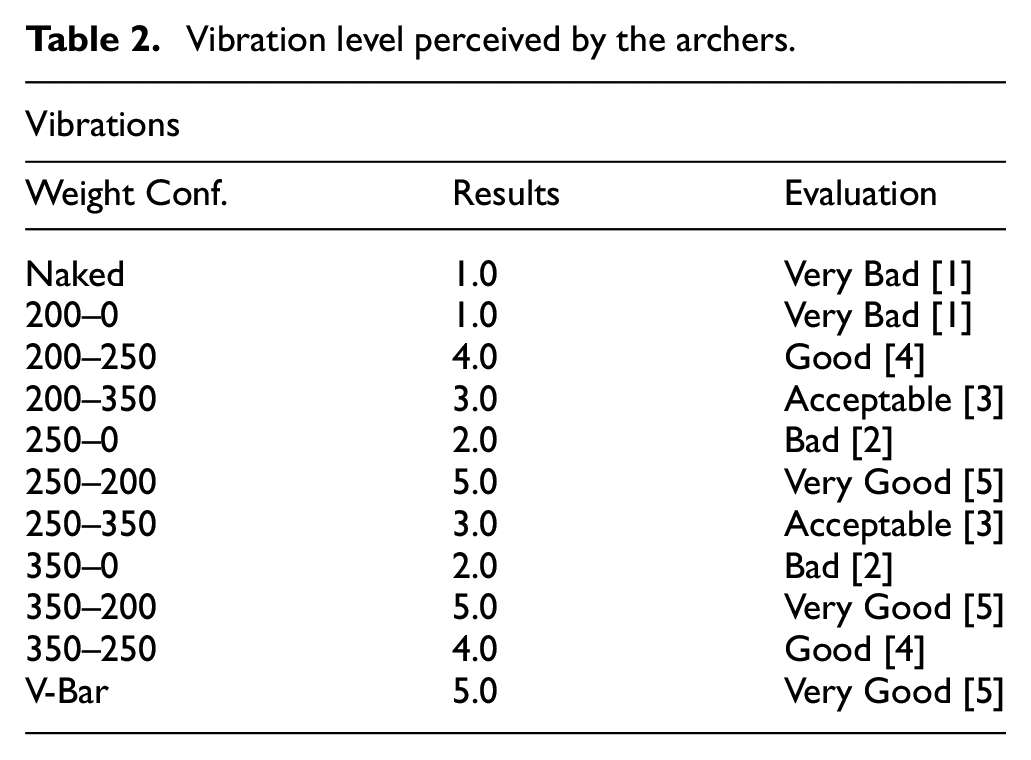
The archers’ perceptions of the level of vibration of the bow (Quality) are reported in Table 2. The Quality was compared with the signal statistics by calculating the Pearson correlation coefficient (
Vibration level perceived by the archers.
Vibration analysis, Position 1.
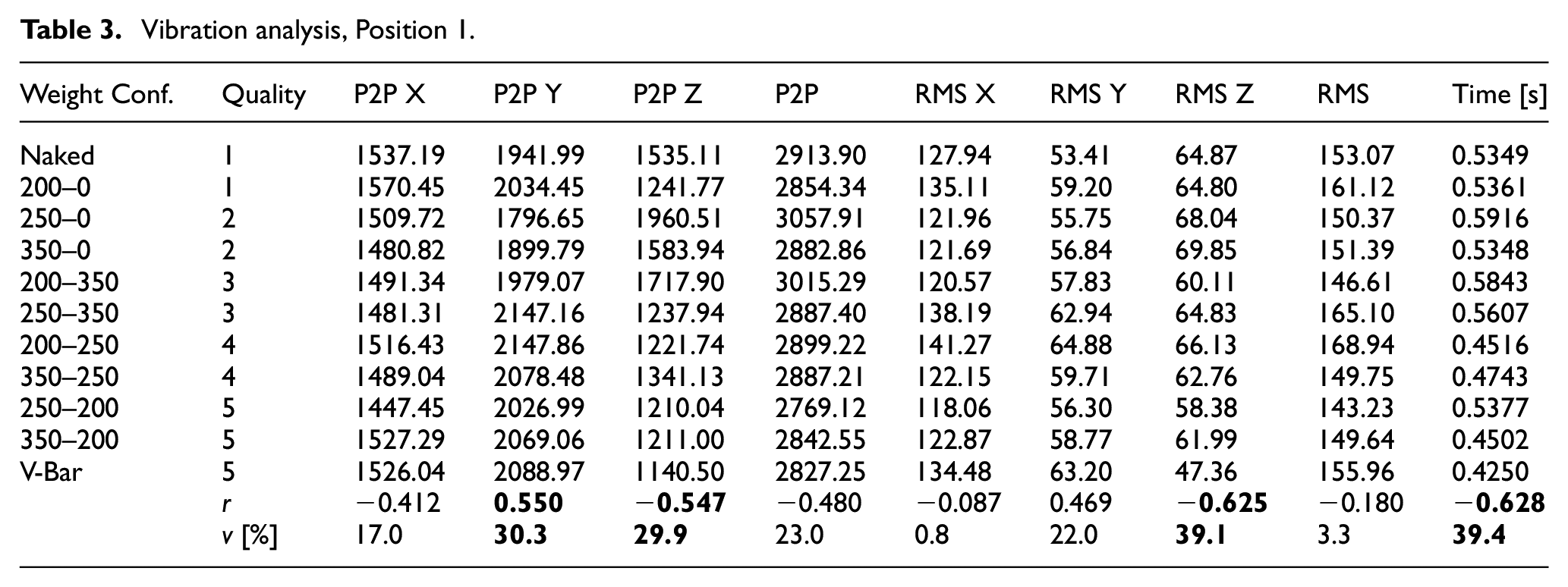
Although Positions 1 (shown in Table 3) and 2 show a limited level of correlation, Position 3 does not show any correlation, while Positions 4 and 5 show a very limited correlation (the complete set of data is reported in Appendix B). All highlighted correlations are negative, indicating that reduced vibration is associated with an improved sensation. It is interesting, however, that the correlation between the Quality and P2P in
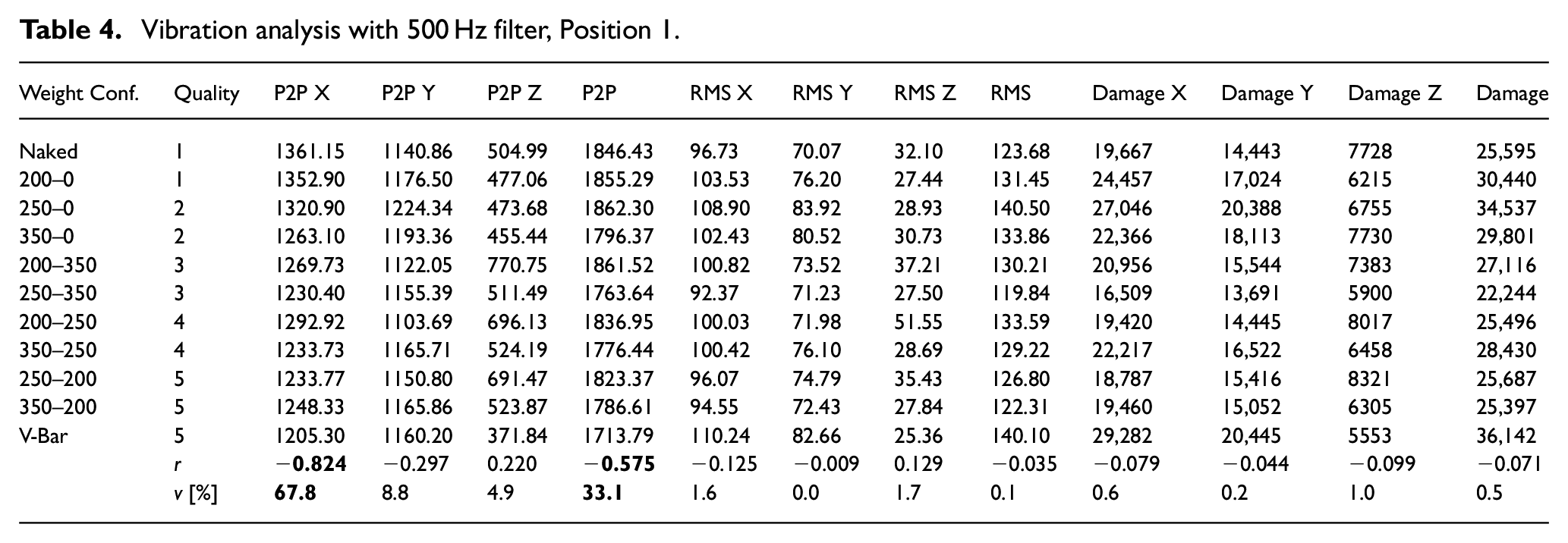
The limited correlation between Quality and metrics is of concern. The suggested explanation is that the archer perceives the vibration of the bow in two different ways: airborne sound and mechanical vibration of the riser. The sound is due to the high-frequency component of the vibrating part of the bow, mainly the string and the limbs. The mechanical vibration of the riser is perceived through the archer’s fingers, wrist, arm and shoulder and it is a low-frequency vibration. According to the literature, the human arm is sensitive to vibrations up to 500 Hz,23–27 so the original vibration signal was filtered with a lowpass filter at 500 Hz. According to Dong et al., 27 along with P2P and RMS, a new metric could be introduced to evaluate the intensity of the vibrations acting on the human arm: damage, as defined in the engineering definition of fatigue. The peaks in the filtered signal were counted with the Rainflow counting method and the damage was calculated as the average of the sorted bin edges multiplied by the number of occurrences. Although this number is not immediately comparable with the engineering definition of damage in fatigue, it could give an idea of the accumulating damaging nature of the signal.
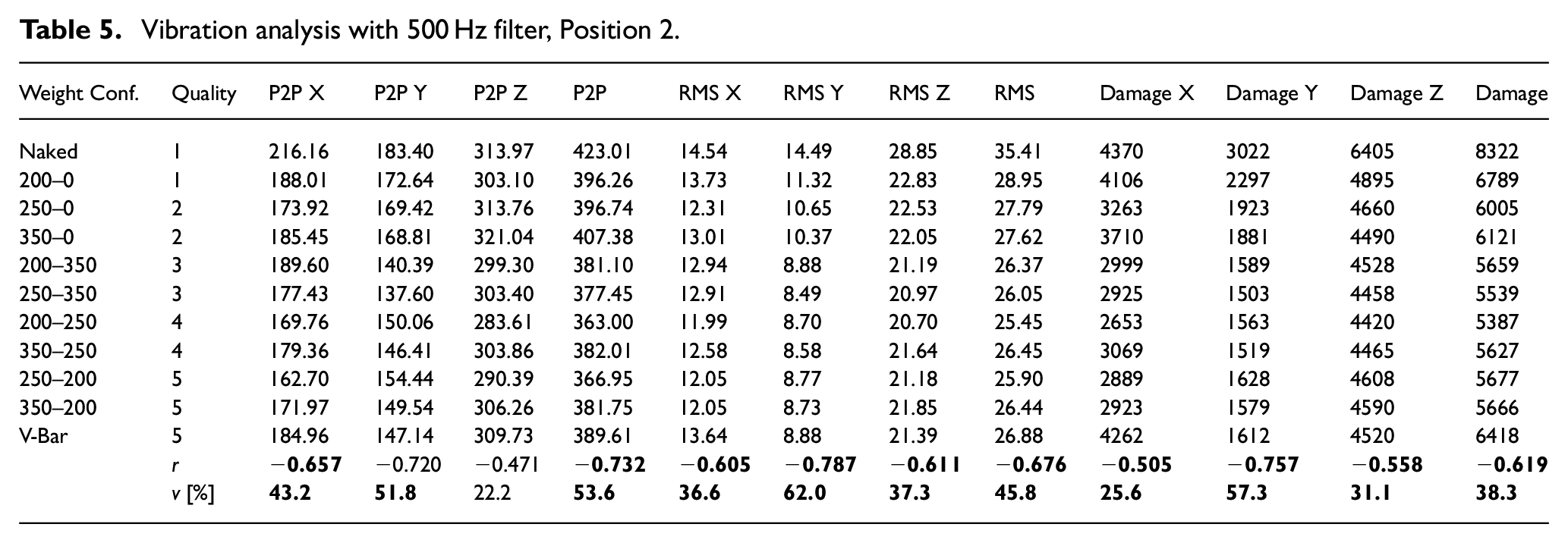
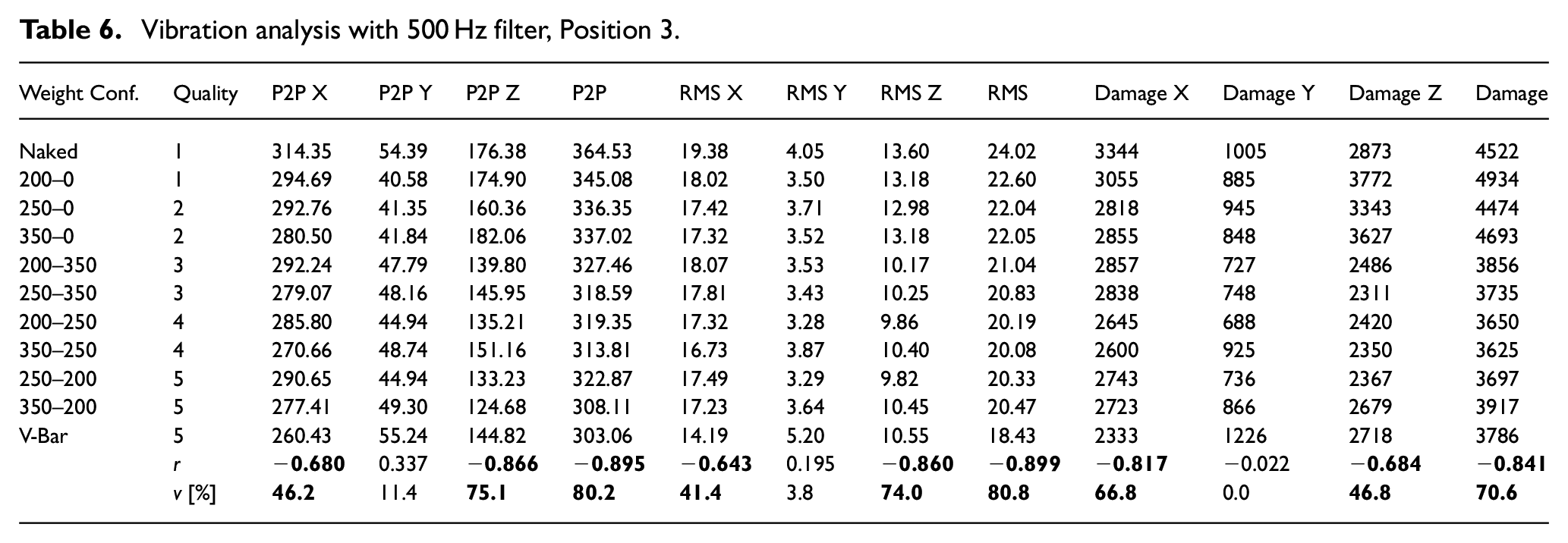
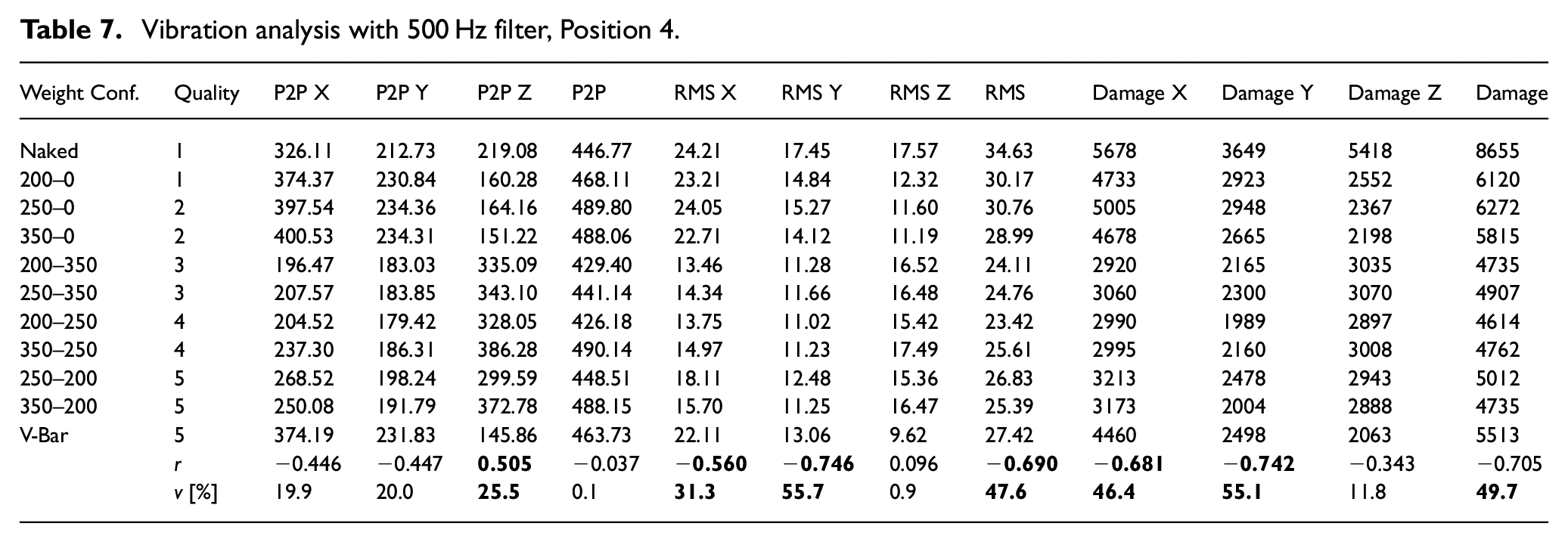
The correlations for the filtered signal are reported in Tables 4 to 8, where Damage X, Y and Z is the damage in the different directions, and Damage is the root sum of squares of the previous values.
Vibration analysis with 500 Hz filter, Position 1.
Vibration analysis with 500 Hz filter, Position 2.
Vibration analysis with 500 Hz filter, Position 3.
Vibration analysis with 500 Hz filter, Position 4.
Vibration analysis with 500 Hz filter, Position 5.
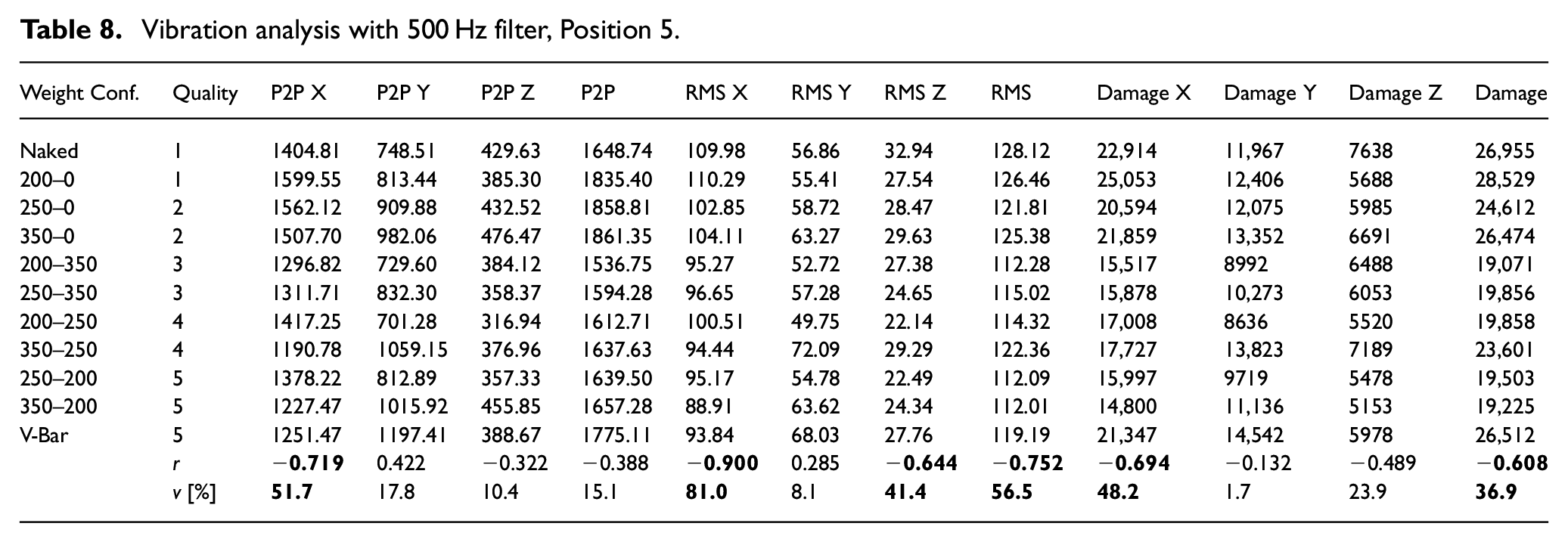
The data analysis shows a good correlation between the filtered signal metrics and the perceived vibrations for Positions 2–5, with high values of the Pearson coefficients and medium to high values of the variances. The archers are sensitive to the amplitude of the vibration and the energy content of the vibration. The damage shows a good level of correlation between the calculated value and the perceived quality. Interestingly, in Position 4 the Pearson coefficient for the peak-to-peak in the
The weight configurations previously identified (350–200 and 250–200 rated ‘Very good’; 200–250 and 350–250 rated ‘Good’) consistently show the lowest level of vibrations according to the proposed metric and are suggested as the best weight configurations.
Bow dynamic behaviour analysis
The Arduino MPU6050 Accelerometer and Gyroscope Sensor was used to compare the recorded dynamic behaviour of the bow with the recorded archers’ sensations. The Arduino MPU6050 sensor recorded the displacement of the bow in
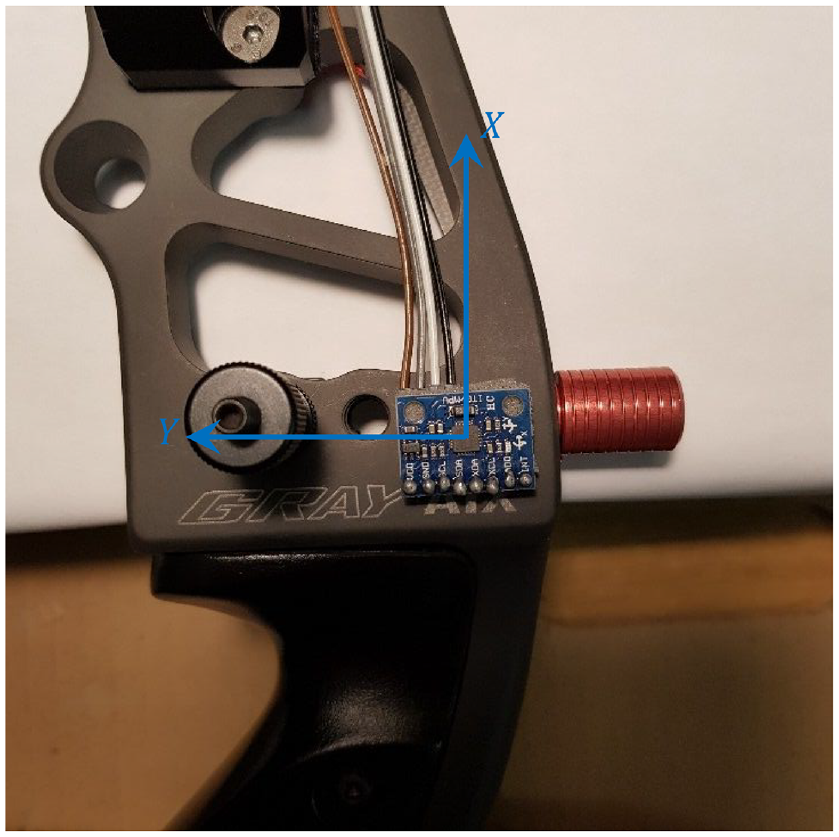
Arduino MPU6050 sensor and the local coordinate system.
Four shots for each weight configuration were recorded and averaged for both the recorded values and the absolute of the recorded values. The Pearson correlation coefficient (
Dynamic behaviour of the bow. Delta X, Y and Z are the displacements in the respective global directions. Roll is the rotation around the X-axis, Pitch is the rotation around the Z-axis and Yaw is the rotation around the Y-axis.
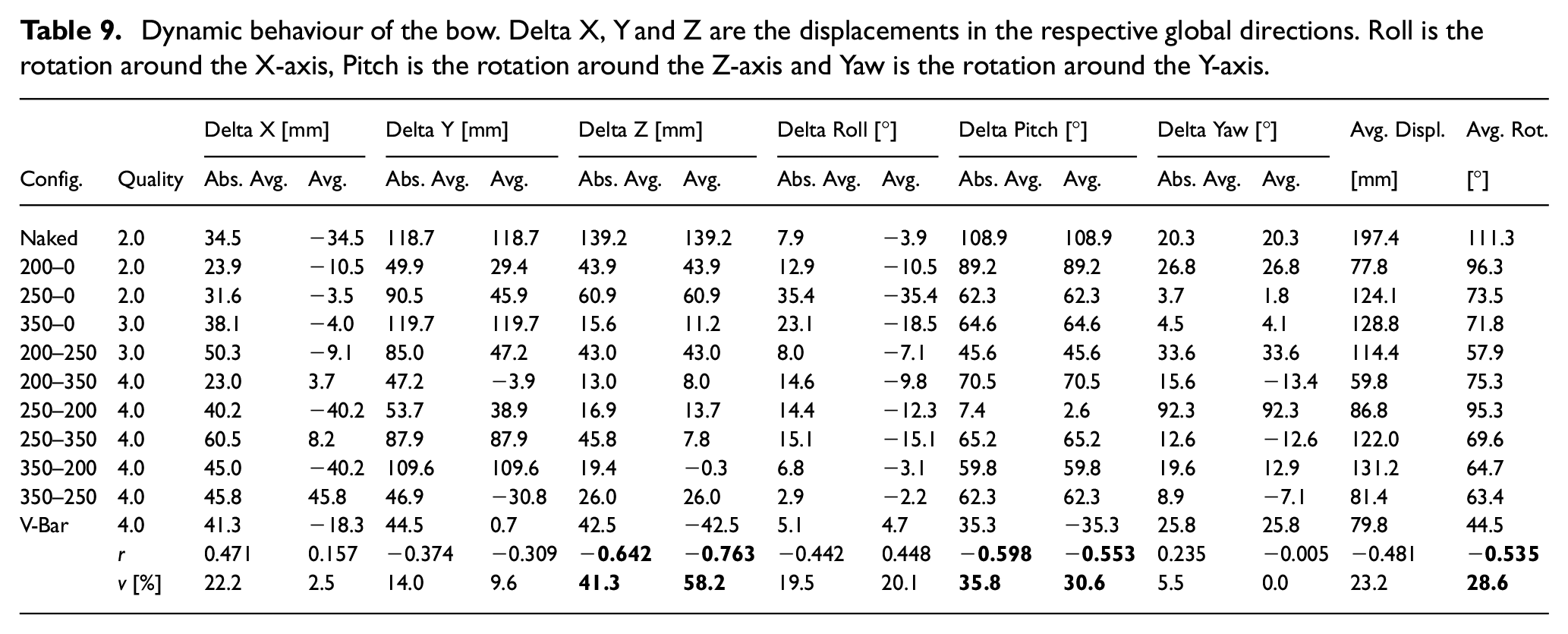
The results of this analysis could be exploited by using the proposed objective metric during the design of a riser to guarantee dynamic performance and a positive user experience.
Of the four best weight configurations previously identified, configuration 200–250 has a dynamic behaviour ‘Acceptable’ (compared to the other three configurations rated ‘Good’) and is discarded.
Subjective metric: Precision
The scoring of 30 arrows per weight configuration is shown in Table 10. The target was a WA – 122 cm, 10-ring target (maximum score 300 points), positioned 50 m away. The archer was from the Archers of the Zoo Lake Club (Advanced archer 16 ). Columns 3 and 4 report the number of X and 10 and the number of nine scored for each weight configuration (standard WA scoring requirement). The column ‘Overall Quality’ (the average of the three subjective metrics; weight balance, vibrations and dynamic behaviour, refer to Appendix A) has been added for reference.
Scoring by weight configuration.
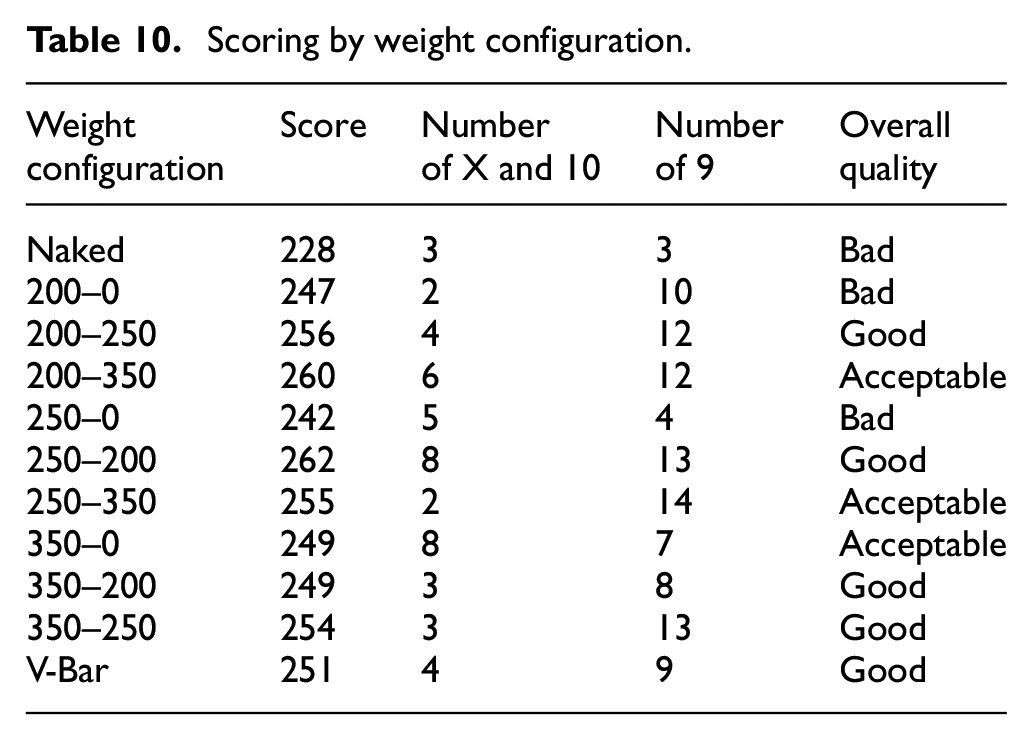
Although this is a standard methodology to compare bow settings or, in this study, weight configurations,28–30 it has been demonstrated that the differences in score reported in Table 10 are within two standard deviations around the average score, so the results are inconclusive from the relative performance point of view. Assuming an average score of 250 for the 11 weight configurations, Park’s theoretical approach
31
could be used to evaluate the archer’s skill level index. From Park,
32
the mean of the arrows’ group width and the standard deviation of the group width can be calculated. A Matlab programme was written to simulate the shooting of multiple ends of 30 arrows each. With 100,000 ends simulated (3,000,000 simulated arrows) the average score is 256.35 with a standard deviation of
The Matlab programme was also used to verify how many arrows are necessary to reach stability in the average score. It is suggested that is necessary to shoot at least 30–35 ends per weight configuration (900–1050 arrows) to obtain an average score stable enough to be compared with the average scores from the other weight configurations. It is clear that this approach is ineffective from the comparison of the relative performance point of view. Also, the alternative methodology suggested by Park 32 requires a significant number of arrows to account for the variability in the shooting.
Nevertheless, some comments can be made on this experience. During the tests, the archer was capable of quickly adapting to the shortcoming of the bow and, after some arrows, was shooting efficiently irrespective of the weight configuration. It is suggested that a good shooting technique is capable of overcoming the deficiency of the bow, and this could be the explanation why there is no consensus in the barebow community about the best weight configuration. The archer, instead of going through the time-consuming process of trying all the possible weight configurations and deciding on his/her personal best, would accept the behaviour of the bow and get used to it.
While nothing can be said about the relationship between scores and weight configuration, there is a clear relationship between the physical sensation during the shooting and the weight configuration. It could be argued that, during a long competition, a more balanced bow would provide an advantage to an archer who would be less fatigued at the end of the competition. It was reported by the archer that the configuration 350–250 was ‘very heavy’ and in a long competition could significantly fatigue the archer. Accordingly, this weight configuration was disqualified and so, of the three best weight configurations previously identified, only two are suggested after the precision analysis: 350–200 and 250–200.
Discussion
Eleven weight configurations were analysed to determine the best stabilisation configuration in a barebow style bow, as defined by the WA Federation. The problem was analysed using a novel approach that considers objective metrics (measurable quantity), subjective metrics (related to the experience using the sporting equipment) and precision to give a more user-oriented approach to the problem. For the weight configuration analysis, the selected objective metrics were the vibrations of the bow recorded at five different positions along with the bow and the dynamic behaviour of the bow. The subjective metrics were the sensations associated with shooting the bow with different weight configurations. In particular, data were collected about the aiming phase, the vibrations and the dynamic behaviour of the bow in the shooting phase. The scoring associated with the weight configurations was also tested with inconclusive results. Many more shots would be required to relate the shooting precision to the weight configuration. The best weight configuration was decided by considering these three aspects together (metrics correlations).
The best weight configurations are the 350–200 (350 g on the central attachment and 200 g on the lower attachment) and the 250–200 (250 g on the central attachment and 200 g on the lower attachment). These weight configurations guarantee the lowest level of vibration and good dynamic behaviour of the bow on shooting. The archers report a good feeling during the aiming and during the shooting and, with a good archery technique, they allow for a good level of precision on target.
Analysis of the collected data shows that the archer is not sensitive to the duration of the vibration but is sensitive to the amplitude of the vibrations induced by the act of shooting (P2P) and the energy content of the vibration (RMS). The archer is also sensitive to both the high-frequency vibration range (sound) and the low-frequency range (vibration of the riser against the archer’s hand). The lower the vibration, the better the feeling with the double-weight configurations performing constantly better than the single-weight configurations. Among the double-weight configurations, the heaviest of the two weights is better attached to the central attachment and the lightest to the lower attachment. From the subjective metrics point of view, it was necessary to differentiate between the phases of the shooting to avoid the archer averaging the sensations experienced when using the bow. The archers scored the same weight configuration differently for the different phases of the shooting, generally preferring a double-weight configuration over a single-weight configuration with the heaviest weight in the central connection point.
Conclusion
This work shows that a pure performance-based approach is not enough to capture the complexity of the archer-bow interaction. The methodology developed to solve the proposed problem considers both subjective and objective metrics and the relationship between them. Identifying the objective metrics that correlate with archers’ perceptions required considerable effort and drew on some knowledge of human body mechanics and on knowledge in the archery community. When successful, the correlation analysis provides deeper insight into the problem and is extremely effective in understanding what the archer considers to be a good performance of the bow. This knowledge could be used to design better archery equipment from both performance and user experience points of view.
It is suggested that this methodology could be used for every type of sporting equipment and, in particular, for a human-centred improvement of sporting equipment.
Footnotes
Appendix A
The following data report the results from the questionnaire administered to the archers of the Archers of the Zoo Lake Club, Johannesburg, South Africa. The weight configurations were scored using a numerical scale ranging from ‘very bad’ (numerical score 1) to ‘very good’ (numerical score 5). The questionnaire was divided into three questions exploring the archer’s sensations associated with the weight configurations, for three different phases of the shooting, namely: The weight balance of the bow during the drawing and aiming phases. The vibrations of the bow during the shooting of the arrow. The dynamic behaviour of the bow after the shooting of the arrow. The overall quality is the average of the three defined metrics.
Appendix B
The following data are reported in the Global coordinate system. P2P is the root sum of squares of the P2P in the three directions
Acknowledgements
The authors would like to acknowledge all the people involved in this study: Prof. Claudia Polese, for believing (sometimes) in this project. All the technical staff in the Workshop in the North West Engineering Building, University of the Witwatersrand, for the help and the work. A special thanks to the staff of the Archers of the Zoo Lake Club, Johannesburg, for the access to their facilities and to all the archers from the Archers of the Zoo Lake Club, for the hours spent testing the equipment.
Declaration of conflicting interests
The author(s) declared no potential conflicts of interest with respect to the research, authorship, and/or publication of this article.
Funding
The author(s) received no financial support for the research, authorship, and/or publication of this article.
Disclaimer
The study was approved by the Human Research Ethics Committee (Non-Medical) of the University of the Witwatersrand to include the use of human participants. The three documents used in this study, the Introduction letter, the Consent form and the Questionnaire, are part of the ethics protocol defined in the Research Ethics document H22/01/25 which was approved by the Human Research Ethics Committee (Non-Medical) of the University of the Witwatersrand on the 28th of January 2022.
All participants in the research signed the Consent form reported in the Research Ethics document H22/01/25 approved by the Human Research Ethics Committee (Non-Medical) of the University of the Witwatersrand on the 28th of January 2022.

Data
All data used in the paper will be available on request. Please contact the main author by email.