




Abstract
The purpose of this study was to investigate the resistance to breathing in metabolic systems used for the distribution and measurement of pulmonary gas exchange. A mechanical lung simulator was used to standardize selected air flow rates (
Keywords
Introduction
Indirect calorimetry is a method that determines aerobic energy metabolism via the measurement of pulmonary gas exchange. 1 This method can be applied to various exercise modes and used to measure maximal oxygen uptake in athletes in various sport-specific performances. The traditional gold standard for measuring aerobic energy metabolism is the Douglas Bag method, which involves collecting the exhaled air in sealed bags followed by an analysis of the contents in terms of volume and gas fractions.2,3 Since the 1960s, automated electronic metabolic systems that facilitate practical measurements and the presentation of data in real time have been introduced to the commercial market. Automated metabolic systems are based on mixing chamber, breath-by-breath or hybrid methodology (through micro-sampling into a miniature mixing chamber) and are available both as stationary systems for the laboratory and portable systems for measurements in the field.4–8 Also, custom-designed portable Douglas Bag systems have been built in order to provide very accurate oxygen uptake measurements in the field.9,10
Automated metabolic systems have been validated against the Douglas Bag method during submaximal and maximal exercise.4–7 However, some have not been sufficiently validated and may induce considerable errors.11,12 The suggestion is that automated metabolic systems should be validated against the Douglas Bag method or by means of a mechanical lung simulator designed for metabolic systems.13,14 The validation of automated metabolic systems using highly trained endurance athletes is rare. Most validation has been performed during submaximal exercise or in moderately trained athletes during maximal exercise.11,12 Only a few studies have validated automated metabolic systems using highly skilled endurance athletes with pulmonary ventilation corresponding to nearly 200 L/min during maximal exercise.5,6,15 Highly trained athletes are reported to ventilate up to 278 L/min during maximal exercise 16 and might induce further limitations in accuracy for some systems. 15 In one study, a metabolic simulator was used to validate a portable metabolic system using a simulated ventilation of 240 L/min. 17 In those cases, another factor that should be considered is the resistance (RES) to breathing found in the metabolic system’s hardware. The capacity for this kind of extreme breathing is likely a challenge for many breath-by-breath systems and even for systems with mixing chamber technology. Limitations would be expected in these systems due to an increase in RES caused by the hoses, valves, flow meters, and mixing chambers.
In order to minimize RES, Åstrand and Rodahl
18
recommended that hoses should be 30 mm or greater in internal diameter (ID), but they did not state the hoses’ maximum recommended length. Saltin and Åstrand
19
noted that in a Douglas Bag system with hose ID of 35 mm and length of 0.5 m, the pressure difference between the ambient air and the air inside the hardware were 1, 3, 6, and 10 cmH2O at air flow rates of 100, 200, 300, and 400 L/min, respectively. These are data from a system with hardware that is no longer used in automated metabolic systems. Today’s systems also use much longer hoses. Gore
20
recommended that the pressure should be less than 6 cmH2O at flows up to 300 L/min and hoses should be greater than 30 mm in ID and no longer than 1.5 m on either the inspiratory or expiratory side. The standard lengths of hoses used by manufacturers of modern metabolic systems are often 1.7–2.7 m (Hans Rudolph Inc., Shawne, USA and AMIS 2001; Innovision A/S, Odense, Denmark). Jensen et al.
7
investigated the pressure in an automated metabolic system (AMIS 2001; Innovision A/S) and a Douglas Bag system by simulating minute ventilation of 120 L/min using a 3-L calibration syringe (Hans Rudolph Inc.). The results showed a pressure variation between the ambient air and the air inside the hardware of 2.8 and 3.2 cmH2O, respectively. However, use of a 3-L manual calibration syringe limits the minute ventilation to approximately half of that expected from an elite athlete in aerobic sports when performing at
Despite the given recommendations, no studies have investigated the RES to breathing in the modern hardware contained in automated metabolic systems, or its influence on pulmonary ventilation and aerobic energy metabolism during extreme performances. Moreover, hardware such as valves, hoses, flow meters, and mixing chambers are available from different manufacturers. The various materials, volumes, and geometries of the hardware from the manufacturers would likely cause differences in breathing RES.
This study therefore aimed to investigate the RES to breathing in hardware of three well-known automated metabolic measurement systems and a custom-built Douglas Bag system.
Methods
Air flow rates
Pulmonary ventilation (

In order to provide selected standardized
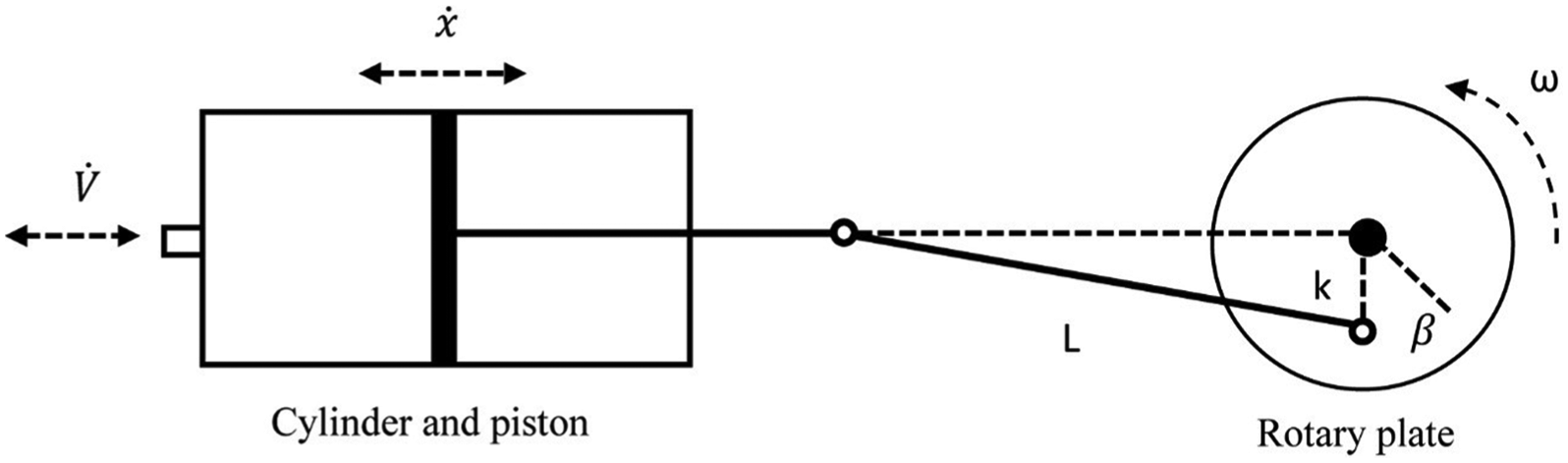
The sketch shows the mechanical lung simulator used in the study.
The

Initially, pilot measurements were performed with simulated VT of 1, 2, 3, and 4 L; k set at 0.015, 0.030, 0.045, and 0.0625 m; f of 15, 30, 45, 60, and 75 VT/min; and ω set at
Delta pressure and RES
In order to investigate the RES to breathing (air flow) in the metabolic systems’ hardware and components, pressure differences (Δp) were measured (−2500 to 2500 Pa, GMSD25 MR; Swedish Thermo Instrument AB, Täby, Sweden) between the air inside the hardware and the ambient air at a rate of 100 Hz and filtered at 8 Hz using a Butterworth filter in Microsoft Excel. At both inspiratory and expiratory air flows, the Δp in the systems’ hardware should be greatest near the subject’s mouth. Thus, the Δp was measured in the adapter between the mouthpiece and the breathing valve by replacing the regular adapter with a custom-made adapter manufactured from ABS plastic, using additive manufacturing (Mid Sweden University). The custom-made adapter geometry was equivalent to the manufacturer’s original adapter but supplemented with connections for measuring negative and positive Δp during inspiration and expiration, respectively, (Figure 2). For connection to the mechanical simulator, a simple plastic tube was used instead of the original mouthpiece. The laboratory air pressure, temperature, relative humidity, and density were 98,996 Pa, 18.7° C, 40%, and 1.18 kg/m3 during the testing, respectively.
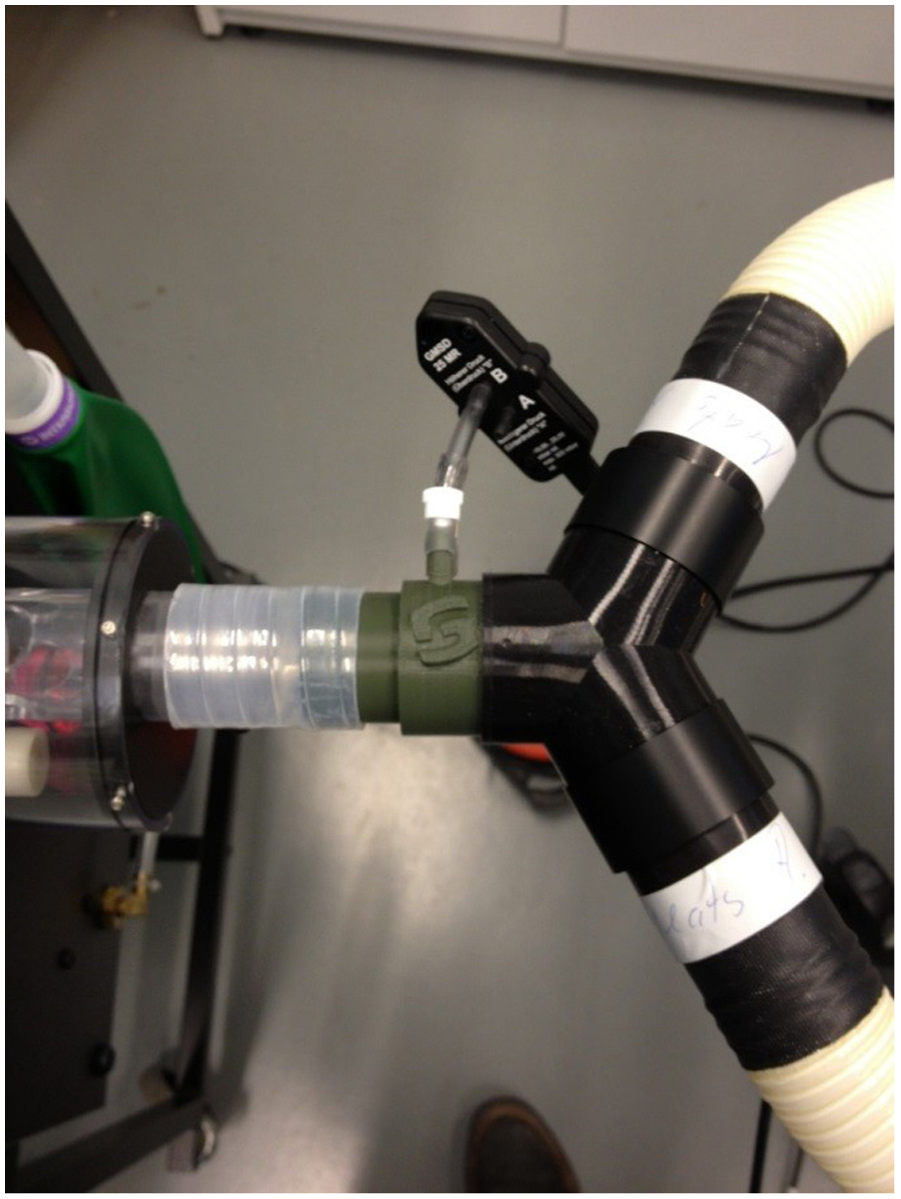
Customized mouthpiece adapter with connection for measuring negative and positive pressure differences versus ambient air at different air flow rates.
As shown in equation (3), the RES to air flow (RES, Pa/L/s) was calculated by the ratio between Δp and

Since the measured Δp is negative compared to the ambient air during inspiration and positive during expiration, a negative sign is reported before the values for the inspiratory RES.
System hardware
The Δp was measured in the standard hardware for a custom-built Douglas Bag system and three automated metabolic measurement systems: Jaeger Oxycon Pro (CareFusion Germany 234 GmbH, Hoechberg, Germany), Moxus Modular Metabolic System (AEI Technologies Inc., Pittsburg, USA), and AMIS 2001 (Innovision A/S).
The Moxus Modular and Oxycon Pro systems were mainly equipped with hardware components from a manufacturer (Hans Rudolph Inc.) that supplies hardware to several manufacturers of automated metabolic measurements systems. The Moxus Modular system uses a pneumotachometer (4813; Hans Rudolph Inc.) on the inspiratory side to measure gas flow and a hose (Hans Rudolph Inc.) of length 2.7 m and ID 35 mm to transmit the ambient air into a two-way non-rebreathing valve (2700 T-shape; Hans Rudolph Inc.) before entering the lungs. On the expiratory side, the same type of hose transmits the expired air from the breathing valve to a 4.2-L mixing chamber (Spelsberg, TK series, type 4x and 12 k; Newark Element14, Chicago, USA), where the expiratory gas fractions are measured in normal use.
The AMIS 2001 system’s design is similar to the Moxus Modular system with a pneumotachometer and two-way non-rebreathing valve (Innovision A/S), inspiratory and expiratory hoses of 2.0 m in length with ID of 40 mm (Flexible ducting U62; Senior Aerospace BWT, Adlington, UK), and a mixing chamber (15-L bag of rebreathing type; J Kruuse A/S, Langeskov, Denmark).
The Oxycon Pro system’s standard setup in mixing chamber mode is a breathing valve of the same type as the Moxus Modular system (2700 T-shape; Hans Rudolph Inc.). The Oxycon Pro’s system, however, has a shorter hose of length 1.7 m and ID 35 mm (Hans Rudolph Inc.) only on the expiratory side where the gas flow is measured by a turbine (707230; CareFusion Germany 234 GmbH) mounted on the outlet of the mixing chamber (4.0 L; CareFusion Germany 234 GmbH).
The Douglas Bag system was equipped with the same type of breathing valve and hose, on the expiratory side, as the AMIS 2001 system and a custom-built three-way valve 5 (Håkan Eriksson, Karolinska University Hospital, Stockholm, Sweden) to distribute the expired air, either to the ambient surroundings or for collection into a bag (130 L, PU-coated fabric; C. Fritze Consulting, Svedala, Sweden). The three-way valve and bag were placed on a stand where the bag lay on a wooden board at an angle of 38° to a horizontal plane. To study the RES throughout the process of the bag being filled, the bag was filled to the volume provided by the manufacturer.
The measurements of Δp were done on the inspiratory and expiratory sides for the complete hardware systems and separately for the breathing valves and breathing valves with mounted hoses.
In recent years, development of large treadmills has made it possible to study more sports specifically than has been the case in previous experiments indoors. For example, before large treadmills entered the market, cross-country skier and biathletes’ maximal oxygen uptake were measured while exercising on a bicycle ergometer or running on a small treadmill. 19 Nowadays, this is done more sport specifically by roller skiing in the classical and free-style techniques on a large treadmill that provides the necessary space. 21 With the introduction of large treadmills, however, the distance between the test subject on the treadmill and the automated mixing chamber system positioned at the side of the treadmill has become longer compared with similar measurements formerly made on bicycle ergometers and narrow treadmills. A larger distance between the system sensors and the subject on the treadmill requires longer hoses for distribution of the inhaled and exhaled air, which also should result in an increased RES to breathing. Therefore, measurements were carried out both with the systems’ standard hose lengths and with extended hose lengths. In the experiments using extended hose lengths, the standard hoses were put together using short aluminum tubes with a wall thickness of 1.5 mm. The lengths of the extended hoses were 4.4 m (Jaeger Oxycon Pro), 5.4 m (Moxus Modular), and 4.0 m (AMIS 2001 and Douglas Bag systems). In addition, two alternative types of breathing valves were tested: Y-shape 2730 (Hans Rudolph Inc.) and Radiax (CareFusion Germany 234 GmbH). All hoses and valves were unused at the start of the experiment.
During the experiments, the hardware was hung as shown in Figure 3, with most of the hoses hanging reasonably straight in order to standardize the forthcoming measurements and simulate the shortest path between an exercising athlete and the system sensors. After the Δp of a complete hardware system was measured, pieces were removed, starting with the system sensors (pneumotachometer, mixing chamber, three-way breathing valve with bag), and Δp was measured from the remaining system until only the breathing valve remained.
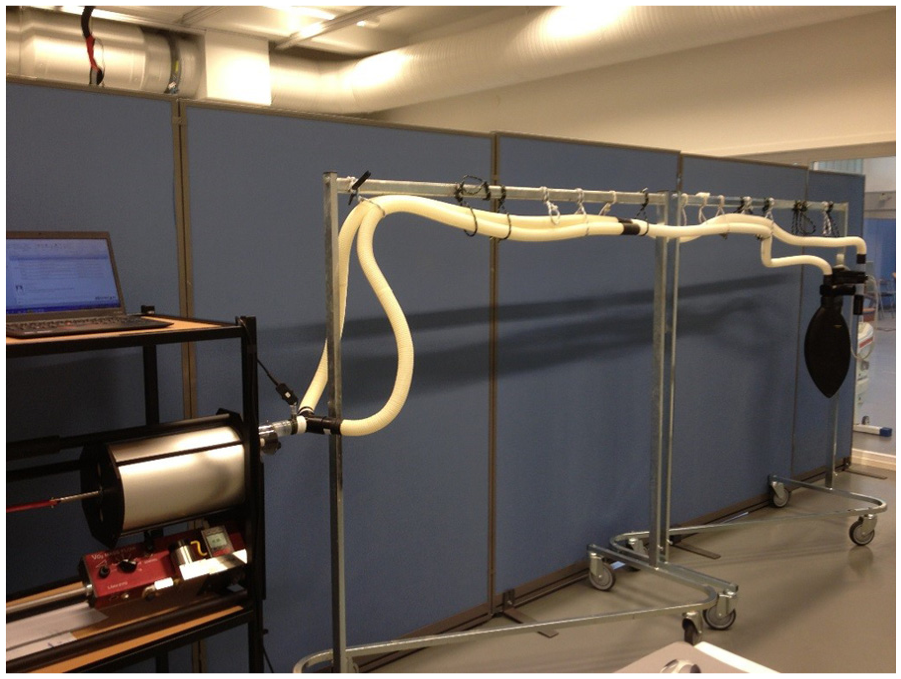
The systems’ hardware was hung up during the experiments, as shown in the photo.
Moreover, Δp calculations were made for the hoses on the inspiratory and expiratory sides using the difference in measured Δp for the breathing valve with mounted hoses minus the measured Δp for the breathing valve. Furthermore, the Δp for the flow meters, mixing chambers, and three-way valve with bag was calculated using the difference in Δp for the hardware system minus the measured Δp for the breathing valve with mounted hoses.
Statistics
The statistical analyses were done in SPSS for Windows statistical software release 24.0 (SPSS Inc., Chicago, USA). The results of RES for the metabolic system variance, breathing valve variance, and
Results
The results of RES for the four metabolic systems and breathing valves are presented in Figures 4 and 5, respectively. There was a significant (p < 0.05) difference in RES between all four metabolic systems at all
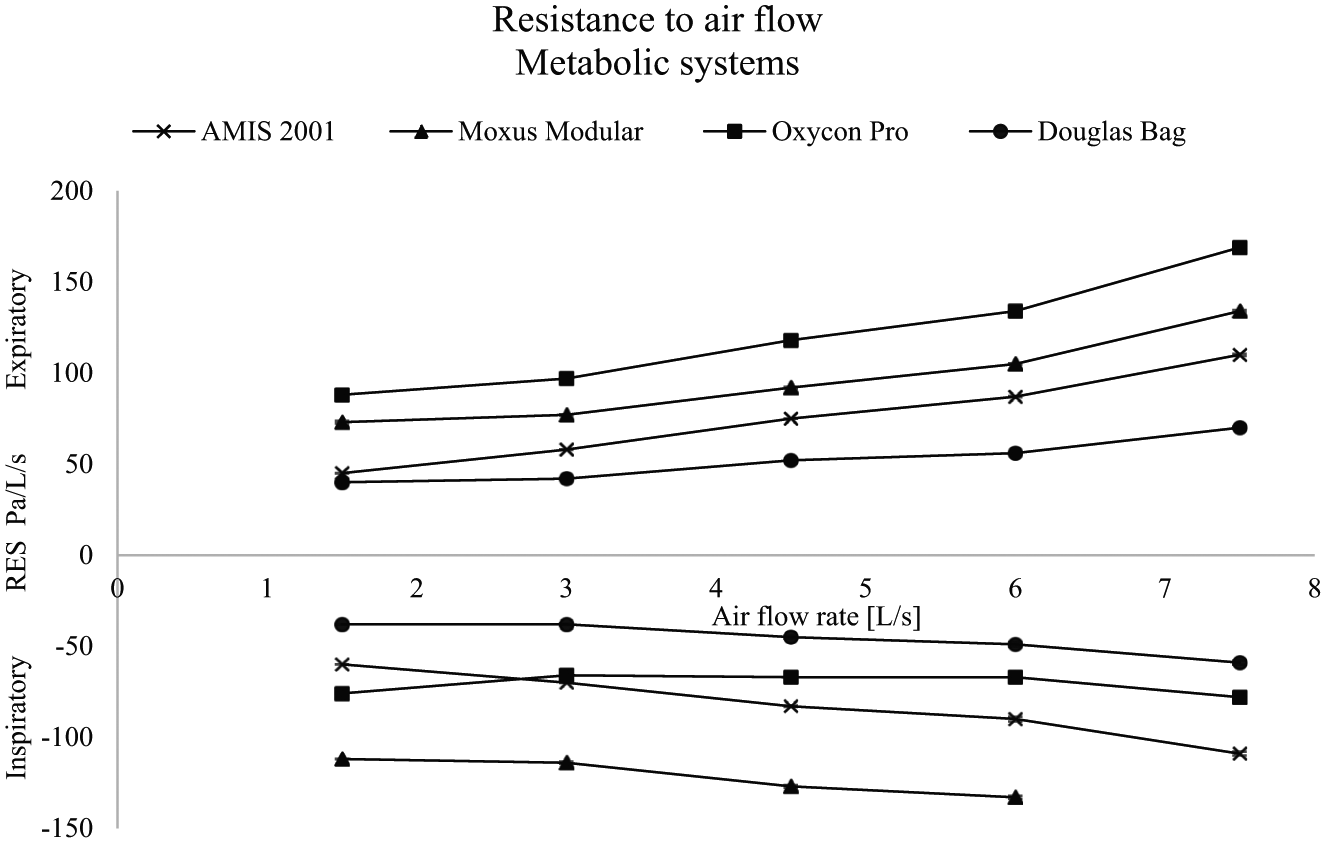
Results (mean) of resistance (RES) for the four tested metabolic systems’ hardware on the inspiratory and expiratory sides. Note: SDs are ≤1.3 and hidden behind the markers.
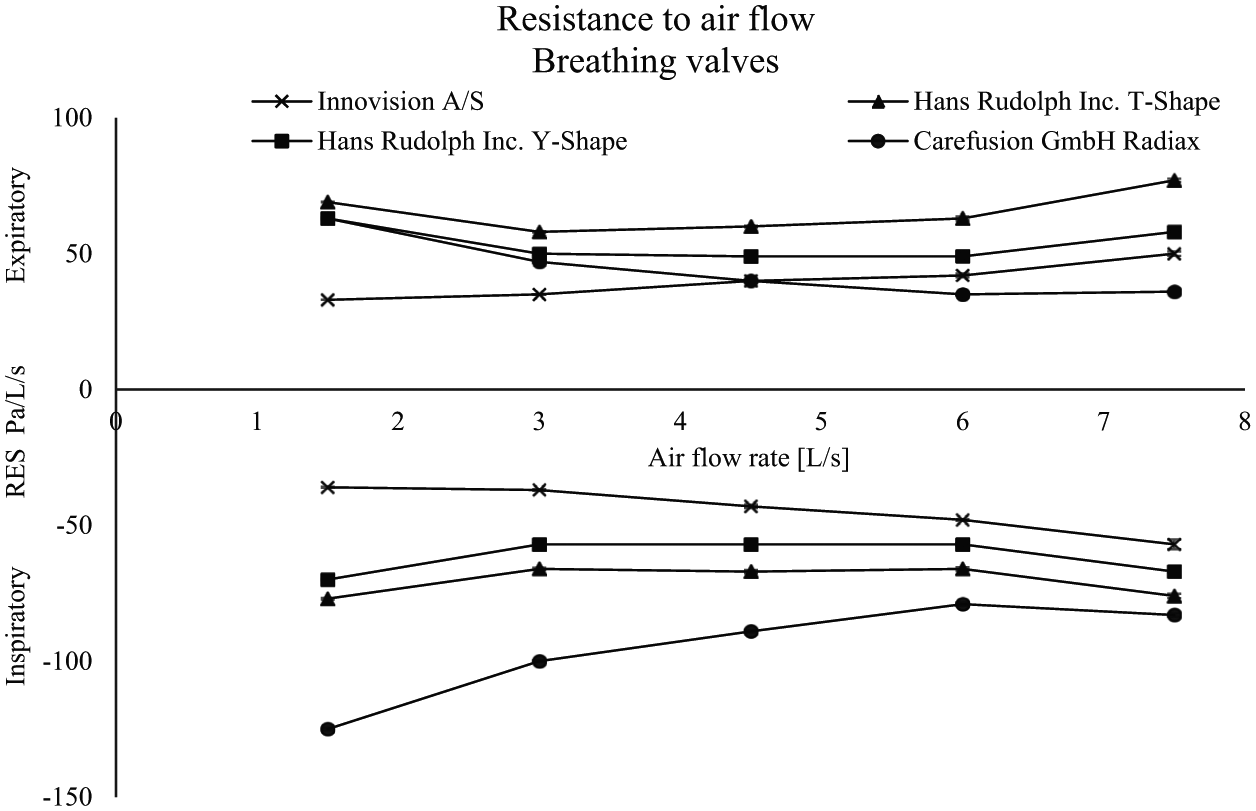
Results (mean) of resistance (RES) for the four tested breathing valves on the inspiratory and expiratory sides. Note: SDs are ≤1.8 and hidden behind the markers.
Similarly, there was a significant (p < 0.05) difference in RES between the four tested breathing valves at all
In Figure 6, the distribution of RES for the different hardware components is presented as mean ± SD of the five
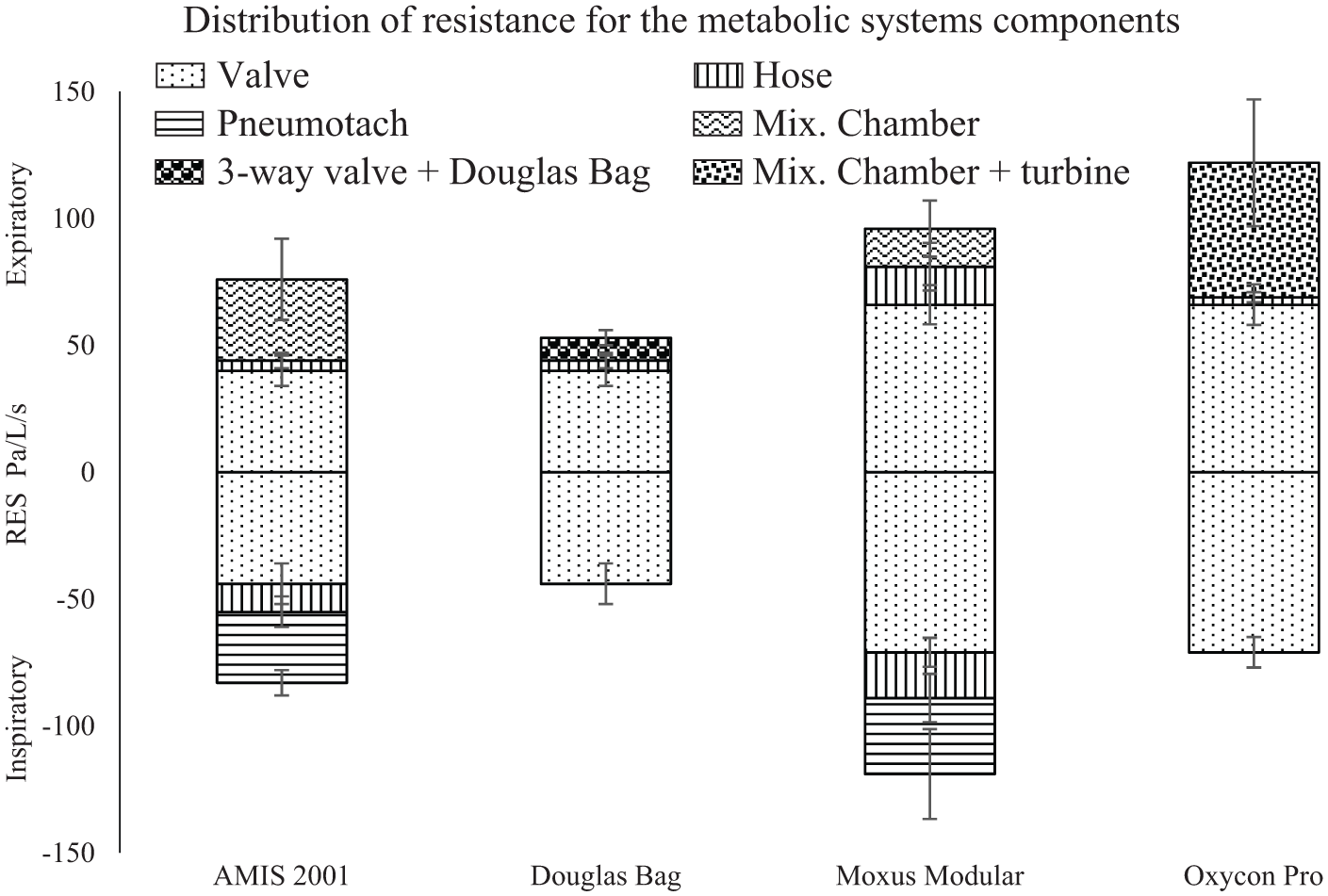
Distributions of RES for the metabolic systems’ hardware components on the inspiratory and expiratory sides. Mean ± SD from the five
A calculation of the relative distribution on the expiratory side shows that the breathing valves of the AMIS 2001, Douglas Bag, Moxus Modular, and Oxycon Pro systems represent 56%, 78%, 71%, and 53% while the hoses represent 4%, 6%, 15%, and 13%, respectively. The two types of mixing chambers used by the AMIS 2001 and Moxus Modular systems represent 40% and 15%, the three-way valve with bag used by the Douglas Bag system represents 16%, and the Oxycon Pro system with the combined mixing chamber and turbine concept represents 34% of the total RES.
The measurements using extended hoses resulted in an increased RES of 2%–25% within the studied range of
Discussion
This study has provided extensive knowledge of breathing RES in hardware of well-known automated metabolic measurement systems for the first time. Within the range of completed inspiratory and expiratory
Jensen et al.
7
reported a Δp of 2.8 cmH2O (275 Pa) for the AMIS 2001 system and 3.2 cmH2O (314 Pa) for a Douglas Bag system when checked at
Due to peak Δp marginally exceeding the measuring equipment range at the highest
There is a significant (p < 0.05) difference found in RES between all four tested metabolic systems at all completed
The Douglas Bag system has the lowest RES among the four tested metabolic systems. This system has approximately half of the total RES compared to the three automated systems, likely due to the following reasons: a sensor and hose were not used on the inspiratory side and a very low total RES exists on the expiratory side from the hose, three-way valve, and bag. If the RES from the inspiratory and expiratory sides is summarized, the breathing valve represents 89% of the total RES in the Douglas Bag system. During the complete filling of a bag, a trend toward a higher Δp is observed in the beginning and final phase of filling, particularly at the two lowest
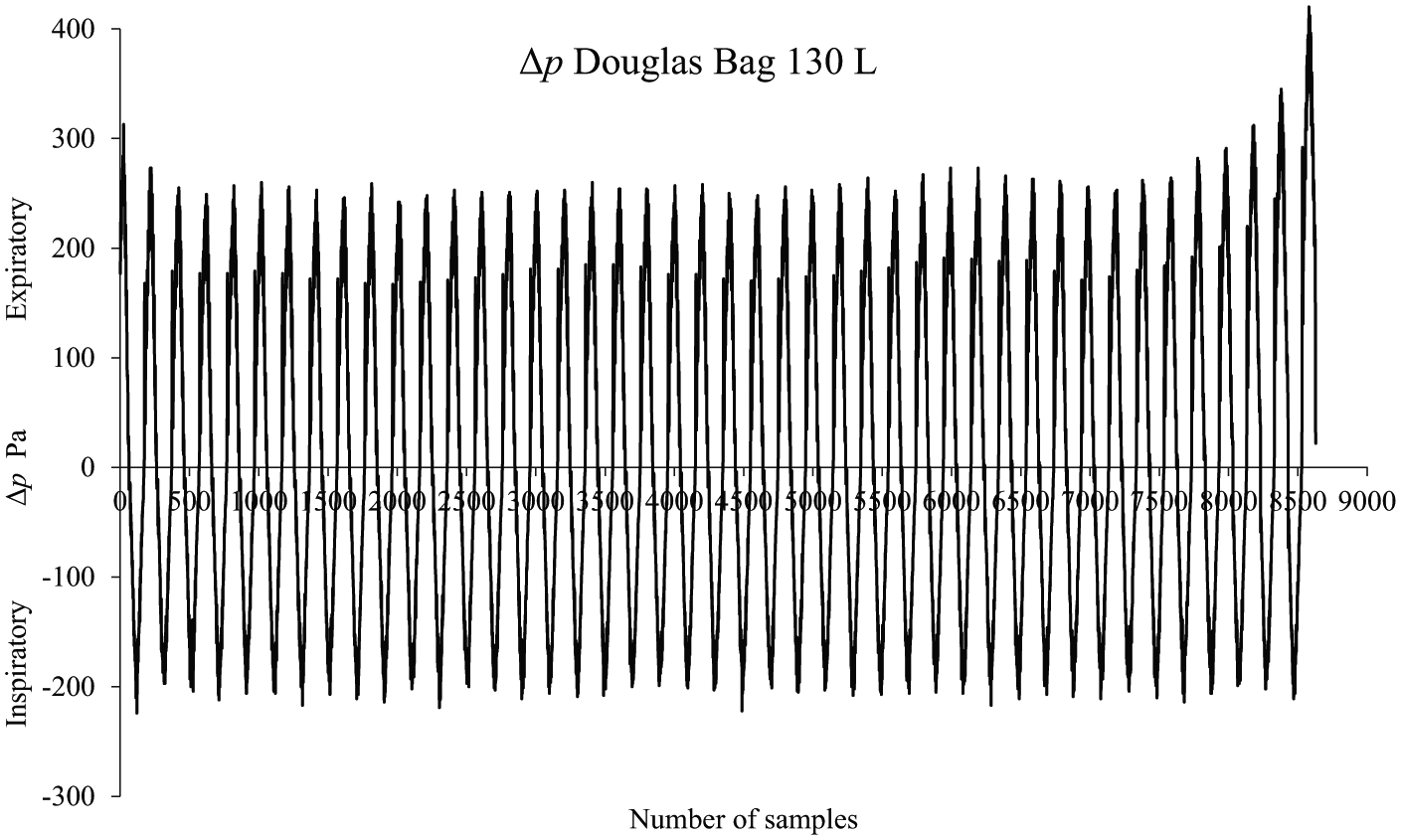
Δp measured at 100 Hz during the complete filling of a 130-L Douglas Bag.
There are also significant (p < 0.05) differences in RES between all tested breathing valves at all
Surprisingly, the hoses play a relatively small role in the total RES among the systems’ components. An average from the completed
The breathing valves, however, constitute the largest RES among the components. When summarizing the RES from both inspiratory and expiratory sides, the breathing valves constitute between 55% and 89% of the total RES for the metabolic systems. If the RES in metabolic systems is found to influence an athlete’s pulmonary ventilation and oxygen uptake, then product development should be focused on breathing valve’s hardware to minimize RES.
Significant (p < 0.05) differences exist in RES between most of the completed
The RES in the metabolic systems’ hardware is defined as the ratio of delta (driving) pressure to the rate of air flow. In this study, the driving pressure during simulated inspiration and expiration was achieved by means of a differential cylinder that served as a human lung with the advantage of achieving standardized air flow rates. Even though the mechanically created flow curves, which have some similarity to a sine curve, differ from the dynamic flow curves achieved by human breathing, the results of measured mean Δp and RES may be considered relatively similar in terms of the mean air flow rates of human breathing.
The RES depends on the dimensions for gas passage, and the properties and velocity of the gas. Also, for turbulent flow, a larger driving pressure is required to produce the same air flow rate. A calculation often used in fluid mechanics to investigate flow characteristics is the Reynolds number 22 (Re) as shown in equation (4). Re is a unitless number of the ratio of inertial forces to viscous forces

where ρ is the air density (kg/m3), U is the characteristic velocity (m/s) of the flow, L is the characteristic length (m) of an object, and µ is the dynamic viscosity (Pa s) of the gas. In a pipe, the ID is used as characteristic length (L = ID), and the average speed is used as characteristic velocity (U = V). A Re above 2300 is considered to be critical Re, where laminar flow transitions to turbulent flow. With ρ set at 1.18 and µ set at
Conclusion
In summary, the highest RES among the tested systems is found for the automated systems, while the Douglas Bag system has the lowest RES. The results of this study show unexpectedly large differences in RES between the tested metabolic systems’ hardware. Among the hardware components, the breathing valves show the highest RES, while the hoses show the lowest RES.
Although two of the tested automated metabolic systems at time of writing are no longer available in the market, manufacturers of mixing chamber systems often use the same type of hoses, valves, and flow meters as were tested in this study.
Future research should investigate whether RES in metabolic systems, similar to those included in this study, has an influence on elite athletes’ ventilation and aerobic energy expenditure. Similarly, follow-up work should explore whether a difference or similarity between inspiratory and expiratory RES has an influence on athletes. Thus, how different RES to breathing affects ventilation, submaximal, and maximal oxygen uptake in elite athletes remains to be investigated. The authors believe that the result of such a study should provide valuable information on the importance of RES to researchers, test managers, and manufacturers of metabolic systems.
Footnotes
Acknowledgements
Many thanks go to Per Skoglund (Mid Sweden University) for making the breathing valve plastic adapters with connection for pressure measurements, and to David Sundström (Mid Sweden University) and Olga Tarassova (the Swedish School of Sports and Health Sciences) for helping with Microsoft Excel macros, which facilitated the analyses of air flow rates and differential pressures, respectively.
Declaration of conflicting interests
The author(s) declared no potential conflicts of interest with respect to the research, authorship, and/or publication of this article.
Funding
The author(s) received no financial support for the research, authorship, and/or publication of this article.