




Abstract
Background:
Chronic obstructive pulmonary disease (COPD) is one of the main contributors to the global burden of disease.
Objectives:
This systematic review aimed to evaluate the disease burden of COPD in the Chinese population and to determine the factors influencing the economic burden of the disease.
Design:
This is a systematic review study.
Data sources and methods:
We searched PubMed, Web of Science, Embase, Chinese National Knowledge Infrastructure, WANGFANG Data, and VIP databases for studies regarding the disease burden of COPD in mainland China published before 31 December 2022. The Agency for Healthcare Research and Quality’s recommendation rating tool assessed the cross-sectional studies’ risk of bias.
Results:
A total of 45 studies were included. The disability-adjusted life years (DALYs) for COPD have generally decreased in the Chinese population over the past 30 years. The total number of DALYs due to COPD in China decreased from 26.12 million person-years to 19.92 million person-years, with an annual decline rate of 0.9%. Subjects aged 40 years and older make up the majority of those with COPD in the Chinese population, and the condition is more prevalent among males than females, in rural areas than urban places, and in the West than the East. The median direct medical cost of COPD ranges from 150 to 2014 USD per capita per year. Among 23 influencing factors, age, hospitalization days, hospital type, gender, and career were the most significant variables that had an impact on the economic burden of COPD patients.
Conclusion:
The overall burden of COPD in China has been decreasing over the past 30 years. But there is a lack of standardized indicators for the economic burden of COPD patients in China, and it is recommended to establish a unified standard.
Registration:
The systematic review protocol was prospectively registered with PROSPERO (No. CRD42023393429).
Plain language summary
Chronic obstructive pulmonary disease (COPD) is one of the main contributors to the global burden of disease. This systematic review aimed to evaluate the disease burden of COPD in the Chinese population and to determine the factors influencing the economic burden of the disease. We searched PubMed, Web of Science, Embase, CNKI, WANGFANG Data, and VIP databases for studies regarding the disease burden of COPD in mainland China published before December 31, 2022. The Agency for Healthcare Research and Quality’s (AHRQ) recommendation rating tool assessed the cross-sectional studies’ risk of bias. The overall burden of COPD in China has been decreasing over the past 30 years. But there is a lack of standardized indicators for the economic burden of COPD patients in China, and it is recommended to establish a unified standard.
Introduction
Chronic obstructive pulmonary disease (COPD) is a heterogeneous respiratory disease that is characterized by persistent respiratory symptoms and airflow limitation that is due to airway and/or alveolar abnormalities, usually caused by significant exposure to noxious particles or gases and influenced by host factors, including abnormal lung development. 1 The clinical manifestations of patients with COPD include dyspnea, wheezing, chest tightness, fatigue, limitation of activity, cough, and sputum production. 2 Globally, the number of patients suffering from COPD has reached 328 million, 3 and as of 2017, COPD causes approximately 3,197,800 deaths per year, making it the third leading cause of death worldwide 4 and the eighth leading cause of global life expectancy loss in 2019. 5 The prevalence of COPD among adults aged 20 years and older in China is 8.6%, and 13.7% for those aged 40 years and older. 6 With increasing smoking rates and an aging population, the prevalence of COPD in the Chinese population will continue to rise in the next 40 years. Once COPD occurs and develops progressively, it not only brings serious physical and psychological harm to patients but also imposes a heavy burden on the country and society.
The burden of disease refers to the loss and impact of disease, disability, and premature death on life, health, and socioeconomic aspects, and includes two components: the epidemiological burden of disease and the economic burden. 7 The epidemiological burden of disease has developed from the traditional indicators of health status, such as prevalence and mortality, to the potential years of life lost (PYLL) and a series of other comparable indicators derived from diseases, to the most popular and representative indicators used today, the disability-adjusted life year (DALY), which consists of years of life lost (YLL) and years lived with disability (YLD). It integrates the health risks of disease-related death and disability and takes into consideration many other variables, including age, time, and discount rate. As a result, it can reflect the burden of diseases more fully than earlier indicators. The economic burden of disease refers to the financial losses that a disease directly causes to individuals, families, and society as well as the resources necessary to prevent and cure the condition, including direct, indirect, and intangible financial losses. 8
The burden of COPD in China has been the subject of numerous reports in recent years, but the quality of the reports has varied, and there have not been any high-quality systematic evaluations. Previous studies have relatively independent results and data, but not comparable across different years, regions, and populations, and the evidence on their economic burden impact is limited. 9 This study uses systematic evaluation methods to quantify the burden of COPD in the Chinese population, comparing the differences between patients’ ages, genders, and regions for the first time, to understand the changing trends and characteristics of the burden of COPD, to improve public awareness of COPD.
Methods
The method of this review strictly followed the Preferred Reporting Items for Systematic Reviews and Meta-Analyses (PRISMA) statement. The systematic review protocol was registered in the PROSPERO (International prospective register of systematic overview) database (No. CRD42023393429).
Search strategy
The literature was searched from PubMed, Web of Science, Embase, Chinese National Knowledge Infrastructure (CNKI), WANGFANG Data, and VIP databases from inception to 31 December 2022. The retrieval words are a combination of subject words and free words. The search terms include ‘Chronic Obstructive Pulmonary Disease’, ‘Pulmonary Disease, Chronic Obstructive’, ‘COPD’, ‘disease burden’, and ‘cost of illness’. With CNKI and PubMed as examples, the search strategies are shown in Supplemental Appendix 1.
Study selection
Articles were included according to the following criteria: (1) studies that consider the disease burden or cost of illness of COPD; (2) cross-sectional studies; (3) retrospective studies with data from government health departments or medical institutions or GBD databases; (4) full-text available; and (5) Chinese or English language. Meanwhile, the exclusion criteria were as follows: (1) conference abstracts, case reports, letters, comments, editorials, and review articles; (2) economic evaluation studies on therapies; (3) epidemiological studies on pathogenesis or etiology; (4) intervention studies; and (5) clinical studies.
Data extraction
Two professional researchers (JX and ZJ) independently completed the literature screening according to the search strategy, and in case of disagreement, the decision was discussed with a 3rd investigator (YX). Data extraction included: (1) basic information about the included studies, including study title, first author, study time, study site, data source, and publication time; (2) baseline characteristics of study subjects, including a description of disease and death status; and (3) disease burden measures (economic burden, DALY, YLL, YLD, etc.).
Risk of bias evaluation
The risk of bias of the cross-sectional studies was evaluated by two professional researchers (JX, and ZJ) using the Agency for Healthcare Research and Quality (AHRQ) recommendation rating tool (Supplemental Appendix 2). The scale consisted of 11 items, which were answered with ‘yes’, ‘no,’ and ‘unclear’.
Statistical analysis
Excel 2019 software was used for literature data organization and analysis. A descriptive analysis of the population, temporal, and spatial three-way distribution of the burden of COPD in the Chinese population was performed using DALY and economic burden indicators as the main analysis indicators.
Results
Literature search
A total of 2227 articles were obtained through database searching, and 45 pieces of literature10–54 – 39 in Chinese and 6 in English – were finally included after screening. The process and the results are shown in Figure 1.
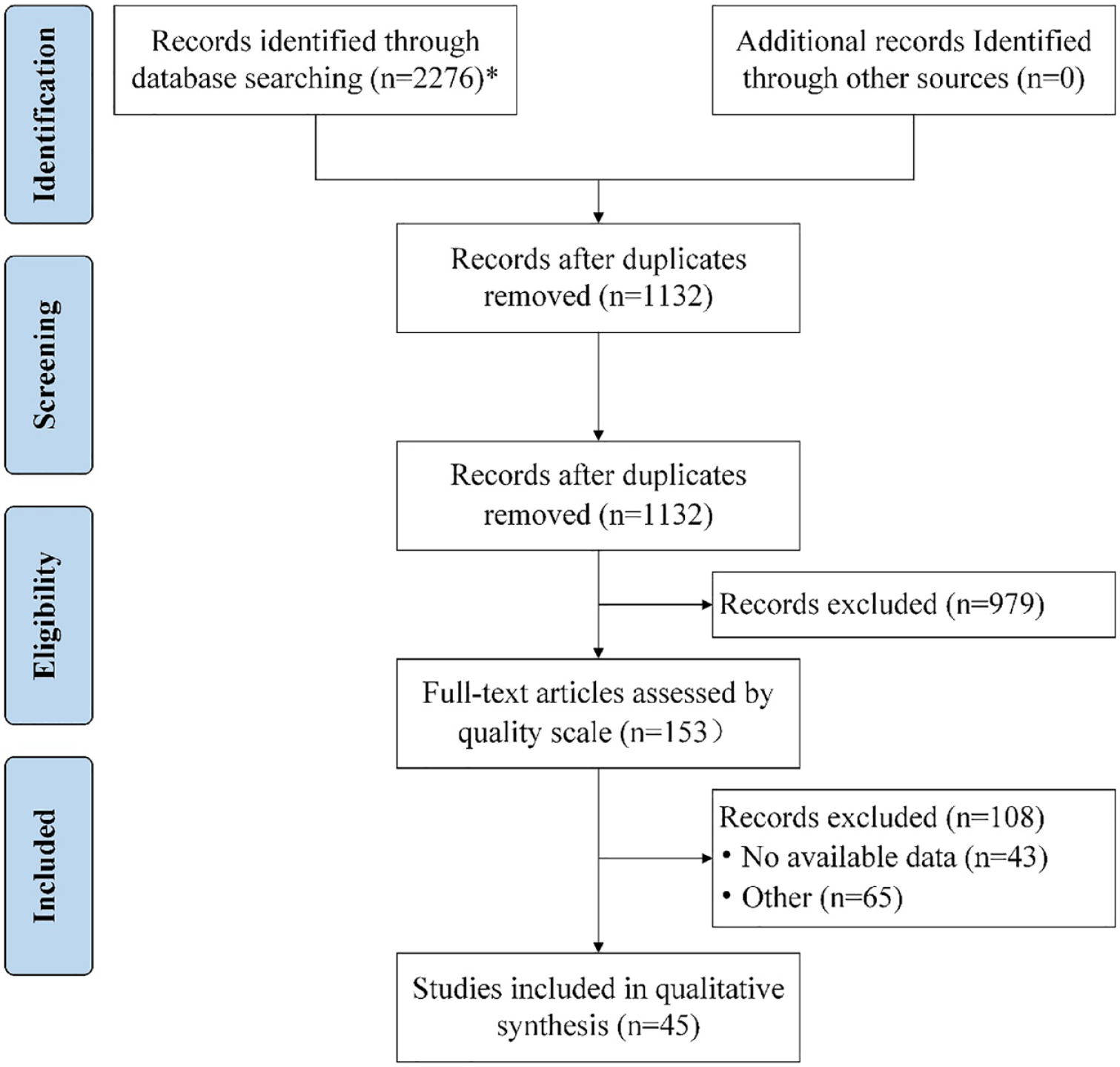
Literature screening flow chart.
Characteristics of the included studies
Analyzed by the geographical area of the included studies, as shown in Table 1, there are nine studies with the study area of China and two studies with multiple provinces and cities in China as the study area. Among the individual regional studies, six studies were from Jiangsu and Sichuan; five from Yunnan; three from Shandong; two studies from Beijing, Guangdong, Tianjin, and Shanghai; and one study from Anhui, Gansu, Guizhou, Hubei, Zhejiang, and Chongqing. According to the regional division criteria of the National Bureau of Statistics of China, the Eastern region (Jiangsu, Shandong, Beijing, Tianjin, Shanghai, and Zhejiang) accounted for the largest proportion of studies, 50%; the Western (Sichuan, Yunnan, Gansu, Guizhou, and Chongqing) and central (Anhui and Hubei) regions each accounted for about 39% and 6%.
Characteristics of the 45 studies.
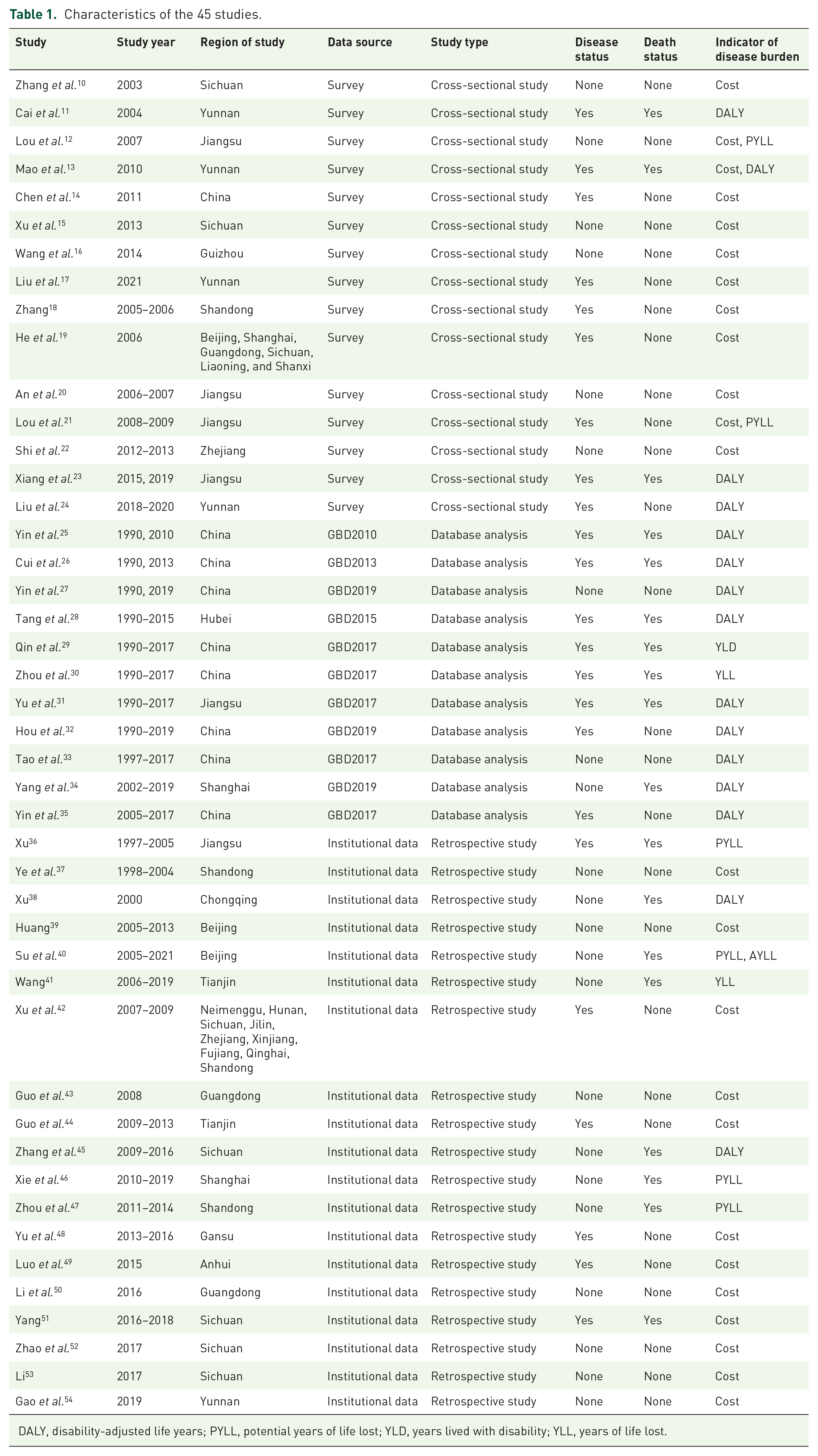
DALY, disability-adjusted life years; PYLL, potential years of life lost; YLD, years lived with disability; YLL, years of life lost.
Analyzed by the burden of disease measures included in the study, as shown in Table 2, among the nine studies in China, six used ‘DALY’ as the outcome indicator, one study used ‘economic’ as the outcome indicator, and the remaining two studies used ‘YLL’ and ‘YLD’ as the outcome indicators. A total of 15 studies used ‘DALY’ as the burden of disease indicator and the basic characteristics of the literature are shown in Table 3.
Characteristics of the study scope for China.

COPD, Chronic obstructive pulmonary disease; DALY, disability-adjusted life years; YLD, years lived with disability.
Characteristics of studies with DALY as the primary outcome indicator.

COPD, Chronic obstructive pulmonary disease; DALY, disability-adjusted life years; YLD, years lived with disability.
Risk of bias assessment
We evaluated 15 cross-sectional studies10–24 for risk of bias using the AHRQ recommendation rating tool, and all studies were at low risk of bias (Supplemental Appendix 3).
Burden of disease
Trends in the burden of COPD in the Chinese population
The overall burden of COPD in China became a decreasing trend during 1990–2019 according to the data in Table 2. Over the past 30 years, the total number of DALYs due to COPD in China decreased from 26.12 million person-years to 19.92 million person-years, with an annual decline rate of 0.9%. The DALYs number was 20.41 million person-years in 2017, accounting for 5.5% of the total DALYs in China (371.4 million person-years) and ranking third out of 169 categories of diseases, down 1 place from 2005 (second). 35 A continuous and systematic strategy for the entire process of prevention, screening, diagnosis, and management should be adopted as soon as possible for the high-risk population of COPD.
Analysis of disease burden by gender and age
According to Tao’s study results, the burden of DALYs in 2017 was 10.98 million person-years and 9.43 million person-years for men and women in China, respectively, with men being 16.45% higher than women. 33 Tang showed that the burden of COPD disease in Hubei Province in 2015 was 419.3 (per 1000 person-years) for men and 215.6 (per 1000 person-years) for women, with a more significant difference of about two times for men than women. 28 Contrarily, it was revealed in the survey of the COPD disease burden in Jiangsu Province that men’s DALYs were approximately 635.067 (per 1000 person-years) and women’s DALYs were approximately 623.055 (per 1000 person-years) in 2015, 23 and the gap between men and women was smaller, which was analyzed likely due to better socioeconomic conditions and higher population aging in Jiangsu Province. Additionally, the standardized prevalence rate of women in Jiangsu Province has exceeded that of men since 2010, and has not significantly decreased. In terms of patient age subgroups, the burden of COPD increases with age, especially in those aged ⩾ 40 years. Among them, the peak loss of DALYs in both men and women is in the ⩾80 years age group. 26 Overall, there are gender and age differences in the burden of disease in COPD, with the main burden of COPD in the middle-aged and elderly population in the ⩾40 years age group, and the burden is generally higher in male patients than in females.
Analysis of disease burden in different regions
COPD is the fourth leading cause of death in urban areas and the third leading cause of death in rural areas in China, with mortality rates of 47.30/100,000 and 66.24/100,000, respectively, and the total and intensity of disease burden among patients with COPD is higher in rural areas than in urban areas. 55 According to the data published by GBD2019 and Yin’s findings, the provincial administrations with a higher burden of COPD were all concentrated in the Western region of China. 27 Among them, Sichuan had the highest prevalence, 1.27 times higher than the lowest in Beijing. The highest mortality rate was observed in Tibet, which was 8.01 times higher than the lowest in Hong Kong. In addition, Tibet had the highest standardized DALY rate, which was 6.88-fold different from the lowest in Beijing. However, the COPD burden declined in all 33 Chinese provinces between 1990 and 2019, and the most significant declines were found in the Eastern provinces rather than the Western provinces. Beijing had the most pronounced decline in prevalence, while Sichuan had the lowest change. Tianjin saw the most significant reduction in mortality, while Hainan saw the lowest change. Zhejiang had the most significant reduction in standardized DALY rates, while Qinghai had the lowest change.
Cost of illness
Disease cost
A total of 15 studies provided information on the cost of disease in patients with COPD (Table 4). The median direct medical cost of COPD ranges from 150 to 2014 USD per capita per year, and the median indirect medical cost of COPD ranges from 0 to 184 USD per capita per year. One study reported the intangible cost of COPD: 966 USD per capita per year in rural Yunnan. 13
Disease cost of COPD in China.

Due to the different methods of economic burden assessment, the economic burden in the table adopted the commonly used median. And the cost converted to USD according to the exchange rate in 2023 (7.3025 RMB = 1 USD).
COPD, Chronic obstructive pulmonary disease.
Influencing factors
A total of 14 studies provided information on the variables affecting patients’ economic burden, while 31 studies were not carried out (Table 5). Among the 23 factors included in the analysis of economic burden or hospitalization cost of patients with COPD, the 23 factors were summarized and analyzed in 4 categories: demographic characteristics, hospitalization-related indicators, clinical medical-related indicators, and other indicators. The 23 factors that affected the economic burden (or hospitalization cost) of patients with COPD included age (10 studies14,18,39,44,48–54), length of stay in the hospital (8 studies39,43,44,48–54), hospital type (6 studies18,44,48,52–54), gender (6 studies48,49,51–54), and career (6 studies10,18,44,48,52,53).
Factors affecting the economic burden of patients with COPD.

COPD, Chronic obstructive pulmonary disease.
Discussion
This systematic review found that the disease burden of COPD in the Chinese population has decreased over the past 30 years. The Chinese population with COPD tends to be older than 40, and males are more likely to have the illness than females. With a rising number of smokers in China and an aging population, middle-aged and older men are the primary COPD patients. At the regional level, China’s COPD burden demonstrates significant variation, with a larger burden seen in rural areas, and the West is higher than the East. A negative correlation between the COPD burden and socioeconomic development may partly explain the inequalities of COPD burden between regions. Studies have showed that the COPD burden in some Western regions is further exacerbated by low lung function detection and treatment rates due to socioeconomic underdevelopment. 56 Moreover, the cold climate and low mean air humidity in the Western provinces are strongly associated with a high burden of COPD. 57
In this study, 23 factors influencing the economic burden of COPD have been examined, among which age, hospitalization days, hospital type, gender, and career were the most significant indicators that had an impact on the economic burden of patients. In the included literature, six studies18,44,48,52–54 discussed the connection between ‘hospital type’ and economic burden. Zhao et al. suggested that the direct economic burden of patients in general hospitals and traditional Chinese medicine (TCM) hospitals in Sichuan Province was significantly higher than that of other medical institutions. 52 Because patients receive more comprehensive imaging and laboratory tests in these two types of medical institutions. Furthermore, TCM preparations are excluded from the cancellation of the drug markup policy. More direct economic burdens for patients in general hospitals and TCM hospitals may come from diagnostic expenses and traditional Chinese medicine expenses. Career, as one of the indicators for measuring socioeconomic status, reflects the income differences and accessibility of social resources among different social groups.58,59 A study in the districts and counties of Lanzhou City found that the farmers had lower hospitalization costs than patients from other careers with COPD. 48 This may be because of their financial circumstances, as they only have one small source of income in comparison to patients from other careers and cannot afford the high medical expenses. A retrospective study claimed that COPD patients with comorbidities had higher average annual outpatient and inpatient visits as well as average direct medical costs of outpatient and inpatient visits. 50 This is in line with the finding of an Italian study. 60 Comorbidities of COPD exacerbate case disability, negatively impact cardiopulmonary function, increase patient visits, and prolong the duration of medical care, and controlling comorbidities can effectively reduce the length of hospital stay and hospital costs. One study reported a fascinating influencing factor: the seasonal environment. Researchers reveled that hospitalization costs for COPD patients admitted in winter are significantly higher than in summer, 49 which may be related to the vulnerability of COPD patients to acute exacerbations due to cold weather in winter.
Additionally, the economic burden of COPD lacks standardized indicators, as cost items included in various studies are different and there is a lack of unified methods used to measure costs. Some studies employ the mean value, while others utilize the median. It is hoped that researchers can create standardized indicators and unified evaluation methods to assess the economic burden.
Limitations
There are several limitations in this systematic review: First, the data sources and outcome indicators of the included studies are not uniform, resulting in large heterogeneity among studies, which is only suitable for qualitative description of research results. Second, the lack of unified indicator standards for economic burden, and the different methods of economic burden assessment, this study only adopted the commonly used median to estimate the economic burden and analyzed the influencing factors of cost of illness. Third, due to the lack of resources and technology, the diagnosis of some studies was not confirmed by spirometry, but most of the studies have been confirmed and this may affect the results.
Conclusion
According to the findings of this study, the burden of COPD in the Chinese population has been decreasing over the past 30 years. The burden of COPD in China exhibits gender disparities, which are higher among males than females. Additionally, the burden is more pronounced in rural areas compared to urban areas, and in the Western region compared to the Eastern region. Furthermore, individuals aged 40 and above experience the most significant disease burden. In terms of economic burden due to COPD, this study examined 23 factors that influence the economic burden of patients. Among these factors, age, duration of hospitalization, hospital type, gender, and career were identified as the most significant indicators impacting the economic burden. However, to accurately estimate the economic burden, it is necessary to standardize the relevant indicators.
Supplemental Material
sj-docx-1-tar-10.1177_17534666231218899 – Supplemental material for Disease burden of COPD in the Chinese population: a systematic review
Supplemental material, sj-docx-1-tar-10.1177_17534666231218899 for Disease burden of COPD in the Chinese population: a systematic review by Jiaxin Xu, Zile Ji, Peng Zhang, Tao Chen, Yang Xie and Jiansheng Li in Therapeutic Advances in Respiratory Disease
Supplemental Material
sj-docx-2-tar-10.1177_17534666231218899 – Supplemental material for Disease burden of COPD in the Chinese population: a systematic review
Supplemental material, sj-docx-2-tar-10.1177_17534666231218899 for Disease burden of COPD in the Chinese population: a systematic review by Jiaxin Xu, Zile Ji, Peng Zhang, Tao Chen, Yang Xie and Jiansheng Li in Therapeutic Advances in Respiratory Disease
Supplemental Material
sj-docx-3-tar-10.1177_17534666231218899 – Supplemental material for Disease burden of COPD in the Chinese population: a systematic review
Supplemental material, sj-docx-3-tar-10.1177_17534666231218899 for Disease burden of COPD in the Chinese population: a systematic review by Jiaxin Xu, Zile Ji, Peng Zhang, Tao Chen, Yang Xie and Jiansheng Li in Therapeutic Advances in Respiratory Disease
Footnotes

References
Supplementary Material
Please find the following supplemental material available below.
For Open Access articles published under a Creative Commons License, all supplemental material carries the same license as the article it is associated with.
For non-Open Access articles published, all supplemental material carries a non-exclusive license, and permission requests for re-use of supplemental material or any part of supplemental material shall be sent directly to the copyright owner as specified in the copyright notice associated with the article.
