




Abstract
The incidence of cardiac arrest in the intensive care unit (ICU-CA) has not been widely reported. We undertook a systematic review and meta-analysis of studies reporting the incidence of cardiac arrest in adult, general intensive care units. The review was prospectively registered with PROSPERO (CRD42017079717). The search identified 7550 records, which included 20 relevant studies for qualitative analysis and 16 of these were included for quantitative analyses. The reported incidence of ICU-CA was 22.7 per 1000 admissions (95% CI: 17.4–29.6) with survival to hospital discharge of 17% (95% CI: 9.5–28.5%). We estimate that at least 5446 patients in the UK have a cardiac arrest after ICU admission. There are limited data and significant variation in the incidence of ICU-CA and efforts to synthesise these are limited by inconsistent reporting. Further prospective studies with standardised process and incidence measures are required to define this important patient group.
Keywords
Introduction
Out-of-hospital cardiac arrest is usually considered separately from in-hospital cardiac arrest as there are clinically important differences in population, medical response and outcome.1,2 Some special circumstances (e.g. trauma, pregnancy) are further distinguished on the basis of clinical factors and treatment recommendations. 3
Within a hospital, such distinctions are not drawn, yet it is the case that the patients within the intensive care unit (ICU) are different to those on the wards. There is a quantitative difference in severity of illness if not a qualitative difference in provision of organ support. Further, as a consequence of continuous monitoring, higher nurse and doctor staffing and supportive therapies, the medical response is also necessarily different to that on the ward. 4 Finally, our previous work suggests that patients who did and did not suffer cardiac arrest in the ICU represent distinct groups with different outcomes. 5
In the United Kingdom, the prospective multi-centre National Cardiac Arrest Audit (NCAA) excludes patients with a cardiac arrest in the ICU if they are not attended by the hospital based resuscitation team in response to a 2222-call, and the Intensive Care National Audit and Research Centre Case Mix Programme (ICNARC CMP) does not collect information on cardiac arrest occurring in ICU. 6 This is not unique to the UK: the Australia and New Zealand Intensive Care Society (ANZICS) CORE database also does not capture this information. A previous systematic review of the topic covering 1990–2012 concluded that data on ICU cardiac arrest (ICU-CA) was “limited” and of “moderate” quality. 7
The search strategy used in this previous review can be improved by using free-text terms as well as thesaurus subject terms, by including all relevant thesaurus subject terms and by searching in an additional bibliographic database (EMBASE) unrestricted by date (as recommended in the Cochrane Handbook). 8 Updating and extending the search strategy enabled us to address these issues and to identify studies published since 2012. We have also performed a meta-analysis to give a pooled estimate of incidence and to provide crude estimates of the numbers of patients who have a cardiac arrest within ICUs in the United Kingdom.
Methods
Aim and objectives
The primary aim of this systematic review was to describe the incidence of cardiac arrest in adults after admission to a non-cardiac intensive care unit. Objectives were to update a previous review of the incidence of ICU-CA, to compare incidence in all studies with that in contemporary (defined as 2014 to present) and UK practice and to provide an estimate of the absolute number of ICU-CA in the non-cardiac adult intensive care population in the UK.
Protocol and registration
The review was prospectively registered with PROSPERO (CRD42017079717). The protocol is available at https://www.crd.york.ac.uk/prospero/display_record.php?RecordID=79717.
Eligibility
The inclusion criteria were as follows:
Population: adult patients in an intensive care unit suffering a cardiac arrest (defined as receiving chest compressions and/or defibrillation) after admission. Study types: all studies reporting the primary outcome measure were eligible. Outcome measure: incidence of cardiac arrest, as defined above, reported as % of admissions or rate per 1000 admissions or both.
There was no date restriction. The exclusion criteria were as follows:
Specialist cardiac or paediatric ICU. Patients under 18 years old. Primary outcome (incidence) not reported. Palliative care admissions to ICU. Non-English language studies.
Sources and search strategy
Medline search strategy.
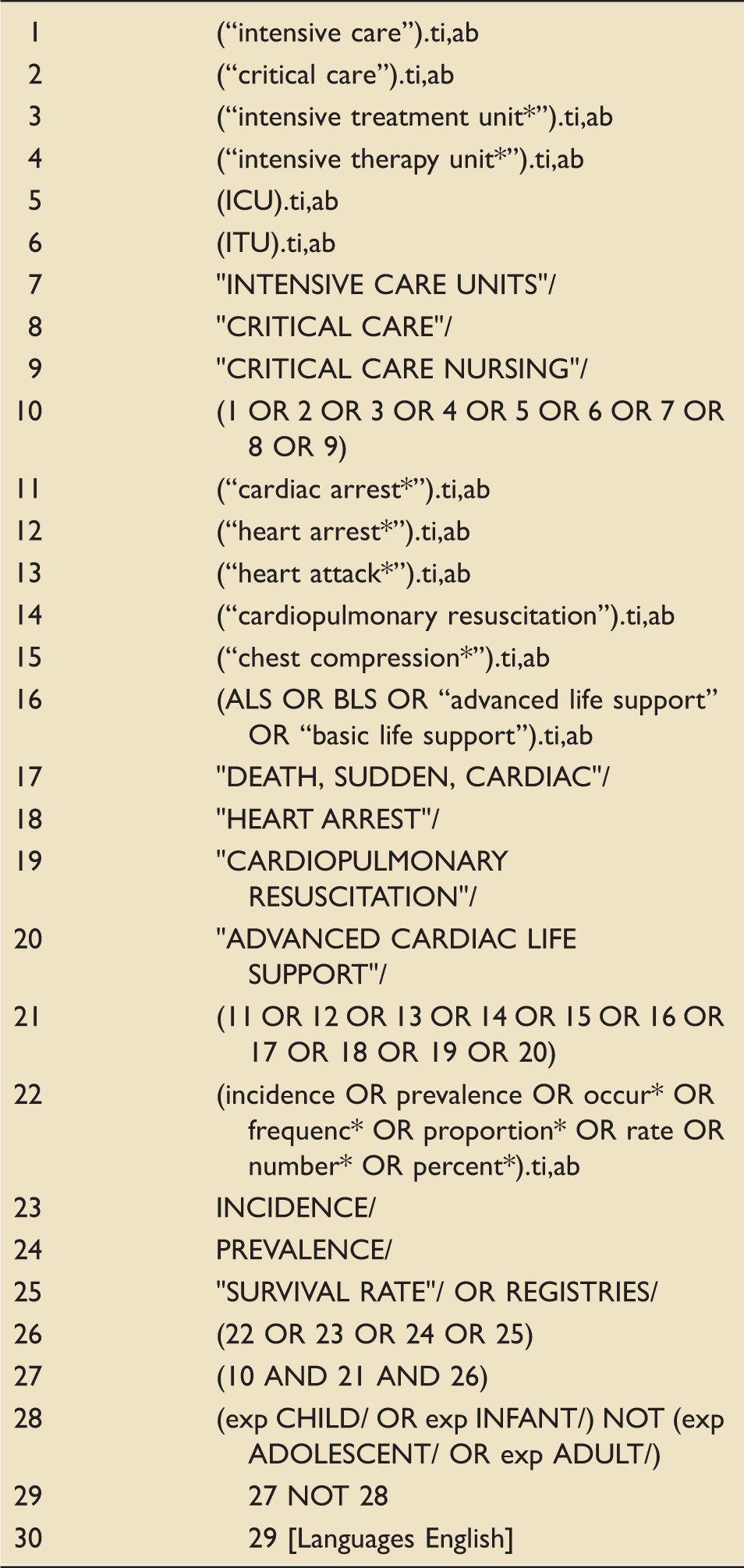
Note: The strategy was adapted for Embase, CINAHL and Cochrane Central.
Data items
Screening of titles and/or abstracts was undertaken using Rayyan (Qatar Computing Research Institute, 2016). All articles were screened independently by two review authors to identify studies that potentially met the inclusion criteria outlined above. The full text of potentially eligible studies was retrieved and independently assessed for eligibility by two review team members. Any disagreement over the eligibility of particular studies was resolved by discussion with a third reviewer.
The pre-specified primary outcome was incidence of cardiac arrest. Other data items extracted using a standardised pre-defined template were:
Patient demographic data, including co-morbidities. Study setting and design, including information for risk of bias assessment. Survival (using time points reported in source study). Neurological outcome (using measures in source study). Aetiology and type of cardiac arrest.
Risk of bias (quality) assessment
Modified Newcastle-Ottawa Scale.
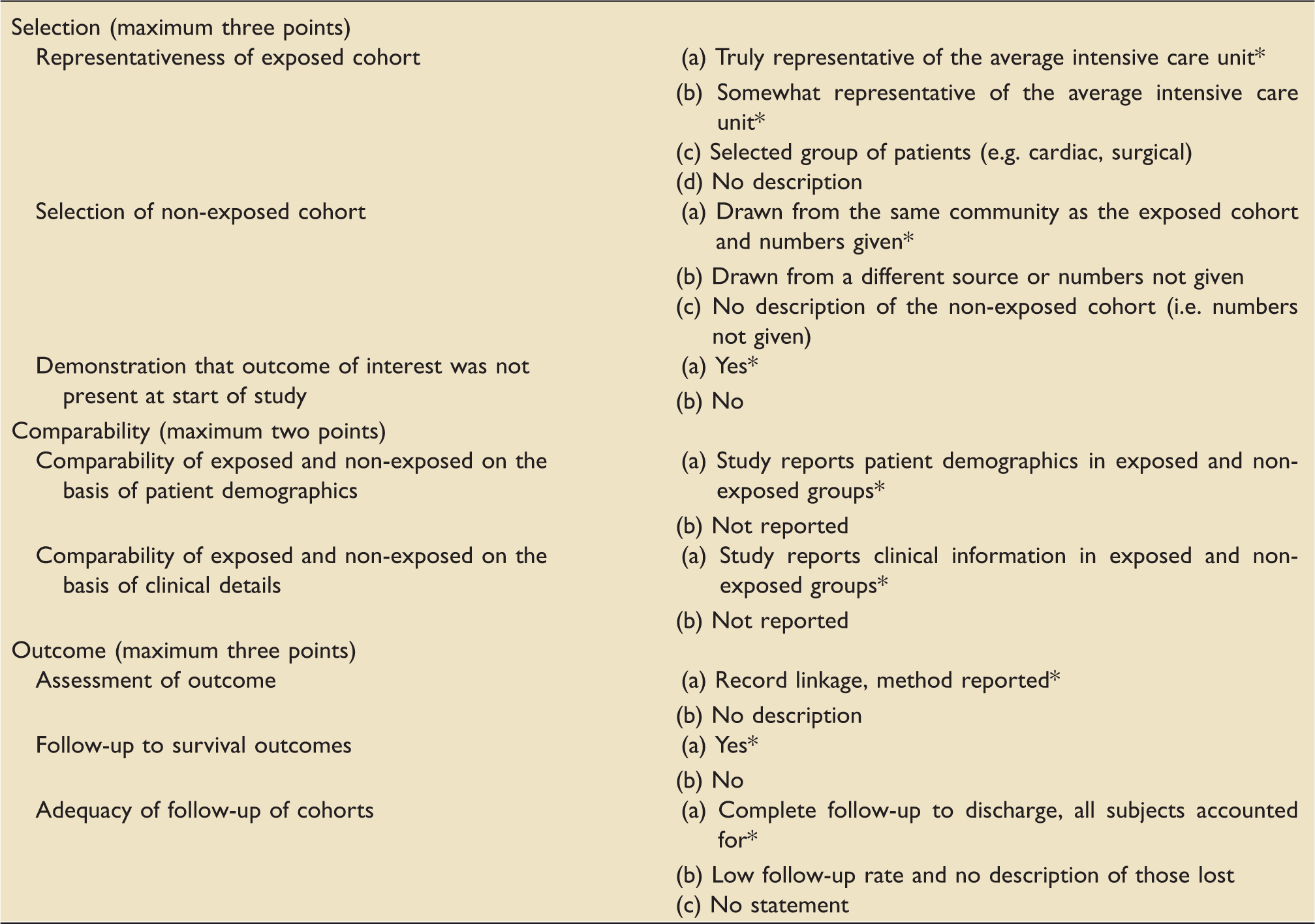
Items marked with an asterisk score one point with maximum one point for each criterion.
Subgroup analysis
We performed subgroup analysis by date to define changes in incidence of ICU-CA over time. Three groups were specified: pre-2005, 2005–2013 and 2014 to present.
Synthesis of results
Meta-analysis was conducted using RStudio (RStudio, Inc.; Version 1.0.143, 2016). An inverse variance random effects model was used for all analyses. Between-study heterogeneity was assessed with I2-test using p < 0.1 as the threshold for statistical significance. Results are presented as percentages and/or rates per 1000 admissions with associated 95% confidence interval, p-values and forest plots. Analyses were performed for all eligible studies and pre-specified subgroups according to unit type.
Results
A total of 7550 records were identified in the initial search. After removal of duplicates and screening for eligibility based on the inclusion and exclusion criteria, 20 articles remained for inclusion in the review, 2 of which were identified by manual searching5,10 (Figure 1).
PRISMA flowchart.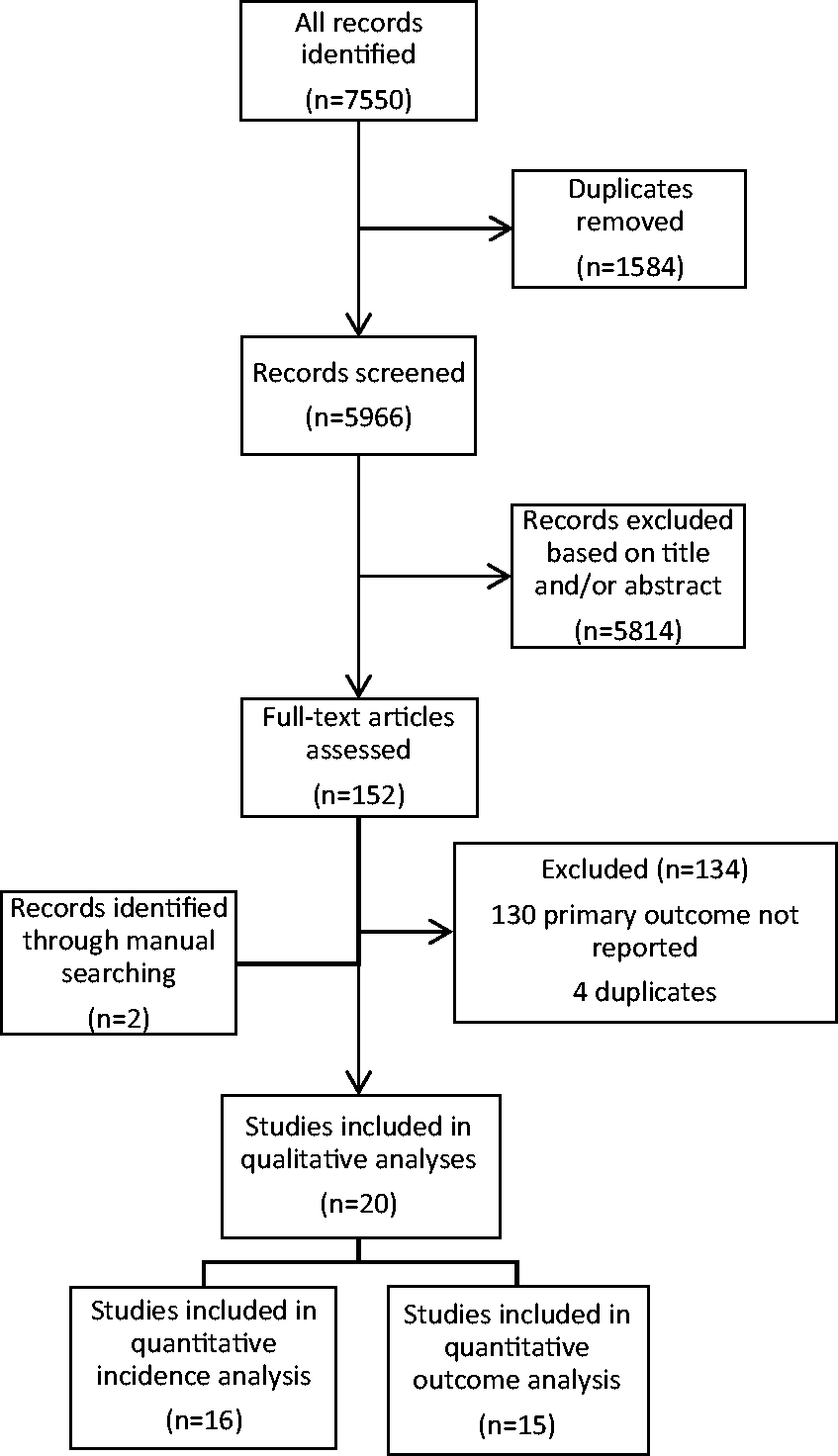
Study characteristics (Table 2)
Summary of included studies.
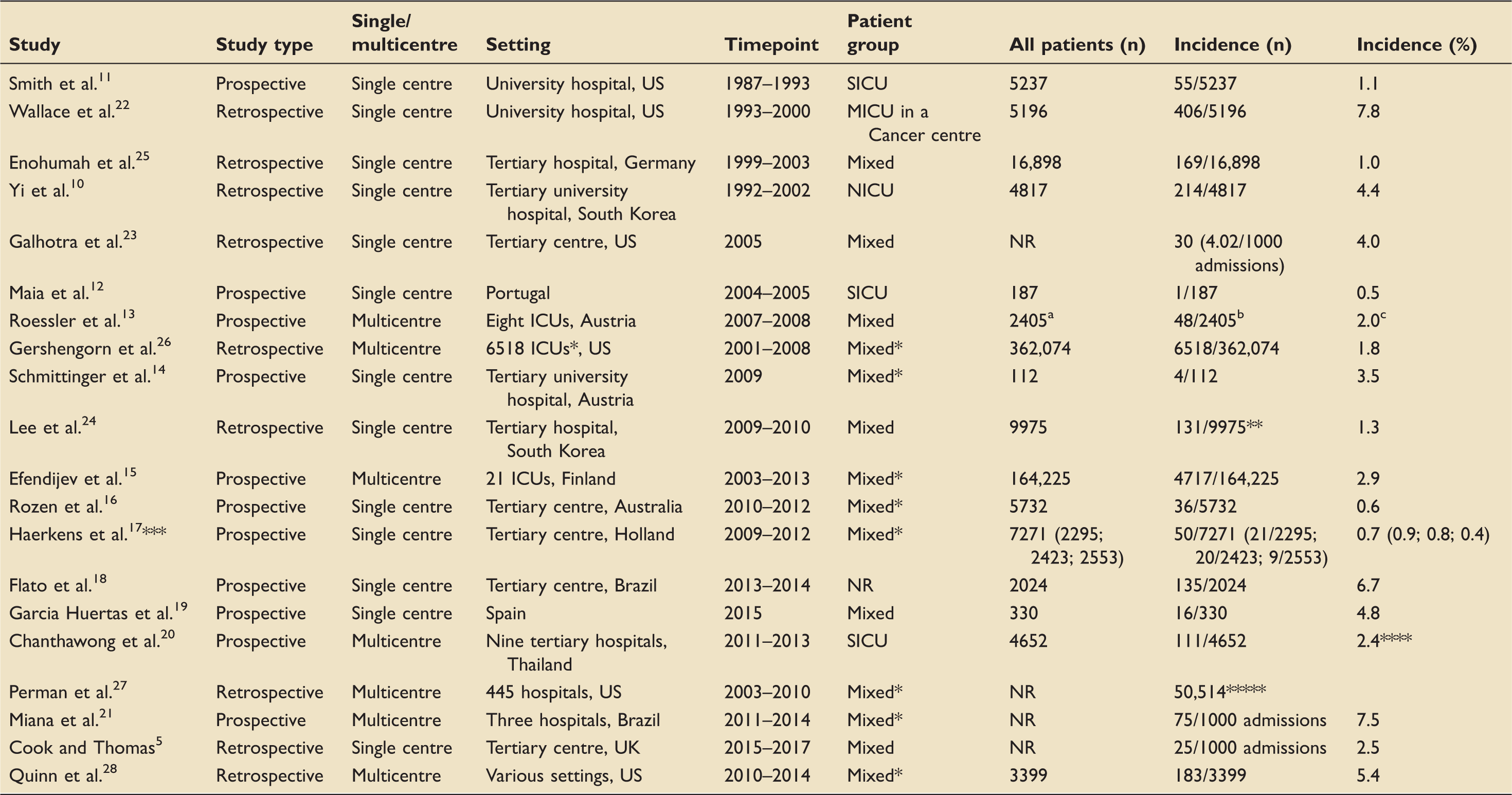
Included CICU. **8.5/1000 admissions/year. ***Numbers shown are total and then for each of three years of the study period. ****Study reported rate of 226/4652 (4.9%) but including 115 patients with do-not attempt resuscitation (DNAR) decision *****Mean event rate 0.337 (±0.215) per 1000 patient-bed days.
(1805 SICU; 600 MICU). b(26/1805 SICU; 22/600 MICU). c(1.4 SICU; 3.7 MICU). SICU surgical ICU; MICU medical ICU; NICU neurosurgical ICU; NR not reported.
Risk of bias (quality) assessment.
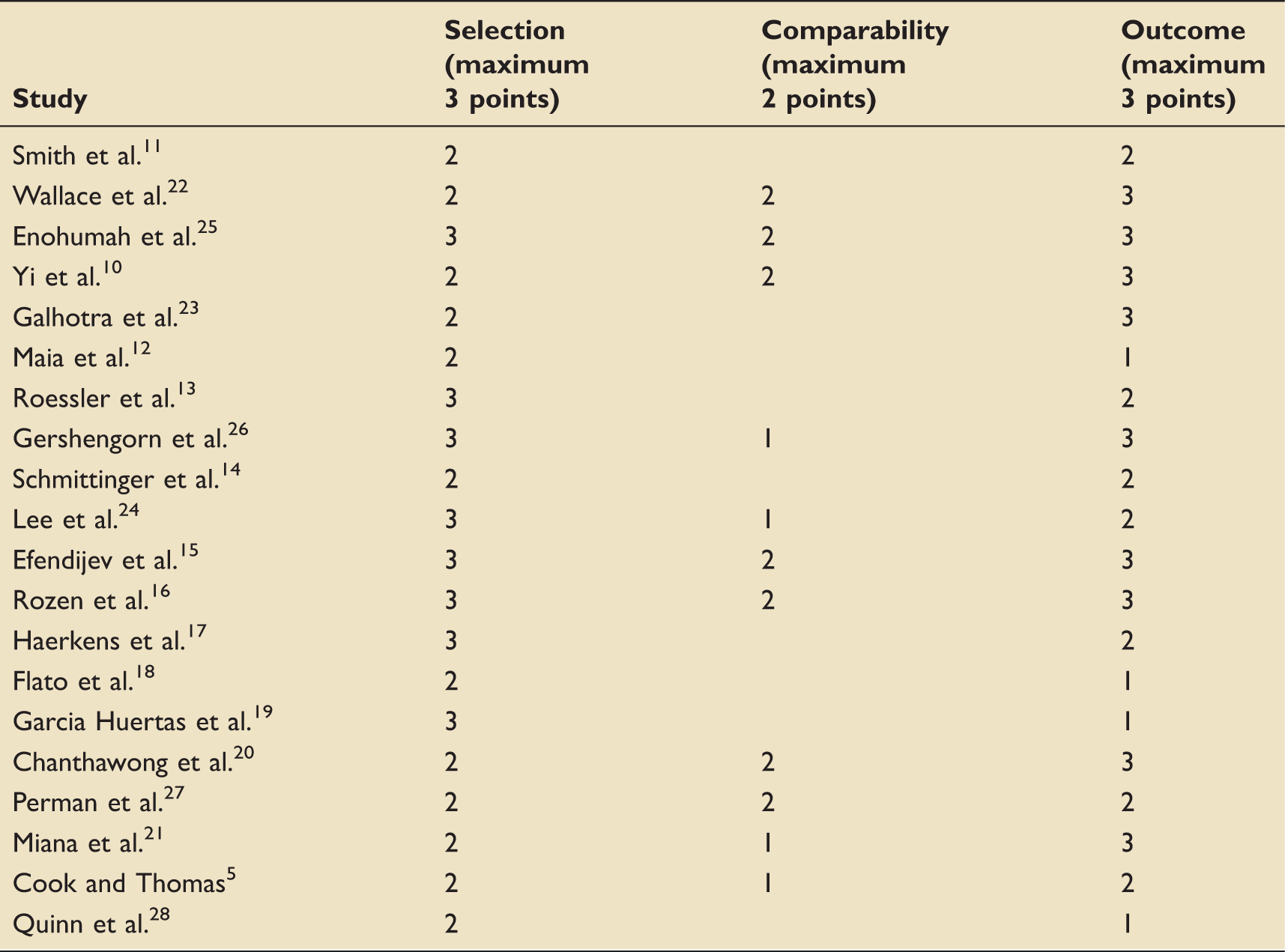
Incidence of cardiac arrest (Table 2)
Ten studies reported the definition of cardiac arrest used. The number of cardiac arrests reported varied from 1 to 50,514. Seventeen studies reported both the number of events and the overall number of eligible admissions, three reported rates per 1000 admissions5,21,23 and the remaining study reported mean event rate per 1000 patient-bed days and was not included in pooled analyses. 27
The prevalence of ICU-CA varied from 0.5 to 7.8% with incidence rates of 5–78 per 1000 admissions.
Patient demographics
Eleven studies reported demographic data. Average age ranged from 54 to 68.8 years with a male preponderance (51.6–68.5%). Seven studies reported data on patient comorbidities. Cardiac and respiratory co-morbidities were the most prevalent, with up to 100% of patients having one such chronic condition. One study reported the number of patients with any comorbidity at 80.6%, with a median number per patient of 1.5. 16
Types of intensive care unit (Table 2)
Most studies (14) reported a mixture of medical and surgical ICUs or patients, of which eight included some cardiac surgery. Ten studies reported case mix data. Emergency admissions ranged from 69.6% to 92.9%. Surgical admissions accounted for 22.8–100% of patients in mixed unit reports. The most common causes of medical admission were respiratory or haemodynamic compromise with sepsis or severe sepsis reported in 10.7–43%. Seven studies reported on severity of illness using seven different models and a total of 10 scores. Further information is available in the online supplementary appendix (Tables A and B).
Cardiac arrest aetiology and outcome
Non-shockable rhythms were more common in eight of nine studies reporting initial rhythm with the proportion of non-shockable rhythms ranging from 61.5 to 89.7%. The presumed aetiology of cardiac arrest was reported in four studies21,24,25,27 with cardiac and respiratory causes accounting for 24.4–78.5% and 13.3–39.7% of arrests, respectively.
Outcomes reported (ROSC and survival).
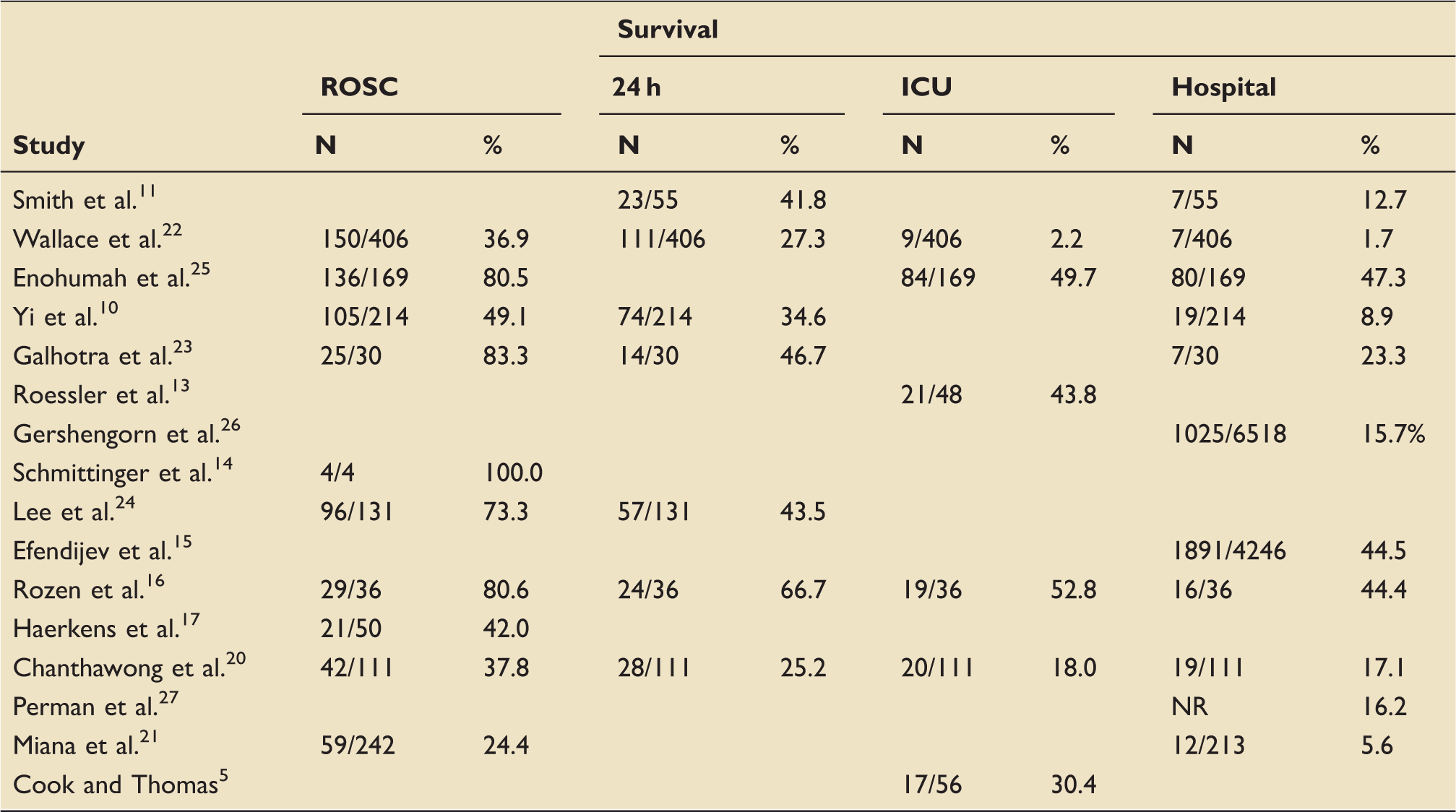
ROSC: rate of return of spontaneous circulation; ICU: intensive care unit.
Reported rates of ROSC varied from 24.4 to 100%. The most commonly reported time point for survival assessment was at hospital discharge (11 studies) with rates from 1.7 to 47.3%.
Long-term follow-up was variable with four studies reporting survival outcomes beyond hospital discharge and six reporting neurological outcomes. Time points and performance scales varied. Further information is available in the supplementary appendix (supplementary appendix, Table C).
Three studies compared survival outcomes in patients who did and did not suffer ICU-CA.5,15,20 ICU mortality was higher in ICU-CA patients with reported rates of 69.6% versus 10.5% in a study from a mixed ICU 5 and 91.2% versus 6.4% in one SICU study. 20 The same study also reported higher hospital mortality at 91.6% versus 7.8%, 20 with rates of 55.5% versus 11.4% in a multicentre European study. 15
Meta-analysis
Studies that reported only a rate of incidence for ICU-CA and did not report an overall number of observations5,21,23,27 were excluded from quantitative analyses. Similarly for analysis of outcomes, those with only a rate rather than numeric values were excluded. 27
Incidence of cardiac arrest
The incidence of cardiac arrest across all studies was 22.7 per 1000 admissions (95% CI: 17.4–29.6, I2 = 99%; Figure 2). For those studies reporting only surgical ICUs (SICUs) or surgical patients, the rate was 22.4 per 1000 admissions (95% CI: 10.5–47.2, I2 = 97%). In studies reporting only mixed medical and surgical ICUs (excluding two studies with only surgical patients in mixed units), the rate was 14.9 (95% CI: 11.4–19.6, I2 = 99%) per 1000 admissions (Figure 3).
Meta-analysis of incidence for all studies. Meta-analysis of incidence for mixed medical and surgical intensive care units.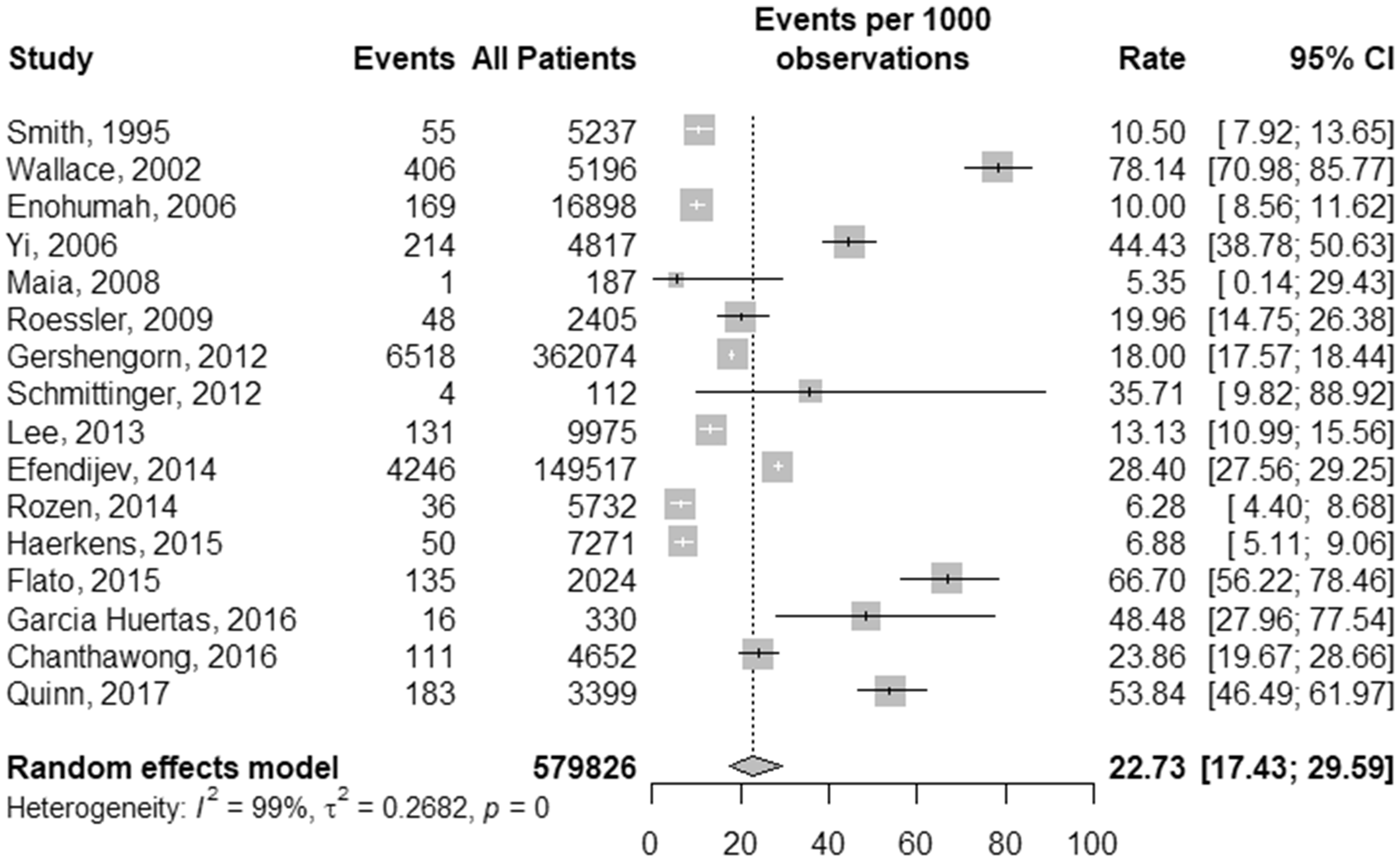
Incidence of cardiac arrest over time
Incidence of ICU-CA over time.

Sensitivity analysis
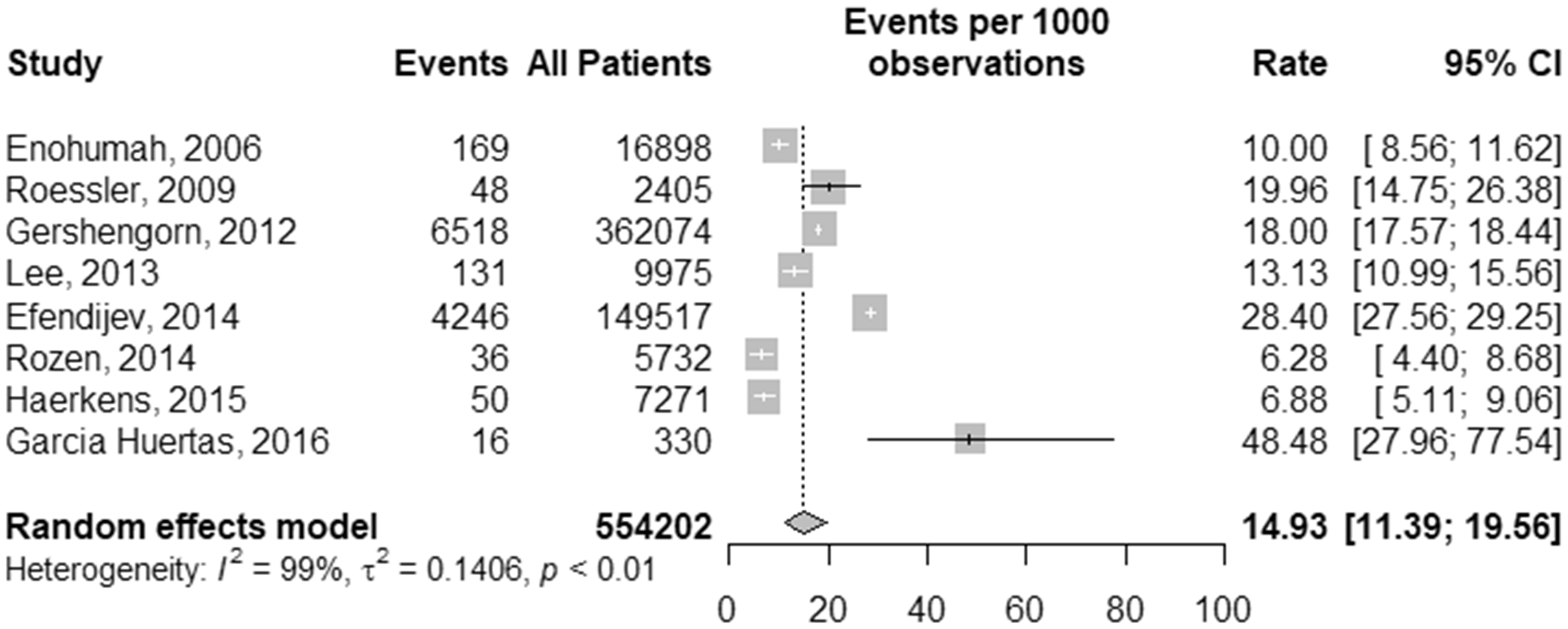
Excluding those studies at higher risk of selection bias, the pooled incidence of ICU-CA based on eight studies is 14.9 per 1000 admissions (95% CI: 11.4–19.6, I2 = 99%; Figure 4).
Meta-analysis of incidence for studies at lower risk of selection bias.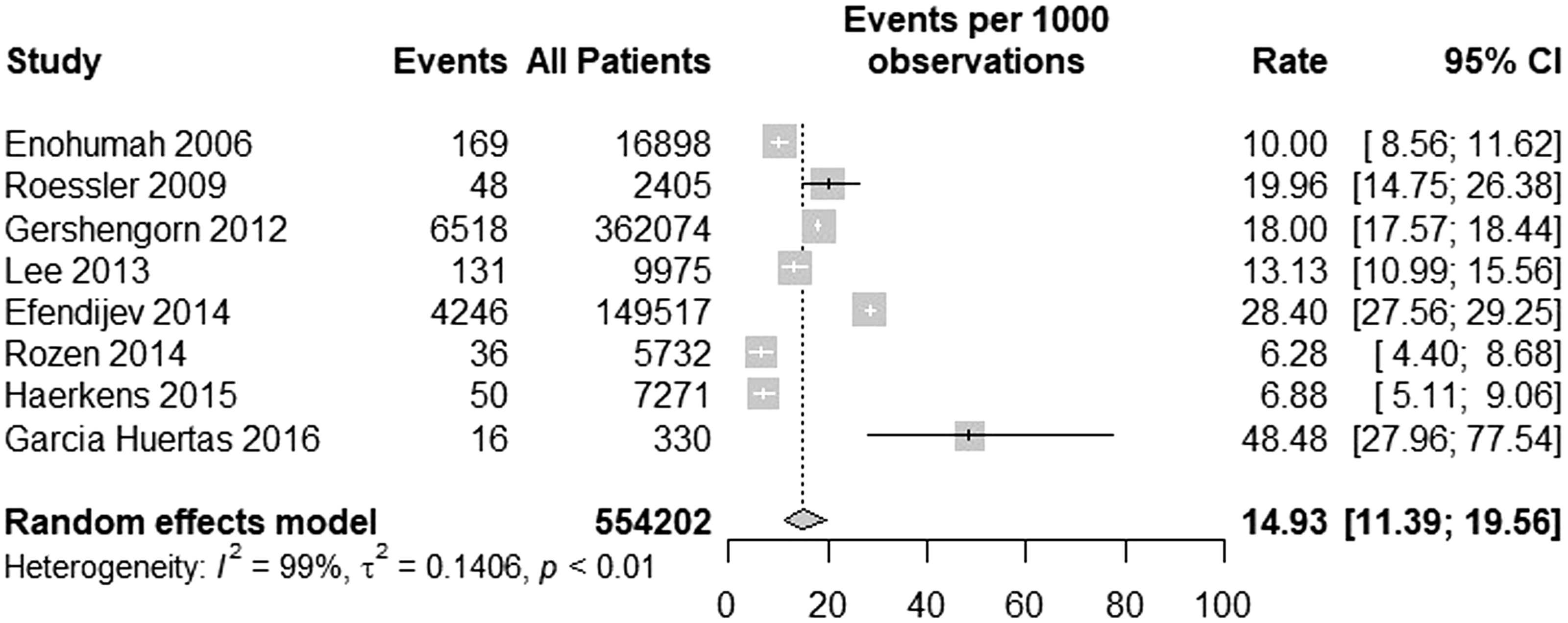
Excluding one study from a medical ICU in a cancer centre 22 on clinical grounds (highest rate of ICU-CA with lowest rate of survival), the pooled incidence is 20.7 per 1000 admissions (95% CI: 16.4–26.2, I2 = 99%).
Cardiac arrest aetiology and outcome
Across all studies (n = 9), the pooled rate of non-shockable rhythm was 76.8% (95% CI: 69.9–82.4, I2 = 90%). The rate of ROSC across all studies (n = 10) was 58.2% (95% CI: 43.7–71.4%, I2 = 95%). Pooled survival to hospital discharge, the most commonly reported outcome measure (n = 10), was 17% (95% CI: 9.6–28.5%, I2 = 99%). ICU patients who suffered a cardiac arrest in critical care had higher ICU and hospital mortality, with a risk ratio of 7.6 (95% CI: 3.2–18.1) for hospital mortality across two studies. Further information is available in the supplementary appendix.
Intensive care unit cardiac arrest in the United Kingdom
The incidence of ICU-CA in the United Kingdom is estimated at 25 per 1000 admissions (one study). 5 Combining data from ICNARC and the Scottish Intensive Care Society Audit Group gives an estimate of 217,820 admissions to ICU in 2016/2017.29,30 The absolute number of ICU-CA in that year may then be approximated as 5446. Using data from NHS Digital for the year 2016–2017, including 293,170 adult critical care records, results in a higher estimate of 7329 ICU-CA. 31
Discussion
The reported incidence of cardiac arrest in the intensive care unit (ICU-CA) ranged from 5 to 78 per 1000 admissions with a pooled rate across all studies of 22.7 per 1000 admissions (95% CI: 17.4–29.6). In comparison, the studies selected by Efendijev et al. 7 for reporting incidence of ICU-CA give a range of 5–78 per 1000 admissions and a pooled rate of 13.0 per 1000 admission (95% CI: 4.7–35.3). Our figure is based on 16 studies against 6 for the previous study, provides a narrower confidence interval, and represents the current best estimate across a range of unit characteristics. However, clinical and statistical heterogeneity precludes detailed quantitative analysis and it is not possible to determine how much of the variation in incidence and outcome is related to case mix and severity of illness and how much reflects variation in delivery of care.
Given the difference in search strategy and study selection criteria, it is not surprising that our review identifies a different group of articles to Efendijev et al. 7 Importantly, updating the previous review of the topic meant that we identified seven studies reported since its publication in 2014. This is the ‘contemporary’ cohort that gives a pooled rate of 24.7 ICU-CA per 1000 admissions, which is very similar to that for current UK practice (25 per 1000 admissions) based on cardiac arrests in our ICU.
Comparing this figure to prior epochs suggests that there is no clear reduction in the overall incidence of ICU-CA with time. The division into three groups is pragmatic based on number of studies, the timing of the previous review and a recognition of the ‘modern era’ of cardiac arrest temperature management from late 2013. 32
Again our analysis does not highlight a reason for this. One potential, and worrying, explanation is that the occurrence of ICU-CA is considered normal in the context of critical illness rather than a preventable event. Alternatively, an unchanged rate in the face of increased severity of illness and/or frailty would represent progress.
The sensitivity analysis reveals studies at lower risk of selection bias, taken together, report a lower incidence of ICU-CA than all studies. The magnitude of the difference between the high and low risk groups is comparable to the difference seen between SICUs and mixed ICUs and likely reflects the variability in the primary studies. Given their heterogeneous nature (see below), it is wise to reserve recommendations on changes to clinical practice, or on use of benchmarks from the literature, until sound data have been gathered.
Using a contemporary UK estimate of the incidence of ICU-CA suggests that between 5446 and 7329 cardiac arrests occur after ICU admission each year. For the same year, the NCAA records a total of 16,201 in-hospital cardiac arrests including only 1110 occurring in ICU, high dependency unit (HDU) or combined ICU/HDU. 33 There is a need for caution, as the national case mix may not match that in a single, albeit large, ICU even if the incidence there is similar to the contemporary incidence more widely. Despite these caveats, our data suggest a hidden epidemic of cardiac arrest, associated with poorer outcomes (risk ratio for hospital mortality of 7.6) for the sickest patients in hospitals, that is currently under-recognised and under-reported.
It is likely that a proportion of these deaths are related to a ‘failure to rescue’ after critical illness and as such represent an opportunity to intervene to improve patient outcomes. Prospective data collection would better define the scale and prognostic implications of these events. Further ahead, the rate and outcome of ICU-CA could be considered alongside the standardised mortality ratio as a quality indicator and comparison measure. Any prospective data collection should be done according to a standardised set of variables and outcome measures that follow the Utstein style.34,35 This would enhance the quality of published data and permit comparison across varied settings.
This would also address many of the limitations of our systematic review. The studies which comprise this review are largely single-centre reports, with almost half based on retrospective data and the majority at risk of selection bias. Different types of units, countries and healthcare systems are included. Furthermore, they span a period of 30 years, over which time the clinical caseload and interventions of critical care have changed significantly. Finally, there is substantial risk of bias given the low quality of some included studies and small numbers suitable for meta-analysis of key outcomes. It is also the case that, by restricting eligibility to studies reporting the incidence of ICU-CA, we have missed the opportunity to present more complete data on outcomes.
Nevertheless, in comparison to the previous systematic review on this topic, our search strategy proved more sensitive, included an additional bibliographic database, and reports several studies published after 2014 including the first UK data on the topic. We also report quantitative analyses to produce pooled estimates of incidence and outcome measures.
In conclusion, the wide variation in reported incidence of cardiac arrest in the ICU, the difficulty applying these findings to any one ICU or healthcare system, and potential for under-reporting, requires high quality prospective epidemiological studies to provide a sound footing for measures to improve outcomes in this most critical of critical care populations.
Supplemental Material
Appendix -Supplemental material for The incidence of cardiac arrest in the intensive care unit: A systematic review and meta-analysis
Supplemental material, Appendix for The incidence of cardiac arrest in the intensive care unit: A systematic review and meta-analysis by Richard A Armstrong, Caroline Kane, Fiona Oglesby, Katie Barnard, Jasmeet Soar and Matt Thomas in Journal of the Intensive Care Society
Footnotes
Authors’ contributions
RA: screening of abstracts, data extraction, analyses, co-author first and subsequent drafts. JS: co-author first and subsequent drafts. CK: screening of abstracts, review final manuscript. FO: screening of abstracts, data extraction, reviewed final version of the manuscript. KB: literature searching, reviewed version of the manuscript. MT: conceived the study, co-author first and subsequent drafts.
Declaration of conflicting interests
The author(s) declared the following potential conflicts of interest with respect to the research, authorship, and/or publication of this article: JS is paid an honorarium as an editor of Resuscitation, and member of the National Cardiac Arrest Audit Steering Group. The other authors declare that there is no conflict of interest.
Funding
The author(s) received no financial support for the research, authorship, and/or publication of this article.
References
Supplementary Material
Please find the following supplemental material available below.
For Open Access articles published under a Creative Commons License, all supplemental material carries the same license as the article it is associated with.
For non-Open Access articles published, all supplemental material carries a non-exclusive license, and permission requests for re-use of supplemental material or any part of supplemental material shall be sent directly to the copyright owner as specified in the copyright notice associated with the article.
