



Abstract
This article analyzes the making of travesti/trans* memory politics in Argentina. Focused on audiovisual initiatives, archives, catalogs, novels, and digital activism, it studies how these policies emerged in the wider context of the archival and digital turn. While placing the dialogues with Argentine centrality of memory in social conflict and Latin American archival grassroots politics, this text addresses the role of remembrance in the production of travesti/trans* identity. This article argues that trans* memory initiatives acted as politics of belonging that worked in two levels: defining the limits of a common identitarian past, and reaching a wider cisgender audience to highlight the social violence that defined travesti/trans’ precarious lives. This article shows how by placing travesti/trans* memories in tension with national retelling of the past, they are building politics of belonging to legitimate their claims of social reparation to make new trans* futures possible.
Keywords
In her book Las malas, Camila Sosa Villada recreates the life of a group of travestis in Cordoba (Argentina) during the 1980s. Published in 2019, the book became a bestseller, was translated to numerous languages from English to Croatian, and won the prestigious Sor Juana Inés de la Cruz literature award. Sosa Villada wrote,
If someone would like to make a reading of our Nation, this homeland for which we have sworn to die in every hymn sung in schoolyards, this homeland that has taken lives of young people to its wars, this homeland that has buried people in concentration camps, if someone would like to make an exact record of that shit, then he should see the body of Tía Encarna: That’s what we are as a country too, that relentless damage to the travestis’ bodies. The imprint left on certain bodies, in an unjust, random and avoidable way, that imprint of hate (. . .) Tía Encarna was one hundred and seventy-eight years old. Tía Encarna had cuts of all kinds; made by herself in prison (because it is always better to be in the infirmary than in the heart of violence) and also the result of street fights, miserable clients and surprise attacks. She even had a scar on her left cheek that gave her a mean and mysterious air. Her breasts and hips were eternally bruised from the beatings she received while in detention, even during the time of the military rule (she swore that during the dictatorship she had known the evil of man face to face). No, I take it back: those bruises were caused by the airplane oil with which she had moulded her body, that body of an Italian mamma who fed her, paid for the electricity, gas, water to irrigate that beautiful courtyard dominated by vegetation, that courtyard that was the continuation of the Park, just as her body was the continuation of the war. (Translation by our own) (Sosa Villada, 2019)
Camila Sosa Villada placed the beaten body of her travesti mother in the center of national historical narrative. Tía Encarna’s name could be read as a reference to travestis’ embodiment. In Spanish encarnar means to embody, which can be read in the novel in a double dimension as a reference to travestis’ gender materialization, as well as the body as a site in which memory and life experience is preserved and activated. In her text, she highlights the material experience of memory, as an emotional practice of remembrance that embraces the body as a whole. While travestis/trans* bodies have usually been considered marginal to the making of national narrative, Sosa Villada has placed them to point out the multiple violences with which were displaced from Argentine public life. 1 With this movement from the Nation to the body, by placing travestis life in the core of happiness and sorrows of a country, she retales the personification of the nation itself.
Public memory policies have been a key political terrain of post-dictatorial Argentina (Jelin, 1994)—a scenario of resistance as well as institutional fields for post-neoliberal governments. In this context social movements have deployed multiple uses of the past to expand the limits of citizenship. During the democratic transition, by appropriating the language of human rights, LGTBIQ+ organizations connected their claims to the legitimated repertoire of the families and victims of the dictatorship to expand political violence to sexual state repression. Since the 1980s, these movements have claimed the social recognition of 400 LGTBIQ+ victims of State terror. While this slogan was helpful to place State sexual violence on the human rights agenda, some scholars pointed out it could hide a long history of State violence against sexual dissidence that went beyond dictatorial times (Insausti, 2015).
After the crisis and riot of 2001 that undermined the legitimacy of the neoliberal regime, social movements’ memory politics started a process of institutionalization. 2 Engaged with the governments of Nestor Kirchner (2003–2007) and Cristina Fernández de Kirchner (2007–2014) they slowly participated in a wider institutional memory politics related to the creation of a State narrative that recognized the violence committed by their agencies, the derogation of the laws of impunity voted by past governments, as well as the multiplications of memorials and museums centered in the political violence committed by last dictatorship. Not without tensions with which political and sexual State violence has been politically understood (Rizki, 2020b; Sutton, 2018), rejecting State violence was performed as the core of political language, and played a key role in the queer reimagination of citizenship in the LGTBIQ+ struggle for being recognized as victims.
The aim of this article is to analyze the making of travesti/trans* memory politics in Argentina. Focused on audiovisual initiatives but also considering archives, catalogs, novels, and digital activism, this text studies how these policies emerged in the wider context of the archival and digital turn in sexual dissident and feminist movements. While placing the dialogues and tensions with Argentine centrality of memory in social conflict and Latin American archival grassroots politics, this text addresses the role of remembrance and retelling in the emotional, cultural, and political production of travesti and trans* people’s identities.
This article’s core contention is that trans* memory politics acted as politics of belonging that worked in two levels. First, as a community practice that started between funerals and private Facebook groups, it participated in the retelling of the past by undermining tensions and creating a common narrative in which by highlighting similar suffering and enjoyment, travestis/trans* defined their politics of belonging. As an internal practice, it has gone beyond the precarious material experience of travestis/trans* that suffered from high rates of hate crimes, lack of access to jobs, education or health, and have produced a discourse to transcend the material limits of precariousness (Wayar, 2018). Second, in a progressively alliance with lesbian and gay activists, feminist, and human rights movements, public and private institutions, trans* memory practices have reached a wider audience to highlight the historical mechanism of violence that defined their precarious lives. While at the beginning these memories were placed as peripheral productions, they progressively moved to the center creating their own audience in the growing massive cultural interest on feminist and gender issues in Argentina. In this direction, we show how this search to highlight relegated memories of heterosexual hegemony has recently led to a geographical turn which aims to dimension LGTBIQ+ experiences further than the big cities. In this context, this text shows how placing their memories in tension with national retelling of the past, by challenging State and public narratives, they are building politics of belonging to legitimate their claims of social reparation to make new trans* possible futures.
LGTBIQ+ memory politics has emerged as an attractive research topic. Recent studies addressed the archival turn in grassroot feminist organizations (Eichhorn, 2013), in particular some of them have paid attention to the emergence of trans* archives in the global south (Correa et al., 2019; Theron and Kgositau, 2015). Queer studies’ approaches to identity have helped to address epistemological challenges in order to study LGTBIQ+ oral history and memories (Doan, 2017; Jennings, 2004), as well as also to develop relevant insights into queer memories in times of the digital turn (Cherasia, 2020), and the materiality of the archive (Tortorici, 2018; Van Doorn, 2016). In the Argentine context, queer studies have showed how LGTBIQ+ movements have created tensions with human right institutional discourses (Rizki, 2020b; Theumer et al., 2020). Moreover, the queer turn in memory studies has also been useful to approach topics such as affect and kinship in human rights movements based in familiar discourse like the Madres de Plaza de Mayo (Sosa, 2015). Following the trend of previous literature, this article wants to highlight how trans* memory politics have recently participated in the shaping of Argentine LGTBIQ+ memory politics by creating tensions with mainstream national memory narratives, as well as pushing gay and lesbian–centered narratives.
This article is organized in three sections. First, it studies trans memory politics in the context of wider memory politics in post-dictatorial Argentina. Second, it describes the multiple trans memory initiatives that emerged in Argentina and Latin America in the previous decades. Third, by focusing on some audiovisual works, it analyzes the main topics and narrative strategies of trans memory politics in the emotional, political, and cultural making of a travesti/trans past.
(Trans*) memory in post-dictatorial Argentina
During the second half of the twentieth century, travesti and trans people were mainly narrated by the press, especially in the policial and entertainment sections, and by legal and medical pathological discourses. Journalists, doctors, and policymakers shaped a mainstream representation about trans* people as digressions to the “natural order” that should govern sexuality. Although some of the journalistic texts of that period offered first-person testimonies of trans* people, they limited the ways in which this experience was narrated.
The emergence of grassroots trans* memory politics has challenged the heterosexual monopoly over the past. In order to preserve material and make it visible for a wider audience, these cultural movements have produced new representations of their own experience. Collecting photographs, publishing memoirs, and appealing to these earlier registers they have produced a new representation of trans* past and pointed out the extreme violence with which different State bodies and actors of the civil society have excluded them. The emergence of trans*memory politics is not a lonely adventure. It dialogues with a wider context of transformation of Argentine memory politics. As has been explained by Da Silva Catela (2014) to the case of the memories of those arrested and disappeared as a result of the military coup that took place between 1976 and 1983, while during the 1990s state discourses on reconciliation were dominant, the advent of the twenty-first century will enable a process of transformation after which the underground memories of the victims and their families will emerge as a new paradigm of claims.
Human rights discourses played a key role in the making of post-dictatorial Argentina; they widened the limits of the movements attached to the family victims to become a language of social protest and claiming for a wider agenda on social, cultural, and civil rights (Adair, 2019). However, the years immediately following the dictatorship were marked by economic crises, social uprising, and the instability of the democratic system. Therefore, although progress was made in the trials of the military juntas, a context of peace and reconciliation was also established, expressed in the Law of Due Obedience and the end to the judgments (1987).
It was not until the Kirchner administrations that memory policy became a key element of political discourse. On 24 March 2004 former President Nestor Kirchner inaugurated the Museum of Memory and Human Rights where the Higher School of Mechanics of the Navy, one of the most important clandestine detention, torture, and extermination centers of the dictatorship, used to operate, with a discourse that performed human rights violations in a national political matter. The constant political-emotional recalling of genocide violence shaped the politics of confrontation with which the government redefined national history and institutionalized family-centered human rights movements (Robben, 2012). In addition to this identification of government with the young victims of genocide, other key actions were developed: the decision to make 24 March the National Day of Memory for Truth and Justice and include it in the calendar of holidays and commemorative dates in schools and government institutions, the reopening of trials against participants in the dictatorship, and the creation of memory sites, museums, and archives in different points of the country (Balé, 2020).
This context reinforced memory as a language for social demand and reactivated the discussion about the dictatorship’s legacy. In the last decade, the discourses on trans* memory enriched themselves from the institutional human rights discourses not just to formulate legislation, but also to claim a wide social recognition of the structural violence they have suffered. By using the figure of genocide, legally applied to the crimes committed during the last dictatorship, the travesti scholar and activist Marlene Wayar has recalled the travesti and trans past to demand reparation from the Argentine State (Wayar, 2018).
In addition, the state’s acknowledgment of the crimes that took place during the dictatorship and the strengthening of policies on memory led to human rights organizations supported by family members and victims gaining greater relevance on the national political scene and their alliances with trans and travestis activists giving a strong boost to projects for diagnosing the present situation and recovering from the past. There is a long history on the link between travesti activism and human rights movements. During the 1990s, when travestis created the first organization, they sought an alliance with The Madres de Plaza de Mayo in order to connect their struggle against police abuses in line with the human rights movements (Berkins, 2006). This alliance gave rise to educational, cooperative, and research projects that made it possible to learn about the situation of the trans community and to produce a political agenda that brings together academic, human rights, cultural, and LGBTIQ+ movement spaces.
Building memory from below: publications, biographies, and archives
Travestis and LGTBIQ+ movements challenged the limits of democratic transition. During the 1980s and 1990s, travestis led the struggle against the local legislation that since the 1930s empowered police to imprison them with legal figures such as scandal or wearing clothing of the “opposite sex, which were abolished progressively since 1998.” During the 1990s, travestis and transsexuals went to court to demand recognition of their gender, achieving the first registration change in 1997.
While during the 1990s’ travestis/trans’ movements struggled against repression and their right to free circulation, during the 2000s inspired by the discourse of human rights and citizenship, they expanded their agenda to include access to health, education, and formal employment that led to legislative reforms. In 2010, the parliament passed the equal marriage law. In 2012, the trans* community succeeded in convincing Parliament to pass the Gender Identity Law, which requires State agencies to recognize self-perceived gender, and forces private and public health systems to provide free access to gender-affirmation treatments. In 2020, Alberto Fernandez signed an executive order that establishes a quote for trans* employment in the public sector but which has not yet been fully implemented.
Travestis and trans* people’s precariousness has hardly changed in the last decade, that is why there are not as many elderly members in the community to build a collective memory. For this reason, travesti and trans* movements valued preserving documents and testimonies to face the material erasure of their bodies. Latin American travesti and trans* people communities face precarious conditions. Recent studies have shown that the life expectancy of trans people ranges from 35.5 to 41.25 years old, while in Latin America is generally around 75 years (Borgogno, 2013).
A foundational act of recovery of the memory of the travesti community was the collective grassroot research La Gesta del Nombre Propio (Berkins and Fernández, 2005), a first report on the trans population coordinated by the travesti activist Lohana Berkins and the scholar Josefina Fernández edited by The Madres de Plaza de Mayo (Berkins and Fernández, 2005). The report emerged as an alliance between travesti activism, academics, and human rights organizations. This report begins by listing the names of 420 travestis who died between 2000 and 2005, most of them from HIV/AIDS and murders, almost 70% of them before reaching the age of 40. The book contained photos of demonstrations in which travestis replicated some of the methods of the human rights organizations to denounce the murders of their friends, for example, by holding up photos of the victims with their names, date, and causes of death.
In 2007 another fundamental material in the processes of recovery of the Trans* Memory was published, the magazine El Teje. 3 This publication was the first travesti magazine in Latin America and was directed by Marlene Wayar and edited by the Ricardo Rojas Cultural Center of the National University of Buenos Aires. The magazine used the aesthetics of a scrapbook that recollected community news and testimonies of older travestis. This publication was a platform for the development of autobiographical projects.
The travesti leader Lohana Berkins understood that building a collective memory was a duty of travestis’ movements in order to reinforce their political identity. She considered memory politics as a tool to face travestis’ precariousness that created generational gaps and restricted the possibility of constructing a narrative of their own history. This situation meant that in most cases the travesti and trans people did not have a first-person story, but was spoken about by others such as journalists, academics, or doctors. That is the reason why she valued the construction of a narrative in the first-person to contrast external discourses, as well as a precondition to create a collective memory that “that allows us to project ourselves into the future, affecting each and every one of us at the same time” (Berkins and Maffía, 2009: 133).
In Cumbia, copeteo y lágrimas (Berkins et al., 2015), a second report on the travesti population compiled by Lohana Berkins and edited by The Madres de Plaza de Mayo expands the list of dead or murdered companions in the first decade of the twenty-first century, also collects photographs that make even more evident those narratives blocked by the constant violation of the trans/travesti community’s basic human rights in Argentina (Berkins et al., 2015). The foundation of the Archivo de la Memoria Trans (AMT) was a turning point in this struggle for the past, since it constitutes, unlike the publications mentioned above, the first project clearly focused on the recovery of the experiences and lives of the trans* collective and its memory. In 2012, in order to achieve the dream of the dead activist Claudia Pía Baudracco, María Belen Correa started collecting photographs of trans people. Progressively the archive started a process of institutionalization, and it received international funding (Correa et al., 2019). The AMT combines a wide range of memory practices: it organizes exhibitions in public and private institutions, YouTube and Instagram sessions in which they read letters, posting photographs and personal memories on social networks, and recently has published their first catalog. This initiative was replicated by other community organizations in provinces such as the State of Salta’s LGTTBIQ+ archive, the State of Santa Fe’s sexual dissident archive, and in Tucuman La cascotiada.
In contrast to other Latin American countries, Argentina did not have any national regulation to archival policies until 2016. Since 2007, the state has regulated the protection of personal data in public archives (Dirección Nacional de Protección de Datos Personales, Dictamen n°149/07). The memory politics promoted in the last two decades promoted different initiatives as the declassification of secret material as the Buenos Aires Secret Service Police Archive (DIPBA), the foundation of archives that combined public institutions with grassroots organizations as the oral history project Memoria Abierta, and several archives allocated in ex-centers of detention and extermination. These archives tended to preserve material related to crimes committed during the last dictatorship. It is possible that this long tradition of Human Rights movements archival policies, as the oral history archive Memoria Abierta, acted as a precedent of the trans* grassroots archival policies.
Besides the local context, Latin American LGTTBIQ+ grassroots organizations and institutions deployed new archival policies to query the cisgender-heterosexual past. Even if it is impossible here to register them all, there several examples of emerging queer memory politics. In Bolivia, the activist and cultural organizer David Aruquipa Pérez (Danna Galán) has published catalogs with old newspaper articles, photographs, and documents about the travesti participation in the Oruro carnival. Likewise, he preserves and catalogs old dresses, as well as performs the character La China Morena as practices with which he embodied erased travestis’ past (Pérez, 2016). In Brazil, there are several initiatives of memory politics such as the QueerMuseum, for example, an exhibition of 264 artistic pieces that were censored by Jair Bolsonaro’s conservative government in 2018. In Chile, the archive of the artistic collective Las Yeguas del Apocalipsis preserves exhibitions, photographs, and political actions. 4 Likewise, institutions like the National Library of Chile have recently collected material about sexual dissident discourses. 5 In Colombia, the digital archive Historia Trans Colombiana has constructed a digital archive on Instagram accessible to a wide audience. 6 As well, the Colombian Memory Museum has exhibited objects and photographs of LGTBIQ+ victims of the armed conflict. 7 In Mexico, the Centro de Documentación y Archivo de Nuestra América preserves the grassroots archives from the Colectivo Sol, which since the 1990s has been archiving LGTBIQ+ material. In Peru, the Museo Travesti has brought together performance art and archive material to make travestis’ past visible, and their role in the making of popular culture. In Uruguay, the Archivo de Sociedades en Movimientos have collected multiple publications for LGTBIQ+ organizations. Moreover, as in other countries, the activist Sofia Saunier interviewed several trans* Uruguayans. 8
As a result of the impact of LGTBIQ+ claims for a place in the narratives of the past as well as the increase of scholars concerned with this topic in public institutions, previous collections were revisited and offered new catalogs about trans* past. The National Library of Argentina has recently made accessible the Sarmiento Press Collection that includes articles and photographs about travestis and trans people. The Centro de Documentación e Investigación de la Cultura de Izquierdas launched the collection Sexo y Revolución, which includes a wide range of LGTBIQ+ magazines and ephemera, as well as activists’ personal collections.
In the last two decades, travestis and trans authors published personal memoirs. In 2011, Malva, a Chilean who crossed the Andes by foot to escape for sexual repression, published her memoirs. Her memories were particularly valuable because for her age, 90 years old; she was considered one of the oldest members of her community (Malva, 2011). Considered the first book written in first-person by an Argentine travesti/marica, it was celebrated and had been analyzed by different scholars (Peralta and Jiménez, 2015) and recently led to the documentary Con nombre de Flor. Vanessa Show, the first Argentine travesti on being head of a magazine theater spectacle, published Es verdad a memory written in the first-person (Show, 2012). However, for being part of the entertainment world, the book was not valued as a political document of travesti past but feminist and LGTBIQ+ collectives. Similar books were published in South America in the same years, for example, the memories of the Brazilian travesti Claudia Wonder (2008). Another example of this eruption is the recently published biography of Lohana Berkins (1965–2017), one of the most important referents of the travesti movement, which includes long interviews as part of the activist’s project to build an autobiography (Fernández and Berkins, 2020). Marlene Wayar published a dictionary of the key terms of travestis’ slang with which she also shares her and her friends’ experiences (Wayar, 2020)
The recent award-winning writer Camila Sosa Villada has published one of the most outstanding books of travestis’ past. By combining autobiography with magic realism, her novels make the travestis’ experiences during the 1980s and 1990s visible for a wider public. In her novel Las malas she narrates the adventures of a group of travesties that while selling sex found a little boy that they decide to raise. The book El viaje inútil addresses Villada’s childhood and writing. Susy Shock, a travesti singer and writer, has also engaged with community past. By appropriating national traditional folk genres as copla and baguala, in which someone sings a poem while playing a leather drum, she has placed travestis’ experience in the core of political and social issues. 9 Likewise, in her poetry collections, she published letters to her friends in which she created references in travestis’ past, by, for example, exalting the figure of one of their main political leaders: Lohana Berkins.
In summary, in the last decades travestis/trans* grassroots organizations have deployed memory politics to claim for their right to exist. By preserving and exhibiting their past, by remembering all those annihilated by civil or state violence, they succeeded in inserting their demands into the discourse of human rights. In this way, they transformed the archives of their past into a political and emotional reservoir in the search for the expansion of rights.
Audiovisual Travesti/Trans*’ narratives
Trans* memory policies include a wide repertoire of archival practices. In the context of the digital turn, platforms like Instagram, Facebook, and YouTube, among other social networks, became a space for the circulation of archives that account for the trans* past. As previous studies have shown, the digital turn played a key role in shaping trans* archives and shaping senses of belonging (Fischer, 2019; Steinbock, 2019). The AMT originated through a closed Facebook group in which nearly a thousand travestis who had shared their experiences of violence, exile, and carnivals in the 1980s and 1990s met. In this group the first documentary collections were created through a cooperative archival practice that brought together the photographs with the descriptions and stories that these images evoked. Later, together with grassroots organizations, artistic initiatives and in alliance with cisgender activists, the production, conservation, and publication of photographs and videos grew considerably.
Trans* and travestis memorialization practices are strongly permeated by emotion, affection, and nostalgia, constantly coming to honor those who have been killed and deserve to be remembered (Rizki, 2020a). The emotional work of building this memory helps to define the limits of a common imaginary identity, shading the differences and sharing their common experiences.
Feminist movements and gender studies have advocate for replacing affects in political repertoires usually presented as rational and neutral. The politicization of private passions allows to relocate the body experience of social, cultural, and political experience (Macon et al., 2021). Trans* memory audiovisual initiatives deployed a strong emotional work in the making of imaginary common identities. By retelling the past, focusing on certain figures and common experiences of joy (like the carnivals) or traumatic (such as State violence), these practices participate in building the emotional experience of the community as well as to address a wider cisgender audience to create a bond with travesti and trans people.
Our analysis seeks these videos as archival practices which by retelling common experiences of how social movements have participated in the making of a public trans history. We understand this narrative in a double face. In this section, we focus on seven professional video productions, along with the dozens we have seen, in order to analyze the main trends and issues addressed in trans memory audiovisual policies. These videos were generally endorsed by public institutions such as museums, private funders, or social movements, for example, the Trans Memory Archive. Although all the material deals to a greater or lesser extent with similar themes, we organized them around three recurrent themes: affective community politics, State violence, activist life, and archival politics. Likewise, guided by this reiteration, we identify a common structure in the audiovisuals that present in an almost unilinear and teleological way a trajectory that goes from childhood, family, and friends to the constitution of the spaces of trans activism.
One of the central and frequent topics in audiovisual productions that deal with trans* memory is the experiences linked to childhood and adolescence and travesti and trans people’s sociability. The audiovisual productions continually return to those intimate anecdotes in which a landscape is portrayed where friendship, cohabitation, travel, and celebrations open windows on the singular universe of travestis. We understand that this resource is elemental in the production of an affective key that allows multiple generations to recognize their common experiences in the making of a community. Likewise, these resources reached a wider cisgendered audience and blurred the stigmas of criminality, marginality, and depravation that the media has associated with travestis and trans people.
This feeling of rebuilding the link between travestis and cisgender society underlies in the Cecilia Estalles’ (2015) short film “Of the same species.” Appealing to the memory of friends and family, it tells the story of Gina Vivanco, a travesti murdered by the Police in 1991. The story revolves around experiences known by travestis such as those around sexual commerce, the affirmation of their self-perceived gender through surgical interventions, and the carnival. The carnival represents for the travestis a physical and temporal space of liberation, during which the damning looks of society were relaxed, allowing them to be part of the celebrations with their exorbitant bodies. The film closes with a shot of one of Gina’s friends duplicating on her sewing machine one of the emblematic costumes used at carnival, a sort of intricate harness. The idea of a “common species,” the human being, highlights how Vivanco’s life is an example of the historical des-humanization of trans* lives that make possible their erasure.
“Off the same species” (Estalles, 2015) shows the backstage making of trans* memory. By placing Gina Vivanco’s photographs and her iconic costumes on a table while her friends remember her, the video creates an intimate scenario that invites the audience to share their nostalgia for a friend lost (Image 1). With materials, narrations, and videos of the carnival, the video places Vivanco’s life and joy in the core of popular culture. The singularity of her travesti body became unique and a crucial character of popular entertainment; the video points out how a subject present but at the same time erased from popular memory.
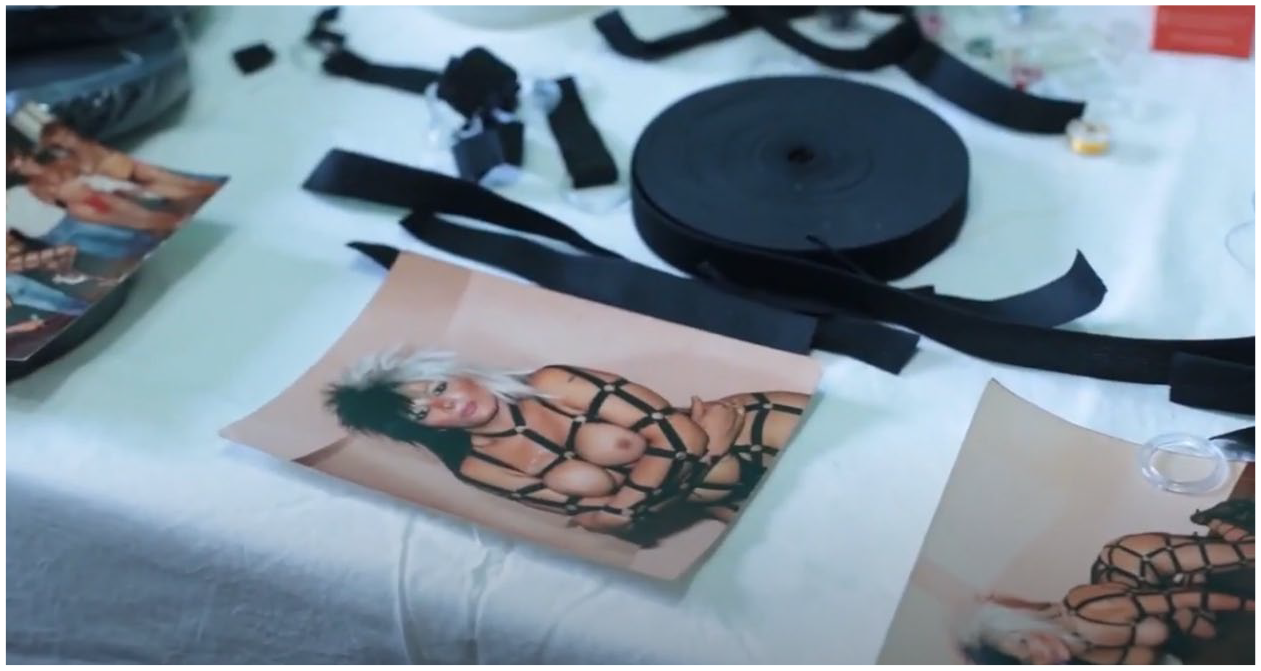
Frame from “Off the same species” (2015) by Cecilia Estalles—11.24 minutes.
A common characteristic of the analyzed productions is this teleological and progressive order that goes from the daily and intimate experiences to activism as the ultimate horizon of realization of the travestis. The iteration of this formula is evidence of a political project aimed at bringing travestis out of clandestinity and violence and placing them in the arena of public political disputes.
In Diego Lublinsky’s “15 Light Years: A Personal Name” (Sebastián Incaurgarat, 2012), the retelling of the past seeks to create empathy with the audience. This documentary was produced by Canal Encuentro, one of the state’s flagship television stations from the Kirchnerist communication policies. The journalist seeks to make contact with some of the protagonists of the programs made in the early 90s by Fabián Polosecki, a journalist who inaugurated a way of interviewing and dealing with stories from the marginalized sectors of Argentine society. In this episode, images are recovered from the program “Adam’s Rib” (1993) where Polosecki interviews Wendy Leguizamón, who in 1994 will participate in the organization of Asociación de Travestis Argentinas—ATA. 10 Wendy died in 1996 as a result of HIV/AIDS, so in the documentary who remembers is her friend Claudia Pia Baudracco, also founder of ATA. The story Claudia produces about Wendy happens as she watches the images on the show and as she reviews boxes of photographs that start to spark memories, anecdotes, and reflections. In a meta-theatrical structure we can observe Wendy’s story in 1993 alternately with Claudia’s reflections 15 years later.
“Adam’s Rib” and “15 Light Years: A Personal Name” interconnect two moments in trans history: the early 1990s before the foundation of travesti and trans organizations and the early 2000s before the passing of the Gender Identity Law. Together both productions connect Wendy’s emotive narrative and desire with Claudia Pia’s political discourse. The connections of these two materials show the transformation of trans* memory narrative in recent years, from the journalistic chronicles that reduced them to curiosities for the audience, usually marked by mockery and humiliation to a new discourse articulated by the political challenge to the moral limits of democracy. Both films show how travesti and trans movements reshaped the process of remembering and writing a history articulating it with their political voice.
A diverse range of video productions edited archival clips to connect everyday life and political action. As Estalles’ film, some videos remarked on the political and emotional dimensions of travestis’ participation in popular celebrations and protests. By connecting expression, carnival, and demonstrations, these videos show how travestis and trans* people’s agency of public space transformed LGTBIQ+ protest culture. María Onis’ short-film “Inmortal Kombat” (Centro Cultural Kirchner, 2020a) presents a collage of old VHS videos of the pride demonstrations in the early 2000s. While mixing music and the juxtaposition of travestis in demonstrations, of their naked bodies dancing and the images of fireworks, the video reconstructs the centrality of celebration for travesti and trans political culture. “Inmortal Kombat” reveals how embodying beauty in public spaces by using makeup, showing the naked produced bodies and using costumes have been a political practice. The leader of travestis’ movement, Lohana Berkins’ discourse is used to mark the political dimension of celebration and showing naked bodies. She remarks the diversity of travesti collective in the making of an identity that unified them:
How should we define a society that is blind to poverty, hunger and exclusion? That it has lost the richness of gender, class, sexual or ethnic background (. . .) Those of us who are hidden behind a tree resist, those of us who appear in the media resist, the activists who join other oppressed groups resist, those of us who practice prostitution resist, the others do not resist. All of us are struggling with silicones, feathers and sequins but also with ideas. We travestis are fat, ugly, thinkers, lovers, prostitutes, workers, we are friends, we are cousins, we are daughters, we are human beings.
Besides the nostalgic evocations to friends or childhood, audiovisual trans* memory politics focuses on the daily discrimination and State violence. The affective bonds to community also lead to the extreme violence experienced for those who practiced sex work, legal restrictions in the use of public space, as well as discrimination by family, school, and health institutions. In contrast to this lack of basic human rights, the narration of the few times of freedom achieves intensity and is read as paradisiacal in contrast to the hell experienced in the links with the state and the security forces.
Although one of the experiences frequently mentioned in the films is the migration, exile, and mobility practices of travestis between the 1980s and 1990s, there are few productions about non-metropolitan travesti and trans* experiences. It is very difficult to limit the mobility of travestis to a single time period or to describe the complexity of the phenomenon and its motivations; the testimonies in the reviewed films identify migration as an opportunity to gain access to better economic conditions and to social contexts of greater freedom. Taking into account the situations of extreme vulnerability and violence experienced in Argentina, having the possibility of settling in Europe allowed the travestis to experience some of the freedom denied to them. Wearing women’s clothes in public spaces, walking on the streets, and traveling without being subjected to police repression were reasons for travestis to seek and obtain documents and resources to settle abroad, and it was often important for them to have a friend to receive them and protect them in their chosen destination. Something similar happens with travestis from some of the Argentine provinces who would choose to settle in the capital city in search of better economic horizons, access to treatment and surgeries, and escape from civil and police violence in their places of origin. Although many times these experiences are narrated in the political key of “exile,” this way of naming the experience only attends to certain circumstances that cannot be homogenized for all cases and temporalities.
In this direction, Gonzales’ “Trans-cendent” (Cultural Morán, 2020) about Lorena Carpanchay’s life narrates the story of a travesti based in the Calchaquíes Valleys in northwestern Argentina. 11 The story emerges from the intimate aspects of her life, the power contained in her bond with her rural environment and her ancestral traditions, and turns to the story of the discrimination and mistreatment received by her family and social context because of her sexual preference. As in the previous example, the closing of the documentary appeals to militant discourses like a space of agency and future freedom.
In contrast to mainstream LGTBIQ+ narratives, this documentary reveals axis of trans* experience in the countryside (Gray et al., 2016). Even with the risk of reproducing an exotic and urban point of view by reproducing artificial dichotomies between the city and the countryside, the short documentary reinscribes travestis lives in spaces imagined as mainly cisgendered and heterosexual. By replacing this experience in contact with the folk traditions of the region, as, for example, showing Lorena’s role as a copla performer, it renegotiates cultural traditions inscripted in the core of the national imagination to lead to the emergence of travestis experiences in a regional key. 12
Tortosa’s “The maricones” (CLADE, 2017) focuses on the memory of travestis and gay victims of State terrorism in Córdoba. 13 As in Trans-cendent, this short film challenges the overrepresentation of experiences from Buenos Aires and calls attention to experiences in the second biggest city of the country. It was produced with the endorsement of the Provincial Memory Archive of the province of Córdoba, and reconstructs the travestis’ imprisonment in a clandestine detention center that operated during the dictatorship. This space is intervened by the stories that the protagonists tell about the violence they were subjected to by the police, the humiliation of their integrity, and the torture. The experiences of the travestis are placed on the same level as those of the detainees and disappeared during the military dictatorship, reinforcing this common genealogy between the claims of human rights organizations and trans* activists (Rizki, 2020a).
As the AMT’s head, Correa usually says, “Our democracy started in 2012.” During the twentieth century, sexual dissidents experienced police violence that went beyond civil or military government alternation (Archivo de la Memoria Trans and Fieiras, 2020). Since the 1980s, Travesti activists have challenged state and civil violence that usually pushes them to precariousness and death. The convergence between this activism and their memory politics points out the cisgendered and heterosexual limits of the conceptualization of argentine democracy. By pointing out that in the post-dictatorial era travestis could not enjoy the right to free circulation without being imprisoned by policemen, they challenge classical periodizations that restricted state authoritarian violence to military governs. Placing travestis’ lives in the center makes celebratory democratic narratives problematic and remarks the cisgender bias of the democratic experience.
Finally, a third corpus of audiovisual materials focuses on the trans* memory and the function of archives like a politics tool. In the last 2 years, the narratives around the importance of building a trans history led to a proliferation of initiatives centered on the experiences of travestis and trans people in the 80s and 90s, whose main protagonist was the AMT. These videos narrate the grassroots archive’s history, their methodologies for conservation and categorization, as well as the political dimension of archival practices.
Quentin Worthington’s “Revealed memories” (Centro Cultural Kirchner, 2020b) is a short-film documentary about the members of AMT. In the film, Maria Belén, Carla, Magalí, Ivana, and Carola describe how archival practices changed their personal lives and activism by connecting the emotional with the political dimension. An outstanding topic in the film is the expression “activism before activism” frequently used in AMT to define travestis’ struggles against police abuse before the emergence of political organizations.
“Clandestine Memories” is one of the AMT’s audiovisual formats for social networks. This video works as an articulation with other grassroots archival projects or social movements in order to place archival practices in political struggle. The participants indicate how archives are preserving memories denied by State and civil violence, and with which they interconnect with human rights movements practices. As we mentioned earlier, the process of institutionalization of memory that began in the twenty-first century meant the declassification of military and police archives and the establishment of “Memory Archives” in the different provinces of Argentina. These archives have the function of safeguarding documentary evidence against the military governments responsible for illegal detentions and disappearances (Caimari, 2020). They also intervene in requests for recognition and economic reparation for victims and their families.
In 2017, the travesti and trans’ collective campaign “To Recognize is to Repay” presented a bill project requesting an economic reparation for travestis over 40 years old, due to the persecution and violation they have received both in dictatorships and in democracy. Many individual cases have also been brought to justice with positive results. In 2006 the Supreme Court of Justice also ruled on the violence against travestis:
It is not possible to ignore existing prejudices towards sexual minorities, which recognise universal historical antecedents with terrible genocidal consequences, based on racist ideologies and false assertions to which our country was no stranger, as well as current persecutions of a similar nature in much of the world, and which have given rise to a growing worldwide movement to demand rights that make the dignity of the person and elementary respect for the autonomy of conscience.
14
In this sense, in recent years trans/travesti activism has interpreted the relationship between memory and archives as a fundamental strategy for advancing reparation policies. The memory practices we have reviewed examine the recent past in order to produce a new social sensibility and also construct a documentary corpus of evidence that reifies individual testimonies in a wider national historical imagination. In this sense, in recent years trans/travesti activism has interpreted the relationship between memory and archives as a fundamental strategy for advancing reparation policies. The memory practices we have reviewed examine the recent past to produce a new social sensibility and construct a documentary corpus of evidence that reifies individual testimonies in a broader national historical imagination. Along with raising social awareness about the violation of travestis and trans people’ human rights, trans memory politics also set light on Argentina’s denied history. Travestis and trans* activists usually use the expression “what isn’t named, doesn’t exist” to point out how the erasure of their experiences under a classist, racist, and cisgendered historical imaginary is fundamental in the making of the everyday violation of their basic rights. Trans* memory politics, like those recently promoted by the AMT, place travesti and trans people’s life in the core of the Argentine historical narrative to reinforce the activists’ claims for social and material reparation as compensation for decades of exclusion.
Final words
Trans* memory politics emerged in the twenty-first century to challenge cisgender-heterosexual hegemony over the past. In a context in which memory became a main political space to struggle for citizenship, grassroots trans* organizations appropriated human rights languages and practices to confront institutional violence and precariousness. After decades of being narrated by journalists and doctors, travesti and trans people archival and memory production revalued the first-person narrator in order to create a collective narrative of their common past.
This article describes a wide range of memory trans* practices in the making of a politics of belonging with which travesti/trans* communities have struggled to be placed in the national narrative. In particular, this study focuses on audiovisual initiatives to reinforce the emotional, cultural, and social politics of belonging with which they define the limits of their identity. This text points out the double level in which while creating a common politics of belonging, and a retelling of a common past, trans* memory politics have also reached a wider audience in order to negotiate the re-inscription of travestis/trans in society, and to claim for a reparation for decades of social exclusion.
Memory practices are a present activation of the past in order to make possible other futures. Appropriated by grassroots organizations, they shine a light on the conditions that keep making trans* life is extremely precarious. Furthermore, these practices have the potential to challenge hegemonic narrative in which imagining new trans* futures makes them feel possible.
Footnotes
Acknowledgements
We are thankful for the contributions of Thomas Shalloe. We are also grateful to Cecilia and the Archivo de la Memoria Trans for kindly allowing us to reproduce a frame of their documentary.
Correction (July 2023):
Article updated to correct funding information.
Funding
The author(s) disclosed receipt of the following financial support for the research, authorship, and/or publication of this article: This project has received funding from the European Union’s Horizon 2020 research and innovation programme under the Marie-Sklodowka Curie grant number 886496.
