




Abstract
Based on a qualitative content analysis of 2024 posts from leading pro-government Telegram channels in Belarus, this article examines how these sources spread disinformation about Ukraine. The authors show that such posts were relatively infrequent in 2024, and that their themes shifted in response to developments on the battlefield and changes in the broader international context of the conflict. However, certain false claims and allegations consistently received substantial attention. These include public dissatisfaction with conscription into Ukraine’s armed forces, deceptive and coercive methods of recruitment, declining morale among Ukrainian soldiers, corruption related to the war effort, and allegations of ‘neo-Nazism’ within Ukraine and its military. Although the Belarusian regime is often regarded as a co-aggressor in the Russo–Ukrainian war, little is known about whether and how it actively promotes pro-Kremlin narratives online. This article represents a first attempt to address this gap.
Introduction
The Kremlin’s full-scale invasion of Ukraine itself was launched on the basis of a fabricated casus belli, as outlined in Putin’s address to the nation just before the start of what Russian state media refer to as the ‘special military operation’ in Ukraine (Sessa, 2022). Relatedly, some argue that a ‘disinformation disorder’ surrounding the war in Ukraine represents an entirely new type of information warfare. Leveraging their extensive experience in disinformation campaigns abroad, Russian state-sponsored malign media actors have actively pursued similar efforts concerning the war in Ukraine, including the creation of international networks of disinformation websites and social media accounts (Doroshenko and Lukito, 2021; Erlich and Garner, 2023; Mejias and Vokuev, 2017; Pathé Duarte, 2024; Soares et al., 2023; Sufi, 2023; Sulzhytski et al., 2024; Tolz and Hutchings, 2023).
However, the role of pro-government media actors—broadcast and digital information sources that are directly or indirectly affiliated with the authorities and consistently supportive of those in power—remains poorly understood in states whose governments are sympathetic to the Putin regime. At the same time, a growing body of research suggests that autocracies can learn from and support one another, such as Russia or China (Debre, 2022; Glasius et al., 2020; Kerr, 2018; Von Soest, 2015; Waller, 2023). Whether such processes of borrowing, emulation, and ‘mutual support’ extend to information warfare remains unclear, though.
The Belarusian regime is widely regarded as a co-aggressor in the Putin regime’s war against Ukraine, not least because it allowed Russian military units to operate from its territory during the initial phase of the full-scale invasion (Korosteleva and Petrova, 2023). At the same time, Lukashenka has demonstrated reluctance to deploy Belarusian troops to Ukraine, while Belarusian state media consistently refer to the conflict as a ‘war’, in contrast to the Kremlin’s preferred term, ‘special military operation’. These contradictions underscore the nuanced and complex nature of ties between the two autocracies, making Belarus a particularly compelling case for examining how supposed allies of an aggressive authoritarian regime frame and communicate its war efforts.
We focus on pro-Russian disinformation—defined as deliberately false information directed at specific social groups, organizations, or entire countries (Wardle and Derakhshan, 2017: 20)—for several key reasons. First, a monitoring study run by a Belarusian independent media organization has consistently shown that Ukraine-related themes constitute a significant portion of the Belarusian regime’s state media content (MediaIQa). 1 However, disinformation represents a particularly aggressive form of communication, with a strong capacity to denigrate and dehumanize its targets. A high prevalence of disinformation may indicate that a government (such as Lukashenka’s regime) that either disseminates or at least tolerates disinformation in favor of an aggressive actor (the Kremlin) is closely aligned with that actor’s international agenda.
Additionally, in terms of public opinion effects, Ukraine-related disinformation tends to resonate with individuals who already hold pro-Kremlin or pro-Russia views (Alyukov and Zavadskaya, 2024; Doroshenko and Lukito, 2021; Hameleers et al., 2024). Meanwhile, online surveys conducted in Belarus indicate that 54 percent of respondents regularly consume Russian TV channels, and 42 percent rely on state-controlled media, with trust levels reaching 40 percent for Russian TV channels and 27 percent for state-controlled media. 2 Moreover, these studies reveal a correlation between media consumption habits and attitudes toward Russia’s military actions in Ukraine, showing that audiences of Belarusian and Russian state media are more likely to support the Kremlin’s invasion. 3
Given this context, examining online disinformation is particularly important, and this article does so by focusing on Telegram, an instant messaging platform that currently hosts a very significant share of pro-government content (Lesnov and Rudnik, 2024). First, the Belarusian regime has become increasingly Telegram-savvy, following the growth of the platform among Belarusians since summer 2020, when the platform turned into a news aggregator, mobilization platform, and a communication messenger (Wijermars and Lokot, 2022). The Belarusian regime has been using the platform to prevent defections among its supporters who might otherwise seek out critical information about Lukashenka’s rule (for more details, see below). Second, online disinformation is particularly likely to reach and influence politically neutral Belarusians or those only loosely aligned with the regime. These individuals may avoid traditional state media precisely because of its overt pro-regime slant, which may contradict their political views.
This study examines Ukraine-related disinformation posted in 2024 on the seven most popular Belarusian pro-government Telegram channels—sources disseminating pro-regime narratives, while not necessarily directly managed by authorities—and seeks to explore which disinformation narratives about the war in Ukraine dominate these channels. We find that the proportion of Ukraine-related disinformation in these sources is relatively low, suggesting that there is no clear attempt by the Belarusian regime and/or Telegram content producers aligned with it to advance the Kremlin’s aggressive agenda. At the same time, the main themes of disinformation posts, as it follows from the collected data, include claims about deceptive recruitment tactics used for conscription into Ukraine’s armed forces, along with public discontent regarding this conscription; declining morale among Ukrainian troops; war-related corruption, particularly the embezzlement of funds allocated for military purposes; and the alleged spread of ‘neo-Nazism’ within Ukraine and its military.
This article is structured as follows. The next two sections provide contextual background by outlining Belarus’s political landscape, the evolution of Telegram as the country’s key—if not primary—informational platform, and Russia’s influence on Belarusian media sources, including its potential relevance to understanding the study’s findings. The third section details the methodological approach that guided the data collection, followed by a presentation of the key findings. The article concludes with a discussion of its implications and directions for future research.
Telegram in Belarus: From protest mobilization to pro-government messaging
On 26 January 2025, Aliaksandr Lukashenka was once again declared the winner of Belarus’s presidential election, marking his seventh consecutive term in office. Over more than three decades in power, Lukashenka has systematically consolidated authority by abolishing presidential term limits, centralizing control over political institutions and elites, and suppressing opposition movements, civil society, and independent media. These mechanisms of control have been sustained through persistent electoral manipulation, corruption, nepotism, and extensive political and economic support from the Kremlin (Bedford, 2021; Greene, 2022; Way and Tolvin, 2023).
Nevertheless, street protests have challenged Lukashenka’s dominance on several occasions (Navumau, 2019), most notably in 2020, when the largest protest episode in the country’s history brought approximately 18 percent of the adult population onto the streets (Onuch and Sasse, 2022). In mobilizing and coordinating these protests, Telegram emerged as a key platform. Its popularity surged in March 2020, and grew exponentially during the electoral campaign and subsequent demonstrations (Center for European Transformation, 2020), becoming a central hub for aggregating grievances against the authorities and, later, for coordinating protest mobilization (Rudnik and Rönnblom, 2024). For instance, on the eve of the 2020 presidential election, one of the leading mobilization channels, NEXTA Live, grew to 2 million subscribers in a country of 9.5 million (TGStat). The authorities’ decision to cut off internet access from 9–12 August 2020 further cemented Telegram as the only relatively accessible platform for daily communication, news consumption, and protest coordination.
Despite the scale of dissent in 2020, the government swiftly repressed the protests, initiating an unprecedented crackdown that has since expanded across all sectors of Belarusian society. In 2021, the authorities intensified their suppression of independent journalism, targeting the country’s largest independent media outlet, TUT.by (Greene, 2022). These efforts further eroded Belarus’s standing in global assessments of media and internet freedom (Freedom of the Net, 2024; Vibrant Information Barometer, 2024; World Press Freedom Index, 2024).
However, the persecution of independent information channels did not significantly increase the consumption of state media (Greene, 2022). Instead, it drove Belarusians seeking independent news coverage and security toward digital platforms. Reliance on the instant messaging app Telegram, widely perceived as relatively safe, particularly in autocracies (Akbari and Gabdulhakov, 2019; Rogers, 2020), played a crucial role in shaping public reactions to Lukashenka’s decision to allow Belarusian territory to serve as a launching ground for Russian attacks against Ukraine in 2022.
On 27–28 February 2022, several significant anti-war protests took place in Belarus. Subsequently, groups of so-called ‘railway partisans’ sabotaged the country’s railway infrastructure, disrupting the movement of Russian troops through Belarusian territory (Korosteleva and Petrova, 2023). At the same time, thousands of anonymous reports on the movements of Russian military units across Belarus were gathered via a Telegram chatbot and published on the military monitoring Telegram channel Belaruski Hajun. 4
As a result, by the start of the full-scale invasion, Telegram had expanded beyond its mobilization and coordination functions to serve as a primary news aggregator, featuring content from Belarusian independent media as well as Ukrainian sources. At least 56 percent of opposition-leaning Belarusians seeking information about the war in Ukraine consumed war-related content through Telegram. 5 To this day, Telegram remains the most popular news source in Belarus, with around 70 percent of Belarusians using it for this purpose. 6
In response to the growing role of Telegram, the Belarusian government has intensified its use of digital surveillance and censorship (Human Constanta, 2023; Korshunau, 2024). Since 2020, the state has introduced legal measures to control information, granting security services access to personal data from mobile operators and web platforms, designating independent media outlets as extremist organizations, and prosecuting internet users (Article 19 and SOVA Research Center, 2023). Telegram has become a primary target of this intensified digital repression, particularly after citizens were deprived of access to the websites of independent media and civil society organizations. As some reports indicate, the authorities recognized at least 1,392 Telegram channels and chats as extremists, which constitute a large portion of the extremism list in Belarus.
Alongside multiple legal amendments concerning censorship and control of the informational space, as well as the expansion of digital repression, the Belarusian state has also increased its presence on digital platforms, particularly on Telegram. While television remains a key source of information for Belarusians (MediaIQ, 2024e), the country’s internet penetration rate has risen by 5 percent, now reaching 91 percent (Freedom of the Net, 2021, 2024). In an effort to disseminate its narratives among the population, Belarusian pro-government content-producers have expanded its networks on YouTube and TikTok, the latter being a rapidly growing social media platform in the country. However, Telegram has emerged as the most prominent platform for pro-government messaging, offering analytical and informational content from regime-affiliated speakers, particularly concerning the war (Lesnov and Rudnik, 2024; Rudnik, 2023). This study aims to contribute to the existing scholarship on Telegram by showing how, in contrast to its perception in autocracies as a platform for free expression and an ally of pro-democracy movements (Akbari and Gabdulhakov, 2019; Wijermars and Lokot, 2022), the platform also becomes a tool for growing state disinformation, and equips the autocrats in their informational warfare.
Understanding the Kremlin’s role in Belarus’s informational landscape
Several reports indicate that the Belarusian regime’s attempts to expand its online presence and attract public attention beyond its core supporters have been heavily dependent on Russian assistance. Even before 2020, researchers documented the multifaceted efforts of pro-Kremlin actors to manipulate Belarusian public opinion (ISANS – International Strategic Action Network for Security, 2019) and to promote anti-Belarusian narratives, framing Belarus within Russia’s political and historical orbit (Yeliseyeu, 2020), as well as examined Belarusian state media role in supporting the ‘hegemonic’ narratives of the Russian media (Szostek, 2018).
These manipulation tactics included Lenta.ru hiring Belarusian journalists to tailor pro-Kremlin narratives for Belarusian audiences (ISANS – International Strategic Action Network for Security, 2019). Over time, pro-government Belarusian speakers increasingly echoed themes prevalent in Russian state media and pro-Kremlin sources but previously uncommon in Belarusian state-controlled media. These included hostility toward Western countries, exaggerated portrayals of threats posed by NATO, and harsh criticism of the EuroMaidan Revolution in Ukraine (Lyubimtseva, 2020). Various reports attribute this shift to the influence of Russian propagandists who arrived in Belarus immediately after numerous employees of the Belarusian National TV and Radio stations went on strike in protest against the 2020 presidential election (Current Time, 2020).
Russia’s informational and infrastructural support for Belarus underscores the strong alignment between the two countries’ informational spheres (Freedom of the Net, 2024; Yeliseyeu, 2020). While several studies have identified thematic similarities between Russian and Belarusian pro-government channels (Manaev et al., 2021; Yeliseyeu, 2020), little evidence demonstrates how these ties operate in the context of war-related disinformation. This gap is especially significant given that, in recent years, Russia’s influence over Belarusian political, economic, and social spheres has been reinforced by its expanding informational dominance (Bikanau et al., 2024). This study seeks to fill this gap by empirically examining the relation between the Russian and Belarusian disinformation on Ukraine-related topics.
However, without direct access to those managing Belarusian pro-government Telegram channels, it is impossible to assert with certainty that these platforms are employed by the Kremlin as part of its authoritarian image management strategies (Dukalskis, 2021), including through the dissemination of disinformation. Instead, we may hypothesize that at least three types of relationships exist between Belarusian and Russian pro-government content producers, reflecting a broader framework of non-institutionalized cooperation and exchange among autocracies (Von Soest, 2015).
On the one hand, Belarusian Telegram channels with pro-regime orientations may unintentionally copy and paste disinformation from Russian sources, leading to a non-deliberate diffusion of falsehoods from the hegemon to its ally. Another possibility is that those managing pro-government sources on Belarusian Telegram deliberately learn disinformation production techniques from their Russian counterparts and, as a result, actively propagate false narratives about the war in Ukraine. Yet another interpretation is that the Belarusian regime and/or media actors affiliated with it or aligned with its views may demonstrate support for the Kremlin’s actions in Ukraine by disseminating disinformation about the war’s progression and its consequences.
Finally, and most ominously, there may be deliberate and structured—rather than merely ad hoc—collaboration between these actors in producing and disseminating such disinformation (e.g. through exchanges of opinions, meetings, or seminars for media managers). However, we find this last scenario unlikely and doubt that Belarusian pro-regime content producers are directly involved in the Kremlin’s media operations in such a coordinated manner, given the personalist nature of the Lukashenka regime and his persistent efforts to maintain exclusive control over domestic politics in Belarus.
Sample and data collection
Disinformation is a complex phenomenon that resists simple classification. For methodological precision, though, this study adopts the definition proposed in the seminal Information Disorder report (Wardle and Derakhshan, 2017) prepared for the Council of Europe, which is widely recognized by researchers and practitioners. According to this definition, disinformation refers to: ‘Information that is false and deliberately created to harm a person, social group, organization, or country’ (p. 20).
Certainly, disinformation may come in various forms. 7 However, differentiating between them is not always straightforward, as various forms of disinformation may overlap in practice. Moreover, such distinctions are particularly relevant when examining how different types of disinformation influence public opinion. Since this study does not assess the effects of Ukraine-related disinformation on Belarusians, but rather focuses on its presence and dissemination, using a broad definition is sufficient.
Sources and time frame
This study examines the most popular pro-government Telegram channels in Belarus. The content analysis was conducted as part of a monitoring project carried out in 2024. Initially, the project’s limited resources allowed for the analysis of only five leading pro-government Telegram sources. However, beginning in July 2024, two additional sources were incorporated into the study. As shown in Table 1 below, each of these sources had a substantial audience of at least approximately 20,000 subscribers.
Pro-government Telegram channels included in the analysis. 8
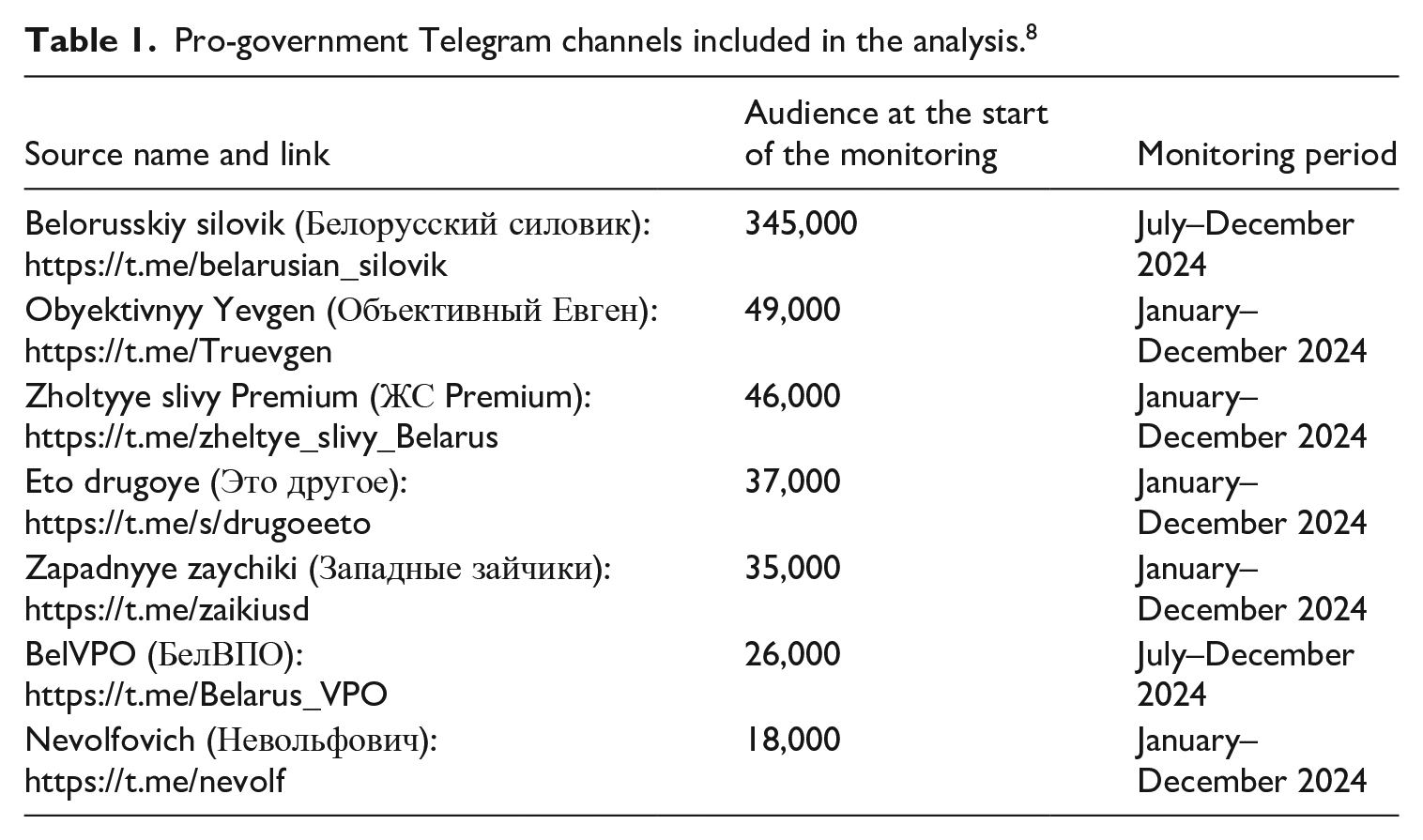
These sources were identified using the analytical platform TGStat, which, among other features, enables tracking changes in the size of Telegram channels’ subscriber audiences However, it is important to note that we cannot determine how many of these channels’ subscribers are real users residing in Belarus, although this limitation appears to concern Belorusskiy silovik in particular. Despite what its name may suggest, this channel is known to actively target audiences outside Belarus, primarily in Russia, which accounts for its substantially larger number of followers compared to the other sources in our sample. This channel regularly disseminates content related to the war in Ukraine, including frontline videos and other war-related news. Nevertheless, based on available media reporting, all sources included in the monitoring were verified to have a significant Belarusian subscriber base and to be operated by Belarusian actors (including Belorusskiy silovik).
Importantly, these Telegram channels do not necessarily present themselves as directly affiliated with the Belarusian regime or state-controlled traditional media. This relative distance from state-run institutions may contribute to their perceived credibility, making it particularly important to examine how Ukraine-related disinformation is disseminated through these sources. Additionally, Telegram channels officially linked to Belarus’ three main state-controlled broadcasters (Belarus 1, ONT, and STV) were excluded from the study, as they were found to be less popular than most of the sources included in our analysis. 9
Approach to data collection
This study employs a qualitative content analysis approach. Four trained human coders reviewed and classified relevant content from the selected Telegram sources based on predefined coding rules for detecting cases of disinformation. Importantly, each falsehood contained in posts featuring multiple instances of disinformation was counted separately. The analysis simultaneously considered both textual and visual content (such as images and videos). The coders had extensive prior experience monitoring and analysing both pro-regime and pro-democracy online content, ensuring a high level of familiarity with disinformation dynamics in Belarus.
To ensure coding reliability, the team of coders underwent extensive training before beginning the analysis. In early December 2023, the coders participated in a kick-off meeting, where they received a comprehensive introduction to the project’s objectives, coding procedures, and key concepts related to disinformation. The month-long training included a hands-on review of Belarusian and international examples of disinformation, as well as three rounds of pilot coding of the selected sources.
Throughout the project, the principal investigator (one of this article’s authors) systematically reviewed the data collected by the coders to eliminate false positives, applying a maximally conservative approach: if a post could not be conclusively identified as disinformation, it was excluded from the dataset. Finally, an additional round of verification, incorporating relevant fact-checking and media updates, was conducted shortly before the completion of this article to further ensure the exclusion of false positives.
Limitations
While this study provides valuable insights into the dissemination of Ukraine-related disinformation on pro-government Telegram channels in Belarus, it is important to acknowledge its limitations. First, the sample size is relatively small, as only a limited number of sources were analyzed. Second, the study covers only a single year (2024), which means that longer-term trends in the dissemination of disinformation remain unexplored. Future research should expand the dataset both in terms of time coverage and the number of sources analyzed to provide a more comprehensive understanding of Belarusian disinformation strategies.
Findings
During the monitoring period, only 433 posts out of approximately 80,000 that appeared on the selected sources were identified as containing disinformation related to the war in Ukraine and its consequences. 10 Moreover, more than 120 of these cases originated from a single source, Eto drugoye, which is operated by Belarusian entrepreneur and activist Stanislav Yaskevich. Another 88 disinformation posts appeared on Nevolfovich. In any case, the overall number of detected instances is relatively low, considering the high posting frequency of the channels included in the sample. (According to TGStat, the average number of posts published by these sources per month is approximately 900.)
These findings suggest that the dissemination of Ukraine-related disinformation across the most popular pro-government Telegram channels in Belarus may be rather limited. Whether this could reflect a deliberate strategy or is merely a coincidental outcome falls beyond the scope of this study. As noted, determining the underlying reasons would require direct interviews with these actors. Nonetheless, this result indicates that, at least in the case of Telegram sources that are sympathetic to or affiliated with the Lukashenka regime, Belarus does not appear to provide substantial (dis)informational ‘support’ for the Kremlin, as one might assume.
However, we caution readers against drawing definitive and broad conclusions. To begin with, this study covers only a limited sample of sources over a one-year period. It is possible that Ukraine-related disinformation is more prevalent on smaller pro-government Telegram channels or that its dissemination was more widespread in the earlier stages of the Kremlin’s full-scale invasion of Ukraine.
Second, as shown below, the number of views these posts have received is significant, suggesting they may have reached a large audience both within Belarus and beyond. Relatedly, although the dataset did not contain thousands of cases, the disinformation that was identified may still have had a substantial impact on how many Belarusians perceive the war in Ukraine and its key actors.
To capture potential fluctuations in the volume of disinformation—at least during 2024—Figure 1 presents the distribution of disinformation posts across the sources included in the analysis. Notably, the overall volume of Ukraine-related disinformation declines across all channels during the summer months. One possible explanation for this trend is that the individuals managing these channels were on vacation or believed that excessive posting about a politically sensitive issue such as the war in Ukraine would fail to engage audiences during the holiday season and might even provoke irritation.
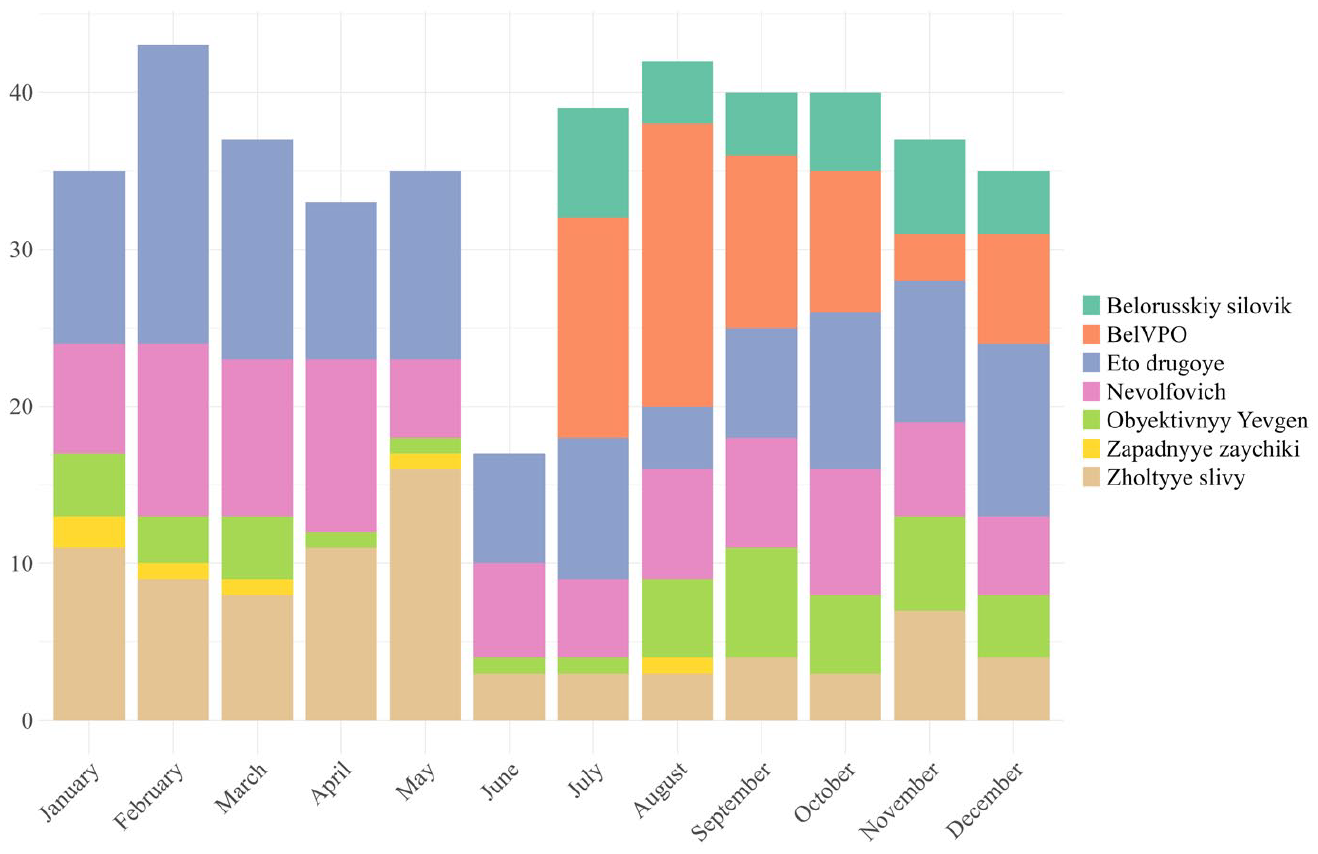
Distribution of disinformation posts in the sample.
Furthermore, when excluding posts from Belorusskiy Silovik and BelVPO—the two sources added to the analysis only in July—it becomes evident that the volume of Ukraine-related disinformation within the original sample of sources did not return to its pre-summer levels in the fall. This decline may be linked to Belarus’s so-called presidential election scheduled for early 2025, which likely shifted the focus of pro-government Telegram channels toward Lukashenka’s ‘campaign’ in the fall of 2024.
Lastly, the graph highlights that three sources—Eto Drugoye, Nevolfovich, and BelVPO—were the primary disseminators of Ukraine-related disinformation during the monitoring period. In contrast, the smallest contribution came from Zapadnyye Zaychiki, which can be due to the channel’s relatively low posting frequency (averaging only a few dozen posts per month).
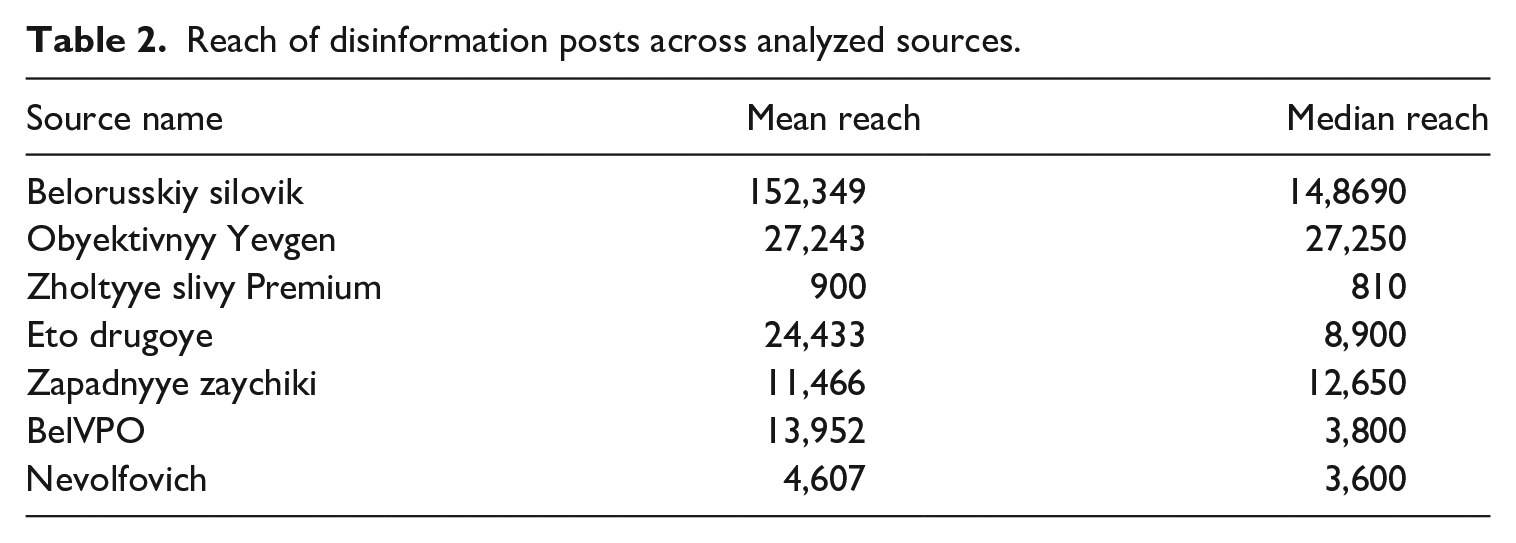
Despite the relatively low share of Ukraine-related disinformation discussed above, the analysis reveals that the total reach, measured as the cumulative number of views of these falsehoods is substantial, exceeding 10 million views as of late February 2025, with this number likely to continue rising over time. The average reach per post is 23,559 views, while the median is 5,500. However, two clear outliers distort the distribution. One post—making a claim that Volodymyr Zelenskyy and his wife Olena participated in a Vogue magazine photoshoot akin to one featuring Hitler and Eva Braun—garnered more than 1.5 million views. 11 Another post, falsely alleging that Ukrainian media used Photoshop techniques to downplay the scale of Ukrainian military losses, received more than 400,000 views. 12 The average reach per post decreases to 18,971 views, while the median remains unchanged at 5,500 when these two outliers are excluded.
It is also important to emphasize that the recorded view counts are not limited to Belarusians residing in Belarus. As noted above, at least for some sources, such as Belorusskiy silovik, a significant proportion of views seems to originate from Russia. When this Telegram channel and the 1.5 million-view outlier (posted on Obyektivnyy Yevgen) are excluded, the mean and median number of views per post are 9,907 and 4,700, respectively. Meanwhile, Table 2 below illustrates the variation in disinformation reach across the sources in the sample (without excluding outliers). As expected, Belorusskiy silovik, which has the largest number of subscribers, also exhibits the highest reach figures.
Reach of disinformation posts across analyzed sources.
Finally, before providing an overview of the most common themes in the detected Ukraine-related disinformation, we consider whether these false claims are ‘original’ or derived from Russian sources. To this end, the coders involved in the monitoring process examined whether the messages identified as disinformation had previously appeared in Russian sources. In nearly 53 percent of the disinformation posts, a Russian origin could be identified. The lowest proportion of such posts—approximately 44 percent—was found in Belorusskiy Silovik and Nevolfovich, while the highest—around 67 percent—was observed in Zapadnyye Zaychiki. It is important to note that this analysis did not seek to trace the original source of each disinformation case. Instead, we examined whether the identified disinformation claims had appeared at least one day earlier on Russian platforms—either in major pro-government media outlets (such as the websites of the state-run news agencies RIA Novosti or TASS) or in more obscure, fringe Telegram channels clearly targeting Russian audiences.
However, we believe these figures are likely to be underestimations. First, some disinformation posts may initially appear on highly obscure or therefore difficult-to-track Russian platforms before being picked up by content managers of various Telegram channels, including those analyzed in this study. Second, some Russian sources may delete disinformation posts after publication to mitigate reputational risks associated with generating and disseminating excessive amounts of false content.
Nonetheless, the substantial proportion of disinformation with identifiable Russian origins suggests that Belarusian pro-government Telegram channels largely refrain from generating Ukraine-related disinformation themselves. This, in turn, further reinforces the argument that the Belarusian regime and affiliated content producers provide only limited (dis)informational support for the Kremlin’s operations against Ukraine.
As for the content of the detected disinformation, we identified a highly diverse set of themes, as numerous posts appeared to reflect fast-moving and often transient developments on the frontline, in politics, and in other areas. To ensure a focus on the most prominent themes, however, we assigned distinct labels only to those that appeared at least five times in the collected data; themes mentioned four times or fewer were collectively categorized as ‘Other’. Among these were posts containing false claims about widespread public dissatisfaction with President Zelenskyy’s rule in Ukraine (three posts) and unfounded accusations of Ukraine’s involvement in the terrorist attack on the Crocus City Hall near Moscow in March (four posts). One post within the latter theme, for instance, alleged that the Ukrainian Embassy in Tajikistan had recruited citizens of this country into the Ukrainian Foreign Legion—a clear attempt to establish a link between Ukraine and the attack, given that the perpetrators were of Tajik origin. 13 Surprisingly, there were also relatively few posts (four) explicitly asserting (falsely, of course) that President Zelenskyy’s rule is illegitimate because Ukraine did not hold elections following the end of his first term. These claims disregard the fact that Ukrainian law prohibits elections during a state of war.
Regarding the most prominent themes over the entire monitoring period, Table 3 presents five key themes along with the category ‘Other’. The table shows whether each of these six themes ranked among the top ones in each month and provides the number of posts associated with each. The consistent presence of the category ‘Other’ further highlights the diversity and adaptability of Ukraine-related disinformation.
Main themes in Ukraine-related disinformation.
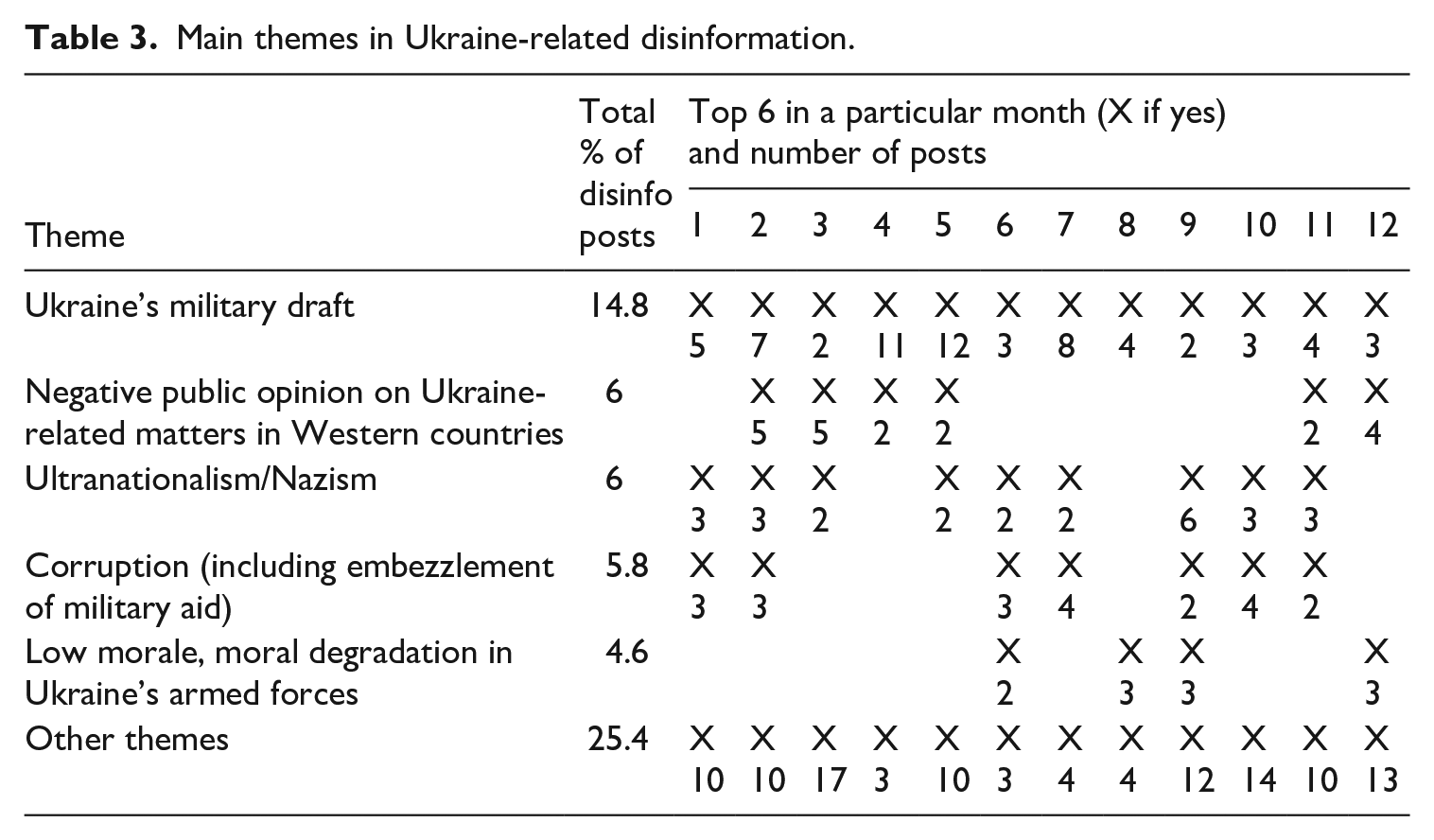
As shown in Table 3, narratives concerning conscription into the Ukrainian armed forces received the most attention from the sources included in the analysis. In every month of the monitoring period, military mobilization was among the five most frequently covered themes in Ukraine-related disinformation. That said, there was a significant increase in posts on this issue in May and June, most likely driven by the implementation of Ukraine’s new mobilization law, which came into effect in mid-May. A central narrative was that Ukraine faces a severe shortage of willing recruits, allegedly forcing authorities to enlist individuals with serious mental and physical conditions. 14 Additionally, claims emerged about illicit methods used to identify young men attempting to evade the draft. For instance, one post alleged that senior citizens were being paid to monitor and report such cases. 15
Another recurring theme was the alleged spread of ultranationalism and neo-Nazism in Ukraine. As noted earlier, one such post—comparing Volodymyr Zelenskyy and his wife Olena to Hitler and Eva Braun—garnered more than 1.5 million views. More broadly, as indicated by the five most common themes, the detected Ukraine-related disinformation primarily sought to depict Ukraine as weak, corrupt, and suffering severe military losses. The prominence of the ‘neo-Nazism’ theme, in turn, reflects the Kremlin’s longstanding and baseless narrative about Ukraine and its leadership. Furthermore, the prevalence of this particular theme strongly suggests that much of the Ukraine-related disinformation circulating in Belarusian pro-government Telegram channels originates from Russian sources.
Concluding remarks
This study examined Ukraine-related disinformation on the seven most popular Belarusian pro-government Telegram channels. While Telegram is often viewed as a space for dissent in authoritarian settings (Akbari and Gabdulhakov, 2019; Wijermars and Lokot, 2022), our study shows that it also functions as an important platform for state-aligned messaging. Three main findings emerged. First, the overall share of disinformation was low. Second, when disinformation did appear, a significant part of it focused on Ukraine-related topics. Third, 53 percent of the Ukraine-related disinformation posts could be traced to Russian sources. These results help expand scholarship on how authoritarian regimes use digital platforms to align themselves with the informational strategies of allied powers.
The fact that more than half of the Ukraine-related disinformation could be linked to Russian sources points to a connection between the Belarusian and Russian state media landscapes – this is an important finding for research on the Belarusian pro-government communication that until now had demonstrated a thematic similarity of the Belarusian and the Russian pro-state media (Manaev et al., 2021; Yeliseyeu, 2020). This pattern is also part of a broader trend, where smaller authoritarian regimes borrow communication strategies and narratives from more powerful allies (Debre, 2022; Glasius et al., 2020; Kerr, 2018; Von Soest, 2015; Waller, 2023). Although the Belarusian regime has kept some distance from Moscow in its rhetoric, choosing, for instance, to describe the conflict as a ‘war’ (Korosteleva and Petrova, 2023), its reproduction of Russian disinformation narratives shows that this distance has limits. In this light, Belarus offers an example of how autocracies positioned within the orbit of more dominant powers contribute to the informational warfare of their allies.
A key finding of this study is that Ukraine-related disinformation constitutes only a small fraction of posts on prominent pro-government Telegram channels in Belarus. However, as noted earlier, fully explaining this result is challenging without direct access to the individuals managing these channels. One possible interpretation is that the Belarusian regime and content producers affiliated with it deliberately refrain from extensively spreading falsehoods about Ukraine’s government and armed forces, at least on Telegram.
Alternatively, there may be no strategy at all. Those who manage the content of the Telegram channels analyzed in this study may, in fact, retain a degree of autonomy from state authorities and independently choose not to disseminate Ukraine-related disinformation. Their motivations could vary: they may fear that blatant falsehoods would be easily recognized by many users, potentially undermining trust in the sources they administer, or they may not fully align with the Kremlin’s aggressive stance on Ukraine, leading them to filter out certain misleading narratives.
Despite the relatively low volume of Ukraine-related disinformation, its reach remains somewhat considerable, meaning that a significant number of Belarusians may have encountered it at least once. This finding highlights important avenues for future research. One particularly relevant direction—both in the context of Belarusian pro-government Telegram and in other state-controlled social media environments—is to examine how users react to disinformation posts. Future studies could analyze which themes and claims elicit the most positive or negative reactions, whether through comments or emoji responses. Such research would provide additional insights into the public opinion effectiveness of Ukraine-related disinformation. If certain disinformation posts generate predominantly negative or indifferent reactions, it would suggest that even consumers of pro-government Telegram sources may not trust such narratives (for instance, posts that consist entirely of fabricated information rather than incorporating elements of real events).
Furthermore, this study focused on pro-government Telegram channels not directly linked to state-owned traditional media, as such sources may appear more credible to politically neutral Belarusians. This assumption warrants empirical testing. Future research should examine whether disinformation disseminated through these channels appears more credible to politically neutral Belarusians than that spread by traditional pro-government media. Additionally, it would be valuable to explore how exactly and how quickly neutral users can lose trust in pro-government Telegram channels upon recognizing the presence of (Ukraine-related) disinformation in their content.
Footnotes
Acknowledgements
This study draws on data collected as part of a year-long monitoring project carried out by the Center for New Ideas in collaboration with Sense Analytics. We are grateful to Aliaksei Piatrenka for his invaluable contributions to the data collection process.

Funding
This study utilizes data collected as part of a year-long monitoring project implemented by the Center for New Ideas and Sense Analytics, with financial support from a US-based institutional donor that prefers to remain anonymous.
Declaration of conflicting interests
The authors declared no potential conflicts of interest with respect to the research, authorship, and publication of this article.
Notes
Author biographies
Address: Center for New Ideas, Aleja Jana Pawł a II 43A/37B, Warsaw 01-001, Poland. [email: