



Abstract
This article examines how Polish business journalism framed wartime economic developments during the Russia–Ukraine conflict (2022–mid-2024). Drawing on a mixed-methods analysis of 395 headlines from major financial news outlets, the authors combine thematic categorization with sentiment analysis to trace how the media represented key sectors such as energy, agriculture and finance. The findings reveal an early dominance of negative sentiment, followed by a gradual shift toward neutral and notably ambivalent framing – especially in response to complex issues like the grain import crisis and transport sector disruptions. The study highlights ambivalence as a strategic framing device that resists binary evaluations, and reflects the layered economic realities of prolonged conflict. The authors argue that business journalism plays a critical role not only in conveying economic information, but also in shaping public interpretation and institutional response during periods of systemic uncertainty.
Introduction
Business journalism, as a specialized domain within the field of reporting, assumes an important role in the analysis and dissemination of the complexities inherent within economic and financial systems to both expert stakeholders and general audiences, informing public audience about macroeconomic trends, supply chain disruptions and shifts in policy frameworks (Roush, 2006), while simultaneously shaping public perception and influencing economic behaviours through framing of these developments (Van Dalen, 2018). The significance of this field becomes increasingly pronounced during periods of armed conflict, where it offers vital insights into the economic ramifications of warfare. In contexts characterized by geopolitical turbulence, such as the ongoing Russian–Ukrainian war, the nexus between media, economics and politics reveals itself with particular urgency (Eskjær et al., 2015). Poland, located as a geopolitical neighbour to the conflict and recognized as a significant economic player within Eastern Europe, has faced a series of tangible economic and political consequences stemming from the Russian–Ukrainian war (Melnychenko et al., 2022). Among these consequences are energy supply crises, trade disruptions, influxes of refugees and intensified inflationary pressures.
In this context, Polish business journals have undertaken a dual role. They serve first as platforms for the interpretation of the economic dimensions of the conflict, providing analysis and insight into the underlying issues at play (Damstra et al., 2018). Second, they contribute to the framing of the economic consequences of the war in ways that resonate with Poland’s geopolitical positioning and national priorities, particularly emphasizing concerns such as energy security and support for Ukraine. This dual function underscores the importance of business journalism not only as a conduit of information but also as a significant factor in shaping the economic discourse amidst geopolitical crises.
This study examines the framing of the economic ramifications of the Russian–Ukrainian conflict by Polish financial news outlets, emphasizing both macroeconomic and microeconomic dimensions. It aims to identify the prevailing themes and evaluative tones present in their representations of economic issues arising from the wartime context. Through a comprehensive analysis of these elements, the research aspires to enhance the understanding of business journalism as a crucial agent for economic interpretation in periods of crisis (Bach et al., 2013). In an analysis of the role of Polish business journalism amid the Russian–Ukrainian war, this research elucidates its pivotal function in shaping economic discourse. It has not only documented the economic repercussions of the conflict but has also taken part in mediating public understanding of its broader implications for both national and global economic landscapes (Fengler et al., 2020; Weber and Dunham, 2024).
The intersection of journalism, economics and geopolitics becomes especially evident in times of conflict, where the role of business journalism extends beyond straightforward reporting. It contributes to the broader understanding of economic challenges by reflecting public sentiment and institutional responses, while also influencing how these dynamics are perceived (Boomgaarden et al., 2011). The coverage of the economic impact of the Russian–Ukrainian war by Polish business media demonstrates the sector’s ability to shape public discourse through perspectives shaped by national priorities, historical experiences and strategic considerations. This study highlights the important role that business journalism plays in framing economic developments in ways that inform, contextualize and support public engagement during times of uncertainty.
Framing theory in business journalism
Framing theory offers a conceptual foundation for examining how media construct meaning around complex events by privileging specific interpretive lenses over others. As articulated by Todd Gitlin (1980), it refers to ‘persistent patterns of cognition, interpretation, and presentation’ that selectively amplify certain facets of reality while concurrently minimizing others. Such framing mechanisms are systematically constructed through a variety of linguistic devices, visual cues and narrative strategies that significantly influence audience perceptions and interpretations of events (De Vreese, 2005). In its most influential formulation, Entman (1993: 52) defines framing as the selection and salience of certain aspects of perceived reality to promote a particular problem definition, causal attribution, moral evaluation and treatment recommendation. This four-part model has been adopted in Media Studies to investigate how news narratives are structured and how they guide audience understanding (D’Angelo and Kuypers, 2010).
Frames are strategic devices that shape the perceived significance of issues through emphasis, repetition and exclusion (Gitlin, 1980). Reese (2001) highlights that frames operate as shared interpretive structures embedded in culture, while Van Gorp (2007) introduces the notion of ‘frame packages’ – clusters of framing and reasoning devices (keywords, metaphors, symbols) that anchor meaning within culturally resonant patterns. These packages facilitate the circulation of ideologically loaded narratives, particularly in crisis reporting. Recent applications of frame analysis in war coverage, including that of Papale and Solaroli (2025), highlight how the interplay between political discourse and journalistic framing produces competing versions of legitimacy, responsibility and sacrifice. In the context of economic reporting during armed conflict, such as the Russian–Ukrainian war, framing becomes a key mechanism through which business journalism interprets disruption, allocates blame and legitimizes responses – often oscillating between national interest, geopolitical alignment and market stability (Sun, 2024).
Crisis-specific frames in business reporting
Framing in business journalism encompasses the process of transforming complex economic concepts into narratives that are accessible and engaging for a diverse array of audiences. This transformation is particularly critical during times of crisis, such as financial downturns and geopolitical instability, as the media fulfill a dual function: informing the public and shaping economic behaviour (Fengler et al., 2020; Usher, 2014). In economic contexts, the manner in which a crisis is framed can delineate whether it is perceived as a structural failure or as a transient market correction – each framing yielding distinct policy ramifications and public implications (Bach et al., 2013; Matthes, 2009). The specific frames utilized in business journalism exhibit considerable variability, influenced by factors such as editorial intent, political orientation, national context and the characteristics of the target audience. This variability underscores the role of framing as a tool in the dissemination and reception of financial information.
In the domain of business journalism, particularly during periods of crisis, several predominant framing types have been identified: (a) economic frames: these frames concentrate on critical economic indicators and phenomena, including inflation rates, trade disruptions, contractions in gross domestic product (GDP), fluctuations in currency valuations and failures within supply chains (An and Gower, 2009). Such frames serve to contextualize the economic landscape and highlight the complex challenges confronting businesses and economies; (b) opportunity frames: this framing type underscores narratives of innovation, resilience and potential recovery, often emphasizing themes of entrepreneurial adaptation and proactive government interventions (Richey et al., 2025). These frames aim to illuminate pathways to recovery and growth amidst adversity, fostering a sense of optimism and potential for revitalization; (c) systemic threat frames: these frames draw attention to risks posed to overarching economic systems and the integrity of institutions, thereby raising critical concerns regarding long-term financial stability (Renn et al., 2020). By framing crises as systemic threats, media narratives underscore the potential for widespread ramifications that extend beyond individual entities to affect the broader economic landscape.
These framing types collectively shape public discourse and influence stakeholders’ perceptions and responses to economic crises. The implementation of various framing strategies can affect public confidence, investment behaviour and the discourse surrounding policy matters (Damstra et al., 2018). For example, frames that emphasize pessimism, particularly those centred on themes of recession and economic instability, have the potential to suppress consumer spending and undermine trust in financial markets (Blood and Philips, 1995). Conversely, frames that adopt an optimistic perspective, which may highlight governmental stimulus initiatives or demonstrate economic resilience, can foster a climate of constructive engagement among stakeholders (Esser and Strömbäck, 2014; Iyengar, 1991).
Business journalists encounter the significant challenge of rendering complex economic phenomena comprehensible while preserving their inherent meaning. Several prevalent narrative strategies emerge in their reporting practices: (a) deconstructing complexity: this involves the translation of technical jargon into language that is accessible to non-specialist audiences, thereby facilitating understanding and engagement with economic issues (Doyle, 2006); (b) temporal framing: journalists often navigate the tension between immediate economic disruptions and broader, long-term economic forecasts. This strategy helps to contextualize current events within a historical or future-oriented framework (Damstra and Boukes, 2018); (c) personalization: by incorporating human-interest narratives, journalists can effectively illustrate abstract economic concepts, making them more relatable and engaging for the audience. These narrative strategies empower journalists to contextualize economic crises in a manner that resonates both emotionally and cognitively with readers. Consequently, they are a significant factor which shapes public interpretation of economic developments and influencing engagement in public discourse (Borah, 2011; Kiesow, 2021).
The concept of framing in journalism possesses significant ethical implications, particularly within the context of volatile economic climates. Business journalists are tasked with balancing the urgency of reporting with the imperative of responsible journalism, a challenge that necessitates careful consideration to prevent the incitement of public panic or the dissemination of misinformation (Plaisance, 2014). Inaccurate or sensationalized reporting has the potential not only to exacerbate market volatility but also to erode public trust in institutional frameworks. Consequently, ethical considerations in framing demand a commitment to transparency, the utilization of balanced and credible sources, and prioritization of the public interest above commercial motivations (Damstra et al., 2018).
Framing theory serves as a critical analytical framework for comprehending the ways in which business journalism constructs and disseminates economic realities, particularly in periods of crisis. The Polish case study exemplifies how national context plays a pivotal role in both the construction and reception of these frames, thereby emphasizing the necessity for a culturally and politically nuanced analysis. Ultimately, it is imperative for both scholars and practitioners engaged in media accountability and the promotion of informed public discourse to acknowledge and critically assess the power and responsibility inherent in economic framing practices.
Methodology
This research employs a mixed-methods framework, integrating quantitative content analysis with qualitative framing analysis to investigate the manner in which Polish business media have framed economic developments arising from the Russia–Ukraine conflict from early 2022 to mid-2024. The study specifically examines business-oriented Polish media outlets, including Forbes Polska, Forsal, Business Insider Polska and Bankier.pl, analysing their portrayal of the economic influences of the Russian–Ukrainian war over a 28-month period. This analysis aims to explicate shifts in thematic framing, sentiment and narrative strategies employed by these media entities in response to evolving economic conditions linked to the conflict.
A total of 395 news articles were selected for analysis to examine how Polish business journalism framed the economic implications of the Russian–Ukrainian war for both the national economy and the broader global market. The sample was drawn exclusively from media outlets with a primary focus on economic and financial reporting. Headlines were included if they were published between 24 February 2022 and 30 June 2024, and if their content demonstrably centred on economic themes. Inclusion criteria required that the headlines explicitly referred to issues such as macroeconomic trends, trade policy, energy security, market volatility, investment conditions, inflation, labour dynamics, or post-war reconstruction. Headlines were excluded if their primary focus was political, military, or general humanitarian reporting with no direct economic angle. This selection strategy ensured a coherent corpus grounded in economic discourse, enabling a targeted exploration of how financial news media constructed narratives of disruption, adaptation and strategic positioning within the wartime context.
To operationalize framing in the context of wartime economic reporting, this study employs a mixed-method content analysis combining thematic classification and sentiment annotation of headlines drawn from Polish business media. The analytical framework builds on Entman’s (1993) four functional dimensions of framing – problem definition, causal attribution, moral evaluation and treatment recommendation – and adapts the concept of ‘frame packages’ as defined by Van Gorp (2007), understood here as recurring associations between thematic categories and evaluative patterns. The dataset consists of 395 unique news headlines published between February 2022 and late 2023, sourced from established Polish financial news outlets. Each headline was coded according to two main variables: (1) economic sector, and (2) sentiment orientation. Thematic coding followed a closed-category approach, where headlines were manually classified into predefined economic domains, including food and agriculture, energy, arms and defence, finance, labour, transport/logistics (TSL) and a residual ‘other’ category capturing cross-sectoral or macroeconomic topics. Coding criteria were based on the dominant economic referent or actor in each headline. Where ambiguity occurred (e.g. overlapping sectors), headlines were classified based on their primary economic focus as determined by syntactic salience and referential intent. This categorical framework allowed for the identification of sector-specific narrative logics and facilitated comparative analysis across domains. Sentiment analysis was conducted by two independent human coders manually and based on a four-point scale: positive, negative, neutral and ambivalent (Van Atteveldt et al., 2021). Classification drew on established guidelines in affective framing research (Matthes and Kohring, 2008; Papale and Solaroli, 2025), with ambivalence operationalized as the co-occurrence of contradictory evaluative cues within a single headline (e.g. through contrastive conjunctions, modal uncertainty, or conflicting lexical items). The sentiment axis is treated here not as a substitute for framing, but as an embedded component of evaluative framing, enabling the identification of tone-dependent frame packages (e.g. resilience vs crisis, progress vs threat).
To maintain consistency and objectivity, both coders independently classified the entirety of the dataset prior to a comparative analysis of their results. Headlines exhibiting conflicting sentiment labels were subsequently flagged for further review. The degree of intercoder agreement was assessed using Cohen’s Kappa coefficient, yielding a score of 0.87, which reflects a high level of reliability. Discrepancies between coders were addressed through collaborative discussion and, in instances of ambiguity – such as headlines containing both positive and negative elements – a contextual interpretation was employed to ascertain the definitive classification. By adopting a manual sentiment analysis method, this study effectively captured the nuances of language and contextual significance that automated natural language processing tools frequently fail to address.
A longitudinal analysis was undertaken to systematically examine the evolution of sentiment within Polish business journalism over a specified timeframe. The study focused on quarterly shifts in sentiment, identifying significant peaks in both negative and positive coverage. A comparative analysis of dominant framing strategies was conducted across the years 2022, 2023 and early 2024, which illuminated the ways in which media narratives adapted to fluctuating economic and geopolitical contexts. Furthermore, a correlation analysis was performed to investigate the relationship between major economic events – such as the influx of Ukrainian refugees, the imposition of sanctions and embargoes on Russia, and the ensuing energy and grain crises – and the resultant fluctuations in sentiment as reflected in media headlines.
To elucidate the findings, a variety of data visualization techniques was employed, including stacked bar charts and sentiment trend lines, which demonstrated the evolution of framing strategies within Polish business media as the war unfolded. These visual representations facilitated the identification of significant patterns in economic narratives, revealing a notable transition from an initial optimism in early 2022 to a predominantly negative outlook by 2024. Chat GPT (4o model) was used exclusively to visualize the research results in Figures 2 and 3. Furthermore, a frame consistency check was conducted across various Polish business outlets to ensure that biases and divergent narratives were adequately accounted for in the thematic classification process.
While the study demonstrates several strengths, it also acknowledges specific methodological limitations. One notable constraint is the exclusive emphasis on headlines; while headlines undoubtedly serve as potent indicators of media framing, they inherently lack the comprehensive contextual depth available in full-length news articles. Future research endeavours should incorporate an analysis of complete articles to facilitate a more nuanced understanding of media discourse. Furthermore, the scope of media outlets examined presents another limitation as this study is confined solely to Polish business media. A comparative analysis involving Western financial journalism – exemplified by esteemed publications such as The Economist and the Financial Times – could yield valuable cross-cultural insights. Additionally, the potential for human interpretation bias warrants consideration. Although the study achieved a high level of intercoder reliability, subjective interpretations of sentiment may still introduce subtle inconsistencies. Future research could benefit from adopting a hybrid methodology that combines manual coding with AI-assisted verification, thereby enhancing the robustness of the sentiment classification process.
Content analysis based on economic coverage
The distribution of wartime economic coverage across Polish business media reveals distinct patterns of thematic prioritization. Among the 395 analysed headlines, over half (50.2%) were classified under a broad ‘other’ category encompassing macroeconomic and cross-sectoral topics, while food and agriculture emerged as the most prominent specific sector (14.8%), followed by arms and defence (9.5%), energy (7.4%), finance (6.9%), transport and logistics (5.6%) and labour (5.6%). This distribution (see Figure 1) reflects the media’s selective emphasis on particular economic domains during the conflict period. In line with framing theory, which posits that news outlets highlight specific aspects of reality to guide interpretation (Entman, 1993; Kang et al., 2024), Polish business journalism demonstrated a strong orientation toward issues with immediate material impact and national strategic relevance. The prominence of food, arms and energy suggests a prioritization of sectors closely tied to security, supply stability and domestic unrest, while more abstract or technical sectors – such as finance or logistics – received comparatively less sustained attention.
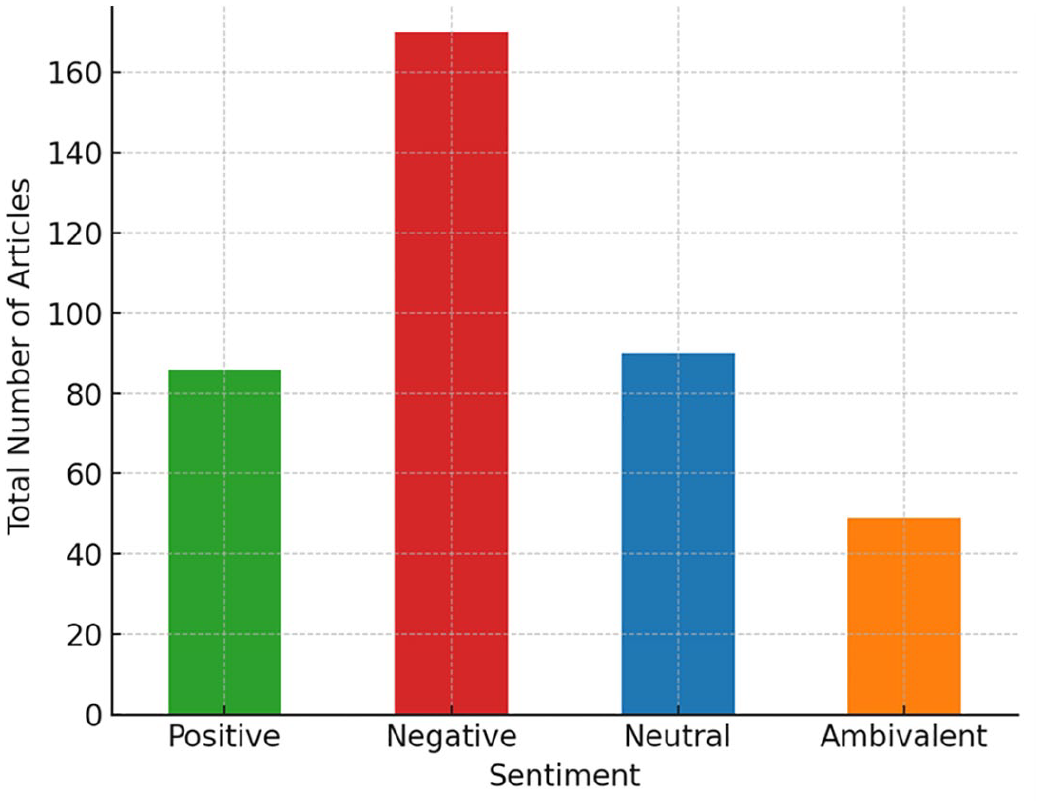
Overal sentiment distribution of headlines.
The food and agriculture sector was frequently framed in terms of conflict, discontent and policy backlash, particularly surrounding the influx of Ukrainian grain into the Polish market. Headlines chronicled mounting tensions between Polish farmers and the government, as agricultural producers voiced concern over declining prices and insufficient protective measures. News coverage often portrayed grassroots mobilization – such as border blockades and protests – as responses to transnational trade decisions. These narratives foregrounded a domestic economic threat, situating farmers as both victims of international liberalization and defenders of national interest. At the same time, some reporting extended the frame beyond local grievances, casting Poland’s grain restrictions as acts of economic sovereignty that complicated relations with Ukraine and the European Union. This duality illustrates how the food sector was positioned not simply as a market issue, but as a symbolic front in the wartime economy, where economic security, rural identity and geopolitical alliances intersected. The recurrence of price inflation, rising input costs (notably fuel and fertilizers) and food scarcity also framed the sector as a driver of broader economic instability, making it a key point of resonance for public concern.
Coverage of the energy sector followed a dynamic trajectory, evolving from alarmist depictions of crisis to a more balanced narrative of strategic resilience. Early in the conflict, Polish business media emphasized fears of energy shortages and price surges linked to the curtailment of Russian gas supplies and broader market volatility. Headlines frequently invoked the spectre of an ‘energy crisis’, citing overdependence on Russian hydrocarbons and vulnerabilities in domestic infrastructure. However, as the crisis progressed, reporting increasingly focused on Poland’s adaptive strategies, including the expansion of LNG import capacities, stockpiling initiatives and major infrastructure developments such as the Baltic Pipe. The emergence of renewable energy projects and regional cooperation also featured prominently in later coverage. This shift toward a resilience frame portrayed Poland as actively reducing its exposure to geopolitical energy risks. By 2023, worst-case scenarios such as widespread blackouts had largely been averted and the press attributed this to institutional preparedness, EU support mechanisms and successful diversification policies. As such, energy reporting balanced short-term disruption with long-term capacity building, reflecting the broader wartime discourse of endurance and national recalibration.
The financial and macroeconomic sector was primarily framed through the lens of technocratic adaptation and institutional responsiveness. Rather than emphasizing market dynamics or corporate earnings, headlines focused on inflation control, monetary policy adjustments and fiscal interventions. The Polish National Bank’s successive interest rate hikes were frequently framed as necessary measures to counteract war-induced inflation, while government programs such as the Anti-Inflation Shield (reducing VAT on essentials) were portrayed as short-term buffers against economic hardship. Economic governance was thus depicted as a form of crisis management, with policymakers steering through volatility by deploying stabilizing tools. Although initial reporting emphasized risk – particularly currency depreciation, trade disruption and rising public debt – later coverage noted Poland’s relative economic resilience, with GDP growth for 2022 remaining positive despite global uncertainty. This framing positioned the Polish economy not as immune to the effects of war, but as agile and buffered by strategic policymaking and diversified structures. The economic narrative here was one of cautious optimism, suggesting that, while the war disrupted conventional trajectories, institutional capacity mitigated its worst effects.
Although they received less attention in terms of headline volume, sectors such as transport, logistics and labour were nonetheless framed as critical infrastructures under pressure, revealing vulnerabilities and adaptive responses within Poland’s wartime economy. Reporting on transport and logistics emphasized border congestion, reconfigured trade routes and the pivotal role of Poland as a corridor for humanitarian aid and military supplies. Headlines described the strain on rail hubs and seaports, as well as efforts to sustain supply chains despite infrastructural bottlenecks and rising costs. These narratives portrayed the logistics sector as a resilient facilitator of wartime exchange, integral to both Ukraine’s access to external markets and Poland’s economic continuity. Labour-related coverage, in contrast, focused on the influx of Ukrainian refugees and their integration into the domestic workforce. Headlines alternated between viewing this demographic shift as a source of strain – particularly on public services and low-wage job markets – and as a solution to pre-existing labour shortages. This ambivalent framing reflected a tension between solidarity and economic calculus as journalists reported on both the moral imperative of refugee assistance and the structural benefits of demographic replenishment. In both cases, wartime realities were shown to reshape national capacities, exposing systemic stress points while also fostering rapid innovation and institutional response.
Sentiment analysis of headlines and content
Out of a total of 395 analysed headlines, the distribution of sentiment reveals a pronounced tendency toward negative evaluations, with 43.3 percent of the headlines classified as negative. This indicates a significant prevalence of unfavourable sentiment within the dataset. Neutral sentiment appeared in 22.8 percent of the headlines, while positive sentiment was identified in 21.8 percent, reflecting a relatively balanced distribution, albeit with a slightly lower incidence of favourable coverage. Additionally, ambivalent headlines – those reflecting mixed or unclear sentiment – accounted for 12.1 percent of the sample. Overall, the data demonstrate that negative sentiment markedly outweighs both positive and neutral sentiment, suggesting that Polish business journalism during the study period adopted a predominantly critical tone in its wartime economic coverage. A visual representation of this sentiment distribution is provided in Figure 1.
From a temporal standpoint, the weekly sentiment trajectory of the headlines can be illustrated as shown in Figure 2.
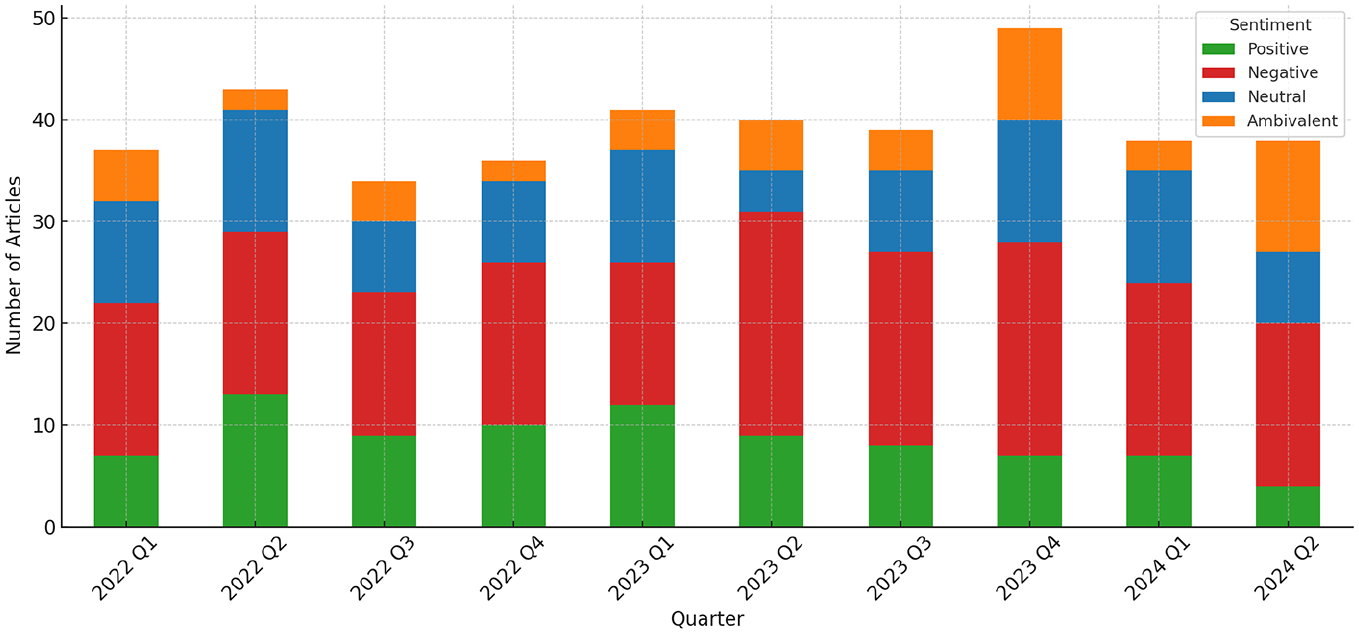
Sentiment distribution of headlines by quarter (Q1 2022–Q2 2024).
In the initial weeks, negative sentiment predominates, probably indicative of the onset and intensification of the conflict in Ukraine. Over time, however, neutral and positive sentiments emerge more evenly, which can be associated with narratives surrounding economic adaptation, foreign aid and the stabilization of conditions.
Ambivalent sentiment exhibits consistently lower prevalence while demonstrating slight fluctuations during periods characterized by mixed or complex developments. When analysing weekly sentiment trends, it becomes evident that ambivalent headlines are the least frequent throughout the entire study period. This phenomenon probably reflects the inclination of journalistic framing to favour clearer tonalities, particularly in times of crisis, whether they are problem-focused or progress-oriented (Molek-Kozakowska, 2016). Although instances of ambivalent sentiment are generally infrequent, notable spikes do occur. These fluctuations correspond to specific contexts, including: (a) discussions of trade-offs or conflicting interests; (b) policy dilemmas in which decisions beneficial to one demographic may adversely affect another; (c) international negotiations; and (d) narratives surrounding refugees, in which humanitarian considerations often conflict with political or economic imperatives. To illustrate this point, consider three pertinent examples:
Zniesione cło na żywność z Ukrainy. Polscy rolnicy stawiają warunek . . . (Food duty lifted from Ukraine. Polish farmers set a condition . . .)
Deweloperzy wracają do budowy. Czy inwestycje przetrwają? (Developers are returning to construction. Will investments survive?)
Polska pomaga, ale coraz trudniej o miejsca i wsparcie finansowe. (Poland helps, but finding places and financial support is increasingly difficult.)
Ambivalent news headlines often employ distinct linguistic markers that signal mixed or unresolved sentiment, effectively positioning the reader within a space of interpretive ambiguity. Polish wartime business journalism demonstrates this through a range of discursive strategies, including contrastive conjunctions, open-ended questions, ellipsis, hedging language and the juxtaposition of positive and negative lexical items. For instance, in the headline Polska pomaga, ale coraz trudniej o miejsca i wsparcie finansowe (Poland helps, but finding places and financial support is increasingly difficult), the contrastive conjunction ale (but) directly offsets a positive act of humanitarian aid with a negative development concerning domestic capacity. This classic structure – ‘X, but Y’ – creates an inherent tension in tone by presenting clashing clauses in a single sentence. Similarly, the headline Deweloperzy wracają do budowy. Czy inwestycje przetrwają? (Developers are returning to construction. Will investments survive?) ends with an explicit question that introduces uncertainty. The use of czy (will) marks a modal construction that defers resolution and signals the possibility of failure, thereby hedging any optimistic interpretation of the initial clause. Another example, Zniesione cło na żywność z Ukrainy. Polscy rolnicy stawiają warunek . . . (Food duty lifted from Ukraine. Polish farmers set a condition . . .), uses an ellipsis to imply an incomplete narrative, hinting at upcoming objections or complications that qualify the apparent good news. Qualifying phrases such as coraz trudniej (increasingly difficult) further modulate sentiment, softening definitive judgments and suggesting a negative trend without making a categorical claim. Collectively, these linguistic devices suspend evaluative clarity, prompting readers to anticipate complexity.
Beyond their lexical and grammatical structures, ambivalent headlines function as framing devices that foreground underlying political and economic tensions. Drawing from media framing theory (Entman, 1993), such headlines pluralize interpretation by simultaneously activating conflicting frames – e.g. solidarity vs burden, opportunity vs risk, or global responsibility vs domestic interest. The refugee headline cited above frames Poland’s humanitarian efforts as commendable, yet tempers this with the economic and logistical strain they impose. In the example, Deweloperzy wracają do budowy. Czy inwestycje przetrwają? (Developers are returning to construction. Will investments survive?) reflects economic momentum but immediately questions its sustainability, capturing the precarious nature of wartime recovery. Likewise, the ellipsis in the headline about tariff removal and farmers’ objections indicates unfolding economic negotiation, illustrating the dual pressure of international solidarity and domestic protectionism. These headlines do not offer conclusive problem definitions but instead sustain a discursive space where multiple interpretations remain in tension. Ambivalent framing, in this sense, acts as a meta-frame that signals the contested nature of the news itself.
Following the initial shock and crisis phase of the war, the sentiment landscape within Polish economic media began to exhibit greater diversification. This phenomenon is evident in the sentiment trends captured in the dataset, and aligns with broader media logic and societal response patterns. As the conflict progressed, businesses in both Ukraine and Europe endeavoured to resume activities whenever feasible. Polish and international corporations adapted to the evolving context by establishing new trade routes and implementing remote services. Consequently, market volatility experienced a slight attenuation as strategic frameworks were enacted. This transformation in sentiment is reflected in the media headlines, which transitioned from a focus on disruption to one emphasizing adjustment and resilience:
Mimo wojny Ukraina wraca do produkcji stali. (Despite the war, Ukraine returns to steel production.)
Ukraińscy rolnicy rozpoczęli zasiewy mimo wojny. (Ukrainian farmers have begun sowing crops despite the war.)
As the media transitioned beyond the initial influx of ‘breaking news’, coverage evolved into more structured reporting, encompassing areas such as legislation, finance and refugee integration. Journalists began to focus on analytical and policy-oriented narratives, moving away from emotionally charged framing. This shift resulted in a more informative approach to journalism, characterized by headlines that were neither alarmist nor overly celebratory. An illustrative example of this new reporting style is the straightforward assertion: Ukraina zalegalizowała kryptowaluty (Ukraine legalized cryptocurrencies). Such headlines reflect a commitment to convey factual developments in a measured and objective manner.
The lexical distribution of economic terminology across sentiment categories (see Figure 3.) offers a nuanced view of how Polish business media framed the wartime economy. The term rynek (market) appears prominently across all sentiment categories – positive, negative, neutral and ambivalent – affirming its role as a central pivot in wartime economic discourse. Its recurrence signals not only the ubiquity of market dynamics in economic reporting, but also the versatility of the term in supporting multiple evaluative frames, from crisis and instability to recovery and opportunity.
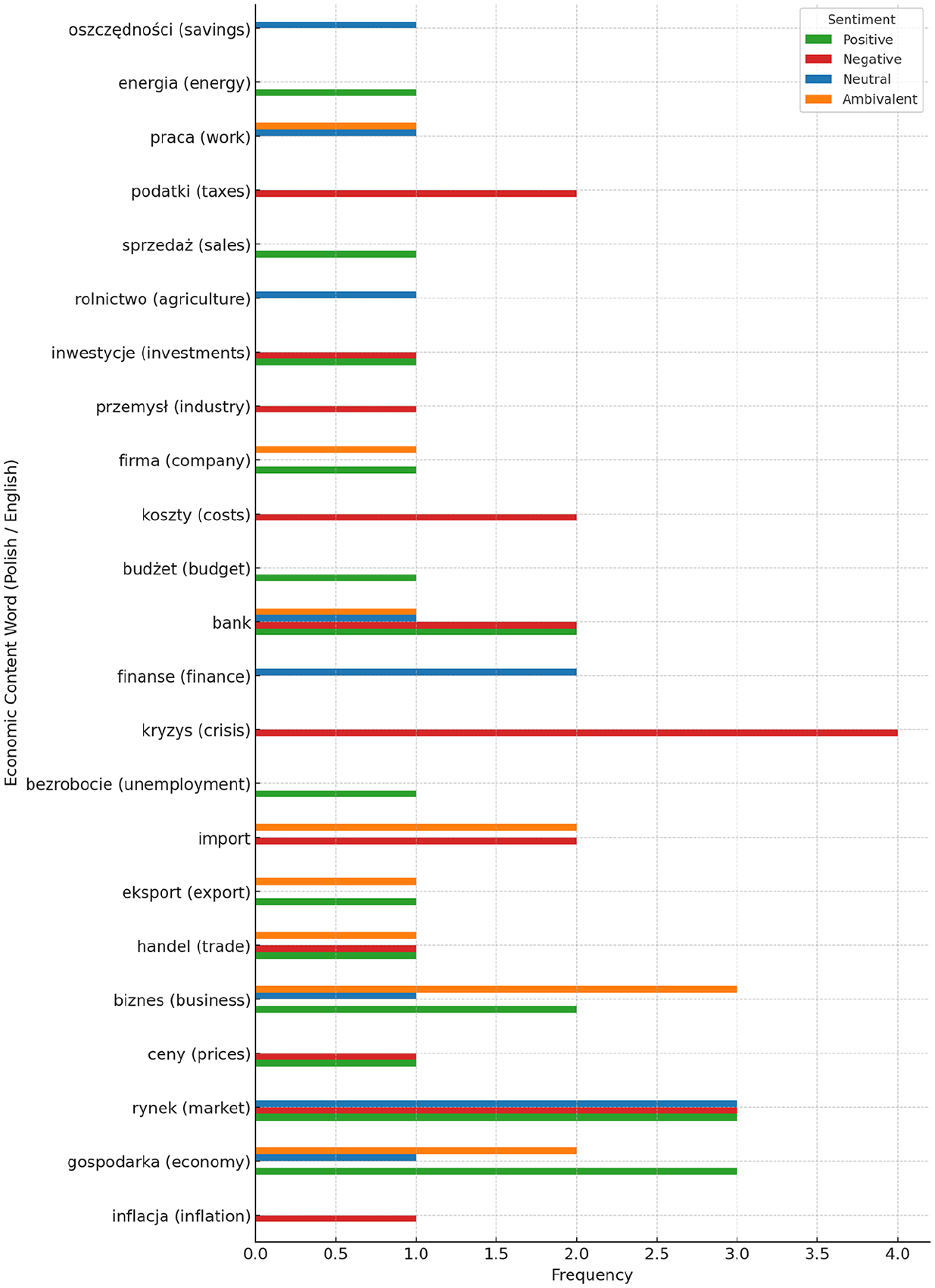
Top economic content words in headlines by sentiment.
In headlines coded as negative, the lexical field is strongly dominated by terms such as kryzys (crisis), inflacja (inflation), koszty (costs) and podatki (taxes). These words reflect a framing architecture grounded in economic hardship, fiscal burden and systemic vulnerability. The frequent appearance of bezrobocie (unemployment) and rolnictwo (agriculture) further connects the negative sentiment to concrete sectoral stress, especially in relation to the grain import crisis and its perceived effects on Polish farmers and rural labour markets. Such vocabulary underscores the media’s emphasis on economic threats and disruptions, portraying wartime conditions as a series of financial pressures to be managed or endured.
In contrast, positive sentiment headlines are anchored by words like gospodarka (economy), biznes (business), eksport (export) and energia (energy). These terms evoke forward-looking narratives tied to recovery, growth and strategic transformation. The prominence of firma (company) and inwestycje (investments) in this sentiment cluster reinforces a framing of the economy as adaptable and opportunistic, suggesting that, even in a context of war, Polish and Ukrainian businesses are capable of expansion, innovation, or international cooperation. The presence of energia in both positive and neutral contexts may reflect media attention on Poland’s transition toward energy independence as both a challenge and a domain of policy success.
Neutral headlines largely include broadly descriptive or institutional vocabulary, such as bank, finanse, handel (trade) and budżet (budget). These terms suggest a more analytical or technocratic framing, where journalism seeks to inform without overt value judgments. This aligns with financial reporting conventions that prioritize data-driven accounts of policy changes, market movements, or regulatory developments.
Importantly, the rise of ambivalent sentiment correlates with words like import (import), handel (trade), bezrobocie (unemployment) and gospodarka (economy), indicating the presence of conflicting evaluations within single headlines. For instance, the term import might refer to beneficial trade with Ukraine or, conversely, to the destabilizing effects of grain inflows on domestic producers – both meanings embedded within a single news item. Similarly, gospodarka (economy) appears across all sentiment categories, highlighting its discursive flexibility and its role as a container for both alarmist and hopeful framings.
Overall, this lexical analysis confirms that wartime economic reporting was not only thematically diverse but also sentimentally stratified. The vocabulary selected by journalists functioned as key framing devices, shaping how the public would interpret economic events – either as systemic threats, policy challenges, or emerging opportunities (see Table 1).
Summary of sentiment patterns across sectors.
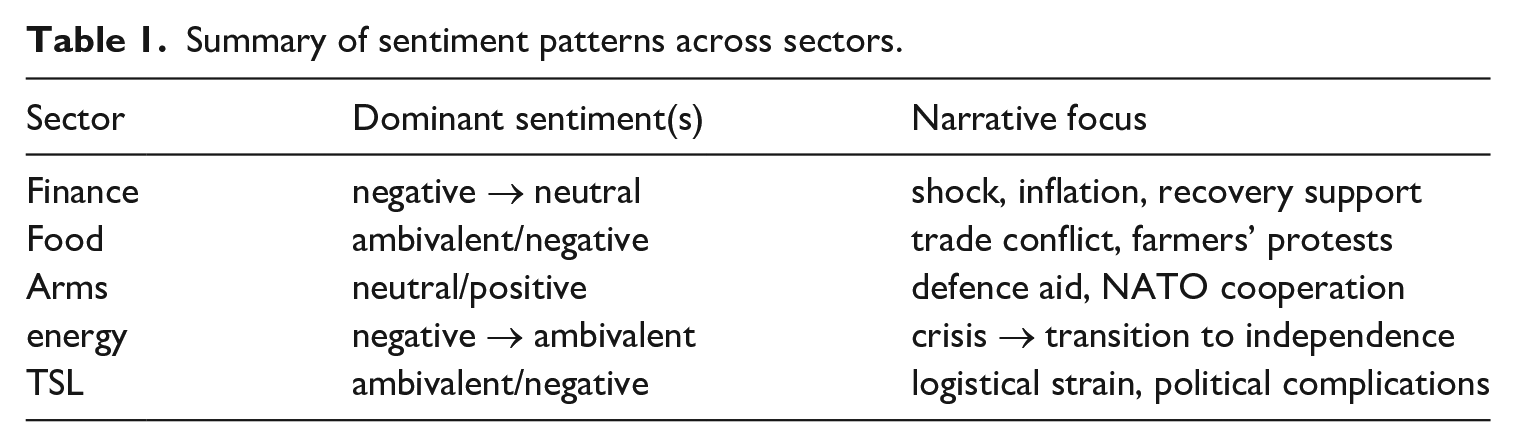
Overall, the narratives across these sectors exhibited a thematic progression from initial crisis responses to increasingly complex and multi-faceted interpretations of economic resilience and geopolitical interdependencies. The final phase of this linguistic analysis examines the Average Word Count (AWC, see Table 2) across the four sentiment types by conducting a comparative evaluation of these features in both headlines and full-text content. This dual-level methodology seeks to provide an in-depth understanding of the relationship between sentiment, linguistic economy and lexical richness within journalistic discourse.
Average word count (AWC) in headlines and full texts.
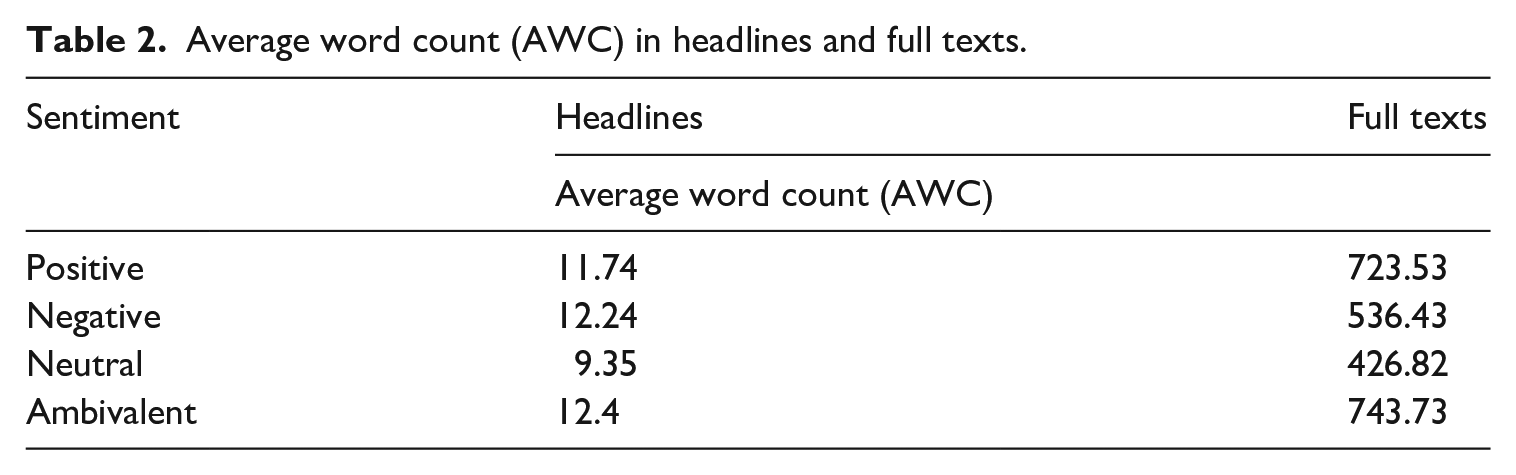
The data presented in Table 2 clarifies significant variations in AWC across different sentiment types for both headlines and full texts. Within the realm of headlines, neutral sentiment emerges as the most succinct (AWC = 9.35), indicative of a reporting style that prioritizes clarity and efficiency in conveying factual information. Conversely, headlines categorized as positive, negative and ambivalent tend to be more verbose, with ambivalent headlines exhibiting the greatest length (AWC = 12.4). This may be attributed to the inherent complexity and duality often associated with ambivalent sentiment.
When examining the full texts, this trend becomes markedly more pronounced. Notably, ambivalent and positive articles are the longest (AWC = 743.73 and 723.53, respectively), suggesting that these sentiment types are characterized by a higher degree of complexity and detailed exposition. In contrast, neutral and negative texts are comparatively shorter, with neutral texts once again demonstrating the most brevity. It is noteworthy that negative full texts (AWC = 536.43) are longer than their neutral counterparts but remain significantly shorter than both positive and ambivalent texts. This variation may reflect a tendency in negative narratives to concentrate on the articulation of issues rather than engaging in the extensive elaboration characteristic of more nuanced or optimistic narratives. In summary, the data underscores the influence of emotional tone and narrative complexity on the extent of written content, with ambivalent and positive sentiments correlating to a propensity for greater verbosity in both headlines and full texts.
Discussion and conclusions
This study explicates the formative role of business journalism within the Polish media landscape, particularly in the context of the Russian–Ukrainian war – a period marked by geopolitical volatility, economic destabilization and shifting institutional agendas. Drawing on framing theory and employing a mixed-methods approach, the analysis uncovers how Polish financial media responded to the war’s economic reverberations through selective emphasis on particular narratives, sentiment patterns and sectoral developments. The findings reveal a link between journalistic framing and the Russian–Ukrainian conflict’s evolving socio-economic realities, illustrating how the war prompted a reconfiguration of economic discourse in line with national imperatives and public anxieties.
The prevalence of negative sentiment in headlines during the early stages of the invasion affirms the function of business journalism as a rapid-response system in times of acute crisis. Headlines published in the immediate aftermath of 24 February 2022 overwhelmingly reflected inflationary concerns, energy insecurity and institutional fragility – hallmarks of an economy under sudden external shock. As the conflict persisted, however, the tonal structure of reporting shifted. While neutral and, at times, positive sentiment emerged as the war economy adjusted to prolonged instability, this trend was later interrupted by a resurgence of negativity tied to the grain import crisis and nationwide transport sector protests in 2023. Crucially, the aftermath of these flashpoints did not return the media to its earlier binary framing. Instead, an observable increase in ambivalent sentiment signalled a growing preference for narrating the war’s economic implications through multifaceted and interpretively flexible lenses. This suggests that, as the conflict evolved, Polish business journalism moved beyond reactive coverage and towards more deliberative framing of systemic tensions and policy dilemmas.
One of the study’s more unexpected findings is the consistent presence and narrative sophistication of ambivalent sentiment throughout the war period. Contrary to conventional assumptions that crisis journalism defaults to binary evaluative structures (see Waisbord, 2002), the Polish economic press demonstrated a sustained use of ambivalence as a framing strategy – particularly in sectors directly impacted by wartime disruptions, such as agriculture, energy and trade. Headlines reflecting ambivalence often captured conflicting policy goals (e.g. market liberalization vs domestic protection), stakeholder interests, or geopolitical responsibilities. Rather than simplifying complex developments, this form of framing acknowledged uncertainty, contradiction and competing values – offering a mode of public communication attuned to the moral and economic ambiguity inherent in wartime decision-making.
The linguistic and sentiment analyses further highlight how wartime reporting shaped the expressive structure of economic discourse. Positive and ambivalent headlines, often longer and more lexically rich, were frequently used to articulate nuanced stories of adaptation, cooperation, or strategic ambiguity. In contrast, negative sentiment was predominantly expressed through concise headlines, structured to convey immediacy and disruption. This asymmetry suggests that, in the context of war, constructive or multidimensional narratives require greater discursive effort, whereas negative developments are delivered with rhetorical economy. Such findings challenge assumptions about the expressive dominance of negativity in crisis communication and point instead to a deeper editorial calculus at play in wartime media environments.
The study also demonstrates the added value of manual sentiment classification and thematic framing analysis in contexts of heightened semantic complexity. This methodological choice enabled the identification of rhetorical subtleties and context-specific meanings that automated tools often miss – particularly in a linguistically rich and politically sensitive setting such as wartime Poland. Nevertheless, the study acknowledges its limitations, including its exclusive focus on headlines and the absence of full-article content analysis. Future research should expand the empirical scope to include longitudinal coverage and cross-national comparisons, enabling a deeper understanding of how wartime economic framing varies across media systems, cultural contexts and stages of conflict.
Footnotes
Funding
This work was funded by the EU’s NextGenerationEU instrument through the National Recovery and Resilience Plan of Romania – Pillar III-C9-I8, second round, managed by the Ministry of Research, Innovation and Digitalization, within the project entitled The Coverage and Reception of the Russian–Ukrainian Conflict in Polish, Romanian and English-Language Media: A Comparative Critical Discourse Study with Recommendations for Journalism Training (CORECON), contract no. 760244/28.12.2023, code CF 25/27.07.2023.
