




Abstract
This study examines and compares news framing of the protests in Ukraine from 30 November 2013 to 26 February 2014, encompassing three news sectors in the hybrid regime setting of Russia and the liberal democracy of the UK. Following Godefroidt et al.’s (2016) approach in their article in International Communication Gazette 78(8), the findings suggest that, while the Russian media used economic consequences and morality frames in the reporting of the protests reflecting the country’s political rhetoric on Ukraine, the British media preferred a human-interest frame and delivered a primarily one-sided coverage. The confrontational interpretations of the crisis by the Russian and UK media revealed an illiberal trend in both the hybrid regime and the liberal democracy.
Introduction
The decision made by the former Ukrainian President Victor Yanukovych to suspend the country’s EU Association Agreement on 21 November 2013 caused a wave of protests in the heart of Kyiv, the capital city of Ukraine. The unexpected and strongly mediatized brutality of police forces dispersing student protesters on 30 November eventually shook the foundations of the existing regime. After the collapse of the Yanukovych administration on 21 February 2014, Olexander Turchynov came to power as interim leader until May 2014 when Petro Poroshenko was elected the country’s President. Since then, Ukraine has been plunged into a protracted war with Russia (Bertelsen, 2017), marked by a competition between very different perspectives on the crisis in both academic and policy worlds and wide-ranging views ‘reflect[ing] the fact that conflicts are also always struggles over representations’ (Pantti, 2016: xiv).
The dominant understanding of the Ukraine crisis in the Western media is that, as the results of this study confirm, Ukraine as a state was undergoing a democratic revolution, which confronted an authoritarian Russia led by its President, Vladimir Putin (e.g. Boyd-Barrett, 2017). In contrast, a prevailing view among some non-Western media (e.g. RT – formerly Russia Today) was that the West was aggressively advancing to the borders of Russia in an attempt to shore up Western economic, political and military hegemony (e.g. Miazhevich, 2016). The media’s conflicting interpretations – coming from countries with different regime types and alliances in the conflict – can be connected to different framings that elaborate selected aspects while marginalizing others (Entman, 1993). This could potentially influence audience perceptions about the Ukraine crisis.
The study uses framing analysis to compare the news coverage of the Ukraine crisis in Russia and the UK, a hybrid regime and a liberal democracy, from 30 November 2013 to 26 February 2014. The different framing practices of their respective media systems will be considered to shed light on the nature of their protest coverage. The research questions are as follows:
RQ1: To what extent have the Russian and UK media paid attention to the protests in Ukraine?
RQ2: What news frames were adopted in the mediated protest coverage, and what are the differences among the different media outlets?
RQ3: To what extent does the media systems theory help explain the news coverage of the Ukraine protests in Russia and UK?
This comparative study contributes to the recent research on the topic by looking at the Russian media in a comparative way, thus going beyond the usual Western democracies that have been studied extensively and echoing the need to de-Westernize media research (Curran and Park, 2000) in the field of protest reporting in particular. The article begins with a theoretical section discussing protest framing and media systems. Second, a methodology section introduces the theories informing the methodological approach. The two subsequent sections present the empirical results and discuss the findings.
Literature review
Framing theory
According to Entman (1993: 52), selection and salience are the two major parts of the framing process which lead to the promotion of ‘a particular problem definition, a causal interpretation, a moral evaluation, and/or treatment recommendation’ with regard to daily events. The current study adopts a mixed-methods approach that brings together inductive and deductive elements whilst prioritizing thick description and interpretation-focused analysis. In particular, a combination of generic (six pre-defined – conflict, human-interest, economic consequences, morality, responsibility, nationalization – frames), diagnostic and prognostic news frames was applied to examine the framing of the protests in Ukraine, reflecting Entman’s framing theory.
Generic frames denote general and structural features of news and can be used across a range of different news subjects, times and cultural contexts (Semetko and Valkenburg, 2000). Most of the used generic frames in this study are derived from Semetko and Valkenburg, which have been proven to be the most commonly used generic frames (Holt and Major, 2010). The conflict frame emphasizes conflict between individuals, groups, institutions, or countries (Semetko and Valkenburg, 2000). Scholars have found that conflict can attract public attention (Galtung and Ruge, 1965), as it remains a basic and valuable ingredient of news, especially in foreign news coverage (De Vreese, 2005; Hamdy and Gomaa, 2012). The human-interest frame refers to an individual’s story that could sensationally generate emotional responses, which adds to the narrative quality of the news capturing audience interest in a competitive-market context (Bennett, 1995). The economic consequences frame represents issues in terms of the economic impact they will have on individuals, groups, organizations, or countries (Semetko and Valkenburg, 2000). The morality frame locates the issue in the context of morals, social prescriptions and religious tenets (Godefroidt et al., 2016). It is often used indirectly through citations, reasoning or implications due to the journalistic norm of objectivity (Neuman et al., 1992; Semetko and Valkenburg, 2000). The responsibility frame is defined as ‘a way of attributing responsibility for a cause or solution to either the government or to an individual or group’ (Semetko and Valkenburg, 2000: 96). Finally, the nationalization frame describes the fact that journalists tend to report international news from a purely domestic angle (Gleissner and De Vreese, 2005; Van Cauwenberge et al., 2009). Godefroidt et al. (2016: 782) relate this frame to ‘ethnocentrism – judging other countries by the extent to which they live up to one’s own national practices and values – [which] has always been a crucial value determining the coverage of foreign news’.
In contrast to the pre-defined generic frames outlined above, context-specific diagnostic and prognostic frames shed a unique and important light on the topic at hand. More specifically, diagnostic frames highlight the larger context of an issue, whereas prognostic framing refers to the identification of solutions and strategies to the issue at stake (Benford and Snow, 2000). The use of news frames is particularly important in the case of reporting on protest campaigns, which is the specific focus of this article, as it may encourage different or even polarized attitudes within the public including policymakers by framing the events one way or another. It can also be expected that different media cultures are likely to frame protests differently due to various ideological perspectives and varying degrees of journalistic professionalism and media independence. These issues are addressed in more detail in the following two sections.
Framing protests
The framing of protests serves as a mediator bridging the public with policymakers and may construct and generate new realities in terms of meaning-making (Marshall and Kingsbury, 1996). Politics, protest and the media inextricably intertwine, thus creating a complex triadic relation (Oliver and Maney, 2000). However, while protest campaigns can enable dissent to be visible in the saturated communication environment (Mitchell and Staeheli, 2005), some constraints are inevitably inherent to the processes of mediation. The media could divert attention from the actual purpose of protest activities treating the protest as a media ‘spectacle’ and eclipsing information about the protesters’ voices (Luther and Miller, 2005). Negative patterns are often found in news coverage of protests (e.g. Dardis, 2006), which has been theorized as the ‘protest paradigm’ to underscore reporting routines that favour official discourses, violence and spectacle (Mourão, 2019). Oliver and Maney (2000) argue that the media cannot be regarded as neutral in terms of unselectively recording protest events; even the so-called neutral reporting is in fact influenced by ‘a cultural imperative to hear the causes of disputes’ in a particular manner (Eldridge, 1995: 212), which could appeal to the audiences (Gitlin, 1980). Some research (e.g. Oliver and Maney, 2000) points to a cycle where protests result from and feed back into institutional politics, whilst other research (e.g. Veneti et al., 2016) stresses the national interests factor and the political and economic influence on media coverage (Herman and Chomsky, 1988). The relationship between news framing and politics is about promoting and legitimizing a particular policy orientation (Hammond, 2018). The compliance – as an overarching feature – is shared by several existing studies on news framing of protests (e.g. Peng, 2008; Veneti et al., 2016), with contingencies being disclosed as influential factors that determine the way in which protests are framed. For example, Peng (2008) examined news frames of the 2003 anti-war protests in the US, the UK and China, and argued that the news frames showed a strong alignment with the policy interests of governments. Golan (2013) highlighted a non-inclusive authorship feature shared by two European media outlets framing the 2011 Egyptian revolution in opinion articles. The lack of representation of Arab opinion leaders, non-Westerners, opposition leaders and ordinary citizens in the debate on the topic was believed to be largely a result of the gatekeeping selection process promoting the dominant opinions mainly from US newspaper columnists (Golan, 2013).
The same event was studied by Guzman (2015) who looked at Fox News and CNN which framed protesters, Mubarak and the Muslim Brotherhood in accordance with US political ideology that not only endorsed democracy over authoritarian rule in the identification of the enemy but also remained wary of Islam. With respect to the ideological positioning, Dardis (2006) focused on the ideological context during the Iraq War protests in the US, which unavoidably connected a news organization to the government. Shahin et al. (2016) similarly suggested that negative coverage of protests was due to media’s ideological association with the government of the day. Other research elucidated how different media cultures – both national and cross-national – can be expected to frame protests differently. Peng (2008) uncovered significant differences not only between the media outlets under contrasting media systems (US and the UK vs China), but also between the media outlets in comparable media systems (US vs the UK). The findings highlighted the role of normative constraints such as political and social systems, and peculiarities such as political climate, public mood and journalistic practices at a particular moment (Peng, 2008: 375). Reul et al. (2016) stressed the importance of different journalistic cultures across media outlets during the 2011 Field Liberation Movement in Belgium. The media systems and clear geopolitical interests were found to be key factors in Veneti et al.’s (2016) comparative study on news framing of the Hong Kong protests in the UK and China.
The media systems of the UK and Russia
This study builds on these latter findings and explores the link between the nature of the media system in Russia and the UK, and the respective coverage and reporting on the Ukraine protests in 2013–2014. It is well documented that the journalistic norm of objectivity is often challenged by the specific national political, economic and cultural contexts within which media operate. After the collapse of the Soviet Union in 1991, the concept of liberal democracy became the dominant norm across the world (Habets, 2015). The Russian Federation underwent fast and significant changes in its politics, society and economy (Herrero et al., 2017). Despite the fact that Russia has a presidential parliamentary system, it is argued that it advocates illiberal approaches that have led to its conceptualization as a hybrid political regime (Hale, 2010; Sukosd, 2018).
In their seminal study, Hallin and Mancini (2004) compare different media systems operating in the context of established liberal democracies. According to their media systems theory, the UK media system is characterized by the Liberal Model featuring a high level of market mechanisms, commercial media and journalistic professionalism, alongside a low level of state intervention and political parallelism – which Blumler and Gurevitch (1975) theorize as ‘party–press parallelism’. However, the political parallelism in the UK is exceptionally higher than suggested by the model (Hallin and Mancini, 2004). Moreover, Bruggemann et al. (2014) challenge the theory, arguing that the British media is less liberal than initially theorized because the level of state intervention is found to be high, in terms of ownerships, regulation and broadcasting.
Vartanova (2012) adopts Hallin and Mancini’s (2004) framework and suggests a Statist Commercialized Model to conceptualize the Russian media system. The model defines a strong state–media relationship with regard to state control of the media and the political discourse, along with a growing commercialization that ensures financial inflow from the prosperous advertising sector. The strong state intervention and journalists’ self-censorship lead to a low level of journalistic professionalism. Similar to the UK, the political parallelism level in Russia is high, but is embedded within power struggles between state actors for different political and economic interests (Lehtisaari, 2015; Vartanova, 2012).
The sample
This study examines the news coverage between 30 November 2013 when the police started to forcibly disperse protestors and 26 February 2014 when Arseniy Yatsenyuk was proposed as the new Prime Minister. This period marks the beginning of the ‘Euromaidan’ anti-government protests in Kyiv. From the moment the former President Yanukovych decided to suspend the country’s EU Association Agreement (21 November 2013), several critical events subsequently took place in Ukraine. These included 50 people being reported to have been killed in the violence between protesters and police in Maidan Square on 20 February 2014, Yanukovych fleeing the country (22 February 2014) and the formation of a new interim government out of the opposition.
Articles on the topics just mentioned were collected from six media outlets – three Russian and three British. The focus of this study is on English-speaking media that are outward facing, thus attracting global public attention. This will contribute to the current research field where existing empirical comparative studies on news coverage of the crisis in Ukraine mostly look at Russian-language media outlets that serve only the Russophone population (e.g. Lichtenstein et al., 2019; Roman et al., 2017; Szostok et al., 2016). The analysis of the English-language Russian media framing of the Euromaidan protests in this study is based on three media sources – Pravda.ru, RT and The Moscow Times. Pravda.ru is a tabloid-style online newspaper (Saunders and Strukov, 2010). RT claims to be independent, although independent journalists both from Russia and abroad have indicated that RT receives financial support annually from the Russian government (Grincheva and Lu, 2016). The Moscow Times is known for its journalistic excellence often publishing critical articles towards the Russian government (Zhang and Fahmy, 2009). In order to be comparable, the British media coverage is collected from three publications: Mail Online – a sensationalist/tabloid-style online newspaper, the BBC – a publicly-funded and independent broadcaster, and The Guardian – a centre-left national newspaper.
Articles from The Guardian were retrieved from Lexis-Nexis database by using the keywords: Ukraine, protest, Yanukovych, Putin and Russia. The keywords were also used to search for relevant texts from the BBC and RT online websites. Articles from The Moscow Times, Mail Online and Pravda.ru were collected from their official websites, respectively, where archives were accessible. Data screening took place during the coding procedure. Overall, the whole sample was reduced to 555 articles for analysis, due to duplication and irrelevant material (e.g. updates, timetables and news in brief) among the articles.
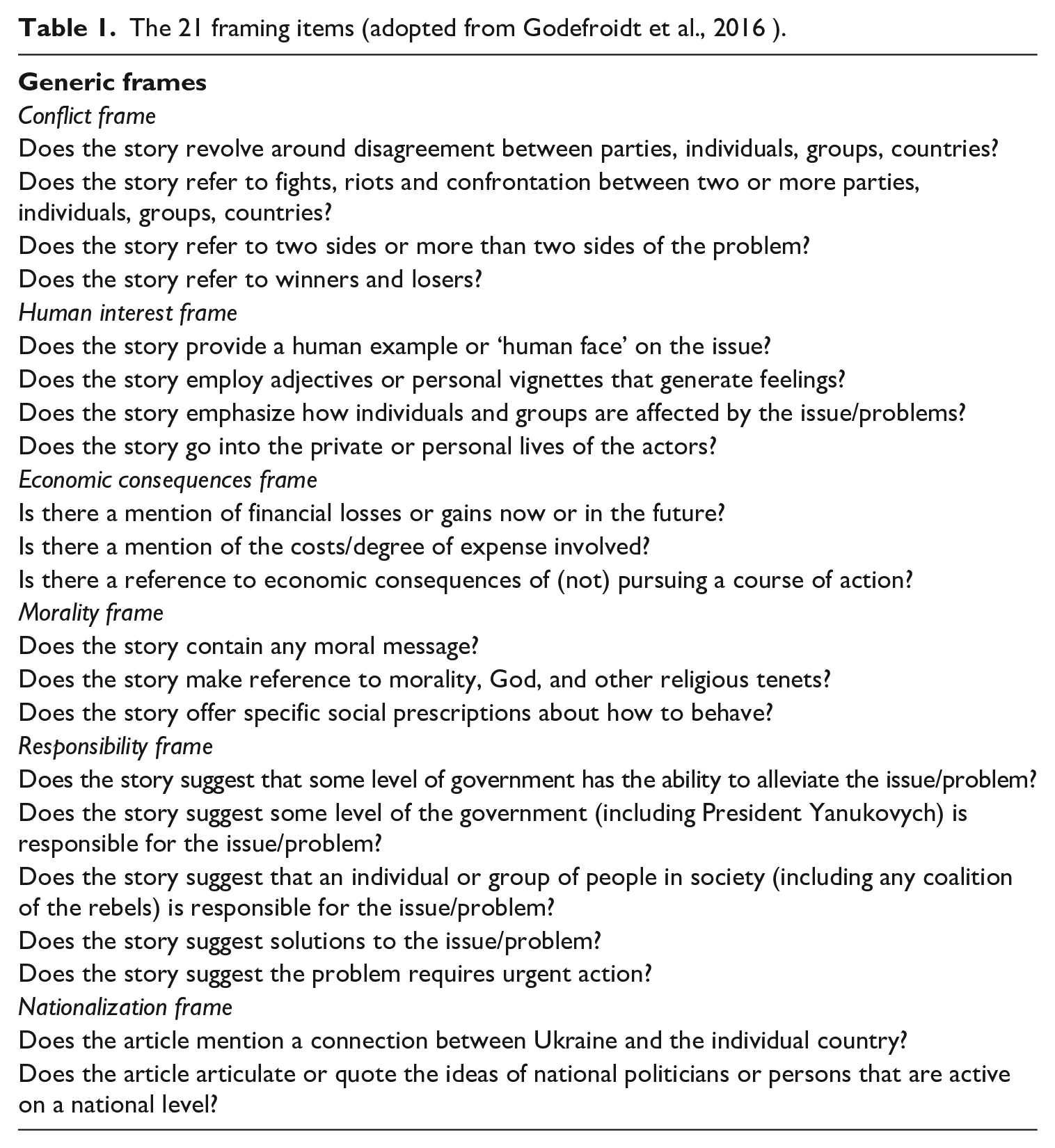
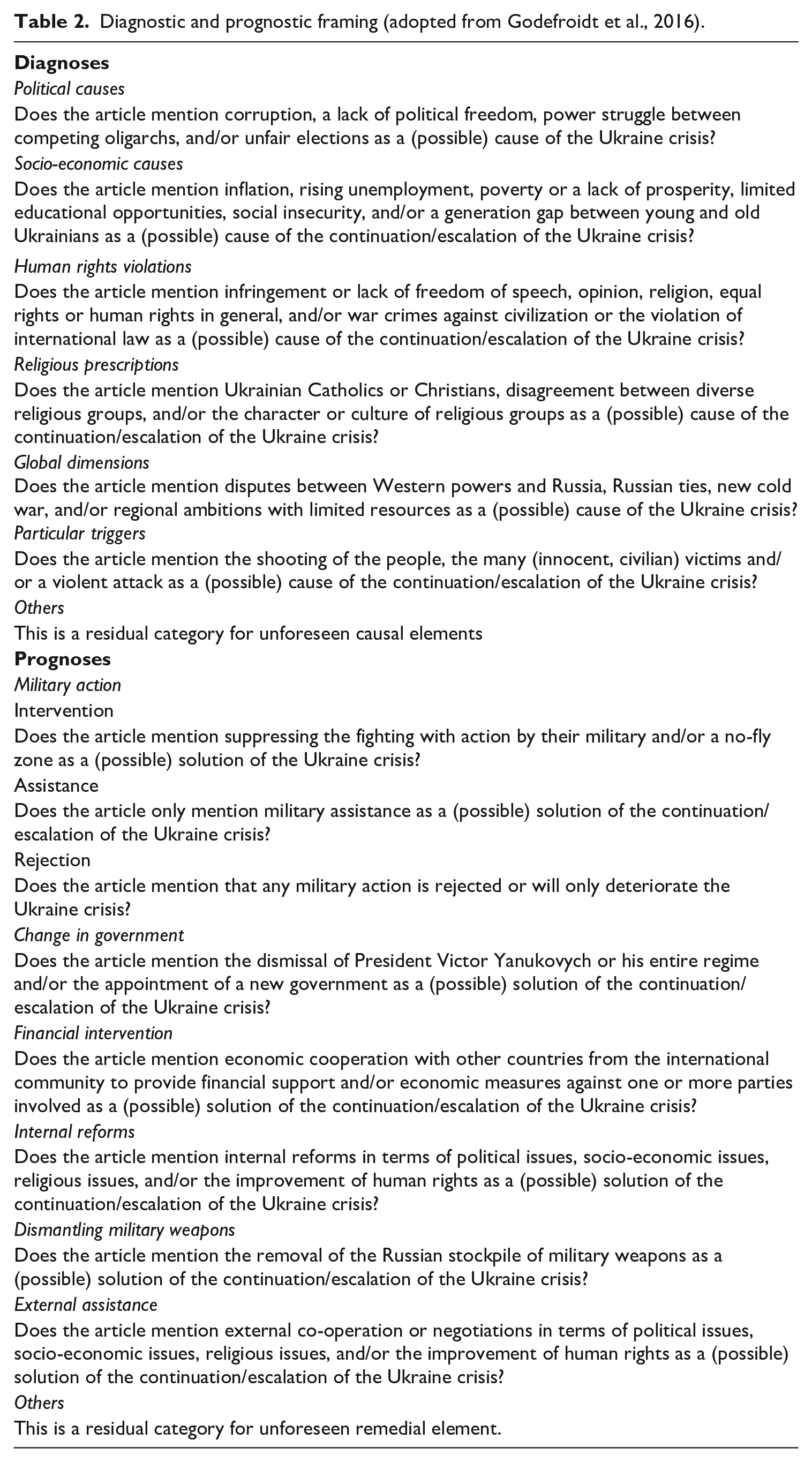
The analysis of the six generic frames contains a series of 21 yes/no questions stemming from Semetko and Valkenburg (2000) and Van Cauwenberge et al. (2009) (see Table 1). Based upon Godefroidt et al.’s (2016) approach to evaluating diagnostic and prognostic frames, six questions were developed to measure potential diagnoses and eight questions were raised to scrutinize the potential prognoses (see Table 2). This researcher worked out the possible diagnoses pointing towards political, socio-economic, religious factors, human rights abuse, geopolitical factors, specific triggers (and/or other causes). These six elements were determined based on Godefroidt et al. (2016), a close reading of the articles, and in light of recent studies about the roots of the Ukraine crisis (e.g. Ishchenko, 2014; Sakwa, 2015). The prognostic solutions used were: military action, change in government, diplomacy, financial intervention, internal reforms and removal of the military weapons arsenal (and/or other solutions) (Godefroidt et al., 2016). The ‘other’ category was aimed at offering an opportunity to suggest a new category once more coding had been done. As a result, the external assistance was added as a separate option. Importantly, the unit of analysis is the individual article. When more than one frame appears in an article, the researcher used the headline to help determine the leading frame. This study is based on a larger research project, thus inter-coder reliability was not carried out for this specific period.
The 21 framing items (adopted from Godefroidt et al., 2016 ).
Diagnostic and prognostic framing (adopted from Godefroidt et al., 2016).
Results
Press attention
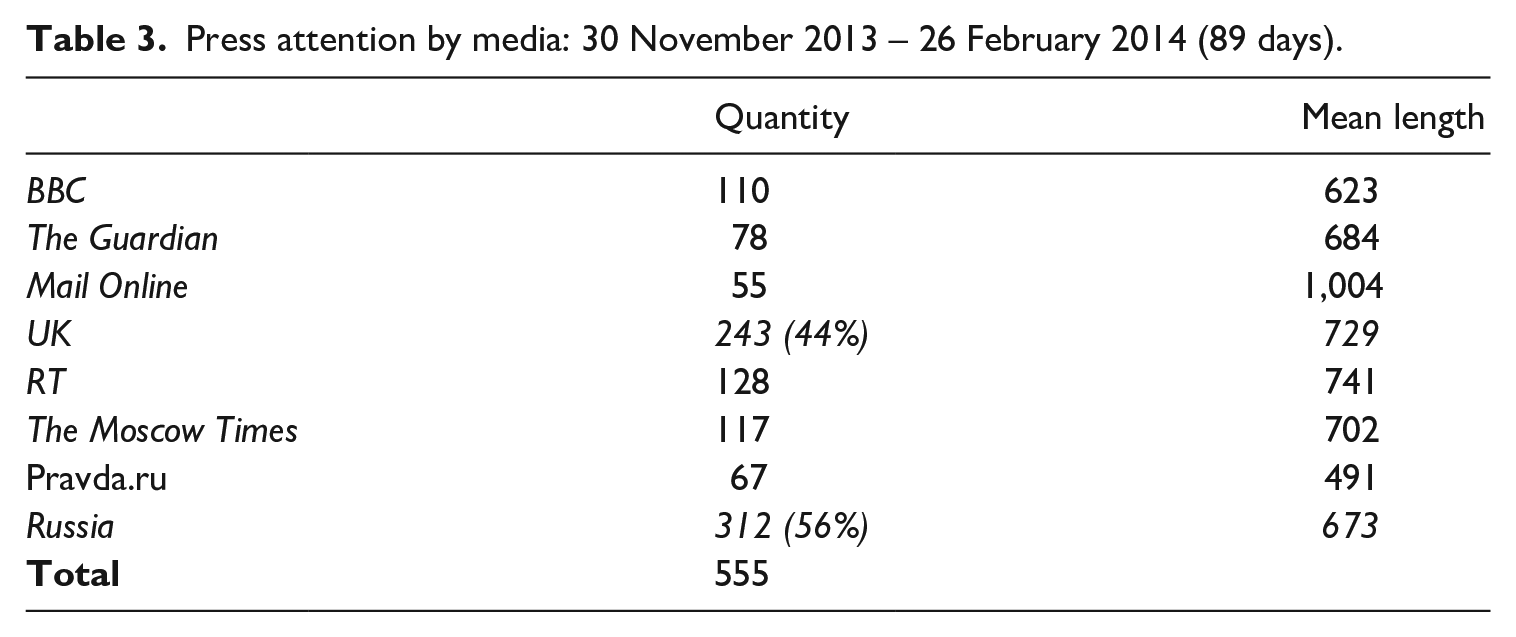
In order to answer the first research question, the overall quantities and mean length of media coverage were measured. The Euromaidan protests enjoyed considerable media attention between 30 November 2013 and 26 February 2014, with a total number of 555 articles (see Table 3). The British media devoted relatively less attention to the protest than the Russian media (x2 = 1.791, p = 0.408), with 243 articles (44% of the total 555). Both the BBC and The Guardian showed less interest compared to their analogues in the Russian media – RT and The Moscow Times. Firstly, the BBC issued 110 pieces focusing on freedom and democracy while its Russian counterpart RT published 128 articles distancing Russia from the conflict. Secondly, The Guardian offered less attention to the conflict with 78 articles and an average of 684 words, while The Moscow Times discussed the topic in 117 pieces with an average of 702 words. However, the second measure used – that of mean length – showed that the British media (Mail Online, in particular) tended to publish longer articles than the Russian media, with 729 words on average per news item. The BBC and The Guardian, on the other hand, generated shorter news articles than their counterparts – RT and The Moscow Times. These differences could be attributed to the fact that the study included all report types such as interviews and commentaries. This especially applied to RT.
Press attention by media: 30 November 2013 – 26 February 2014 (89 days).
Framing of the Euromaidan protests
Generic news frames
The second research question focused on the differences in the framing between the two countries’ media outlets. All the studied media outlets tended to describe the Euromaidan protests through the lens of conflict (47% of coverage), 24 percent of the overall coverage used the responsibility frame, while the economic consequences frame was evident in 11 percent of the articles (see Table 4). This was followed by a marginally smaller use of the human-interest frame (10%), whereas the morality and nationalization frames stood at 5 percent and 3 percent, respectively.
Distribution of generic frames by media: 30 November 2013 – 26 February 2014(%).
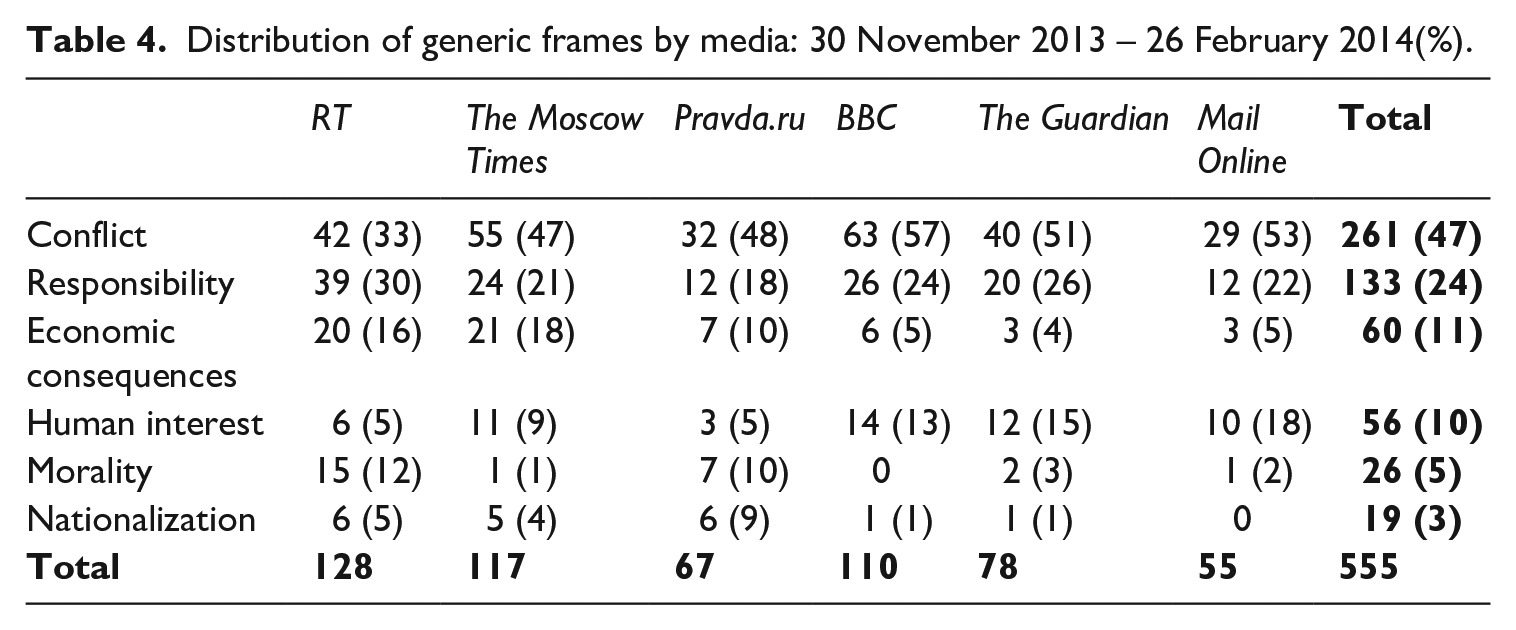
Importantly, the BBC was the media that used the conflict frame the most among all the studied media, including the Russian ones. The second most commonly used frame – the responsibility frame – was evident in 58 and 75 articles in the British and Russian media, respectively. It is worth noting that the self-claimed independent media, RT (30%), used more of the frame than The Moscow Times (21%) and Pravda.ru (18%); among the British media, the centre-left press, The Guardian, dedicated more space (26%) to the frame than the BBC (24%) and Mail Online (22%).
The differences between the two countries’ media revealed a gap without statistical significance between the uses of the human-interest frame (x2 = 2.65828, p = .2647). The British media favoured it with 36 occurrences over the economic consequences and morality frames which, on the contrary, were the preferred ones by the Russian media (see Figure 1). Notably, Mail Online distributed 18 percent of its whole sample of 55 articles to the frame focusing on the Maidan protestors and the Yanukovych family circle with a high level of corruption. Compared to Mail Online, the tabloid-style Pravda.ru used the frame only in 5 percent of its coverage briefly reporting how the protestors were injured.
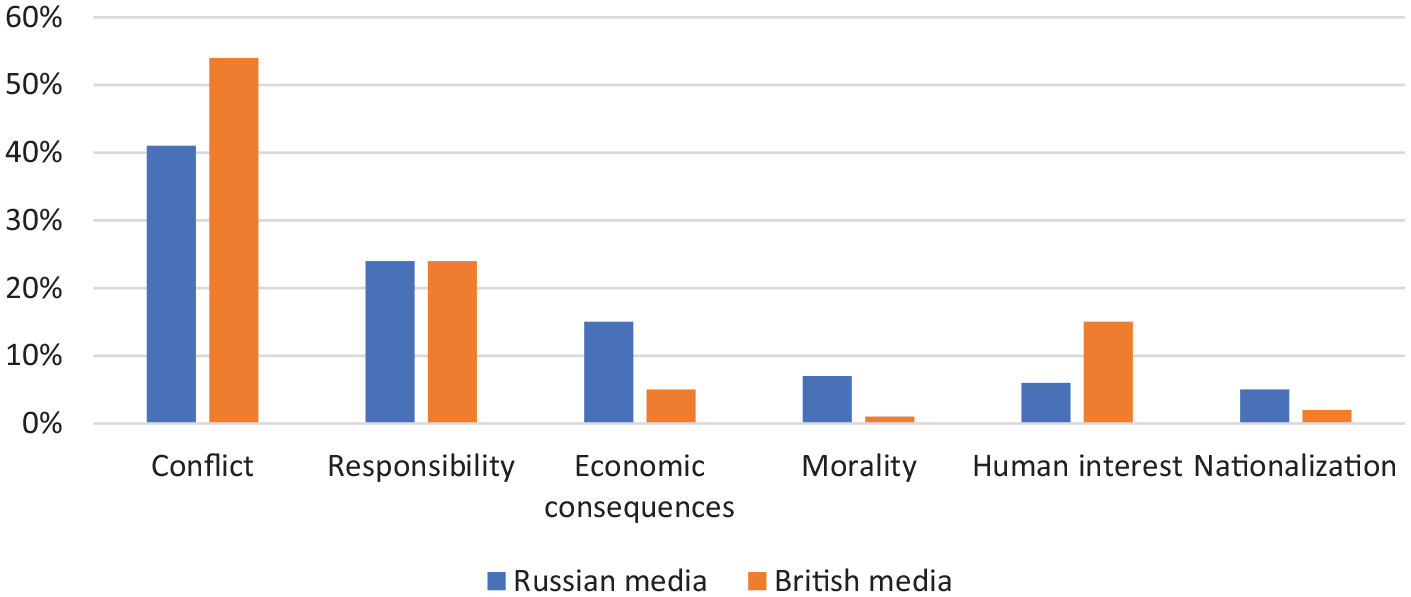
Distribution of generic frames by the Russian and British media: 30 November 2013 – 26 February 2014.
The economic consequences frame was more pronounced in the Russian media with 48 out of 60 articles using it, compared to the British media where it was present only in 12 articles. It is noticeable that The Moscow Times during this period employed the economic frame in 21 out of 117 articles (18% of the total), highlighting the positive and negative sides of each offer from the EU and Russia, whereas RT used the frame in 20 out of 128 articles (16%), showing a more unequivocal position. For example, in a news article titled ‘Ukrainian opposition wouldn’t sign “suicidal” EU agreement’, RT quoted Mateusz Piskorski, Director of the European Centre of Geopolitical Analysis: I think for the moment being any kind of association and signing a deeper and more comprehensive fair trade agreement between the EU and Ukraine would be a kind of economic suicide for the Ukrainian side . . . the EU is not capable of compensating all the financial losses that Ukraine would encounter in case of closer cooperation with the EU . . . This pro-European rhetoric aims at causing internal crisis and early elections, perhaps next year. (RT, 2 December 2013)
In contrast, The Guardian adopted the economic frame in three articles representing 4 percent of the total of 78 articles, while the BBC offered 5 percent of their overall coverage, focusing on multiple views in discussing the Ukraine crisis through the lens of economic deals offered by the EU and Russia.
Apart from the economic consequences frame, the morality and nationalization frames were both also favoured by the Russian media, whereas the British media devoted minimal space – three and two articles, respectively – to each frame. Two observations are worth highlighting here. First, while the BBC did not use the morality frame at all, its Russian counterpart RT was the media that used the morality frame the most, expressing dissatisfaction with the moral weakness of the European bodies in terms of their double-standard policy towards Russia, their immorally direct meddling in other country’s internal issues, as well as the aggressive propaganda in the Western mainstream media. Second, although the nationalization frame was less used by The Moscow Times and RT, Pravda.ru tended to utilize the frame in 9 percent of its articles – a similar quantity to the morality frame, whereas Mail Online showed zero interest in the nationalization frame.
Diagnostic and prognostic frames
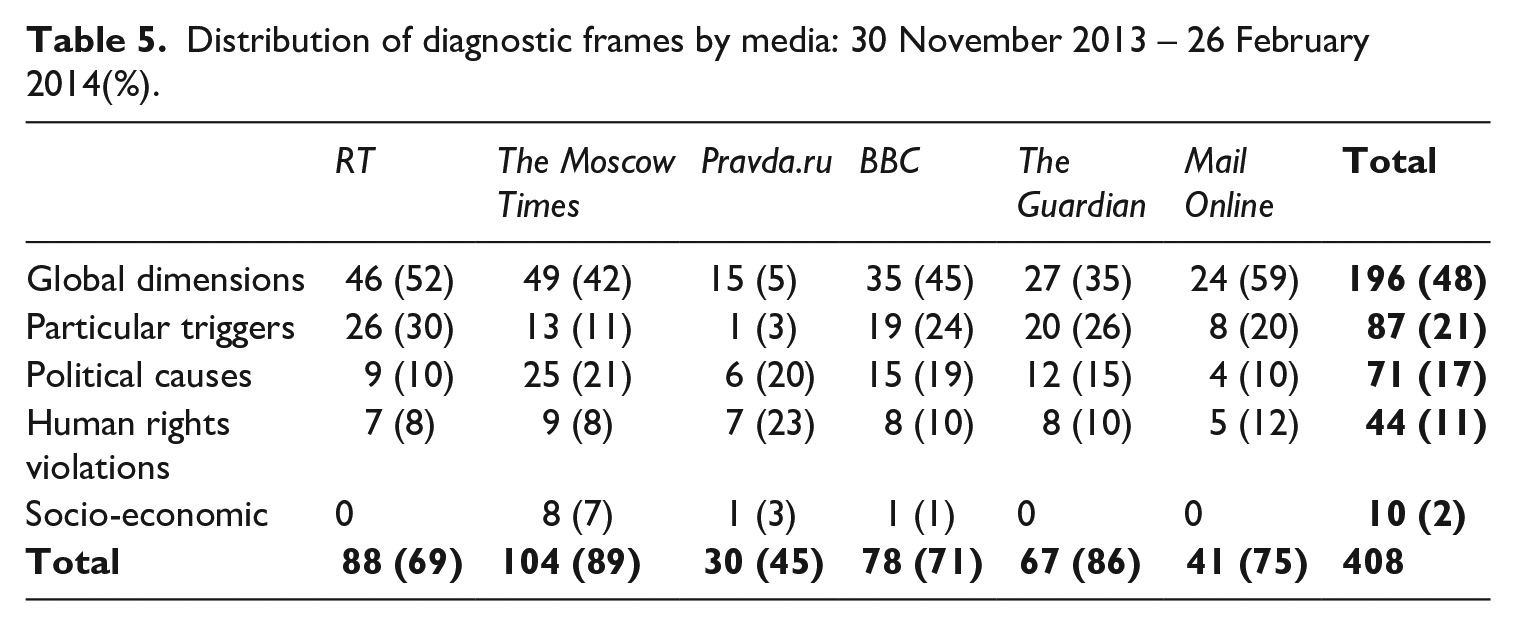
Despite the fact that the Russian media generally paid more attention to the Ukraine conflict than the British media during this time period, the latter offered slightly more diagnostic frames explaining why and how the crisis occurred and developed. A total number of 186 diagnostic frames were identified amounting to 77 percent of the total 243 articles from the British media, compared to the Russian media offering diagnosis in 71 percent of its coverage (see Table 5).
Distribution of diagnostic frames by media: 30 November 2013 – 26 February 2014(%).
Similar to the Russian media, the British media expressed a great interest in explaining the Ukraine crisis through global dimensions (Figure 2). However, the two held different views, demonstrating the opposing interests in the global dimensions with regard to the root of the crisis and the current situation between the West and the East. While the British media highlighted the positive role of the West (the EU and the US) in helping Ukraine, the Russian media saw the West (especially the US) as an aggressor. One example is a leaked phone call conversation between Assistant Secretary of State for Europe, Victoria Nuland, and US ambassador to Ukraine, Geoffrey Pyatt, before the collapse of the Yanukovych regime, in which Nuland vocally nominated Arseniy Yatsenyuk to be the future leader in Kyiv. And Yatsenyuk became the country’s new Prime Minister. The conversation was covered by the BBC and Mail Online on 7 February 2014, highlighting this episode as an example of the West’s constructive role in trying to find and negotiate a solution to the Ukraine crisis. Mail Online also emphasized the potential dangerous role of Russia, stating that: ‘Mr Pyatt adds that he fears if their plan starts taking shape “the Russians will try to do something behind the scenes to torpedo it”. The US last night accused Russia of leaking the tape to do precisely that’ (Mail Online, 7 February 2014). Likewise, in explaining the US’s effort to reach a peaceful solution, the BBC diplomatic correspondent Jonathan Marcus said: The clear purpose in leaking this conversation is . . . for audiences susceptible to Moscow’s message to portray the US as interfering in Ukraine’s domestic affairs . . . The US is clearly much more involved in trying to broker a deal in Ukraine than it publicly lets on . . . could the Russian government be joining the radical apostles of open government? I doubt it. (BBC, 7 February 2014)
The Guardian did not report this issue until 25 February 2014, mentioning the leaked call in only a few words. The Russian media, on the other hand, expressed strong discontent with the West. RT first reported the issue on 6 February 2014, believing that the leaked conversation had further proved Washington’s meddling in Ukraine. Pravda.ru covered the issue on 8 February 2014 and accused the US and the EU of being unprofessional while denying Russia’s involvement. Similar to The Guardian, The Moscow Times only covered the issue several days later (13 February 2014), but sending an overall message of a Cold War between the US and Russia.
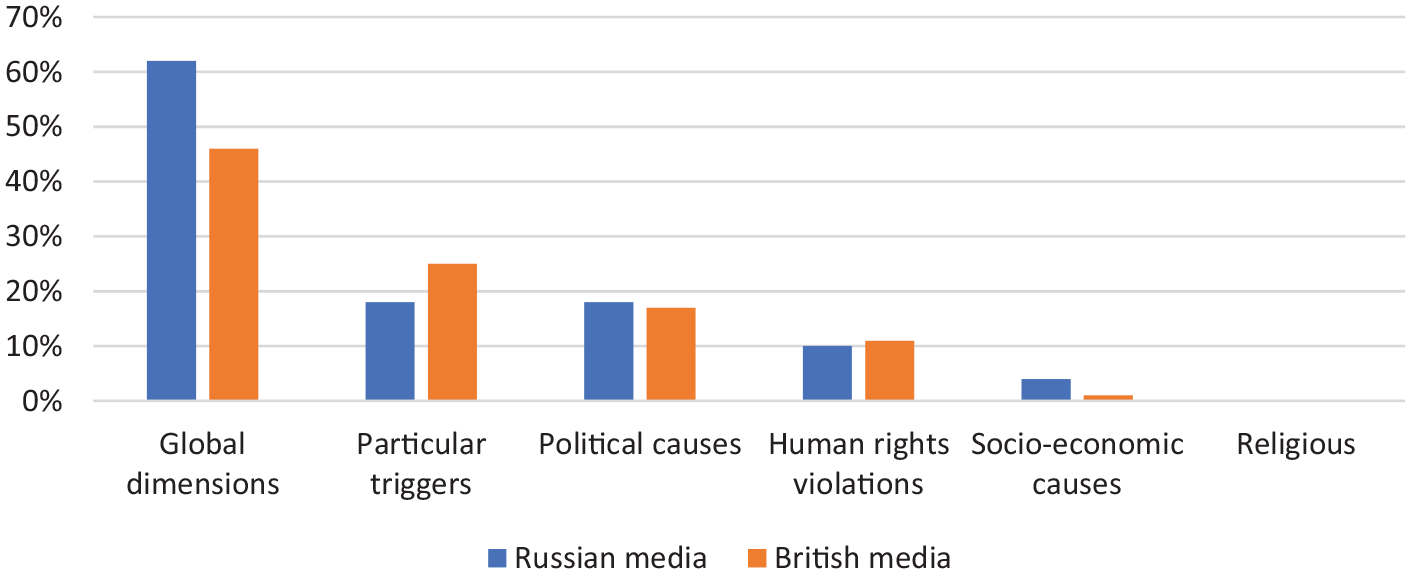
Distribution of diagnostic frames by the Russian and British media: 30 November 2013 – 26 February 2014.
The second diagnostic frame the British media tended to use was the particular triggers frame. This frame was the third favoured one among the Russian media. For example, the BBC (3 December 2013) used it to specifically discuss Yanukovych’s crackdown on the protesters at Maidan. This view was also evident in The Moscow Times, while RT and Pravda.ru used the frame to indicate that the protesters and the radical groups’ attacks had led to the chaotic developments in Kyiv.
The BBC, The Guardian and Mail Online all used the political causes frame to express the opinion that the Yanukovych regime’s corruption and abuse of power had caused the Ukraine crisis. The Russian media outlets, in contrast, used this diagnostic frame to suggest that this was an internal/domestic issue. This included discussing the protest in Kyiv, the power struggles between political parties and Yanukovych’s refusal to sign the country’s EU Association Agreement. The least referred to among the diagnoses in the British media were the socio-economic causes discussed only once by the BBC (3 December 2013). In comparison, the Russian media had nine occurrences coming from The Moscow Times (eight times) and Pravda.ru (once).
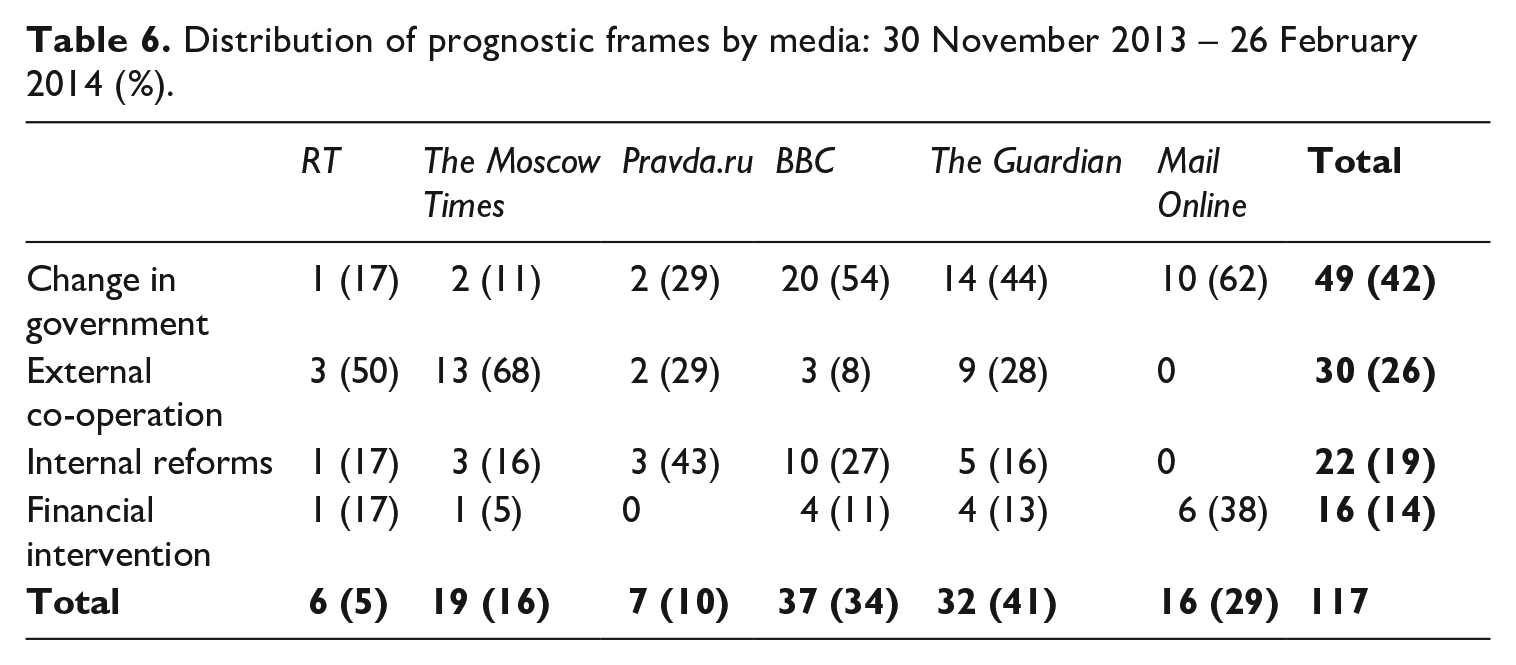
Table 6 and Figure 3 show the use of prognostic frames by the Russian and the British media. The Russian media offered only 32 prognoses in its 312 articles (10%), focusing primarily on external co-operation. The solutions included EU assistance or talks, cooperation either between Russian and the opposition party in Ukraine, or between Russia and the EU, and tripartite negotiations. The Moscow Times contributed most of these articles. The infrequent offer of prognosis especially by RT and Pravda.ru was consistent with their uses of the political causes frame (diagnosis) emphasizing the conflict as an internal struggle, and with the responsibility and morality frames (generic) blaming the West’s direct and immoral interferences in Ukraine’s domestic affairs. On the other hand, the British media, in addition to providing larger sets of diagnoses, delivered 85 prognoses out of 243 articles (35%). They suggested the change in government solution (44 articles) more often than the Russian media (5 articles).
Distribution of prognostic frames by media: 30 November 2013 – 26 February 2014 (%).
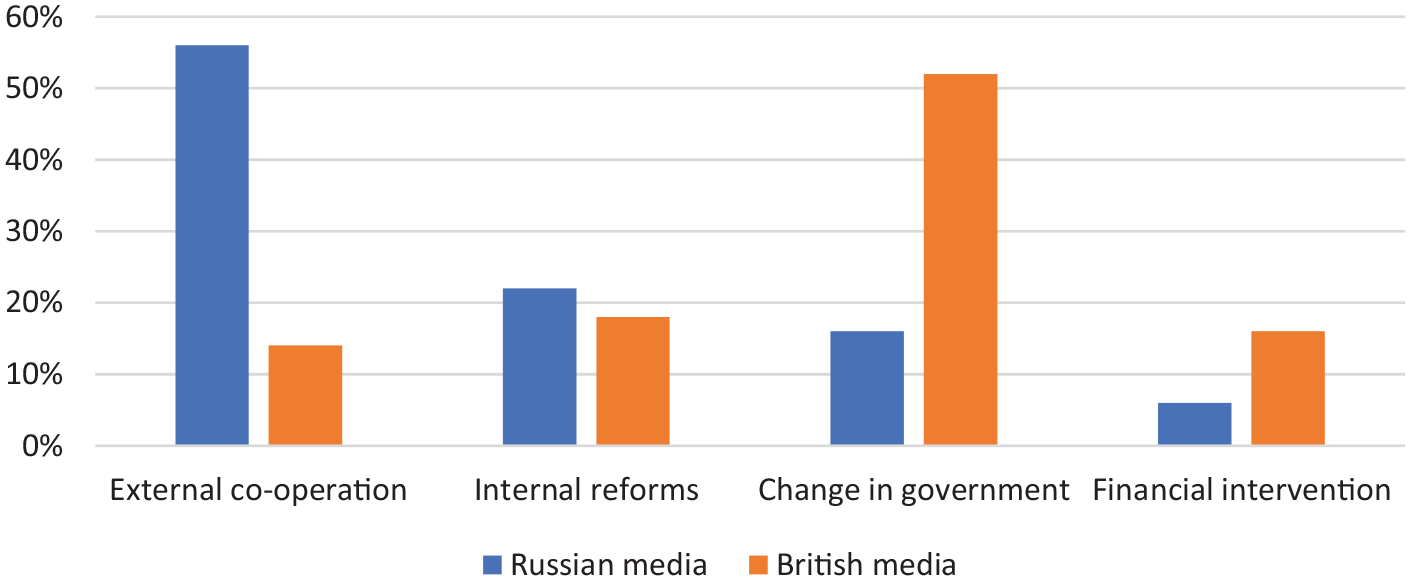
Distribution of prognostic frames by the Russian and British media: 30 November 2013 – 26 February 2014.
The second most recommended prognosis was internal reforms. Both the Russian and the British media suggested the frame as their second favoured solution to the Ukraine conflict. The Russian media’s suggestion of it was coherent to their uses of the political causes frame (diagnosis) that indicated the Ukraine crisis as domestic/internal issues. In contrast, the British media articulated the same prognosis as a solution to what they previously considered the Yanukovych administration’s notorious issues, such as the lack of freedom, democracy, abuse of power and persistent corruption. The subsequent financial intervention prognosis was largely promoted by Mail Online dealing with the promising future for Ukraine after Kyiv restructures its financial system with help from the EU. The external co-operation was identified as the most favoured solution by the Russian media, but as the least preferred one from the British media coming only from The Guardian and the BBC. The latter two media focused mainly on the EU and the US that could fix the anti-democratic disease in Ukraine.
Discussion
The initial research question about press attention was answered by measuring the overall quantities and mean lengths of coverage by the media in Russia and the UK, respectively, suggesting that the Russian media were overall more interested in the Ukraine protests. The second research question investigated the differences in news framing between the two countries’ media outlets. The Russian and British media shared certain commonalities in terms of using the conflict and responsibility generic frames, the global dimensions and particular triggers diagnostic frames, albeit with key opposing constructions of the protests between the two very much reflecting the governmental lines of their host country. Furthermore, while the Russian media (especially The Moscow Times and RT) constantly reported using the economic consequences generic frame and the external co-operation prognostic frame, the British media highlighted the human-interest perspective alongside the change in government solution to the crisis. Finally, the British media were more likely to offer diagnostic and prognostic frames than the Russian media, although overall the former paid less attention to the protests than the latter. These key findings clearly illustrate the nature of the differences between the Russian and the UK media framing of the Euromaidan protests. The presentation of competing interpretations of the crisis, however, revealed one-sided journalistic practices in both countries serving to naturalize and justify their political involvements. The media’s acquiescence from national foreign policies when defining the news agenda was consistent with previous studies on protest framing (Dardis, 2006; Peng, 2008; Shahin et al., 2016), with a particular focus on geostrategic realities shaping news framing of protests (Veneti et al., 2016).
The third research question that probed the connection between the media system of Russia – a country with a hybrid political regime and the media system of the UK – characterized as liberal democracy and the respective reporting on the Euromaidan protests is explored here. The Russian media demonstrated deep suspicions about Western intentions in Ukraine while creating an idealistic picture of Russia since the beginning of the crisis. RT and Pravda.ru, in particular, showed a great degree of alliance with the political lines on the topic. Among the economics framed coverage, there was an emphasis on the prevalence of positive descriptions of Moscow’s financial offer to Ukraine while the EU deal was described in a negative light. This suggests the media were active in justifying and naturalizing Russia’s geopolitical involvement, representing one ‘good’ and one ‘bad’ alternative. This type of framing, as previous studies of Russian media being supportive of national foreign policy during the Ukraine crisis suggest (e.g. Nygren et al., 2018), reflected the media’s association with political and economic elites (Herman and Chomsky, 1988). It is important to reiterate that, throughout the crisis, the Russian media – RT and Pravda.ru – insisted that the Ukraine conflict was an internal issue but with what the media regarded as immoral assistance from the West. This was further presented in the increased use of morality frames to criticize the West and delegitimize the new Kyiv while legitimizing ‘ourselves’, especially towards the end of this period. This finding is especially important, and in line with Roman et al.’s (2017) finding that the Russian media tended to use Second World War symbolism such as ‘fascists’ in covering the Ukrainian side.
The nature of the hybrid regime – strong political control over the mainstream media and the journalistic culture – journalists’ self-censorship – that differ from those in the West are the two major factors explaining the journalistic practices in Russia (Oates, 2013; Vartanova, 2012). Nygren et al. (2018) share this view, arguing that the political economy of the Russian media system caused rather passive professional values. This combination was expected to increase the degree of reflecting the country’s political agenda by the studied Russian media that aimed at ensuring and reinforcing Russia’s global prestige and authority among the top-ranking great powers (Miskimmon and O’Loughlin, 2017). In addition, the Russian media’s ideological affiliation with the Yanukovych government also played an important role in influencing the news framing of the protests (Shahin et al., 2016). These and the consequential anti-West sentiment may explain why the submissive media outlets (especially RT and Pravda.ru) seemed to be taking part in the conflict as well in the form of being patriotically politicized and defensive of the country’s policy. On the other hand, The Moscow Times – owned by a Dutch–Finnish publishing group Sanoma (Zhang and Fahmy, 2009) – was mostly critical of the policies of Putin’s regime. This can be explained by what Vartanova (2012) has claimed of the commercial practice – the growing market-driven economy element in the Russian media system.
On the UK part, all three British media ‘humanized’ the news coverage and displayed clear focus preference for human rights violations and government’s crackdown frames. Mirroring previous studies on news framing of protest (e.g. Dardis, 2006), the violent confrontation between protestors and police is identified as a key element in the shaping of the news reporting. This is alongside the responsibility frame possibly aimed to influence the audiences’ perspective on who was responsible for the crisis (Entman, 1993). This may imply that the British media being critical of Yanukovych’s crackdowns fulfils their democratic role in terms of holding politicians to account. Nevertheless, it also seems that the salient indicator – Yanukovych’s ‘anti-freedom’ stand and his association with Russia – was set onto the agenda whereas other viewpoints were played down.
For instance, the violence at the Maidan where right-wing extremists played an important role, especially in ousting Yanukovych from power, could have been critically questioned and further investigated (Kuzmarov and Marciano, 2018). Instead, the media presented the protests in Ukraine in a positive light to support the battle for freedom and democracy, as well as the West’s (the US and UN) constructive role in searching for solutions to the conflict rather than ‘the US-backed political coup’ as interpreted by the Russian media. The selective reporting indicates the media’s alignment with the Western ideology of favouring democracy (e.g. Guzman, 2015) and the Western position in the Ukraine while distancing Russia (Kuzmarov and Marciano, 2018; Sakwa, 2015). The sufferings of those who were attacked by those allied to the EU attracted less press attention and seemed to be more likely to be degraded by the media than the sufferings of those who were disputably attacked by the Yanukovych regime that was unconnected to Western interests (Boyd-Barrett, 2017). The media’s role in raising awareness of the problematic human rights issues in Kyiv should not be considered the only or the most important factor driving the West’s intervention. As scholars (e.g. Balabanova, 2015) suggest, national interests and geopolitics are often the most important. The competitive geopolitical play between the Kremlin and the West (e.g. EU, NATO) is the main factor causing the conflict for influence in the post-Soviet space (Sakwa, 2015), wherein the British media have reflected the protests in Kyiv predominantly through the country’s political prism and played a subservient role justifying the West’s involvement (e.g. Liu, 2019). Ojala and Pantti (2017: 51) propose that the EU policies on the conflict coordinated with the US partly hinged on ‘favourable public opinion within Western Europe’, which stemmed from an existing perception that President Putin is ‘the culprit and aggressor’ and Ukraine is ‘the victim of a foreign attack’. Therefore, the findings refute the UK media system theory (Hallin and Mancini, 2004) as the level of journalistic professionalism could not be substantiated as high as the liberal model suggests it should be.
Conclusion
To conclude, by comparing the Russian and British news media coverage of the Euromaidan protests, the shared nature of the one-dimensional news reporting was uncovered. Both the Russian and the British media outlets stereotyped the Euromaidan protests, although in a different light, and followed a similar logic of othering the counterpart. This was tracked through the different frames used by the Russian and British media, revealing illiberal trends in both the hybrid regime, Russia, and the liberal democracy, the UK. The British media defined the protests at the Maidan as revolutionaries in support of democracy. Consequently, the responsibilities were shifted directly to Yanukovych’s regime and Russia, appealing to a particular interpretation of Russia as the geopolitical enemy of the West (Ojala and Pantti, 2017). The overall disposition to favour one interpretation of the Ukraine crisis and to marginalize any other runs in parallel with the British media being uncritical of Western politicians’ interference and demonizing Yanukovych and Putin. On the other hand, the Russian media defined the same events differently: the protests at the Maidan were a well-organized political coup backed by the West (the US, in particular) who meddled in Ukraine’s domestic affairs. A shared weakness between the Russian and the British media thus was the failure to go beyond their governments’ political lines and into an in-depth investigation of the mentioned events taking place.
Finally, the nationalization frame was not used often by all the studied media, especially the British ones, which contrasted with Godefroidt et al.’s (2016) study. This may raise the question about the conditions in which it is more or less likely to be used. Nevertheless, this could be explained by the facts that, first, the period this study focused on here precedes the actual Ukraine War. Second, the UK was not directly involved in the protests whilst Russia (and the Russian media) distanced themselves from the crisis. Furthermore, the observed differences within Russian and British samples, between Pravda.ru and Mail Online, in particular, raise the question of whether the differences are representative of their respective media systems. Further research with an extension of time periods could add extra value and dimensions to the current findings.
Footnotes
Funding
The author received no financial support for the research, authorship and publication of this article and there is no conflict of interest.
