




Abstract
In the present time, we see a rapid development of so-called cosmetic apps promoted by prominent cosmetic companies. Although there is an emerging market for male consumers, these apps are marketed as technological innovations designed to analyse, rate and evaluate mainly women’s facial appearances through the submission of a selfie. Based on the results generated from the selfie, personalised solutions are offered in the form of recommended products to supposedly help women improve their appearances. Drawing on a critical feminist approach and using multimodal critical discourse analysis (MCDA), the aim of this article is to study how these evaluations are semiotically reproduced and presented to the users. The paper examines in detail how apps convey the evaluation process and transform a selfie into measures, presented through diagrams and charts, that is, how the female face is fragmented and metricised. Coming with affordances of being systematic, exact and scientific, these infographics assign the facial evaluations with meaning. A key argument is that these cosmetic apps are changing the way women are implied to consider and control their (facial) appearance. Following neoliberal notions, the apps put strong pressure on women to take the responsibility to engage in intensive forms of aesthetic labour and to consume the ‘right’ products to appear as the best versions of themselves.
Keywords
Introduction
At present, there seems to be a growing available number of mobile software applications, commonly known as apps. These apps offer people help and support with issues related to well-being and appearance (Lupton, 2019; Mihãilã and Braniste, 2021). Belonging to an ongoing trend on self-tracking and self-monitoring, such apps ask individuals to track and monitor themselves, giving rise to what has been depicted as the ‘quantified self’ movement (see e.g. Fawzy, 2021; Lupton, 2016; Wolf, 2009). A specific but still extensive part of this trend is what can be broadly labelled as beauty apps, which are defined as ‘aesthetic self-tracking and modifying devices’ designed to ‘analyse, rate, evaluate, monitor or enhance women’s facial appearances’ (Elias and Gill, 2018: 60). A feminist account of these apps indicates that such a technology facilitates a form of ‘beauty surveillance’; it is a technology that encourages women’s involvement in self-scrutiny and self-modifying practices, disciplining and intensifying aesthetic labour, that is, working on and perfecting the female bodily appearance (Lazar, 2017; cf. Elias and Gill, 2018). As such, beauty apps address women as entrepreneurial subjects par excellence and put pressure on them to adhere to Western patriarchal standards of beauty (cf. Peng, 2021).
A great number of big internationally recognised cosmetic companies now promote the usage of a particular kind of beauty app to female consumers – what we henceforth refer to as cosmetic apps and examine in this paper. Using the photographic (or ‘scanning’) facilities of the mobile smartphone, the cosmetic apps invite women to scan and evaluate their facial appearances by submitting a selfie. Thereafter, users receive individually tailored advice based on an analysis that breaks up the face into separated, fragmented areas and qualities. These features are then converted into numbers, indicating skin-related flaws and problems which can be ‘fixed’ using the recommended products resulting from the evaluation.
The valuable knowledge provided by the first examination of beauty apps conducted by Elias and Gill (2018) serves as a starting point for this paper. However, while they offer a mainly theoretical and a more general overview of this phenomenon, we seek to analyse in detail how these apps address and involve female consumers through their communicative affordances. More specifically, using the methods of multimodal critical discourse analysis (MCDA) (Ledin and Machin, 2018, 2020; Machin, 2013), we examine how these apps transform a selfie into measurable and assessable units, that is, how the female face is fragmented, metricised and evaluated on numerical scales, assigning them with meanings through specific semiotic resources and their affordances. This is a beauty practice that seemingly substitutes evaluations previously carried out by dermatologists in face-to-face encounters and is more qualitative in scope. In many ways, apps make it easier for consumers to obtain skin-care advice, while at the same time they provide cosmetic companies with opportunities to increase their sales and profit. However, these apps are also changing the way women are implied to consider their facial appearances; they extend and intensify the beauty pressure on women by highlighting their involvement in self-modifying practices (Gill, 2021).
The data investigated in this paper derive from nine internationally recognised cosmetic companies, all claiming to have their own specific technology that offers evaluations based on a high-tech ‘facial scanning’ from mobile phone selfies. The data includes the marketing of the apps’ scanning procedures and examples of the use of the apps through submitted selfies from four women of varying ages and nationalities.
In the following section, we provide an overview of the previous research conducted on digital self-tracking devices, including beauty apps. This is followed by a section accounting for the critical feminist research which serves as the theoretical starting point for this study. Thereafter, we outline the methodological approach and data-gathering process before presenting the analysis and the key findings. The paper ends with a concluding discussion on changing female beauty practices.
The quantified self and the surveillant gaze
This study taps into research scattered and pocketed across different academic fields, such as market research, health communication, sport science, medicine and social sciences. It relates to the vast amount of investigations conducted on digital self-tracking devices on body and facial appearance dissatisfaction that explore virtual makeover apps. Such apps allow women to easily edit their selfies to make themselves ‘look better’ and display an ‘ideal’ image of themselves on social media (e.g. Barker, 2020; Peng, 2021; Sun, 2021). Moreover, this study connects to the extensive bulk of literature on the use and implications of what can be regarded as health self-care applications, considered to help people implement good and healthy routines. We are especially interested in research which, broadly speaking, investigates ‘the quantification of self’ (see e.g. Fawzy, 2021; Lupton, 2016). Of particular relevance for our study is work that takes a critical approach and focuses on the communicative affordances of beauty apps (Elias and Gill, 2018; Peng, 2021). This is, however, a strand of research which is restricted in scope.
Critical scholars within humanities and social sciences and with an interest in health issues are concerned with how different health apps are marketed and used to influence people’s everyday lives and engage in practices related to self-care and self-responsibility. These apps are claimed to create the means of disciplinary control to help individuals to manage, optimise, regulate and govern themselves at a distance as part of their duty as good moral citizens (cf. Crawford et al., 2015; Kent, 2018; Lupton, 2020; Sanders, 2017). Good moral citizenship is indicated by the individual’s ability to take care of their bodily (and facial) appearances (cf. Eriksson, 2022). In this sense, these apps foster a self-tracking and self-monitoring culture understood in terms of the notion of the ‘quantified self’ – that is, as Gill (2019: 149) puts it: ‘a reflexively monitoring self who uses the affordances of digital technologies to collect, monitor, record and potentially share a range of information about themselves’ (cf. Lupton, 2014, 2016). The quantified self is largely embedded in neoliberalism and individualism (Gill, 2019). Subsequently, by using these apps, women position themselves as self-trackers, who by default are viewed as active, entrepreneurial and self-optimising subjects (Lupton, 2014; see also Gill, 2019), seeking to gain more insights on their ‘true’ self through numbers (e.g. Gurrieri and Drenten, 2022). However, according to some scholars, practices of self-care can encourage women to see themselves as flawed, which can lead to body image and facial appearance dissatisfaction (cf. Catlaw and Sandberg, 2018; Greene and Brownstone, 2021; Sun, 2021). This dissatisfaction with appearance may, in turn, call upon women to engage in measures to enhance it through, for instance, cosmetic surgery and dieting (see e.g. Greene and Brownstone, 2021; Sun, 2021).
There is an extensive number of beauty apps available on the market with inbuilt filters that women can use to modify their self-images (Mihãilã and Braniste, 2021). However, research within social science and humanities on how these beauty apps work is still limited. One of the few relevant studies is Peng (2021) who explored beauty app development in China. Using a techno-feminist approach (see Wajcman, 2004), he conducted interviews with app developers and designers of an app called BeautyCam to address the question of the joint shaping of gender and technology. Independent of their gender, the interviewees considered this app as a technology of empowerment, which could help women to control their anxiety about their looks. Peng (2021) depicts this a pseudo-feminist discourse – a parallel to the neoliberal post-feminism discourse in Western countries – and sees this discourse as reflecting a politically and economically refeminisation of women in Chinese society. As such, BeautyCam gives rise to a surveillant gaze, which requires women to ‘perfect’ their appearances. He also counters assertions regarding the potential of this app to promote business opportunities for women as, even if they do, they come with the price of hindering their possibilities to exceed gender boundaries in their professional careers.
A critical feminist perspective on beauty apps
Basic to this study is critical feminist research, particularly the work of Elias and Gill (2018) on beauty apps, which here provides a theoretical foundation. Drawing on a feminist Foucauldian analysis of neoliberal disciplining (see also, e.g. Gill, 2019; Gurrieri and Drenten, 2022; Lupton, 2020; Sanders, 2017), they discuss how beauty apps now subject the female body (and face) to ‘scientific’ and quantified forms of surveillance and judgement to be collected, classified and assigned with meanings (Elias and Gill, 2018: 66). The judgement of women’s appearances is, thus, being replaced with measurements that encourage the internalisation of disciplinary controls of their bodies, even when presented as freely chosen (Davies, 2014; cf. Gill, 2021). Beauty apps, as such, highlight a particularly powerful example of how women’s bodies (and faces) are subjected to intense forms of surveillance that offer more fine-grained, metricised and forensic scrutiny of the body (Elias and Gill, 2018). Subsequently, beauty apps encourage the production, sharing and consumption of personal information, underscoring the idea that women’s faces and bodies are constantly under the watchful gaze of themselves and others (see e.g. Elias and Gill, 2018; Gill, 2021; Peng, 2021).
While outlining these arguments, Elias and Gill (2018: 67–71) identify five broad types of beauty apps: selfie modification apps through which users can easily modify a selfie for presentational purposes (as can be done with the aforementioned BeautyCam); pedagogic apps that ‘teach’ beauty techniques; virtual makeover/try-on apps which facilitate virtual makeovers or the ‘trying on’ of a ‘new smile’ or reshaped nose ahead of potential cosmetic surgery; aesthetic benchmarking apps that invite users to benchmark and rate different aspects of their appearance, such as facial attractiveness; and self-surveillance apps that ‘scan’ the body for flaws and damages. It is in this last category of apps that we place the apps promoted by the big cosmetic companies and which we examine in this study (referred to as cosmetic apps). These apps come with a surveillant gaze that looks for flaws and damages and detects present (and future) skin ageing related problems, while also promising personalised consumerist solutions (Elias and Gill, 2018; see also Elias et al., 2017). They break up the female face into minor analytical units, which are claimed to be scrutinised in detailed – a process of metricisation that involves the conversion of the submitted selfie to comparable measures which are assigned with meanings. The apps supposedly use big data and algorithms to supply personalised skincare products to address the specific concerns identified through this analysis (Elias and Gill, 2018). The advice offered by these cosmetic apps tends to promote certain ideals of beauty that construct the ageing skin as a ‘problem’, even if it is not visible to the naked eye (cf. Elias and Gill, 2018; Sanders, 2017). Subsequently, women are encouraged to follow the provided recommendations and consume the suggested products, which are presented as solutions to their skin-related problems.
Despite the wealth of research on cosmetic apps, to date, very few studies have examined the actual design of these apps. Drawing on the insights provided by the critical feminist approach and using multimodal critical discourse analysis, this paper thus aims to examine how these apps work to communicate meanings, ideas and values about the female face.
Methodological approach and data
This study adopts a social semiotic approach to communication (Kress, 2010; Kress and van Leeuwen, 2006), using analytical tools progressed within the field of Multimodal Critical Discourse Studies (MCDS) (Ledin and Machin, 2018, 2020; Machin, 2013). This perspective stresses that we need to explore communication and meaning-making as always being multimodal and to continuously ask what interests and agency are at work in the construction of meaning. It implies paying attention to the relationship among semiotic materials, power and ideology (Ledin and Machin, 2020). The key concept here is discourse, which is understood as a set of socially constructed beliefs, a form of knowledge that shapes certain ideas and values, crucial for how we think and act in particular situations (Foucault, 1977).
A key principle of MCDA is to analyse communication as in terms of the choices the communicator deploys from a set of established semiotic resources. Semiotic resources have certain meaning potentials and can be applied for specific contexts and purposes, which means that discourses can be manipulated to sustain certain ideologies (Kress, 2010; Van Leeuwen, 2008).
Our analysis focuses on the choices in the design of cosmetic apps/webpages and aims to reveal how the evaluation of the female face is promoted and presented. We also seek to identify the taken-for-granted assumptions regarding women’s involvement in aesthetic labour that come with this evaluation. Design is, as Kress (2010) puts it, ‘prospective’; it is ‘a means of projecting an individual’s interest into their world with the intent of effect in the future’ (Kress, 2010: 23). Taking this path, we see the design of the cosmetic apps and the way they convey meaning through Fairclough’s (1992: 215–216) notion of technologization of discourse, which stresses the standardisation and codification of communicative resources and how they become certain discourse technologies.
The data we investigate are highly characterised by such discourse technologies and what is now depicted through the notion of integrated design (Ledin and Machin, 2018, 2020; Van Leeuwen, 2008). This concept highlights that the types of digital communication we investigate are characterised by their multimodality. Different semiotic resources communicated carefully through the design of the apps, such as language, images, colours, fonts and so forth, are used together in combination to create meaning (Ledin and Machin, 2020). For instance, elements such as causalities, categories or coherence might not be communicated by running text, but through different forms of symbolism. Causalities can be symbolised by arrows or a left-right orientation (cf. Kress and van Leeuwen, 2006), categories can be signalled through different types of framing or communicated through a bullet list, while coherence can be communicated through colour and colour coordination (Ledin and Machin, 2020). Importantly, integrated designs serve the interests of the communicator. This, for instance, allows communicators to use both language and other elements, such as colour, graphics, images, bullet lists, etc., to communicate meanings, ideas and values about the metricised female face in a way that suppresses, conceals and glosses over the actual complex processes involved in skin analysis (cf. Ledin and Machin, 2020).
As pointed out by Kress (2010), all semiotic resources and materials come with certain communicative affordances, which refer to ‘what it is possible to do, easily and readily, with a mode, given its materiality and its cultural and social history’ (Kvåle, 2016: 260); they, thus, perform certain communicative acts, while they also come loaded with ideas and values affecting social actions. The apps we study use resources, such as charts and diagrams, which signify measurement and quantification. These come with affordances to present exact classifications, breaking objects and observations down into core components and allowing comparisons. Hence, they are clearly associated with scientific measurements and connote precision and clarity. A close analysis, however, reveals that they are characterised by complexities and inconsistencies.
Our data derives from nine well-established cosmetic companies, all offering their consumers skin-care advice through an app or specific tool on their website: (1) Biotherm Skin Age Scan; (2) Clinique Clinical Reality; (3) Estée Lauder Virtual Skin Analysis; (4) Lancôme Youth Finder; (5) L’Oréal Skin Genius Tool; (6) Neutrogena Skin360; (7) Nivea Skin Guide; (8) Olay Skin Advisor; and (9) Vichy Skin Consult AI. They were documented between 21 March and 25 August 2022 through screenshots and then analysed systematically. In order to follow the evaluation process, we submitted selfies taken under the same conditions to all these apps using pictures of four women of varying ages and nationalities: Isabella, a 61-year-old Italian woman; Helen, a 54-year-old Swedish woman; Sara, a 41-year-old Swedish woman; and Lame (the author), a 31-year-old Motswana woman. These were submitted on 26 August 2022.
Analysis
The analysis that follows has been is organised into three (sub)sections, detailing key findings in each. The first (sub)section is centred around how the apps are marketed as high-tech solutions to women’s queries regarding best possible facial skin-care routines, and as providing more or less instant advice. The second (sub)section demonstrates how this marketing tactic comes with promises of providing an advanced analysis based on a facial scanning which breaks up the face in separate analytical units. The third section analyses the submitted selfies and how the metricised results are presented through charts and diagrams, which are assigned with meanings linked to facial appearance. We use carefully selected examples from the nine apps to illustrate our key findings.
High-tech quick fix solutions
The cosmetic apps are loaded with promises to help female consumers find the perfect skin-care routines and improve their facial appearance or correct visible signs of skin ageing. A key element of this promotional address is that the design of the apps comes with affordances of being advanced, cutting-edge technology, suggesting that reliable and valid advice will be provided. This, therefore, makes the use of these apps appear as a rational choice.
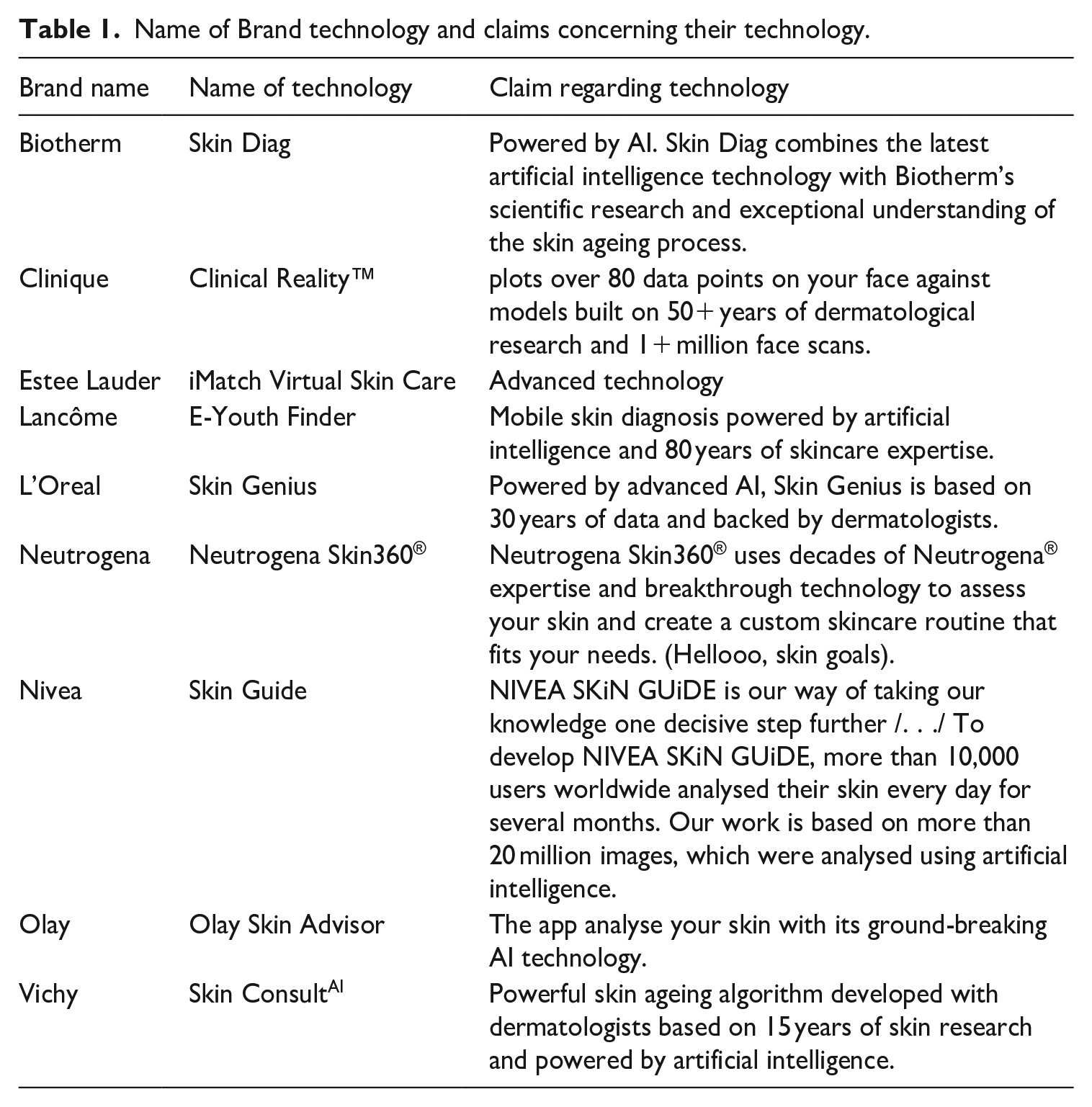
The apps are presented through names and accompanying texts that suggest that the evaluations and metrics are based on advanced expertise and technology. Names such as Skin Diag, Neutrogena Skin360, Skin Genius and Skin ConsultAI, clearly indicate this link and the descriptions that come with them carry wide-ranging claims regarding the progression of the technology and its complexity (summarised in Table 1). Linguistically, these apps are presented as scientific innovations, which is a common strategy in the marketing of cosmetics (Díez Arroyo, 2013). This helps the cosmetic companies to highlight the apps as high-tech solutions against skin-related problems: ‘powered by advanced AI’ (L’Oréal), ‘break-through technology’ (Neutrogena), ‘ground-breaking AI technology’ (Olay) or ‘powerful skin ageing algorithm’ (Vichy). A good illustration of such a description is seen in the promotion of Biotherm’s Skin Diag in Example 1.
Name of Brand technology and claims concerning their technology.
Skin Diag combines the latest artificial intelligence technology with Biotherm’s scientific research and exceptional understanding of the skin ageing process. Using deep learning, the algorithm was trained on a photo database of 10,000 clinical images from our skin aging atlases. This algorithm evaluates and predicts facial skin aging for women across ethnicities and ages. The result? An expert-level skin diagnosis for every woman and a personalised ritual to heal your skin from urban accelerated ageing.
Named Skin Diag, the lexical choice ‘diag’, short for diagnosis, and the use of the phrase ‘expert-level skin diagnosis’, help Biotherm to draw associations with medical and dermatologist examinations. This enables Biotherm to position their app as a medical and ‘scientific’ technology that women can use to ‘evaluate’ their skin and develop a personalised skin care routine to ‘heal their skin from. . .ageing’. Biotherm, thereby, uses references to science to increase the efficacy of their app in providing an ‘exceptional understanding of the skin ageing process’ (cf. Chen, 2015). Moreover, by presenting their technology as a result of ‘the latest artificial intelligence technology. . .using deep learning. . .algorithms trained on a photo database of 10,000 clinical images’, Biotherm draws on ideas surrounding big data to facilitate a personalised skincare solution for women. Individualisation is realised linguistically by singularity through ‘woman’ and synthetic personalisation ‘your’ (Fairclough, 1989). Such individualisation places personal responsibility on women, here addressed as neoliberal subjects, to use their entrepreneurial choices to work on and manage their appearances (cf. Gill, 2019). This is reminiscent of the description of Clinique’s Clinical Reality. Its name comes with associations of medical examinations, and it is claimed to be ‘built on 50+ years of dermatological research and 1+ million face scans’ (see Table 1). Altogether, this (and similar descriptions) frame these apps as cutting-edge technology (sometimes also explicitly), appearing as providing consistent and precise results.
In eight of the nine cases, the exception being Clinique, the process of using these apps is presented as a systematic process that takes place in three clearly defined distinct steps. This implies that users (1) take a selfie, (2) fill in some personal information (age, skin type, etc) and (3) receive a personalised analysis pointing out their problematic facial areas. Consumers are, thereafter, presented with a list of products to help fix the problems that have been identified. This design follows the ‘rule of three’, which is often used as a key rhetorical device for effective communication (cf. Barry, 2018). In Figure 1, this is illustrated through a grey-beige, colour coordinated rectangular area with black marked corners, similar to what one would find on the web when uploading a photo. This suggests that the procedure is demarcated and controlled. Within this framework, we see three rectangular areas marked by a lighter colour than what is found in the background. These are separated by a space indicating the three different phases, together with the texts ‘Take a selfie’, ‘Fill in your skin profile’ and ‘Discover your skin matrix’. The texts are accompanied by three different symbols, presenting this as an organised and methodical process.
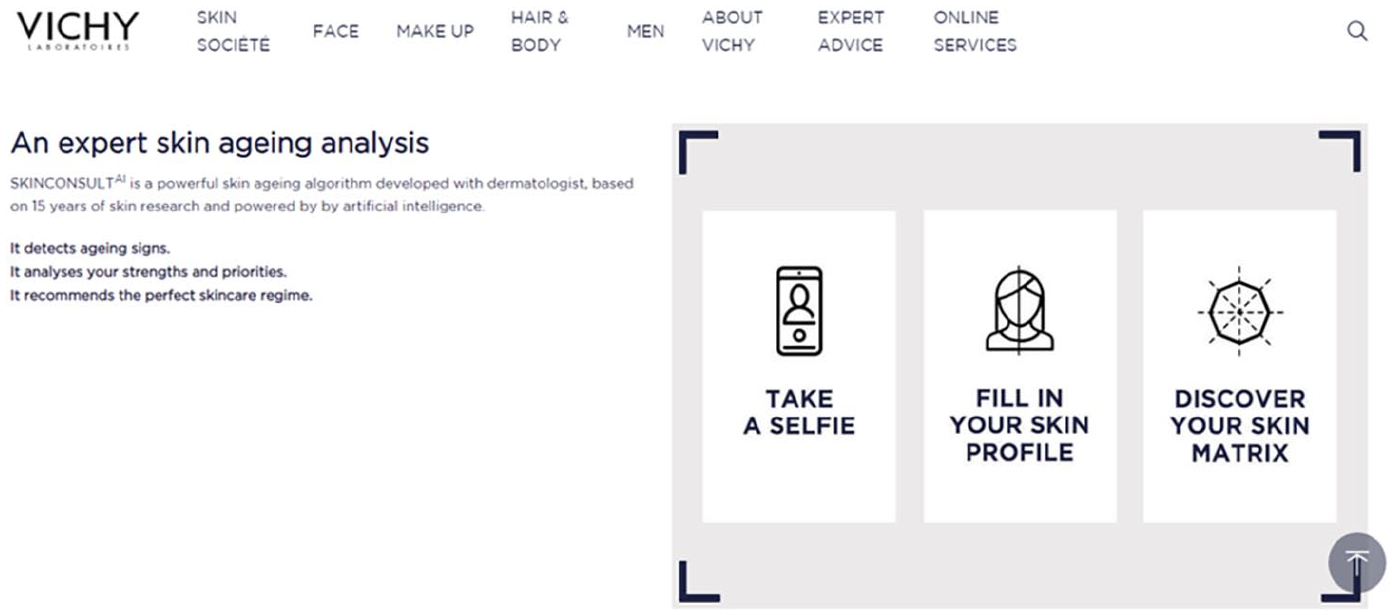
An example of the 3-step procedure (Vichy Skinconsult AI) About Skinconsult AI | Vichy UK.
The use of the apps is also presented as a fast and simple process. For instance, Nivea describe their Skin Guide as a ‘facial analysis with a selfie’ and Olay claim that you can ‘transform your skin now with just 1 selfie’ (see Figure 2). Clinique, on the other hand, say it is ‘a quick 30-second skin analysis’ and Biotherm state ‘find out in minutes’. By stressing the swiftness with which the results are obtained, these apps are designed to come across as offering quick-fix solutions to skin-related problems. Moreover, the advice offered is claimed to be tailored to each individual.
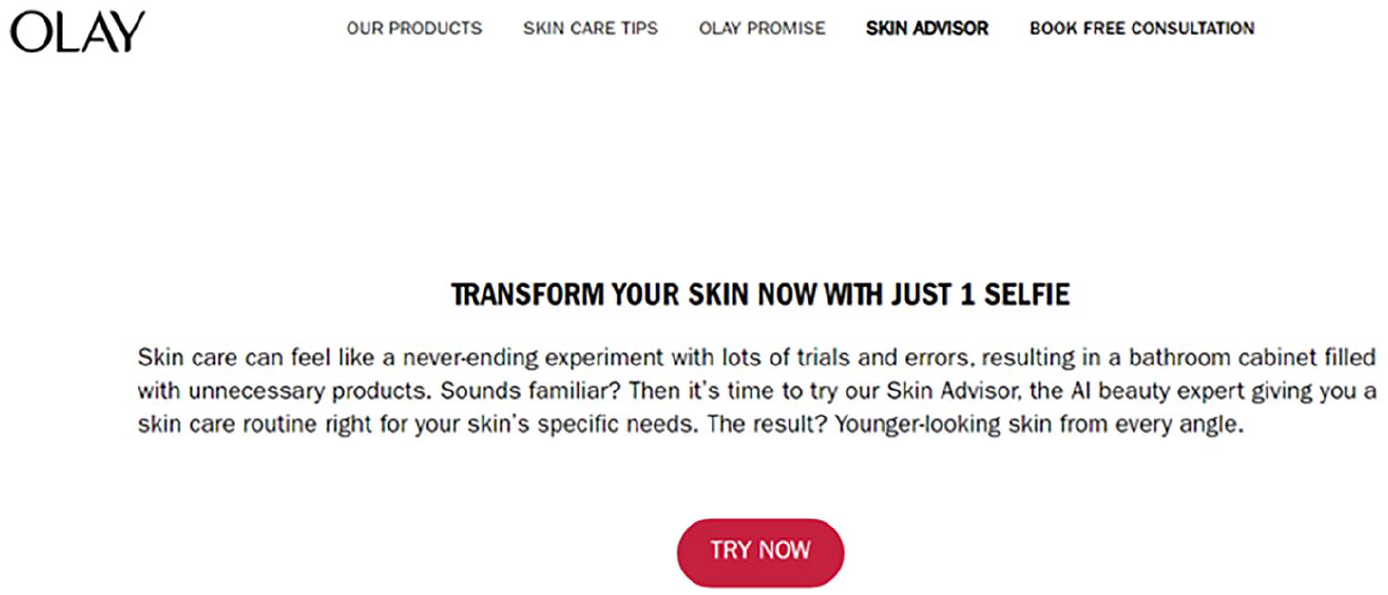
Olay skin advisor Skin Advisor App | Skin Analysis Online | Olay UK.
In all the investigated cases, the personalised advice on skincare routines is tied to the consumption of the ‘right’ products. The recommended products are based on the cosmetic brands’ counsel and come attached with a set of instructions. This is underpinned by a neoliberal mentality of self-management and self-improvement linked to the idea of managing oneself and one’s look. This form of customer empowerment invites women to proactively make their own decisions regarding their skincare routines (cf. Almunawar et al., 2015). The recommended products are considered ‘right’ for the skin because they are the result of a high-tech and scientific ‘scanning’ procedure, which appears as substantial and reliable. This adds a new dimension to what previous research on cosmetic advertising depicts as the ‘scientifisation of beauty’ (cf. Chen, 2015; Kenalemang-Palm and Eriksson, 2021), which can be defined as the use of science or scientific discourse (Chen, 2015; Díez Arroyo, 2013; Mire, 2012) to promote cosmetic products as advanced innovations (Chen, 2015). By adding this ‘scanning’ procedure to the already existing promotional strategies, the cosmetic companies can market their products as scientific. In addition, the product recommendations emerge as a result of a process branded as relying on sound expertise and the latest technological innovations. In the next section, we scrutinise further how this scanning procedure is represented.
The fragmentation of the female face
The representations of the analytical procedures involve visualisations of the sectioning and fragmentation of the female face. Such discourse technologies come with affordances stressing this investigation as characterised by cutting-edge technology and sound expertise. Through what can be considered a technological modality (see Roderick, 2016: 85–86; cf. Kress and van Leeuwen, 2006: ch. 5), the female face is divided into different zones. This gives the impression that the face has been carefully examined. An example of this, taken from Olay, is illustrated in Figure 3. The figure shows an image of a woman in a profile holding a mobile phone in front of her face as though she is taking a selfie. A radiating bright blue light beams towards the woman’s face from the mobile phone. The light is fixed to the face and the area being ‘scanned’ is connected by bright dots, which look like nodes in a data structure. This provides the idea that the AI-driven analysis, generates precise (and welcomed) data about the facial condition.
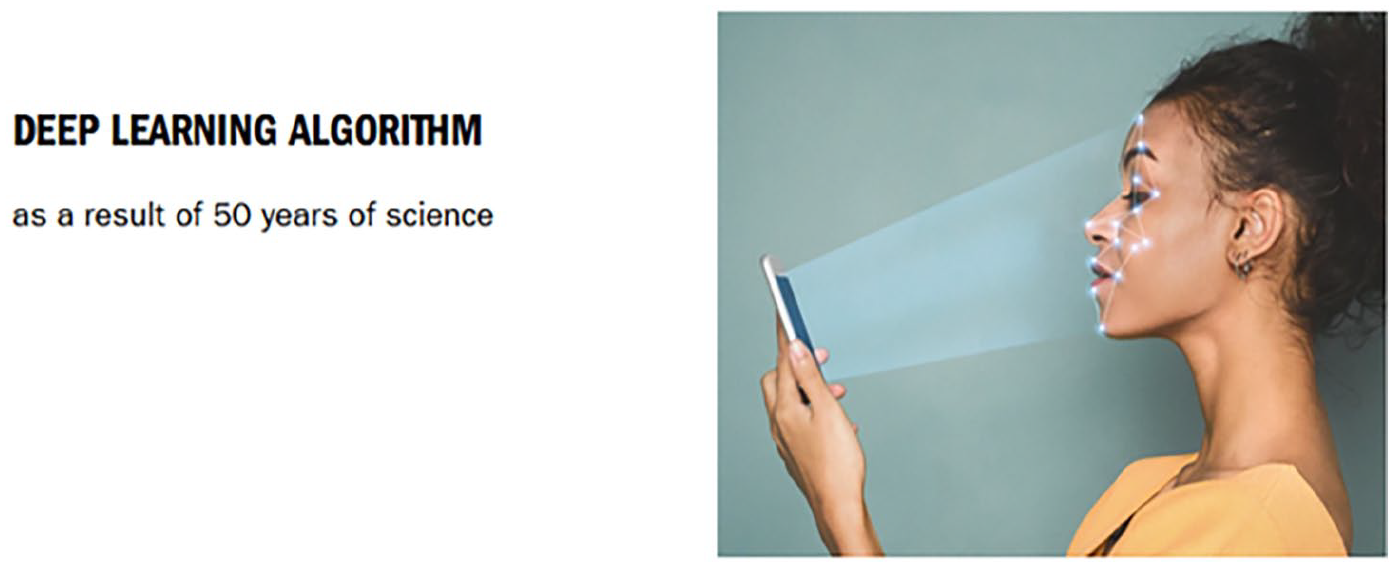
Example of face scan technology (Olay).
Similarly, Neutrogena presents their Skin 360 technology with an image of a woman looking into her phone, which she holds in her left hand (Figure 4). Over the face, we see again a pattern, which leads thoughts to data nodes and suggests a systematic mapping and evaluation of the face. From the phone’s camera, beams with brown beads are directed towards the face, seemingly targeting specific areas. These beads are coordinated with the user’s skin colour and hair, indicating precise measurements of the problematic aspects of her face.
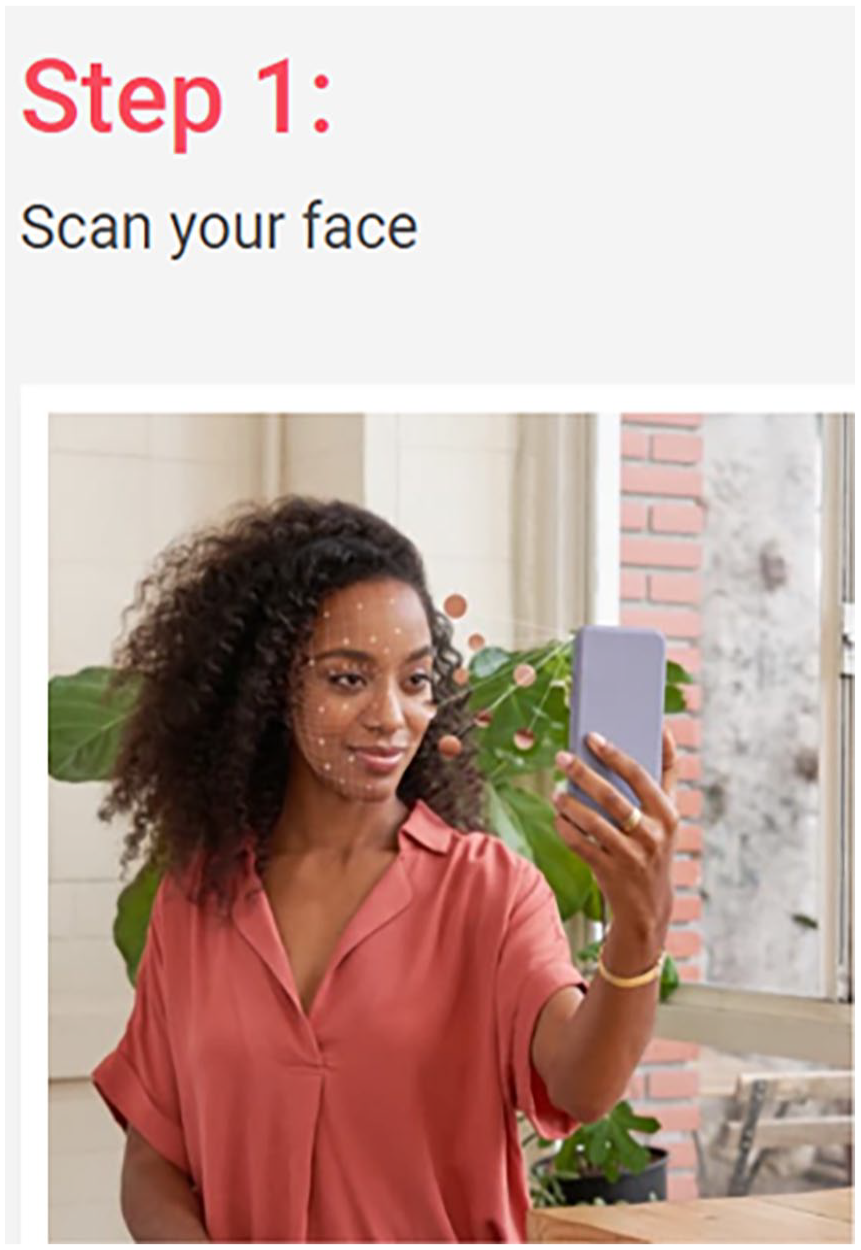
Example of face scan technology (Neutrogena).
Another example of how these apps work and present their evaluations is from L’Oréal. Their Skin Genius tool also divides the face into different zones, and it claims to analyse eight different ‘key skin attributes’. Those are: wrinkles, radiance, firmness, pore quality, pigmentation, fine lines, eye wrinkles and deep wrinkles. Figure 5 contains an illustration of which parts of the face will be scrutinised in relation to the occurrence of wrinkles.
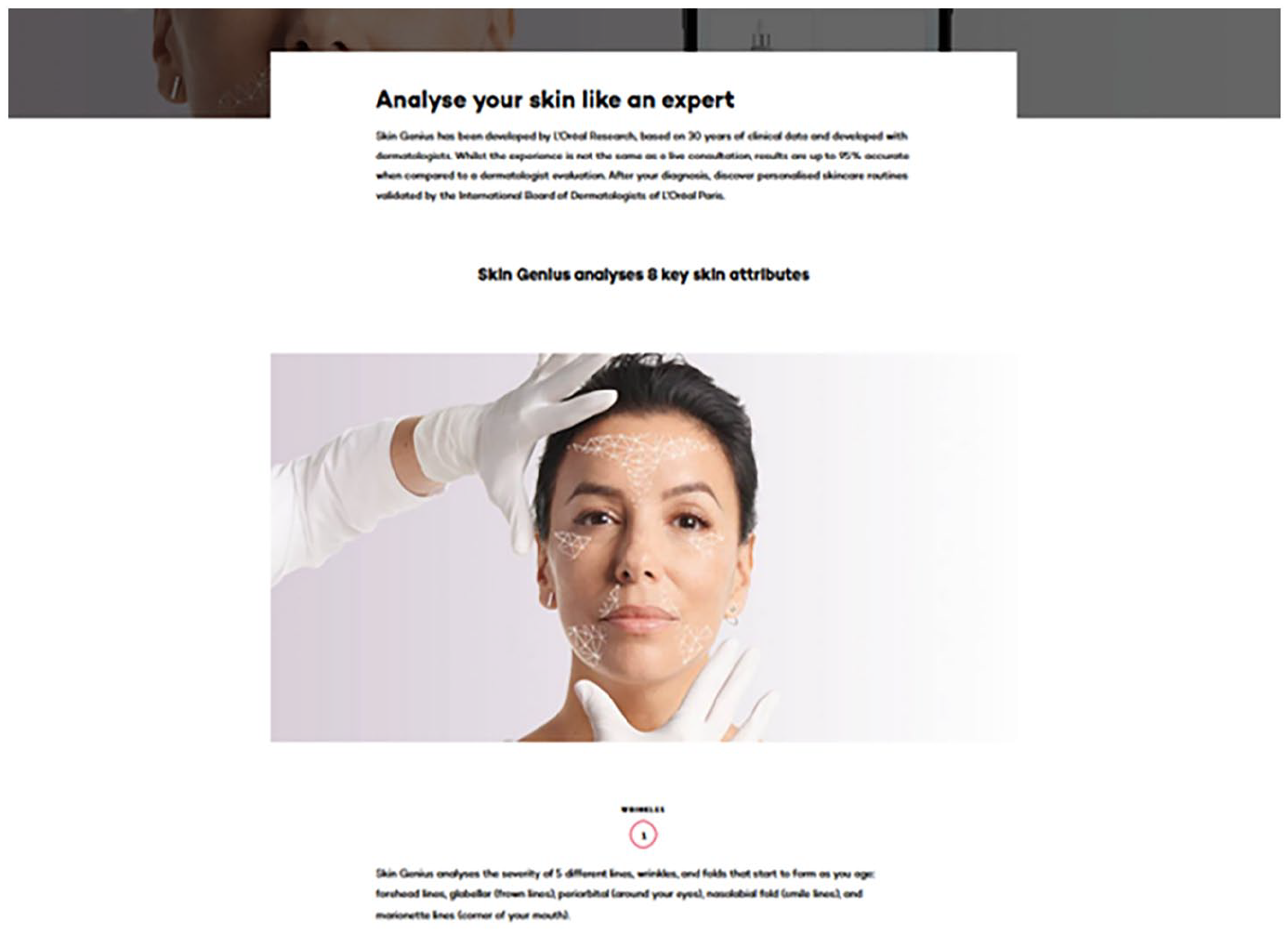
L’Oreal’s presentation of Skin Genius.
Similarly, the examples above (Figures 3 and 4), indicate that these areas are distinctly defined through a pattern consisting of nodes being connected through white lines. These areas are named and defined in a text under the image. Rather than using simple words to describe the different aspects of the face, such as fine lines, wrinkles and puffy eyes, L’Oréal uses biological terms, such as glabellar, periorbital and nasolabial. These terms help L’Oréal to draw associations with scientific or medical evaluations. The whitish-light background as well as the hands with the white gloves connote cleanliness and further add a clinical sense to this evaluation.
The illustrations in Figures 3 to 5 indicate how women’s faces become fragmented into a composite of datasets that can be easily read and scrutinised for imperfections. In turn, the data are used to measure women’s facial symmetry. The assessment offered by this app, thus, underscores the idea that the female facial appearance is always under a form of amplified or magnified scrutiny (Gill, 2021). Subsequently, the measurements generated can be used as a tool that women can use to understand the self and to regulate and compare their facial appearances. In this sense, the cosmetic apps encourage users to confront their own personal information to optimise and improve their lives, or more appropriately, their facial appearances (cf. Lupton, 2016). Users can also compare their scores with other women’s (‘compare your skin matrix to other women of different age range’ [Vichy]), thereby providing standards which they are compelled to strive for (see Elias and Gill, 2018; Sanders, 2017). The female consumer seems to be given more agency over her life through a deepened understanding of her face and facial indicators of ageing; she is provided with a tool which she can use to manage her daily appearance. In the next section, we further explore how the results from these personalised assessments are presented as tools for this form of management through metricisation.
The metricisation of the female face
The almost instant delivery of results comes in forms of very precise measurements that evaluate defined and separated facial areas. This process of transformation, from the selfie to metrics assessing fragmented facial areas, is what we define as the metricisation of the female face. This is, thus, a process of establishing and using metrics to be able to measure distinct aspects of the female face, a practice that is hidden and completely inaccessible for consumers. The metrics are presented through different forms of diagrams, lists and bar charts, which come with the affordance of providing a sense of scientific exactness (Ledin and Machin, 2020). They also appear as statements of high modality, thus seemingly providing facts (cf. Hodge and Kress, 1988; Machin and Mayr, 2012). Based on the metrics, the apps point out what parts of the face are to be considered as problematic and in need of special attention, but also boost consumers’ confidence by identifying areas where they are doing well. The measurements provided are presented with amplified facial details. Consumers are, hence, offered a feeling of individual self-empowerment and motivation to commit to skin-caring practices.
A good example of this metricisation and amplification is how the results of the Skin Genius (L’Oréal) evaluation is presented. These are conveyed through a reproduction of the submitted selfie with the results of the eight different skin attributes texted in green or red, with lines pointing to very specific areas of the face (see Figure 6). The red colour – in this case, Deep wrinkles and Firmness – indicates ‘areas of focus’ and the green colour is used to highlight ‘skin strengths’ on which the consumer is doing well. Each attribute is measured on a hue-coloured horizontal bar scale from 0 to 10, ranging from red to green, that is, from bad to good. The results are marked on this scale using decimals, so there are, thus, 100 possible outcomes of the analysis. This indicates exactness, accuracy and reliability. The average score for women in a similar age group are also marked here, seemingly in the middle of the scale (5.0). Notably, the four selfies that we submitted all resulted in two areas depicted as in need of attention.
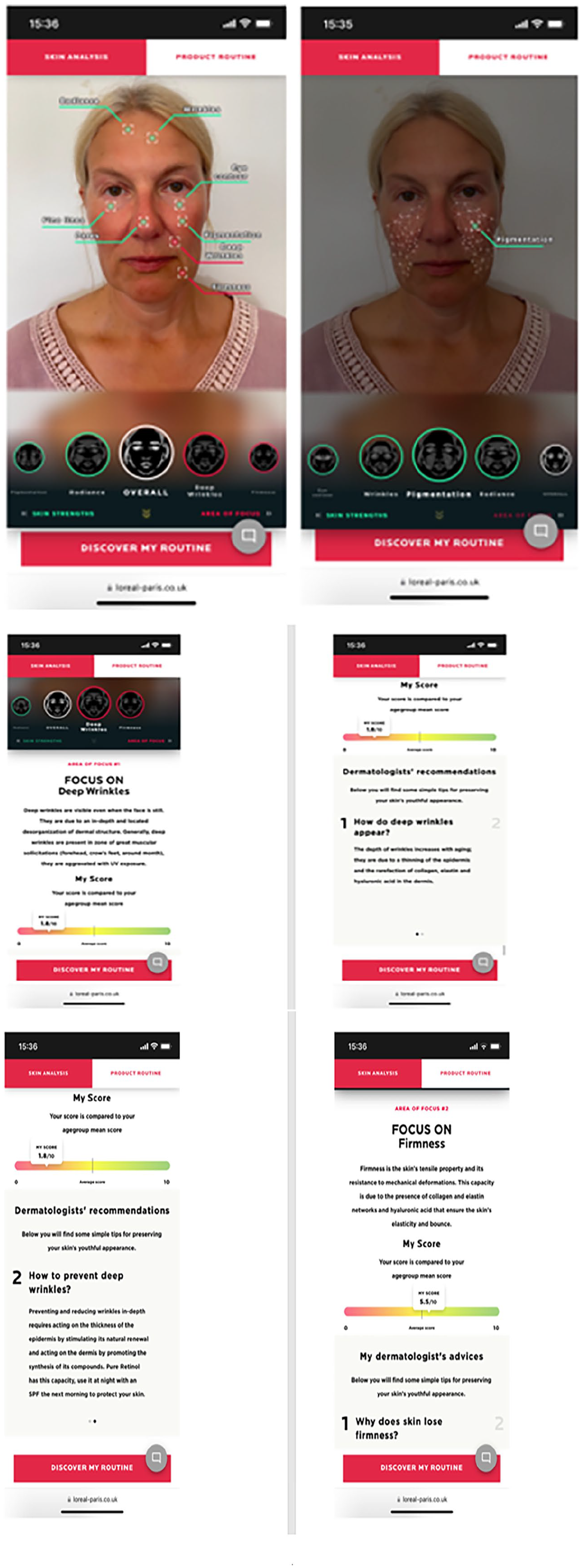
The results of the Skin Genius analysis (Helen).
The evaluation reproduced in Figure 6 identifies Deep Wrinkles (1.8/10) as an area that needs attention (Figure 6). Interestingly, although L’Oréal acknowledges that ‘the depth of wrinkles increases with aging’ (Example 2), they are still construed as a problem that must be ‘cured’ (cf. Kenalemang, 2022), as evidenced by the accompanying dermatologists’ recommendations. These are put forward as ‘simple tips for preserving your skin’s youthful appearance’ (Example 2), thus providing positive compliments and boosting the consumer’s morale, while at the same time pointing out her skin problems. What follows are two texts. The first is brief and depicts why deep wrinkles appear, offering knowledge on this matter. It explains that ‘the depth of wrinkles increases with aging’. The second text, with the heading ‘how to prevent deep wrinkles’, is presented as a recommendation to adhere to. It starts with a sentence offering more information about deep wrinkles, followed by what comes across as the actual recommendation, which is to use two products: one at night (containing pure retinol) and one in the morning (including SPF). Supposedly, these two products will help the consumer to delay the appearance of deep wrinkles and to manage signs of ageing.
Below you will find some simple tips for preserving your skin’s youthful appearance.
The depth of wrinkles increases with aging; they are due to a thinning of the epidermis and the rarefaction of collagen, elastin and hyaluronic acid in the dermis.
Preventing and reducing wrinkles in-depth requires acting on the thickness of the epidermis by stimulating its natural renewal and acting on the dermis by promoting the synthesis of its compounds. Pure Retinol has this capacity, use it at night with an SPF the next morning to protect your skin.
We find another good example of this metricisation in the presentation of Neutrogena’s 360° scan analysis. This is represented through what appears to be a pie chart, breaking down the facial appearance into well-defined parts (see Figure 7). The different sections of the pie chart are colour-coded to indicate the differences between them. These sections are further divided into curved bars to show the strength of each skin area. This diagram shares similarities with the WI-FI symbol, the more bars that are coloured, the better the strength. In the middle of the pie chart, the consumer is presented with an overall average score on a scale of 1–10 on how well they have scored in the different skin areas, so 90 different outcomes are possible. Below the pie chart is a brief description of the chart saying that ‘number values’ have been assigned to each ‘skin attribute’, but with no further information about how these indexes have been created. There is also a ‘score breakdown’, where the values between 1.0–4.9 and 5.0–7.9 respectively indicate an okay and good outcome, whereas a great result lies between 8.0 and 10.0. Although not explicitly mentioned, the presentation of this chart and numbers is used to highlight the risks and fears associated with visible signs of ageing, urging consumers to do something about it and, for example, increase their score from just ‘okay’ to ‘great’ (cf. Eriksson, 2022). Such quantification can facilitate consumers to position themselves as actively making the ‘right’ decisions and choices for the management of their facial appearances (cf. Kent, 2018). However, despite connoting exactness and precision, the bright coloured pie pieces make the chart come across as a bit playful, (re)framing this management as fun and enjoyable (cf. Lazar, 2006).
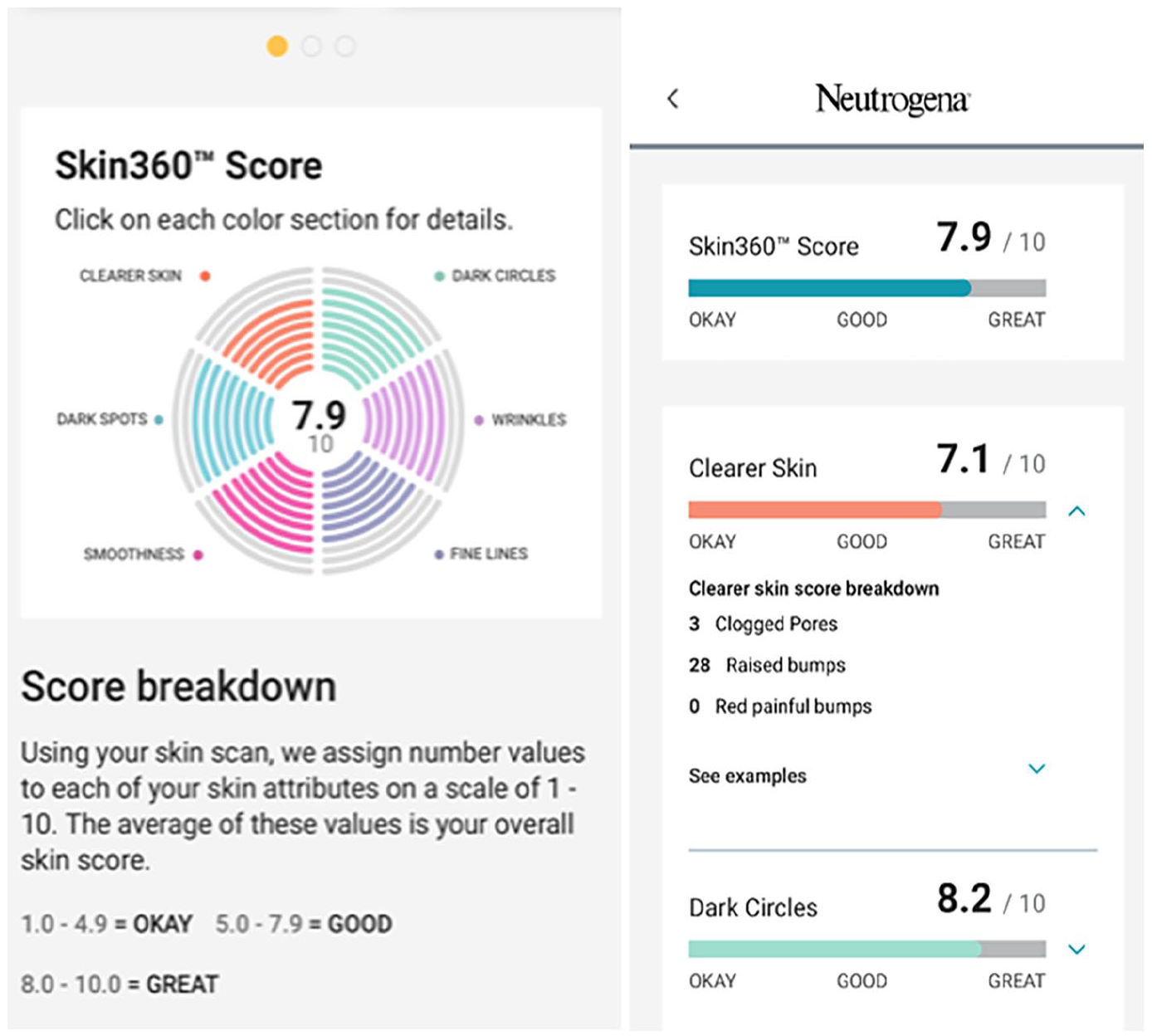
Score breakdown, Neutrogena (Lame).
Under every area, there is an arrow that consumers can click on for more details about the score breakdown. The information there varies. In most of them, the user receives a general description text of why, for instance, dark circles form. The flaws identified are explicitly attributed to a lack of something (e.g. a lack of collagen), which the products contain and can correct. The user is then presented with a personalised skin care routine of what products are most beneficial for them. Under ‘Clearer Skin’, the user is shown a bullet list with the following score breakdown: 3 clogged pores; 28 raised bumps; 0 red painful bumps. The analysis is, thus, broken down to even smaller units that zoom in on tiny details, as if the ‘scanning’ could perform an almost microscopic examination. When the user clicks on the listed scores, images of general examples that illustrate how clogged pores and bumps may appear are shown, accompanied by a text with a general description on what the score measures. The text, however, does not give an in-depth analysis of these measures, so the analytical process remains hidden for the user. Here, one can, of course, question if a mobile phone selfie provides a good basis for such a detailed analysis.
The results from the app evaluations are presented with amplified focus on facial details, providing a sense of an almost microscopic and clinical examining process. This highlights what Gill (2021) describes as the micro scrutiny of the face: that the female face is now under magnified surveillance, constantly surveyed for flaws/problems (cf. Elias and Gill, 2018). This scrutiny, achieved through the semiotic fragmentation and metricisation of the face, fosters the idea that increased self-surveillance and monitoring can help to improve the individual’s appearance.
Conclusions
Coming with promises of building skincare advice on high-tech AI technology and sound expertise, cosmetic app technologies are changing the way in which female consumers are encouraged to learn about, and to consider, their facial appearances. The female face is submitted to a ‘scanning’ procedure, which transforms the appearance into measures and statistics presented in high modality diagrams and charts. Even though this analytical procedure is inaccessible, hidden for the consumers, this metricisation comes across as reliable and truthful and as providing comparisons with standardised, age-related norms. The metrics offer potentially more manageable solutions, providing a new sense of self-control over the face (see e.g. Crawford et al., 2015). Elias and Gill (2018: 66) depict this as a ‘metricisation of the postfeminist gaze’, which enacts a clinical gaze of the face.
This metricisation imposes a new disciplinary regime and forms of regulation of women’s appearance, implying an intense mode of surveillance that promotes both internal and external judgements of the self (Elias and Gill, 2018). Internally, women are provided with incitements to perfect or improve the self to be the ‘best version of [themselves]’, while externally, they are encouraged to compare themselves to other women. The metricisation becomes a new tool for aesthetic labour, seemingly empowering women to make choices on what appears as a scientific and highly technologised rationality. By presenting precise numbers on the flaws or problems to be dealt with, the metricisation works to convince consumers about this rationality. It follows the notion of ‘if you cannot measure it, you cannot improve it’ (Kent, 2018: 64). In this way, women’s self-improvement becomes a technological project (cf. Wolf, 2009) to better understand the self. The ‘new’ acquired self-knowledge helps the female subject to make sense of her own self and take decisions in her self-care that indicate moral goodness (cf. Crawford et al., 2015; Lupton, 2016; Sanders, 2017). By knowing their metrics, women are addressed as entrepreneurial neoliberal postfeminist subjects who possess the self-knowledge to govern themselves in accordance with the data generated. This understanding of aesthetic self-tracking offers women a moral imperative of self-care to do something about their problematic skin, which can be cured through the advice and products offered by cosmetic companies.
Footnotes
Funding
The author(s) received no financial support for the research, authorship, and/or publication of this article.