




Abstract
Research on gang-related content on social media in an African context is limited, if any exists at all, and this article provides an exploratory and descriptive narrative on this topic. The study establishes online geographies: mapping unique characteristics of the digital world, how it corresponds to the actual reality and what differences can be observed. Data were collected by conducting digital observation on TikTok, and only data originating from searches related to gangs in Cape Town, South Africa, were recorded. In this physical geographical location, TikTok facilitated new virtual territories in mainly two diverse online geographies. First is that of gang culture in the symbolic parading of the criminal life, exploring the creative abilities of TikTok. Gangs occupy the virtual space through communications, associations and threats. The second online geography is found in responses to gangs in the form of community activism and vigilantism, with a significant digital trajectory and aggressive material, aiming to facilitate social change.
Introduction
Criminal gangs in South Africa range from loosely structured collections of youths, functioning on an ad hoc basis, to highly organised and structured groups operating in a hierarchical manner, within strict codes of conduct and international connections. Most of these groups occupy spaces in metropolitan areas, although in recent years, small towns around the country have also been consumed by criminal groups. In Cape Town, the gang phenomenon is particularly acute. Over the years, gangs have grown in sophistication with some groups operating as organised crime syndicates, demanding control over private businesses. This growth has also facilitated a significant increase of violence in the city, making it one of the most violent incidents in the world (BusinessTech, 2023; Dolley, 2023). In one area, known as the Cape Flats, gangs dominate large geographical territories and have a significant influence on communities. There are believed to be more than 100 gangs operating in the area with certain groups having thousands of members (Lambrechts, 2012). Social media created novice ways to interact and communicate, and this has also spilled over into the milieu of gangs. Gangs as social actors have transferred their physical footprint into the digital realm, and this has instigated other online behaviours. This article will unpack whether we are witnessing the production of online geographical spaces and how the physical locations of gang activities intersect with online localities.
TikTok: Operational ease and instant virality
After its launch in 2016 as a playful platform to create and share short videos, TikTok has grown at an unfathomable rate. With an estimated more than 1 billion users, the app is the fourth largest social media platform in the world. Although it is still relatively modest in use in Africa, it holds more than 30% of the social media market in Nigeria and has doubled its users in South Africa to around 10 million (Africa Defence Forum, 2023). Africa is regarded as a priority market for the app, and unlike some governments around the world, none in Africa have moved to monitor or ban the app (British Broadcasting Commission (BBC), 2023). The size and growth of TikTok in Africa, and the operational ease of it, motivated the use of it for this article.
The free platform has made it possible for users to accumulate millions of views of posts without an established following network. It is one of the simplest apps to use: ‘TikTok requires no network, no searching, nor even any login’ (The Economist, 2023). In addition, instant virality is one of the main features that attracts large digital audiences to the app. Posts are made voluntary, and the network is much less censored than others, motivating users to keep their profiles public. The following feed is not the heartbeat of the app, but rather the proprietary recommendation system: the For You Page (FYP). The FYP is the primary interaction system of the app and will provide suggestions of material for users to engage with. It serves as the landing page and the feed is based on previous interactions on the platform, rewarding hyperactivity (Ingram, 2023, personal communication; Schellewald, 2021; Zeng et al., 2021). Of additional importance is the ephemeral nature of the content: videos will be replaced with one another on a loop cycle but remain available even after they have been watched. Ephemerality is one of the key reasons why the application is so addictive and the FYP has been described as digital crack cocaine (Koetsier, 2020; Zeng et al., 2021: 3163).
Despite the temporary nature of the clips, it has been argued that they ‘presents themselves not as a random and short-lived entertainment but as complex, cultural artifacts’ (Schellewald, 2021: 1439). Indeed, on TikTok and social movements, Lee and Abidin (2023) note that ‘TikTok’s creative affordances powered by artificial intelligence (AI) technologies also facilitate the formulation and development of identity politics and cultures on the platform’ (p. 2). Users communicate messages of social justice and social (in)justice on the platform, for example, the Fox Eye anti-racism challenge (Zhao and Abidin, 2023) and #StopAsianHate started by Asian American users (Lee and Lee, 2023). The initial intention and purpose of the app has thus been greatly modified and diversified.
Studying online gang behaviour
Studying online behaviour of gangs is a growing field and, as expected, evolves with the Internet and social media. Research includes general studies of gangs and social networking (see Décary-Hétu and Morselli, 2011), gang violence and social media (see Irwin-Rogers et al., 2018; Lauger et al., 2019; Patton et al., 2019), to how gangs use specific platforms, such as Facebook (see Moule et al., 2013) and Twitter (see Patton et al., 2017, 2019). In defining online behaviour, Patton et al. (2013) explain the trend of Internet banging on social media. In particular, in the United States, online spaces are used by gang affiliated individuals to boast about their activities and intimidate rival gangs. It has also been labelled as cyberbanging (Morselli and Décary-Hétu, 2013), and according to these authors, social media can be used to glorify gang life and promote criminal activities, but it is also ‘creating a new venue for people who share or are sensitive to the values underlying street gang lifestyle to come together’ (Morselli and Décary-Hétu, 2013: 166). Patton et al. (2013) further refer to the Internet banging phenomenon as a manifestation of adaptive structuration theory: (1) promote gang affiliation and/or communicate interest in gang activity; (2) gain notoriety by reporting participation in a violent act or communicating an impending threat and (3) share information about rival gangs or network with gang members across the country.
Further mapping the field, Fernández-Planells et al. (2021) conducted a systematic literature review of gangs and social media, identifying 73 publications, of which 63 centred on gangs as the main objective of the study. Other research focussed on police and law enforcement, social workers, citizens’ imaginaries of gangs and youth living in gang hotspots or wanting to join a gang. The authors note the increase in relevance of studying gangs and social media: ‘What we are interested in discovering is not only how the behaviour of gang members changes with the use of social media, but how this modifies their interactions with the whole of society’ (Fernández-Planells et al., 2021: 2119). The literature review also notes that the United States is the country in which most of the fieldwork has been conducted, followed by Canada and the United Kingdom. (Fernández-Planells et al., 2021). No African-related research was recorded, making this study of high relevance, and confirming that this is an introductory work, enabling original research environments.
The aims of the research
The research interrogates how gang-related content linked to the geographical space of Cape Town, South Africa, is formulated and depicted on TikTok’s FYP. Does the data observed create a shared context and a larger digital community? What image is it that the content creates (or wants to create) of specific communities and does this perpetuate stereotypes? Can group identities be framed by analysing digital context? Gang-related content refers to a dichotomous observation of virtual material: first, it entails material either directly connected with a gang or associated with any aspect of gangs: thus, direct due to association and second, it observes content and conduct initiated because of the existence of gangs: thus, secondary due to existence. This descriptive and exploratory analysis will attempt to map gang-related content on TikTok, to compartmentalise and comprehend the impact of gangs as a social phenomenon, in the digital space.
Methodology, ethics and digital data gathering
The research follows a case study research design with qualitative methodology: digital observations with TikTok as the field site. In the dichotomous observation of digital gang-related content, the understanding of gangs is very much contextual. The concept stands in contrast with an organised criminal group, as the latter usually refers to a much more controlled structure and the gang to a more loosely structured, less professional and less sophisticated grouping. The following features of gangs are considered: gangs have a specific culture, often consisting of rituals and symbols and they convey a sense of identity, which is further strengthened using violence and accompanying turf wars (Siegel and Welsh, 2009). While criminal organisations use violence more strategically to consolidate long-term goals, gang violence is more of a tactical nature, to achieve short-term goals (Decker and Van Winkle, 1996; Klein, 2004). These attributes guided the treatment of the units of analysis: short videos on the FYP, related to gangs in Cape Town. During the design of the study, it was obvious that it is impossible to ascertain the population or sampling frame of the FYP related to gang content; therefore, it was unfeasible to speculate an appropriate sample size.
Ethical considerations
TikTok data are easily discoverable, and it can effortlessly be found by an intended audience, using the correct search terms (McKelvey and Hunt, 2019), limiting the privacy of the user of the app. However, ‘the process of evaluating the research ethics cannot be ignored simply because the data are seemingly public’ (Boyd and Crawford, 2012: 672). Holt (2020: 5) notes that when doing research with digital data, and with specific reference to forums, the location and type of forum are key in informing research ethics. In the case of open forums ‘content can be treated as a naturally occurring conversation, similar to what is observed in real-world discussions in public spaces’ and that no intervention or interaction is needed to observe behaviour. For this research, no interaction or intervention with the content creator was needed to view posted content, another reason why TikTok was selected for this study. The method of data collection was passive and covert (Holt, 2020). However, although the data are publicly available, it does not exclude the responsibility of the researcher to respect the fundamental principles of ethical research and good practice needs to be modelled in studies using social media data (Mason and Singh, 2022).
Two aspects are relevant here: informed consent and anonymity and confidentiality. It can be argued that because of the extreme public nature and virality of the data on TikTok, it represents implied consent. Informed consent cannot be acquired, since users of the application were not followed, but video clips were suggested by the continuous loop of the FYP. The research prioritised anonymity. Previous studies using visual data on TikTok noted the importance of removing and omitting any identifiable data when making use of screenshots (Cervi and Divon, 2023; Yu et al., 2023). In such cases, the data were completely anonymised. None of the short videos were saved. Observations were recorded while watching the clips (Schellewald, 2021) and conclusions limited to what was observed while playing the clips. When using screenshots to illustrate a particular point, all content was anonymised to limit and even restrict the discoverability of the visuals. Furthermore, when doing research on TikTok, it is important to incorporate a ‘balanced and constructive approach’ and ‘embrace the messiness and complexity’ of the app (Literat and Kligler-Vilenchik, 2019: 1988).
Data collection, management and analysis
To train the algorithm of the FYP to provide relevant clips for analysis, an anonymous account was created. The account does not need to follow any users or like any posts to view the content of the FYP. When considering the customary categories of participants and observers in ethnographic fieldwork (complete participant, participant-as-observer, observer-as-participant and complete observer), the study focussed on the last-mentioned category. Urbanik and Roks (2020) expand this category using a one-way mirror analogy. This permits for the one-way observation of respondents via social media (Urbanik et al., 2020) and was applied in this case.
To initiate the process of digital observation, broad keyword searches were used. Since the area of the Cape Flats in Cape Town is plagued with gang activity, the Cape Flats keyword accompanied most of the keyword searches. Other keywords included gang culture, gang operations, gangs and communities, gangs and the police, gang shootings and violence, gangs of Cape Town, prison gangs and gangster life. To confirm the gang affiliation of clips and that it fits with the dichotomous observation of virtual material, proved the messiness and complexity of TikTok. For some clips, gang affiliation was obvious: creators used the names of prominent gangs, individuals displayed hand signs and tattoos linked to specific gangs and participants used sabela (a dialect originally developed by prison gangs in South Africa to communicate and now widely used by all gangs). Clips of self-confessed gangsters were usually taken on face value, as it depicted elements of gang culture. Individuals (non-gang members) commenting on gang activities were recorded as secondary observation of gang material. Gang violence represented confusion, as it was clear that some clips were fabricated: it did not depict a real gang fight. This was still recorded, as it spills over into the everyday way of life and experiences in communities, expressed through social media. Clips were often accompanied with text indicating the geographical location or in the hashtags linked to the clip. This assisted in verifying it as Cape Flats gang activities. In instances where the setting could not be verified, the clip was discarded.
Initial searches resulted in six categories of communication associated with gang-related content. The categories were used to organise the short videos for analysis: (1) community interaction, (2) notions of criminality, (3) gang culture, (4) police/security involvement, (5) life in prison and (6) rehabilitation: life outside the gang. Each video viewed was placed in one of the above-mentioned categories of communication. 1 For each video, the following was recorded: the context, duration, main themes, number of likes, the designated hashtag and finally any relevant comments related to the clip. The data were recorded on an Excel spreadsheet, for further analysis. This served as the digital field diary for the study (Schellewald, 2021). The analysis took the form of thematic content analysis, also assessing the purpose of the production of the clip. As the process of de facto snowball sampling developed, some categories of communication promptly emerged to be prominent on the FYP, while others delivered limited results. Data collection stopped when level of saturation was reached: themes that repeated themselves, until no new insight was gained.
The data collection process started in June 2023, using the initial search terms and ended in October 2023. A total of 170 clips were reviewed and 55 hours were spent in the digital field. The digital field journal proved instrumental to recording and coding of the data. As with in person gang studies, researchers cannot accept all data on face value, and in some cases, the authenticity of the data is questioned. In addition, ‘With user generated data, however, there is less control and less knowledge about the origin of the data, meaning there is potentially much more noise in the data (irrelevant data) which needs filtering’ (McKenna et al., 2017: 90). Some of the data explained below used code words, difficult to decipher even with contextual sensitivity and seemingly senseless hashtags. To enhance coding and accuracy of data analysis, complex clips were viewed several times, accompanied by Internet searches of symbols and signs. In the cases where sabela was used, a sabela dictionary was utilised to interpret the meaning.2,3 The researcher has significant knowledge of the communities and gangs on the Cape Flats, assisting in understanding the contexts of posts.
Contextual clarification
In marginalised geographical spaces of Cape Town, criminal economies flourish. Due to limited state capacity, gangs provisionally fill an institutional void and act as benevolent dictators to communities (Lambrechts, 2012) but can also keep residents’ hostage, due to turf wars and indiscriminate violence. This is the case in the Cape Flats, a community identified by the South African government as a so-called Coloured community. Race classification is a complex and often problematic reality in South Africa, and it stems from colonialism and Apartheid. The Apartheid era categories of Black, Coloured, Indian and White are still commonly used, also by the South African government. 4 Coloured communities represent persons of mixed racial descent in South African terms, but could also include people with a Malay, or a Khoi heritage, in their ancestry. Post-Apartheid South Africans still use racial categories established during Apartheid to refer to both other people and themselves, while the spatial legacies of that era are still visible in cities such as Cape Town.
What is today known as the Cape Flats emerged after the passing of the Group Areas Act of 1950, on which the restructuring of the inner-city areas of Cape Town was based. This was centred on the Apartheid policy of the spatial separation of races and a quest to create White-only spaces. Families were rapidly and forcefully removed from locations in the city to underdeveloped spaces on the outskirts of urban areas, with inadequate housing and employment. This coupled with a general lack of any socio-economic development, greatly contributed to the transformation of gangs and the expansion of their activities. Loosely structured groups of young men found purpose and belonging in gang associations, and it provided a way to pass the time (Pinnock, 1984, 1997; Standing, 2006). The gangs on the Cape Flats are thus a direct result of the historical and social development of Cape Town.
Gangs that have become synonymous with the city include, but are hardly limited to: Americans, Hard Livings, Clever Kids, Junky Funky Kids, Terrible Josters, Mongrels and Fancy Boys. Another collection of gangs is also referred to as prison gangs or the Number Gangs and include names such as 26s, 27s and 28s. 5 They are operational in prisons around the country and Pollsmoor prison, a maximum-security prison located 25 km outside of the Cape Town central business district. Gangs control public transport routes, manufacturing and selling of drugs and territorial and rival shootings occur daily.
Mapping the online geography of gang-related content
The following section is a representative portrayal of content on TikTok related to gangs on the Cape Flats. It maps the unique characteristics of each category of communication, how it corresponds to the actual reality, but also what differences can be observed. Furthermore, it establishes relationships between categories such as the motive to produce the content, the way in which the content is created, physical locations and objects depicted in extracts. Contrasts in the portrayal of material are highlighted, to present a broad image of online geographies.
Community interaction
This category of communication produced a large prevalence of online activism and as the sample developed, digital social movements could be traced. In general, the context of the clips typically involved anti-gang operations and messages. Some clips depicted the everyday life experiences of the creator, living in an area plagued by gangsterism. In some cases, the role of the creator was instrumental to the message of the clip. Thus, the physical personality was transformed to the digital space, and posts were deeply personal. 6 A strong correlation was created between the online material and the geographical location, for example, Hanover Park and Manenberg. The recordings exposed the situation (at the time of creating the clip) in a specific area. The content was created as part of a common setting of the Cape Flats (physical geography) and shared circumstances.
Longer clips were usually not interactive, but rather live material: recordings of an event. When the digital fieldwork started, such clips were directed by community policing groups or local religious groups, and the hashtags and comments associated with the clips were often politically motivated, for example, #ColouredLivesMatter, #brownlivesmatter and #ManenbergIsBleeding. This relates back to the marginalised history of the communities on the Cape Flats and was also a theme in the comments, for example:
The government is smart. They keep coloured people fighting each other so they stay poor and uneducated. Time to come together and rise my brothers.
7
Analysis of this category of communication suggests the framing of identity politics around the socio-economic and political neglect of Coloured communities on the Cape Flats, aggravated by the physical presence of gangs. Systemic marginalisation and stigmatisation found representation in this digital space. 8
While conducting fieldwork, gang violence and deaths related to gang activities (both gang members and innocent members of communities) escalated. The spill over into the digital realm was clearly visible, as one vigilante group established a significant online presence and dominated this category. Clips posted involved members of the vigilante group 9 marching with the community, exposing residence of local gangsters and drug houses, demanding that they leave the area, face the consequences or give themselves over to the authorities. The group used the names of the gangsters, and locations were obvious, either as part of the clip (text) or mentioned in the recording (see Pictures 1–4). The faces of the members of the group were covered, but members of the community marching with them could be identified.
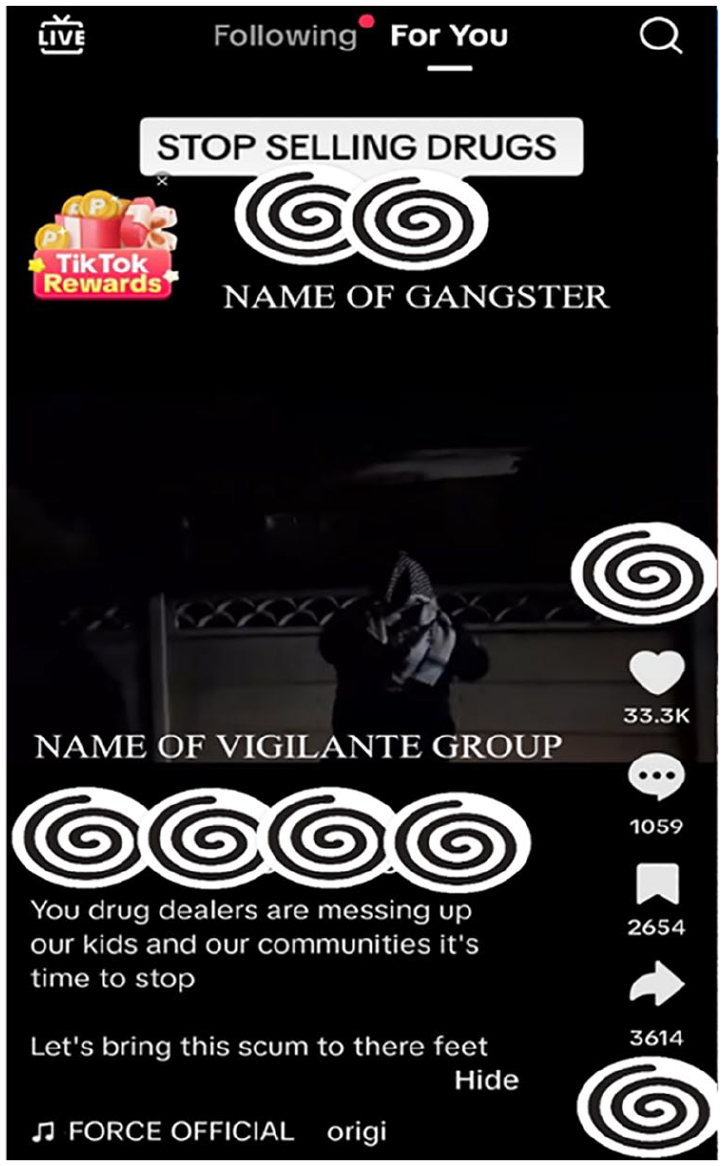
Vigilante group exposing residence of local gangsters and drug houses.
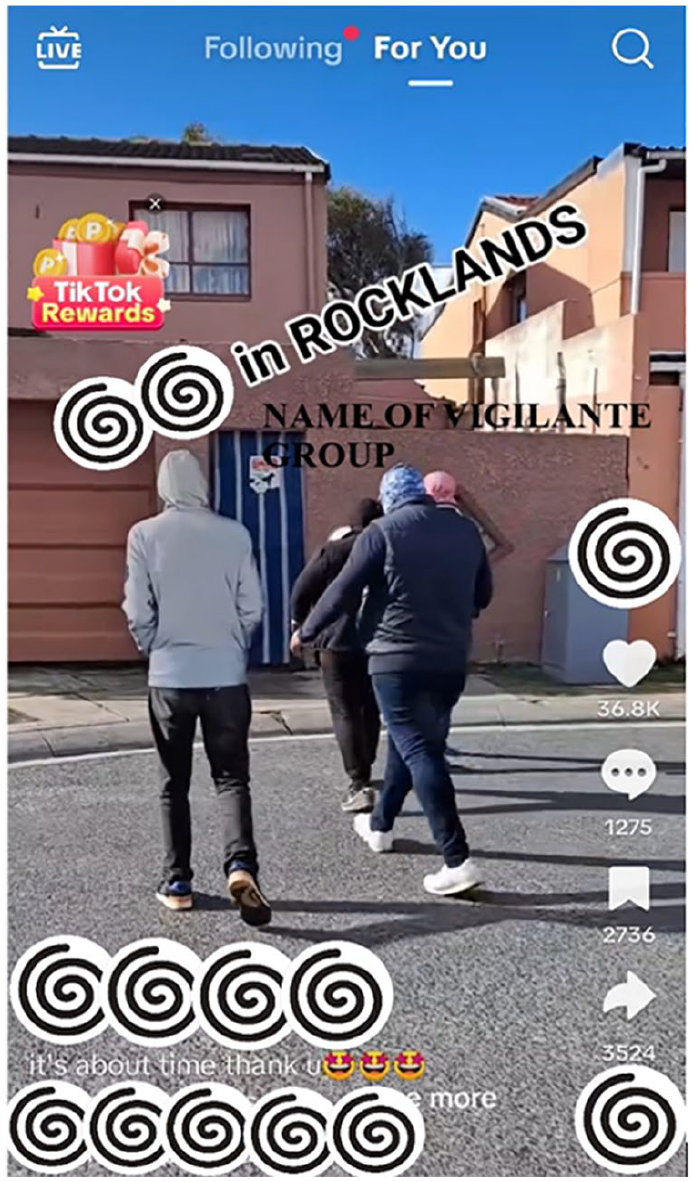
Vigilante group exposing residence of local gangsters and drug houses.
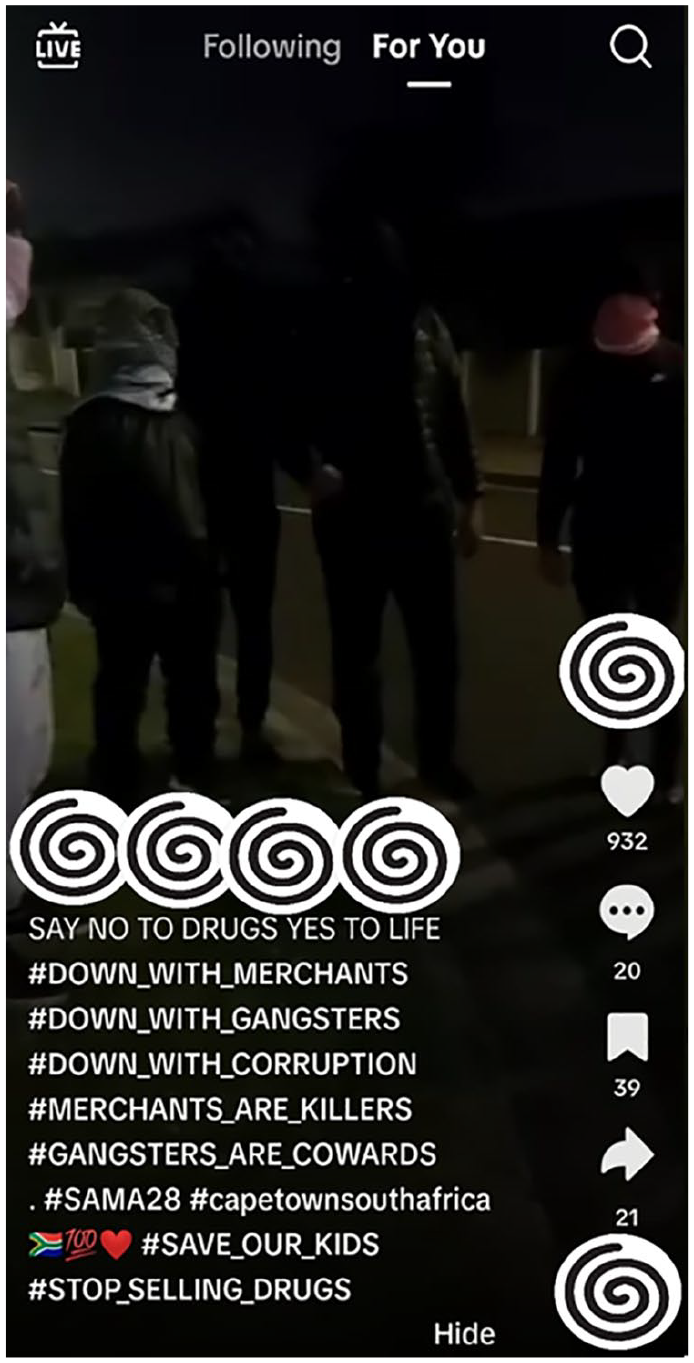
Vigilante group exposing residence of local gangsters and drug houses.
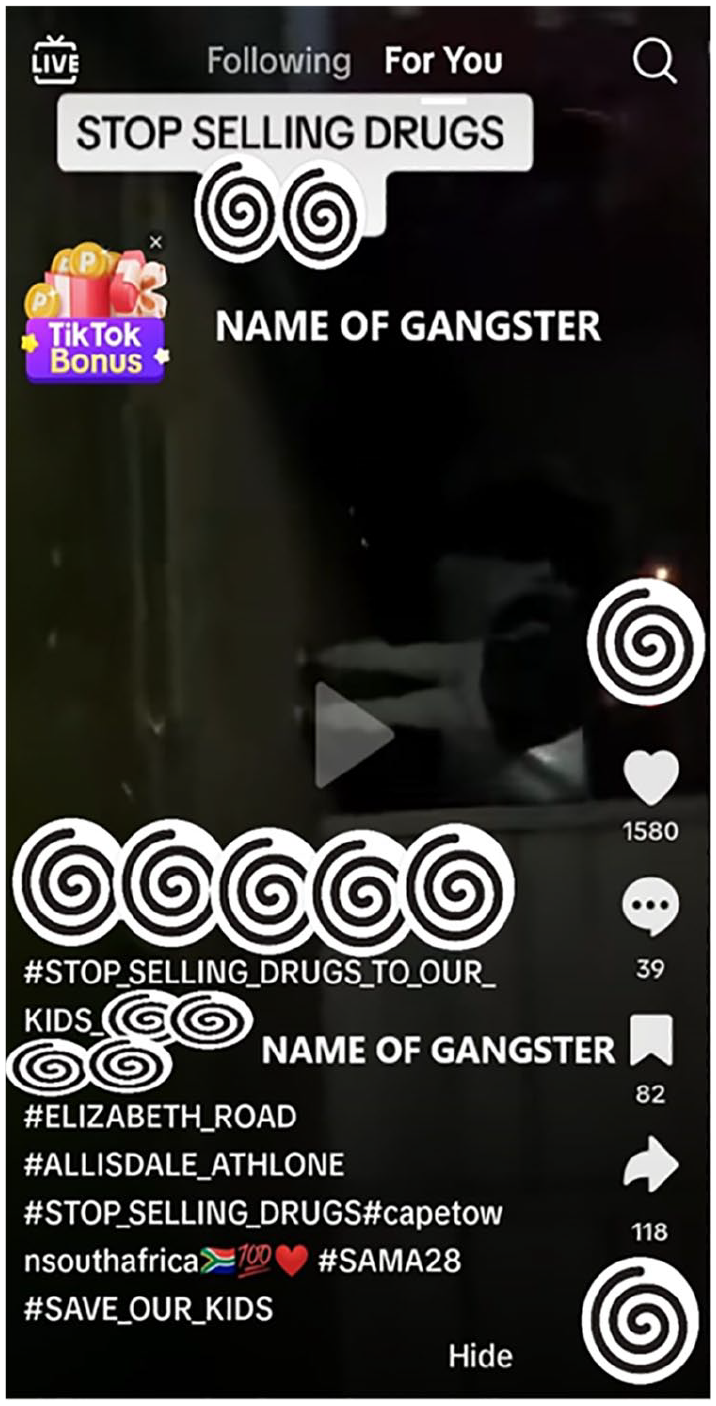
Vigilante group exposing residence of local gangsters and drug houses.
The recordings captured the anger and frustration of the group by shouting anti-gang slogans:
we don’t ask you to stop, we demand you to stop; we will be more peaceful if the drug dealers are dead; one bullet, one gangster.
10
These themes were echoed in the hashtags associated with the clips: #save_our_kids, #stop_the_killings, #gangsters_are_cowards and #merchants_are_killers.
11
The comments associated with the clips were overwhelmingly positive towards the vigilante group, calling for them to expand their activities to other areas, indicating a significant community following. Negative sentiments towards law enforcement were also expressed, claiming that the police cannot execute their tasks, and stop gangsters, only the vigilante group will restore law and order:
I pray they grow in number and God protects them we need our community back and our kids; My coloured people this is our way forward we need respect and encouragement amongst us so that we can lead this country one day. Our time to rise; People can joke I grew up with these people NAME OF VIGILANTE GROUP is the only way saps (South African Police Service) is doing nothing; The city should hand over the crime unit to NAME OF THE VIGILANTE GROUP. Because NAME OF VIGILANTE GROUP is literally doing the work. (great work NAME OF VIGILANTE GROUP)
The platform was used to publicise a social reaction: aggressive and hostile crime fighting strategies without legal authority. The clips also included Internet banging between community groups, vigilante operations and individuals, questioning the effectiveness of activities and commenting on the endangerments to those involved (not members of the group, but associations with them). It cannot be confirmed that the digital threat of violence towards gang members transferred to physical violence; however, the significant increase in the digital display of hostility can act as an enabler for such a transfer. 12
Notions of criminality
Clips in this category of communication mostly focussed on gang shootings in local neighbourhoods, often filmed by members of the community. Gunshots can clearly be heard, and in some cases, the shooters can be seen, but not identified (see Picture 5). Commentary with the clips (either audio or text) identifies the shootings as turf (drug) wars. Locations indicate hotspots for gang wars on the Cape Flats, linking the virtual world with the actual reality: Elsies Rivier, Hanover Park, Mitchells Plain, Ravensmead, Manenberg, Delft and Atlantis. Sometimes, street-level addresses are provided with the clip or confirmed in the commentary section of the clip. Still scenes of bodies with a white sheet over also emerged. Although the clips display notions of criminality, it spills over into secondary gang-related content, due to the producers of the content (members of the community) and the comments associated with the material. For example:
Normal day in Elsies Rivier; That’s life in the Ghetto; Civil war in Cape Flats; Human dump site. They took our people and dumped them there.
These comments reflect a more traditional use of social media: to be part of a virtual community and gain sympathy in the virtual realm for a local, physical reality.
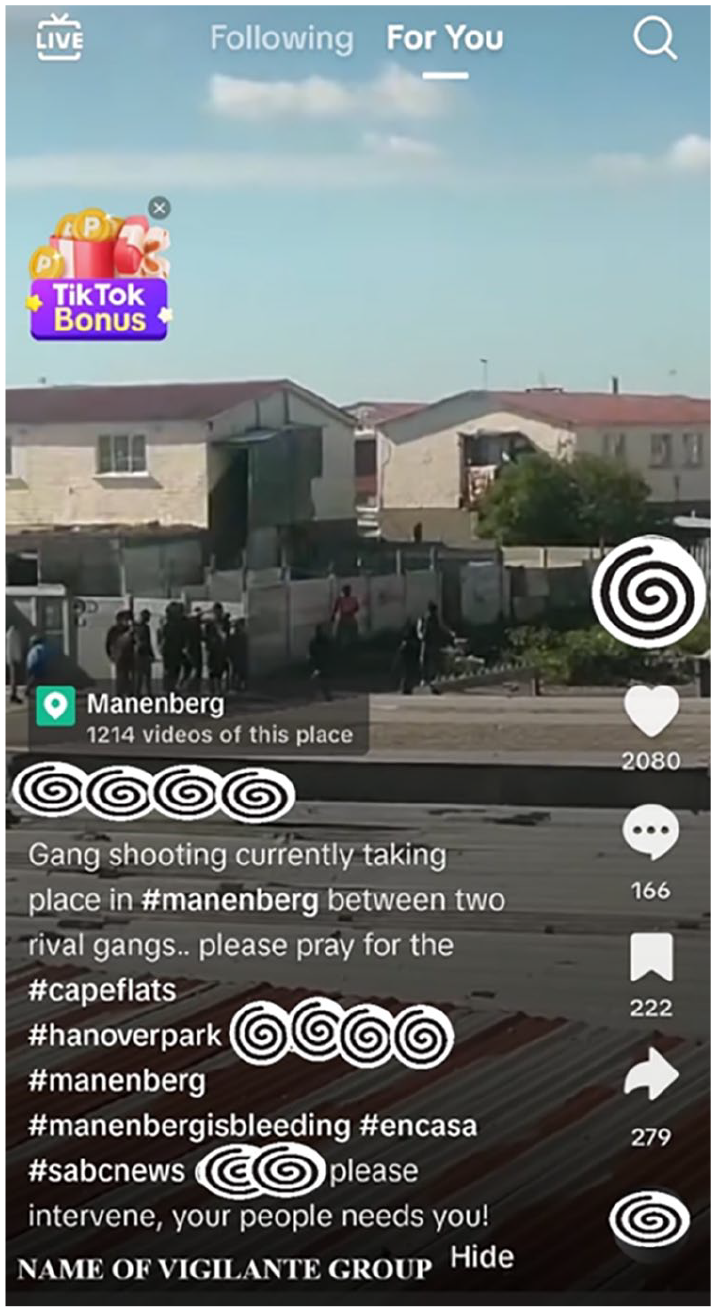
Gang shooting in local neighbourhood.
The display of other visibly incriminating actions on the app was limited. A series of clips depicted groups of men harvesting abalone. Abalone is a rare marine mollusc, and the illegal poaching of the sea creature is a lucrative business, so much that it is facing the threat of extinction on the South African east and west coast. Illegally harvested abalone is often sold by local gangs to Chinese criminal syndicates operating in South Africa, as it is a sought-after commodity and delicacy in Asian markets (Lambrechts and Goga, 2016). The locations of the clips are not provided, but the illicit nature of the actions is confirmed in the comment section: one person wanted to connect with the creator, as he is aware of Japanese contacts looking for abalone. In another comment:
SAPS (South African Police Service) will google image search you; keep your mask on.
Another post shows still clips of men harvesting abalone. The acts are seemingly illicit as the faces of individuals have been blocked by the creator (see Picture 6). For this clip, the location is requested in the comment section, but the reply is that it cannot be provided.
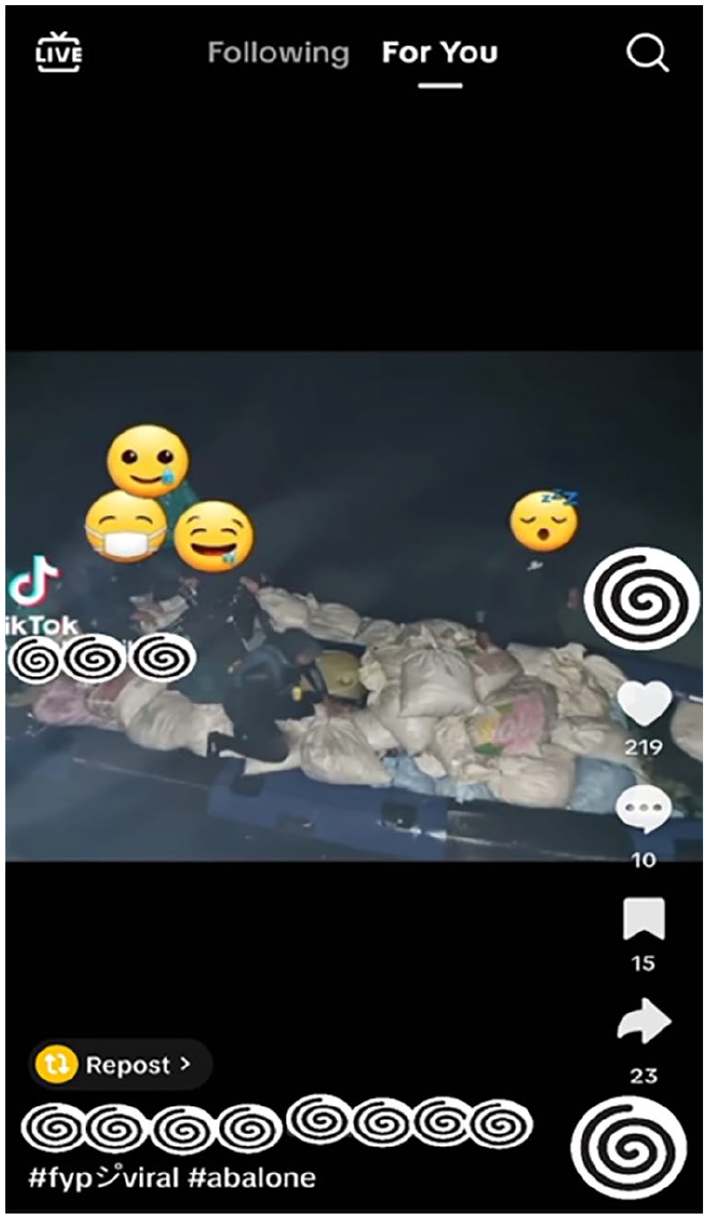
Group of men supposedly harvesting abalone.
In another, one prominent youth gang advertised what appeared to be illicit substances in small packages, in a series of pictures, also depicting hand signs of a gang and identifiable individuals. By only analysing the images, the content of the packages could not be verified. However, from the emojis used in the comments, the content appeared to be cocaine. Comments used the snowflake and snowman emoji, indicating cocaine and the creator used the money and two-point plug emoji, indicating a dealer advertising a product (see Picture 7). 13
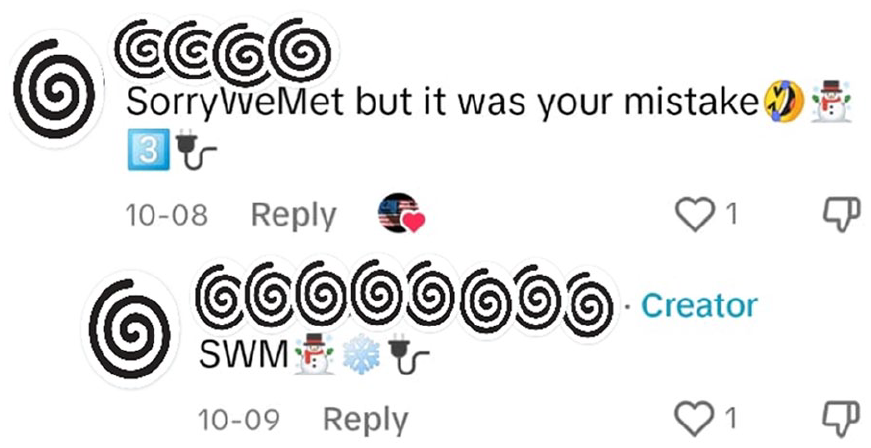
Comments in a post referring to cocaine by a supposed dealer.
The limited display of visibly criminal acts by gangs on social media was confirmed by Pyrooz et al. (2015):
rather than facilitating instrumental goals, it appears that the Internet satisfies the symbolic needs of gangs. The Internet is less important to achieving instrumental outcomes such as drug sales or recruitment, and more important to the accomplishment of status goals. (p. 491)
As will be noted when discussing the next category of communication, the display of status symbols and popular gang culture proved to be widespread on TikTok.
Gang culture
Clips on gang culture were the most repeated on the FYP. Clips were usually short (less than 60 seconds), but in cases of Internet banging, it was longer and more descriptive, than, for example, clips displaying gang signs as tokens of affiliation and cars as a sign of wealth. Insulting rival gang members were prevalent, often using sabela. TikTok is used to express a collective group dynamic and a glorification of gang culture, such as the showing of hand signs. Clips illuminated a strong brotherhood where gang loyalty is expressed, and the gang community was very prevalent in gang culture communication. As mentioned, the use of sabela was frequent, for example, a gangster explaining the constitution (law) of the Number gang. In another clip, a self-proclaimed member of the 28 gang pays tribute (salute) to the gang in sabela. The clip is accompanied by #thuglife. Indicative of the weak moderation capacity of the app, comments questioned the appropriateness of the clip on TikTok and that it should be banned, as it directly promotes gangster life.
The viewed clips could not be regarded as active recruitment into gangs: no promotional recruitment material was displayed on TikTok. However, it did draw on everyday life in a gang as a gangster, with the display of branded clothes, expensive cars, gold chains and tattoos. This echoes the findings of Pyrooz et al. (2015) and confirms web-enhanced online identities, where offline identities and behaviour are reflected in the digital space. There was no attempt to hide gang affiliation, it was proudly displayed. There was a strong reliance on the creative tools of TikTok, possibly signalling that the content is created by younger users. Posts were also often related to the death of fellow gangsters and tributes to gangster. These clips were usually short (less than 10 seconds) and include pictures of deceased individuals, implicating loyalty to the gang until death. The number of likes and comments associated with the clips were low, if any. Possible reasons for this can include fear of association with gangs, fear of intimidation and that a TikTok profile can be linked back to a specific individual. One clip shows the funeral of a gangster, created by the gang, displaying a military style gun salute in his honour.
The hashtags warrant further analysis and often used the name of the gang to gain virtual support. The hashtags also used postal codes (see Picture 8: #7945), linked to the physical geographical territory of the gang: in this case, two areas on the Cape Flats are part of this postal code, merging digital territory with physical territory. Youth gangs often used #justforkids to gain traction and increase virtual engagement. #SAMA28 refers to the 28th South African Music Awards (the public voted for TikTok Viral Song of the Year category). This clip is not a local song or a local artist: the creators thus used popular hashtags to increase discoverability. Popular local and international rap music was used in most of the clips. The way local gangs use TikTok, can increase the positive perceptions that are spread about criminal gangs, by making them more accessible to a society, beyond the borders of the Cape Flats. This can also facilitate the process of secondary or passive recruitment, as the glorification of gangster life online has been regarded as recruitment measures (see Womer and Bunker, 2010).
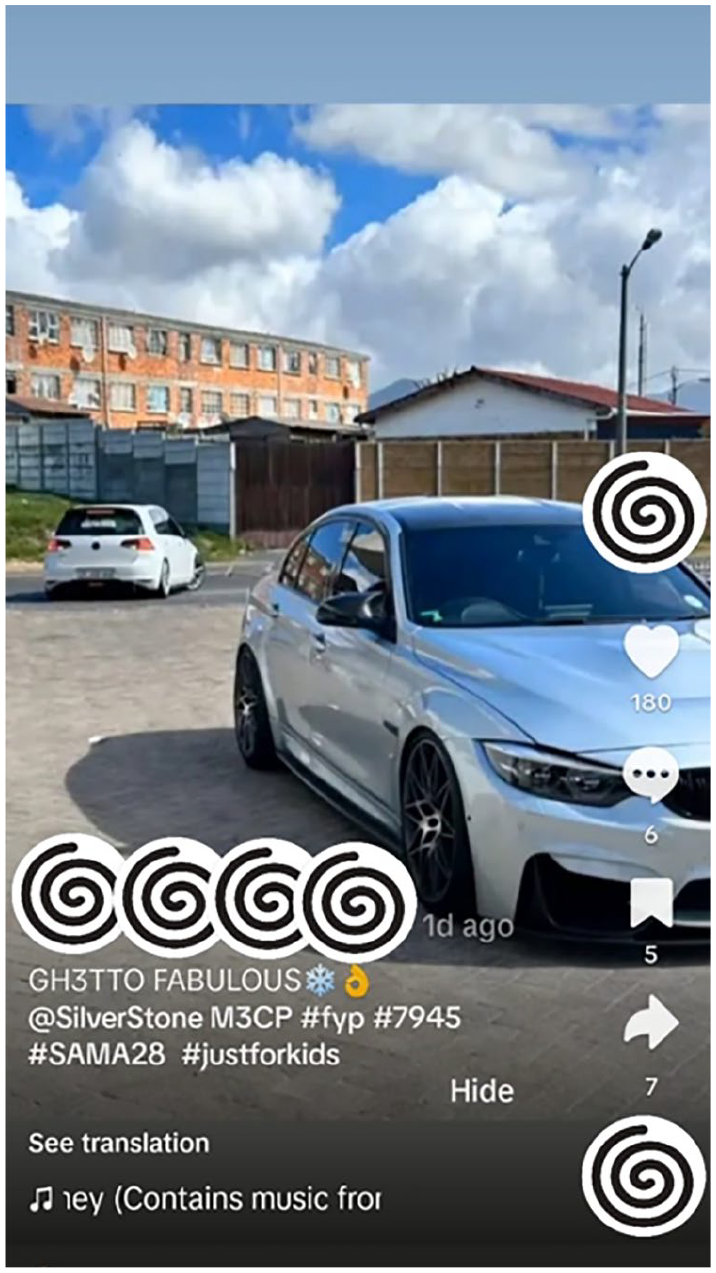
Display of expensive cars.
Police/security involvement
In this category, limited original material, created primarily for TikTok was posted. Rather, posts mostly involved secondary media (news) and documentary clips. These were shortened to capture only the main aim of the story, for example, police patrolling a dangerous area or police involved in a gang shooting. In one clip, a member of the City of Cape Town Police Force comments on his job: if he can take one gun of the streets, think how many lives he can save. He also refers to the gang problem as the Coloured Curse and a Never-ending story: everyone is willing to pick up a gun or a knife to avenge someone else’s life that was close to them. In contrast, other clips represented social commentary regarding the failure of South African Police Service (SAPS) to eradicate gangsterism. Indeed, comments, while filming the clip and in the texts, were obviously negative to law enforcement. The following themes were prominent: the police fear the gangsters, police are corrupt and do not arrest gangsters, the police support gangsterism, the police are racist and anti-Coloured and mocking the police: during a shooting, they get paid to stand there and do nothing. The social opinion of lack of trust in law enforcement was prominent.
Life in prison and rehabilitation: Life outside the gang
As with the previous category Life in prison delivered limited original content, created using the creative capabilities of TikTok. This is despite attempts to train the FYP, using searches such as #pollsmoor; #prisonlife; 26, 27, 28 gangs; Die Point; 14 3 Kamp 15 and Pollsmoor jailtime. Content was mostly taken from media reports and television documentaries and then shortened or digitally manipulated by creator. The content was usually longer and dealt with life in prison and prison gangs. Clips taken from documentaries used TikTok as a medium to publicise Pollsmoor prison as notorious and one of the most dangerous prisons in the world, with poor living conditions. The limited original material dealing with life in prison can be for several reasons: other social media applications such as Facebook and WhatsApp are still a more popular method to communicate from jail and TikTok is yet to reach popularity in the prison system. This also corresponds to the communication needs of inmates in a context where data are limited, and mobile phones used likely older versions. As using a mobile phone in prison carries hefty punishment, creator accounts may be closed and private, to restrict virality of content.
In the category Rehabilitation: life outside the gang, content was often created by ex-gangsters and rehabilitated offenders, telling part of their life story as a member of a gang. Clips involve detailed accounts of criminal activities, including drug addiction, robberies and killings. Filters and music are used by some creators, adding to the sombre mood. Many clips involve reference to God, or a return to religion, mostly Christian, and the church. Prominent themes include trust in God, return to a life of God and your problems will ease away, only God can save you, God will forgive you your sins and you will get a second chance. Hashtags are not often used and suggest that the aim is not to increase or obtain virality or stimulate resharing, but rather establish a platform of sharing a personal journey through gangsterism, drug addiction and recovery. God can turn your life around and provide you with opportunities outside of the life of gangsterism and crime. The purpose of communication is to draw sympathy from the community and become part of a digital community of rehabilitated gangsters. This is also confirmed in the comments, most acknowledging the personal pain and strength of the creator and the importance of God: Gangsterism does not pay, and ex-offenders can act as an inspiration to young boys caught up in drugs and violence.
Claiming the virtual space
The first main finding of this study is the convincing correlation between the virtual and the physical space. Location was habitually transferred in online content, and the virtual space was dominated by physical locality. The virtual territory was used to create awareness of everyday experiences living in gang territories and demands for sympathy and change. A second finding is that changes and trends observed in the virtual territory, corresponded to occurrences in the real world: real-world violence enabled hostile online environments and the virtual world thus presented a mirror image of reality. The digital content originated in a physical geographical space and stimulated the establishment of a growing online geography. Based on these two findings, the platform facilitated two prominent diverse online geographies: one promoting gang culture and the other fighting it; willing to go beyond formal laws to eradicate gangs, promoted in the virtual space.
In the case of gang culture, the content indicates creative expressions and the use of the innovative features of the app. TikTok is relatively new, and gangs are still exploring the full potential of it. It is mostly used to display gang affiliation and gang culture and expressions of Internet banging. Digital content presented mirror images to that of offline behaviour. This corresponds to Whittaker et al. (2020) in that ‘younger gang members and less mature/less evolved gangs will use the full range of social media opportunities available to build up their reputations because they have more to gain and less to lose from doing so’. Gangs used the app to display signs of wealth, and confident associations with groups, especially among young gang members, appealing to the large and growing youth users of the app and relates to Patton et al.’s (2013) ideas on collective identity and collective memory. These findings also correspond to Décary-Hétu and Morselli (2011) ‘while recruitment is not taking place, social networking sites have made criminal groups a more accessible phenomenon for a larger portion of the population, increasing the number of favorable impressions that are transmitted about them’ (p. 880). Some gangs (used and mentioned by name) were prominent on the FYP, already indicating a level of digitalisation. As noted, although this is not regarded as active recruitment, life in the gang is glamorised, supporting the ease of recruitment. It is also anticipated that posts will trigger gang-related violence in real life (see Irwin-Rogers et al., 2018). As the users of TikTok increase in South Africa and gangs continue to expand their youth membership on the Cape Flats, their digital footprint will be enhanced.
It appeared that the category of communication related to community interaction was mostly managed by older users, as the interactive potential of the app was not frequently utilised. However, as the fieldwork developed, so did the creative expressions of the content, leaving a significant digital trajectory. It moved from recordings of marches to the expression of loaded slogans, advocating for violence. The content applied aggressive messages, facilitating virtual mobilisation. The realities of the actual world were transferred to the digital and one group developed a powerful social media presence. Identity politics were clearly established: Robin Hood style vigilante group clearing the community from the social ills of gangsterism, not fearing the formal laws of the state and growing in popularity. In addition, the display of Coloured identity politics did not only exhibit marginalisation but also calls to rise, be more politically active and change society for themselves. The ease of use of TikTok makes it valuable for digital activism. Although the content surveyed did not (yet) display the digital challenges related to TikTok as mentioned earlier, the potential for mobilisation was actively displayed. The platform was used to demonstrate social injustice and demands for social change. The content surveyed indicated a significant lack of legitimacy in local government and police, coupled with growing feelings of political and social marginalisation.
Conclusion
More research on gang-related content on social media in South Africa is essential to understand how criminal groups change operational procedures and how communities are affected. The online presence of gangs facilitates increase in membership and an ease of doing business. As TikTok continues to grow in South Africa, so will its use by criminal agents. Adaptability and opportunism are part of the fabric of gangs, and TikTok provides a platform for both. If not monitored, this virtual territory will remain uncharted, and misunderstood, further complicating measures to combat gangsterism.
Accordingly, this article showed several future research possibilities. First, it is recommended that the importance of locality is explored. The TikTok data exposed an ingrained association between virtual and physical territory and research themes such as networked or digital streets (see Lane, 2016) will provide insight into the digital reality of peripheral communities. Second, future studies can assess the overflow of digital threats into physical actions, such as the one bullet, one gangster slogan. Unfortunately, this fell outside of the scope of this study. Third, with reference to gang culture, although the potential link between virtual hostility and actual violence exists, it was not established in this research and warrants further investigation. This is also relevant for bragging about acts of violent crimes to be committed. These matters speak to the difficulty of doing research on TikTok and the dependability of virtual content. Accordingly, it is recommended to interview gang members involved in using TikTok and explore the following questions: what are their views on using TikTok; what is achieved by making use of the app and what is the impact of the increased digital footprint of gangs on TikTok for the gangs of Cape Town? Fourth, as other research indicates that prisoners have been using TikTok as an empowering tool (O’Connor et al., 2020), this category of communication warrants further insight. It is recommended that the use of social media in prison as a blanket term is studied, to assess how frequently it is used, which apps are most popular and the purpose of communication. These research themes will, however, be met with significant ethical challenges, due to the earlier mentioned criminality elements. Fifth, as the content studied involved mostly men, a gendered approach will contribute to map female representation in the categories studied. A final recommendation is that due to the quick and constant growth of TikTok, this study can be replicated in a longitudinal fashion, to track the changes in categories of communication, for example, prominence on the FYP, and also the way creators use the app. This will contribute to understand how, why and for what purpose gangs on the Cape Flats use TikTok.
Footnotes
Declaration of Conflicting Interests
The author(s) declared no potential conflicts of interest with respect to the research, authorship and/or publication of this article.
Funding
The author(s) received no financial support for the research, authorship and/or publication of this article.
Ethical Approval
The study received ethical clearance from the Social, Behavioural and Education Research Ethics Committee, Stellenbosch University. Project ID 27926.
