




Abstract
Recent work has explored how psychological distance can shape individuals’ perceptions of crime risk in the absence of actual threats. However, it is not known whether age and gender, which are common correlates of fear of crime, influence the relationship between perceptions of psychological distance, and worry about crime. This study investigates whether there are differences among these demographic groups by analysing survey responses collected from N = 423 women and N = 296 men living in Queensland, Australia. Although on average women report higher levels of worry, there were no significant effects of gender or age on the relationship between psychological distance and worry about crime. Community wellbeing campaigns might not need to target different perceptions of psychological distance across audiences. Implications of these results and directions for further research are discussed.
Introduction
Fear of crime can have deleterious effects on individuals and neighbourhoods (Hale, 1996; Henson and Reyns, 2015). In response to these significant consequences, scholars have tried to understand the reasons for why certain individuals become worried about crime (Henson and Reyns, 2015; Lane, 2014). However, researchers have faced myriad challenges in understanding how community members become worried about crime because fear of crime is a subjective experience that may vary independently from objective crime risk (Chadee et al., 2007). In response to this research problem, Trope and Liberman’s (2010) Construal Level Theory of Psychological Distance (CLT) has been argued to offer a theoretical explanation for how individuals mentally transcend their crime-free context to perceive a threat of crime that is not occurring in their current location (Jackson and Gouseti, 2015). Recent empirical research has demonstrated that CLT can be applied to understand how community members perceive their risk of becoming a victim of crime in situations where crime is not occurring or imminent (Gouseti, 2016; Mellberg et al., 2022, under review). This research has found that when community members perceive crime as psychologically proximal (i.e. an event that is likely to happen to them, soon and in their current location), they tend to report more intense feelings of worry about crime (Gouseti, 2016; Mellberg et al., 2022).
Despite the above work, it is currently not known whether perceptions of psychological distance from crime are associated with worries about crime in the same way for different groups of people. It is important to identify whether demographic differences within the community shape the relationship between psychological distance and worry about crime since a substantial body of fear of crime literature finds that gender and age are commonly associated with differences in levels of worry and perceptions of risk (Ferraro, 1996; Hale, 1996; Henson and Reyns, 2015; Rader et al., 2009; Warr, 1984). This study analyses survey data collected from N = 719 residents living in Queensland, Australia to assess whether age and gender influence the relationship between psychological distance from crime and worry about crime. This knowledge can guide researchers and policymakers designing community campaigns and strategies that aim to address fear of crime by targeting pertinent perceptions of psychological distance for different audiences.
Review of literature
Fear of crime and its consequences
Fear of crime has been the subject of significant scientific debate (Hale, 1996; Henson and Reyns, 2015). A recent systematic literature review by Hart et al. (2022) found that publications about fear of crime have increased substantially since seminal pieces of work in 1996. One reason that fear of crime has garnered such extensive scholarly attention is that fear of crime has been associated with some detrimental consequences for individuals and neighbourhoods (Jackson and Stafford, 2009; Stafford et al., 2007). Individuals who experience high levels of prolonged fear of crime may also experience poorer physical and mental health, impeded social functioning, and a reduced quality of life (Gray et al., 2011; Lane, 2014; Lee et al., 2020; Rader et al., 2009; Stafford et al., 2007). For example, Stafford et al. (2007) analysed survey responses collected from a large-scale longitudinal survey conducted in the United Kingdom, finding that participants who reported higher levels of fear of crime were more likely to experience mental and physical health concerns, particularly heightened levels of anxiety and depression.
Fear of crime may also influence an individual’s behaviour, leading to constrained behaviour (Gray et al., 2011; Jackson and Gray, 2010; Lee et al., 2020; Liska et al., 1988; Maier and DePrince, 2020; Rader et al., 2007). Constrained behaviours are described as a combination of responses to fear of crime, including precautionary and avoidant behaviours (Henson and Reyns, 2015; Rader et al., 2009). Individuals who engage in constrained behaviours can report higher levels of fear of crime and a decreased quality of life (Liska et al., 1988; Maier and DePrince, 2020; Rader et al., 2009). For example, Liska et al. (1988) found that individuals who engaged in precautionary behaviours in response to fear of crime reported having a higher level of fear of crime. Similar effects were found by Maier and DePrince (2020) who conducted a survey of university students’ perception of safety and fear of crime on campuses in the United States. Students who engaged in protective behaviours, such as holding keys in a defensive position or asking a male friend to escort them to a car at night time, perceived the campus as less safe and reported higher levels of worry about crime compared to students who did not engage in these behaviours (Maier and DePrince, 2020). It is important to identify that not all fear of crime is inherently detrimental, nor do all behavioural responses increase worry about crime. Some research has found that fear of crime can be a functional experience which motivates individuals to take precautions against crime and has no negative consequences on their quality of life (Gray et al., 2011; Jackson and Gray, 2010; Lee et al., 2020).
Neighbourhoods in which fear of crime is concentrated can experience a decline in social cohesion, reduced informal social control, and increased perception of incivilities and disorder. Neighbourhoods where fear of crime is concentrated tend to be more disorderly (i.e. characterised by a high frequency of physical and social signs of incivility), and have lower levels of social cohesion and informal social control (Brunton-Smith and Sturgis, 2011; Franklin et al., 2008). Skogan (1987, 1988) posits that disorder and fear of crime share a reciprocal relationship. Neighbourhoods which have higher levels of social disorder have been associated with having lower levels of social cohesion, both of which have, in turn, been associated with higher levels of fear of crime (Brunton-Smith and Sturgis, 2011; Covington and Taylor, 1991; Franklin et al., 2008; Hunter, 1978; Lee et al., 2020; Pearson et al., 2015; Scarborough et al., 2010; Skogan and Maxfield, 1981).
In addition to significant individual- and neighbourhood-level consequences, fear of crime is more prevalent than crime itself in multiple geographic and social contexts (Chadee et al., 2007; Ferraro and LaGrange, 1992). People tend to perceive their risk of criminal victimisation as higher than their actual risk of criminal victimisation, particularly women and the elderly (Ferraro, 1996; Ferraro and LaGrange, 1992; Fox et al., 2009; Franklin and Franklin, 2009; Moore and Shepherd, 2007; Rader et al., 2007; Warr, 2000). This suggests that fear of crime is a subjective experience that may not necessarily be tied to crime but may be related to a number of factors within an individual’s environment, as well as perceived threats of crime which are not actually occurring in an individual’s ‘here and now’ (Chadee et al., 2007; Jackson and Gouseti, 2015). Researchers and policy makers attempting to reduce and manage fear of crime face myriad challenges because fear of crime is subjective experience that varies independently from objective crime risk (Chadee et al., 2007). Therefore, further research is needed to investigate and understand how subjective perceptions of crime risk develop; in order to identify potential approaches for alleviating worry about crime and the dysfunctional behaviours and consequences associated with it. In addition to understanding subjective fear of crime, strategies aiming to reduce and manage fear of crime within the community may need to address specific concerns across different groups of people, such as women and men, or the young and elderly.
Demographic correlates of worry
A key debate within the fear of crime literature concerns the relationship between gender and fear of crime. Gender is cited by numerous scholars as one of the most important correlates of fear of crime (Ferraro, 1996; Hale, 1996; Henson and Reyns, 2015). Survey research about fear of crime tends to find that women report higher levels of worry and perceived risk of victimisation (Ferraro, 1996; Pleggenkuhle and Schafer, 2018; Warr, 1984, 2000). Intertwined with these differences in risk perception across gender, survey research has also identified that elderly individuals experience higher levels of worry about crime compared to young individuals (Ferraro and LaGrange, 1992; Jackson, 2004). These findings have been described by some researchers as ‘paradoxical’ because young people and men generally tend to be more likely to fall victim to the crimes asked about in survey research on fear of crime (e.g. being physically attacked by strangers and being mugged or robbed on the street) when compared to elderly people and women (Fattah and Sacco, 1989; Garofalo, 1979; Garofalo and Laub, 1978). Rather than a paradox, contemporary research has argued that these findings reflect that risk perception and worries about crime are subjective, and largely independent of objective crime risk (Franklin et al., 2008; Franklin and Franklin, 2009). In order to effectively reduce fear of crime in the community, scholars have sought to understand what thought processes underpin these differences among women’s and men’s fear of crime.
There are numerous theoretical explanations proposed for why these differences between women, men, young, and, elderly exist. Notably, risk sensitivity theorises that those who worry about crime perceive themselves as more vulnerable to becoming a victim of crime (Jackson, 2005; Warr, 1987, 2000). Specifically, those who perceive that a future, hypothetical experience of victimisation is an event which is likely, uncontrollable and consequential are theorised to worry more frequently or intensely about victimisation (Jackson, 2005; Warr, 1987). Researchers have theorised that these perceptions of vulnerability to crime are common perceptions of women and the elderly (Jackson, 2005, 2009; Warr, 2000). Empirical tests of the risk sensitivity model have found that age and gender have some effect on these relationships between worry and risk perception (Jackson, 2005, 2009). For example, in Jackson’s (2009) study, differences in women’s and men’s fear of crime were entirely mediated by perceptions of control over becoming the victim of a crime. This highlights the need to further investigate whether there are additional differences in the cognitive processes involved in subjective risk perception between women and men and across age.
Although risk sensitivity has been demonstrated to be a robust framework for understanding subjective fear of crime across gender and age, the perspective may be enhanced by considering how people arrive at such conclusions about risk. As noted by Gouseti (2016), most tests of risk sensitivity capture retrospective experiences of worry (e.g. ‘How frequently have your felt worried about personally experiencing the following crimes during the past month?’) while measures of risk perception capture perceptions related to future victimisation (e.g. ‘How likely do you think it is that you might fall victim to the following crimes during the next month?’). Although some contemporary research, such as Chataway et al. (2019) and Engström and Kronkvist (2021), uses momentary measures of worry to test risk sensitivity (e.g. how worried do you feel about falling victim to a crime in your current location?) this research does not investigate how people mentally place the threat of victimisation relative to their current situation which is absent of a real threat of crime (i.e. what are individuals picturing when answering questions about the consequences of future hypothetical crime events?). This article argues that CLT may provide new insights into the processes guiding underlying these mental images of victimisation.
Using CLT to explain fear of crime
The significant consequences of fear of crime have led scholars to try to explain why certain individuals become worried about crime, over others, so that they can develop strategies which can reduce and manage fear of crime in neighbourhoods. As noted earlier, although a number of correlates and potential determinants of fear of crime have been identified, there have been few explanations for how and why different community members worry about crime that is not present in their immediate environment. Community members are capable of becoming worried about crime in contexts which are absent of a credible threat of victimisation (Chadee et al., 2007; Gouseti, 2016; Mellberg et al., 2022), highlighting that fear of crime is not only shaped by perceptions of crime in the immediate environment, but also proximal threats of crime (Jackson and Gouseti, 2015). Strategies for reducing fear of crime need to be able to address and account for this process of emotionally responding to distal perceptions of victimisation risk. One theoretical perspective that has been used to understand this process is Trope and Liberman’s (2010) CLT.
Recently, CLT has been used to understand these subjective perceptions of crime risk (Gouseti, 2016; Mellberg et al., 2022, under review). CLT describes two distinct cognitive processes which are theorised to be interrelated (Trope and Liberman, 2010). Construal level refers to the cognitive process through which individuals transcend their ‘here and now’ to mentally represent an event. An event that is represented in vivid, concrete details is indicative of low-level construal. Conversely, an event that is represented in vague, abstract details is indicative of high-level construal. Construal level is argued to be influenced by another cognitive process, psychological distance (Soderberg et al., 2015; Trope and Liberman, 2010). The psychological distance of an event refers to how near or far that event is perceived to be from an individual in their current situation. There are four dimensions of psychological distance: temporal, spatial, social and hypothetical distance. These dimensions refer to ‘. . . the perception of when an event occurs, where it occurs, to whom it occurs, and whether it occurs’ (Trope and Liberman, 2010: 442).
CLT potentially explains the complex cognitive processes underlying how individuals perceive threats of crime that are not present in their immediate environment (Jackson and Gouseti, 2015). Gouseti (2016) posits that the construal level of a crime event can be described by crime construal, where low-level crime construal is a detailed mental representation of falling victim to a crime. Individuals who engage in low-level crime construal are theorised to perceive crime as a temporally, spatially, socially and hypothetically proximal event (i.e. that crime is likely to happen to them soon in their current location) and become worried about crime. Under experimental conditions, Gouseti (2016) applied elements of CLT to understand how these cognitive processes might shape fear of crime. High-level crime construal was associated with lower levels of worry about crime. Furthermore, after controlling for crime construal, perceiving crime as psychologically distal (i.e. an unlikely event that occurs elsewhere, to others and at other times) was also associated with a decrease in worry about crime (Gouseti, 2016).
Mellberg et al. (2022) applied psychological distance to understand community members’ worry about crime. They tested whether perceptual measures of psychological distance were reliable when administered using surveys with a sample of 265 community members living in Townsville, Queensland, Australia. Temporal, social, and hypothetical psychological distance significantly predicted with worry about crime, as hypothesised by the authors. This research was expanded on by Mellberg et al. (under review), who analysed survey data collected from 719 people in Queensland, Australia. They proposed a new theoretical model to test whether temporal, spatial, social and hypothetical distance from crime was distinct but interrelated dimensions of psychological distance from crime. Mellberg et al. (under review) found that a higher order model containing psychological distance from crime as a higher order latent factor of temporal, spatial, social and hypothetical distance was both the most theoretically and statistically sound model of CLT and worry about crime. Although their structural regression model explained substantial variance within participants’ worry about crime, the authors highlighted that further work was needed to assess whether demographic differences moderate the relationship between psychological distance and worry about crime.
Across these studies, CLT has been argued to provide an empirical foundation from which community fear of crime management campaigns can be designed. Evidence from these empirical works supports the idea that increasing perceived psychological distance from crime can reduce worry about crime for community members (Gouseti, 2016; Mellberg et al., 2022, under review). However, it is currently unclear whether demographic differences affect upon the relationship between psychological distance and worry about crime. As discussed earlier, age and gender have been identified as consistent correlates of worry across the scholarship (Hale, 1996; Henson and Reyns, 2015; Jackson, 2009). Understanding how these demographic variables interact with CLT and worry about crime is important for informing whether community campaigns need to be designed to target different dimensions of psychological distance for different audiences.
Shortcomings in existing literature
There are no known studies which explore whether the relationships between psychological distance and worry about crime are moderated by gender and age. This is significant because gender and age are known to influence the relationship between worry and perceptions of risk. This study seeks to test the effects of gender and age on the relationship between psychological distance from crime and worry about crime using the theoretical models schematically depicted in Figures 1 and 2. Based on previous fear of crime research, it is hypothesised that women will perceive crime as more proximal and worry more intensely about crime compared to men. It is also hypothesised that age will influence psychological distance from crime and worry about crime. Age is expected to share a statistically significant negative relationship with psychological distance from crime (i.e. crime will be psychologically proximal for older individuals) and a positive relationship with worry about crime (i.e. that older individuals will worry more intensely about crime). The knowledge generated from this research will inform community wellbeing campaigns targeting psychological distance from crime across audiences.
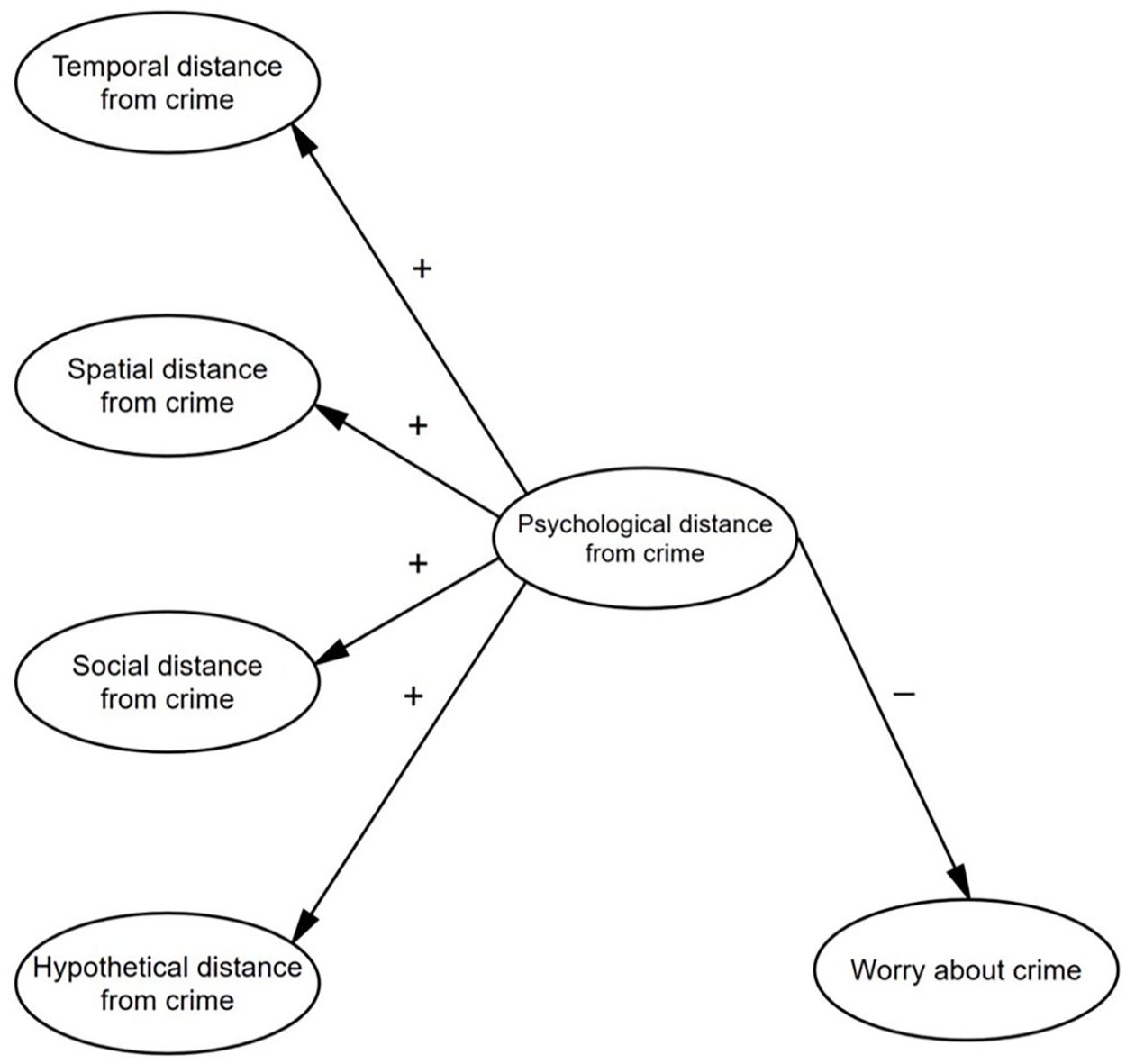
Hypothesised model of psychological distance from crime and worry about crime.
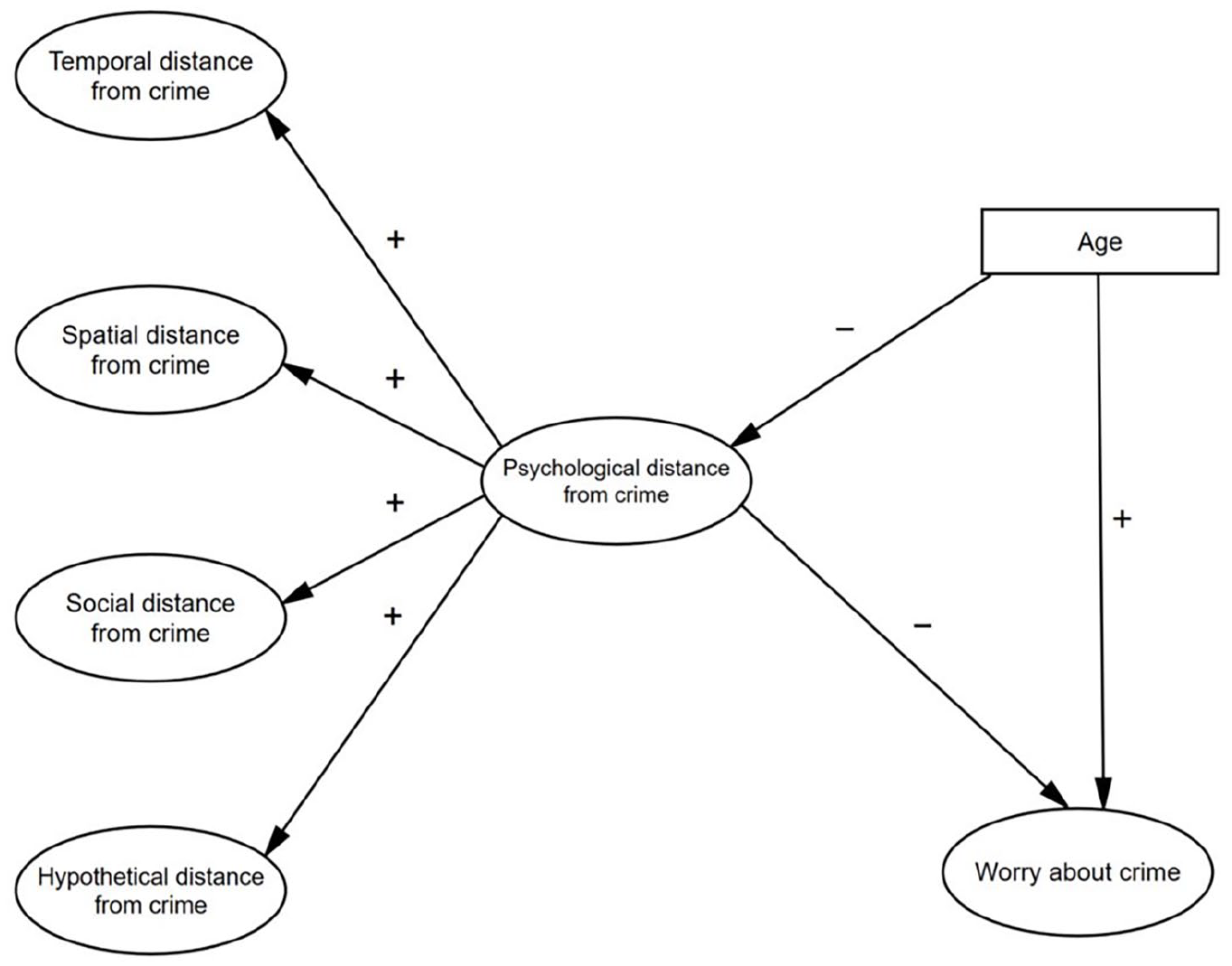
Hypothesised model of psychological distance from crime and worry about crime with age.
Methodology
The current study
This study seeks to determine whether the relationship between psychological distance and worry about crime is moderated by gender and age. To achieve this, confirmatory factor analyses (CFAs) were performed on the hierarchical model depicted in Figure 1 containing psychological distance from crime and worry about crime with a sample of community members. After assessing the model fit, quality of survey items, and reliability of latent variables, the hypothesised model was estimated with women and men individually. Invariance tests were used to determine whether differences in these models between groups were significant and, if so, whether these differences were attributable issues related to measurement or moderating effects of gender. Finally, the effects of age on the relationship between psychological distance and worry about crime were tested using the model depicted in Figure 2. By doing so, this study provides guidance for prospective fear of crime management strategies targeting perceptions of psychological distance.
Sample
The data analysed in this study were collected from a convenience sample of N = 1063 residents living in Queensland, Australia using the Qualtrics survey platform (Qualtrics, Provo, UT, the United States). Targeted social media advertisements were placed on Facebook, Instagram and Messenger for 50 days. This recruitment method was chosen because it is cost-effective and allows specific audiences with demographic characteristics of interest to be sampled across a large geographical area (Liu and Mattila, 2017; Ramo and Prochaska, 2012). To achieve a more representative sample, the target audience of the advertisement was adjusted throughout the recruitment period. At the start of the recruitment period, the advertisement targeted users aged 18 years and above living in Queensland, Australia. At day 25 of recruitment, the advertisement was adjusted to target only users aged between 18 and 45. At day 36 of recruitment, the advertisement was adjusted to target only users who identified as men. By the end of the recruitment period, the advertisement appeared in 43,442 newsfeeds with 1242 unique link clicks, for a cost per link click of 0.65 AUD.
Data were screened for patterns within missing responses. Missing cases were defined as participants who did not complete survey items relating to age, worry, psychological distance, and gender since these were the key variables of interest in this study. Missing values analysis revealed that there were no patterns within the missing data (χ2 = 314.34, df = 312, p = .452; Little, 1988). Missing data (n = 337 cases) were deleted listwise from the dataset to allow for CFA models to be estimated with complete data (Schafer and Graham, 2002). The final dataset consisted of N = 719 participants, with 423 women and 296 men.
Participants were aged between 18 and 87 (M = 47.8, SD = 13.8). The distribution of age was similar across both women and men (Mwomen = 48.1, SD = 13.9; Mmen = 47.4, SD = 13.8). Further demographic information about the sample is provided in Table 1. To assess representativeness, the sample was compared to census data available for the population of Queensland (Australian Bureau of Statistics (ABS), 2021). According to the most recent available census data for Queensland, the population comprised 50.7% women and 49.3% men, the median age was 38, and 46.5% of the population were married (ABS, 2021). The most common country of birth was Australia (71.4%), New Zealand (4.0%), England (3.7%) and India (1.4%; ABS, 2021). The current sample is reasonably representative of Queensland, being only slightly overrepresented by older women.
Demographic characteristics for participants (N = 719).
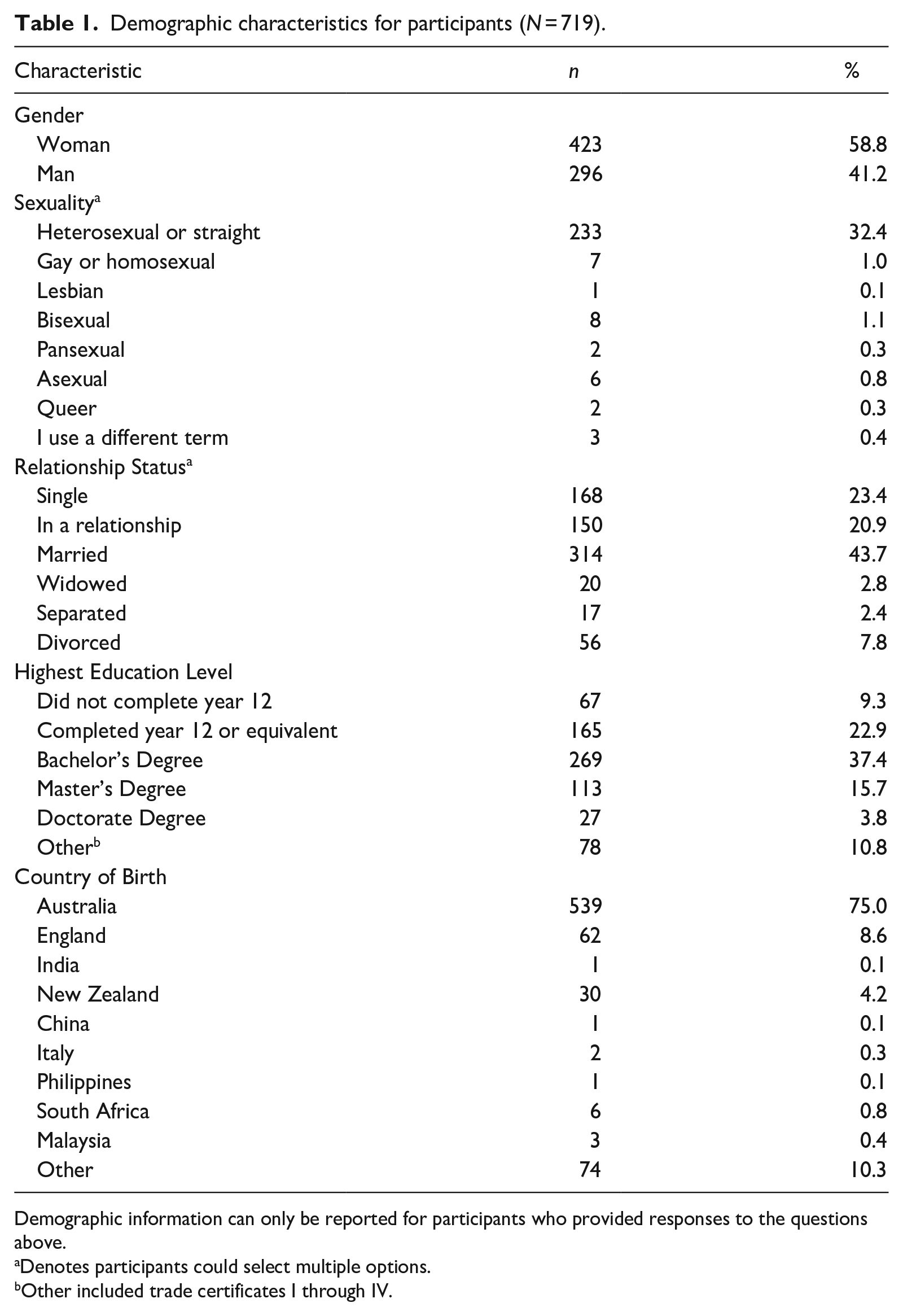
Demographic information can only be reported for participants who provided responses to the questions above.
Denotes participants could select multiple options.
Other included trade certificates I through IV.
Measures
The measures used in the survey instrument are identical to Mellberg et al. (under review) and were adapted from Gouseti (2016) and Mellberg et al. (2022). In their pilot study, Mellberg et al. (2022) found that their survey measures of perceived psychological distance from crime had good scaling properties when administered to a sample of community members. Following recommendations of Mellberg et al. (2022) spatial distance items were refined to include the egocentric point of reference, which reflects survey measures designed to capture perceptions of crime risk within an individuals’ immediate surrounding (Chataway and Hart, 2019; Engström and Kronkvist, 2021). The updated perceptual measures of spatial distance have demonstrated satisfactory factorial validity and reliability in Mellberg et al. (under review).
Personal crime
Survey items measuring worry and perceptions of psychological distance asked about three different types of crime conceptualised as personal crime. Specifically, the three crime types were as follows: (1) falling victim to a physical attack, (2) falling victim to harassment and/or verbal abuse and (3) falling victim to a mugging. These types of crimes were considered personal crime because they may involve a direct threat to the self in the current situation (i.e. one’s here and now), aligning with the egocentric point of reference in CLT (Trope and Liberman, 2010).
Psychological distance from crime
The scale measuring psychological distance from crime comprised four distinct but highly correlated dimensions: temporal, spatial, social, and hypothetical distance from crime. Participants were asked how much they agree or disagree with statements about their psychological distance from three different types of crime on a 5-point scale where 1 = Strongly Disagree, 2 = Disagree, 3 = Neither Agree nor Disagree, 4 = Agree, and 5 = Strongly Agree. The statements related to each dimension of psychological distance and were reverse coded so that a high score would indicate a psychologically distal perception of crime. Temporal distance: I believe that I might fall victim to [a crime] in the near future. Spatial distance: I believe that I might fall victim to [a crime] in my current location. Social distance: I believe that [crime] happens to people who are similar to me. Hypothetical distance: I believe that it is likely that I will fall victim to [a crime]. Each block of survey items corresponding to each dimension of psychological distance were presented in a random order. Within each block of psychological distance items, the three crime types were also presented in a random order. These randomisation techniques were used to minimise the influence of order effects on participants’ responses (Sanjeev and Balyan, 2014).
Worry
The outcome variable in the hypothesised models was worry about crime. Participants were asked how worried they felt about falling victim to three different types of crime using a four-point scale item commonly used across the fear of crime scholarship (Brunton-Smith and Sturgis, 2011; Chataway and Hart, 2019; Chataway and Mellberg, 2021; Gouseti, 2016). Specifically, participants were asked How worried are you about falling victim to (a crime)? where 1 = Not at all worried, 2 = A little bit worried, 3 = Fairly worried, 4 = Very worried. Intensity measures of worry were preferred over other types of worry questions, such as frequency questions, because they do not use spatial or temporal reference points (i.e. in your neighbourhood, over the last month, etc.) that could influence one’s perceptions of psychological distance and the proximity of crime to themselves (Gouseti, 2016).
Demographic variables
The survey included several demographic items. Of primary interest to this study, these items asked about gender and age. To ensure this study recruited people above the age of 18, participants were asked to indicate their age before completing the worry and psychological distance items. The participant’s gender was asked at the end of the survey to minimise response order effects for worry and psychological distance (Sanjeev and Balyan, 2014).
Open-ended questions
Open-ended items were included in the survey to capture more information from participants who expressed indifference or neutrality to the psychological distance items. From a CLT perspective, psychological distance is typically only perceived as either proximal or distal (Soderberg et al., 2015; Trope and Liberman, 2010). Therefore, if participants selected ‘Neither Agree nor Disagree’ to any of the psychological distance items, they would be asked an open-ended question ‘Please tell me more about your response’ to understand what this response might indicate.
Analytic strategy
All CFA was performed using IBM Statistics Package for the Social Sciences (SPSS) 29.0 and Analysis of Moment Structures (AMOS). The models were estimated using a variance-covariance matrix and Maximum Likelihood (ML) estimation. Although the data were not continuous, the worry and psychological distance items contained more than three categories (Byrne, 2010). For the full sample, assessment of normality revealed some departure from univariate normality, with skewness and kurtosis values for each item falling between −0.65 and 0.80 and −1.30 and 0.44, respectively (Kline, 2015). For women, skewness values for each item ranged from −0.65 to 0.80 while kurtosis values ranged from −1.30 to 0.50. For men, skewness ranged from −0.87 to 0.90 and kurtosis values ranged from −1.37 to 0.53. However, the full dataset demonstrated a significant departure from multivariate normality (kurtosis = 69.22; Byrne, 2010). To address this, bootstrapping was performed on the data using 500 samples with bias-corrected confidence intervals of 95%. Asymptotically Distribution-Free estimation has been recommended for non-normal data however this technique requires large sample sizes (Byrne, 2010; Kline, 2015) which were not available for each group. Three multivariate outliers were identified through Mahalanobis Distance (one case for women and two cases for men). Further investigation of these cases did not reveal any non-genuine responses, suspicious response patterns, or any significant impacts upon the interpretation of final results. These outliers were retained for subsequent analyses.
To assess whether gender moderated the relationship between psychological distance and worry, multi-group CFA (MGCFA) was performed by combining the approaches of Chen et al. (2005) and Koufteros et al. (2009) for MGCFA with a higher order model. This MGCFA involved three broad tests of invariance: configural invariance, measurement invariance, and structural invariance. Invariance means that there are no statistically significant differences between two or more groups which are being fitted to the statistical model (Chen et al., 2005). The first type of invariance assessed was configural invariance. When configural invariance is achieved, it suggests that the latent factors in the model are the same across groups (Chen et al., 2005). In this case, configural invariance of the hypothesised model was assessed across women and men to confirm whether the model contains the same latent variables between groups (i.e. temporal, spatial, social and hypothetical distance from crime, psychological distance from crime and worry about crime).
Measurement invariance suggests that the pathways in the model from the observed scores (i.e. survey data) to their respective latent variables are equivalent across each group. It was important to establish measurement invariance to ensure that any differences observed between psychological distance from crime and worry about crime across gender were not an artefact of inconsistent survey measures or methodology (Koufteros and Marcoulides, 2006). Because the hypothesised model is hierarchical, the measurement model contained the pathways from the observed variables to their respective latent variables and the pathways from the first-order latent variables to the higher order latent variable (Koufteros et al., 2009). Invariance was therefore progressively assessed at each level. First, invariance of the factor loadings from the observed variables (survey items) to their respective latent variables (worry and dimensions of psychological distance) was assessed. Then, the invariance of the factor loadings from the first-order latent variables (temporal, spatial, social and hypothetical distance from crime) to the higher order latent variable (psychological distance from crime) was investigated.
Structural invariance suggests that the regression pathway between two variables is equivalent across groups (Byrne, 2010). In this study, structural invariance was assessed to determine whether the regression pathway between psychological distance from crime and worry was moderated by gender. If structural invariance was not achieved, this would suggest a moderating effect for gender because the relationship between psychological distance and worry is not equivalent for women and men. Finally, age was added to the structural model as an exogenous variable to assess its effects on participants’ psychological distance from crime and worry.
Invariance tests were performed using nested model comparisons, specifically, sequential χ2 and ∆CFI tests. A significant sequential χ2 test indicates a preference for the more parsimonious configural model (Byrne, 2010). A ∆CFI greater than .01 indicates a significant difference between two models (Cheung and Rensvold, 2002). Both tests are reported since there are currently no clear guidelines about which coefficient researchers should use (Byrne, 2010; Kline, 2015). For model identifiability purposes, the first factor loading (items relating to being physically attacked) of each first-order latent variables were arbitrarily constrained to 1. Changing which factor loading was constrained to 1 revealed no substantive differences to estimated models. Likewise, the higher order factor loading for hypothetical distance was constrained to 1. Temporal distance was chosen since it demonstrated the highest factor loading in a previous test of this theoretical model (Mellberg et al., under review). Alternative factor loadings were constrained to ensure this had no impact on the interpretation of final results.
Results
The descriptive statistics and Mann–Whitney U test 1 results for psychological distance from crime and worry about crime are reported in Table 2. Overall, participants generally were not intensely worried about crime. This finding is consistent with other fear of crime research that asks participants about their intensity of worry about crime (Chataway and Mellberg, 2021; Mellberg et al., 2022; Xiong et al., 2017). On average, women worried more intensely about becoming the victim of crime and perceived crime as temporally, spatially, socially and hypothetically closer when compared to men. This aligns with previous fear of crime research which finds women report higher levels of worry about crime and perceived risk of victimisation (Ferraro, 1996; Jackson, 2009). Further investigation of these differences through Mann–Whitney U tests revealed women were significantly more worried about crime and perceived crime as socially closer (more proximal) compared to men.
Descriptive results for worry and psychological distance from crime.
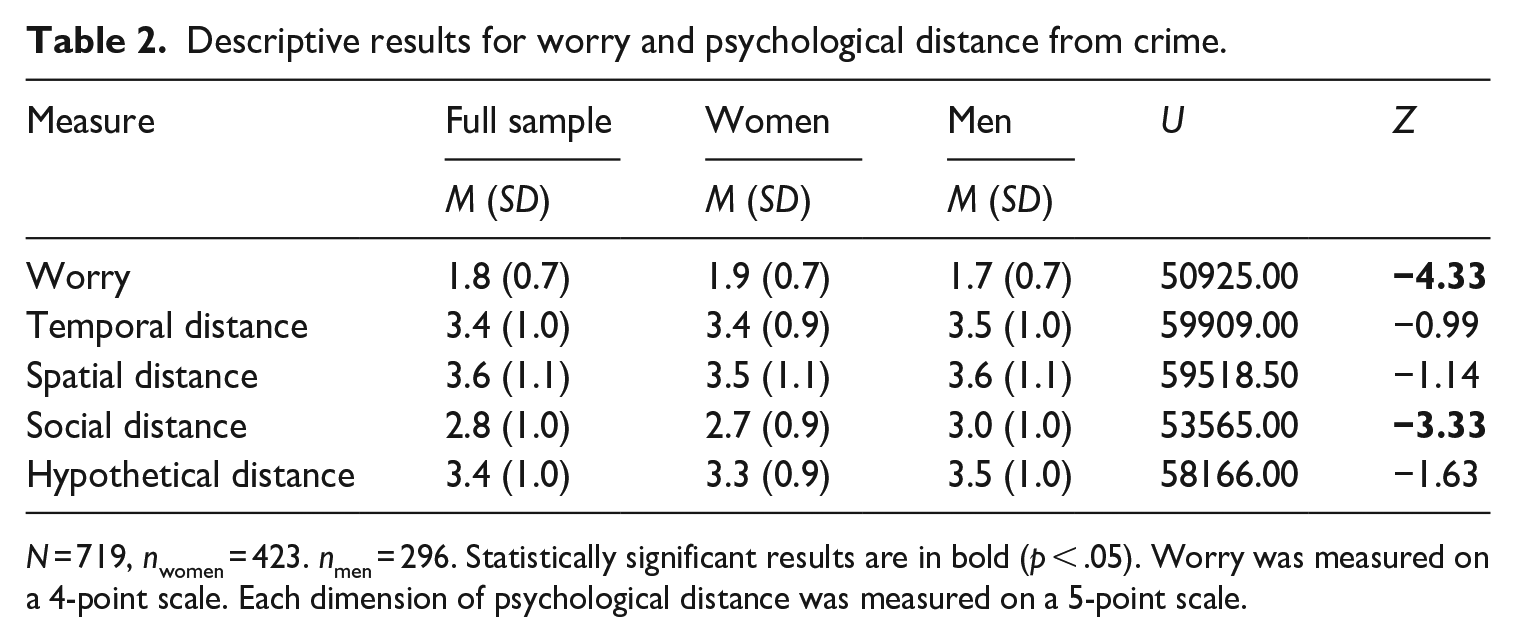
N = 719, nwomen = 423. nmen = 296. Statistically significant results are in bold (p < .05). Worry was measured on a 4-point scale. Each dimension of psychological distance was measured on a 5-point scale.
Model fit and reliability analyses
The fit of the hypothesised model was assessed to determine how well the model reflects the data for the entire sample and for each gender group. Model fit statistics for the full sample and both groups can be found in Table 3. Once error terms were allowed to covary, the hypothesised model demonstrated poor exact fit and good approximate fit to the data from the full sample. The models for women and men demonstrated poor exact fit and acceptable approximate fit. Based on these results, researchers who value exact fit indices might reject these models while researchers who value approximate fit indices might retain these models. For the purposes of this study which draws upon a convenience sample of community members, these models were retained for further analyses.
Summary model fit statistics for women and men.
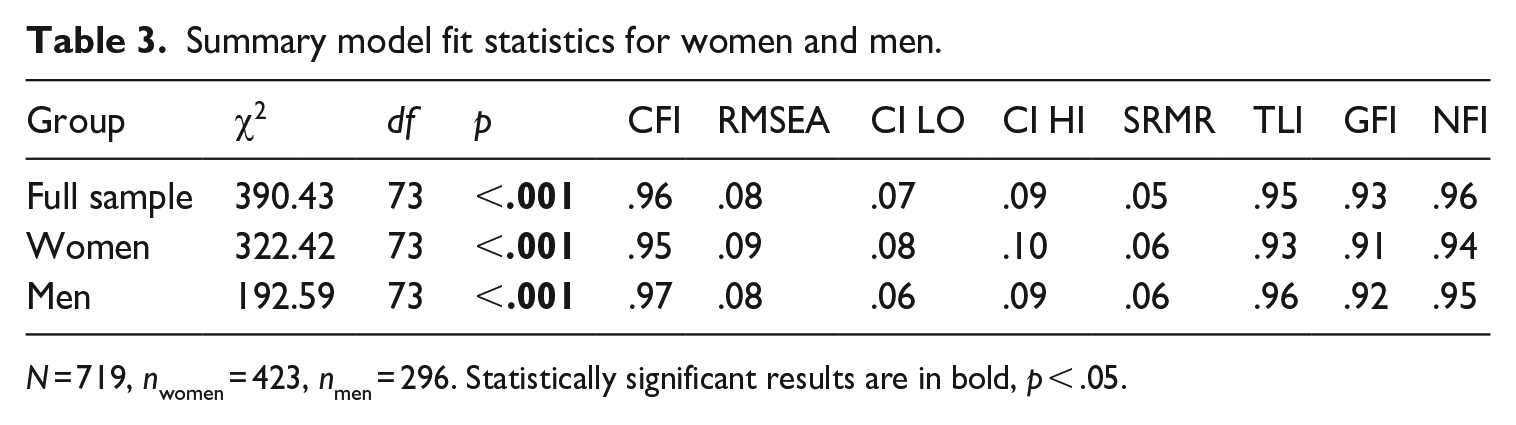
N = 719, nwomen = 423, nmen = 296. Statistically significant results are in bold, p < .05.
To assess the reliability of the survey measures, ω coefficients 2 were calculated for the measurement and structural portions of the hypothesised structural regression model. The higher order ω value for the survey items measuring perceptions of psychological distance and psychological distance from crime was .85. The unidimensional ω for the survey items measuring worry about crime was .80. While there is no universal cut-off for ω coefficients (Cho and Kim, 2015), the scales demonstrate acceptable reliability for an instrument administered to a convenience sample.
To assess the factorial validity of the survey items, the parameter estimates were investigated for the full sample and each group individually (see, Figures 3 to 5). Across the three models, all parameter estimates were statistically significant and in the expected direction. Although some of the standardised factor loadings fell below .70, none of the lower 95% confidence intervals fell below .50, and each latent factor explained sufficient variance within their respective observed variables, as evidenced by average variance extracted 3 (AVE) values exceeding .50 (Fornell and Larcker, 1981). For women, AVE values for each dimension of psychological distance and worry about crime ranged between .59 and .64. The AVE for the psychological distance from crime was .65. For men, AVE for worry and each dimension of psychological distance ranged from .62 to .74. The AVE for psychological distance from crime was .62. The AVE values, which exceed .50, indicate that the first-order latent variables for explain at least 50% of the variance within their respective observed variables. For the higher order potion of the model, psychological distance from crime explains at least 50% of the variance within the first-order latent factors of temporal, spatial, social and hypothetical distance from crime.
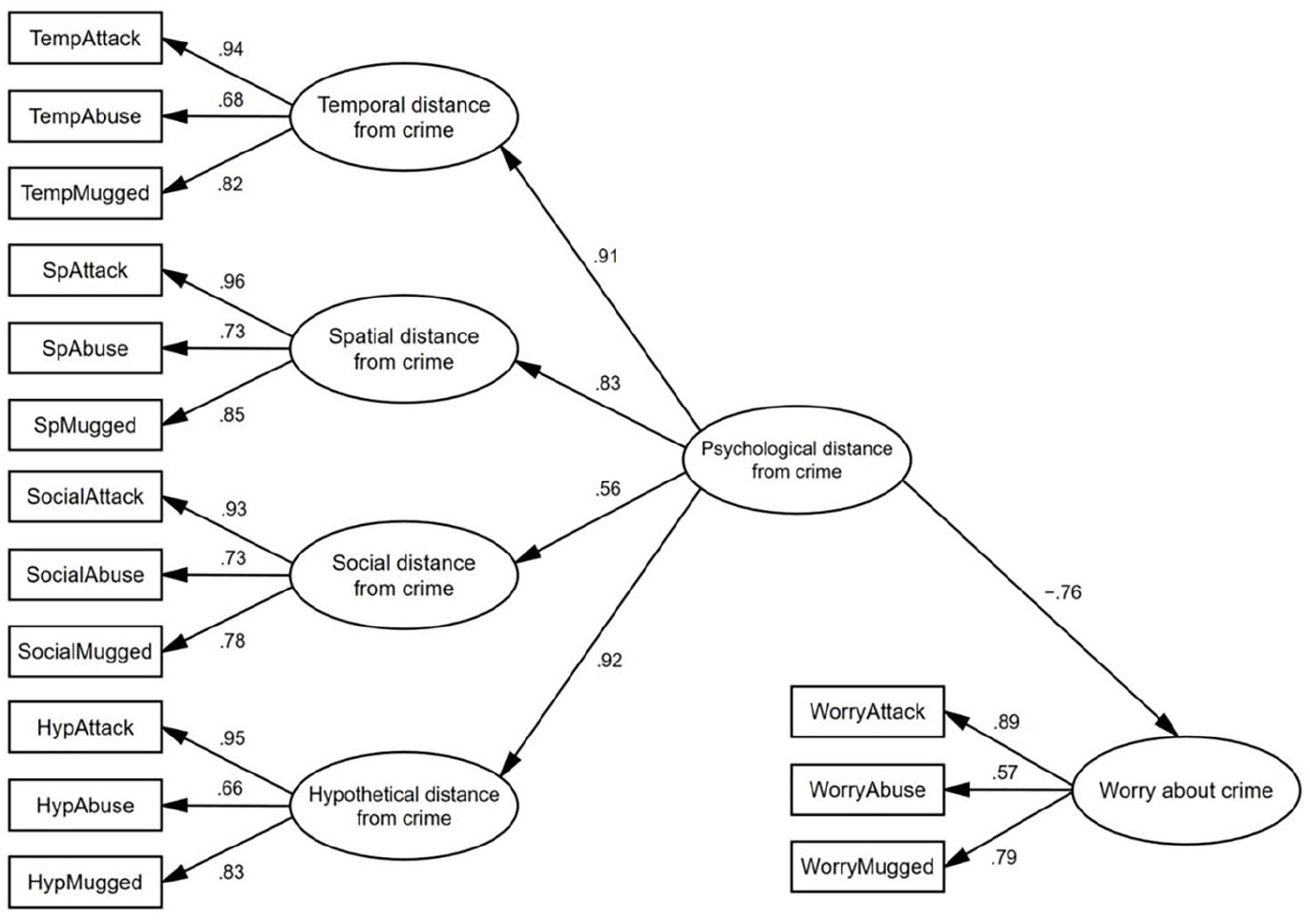
Parameter estimates for full sample (n = 719).
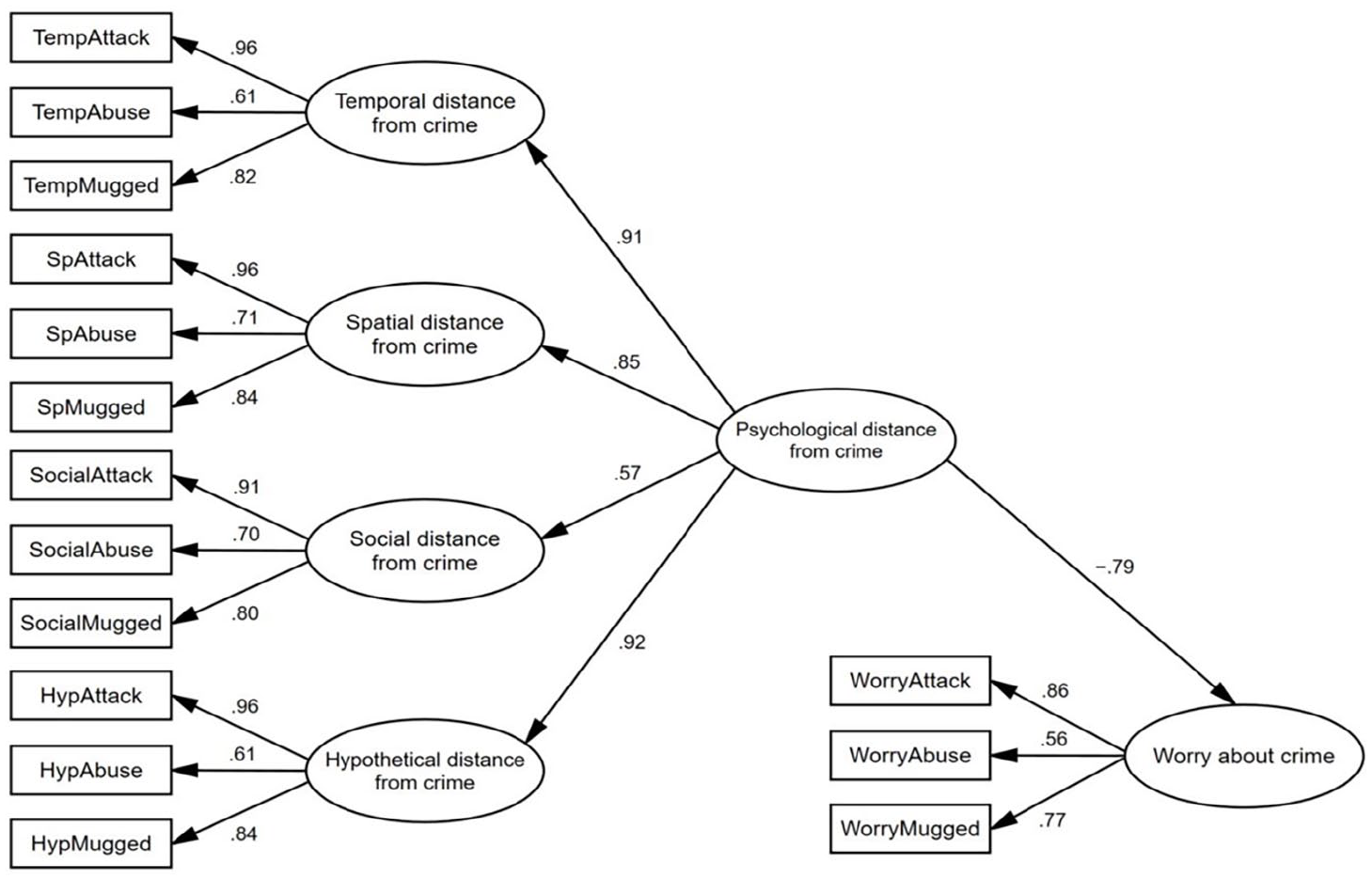
Parameter estimates for women (n = 423).
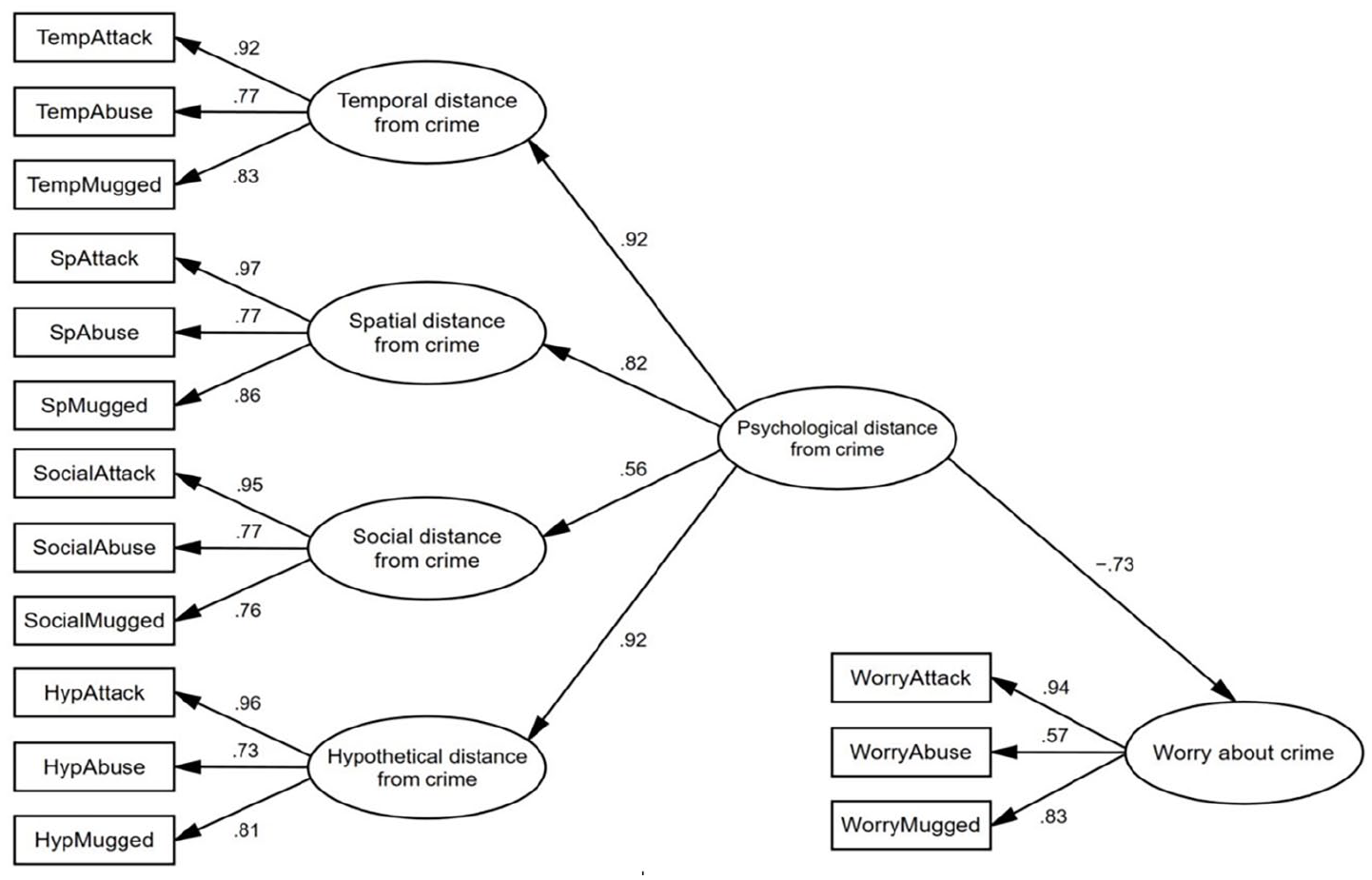
Parameter estimates for men (n = 296).
Psychological distance from crime also explained a substantial amount of the variance within the observed variables for both groups. For women, psychological distance from crime explained an average 45.80% within the observed variables. For men, psychological distance from crime explained an average of 48.05% of the variance within the observed variables. However, for women and men, psychological distance from crime explained less variance within the observed variables for social distance (an average of 21.21% and 21.67%, respectively). This suggests that psychological distance from crime explains substantial variance within the survey items measuring temporal, spatial, and hypothetical distance from crime across groups, but not social distance from crime.
For all three models, the relationship between psychological distance from crime and worry was significant and in the expected direction. A decrease psychological distance from crime (a more proximal perception of crime) resulted in an increase in worry about crime. For the full sample, the model explained 58% of the variance within participants’ worry about crime at a statistically significant level (γ = −.76 [95% CI = −.82, −.71]; t = −20.14, p < .001). The model explained 62% of the variance within worry about crime for women (γ = −.79 [95% CI = −.84, −.73]; t = −16.08, p < .001) and 53% of the variance for men (γ = −.73 [95% CI = −.80, −.65]; t = −13.49, p < .001). Invariance tests were then performed to assess whether the differences in factor loadings and causal structures are a result of moderation or measurement.
Invariance tests
The results of the invariance tests are displayed in Table 4. The configural model demonstrated poor exact fit and acceptable fit across most approximate fit indices (χ2 = 514.99, df = 146, p < .001; RMSEA = .06, [90% CI = .05, .07]; SRMR = .06; CFI = .96; GFI = .92; NFI = .94; TLI = .94). The configural model was retained as a baseline against which the measurement and structural models could be compared. For the measurement model, the first-order factor loadings and the higher order factor loadings were invariant across groups. These results suggest that the measures of psychological distance from crime and its respective dimensions are equivalent for both women and men. Finally, turning to the structural pathway between psychological distance from crime and worry, the results of the invariance tests demonstrated that there were no moderating effects of gender on the relationship between psychological distance from crime and worry about crime.
Invariance tests.
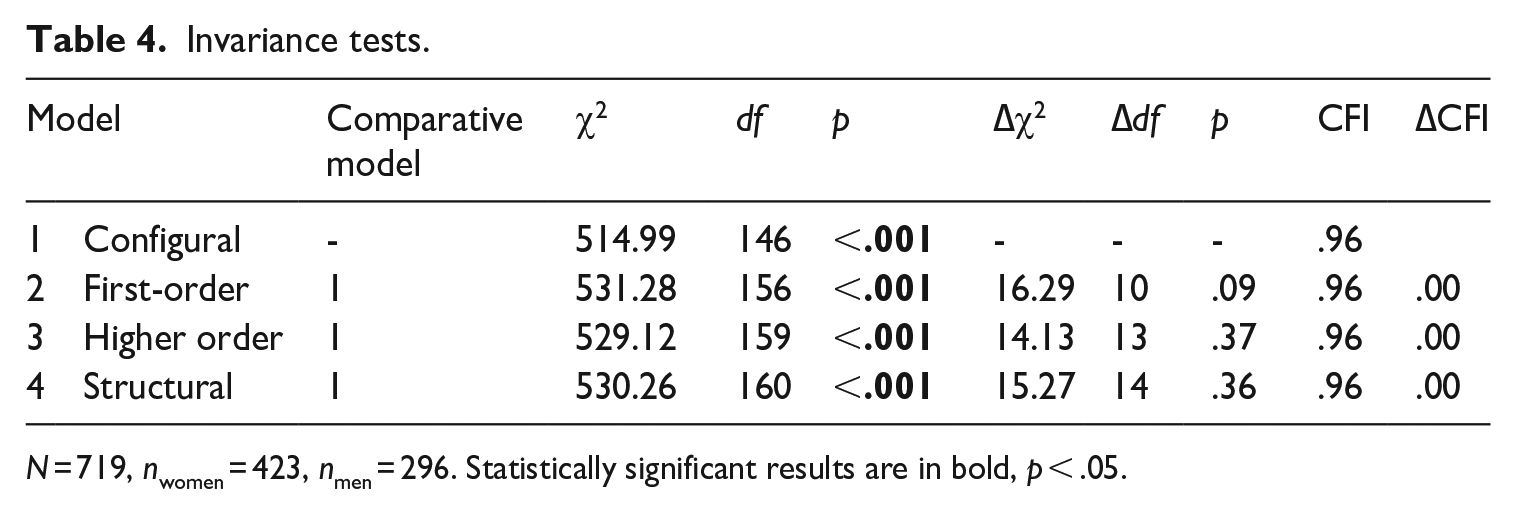
N = 719, nwomen = 423, nmen = 296. Statistically significant results are in bold, p < .05.
Age
Presented with evidence of measurement and structural invariance across women and men, another model was estimated containing age as an exogenous variable to see whether it would influence psychological distance from crime and worry about crime (see Table 5 for summary statistics for model fit). Age had no significant effect on either worry or psychological distance from crime and explained very little of the variance in either variable (Age → Worry = −.001, p = .231; Age → Psychological Distance from Crime = .047, p = .964). The non-significant and small effects for age persisted for the model with only women (Age → Worry = −.001, p = .972; Age → Psychological Distance from Crime = .082, p = .110) and the model with only men (Age → Worry = −.011, p = .816; Age → Psychological Distance from Crime = .006, p = .925).
Model fit statistics for moderation model containing age.
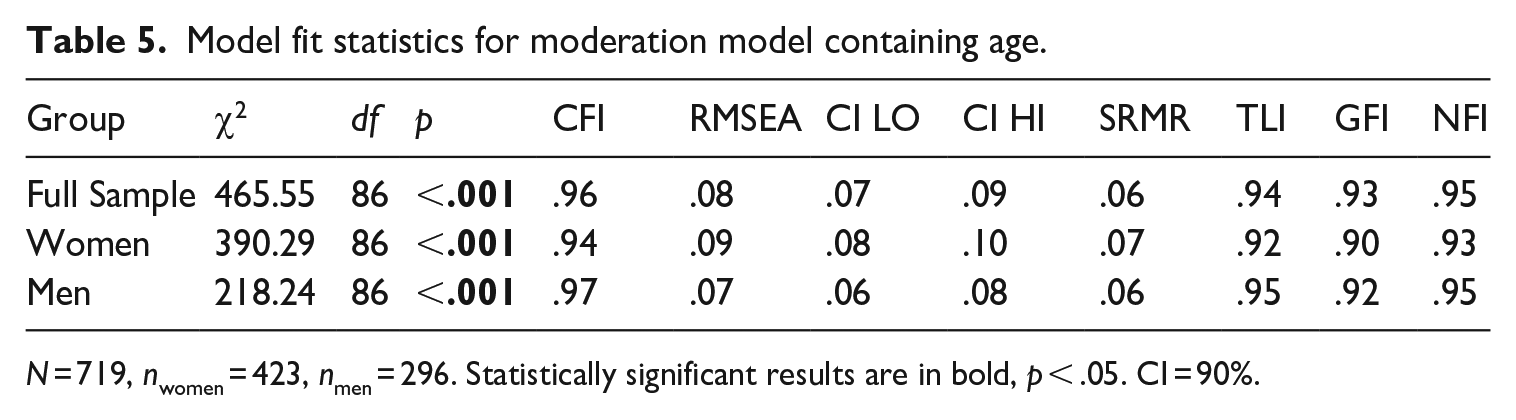
N = 719, nwomen = 423, nmen = 296. Statistically significant results are in bold, p < .05. CI = 90%.
Discussion
This study aimed to explore whether age and gender moderated the relationship between psychological distance and worry about crime. The descriptive results of this study highlight that, overall, community members in the sample did not experience intense levels of worry about crime. This is consistent with similar Australian research that asks participants about their intensity of worry about crime (Chataway and Mellberg, 2021; Mellberg et al., 2022; Xiong et al., 2017). The results of the CFA demonstrated that the survey items and their latent variables were reliable and operated equivalently across groups. The hypotheses that age and gender would each moderate the relationships between psychological distance and worry about crime were not supported. There was no moderating effect of gender on the structural pathway between the higher order latent factor of psychological distance from crime and worry about crime. Age shared a non-significant relationship with worry for both men and women when added as an exogenous variable. Overall, these results suggest that the relationship between psychological distance and worry about crime is not significantly affected by gender or age. Based on these findings, interventions designed to manage fear of crime by targeting community members’ perceptions of psychological distance may not need to spend resources developing audience-specific strategies. Implications and applications of these results are discussed below.
Using CLT to reduce fear of crime in the community
The absence of a moderation effect for age and gender suggests that the cognitive processes involved in becoming worried about crime in situations absent of an actual threat of victimisation might transcend these demographic groups. This allows researchers and policymakers to focus on developing strategies informed by CLT for reducing and managing fear of crime without dedicating significant resources to developing different messages for women and men across age groups. Under experimental conditions, Gouseti (2016) found that psychologically distal perceptions of crime could ‘cool off’ an individual’s worry about crime. Community campaigns could reinforce or encourage psychologically distal perceptions of crime through communication strategies or alerts. For example, community members could be informed about victimisation rates in their neighbourhood or areas they frequently visit to challenge their temporal, spatial, and hypothetical perceptions of crime, provided these correspond to rates of victimisation that are lower than expected. Community members could also be informed of nearby safe locations, such as those monitored by formal guardians or place managers, to allow community members to self-manage their spatially proximal perceptions of crime by changing their environment. Furthermore, information could be provided to community members about the safest times to visit certain locations (e.g. when locations are monitored or have low rates of crime) to encourage temporally distal perceptions of crime. As a result of psychologically distal perceptions of crime, community members would be likely to engage in high-level crime construal, and experience less intense feelings of worry about victimisation (Gouseti, 2016; Mellberg et al., 2022).
Community members could be encouraged to engage in precautionary behaviours which might increase their perceived psychological distance from crime. Functional precautionary behaviours might be those which increase perceived psychological distance from crime without eroding one’s quality of life. Previous research has found that target hardening behaviours, such as installing alarms in the home, and discussing concerns about crime with neighbours was a common behaviour among participants who were categorised as experiencing functional worry about crime (Lee et al., 2020). These particular behaviours might reinforce to an individual that crime is unlikely to occur to them in their current location (a spatially, socially, and hypothetically distal perception of crime).
The messaging informed by CLT could be provided to community members in a number of ways, including in real-time through smartphone devices. Real-time strategies might allow two-way communication between users and local governments about when, where and how often community members feel worried about crime. Worried community members could be provided with the messaging outlined earlier, while the temporal and spatial information about fear of crime provided by users might allow fear of crime hotspots to be identified and addressed through environmental interventions. Recent research by Kronkvist (2024) has found that, like crime, fear of crime might cluster within neighbourhoods. Strategies for addressing fear of crime might be able to save resources by addressing these neighbourhoods and locations where fear of crime is concentrated.
Finally, to address psychologically proximal perceptions of crime at a broader societal level, police and news organisations might also consider changing how crime events are reported. On platforms which are intended for general audiences, crime might be reported in aggregate form, with less detail, and without specific temporal and spatial reference points. More specific information might be accessed by interested members of the public through an ‘opt-in’ method (e.g. a link to a relevant website on a social media post). Reporting crime events in aggregate (e.g. once per week) might minimise overexposure to crime among general audiences and help to avoid hypothetically proximal perceptions of crime (i.e. the perception that crime is likely to occur). When crime events are reported, using broad categories such as ‘property crime’ might be associated with high-level crime construal, leading to psychologically distal perceptions of crime and lower levels of worry about crime (Gouseti, 2016). To enhance this strategy, avoiding temporal and spatial reference points (e.g. overnight, in a particular suburb) could also increase community members’ psychological distance from crime, which has been associated with lower levels of worry about victimisation (Gouseti, 2016; Mellberg et al., 2022). Overall, this study has provided a strong foundation for strategies informed by CLT to reduce and manage fear of crime within the community. To enhance the effectiveness of these strategies, the limitations of this study may need to be addressed in future research, as described below.
Limitations and future directions
Women’s and men’s worry about crime were significantly different, yet there were no moderating effects of gender on the relationships between psychological distance and worry about crime. Although this means that CLT-informed fear of crime reduction strategies might not need to rely on demographic-specific messaging, understanding why women’s and men’s level of worry about crime differ is still an important direction for future research investigating gendered experiences of fear of crime. Differences in women’s worry about crime may be explained by other variables beyond psychological distance. Risk sensitivity has been posited as a theoretical explanation for both women and the elderly’s high levels of worry about crime (Jackson, 2005; Warr, 2000). Within the current theoretical framework of CLT, cognitive processes such as perceptions of consequences and personal control over victimisation are not accounted for. Some research has found that the difference between women’s and men’s fear of crime was almost entirely mediated by perceived control (Jackson, 2009). Perceptions of control over victimisation might be associated with one’s construal of crime or their mental image of what victimisation would look like (Jackson, 2006). Furthermore, in the context of CLT, consequential thinking about crime events has been associated with low-level crime construal and increased feelings of worry about victimisation (Gouseti, 2016). Future research could consider how these processes of risk sensitivity interact with crime construal and perceptions of psychological distance from crime to shape women’s and men’s worry about victimisation.
Alternatively, the differences between women’s and men’s worry about crime observed in this study might be indicative of socially desirable responses from men. Sutton and Farrall (2005) have suggested that socially desirable survey responses may contribute to differences in fear of crime between women and men. In their research, the authors found that men of all ages were more likely to engage in socially desirable responding compared to women. These findings were supported by experimental research by Sutton et al. (2011) who found men were more likely to underreport their fear of crime when asked to respond to items in a socially desirable way compared to responding honestly. Among the qualitative data collected for this study, male participants who selected ‘Neither agree nor disagree’ for perceptual measures of psychological distance tended to comment on their physical capabilities. For example, ‘125 kg 6 ft4’ tall male . . .’, ‘I am a 60 year old male weigh approximately 90 kg and 6 ft 2’ tall . . .’, ‘I’m 6 ft 1’ and 110 kg and rarely the target of physical attacks unless there is a group usually . . .’, ‘I’m a 120 kg male with a background in law enforcement and martial arts’, ‘I am 6 ft2’ 95 kg fit looking, I can’t say it wouldn’t happen but also that it wouldn’t’, and ‘I am 185 cm tall, 88 kg. I treat perpetrators like dogs. i.e., don’t run, don’t show weakness, stand tall and meet with greater aggression’. These comments might indicate that men in the sample were responding to survey items in a socially desirable manner consistent with expectations of masculinity, and reported lower levels of worry about crime as a result (Sutton et al., 2011). Future research should consider screening for socially desirable responses when administering fear of crime surveys.
There were also significant differences between women’s and men’s social distance from crime according to Mann–Whitney U test. However, social distance was invariant between these groups when estimated in the hypothesised models. This may be due to shortcomings of the perceptual measures of social distance identified in Mellberg et al. (under review), which persisted across groups. The higher order factor loading from social distance to psychological distance from crime was significant, but below .70 for the full sample and women and men. This value suggests that psychological distance from crime accounts for less than 50% of the variance within this latent factor (Johnson et al., 2011). Psychological distance from crime also had reduced explanatory power over the observed variables for social distance compared to other dimensions of psychological distance. As identified by Mellberg et al. (under review), this may be a result of the social distance items relying on overly personal and subjective judgements of similarity. It is important that future research considers alternative item phrasing to further investigate whether social distance is pertinent to group differences in risk perception and worry about crime.
Finally, there may be additional demographic variables which moderate the relationship between psychological distance and worry about crime. Ethnicity has been identified as a possible moderator of psychological distance and construal level, where individuals from countries with less egocentric social orientations are more likely to perceive events as psychologically further than individuals from egocentric social orientations (Wong and Wyer, 2016). Although the current dataset did not contain sufficient sample size to assess such effects, future research may wish to investigate moderating effects of ethnicity on psychological distance and worry about crime.
Footnotes
Declaration of Conflicting Interests
The author(s) declared no potential conflicts of interest with respect to the research, authorship, and/or publication of this article.
Funding
The author(s) received no financial support for the research, authorship, and/or publication of this article.
