



Abstract
Appropriate supervision is critical in offender management, but requires effective tools to guide decisions and interventions. This research project investigated the effectiveness of Global Positioning System monitoring in reducing re-offending, while considering the impact of Global Positioning System monitoring on the offender’s well-being. The method consisted of evaluating a matched sample of Global Positioning System monitored offenders (n = 220) versus non-Global Positioning System1 monitored (n = 219) subject to extended supervision and parole orders over a 24-month follow-up period. All participants were male offenders released from prison within New Zealand. The results showed statistically significant differences for ‘non-violent’ and ‘violent’ re-offending rates, with Global Positioning System monitoring being associated with lower rates of recidivism. There was no evidence of increased distress in those men subject to Global Positioning System monitoring. This study provides novel information about Global Positioning System monitoring and contributes to our understanding of how this tool can reduce recidivism.
Introduction
Understanding what is effective in crime reduction is one of the most important tasks of the criminal justice system (Department of Corrections, 2016). Many criminal justice jurisdictions have stand-alone sentences or conditions which require the monitoring of an individual’s whereabouts. Electronic monitoring (EM) is a technological means of enforcing such sentences or conditions. The technology allows for tracking of an individual’s movements and can be used in detention, restriction and surveillance (Black and Smith, 2003). EM has been used for a variety of purposes: a stand-alone sentence; to monitor bail conditions; or as an alternative to a prison sentence, thereby reducing the prison population. This multitude of uses has resulted in a number of EM programmes, targeting differing offender groups and involving different levels of supervision and support (Gainey and Payne, 2002).
With high incarceration rates and the effect of mass incarceration, New Zealand Department of Corrections set out to reduce the economic and societal impacts of imprisonment. A key strategy to achieve this was to increase the use of EM. The purpose of this study was to examine the impact and effectiveness of Global Positioning System (GPS) monitoring in reducing re-offending as well as to consider the impact of 24-hour monitoring on offenders’ ‘mood’. The study has been informed by New Zealand’s legislation and Department of Corrections policies and procedures in relation to EM and informs the basis of this literature review.
Electronic monitoring
Technological advancements have enabled the use of new forms of surveillance and control of offenders. EM was implemented in the United States (Fox, 1987; Whitfield, 1997) in the mid-1980s and the United Kingdom during the late 1980s (Nellis, 2000). It is now used in several countries including Australia, Canada, Finland, Israel, New Zealand, Scotland, Singapore, Sweden and the Netherlands. EM requires the offender to wear an electronic anklet. The anklet must be worn 24 hours a day, 7 days a week for the time specified by the Court or Parole Board. The anklet transmits signals to a monitoring centre through the cellular network; this permits the monitoring of the offender’s movements (Whitfield, 1997). The real-time monitoring allows correctional services to determine whether the person is complying with the conditions of release.
There are two main forms of EM technology: radio frequency (RF), which was first introduced in the 1980s but became more readily available in the 1990s; and GPS, which was first implemented in the late 1990s (Martinovic, 2013). RF technology is specifically used to monitor the offender at their detention residence and is used more extensively with low to medium-risk offenders; it cannot provide information on the offender’s whereabouts outside of their monitored location. Currently, more than 30 countries have used this tool in offender management (Bartels and Martinovic, 2017). GPS monitoring technology is not as extensively utilised as RF. It has only been since 2012 that countries, including New Zealand, have introduced this technology in offender management (Nellis, 2013). GPS monitoring is typically used with high-risk offenders such as sex offenders and violent offenders (Martinovic and Bartels, 2017). This second-generation technology provides correctional jurisdictions with the ability to track offenders’ movements.
EM in New Zealand
EM in New Zealand was first introduced in the form of home detention. A small home detention pilot was established from 1995 until 1997 for offenders released on parole and subject to a special condition of monitoring. An evaluation of the pilot study was conducted after 18 months. Prisoners preferred the less restrictive option of parole over an early release subject to home detention; therefore, it was determined that this approach was unlikely to reduce the prison population. There was no evidence to show home detention was a viable reintegration tool (Gibbs and King, 2003). Nonetheless, home detention was implemented nationwide in 1999.
Initially, home detention commenced as both a ‘front-end’ and ‘back-end’ in 1999. ‘Front-end’ were those offenders sentenced to a term of imprisonment of 2 years or less who were approved to serve their sentence on home detention for a period of up to 12 months. ‘Back-end’ offenders were those serving prison sentences of more than 2 years; 5 months prior to the parole eligibility date, these individuals could apply for release on home detention, which (if approved) commenced 3 months before the release date (Department of Corrections, 2016). Since this time, EM has grown substantially in New Zealand. Legislative changes in 2002, 2006 and 2007 saw the introduction of home detention emerging as a ‘stand-alone’ sentence, and EM becoming a possible condition of parole and bail, and a new sentence of community detention being an option for the judiciary (Department of Corrections, 2016). Since 2006, New Zealand has experimented with the use of GPS monitoring conducting various trials. In 2012, the Department of Corrections implemented GPS monitoring for 200 high-risk offenders in the community. In 2016, further legislative changes enabled the use of EM for intensive supervision, released on conditions and to allow for use on temporary release from prison (Department of Corrections, 2019).
New Zealand has one of the highest imprisonment rates in the OECD, with the prison population reaching an all-time peak of 10,645 in March 2018 (Department of Corrections, 2019). The average prison population in OECD countries is 147 per 100,000, whereas New Zealand had a prison population of 220 per 100,000 people (Department of Corrections, 2019). EM has been championed as a safe and effective alternative to prison (Hucklesby and Holdsworth, 2016). Increasing the use of EM may offer advantages in addition to reducing pressure on the prison system. It has been argued to include positive support for reintegration and rehabilitation for individuals enabling employment, accommodation and family relationships to be maintained (Hucklesby and Holdsworth, 2016).
New Zealand Department of Corrections has become a significant user of EM, and as of March 2023 approximately 5300 defendants/offenders were subject to EM. It is further forecasted that the electronically monitored population will continue to grow over the next 4 years to approximately 6800 persons (Department of Corrections, 2021). New Zealand has the highest use of EM per capita globally and the majority of offenders/defendants on EM are subject to GPS monitoring as opposed to RF. As the use of EM technology has increased, questions have arisen concerning its effectiveness, as well as its appropriateness, particularly in the use of GPS monitoring (Marklund and Holmberg, 2009). To date, there has been no independent research into the effectiveness and impact of GPS monitoring in New Zealand.
The evaluation of EM
There has been substantial variation in the outcomes of studies surrounding the effectiveness of EM, with some showing that EM has little to no effect on deterring offenders from criminal activity (Baumer et al., 1993; Lilly et al., 1993; Renzema and Mayo-Wilson, 2005). Other studies, however, have found that EM technology reduces the likelihood of non-compliance with sentence restrictions and recidivism (Di Tella and Schargrodsky, 2013; Hucklesby, 2009; Marklund and Holmberg, 2009; Padgett et al., 2006). More specifically, Renzema (2003) completed a Campbell Collaboration meta-analysis on the effectiveness of RF monitoring on reducing re-offending rates. They identified 125 studies that had evaluated the use of EM, and of these, only 14 included control groups that were considered suitability matched, and of those, only 3 of the studies included a randomised control group design. The 14 studies in total included 2664 individuals subject to RF monitoring. Overall, the results showed that no significant impact was observed on a reduction in recidivism for those subject to RF monitoring compared with those who were not. These studies, however, had a number of limitations, including questionable comparison groups, small sample sizes, being conducted with those on pre-sentence remand rather than sentenced prisoners and what EM was being compared to, those on early release from prison, community-based sentences and imprisonment. These limitations indicate that more research is required in this area to validate EM as a tool to encourage compliance and recidivism.
New Zealand Department of Corrections has reported favourable results in the use of EM. In 2016, the New Zealand Department of Corrections reported a 19% reconviction rate for those on home detention (within 12 months of sentence start date) versus 42% for those imprisoned (within 12 months of date of release) (Department of Corrections, 2016). The Department of Corrections in New Zealand has been publishing statistics in its annual reports, showing that offenders on EM have reduced re-offending rates. However, given the incomplete information of the studies, including group comparability, sample size and measurement of recidivism, it is difficult to be sure whether this finding was due to the impact of EM, or EM in conjunction with other interventions or treatment. Furthermore, it is also difficult to attribute these results to EM due to the differential pre-existing sample characteristics, for example, risk level of the sample groups.
GPS’ effectiveness on recidivism rates
A number of studies have been conducted to specifically evaluate the utility of GPS monitoring (Bales et al., 2010; Brown et al., 2007; Gies et al., 2013; Hucklesby, 2009; Padgett et al., 2006). The general outcome measures considered in these studies have included conviction of a new offence, technical violations and absconding. The results have shown that those subject to GPS monitoring were less likely to re-offend than those offenders not subject to any form of EM. Furthermore, GPS monitoring was more effective than RF (Bales et al., 2010; Gies et al., 2013; Padgett et al., 2006). Some studies have found that offenders not subject to GPS monitoring were twice as likely to re-offend when compared with those subject to GPS monitoring (Gies et al., 2013).
Hucklesby (2009) considered offenders compliance with EM. They found that EM provided a higher level of monitoring and control, enabling detection of non-compliance. Furthermore, the technology provided evidence of the non-compliance quickly. The study highlighted that decisions about compliance are complex for the individuals, and there are a number of factors that contribute to these decisions, but that instrumental compliance was important (Hucklesby, 2009). The factors identified included how well the offender was prepared for EM and ensuring they were provided appropriate information about EM, the offender’s perception about surveillance levels and how aware they are of the requirements of their sentence/order and EM, the efficiency of the technology, links to their community such as family, employment and housing and also the individual motivation of the offender and whether they want to comply (Hucklesby, 2009). The research highlights the complexity of any compliance-inducing effect.
All of these studies, however, noted limitations or issues with the matched control group or sample size. These included small sample sizes, focused on short-term compliance and limitations of appropriately matched control groups (Hucklesby, 2009; Marklund and Holmberg, 2009). Furthermore, some of these studies only had a follow-up period of 12 months, providing minimal time for the sample group to re-offend (Gies et al., 2013).
Although more recent studies provide evidence that GPS monitoring can reduce re-offending rates, no studies on GPS monitoring have shown the long-term moderating effects, for reducing offenders from engaging in further criminal activity. While subject to monitoring, offenders appear to be compliant but ‘when the bracelets come off, other studies have found that monitored offenders perform no better than offenders [who] were never subject to monitoring’ (Peckenpaugh and Petersilia, 2006: 25). Given the evidence and limitations of previous studies, further methodologically robust empirical research is needed to both understand the impact of GPS monitoring on recidivism and whether GPS monitoring is more effective for different offence types.
The impact of EM surveillance on offenders
EM has been the main alternative to imprisonment and is seen as a matter of confinement rather than surveillance. However, surveillance is the main component of EM, as the restrictive regime and rules can only be imposed because of the monitoring technology. Indeed, the administration of EM could lead to high levels of intrusiveness in the offender’s life. EM research has focused not only on recidivism rates but also on the impact EM has on the individual and their family. The findings of these studies have varied. Offenders have reported feeling ‘controlled’ in comparison to not being subject to EM, or alternatively ‘free’ when compared to a prison sentence (Gainey and Payne, 2000a). Families have reported the enjoyment of having their loved one home. However, they have also noted the emotional and financial impact on the household given the practical and logistical implications placed (Gibbs and King, 2003). Church and Dunstan (1997) found EM was a key factor in the offender’s life and had a significant psychological impact. Individuals may be unable to manage the feeling of being constantly surveilled and become anxious and paranoid (Roberts, 2004; Staples, 2005).
The research has been consistent that offenders prefer EM to imprisonment. However, it is by no means a ‘soft’ alternative, given the restrictive nature of home detention regimes along with the psychological impacts of the surveillance and monitoring aspects of GPS tracking (Vanhaelemeesch et al., 2014). The unintended consequences for both families and offenders raise the question as to whether home detention is worth the reduction in re-offending rates, in terms of the philosophical and ethical issues it can present, such as psychological distress on the offenders and their family, the intrusion within the home and loss of privacy (Gainey and Payne, 2000b). Therefore, it is important to explore and understand the impact EM has on an individual’s well-being, which is a secondary research question of this study.
The current study
The main objective of this research was to examine the overall effectiveness of GPS monitoring in reducing re-offending. This aim was achieved by evaluating a matched sample of GPS-monitored offenders versus non-GPS-monitored, comparing reductions in re-offending rates over a 24-month period. The 24-month follow-up period commenced following the individual’s release from prison. The specific research questions examined whether offenders subject to whereabouts conditions requiring GPS monitoring would have a lower 24-month recidivism rate than those who were not electronically monitored (Hucklesby, 2009; Padgett et al., 2006). GPS monitoring was particularly expected to reduce ‘non-violent’ re-offending but not ‘violent’ re-offending, as previous research has found that EM has had no effect on reducing rates of re-offending for violent male offenders (Finn and Muirhead-Steves, 2002). Furthermore, GPS monitoring was expected to have a negative impact on an offender’s mood relative to non-GPS monitoring offenders (Church and Dunstan, 1997; Gainey and Payne, 2000a; Mair and Nee, 1990).
Method
General context and procedures
In New Zealand, all offenders sentenced to imprisonment for 2 years or more are released from prison for a period of supervision by a probation officer for a minimum of 6 months. Offenders released on these orders have standard and additional special conditions imposed (e.g. remain at a specified residence, submit to EM, undertake specific treatment programmes). Of those offenders subject to GPS monitoring, the condition is specifically related to a requirement of whereabouts, generally precluding an individual from a specified place or premise. This monitoring is managed by the use of exclusion zones; a geofence drawn on a map which prohibit the offender from entering this area at any given time and could include places such as parks and schools (Department of Corrections, 2016). The EM bracelet is attached at the time of release from prison.
An archival dataset for this study was provided by the New Zealand Department of Corrections based on researcher requested specifications from the department’s database, the Integrated Offender Management System (IOMS). The scores for the risk assessment (RoC*RoI 2 ; Bakker et al., 1999), in addition to conviction histories and demographic information, were all provided by the Department of Corrections. Re-offending data, including offence, date of offence and reconviction along with outcome, were extracted from the electronic offender record. The Dynamic Risk Assessment for Offender Re-Entry (DRAOR) scores for ‘negative mood’ Acute scale item were also extracted for the offenders’ initial and final DRAOR assessments to evaluate change in mood over time.
Participants
A power analysis (G*Power) had revealed that the most complex analysis in terms of statistical power for an individual regression coefficient in a logistic regression model (three predictors) of a small effect (OR = 1.50), an a priori alpha of .0125 and expected power of .80 would require a minimum of 373 participants. To ensure stability in observed parameters, a minimum of 200 offenders for each group (GPS monitoring vs non-GPS monitoring), who had been released from prison, and matched on demographics (gender, age, ethnicity) and static risk level (see below), was requested for analyses. For matching procedures, this meant going slightly above 200 offenders in each group. The sample group included 439 high-risk male offenders who had been sentenced to 2 or more years of imprisonment and subject to either an order of parole or extended supervision. Of these, 220 offenders were subject to whereabouts conditions requiring GPS monitoring, a ‘back-end’ EM programme, whereas 219 offenders were not subject to any form of EM.
Overall, 51% of the sample identified as Māori, 38.7% identified as New Zealand European, 9.3% identified as Pacific Islander, 0.5% identified as Asian and 0.2% identified as other ethnicities. Participants ranged in age from 16 to 84 years (M = 37.80, SD = 12.45) at the time of their release from prison. Forty-one percent of the sample was incarcerated for a violent offence and 26.4% incarcerated for sexual offences. The remaining proportion of offenders was incarcerated for property offences (23%) and non-violent offences (9.5%). During the 24-month follow-up period, 320 offenders (72.9 % of the sample) re-offended. The majority of the reconvictions were for non-violent offences (59.7%). The average RoC*RoI score for the sample was 0.54 (SD = 0.22), indicating an estimate of 54% likelihood of returning to prison within 5 years of release. The RoC*RoI scores ranged from 0.01 to 0.94 for the sample group. The RoC*RoI score range is divided into risk categories, Low = 0–0.49, Medium = 0.50–0.69 and High = 0.70–1. The sample group included offenders with Low to High RoC*RoI scores. A detailed breakdown of the characteristics of the two sample groups is shown in Table 1. A comparison of demographic information between the sample groups showed that, despite attempts to match across a range of variables, there were statistically significant differences in characteristics for age and index offending.
Sample group demographics and comparisons across sample group.
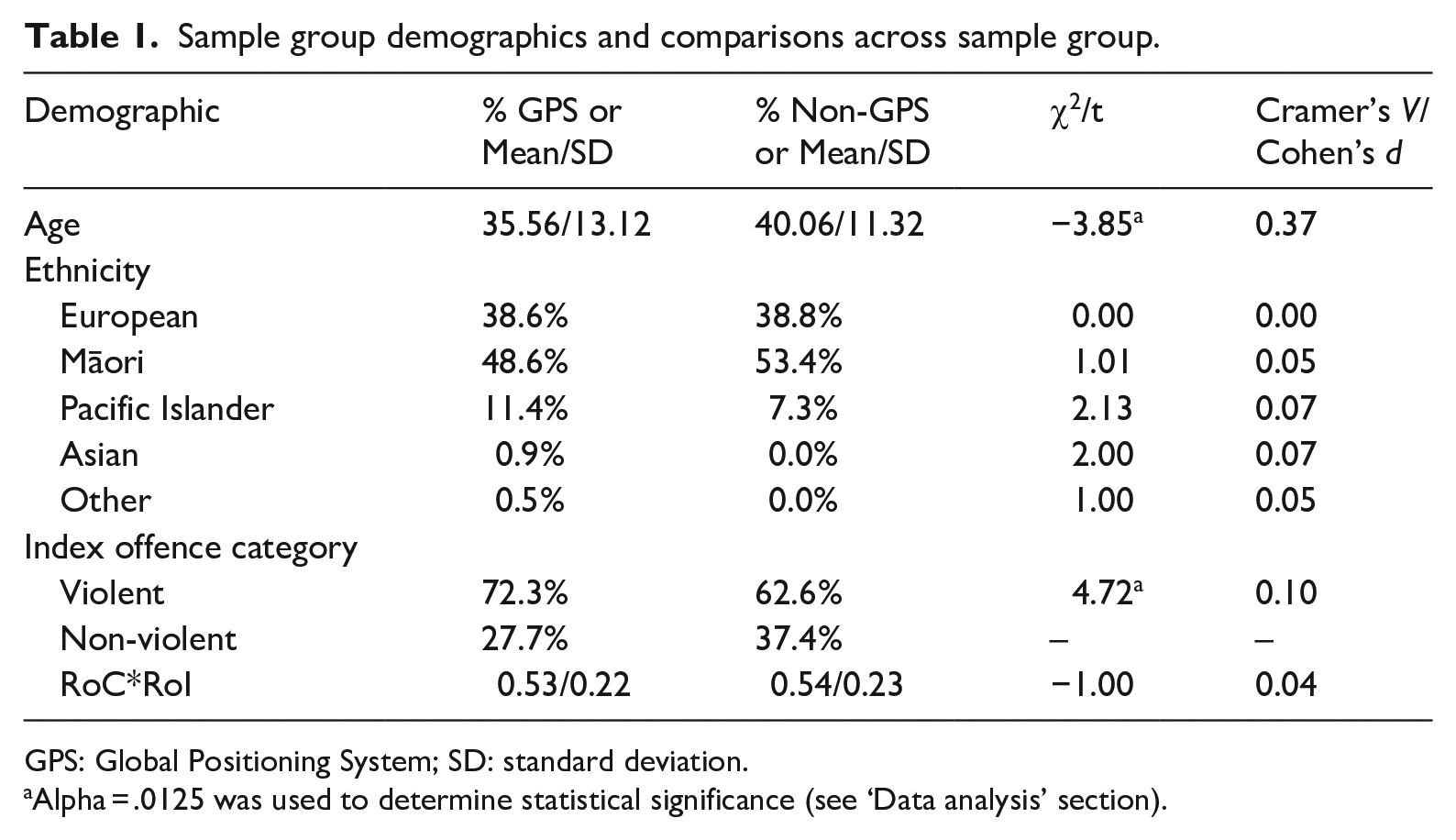
GPS: Global Positioning System; SD: standard deviation.
Alpha = .0125 was used to determine statistical significance (see ‘Data analysis’ section).
Measure
Dynamic Risk Assessment for Offender Re-Entry
The DRAOR is a 19-item risk assessment tool developed to assist probation officers in their management of offenders in the community (Serin, 2007). It is divided into three subscales, the stable dynamic risk factors, the acute dynamic risk factors and the protective factors. For this study, the acute item ‘negative mood’ was used to understand the impact GPS monitoring has on an offender’s emotional well-being. The purpose of this item is to determine whether an offender has either acute negative mood or a continued presence of negative mood (ranked as ‘definite problem’). Low negative affect or mood involves a state of calmness and serenity, while negative affect can include a variety of aversive mood states such as sadness, hopelessness and fearful worry (Watson et al., 1988). Probation officers score an offender’s presentation on the DRAOR after each contact, which can range from daily contact to once a fortnight depending on the person’s level of risk and engagement with their order. The initial DRAOR assessment provides the baseline measure and repeated administration of the tool captures any changes in the offender’s circumstances and changes in any of the dynamic risk and protective factors. The Acute scale is assessed at each contact with the offender with the Stable and Protective scales being reassessed at the probation officer’s discretion as new information is ascertained (Wilson, 2011).
For the purpose of this study, the initial and final DRAOR scores were both used as predictors. The first DRAOR assessment completed for each offender was selected to represent the baseline. The last assessment was the assessment completed for each offender prior to recidivism or study end date. This allowed for looking at change in the DRAOR scores over time as an index of risk prediction.
All of the DRAOR factors are scored on a 3-point scale. Factors within each scale are scored on a scale of 0–2, with 0 being ‘not a problem’, 1 being a ‘possible problem’ and 2 being a ‘definite problem’ for the individual. The protective factors are similarly measured, with a score of 0 indicating the factor is ‘not an asset’, 1 being a ‘slight/possible problem’ and 2 being a ‘definite asset’.
Re-offending
The study examined re-offending for up to 24-months for the sample group following their release from prison. Information was collected on the type of reconviction, the date of reconviction and the offence type, this was only for re-convictions for new offences. For this study there were four possible recidivism categories: ‘overall re-offending’, ‘non-violent’, ‘violent’ and ‘administrative’. ‘Overall re-offending’ included all reconvictions for the sample. The ‘violent’ category consisted of reconvictions for domestic violence, assault and aggravated robbery. ‘Non-violent’ re-offending consisted of drug related, criminal driving and property offences. ‘Administrative’ 3 re-offences were defined as technical breaches of conditions of release.
Data analysis
For all analyses, a conservative alpha level for statistical significance was used. More specifically, because the four main outcome variables throughout the analyses were re-offence variables (‘overall re-offending’, ‘violence’, ‘non-violent’ and ‘administrative’), a Bonferroni-corrected alpha level was derived from dividing the conventional alpha level of .05 by 4, resulting in an alpha level of .0125. This alpha level was used to determine statistical significance for all analyses conducted. Effect size estimates were also calculated for all analyses and different estimates were interpreted in accordance with Cohen’s (1988) recommendations for small, medium and large effect size (e.g. r = .10–.29 is small; .30–.49 is medium and .50+ is large).
Despite attempts to match the groups on the variables requested, age at time of release and violent index offence were significantly different across the GPS and non-GPS monitoring groups. They were also significantly associated with the re-offence outcome variables (χ2s > 9.95, ps < .0125), which is a requirement for inclusion as a covariate (e.g. Miller and Chapman, 2001). However, and perhaps surprisingly, violent index offending was not associated with violent re-offending (χ2 = 2.75, p = .097) and was therefore not included as a covariate in analyses of such outcomes.
To examine the research questions of whether there were differences between re-offending rates in the GPS-monitored and non-GPS-monitored group, and to explore re-offending rates over time, the time to re-offence within the groups was incorporated using a Cox regression survival analysis. Age and violent index offence were also entered as covariates in these analyses (except for the violent re-offending outcome for which only age was entered). The Cox regression analysis is a special form of logistic regression that examines the probability for the event to occur across different time points for the duration of the follow-up period. In other words, a survival analysis considers not only the differential likelihood of the event occurring across groups but also the differential in time to such occurrence. This analysis incorporated the number of months a person was at risk of reconviction, which allowed for the cumulative survival of the group to be calculated. Finally, a repeated-measures analysis of variance (ANOVA) was conducted to address the research question of whether GPS monitoring impacted negatively on an offender’s mood over the duration of the electronically monitored period. Specifically, the DRAOR negative mood variable at initial and final assessment time points was the within-subjects variable, whereas GPS condition was the between-subjects variable.
Results
Group differences in rates of re-offending
Of the 439 total number of participants in this study, 320 (72.9%) were identified as having re-offended and subsequently reconvicted during the follow-up period. Of these, convictions were for violent (86) (26.9%), dishonesty (65) (20.3%), driving (55) (17.2%), drug (20) (6.3%), administrative (90) (28.1%) and sexual (4) (1.3%) offending. Among those who re-offended, the average mean time to re-offence was 14.11 months (SD = 8.82; range = 1–24 months).
To investigate whether there were differences in re-offending rates in GPS-monitored and non-GPS-monitored groups and to explore the time to re-offending within the groups, a Cox regression analysis was conducted. This allowed for comparison of time to re-offending for the two groups over the course of the 24-month follow-up period, as well as control for the age and violent index offence variables on which the GPS and non-GPS monitoring groups differed. The survival analysis (see Table 2) showed statistically significant difference for ‘non-violent’ and ‘violent’, which indicated that those individuals not subject to GPS monitoring, on average, were quicker to re-offend non-violently and violently compared to GPS-monitored individuals over the course of the 24-month period.
Cox regression survival analysis using GPS-monitored versus non-GPS-monitored offenders to predict re-offending over time.
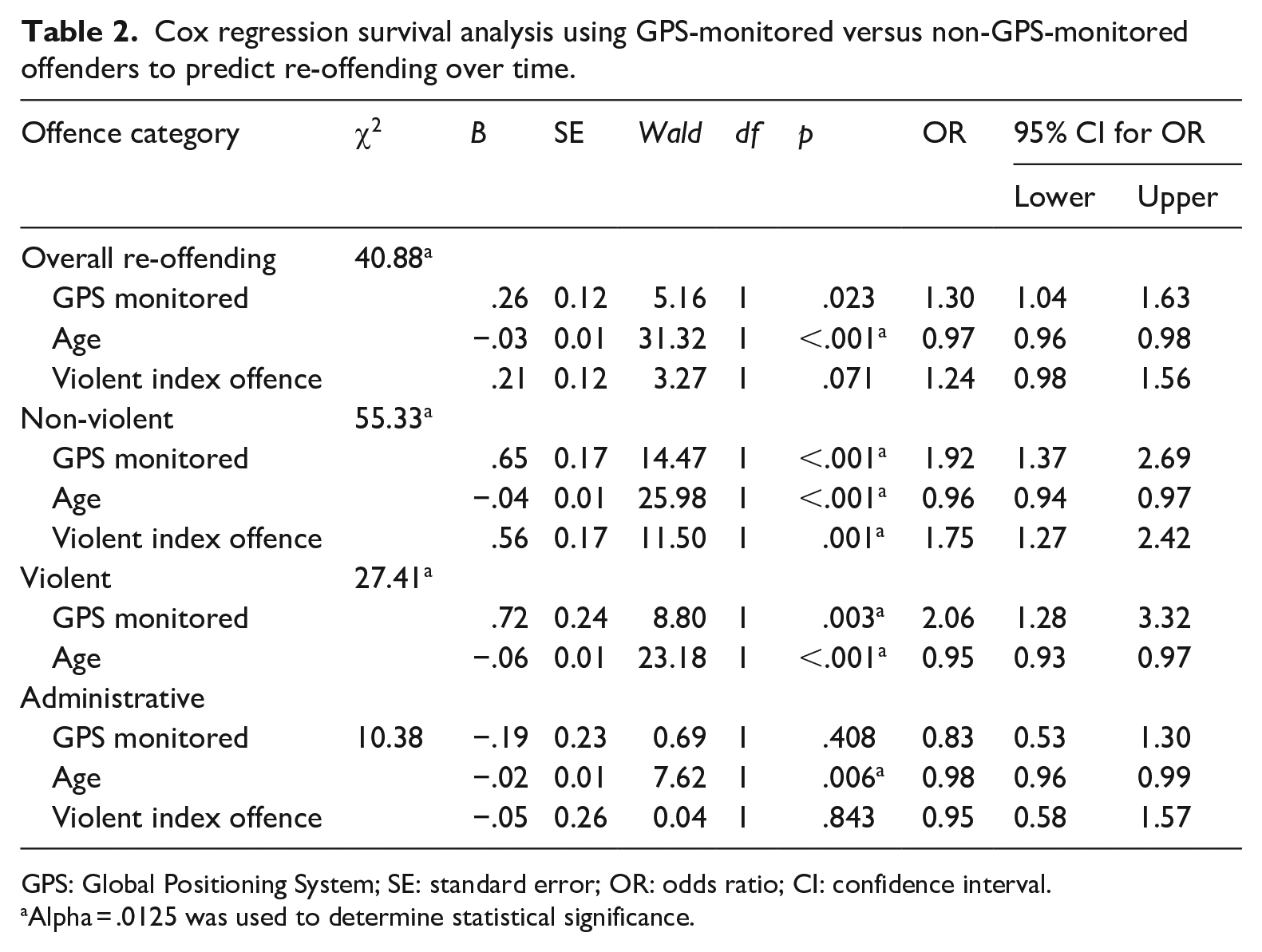
GPS: Global Positioning System; SE: standard error; OR: odds ratio; CI: confidence interval.
Alpha = .0125 was used to determine statistical significance.
Figures 1 to 3 show the survival graphs for ‘overall re-offending’, ‘non-violent’ and ‘violent’ re-offending in the sample group, respectively, for a graphical depiction of the overall group and the only significant results over time for each group. For all graphs, the x-axis shows number of months, and the y-axis represents cumulative overall survival.
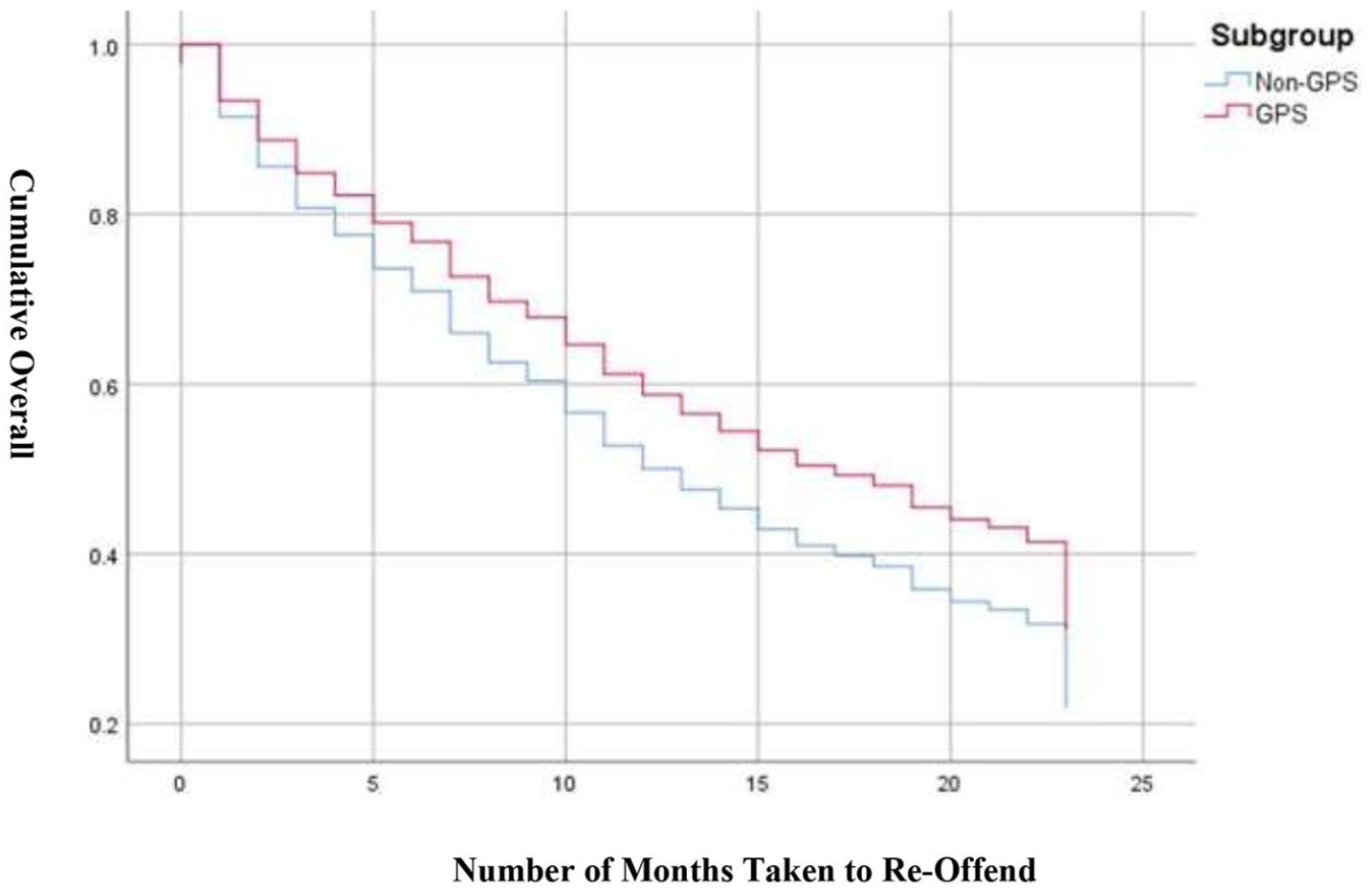
The survival curve for overall re-offending for offenders subject to GPS monitoring versus non-GPS-monitored offenders.
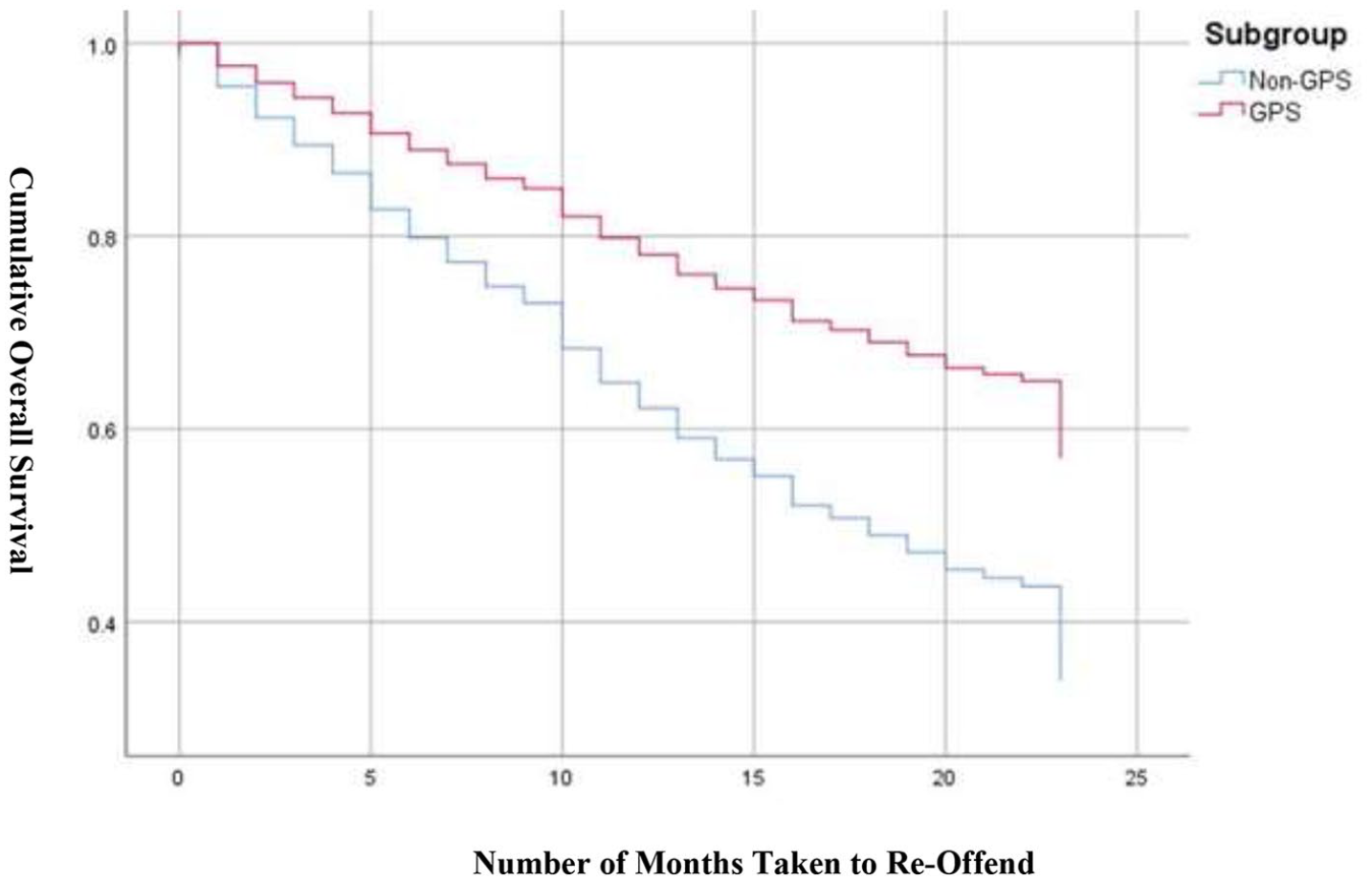
The survival rates for ‘non-violent’ re-offending for both the GPS-monitored and non-GPS-monitored groups.
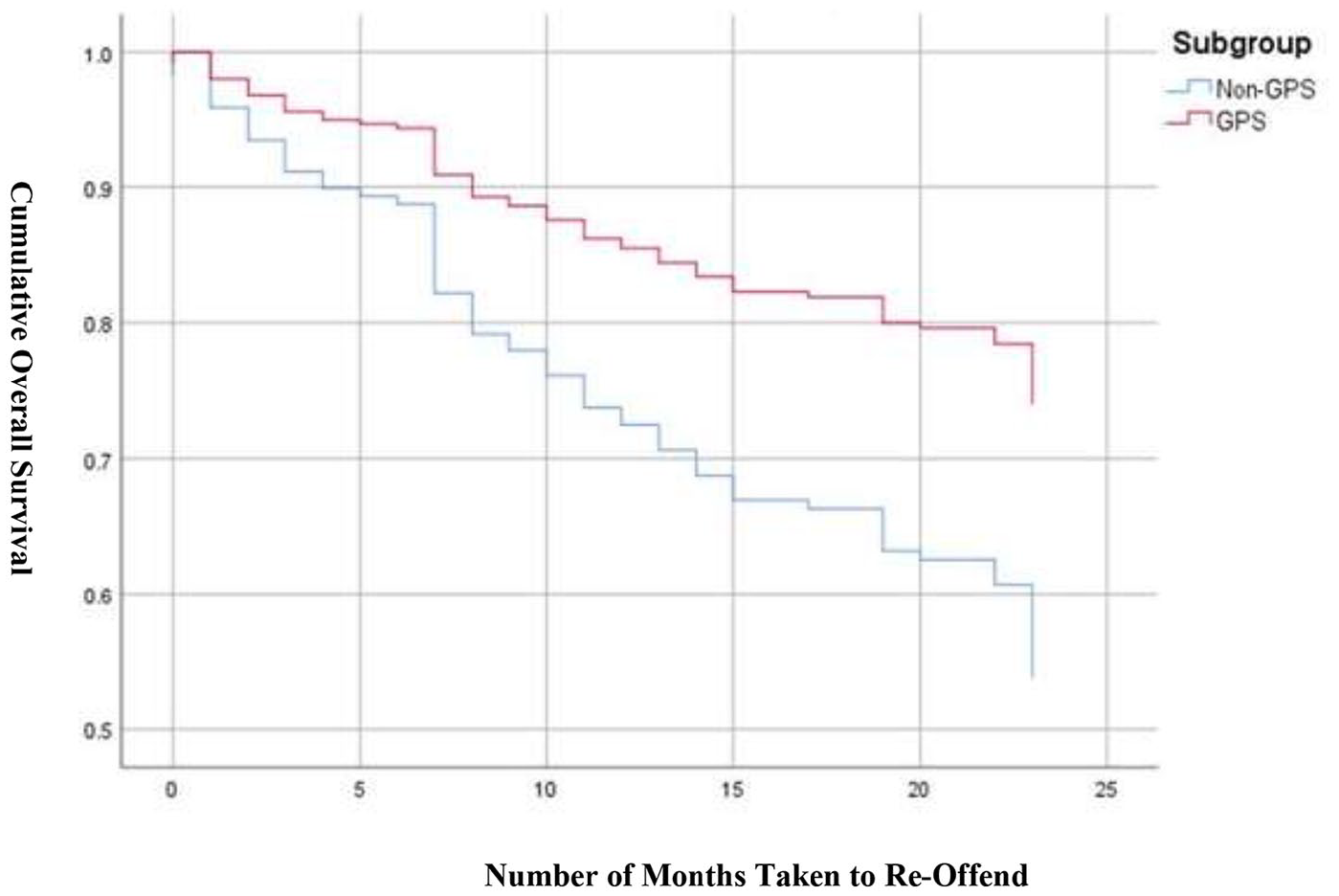
The survival rates for ‘violent’ re-offending for both the GPS-monitored and non-GPS-monitored groups.
Figure 1 shows the survival curve for ‘overall re-offending’ for both groups. An examination of the slopes shows a steady failure rate for both groups across the 24-month follow-up period. Although the survival rate appears better for GPS-monitored offenders, the difference was not statistically significant. Figure 2 shows the survival curve for the ‘non-violent’ offence category for offenders subject to GPS monitoring versus non-GPS-monitored offenders. The non-GPS-monitored group tended to be reconvicted of ‘non-violent’ offences more rapidly and to a greater degree than did the GPS-monitored group. The difference became apparent within the first 5–10 months of the follow-up period. Figure 3 shows the survival curve for the ‘violent’ offence category for GPS-monitored versus non-GPS-monitored offenders. The non-GPS-monitored group tended to be reconvicted of ‘violent’ offences more rapidly and to a greater degree than did the GPS-monitored group. The difference became apparent after the first 7 months of the follow-up period.
Negative mood stability
The mean scores for initial negative mood for the non-GPS-monitored and GPS-monitored groups upon release were similar (M = 0.37, SD = 0.53; M = 0.34, SD = 0.54). The final assessment of negative mood showed a slight decrease in the mean scores for both groups (M = 0.32, SD = 0.53; M = 0.31, SD = 0.53, respectively). However, the results of the repeated-measures ANOVA indicated that there was no significant change in negative mood over time for the overall sample (F = 1.38, p = .240,
Discussion
This study was an investigation into the use of GPS monitoring on offenders in New Zealand. These findings indicate that GPS monitoring acts as a moderator in terms of re-offending specifically for ‘non-violent’ and ‘violent’ re-offence categories. Moreover, the survival analyses showed that months to re-offence was greater for the GPS-monitored group when compared with individuals who were not subject to any EM, for those in the ‘non-violent’ and ‘violent’ re-offending groups. These findings, however, did not emerge for the ‘administrative’ re-offence category. These findings would support the conclusion that GPS is a useful supervision tool in both decreasing ‘violent’ and ‘non-violent’ re-offence rates as well as increasing time to re-offence when compared with no use of EM. Finally, and contrary to expectations, we did not see evidence for decrease in negative mood over time in the GPS-monitored group compared with the non-GPS comparison group.
One possible reason why GPS is a moderator of behaviour is the presence of the anklet and surveillant nature of the technology which serves as a reminder of the person’s constant monitored status and provides encouragement to comply with their order requirements and remain offence free (Nellis, 2009). GPS monitoring can also act to remove destabilising factors and support the overall functioning of individuals in the community. GPS can reduce exposure to high-risk situations for offenders, thereby minimising the likelihood of risk in their environment (Hucklesby, 2009).
An unexpected finding of this study was the effectiveness of GPS monitoring to reduce re-offending rates for those who committed ‘violent’ offences. The effect size in the Cox regression analyses for ‘violent’ (2.06:1) was stronger than ‘non-violent’ (1.92:1). It was hypothesised that GPS monitoring would reduce ‘non-violent’ re-offending but not ‘violent’ re-offending, given that violent offending is often characterised by spontaneous, emotion-driven responses (Barratt, 1991). It was therefore not considered that GPS monitoring would act as a preventive measure for individuals with such offending.
In principle, EM technology increases the likelihood of non-compliance being detected and increases the ability of probation officers to respond (Hucklesby, 2009). Previous research has found that offenders are conscious that they are being monitored and therefore are more likely to comply with the requirements of their order (Hucklesby, 2009; Padgett et al., 2006). Others have identified that EM has promoted a stronger bond with their communities and family, reducing the likelihood of non-compliance (Payne and Gainey, 2004); Payne and Gainey also found that many offenders implied the EM equipment taught them self-control. Our finding indicated that GPS monitoring was less likely to reduce administrative re-offence rates is inconsistent with previous research (Hucklesby, 2009; Padgett et al., 2006; Payne and Gainey, 2004) that has found that GPS monitoring reduced the likelihood of non-compliance. However, it is also possible that non-compliance within the GPS-monitored group was more likely to be detected as a result of the electronic equipment than that for the non-GPS-monitored group, thereby possibly masking actual higher re-offence rates in the latter. Furthermore, given that GPS monitoring only provides information about the offender’s location, not what they are doing or with whom they are associating, there is the potential for non-compliance to not be detected. As such, some offender behaviour might not be deterred by the EM equipment.
The question of what EM can contribute to offender compliance has become the interest of many correctional jurisdictions. EM is a form of ‘constraint-based compliance’ (Bottoms, 2001), which refers to external measures being placed on the offender to reduce their opportunity not to comply. The implication of the finding that those subject to GPS monitoring had a higher re-offence rate for administrative offences suggests that GPS monitoring had no influence on compliance when compared with those who were not GPS monitored. Robinson and McNeill (2008) found offenders considered the reliability of the equipment and breaches being able to be detected in their decision making of whether they would be caught or not. Other considerations will relate to the potential punishment for non-compliance. This research, however, provided evidence that offenders’ compliance is shaped and informed by a complex number of factors (Bottoms, 2001; Hucklesby, 2009), and future research needs to further elucidate the reasons why GPS monitoring might have little to no effect on compliance.
The findings indicate that GPS monitoring has different associations, depending on the type of re-offending, and has a greater risk reduction potential for those offenders who commit ‘non-violent’ and ‘violent’ offences but has little effect for offenders who commit ‘administrative’ offences. It has been argued that while reducing re-offending related risk factors and propensity to offend is the long-term goal, minimising exposure to opportunities or high-risk situations in an offender’s environment is an equally important short-term goal (Cullen et al., 2000). If GPS monitoring helps to contribute to the long-term goal of reduction in re-offending by moderating an individual’s behaviour and the short-term goal of reducing an individual’s exposure to high-risk situations through surveillance, restrictions and monitoring, there is the potential to facilitate better outcomes for offenders and the community.
The secondary research question considered in the current study was the relationship of GPS monitoring and the stability of offenders’ mood. It was hypothesised that GPS monitoring would have a negative association on offenders’ mood due to the surveillant and intrusive nature of the technology. The results did not support this hypothesis. The findings were contrary to those of Church and Dunstan (1997) who found that there were significant psychological impacts from EM more generally. These inconsistencies in findings across studies may illustrate that different EM programmes might have differing impacts on an individual’s well-being. Previous research, which has focused on the relationship between EM and the well-being of offenders, has predominantly examined the experiences of offenders subject to home detention (Church and Dunstan, 1997; Gibbs and King, 2003; Mair and Nee, 1990). Unlike home detention, with GPS monitoring used for whereabouts conditions, the offender is not restricted to the residence. This finding suggests that the more restrictive the EM programmes, the more intrusive it is on the offender’s life, causing stress and anxiety (Roberts, 2004; Staples, 2005), rather than being specific to the technological surveillance. This distinction is important for future research because it will help us to better understand the impacts of different EM programmes.
Implications
The current research findings offer several key implications. First, the current study tentatively supports the risk reduction potential of GPS monitoring when compared with no use of any EM technology. The study further illustrated that GPS monitoring was more effective in reduction of re-offending and time to re-offence for general and violent recidivism than technical compliance. Since 2012, New Zealand Department of Corrections has expanded and increased the use of GPS monitoring in the use of offender management. The cost of EM on average for an offender per day is $69 ($25,185 per annum). Although the findings potentially favour GPS monitoring as a tool to reduce re-offending from non-violent and violent criminal conduct, the difference in risk of ‘non-violent’ and ‘violent’ re-offending was 1.92:1 and 2.06:1, respectively, for non-GPS-monitored offenders based on the odds ratios from the survival analyses. More specifically, those who were not GPS monitored were on average twice as likely to re-offend over time compared with those subject to GPS monitoring. This indicated that those who are GPS-monitored were approximately two times less likely to re-offend compared with those who are not GPS-monitored. Therefore, further policy implications not only include decisions on which types of offenders should be subject to EM but whether EM is a cost-effective and efficient tool in reducing recidivism. This study did not include a cost analysis of EM versus imprisonment, but New Zealand Department of Corrections may want to consider their commitment to GPS monitoring in relation to cost versus the proportional improvement in re-offending rates. On the contrary, there was no evidence of increased negative mood for those subject to GPS monitoring based on probation officers’ ratings of offenders’ negative mood factor on the DRAOR. This finding, combined with the fact that GPS monitoring did produce meaningful reductions in recidivism, may further outweigh the monetary cost associated with EM programmes, as reducing re-offending and making New Zealand a safer place are key objectives of New Zealand Department of Corrections.
Limitations and future directions
This study highlighted a number of important aspects as to how GPS monitoring is performed; however, there are some limitations in light of which the conclusions must be considered and that also provide avenues for future research. The current sample was limited to male offenders from New Zealand; as such, the results may not be representative of female offenders or those from other countries. Women and men have different crime trajectories, and certain risk factors may be more prevalent or be differentially predictive of recidivism for men and women (Andrews et al., 2012). Moreover, the utility and applicability of EM on re-offending should be examined on low-risk populations, as a majority of research specifically in New Zealand has considered offenders subject to parole or those who have committed sexual offences, who generally are of higher risk of re-offending.
We tried to match the GPS and non-GPS monitoring groups perfectly on our selected demographics, static risk level and index offending; however, suitably matched groups can be difficult to achieve given the number of variables which impact on recidivism, including gender, age, employment status and assessed risk (Bonta et al., 2000). Care was taken to match the groups sufficiently on ethnicity, the RoC*RoI and index offence to the degree possible. Age at release and violent index offence were two variables which were significantly different across the two groups and also related to the re-offending outcome variables. There was a small difference in that the non-GPS-monitored offenders were older, which could have potentially had a ‘protective’ effect for those offenders, as research has shown criminal conduct often reduces with age (Smith, 2003). Indeed, when controlling for age (and violent index offending), differences emerged more clearly, and at larger effect size estimates, between GPS and non-GPS groups with respect to re-offence rates.
There were a limited number of comparison variables for the matched groups. Ascertaining more information regarding the participants would have enhanced the match groups and understanding of the impact of GPS monitoring. Unfortunately, this study was confined to data available through the New Zealand Department of Corrections and no further interviews were able to be conducted with participants. Obtaining further information regarding the offenders’ criminal history, social background, community connections and health and how they impact are important areas for further study. Furthermore, interviews with participants will help inform how and why GPS monitoring worked in this way. Future research that explores the ‘how and why’, the relationships and their complexity is needed.
The negative mood variable of the DRAOR assessment was used to assess the stability of offenders’ mood across groups and over time. This factor has definite parameters focused on negative affect and cannot be considered the optimal measure to determine an offender’s emotional and psychological well-being when subject to EM. As noted, this study was confined to data available through the Department of Corrections. Future research should use well-validated rating scales and self-report inventories to determine whether the findings reported here do indeed replicate.
Re-offending is often considered the optimal standard by which to measure the effectiveness of correctional tools and interventions; however, it must be acknowledged that there are a number of conceptual and methodological limitations with its accuracy of measurement. These limitations include the various interpretations and definitions of re-offending, with measures of recidivism including re-arrest, reconviction, imprisonment, re-arraignment or probation violations (Andersen and Skardhamar, 2017; Ruggero et al., 2015). Taking a broader approach to recidivism measures will provide more meaningful information as to what is effective in crime reduction (Lyman and LoBuglio, 2006).
Conclusion
There have been mixed results in terms of the effectiveness of EM in reducing re-offending rates across numerous jurisdictions, with little research into the effectiveness and impacts of GPS monitoring alone (Bonta et al., 2000; Finn and Muirhead-Steves, 2002; Marklund and Holmberg, 2009; Padgett et al., 2006; Renzema and Mayo-Wilson, 2005). This study was the first validation of GPS monitoring of offenders within New Zealand. The findings provide a fresh insight into GPS monitoring and contribute to our understanding of how this tool can be used within a correctional setting. Overall, the findings favoured GPS monitoring as an effective tool in reducing recidivism for non-violent and violent offending, with those who are GPS monitored being approximately twice less likely to re-offend compared with those who are not. The findings highlight the need to take into consideration the application of GPS monitoring with differing offence types, namely being more effective in reduction of re-offending and time to re-offence for general and violent recidivism than administrative or technical compliance. Furthermore, there was no evidence of increased psychological distress for those subject to GPS monitoring based on probation officers’ ratings of negative mood. This finding, combined with the fact that GPS monitoring did produce meaningful reductions is recidivism, may outweigh the resourcing and monetary cost associated with EM programmes. Overall, these findings are important, as not only will we be able to provide the most effective form of monitoring but also increase our understanding of long-term moderating effects of GPS monitoring.
Footnotes
Acknowledgements
The authors would like to acknowledge and thank New Zealand Department of Corrections for providing the data for this research project.
Author Contributions
All authors have contributed and approved the manuscript.
Declaration of Conflicting Interests
The author(s) declared no potential conflicts of interest with respect to the research, authorship and/or publication of this article.
Funding
The author(s) received no financial support for the research, authorship and/or publication of this article.
