




Abstract
Police services in England and Wales have developed varied approaches to the use of conditional cautions, and this study examines the effectiveness of one set of reforms: a Revised Conditional Caution Framework. With an overall aim of diverting offenders from the Criminal Justice System and addressing offenders’ criminogenic needs, various programmes of meaningful activity were mandated for offenders. The Revised Conditional Caution Framework refers offenders to a relevant ‘pathway’, to address their offending behaviour(s). If an offender fails to complete the activity within the relevant pathway, without good reason, they revert back through the court system. The aim of the Revised Conditional Caution Framework was to apply meaningful conditions to the conditional caution (e.g. alcohol educational intervention), to focus upon addressing the root cause of the offending behaviour. In this study, the authors evaluated the effectiveness of the Revised Conditional Caution Framework in reducing reoffending. The research was conducted between January 2018 and May 2019 and adopted a mixed methodology of qualitative and quantitative research; notably, focus groups with police officers, semi-structured interviews with offenders and pathway providers and an analysis of police data on offender compliance levels. We found that the Revised Conditional Caution Framework is perceived by many professionals and offenders to provide a platform for tackling the root cause of recidivism and thereby reducing reoffending. It is argued that the premise of Revised Conditional Caution Framework is one that conceives of offending in individualistic terms that pay insufficient attention to the social and economic context in which offending is situated. The article also raises questions about the impact of the Revised Conditional Caution Framework on police professionalism and argues that it might be understood as a restriction on the exercise of discretion since it further restricts officers’ scope to respond to offenders and criminal behaviour.
Keywords
Introduction
In England and Wales, about 29% of offenders reoffend within 1.5 years of release from custody or receiving a non-custodial sentence or caution (Ministry of Justice (MOJ), 2020). Recidivism or reoffending is caused by many factors, such as experience of criminality, unemployment or employment challenges, accommodation problems, substance misuse, mental health issues, behavioural disorders and biological factors, peer pressure or wrong association, family issues and upbringing (Brunton-Smith and Hopkins, 2013; Van der Put and De Ruiter, 2016; Wolff et al., 2020). The prison system in England and Wales is also problematic given its failure to successfully rehabilitate a substantial number of prisoners who reoffend following their release from prison. Almost half of adults released from prison reoffend within a year of their release and recidivism rates for those serving shorter sentences are higher still (and higher than offenders who receive non-custodial sentences for similar offences; Prison Reform Trust, 2019). To tackle recidivism, multiple initiatives or programmes have been established by government and organisational partners. These include clinical, psychological, educational and employment interventions which show mixed and promising results in reducing recidivism (Ellison et al., 2017; Farley and Pike, 2016; Wakeling et al., 2013). Another recent approach is the enhancement of non-custodial interventions, such as out-of-court disposals (OOCDs). It is a version of this model that is analysed in this article.
OOCDs are a group of disposals that are alternatives to prosecution at court for certain criminal acts. They are designed to allow the police to deal quickly and proportionately with low-level, often first-time offending, by providing a simple, swift and proportionate response to low-risk offending that reduces the number of times courts have to deal with minor and undisputed matters (Ames et al., 2018; HMIC and HMCPSI, 2011). The current OOCD framework contains seven different disposal types. These are (1) simple cautions (SCs), (2) conditional cautions (CCs), (3) community resolutions (CRs), (4) penalty notices for disorder, (5) cannabis warnings, (6) khat warnings and (7) fixed penalty notices (FPN) (Ames et al., 2018).
OOCDs have received government support, with the MOJ Green Paper ‘Breaking the Cycle’ (2010) arguing they can deliver victim satisfaction and minimise the cost of taking the offender further into the criminal justice system. There is evidence that they can be effective and support rehabilitation. However, a lack of methodological rigour in some evaluations makes it difficult to draw firm conclusions about the rehabilitative impact of OOCDs (Neyroud, 2018). OOCDs can divert offenders away from court in ways that require their engagement with services, which when designed to meet specific offender needs can help to address underlying issues that drive offending. Keeping in mind the caveat above, regarding methodological limitations, available data suggest that OOCDs can support rehabilitation and reduce reoffending for various types of offenders and offending (e.g. drug crime and domestic abuse; Blakeborough and Pierpont, 2007; Easton et al., 2010; Lipsey and Cullen, 2007; Neyroud, 2018; Payne et al., 2004). Research has found those receiving OOCDs are less likely to reoffend, with 15% of those cautioned in such a manner in 2015 reoffending within a year compared with 27% of those receiving a conditional or absolute discharge at court. Positive recidivism results for those given OOCDs accrue (to a more limited extent) when differences between offenders are taken into account (Allen, 2017). A review, commissioned by the National Police Chief’s Council of England and Wales, into the impact of OOCDs, found they were effective, compared with court prosecutions, at reducing offending and reducing harm and are most appropriate for low-risk offenders committing low-harm offences, but may also be effective with moderate-risk offenders (Neyroud, 2018). The positive results accrued for juveniles and adults. The review identified the need for ensuring appropriate implementation, highlighting the critical importance of ascertaining eligibility, effective needs assessment, appropriate condition setting and effective tracking if OOCDs are to support rehabilitation (Neyroud, 2018).
Despite their apparent positive contribution to rehabilitation, the use of OOCDs has attracted criticism. There have been historic concerns about difficulties establishing the boundary between use of OOCDs and court prosecution (Steer, 1970). There are concerns that OOCDs may marginalise courts roles in the criminal justice process, impose penalties in a non-judicial setting, and that the use of OOCDs lacks safeguards. Some judges, magistrates and lawyers argue offenders may accept a caution (a type of OOCD) when they are not guilty, or when they do not understand the implications of accepting a caution for their criminal record (Allen, 2017). 1 The Chair of the Magistrates Association in England and Wales argued in 2009 that OOCDs are used inappropriately widely (including as a response to serious offences and repeat offenders) due to a lack of appropriate police judgement, resources and training. Research has identified erratic use, inappropriate application of OOCDs for unsuitable offence types as well as OOCDs used with repeat offenders and problematic use of police discretion when administering OOCDs (Ames et al., 2018; Donoghue, 2014; Evans and Wilkinson, 1990; Gibbs, 2017; Giller and Tutt, 1987; HMCPSI and HMIC, 2015; Neyroud, 2018; Slothower et al., 2015; Slothower, 2014; Sosa, 2012; Westmarland et al., 2017). A House of Commons Home Affairs Committee (2015) report reporting on the use of OOCDs (excluding FPN) criticised inappropriate use of OOCDs for serious offences and repeat offenders and inconsistent ‘postcode lottery’ application across the 43 police force areas. The report deemed the recording of OOCDs unhelpful in instilling public confidence in the system. It has been argued that police discretion has stretched the definition of restorative justice (which can be utilised through OOCDs) to such an extent it has – on occasion – failed to reflect its key principles when implemented (Westmarland et al., 2017). A decline in the recent use of OOCDs, linked to legislation to limit their use (e.g. the 2015 Criminal Justice and Courts Act), suggests any overuse of cautions is being addressed.
A growing awareness of the problems associated with the implementation of OOCDs led the MOJ to conduct an extensive consultation exercise with stakeholders and practitioners regarding OOCDs. This confirmed the prevailing view that the current OOCD framework was a confusing, complex mix of disposals (many of which were simply warnings not to offend again) and there was a lack of transparency in terms of what was involved (MOJ, 2014). This led to the piloting of a simplified OOCDs framework comprising of only two options, CCs and CRs. Evaluation of the revised framework by Ames et al. (2018) found no difference between the pilot and counterfactual areas that used the original suite of OOCDs in proven reoffending within 3 months. Thus, despite evidence of the potential positive impacts of OOCDs on recidivism, their implementation has not been problem free and there is currently little evidence that the simplified framework has more positive impacts on rehabilitation than the old model. It is in this context that Northumbria Police launched its revised OOCD scheme, named the Revised Conditional Caution Framework (RCCF).
In this article, we outline initial evidence in relation to the impact of the RCCF on reoffending rates and move on to review original qualitative data from police staff, service providers and service users that give insight into their experiences of this approach. In the conclusion, we note that the framework was widely regarded positively (although the reoffending data are somewhat moot) since it was seen to reduce criminalisation and provide a platform from which to address criminogenic behaviour. Concerns arise, nonetheless, in relation to the sustainability of the provisions, and that the underpinning model of offending behaviour does not address the social and economic context in which crime is committed (albeit it is acknowledged that criminal justice provisions of any kind rarely are positioned to tackle crime on these levels). Prior to discussing these themes and our data, the article first outlines the local context of the RCCF analysed.
The RCCF at Northumbria Police
In 2016, Northumbria Police conducted a review of its OOCD process and implemented the RCCF. The RCCF is designed to divert offenders from the Criminal Justice System and address offenders’ criminogenic needs via various pathway options. In adopting the RCCF, the anticipated outcomes were twofold: an improvement in victim satisfaction and a reduction in reoffending. The RCCF referred offenders to a particular ‘pathway’, identified as most suitable to address their offending behaviour. Each pathway resulted in an intervention of some kind with the offender. Police officers had some limited discretion as to which pathway an offender was referred to, since it was mandatory for women to be referred to the women’s pathway, and that those who have served in the armed forces be referred to the veteran’s pathway. The service pathway providers were pre-existing and independent organisations, often third sector, with wider mandates to support their clients. The support given by the pathway provider to the RCCF was by mutual agreement between the provider and the Northumbria Police, and the police did not fund the activities provided.
The pathways were devised based upon research literature and observed offending behaviour. They were as follows:
Women’s pathway: A specific women’s pathway was devised based upon research demonstrating that female offenders have different and complex needs compared with male offenders (Bartlett et al., 2015; Rodermond et al., 2016). The female offender was required to undertake an assessment of their offending-related needs at a local women’s hub within 28 days of the CC being imposed. The assessment covered several areas including substance misuse, social networks and relationships, accommodation and offending.
Victim awareness (V-aware): A pathway which explored the consequences of repeat offending, specifically aimed at male offenders who would benefit from a behaviour change programme and suitable for cases where there is an identifiable victim. The offender was required to participate in the programme within 12 weeks of the CC being imposed.
Veterans’ pathway: This programme was run by a third sector organisation and specifically aimed at ex Her Majesty’s Forces involved in the criminal justice system. Existing data show that veterans exhibit certain characteristics such as psychological/mental disorders and substance misuse which may lead to offending behaviour (Short et al., 2018). Under this programme, the male offender completed a personalised one-to-one assessment of their offending-related needs within 28 days of the CC being imposed to gain an understanding of the specific issues which the offenders face and to identify what support can be given to reduce the likelihood of further offending. The co-ordinators may have referred to a wide range of agencies who can support the veteran aimed at addressing their needs, for example substance misuse, housing, welfare assistance, financial advice and support, anger management, domestic abuse, mental health and employment support.
Unpaid work: This pathway was for male offenders, who completed one session of unpaid work lasting 7 hours, within 28 days of the CC being imposed. This unpaid work was completed in one session for the benefit of the community and, alongside this form of punishment, was intended to teach valuable practical skills.
Alcohol or drug triage assessment and alcohol brief intervention: This pathway was for those male offenders who commit an offence while under the influence of drugs or alcohol. The offender completed an assessment of their substance misuse within 28 days of the CC being imposed. Those misusing alcohol were also required to undertake an educational intervention. This pathway was provided by locally commissioned (local authority/public health) drug and alcohol treatment services.
ABC (alcohol behaviour change): The police officer in the case differentiates between the alcohol triage assessment and the ABC course by completing the Alcohol Audit Assessment Tool with the male offender. Those scoring between 0 and 15 (considered low or increasing risk) are referred to the ABC course and those scoring 16 to >20 (considered harmful drinking or dependency) receive a triage assessment and alcohol intervention (as outlined in the previous category). The ABC programme was completed within 12 weeks of the CC being imposed. The male offender must pay £45 to do this programme and it focused on drinking and its impact on health, alcohol and the law together with how it puts them and others at risk.
The overarching aim of this research was to assess the effectiveness of the RCCF in addressing the root causes of offending behaviour and its impact on reoffending. The specific aims were as follows:
To compare the offending and reoffending data for the pre-RCCF (October 2016–September 2017) and Post-RCCF (October 2017–September 2018) implementation periods to determine the impact of the RCCF on reoffending.
To identify the types of offence associated with reoffending among the RCCF group.
To compare the crime severity score 6 months after the issuance of a CC among the RCCF group. The crime severity score has been developed by the Office of National Statistics and the measures the ‘relative harm’ of different crimes with the most harmful crimes (e.g. homicide) attracting a higher score than less harmful crimes (e.g. possession of cannabis).
To determine the association between demographic characteristics and reoffending behaviour among the RCCF group.
To determine the views of stakeholders, including pathway providers, offenders and police officers, about the impact and limitations of the RCCF on reoffending through qualitative interviews and focus groups.
Throughout the rest of the article, these objectives are discussed as we consider the extent to which the RCCF achieved its stated aim of reducing reoffending. Beyond this, particularly in the final discussion section, broader socio-economic and organisational context of criminal justice is considered in terms of the inclusion of multiple cross-sector partners in the delivery process and the implications that the RCCF had on police professionalism. Furthermore, the RCCF reflects, perhaps only implicitly, a model whereby the offender has agency and capacity to tackle their ‘problematic’ behaviour in ways that ignore recent desistance strategies that are ‘strengths based’ (Best and Colman, 2019). The socio-economic context of offending, we argue, needs to be addressed if the apparent strengths of the RCCF are to be fully realised and sustained.
Methodology
Mixed methods approaches are increasingly recognised as a valuable way to gather data in criminological research. The approach is a pragmatic way to undertake thorough investigation, by enabling the collection of both qualitative and quantitative data required to produce a fuller understanding of performance, issues, realities and perspectives related to the focus of a research study (Crow and Smykla, 2013; Heap and Waters, 2018; Wilkes et al., 2021). Use of mixed methods within criminological research has included the use of this approach to successfully undertake research focused on OOCDs (see Grace, 2021). Given the value of this approach, the research presented here adopted a mixed method, qualitative and quantitative approach to effectively measure whether there was a reduction in the extent, frequency and gravity of offending as a result of the new CC framework and to explain any impacts identified. This approach was adopted to enable the research team to collect quantitative data necessary to understand the scale and impact of the RCCF, and the qualitative data required to identify explanations for levels of performance, key issues and different perspectives needed for analysis and to draw conclusions.
The research was conducted between January 2018 and May 2019. All research was undertaken in accordance with the University’s ethics procedure. All participants were provided with a detailed information sheet about the research, what would happen to the information they provided, the voluntary nature of their participation and that they could withdraw their consent to participate in the research at any stage.
Qualitative data were obtained through five semi-structured interviews with the pathway provider organisations. The pathway provider interviews explored the impact of the CC and their role in the rehabilitation of participants. The interviews also explored what could further promote rehabilitation. The five interviews covered all six pathways (as one of organisations provided both alcohol and drug services). To ensure anonymity, the identity of each pathway is not referred to in the analysis section. In addition, four focus groups took place with a total of 34 police officers of various ranks with a random sample of those who have dealt with offenders who come within the eligibility criteria for CCs. The purpose of the focus groups was to gain an understanding of the attitudes and experiences of the custody sergeants in administering CCs and Officers In Charge regarding the potential benefits of CCs. Finally, offender engagement in the RCCF was assessed through a sample of 11 semi-structured telephone interviews. At least one participant from each pathway formed part of the sample. For each of the semi-structured interviews and focus groups, a framework of questions was used to guide the discussion and to address key considerations. However, the researcher could deviate from the guide and ask additional questions if required. Thematic analysis of qualitative data was undertaken to identify key issues and any different experiences or perspectives within these issues. This was achieved by segmenting the data collected into categories. Drawing on a deductive approach, data within these categories were then mapped against the objectives of the RCCF to understand the extent to which its aims were being achieved and to identify key issues associated with delivery and impacts of the initiative (Boeije, 2010; Davies, 2018).
Quantitative data were obtained by analysing police records of the total population referred for CCs. The outcomes of the CC were measured in terms of the offending and reoffending data held by police. The reoffending pattern of those individuals receiving CCs between January 2018 and December 2018 was identified in terms of the frequency and gravity of offences. A comparator data set consisting of those receiving SCs, CRs or charges between October 2016 and September 2017 (the year prior to the introduction of CCs) was used to measure the relative performance of the CC.
A limitation of this research is that it examined a small-scale pilot study. However, as Barbour (2005) and Vogt et al. (2004) highlight, the goal of qualitative research is ‘transferability’ (applicability, fittingness, meaning to others, decided to each reader for their own use) rather than statistical generalisability. However, a larger, longitudinal study both qualitative (further focus groups and interviews) and quantitative would further develop insight into the RCCF over a longer term.
The next part of the article will report on the results of the study and, where relevant, will link the results in with the literature in this area.
Results and discussion
Offending and reoffending data
The RCCF was assessed through a quantitative analysis of the police offending and reoffending data. Comparative data showing similar outcomes in relation to the year prior to the introduction of the RCCF further support this assessment. Table 1 indicates the data for disposals within 6 months for October 2017–September 2018 (the RCCF period) and October 2016–September 2017 (a control period) in relation to various forms of disposal. Cautions and CRs (the first two data rows in the table) are the forms of disposal across both time periods that are most comparable in principle and practice. The further disposal rate for those receiving a SC, including a CC, was 7% for the period 2017–2018, a much lower level than other forms of disposal in that same year. A similar trend was observed for the period 2016–2017, suggesting that cautions and CRs are generally associated with a positive impact on recidivism. Compared with the pre-RCCF period, the reoffending rate for SC/CC remained the same (7%), suggesting that the RCCF had no impact on recidivism. A possible explanation for this observation, however, is that only 14% (n = 393) of individuals in the 2017–2018 SC/CC group (n = 2812) were issued an RCCF CC. Overall, the data confirm that OOCDs are generally linked to low recidivism rate in comparison to disposals such as charge/summons/taken into consideration, which is consistent with available evidence from the literature (Neyroud, 2018). Our data do not suggest that the RCCF Pathways Programme reduced reoffending in the short term when compared with their prior counterparts of the SC. Further, our data do not reveal anything about the longer term impact of engagement with the pathway providers or the extent to which service users did not complete the conditions of their caution and were subsequently reprocessed through the court system. Further research could tackle these matters and is also needed to understand any external factors or personal circumstances that impact on reoffending behaviour other than the RCCF interventions.
Disposals and further disposals, 2017–2018 and 2016–2017.
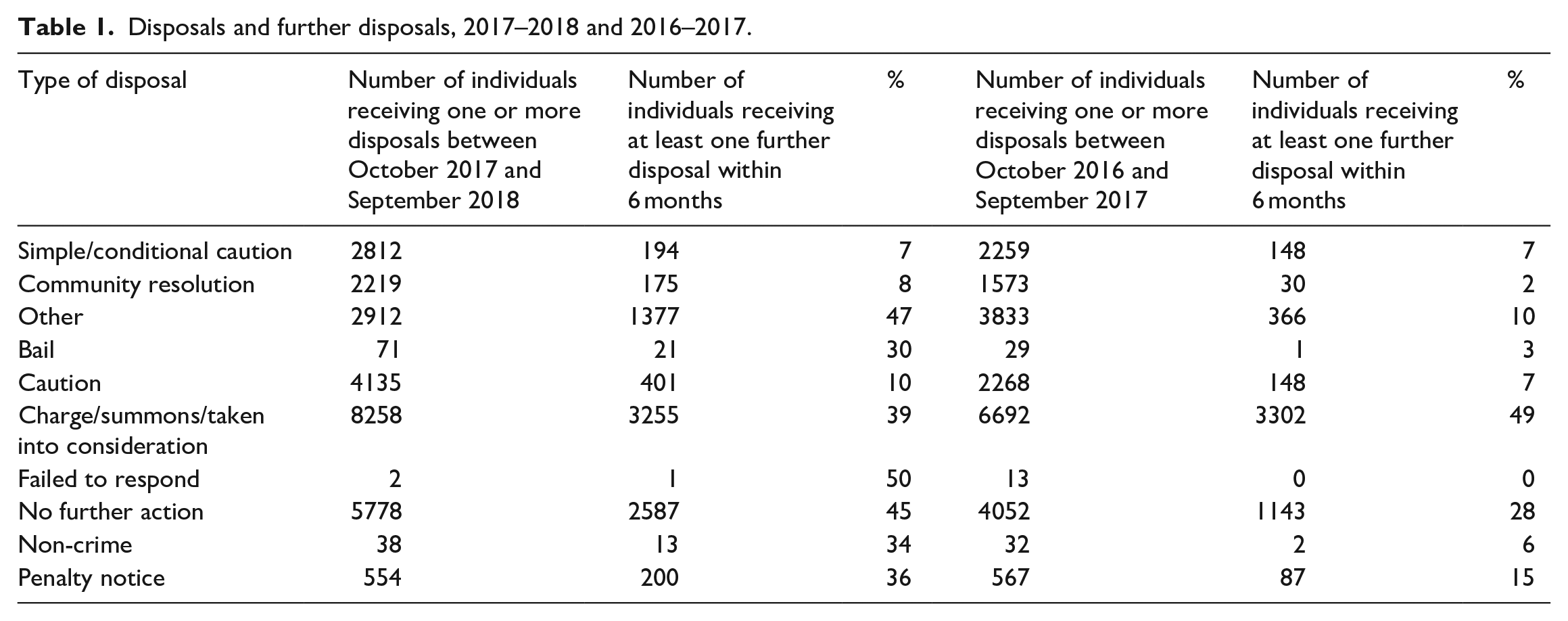
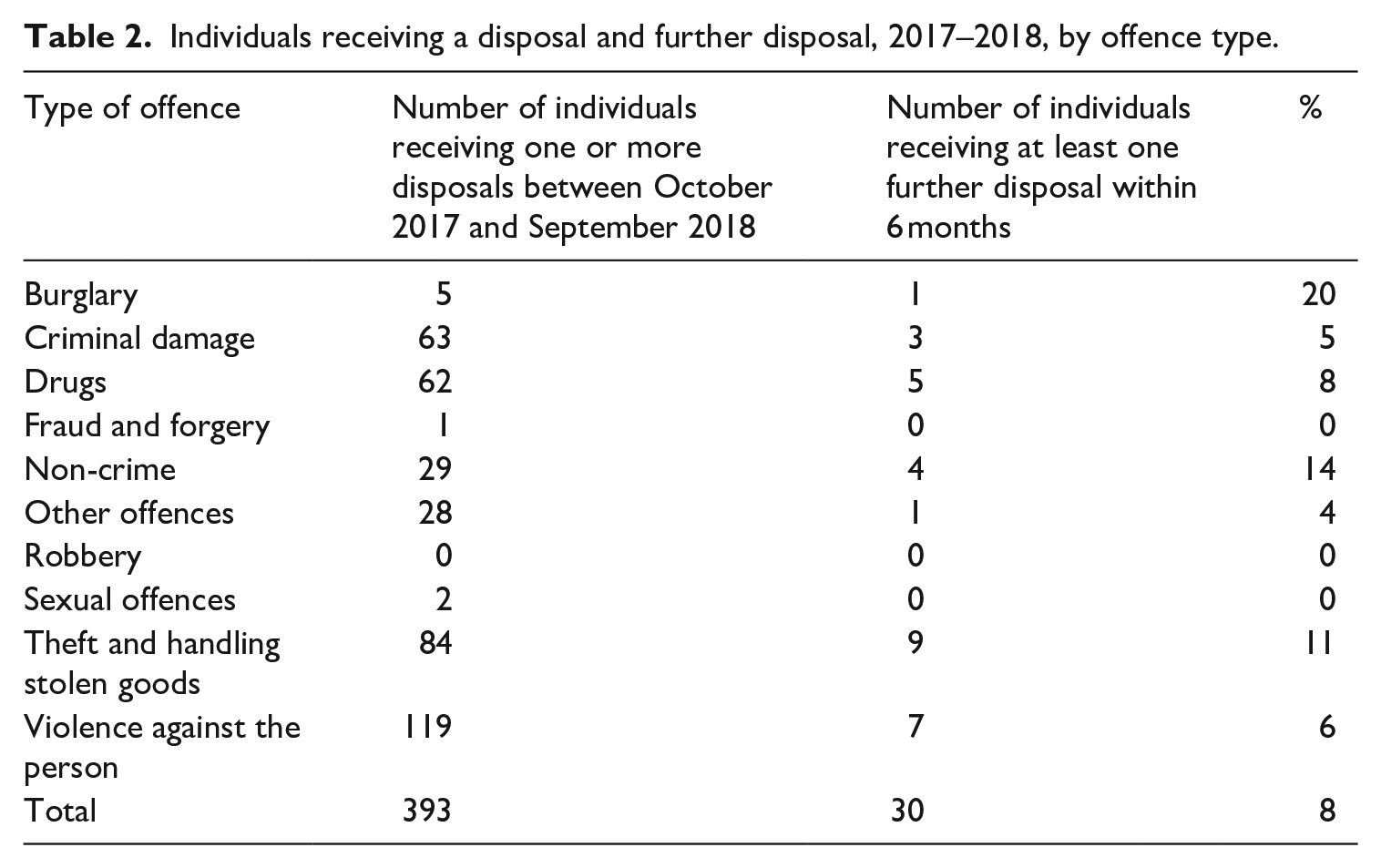
Table 2 sets out the number of individuals who received a CC between October 2017 and September 2018 (the first 12 months of the RCCF being implemented). A total of 393 individuals received a CC during this time. The most prevalent offence for which a RCCF was issued was for ‘violence against the person’ (VAP), followed by theft and handling stolen goods, criminal damage and drug offences. The table also sets out the number of individuals who received a subsequent disposal within 6 months of completion of the original RCCF. The results generally show a low rate of reoffending across the different types of offences. However, the sample sizes are very low; hence the results should be interpreted with caution. A total of 30 (8%) individuals received a subsequent disposal; therefore, 92% of those issued with a CC were not arrested in the following 6 months. The result is indicative of the potential positive impact of CCs as suggested in the available literature (Ames et al., 2018; Easton et al., 2010; Harvey et al., 2007; Lange et al., 2011; Neyroud, 2018; Strang et al., 2017; Strurrock and Mews, 2018).
Individuals receiving a disposal and further disposal, 2017–2018, by offence type.
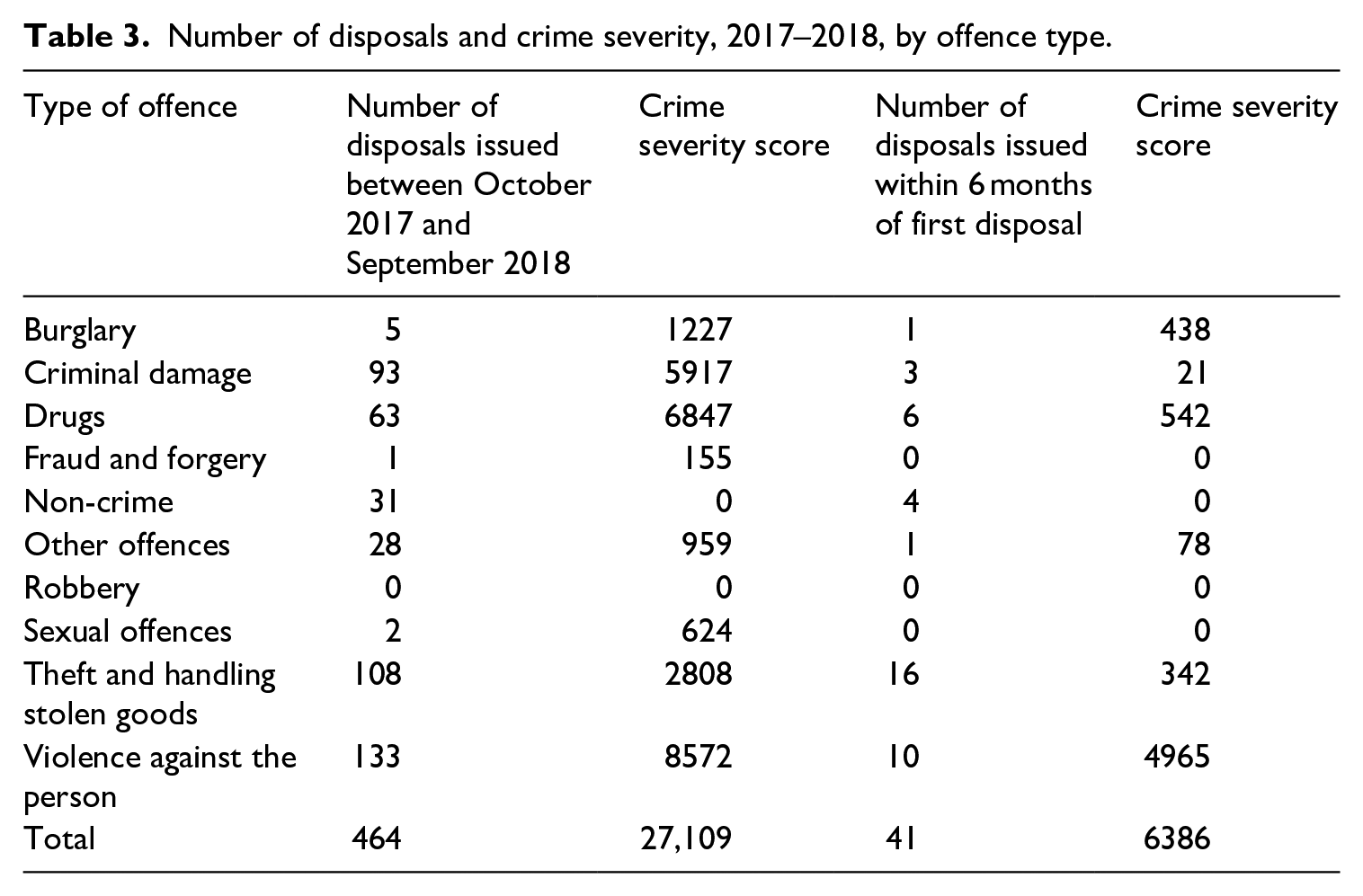
The severity of the crime was also calculated through a framework devised by the Office for National Statistics using the Crime Harm Index, as set out in Table 3. Each crime type was allocated a ‘value’ in terms of the severity that the offence represents to society. The table sets out the severity of the crime-by-crime type during the RCCF’s first year. 2 The table also shows that 464 disposals were issued during October 2017–September 2018, again the largest category being in relation to VAP. In the 6-month post-intervention period, this number drops to 41. In terms of the severity of the harms these crimes caused, there was a reduction across all crime types: for VAP this score drops from 8572 to 4965. In aggregate terms, across all crime types the severity score dropped from 27,109 in 2017–2018 to 6386 in the 6-month post-intervention period. If the figure for this 6-month period is doubled to allow for a year of data comparable to the whole year, then this means that the severity score would have been 12,772, equating to a 47% drop in the crime severity score. The results confirm the general trend of the potential positive impact of the RCCF interventions on the reduction of crime, which is in agreement with findings from previous research on the effectiveness of OOCDs (Ames et al., 2018; Harvey et al., 2007; Lange et al., 2011; Strang et al., 2017; Strurrock and Mews, 2018).
Number of disposals and crime severity, 2017–2018, by offence type.
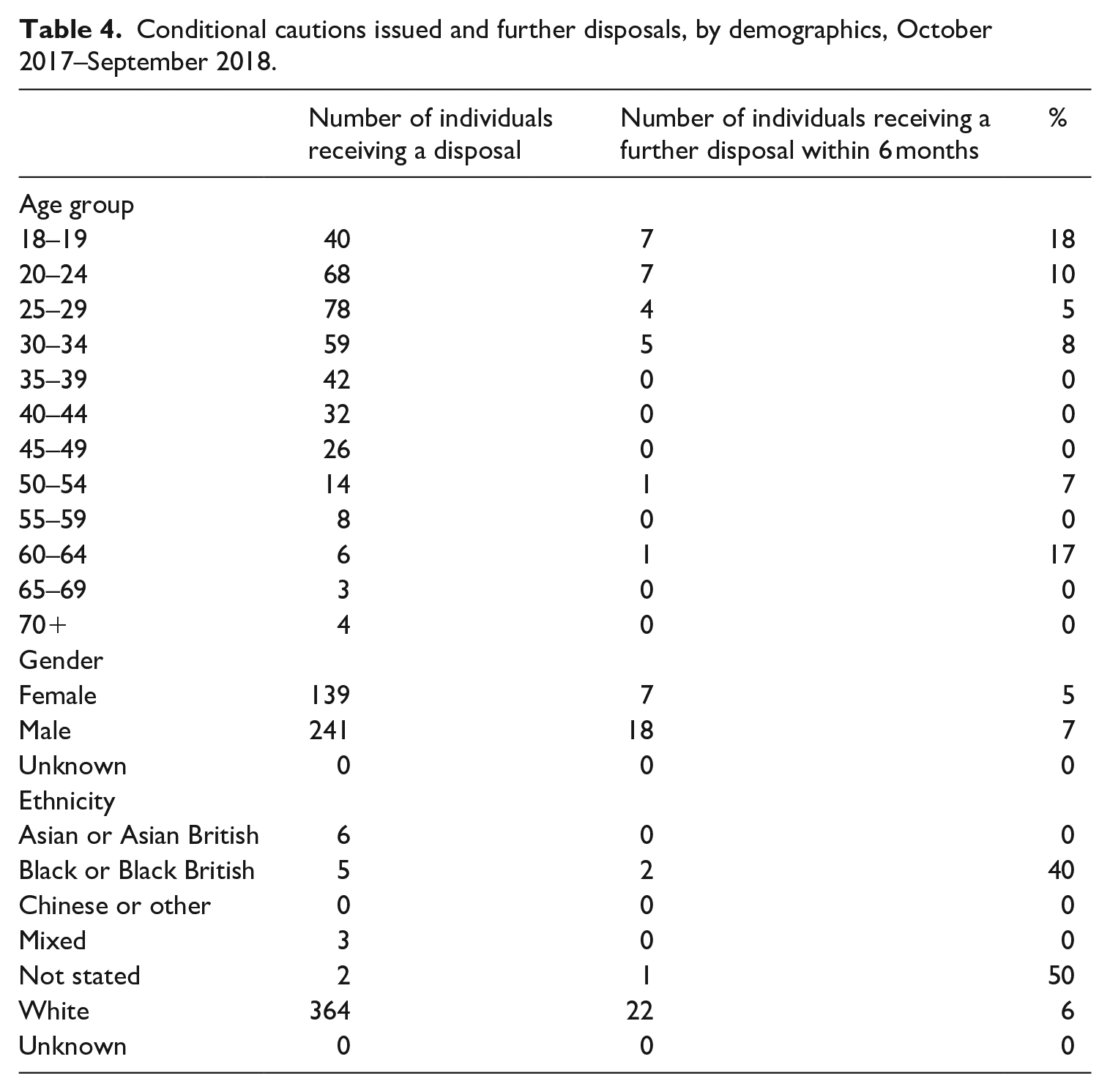
In demographic terms, Table 4 shows that the rate at which there was a subsequent disposal during the 6-month post-revised CC varied somewhat by age, hardly at all in terms of gender, and somewhat by ethnicity (although the small numbers of individuals in some subsections of the cohort mean that these findings are indicative only). Table 4 shows the data relative to these groups and indicates that young people under 25 years of age were most likely to have a subsequent disposal within 6 months of a revised CC being issued. That higher age cohorts are less likely to reoffend, is broadly consistent with what is known more widely about higher rates of offending being associated with teenagers and young adults (see Le Blanc (2020) for a recent analysis). Other differences across age, gender and ethnicity are either highly marginal or based on very small cohort numbers.
Conditional cautions issued and further disposals, by demographics, October 2017–September 2018.
Pathway provider interviews
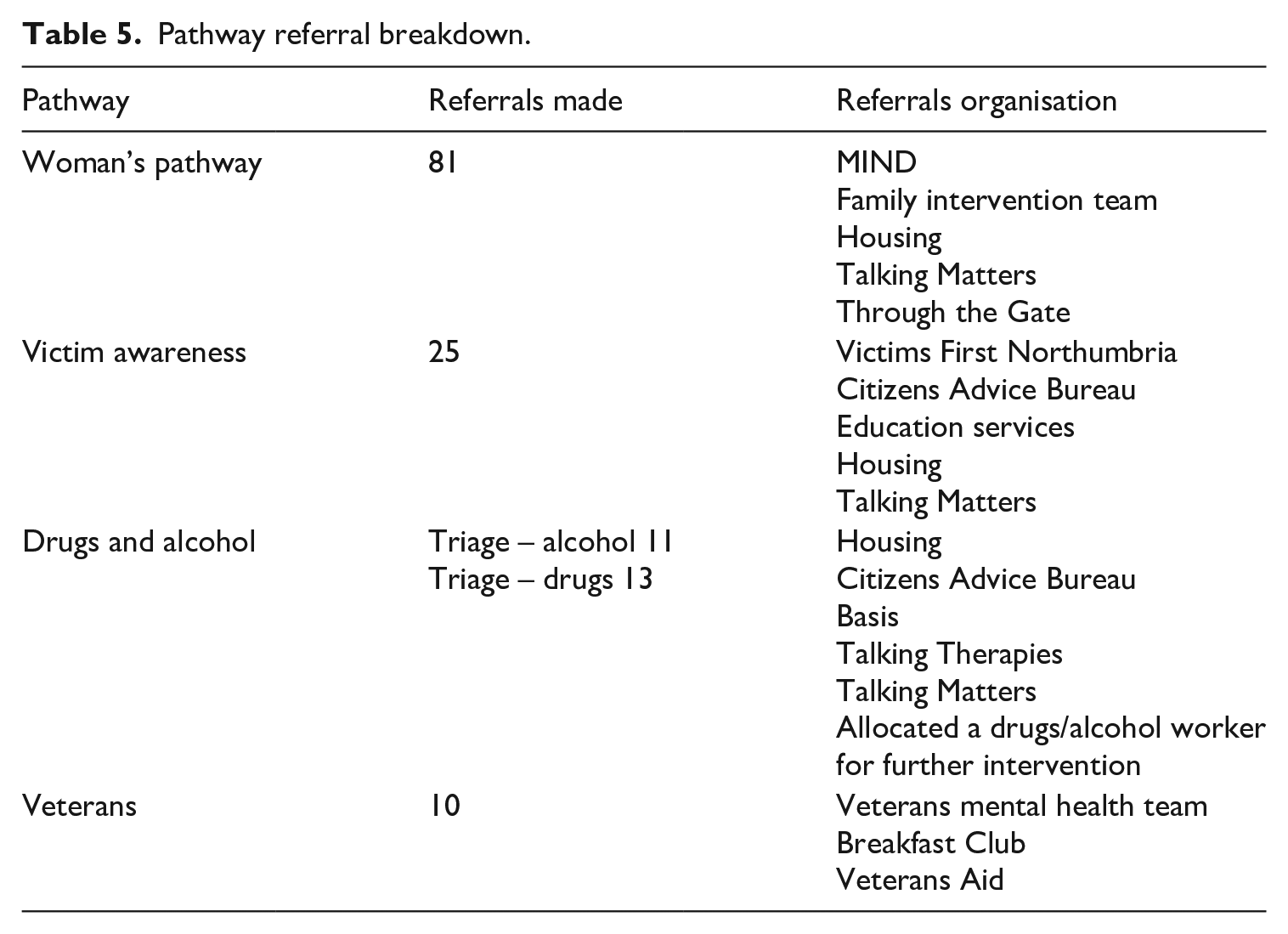
Each pathway provider was interviewed, and a qualitative analysis of the data demonstrates a general positive outlook about the potential impact of the RCCF. Overall, the providers reported that they had invested considerable effort in engaging referrals onto their respective programmes, with Table 5 demonstrating the number and type of referrals made within each pathway. In the discussion below, a range of perspectives are offered from these interviews. Pathway providers often offered highly specific services and their perspectives could not represent those of the group as a whole (since their counterparts would likely be delivering other programmes with different cohorts of service users).
Pathway referral breakdown.
The pathway providers reported high levels of attendance among the offenders who were referred onto their programme. One pathway provider put the attendance rate around the 80% mark: The vast majority of people who I actually speak to do turn up. Levels of engagement on the programme, they are very high. When we talk about levels of engagement of people who come on the programme, I think in this moment in time the attendance rate is from those that have booked on, I think it’s about 80% . . . it’s about 80%.
During a referral onto a pathway, the intervention can provide an opportunity for the pathway provider to assess their behaviour and identify how to change the problematic aspects of their lifestyle. As we argue in the conclusion to the article, offending is understood in personal dimensions rather than social context in this process. Often the referral was the first time such an opportunity had been presented to an offender. One provider commented as follows: A lot of them don’t actually realise the needs that they have, I think, and that’s quite interesting. So when you do the assessment and you, maybe, pick up on something and you think . . . I think you could do with some help in that area . . .
The pathway providers recognised that for some offenders, their motivation was problematic, in the sense that it was not a ‘pure’ motivation to ‘go straight’ and change their personality to achieve this. Notably, they had simply agreed to a CC because it was viewed as a convenient way to avoid prosecution. One pathway provider noted high levels of commitment in some clients referred to them, but for other clients: I’ve got to be honest with you . . . some of them don’t want to go to court . . . it’s just as simple as that . . . Some of them will do it . . . will see that as I don’t have to go to court . . . some of them will just see as . . . I think some of them as an easier option
Another insight from the interviews was the lack of resources and client base/administrative burdens in the management of referrals and interventions. This issue affected the number of appointments offered to clients which may affect the success of the RCCF: We wanted to offer more than two appointments, and we’ve just had to say absolutely ‘no’ because in terms of resource . . . we are already providing free resource. And that transactional process of offering appointments, we have to get them on our daily list and its two appointments and then they are out and that’s it.
One pathway provider also noted that: I think if we have more resources that could definitely enable us to do more, so the model is the [client] to be able to engage with the [provider] they want to. That will bring cost for the [client] because to come every week, for example if somebody lives up in far Northumberland . . . they won’t have the money to do that. And there might not be as much resources around their own community to access something if we were able to give for that that will make a difference.
Telephone interviews with offenders 3
Most participants felt that their CC had a positive impact on them, and they would not reoffend in the future. The motivation to desist from offending in the future varied among the participants with some simply wanting to avoid a return to court. Others thought the pathway intervention had indeed helped resolve the root cause of their offending behaviour. Of those who felt that the pathway had a positive impact on them and would stop them reoffending, two themes emerged: direct positive impact and indirect motivational effects.
Taking each of these in turn: with regard to direct positive impact, some participants thought the CC provided an opportunity to directly resolve the underlying cause of their offending behaviour. One offender commented ‘Yeah, yeah, it’s given us a way, of course, you know what I mean? It cut me drinking down and me stuff’. Another answered, ‘yeah definitely’ in response to whether the experience would stop them offending and described it as a ‘wake-up call’. Another participant whose offending was linked to his drinking, commented, ‘Yeah, yeah I haven’t been drinking since so it has had some sort of effect’. In terms of indirect motivational effects, one participant mentioned that the programme served as a positive impact on his life, causing him to adopt a healthier lifestyle: The effect that day . . . actually stopped smoking on the entire day. I didn’t last much more than a day and then . . . but I got back to, what I’ll say, the lifestyle again. I’ve been back to running a bit more. I mean I was part of the process anyway. I was (?) to deal with the whole thing, you have to gain work . . .
However, some participants who were interviewed felt that the pathway programme they completed was not suitable for them. While they did indicate that they could see how the intervention may be beneficial to some specific offenders, it was not personally beneficial to them. Even though the women’s pathway for one participant concerned the offer of counselling support, the participant preferred not to relive their previous experience and commented ‘I had to go through what happened in the past . . . I don’t like what happened to me in the past’. Social and cultural contexts of offending (and potential links to victimisation) are not always recognised in programmes focused on individual change. Even where wider factors are recognised the RCCF itself provides no resources to address long-term or structural dimensions of offending. The participant further commented that: For what I was going through, it wasn’t really for me. But I mean, yeah, you know, it will probably help other people. I just, it just wasn’t for me. It felt more like a counselling session . . . But it might help someone that’s like, always offending whereas me I’m not like that. It was basically desperate times call for desperate measures and that’s what I’d done, and I knew I shouldn’t have but it was either that or not being able to pay me bills and put food on the table for me kids.
This example illustrates the complexities of the pathway, as it shows that the intervention may not be appropriate from the participants’ perspective. The decisions on what pathway and programmes to enrol users are largely made by the police and the pathway providers following initial assessment of the participant’s needs. Even then, as is noted below, the discretionary professional judgement of individual police officers is restricted by the parameters of the framework itself. There is limited input from the user on the intervention offered.
Some participants felt that the reason why they would not reoffend was not because of the pathway but because they saw it as a one-off offence that they would not repeat. Two other participants viewed the CC as something that might be helpful for other people who were repeat offenders and stop them reoffending. One participant, who was a repeat offender acknowledged that he had been in and out of prison most of his life, felt the pathway was ‘a slap on the hand’ and that ‘it would be forgotten about in a few weeks’. He commented that as it was ‘no punishment’ and was ‘like being let off’ for the offence.
Police officer focus groups
For the police officers, there was a broad understanding that the RCCF is designed to tackle underlying causes of offending and is suitable for low-level offending by those with the most limited (if any) previous criminal record and is not suitable for prolific offenders. The police officers’ understanding of the effectiveness of the RCCF was based on their personal experience of issuing CCs and their wider understanding of offender attitudes and behaviours. Overall, the police officers viewed the RCCF as a useful sanction alongside a wider toolkit of sanctions available to low-level offenders, with one police officer commenting that being given ‘a different option is good’. There was a clear understanding throughout the focus groups that CCs are not suitable for prolific offenders: Conditional Cautions, the way I perceive it is that it’s trying to decrease offending behaviour, or thing that contribute to offending behaviour
The police officers discussed a number of cases whereby the RCCF had been applied and they felt it had been a success as a result of the support the offenders had received to address the underlying cause of their offending, the full engagement from offenders with the pathway or because the offender had not had any further involvement with the police. They saw the benefits of the RCCF in tackling the root cause of offending and reducing reoffending, and generally saw it as a positive approach in tackling low-level offending. Different police officers made the following observations in this regard: She hadn’t committed any offences for such a long time that she was eligible. She had alcohol problems. So I thought a Conditional Caution would be ideal . . . what I wanted for her to do was to was to engage with some services for her alcohol and drug misuse and to try and work positively with Social Services to get back on track. A couple . . . they have attended these courses, they have got the help and now they are off drugs. A young lad who was just like trying out drugs . . . and I think he just needed a bit of education really . . . so for him it was spot on. She saw an opportunity to cash a cheque . . . to pay of her debts. In the circumstances [the RCCF] was the right thing to do for her because it’ll tackle the root cause of her offending hopefully she got something out of that where she’ll be able to manage her debt better. I haven’t seen her again.
However, some police officers were sceptical about the ability of the pathways to affect behavioural change among offenders. Notably, some concerns were expressed about the capacity of some pathway providers to manage the referrals and the limited length of time of the initial mandatory appointment. Scepticism was also apparent in the fact that some pathways were dealing with some offenders by telephone, leading to the suggestion that this may be insufficient in changing the behaviour: She did a one hour appointment with the women’s hub and it’s voluntary after that. Was that really worth doing the Conditional Caution? Could they done any constructive work with her? If she didn’t engage with the rest, what is the point? I can’t make her do anything else, other than that one hour. So I think what was the point of that really? I’d be very reluctant to do it again because I think what the point was?
There were some further concerns expressed by police officers. First, a failure of some offenders to engage in the pathway frustrated police officers. These experiences have resulted in officers choosing alternative interventions when these are available, meaning they do not issue CCs regularly. This suggests that they retain some capacity to exercise discretion even if only through selecting options that ought not to be pursued if the framework was fully applied. The nature and resilience of police officer discretion is further discussed in the conclusion of this article. In turn, this makes it more difficult for officers to gain familiarity with the administration or potential benefits of CCs, as two officers noted: I think because we do these things so infrequently . . . you deal with other cases and by the time you come back to considering another Conditional Caution you’re thinking ‘right what’s the criteria and how do you do it again?’ If you don’t do them on a daily basis, you’ve always got to go to the literature to look.
Second, police officers also had concerns that lack of compliance is a result of CCs being administered to offenders who are unsuitable, despite meeting the relevant criteria as they are unable or unwilling to engage: [name] is a prolific offender but he hadn’t been in trouble for a while, probably been in prison, but he was eligible. Howay man, he is never going to comply in a month of Sundays. Mine were two for drug rehabilitation and one for alcohol and all of them didn’t turn up. I ended up putting a file in for a summons.
Conclusion
This research presents the first study into the effectiveness of the RCCF and whether it addresses the root causes of offending behaviour and impacts on reoffending. Although the RCCF did not result in a lower recidivism rate in the short term, we found that the reoffending rate for OOCDs was lower in comparison to the other disposals that were issued in the relevant period. This suggests the potential of OOCDs, including the RCCF, in reducing reoffending. This was confirmed by the results of the crime severity score and qualitative insights from the stakeholder interviews. Although scepticism was expressed by police officers over the short appointments and nature of interaction within some pathways, suggesting discrepancies in terms of the potential to impact on reducing reoffending, the offenders felt that the length of the session and the nature of interaction they had were appropriate. The review identified resourcing as an outstanding challenge for the pathway providers which was partly attributed to a lower than anticipated referrals, which restricted the range of programmes and opportunities that could be offered. It was also clear that a lack of long-term support for offenders beyond the remit of the RCCF was a problem. The framework tends to responsibilise offenders in the management of their own desistance. While this might be an important aspect in terms of reducing reoffending (some degree of motivation might be required), there is no capacity in the RCCF to provide longer term support to address the social, cultural and economic context of crime.
In the remainder of the article, two related themes arising from the above discussion are developed and critically analysed. The first set relates to the implications of our findings for criminal justice practice in relation to the RCCF programme. This addresses questions emerging in terms of police professionalism and partnership delivery within criminal justice. The second set of concerns is cast more broadly in relation to underpinning conceptualisation of criminal motivation, desistance, and individual agency and responsibilisation. It is argued that the premise of RCCF is one that conceives of offending in individualistic terms that pay insufficient attention to the social and economic context in which offending is situated.
The RCCF is a prime example of multiagency cross-sectoral provision within criminal justice practice and, as such, many of the critical debates surrounding such models apply in this context (Crawford, 2003; Hughes, 2007). As Davies and Biddle (2018) have argued the partnership approach, relying on contributions from third sector and public sector partners is bound up with a localism agenda that can enable flexibility and unlock additional capacity that budgetary constraints (among other things) make impossible from within the criminal justice system. As our data have demonstrated, this raises concerns about equity and justice since provisions were limited by the capacity of pathway providers reliant upon unstable budgets who offered support on a ‘first come, first served’ basis. Informal networks and relationships, and happenstance, shaped the provisions available to offenders such that – even where such provisions offered a significant and potentially transformative opportunity for the service user – these were not allocated on the basis of a needs-based or risk-based assessment. As with other debates about ‘Total Place’ budgeting in public service, the funding arrangements underpinning RCCF may also be uncertain, leading to unevenness between places and over time. This further supports Heap and Patterson’s (2021) argument that the role of Police and Crime Commissioners (PCC) in the development of CR programmes might offer the prospect of local innovation but also risks uncertainty and unequal opportunities to reduce reoffending and to improve victim satisfaction. These concerns reflect wider trends across many policy sectors, and more widely within the policing and criminal justice sector. The role of PCCs was explicitly created to increase localism within police governance (Jones and Lister, 2019). Our findings demonstrate that this localism varied within one police service area: between rural and urban settings, for example. For service users this could mean that provisions were either not available or became expensive to access. The inclusion of a pathway that required the service user to pay for access further illustrates challenges of equity and justice. If the RCCF is an effective long-term approach, which the qualitative data that we gathered tended to suggest it would be, then this would be a limitation to the dispersal of benefits to offenders, victims and the wider community.
A further implication of our data for criminal justice practice relates to our findings that police discretionary decision-making was curtailed, as the scope officers had to exercise their own professional judgement in terms of the nature of a community-based resolution was restricted by the framework. The automatic allocation of ‘types’ of offender to specified pathways, and a lack of officer knowledge of subsequent outcomes (which also restricted the provision of information back to victims), was seen as a negative feature of the RCCF. This runs counter to wider developments in policing within England and Wales focused on enhancing the professional status and practice of police (through the Police Education Qualifications Framework and development of Authorised Professional Practice, e.g.) (Fielding, 2018; Williams et al., 2019). Rowe (2007) found that enhanced managerial oversight of officer decision-making reduced the scope to exercise discretion and undermined the professional autonomy of police staff. Officers participating in our focus groups, as we have shown here, felt that they too were being negatively impacted through what was sometimes interpreted as a denial of opportunity to use their judgement. A counter-perspective might draw upon the considerable body of literature showing that occupational cultures in policing under-value the kind of community-oriented or restorative-focused nature of the work transferred to the RCCF (Marder, 2020). Further work could explore the quality of decisions about informal disposals (and the extent of the communication subsequently provided to victims), but the tenor of the data gathered in this research suggested that the RCCF might be another step towards the McDonaldisation of police work (Heslop, 2011), such that decisions are pre-figured around limited options and scripts.
The other broad conceptual issues emerging from the study are related to the underpinning, though under- or un-stated, model of offending. Service users placed upon the various pathways were responsibilised for the management and direction of their desistance. The formal requirements of the ‘condition’ they were required to complete were often limited, which might also reflect the resource constraints already identified above. The nature and content of what was delivered to them was removed from the remit of the police and the criminal justice sector and responsibility for longer term behaviour lay with the service user. The work done on the various pathways was subject to agreement and monitoring by the police service and it was correctly pointed out that the engagement available to them was (inevitably) greater than that on offer with a SC. Equally, there was a clear sense of the value of avoiding the ‘revolving door’ of criminalisation that a disposal through the criminal justice system often represents. Nonetheless, the social and economic context in which offenders compete for housing, training or educational opportunities and precarious work – the lack of which inhibits desistance or the promotion of ‘normalised’ lifestyle – is not addressed through the engagements on offer through the RCCF. That is not a limitation of the scheme itself. Nonetheless, it remains a concern that the attempt to offer meaningful activity and engagement that the RCCF makes might have a reduced impact when considered against the social, cultural and economic environment in which offending behaviour develops.
Footnotes
Declaration of Conflicting Interests
The author(s) declared no potential conflicts of interest with respect to the research, authorship, and/or publication of this article.
Funding
The author(s) received no financial support for the research, authorship, and/or publication of this article.
