




Abstract
With the development of sensors and network technology, wireless sensor networks are widely used in various scenes. However, in most applications, the energy of the sensor nodes cannot be supplemented. In addition, since the lifetime of the electronic switching element is measured by the number of trigger times, which makes the effective use of energy, extending the working life of the network becomes one of the key factors to be considered. This paper discusses an event-triggered control scheme for stochastic systems. The mechanism determines when the controller sends control data in order to balance system performance and drive frequency. In this paper, the control scheme is deduced by a class of quadratic performance index function. Then, the formula of performance index is designed based on state feedback and output feedback, and the upper bound of performance index is deduced and the conditions in the theorem can be constructed by solving a set of linear matrix inequalities, which can be easily tested with linear matrix inequality algorithms. Finally, a numerical example is given to illustrate the results.
Keywords
Introduction
Wireless sensor networks (WSNs) are wireless networks organized by wireless sensors. Sensor nodes can collaboratively monitor and sense a variety of environmental information within their network coverage area and transmit it to remote base stations for processing. WSNs have a wide range of application scenarios, which can be used in defense military, industrial control, environmental monitoring and traffic management, etc. Thus, WSNs have attracted the great attention of military, industry and academic institutions in various countries.1,2
Typically, the battery energy of sensor nodes is limited and hard to replenish in most applications (e.g. deployed behind enemy lines or in harsh environments). When the battery power of a sensor node is exhausted, this node will lose its function. Moreover, the energy consumed by the data transmission of sensor nodes is generally much larger than that consumed by the nodes themselves. 3 Since the lifetime of electronic switches depends on the number of triggers, utilizing energy effectively and prolonging the network lifetime are some of the key factors to be considered in the design of WSNs. Therefore, current researches on WSNs are mainly based on event-triggered control methods to study how to effectively use limited energy to extend the lifetime of sensor networks.4–6
In event-triggered control, the system control signal changes only when a specific event occurs, and the control signal takes effect only when the deviation exceeds the equilibrium state of the system. Therefore, event-triggered control is to give the system smaller control to balance system performance and trigger while maintaining system performance. Dynamic frequency can be used to reduce the number of transmission control and trigger times of electronic switching components, thus effectively utilizing energy and prolonging the working life of the network.
In order to achieve the optimal controller performance, Reimann et al. 7 presented an event-triggered state feedback controller. In Tallapragada and Chopra, 8 an event-triggered-based output feedback controller was proposed to ensure the global stability of the system. A new stability criterion is established in Zhang and Han, 9 and the discrete output-triggered transmission mechanism and the corresponding output/feedback controller were presented based on the criterion. In order to minimize the linear quadratic index under resource constraints, the optimal control law and the corresponding event-triggered mechanism are presented in Molin and Hirche. 10 The design of optimal controller for networked control systems triggered by random events is discussed in Chaoqun and Guo. 11 A novel method of optimal energy consumption management through event-triggered transmission was presented in Gatsis et al., 12 which designs the controllers using linear quadratic optimal control. A new event-triggered state feedback control method was presented in Lunze and Lehmann, 13 which generates control inputs by simulating the feedback between two consecutive events. A calculation method for the upper bound of event-triggered control performance was presented in Cogill, 14 in which an approximate value function based on Markov decision process is used. An event-triggered transmission scheme based on current battery energy level and queue length was presented in Cong and Zhou, 15 and two performance indicators (i.e. transmission completion time and throughput) were considered.
The main contributions of this paper can be summarized as follows: we propose two event-triggered control mechanisms for stochastic system, derive the formulas of performance index of state feedback and output feedback using quadratic performance index functions. The upper bounds of the performance index are derived. The conditions in the theorem are transformed accordingly; thus, the LMI toolbox can be used.
The remainder of this paper is organized as follows. The next section briefly introduces the background and lemmas of event-triggered control. The proposed event-triggered method can be found in the ‘Main results’ section. Simulation results are given in the penultimate section. Finally, the conclusions are presented.
Problem statement
Considering the discrete stochastic linear systems, the state space expressions are as follows

In this paper, the model of networked control system is shown in Figure 1. The controller receives the states and outputs collected from the sensors and decides whether to send the control variables to the system by the event-triggered detector. If the system receives the control signal, feedback control should be adopted or the system will run automatically.

Event-triggered control.
This work designs an event-triggered control scheme, which can lead to a smaller performance index of the system, i.e. formula (1), on the premise of balancing the system performance and trigger frequency. The event-triggered control scheme is designed for state feedback and output feedback, respectively, to minimize the upper bound of the corresponding closed-loop system performance index.
Terminology
The superscript “T” indicates the transposition of the matrix.
Lemmas

For all


Main results
In this section, a state feedback controller and an output feedback controller are presented for the system function (1). The feedback matrix can be obtained by solving a set of linear matrix inequalities.
Design of the state feedback controller



Then, the quadratic performance index of the system is

The upper bound of performance index is


Let


Suppose


According to equation (6), and supposing that

Expectation of formula (14) is

Combining

Multiplying

According to equations (16) and (17), we get

According to equation (7), when

When

Multiplying

According to equations (20) and (21), the inequality is given by

When

According to equations (19) and (23), formula (2) becomes

According to equation (7), the performance index and

Solving the formula (25), we get

As a result

According to equation (4), theorem 1 is nonlinear because it contains the product terms of matrix variables


Design of output feedback controller


Then, the quadratic performance index of the system is

The upper bound of performance index is


Using the event-triggered method,

Let


Suppose

According to equation (31), and supposing that

Expectation of formula (39) is

Combining

Multiplying

According to equations (41) and (42), the inequality is given by

When

When

Multiplying

According to equations (45) and (46), the inequality is given by

When

Combining equations (44) and (48) with equation (2), we get

Theorem 2 is proved.
Similar to Theorem 1, in order to make the performance index smaller, let

Solving formula (35), we get

As a result

Since
Simulation
In order to verify the performance of the proposed method, the corresponding simulation results are given in this section. The parameters of system function (1) are given by

Solving the LMI optimization problem of corollary 1, we get
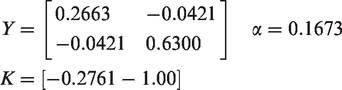
Figure 2 shows the results of periodic and proposed event-triggered control methods when state feedback control scheme is used. Figure 2(a) shows the results of the state component

State trajectories and control signals for state feedback. (a)
The output feedback event-triggered control scheme is designed by using the same parameters of state feedback, i.e. the solution of LMI is

Figure 2 shows the results of periodic and proposed event-triggered control methods when output feedback control scheme is used. Figure 2(a) shows the results of the state component
As can be seen from Figures 2 and 3, the stability of the system is better when periodic transmission is used, but the control times are larger and each control amount is smaller. When the proposed event-triggered transmission is used, the amplitude of the system state is larger, but the control times are fewer and each control amount is larger. Therefore, on the premise of maintaining system performance, the proposed event-triggered control methods can reduce control frequency, which lead to the effect of balancing system performance and control frequency. The upper bound index and the scalar α corresponding to output feedback and state feedback are given in Table 1.

Output trajectories and control signals for state feedback. (a) x1, (b) x2 and (c) u.
The results of state feedback and output feedback.

Conclusion
In this article, two output-based event-driven control strategies are proposed, which can effectively reduce the transmission of the control quantity and reduce the network load. The corresponding theorems of the two strategies are converted into LMI form, which can be solved conveniently. In the future, we will study the event-driven control strategy for time-delay stochastic systems.
Footnotes
Declaration of Conflicting Interests
The author(s) declared no potential conflicts of interest with respect to the research, authorship, and/or publication of this article.
Funding
The author(s) received no financial support for the research, authorship, and/or publication of this article.
