




Abstract
This article examines the history of Hong Kong's shopping malls by exploring the complex relationship between colonialism, capitalism, and localism, which shape the temporary nature of these malls. We trace the origins of modern retail spaces to the colonial practice of transporting plants using Wardian cases, revealing how colonial influences are embedded in mall design. By analyzing the use of glass, we demonstrate how it facilitates the flow of desire and capital. Using a music fountain in a Sha Tin mall as a case study, we highlight the tension between malls as nonplaces and the local community's desire for meaningful experiences, resulting in malls becoming spaces for political protests in recent years in Hong Kong.
Introduction
The emergence of shopping malls as the dominant form of retail space in the mid-20th century can be understood within the broader history of retail and commercial development. While the concept of concentrated commercial spaces can be traced back to ancient times, the global distribution of modern shopping malls reflects the influence of the Euro-American West and its post-war commercial values. Shopping malls are characterized by their enclosed design, which allows for control over various aspects including temperature, atmosphere, and human activities. As neoliberalism spread during globalization, malls began to replicate in different parts of the world. In Hong Kong, the “malling” of the city can be traced back to the opening of Ocean Terminal in 1966 (Lui, 2001). Initially targeting international tourists, malls were not a part of local culture but served as a window for the working class to project their aspirations for a developed capitalist society. With the rapid industrialization and economic boom of Hong Kong, shopping centers targeting local consumers started to emerge in different locations from the 1970s onward. The government also integrated shopping malls into the planning of new public housing communities, recognizing the increasing purchasing power of the working class. Malls became an integral part of local life and contributed to the sense of belonging among communities.
In contrast to existing literatures that often position the study of malls in Hong Kong in the studies of the history of consumerism (Lui, 2001), issues of civil rights (Cuthbert and McKinnell, 1997), urban planning (Al, 2016), or contemporary urban culture (Lee, 2006), this article aims to bring in a larger historical perspective by highlighting the connection between the spatial practice of mall to the notion of enclosure which we situate in the history of imperial conquest of nature through colonization. Under this framework, we explore the entanglement of colonialism, capitalism, and localism within the transient space of shopping malls in Hong Kong. We argue that the history of shopping malls reflects a lineage of spatial production influenced by constant movements and circulation of goods, people, and capital since Western imperial expansions in the 19th century. By examining the historical connection between Wardian cases and shopping mall design, the article highlights the shared enclosure that facilitates the movement of capital. The nonplace nature of malls, exemplified by the use of glass, fosters the circulation of desire and consumption.
The article also focuses on a case study of a shopping mall in Sha Tin, a residential area built on a reclaimed land in the New Territories in Hong Kong, where the tension between the local community's desire for a sense of belonging and the demands of global capitalism's transitive logic becomes evident. By exploring the mall design features such as glass surfaces and music fountains in Sha Tin, we delve into the material foundation that conditioned the local community's struggles for identity and senses of belonging. The artificial spectacle of moving water sprays, dancing in sync with the enclosed music within Sha Tin's central shopping mall, was originally created to promote consumption. However, unexpectedly, it has been emotionally embraced by the local community as a symbol of identity and belonging. Consequently, during times of political unrest, the people of Sha Tin have chosen not to express their anger and demands in outdoor spaces or open squares, as is typically seen in other areas. Instead, the shopping mall have intriguingly become a central gathering point and a venue for protests. Meanwhile, the deliberate selection of the shopping mall as a protest site also carries a symbolic message of reclaiming the local community's territory, considering the frequent influx of Mainland Chinese tourists to these malls. This situation leads us to ask the following questions: when our sense of belonging and attachment is confined to commercial spaces, with no alternative spaces available, how can we create public spaces that truly belong to the citizens? In a word, the article seeks to provide a critical understanding of the relationship between architectural forms, capitalism, and the formation of local identities within the context of shopping malls in Hong Kong.
From Wardian case to shopping mall
Francis Bacon (1561-1626), a proponent of mastering nature, viewed colonization as a project of rearranging ecological system. The colonial expansion involved massive displacements of both people and plants. Development of navigation, cartography and inventions of steamships enabled transportations across different continents, but how to keep plants live during long journeys across different climates had always been a major technical obstacle.
In 1829, Nathaniel Bagshaw Ward (1791-1868), a physician and amateur naturalist, made an exciting discovery which revolutionized the transportation of plants. He found ferns growing inside a glass bottle sealed a week before. Ward realized the transparent airtight case created a moist environment that enabled plants to survive much longer. This discovery led to the invention of the Wardian case, an enclosed microclimate system. After successfully sending plants to Australia, the Wardian case was widely implemented in the transportation of plants by all imperial powers, coinciding with their eager expansion to secure more natural resources and land control around the world. The very beginning of using boxes to move plants is almost impossible to trace. The Wardian case's essential technical contribution was the introduction of a fully self-enclosed transparent system, which made possible the massive movement of plants on a global scale by prolonging plants lifespan. The profits generated from plantations established under colonialism contributed to the rise of capitalism (Figure 1).
In addition to its economic contribution to the rise of capitalism, the transparent self-enclosed system advanced by the Wardian case, characterized by its two key features, namely enclosure and transparency, could also be observed manifested in other forms that permeated the evolution of capitalism. Peter Sloterdijk argued that the architectural forms of enclosure were keys to understanding the evolution of capitalism in different phases (Sloterdijk, 2013). One notable early example of the enclosed transparent system was the Crystal Palace, the main building of the Great Exhibition in London in 1851, designed by architect Joseph Paxton (1803-1865), who was originally trained as a gardener. Comprised of over 956,000 square feet of glass panels and resembling a greenhouse, the Crystal Palace stood out among other proposals because its iron and glass construction could be built and dismantled relatively quickly, unlike other permanent plans.
Often dotted with temporary structures, world fairs in the 19th century showcased domestic industrial goods, exotic cultures, and foreign commodities, aiming to captivate visitors. The transparent glass panels of the Crystal Palace created a luminous environment that erased shadows and granted a dazzling sheen to the displayed goods. This bright space, with its play of light, transformed the perception of space and time, rendering it “bodiless” and “abstract” (Armstrong, 2008: 9). The visual pleasure offered by the illumination served to glorify the aura of commodities. It anticipated a comprehensive and experiential form of capitalism that set out to attract engagements from a wider public, where the absorption of the outside world into a meticulously calculated interior was of utmost importance. The Crystal Palace symbolized the convergence of diverse elements within a singular, grand space, reflecting the evolving dynamics of capitalism, and the transformative power of architectural enclosures (Figure 2).
The Great Exhibition coincided with the proliferation of glass in European cities, such as London. The introduction of glass windows in the urban landscape provided the public with a view of displayed goods, granting them a sense of vicarious ownership (Armstrong, 2008: 7). The reflective nature of the glass surface also allowed viewers to see their own images, merging with the shimmering cityscape in a mirage-like fashion. Through the glass, they not only beheld desirable objects but also caught glimpses of themselves. In his 1914 essay “Poverty and Experience,” Walter Benjamin argued that glass had no aura, “so hard and so smooth, on which nothing can attach itself” (Jennings, 2005: 734). Viewing glass as the “enemy of possessiveness” (Jennings, 2005: 734), Benjamin saw no room for intimacy, opacity, or personal connection in glass architecture. He perceived glass as a cold and somber material that was incompatible with human body and posed a threat to his concept of freedom (Figure 3).
The emergence of glass structures brought about a remarkable transformation in the design of contemporary urban spaces. These architectural marvels placed a strong emphasis on the notions of light, transparency, and visual aesthetics. Consequently, they exerted a profound influence on the cultural and psychological imagination of city dwellers, particularly within the context of capitalist modernity. From a financial perspective, the presence of reflective surfaces multiplies crowds and enhances their movements, creating a vibrant atmosphere that can be commodified and sold. On an affective level, Jameson's analysis of reflective glass surfaces in the Bonaventure Hotel suggests that glass, as a reproductive technology, can evoke both fantasy and anxiety (Jameson, 1992: 42). The fantasies and desires sparked by these structures shaped people's consumption habits, while the inviting and visually captivating atmosphere created by glass facades and lights also reinforced the idea of transparency, promoting a sense of trust between consumers and retailers. The reflective surface serves as a connection between the commodities displayed in shop windows and the faces of individuals, as if their merging through reflections represents the transcendence of a barrier, leading to the attainment of happiness. Thus, the materiality of glass facilitates the circulation of desire, while the intensified circulation of desire fuels the increasing movement of capital.
Another prominent example of enclosed transparent system manifested in consumerist space is Paris’ grand arcades in the mid-19th century, which were covered passageways lined with shops and establishments. These arcades, such as the Passage des Panoramas and Passage Choiseul (Figure 4), offered an elegant shopping experience for the bourgeoisie, sheltering them from the dirt, noise, and commotion of the streets. Illuminated by natural light through the glass roofs, the arcades also protected the bustling commercial activities from the whims of unpredictable weather. The rise of arcades in 19th-century Paris served as a catalyst for the subsequent development of shopping malls and enclosed spaces, providing a blueprint for meticulously designed and immersive environments that facilitated commercial activities in a controlled setting. For instance, the Galeries Royales Saint-Hubert in Brussels, which opened in 1847, drew inspiration from the arcades of Paris. Its elegant architecture, featuring glass ceilings and ornate facades, created a captivating atmosphere for shoppers while also offered a sense of exclusivity and refinement. In the mid-20th century, malls like the Mall of America in Minnesota became destinations in themselves, offering a wide array of amenities, and entertainment options that transported visitors into a world of leisure and consumer delights.
Following Georges-Eugène Haussmann's (1809-1891) transformation of Paris between 1853 and 1870, the arcades gradually disappeared. This transformation was driven by a military-oriented concept of mobility and circulation. Concerns over safety and regulations led to the emergence of department stores as a more concentrated form of commercial architecture within controlled environments, fortified against the external world. Their detachment from the surroundings was advanced by the development of ventilation, air conditioning, and lighting technologies, later amplified in contemporary shopping malls.
The term “mall” originally referred to shaded pedestrian areas in the 18th century, designed as retreats from the chaotic industrial cities of Europe. Modern shopping malls (see, e.g., Figure 5) are comprehensive inward-focused systems that exert control over temperature, humidity, ambient sounds, human behavior, and movements. Unwanted individuals, such as the homeless, and undesired activities including loitering or politically related actions, are closely monitored, if not outright prohibited, within the mall's territory.
Similar to the Wardian case's role in imperial expansion, the mall is of great significance in facilitating the global economy. As a carefully designed spatial-economic device, the concept of movement is crucial to understand its mechanism. Jennifer Smith argues that the mall should be primarily viewed as a space of movement, where “the mall only exists in motion” (Smith, 1996: 3). She highlights the multiple levels of movements: the circulation of goods through exchange, the bodily movements of consumers within the space, and the flow of capital in the economic realm. From a profit perspective, “the imperative to move permeates the mall space” and “ideally translates into the imperative to purchase” (Smith, 1996: 3).
Sloterdijk suggests that the interiorization of the world also entails its despatialization. Real distance and time are replaced by networks of lines and nodes, producing transitory nonplaces such as airports, shopping malls, and storage facilities (Sloterdijk, 2013: 151). In these nonplaces, the physical location loses its significance, and what matters are the relations between these nodes and dots, and how things move between them. These nonplaces should no longer be represented by location but rather by interconnected movement. Similarly, Margaret Morse suggests viewing nonplaces such as malls and freeways as vector spaces, emphasizing direction rather than location (Morse, 1990: 199).
Identity of a nonplace: story of shopping mall music fountain
The prevalence of shopping malls and the diminishing public space in Hong Kong can be seen as manifestations of the triumph of capitalism. This perspective aligns with the views of economists like Friedman, who considered Hong Kong as an ideal capitalist society (Friedman and Friedman, 1980). Hong Kong's journey from a 19th-century fishing village to a colonial city, an industrial powerhouse and eventually a global financial hub (and a provincial city in the post-1997 era, as argued by Ronald Skelton; Skeldon, 1997: 265–71) is commonly presented as a success story that celebrates the material progress brought about by capitalism under British colonization. Walter Mignolo suggests that the rhetoric of modernity conceals the underlying logic of coloniality (Mignolo, 2011: 10). As was shown above, the colonial obsession with environmental control in shopping malls can be traced back to early colonial efforts to manipulate flora and fauna. The drive to exert control over the natural environment extended to the built environment, including shopping malls. The colonial legacy of environmental manipulation and control has influenced the design and management of these spaces, emphasizing a controlled and regulated atmosphere that aligns with capitalist interests.
In Hong Kong, where the hot and humid summer lasts for a significant portion of the year, the separation between interior and exterior spaces in shopping malls takes on a distinct significance. The antagonism between the interior and the exterior is not only a static contrast between cool air inside the mall and the unbearable climate outside but constitutes a dynamic relation: as malls cool down their interiors, the excess heat generated by air conditioners is expelled into the outside public space, further reinforcing the desire to stay inside.
Air-conditioned shopping malls in Hong Kong form interconnected clusters of insulated spaces, creating an archipelago-like network. Within these spaces, hundreds of thousands of people can work and enjoy leisure activities without needing to venture out into the exterior climate. This aligns with Sloterdijk's notion of the interiorization of the world in the history of global capitalism, which takes place both metaphorically and literally, and echoes the concept of “malling” put forth by Lui Tai Lok (Lui, 2001: 26–45). In contemporary shopping malls, deliberate visual displays, LED screens, directed pathways and background music create constant stimuli to engage visitors and encourage spending, while at the same time carefully managed to avoid overwhelming visitors. To counteract the uniformity of franchised corporate spaces, malls incorporate special architectural designs, themed lighting, and natural elements such as plants, waterfalls, and fountains to provide a sense of uniqueness. These strategies aim to create visually appealing and immersive environments that entice visitors to spend more time and engage in consumption activities.
The New Town Plaza (Figure 6) in Hong's Sha Tin district provides an example of how shopping malls integrate particularity into their design. Completed in 1984, the New Town Plaza was considered a significant milestone in Hong Kong's urban development, as an early successful example of incorporating shopping centers into new town planning, shaped by the concept of “self-containment” in British housing development and the government's “comprehensive planning” approach. In line with this vision, the New Town Plaza aimed to provide not only shopping opportunities but also employment, leisure, entertainment, and communal activities for the newly settled working-class population in formerly rural areas like Sha Tin. The mall's design was part of the colonial government's social engineering efforts to foster local identities and address the perceived lack of social bonding following the 1967 riots, which began as a labor dispute in a plastic flower factory but quickly escalated into broader protests against the colonial government.
The New Town Plaza was strategically connected to various public amenities, including a public library, city hall, waterfront, and public transportation. Subway and bus stations were integrated directly into the mall. The success of the experiment in Sha Tin was remarkable. With the introduction of flagship stores from international brands like Yohan, the New Town Plaza quickly became the most popular mall in Hong Kong, attracting visitors beyond the vicinity. During the late 1980s and early 1990s, it was one of the most visited malls in the world, with an average of 150,000 visitors per day (Chu, 2016: 84). In 1989, the McDonald's located inside the New Town Plaza ranked among the top ten busiest McDonald's franchises globally, with 2.5 million visitors (Wong, 2022). These successes were largely due to the heavy investments by Sun Hung Kai, the developer, in creating attractive features, among which the most well-known was the music fountain in the main lobby.
The music fountain in the New Town Plaza (Figure 7) was the first automatic music fountain in Hong Kong, offering a unique experience that combined elements such as breeze, music, air-conditioning, and a visually captivating water spectacle that reached several floors in height. It quickly became a local landmark, attracting attention, and admiration. The fountain's novelty and popularity inspired many other shopping malls to follow suit and construct their own music fountains. The main lobby of the mall was also frequently transformed into a stage for TV broadcasts, with the music fountain serving as a prominent backdrop. It became particularly famous for its appearance in a song by Anita Mui (1963-2003), a renowned Cantopop icon, where the fountain's movements were incorporated into the dance choreography (Figure 8).
The music fountain in the New Town Plaza held different functions and implications for both the mall developer and the residents of the Sha Tin neighborhood. From the developer's perspective, the fountain represented a form of experience-oriented capitalism, which monetizes through creating attractions and experiences that bring in more visitors and prolong their stays. However, for the local residents, the fountain served a variety of other purposes. It was commonly used as a meeting place for young people going on dates and a popular destination for family outings. For children, the combination of music and water created a sense of joy and excitement. In our interviews with the Sha Tin local residents, one interviewee mentioned that during his high school years, he would spend hours after school at the New Town Plaza, with the music fountain being his primary spot. He enjoyed observing people and simply relishing the cool air. Waiting for the most recent pop song to play during the fountain performance also generated a sense of anticipation and excitement, akin to waiting for a favorite TV program in the past.
The fountain, built by corporate power for profit, paradoxically fostered a sense of communal belonging. Despite the critique of commodified spaces replacing social relations, malls in Hong Kong's new towns aimed to promote both “community development” and consumerism. The intentional blending of community building and consumer culture catered to a population's transitioning from “poor working-class” to a more affluent lifestyle (Lui, 2001: 39). Ample space for collective activities and affordable goods empowered residents and strengthened their sense of belonging. The music fountain symbolized upward mobility, economic progress, and commercial culture, aligning with the residents’ vision of a modern Hong Kong. It represented a shift from being impoverished refugees to optimistic individuals capable of enjoying a better life in the city. “The idea was,” as Cecilia Chu analyses, “to provide a modern, attractive, yet highly accessible shopping environment where different members of new town families were able to find something they desired and through which they imagined a better future on their own terms” (Chu, 2016: 86).
The memories and communal meanings inscribed on the music fountain in the glossy lobby of the New Town Plaza were as fleeting as the surface of glass for Walter Benjamin. In 2003, the opening of the individual visit scheme, allowing Mainland Chinese travelers to visit Hong Kong individually, triggered a series of transformations in the mall. The scheme aimed to stimulate the economy after a period of stagnation following the 1998 Asian financial crisis and the 2003 SARS outbreak. While the influx of mainland tourists resulted in more profits in the New Town Plaza, the increasing rents made it difficult for local shops catering to residents’ needs to survive, leading to their replacement by retail franchises and brand stores targeting mainland shoppers. The mall management also invested in interior renovations to maintain an up-to-date appearance, replacing the popular 80s color palette of beige or brown with a bright and glossy aesthetic, and tiles with marbles, etc (Figure 9).
The removal of the music fountain from the main lobby was highly controversial among all the renovation plans. The mall management considered the fountain outdated and believed it could hinder the flow of itinerary shoppers who needed to constantly move through the lobby. As the New Town Plaza is the first mega mall for mainland shoppers traveling from the North en route to the more traditional commercial districts in the South, keeping visitors constantly moving was crucial to ensuring revenue growth in the eyes of the management.
The removal of the music fountain sparked a contentious debate, highlighting the conflicting perceptions of space. For local residents, the fountain held deep significance, representing a sense of belonging, shared memories, and the belief in upward mobility. Scholars like Wing Shing Tang proposed the concept of “Sha Tin Value,” a set of middle-class values that formulated in Hong Kong's new town projects. They argued that this value system was more representative of Hong Kong than the “Central Value” associated with the financial sector (Tang, 2007). However, from the perspective of the mall management, the amenities, including the fountain, sanitized space, and controlled temperature, were primarily geared toward profit-making. In the 1980s and 90s, by attracting the local residents, these amenities established a stable consumer base. But as consumption became more integrated into the global economy, the focus shifted to maximizing the flow of people, goods, and capital. The mall's profits relied on the speed of these movements. To optimize the speed, the mall needed to transition into a thoroughfare, a vector space solely existing as a connecting passage.
Shopping mall as political space?
In the 2010s, a series of protests erupted within the context described above. In February 2015, a protest organized through social media took place inside the New Town Plaza, with over a hundred protestors expressing their resentment. Under the slogan “Defending Sha Tin,” protestors chanted hostile slogans and directed their anger toward Mainland Chinese shoppers, whom they saw as invaders responsible for eroding Hong Kong's way of life. Confrontations between protestors, shoppers, and the police ensued (Kao and Chan, 2015). For the protesting locals, who found the flows of capital elusive to interrupt, the presence of passing shoppers became the target of their intervention. In the slippery transitory space where movement was paramount, they sought to impede the flow and reclaim their sense of locality. The symbolic significance of the mall as a space for locals may also explain why the central lobby of the New Town Plaza became a contested site during the 2019 antiextradition protests. While these protests primarily demanded regional political autonomy, the underlying sentiment revolved around the perceived dissolution of the local. The clashes between police and protestors translated the conflicts between the capitalist, nonplace nature of shopping malls as transient spaces and the communal need to reclaim locality. The glossy floor, originally renovated to accommodate the increasing flow of transborder shoppers, became the stage for these clashes, no longer featuring the music fountain.
Yet why have shopping malls in Hong Kong, rather than historical landmarks, become focal points for expressing the collective discontent of local communities? The prevailing image of Hong Kong as a commercially successful city during British colonization often obscures the fact that capitalism is an inherently political ideology, albeit intriguingly presented as apolitical. In this context, historical narratives and collective memory were not only deemed irrelevant to the development narrative but were intentionally forgotten as a means of diluting the formation of a coherent and consistent identity, particularly that of a nation. Ironically, it was not until the transfer of sovereignty from the British to the People's Republic of China in 1997 that Hong Kong residents began to seriously contemplate issues of identity, whether national, local, or individual. The political struggles of the past two decades in Hong Kong therefore reflect a complex response to the recent imposition of a national identity on the people of Hong Kong and the resultant confusion. This confusion has been compounded by the supposedly “apolitical” nature of capitalism in its colonial context, apprehensions regarding globalization and its impact on the local community, and the reluctant embrace of a Chinese national identity that paradoxically faces resistance through a similar logic of nationalism. Returning to the issue of space, when the historical significance of Hong Kong's places is eroded by continuous capitalist spatial production, commercial spaces such as shopping malls become the primary, if not the only outlets for anchoring emotional, and in turn, political sentiments.
Conclusion
Hong Kong has earned a reputation as a “mall-city,” with a high density of malls dotting its landscape. The city's urban development policy heavily favors malls, blurring the boundaries between social life and consumer culture and leading to the erosion of the public domain. The rights to public spaces, which should belong to the public, are constantly encroached upon by private interests serving the consumer market. In this context, we draw a connection between the proliferation of malls and the legacy of colonial expansion, characterized by containment, control, and the facilitation of capital movement.
Although malls may appear to offer openness, transparency, and comfort, they are actually governed by the logic of invisible capital. Even “pseudo-public spaces” like the fountain in Hong Kong's highly mall-oriented environment have become battlegrounds where localism strives to preserve a sense of place and space. We frame this struggle as a clash between the human need for a sense of belonging to a specific place and the capitalist logic that seeks to devalue space, reducing it to a mere conduit for the movement of goods and capital. This situation gives rise to a profound sense of helplessness and contradiction. This dilemma raises important questions about the production of genuine public space in a society dominated by commercial interests.
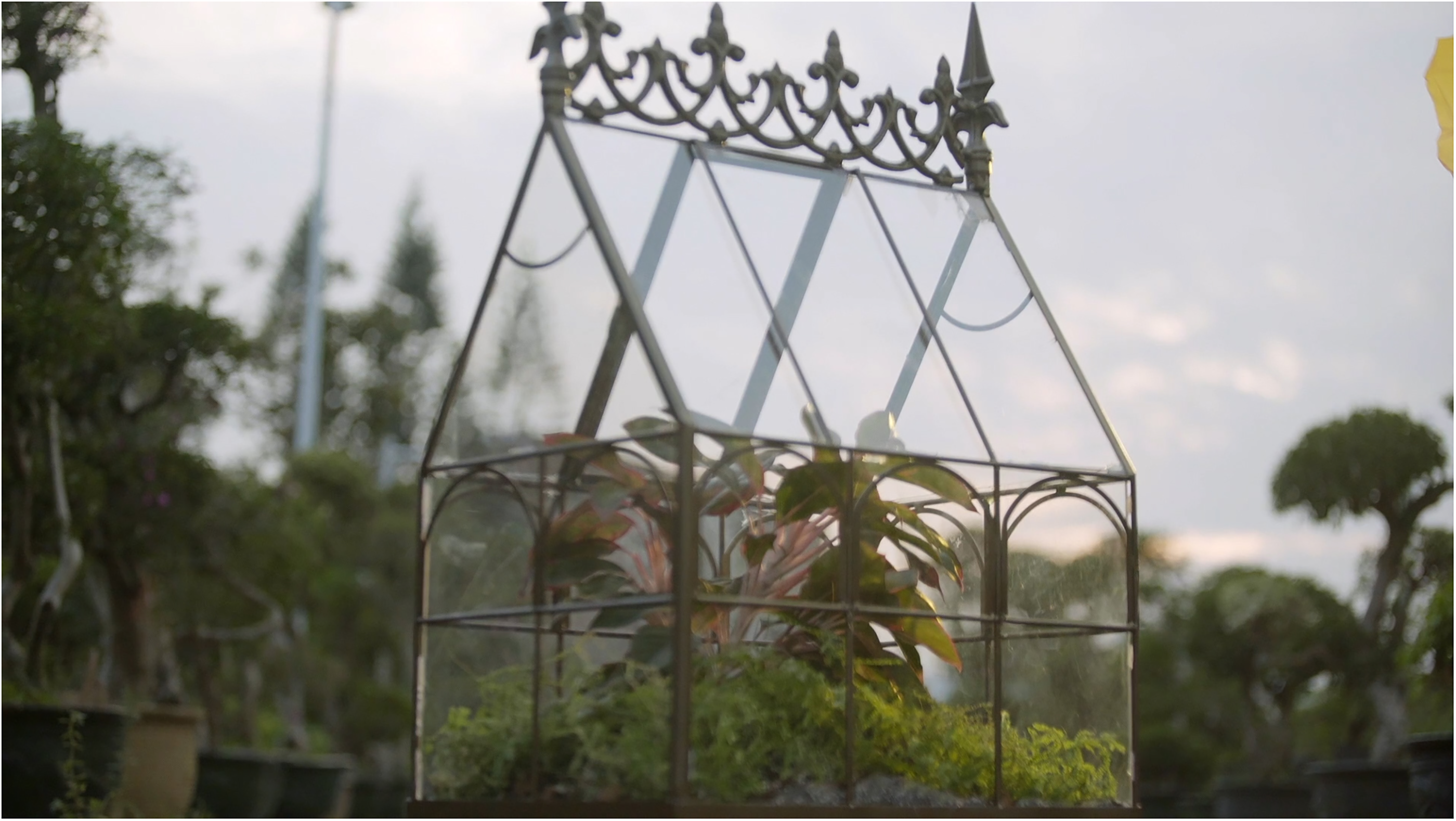
A Wardian case in a garden, film still from Many Undulating Things (2019), an essay film codirected by the authors. i
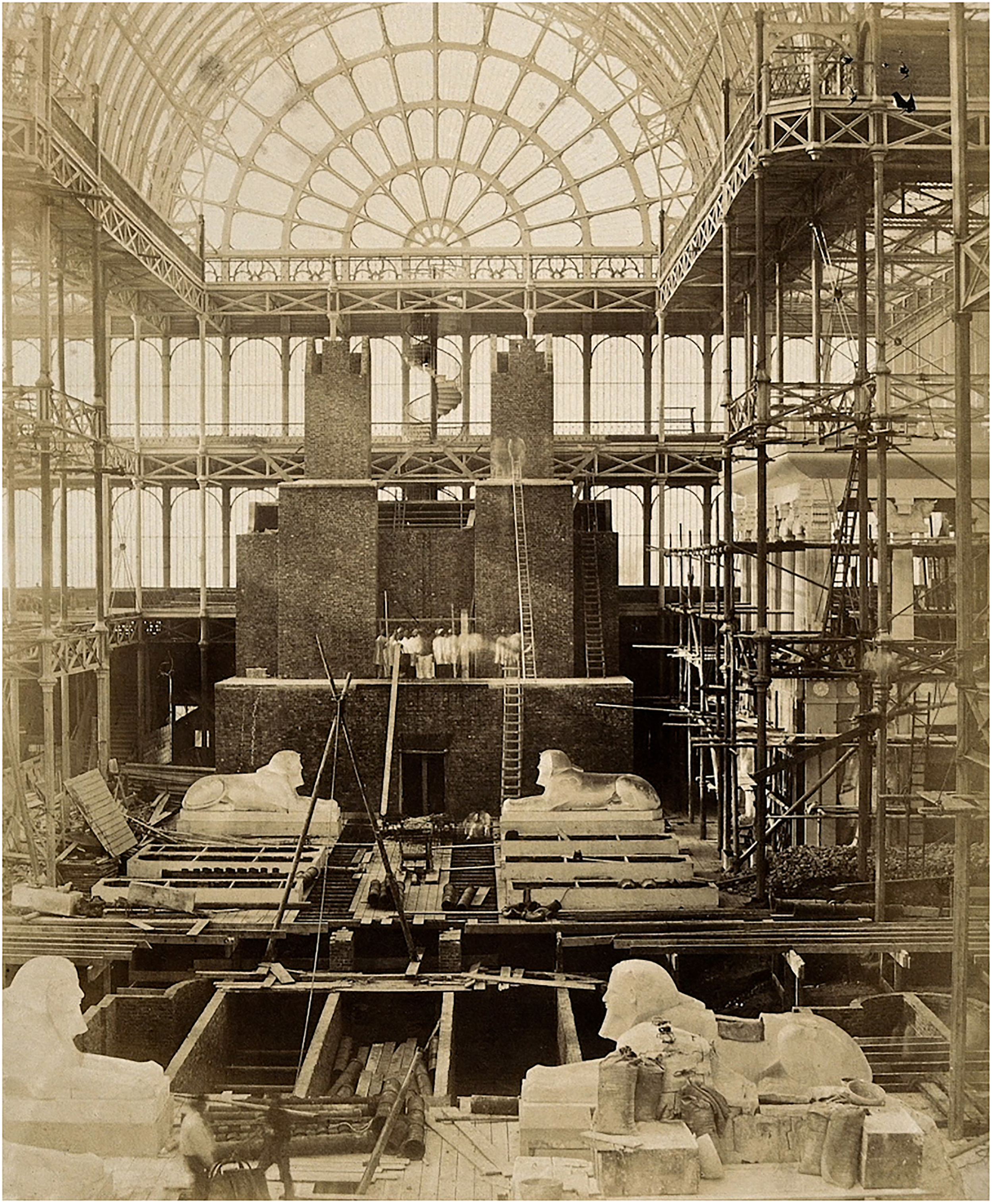
The Crystal Palace during its reerection at Sydenham, London: sphinxes in the unfinished interior. Photograph by Philip Delamotte, ca. 1854, public domain.
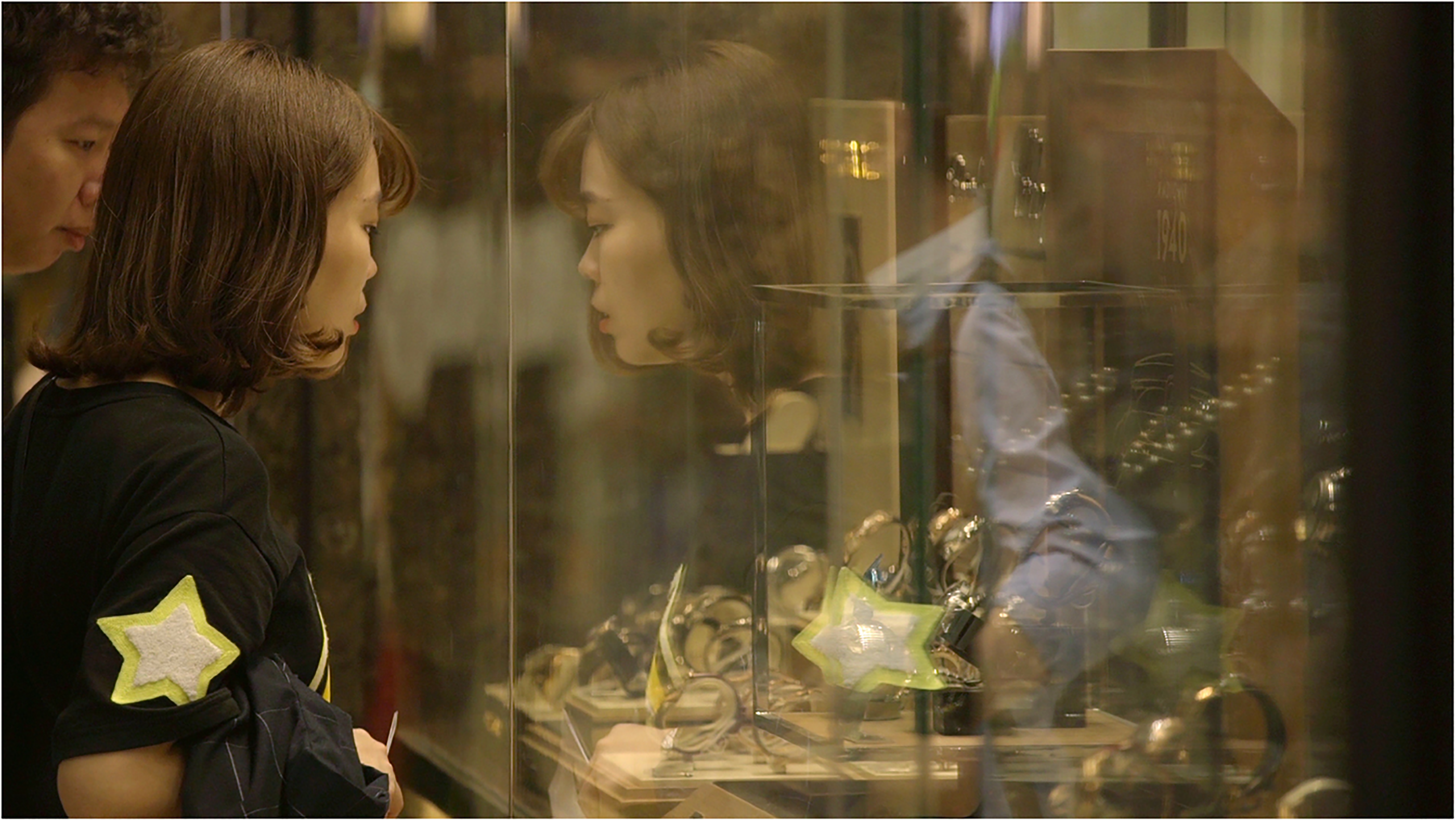
Shoppers and their reflections inside a shopping mall in Hong Kong, film still from Many Undulating Things (2019).
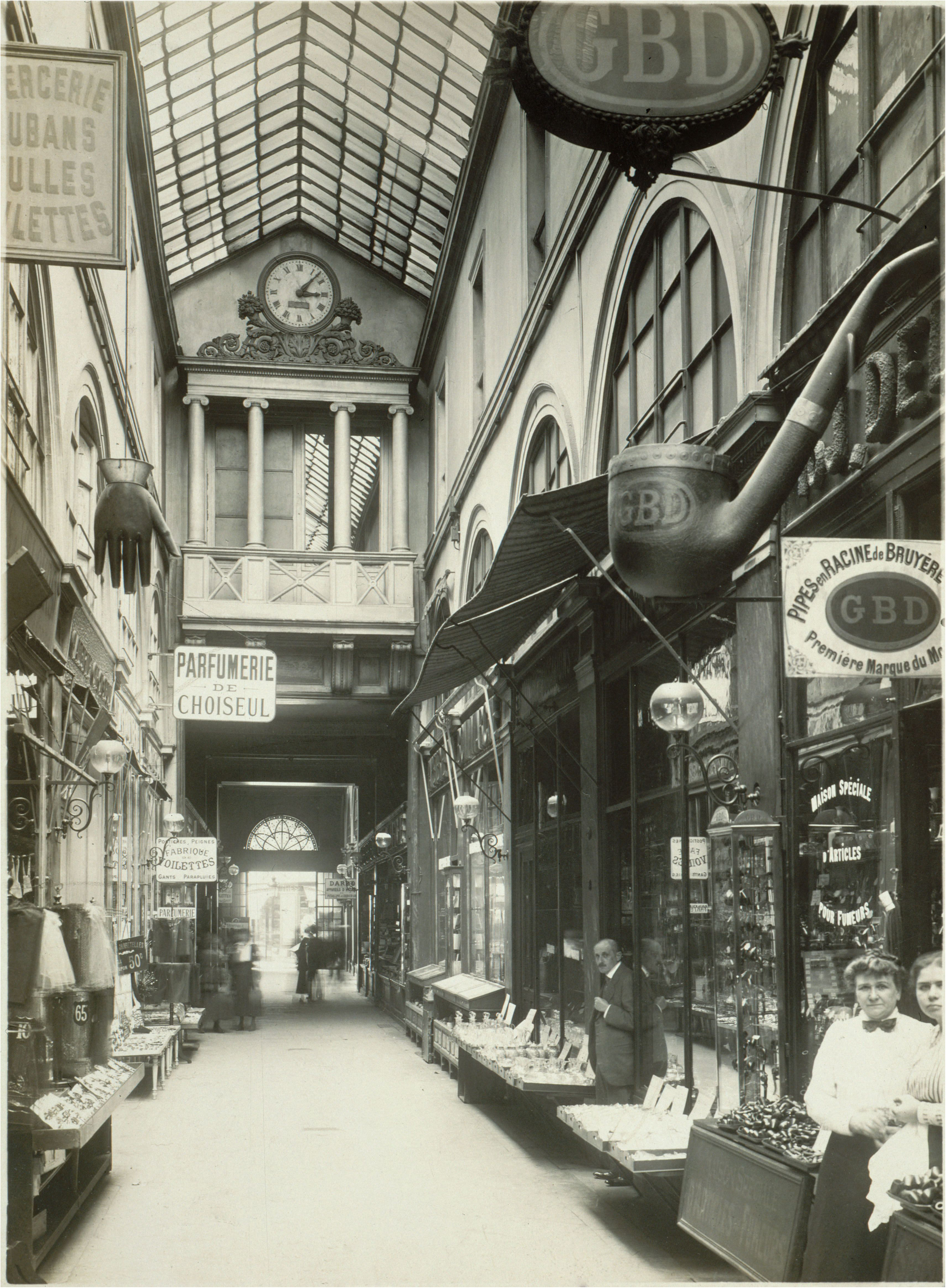
Passage de Choiseul, 2ème arrondissement, Paris. Photography by Charles Joseph Antoine Lansiaux, 1916, public domain.
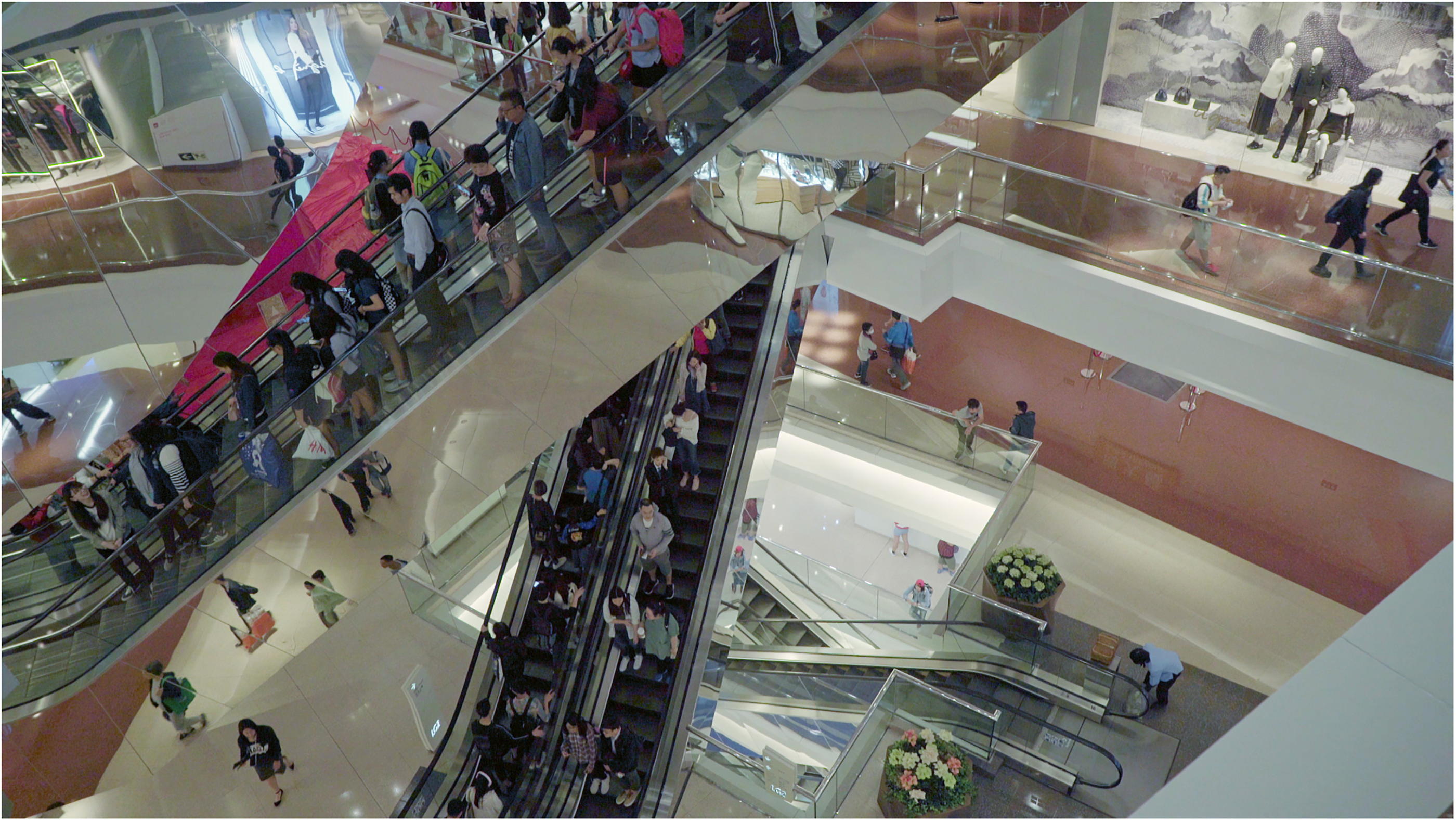
Atrium of a shopping mall in Hong Kong, film still from Many Undulating Things (2019).
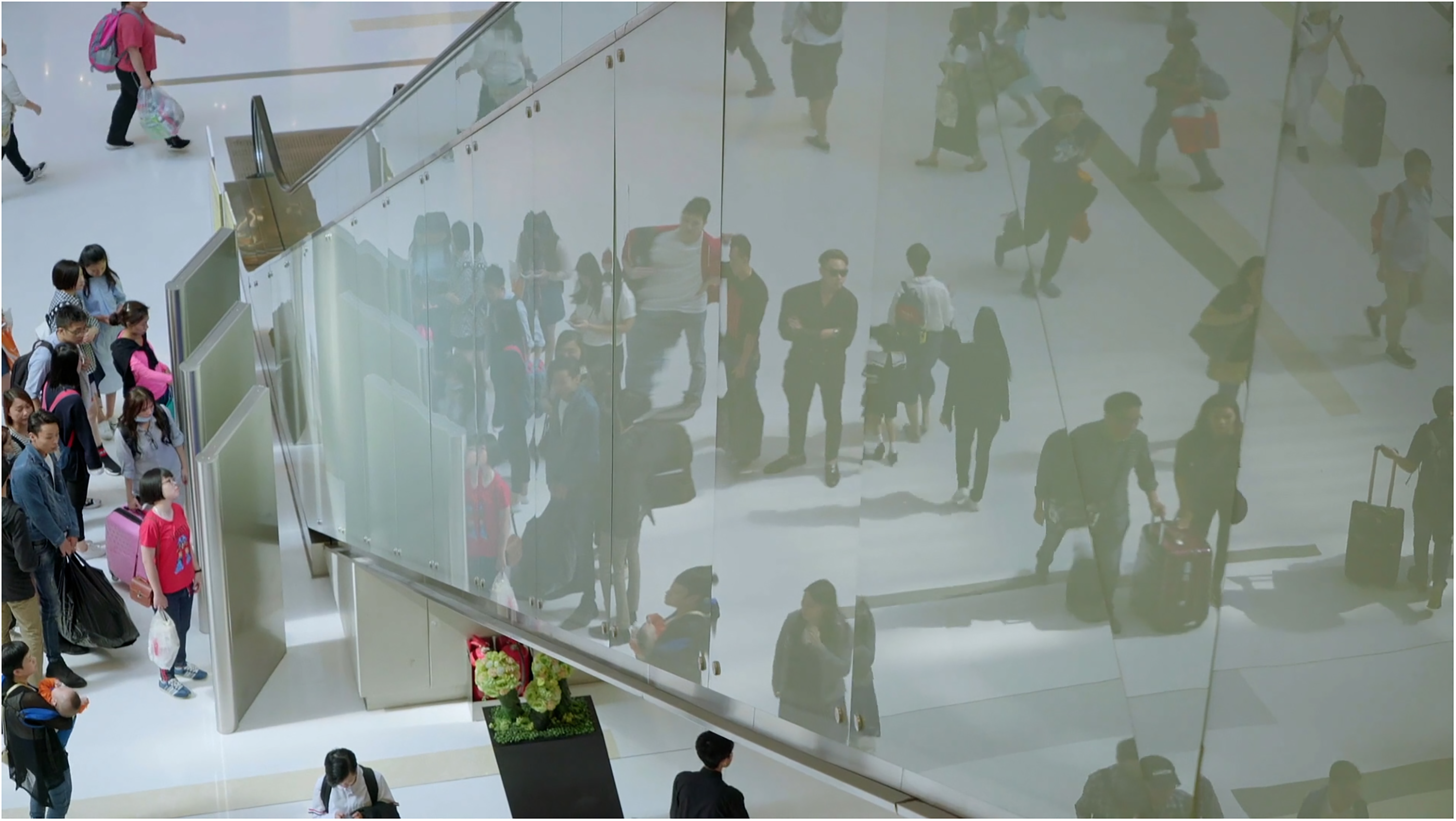
Reflective surfaces in New Town Plaza, Hong Kong, film still from Many Undulating Things (2019).
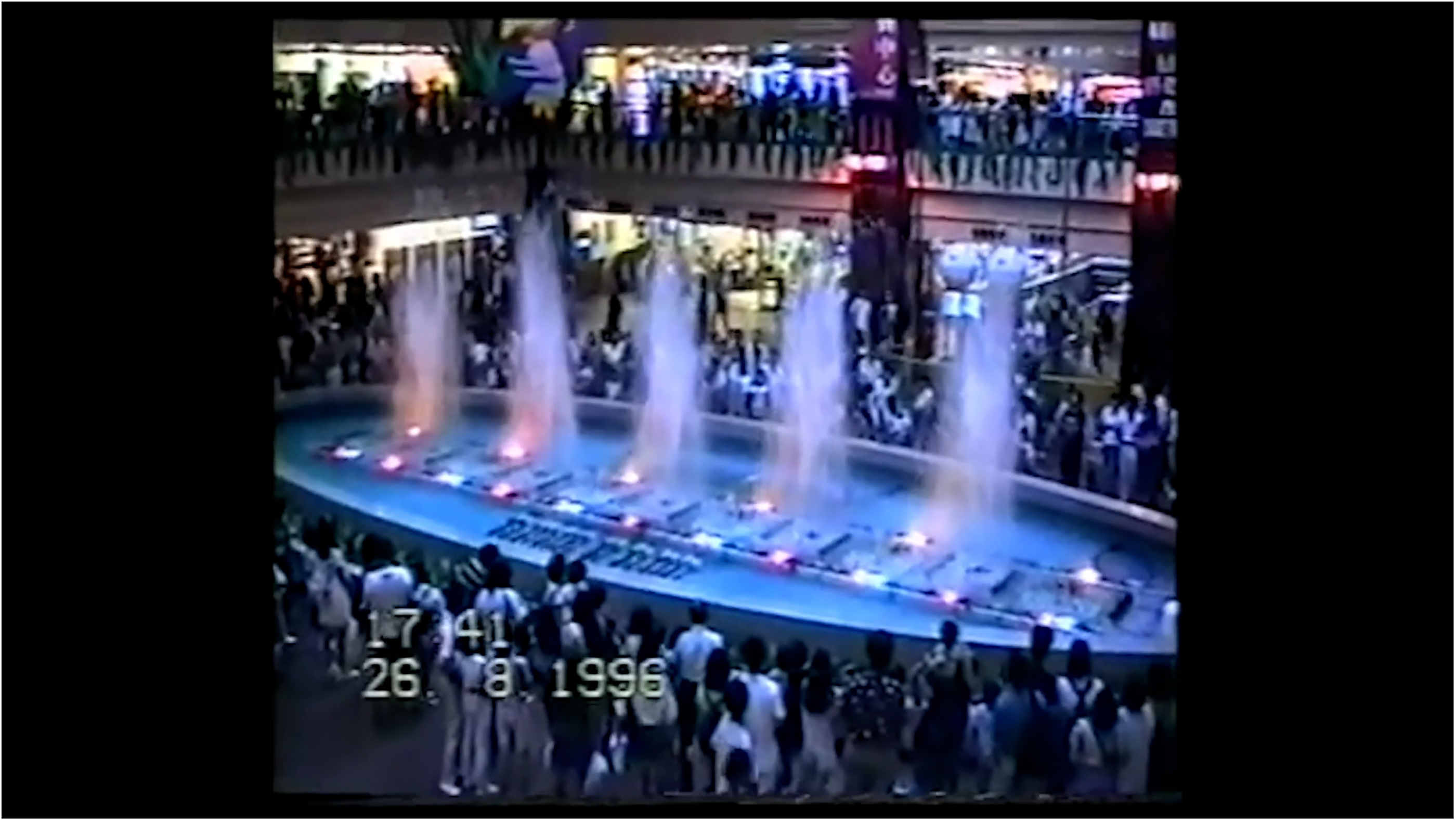
The original music fountain in the main atrium of New Town Plaza, Sha Tin, film still from Many Undulating Things (2019).
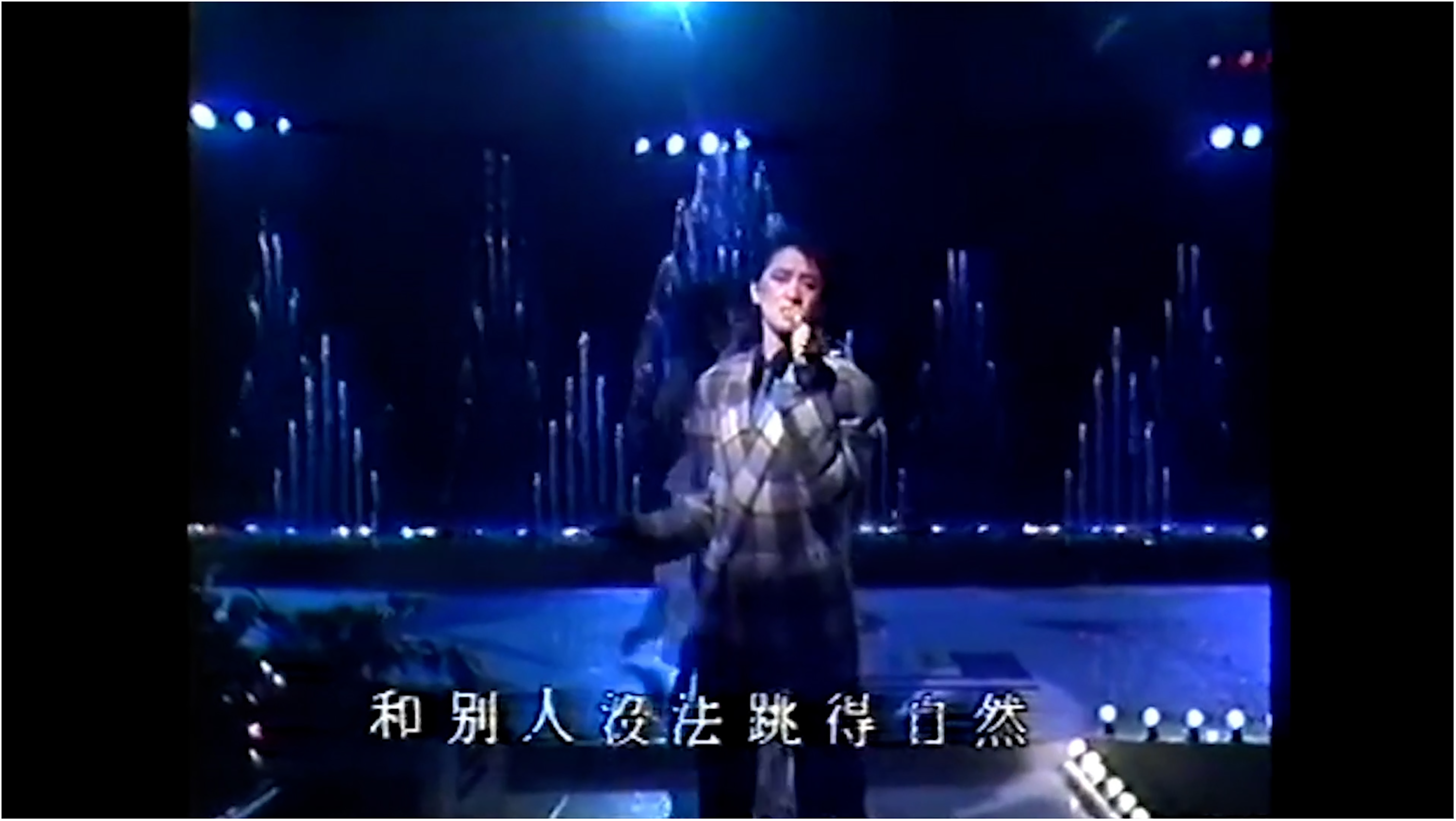
Cantopop star Anita Mui performing in front of the New Town Plaza music fountain in a 1985 TV show, film still from Many Undulating Things (2019).
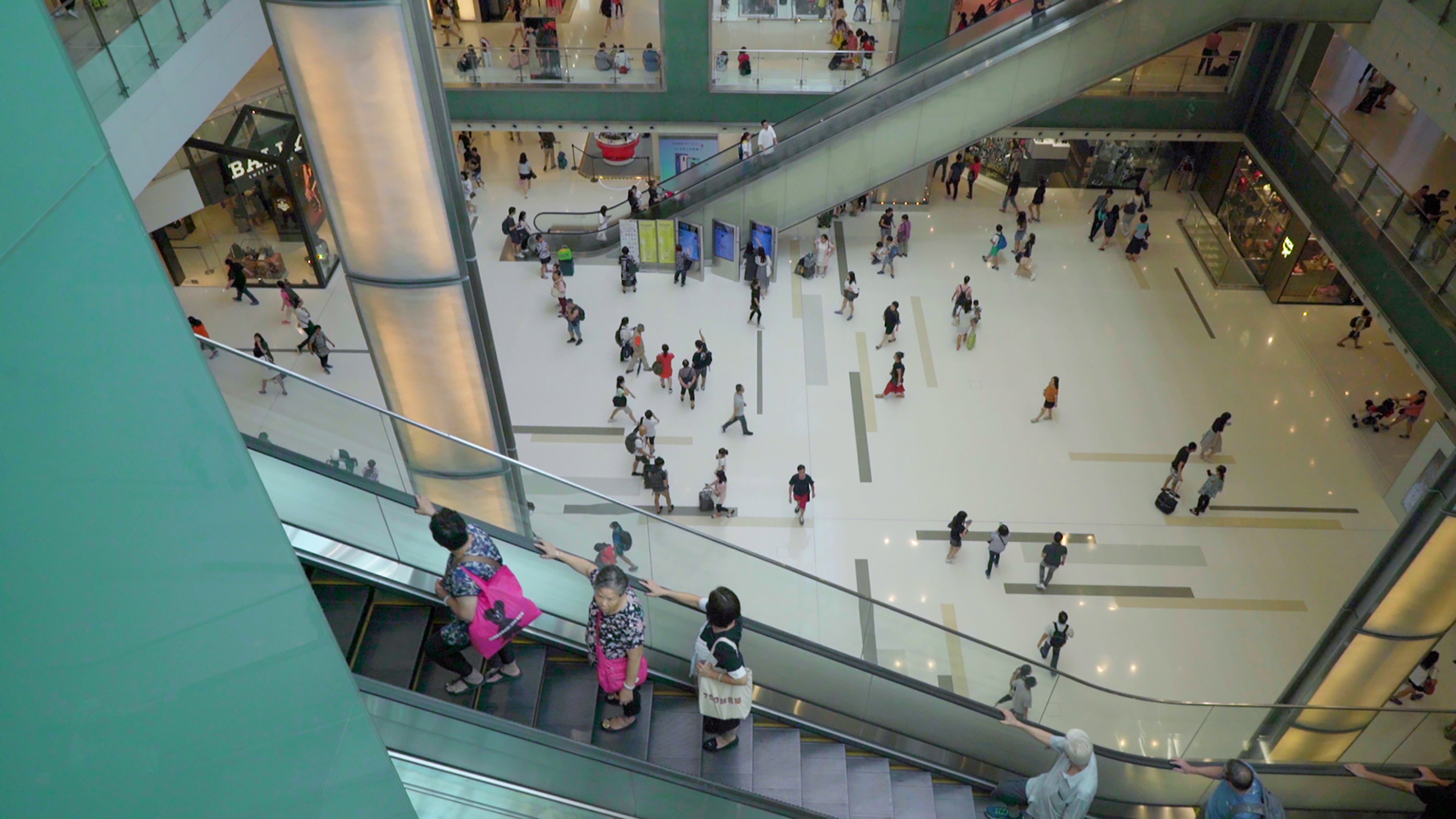
The main atrium of New Town Plaza in 2017, where the music fountain used to be before 2003, film still from Many Undulating Things (2019).
Footnotes
Declaration of Conflicting Interests
The author(s) declared no potential conflicts of interest with respect to the research, authorship, and/ or publication of this article.
Funding
The author(s) received no financial support for the research, authorship, and/or publication of this article.