




Abstract
To investigate current practices and perspectives of elite coaches and practitioners on training and recovery practices to maintain performance across competitions requiring multiple performances within or on consecutive days, thirty-six participants (12 coaches, 24 practitioners) supporting Olympic or World Championship-standard athletes completed a mixed-methods online survey. Questions addressed training and recovery practice use, perceived efficacy, barriers to implementation, and future research needs. Quantitative data were summarised descriptively, while open-ended responses were analysed using inductive content analysis. Respondents worked across 18 sports with cycling (all disciplines, n = 11), athletics (all disciplines, n = 8) and swimming (all distances, n = 5) most represented. All respondents (100%) employed event-specific training and periodised programmes, perceived as highly effective in maintaining performance across a competition (≥95%). Match simulations (94%), strength/resistance training (94%), and high-intensity interval training (92%) were also widely implemented and perceived effective (≥92%). During within-day competition, nutrition and fluid intake were universally implemented (100%) and perceived highly effective (97%), whereas contrast bathing (27%), muscle stimulation (7%), and heat application (7%) showed minimal use and low perceived benefit (≤20%). For consecutive-day competition, nutrition and fluid intake remained universal (100%), with high perceived effectiveness (100%), while sleep-related practices were used by 77% and rated 90% effective. Barriers to implementation included logistical constraints, limited resources, and uncertainty of scientific evidence. Elite coaches and practitioners adopt a range of established training and recovery practices to maintain competition performance, yet their application appears shaped by logistical constraints and athlete belief rather than empirical validation.
Keywords
Introduction
Athletic success in elite sport increasingly depends on the ability to perform consistently across multiple rounds or consecutive days of competition. Unlike single-bout events, tournaments and qualification formats often require athletes to perform repeated maximal efforts with limited recovery between rounds. These demands span a range of sports, from track cycling, where three events may occur within one to two hours, modern pentathlon, involving five events within a day, to netball, where teams may compete in eight matches over ten days. Such formats place considerable strain on athletes’ physical, physiological, biomechanical, and psychological capacities, challenging their ability to maintain peak performance across successive efforts. 1 Performance and recovery can be impaired through performance of multi-round competition. For example, in speed skating World Cup tournaments pacing, performance time, and tournament progression is negatively impacted through the accumulation of prior rounds of competition. 1 Simulated cross country skiing race performance times are impaired through the performance of prior rounds, 2 with recovery duration a key factor that influences blood lactate removal (a marker of recovery) and performance. 3 And in international netball tournaments, markers of muscle damage and perceived well-being are negatively affected following the performance of consecutive daily matches. 4 Collectively, whilst there is also evidence of limited or no impact of prior rounds of competition or simulated competition when separated by 24 h (e.g., 5,6), the accumulation of rounds of competition,1,2 and recovery duration 3 (may have a negative impact upon recovery from prior rounds of competition. 4 While the physical, 7 physiological, 8 and technical 9 demands of individual competition events are well established in a range of sports, comparatively less attention has been paid to how athletes and support teams manage performance and recovery across rounds or consecutive competition days. This is particularly important given that insufficient recovery between bouts can lead to cumulative fatigue, impaired neuromuscular function, and increased injury risk.10,11 Consequently, the integration of targeted recovery and training practices becomes essential not only for performance optimisation but also athlete health and longevity.
Recovery practices, such as optimal nutrition, hydration, cold water immersion, active recovery, and compression garments, are commonly used to reduce fatigue and restore physical capacity by accelerating muscle repair, replenishing key metabolic substrates, decreasing inflammation, and enhancing readiness between events.12,13 Complementary training methods like high-intensity interval training, resistance training, and competition-specific simulations aim to build physiological resilience for repeated high-intensity efforts.14,15 However, despite the success of recovery practices in laboratory settings, the practical effectiveness and implementation of these is often influenced by contextual constraints including time, cost, logistics, and individual athlete preference.16,17 Therefore, understanding how coaches and practitioners conceptualise, apply, and adapt training and recovery practices in real-world settings is essential to bridge the gap between research and practice.
Given these complexities, there is a pressing need to understand the current landscape of training and recovery practice use from the perspective of those directly involved in high-performance sport. Specifically, there is limited knowledge regarding how coaches and practitioners prepare for and manage recovery during multi-round competitions, and how they evaluate the effectiveness of the practices they implement. The purpose of this study was therefore to examine current training and recovery practices used by elite coaches and practitioners to maintain performance across competitions involving multiple performances in a single day or on consecutive days. By capturing both quantitative data and qualitative perspectives, this study sought to identify common practices, contextual challenges, and areas of innovation, thereby informing future applied research and enhancing evidence-based programming in elite sport.
Methods
Participants
A total of 36 participants were recruited between June and October 2023 through a combination of targeted social media posts (via X, formerly Twitter, and LinkedIn) and direct contact through the researchers’ established professional networks. All participants had supported athletes competing at international-standard or above, termed tier 4 or above using the participant classification framework, 18 and who competed in multi-round competition that required multiple performances within a day and/ or on consecutive days. Institutional ethical approval was granted (Manchester Metropolitan University: approval number 54188) prior to participant recruitment, and participants were informed of the purpose and procedures of the investigation prior to providing informed consent and completing the survey.
Design
Data were collected using an online survey website (QualtricsXM; https://www.qualtrics.com), with all data exported and analysed using Microsoft Excel. Pilot testing was conducted by five lay participants, to ensure applied logic was appropriate, and for ease of use. Subsequently, three practitioners who had worked with Olympic medallists (tier 5), in addition to two coaches who had worked with athletes who had competed to world championship standard (tier 4), underwent pilot testing, ensuring appropriate language and ease of use. The final survey took approximately 15 min to complete.
Survey questions included a mixture of closed ended (Likert scale, single/ multiple choice etc) and open ended (free text) formats to allow participants to provide further detail beyond that of scales (supplementary file). The survey was divided into six sections: 1) participant demographics, 2) sport details (including information regarding athletes supported), 3) training practices, 4 & 5) two recovery practice sections (for within-day and consecutive day competitions), and 6) future direction. For the demographics section participants were asked about their age, gender, nationality, role, and educational level. Sport included details around the main sport worked and the typical timeframe between multiple performances at the highest standard of competition. Additionally, this section asked about the athletes they supported including the highest standard the athletes have achieved.
For the training section participants were asked what training practices they employed across the annual planning cycle and asked to rate perceived efficacy in improving performance when preparing for multi-round competitions from a list of nine pre-populated subitems. These were based on commonly employed training practices observed in the literature and in applied practice employed by coaches and practitioners working with international-standard athletes. A specific timeframe of when practices were employed was not provided allowing participants to consider early, mid-, and late-season training practices, in line with their typical sport and individual planning practices. A free text box was also provided for any additional practices that were not listed. Additionally, participants were asked whether they individualised practices, where they obtained information regarding the use of practices from, whether there was any barrier to implementation, whether they would like to implement other training practices, and whether they felt more information was required on the use of training practices.
For the recovery section, a similar format was adhered to, asking specifically about recovery practice implementation to improve performance in competitions involving multiple performances within day, and on consecutive days. A list of 15 subitems were selected based on commonly used practices described in the literature, and as used by coaches and practitioners working at international-standard, with a free text box for any additional practices not listed. Similar to the training section, participants were then asked about individualisation of practices, where information was obtained, barriers to implementation, desire to use other practices, and whether further information was required. The final section was an open-ended question regarding future directions, and whether the participant had any specific questions or challenges they would like solved in relation to training and recovery practices to enhance performance in multi-round competitions.
For both recovery and training practices sections, respondents rated perceived efficacy by choosing one of strongly agree, agree, neither agree or disagree, disagree, strongly disagree, or not applicable. Respondents selected from a pre-populated list for where information was obtained (10 subitems) and for barriers to implementation (eight subitems), with an additional free text box for any other sources or barriers not listed. A copy of the survey is available as supplementary material.
Data analysis
All survey responses were systematically coded and summarised to identify patterns, themes, and descriptive trends. Quantitative responses were tabulated to provide frequency distributions and highlight common practices, while qualitative responses were analysed using an inductive content analysis approach allowing for the emergence of themes by grouping participant perspectives into meaningful categories. 19 This pragmatic, mixed-methods approach is consistent with previous research in applied sport science settings where exploratory insights from practitioners are prioritised over statistical generalisation.20,21
Results
Participant demographics
A total of 36 participants (mean ± standard deviation [SD]: age 40.6 ± 14.0 years) completed the survey representing diverse professional roles in high-performance sport (Table 1). The majority of participants had over 11 years’ experience in elite sport, as well as experience of working with Olympic or World Champions. Participants worked across 18 sports, with cycling, athletics, and swimming most common. Most (30/36) reported that, depending upon the stage of competition, multiple rounds could occur within the same day (e.g., heat and semi-final) and across consecutive days (e.g., semi-final and final).
Characteristics of the coaches and practitioners who took part in the study.
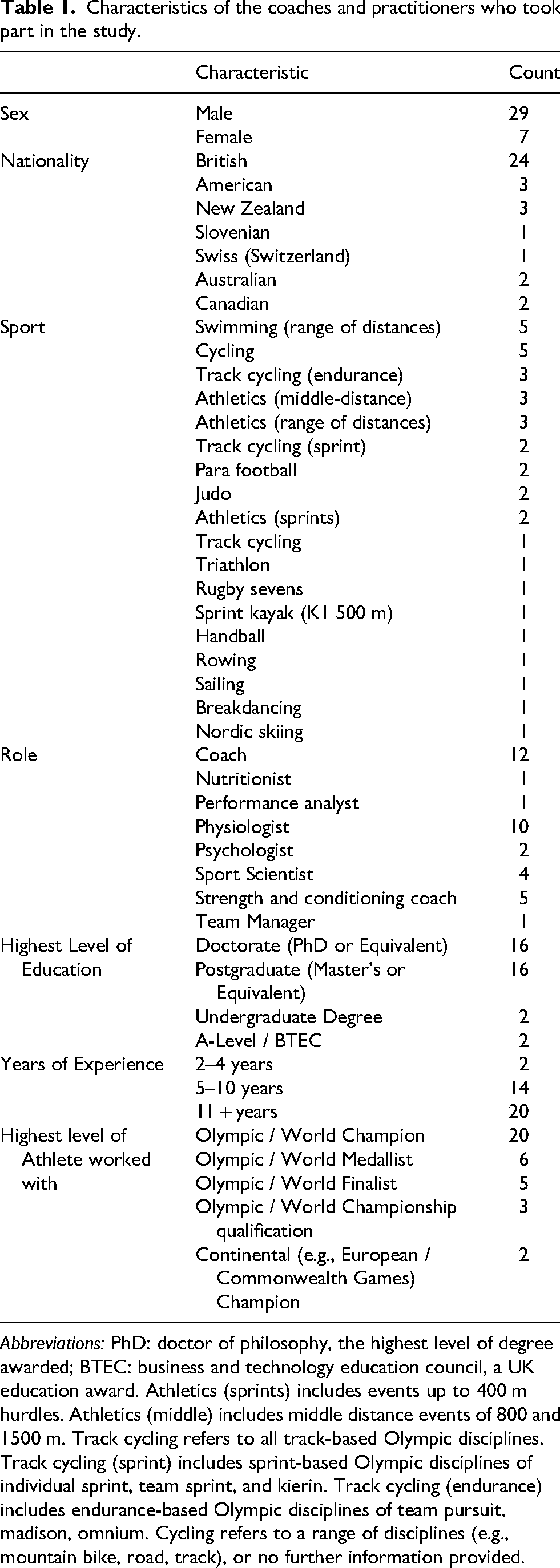
Abbreviations: PhD: doctor of philosophy, the highest level of degree awarded; BTEC: business and technology education council, a UK education award. Athletics (sprints) includes events up to 400 m hurdles. Athletics (middle) includes middle distance events of 800 and 1500 m. Track cycling refers to all track-based Olympic disciplines. Track cycling (sprint) includes sprint-based Olympic disciplines of individual sprint, team sprint, and kierin. Track cycling (endurance) includes endurance-based Olympic disciplines of team pursuit, madison, omnium. Cycling refers to a range of disciplines (e.g., mountain bike, road, track), or no further information provided.
Training practices for multi-round competitions
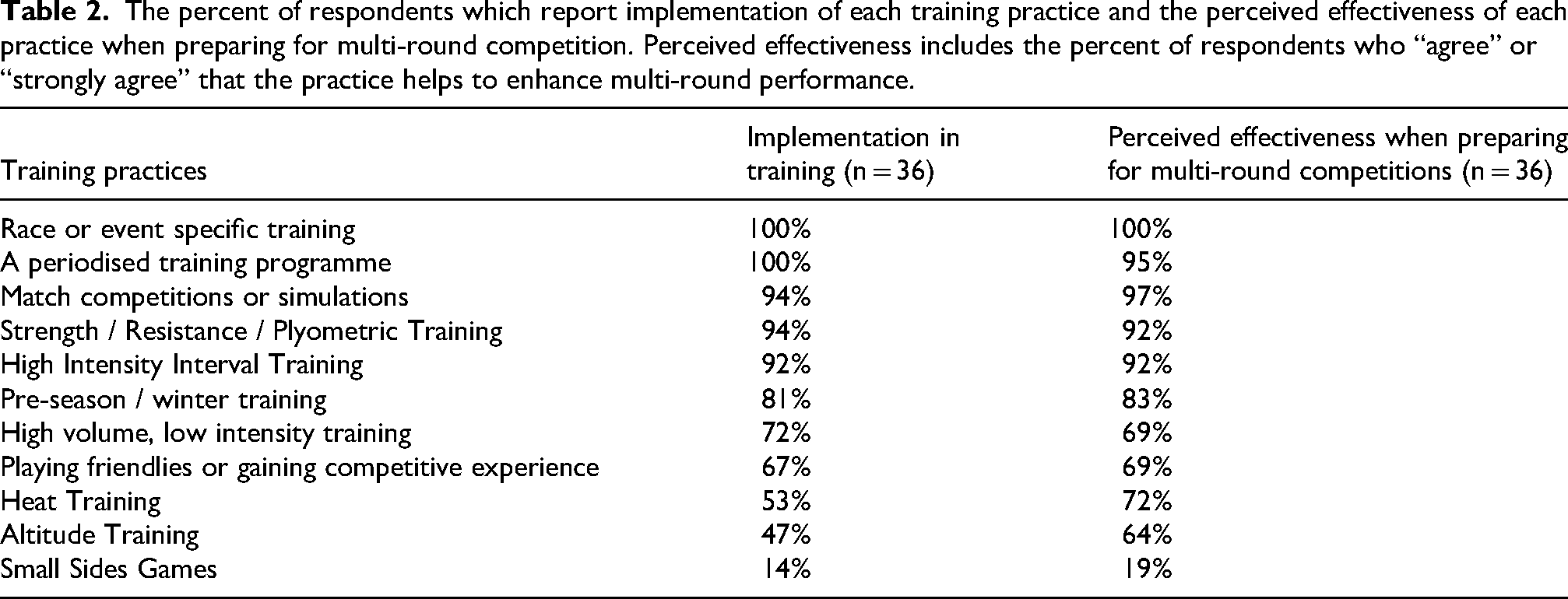
Individual training practice use ranged from 14 to 100%, with perceived efficacy mostly matching use such that a practice was more likely to be deemed effective by users when implemented by a greater proportion of respondents (Table 2). Race or event specific training as well as a periodised training programme was implemented by all respondents and perceived by all, or most, to be effective. Match simulations, strength training, and high intensity interval training were also widely used and deemed effective. In contrast, small-sided games were rarely used and seen as less effective.
The percent of respondents which report implementation of each training practice and the perceived effectiveness of each practice when preparing for multi-round competition. Perceived effectiveness includes the percent of respondents who “agree” or “strongly agree” that the practice helps to enhance multi-round performance.
Recovery practice use and perceived effectiveness
Recovery practice use varied by competition schedule (Table 3). For within-day competitions nutrition and fluid intake were implemented by all respondents and perceived by almost all (one did not) to be effective. Contrast bath/ shower, muscle stimulation, and heat application were rarely implemented, with low perceived effectiveness. Relaxation and foam rolling were commonly implemented; however, had considerably lower perceived effectiveness than use.
The percent of respondents which report use of each recovery practice, and perceived effectiveness of each practice, during multi-round competition involving repeated performances within and on consecutive days. Perceived effectiveness includes the percent of respondents who “agree” or “strongly agree” that the practice helps to enhance performance.
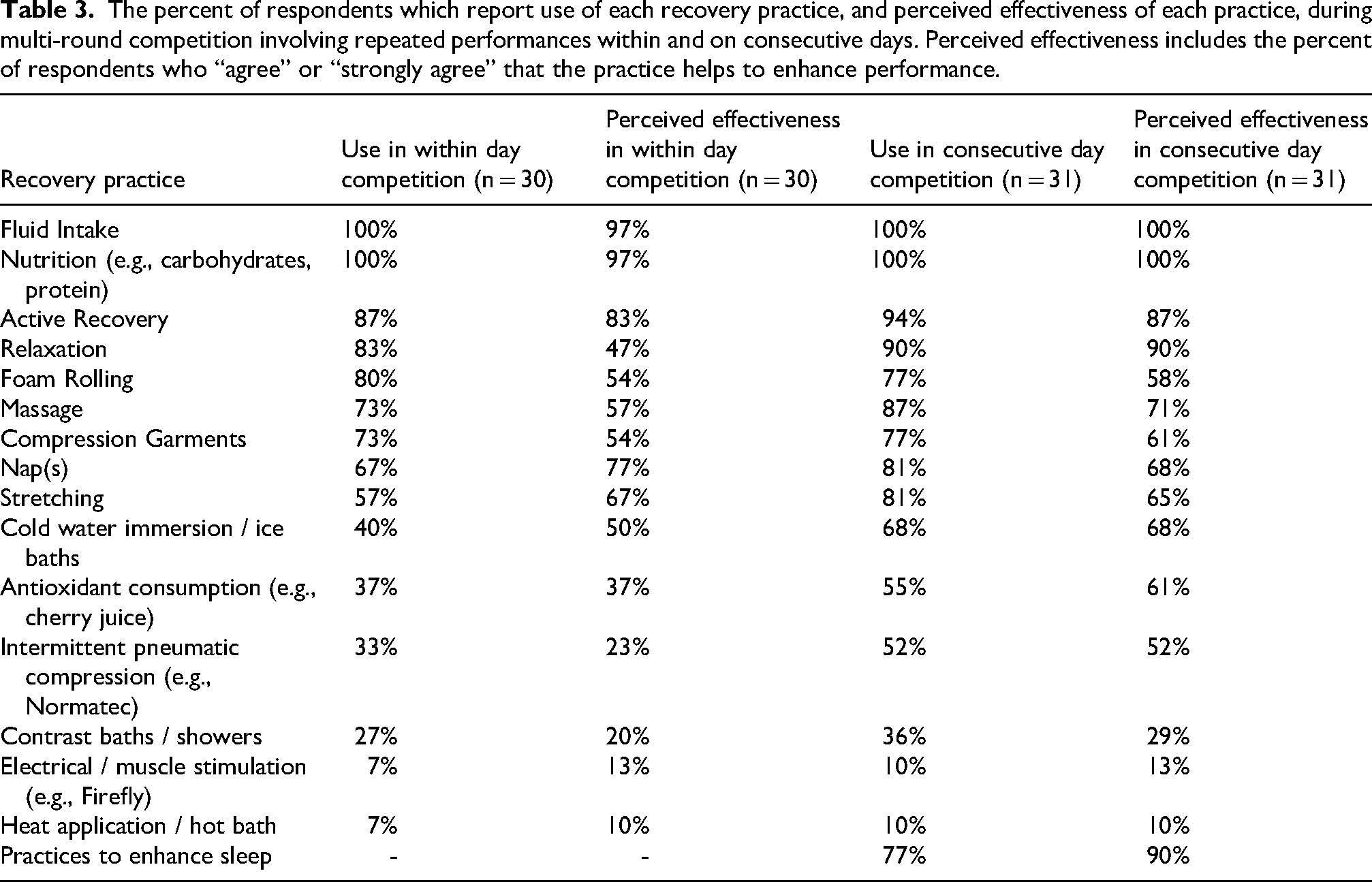
During consecutive day competitions, recovery practice use ranged from 10 to 100%, with perceived efficacy not necessarily reflecting use. Nutrition and fluid intake were implemented by all respondents and perceived by all to be effective. Electrical/ muscle stimulation and heat application were rarely implemented, with low perceived efficacy. Other recovery practices were more commonly implemented on consecutive day competitions compared with within-day. Notably, relaxation was commonly implemented with high perceived efficacy, in contrast to that of within-day competition with lower perceived efficacy. Practices to enhance sleep were implemented by most with a considerably higher perceived efficacy than use.
Qualitative data
Qualitative responses emphasised the psychological dimension of recovery. Several respondents acknowledged the placebo effect and athlete belief as potentially critical contributors to the effectiveness of recovery practices. More specifically, practitioners highlighted the difficulty in disentangling physical and psychological effects, noting that the placebo effect plays a significant role, and reported that if an athlete believes a practice works, it is often experienced as effective, regardless of scientific evidence: “A lot of this is dependent on what the athlete thinks it does for them and how it makes them feel.” Coach, 42 years “Placebo effect and athlete belief is key to these strategies being successful, even if the science does not back it up.” Coach, 50 years “While it is difficult to separate physical with psychological, placebo effect means that with many of these strategies, if the athlete believes in them, they are likely to be effective” Physiologist, 33 years
Barriers to implementation
A summary of the barriers to implementation is presented in Figure 1. The biggest barrier to implementation for both training and recovery practices was access and logistics. Being uncertain in effectiveness and a lack of research and evidence were also common barriers. Lack of time to implement practices, cost, and internal conflict with other staff members were more common barriers for training than recovery practice implementation. Conversely, resource limitations such as lack of staff availability and knowledge of how to implement a practice were more common for recovery than training practices.
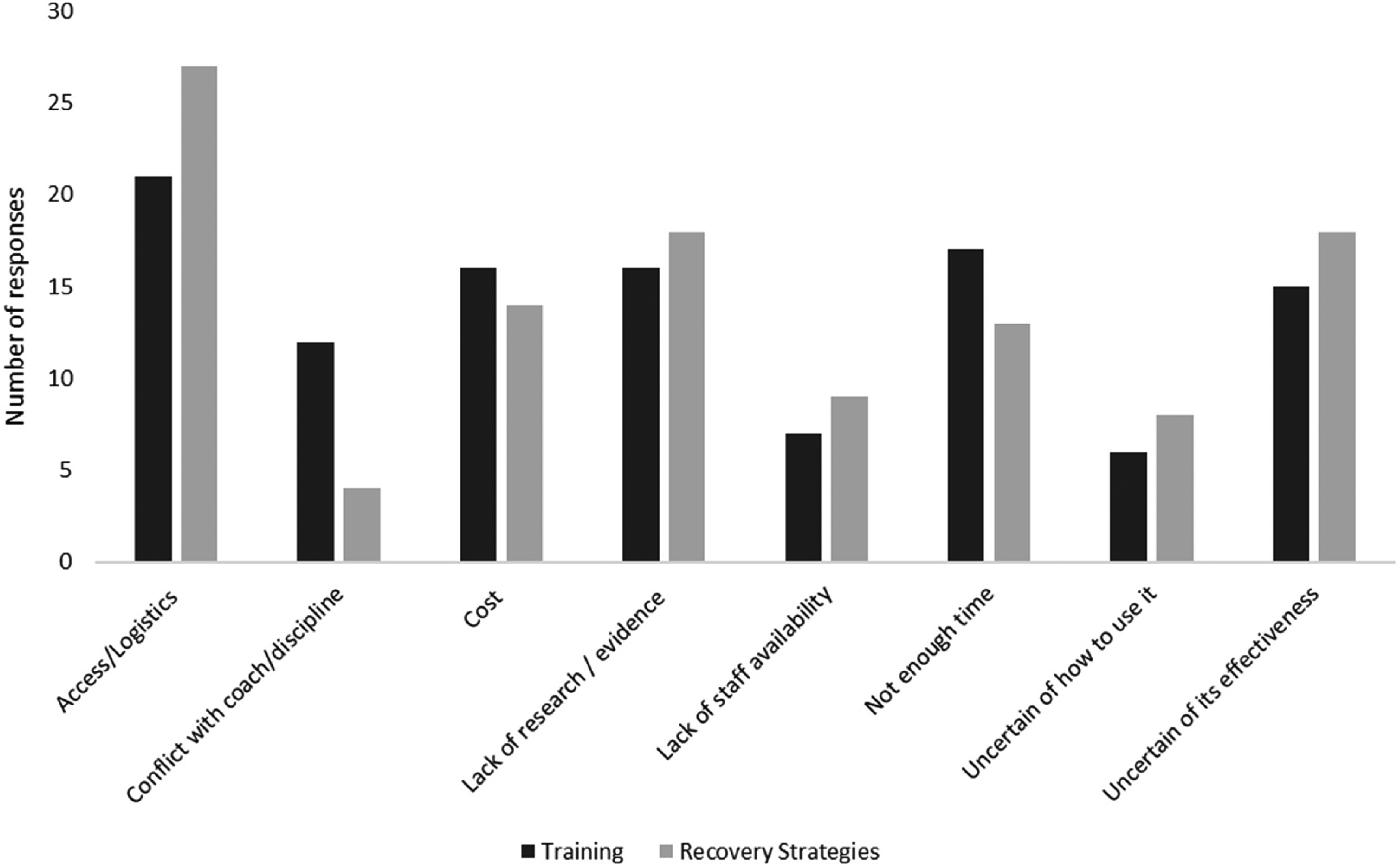
Barriers to implementation of training and recovery practices to improve performance in multi-round competitions requiring repeated performances within day and on consecutive days. The maximum number of responses is 36.
Future research directions
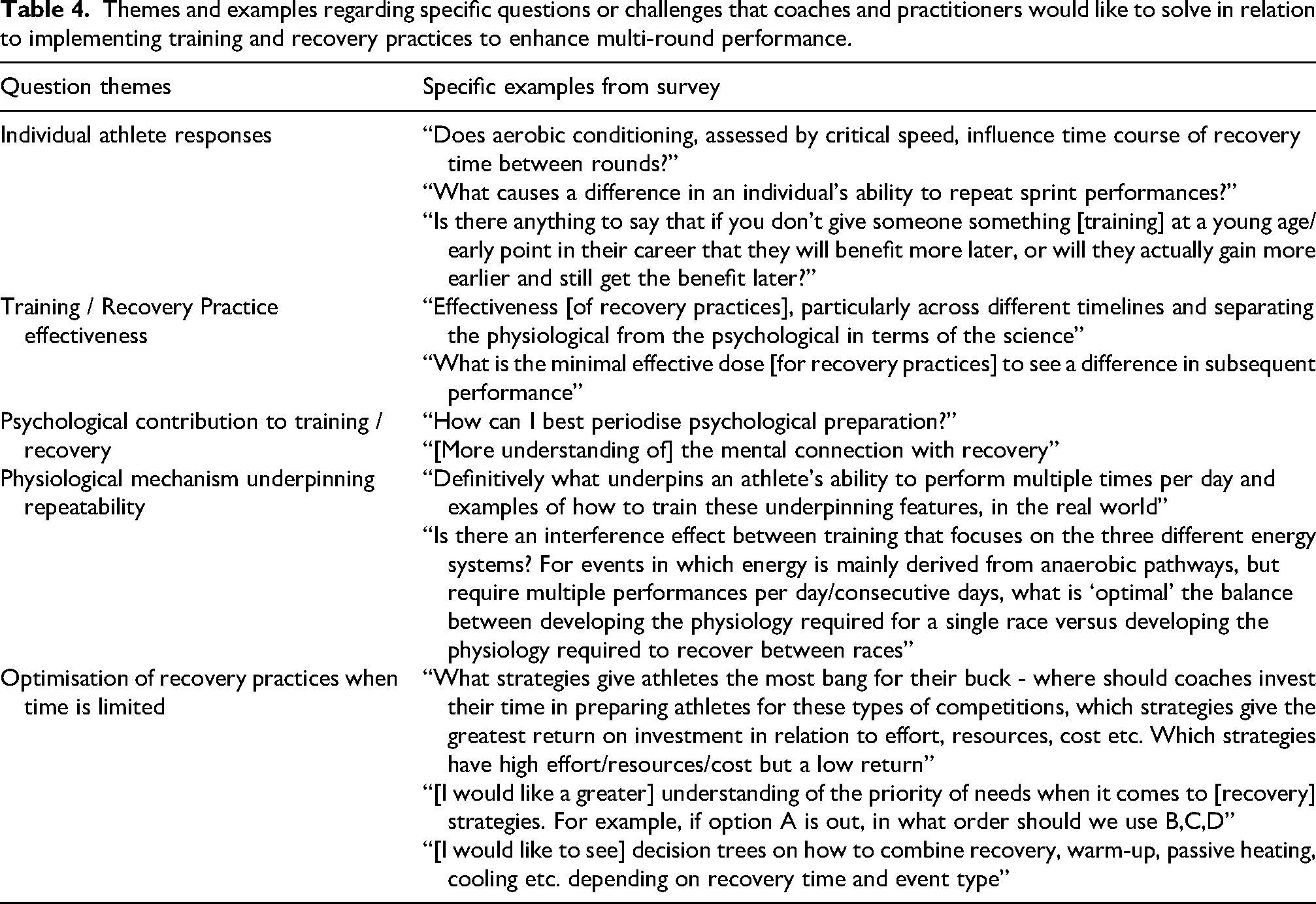
Participants highlighted several areas requiring further scientific attention (Table 4). Questions revolved around the physiological underpinnings of recovery and repeatability of performance, such as the role of aerobic capacity (e.g., critical speed) in between-round recovery and mechanisms underpinning sprint repeatability. Further areas of interest included determining the minimal effective dose of both training and recovery practices, and the prioritisation of practices based on efficiency, cost-effectiveness, and impact. Several participants called for decision-making frameworks, such as decision trees or timelines, to help select optimal practices in constrained environments (e.g., short turnarounds or limited resources). Additionally, the integration of psychological preparation within periodised plans and a deeper understanding of the mind-body interaction in recovery were mentioned as key gaps in current applied practice.
Themes and examples regarding specific questions or challenges that coaches and practitioners would like to solve in relation to implementing training and recovery practices to enhance multi-round performance.
Discussion
This study offers novel insight into the training and recovery practices used by elite- practitioners and coaches supporting international-standard (tier 4 and 5) athletes during competition formats that require repeated performances over short time periods. This study reveals not only the practices that coaches and practitioners employ to maintain performance across multi-round competitions but also highlights challenges in translating research into practice, barriers to implementation, and future directions to enhance practice at elite level. Practice by elite coaches and practitioners to maintain performance across multi-round competitions is driven by combination of scientific evidence, athlete belief, and logistical constraints.
Training practices
The unanimous endorsement of periodisation and event-specific training by respondents (100% use; >95% perceived effectiveness) reflects scientific evidence and confirms their centrality in elite sport preparation for multi-round competition. Similarly, the widespread use of HIIT and strength/resistance training (>90% adoption, 92% perceived effectiveness) is supported by strong physiological evidence supporting their role in enhancing repeated sprint and endurance capacity.22,23 However, the present survey design does not capture whether their implementation was systematically aligned with competition demands or applied more generically. Without contextual detail, such as timing within the training cycle, individualisation, or integration with recovery protocols, the reported effectiveness risks being interpreted more as practitioner perception than objective performance outcomes.
By contrast, SSGs were rarely used and perceived as ineffective. This finding diverges from a growing body of research supporting SSGs as a conditioning tool in team sports.24,25 One explanation for low use rates may lie in the respondent pool, which included relatively few practitioners from invasion games, where SSGs are most relevant, although this does not explain low perceived efficacy. A challenge of SSGs is achieving a consistent, or indeed the intended, physiological stimulus across all individuals, as players can manipulate their tactical role to reduce physical, physiological, and biomechanical demands. 26 However, this discrepancy also illustrates a wider challenge that practices with demonstrated utility in certain contexts may be prematurely dismissed when viewed through the lens of sports with very different physical and tactical demands.
Environmental practices such as heat and altitude training were adopted by around half of respondents, despite only moderate perceived effectiveness. This use may reflect logistical and financial constraints rather than purely physiological scepticism, as both practices have proven benefits when adequately dosed and monitored.27,28 However, effectiveness of these practices depends on precise control of exposure duration, intensity, and individual responses, precisely positioned within the annual training and competition calendar, which can be challenging to control outside of research or well-resourced national programmes. Thus, the partial uptake observed here may reflect a combination of sport-specific requirements or norms for training practice, opportunities for use in the annual calendar, cost, as well as logistical constraints regarding optimising practices to ensure a positive outcome on performance. As this study cannot elucidate why perceived efficacy was only moderate, despite strong evidence of positive effect, further investigation is warranted to overcome any barriers and to enhance translation of evidence to practice.
Taken together, practitioners’ perceptions of current training practices highlights the need for sport-specific evidence to guide more contextually relevant approaches, and the need for enhanced sharing and translation of research to enable coaches and practitioners to implement existing evidence in a confident and effective manner, and investigation into enhancing multi-round performance in addition to one-off. Furthermore, respondents’ suggestions for future research emphasise the importance of interdisciplinary methods integrating both physiological and psychological domains to better inform practice and enhance the individualisation of training programmes.
Recovery practices
For most recovery practices, perceived efficacy closely matched use. Nutrition and hydration were universally implemented and rated highly effective, which aligns with robust evidence on glycogen resynthesis, protein turnover, and hydration status as key determinants of between-bout recovery.29,30 These foundational practices appear to be well-integrated into coach and practitioner routines, reflecting both scientific consensus and practical feasibility. Beyond these essentials, however, the divergence between use and perceived efficacy was apparent. Modalities such as foam rolling, massage, and compression garments were widely employed (>70%) yet rated as only moderately effective, echoing the equivocal or small effect sizes reported in meta-analyses.31,32 Indeed, many of the practices with low use or perceived efficacy have equivocal findings in the literature, including active recovery, 32 stretching, 33 and pneumatic compression. 34 This suggests usage may be driven by athlete preference and psychology (i.e., placebo) as opposed to consistent physiological or performance related evidence. Additionally, use of recovery practices may be driven by access and practicality more than strong evidence. For example, relaxation and foam rolling had low perceived efficacy (47–54%) yet high rates of use (80–83%) in within day competitions. These practices have very few barriers to implementation, with little or no cost, easy transport, and can be performed almost anywhere, with use seemingly strongly related to ease of use. Indeed, it is possible that other practices, with significant barriers to implement effectively, or easily, may have consequently been perceived to have low efficacy. However, we are unable to elucidate this from our data.
Perhaps most revealing was the emphasis on psychological mechanisms for recovery. Respondents frequently highlighted placebo effects and athlete belief as central to recovery practice effectiveness. This finding reflects a growing recognition that the subjective perception of recovery may, in some contexts, be as influential as physiological restoration.35,36 Yet, this reliance on athlete belief risks creating a fragile performance ecology, where outcomes are shaped as much by expectation management as by physiological adaptation. From a critical standpoint, this represents an opportunity for evidence translation, supporting practitioners and coaches to navigate the blurred line between evidence-based physiological benefit and psychologically mediated effects. 37
Notably, sleep emerged as a highly valued yet inconsistently applied practice. While most respondents endorsed sleep-focused interventions during consecutive-day competitions, there remains a lack of clarity on how these were operationalised (e.g., naps, sleep hygiene, pharmacological aids). Given the centrality of sleep in recovery and performance, 38 and the complexity of competition timings (i.e., combinations of early morning and late night), this perhaps suggests a need for more systematic education and resource provision for elite athletes and those supporting them. Taken together, coach and practitioner responses on recovery practice implementation and effectiveness highlights the need for targeted, sports-specific research that considers physiological, behavioural, and psychological domains. Ultimately, improving recovery practice optimisation and implementation may depend as much on communication and education with the elite sport community as robust scientific evidence.
Barriers to implementation
The most frequently cited barrier was logistical and resource constraints, which reinforces longstanding concerns about the ecological validity of laboratory-based recovery research.16,39 Many practices with demonstrated efficacy in controlled conditions remain impractical in competition environments characterised by travel, limited facilities, and compressed schedules. This disconnect could explain the reliance on ‘good enough’ practices rather than ‘best practice.’ Moreover, the prevalence of internal conflicts among staff, as reported here, illustrates the sociocultural barriers to evidence-based practice, where multidisciplinary teams may hold competing philosophies and priorities.
Methodological critique
While this study contributes valuable descriptive data, several methodological limitations warrant attention. First, the reliance on self-report surveys introduces inherent biases, including recall error and social desirability effects, particularly given the prestige of working with Olympic-level athletes. Second, the relatively small and heterogenous sample (n = 36) precludes sport-specific generalisations, yet the discussion occasionally risks overextending beyond the contexts represented. Third, perceived effectiveness ratings provide limited insight into actual performance outcomes, raising concerns about conflating belief with efficacy.
Future research
Future research must prioritise rigorous evaluation of recovery and training practices under ecologically valid, competition-like conditions. Randomised controlled trials, while challenging in elite settings, remain essential to disentangle placebo effects from genuine physiological and biomechanical benefits. Additionally, frameworks for decision-making under applied constraints, such as cost-effectiveness analyses or practice prioritisation models, would provide greater applied value. Finally, greater integration of psychological and physiological perspectives, addressing recovery from an interdisciplinary perspective, is required, as recovery cannot be reduced to a single domain in isolation.
Conclusion
In summary, this study highlights the gap between research and practice in the preparation of elite athletes for multi-round competition. While nutrition, hydration, periodisation, and event-specific training remain non-negotiables, the inconsistent adoption and contested value of many other practices reveal an evidence-practice mismatch, exacerbated by logistical barriers and practitioner and athlete beliefs. Without more robust, context-sensitive research, practitioners will remain reliant on intuition, tradition, and pragmatism, which might be considered an approach that may sustain performance but rarely optimises it.
Supplemental Material
sj-pdf-1-spo-10.1177_17479541261454337 - Supplemental material for Training and recovery practices to maintain performance across a competition: Elite coach and practitioner perspectives
Supplemental material, sj-pdf-1-spo-10.1177_17479541261454337 for Training and recovery practices to maintain performance across a competition: Elite coach and practitioner perspectives by Adam Runacres, Adam Field, Thomas Dos’Santos and Laurence P. Birdsey in International Journal of Sports Science & Coaching
Footnotes
Acknowledgements
We would like to thank the coaches and practitioners for taking the time to complete this study. For the purpose of open access, the author(s) has applied a Creative Commons Attribution (CC BY) licence to any Author Accepted Manuscript version arising from this submission.

Ethical considerations
Institutional ethical approval was granted (Manchester Metropolitan University: approval number 54188) prior to participant recruitment.
Consent to participate
Participants were informed of the purpose and procedures of the investigation prior to providing written informed consent.
Consent for publication
Not applicable.
Funding
The authors received no financial support for the research, authorship, and/or publication of this article.
Declaration of conflicting interests
The authors declared no potential conflicts of interest with respect to the research, authorship, and/or publication of this article.
Supplemental material
Supplemental material for this article is available online.
References
Supplementary Material
Please find the following supplemental material available below.
For Open Access articles published under a Creative Commons License, all supplemental material carries the same license as the article it is associated with.
For non-Open Access articles published, all supplemental material carries a non-exclusive license, and permission requests for re-use of supplemental material or any part of supplemental material shall be sent directly to the copyright owner as specified in the copyright notice associated with the article.
