




Abstract
The Rating of Perceived Challenge (RPC) provides coaches with a method of understanding athletes’ perceptions of the technical and tactical demands of training. However, the scale has not yet been validated, which is necessary to support its future use in research and applied sports settings. The present study therefore aimed to evaluate the validity of the RPC in Australian Rules Football training. 22 professional Australian Rules Football players completed four training drills that differed in their physical, technical and tactical requirements (i.e., technical, game-based, physical, and rotation drills). Immediately after each drill, participants provided responses for the RPC, Rating of Perceived Exertion (RPE), and NASA Task Load Index (NASA-TLX). The RPC was able to differentiate between drills with differing technical and tactical demands, providing support for its construct validity. Discriminant validity was somewhat supported between the RPC and RPE, however, this was dependent on drill characteristics. Training drills with greater technical and/or tactical focuses showed convergent validity with subscales of the NASA-TLX such as temporal and mental demand. The RPC is valid for measuring challenge in sports training, allowing for researchers and practitioners to monitor and manage perceived challenge at an individualised level.
Introduction
Coaches must consider whether their training methods effectively challenge athletes in a way that aligns with the intended training goals. The Challenge-Point Framework (CPF) 1 describes how the interaction between task difficulty and performer ability influences the potential for learning, proposing that too little, or too great a challenge may impair learning. This ‘challenge’ may be modified by adjusting the difficulty (nominal difficulty), relative to an individual's capability (functional difficulty). Thus, to maintain an optimal challenge point, the nominal difficulty will need to be regularly monitored, as well as the athlete's perception of the task difficulty. 2
When evaluating the challenge of training, coaches should utilise both objective measures related to the task and environmental demands (e.g., notational analysis 3 ), and subjective measures to describe an athlete's perception of the task. 1 These subjective perceptions can supplement objective data by providing coaches with additional context and insight into how athletes experience and respond to training demands. However, limited research has investigated how perceived challenge (related specifically to skill) may be evaluated, restricting coaches’ ability to optimise challenge at an individual level. Farrow et al. applied a similar concept, using ratings of perceived cognitive complexity to quantify skill demands in Australian Rules Football (AF) training, and found athletes provided higher cognitive complexity scores for ‘open’ (i.e., more game-like) training drills compared to ‘closed’ (i.e., less representative) drills. 4 Although novel tools have been developed to monitor perceived challenge (e.g., Challenge Originating from Recent Gameplay Interaction Scale 5 ), these are typically domain specific. The Rating of Perceived Challenge (RPC) – based on the CPF – offers a method of evaluating the challenge of sports training activities.6–8 Initially proposed by Hendricks et al. in 2018, the RPC requires athletes to rate training activities from 0–10 on a categorical scale to indicate technical demand,6,7 similar to subjective measures of physical load regularly used in Sports Science such as the Rating of Perceived Exertion (RPE). 9 While RPE reflects perceived physical demand, RPC can complement these ratings by indicating how challenging athletes perceive skill-based training to be. 8 This additional information allows coaches to better determine whether athletes are responding to the training activities as intended, serving as an index of learning and enabling more effective training prescription. 8
The RPC has been used for applied data collection in a single study investigating coach and athlete perceptions of challenge in Rugby Union. 8 An adapted scale was utilised, which assessed the technical and tactical challenge of training. This additional tactical aspect was described as a critical feature, linked to the ability to interpret available information. 8 The findings revealed that coaches overestimated challenge when compared to the athlete's perceptions. Positional differences were also identified, with forwards generally perceiving training to be more challenging than backs. A weak correlation was identified between the RPC and RPE, suggesting they are distinct, yet complementary tools. However, further measures of validity are required before the RPC can be confidently used as a measure of challenge in sporting environments. 8
Previous research validating similar subjective scales – such as those measuring mental effort and load,10,11 subjective workload, 12 and functional difficulty 13 – have been validated against the NASA Task Load Index (NASA-TLX). 14 The NASA-TLX assesses perceived workload across six subscales: physical demand, mental demand, temporal demand (i.e., the time pressure requirements), effort (i.e., mental and physical difficulty), performance demand (i.e., the success or satisfaction associated with the task completion), and frustration. 14 Subscales such as mental demand and performance, and the Raw NASA-TLX score (RTLX) (total sum of the six subscales) have been found to correlate with task difficulty in motor learning, 13 mental effort, 10 and task demand. 11 For example, a motor learning study found a basketball task designed to promote learning (involving more complex, varied conditions) produced higher RTLX, and mental and temporal demand compared to a simpler task designed for skill maintenance. 12 These studies indicate that subscale responses vary based on task type. Challenge in motor learning is influenced by task difficulty, performer skill level, and practice conditions, 1 and may be modified by manipulating features contributing to task complexity (e.g., time constraints). 2 Thus, while some NASA-TLX subscales (e.g., mental demand, temporal demand) may contribute to challenge, others (i.e., physical demand) may not, depending on the nature of the task.12,13 For example, a technical goal-kicking drill may involve high mental demand but minimal physical demand, whereas a match simulation drill may involve high demand in both areas due to its technical, tactical, and physical requirements. This variability highlights the relevance of a tool such as the RPC for understanding the technical and tactical challenge of sports activities in a way that the RPE and NASA-TLX cannot offer. Further, rather than inferring challenge from such scales, the RPC directly asks the athletes, providing more meaningful insight to coaches. Validation of the RPC is necessary for its integration into applied sporting contexts and future research.
The aim of the current study was, therefore, to evaluate the validity of the RPC in professional AF by considering its construct validity across different types of drills, and its discriminant and convergent validity with existing subjective scales (i.e., RPE, NASA-TLX). It was expected that construct validity would be demonstrate for drills with more open, game-like characteristics (e.g., game-based drill) producing higher RPC responses than more closed, or simpler training activities (e.g., technical and physical drills). Further, that the RPC would demonstrate discriminant validity with the RPE, and convergent validity to relevant subscales of the NASA-TLX (e.g., mental and temporal demand), but that these would be influenced by drill characteristics (see Materials and Methods for detailed expectations).
Materials and methods
Participants
Participants were 22 male athletes (age = 23.09 ± 3.07 years) from a single professional AF club. Power analysis determined thirteen participants to be the minimum sample size to obtain a large correlation (r = 0.70) 10 (G*Power, V.3.1.9.2). Participants had an average of 4.36 ± 3.22 years of experience in the Australian Football League and comprised a range of playing positions (eight forwards, seven midfielders, seven defenders). All athletes provided written consent and were injury-free at the time of participation. Ethical approval was obtained from the Deakin University Ethics Committee (2024/HE000389).
Materials
Three subjective scales (RPC, RPE and NASA-TLX) were utilised in this study to evaluate the validity of the RPC.
Rating of perceived challenge
The RPC is derived from the CPF 1 and provides a method of measuring an athlete's perceived challenge. 6 The numerical ratings on the scale are related to the task difficulty (ranging from technique proficiency to skill capacity), and the available information (ranging from highly structured activities with low representativeness to highly representative activities such as match simulation or competition). The scale requires athletes to rate training activities or sessions on a scale from 0–10 to describe the technical and tactical challenge, with a higher score indicating greater challenge being perceived (see Figure 1).6,8 Construct validity of the RPC was determined by evaluating its ability to detect differences between drills with various technical and tactical demands. The drills were specifically selected in consultation with the coaching staff, based upon them being perceived to present different levels of challenge for the athletes.
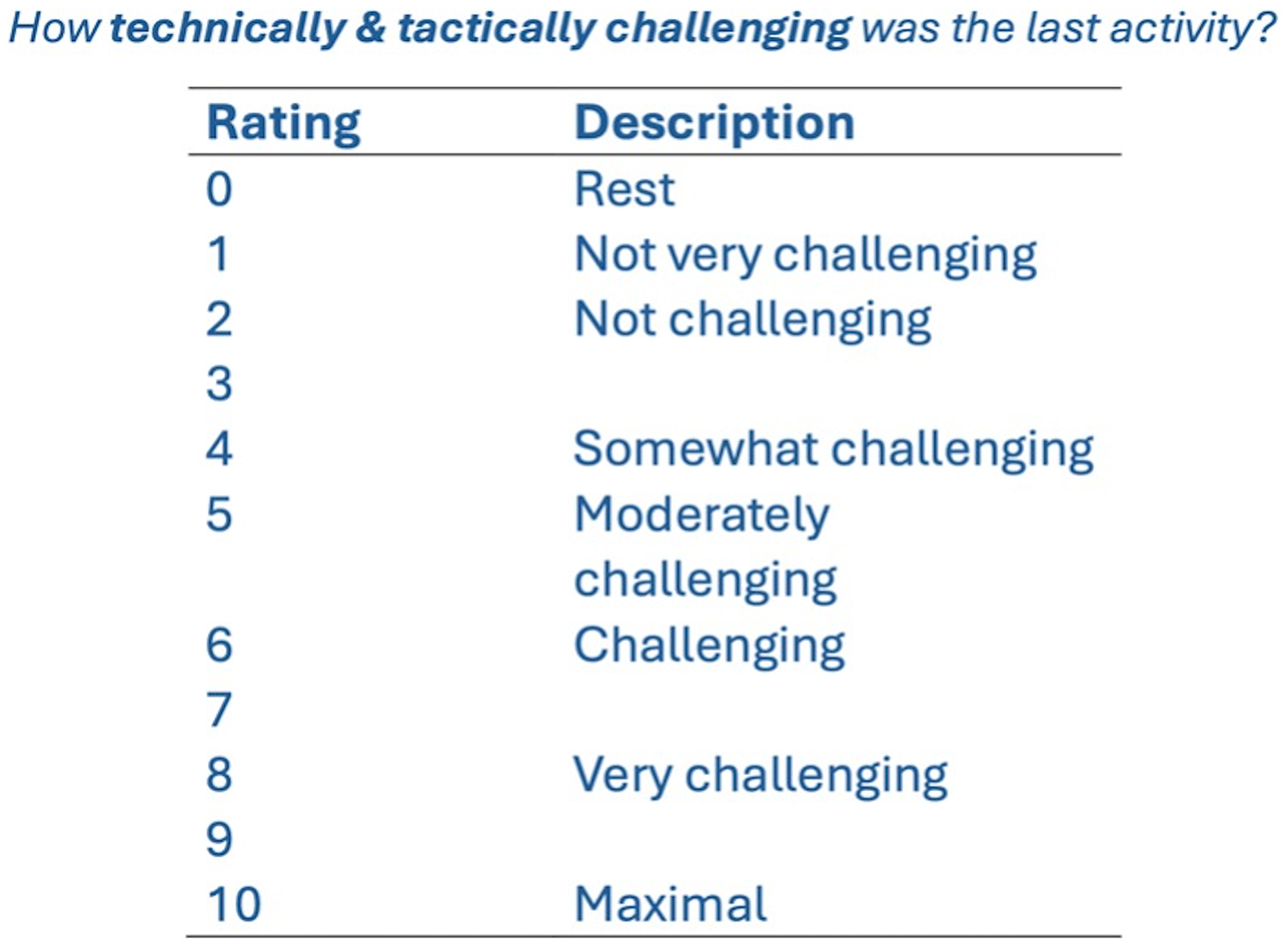
Rating of perceived challenge. Adapted from Hendricks (2019). 7
Rating of perceived exertion
The RPE scale provides an indication of exercise intensity perceived for training activities, which has been shown to be a valid and reliable measure of physical exertion and exercise intensity.15,16 The modified category-ratio 10 scale requires athletes to provide a rating from 0–10 to indicate the physical demand of drills, with a higher number indicating a greater physical demand. 17 This scale was utilised to evaluate the discriminant validity of the RPC (i.e., whether the RPC measures something different from physical demand). Participants in this study regularly respond to the session RPE scale after their main football training sessions, so were familiar with this scale prior to this study.
NASA task load index
The NASA-TLX has been found to be a valid and reliable tool for measuring workload. 18 Participants respond to each of the six subscales (i.e., physical demand, mental demand, temporal demand, effort, performance demand, and frustration), providing a score from low to high (0–10) for all categories, apart from the ‘performance’ subscale, which ranges from ‘good’ to ‘bad’. 19 This scale was utilised to allow insight into the convergent validity of the RPC. Due to the NASA-TLX containing six subscales contributing to workload, it was hypothesised that correlations between the RPC and each subscale would be influenced by the characteristics of each training activity. Specifically, for training activities containing technical and tactical demand (i.e., technical drill, game-based drill), subscales related to challenge – e.g., mental and temporal demand, which offer insight into the available information and task difficulty 7 – were expected to produce stronger correlations with RPC responses.
Procedure
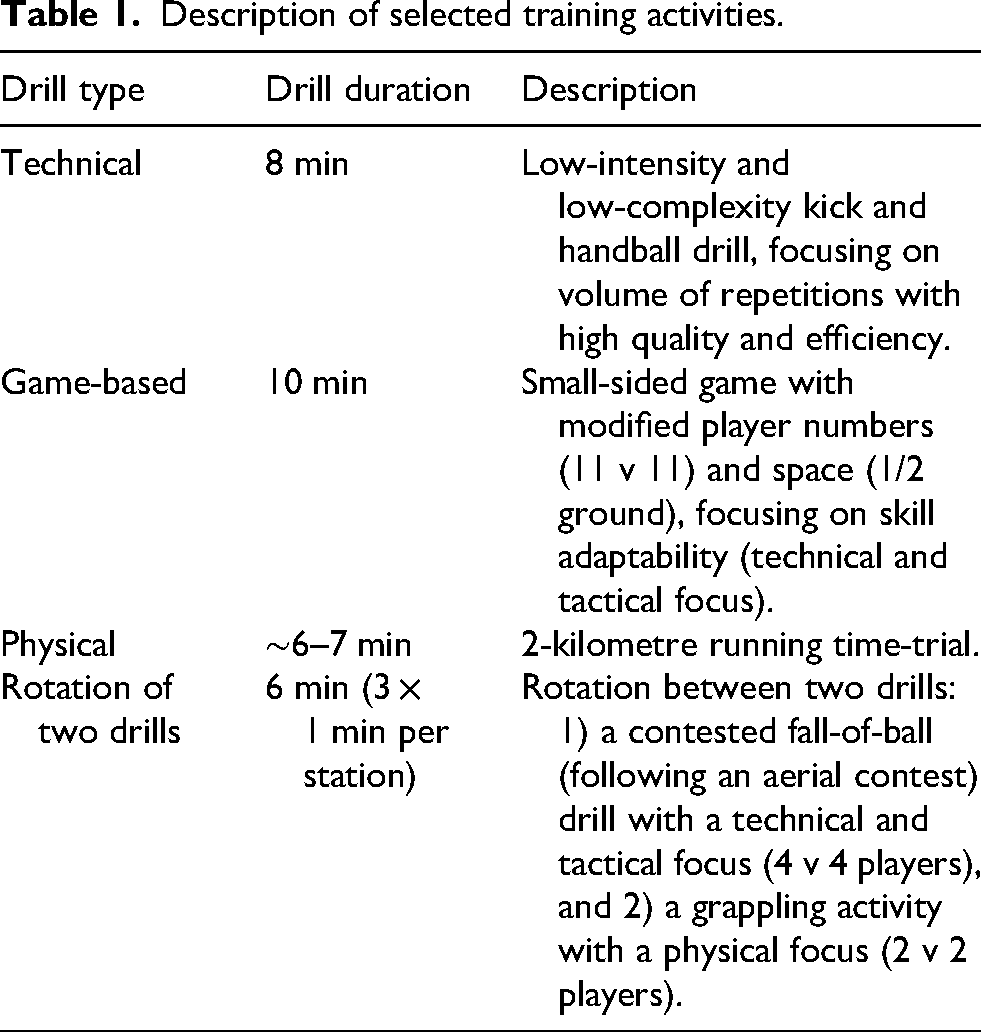
Data were collected during the 2025 Australian Football League pre-season period. Four training activities were selected across two of the team's regular main training sessions. These activities each had distinct aims and characteristics (Table 1) and were selected as it was expected they would elicit distinct responses for the RPC, RPE, and NASA-TLX. Training occurred without intervention from the researchers.
Description of selected training activities.
Prior to data collection, participating athletes received an education session describing the RPC, RPE, and NASA-TLX (with each of the six subscales being explained) scales to ensure they understood the differences between each tool. During the data collection sessions, participating athletes were asked to complete the RPC, RPE, and NASA-TLX scales in a quasi-random order immediately following each training activity on pen and paper. Participants were spaced apart to prevent their responses from being influenced by other athletes. Several athletes did not complete all assessed drills due to their training load being managed. Only data from participants who completed all four training activities were included in the analysis (n = 14).
Statistical analysis
All analyses were completed in R Studio (v4.2.2). Descriptive statistics (mean and standard deviation) are reported. Given discrete data was used, non-parametric tests were identified as being suitable for analysis. Alpha was set at p < 0.05 for all analyses unless otherwise stated. To identify differences in RPC responses across the four training activities (construct validity), a Kruskal-Wallis test was used. Follow-up Wilcoxon rank-sum tests were then employed to determine which pairings were significantly different, with a Benjamini-Hochberg correction applied to adjust for multiple comparisons. To evaluate the discriminant and convergent validity of the RPC against the RPE and NASA-TLX scales, Spearman's rank correlations were conducted for each training activity individually. Interpretation of correlations were as follows; .00–.10 very weak, .10–.30 weak, .30–.50 moderate, .50–.70 moderately strong, .70–.90 strong, and .90–1.00 very strong. 20
Results
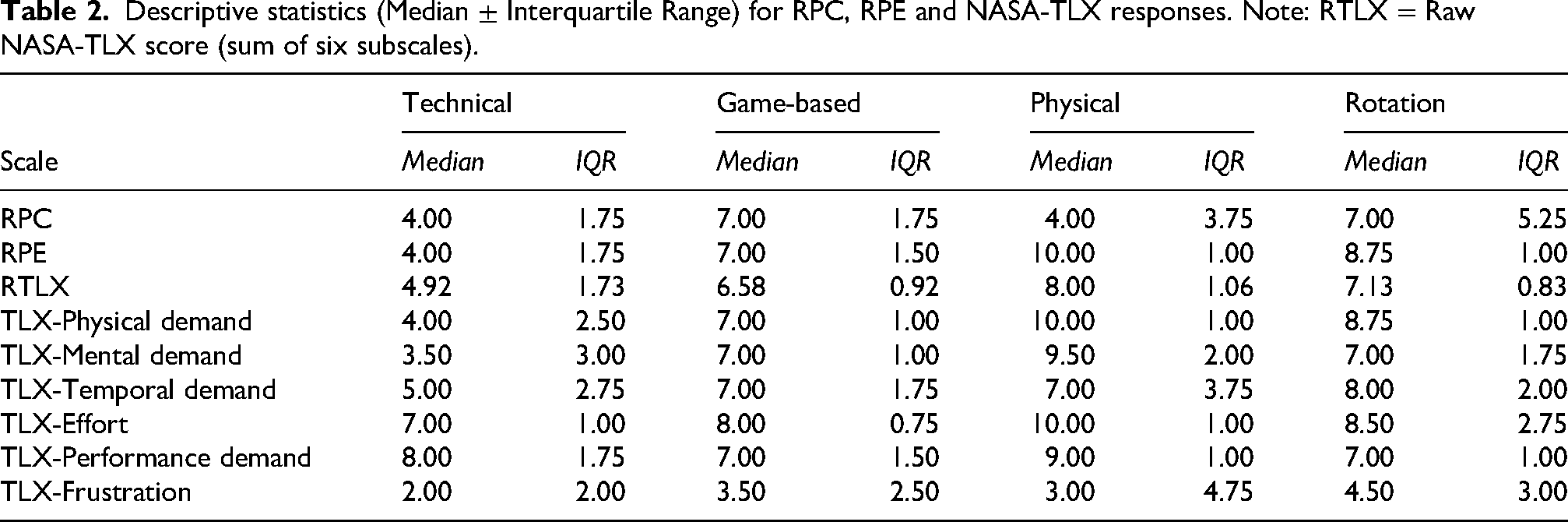
Descriptive statistics for the four training activities are reported in Table 2 for each of the scales completed after the drills.
Descriptive statistics (Median ± Interquartile Range) for RPC, RPE and NASA-TLX responses. Note: RTLX = Raw NASA-TLX score (sum of six subscales).
Construct validity of the RPC was examined using a Kruskal-Wallis test to compare responses across the four types of training activities, with a significant overall difference being detected, H (3) = 18.414, p < .001. Wilcoxon rank-sum tests revealed significantly higher RPC responses in the game-based and rotation drills (i.e., drills with both technical and tactical demands) than in the technical and physical drills (all p < .05), supporting the scales construct validity (see Figure 2). However, as the rotation drills involved two distinct training activities – one involving physical grappling – athlete ratings should be interpreted with caution, as they may reflect perceptions of one activity more than the other.
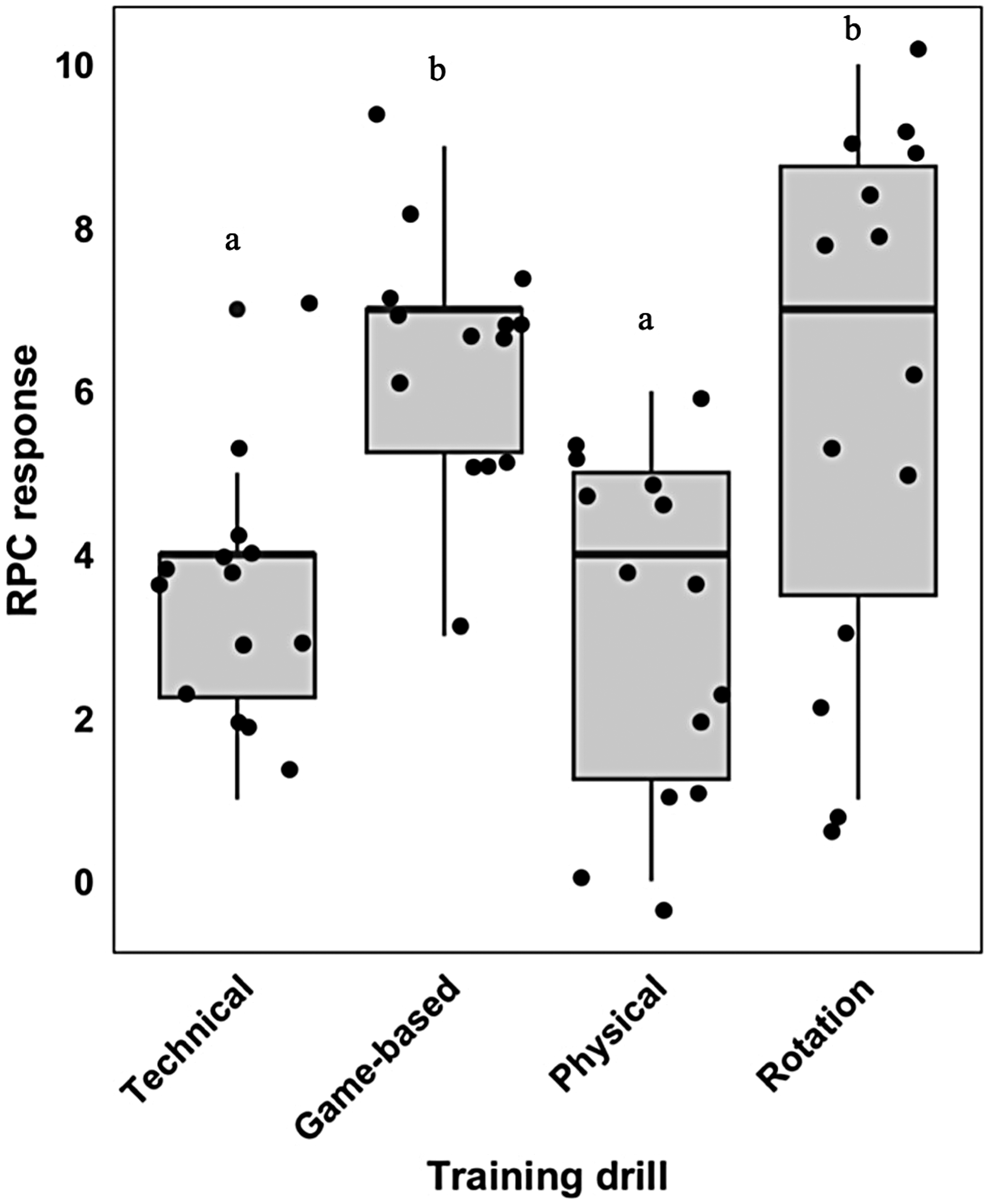
RPC responses for the four training drills. Groups with the same letter (a, or b) indicates no significant difference between groups (p > .05). Significant differences (p < .05) detected between the game-based and technical drill, game-based and physical drill, rotation drill and technical drill, and the rotation and physical drill.
Examining the discriminant validity of the RPC, non-significant, weak-moderate correlations were found between the RPC and RPE for the technical, physical, and rotation drills. Although the game-based drill showed a significant, positive correlation (p = .033), this was only moderately strong (rs = 0.57), likely due to the drill involving both high physical, and technical and tactical demands (see Table 3). The physical drill also showed a moderate, negative correlation (rs = −0.45), however, this was non-significant (p = .107). Collectively, these results support the discriminant validity of the RPC scale.
Spearman's rank correlation between the RPC and RPE responses. *indicates statistical significance at p < .05.

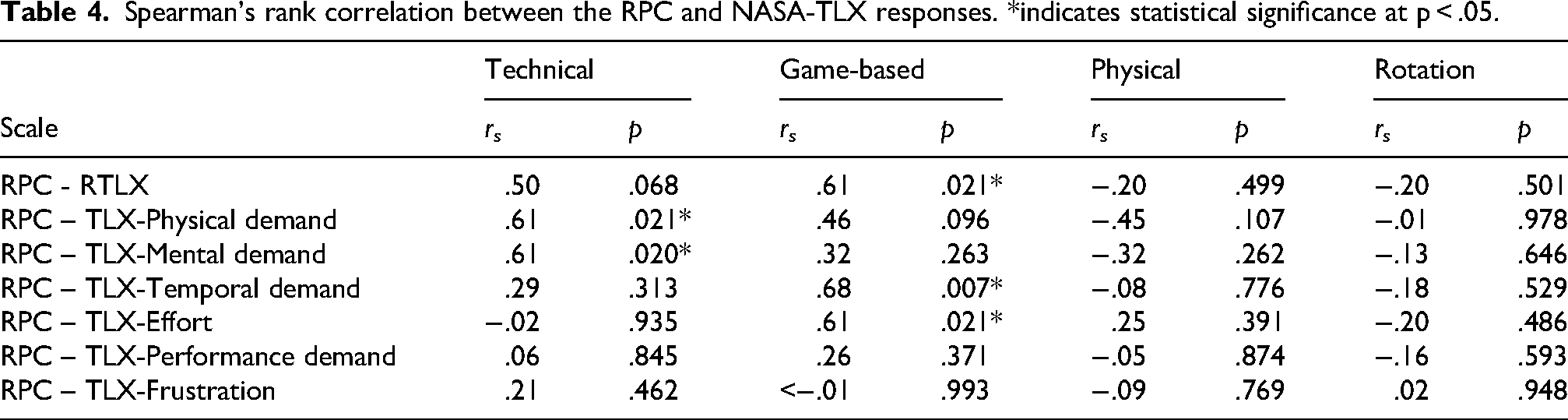
Convergent validity between the RPC and NASA-TLX was supported for training drills with greater technical and tactical demands (see Table 4). The game-based drill showed moderately strong, positive correlations between the RPC and the RTLX, and the temporal and effort subscales (all p < .05). The technical drill also showed moderately strong, positive correlations between the RPC and both the physical (p = .021) and mental subscales (p = .020), reflecting the low complexity and physical demand of the drill. Only negligible-moderate associations were detected in the physical drill and rotation drill, with none achieving significance (all p > .05).
Spearman's rank correlation between the RPC and NASA-TLX responses. *indicates statistical significance at p < .05.
Discussion
The purpose of this study was to examine the validity of the RPC. In doing so, evidence has been presented, supporting its suitability for use in both research and applied sporting contexts, to provide insight into the perceived challenge of training activities.
The four training activities evaluated were deliberately selected for their contrasting characteristics, allowing the assessment of the RPC's construct validity. As expected, the technical drill – low in complexity and lacking tactical demand – produced significantly lower RPC scores than the game-based drill, which involved both technical and tactical elements. This finding is consistent with previous research in both basketball and AF, with higher subjective workload 12 and cognitive complexity ratings 4 derived from more open, varied, and game-like drills, compared to simpler, closed drills designed for skill volume or maintenance. Moreover, the game-based drill had significantly higher RPC scores than the physical drill, reflecting the physical drill's lack of technical and tactical challenge. The rotation drill produced higher RPC responses than both the isolated physical and technical drills, reflecting the increased challenge from the fall-of-ball component of the rotation, which involved practicing a contested groundball skill (i.e., combining technical and tactical demand). Collectively, these results support the RPC's construct validity, with the scale detecting differences in perceived challenge for drills with various technical and tactical demands.
Discriminant validity between the RPC and the RPE was established for all training activities except the game-based drill. As expected, the technical and rotation drills with stronger technical and tactical focuses showed weak, positive correlations between RPC and RPE responses. These findings support previous research, which found a weak correlation between the scales for gym-based rugby training sessions. 8 Only the game-based drill produced a significant, moderately strong, positive correlation, likely reflecting its’ high physical, technical, and tactical demands. This aligns with previous AF research, which demonstrated that manipulating task constraints within game-based drills can influence both the physical, and technical and tactical behaviours of athletes. 21 In the physical drill, with high physical load and low technical and tactical requirements, the RPC showed a moderate, negative correlation with RPE, somewhat supporting discriminant validity by demonstrating that athletes can differentiate between how challenging and physically demanding they perceive the task to be. Future research may benefit from exploring additional drill types with contrasting technical and/or tactical, and physical demands (e.g., goal kicking practice, which has a predominantly technical focus, and minimal physical demand), to provide further evidence for the discriminant validity between the RPC and RPE.
The convergent validity of the RPC was evaluated through comparisons with the NASA-TLX, revealing drill-dependent relationships. As anticipated, drills with stronger technical and tactical themes (i.e., technical and game-based) showed greater convergent validity. The game-based drill – involving decision-making aspects and opposition pressure – elicited strong correlations between scale responses for the RTLX, temporal demand, and effort subscales, aligning with previous validation studies for task demand and mental effort.10,11 The technical drill correlated strongly with mental demand, but only moderately with temporal demand, likely reflecting the absence of time pressure. However, the RPC responses on the physical and rotation drills did not strongly correlate with the NASA-TLX responses. While this is unsurprising for the physical drill – with minimal technical or tactical challenge – the rotation drill did contain these elements within the fall-of-ball component, in addition to the more physical focus of the grappling component. It is important to acknowledge that there may be an order effect (or recency bias) in drills involving rotation between multiple activities, where athletes may emphasise the demands of the final drill completed. For example, if participants completed the fall-of-ball drill last, they may rate challenge higher (i.e., technical and tactical), whereas those who completed the grappling activity last may rate physical exertion higher. Practitioners using the RPC in similar contexts should consider optimal timing for response collection – particularly if the activities have contrasting characteristics – or consider only utilising the RPC for singular drills, to allow greater accuracy in athlete recall. Collectively, these results support the convergent validity of the RPC and challenge-related subscales of the NASA-TLX (e.g., mental and temporal demand) for training activities involving technical and tactical elements.
Practical implications
The findings from this study have important implications for applied sports practice. Validating the RPC supports its use in evaluating perceived challenge in training. Previous research in team sports such as AF commonly utilises objective, notational analysis to evaluate factors such as the representativeness of training demands to competition,3,22,23 and how this may be influenced by manipulating key task constraints.24–27 When evaluating the challenge of training, these objective demands must be considered alongside an athlete's perceived difficulty.1,28 The RPC offers individualised context to objective measures, enhancing understanding of how task demands, and constraint manipulations influence both the nominal and functional difficulty of training. In practice, the RPC can complement tools such as the RPE, 8 providing coaches with a more holistic understanding of physical, technical, and tactical demands. It may also highlight differences in perceived challenge between positional groups, 8 and athlete levels of experience, 29 which may be used to inform more effective drill design within team-based sports.
Limitations and future research
Despite the importance of this study in providing the first evidence for the validity of the RPC, this study has several limitations which must be considered. The sample, drawn from a single, elite AF team, may limit generalisability. Future research should explore the applicability of the RPC in a range of sports and levels. Currently, the RPC focuses primarily on technical and tactical aspects; however, its scope could be expanded. For example, the Extended Challenge-Based framework 28 suggests that challenge may be modified by adjusting the learner's motivation and degree of competition specificity. A revised RPC scale could incorporate additional factors such as motivation and specificity to better reflect the complexity of perceived challenge. Further, the RPC may be adapted to evaluate session challenge, in a similar way to the session-RPE, 30 allowing coaches to better monitor and periodise the challenge of skill-based across the season, in addition to within single sessions. The current validation of the RPC supports its use in future research evaluating skill acquisition frameworks involving functional task difficulty, such as the Extended Challenge-Based framework, 28 or the Periodisation of Skill Training framework. 31 Future research may also explore mixed methods approaches, combining objective measures (e.g., notational analysis) to assess training specificity, with the RPC as a subjective measure of functional task difficulty. Integrating the scale with notational analysis may also improve sensitivity and provide greater insight into player responses to skill-based training. Further, having coaches rate expected challenge when planning training would enable assessment of alignment between coaching intentions and player perceptions.
Conclusion
The RPC effectively measures challenge in a way that distinguishes between different activities and is distinct to both the RPE and NASA-TLX. The inclusion of technical and tactical elements in drills increases RPC scores and correlates with challenge-specific subscales of the NASA-TLX. These results suggest that the RPC is a valid tool for assessing perceived challenge in sports contexts. It is recommended that athletes are familiarised with the RPC prior to its use, and that it be employed alongside the RPE to ensure clarity in responses. When interpreting responses, the overall aims and characteristics of training activities should be considered.
Footnotes
Acknowledgments
The authors would like to thank the participants and associated AF club for their contributions.

Ethical considerations
Ethics approval was obtained from the Deakin University Ethics Committee (reference number: 2024/HE000389) on 01/11/2024. Participants gave informed consent to participate in the study before taking part.
Consent to participate
Participants provided written informed consent to participate in the study before taking part.
Consent for publication
Participants provided written informed consent for the publication of deidentified data included in this article.
Funding
The authors received no financial support for the research, authorship, and/or publication of this article.
Declaration of conflicting interest
The authors declared the following potential conflicts of interest with respect to the research, authorship, and/or publication of this article: The lead author is an embedded PhD student within the associated AF club.