



Abstract
Video-based feedback (VBF) has become a central component to performance sport, offering coaches, analysts and athletes opportunities to analyse, reflect, and prepare for performance. Despite technological advances and significant investments made to implement VBF, there is little research to explain how it is intentionally designed or evaluated. A systematic literature review and a critical interpretive synthesis approach was conducted to identify the key principles of VBF and develop a model for applied practice. Thirty-nine studies across multiple sports were included and analysed using reflexive thematic analysis. Three overarching principles were identified: Aims, Content, and Evaluation. Together they form the ACE Model, which describes the choice points around aims, concurrent design decisions, and evaluation processes for VBF practice. This study positions VBF as an interdisciplinary practice and contributes a model to guide the design of VBF strategies and interventions. The ACE Model provides a practical, theory-informed scaffold for purposeful VBF design and evaluation in elite sport.
Introduction
Technological advancement has profoundly influenced how feedback on athletic performance is generated, provided, and experienced in elite sport. 1 The evolution of performance analysis tools and video technologies have positioned video as a central component for feedback provision, enabling coaches and athletes to revisit, analyse, and construct shared meaning around past and future performances.2–4 As a result, video-based feedback (VBF) has become an established and often indispensable constituent of elite sports environments, with organisations demonstrating a commitment to improving the knowledge (i.e., decision making and game comprehension) of athletes and coaches and other stakeholders.1,5,6 The continued and substantial investment of time, personnel, and technological resources in the delivery of VBF across elite sport indicates the value it is perceived to add to the coaching process. 7 Coaches have reported performance analysis as “important to essential” citing the role of video as an objective visual record supporting decision-making and reflection.7,8 This sense of value is also reported by athletes, who feel that VBF is the “main way” coaches have for providing feedback. 9 In this sense, value appears to be derived not only from the video technology itself but from how effectively feedback is integrated, interpreted, and applied within the coaching process. 10 Despite this recognition, there has been little reflection within academic literature on the processes which optimise this investment.
Research has primarily focused on how VBF is experienced by coaches and athletes, rather than how it is conceptualised and designed. 11 Much of the existing work examines coach feedback behaviours12–15 and athlete perceptions of feedback effectiveness.8,16,17 Few studies have researched how VBF is intentionally constructed as a strategic coaching intervention despite growing calls for coaches to view themselves as learning designers and pedagogical approaches used by coaches cited as key considerations.18,19 The seminal work of Groom et al. 20 provided one of the first empirical accounts of VBF delivery, describing it as an inherently social and pedagogical act designed to influence athlete understanding and behaviour. Despite identifying contextual and interpersonal factors which shape VBF delivery, Groom et al. 20 noted that most feedback practices were reactive rather than pre-planned and lacked theoretical or structural support. Subsequent research has done little to address these theoretical limitations even as technology has evolved. Groom et al.'s 20 grounded theory remains highly relevant, including their suggestion for VBF to be informed by knowledge from psychology, pedagogy, skill acquisition, and education. Building on these foundations, Martin et al. 21 proposed a framework for professional practice in performance analysis, identifying feedback design as a central process for scaffolding learning within applied environments. Despite these theoretical advances, the lack of explicit models or frameworks to guide VBF design in practice remains a critical gap between feedback theory, technological innovation, and applied performance analysis practice.
The absence of structured guidance for designing VBF reflects a wider issue within performance analysis: understanding how value is created, captured, and sustained within the performance ecosystem. Applied performance analysis operates as part of a broader performance ecosystem in which value is co-created through the transfer, interpretation, and application of knowledge across multiple disciplines. 22 Within this ecosystem, the effectiveness of performance analysis technologies (PATs) and processes depends not merely on technical sophistication but on how well they are integrated with coaching processes, communication systems, and organisational priorities. 23 Barker-Ruchti et al. 23 identified six interrelated steps in the implementation chain of PATs within elite Swedish football but found that many clubs struggle to realise intended performance benefits due to challenges at multiple stages. The authors caution that organisations should “avoid buying a pig in a poke” by investing in technology without a clear understanding of its implications or evaluative mechanisms. These findings highlight that the challenges of using technology in performance sport are not solely technical but conceptual and organisational, requiring alignment between technology use, communication practices, and decision-making structures. Without coherent models to guide such alignment, investments in implementing VBF risk delivering limited or inconsistent value. Consequently, there is a growing need for structured, evidence-informed models to assist practitioners to design and evaluate feedback processes as part of an interdependent performance ecosystem. Despite emerging frameworks for professional practice in applied performance analysis 21 and growing recognition of the coach's role as a learning designer 19 the translation of research into usable applied guidance lags behind the innovation.24,25
This systematic review and critical interpretive synthesis builds on the work of Groom et al. 20 and Martin et al. 21 by developing our understanding of VBF practices. Capturing how coaches and analysts conceptualise, design, and evaluate VBF represents a critical frontier for advancing both the theory and practice of performance analysis and coach education. The review aims to: (1) map the current state of knowledge regarding VBF design in elite sport; (2) identify the principles underpinning its application; and (3) develop a model that can guide professional practice.
Methods
Philosophical approach and paradigm
This review was underpinned by a pragmatic approach which reflects our focus on research to develop practical understanding of real-world issues. 26 Pragmatism has been identified as a worthy paradigm for investigating organisational processes 27 where the emphasis is placed on interrogating the value and meaning of research data in a practical context. 28 A pragmatic paradigm provided methodological flexibility, thus a critical interpretive synthesis (CIS) was selected as the methodological approach for this review. 29 CIS allows for the interpretive integration of empirical and non-empirical sources to generate new theoretical insight and enable the development of a model grounded in a diverse and fragmented body of literature.29,30 This flexibility makes CIS particularly suited to research areas where the evidence base is underdeveloped, not focused or spread across multiple disciplines 30 which strongly reflects the nature of literature in relation to VBF in elite sport. The systematic literature review element of the CIS was conducted in accordance with the Preferred Reporting Items for Systematic Reviews and Meta-Analyses (PRISMA) guidelines (Figure 1). 31 The review protocol was registered with INPLASY International Platform of Registered Systematic Review and Meta-analysis Protocols (ID INPLASY202470014). Guided by Wilson et al.'s 30 suggested CIS protocol, the search strategy was deliberately inclusive of diverse methodological approaches to capture a multi-layered view of VBF practices with the goal of generating a holistic understanding of how VBF is operationalised across contexts. An interpretive philosophical approach was used to construct meaning from the body of literature on VBF design, based on the subjective experiences and contexts described. 30 Our grounding in applied professional performance analysis practice influenced our pragmatic and interpretivist approach as we understand the reality of performance sport where multiple disciplines, theoretical standpoints and worldviews intersect. We acknowledge our collective lived experience as applied performance analysts (63 years), coaches (55 years) and educators (56 years) as the lens through which our interpretations were made, and research outputs were generated.
Search criteria and strategy
The search terms used were; video feedback; debriefing; performance analysis; video analysis; elite sport. Studies had to be peer reviewed, in English and published between 2014 and 2025 inclusive to be eligible. The search was conducted in SPORTDiscus, PubMed, Scopus and Web of Science on the 10th July 2024 and then replicated on the 10th April 2025 to ensure all relevant literature published after the initial search date was included. Results from each database were imported into EndNote21 (Clarivate, PA,USA) and duplicates removed. The structure for each database search was: [“Video Feedback” OR [“Debriefing”] AND [“Performance Analysis” OR “Video Analysis”] AND [“Elite Sport”]. As the screening process progressed, manual searches were conducted on the reference lists of all included.
Inclusion criteria
Studies were included if they met the following criteria; (1) describe a VBF process in elite sport; (2) describe a VBF intervention design process in elite sport; (3) contain reflections from a coach, applied performance analyst or athlete of a VBF intervention/processes in elite sport; (4) interview/survey coaches, applied performance analysts or athletes about their perceptions of VBF in elite sport; (5) contain VBF evaluation processes in elite sport. The first author (DL) completed the title screening in Endnote21 with a random sample of 100 studies screened by DM for agreement. Abstracts (n = 163) were screened independently by DL and, followed by full text screening (n = 82) by both authors independently using the Covidence systematic review software (Veritas Health Innovation, 2023). The two reviewers independently screened titles and abstracts against the inclusion criteria. Full texts of potentially eligible studies were then reviewed independently for agreement by both reviewers in Covidence. Discrepancies were resolved through discussion or consultation with a third reviewer (ED).
Data extraction
All references to VBF design processes were extracted. A custom Google Form (Google, CA, USA) was created for data extraction purposes recording the following: Author; Year; Journal; Study aim; Evidence of explicit theory or model to guide VBF design; Video type provided; Medium of delivery; Level of VBF guidance / structure; Visual aids used; Level of athlete supervision; Level of facilitation; Level of analyst involvement; Evidence of VBF timing; Stated aims for VBF; Sporting context; Sport type; Evidence of VBF evaluation. The Google form was pilot tested within the research team and refined with a sample of two methodologically different studies to ensure that the data and structure of the data were suitable for analysis. Once extraction complete, data were extracted, and data were exported into Microsoft Excel (Microsoft, WA, USA) for analysis and synthesis.
Analysis and synthesis
The analysis and synthesis of data followed a two-phase approach to systematically map and interpret how VBF is designed within elite sport. Phase one involved a deductive content analysis guided by the following predefined research questions: (1) What are the stated aims for VBF?; (2) In what settings are VBF delivered?; (3) How is VBF delivery facilitated and by whom?; (4) What evaluation strategies are used for VBF?; (5) What types of guidance are used to design VBF?. Questions 1–4 were synthesised from the facilitation of feedback to athletes section of Martin et al.'s 21 framework for professional practice. While this framework identifies the key components of practice, it is not instructive, therefore an additional question (5) was generated to record any references to guidance material noted in the included studies. In phase two, an inductive, reflexive thematic analysis approach 29 was applied to generate themes that captured the underlying processes and contextual factors that influence VBF design. This second phase allowed us to move beyond surface-level description and explore the evidence of how VBF is understood, justified, and measured. Combining structured mapping with deeper thematic interpretation, the iterative analysis process was conducted by DL and DM with final validation and sense check from ED and JB. This process aligned to our pragmatic approach and allowed findings to be meaningfully synthesised into practically applicable model which may be used to guide VBF design in performance sport.
Results & discussion
Overview of findings
A deductive analysis of the included studies (Table 1) identified evidence of all three stages of VBF design: selection of aims (A), concurrent design decisions (C), and evaluation design (E). The synthesis process facilitated the development of these stages into higher-order themes, which now serve as the foundational principles of the ‘ACE’ model. The inductive, reflexive analysis process facilitated an understanding of the different design decisions within each principle, and how they interact with each other. This iterative process allowed for the construction of a three-step explanatory model 30 for VBF design (Figure 2). The core proposition is our simple definition of VBF in performance sport as follows;
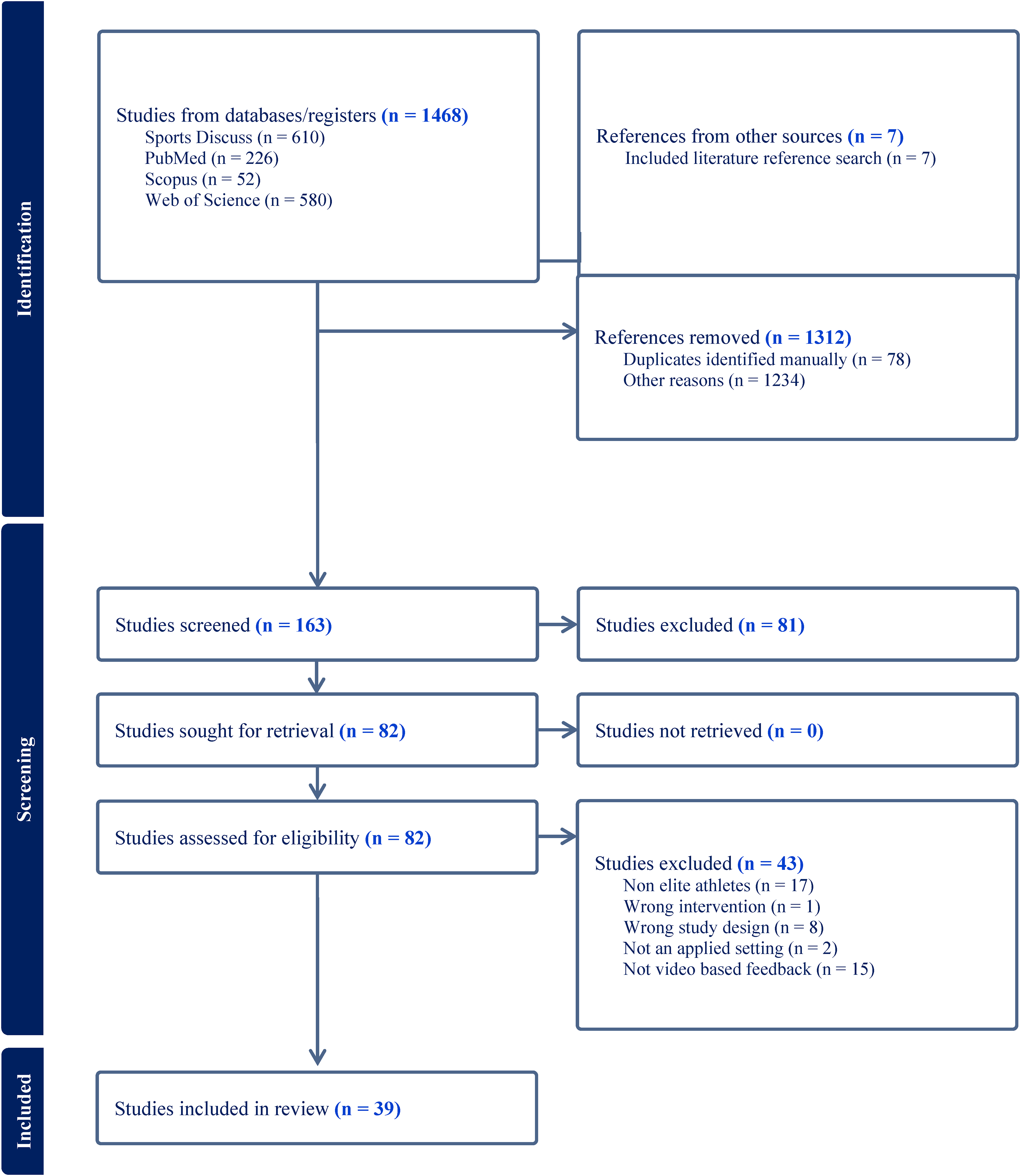
PRISMA flow diagram showing the search and selection process for included studies.
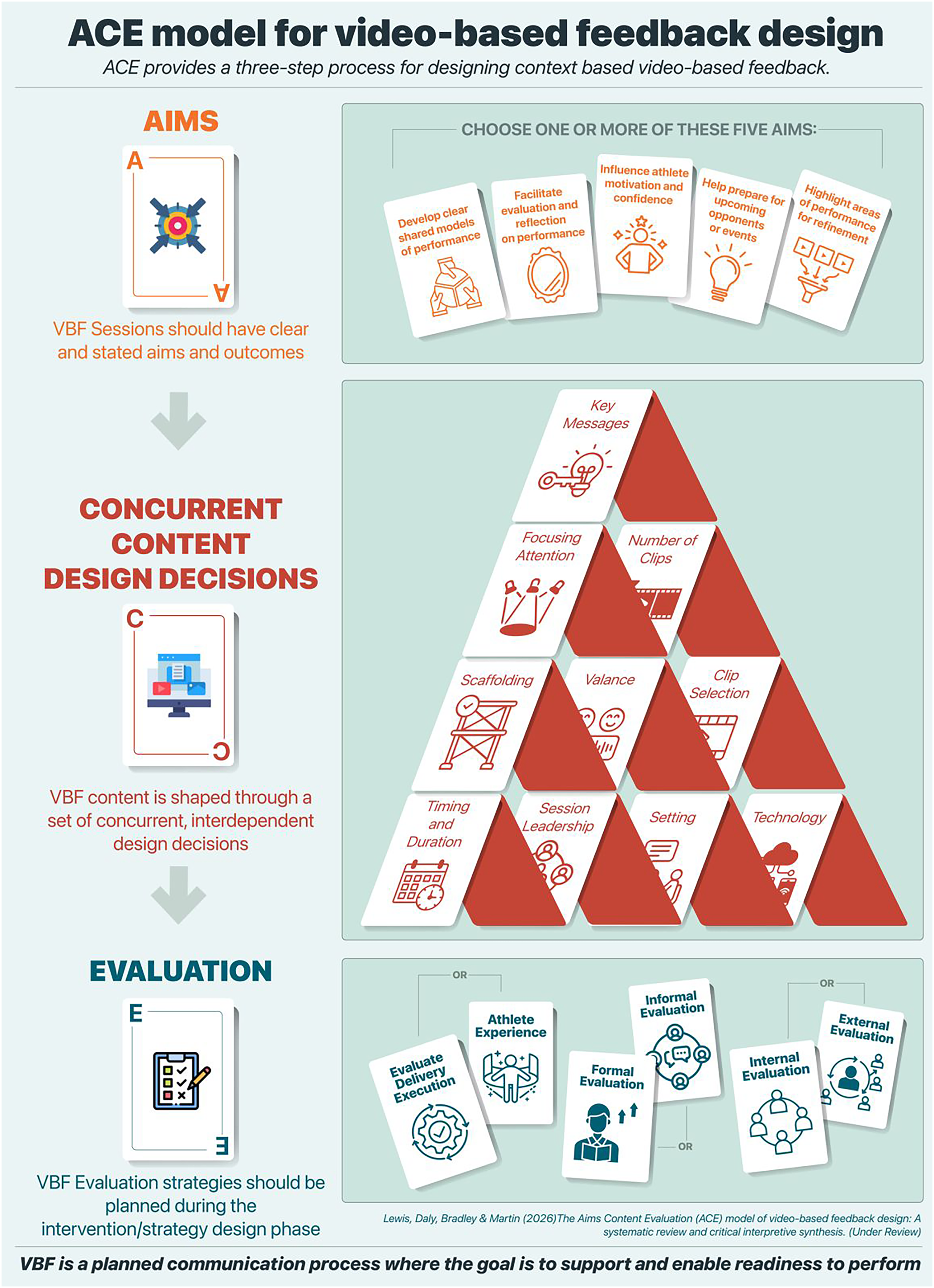
The ACE model of video-based feedback design.
Papers included in the synthesis by sport and methods.
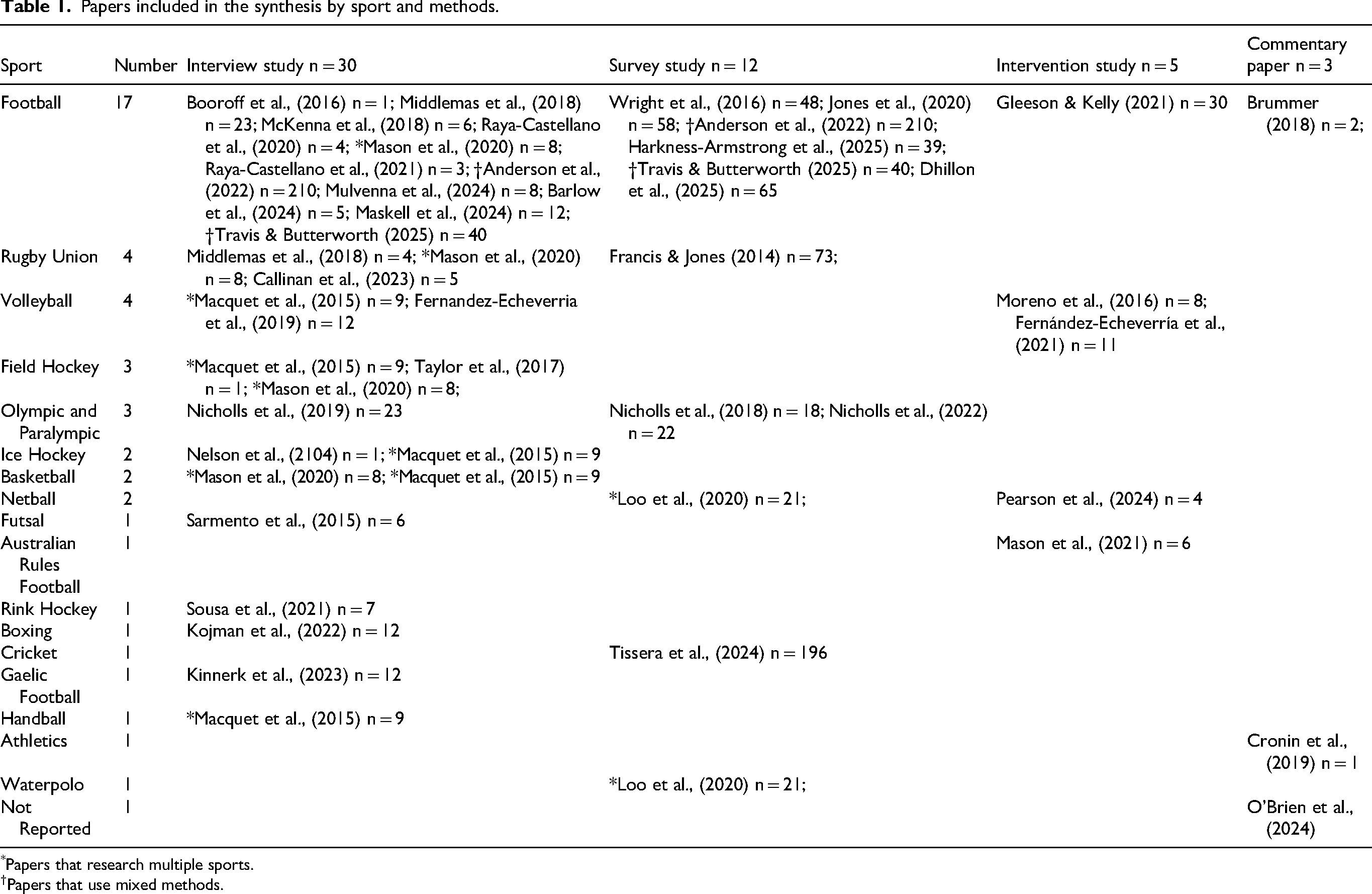
*Papers that research multiple sports.
†Papers that use mixed methods.
VBF is a planned communication process to support and enable athlete readiness to perform.
The three principles for effective VBF design are:
A: VBF sessions should have clear and stated C: VBF E: VBF
These principles can support both the purposeful design of individual VBF interventions or VBF strategies which outline a periodised approach to VBF over a season. This section will present results and discuss the findings in the context of the literature from the multiple intersecting domains.
The literature
While there were reports of each of the ACE principles of VBF design and their relative design decisions, the depth and consistency of the evidence varied substantially between principles. In many instances, design decisions were not explicitly referred to, but implied or embedded within descriptions of broader coaching or performance analysis interventions, making comparison across studies challenging. While VBF practice is widely reported in elite sport, its design is inconsistently described, and there is very limited evidence of structured evaluation. The body of literature is largely composed of studies exploring the perceptions of coaches10,17,32–40 analysts 34 , and athletes8,16,17,32,34,41,42 toward VBF, in addition to applied single-case investigations into the use of VBF in specific performance environments.3,15,43–49 A subset of applied research focuses on interrogating how VBF interventions or strategies are implemented within existing workflows and organisational structures.4,6,9,13,14,33,50–59
Most of these papers provide insight into elements of delivery rather than design, particularly in relation to the delivery settings, structural format, and facilitation methods of VBF. Planning processes and evaluative strategies remain largely underreported, with limited detail regarding how feedback content is designed, sequenced, or appraised for impact. This lack of reporting aligns with previous critiques of the field.11,21 Pearson et al.'s 11 review previously noted that the body of literature is limited with studies primarily adopting cross-sectional designs that examine retrospective perceptions on the impact of VBF interventions. The fragmented nature of reporting is potentially explained by the relative newness of performance analysis as an academic field and the fact that a journal of applied practice has not yet emerged to provide a platform for applied research and establish reporting norms.
VBF theoretical guidance
Despite the widespread integration of VBF within elite performance environments, this review highlighted a notable absence of reference to evidence-based design frameworks to support practitioners to design and implement VBF strategies and interventions. Three of the five intervention studies45,49,54 either adapted existing theoretical models from related disciplines or created bespoke protocols. Gleeson and Kelly 45 employed the Course of Action framework 60 to promote athlete-led meaning-making and self-regulated learning; and Mason et al., 54 used Hattie and Timperley's 61 feedback model. Pearson et al. 49 developed a bespoke process for netball umpire self-assessment, supported by a video database of expert examples, while Moreno et al. 43 used questioning alongside video review to enhance athletes ability to recognise and link tactical concepts. The findings highlight the absence of simple design guidance for VBF.
The ACE model for VBF design
A goal of this study was to synthesise an evidence based theoretical model for VBF design that is accessible and practically applicable. While the findings of this review largely mirror the grounded theory proposed by Groom et al., 20 this study advances that foundation by organising the key principles into a coherent, applied model. The aim is to move from descriptive understanding to structured guidance, providing practitioners with a model that can support consistent and contextually informed VBF design across performance environments.
The ACE (Aims, Concurrent Content Design Decisions, Evaluation) Model for VBF design conceptualises VBF design as a deliberate and interconnected process, represented through the analogy of playing cards. Each “card” symbolises a design principle or decision that must be intentionally selected and played within the broader strategy of a feedback intervention. Just as successful card play requires understanding the relationship between cards in hand, effective VBF design relies on aligning each decision with the aims of the session, the nature of the content, and the chosen evaluation approach. Like a card game, the cards selected, or design decisions, are made dependent on the performance context. This aligns closely to the ‘it depends’ philosophy of coaching where Professional Judgement and Decision Making are deployed by practitioners to select the most appropriate tools to deploy in a particular context. 62 The ACE Model provides signposts for practitioners to design feedback interventions with greater coherence, intentionality, and alignment to performance aims.
Establishing aims for VBF
Our analysis of the literature highlights the importance of establishing clear aims as a foundational principle for the design of effective VBF. It was very evident that intended aims were shaped by the broader performance ecosystem, with coaches and analysts using performance assessments to identify priorities for feedback within their organisations context.
6
Aims were typically decided by staff who: “regularly held pre-video meetings… to discuss performances and make decisions about the content and delivery of VBF meetings” (6, p. 5).
Aims for the use of video-based feedback: definitions and examples from the literature.
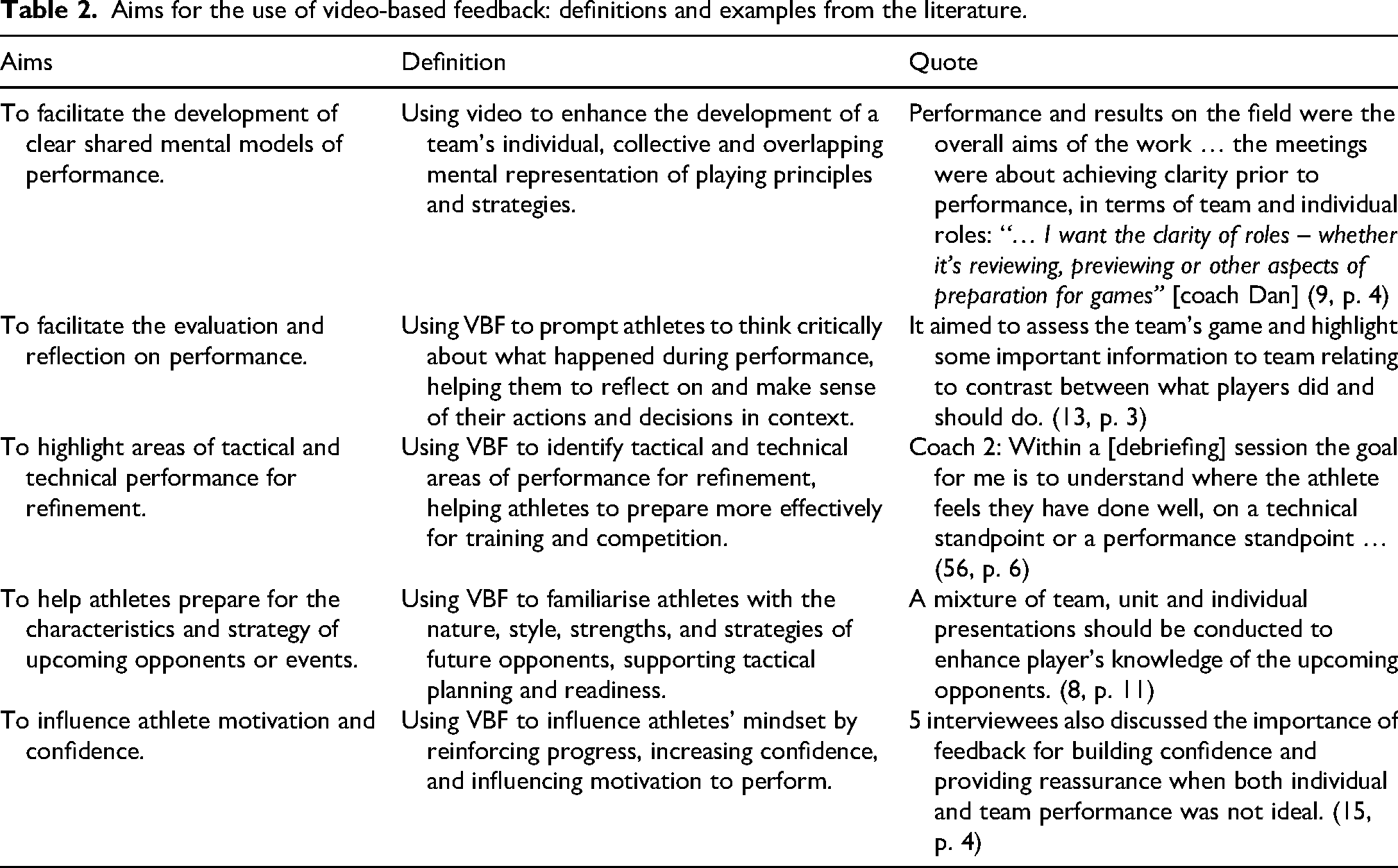
Although VBF is firmly positioned within the domain of performance analysis, the variety of aims for its use are inherently interdisciplinary. The five identified aims draw on principles from distinct but interconnected fields. Facilitating shared mental models of performance reflects concepts from coaching pedagogy, emphasising the co-construction of understanding between athletes, coaches, and analysts.63,64 Supporting athletes to reflect and evaluate their performances aligns with reflective practice65,66 and educational theory.67,68 The refinement of technical and tactical skills draws heavily from skill acquisition and motor learning,69,70 while the use of VBF to prepare for upcoming opponents sits within the strategic dimensions of sports coaching.71,72 Finally, utilising VBF to influence athlete motivation and confidence is grounded in sports psychology, where feedback delivery and tone can shape athlete belief and motivation.73,74 This intersection of disciplines indicates that the design of VBF cannot be fully understood through the lens of performance analysis alone and needs an interdisciplinary approach. As Robertson 75 observed, contemporary performance analysts increasingly operate as technologists and generalists, drawing on skills from coaching, skill acquisition, analytics, and communication to remain effective in high-performance sport.
Concurrent content design decisions for VBF
Our struggle to separate and organise the ten lower order themes related to the design of VBF interventions lead to the realisation that designing a VBF strategy or intervention is not a sequential process but a balance of concurrent, interdependent choices. Our reflexive thematic analysis led to the identification of ten lower order themes which we interpreted as concurrent content design decisions: (1) timing and duration of delivery; (2) key messages; (3) delivery setting; (4) technology; (5) session structure/scaffolding; (6) clip selection; (7) number of clips; (8) session leadership; (9) attentional focus; (10) feedback valence (Table 3). The evidence suggests that each design choice is interdependent, influenced by the other design decisions and aims of a VBF strategy or intervention. Each of the ten elements of content design have previously been identified and documented.11,20,21 The presentation of successful VBF design as a purposeful inter-connected decision-making process aligns with the fundamental premise of coaching practice as a decision-making process 76 based on professional judgment in a given context. 77 The idea of inter-connected decision making is not new and was previously well summarised by Middlemas et al. 9 who suggest that coaches must be able to adapt their approach [feedback design] to suit the situation, taking into consideration these factors such as the situation (e.g., past-performance, results), logistics (e.g., availability of time, resources, room), the group context (e.g., group dynamics, gender, inter-individual differences).
Video-based feedback strategy and intervention design decisions: definitions and examples from the literature.
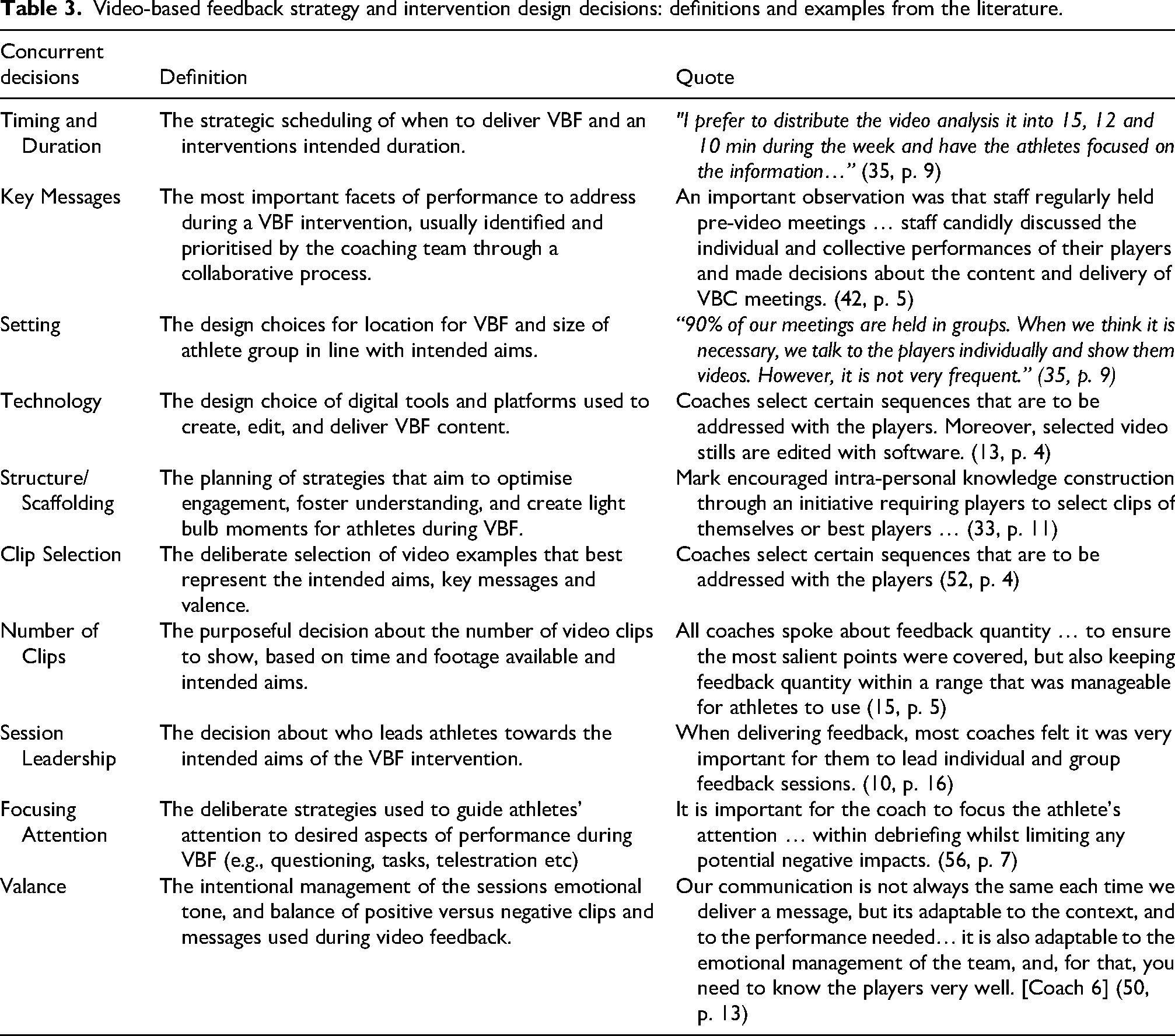
The inter-dependence of the ten design decisions is exemplified across the body of literature. It seems that the design decisions made around timing and duration of VBF reflects both the cadence of performance sport schedules8,9 and attempts to manage athlete attention and cognitive load,15,68 with some coaches preferring short, focused meetings. Such timing decisions were inherently linked to design decisions regarding the volume of clips and key message selection, as excessive footage risks overwhelming athletes and diluting the key messages; “Players can only retain a certain amount of information… chunking up that information into smaller bits is really important.” [Rugby Coach 7] (15, p. 5). “Some of the best discussions we have are in video analysis meetings… players’ readiness to engage, interrogate, contradict, disagree with each other.” [Gaelic Football Coach 2] (38, p. 9) “I can be telling my players verbally that this is how they play and at the same time I can pause and just tell them this is the moment that they can change the angle a little bit” [Coach Sophie, Netball] (17, p. 14).
The interdependence continues through to the design decisions around directing the focus of attention, clip selection, and valence. How clips are selected is directly influenced by the key messages and therefore shapes where and how athletes’ attention is directed, and how they interpret performance cues. Telestration was flagged as a key tool in directing athletes’ focus of attention during VBF: “Telestration adds context… you can’t ensure everyone is taking notice of the point at hand.” [RA27] (35, p. 8).
The literature demonstrated that the balance of positive and constructive feedback, the valence of the session, was a key consideration for many stakeholders who felt it affected athlete motivation and receptiveness: “The balance would be lots of good clips but a few not so good… it's not about being negative, it's about showing them what you could have done better.” [Football Coach, Kieran] (34, p. 10); “video ‘allows me to see when I am doing things correctly. This helps my confidence and thus aids my performance” [Rugby Player] (8, p. 13).
Evaluate the VBF strategy or intervention
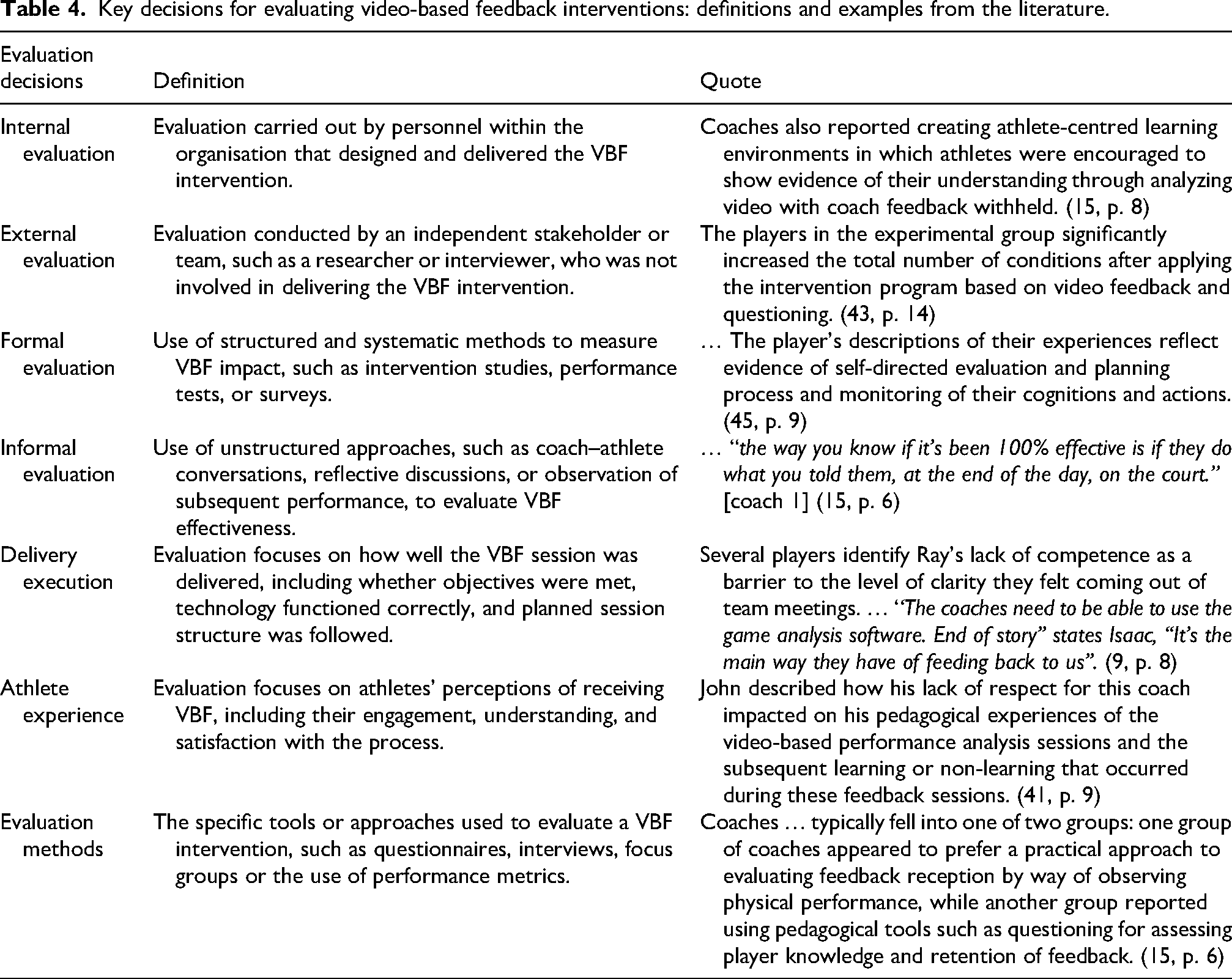
Evaluation emerged as the least reported principle within the literature, revealing a notable gap and highlighting the challenge practitioners face in assessing the effectiveness of their VBF practices, as one coach reflected: “It's very hard to measure the success of this work … I’m very conscious of how long we meet for, what video or information we look at … sometimes I think we should just get them out on the pitch and start doing drills.” [Head Coach, Dan] (9, p. 10).
Where evaluation was reported in the literature, it was often presented as an informal process shaped by the beliefs and routines of the practitioner and the demands of the performance environment.9,15,45 Common informal strategies included questioning athletes to assess understanding, observing behavioural cues during performance, reviewing performance data, and seeking feedback on delivery. While these approaches provide valuable, real-time insights, they offer limited scope for systematic evaluation or longitudinal reflection on the success or otherwise of VBF intervention strategies. The nature of these informal processes means an absence of any tangible evidence of value creation by VBF, making it difficult for practitioners to evidence the impact or influence of their practice. This is problematic in a performance ecosystem where practitioners often feel under pressure to ‘prove their worth’. 79 Formal evaluation, when reported, was often facilitated by external researchers through isolated case studies.15,32,33,43,45,53,54 Across these studies, the nature and depth of VBF evaluation varied considerably, reflecting the absence of a consistent methodological approach to assessing VBF practice. Some papers focused on measuring the effects of specific VBF interventions, such as comparing outcomes between control and experimental groups 43 or examining psychological factors shaping athletes’ responses to feedback. 32 Others evaluated aspects of real-world practice, including analysts’ current approaches to delivering performance analysis and VBF 53 and coaches’ behavioural patterns during VBF sessions. 33 Additional studies assessed athletes’ recall and interpretation of feedback messages, 15 explored the utility of structured methodologies such as the course-of-action, 45 or examined the defining characteristics that constitute VBF delivery in applied settings. 54 The absence of structured evaluation frameworks reinforces the need for coherent design models, and while the ACE model proposed here identifies the key design decisions for evaluation, however much more research is required on how to do this well in differing contexts (Table 4).
Key decisions for evaluating video-based feedback interventions: definitions and examples from the literature.
Limitations
This review is subject to several limitations that are acknowledged by the authors. First, the reporting of VBF design was highly inconsistent across studies. Key design decisions were often implicit or embedded within broader accounts of coaching practice. This lack of clarity required us to apply interpretive judgement when identifying VBF design principles. The requirement for papers included to be published in English is a further limitation of the potential translatability of the model beyond an Anglophile sphere. Another limitation concerns the scarcity of evidence relating to the evaluation of VBF. Few studies reported intentional or formal evaluative processes. Most studies reported evaluation informally through routine coaching interactions. This limited the extent to which evidence-based guidance could be developed for the Evaluation component of the ACE Model, meaning this element is more inferred than empirically based. Although a critical interpretive synthesis approach was well suited to integrating a fragmented body of literature, the interpretive nature of this method means that the researchers own applied experiences influenced how concepts and themes were constructed. While reflexivity was used to mitigate this, the synthesis inevitably reflects the interpretive lens of the research team. Our interpretation of the evidence, constructed through the lens of our experiences and biases may not be generalisable.
Future directions
This review identified many gaps in our knowledge about VBF design. Researchers reporting applied interventions should explicitly report the design decisions made in terms of the aims, content and evaluation. The ACE model may support this. Within content design, research which examines the interplay between the different elements in different contexts and offers guidance for practitioners would be very valuable. Inter-disciplinary investigations of the sequencing, spacing and repetition of messages to explore the role of VBF in retrieval practice in applied performance sporting contexts would add considerable value to the field. The role of telestration, questions and other methods to direct athlete's attention warrants further work and should be considered through the lens of the body of literature concerned with the science of attentional focus. 80 Further exploration is also warranted into how organisations can embed systematic VBF design and evaluation processes within their broader performance ecosystems. Crucially, the diverse aims identified across the literature indicate that advancing understanding of VBF requires an interdisciplinary approach requiring expertise from coaching pedagogy, skill acquisition, sport psychology, and performance analysis to come together to strengthen both theoretical grounding and applied impact. This need for this inter-disciplinary work echoes the call from Glasier 81 for a Grand Unifying Theory which could break down silos within sports science.
Conclusion
This study sought to advance understanding of how VBF is designed within performance sport. Through a critical integrative synthesis of existing research, three interconnected principles (i.e., Aims, Content, and Evaluation) were identified as foundational to VBF design and form the basis of the proposed ACE Model. The findings highlight that VBF is a deliberate communication process shaped by contextual demands, aims, and the interrelated decisions shaped by coaches, analysts, and athletes.
A notable finding of this study was the lack of evaluation of VBF effectiveness in applied contexts. Where evaluation was reported, it was typically informal and embedded within existing coaching routines rather than guided by systematic or theory-informed processes. This gap in reporting suggests that, while VBF is now an established feature of elite sports environments, there remains limited understanding of how its impact is assessed. This study also emphasises that VBF is inherently interdisciplinary drawing on principles from multiple disciplines which complicates its design and evaluation but also enriches its potential impact.
In response, this research contributes two key advances. First, it establishes a clear and practical definition of VBF as a planned communication process to support and enable athlete readiness to perform. Second, it introduces a shared language and structure for VBF design through the ACE Model, aligning the principles of Aims, Content, and Evaluation. Together, these contributions offer a foundation for more coherent, intentional, and evidence-informed VBF practice. Our intention is for the ACE model to be viewed as a framework with the capacity to evolve. As theoretical insights across disciplines continue to develop, the ACE model invites refinement and expansion to further optimise VBF practice.
Finally, we recognise that the ACE model will not fully satisfy the disciplinary purists of any one discipline. Instead, the ACE Model is intentionally positioned as an integrative scaffold, one that encourages practitioners and researchers to bring their specific expertise into interdisciplinary collaboration. By enabling more coherent design, delivery, and evaluation, the ACE Model offers a foundation for advancing VBF as both a research-informed and contextually grounded practice within high-performance sport.
Footnotes

Ethical considerations
Not applicable. This study is a systematic review of previously published research and did not involve the recruitment of human participants or the collection of primary data.
Consent to participate
Not applicable. This study did not involve human participants, and no primary data collection was conducted.
Consent for publication
Not applicable. This manuscript does not contain any individual person's data in the form of individual details, images, or videos.
Funding
The authors disclosed receipt of the following financial support for the research, authorship, and/or publication of this article: The author was supported by a postgraduate scholarship from Atlantic Technological University (ATU), Galway.
Declaration of conflicting interests
The authors declared no potential conflicts of interest with respect to the research, authorship, and/or publication of this article.
Data availability
Not applicable. No new data were created or analysed in this study. All data analysed are available in the primary research articles cited in the reference list.