



Abstract
Underwater fly kick is a key skill in swimming, contributing to increased performance in competition. Although its importance is recognised, the development of key aspects of underwater fly kick is not well explored or understood. The purpose of this study was to determine the effects of two commonly used interventions on the underwater fly kick performance of trained swimmers. Eleven skilled male athletes (FINA point score 679 ± 57) performed maximal underwater fly kick efforts before and after vertical kicking and a resisted training intervention. Ten reflective markers were placed on key bony landmarks, and a six-camera Qualisys motion capture system (100 Hz) recorded kinematics in a calibrated three-dimensional volume 6.9 metres in length. The vertical kicking intervention did not improve horizontal swimming velocity, but athletes demonstrated more symmetrical kicking techniques. Resisted training elicited a significant increase in horizontal swimming velocity following the intervention, without clear causational changes in technique. Therefore, this was potentially due to post-activation performance enhancement effects. While both interventions elicited changes such as increased knee flexion and reduced kick symmetry, these may reflect exploratory learning processes, allowing athletes to experiment with movement variability as they refine more efficient and effective patterns for long-term performance improvements.
Keywords
Introduction
Competitive swimming performance is determined by four key race components: the start, free swimming, turning and the finish. 1 The start phase contributes up to 26% of overall performance, 2 with the underwater phase accounting for as much as 84% of this contribution. 3 Depending on pool length, the underwater phase may constitute 30% to 60% of the total race distance when swimmers take advantage of the full 15 metre allowance, excluding breaststroke events. 1 This phase offers athletes a strategic advantage, as swimmers typically attain velocities greater than those achieved in free swimming, due to reduced wave drag and diminished surface tension effects such as spray.4,5 Furthermore, swimmers benefit from increased velocity due to the dive start and push from the wall following a turn.1,6 Notably, elite swimmers who travelled greater distances underwater, averaging 37.5 ± 4.9 m in a 100-metre short-course freestyle event, demonstrated significantly superior race outcomes compared to lower-performing groups. 5 Additionally, correlation coefficients have revealed a positive (r = 0.91) relationship between race time and turn performance. 6 These findings highlight the tactical value of maximising the underwater phase to legally cover a substantial portion of the race at elevated speeds, thereby improving overall race time.
Underwater fly kick, a closed, continuous skill, is performed in a streamlined position during start and turn phases. This skill involves a whole-body undulatory motion which propagates from fingertips to toes. 7 A complete kick cycle consists of an up and down-beat of the lower limbs. 8 At the end of the downward kick, a strong cluster of vortices are released into the wake of the swimmer, resulting in thrust generation. 9 Research into underwater fly kick focuses mainly upon defining kinematic characteristics or identifying key metrics related to performance. 10 Horizontal swimming speed, the key performance outcome measure of underwater fly kick performance, has been directly associated with kicking frequency in homogeneous samples,10–14 as well as up-beat toe velocity15,16 and duration.10,11,15,16 However, there is a lack of research focusing on progressing practical training methods in the pool to improve these aspects. 17
There are a range of resources available to coaches that suggest pool-based skill practices to improve specific aspects of swimming techniques across all strokes. Skill practice involves the structured repetition of specific movements to enhance execution, consistency, and adaptability in performance. 18 Drills, or decomposed tasks, are a targeted form of skill practice, isolating key performance aspects through controlled and repeated practice.19,20 These drills are often introduced through blocked practice, where a single skill is repeatedly practised in isolation before moving on to another. 21 Drills are prescribed to athletes to help acquire or refine skills 22 and are frequently employed by swimming coaches to develop underwater fly kick techniques. 17
In underwater fly kick development, authors suggest simple water-based drills to improve streamlining and undulatory motions,23,24 but they lack details on incorporating specific training practices to develop underwater fly kick skills. Further, formal coach certification courses lack any detailed description or guidance related to the development of underwater fly kick17,25–27 and were rated low in terms of influence on approaches in underwater fly kick development. 17 Existing resources often overlook complex aspects of the kick, such as whole-body coordination, segment dissociation, or angular kinematics, which coaches consider essential. 17 Swimming coaches have previously reported a reliance on experiential knowledge to guide their approaches, 28 however a recent study investigating underwater fly kick identified positive engagement with multiple resources, including peer influence, watching elite swimmers and personal reading and research. 17 While coaches express a positive interest in scientific research supporting underwater fly kick development, the current research primarily focuses on identifying performance metrics rather than progressing practical training methods. 17
Coaches report using pool-based drills to either rectify technical errors, isolate parts of a complex sequence, or reinforce good technique.17,29 While their implementation varies depending on the skill level or age of the athlete concerned; lower-level athletes are prescribed drills to fix technical flaws in technique, whereas more experienced athletes perform drills which reinforce good techniques and prepare them for optimal performance.17,29 There is limited scientific investigation into how specific drills affect swimming techniques and performance. Two studies have compared the mechanics of common interventions, tethered swimming and polo drill, to free swimming, but only considered the separate kinematics without assessing their effects following implementation.30,31
Training effects relate to the physiological, biochemical and technical adaptations that occur in an athlete as a result of a training exercise.32,33 Partial training effects are those brought about by single training means, such as individual drills. 32 Although drills may enhance short-term performance through repetition and feedback 34 their lack of contextual variability can limit skill transfer, 35 particularly beyond the early learning stage. 36 As a result, current knowledge suggests that swimming coaches often prioritise techniques that lead to immediate, observable performance improvements, potentially at the expense of long-term motor learning. Acute effects of training drills are the immediate responses which occur during exercise, 37 while residual effects refer to adaptations that persist after training ends. 38 These adaptations can persist for varying durations, from approximately five days for anaerobic alactic training to up to 30 days for maximal strength capacity. 33 Some effects are short-lived and fade quickly without continued training. 39 These are referred to as acute residual training effects. Recognising the interplay among these effect types can support the design of training programmes that balance immediate improvements with sustainable performance development.
There is a clear need for further research into skill development and practice structure, considering the dichotomy between short-term performance and longer-term learning in underwater fly-kick. This is necessary to bridge the gap between theory and practical application in underwater fly-kick development using skill acquisition principles and theory. This study aims to determine the partial, acute and acute residual training effects of two commonly used pool-based interventions, and their impact on a trained swimmer's underwater fly-kick performance. The two interventions investigated are: vertical kicking and resisted training. These commonly used interventions for improving underwater fly kick performance were selected based on a previous publication assessing coaching practices 17 and were confirmed through ongoing consultation with coaches and sports science staff at Aquatics GB. It is hypothesised that both vertical kicking and resisted training will lead to an immediate increase in horizontal swimming velocity, reflecting improved performance.
Methods
This randomised controlled intervention study, employing a between-subjects design with pre- and post-test measures, examined the partial, acute and acute residual training effects of two swimming drills across two separate, independently conducted studies using the same design.
Participants
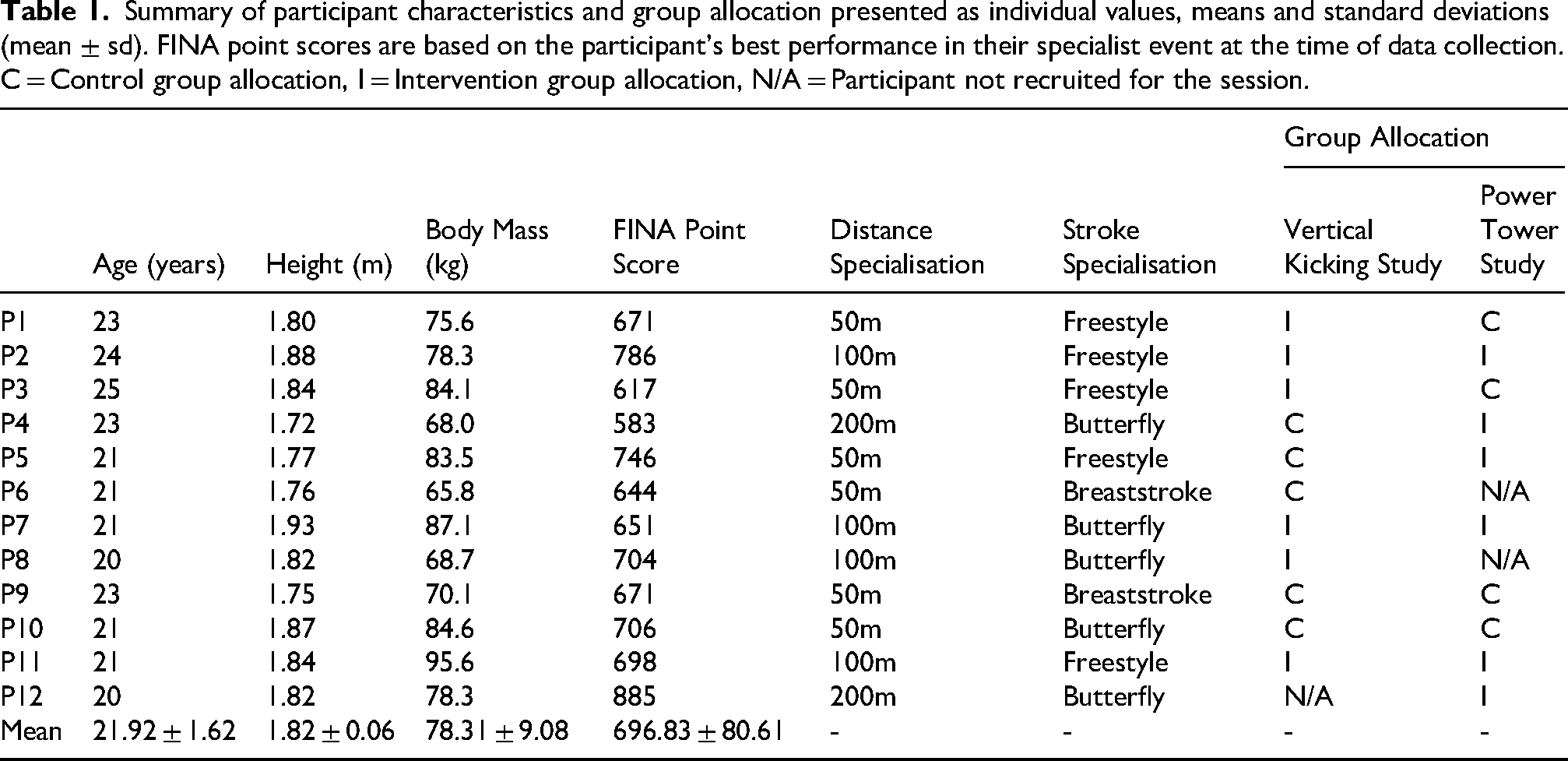
Participants were recruited from a performance squad at the University of Bath and provided informed consent (ethics number 71127). Two separate data collection sessions focused on a different intervention; one session focused on the vertical kicking intervention, and another on the resisted training intervention. Eleven male athletes participated in the vertical kicking intervention (FINA point score 679 ± 57). FINA point scores indicated that eight were national-level swimmers, and three were regional-level. 40 For the resisted training intervention, ten male athletes participated (FINA point score 702 ± 87). The FINA points score indicated that there was one international A, seven national and two regional level swimmers. The average FINA points score placed the swimmers in the top 100 of British Rankings, representing the top 12% of open competitive swimmers. In each session, participants were randomly assigned to either a control or intervention group (Table 1). Nine participants were re-recruited and completed both testing sessions, resulting in twelve unique participants across the study, whose characteristics are detailed in Table 1. Typically, this group completed nine pool-based sessions led by an international-level coach and three land-based sessions led by physiotherapists and strength and conditioning coaches each week.
Summary of participant characteristics and group allocation presented as individual values, means and standard deviations (mean ± sd). FINA point scores are based on the participant's best performance in their specialist event at the time of data collection. C = Control group allocation, I = Intervention group allocation, N/A = Participant not recruited for the session.
Ten retroreflective markers were attached to the body using kinesiology tape (Rocktape Durham, UK) and skin-safe special effects glue (Telesis 8 Silicone Adhesive, Mouldlife, Suffolk, UK). This combination was found to be a robust solution to marker attachment in a submerged environment. These were placed on the following key bony landmarks: intermediate phalange of the hand (Figure 1, A), wrist (Figure 1, B), lateral epicondyle of the elbow (Figure 1, C), posterior shoulder (Figure 1, D), iliac tubercle (Figure 1, E), greater trochanter (Figure 1, F), lateral epicondyle of the knee (Figure 1, G), calcaneus (Figure 1, H), lateral malleolus (Figure 1, 1) and the fifth metatarsal (Figure 1, J). Following a self-directed warm-up, participants performed three maximum-paced prone underwater fly kick repeats from a push-off covering 20 metres. All efforts were performed at a depth of 1 to 1.5 m to reduce the effects of wave drag. 41 Three minutes rest was provided between each trial.
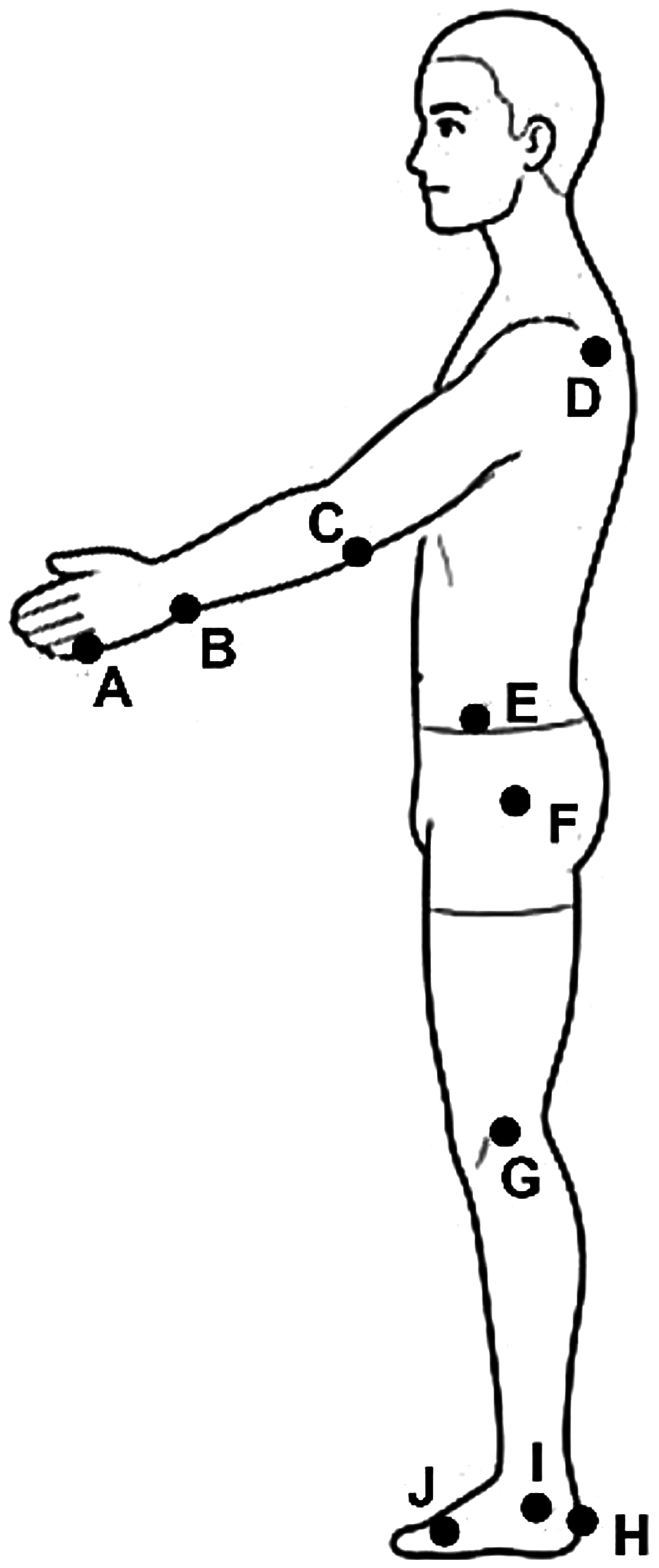
Marker placement on key bony landmarks for two-dimensional assessment of underwater fly kick kinematics.
Experimental set up
Six Qualisys cameras (Qualisys Oqus 510+ Underwater, Göteborg, Sweden) were positioned 0.5 metres beneath the water surface, evenly spaced between 5 and 20 metres along the pool length. 42 The cameras, located approximately six metres from the swimmer's path, were calibrated 30 min after installation. This produced a calibrated volume of 6.9 metres in length, with an average measurement error reported by the system of 1.43 millimetres. On average, six kick cycles were captured within the calibrated domain. Following an investigation of error levels across the domain, kick cycles with trajectory points outside the calibrated volume were removed from analysis to maintain precision in the results. 42 Once the error across the domain was analysed, the average error was recorded at 0.05 mm (± 2.59 mm). Although setup-dependent and not measured within the presented study, Qualisys report that their underwater systems can achieve rotational accuracy down to 0.1 degrees. 43
Interventions
Participants were randomly assigned to one of two groups; intervention (vertical kicking study n = 6, resisted training study n = 6) and control (vertical kicking study n = 5, resisted training study n = 4). The session protocol is outlined in Figure 2.
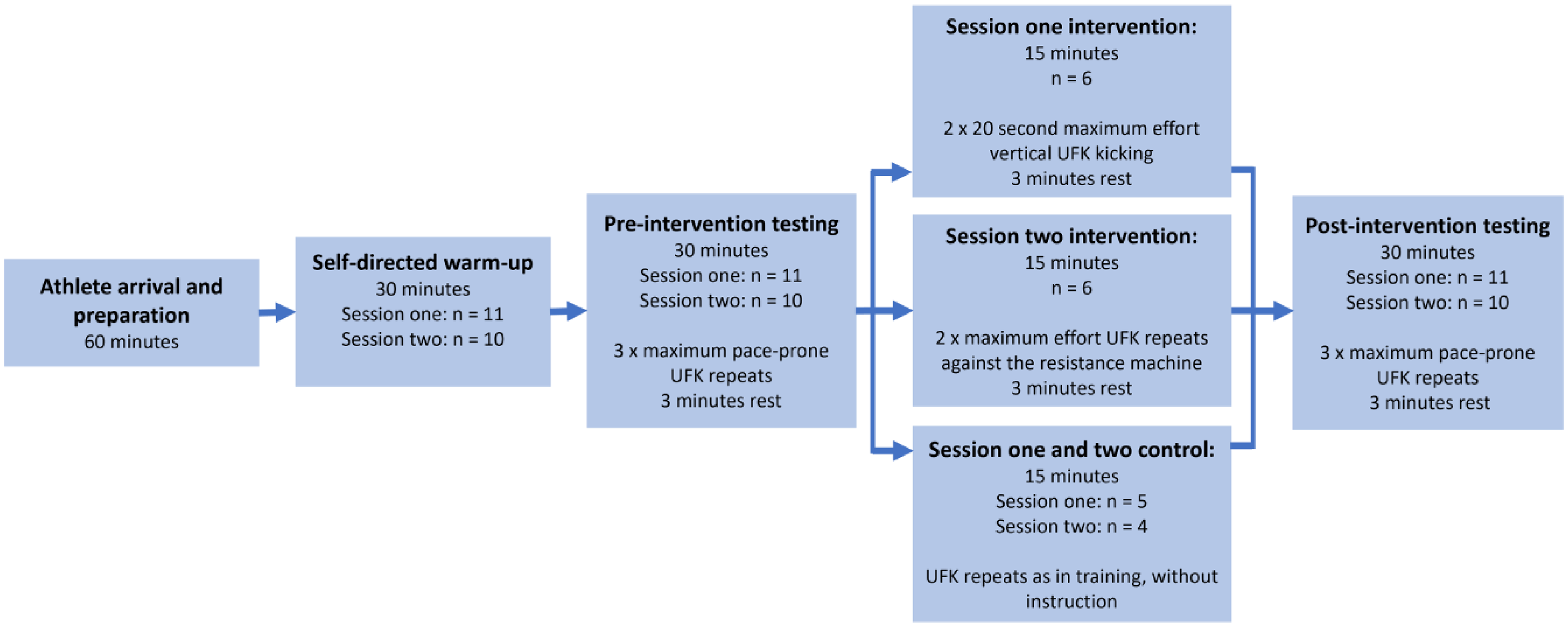
Testing session protocol and approximate timings.
During the vertical kicking intervention, participants completed two 20 second repeats of maximum effort vertical kicking with their arms across the chest; this was a more stable version of the drill than completing it with the arms held above the head. 44 These repeats were completed in a two-metre depth section of the swimming pool. The duration of the intervention appeared to be appropriate as it was significantly longer than the time they would spend during a race underwater phase (typically around five to six seconds), and strenuous enough due to the added resistance induced by the vertical orientation of the kicking. This effort was also in line with the training interventions prescribed by their coach.
For the resisted training intervention, participants completed two underwater fly kick repeats against a set resistance, provided by a power tower (Power Rack, Total Performance Inc, Mansfield, Ohio). A power tower is a resistance machine placed at the end of a swimming pool lane (on land). A resistance is applied to a swimmer through a cord attached to the body. The cable from the power tower was attached to the swimmer via a belt, with the connection placed at the sacrum to not impair the swimming technique. The other end of the cable attaches to a set of weights via a hoist and pulley system. Athletes were asked to swim underwater fly kick against the applied resistance through 15 metres. Approximately seven kilograms of weight was prescribed for every swimmer, equating to 8–10% of body mass. Although this appears to be a modest resistance increase, this corresponds to an approximate increase of 28% in addition to the estimated water resistance experienced in underwater swimming. 45 Considering this, and the legs-only nature of the underwater fly kick, the weight prescription is acceptable. The prescription was also in line with their current training load prescription. Three minutes rest was provided between all intervention repeats.
During interventions, those assigned to the control group entered a separate area of the pool. They were instructed to perform normal swimming in order to maintain their readiness to perform the post-intervention trials. They were told not to undertake any activity directly related to underwater fly kick. Therefore, the underwater phases would have been achieved at moderate intensity, following a push from the wall before transitioning to surface swimming. In total, the control group performed approximately 400 metres of free swimming, resulting in the opportunity to perform eight underwater phases. Once all interventions were complete, the control and intervention groups re-joined and completed a further three prone maximum-paced trials from a push-off through 20 metres. Again, three minutes rest was provided between each effort.
Data analysis
Four key phases of analysis were investigated as follows:
For control and intervention groups: initial maximum paced underwater fly kick trials two and three. The first trial was discarded from analysis, and the presented metrics are an average across the two trials included. For intervention group only: vertical kicking trials during the intervention. Key kinematics were calculated throughout the vertical kicking trial, ignoring the first and last three seconds to allow for stabilisation of kinematics. Due to the orientation of the body during the vertical kicking movement, only lower limb kinematics are calculated. The presented metrics are an average across the two vertical kicking trials.
For intervention group only: resisted training trials during the intervention. Key kinematics were calculated over the underwater fly kick trial for a minimum of three consistent kick cycles, with metrics presented as an average across the two power tower trials. For control and intervention groups: post-intervention maximum paced underwater fly kick trials two and three. The first trial was discarded from analysis, and the presented metrics are an average across the two trials included. For control and intervention groups: post-intervention maximum paced underwater fly kick trials one, two and three. The presented metrics are an average for each of the three trials individually.
For analysis conditions one and three, initial trials were discarded to allow for participant habituation; familiarisation is required before reliable kinematic variables can be obtained, due to slightly different protocols than those that swimmers are usually exposed to. 46 This also ensured the trials used in the analysis were as reliable as possible, while also reducing variability.
Trials were reconstructed in Vicon Nexus (Vicon Nexus 2.9.2) where trajectories were labelled and gap-filled. Trajectories were then exported to Matlab (Matlab R2023a) for processing. The down-beat is defined as the kick phase with knee extension, and the up-beat as the phase with knee flexion, with the two phases delimited by the vertical turning points of the toe landmark.14,16 Kick cycles were defined as beginning at peak toe location (start of the down-beat), to the next peak toe location (end of the up-beat). 47 Underwater fly kick kinematics and swimming velocity have been shown to vary during the underwater phase,48,49 potentially due to fatigue 50 or lingering effects from push or dive starts. 48 To ensure the analysis was limited only to consistent swimming cycles, any cycle with an average velocity greater or less than five percent of the average horizontal swimming velocity was excluded from the analysis (supplementary material). Following the removal of inconsistent cycles, any trial presenting less than three kick cycles was discarded. A maximum of six kick cycles were included in the analysis. 51
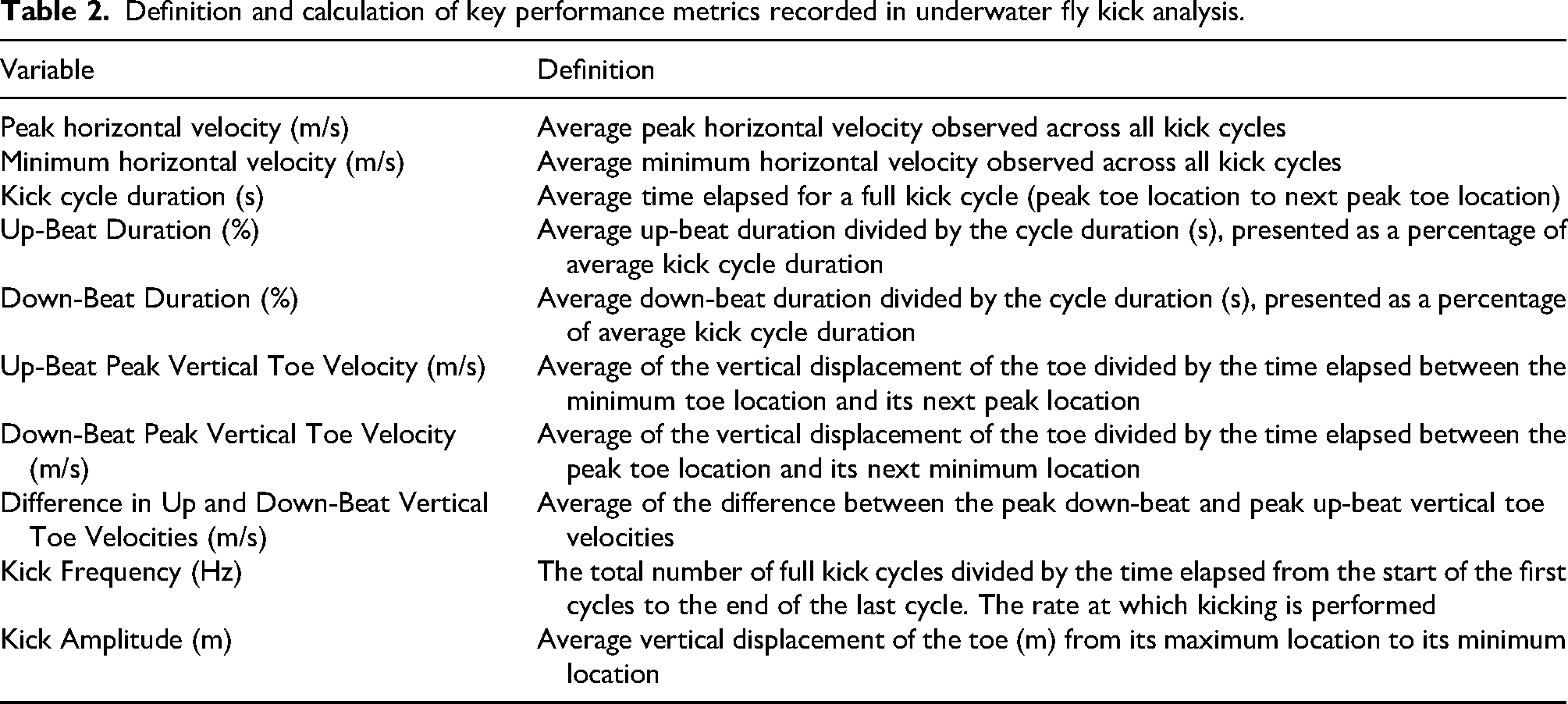
This study's primary performance outcome variable was average horizontal swimming velocity, which was calculated as the horizontal displacement of the greater trochanter marker divided by the time elapsed. The greater trochanter marker was used for this calculation rather than centre of mass, as horizontal velocity was calculated over a complete number of whole kick cycles. Twelve further key performance metrics were calculated (defined in Table 2). Two-dimensional segment orientations were calculated using horizontal and vertical coordinates of segment-defining markers in each frame of interest. The four-quadrant inverse tangent between each segment was calculated as in equation a. Angular kinematics were calculated for five key joints: ankle, knee, hip, trunk, and shoulder. All angles are presented as an average over a kick cycle.
Definition and calculation of key performance metrics recorded in underwater fly kick analysis.
Statistical analysis
Partial effects were assessed by comparing the pre- and post-intervention average values, for both control and intervention groups. The acute effects of the interventions were identified through a comparison between pre-intervention and during-intervention trials. Wilcoxon signed-rank tests identified significant changes between variables measured at these time points. Friedman's tests were used to assess technique change across three separate post-intervention trials, identifying potential acute residual effects of each intervention. SPSS software (IBM Corporation, New York, USA, Version 25) was used to run statistical analysis, with the alpha level set at 0.05.
Results
Partial effects
Vertical kicking
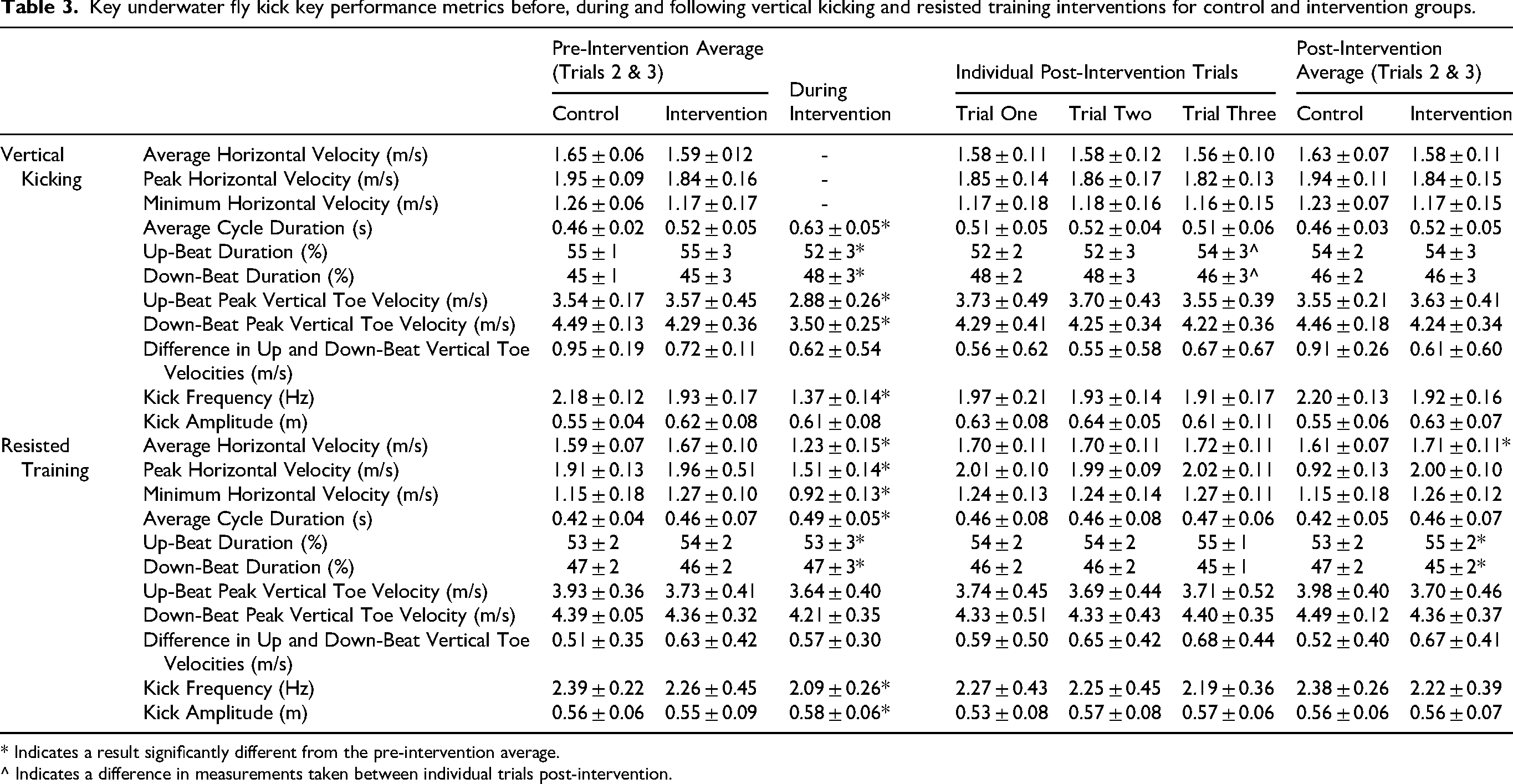
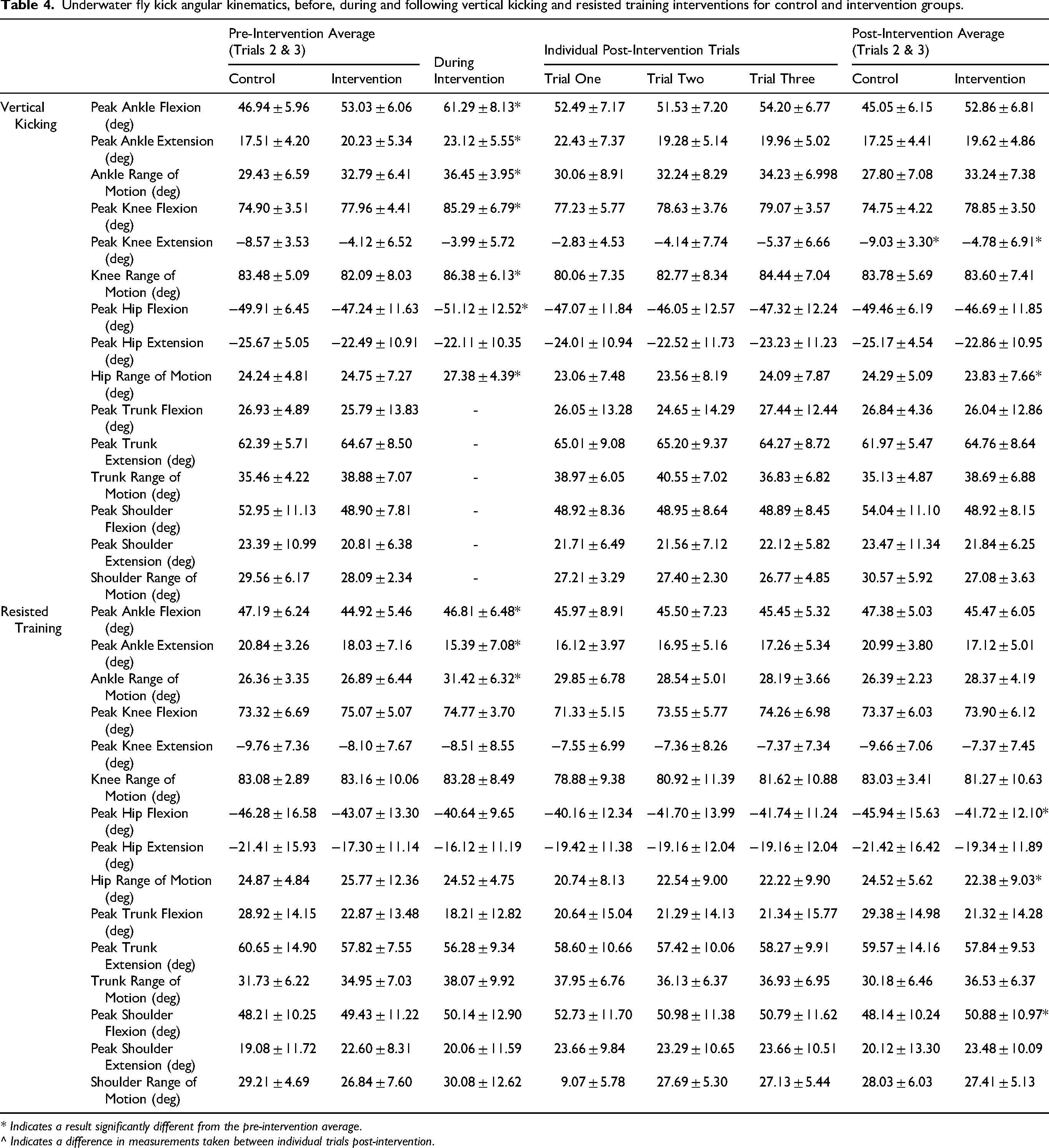
There was no significant change in average horizontal swimming velocity or any key performance metrics in control or intervention groups (as defined in Table 2) when comparing underwater fly kick performance pre- to post-intervention (Table 3). Hip flexion-extension range of motion was significantly reduced post-intervention (p = 0.028, Table 4, Figure 3(d)) in the intervention group. Peak knee extension was significantly increased in the intervention group (p = 0.034), but this significant change in knee extension was also observed in the control group (p = 0.017) (Figure 3(c)).
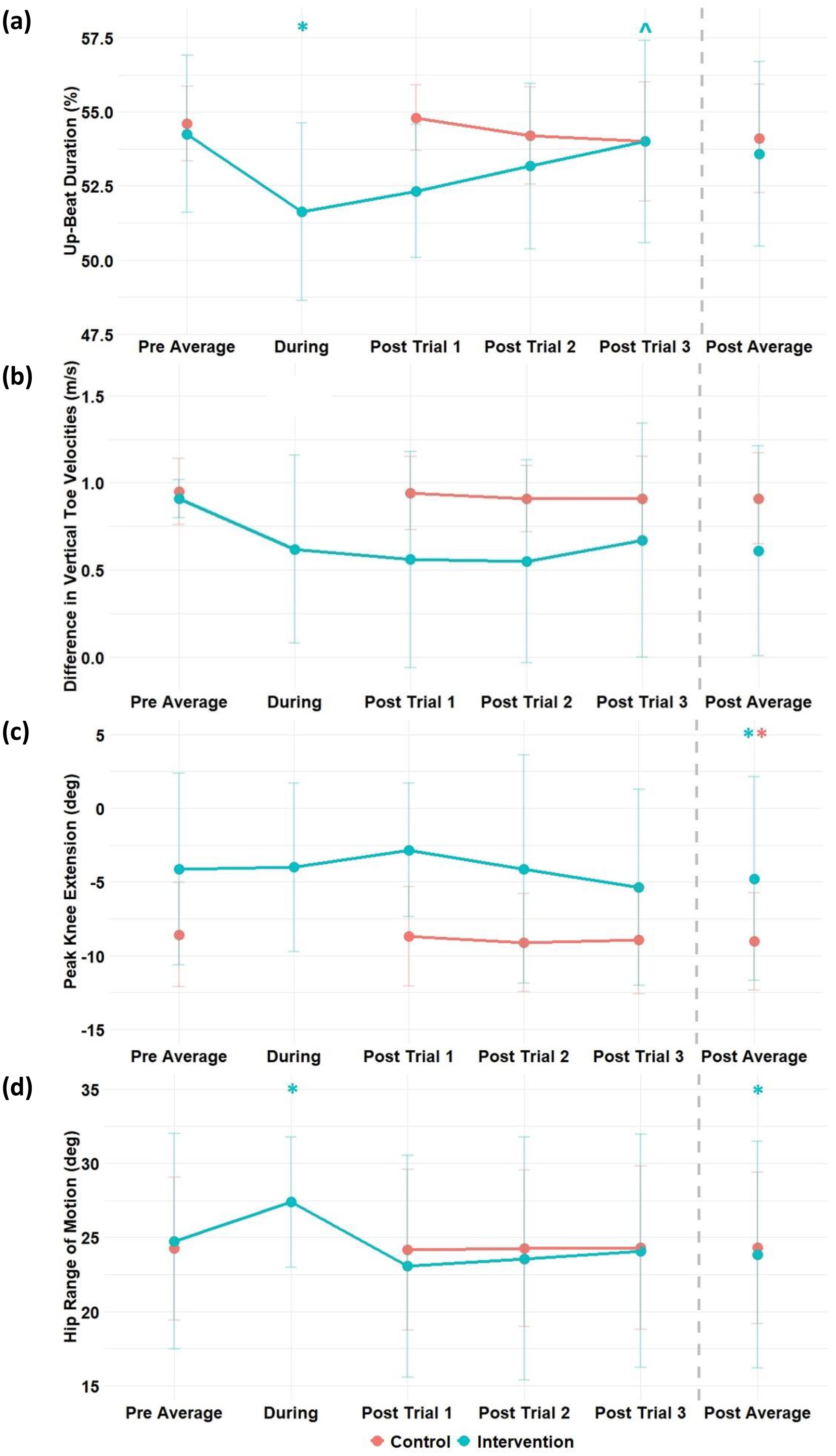
Progression of changes in up-beat duration (a), difference in peak vertical toe velocity (b), knee extension (c) and hip range of motion (d) in underwater fly kick pre, during, and following a vertical kicking intervention for control and intervention groups. * indicates a significant change from the pre-testing average, with ^ indicating a significant change between post-intervention trials.
Key underwater fly kick key performance metrics before, during and following vertical kicking and resisted training interventions for control and intervention groups.
* Indicates a result significantly different from the pre-intervention average. ^ Indicates a difference in measurements taken between individual trials post-intervention.
Underwater fly kick angular kinematics, before, during and following vertical kicking and resisted training interventions for control and intervention groups.
* Indicates a result significantly different from the pre-intervention average. ^ Indicates a difference in measurements taken between individual trials post-intervention.
Resisted training
Average horizontal swimming velocity was significantly increased (p = 0.019, Table 3) in the intervention group. Up-beat duration increased (p = 0.045, Figure 4(a)) and conversely, the down-beat duration decreased. Peak hip flexion significantly decreased (p = 0.019, Table 4) resulting in a significant decrease in hip range of motion (p = 0.050, Figure 4(b)). Peak shoulder flexion increased (p = 0.019, Figure 4(d)). There were no significant changes to any key metrics or angular kinematics in the control group.
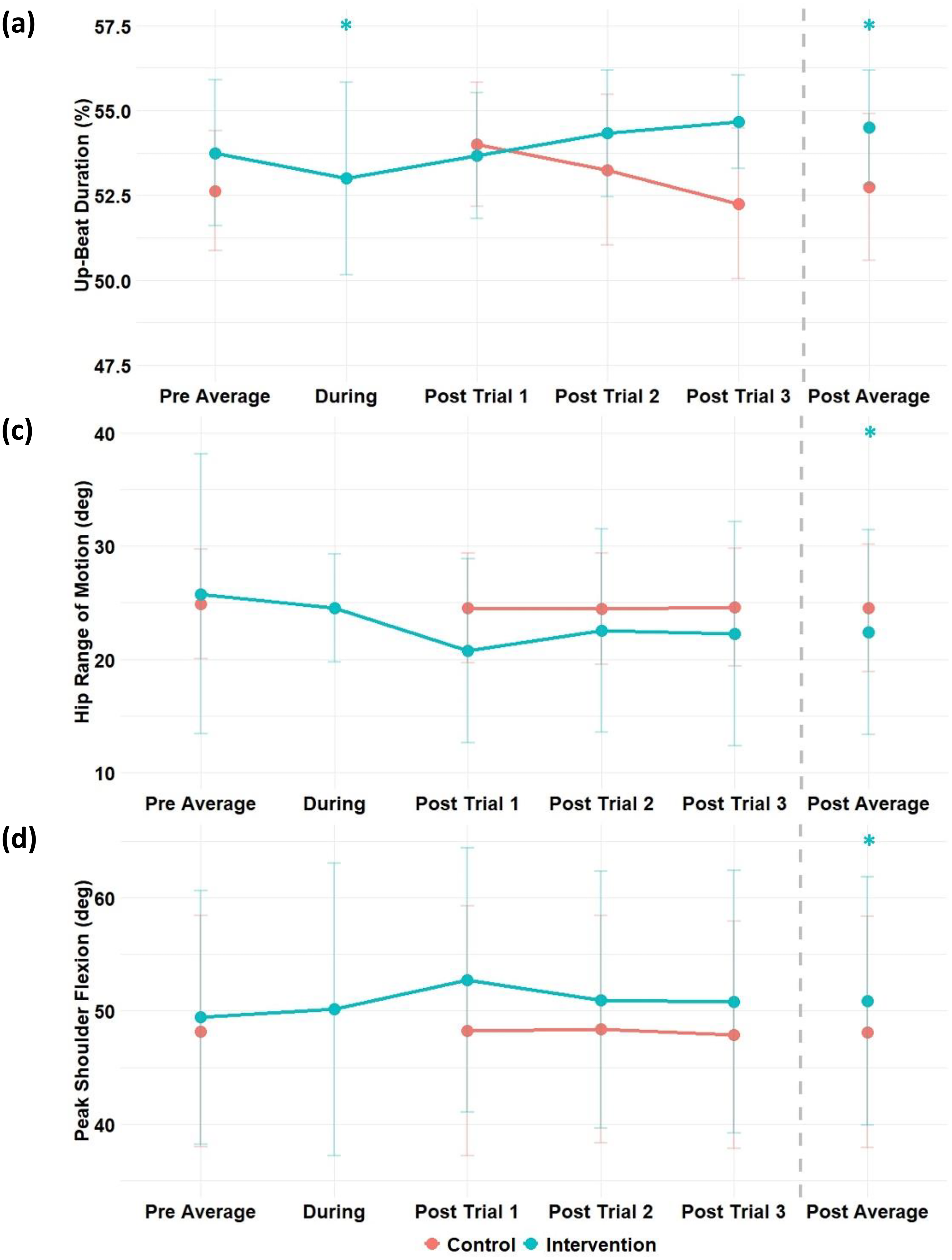
Progression of changes in up-beat duration (a), difference in peak vertical toe velocity (b), hip range of motion (c) and shoulder flexion (d) in underwater fly kick pre, during, and following a resisted training intervention for control and intervention groups. * indicates a significant change from the pre-testing average, with ^ indicating a significant change between post-intervention trials.
Acute effects
Vertical kicking
During vertical kicking, a significant increase in cycle duration and a related decrease in kick frequency was observed (p = 0.002, Table 3). Results indicate that the phases of the kick became more symmetrical during vertical kicking through significantly reduced up-beat duration (p = 0.003, Figure 3(a)), and increased down-beat duration (p = 0.003). The peak vertical toe velocities were significantly decreased in both up and down beats (p = 0.002, Figure 3(b)). Kick amplitude was also reduced (p = 0.002).
Peak ankle flexion increased, and peak extension decreased in the intervention trials (p = 0.004 and p = 0.001 respectively, Table 4). As a result, a significant increase in ankle range of motion was observed (p = 0.004). Peak knee flexion angle increased significantly in the intervention trials (p = 0.005), but peak knee extension showed no significant change. There was a significant increase in knee flexion-extension range of motion (p = 0.005). Peak hip flexion angle also increased significantly in the intervention trials (p = 0.008), resulting in a significant increase in hip range of motion (p = 0.005, Figure 3(d)).
Resisted training
The intervention caused a significant reduction in horizontal velocity-based metrics when compared to pre-intervention trials; average horizontal velocity (p = 0.002), peak horizontal velocity (p = 0.002) and minimum horizontal velocity (p = 0.002) all reduced (Table 3). There was a significant increase in kick cycle duration (p = 0.008) as well as a reduction in up-beat and increase in down-beat durations (p = 0.034, Figure 4(a)). Kick frequency was significantly increased (p = 0.008) and kick amplitude was significantly decreased (p = 0.050).
Peak ankle flexion and extension were both significantly increased during the resisted training intervention (p = 0.041 and p = 0.003, Table 4), resulting in a significant increase in ankle range of motion (p = 0.012).
Acute residual effects
Vertical kicking
A significant increase in up-beat duration was observed between trials one and three and trials two and three (p = 0.011, Table 3, Figure 3(a)). There were no significant changes associated with the measured angular kinematics. Assessing the post-intervention trials individually reveals a trend of gradual return towards initial techniques in variables related to kicking symmetry (Figures 3(a) and 3(b), Table 3). Trends indicate an initial reduction in peak knee extension which gradually increases beyond the original measured levels (Figure 3(c). Table 4). Following the reported significant increase in hip range of motion, a gradual trend of reduction was observed towards the pre-post comparison where the hip range was significantly reduced (Table 4, Figure 3(d)).
Resisted training
There were no significant differences in key metrics or angular kinematics between the post-intervention trials for the control or intervention groups.
Trends across the three post-intervention trials for up-beat duration reveal a significantly reduced duration during the intervention, gradually increasing across the three post-intervention trials, resulting in a significant increase in the post-intervention average (Figure 4(a)). The opposite trend was observed for the control group, however this result was not significant. For hip range of motion (Figure 4(b)), a trend of immediate reduction with a gradual return towards pre-testing levels is observed. Similarly, shoulder flexion angles immediately increase with a gradual return towards pre-test levels (Figure 4(c)).
Discussion
This paper investigates the partial, acute and acute residual training effects of two commonly used drill interventions in the improvement of underwater fly kick techniques. A randomised parallel-group design was used to assess two interventions, selected due to their common use within swimming training. 17
Vertical kicking
Vertical kicking, a fundamental drill to develop power and efficiency, 52 is commonly used to develop underwater fly kick techniques. 17 Despite this, it has not been validated for improving this skill. Contrary to the stated hypothesis, partial effects revealed no significant improvement in horizontal swimming velocity following the intervention. Previous investigations observed changes in velocity after a vertical kicking intervention in freestyle, but these changes were observed after a three-week training period 53 rather than an investigation of the drill's partial effects. Coach-identified metrics of kick symmetry and kick frequency 17 did not show immediate pre- to post-assessment alterations, suggesting no immediate improvement in technique from vertical kicking implementation.
However, a lack of immediate performance improvement does not indicate a lack of learning, 34 as significant changes were identified within acute and acute residual effects related to improved kick symmetry. Defined as the ability to produce equivalent propulsion from both the up- and down-beats of the kick, 15 kick symmetry was rated as important or very important by over 80% of swimming coaches. 17 Increased symmetry between the kick phases has been directly linked to the timing of vortex generation and resulting propulsion.15,16 This enhanced vortex generation in the up-beat results in increased horizontal displacement per kick cycle, 54 directly increasing swimming speed. 10
Acute residual effects linked to kick phase durations could indicate potential drill benefits towards kick symmetry. A three percent reduction in up-beat duration was observed in acute effects, gradually returning to baseline levels over the three post-intervention trials. A reduction in up-beat duration has previously been correlated with increased swimming velocity.11,15,16 While this change towards more symmetrical kicking phases did not immediately impact horizontal swimming velocity metrics, prolonged exposure may lead to more lasting technique changes. It is important to consider that the underwater fly kick is a complex skill, involving the interaction of multiple factors in combination. Improvements in one metric alone, such as kick symmetry, do not guarantee more effective kicking techniques.
During the intervention trials, all participants exhibited reduced up-beat duration and peak toe velocity, resulting in a slower kick characterised by prolonged cycle duration and reduced kicking frequency. Increased kick symmetry is often facilitated by increased knee flexion, but preferably by earlier onset of hip extension. 55 The observed significant increase of over ten degrees in knee flexion during vertical kicking, previously linked to elevated drag and horizontal toe motion,15,16,55 likely contributed to the decreased peak toe velocity in the up-beat, explaining the lack of improvement in symmetry between the vertical toe velocities. While the movement toward kick symmetry is beneficial, the reliance on increased knee flexion rather than earlier hip extension suggests the use of a suboptimal movement pattern which may hinder swimming efficiency.
During vertical kicking trials, participants exhibited increased flexion at the ankle, knee, and hip joints, resulting in a greater range of motion at each joint. Notably, an increased knee flexion angle has been directly linked to decreased underwater fly kick performance,10,15 as it contributes to increased up-beat duration and drag due to increased frontal area.56,57 For vertical kicking, where athletes mean velocity is null compared to horizontal swimming, the negative effects induced by a larger amplitude are minimised. The resistive fluid forces affecting a swimmer performing underwater fly kick horizontally and vertically are very different. The trade-off between propulsion and minimising resistive forces becomes an exercise of maximising propulsion in opposition to gravity during vertical kicking. Therefore, the acute effects induced by this drill, especially the increase in knee angular range of motion, do not appear to result in improved swimming velocity.
The kinematic adjustments discussed reflect modified techniques to manage vertical body positioning in water. Vertical kicking interventions require substantial dynamic lumbar control to stabilise the body. 44 With the upper body above the water, participants must balance thrust from their kicks to stay upright. Changes in angular kinematics at one joint can create knock-on effects along the kinetic chain, as seen when ankle motion limitations led to compensatory knee mechanisms. 58 This highlights a potential limitation of vertical kicking drills, as they may reinforce inefficient movement patterns through long-term motor learning. However, during early skill development, movement variability training 59 can help athletes explore optimal movement patterns from various intra-movement options.59,60 Coaches should ensure a smooth transition from adaptability training to stability performance training, enabling athletes to maximize performance. 59
Combined training effects of this drill highlight potential examples of movement variability learning. Increased hip range of motion during the drill introduced a perturbation, facilitating exploratory learning. However, this immediately reduced in the first post-intervention trial, gradually returning toward baseline. This transition, alongside a significant decrease in average partial effects, suggests a refinement of the athlete's movement strategy for improved swimming efficiency. The vertical kicking drill enabled the exploration of joint motion variability, which may have contributed to improved consistency in technique. Such variability in training enhances skill acquisition by promoting adaptation and optimising performance.60,61
The only angular kinematic metric previously associated with enhanced performance that revealed significant partial effects was increased knee extension.10,15 However, this change occurred in both control and intervention groups. A closer analysis of acute residual effects suggests that vertical kicking promotes athlete exploration. Initially, intervention participants demonstrated a decreased level of knee extension, followed by an overshoot in the first post-intervention trial and a gradual return to baseline, eventually exceeding it. This trend was absent in the control group, which exhibited minimal variation of less than 0.5 degrees over the three post-intervention trials compared to over 2.5 degrees in the intervention group. While partial effects alone might suggest knee extension changes are unrelated to the drill, deeper analysis of acute residual effects indicates vertical kicking may benefit skill learning by fostering adaptive movement strategies.
Resisted training
Resisted training is defined as an exercise performed against a force, additional to the natural resistance of the water, 62 and can be implemented using training aids such as hand-paddles, bungees or parachutes. 63 Using specific methods such as the power tower, executed in the water whilst simulating the desired movement pattern, strength gain is more likely to be transferred to swimming performance. 64 This specificity of resistance training in water enhances the potential for performance improvements through close alignment with the biomechanical demands of the task, encouraging learning through representative practice. 65
Acute effects revealed expected reductions in average, peak, and minimum velocity, consistent with performing against resistance. 66 However, confirming the stated hypothesis, a significant increase in velocity was observed in the partial effects of the intervention. This aligns with previous findings in water-specific resistance training, where free swimming speed was increased62,63,67 following several weeks of resisted training interventions. While the present findings reflect only short-term effects, they may indicate similar underlying mechanisms at play. Additionally, improvements in underwater fly kick performance have been reported following land-based eccentric training.68,69 Although land-based protocols differ from in-pool interventions, they further support the notion that targeted resistance training can positively influence underwater kicking performance.
Kick frequency, defined as the rate at which kicking is performed (Table 2) and regarded as important or very important by over 90% of swimming coaches, 17 was not improved following the resisted training intervention, despite a significant increase in kick frequency during. This is contradictory to the coaching goals when implementing this type of intervention. 17 Further, rather than promoting a more symmetrical kick, the resisted training intervention appears to decrease symmetry between up and down-beat durations; although up-beat duration was significantly reduced during the intervention, this became significantly increased post-intervention. This potentially indicates some level of fatigue, despite gradual increases in average horizontal velocity.
The attachment of the power tower cord was around the hips, where significantly reduced flexion and range of motion were observed in partial effects. This potentially led to increased compensatory motions of the upper body, particularly at the shoulder where flexion was increased. Furthermore, the cord is affixed to the power tower on land, resulting in resistance being applied at a slight upward angle rather than purely horizontally, which may contribute to this altered movement pattern. The underwater fly kick is performed in a streamlined position, and this adaptation positions the body in an orientation that projects a greater frontal area, increasing the potential effects of drag. 57 Interestingly, these changes were only manifested in partial effects rather than acute effects, perhaps indicating further technique adaptations due to swimming beyond a voluntary maximum pace. This observed technique alteration may also be related to the athlete's ability to adapt to changing resistance requirements of the power tower tool and free swimming, where they are required to re-calibrate their perceptual-motor control to meet the task requirements. 70
Previous research indicates that restricting ankle joint motion reduces horizontal swimming velocity.58,71 Although evidence for increased ankle flexibility enhancing swimming velocity is lacking, the power tower intervention may offer immediate benefits in its acute effects, increasing plantarflexion for greater thrust generation in the down-beat of the kick. 71 Swimmers may adapt their technique to meet task demands, as seen previously, where deeper leg kicks enhanced propulsive forces against resistance. 31 However, no significant changes in hip flexion or extension angle were observed in acute effects, which would drive the observed ankle kinematics. This is likely due to differing demands between free swimming and underwater fly kick tasks. Furthermore, partial effects in ankle kinematics were not observed.
As there are no clear causational changes in kinematics, the increase in horizontal swimming velocity is likely related to the post-activation performance enhancement (PAPE) phenomenon, whereby the contractile history of skeletal muscle enhances voluntary force or power output, with performance gains attributed more to physiological readiness than to residual fatigue.72,73 Optimal performance occurs when fatigue has diminished enough to no longer inhibit output, allowing potentiated effects to dominate. Generally, PAPE is intentionally elicited by performing a conditioning contraction but can also occur as an unintended consequence of other activities, 73 such as in the case presented, where a specific protocol was not followed. Although water-based post-activation potentiation exercises such as resisted swimming are not extensively researched, land-based resistance exercises have previously been shown to increase underwater fly kick performance.68,69 There was no significant observable drop-off across post-intervention trials. Theoretically, the potentiation effects of the power tower intervention will gradually subside, 74 but regular implementation of resisted interventions may lead to a long-term neuromuscular adaptation. 75 However, as noted, increased load alters movement characteristics, creating a trade-off between short-term performance gains from resisted training and the emergence of compensatory patterns associated with less efficient kicking.
Resistance applied should be tailored to the individual athlete to produce desired changes in technique. On land, the addition of 10–12.6% body weight resistance improves acceleration, while a 20% body weight resistance targets maximum speed.76,77 These loads also depend upon the task demands, taking account of the velocity of movement and resistive force encountered. 77 The 27 kg difference in mass between participants involved in this study likely affected the results. In free swimming, it has been recommended that long sets of resisted training at moderate intensity will develop strength endurance, whereas short sets with long recovery times increase strength and power. 67 Resisted drills should be carefully tailored to both the athlete's anthropometrics and the intended outcomes; in early season with high training volume, it may be more appropriate to work on strength endurance, with improvements in strength and power required in the run-up to competition.
Skill-learning context
The drills investigated are typically employed in swimming training as structured practice methods, characterised by the repetitive execution of a single skill under high levels of coach instruction and feedback. 34 Although such practice methods may improve observed performance following a single session in response to micro-variability in skill practice, introducing variable practice into training, where athletes are encouraged to repeat skills in different conditions, with lower levels of instruction and feedback, will likely lead to greater skill transfer to long-term learning. 35 Under these conditions, athletes can respond to intrinsic feedback, developing their error detection and correction capabilities, 78 and changes in technique and performance may become more permanent.
Furthermore, although immediate changes in performance are not observed, as seen in the vertical kicking intervention, learning transfer is still taking place. 34 Notably, each athlete is an individual, with unique biomechanical, physical, and motor capacities influencing their response to training. While specific coaching drills might not directly improve swimming speed for every athlete, they can drive adaptations toward movement patterns that are more effective for their own needs, 79 through enhanced motor coordination or decreased metabolic cost, for example. 34 Coaches should not discount the value of drills based on no observable immediate improvements in performance.
Despite both interventions eliciting technical changes that, according to the scientific literature, may be detrimental to performance, this is not necessarily a negative result from a skill learning perspective. The method of amplification of error suggests that individuals can learn to correct their movements based on mistakes, 80 theorising that technical errors indicate the presence of learning. 81 The individual increases their intrinsic learning around the limits of the target movement, using that information to direct kinematic adjustments towards improved performance. 81 The kinematic perturbations observed may, therefore, contribute to longer-term learning of the underwater fly kick skill, whether that is reinforcing optimal technique or defining the optimal technical boundaries for their performance. This notion is supported by evidence from a recent seven-week intervention study, 8 which demonstrated that structured underwater drills led to significant improvements in UUS performance and gliding mechanics over time. These findings evidence that even when immediate performance gains are limited or inconsistent, longer-term adaptations in technique and efficiency can emerge through targeted, repeated practice.
Considering the observed results, the benefits of both drills could be better harnessed through serial or variable practice rather than the commonly employed blocked practice.19,29 While blocked practice may yield short-term performance gains, it often fails to enhance long-term skill retention and adaptability. 18 Serial practice, which sequences different drills, and variable practice, which introduces unpredictable variations, promote deeper motor learning.60,82 Introducing these practices through varying resistance, tempo, or body position can enhance athletes’ movement adaptability. 83 Coaches should integrate these approaches alongside feedback mechanisms to refine the underwater fly kick through adaptive learning rather than rigid repetition. 35
An important consideration for coaching planning is that, depending on the time of year and the athlete's training phase, it may be more beneficial to focus on performance rather than learning, especially during peak competition periods. 59 This aligns with proposed skill acquisition frameworks, 60 where training emphasis shifts between performance optimisation and skill acquisition based on the athlete's seasonal needs. Given the complexity of skill learning and periodisation, coaches need to be educated and trained in skill acquisition approaches to balance performance and learning objectives throughout the training cycle effectively. 34
Limitations and future work
The presented work focuses on a small group of skilled male swimmers. Ideally, a larger sample size would provide more confidence in the results presented. This was the size of the squad available for the research and is similar in size to earlier research in underwater fly kick.8,53 Future research could expand this work to other swimming groups to determine training effects in a larger population. However, it is challenging to access a larger group of swimmers of that skill level. Considering this was a male-only sample, it would also be valuable to determine whether optimal approaches differ by gender. While previous research has found no difference in kicking mechanisms between genders when normalised to anthropometrics, 84 coaches report a modified approach based on gender, particularly in young developmental-level athletes. 17 Therefore, future studies should examine the effects of common interventions in both male and female swimmers to determine whether training approaches should be tailored by gender.
Further, it is important to consider that individuals may respond differently to prescribed interventions depending upon anthropometrics, specialist event, or current skill level. Additional research creating a larger sample size would aid with investigations into whether such factors may influence the outcome of prescribed drills across a heterogeneous sample. This would help to ensure coaches are fully informed before selecting and prescribing drills for specific purposes in the development of underwater fly kick. The presented research focused solely on immediate training effects, rather than any delayed retention. Assessment of immediate retention may not reflect skill learning as a result of a given intervention, as memory consolidation has not occurred. 78 Therefore, a follow-up assessment of between 24-h and 1-week is recommended to infer skill learning 85 and decay of training effects. 78
Future work should focus on investigating the implementation of skill acquisition frameworks into skill development in swimming. A longitudinal intervention of this nature, guiding swimmers through coordination training and towards more representative practice, could promote more stable changes in underwater fly kicking techniques over time.
Conclusions
This study examined the effects of vertical kicking and resisted training interventions on underwater fly kick performance, highlighting their unique contributions and potential limitations.
Vertical kicking improved kicking symmetry, but introduced increased knee flexion, a movement pattern previously linked to reduced efficiency. While observed training effects did not immediately enhance observed performance, they potentially reflect exploratory learning that may foster longer-term skill adaptation. Resisted training demonstrated immediate velocity gains, likely due to PAPE effects, but also revealed potential drawbacks, including reduced kick symmetry and restricted joint motion. These findings suggest that while resisted training can enhance performance acutely, careful monitoring is necessary to mitigate the risk of reinforcing suboptimal movement patterns.
Both interventions highlight the importance of tailoring training to individual athlete characteristics and goals. Introducing drills into varied practice environments may enhance their effectiveness by promoting movement adaptability and long-term skill transfer. Coaches should aim to balance immediate performance improvements with the gradual refinement of technique for sustained gains. Future research should focus on longitudinal studies to better understand how these interventions contribute to stable and optimal underwater fly kick performance.
Supplemental Material
sj-pdf-1-spo-10.1177_17479541261418931 - Supplemental material for The effects of skill practice on underwater fly kick development
Supplemental material, sj-pdf-1-spo-10.1177_17479541261418931 for The effects of skill practice on underwater fly kick development by Isobel M Thompson, Dorian AG Audot, Dominic Hudson, Martin B Warner, Oliver Logan and Joseph Banks in International Journal of Sports Science & Coaching
Footnotes

Ethical considerations
This study was approved by the Faculty of Engineering and Physical Sciences Ethics Committee of the University of Southampton (Ethics Number: 71127) on 30/03/2025. All participants provided written informed consent before enrolment in the study. This research was conducted ethically, in accordance with the World Medical Association Declaration of Helsinki.
Consent to participate
Written informed consent was obtained from a legally authorised representative for anonymised participant information to be published in this article.
Funding
The authors disclosed receipt of the following financial support for the research, authorship, and/or publication of this article: The work presented is part of a PhD funded by the English Institute of Sport and the Engineering and Physical Sciences Research Council.
Declaration of conflicting interests
The authors declared no potential conflicts of interest with respect to the research, authorship, and/or publication of this article.
Data availability
The datasets generated and analysed during the current study are available in the Pure data repository: https://doi.org/10.5258/SOTON/D3423
Supplemental material
Supplemental material for this article is available online.