



Abstract
High performance sport organisations employ multidisciplinary sport science teams to develop athlete preparation and performance. However, challenges have been identified with respect to cohesion, communication, integration, ineffective knowledge translation, role clarity, confusing language, and conflicting methodologies. A Department of Methodology (DoM) has been proposed as a conceptual framework seeking to address these issues. To move the DoM beyond conceptualisation towards professional practice, this study aimed to establish expert consensus for the implementation of a DoM within applied high performance contexts. Eighty professionals with expertise in multidisciplinary teams completed a three-round, online Delphi survey. In Round One, participants answered 16, open-ended questions across four categories: (1) Coordinating activity through shared principles and language; (2) Communicating coherent ideas; (3) Designing practice landscapes; and (4), General questions of feasibility. Results highlight the importance of building a shared language, establishing common principles, working collaboratively, facilitating continuous knowledge exchange, and designing practice tasks collaboratively. New knowledge is contributed for advancing conceptualisation of a DoM framework by exploring consensus on a range of theoretical- and practitioner-informed recommendations for the successful implementation of a DoM in high-performance sports organisations.
Keywords
Introduction
To optimise athlete preparation and performance, sports organisations employ multidisciplinary sport science teams ( 1 UK Sports Institute, 2023). While a multidisciplinary team aims to improve athlete preparation and performance, important challenges have been identified in respect to cohesion, 2 communication within and between departments, 3 integration, 4 (in)effective knowledge translation, 5 role clarity, 6 psychological safety, 7 and varying language and methodologies. 8 Without a shared theoretical framework to guide a coordinated and integrated approach, collaboration may be inhibited, with members of multidisciplinary teams often working in silos, 9 leading to fragmented athlete support, and an over-specialisation of support services. 10 A dysfunctional support network could ultimately lead to ineffective athlete development and performance preparation processes that could lead to negative performance outcomes. 4
Although multidisciplinary teams involve multiple sub-discipline specialists working together on a common goal, there is often little intent to integrate ideas, theories or methodologies. 11 Each individual or discipline is working upon their own ‘chunk’ of work and only need to be coordinated in their selected actions, with few attempts to create a new, unified understanding. 12 To exemplify, in professional football, strength and conditioning coaches have typically used a closed environment approach for developing agility (e.g., running in between or around static cones in a unidirectional or bi-directional manner). 13 The process and outcomes of athlete support are often sequential and additive, with the main challenge for the system being coordination between the working disciplines. To address these challenges Otte et al., 8 proposed a transition away from a traditional multidisciplinary approach (e.g., see UEFA, 2020), 14 towards a transdisciplinary view of sport practitioner support. Transdisciplinary support embraces a complex systems orientation, prioritising a holistic, relational approach to viewing and addressing performance problems. It appreciates the benefit of co-creating and co-developing solutions in continuous transactions between support staff and athletes, representing complexity of sport performance, rather than narrowly using prescribed disciplinary. 15
Rothwell et al. (2020) 4 conceptualised a framework for relational, integrated performance support called a Department of Methodology (DoM). A DoM advocates that subdiscipline specialists function as a cohesive and integrated unit (department), based on shared scientific concepts and principles to collectively design learning environments (methodology).4,8 The aim of a DoM is for a community of professionals to work within a unified framework to: (i) coordinate activity through a shared language and common principles, (ii) communicate coherent ideas, (iii) collaboratively design practice landscapes that provide affordances (opportunities; see Gibson, 1979) 16 and information for athletes to regulate actions, and (iv), collectively facilitate the emergence of multi-dimensional athlete behaviours (e.g., psychological, physical, emotional and social). The DoM concept could help address the challenges that exist within multidisciplinary teams and staff operating in ‘silos’ in a hierarchical, non-integrated fashion.4,8,17 This re-organisation of high performance sport systems might alleviate some problems and weaknesses of traditional models of athlete preparation and performance (for detailed case examples see Otte et al.). 8
Analysing the feasibility of transitioning away from a multi-, or interdisciplinary approach to athlete development, preparation and performance towards a transdisciplinary framework is a necessary step, exploring insights and perceptions on the potential impact of a DoM in high performance sports organisations. With increasing sizes of performance support staff and more sub-discipline specialists being involved in athlete preparation and development than ever before, this study aims to clarify expert opinions and consensus for the implementation of a DoM within applied high performance contexts.
Methods
Research design
A Delphi method is a systematic and rigorous approach to gathering expert opinion and generating informed consensus on a particular topic, 18 which is particularly useful in areas of limited research. 19 It involves a sample of experts responding anonymously to a series of iterative questionnaires, with feedback used between rounds to meet consensus. 20 Here, the Delphi method was utilised to assess the feasibility of implementing a DoM within high-performance sport science support staff, gathering expert opinions from a global range of professionals. An online Delphi survey, consisting of three iterative rounds was employed. 21 For each round, participants received an ad-hoc online questionnaire, developed, and administrated using Qualtrics software (Qualtrics, Provo, Utah, United States). To ensure rigour in the Delphi process, we pre-determined the inclusion and exclusion criteria for selecting experienced and skilled support staff in high performance sports organisations, the number of rounds needed for gaining information on their perceptions and insights, the analytical approach adopted, and the consensus thresholds prior to the study. 22 These methodological decisions were guided by a pragmatic approach and placed centrally to address the research aims. The emphasis in this study was on shared meaning-making, communication, and transferability of research findings into the practice of high performance sport organisations. 23
Steering committee
The Delphi survey was developed by the investigators and reviewed by a steering committee (n = 5) to ensure appropriate terminology was used. The steering committee consisted of five males: one professor of motor learning, one associate professor of skill acquisition, one Wheelchair Rugby World Cup winning coach, one international team professional goalkeeping coach, and one researcher with experience in Delphi-related research. All steering committee members hold a sport science-related doctorate.
Panel selection
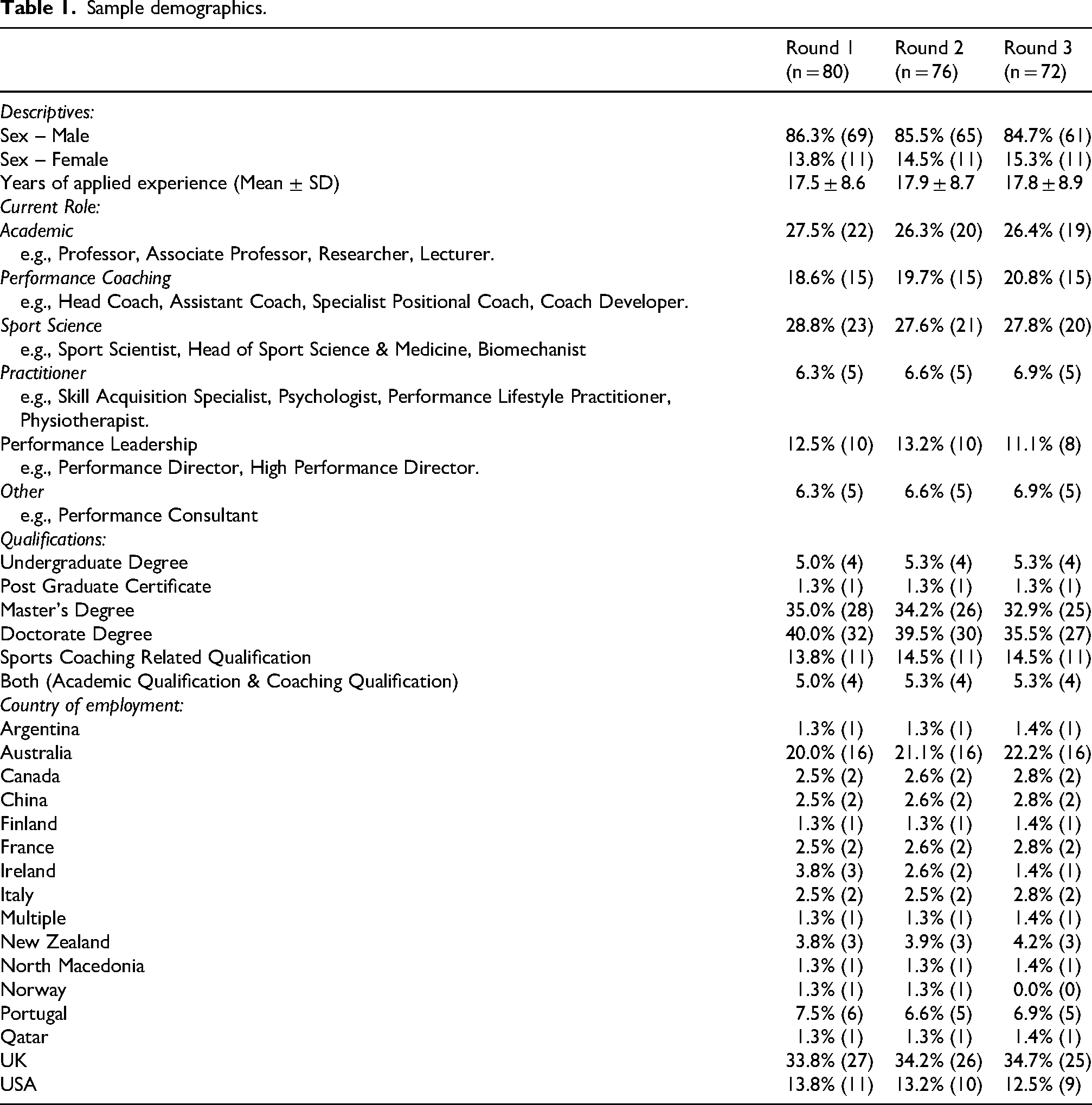
Given the increasing presence of disciplinary specialists in high performance sport, we sought participants with expertise and experience currently contributing to, and functioning in, multidisciplinary support teams. The overall selection process emphasised developing a panel with broad multidisciplinary representation in high performance sport (i.e., strength and conditioning coaches, psychologists, trainers, performance support staff etc.). Participants were recruited using purposive sampling via social media platforms (X and LinkedIn) and through the investigators’ contacts from established networks in academia, coaching, professional sports organisations, and research networks. The inclusion criteria to participate in the study included: participants had to have a minimum of five years’ experience working as part of a multidisciplinary team (i.e., a team with two or more disciplines) within a professional sports organisation (e.g., UK Sport Institute) and possess accreditation from a relevant governing body and/or university degree in related subject area. A panel size between 10–30 participants is considered adequate when generating consensus24–26 and should represent multidisciplinary specialists from various geographic areas. 27 In our study, a total of 129 participants were invited to participate, with 80 completing Round One (62.0% response rate), 76 of 80 completed Round Two (95.0% response rate), and 72 of 76 completed Round Three (94.7% response rate). The details of the expert panel are shown in Table 1. Ethical approval to conduct the study was received from the host institution's Research Ethics Committee (ER56147906), with all participants providing informed consent.
Sample demographics.
Procedure
This online-Delphi survey aimed to reach consensus after three iterative rounds, with three rounds considered optimal to reach consensus. 19 The procedures undertaken are outlined in the supplementary material.
Round 1
To understand participants’ insights and lived experiences in Round One, the study utilised open-ended, free text questions. 28 An opening page was created, providing the conceptualisation and aims of a DoM and the overall aim of the Delphi survey, followed by instructions for completing the survey. Sixteen, open-ended questions were developed, based on previous literature conceptualising a DoM.4,8,15,29 The open-ended questions were organised into four categories: (i) Coordinating activity through shared principles and language; (ii) Communicating coherent ideas; (iii) Designing practice landscapes; and (iv), General questions of feasibility. A final section enabled participants to provide any additional comments at the end of the survey. Initial questions were developed by the lead investigator. These questions were then shared with the steering committee to discuss the relevance of each question, relative to the overall research aims. These discussions provided an opportunity for the steering committee to engage in a collaborative exchange of ideas and critically assess the development of the open-end questions. To ensure consistency and accurately reflect the original concepts outlined in a DoM, the questions were either accepted without revision, modified to remove bias in language, or deleted. 30 The online questionnaire, using Qualtrics software for Round One, was then distributed to participants via email and remained open for 3 weeks.
Responses from Round One were analysed in Microsoft Excel (Microsoft Cooperation, Washington, United States), using a two-stage reflexive thematic analysis. 31 This analysis incorporated both inductive (working up from the data) and deductive (top-down, using a pre-determined framework) approaches, coding to identify lower and higher order themes. 32 The first stage involving a deductive analysis where responses from the open-ended questions were organised into the four categories, noted above. This initial coding was conducted by the lead author, who read the free-text responses several times to identify language relating to (i) Coordinating activity through shared principles and language; (ii) Communicating coherent ideas; (iii) Designing practice landscapes; and (iv), General questions of feasibility. Following the first coding stage, the authorship engaged in peer consultation, independently reading Round One responses and discussing the initial dimensions.
Aligning with a pragmatic approach, the authors accepted that theory-free knowledge cannot be achieved. Therefore, once data was organised into the four categories, both deductive and inductive analyses were conducted in a second coding stage. 33 This collaborative and reflexive approach aimed to develop a richer and more nuanced interpretation of the data, rather than seek consensus on meaning, ensuring alignment between the epistemological position and chosen analytic method. 32 The initial codes, generated from the analysis of round one responses, were subsequently grouped into lower and higher order themes relevant to the research question. To ensure analytical rigour, the steering committee engaged in discussions and critical dialogue regarding the lower and higher order themes, resolving any coding differences through peer discussion, and where necessary, an evaluation and alteration of codes. 34 For example, critical dialogue informed the (re)wording of the higher order theme “Barriers and limitations”, to “Addressing barriers and limitations”. This was added to represent the recommendations of implementation to resolve challenges and limitations that exist within multidisciplinary teams.3,6,7,35 The thematic analysis resulted in a total of four dimensions, with eight higher-order themes.
Round 2
Using themes identified through the thematic analysis and the specific language used by participants in the responses from Round One, the lead investigator developed 447 short statements. These were organised into the eight higher order themes: (i) Building a shared language; (ii) Building common principles for communication, collaboration, and problem solving; (iii) Working collaboratively; (iv) Collaborative practice design; (v) Sharing ideas with athletes; (vi) Supporting athletes; (vii) Addressing barriers and limitations; (viii) Feasibility of a DoM. Development of these short statements involved the lead investigator writing one idea per statement, written as an action, without ambiguity. 36 The steering committee met to discuss the relevance of each statement, relative to the overall research aims and to refine the draft statements to ensure uniformity, remaining as faithful as possible to the original wording of participant responses. 30 Statements were either accepted without revision, modified to remove bias in language, or deleted. This procedure resulted in 114 final statements being included in the Round 2 questionnaire (all final statements are available in the supplementary material). The online questionnaire for Round Two was then distributed to participants via email and remained open for 3 weeks. Participants were asked to rate each statement using a four-point Likert scale as either: strongly agree, agree, disagree, strongly disagree. 37 Round 2 questionnaires commonly use Likert scales for panellist responses, either through ratings or rankings. 38 However, there is little consensus exists in the Delphi literature on the optimal number of response categories, which can range from a four-point to an eleven-point Likert scale. 38 The ideal number of categories may lie anywhere between four to seven. 39 A “don’t know” option was included to ensure the participants had an opportunity to accurately report if they did not have an opinion on a particular statement, rather than feel pressured into choosing an option that did not truly represent their opinion. 40 After the questionnaire closed, raw data were analysed descriptively using relative and absolute frequencies.
Round 3
In Round Three, participants who had completed Round Two received a personalised online questionnaire, distributed via email and remaining open for 3 weeks. This questionnaire presented their own answers from Round Two alongside a summary of group responses, expressed as relative frequency values. The purpose of Round Three was to invite panellists to consider their scores with respect to the group response and decide whether they wanted to amend their responses from Round Two. 19 After the questionnaire closed, raw response data were analysed using relative and absolute frequencies.
Criteria for consensus
Although consensus is of primary importance to the Delphi process, definitions of consensus vary widely and are often poorly reported. 41 Delphi studies have used a range of consensus levels ranging from 50%–80%, 42 as the level depends on sample numbers, specific aim of the research study and resources. A priori threshold for consensus was set at ≥ 70% of the panel agreeing/strongly agreeing or disagreeing/strongly disagreeing with a statement in Round Three. All “don’t know” responses were excluded to ensure that the reported percentage agreement or disagreement for each statement represented the consensus of those participants who believed they held a firm view. Stability of consensus was considered to have been reached if the between-round, group responses varied by ≤10%. 43
Results
Table 2 provides a summary of the Delphi statements and the number of statements which reached consensus in Round Two and Round Three. Stability of consensus was achieved across all four dimensions. Findings from Round Three were used to develop an operational framework for the potential implementation of a DoM within sports organisations, which reflects the consensus achieved. The framework aligns with the eight higher-order themes and remains as faithful as possible to the panel's original wording from free-text responses and consensus statements. 30 The steering committee reviewed the draft framework to assess the relevance of each theme relative to the potential implementation, and to refine the pillars for consistency, once again drawing closely from the original panellists’ language. 30 As a result, the eight themes were consolidated into five key pillars for the Pillars of Implementation (Figure 1). Addressing barriers and limitations and Feasibility of a DoM were excluded, as they focused on viability rather than direct implementation. ‘Sharing ideas with athletes’ was renamed to ‘Continuous knowledge exchange’ to emphasise the bidirectional flow of knowledge exchange, and ‘Supporting athletes’ was integrated into ‘Collaborative practice design’ due to overlapping implementation strategies. The statements that are within each pillar are based on those that achieved consensus in Rounds Two and Three. 44 The successful implementation of a DoM is tailored to each organisation based on the specific needs identified through ongoing interactions with the organisation, the environment, and its staff.
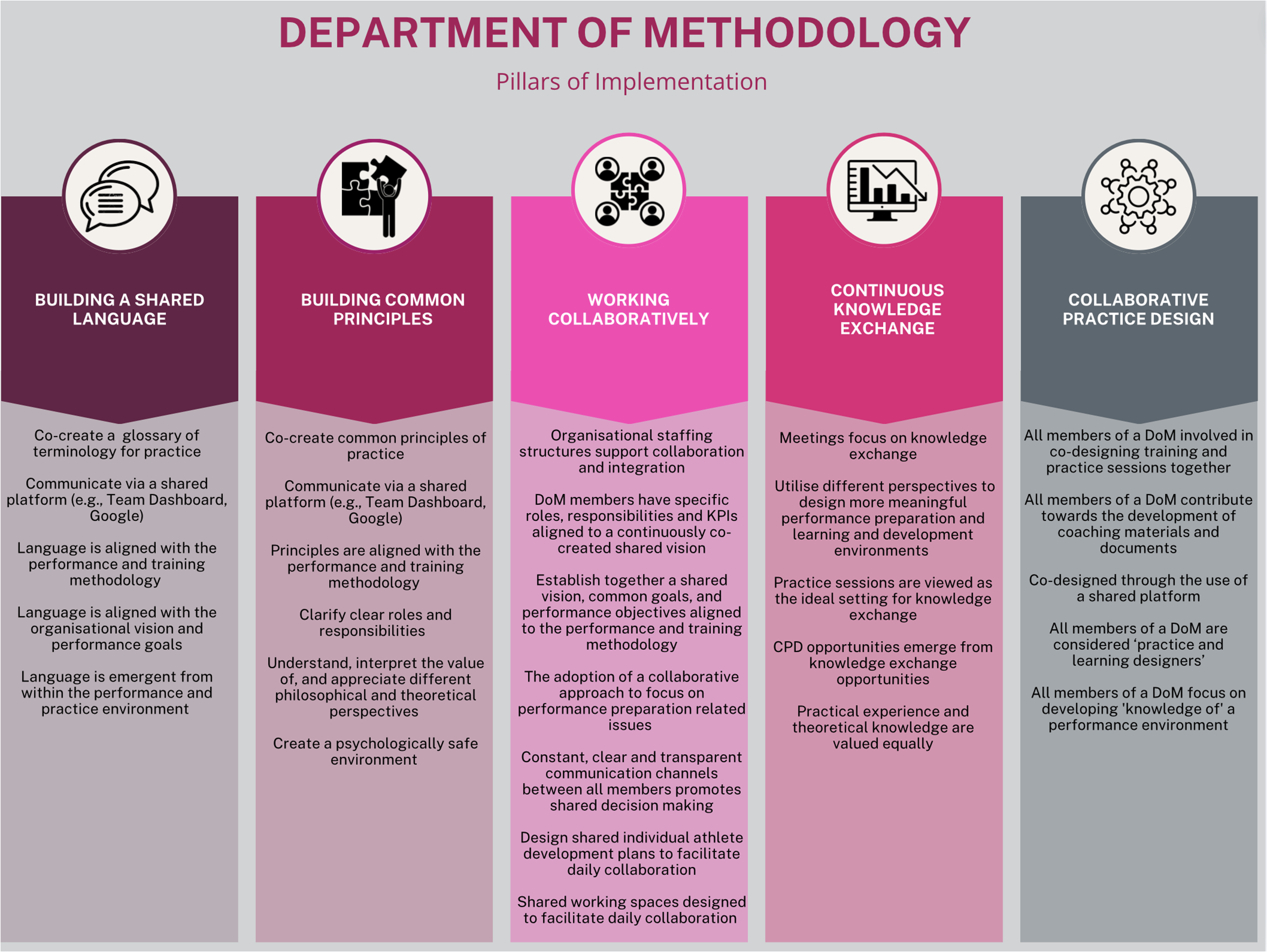
Pilars of implementation for a Department of Methodology.
Summary of group statements by dimension.
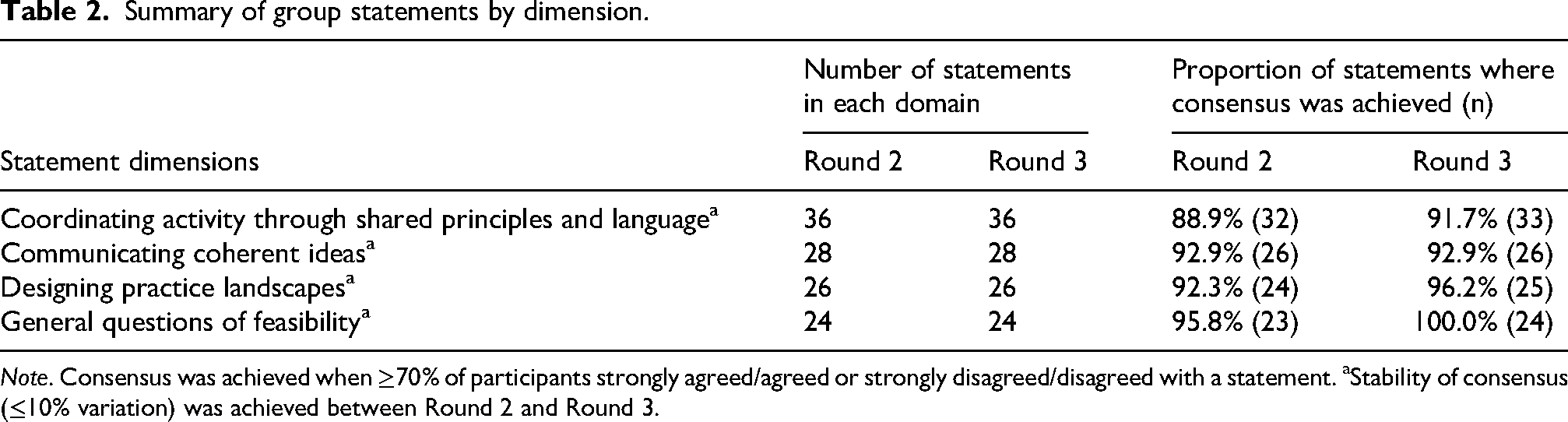
Note. Consensus was achieved when ≥70% of participants strongly agreed/agreed or strongly disagreed/disagreed with a statement. aStability of consensus (≤10% variation) was achieved between Round 2 and Round 3.
Pillars of implementation
Building a shared language
The panel agreed that building a shared language is essential to collaborative working in a DoM (Table 3). Developing a shared language across an organisation could facilitate effective communication and reduce effects of ‘silo working’ across departments and between sub-discipline specialists. The panellists reached consensus on how an organisation or team can build a shared language: (i) co-creating a glossary of terminology for practice, (ii) communicate via a shared platform (team dashboard, google), (iii) aligning language with the performance and training methodology, (iv) aligning language with the organisational vision and performance goals, and (v), recognising language emerging from within the performance and practice environment. Whilst the panel agreed that a shared language would be harder to develop if performance staff had roles across multiple sports, there was no consensus on whether a shared language would be hard to develop for staff members who worked remotely and whether a shared language should be developed in a hierarchical fashion.
Summary of higher order themes.
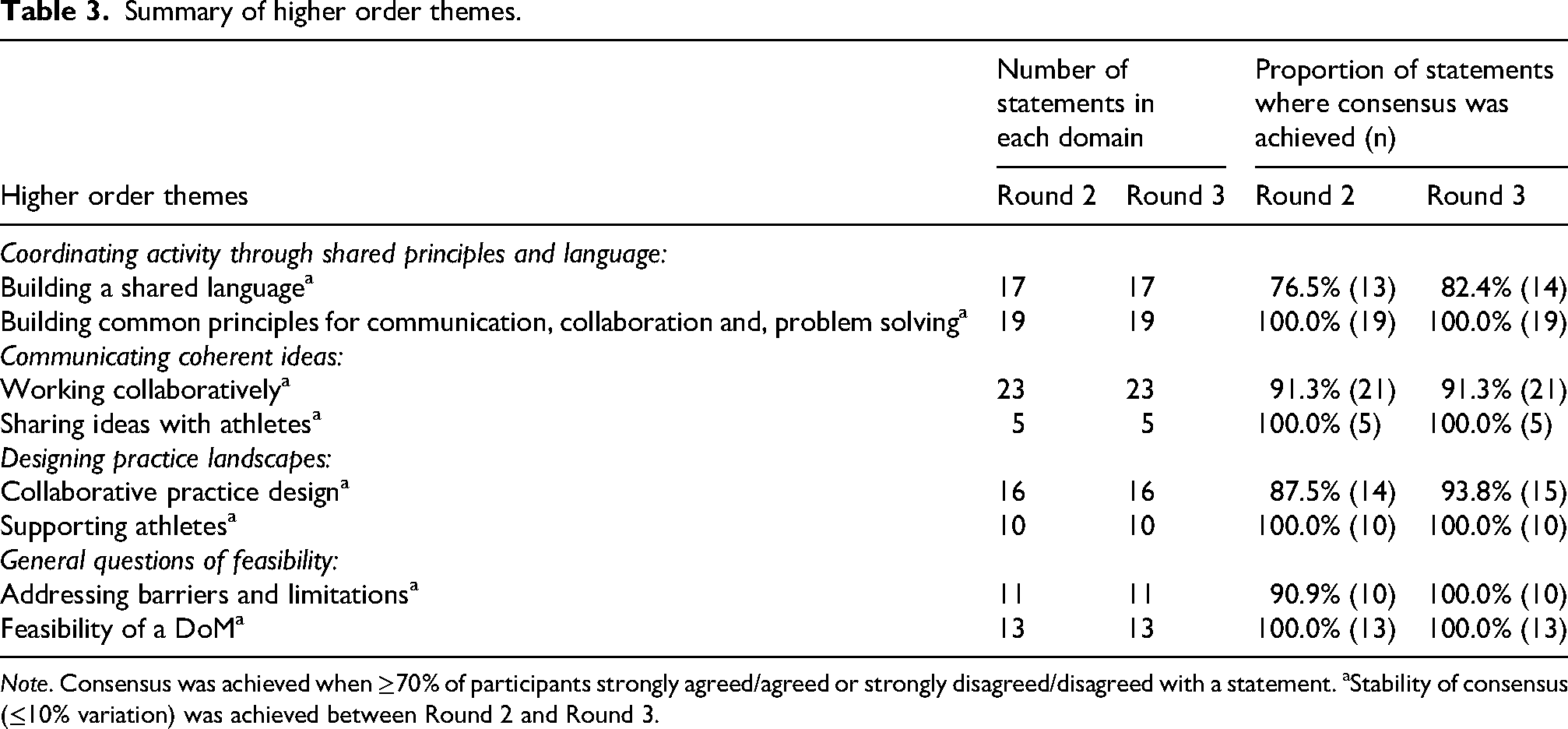
Note. Consensus was achieved when ≥70% of participants strongly agreed/agreed or strongly disagreed/disagreed with a statement. aStability of consensus (≤10% variation) was achieved between Round 2 and Round 3.
Building common principles
Panellists emphasised the importance of co-creating common principles for creating a shared framework of understanding, enhancing communication, collaboration, and problem-solving. Common principles were highlighted as critical for building high functioning cohesive teams and fostering effective communication. Importantly, panellists agreed that common principles should be co-developed by all performance staff, as well as athletes.
Panellists reached consensus on how an organisation can co-create common principles by: (i) developing a glossary for common principles of practice (ii) communicating via a shared platform, (iii) aligning principles with a performance and training methodology, (iv) establishing clarity around roles and responsibilities for each member of the team, (v) creating a psychologically safe environment, and (vi), understanding, interpreting the value of, and appreciating different philosophical and theoretical perspectives. Building a shared language and co-creating common principles are central to fostering a collaborative working environment, where staff can engage in exchanges for effective knowledge translation and design meaningful training and practice sessions together.
Working collaboratively
To enhance collaborative working practices across departments and sub-discipline specialists, panellists agreed on the importance of understanding the coaches’ responsibilities, intentions, and performance goals for the athlete/s and how performance support staff can contribute to athlete performance. It was agreed that performance staff should communicate beyond their disciplinary boundaries and that pre-established disciplinary cultures and norms would impact collaborative working practices. Whilst there was consensus that collaboration would be harder when performance staff worked remotely, there was no consensus on whether working across multiple sports would have a significant impact on collaboration.
Panellists reached consensus on how an organisation can work collaboratively and integrate ideas with: (i) organisational staffing structures to support collaboration and integration (ii) DoM members having specific roles, responsibilities and KPIs aligned to a continuously co-created shared vision, (iii) establishing together a shared vision, common goals, and performance objectives aligned to the performance and training methodology, (iv) adopting a collaborative approach to focus on performance preparation related issues, (v) constant, clear, and transparent communication channels between all members to promote shared decision-making, (vi) completing shared individual athlete development plans as a mechanism to enhance collaboration and integration, and (vii), designing shared working spaces to facilitate daily collaboration and integration.
Continuous knowledge exchange
This pillar was developed by combining statements concerned with sharing ideas with athletes and supporting athletes (Table 2). To facilitate continuous knowledge exchange with key stakeholders, the panellists agreed that: (i) regular meetings should focus on knowledge exchange, (ii) different perspectives should be utilised to design more meaningful performance preparation and learning and development environments, (iii) practice sessions are an ideal setting for knowledge exchange, and (iv), continuing professional development opportunities should emerge from knowledge exchange opportunities.
Collaborative practice design
Panellists agreed that collaborative practice design was dependent on the “power dynamics” and interpersonal relationships within the organisation. To transcend practice design, panellists concluded that the planning of sessions and practice design should be inclusive and not the sole responsibility of the head coach. It was agreed that athletes were typically “left in the dark” or excluded from the planning process. Importantly, panellists emphasised that performance planning and practice design should include athletes across different developmental stages, not just highly experienced athletes. Involving athletes in the planning and design of sessions would empower athletes to take greater responsibility, engagement, and enrich a greater understanding of how to develop and improve performance (Table 6, available in the supplementary material). The panel agreed that being involved in co-designing training and practice sessions together would empower all members of a DoM to share potentially valuable insights to help improve the quality of practice environments. Moreover, panellists recommended that Performance Analysis support should be utilised more to design representative practice tasks that places individual-environment interactions at its core.
Panellists reached consensus on how an organisation can facilitate collaborative practice design, with: (i) all members of a DoM being involved in co-designing training and practice sessions together, (ii) all members contributing towards the development of coaching materials and documents, (iii) designs of training and practice sessions undertaken through the use of a shared platform, (iv) all members being considered as practice and learning designers, and (v), all members focusing on developing ‘knowledge of’, 16 a performance environment.
Discussion
This study sampled expert opinion from multiple performance roles involved in high-performance sport on the feasibility of implementing a DoM into sporting organisations. The study gained consensus on factors relating to: (i) coordinating activity through shared principles and language, (ii) communicating coherent ideas, (iii) designing practice landscapes, and (iv), general questions of feasibility. The findings contribute new knowledge for advancing the conceptualisation of a DoM framework by exploring consensus on a range of theoretical- and practitioner-informed recommendations for the successful implementation of a DoM in high-performance sports organisations.
Building a shared language for communicating ideas
Panellists emphasised the importance of developing and building a shared language within an organisation to help alleviate issues associated with communication of ideas within and between departments of a sports organisation. A shared language within an organisation fosters coherence in planning, continuing dialogue and exchange of ideas, as well as effective communication among athletes, coaches, practitioners, scientists, and key stakeholders. This could be achieved through a common understanding of context-dependent vocabulary, sport specific language, phrases, and cultural nuances. While a multidisciplinary team has diverse expertise, cohesion and a shared language between members may be a challenge to develop. 45 High-quality communication between individuals, and across disciplines, will enhance collaboration and facilitate shared decision-making, by utilising different perspectives, and decreasing the risk of conceptual misunderstanding. 46 Conversely, low-quality communication exchanges may create insularity in practices and decision-making, leading to disjointed athlete development programmes. 9
Panellists agreed that co-creating a glossary of terminology for practice could bridge the communication gap between disciplines by providing a common language for all stakeholders. This shared glossary is crucial for effective collaboration and integration of ideas, as it facilitates all performance staff and key stakeholders to communicate complex information using clear and understandable terminology. 9 Commonly, the language used by departments and sub-discipline specialists is exclusive, with its own syntax and definitions. 47 To overcome potential barriers to communication, language used within a sporting organisation should be developed around the sport, including coaches’ and athletes’ terminology. 48
There has been a consistent emphasis on the significance of effective communication within performance roles in high-performance sport organisations.49–51 To help build a shared language, clear and efficient lines of communication among staff is critical.52,53 There was agreement among the panellists that one way for organisations, individuals, and sub-disciplines to facilitate clear, efficient, and high-quality communication is through a shared digital communications platform (e.g., a team dashboard, Google Drive, or apps like WhatsApp). Importantly, a platform's utility and accessibility are imperative. Any usability issues will hinder communication and limit alignment with the organisation's goals, vision, and performance objectives.
Building common principles of practice and learning, based on a coherent scientific philosophy
Panellists agreed that common principles are critical to high-functioning cohesive teams, and effective communication between departments, for example a shared framework for coherent communication, collaboration, problem-solving, and performance among practitioners in support roles from different perspectives. 51 Without these common principles, coherence and meaning of ideas and planning may become disjointed, possibly leading to a dysfunctional team. 54 Integrating principles of performance can reduce the effect of professionals working in disciplinary ‘silos’. 55 Shared principles of application, supported in a Department of Methodology, can provide a platform to inhibit ‘(sub)group think’ in disciplinary ‘silos’.
To overcome barriers to effective communication, the panellists also identified the importance of implementing common principles through a glossary and shared via a shared platform. For example, one common principle could be the use of a shared platform for communication using the agreed-upon, co-created language. Communication barriers can arise due to a lack of transparent and shared aims, leading individuals and/or disciplines to prioritise their perspectives over the needs of the athlete and team. This is emphasised by an inability to openly listen and accept other perspectives. 47 Disciplinary experts, due to their specific experience, knowledge and training, often possess a high level of confidence. This confidence can become a challenge when experts with diverse background and opinions need to collaborate, especially when there is no clear process for integrating ideas. 56 Adopting a transdisciplinary approach can encourage staff to consider new opportunities and perspectives. A transdisciplinary approach encourages disciplines to “remove their disciplinary blinkers” 15 and engage in collaboration between, among, and beyond disciplines. 57 Transdisciplinary teams work using a shared conceptual framework, 58 can be supported in drawing together disciplinary expertise and approaches to address common problems. 55 While disciplinary knowledge is necessary, it is not sufficient for holistic, relational integration of activities and ideas. 56 Rather than identifying a performance-related issue from a disciplinary stance, transdisciplinarity requires individuals to co-develop, co-design, and problem solve with athletes, coaches, practitioners, and scientists, viewing them as equals and valuing inclusion.
Without a well-defined staff structure and clear role definitions, athlete preparation and performance will remain inefficient and segregated (Table 4, available in supplementary material). Panellists emphasised the importance of establishing clarity around roles and responsibilities for each member of the team to effectively develop and implement common principles of practice. Clarifying roles and responsibilities is critical to a highly collaborative environment.2,6,49,50,59–61
Many challenges faced by professionals in a multidisciplinary team arise from a lack of role clarity. 47 This includes unclear understanding and expectations of roles, insufficient direction from the organisation, a lack of appreciation for their roles at an organisational level, and misalignment around team purpose, delivery models, workload, and success metrics. 6 Without this clarity, individuals may “shirk responsibility or be unaware of what they’re meant to be doing” (Stewart et al., 2024, p. 311). 61 Clearly defining roles and expectations within a DoM creates a shared understanding of how individuals and departments can contribute to maximise performance, optimise shared decision making, prevent unnecessary interpersonal conflicts. To exemplify, Silva et al., 62 highlighted the need to articulate training and recovery processes with staff to help avoid overlapping, duplicated or contradictory interventions. Without procedural clarity, challenges related to communication, trust, personal agendas and ego are likely to arise. 63 To address issues like unclear communication lines and hierarchy between staff, new roles (e.g., Head of Performance, Head of Sport Science and Medicine, Director of Sports Medicine and Athletic Performance) and departments (e.g., Physical Performance and Science) have often been created. 50 However, it has been argued that this growth in personnel involved in athlete development has created “excess noise” distracting focus away from the needs of the individual athlete. 64 Buchheit and Carolan 50 further highlighted that confusion still exists over the actual responsibilities of some performance roles. Specifically, they questioned who these professionals manage, which domains they oversee, and the level of contact that they have with athletes. This lack of systemic and organisational clarity could result in diluting personal responsibilities regarding performance, ultimately hindering athlete development and potentially decreasing efficiency, productivity, and motivation. 62
Panellists agreed that psychological safety was critical to co-create, maintain, and evolve principles for performance. Psychological safety has been identified as an important factor in understanding how people collaborate to achieve a shared outcome65,66 and is critical feature of a high performing team.7,67 Psychological safety describes perceptions of the consequences of taking interpersonal risks, 68 willingness to engage rather than disengage, 69 or withdraw in a particular context. 65 Psychological safety enables interpersonal transactions and engagement, and as a result, people who experience high levels of psychological safety are more likely to share ideas, contribute, and provide feedback. 68 The challenges within multidisciplinary teams in high performance sport are significantly influenced by individual characteristics, ego, and power dynamics, which can undermine psychological safety, effective communication, and genuine collaboration. 7 Key stakeholders, such as Performance Managers, within the organisation must play a critical role in empowering all staff. This includes fostering safe environment where they feel comfortable to collaborate, integrate ideas and share decision making with the technical staff. 50
Working collaboratively
The panel consistently emphasised the importance of collaboration and its enhancement. Fostering a collaborative environment was viewed as critical to a high performing team. Defining what it means to be truly collaborative, and understanding whether it aligns with the organisation's expectations, is crucial. However, there seems to be a disconnect between some organisation's operational definition of collaboration and its expectations for effective teamwork. This is due to two assumptions: (i) the addition of more sub-discipline specialists is conducive to better athlete performance, 8 and (ii), creating a multidisciplinary team implies the integration of multiple sub-disciplines focused towards one common goal. 5
Despite the growth of sub-discipline specialists, this level of expertise can offer an “illusion of integration” (Otte et al., 2020, p. 2). 70 Staff have traditionally operated in a non-integrative way, often working in isolation. 9 While multidisciplinarity involves several disciplines working together, there is no intent to integrate anything, 71 with each discipline often making separate contributions in an additive way.14,58 They may work in parallel or sequentially with each other, but they do not function transactionally, as a coordinated whole, despite their common goal. 72 Effective team functioning requires more than just an aggregate of diverse specialists. 35 A central feature of a DoM involves integrative and collaborative transactions between, among, and beyond disciplines. Integrative collaboration involves placing the athlete at the centre of the performance development focus. This centring of attention may foster cooperative efforts involving transactional exchanges of ideas between all members of a DoM to address the complexities and interconnected nature of performance, weaving together diverse perspectives to collectively generate new and innovate solutions. The shared result may not reflect the addition of all individual contributions. Instead, the final holistic system outcome is greater (more nuanced, rich and functional) than the sum of all of the contributory parts. 39 A DoM framework focuses on the transactional exchanges contextualising, connecting, and integrating ideas across and between sub-discipline specialists to consider and seek to resolve performance related issues, for team and individual,29,55 rather than a discipline-centred approach. 73
To further support integrative collaboration, shared working spaces (i.e., the performance arena, the training environment, and coworking spaces) can facilitate daily collaboration and integration across a DoM. As the results highlighted, the strategic placement of staff in shared environments can encourage interactions across disciplines, build personal relationships and trust, help with the continuous development of a shared language and build common principles. Moreover, by implementing a shared environment, individuals and departments can make more shared decisions, create a psychologically safe environment, complete shared individual athlete development plans, and continuously exchange knowledge critical to collaborative practice design.
Continuous knowledge exchange
Central to the operation of a DoM is effective knowledge exchange or knowledge translation between athletes, coaches, practitioners, and scientists. Panellists identified that regular meetings (e.g., pre-, and post-training meetings and pre-, and post-competition), utilising a shared working space and platform, completing shared individual athlete development plans, and co-designing practice sessions, can offer a collaborative environment for continuous knowledge translation and effective practice design. Knowledge translation is the process of sharing and applying knowledge between departments within an organisation. 5 Importantly, effective knowledge translation is essential to support successful athlete preparation and performance. 54 Unfortunately, practitioners have highlighted a gap between research and its translation into practice due to factors including, a lack of applied research that addresses performance-related issues, 74 research questions not aligned with the coaches’ needs and/or the performance and training methodology, 75 and researchers prioritising journal publications over relevant practical applications. 76 Sport science has focused on developing empirical knowledge for preparation and performance in separate sub-disciplines. 77 However, empirical knowledge has often been adopted in a hierarchical way and treated as the sole knowledge source, tending to neglect the practical (experiential) knowledge of expert practitioners, 29 and is likely to have led to further fragmentation. 10 A DoM seeks to facilitate the reciprocal exchange of empirical and experiential knowledge, valuing the contributions and insights of expert performers and practitioners as a complementary source of knowledge to guide the integration of theory into practice.29,78
Collaborative practice design
In a DoM framework, collaborative practice design is a central feature for athlete preparation and performance. It encourages all members of a DoM to integrate their rich experiential and empirical knowledge to design representative and meaningful practice tasks that place the individual-environment interactions at its core. 29 Traditionally, practice design and feedback for athlete preparation and performance have been coach-led, with a focus on building knowledge about the performance environment defined by explicit instruction and direction from a coach or practitioner.79,80 Session design is predominately undertaken separately by a coach or sub-discipline specialist, often neglecting the insights of the performer or practitioners from other sub-disciplines (Table 6, available in supplementary material). The panellists agreed that all members supporting athlete performance and preparation can be integrated as practice and learning designers. Contemporary perspectives to collaborative practice design conceptualise the role of an expert practitioner as a learning designer that designs representative learning environments that develop an athlete's knowledge of a performance environment. 29 Members of a DoM can progressively discuss, understand and identify the nature of the information that a performer can use to regulate behaviours within a performance environment.
Using this information, sub-discipline specialists believed that they could weave and integrate ideas to design more sophisticated and representative practice design. Their ideas suggested that athletes will learn to attune to specifying properties of relevant affordances within their environment through engaging with the designs of representative practice task constraints. 29
Limitations
The Delphi approach has been criticised for its potential for researcher bias, anonymity, potential issues in selecting, recruiting and the composition of an expert panel, and restrictive communication methods.81,82 To address these potential limitations, and uphold rigour in the Delphi process, the authors aligned with a pragmatic approach. Careful consideration was given to the panel's characteristics and size, 38 aligning panel selection with the study's goals and scope to ensure the panellists possessed the necessary expertise and experience for insightful contributions. 83 In future studies, more detailed demographic information regarding participants prior experience working in multidisciplinary teams (e.g., number of teams they have worked in, the size of the organisation or team, and type of sports they have worked in) could be collected to have a deeper understanding of the population. Specifically, the number of rounds, the analytical approach, and the consensus thresholds, including stability, were determined prior to the study's commencement22,81
Anonymity was prioritised to ensure impartial evaluation of opinions, allowing panellists to express their views freely and honestly without feeling psychologically pressured. 84 This promotes honest and open responses and reduces the influence of dominant personalities.80,85,86 This freedom of expression fosters an environment conducive to reflective and innovative contributions, preventing groupthink and encouraging diverse perspectives. 87 To maintain anonymity throughout data handling, feedback, and reporting results, panellists were assigned pseudonyms (e.g., Panellist 1). Only the principal researcher knew the panellists true identities, and these were used to complete tasks such as sending invitations for subsequent rounds. 83
In line with a pragmatic approach, a “don’t know” option was provided to ensure that participants had an opportunity to express a lack of opinion/attitude on specific issues, preventing them from feeling pressured to provide a substantive response. While, Lavrakas 40 supports this inclusion, the use of language for “don’t know” responses is still widely contested in the literature. Therefore, in future Delphi studies researchers should reflect on the language used, as semantically “don’t know” may be interpreted differently than options such as “don’t have a strong opinion”.
Another limitation concerns the development of the Pillars of Implementation (Figure 1) and the principles for the successful implementation of a DoM within sports organisations. The framework has been developed using statements that reached consensus, and the wording remained as faithful as possible to the statements presented to the participants in Round 2 and Round 3. The final model was not returned to participants for review. While a fourth round was not conducted, the framework could be strengthened through follow-up interviews with the expert panel using a co-produced, dyadic, and data-promoted approach to gather additional feedback. 88 As Monforte et al. 88 recommends, such a qualitative, dialogical follow-up can supplement consensus-based findings by capturing expert opinions in-depth, clarifying interpretations, and expanding understanding, thereby enhancing the clarity, applicability, and potential operationalisation of the framework. Future research should seek the perspectives of coaches, practitioners, sport scientists, academics, and performance leadership staff to refine the structure and presentation of the framework.
Muir et al. 89 outlined a key distinction between “what” decisions are made and “how” these decisions are implemented. The “what” knowledge outlined in the current study represents the empirical knowledge that will help underpin the operationalisation of a DoM in sporting organisations. Practically, the findings from the current Delphi survey will support sports organisations with methods to implement a DoM. Therefore, future research could focus on “how” the Pillars of Implementation are implemented and introduced within sports organisations and how a DoM could help alleviate the challenges and barriers experienced within a specific organisation. Specifically, via methods such as dyadic interviews, researchers should seek to “verify” what participants think to the framework and implementing the pillars within their organisation. As this area of research evolves, this will be critical to establish what transdisciplinary teamwork could look like and therefore provide practical evidence on the usefulness of the Delphi findings.
Conclusion
This study interviewed expert sport practitioners in high performance sport to ascertain the feasibility of implementing a DoM within high-performance sport science. Informed by the findings from the study, consensus was achieved on a set of design principles for an operational framework for a DoM. The contextual interpretation of the data outlines the receptiveness of performance staff to the feasibility of implementing a DoM. The novel design principles outlined provide a theoretically and performance staff-informed method for integrating a DoM into high-performance sport practices. Future research is needed to implement a transdisciplinary framework into a sporting organisation, with a specific focus on understanding how a DoM could be implemented within both remote and in-house working environments. The findings from the Delphi study could be used to inform how a high performance sport organisation could implement the principles of a DoM to help evaluate the structural impact on athlete preparation and performance development, working practices and staff utility.
Supplemental Material
sj-docx-1-spo-10.1177_17479541251409729 - Supplemental material for A Department of Methodology: A feasible framework to integrate the applied practice of multidisciplinary support teams
Supplemental material, sj-docx-1-spo-10.1177_17479541251409729 for A Department of Methodology: A feasible framework to integrate the applied practice of multidisciplinary support teams by Sam Hydes, Ben William Strafford, Martyn Rothwell, Joseph Stone, Keith Davids and Fabian Otte in International Journal of Sports Science & Coaching
Supplemental Material
sj-pdf-2-spo-10.1177_17479541251409729 - Supplemental material for A Department of Methodology: A feasible framework to integrate the applied practice of multidisciplinary support teams
Supplemental material, sj-pdf-2-spo-10.1177_17479541251409729 for A Department of Methodology: A feasible framework to integrate the applied practice of multidisciplinary support teams by Sam Hydes, Ben William Strafford, Martyn Rothwell, Joseph Stone, Keith Davids and Fabian Otte in International Journal of Sports Science & Coaching
Footnotes
Acknowledgements
The authors would like to thank the expert panel for their participation in the project.

Ethical considerations
The Sheffield Hallam University Research Ethics Review Committee at Sheffield Hallam University approved our Delphi survey (approval: ER56147906) on Month 10, 2023.
Consent to participate
The study was approved by the Sheffield Hallam University's Research Ethics Review Committee (approval: ER56147906) on Month 10, 2023. All participants provided confirmed their informed consent prior to participating.
Funding
The authors received no financial support for the research, authorship, and/or publication of this article.
Declaration of conflicting interests
The authors declared no potential conflicts of interest with respect to the research, authorship, and/or publication of this article.
Supplemental material
Supplemental material for this article is available online.
References
Supplementary Material
Please find the following supplemental material available below.
For Open Access articles published under a Creative Commons License, all supplemental material carries the same license as the article it is associated with.
For non-Open Access articles published, all supplemental material carries a non-exclusive license, and permission requests for re-use of supplemental material or any part of supplemental material shall be sent directly to the copyright owner as specified in the copyright notice associated with the article.
