



Abstract
Handheld massage guns are widely used by athletes, however, evidence for their acute effects during warm-up remains limited. Fifty-nine recreational athletes (21.6 ± 2.4 years; 24 female, 35 male) were randomly assigned to a massage gun group (GUN; n = 30) or control group (CON; n = 29). All participants completed a standardised dynamic warm-up followed by baseline testing of countermovement jumps (CMJ), 10/5 repeated jump test, knee-to-wall ankle mobility, and 20 m sprints. Perceptual measures (fatigue, muscle soreness, readiness to perform) were also recorded. The GUN group then completed a 12-min percussive massage protocol while the CON group rested quietly, before all tests were repeated. Linear mixed models and Hedges’ g effects are reported for the Condition x Time interactions. Massage gun use was associated with greater readiness to perform compared with CON (p < 0.05, g = 0.64). No differences were observed for perceived fatigue (p > 0.05). Despite no differences in CMJ height (p > 0.05), some CMJ metrics were impaired in the GUN group (p < 0.05), with reduced concentric force (g = -0.76), longer contraction time (g = 0.60), and lower RSI-modified (g = –-0.63), potentially due to greater countermovement depth (p < 0.05, g = -0.56). No significant Condition x Time interactions were found for the 10/5 repeated jump test, knee-to-wall mobility or sprint performance (p > 0.05). Massage gun use during warm-up enhanced perceptual readiness to perform, but impaired several markers of CMJ performance, with no benefits observed for mobility or sprinting.
Introduction
The warm-up is an integral component of athletic preparation, designed to improve physiological readiness, enhance performance, and reduce the likelihood of injury. 1 Traditional warm-up strategies typically include a combination of aerobic activity, dynamic stretching, and sport-specific drills, aimed at increasing body temperature, improving neuromuscular activation, and optimising range of motion. 2 Self-applied modalities such as foam rollers and more recently vibration-based or percussive massage devices have gained popularity, often being incorporated into both preparation and recovery routines.3–5
Among these tools, handheld massage guns, delivering rapid percussive forces at adjustable amplitudes and frequencies, are increasingly promoted for their capacity to alleviate stiffness, increase tissue compliance, and enhance joint mobility.6,7 Surveys indicate that athletes use massage guns multiple times per week, both before and after exercise, with proposed mechanisms of benefit including increased local tissue perfusion and vascular function, modulation of pain perception, and short-term gains in flexibility.8–10 Despite these proposed mechanisms, the translation into measurable performance outcomes remains unclear, particularly in the context of pre-exercise warm-ups.
Recent syntheses indicate that percussive massage can acutely modify several peripheral and perceptual markers. A systematic review reported increases in local perfusion, improvements in soft-tissue compliance, and reductions in perceived soreness following massage-gun applications, while noting no enhancement to strength and explosive performance indices. 6 In contrast, in a systematic review by Sams et al. (2023) authors suggested that percussive therapy delivered by massage guns may transiently enhance maximal and explosive strength, and flexibility. Although, the magnitude of such improvements were typically small and context dependent, with the findings for strength measures informed by two studies with contradicting outcomes. 9
Impairments to measures of strength and explosive performance following percussive massage have been associated with reductions in stiffness properties. Szymczyk et al. 11 observed a reduction in drop jump height and Achilles tendon stiffness following percussive massage, leading the authors to suggest that decreases in passive stiffness following percussive massage may impair explosive performance. Alternatively, enhanced motor unit recruitment and synchronization as a result of the tonic vibration reflex following local vibration has been suggested to explain the enhancements observed in muscle strength in some studies.12,13
Recent work from our laboratory 14 compared dynamic warm-ups combined with massage gun use, foam rolling, or a passive control in trained athletes. Using a randomised crossover design, both massage gun and foam roller use was associated with lower countermovement jump height and reactive strength index (RSI) compared with control, while massage gun use was associated with slower 20 m sprint times. Foam rolling was associated with modest improvements in ankle mobility and reduced muscle soreness, but overall, both modalities appeared to be less effective overall when used in place of a dynamic warm-up alone. Importantly, the study employed a post-only design, assessing participants once after each condition without corresponding pre–post measures. While this approach reduces testing burden, it does not account for baseline variability, limiting sensitivity to detect subtle within-subject changes.
As highlighted, most of the previous research on massage guns has focused on range of motion and general recovery perceptions, with far fewer data on outcomes that are central to pre-performance warm-ups, such as neuromuscular readiness, countermovement and repeated-jump performance, short sprint speed, and subjective mood or fatigue. Clarifying whether massage-gun use meaningfully alters these perceptual and performance outcomes is therefore important for athletes and practitioners deciding whether to integrate these devices into warm-up routines. Accordingly, the present study aimed to examine the acute effects of massage gun use during a standardised warm-up on perceptual measures, jump performance (one-off and repeated jumps), ankle mobility, and sprinting in recreational athletes. By adopting a randomised, parallel-group design with pre–post testing, this study extends our previous findings by directly quantifying change scores and controlling for intra-individual variability. We hypothesised that massage gun use would not improve explosive performance compared to control, though modest benefits in ankle mobility and improved readiness were expected.
Methods
Participants
Fifty-nine recreational athletes (21.6 ± 2.4 years; 24 female, 35 male) volunteered for this study. Inclusion criteria were: (1) free from lower-limb injuries or other health conditions that could impair performance, and (2) currently training/exercising ≥3 times per week in either a structured sport or gym/weight training. Participants represented a range of sporting backgrounds including Australian rules football, basketball, netball, and soccer. All were familiar with dynamic warm-up practices, test procedures, and had prior exposure to massage gun devices, but had not used them within the previous week prior to testing. There was no dedicated familiarisation session, as all participants had recent experience (<6 weeks) with all physical performance tests in the current study. Written informed consent was obtained from all participants, and the study was approved by the Institutional Human Research Ethics Committee (HEC25043).
The sample size was determined a priori using a precision-based approach focused on the smallest effects of interest (SESOI) rather than a traditional null-hypothesis power calculation.15,16 For the primary performance outcomes, we specified smallest effects of interest of 1.5 cm for CMJ height, 0.04 m·s−1 for RSI-mod, 10 ms for ground contact time, and 0.05 s for sprint time.17–20 These thresholds were chosen based on: (i) previously published reliability data for CMJ and sprint measures in similar athletic populations, indicating typical errors smaller than these values; (ii) the common convention that the smallest worthwhile change approximates ∼0.2 of the between-athlete standard deviation; and (iii) input from applied researchers in our laboratory regarding what magnitude of change would be considered practically meaningful during a warm-up. Using the variability reported in these sources, a total sample of approximately 60 participants (around 30 per group) was expected to yield 95% confidence intervals for the between-group differences in pre–post change that were sufficiently narrow to interpret any observed effects relative to the pre-specified thresholds.
Study design
This study used a parallel-group, single-blind, randomised design (see Figure 1 for study design). Participants were stratified by sex and then allocated to either the massage-gun or control group using a pre-specified, 1:1 randomisation schedule. Data-collection forms were pre-prepared with group assignments according to this schedule, and for each new participant the next form for that sex was issued in sequence. Only sex was known at the time of allocation, and group assignments were not known by the researchers. Participants were allocated into one of two groups:
Massage Gun Group (GUN; n = 30): completed a standardised dynamic warm-up, baseline testing, 12 min of massage gun application, and post-testing. Control Group (CON; n = 29): completed the same warm-up and baseline testing, followed by 12 min of seated rest, before post-testing.
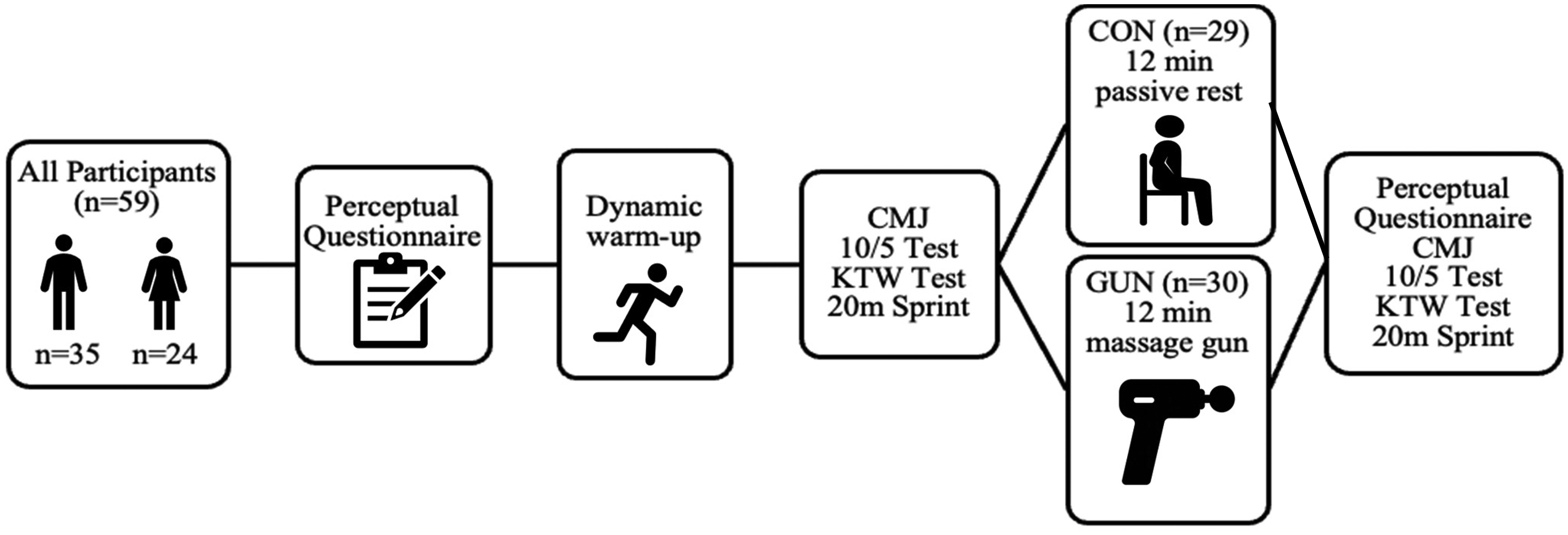
Schematic of the study design. CMJ = countermovement jump; 10/5 = repeated jump test; KTW = knee-to-wall test; CON = control group; GUN = massage gun group.
All testing sessions were conducted indoors, with sprint testing taking place on an indoor mondo running track. Participants were instructed to refrain from strenuous physical activity for 24 h prior to testing.
Warm-Up protocol
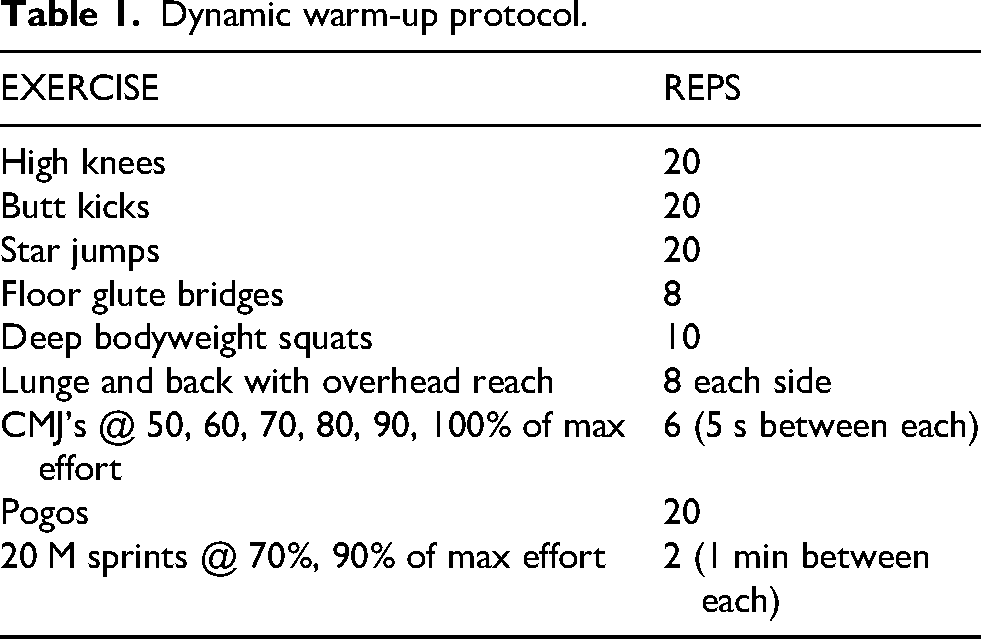
All participants performed a standardised dynamic warm-up based on the RAMP framework (Raise, Activate, Mobilise, Potentiate 21 ). The protocol lasted approximately 10 min and is presented in Table 1. This sequence was selected to progressively increase heart rate, stimulate key muscle groups, and enhance neuromuscular readiness for subsequent maximal-effort testing.
Dynamic warm-up protocol.
Interventions
Massage gun protocol
The GUN group undertook 12 min of percussive massage using a Hydragun device (Hydragun, Singapore, see Figure 2) with a soft ball attachment. Each participant applied the massage gun to the quadriceps, hamstrings, and calves for two minutes per muscle group per leg, at a frequency of ∼53 Hz (≈3200 rpm). For the quadriceps, the device was systematically moved over the vastus medialis oblique, vastus lateralis, and rectus femoris regions while participants were seated to ensure coverage of both medial and lateral compartments. The hamstring protocol was performed while participants were standing, and included the biceps femoris, semitendinosus, and semimembranosus, applied along the length of the posterior thigh. For the calves, the device was applied while participants were in a seated position to both the gastrocnemius (medial and lateral heads) and the soleus, with participants maintaining a relaxed ankle position to allow deeper penetration into the tissue. Pressure was applied to a tolerable but firm level, with the device kept in continuous motion across each muscle belly (approximately ∼2 cm/s, supervised by researchers) to avoid excessive localised stimulation. This prescription aligns with manufacturer guidance and prior literature demonstrating increases in range of motion and reductions in stiffness following percussive massage. 6 22–24
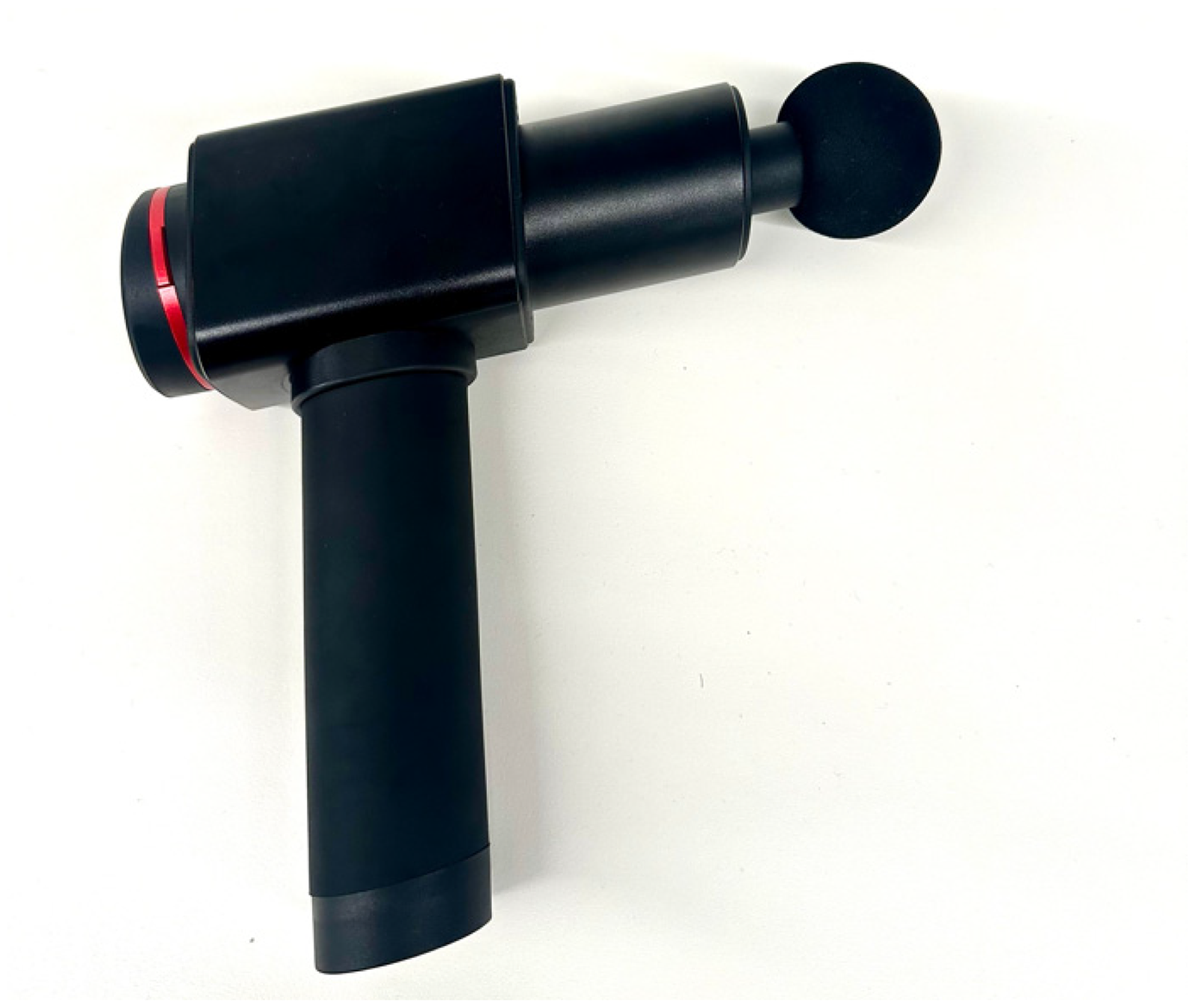
Percussive massage gun device used in the current study.
Performance and perceptual measures
Perceptual ratings
Prior to the warm-up, and immediately post-intervention, participants rated fatigue on a 5-point Likert scale adapted from McLean et al., 25 where higher scores reflected lower fatigue (1 = always tired, 2 = more tired than normal, 3 = normal, 4 = fresh, 5 = very fresh). At baseline, ratings of sleep quality (1 = insomnia, 2 = restless sleep, 3 = difficulty falling asleep, 4 = good, 5 = very restful) and mood (1 = highly annoyed/irritable/down, 2 = snappy with team-mates, family and friends, 3 = less interested in others/activities, 4 = generally good mood, 5 = very positive mood) were also recorded, also taken from the McLean et al. scale. Readiness to Perform was also recorded on a scale from 0–10, where 0 = “not ready”, and 10 = “extremely ready. 26
Countermovement jump (CMJ)
The countermovement jump (CMJ) was used to assess lower-body explosive strength. The CMJ demonstrates high reliability and validity when administered under controlled conditions, with coefficients of variation typically <5% and intraclass correlation coefficients (ICCs) > 0.90.27,28 For each trial, participants began standing upright with hands placed on their hips to eliminate the influence of arm swing. Participants then performed a rapid countermovement to a self-selected depth, immediately followed by a maximal vertical jump. 29 Three maximal jumps were performed, separated by adequate rest. Jumps were recorded using ForceDecks Lite dual force platforms (VALD Performance, Brisbane, Australia), sampling at 1000 Hz. The best of the three attempts was retained for analysis. This approach has previously been shown to provide highly reliable measures of explosive lower-limb performance. 30 The following outcome variables were examined: jump height calculated via impulse–momentum (cm), concentric mean force relative to body mass (N/kg), concentric peak velocity (m/s), contraction time (ms), countermovement depth (cm), peak power (W), and the reactive strength index–modified (RSI-mod; m/s).
10/5 repeated jump test
The 10/5 repeated jump test was employed to evaluate reactive strength and stretch–shortening cycle function. Participants performed ten consecutive vertical jumps with hands placed on hips to prevent arm contribution. Emphasis was placed on minimising ground contact time while maintaining maximal jump effort throughout the trial. 31 Jumps were recorded using ForceDecks Lite (VALD Performance, Brisbane, Australia) sampling at 1000 Hz. Variables derived from the test included Jump Height (Flight Time) [cm], RSI (Jump Height/Contact Time) [m/s]. These metrics have demonstrated high reliability in athletic cohorts when assessed with force plate technology. 32
Knee-to-Wall ankle mobility
Ankle dorsiflexion range of motion was assessed using the knee-to-wall (KTW) test, which is a reliable measure of functional ankle mobility. 33 Participants stood facing a wall and lunged forward, attempting to touch their knee to the wall without lifting the heel. The distance from the wall to the big toe was gradually increased until the participant could no longer maintain heel contact. This test has shown strong reliability and sensitivity to changes in ankle mobility in both clinical and athletic populations. 33
Sprint performance
Sprint performance was measured over 20 m, with timing gates (SmartSpeed, VALD Performance, Brisbane, Australia) placed at 0 m, 5 m, and 20 m. Participants began each sprint from a standing start positioned 0.3 m behind the first gate 34 and were instructed to accelerate maximally through the final timing gate. Two trials were performed, separated by at least 1 min of rest to minimise fatigue. The fastest 5 m and 20 m split times were retained for analysis. Short-distance sprints measured via timing gates are widely used in sport science research and demonstrate excellent reliability in field-based testing. 35
Statistical analysis
All analyses were conducted in Python (v3.11) using statsmodels, scipy, and pandas. Normality of change scores was assessed with Shapiro–Wilk tests within each group, and homogeneity of variance was evaluated using Levene's test.
The primary analysis for each outcome used a linear mixed model (LMM) with fixed effects of Condition (GUN vs. CON), Time (Pre vs. Post), and their interaction, and a random intercept for Participant to account for repeated measures. To account for baseline group differences in sex distribution, all models were re-run with sex included as a fixed effect. Inclusion of sex did not alter the statistical significance or interpretation of any Condition × Time interactions. The interaction term (Condition × Time) was the effect of interest, representing group differences in pre–post change. Models were estimated using maximum likelihood (REML = False). For outcomes with convergence issues or singular fits, robustness checks were conducted on change scores.
Specifically, between-group differences in change scores were also examined using: (i) independent-samples t-tests (Welch's correction if Levene's test was significant), (ii) Mann–Whitney U tests for non-normal data, and (iii) effect size estimation. Effect sizes are reported as Hedges’ g for the difference in mean change between groups, with 95% confidence intervals. Descriptive thresholds for interpretation were: trivial (<0.20), small (0.20–0.49), moderate (0.50–0.79), and large (≥0.80).
To control for false positives across multiple outcomes, false discovery rate (FDR) correction using the Benjamini–Hochberg procedure was applied to LMM interaction p-values. Descriptive statistics are reported as mean ± SD for each group and timepoint. All significance tests were two-tailed, with p < 0.05 considered statistically significant.
In addition to the primary analysis, within-group pre–post changes for each condition were summarised using absolute change scores (Post – Pre) and standardised mean change effect sizes. These within-group metrics are presented descriptively in Supplementary Table 1 to aid interpretation, whereas primary inferences are based on the Condition × Time interaction, which represents the between-group difference in change over time.
Results
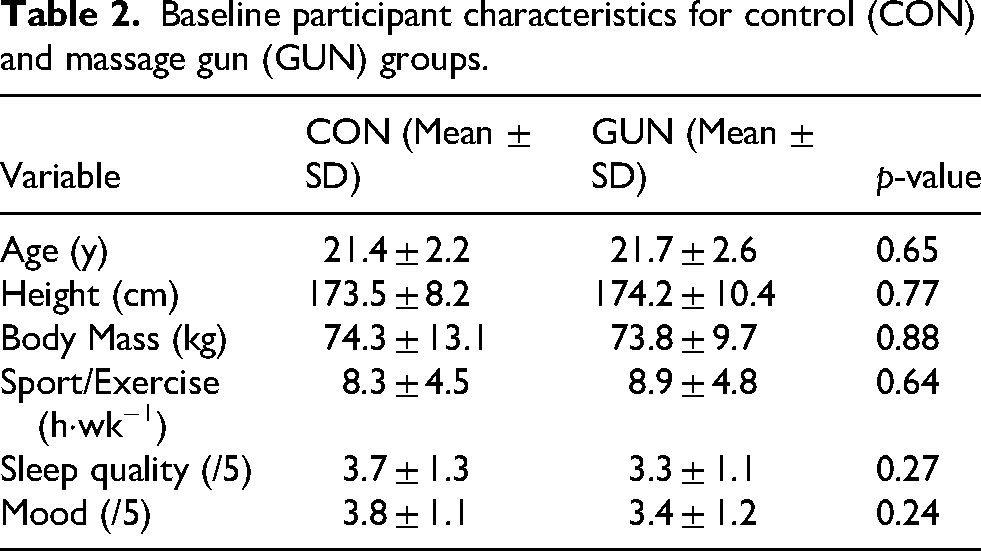
Data were available for the majority of participants across outcomes, with small amounts of missing data due to technical errors (e.g., force plate recording issues, timing gate malfunctions) or incomplete participant trials. For countermovement jump metrics complete pre–post data were available for 56 of 59 participants (95%). For the 10/5 repeated jump test, valid data were obtained for 57 participants (97%). Sprint testing was completed by 58 participants (98%), while knee-to-wall ankle mobility and all perceptual outcomes were recorded for all 59 participants (100%). All analyses were conducted with the maximum available data for each outcome, and missing values were excluded pairwise. Baseline characteristics of the CON (n = 29) and GUN (n = 30) groups are presented in Table 2. The groups were well matched, with no significant differences observed for age, height, body mass, weekly sport/exercise participation, or baseline perceptual measures of sleep quality and mood (p > 0.20 for all variables).
Baseline participant characteristics for control (CON) and massage gun (GUN) groups.
The LMM revealed significant Condition × Time interactions for readiness to perform (p < 0.05, Table 3, Figure 3), associated with a moderate effect size (g = 0.64) in favour of the GUN intervention. No interaction was observed for fatigue (p > 0.05), which remained stable across groups (Figure 4).
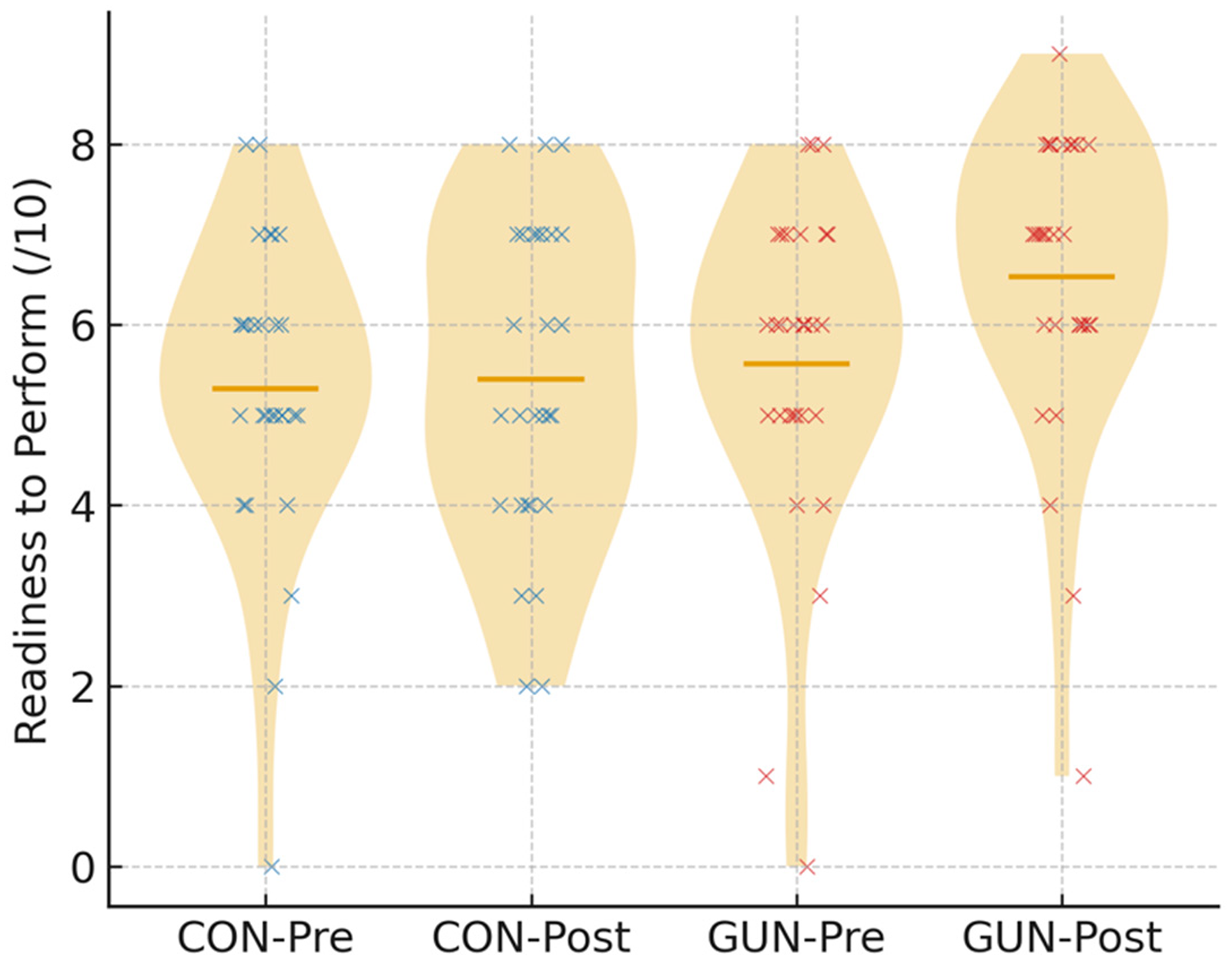
Violin plot with individual data points (blue = control, red = massage gun) for readiness to perform (/10). Figure displays pre- and post-intervention values for the control (CON) and massage gun (GUN) groups. Violin shapes represent distributions, horizontal lines denote means, and scatter points represent individual participants.
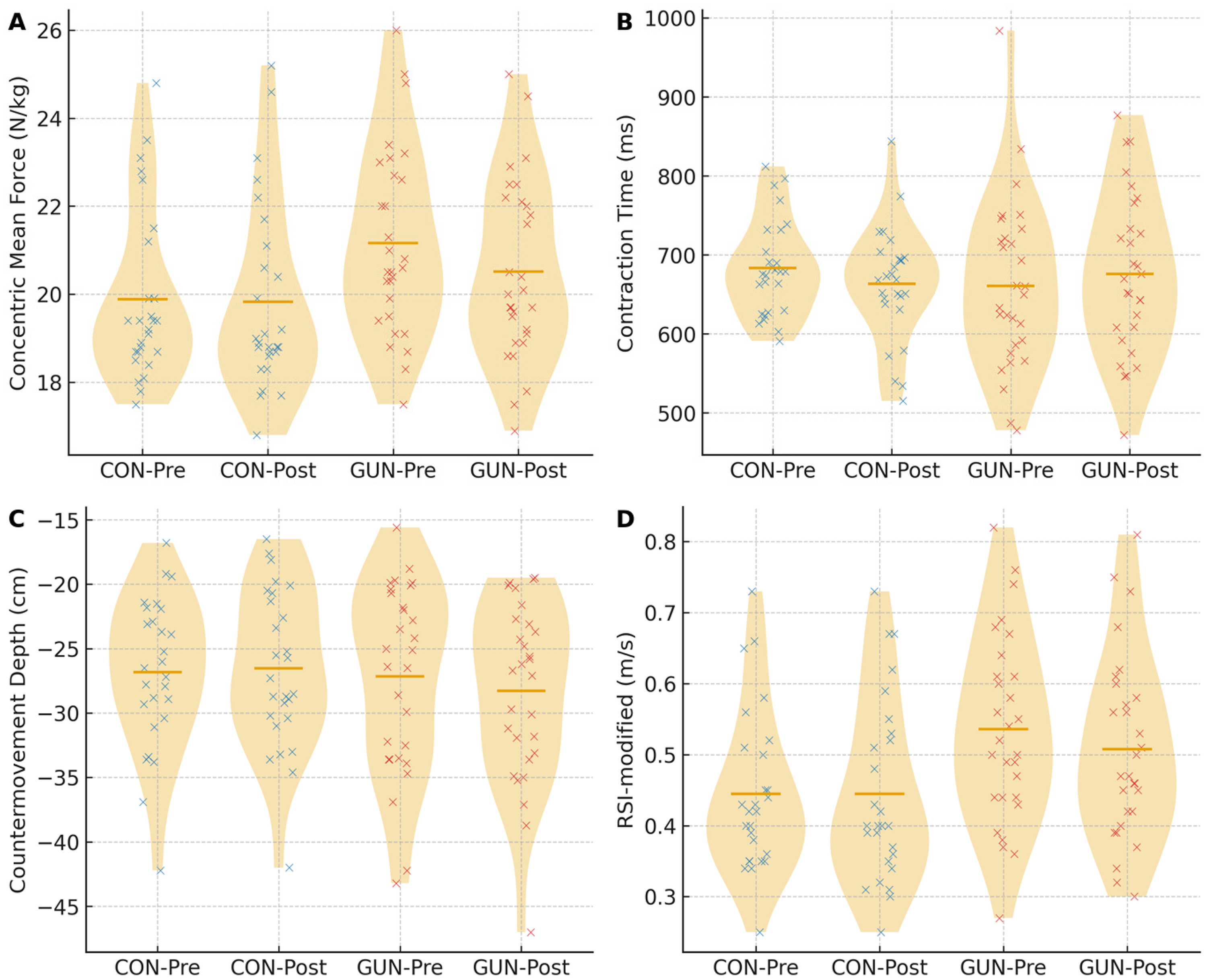
Violin plots with individual data points (blue = control, red = massage gun) showing countermovement jump (CMJ) outcomes that demonstrated significant condition × time interactions. Panels display: (A) concentric mean force normalised to body mass, (B) contraction time, (C) countermovement depth, and (D) RSI-modified. Each panel shows pre- and post-intervention values for the control (CON) and massage gun (GUN) groups. Violin shapes represent the distribution of scores, with means indicated by horizontal lines and individual participant values overlaid as scatter points.
Perceptual measures for both control (CON) and massage gun (GUN) groups. Data reported as mean ± SD for each time point, alongside interaction p-values and Hedges’ g effect sizes with 95% confidence intervals (95%CI).
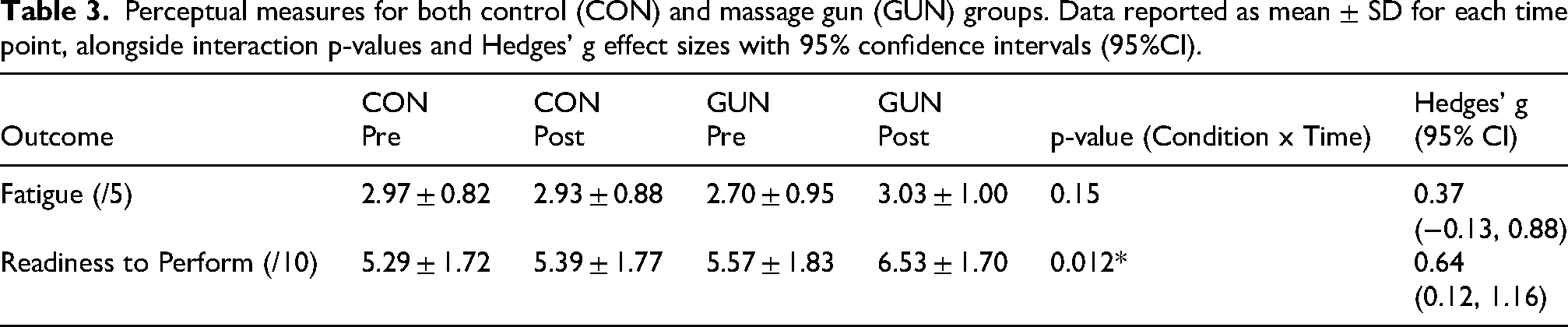
Within-group summaries (Supplementary Table 1) indicate that readiness to perform increased from pre- to post-testing in the massage gun (GUN) condition, whereas the control (CON) group showed minimal change over time. Fatigue scores remained relatively stable in both groups, consistent with the non-significant Condition × Time interaction for fatigue.
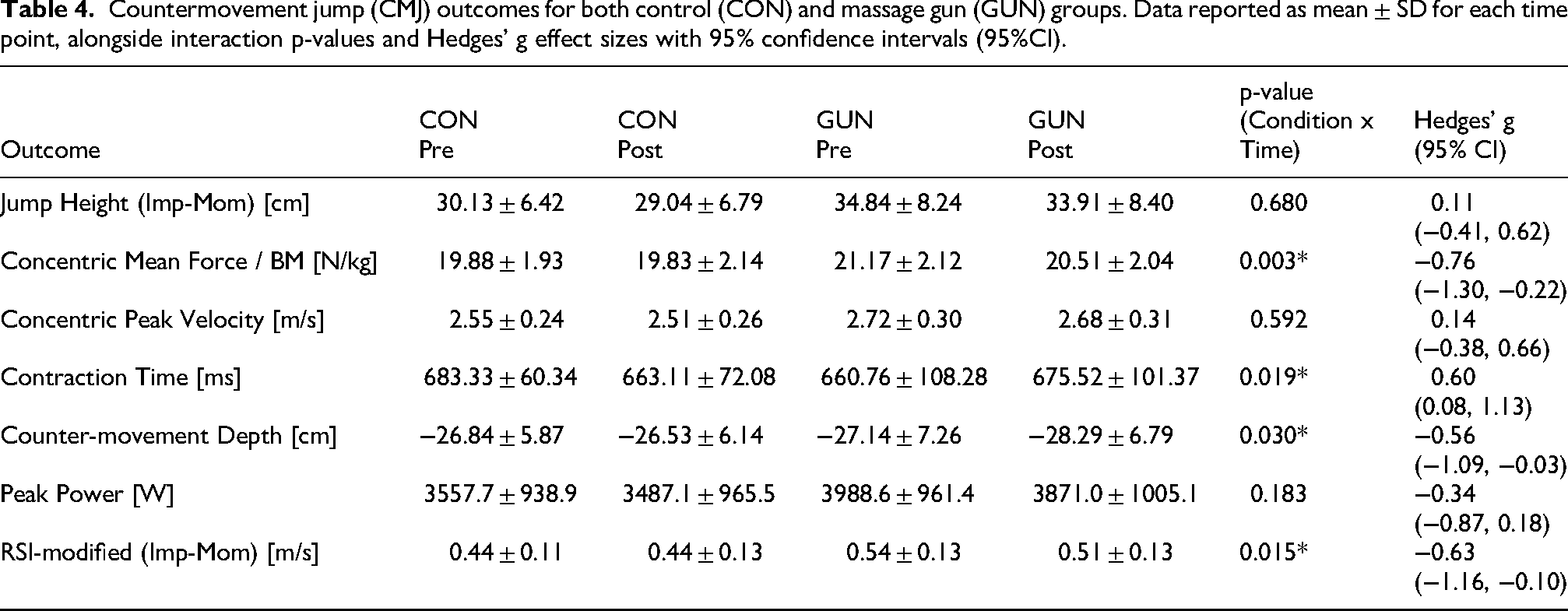
CMJ outcomes are presented in Table 4. Several jump-related metrics demonstrated significant Condition × Time interactions. Specifically, the GUN group exhibited reduced concentric force relative to body mass (p < 0.01; g = –0.76), longer contraction time (p < 0.05; g = 0.60), and greater/deeper countermovement depth (p < 0.05; g = –0.56) relative to CON. In addition, RSI-modified (Impulse–Momentum method) was impaired in the GUN group (p < 0.05; g = –0.63). No significant interactions were detected for jump height, peak power, or concentric peak velocity. Within-group pre–post summaries (Supplementary Table 1) show that in the GUN condition, countermovement depth increased and contraction time lengthened from pre to post, accompanied by reductions in concentric mean force relative to body mass and RSI-modified. In contrast, CMJ metrics in the CON group changed little over time, which aligns with the significant Condition × Time interactions observed for these variables and the absence of between-group differences in CMJ height, peak power, or concentric peak velocity.
Countermovement jump (CMJ) outcomes for both control (CON) and massage gun (GUN) groups. Data reported as mean ± SD for each time point, alongside interaction p-values and Hedges’ g effect sizes with 95% confidence intervals (95%CI).
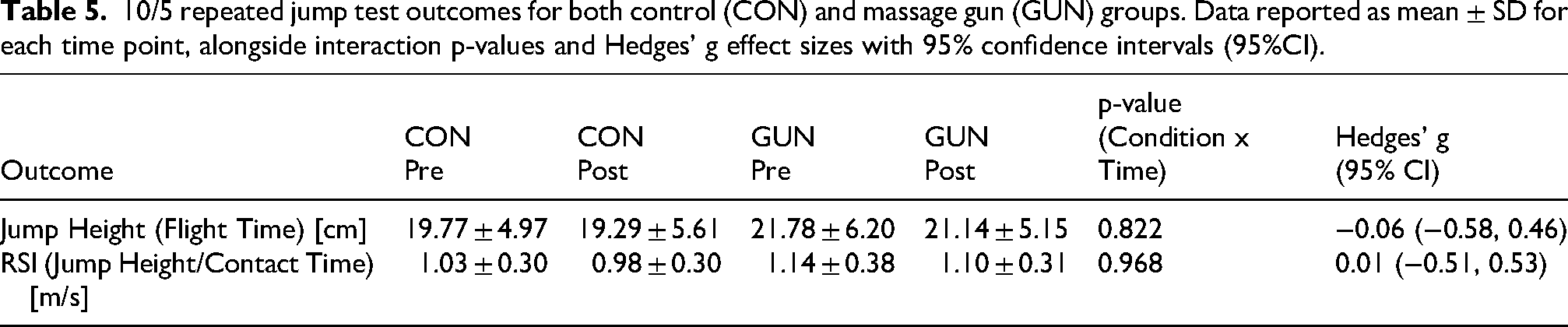
Outcomes from the 10/5 repeated jump test are presented in Table 5. No significant interactions were detected for jump height or RSI metrics (p > 0.05). Consistent with the absence of significant Condition × Time interactions, within-group changes in 10/5 repeated jump height and RSI metrics were small and similar in magnitude for both CON and GUN conditions (Supplementary Table 1).
10/5 repeated jump test outcomes for both control (CON) and massage gun (GUN) groups. Data reported as mean ± SD for each time point, alongside interaction p-values and Hedges’ g effect sizes with 95% confidence intervals (95%CI).
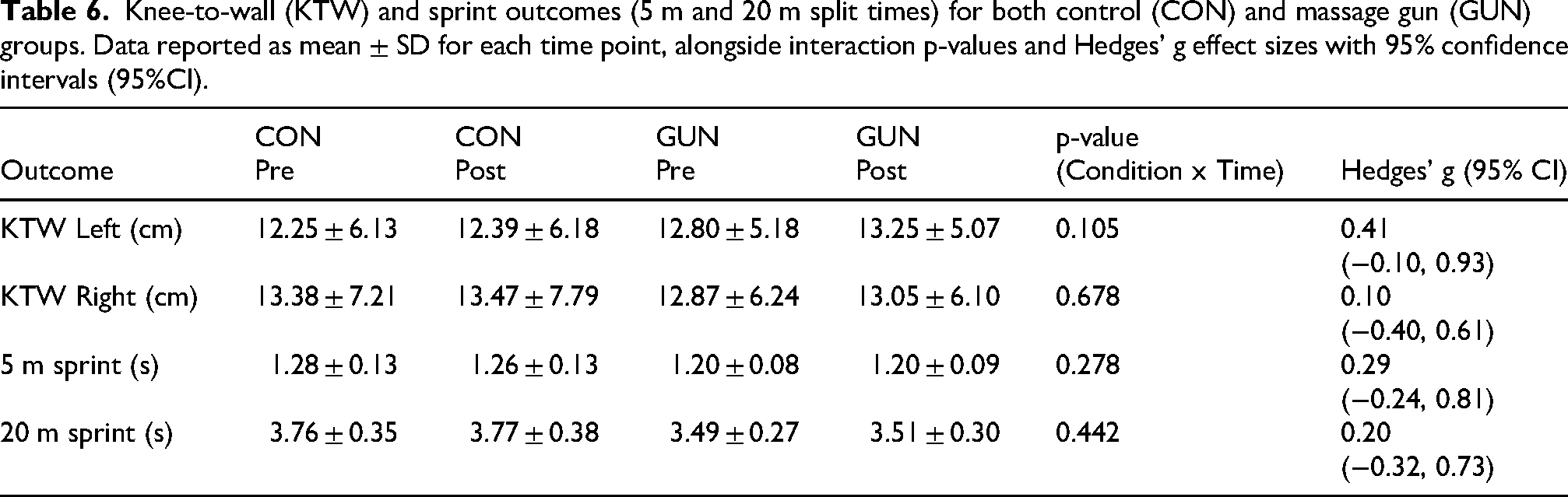
Knee-to-wall (left and right) and sprint performance outcomes are presented in Table 6. No significant interactions were observed for any measure (p > 0.05). Effect sizes were trivial-small (Hedges’ g range = 0.10 to 0.41), suggesting that the massage gun intervention did not meaningfully influence ankle mobility or sprint performance at 5 m or 20 m. Within-group pre–post changes in ankle range of motion and sprint times were also small and comparable between groups (Supplementary Table 1), reinforcing the lack of significant Condition × Time effects for these outcomes.
Knee-to-wall (KTW) and sprint outcomes (5 m and 20 m split times) for both control (CON) and massage gun (GUN) groups. Data reported as mean ± SD for each time point, alongside interaction p-values and Hedges’ g effect sizes with 95% confidence intervals (95%CI).
Discussion
The primary aim of this study was to investigate the acute effects of using a handheld massage gun as part of a warm-up on perceptual and physical performance measures in recreational athletes. The main findings indicate a potential disconnect between perception and performance. While massage gun use enhanced athletes’ perceptual readiness to perform, there was no change in jump or sprint performance. Further, it concurrently impaired several key metrics of countermovement jump (CMJ) performance, including a reduction in concentric force and reactive strength index-modified (RSI-mod), and an increase in contraction time. These impairments appear linked to a greater countermovement depth following the massage gun intervention. The intervention also had no significant effect on ankle mobility. These results challenge the common practice of using percussive massage for acute performance enhancement immediately prior to explosive activity.
A notable finding was the improvement in readiness to perform following the massage gun intervention compared with control (Condition × Time p = 0.012; Hedges’ g = 0.64), in the absence of clear performance enhancements. This pattern suggests that massage gun use may primarily influence perceptual readiness rather than acutely enhancing objective explosive performance metrics measured in this study. This suggests that the sensory input from the percussive massage fostered a psychological state of preparedness, potentially via changes to muscle blood flow, temperature, pain perception, and neurophysiological function.6,36 However, this subjective enhancement did not translate to objective performance gains. This “perceptual-performance paradox” has been noted with other modalities like static stretching, where athletes may feel more prepared despite a temporary reduction in explosive force capacity. 37 The lack of change in perceived fatigue further suggests the effects were primarily psychological or sensory rather than physiological. The lack of findings for fatigue are not consistent with previous studies that show muscle fatigue is improved pre-post use of such interventions. 6 38–42 However, previous study interventions have assessed these modalities as post-exercise recovery strategies, rather than during a warm-up.
The massage gun intervention was also associated with altered jump mechanics, including reduced concentric mean force relative to body mass (Condition × Time p = 0.003; Hedges’ g = –0.76), longer contraction time (p = 0.019; g = 0.60), greater countermovement depth (p = 0.030; g = –0.56), and a lower RSI-modified (p = 0.015; g = –0.63) compared with control. Although CMJ height, peak power, and concentric peak velocity did not differ between conditions, these changes in movement strategy may have important implications for how massage guns are used before tasks requiring rapid force production or repeated, reactive jumps that rely on minimal ground contact time. A potential explanation for this is the concurrent increase in countermovement depth observed in the GUN group. The percussive massage may have increased muscle-tendon compliance, leading athletes to adopt a deeper and slower countermovement strategy. 43 This altered approach prolongs the stretch-shortening cycle, resulting in a less efficient jump, as reflected by the lower RSI-mod, even if the final jump height is maintained. These results partially align with our laboratory's previous work, 14 where we reported a slight reduction in jump height with massage gun use. The 10/5 repeated jump test showed no significant changes in either jump height or RSI metrics. This suggests the neuromuscular changes induced by the massage gun may specifically affect the mechanics of a maximal single jump from a deep countermovement, while having less impact on repeated, reactive jumps that rely on minimal ground contact time.
Contrary to our hypothesis and the claims made by many manufacturers, the massage gun intervention did not improve ankle mobility, as measured by the knee-to-wall test. While some studies have reported acute gains in range of motion (ROM) following percussive massage, 23 our results showed no such benefit. It is possible that the standardised dynamic warm-up completed by all participants was sufficient to maximise acute ankle ROM, creating a ceiling effect where the subsequent massage gun application could not elicit further improvement. Alternatively, the two-minute application time per muscle group may have been insufficient to induce a measurable change in dorsiflexion. Beyond duration, massage-gun outcomes are likely to be influenced by device settings and overall dose (frequency, amplitude and number of sessions). In the present study, we used a brief, high-speed protocol (∼53 Hz; ≈3200 rpm) delivered once as part of the warm-up, which reflects how many athletes currently implement massage guns before training or competition. By contrast, several studies have used lower frequencies and/or longer applications and have generally reported improved joint range of motion with neutral or mixed effects on performance. For example, a 5-min treatment of the plantar flexors at 53 Hz increased ankle dorsiflexion without altering maximal voluntary contraction, 23 and an 8-min quadriceps protocol at 30 Hz increased hip flexion range of motion but reduced Wingate anaerobic performance. 44
Similarly, there were no significant effects on 5 m or 20 m sprint performance. This finding contrasts with our earlier work that found massage gun use slowed 20 m sprint times. 14 The pre-post design of the current study provides a more robust analysis by controlling for baseline variability, suggesting that the previously observed negative effect may not be consistent. Although the impaired CMJ mechanics (i.e., slower rate of force development) could theoretically hinder acceleration, this did not translate to a meaningful decrement in sprint times in the current cohort. The complex biomechanics of sprinting may be resilient to the subtle neuromuscular changes induced by the massage gun.
This study has several limitations that warrant consideration. Firstly, the participants were recreational athletes from various sports; findings may not be generalisable to elite athletes who might exhibit different physiological and neuromuscular responses. Secondly, the intervention was a standardised 12-min protocol. The effects of percussive massage are likely dependent on the duration, frequency, and pressure applied, and different protocols could yield different outcomes. Future research should explore dose-response relationships to identify potentially optimal parameters. Thirdly, while we measured performance outcomes, we did not directly assess the underlying physiological mechanisms. Future studies could incorporate measures of muscle activity (electromyography), muscle-tendon stiffness, and blood flow to better understand how percussive massage affects the neuromuscular system. Finally, our protocol used only one device setting (high speed) and a single, pre-performance application. As such, the results should not be generalised to other massage-gun configurations. Lower-speed, longer-duration or multi-session protocols have been shown to improve flexibility and, in some cases, strength,8,23,44 and different “doses” may yield different outcomes, particularly when massage guns are used for recovery rather than immediate performance enhancement.
In conclusion, while using a massage gun during a warm-up can make recreational athletes feel more ready to perform, this perceptual benefit may not translate to performance. The intervention failed to improve any measure of physical performance and, critically, impaired several key components of explosive jump mechanics. Based on these findings, coaches and athletes should exercise caution when using percussive massage devices immediately before activities that depend on maximal rate of force development, such as jumping, sprinting, and weightlifting.
Supplemental Material
sj-docx-1-spo-10.1177_17479541251408295 - Supplemental material for Perceptual gains, performance pains? Massage gun use during warm-up enhances perceived readiness without performance benefits
Supplemental material, sj-docx-1-spo-10.1177_17479541251408295 for Perceptual gains, performance pains? Massage gun use during warm-up enhances perceived readiness without performance benefits by Matthew Driller, Ana Holt, Mikaeli Carmichael, Leslie Payne and Luke Stutter in International Journal of Sports Science & Coaching
Footnotes

Funding
The authors received no financial support for the research, authorship, and/or publication of this article.
Declaration of conflicting interests
The authors declared no potential conflicts of interest with respect to the research, authorship, and/or publication of this article.
Supplemental material
Supplemental material for this article is available online.
References
Supplementary Material
Please find the following supplemental material available below.
For Open Access articles published under a Creative Commons License, all supplemental material carries the same license as the article it is associated with.
For non-Open Access articles published, all supplemental material carries a non-exclusive license, and permission requests for re-use of supplemental material or any part of supplemental material shall be sent directly to the copyright owner as specified in the copyright notice associated with the article.
