



Abstract
Different talent development (TDE) environments exhibit varying training practices in the rugby league talent identity and development systems (TIDS), which may influence rates of talent development and subsequent productivity of each TDE. This study aimed to compare physical qualities and rates of physical development between different rugby league TDEs within the same TIDS, alongside differences between groups of TDEs based on their level of productivity. A sample of 261 youth rugby league players from six academy teams (i.e., TDEs) within the professional TIDS were tested as part of a league-wide fitness testing battery for measures of anthropometrics, strength, power, speed, and cardiovascular fitness. Linear mixed models revealed medium, significant differences in maximum sprint velocity at the beginning of the season (η2 = 0.05, p = 0.03) and large, significant differences in the development of prone Yo-Yo IR1 distance over time (η2 = 0.14–0.18, p < 0.001) between TDEs. No significant differences between groups of TDEs based on their productivity were found. These findings indicate that possible variability in the practices of TDEs mostly leads to small or trivial differences in physical qualities and physical development. Differences in physical qualities and physical development do not appear to relate to the productivity of TDEs, therefore TDEs should focus on holistic development to maximise productivity.
Introduction
The purpose of sport talent identification and development systems (TIDS) is to progress talented youth athletes towards the elite level. 1 The TIDS within English rugby league consists of ten academies aligned to professional clubs, under the governance of the sport's national governing body (i.e., the Rugby Football League; RFL). Each academy represents a separate talent development environment (TDE) within the TIDS, which aim to develop youth players towards the elite level of the sport. 2 Therefore, the number or proportion of senior professional players they produce (i.e., productivity) can be considered a marker of their effectiveness. The rugby league TIDS spans four annual age-groups (Under-15s to Under-18s), with multiple entry and exit points and a network of amateur clubs facilitating transitions into and out of the TIDS. Close geographical proximity and limited restrictions on player recruitment within the TIDS creates the potential for pooling of talented players within certain academies. This could limit development opportunities for players; however, it has not yet been investigated within rugby league TIDS.
Understanding talent can be challenging due to the non-linear nature of its development.1,3 A range of factors inherent to the athlete can influence the development of talent, such as biological maturation status, chronological, or relative age.3–5 Furthermore, the TDE the athlete is exposed to can also influence talent development, 2 for example, the percentage of international youth soccer players who transition to the senior level varied by country, suggesting that the different TDEs present in each country influence the productivity of the TIDS. 6 Indeed, further evidence shows that more effective TDEs, especially those considering holistic development, typically had higher standards of athletes. 7 This suggests that variation in TDEs, and associated provision and practices, could influence talent development and therefore how many athletes transition to the elite level. Furthermore, TDEs that facilitate the development of players across a range of disciplines are likely to be the most productive.
Within the rugby league TIDS, there is evidence for varying practices and levels of resource between academies.8,9 For example, academies have demonstrated that they dedicate varying amounts of time to different training modes (e.g., resistance training, technical and tactical), 8 whilst staff in some academies have suggested that a lack of resource affects their capacity to deliver fitness testing. 9 Furthermore, physical qualities are an important component of talent identification and development in rugby league, given their links with sports-specific skills,10–13 and their capacity to discriminate between playing standards.14–16 As such, it is possible that exposure to the varied practices evident in different TDEs could affect the physical development of youth rugby league players, which could ultimately influence career attainment4,17 and the subsequent productivity of the TIDS and each TDE. However, to the authors’ knowledge this has yet to be studied in any sport, including rugby league.
Consequently, this study aimed to compare the physical qualities (at the start of the season) and physical development (over time) of youth rugby league players across different TDEs (i.e., academies) within the professional rugby league TIDS. These findings can highlight whether exposure to different TDEs relates to physical development. Secondly, this study also aimed to compare physical qualities and physical development between groups of TDEs, based on their productivity. The productivity of TDEs and TIDS is an indicator of their effectiveness, therefore understanding factors which underpin productivity, such as physical differences, can highlight potential areas for development within the professional rugby league TIDS.
Materials and methods
Study design
The professional rugby league TIDS in England consists of 10 academy teams located in the North of England, linked to professional clubs, who are licensed by the RFL. The TIDS begins at the Under-15 (U15) level and progresses to U18s, with multiple entry and exit points throughout. Selection and recruitment decisions are typically made towards the beginning of each season, with a high potential for player movement due to the close geographical proximity of academies and the lack of restrictions on recruitment (e.g., draft system). Academies aim to progress players to play professionally in the Super League, which represents the highest level of club rugby league in the northern hemisphere. As such, the productivity of each academy can be gauged by the number of players who go on to play in the Super League.
A league-wide physical testing battery is conducted across all academies to inform their TIDS practices. Testing is run at four time points across each season (i.e., early pre-season, late pre-season, mid-season, end of season) at each academy's training ground. Data from this testing battery was used in this study, including anthropometric assessments of standing height, body mass, and body composition; lower body muscular power via countermovement jump (CMJ); whole body isometric strength via isometric mid-thigh pull (IMTP); sprint speed via 40 m sprint; and intermittent running ability via a prone YoYo intermittent recovery test level 1 (Prone YoYo IR1). Academy staff led players through their own typical warm-up routine prior to the beginning of each testing session. To examine the differences between academies, physical qualities (start of season) and physical development (over time) were compared between academies. To examine differences by productivity, physical qualities (start of season) and physical development (over time) were compared by academy productivity-group (see Academy Productivity section).
Subjects
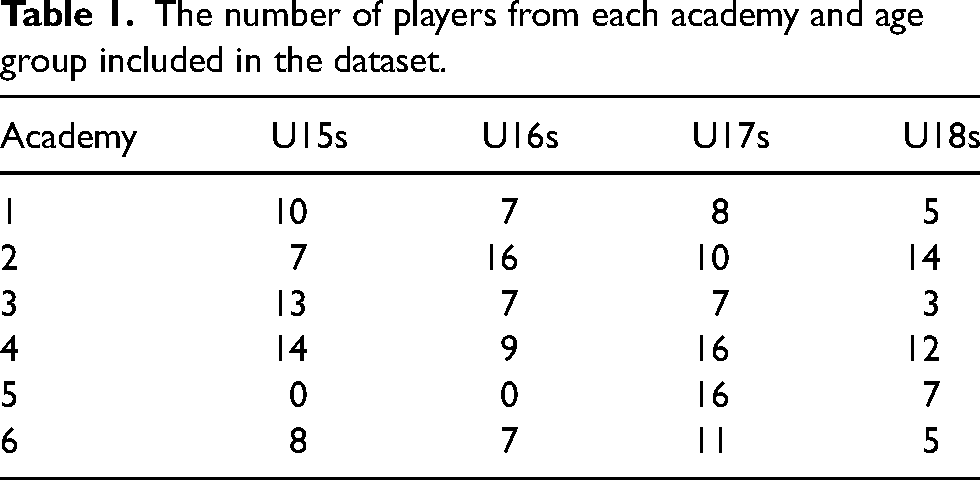
This study included data from 261 male rugby league players, representing six academy teams. Participants were all involved in their club's professional development pathway system across the under U15 to U18s age groups. Table 1 outlines the number of participants included in the study from each academy, by age group. Participants’ data were only included in this study if they were tested at three or more time-points within the same season. Forty-seven players were included from the 2022 season and 214 players from the 2023 season. Forty-six of the players from the 2022 season were tested at three time-points over the course of the season and one player was tested four times. One hundred and twenty-six players were tested at three times points during the 2023 season and 88 were tested at four time-points. All experimental procedures were approved by Leeds Beckett University's ethics committee (reference number 130696) with written informed consent obtained from participants over the age of 16 and parental consent obtained for participants under the age of 16.
The number of players from each academy and age group included in the dataset.
Academy productivity
In this study, productivity was defined as the number of players who made 10 or more Super League appearances from each academy between 2013 and 2023, based on data collected by the RFL (Figure 1). If a player represented more than one academy before making their debut, they are attributed to each academy. Using these data, the group median value for productivity was calculated as 20, with two groups of academy teams identified based on whether they were above or below this value. The group with productivity levels above the group median were deemed the High Productivity group (Academies 1, 2, and 3), with the other group the Low Productivity group (Academies 4, 5, and 6). The High Productivity group's mean productivity value was 25.3 ± 3.2 players, compared to 14.0 ± 2.6 players in the Low Productivity group.
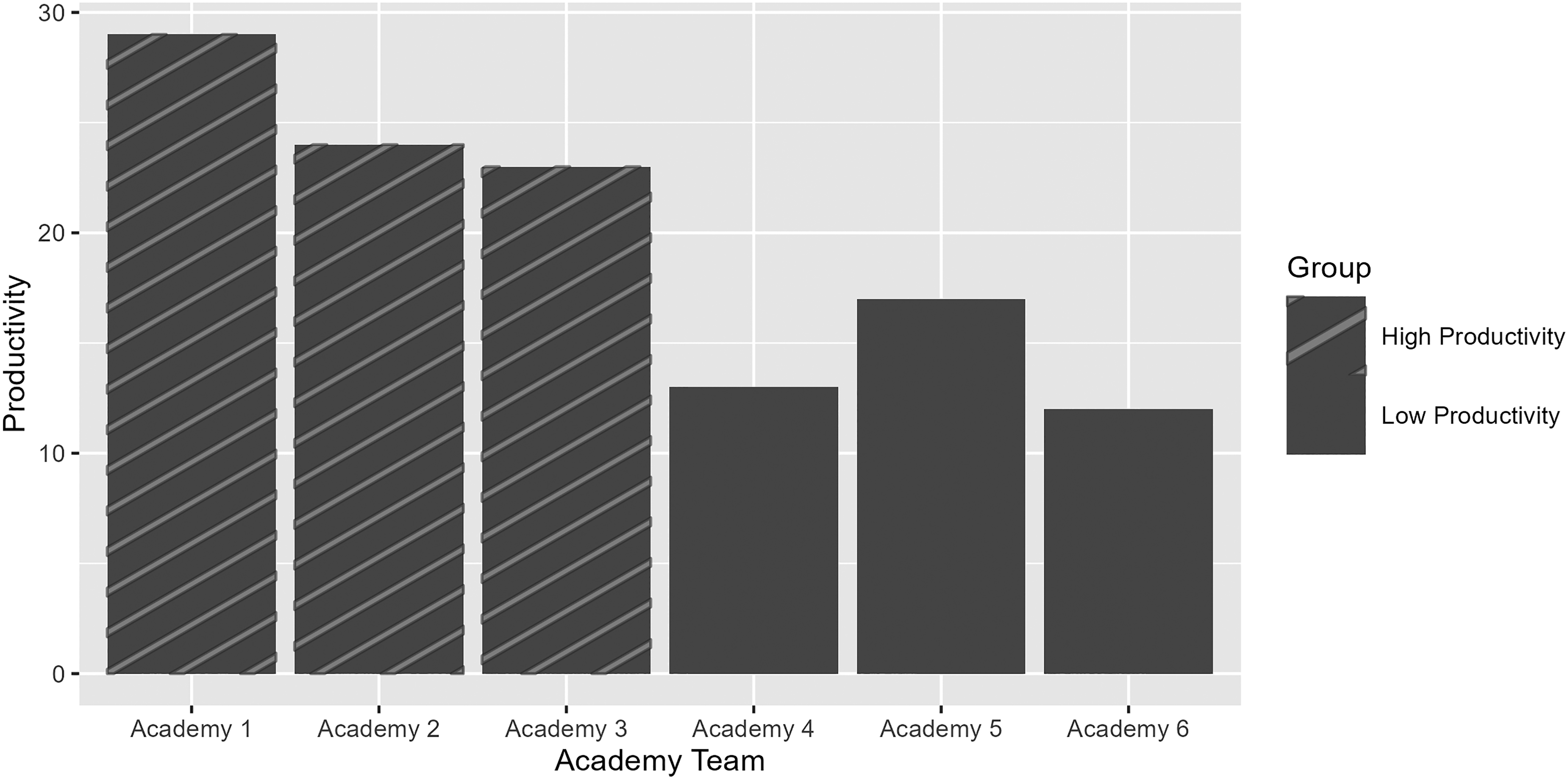
The number of players each academy team produced who made more than 10 Super League appearances between 2013 and 2023. Crossed bars indicate teams in the High Productivity group and solid bars indicate teams in the Low Productivity group.
Procedures
Anthropometry
Standing height was measured using a portable stadiometer (Seca 213, Hamburg, Germany) to the nearest 0.1 cm. Body mass and body composition were assessed using a bioimpedance analyser (Tanita BF-350, Tokyo, Japan) to the nearest 0.1 kg and 0.1% of body fat, respectively. Assessment of body composition using this device has shown an intra-class correlation coefficient (ICC) of 0.93–0.98. 18
Countermovement jump
Participants performed two maximal effort CMJs on portable force plates (Passport Force Platform, PASCO Scientific, Roseville, CA), 19 with their maximum score retained for analysis. Participants were instructed to keep their hands on their hips throughout the jump, dropping to a self-selected depth before jumping as high as possible without re-bending their legs. Jump height was recorded to the nearest 0.1 cm for each jump, with the highest jump included in the analysis. Jump height was estimated based on flight time, 20 using Pasco Capstone software (PASCO Scientific, Roseville, CA). Estimating jump height based on flight time using force plates has shown an ICC of 0.96–0.97 and a coefficient of variation (CV) of 2.93%. 21
Isometric mid-thigh pull
Participants performed two IMTPs on a custom-built dynamometer (Takei Scientific Instruments, Niigata, Japan) which sampled at 122 Hz and a chain attached to a 120 cm latissimus pulldown bar (Decathlon, Stevenage, United Kingdom). The IMTP was performed in-line with protocols specified by Till, Morris. 22 Peak force was recorded for each individual IMTP to the nearest 0.5 kg and then converted to newtons of force using a regression equation. 22 The highest peak force value was retained for analysis. Peak force was divided by participants’ body mass to produce a relative IMTP peak force score. The reported ICC and CV for this IMTP method are 0.91 and 6.0% respectively. 22
Sprint speed and sprint momentum
Participants performed two 40 m sprints, with at least three minutes rest in-between, assessed using photoelectric timing gates (Brower Timing Systems, Draper, UT). Timing gates were placed at 10 m intervals at 1 m height to capture split times during each sprint to the nearest 0.01 s. Participants began each sprint with their front foot 50 cm behind the first timing gates in a two-point stance. Maximum velocity was estimated by dividing the split distance (10 m) by the smallest split interval in seconds. 23 Ten-metre sprint momentum was calculated by multiplying participants’ mean velocity over the first 10 m of each sprint by their body mass. 23 The typical error, expressed as a CV, for split times over 10, 20, 30, and 40 m using timing gates are reported as 2.5%, 2.2%, 2.2%, and 1.8% respectively. 24
Prone YoYo intermittent recovery test level 1
Participants performed the Prone YoYo IR1 in-line with protocols specified in Dobbin, Highton. 25 The test was deemed to be complete when participants failed to complete their second shuttle or volitionally ceased running. The final level was recorded upon completion, before being converted to distance covered by multiplying the number of successful levels by 40. Distance covered was used for later statistical analysis. Prone YoYo IR1 distance has previously shown an ICC of 0.98 and a CV of 9.9%. 26
Statistical analysis
Between-academy differences
Linear mixed models were used to analyse between-academy differences in physical qualities (at the beginning of the season) and physical development (change over time). Separate models were created for each physical quality; total body mass, lean body mass, absolute and relative IMTP peak force, CMJ height, 10 m sprint, 10 m sprint momentum, maximum velocity, and Prone Yo-Yo IR1 distance. Players’ data were only included in models if they had been tested three or more times in a given season.
Physical development in youth rugby league players can be non-linear, whereby the rate of change varies over the course of time.3,27 Consequently, physical development in the mixed models constituted a linear and non-linear component of time (represented by a quadratic term) as fixed effects. The non-linear component showed the degree to which the initial rate of physical development changed over the course of the season. The coefficients for these fixed effects combined to show the overall development trajectory of each physical quality. Both components of time were included as interaction terms with a player's academy team to assess between-academy differences in the rates of physical development. Time was calculated as the number of days elapsed between the beginning of pre-season (1st October) to the date of testing and then divided by 30 to represent the number of months. Chronological age was used as a covariate to control for the varied ages of players within this dataset. Random slopes and intercepts for each player were initially included in each model to account for between-player differences in physical qualities and physical development. The CMJ height and maximum velocity models failed to converge with this structure, therefore only random intercepts were included. All models were checked for normality of residuals using Q-Q plots.
Between-academy differences in physical qualities and physical development were assessed by running analysis of variance (ANOVA) on each mixed model. 28 This analysis showed the amount of variance between academies in the mean physical qualities and mean rates of physical development. The F statistic produced from the ANOVA was used to calculate partial ETA2 (η2) effect size correlations and 95% confidence intervals (CIs).29,30 Partial ETA2 represents the amount of variance explained in each physical quality by the variance between academies in each model, 29 therefore larger η2 values indicated greater differences between academies in a given physical quality or the development of a physical quality. Partial ETA2 were interpreted as <0.01 trivial, 0.01–0.06 small, 0.06–0.14 medium, and >0.14 large. 29 Levels of significance were set at p < 0.05. Estimated marginal means were used to plot the development trajectory of each physical quality across each academy, alongside 95% confidence intervals for the mean values. 31
Between productivity-group differences
Linear mixed models were also used to assess between productivity-group differences in physical qualities and physical development. Predicted values were produced for each player at zero and nine-months for each variable, using the initial mixed models which analysed between-academy differences. Change scores over nine-months were then calculated as the difference between each players’ predicted value at zero and nine-months, which was converted to percentage change. Productivity-group was included as a fixed effect in each model, whilst the player's team was used as a random effect to account for between-academy differences. All models were assessed for normality of residuals using Q-Q plots. Models for total body mass, lean body mass, and 10 m sprint momentum had a singular fit due to the lack of variance explained by the random effects, therefore these essentially represent simple linear regression models. Differences between groups were calculated using effect sizes (and 95% CIs) based on estimated marginal means.31,32 Cohen's d effect size correlation thresholds were used for the interpretation of between-group differences; 0–0.2 trivial, 0.2–0.5 small, 0.5–0.8 medium, >0.8 large. 33 Levels of significance were set at p < 0.05.
All statistical analysis was conducted using R Studio (V4.1.2, R Foundation for Statistical Computing, Vienna, Austria). Linear mixed models were created with the lme4 package. 28 Analysis of variance was run using the anova function from the stats package. 34 Estimated marginal means for between-academy and between productivity-group differences and subsequent effect sizes were calculated using the emmeans package. 35
Results
Between-academy differences in physical qualities and physical development
Figure 2 shows the physical qualities and physical development for each academy team across all variables over the course of nine-months. Table 2 shows the between-academy differences in physical qualities (at the beginning of the season) and both linear and non-linear physical development. The largest between-academy difference in physical qualities was in maximum velocity, which showed a significant, medium main effect for academy. Smaller, significant between-academy differences were also evident in IMTP peak force, 10 m sprint, and prone Yo-Yo IR1 distance at the beginning of the season (Table 2). All other between-academy differences in physical qualities were trivial and non-significant.
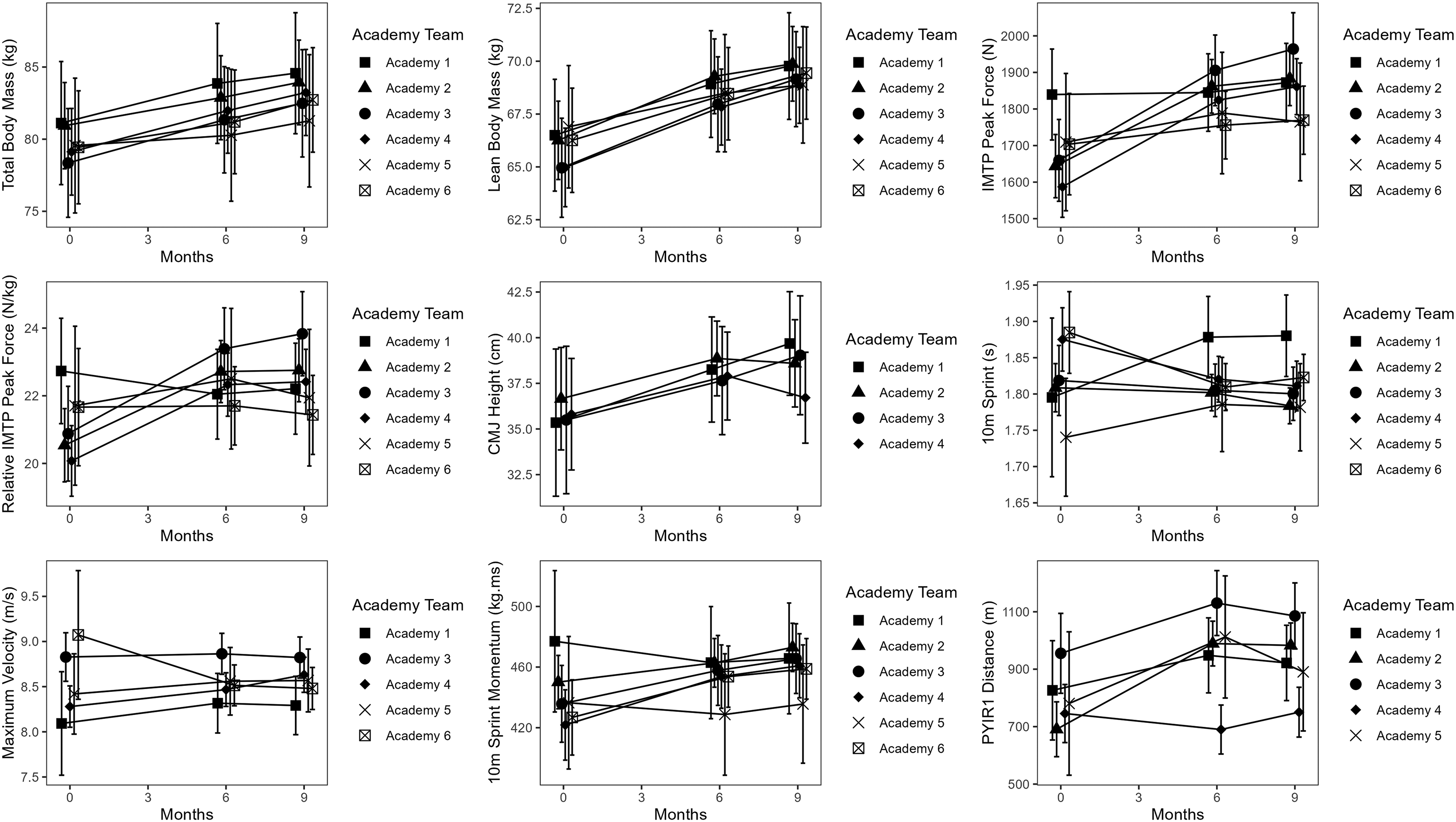
Estimated mean values for each academy team at zero, six, and nine-months. Error bars represent 95% CIs.
Between-academy differences in physical qualities, linear, and non-linear physical development.
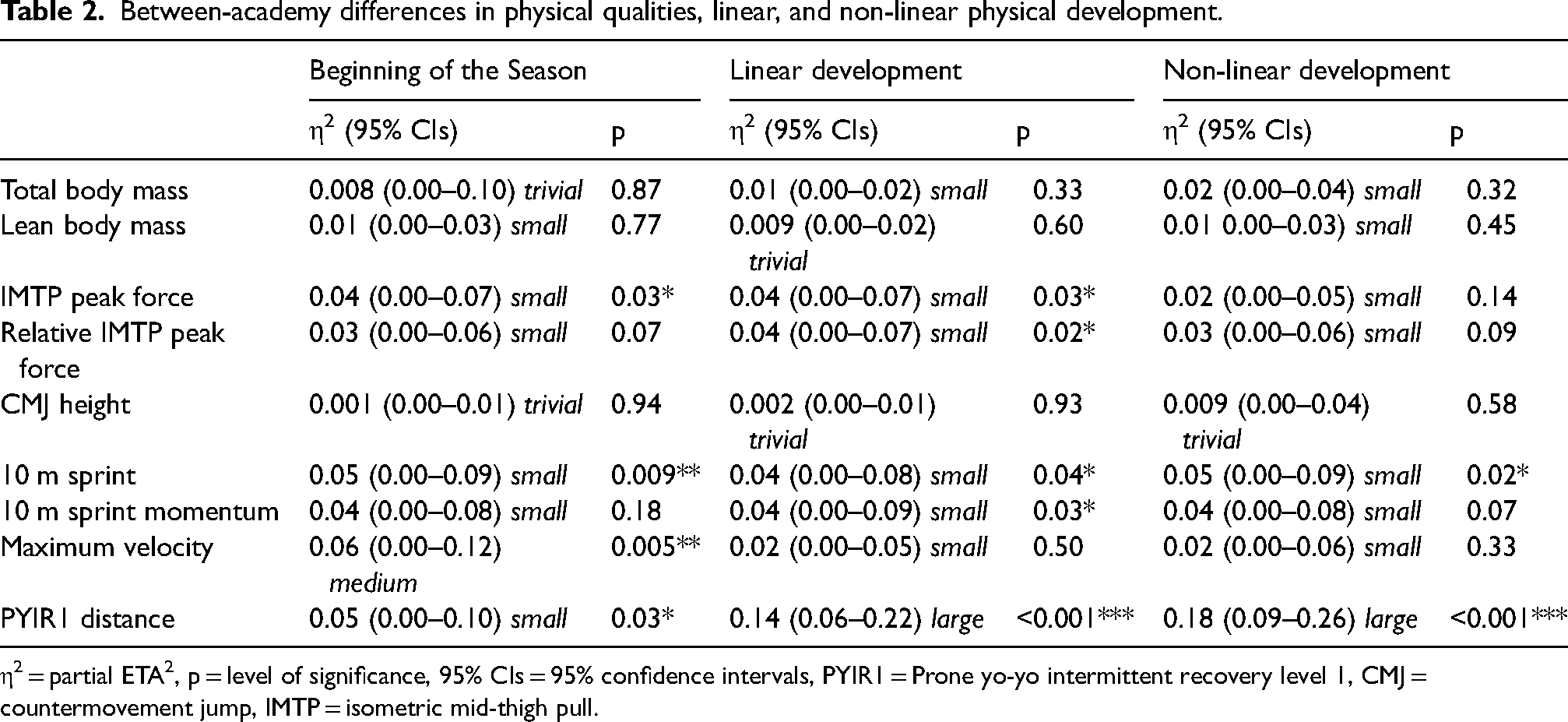
η2 = partial ETA2, p = level of significance, 95% CIs = 95% confidence intervals, PYIR1 = Prone yo-yo intermittent recovery level 1, CMJ = countermovement jump, IMTP = isometric mid-thigh pull.
The most substantial between-academy differences in linear and non-linear development were seen in prone Yo-Yo IR1 distance, which showed a significant, large main effect for academy. Small, significant between-academy differences in linear development were also found in absolute and relative IMTP peak force, 10 m sprint, and 10 m sprint momentum (Table 2). A small, significant between-academy difference was also evident in non-linear physical development in the 10 m sprint (Table 2).
Between productivity-group differences in physical qualities and physical development
Figure 3 shows each productivity-groups’ physical qualities at the beginning of the season and at nine-months. Table 3 shows the between-group differences in physical qualities and physical development over nine-months, based on academy productivity. Between-productivity-group differences in physical qualities were non-significant and small (IMTP peak force, 10 m sprint, 10 m sprint momentum, maximum velocity, and prone Yo-Yo IR1 distance). Group 1 had greater mean values for all variables, however CIs were overlapping between-groups, indicating a lack of confidence in these mean estimates. For physical development change over nine-months, large but non-significant between-group differences were found for CMJ height, 10 m sprint, and prone Yo-Yo IR1 distance, whereby CIs overlapped between groups.
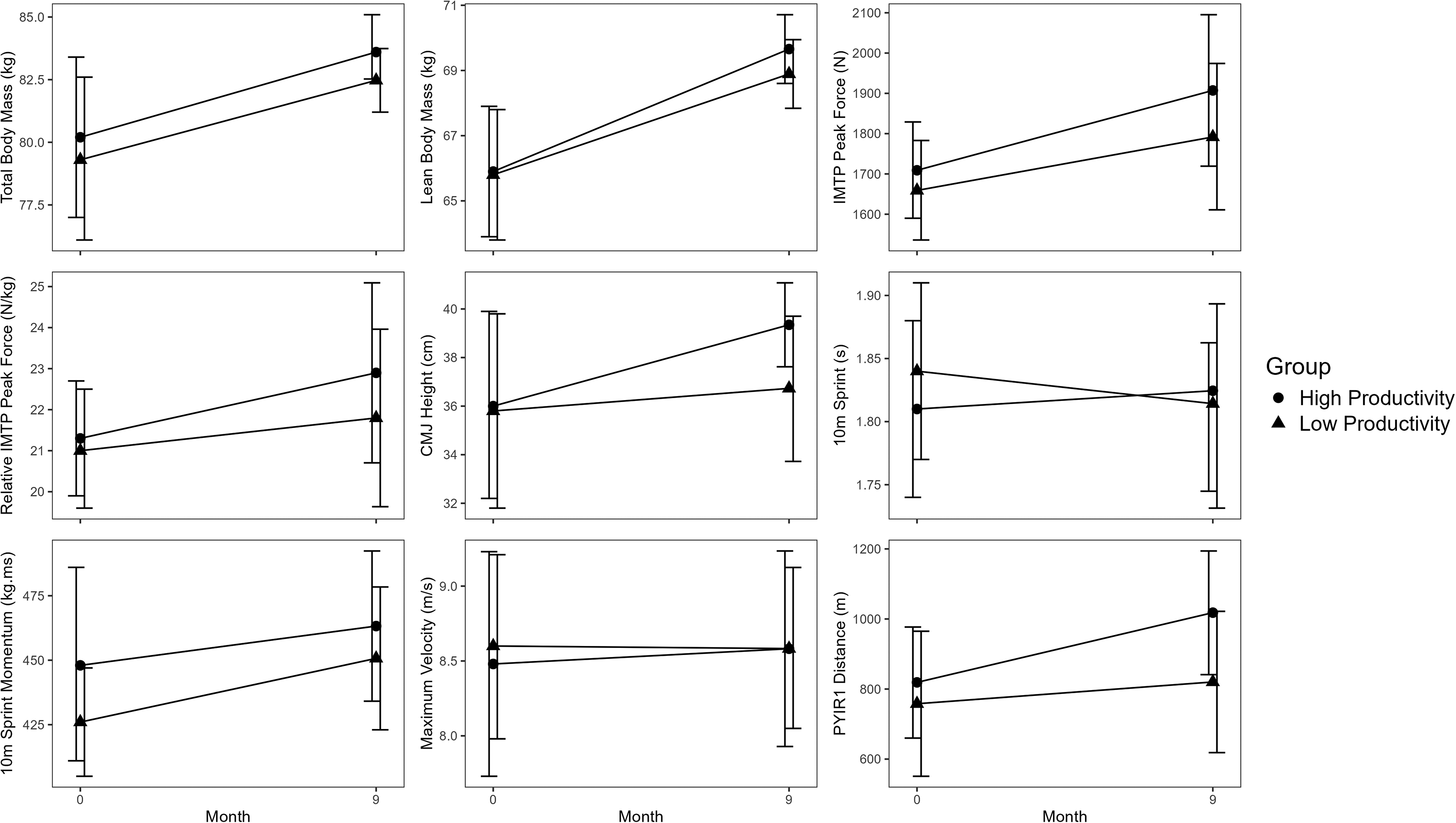
Estimated mean values for each productivity group at zero and nine-months. Error bars represent 95% CIs.
Differences in physical qualities and physical development over nine-months between productivity-groups.
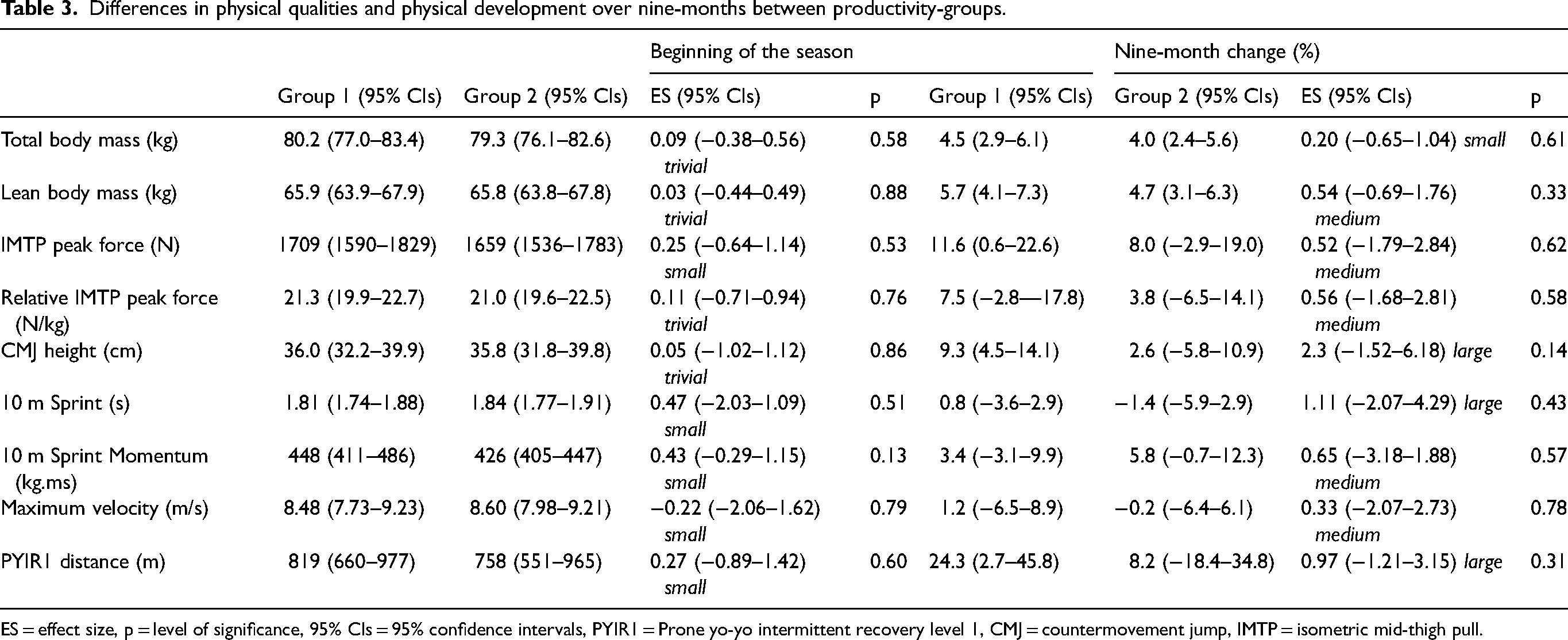
ES = effect size, p = level of significance, 95% CIs = 95% confidence intervals, PYIR1 = Prone yo-yo intermittent recovery level 1, CMJ = countermovement jump, IMTP = isometric mid-thigh pull.
Discussion
This study first aimed to compare the physical qualities (at the beginning of the season) and physical development (change over time) of youth rugby league players in different TDEs (i.e., academies). Secondly, this study aimed to compare the physical qualities and physical development of groups of academies based on their productivity (i.e., the number of players to make 10 or more Super League appearances over a ten-year period). Findings showed limited between-academy differences in physical qualities and physical development, aside from maximum velocity at the beginning of the season and the development of prone Yo-Yo IR1 distance. This indicates that players exposed to different TDEs mostly show small or trivial differences in physical qualities and physical development, despite evidence for varied TDE practices within the TIDS. 8 Two groups of academies were identified with differing levels of productivity. Despite this, no significant between-group differences were evident in physical qualities or physical development, suggesting other factors must be affecting the productivity of academies. Overall, this study showed that possible variation in TDE practices only leads to small differences in physical qualities and physical development, therefore non-physical factors may need to be considered to understand why some academies are more productive than others in producing senior professional players.
Findings from this study showed that whilst significant between-academy differences do exist in physical qualities and physical development, the differences were small. Maximum velocity showed the largest, significant between-academy difference at the beginning of the season and was the only quality to show a greater than small main effect for academy, whilst prone Yo-Yo IR1 distance showed the greatest significant between-academy differences in both linear and non-linear physical development. These results are reflective of previous work showing small, most or very likely differences in 20 m sprint speed and prone Yo-Yo IR1 distance between groups of academies based on their league ranking, however it should be noted that this work only considered between-academy differences in physical qualities and not physical development over time. 30 These findings suggest that the physical qualities of players in different academies are broadly similar, and that the varying training practices evident in different TDEs do not relate to players’ physical development. This indicates that physically well-developed players are less likely to pool at certain academies within the TIDS, which should aid in maintaining the competitiveness of the TIDS due to the links between physical qualities and rugby-specific skills.10–13
There is evidence for variation in how different TDEs (i.e., academies) operate within the rugby league TIDS; staff have highlighted varying degrees of challenge in terms of funding, staffing, and facilities, 9 alongside disparate amounts of time training physical qualities. 8 This may explain some of the between-academy differences present in physical qualities and physical development in this study, however more exaggerated differences than were evident in this study could be expected given that TDE practices are thought to influence individual athlete development.2,7,36 This may result from individual players responding differently to the same practices, indeed individual player characteristics, such as training age, can influence how players respond to physical training.37,38 These findings potentially question the degree to which academies’ training methods and practices are influencing physical development, which is an important consideration when aiming to maximise physical development, due to its association with career attainment4,17 and therefore productivity. These results warrant further investigation through more formal analysis of the TDEs in rugby league to further understand how they relate to physical development and productivity overall.
This study highlighted varying levels of productivity between academies in the professional rugby league TIDS. This shows that some academies are more successful in the goal of transitioning players to the elite level than others and reflects previous work evidencing differences in the number of senior international soccer players produced by different international pathway systems, 6 however this has not previously been studied in rugby league. This indicates that variation in TDE practices does seem to relate to TDE productivity, however the between-group differences in productivity do not appear to be related to differences in physical qualities or physical development. Some large between-group differences were seen in physical development, but the confidence in the size of these differences was variable, reflected by effect size CIs ranging from trivial to large. These findings are surprising, due to previous evidence that physical qualities4,17,39 and physical development 17 of players are both indicative of future career attainment. Furthermore, higher ranked academies in the rugby league TIDS have also been found to have superior sprint speed and cardiovascular fitness, 30 although the match performance of an academy does not necessarily relate to its productivity per se. The lack of between-group differences in this study may be a result of the group-level, rather than individual player-level analysis conducted. Indeed, productivity relates to the perceived talent of an individual, rather than the collective talent of the group of players, therefore more productive academies may have individuals with superior physical qualities and physical development, but this was not reflected across the whole squad. Previous work in rugby league TIDS advocates for an individual, longitudinal approach to monitoring players’ development, 3 therefore using this method may provide greater explanation as to how talented players reach the elite level, particularly given the evidently variable career trajectories senior professionals have experienced. 40
The lack of between-group differences in physical qualities and physical development suggest that alternative factors may be influencing academies’ productivity. Differences in talent identification and talent development practices may be related to differences in productivity,1,2 particularly with regards to the degree to which TDEs focus on holistic development as this has been shown to influence the number of elite athletes a TDE produces. 7 Indeed, rugby league coaches have previously stated that understanding physical fitness is useful, but doesn’t provide a complete picture of a youth rugby league player. 9 This is further emphasised by coaches identifying several psycho-social and technical-tactical performance indicators as more important than physical qualities. 41 Moreover, research in team sports such as soccer 42 and Australian Rules football 43 have evidenced that a range of multi-dimensional qualities are required to achieve senior professional status. This collectively suggests that the between-group differences in productivity are likely to be a result of a range of factors and, as such, less productive TDEs should look to develop players holistically, via technical-tactical and psycho-social development as well as physical.1,27
Limitations
This study provides insights into the productivity of professional rugby league academies in England, using novel data spanning multiple TDEs. Despite this, limitations were present; consistent data was only available for six academies, therefore a complete picture of the TIDS cannot be provided. Furthermore, the grouping of academies based on the number of players who have made 10 or more Super League appearances serves as an informal method for analysing productivity. This warrants further investigation in future research using more robust methods of analysis. When assessing between-academy differences in physical qualities and physical development, predicted values from linear mixed models were used to standardise the values at a set time point. This means that the values used for between-group analysis reflect model estimates, rather than specific raw data for each group. In the case of the CMJ and maximum velocity models, the absolute predicted change scores will be the same for each individual within their team due to the lack of random slopes for each player. Additionally, the players included in the analysis of physical qualities and physical development were not the same sample as those in the productivity analysis, which limits the validity of these relationships. Nevertheless, the data used in this study is novel in that it spans multiple TDEs within the same TIDS, relating to productivity, physical qualities, and physical development. This study therefore provides insights that were previously unavailable, through a high-level assessment of the TIDS.
Conclusions
Overall, this study showed small between-academy differences in physical qualities and physical development, aside from maximum velocity and prone Yo-Yo IR1 distance. This suggests that whilst variable physical training practices exist within the TIDS, 8 they do not result in distinct differences in physical qualities and physical development. Findings also showed that some academies were more productive than others. This difference does not appear to be related to physical qualities or physical development, therefore it is likely that multi-dimensional factors will play a role. As such, less productive TDEs should focus on the holistic development of their players to aid them in their transition to the elite level of the sport.
Footnotes
Consent to participate
Written informed consent was gained for all participants, alongside written parental consent for participants under the age of 16.
Data availability
The anonymised data used in this study can be made available upon reasonable request to the lead author.
Declaration of conflicting interests
The authors declared the following potential conflicts of interest with respect to the research, authorship, and/or publication of this article: Authors SW, CO, BJ, SS, PA, and KT received funding from the Rugby Football League (RFL), in the form of salary contributions or PhD funding. The RFL did not play any role in the conceptualisation or preparation of this manuscript.
Ethical considerations
This study received ethical approval from the Leeds Beckett University local research ethics committee (reference number 130696).
Funding
The authors disclosed receipt of the following financial support for the research, authorship, and/or publication of this article: This work was supported by the Rugby Football League, who contributed partial funding to the PhD project of SW, and to the salaries of CO, BJ, SS, PA, and KT.
