



Abstract
The role of the goalkeeper (GK) is one of the most specialised roles in football, but little research has explored its specific requirements. This study aimed to compare the technical and tactical demands and capabilities of GKs across three age groups in an English Category 1 football academy. The actions of Under 13 (n = 2), Under 15 (n = 2) and Under 18 (n = 2) GKs were analysed using a club-specific notational analysis system, during the 2023/24 season (n = 71 matches), to assess the prevalence and impact of in possession (IP) and out of possession (OP) actions. Results showed IP actions, as a percentage of total actions, increased with age (U13 = 69.75 ± 5.59%, U15 = 78.22 ± 5.99%, U18 = 85.29 ± 3.59%). There were differences between age groups in the prevalence and impact of IP actions, but no differences in the prevalence of OP actions, although the U18s performed more negative impact actions OP than the U13s. Findings suggest that GKs are increasingly involved IP as they progress through the academy, whereas, the OP demands remain similar, but become more technically challenging to deal with. Coaches should consider these findings to design age-appropriate, representative training sessions, track and predict players’ progression, and inform individual development plans.
Introduction
Performance analysis (PA) has become a more valued tool in academy football, 1 with applications such as quantifying players’ performances, tracking their progression, and predicting future success. 2 Practitioners believe that technical and tactical ability are the best predictors of success for academy footballers, 3 a view supported by empirical evidence, which has demonstrated that technical skills better distinguish between players in the top 3 English divisions than physical skills. 4 This highlights the importance of using PA to assess technical and tactical aspects to track players’ development. 5 Despite this, many academies lack a clear systematic approach to performance tracking. 6
Goalkeeping demands in football are fundamentally different to those of other playing positions.7–9 Despite this, until recently, goalkeeping literature has been lacking in comparison to outfield players. To help ameliorate this, GK-specific research has been conducted to investigate aspects such as penalty kicks, physical profiles, and the optimisation of match preparation.10–13 PA research has shown that the role of the goalkeeper (GK) in football has evolved over time, becoming more heavily involved when their team is in possession (IP) and playing a critical part in implementing their team's style of play, whilst still being responsible for defending their goal out of possession (OP). 14 Additionally, coaches have described GKs’ technical and tactical abilities as essential for progression into professional football; 6 hence, recent research has explored these areas too.7–9,14–17
Kielkopf and Keiner 16 identified ‘distribution’, ‘space defence’ and ‘goal defence’ as the three main aspects of goalkeeping, assessing the differences in the technical-tactical profiles of U17, U19, semi-professional and professional German GKs. ‘Distribution’ included all passes and long balls, ‘space defence’ involved dealing with through balls, free balls, crosses and cutbacks, whilst ‘goal defence’ concerned all types of saves. Kielkopf and Keiner 16 concluded that, despite differences in age and level of competition, the technical requirements for each group were similar, with distribution accounting for 73–77% of actions, space defence for 13–15% and goal defence for 10–12%. The high proportion of GK IP actions was similar to that reported by Obetko et al. 18 across top European leagues (75–80%). Earlier research reported comparatively lower percentages, with Peráček et al. (2008, cited in Obetko et al. 18 ) reporting 50% IP actions in the 2005/06 Champions League, and Szwarc et al. 17 recording 62% IP actions across international tournaments from 2014- 2019. This suggests an upward trend in the involvement of GKs IP in recent years, potentially due to evolving coaching philosophies, with the adoption of possession-based build-up play increasingly common. 19
Despite Kielkopf and Keiner 16 stratifying the aspects of space and goal defence into more specific actions and considering the effect of pressure on distribution, distribution types were restricted to pass, long ball or throw. This illustrates a common problem across GK-related research – limited focus on the specific type of technique used or means of distribution. Instead, IP actions have often been broadly grouped as goal kicks, long balls, passes and throws.7,9,14–16,20 Such generalisations restrict the applicability to coaches, failing to pinpoint the effectiveness of different means of distribution. Given teams’ increased reliance on GKs IP abilities, and research findings identifying distribution as a differentiating factor between elite and sub-elite male GKs, 15 further exploration is warranted.
Distributions to different pitch zones have been investigated,14,15,20 with researchers concurring that longer kicks and throws are more likely to lead to the loss of possession than those executed over a shorter distance. Additionally, younger GKs utilised shorter distributions more often and kicked more accurately than older GKs, who distributed the ball higher up the pitch more frequently. 20 However, the younger GKs’ technical ability is not likely to have been the only factor contributing to their improved kicking accuracy, with differences in the distance of distributions used by the younger and older GKs also likely influential.
Research investigating GKs OP has typically included more detailed actions, demonstrated by Kielkopf and Keiner's 16 stratification of goal defence and space defence-related aspects. This is likely due to the more noticeable differences in the demands placed on them (e.g., saving shots and dealing with crosses, cutbacks, through balls and 1v1 situations).9,16 Top international GKs performed an average of 33 defensive actions per game, 17 although actions without any ball contact were included, therefore this figure is comparatively greater than other studies.16,21
Shot-saving is considered one of the most important roles of a GK. 10 Liu, Gómez and Lago-Peñas 22 found GKs in higher performing Spanish football teams to be more consistent at saving shots than their lower-level counterparts, highlighting the need to be a reliable shot-stopper to succeed in elite football. Interestingly, shot-stopping actions occur relatively infrequently, with GKs making an average of 2–10 saves per game, 10 and the number of shots on target decreases at older age groups. 23 Furthermore, age is thought to impact not only the number of OP actions a GK performs, but also the demands faced, with older GKs required to defend the space and their goal less often than younger GKs, due to the support of more organised and compact defensive units. 16 However, this theory has not been investigated empirically. It should be noted that the importance of shot-saving does not diminish as GKs progress through the age groups, as the pressure and ramifications of shot-stopping errors increase.
Despite research investigating the technical and tactical demands placed on elite level GKs, more research into academy GKs is needed. 16 Therefore, this study aimed to investigate the technical and tactical demands of GKs within an English Category 1 football academy, across age groups, to facilitate the provision of more meaningful technical information to coaches.
Methods
Study design
This study adopted a quantitative, between groups research design, with match performance data collected over the course of one football season. 24
Participants
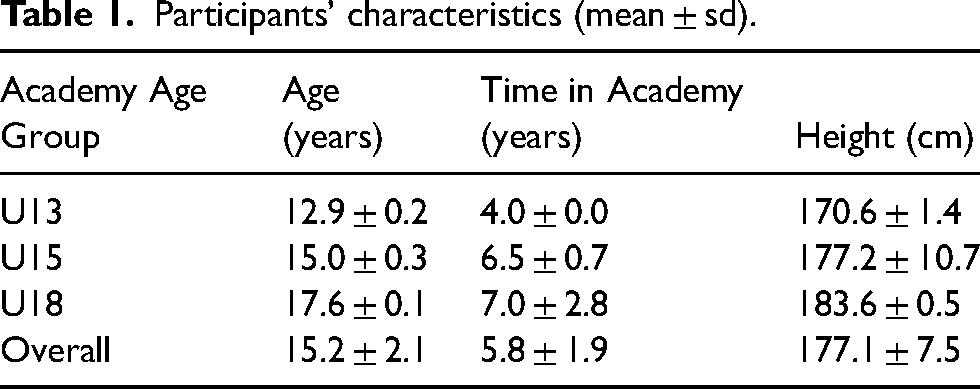
Institutional ethics approval was granted by Loughborough University (LEON ID: 21806), in line with the Declaration of Helsinki. The GKs from the Under 13 (n = 2), Under 15 (n = 2) and Under 18 (n = 2) teams in a Category 1 English football academy participated; their characteristics are shown in Table 1. To be included, each GK must have played a minimum of 5 games in their age group during the 2023/24 season.
Participants’ characteristics (mean ± sd).
Procedure
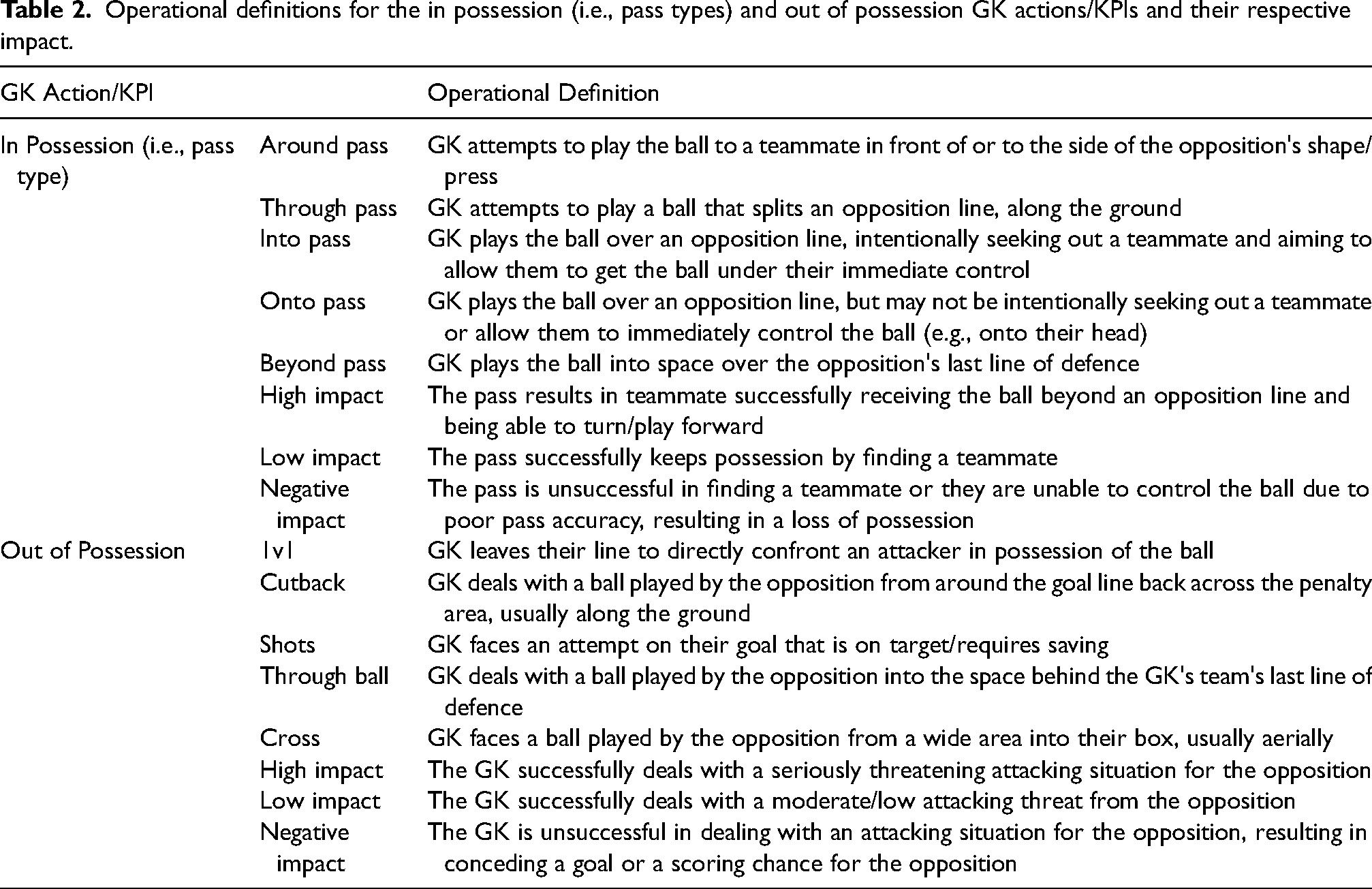
Performance analysis research guidelines were adhered to throughout. 25 All matches (n = 71) from the club's Games Programme played by the U13 (n = 24), U15 (n = 20) and U18 (n = 27) GKs were observed and analysed. A club-specific notational analysis system was used to assess the prevalence and success of a range of IP and OP actions (Table 2). KPIs were selected and defined by the clubs’ GK coaches and analysts, using their experiential knowledge of academy football. 26 The U13s & U15s GKs’ actions were coded by the Academy Performance Analyst, with the U18s actions coded by an experienced GK coach, using Hudl Sportscode (Hudl Sportscode, Nebraska, USA). Clear operational definitions were developed and agreed (Table 2), and inter-operator reliability was calculated using Cohen's Kappa, 27 based on data from 2 matches per age group, as k = 0.93, defined as very good. 28
Operational definitions for the in possession (i.e., pass types) and out of possession GK actions/KPIs and their respective impact.
Data processing and analysis
Individual match data were exported into Microsoft Excel (Microsoft, USA), where the prevalence and impact of the GKs’ actions were normalised to produce percentages, to faciliate age-group comparisons. Using IBM SPSS Statistics (Version 28), the assumptions of normality were assessed and met, with one-way ANOVAs therefore used to identify age-group differences in the prevalence of actions performed. Mixed-design ANOVAs were conducted to identify age-group differences in the proportions and impact of IP and OP actions performed. If the assumpution of sphericity was violated, a Greenhouse-Geisser correction was applied, and Gabriel's post-hoc test was conducted if the ANOVA yielded a significant result. Statistical significance was set a priori at p < 0.05.
Effect sizes were calculated to assess the magnitude of any differences; eta squared (η2) for one-way ANOVAs, partial eta squared (ηp2) for mixed-design ANOVAs and Cohen's d for post-hoc comparisons. Effects sizes were defined according to Cohen 27 as: η2 0.02 = small, 0.13 = medium, 0.26 = large; ηp2 and Cohen's d 0.2 = small, 0.5 = medium, 0.8 = large.
Results
Total actions
Figure 1 displays the prevalence of IP and OP actions, as percentages of total actions performed, for each age group. IP actions (78.05 ± 8.28%) were more prevalent than OP actions (21.95 ± 8.28%) at all age groups (F(1,68) = 2111.96, p < 0.001, ηp2 = 0.97). The proportion of IP and OP actions also differed between age groups (F(2,68) = 60.16, p < 0.001, ηp2 = 0.64), with the U18s performing a higher proportion of IP actions (85.29 ± 3.59%) than the U13s (69.75 ± 5.59%) (p < 0.001, d = 3.31) and U15s (78.22 ± 5.99%) (p < 0.001, d = 1.43). The U15s performed a higher percentage of IP actions than the U13s (p < 0.001, d = 1.46). Conversely, the U13s (30.25 ± 5.59%) performed a higher proportion of OP actions than the U15s (21.78 ± 5.99%) (p < 0.001, d = 1.46) and U18s (14.71 ± 3.59%) (p < 0.001, d = 3.31), and the U15s performed a higher proportion than the U18s (p < 0.001, d = 1.43).
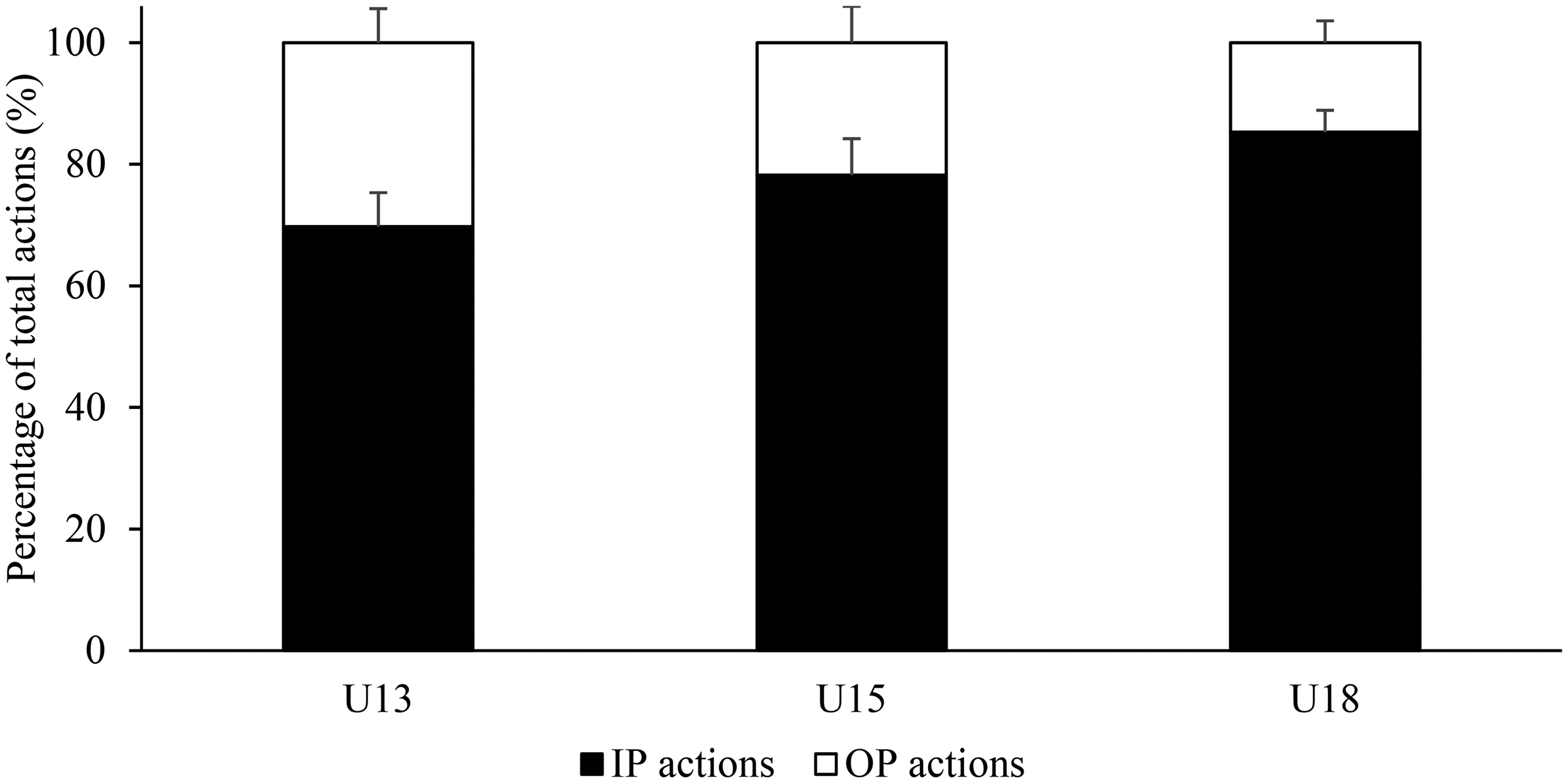
Proportion of IP and OP actions, as percentages of total actions performed, for each age group (mean ± sd).
Prevalence of in possession actions (i.e., pass types)
Figure 2 shows the prevalence of each IP action (i.e., pass type) as a percentage of the total number of passes performed, for each age group. A significant main effect was found for pass type (F(1.67, 113.76) = 1365.23, p < 0.001, ηp2 = 0.95), and a pass type×age group interaction was detected (F(3.346, 113.764) = 9.44, p < 0.001, ηp2 = 0.22). The U13s (55.91 ± 6.47%) performed a lower percentage of around passes than the U15s (62.79 ± 11.74%) (p < 0.05, d = 0.73) and U18s (65.30 ± 5.19%) (p < 0.001, d = 1.60). The U13s (15.19 ± 3.58%) attempted a higher proportion of through passes than the U15s (7.83 ± 2.60%) (p < 0.001, d = 2.35) and U18s (10.58 ± 3.48%) (p < 0.001, d = 1.31), with the U18s attempting more than the U15s (p < 0.05, d = 0.90). The U18s (6.37 ± 2.72%) attempted a lower proportion of onto passes than the U13s (9.66 ± 3.76%) (p < 0.01, d = 1.00) and U15s (9.04 ± 4.17%) (p < 0.05, d = 0.76), and the U18s (2.69 ± 1.76%) performed a higher proportion of beyond passes than the U13s (0.85 ± 1.35%) (p < 0.001, d = 1.17).
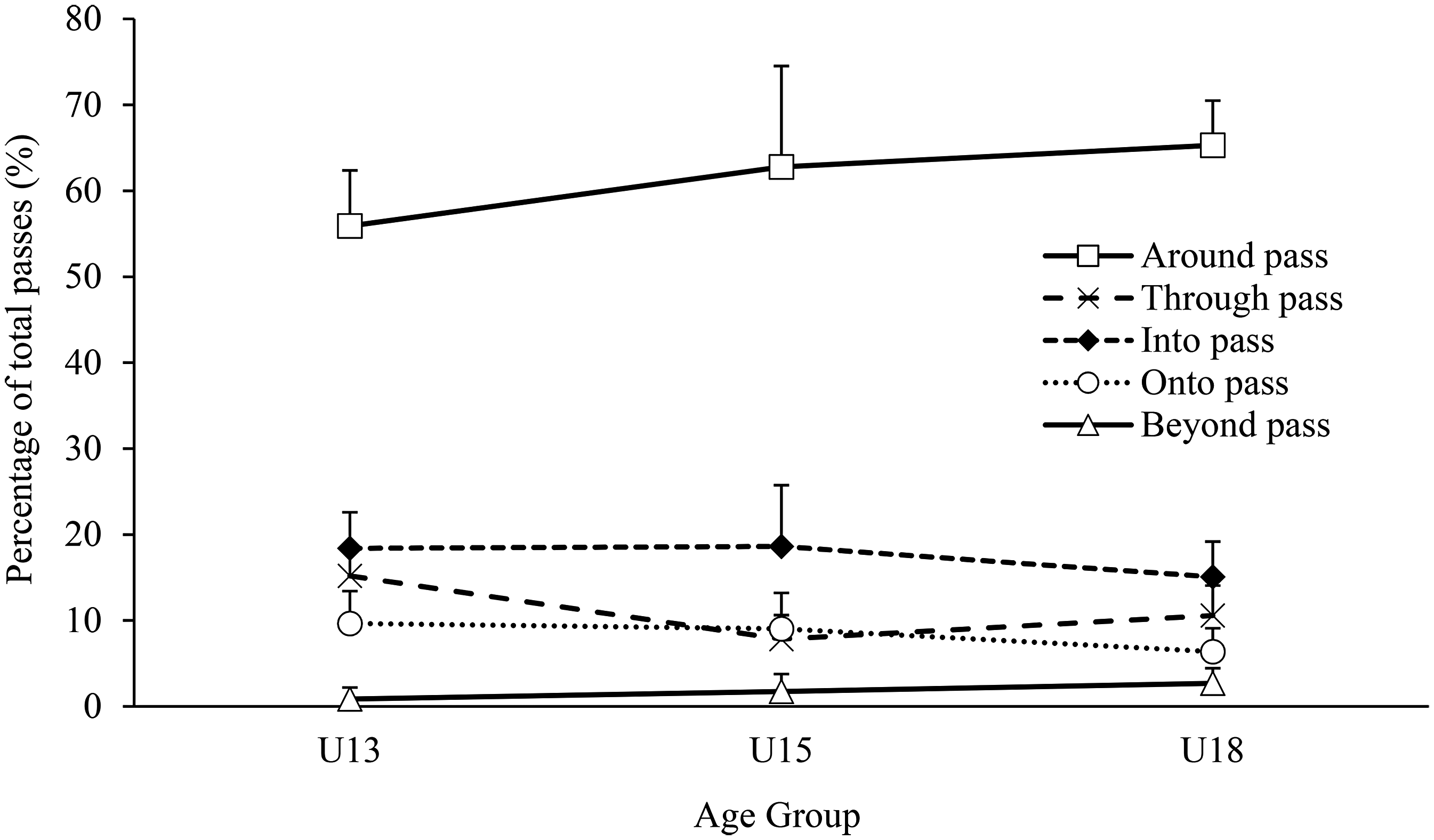
Prevalence of the 5 IP actions (i.e., pass types) for each age group, as percentages of total passes (mean ± sd).
Impact of in possession actions (i.e., pass types)
Figure 3 shows the proportion of high, low and negative impact IP actions, as percentages of total IP actions performed by GKs in each age group; no differences were revealed (F(2.85, 96.74) = 1.30, p > 0.05, ηp2 = 0.04).
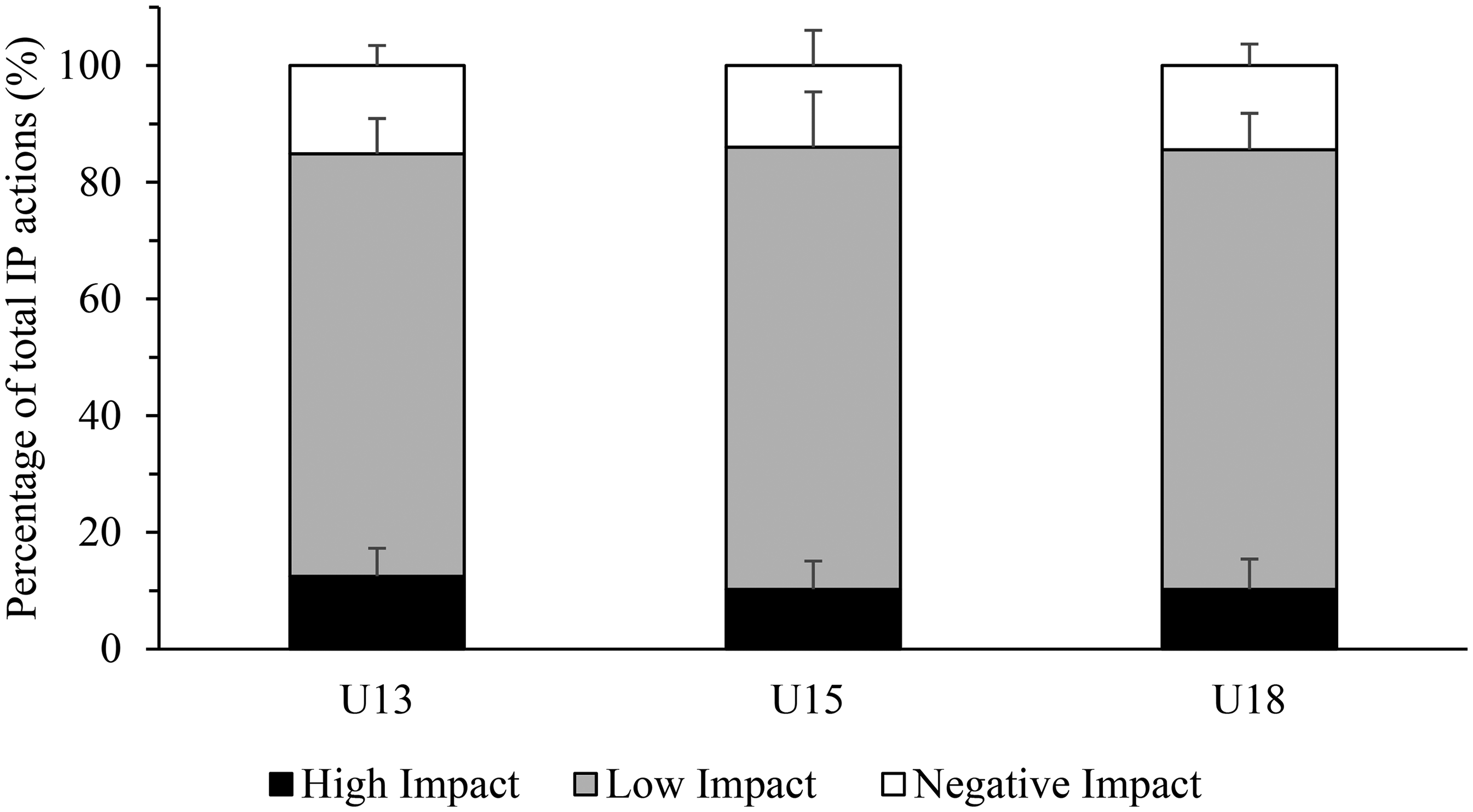
Percentage of high, low and negative impact IP actions for each age group (mean ± sd).
Table 3 displays the percentage of high, low and negative impact actions for each IP action for each age group. Differences in impact were observed for 3 individual IP actions. The impact of the GKs’ around passes differed between age groups (F(2.82, 96.03) = 6.22, p < 0.001, ηp2 = 0.16). Post-hoc testing revealed that the U13s performed a higher proportion of high impact around passes than the U18s (p < 0.05, d = 0.64), and more negative impact around passes than both the U15s (p < 0.05, d = 0.95) and the U18s (p < 0.05, d = 0.67). The U13s performed a lower percentage of low impact around passes than the U15s (p < 0.01, d = 1.02) and the U18s (p < 0.01, d = 0.87).
Percentage of high, low and negative impact actions for each IP action (i.e., pass type) for GKs in each age group (mean ± sd).
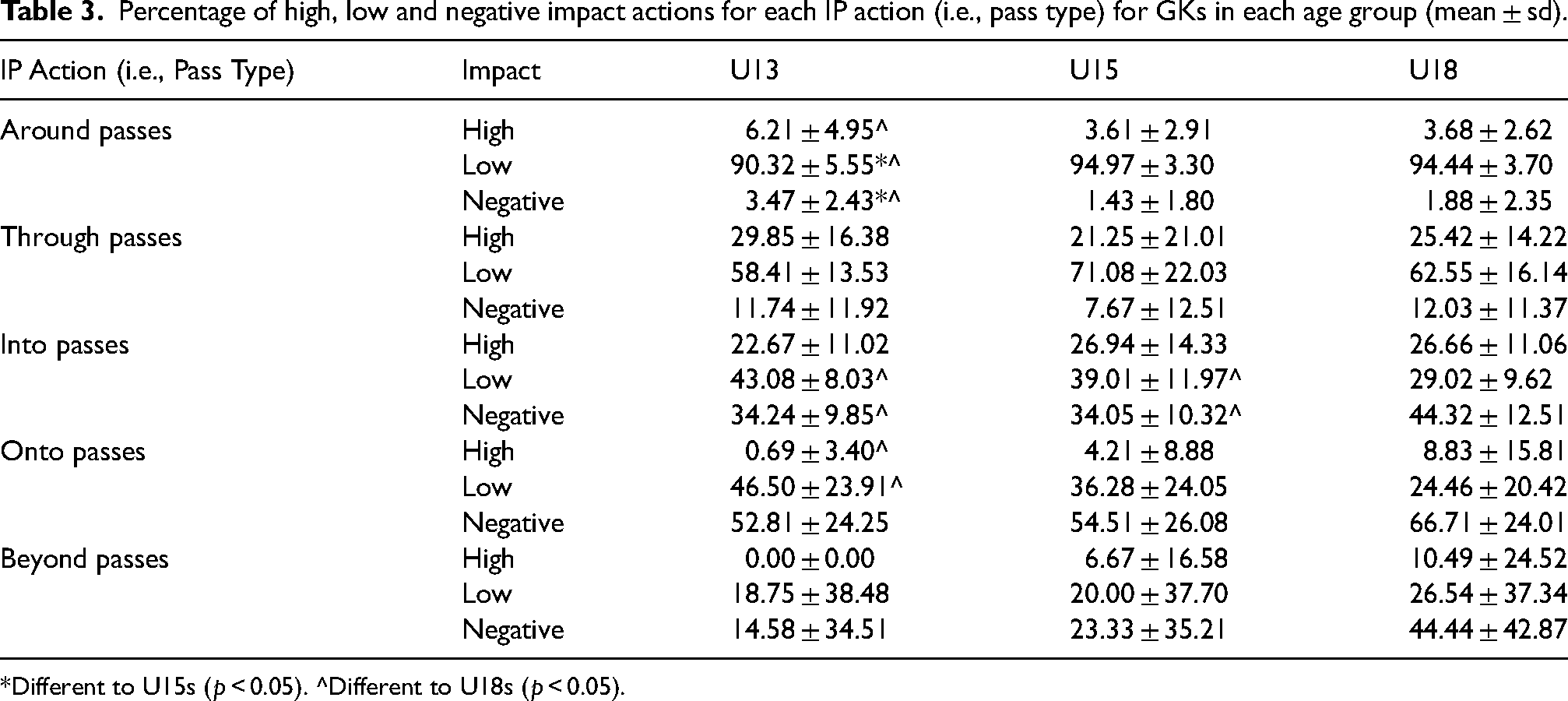
*Different to U15s (p < 0.05). ^Different to U18s (p < 0.05).
The impact of the GKs’ into passes differed between age groups (F(4, 136) = 6.41, p < 0.001, ηp2 = 0.16). The U18s performed a lower percentage of low impact into passes than the U13s (p < 0.001, d = 1.59) and U15s (p < 0.01, d = 0.92), respectively. The U18s recorded a higher percentage of negative impact into passes than both the U13s (p < 0.01, d = 0.90) and the U15s (p < 0.01, d = 0.90).
The impact of the onto passes by the GKs’ also differed between age groups (F(2.74, 93.30) = 4.11, p < 0.05, ηp2 = 0.11). Post-hoc testing revealed that the U18s performed a higher percentage of high impact onto passes than the U13s (p < 0.05, d = 0.71), and the U13s performed more low impact onto passes than the U18s (p < 0.01, d = 0.99).
Prevalence of out of possession actions
Figure 4 displays the prevalence of the OP actions for each age group. There was a significant main effect for the prevalence of OP actions (F(4, 272) = 281.59, p < 0.001, ηp2 = 0.81), but no interaction between the prevalence of OP actions (1v1s, cutbacks, shots, through balls and crosses) and age group (F(8, 272) = 1.53, p > 0.05, ηp2 = 0.04).
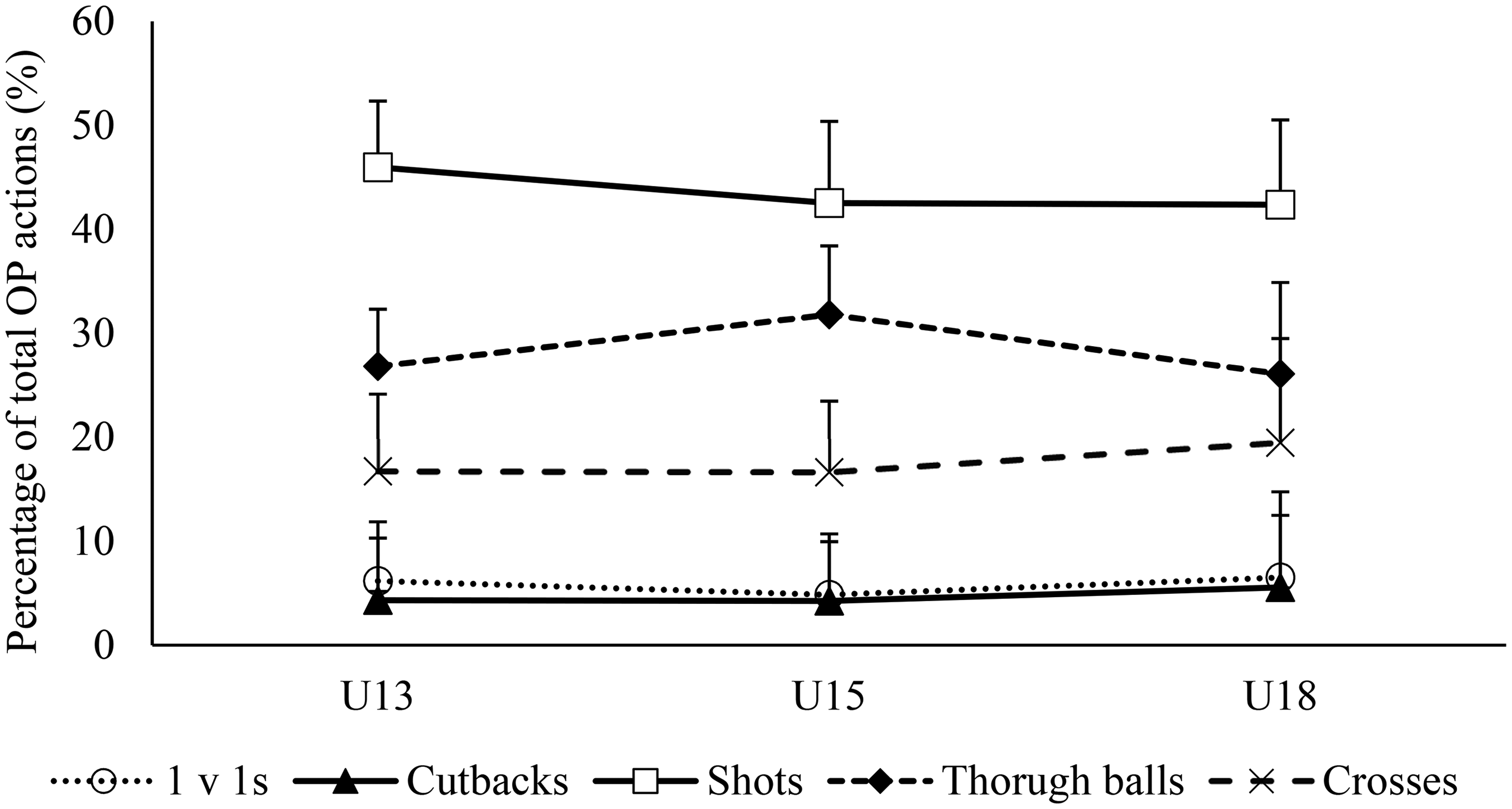
Prevalence of the 5 OP actions for each age group, as percentages of total OP actions (mean ± sd).
Impact of out of possession actions
Figure 5 shows the proportion of high, low and negative impact OP actions, as percentages of total OP actions performed by GKs. An interaction effect was identified between age group and the impact of total OP actions (F(3.35, 113.79) = 3.53, p < 0.05, ηp2 = 0.09), with the U13s performing more low impact (p < 0.05, d = 0.76) and fewer negative impact actions (p < 0.01, d = 0.98) than the U18s.
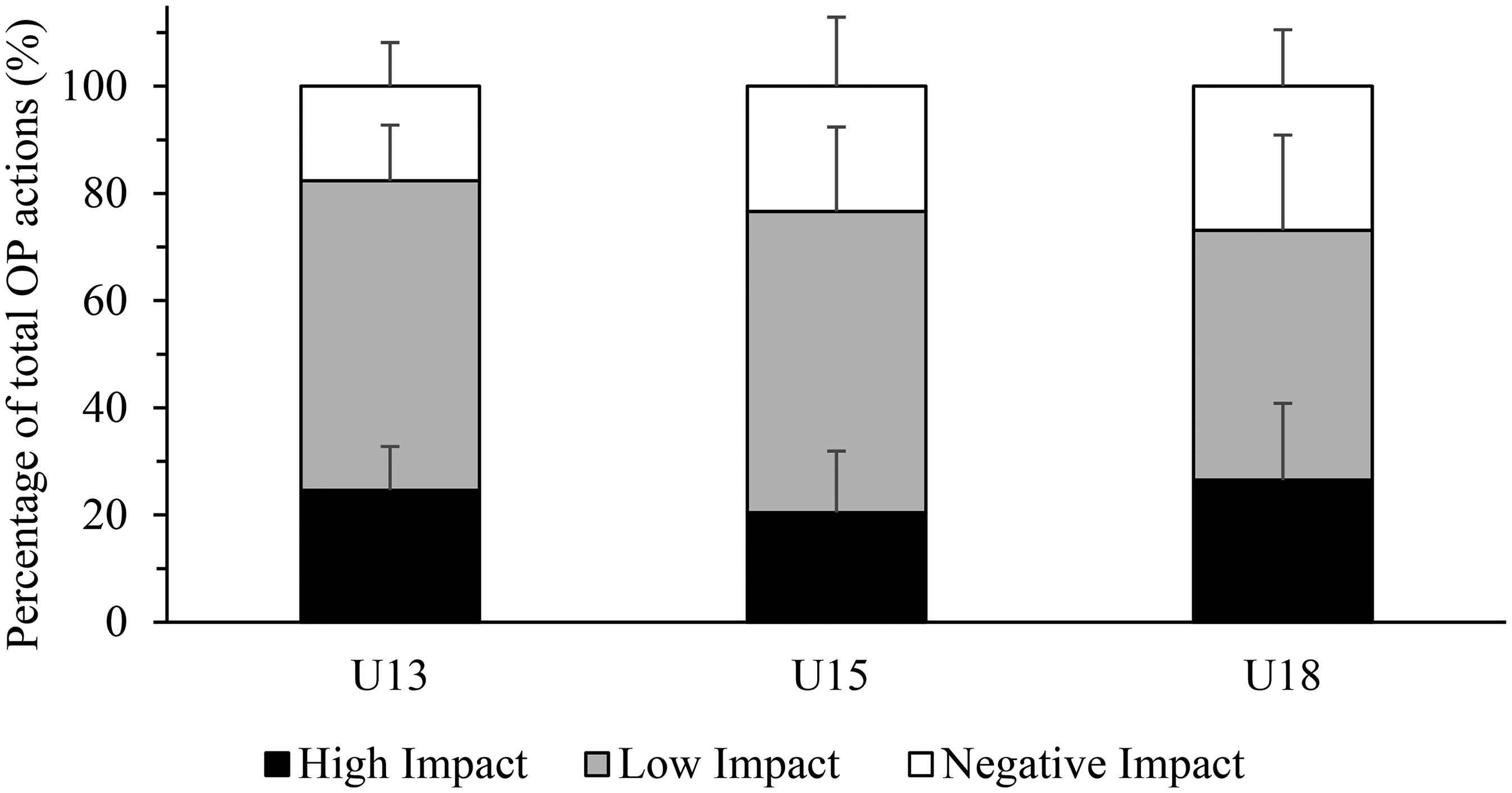
Percentage of high, low and negative impact OP actions for each age group (mean ± sd).
Table 4 displays the percentage of high, low and negative impact actions for each individual OP action for each age group. No age group×impact interactions were identified for 1v1s, cutbacks, shots or through balls, however, the impact of the GKs’ crosses differed by age group (F(4, 136) = 3.567, p < 0.01, ηp2 = 0.10). When facing crosses, the U18s performed more high impact actions than the U15s (p < 0.05, d = 0.67), and fewer low impact actions than both the U13s (p < 0.05, d = 0.79) and the U15s (p < 0.05, d = 0.73).
Percentage of high, low and negative impact actions for each OP action for GKs in each age group (mean ± sd).
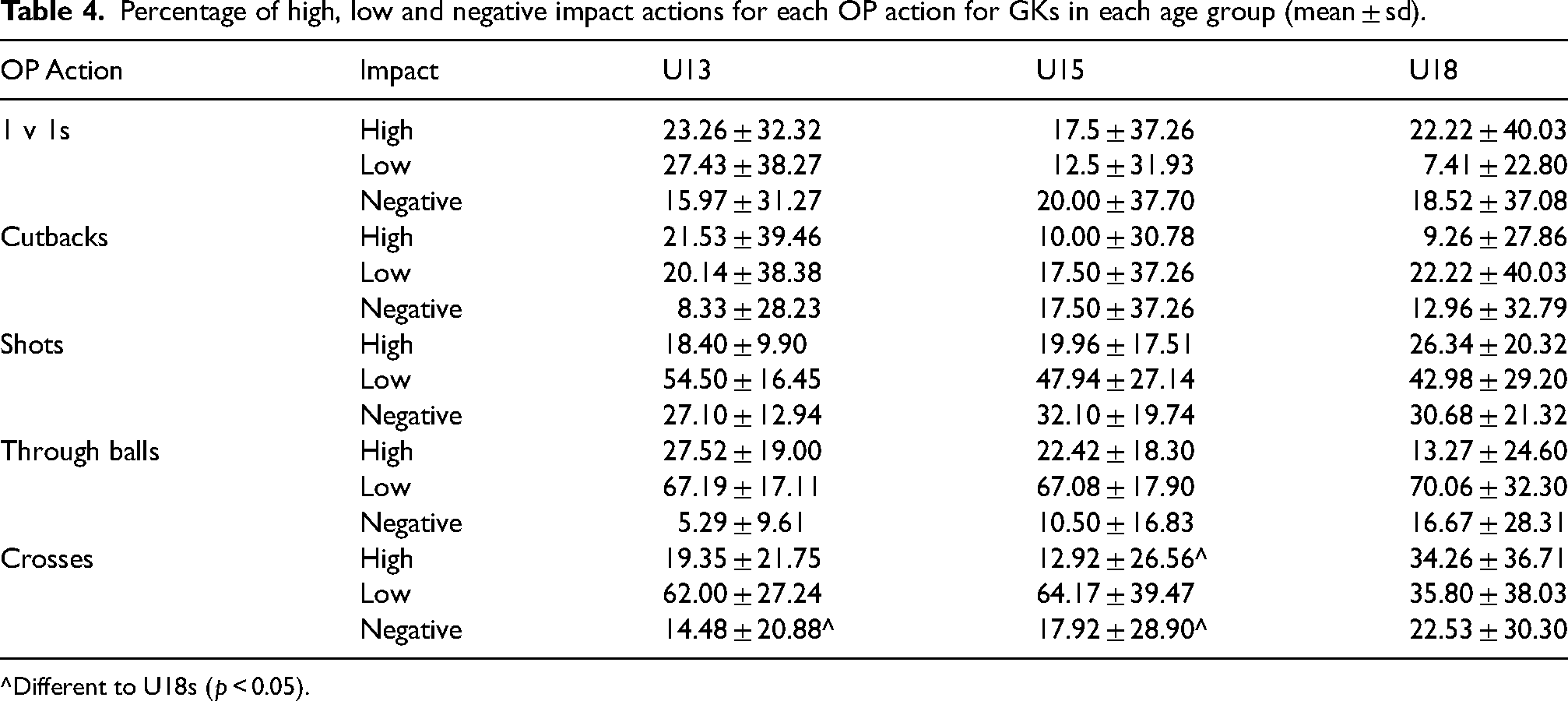
^Different to U18s (p < 0.05).
Discussion
The aim of this study was to compare the technical and tactical demands and capabilities of U13, U15 and U18 academy GKs, both IP and OP, in an English Category 1 football academy. Results revealed that the older the age group, the more IP actions and fewer OP actions were performed, as a percentage of total actions. Age group differences were found in GKs’ distribution methods IP, with the U18s GKs attempting more beyond passes, but interestingly a lower proportion of into and onto passes than the younger age groups. No differences were found in the prevalence of OP demands placed on the GKs across the age groups. Notably, the U18s performed more negative impact OP actions than the U13s, but excelled compared to the other age groups when dealing with crosses.
In possession actions
In recent years, the ratio of GK IP to OP actions has increased, as coaching philosophies have evolved, placing more importance on GKs IP.9,16,18,20 Results revealed that IP actions comprised 70–85% of total GK actions across all age groups, largely aligning with recent research by Kielkopf & Keiner, 16 who found distribution accounted for 73–77% of elite German senior and academy GKs’ actions. This finding is also mirrored across top level European football, where 75–80% of GK actions were reported to be offensive. 18 Our findings may be slightly higher than those seen in senior football, however, due to widespread encouragement of GK build-up play in academy football.16,20 Our study also found that the proportion of IP actions increased with age, contradicting Kielkopf & Keiner's 16 finding that technical and tactical requirements did not significantly differ with age or level of competition, and the notion that younger GKs are involved more IP than their older counterparts. 20 Considering the complex interactions and contextual factors that influence football matches, 8 there may be several possible explanations. One such factor could be the playing style adopted by each team. Martín-Castellanos et al. 19 identified six different playing styles in the Spanish La Liga, with possession-based build-up, which relies heavily on the involvement of the GK, being the most prevalent and successful style. Adopting a possession-based style has become increasingly popular, as it allows teams to dictate games and has been associated with elite level success for teams such as Barcelona, Manchester City and Spain.19,29 However, the technical abilities of the players, as well as the tactics employed by the opposition, greatly influence the most effective playing style for a particular team, with high-intensity pressing, counter attacking, and direct play also reported to be successful.19,29 So, it may be that the personnel comprising the U18 team were suited to a possession-based build-up style of play, with the GKs being confident with the ball at their feet, whereas the U15 and U13 teams may have utilised their GK slightly less IP, having found a different style of play to be more effective. Additionally, as GKs tend to practise with the ball at their feet less often than outfield players, 30 the U18 GKs’ additional years of training and development compared to the younger GKs may have led to more competent ball-playing abilities. Furthermore, the U18 players may be more mature cognitively and have developed more functional decision-making processes, 31 and thus exhibit enhanced adaptability to different playing styles.
The current findings could also be explained by contemplating the reduction in the proportion of OP actions with age. This trend was seen to a lesser extent in Kielkopf & Keiner's 16 study, but was theorised to be due to more astute and compact defending in older teams; this is reinforced by Dayus et al.'s 23 research, where the number of shots on target decreased with age, despite more final third entries. This theory is further supported by Blomqvist, Vänttinen and Luhtanen, 32 who found that, despite having a basic understanding of defensive requirements, younger players had greater appreciation for offensive responsibilities. Anecdotally, younger players tend to gravitate towards attacking rather than defensive play, perhaps due to the inherent enjoyment and enthusiasm for scoring. However, Blomqvist et al.'s research 32 investigated secondary school players, who were less likely to have access to high-level coaching and a competitive games programme, so the results may not be representative of Category 1 academy players.
Into and onto passes
Interestingly, the U18s executed a lower percentage of into and onto passes than the younger age groups (moderate-large Cohen's d effect sizes). This contradicts past research in GK distribution, 20 which found that younger GKs utilised areas closer to their own goal more often than older GKs, who were comparably more likely to play long. It was proposed that this could be due to physiological differences, with older GKs possessing the power required to kick further. 20 However, the youngest GK observed in their study was U19, with the others all being seniors, and therefore, this may not be applicable to younger academy GKs. Additionally, recent research in English academy football has revealed that a selection bias for players who mature early or on time exists from U12s, and persists throughout the age groups, with no players of late maturation involved in the U15s.33,34 Furthermore, Gil et al. 35 reported that GKs recruited into a professional football club at age 9–10 years were older, taller and had a more advanced maturation status than those not selected. These biases may help explain why the U13 and U15 GKs in the present study were both able and inclined to play a higher proportion of into and onto passes. However, with only two GKs per age group, it is possible that individual preferences contributed to this contradictory finding.
Another possible reason may be the style of play adopted by each age group, which may be due to differing coaching philosophies. 20 Fewer into and onto passes, alongside a higher percentage of around passes supports the theory that the U18s adopted a more possession-based build-up style through their GK. When the U18s did play into passes, 44 ± 13% of them had a negative impact, losing possession for their team more often than the other age groups (U13s = 34.2 ± 9.9%; U15s = 34.0 ± 10.3%). This may be due to the structure of the team when playing out from the GK, which supported the use of around and through passes to areas closer to their own goal, leading to fewer options to play into passes and making possession retention more difficult with this distribution technique. It could also be due to weaknesses in the technical abilities of the individual U18 GKs, 8 highlighting a potential area of focus for their individual development plans (IDPs), with the application of these used as part of a framework to assess development. 6
Around, through and beyond passes
Conversely, the U13s played a lower proportion of around passes and with less consistency, as they had a higher percentage of high impact than the U18s, but more negative impact around passes than both other age groups. In professional football, more consistent performances have been reported to result in an increased likelihood of longer-term success for teams, compared to excelling in some games but performing below average in others. 36 However, inconsistencies are common at a young age, due to less well-developed mechanisms of psychological control 37 and physiological changes during growth. 38 Improving the accuracy and consistency of the younger GKs’ around passes is still crucial, as losing possession near their own goal significantly increases the likelihood of the opposition scoring, compared to turning the ball over higher up the pitch, 39 and may have greater consequences in competitive matches as GKs progress through the age groups. This finding may also help to explain why, in previous research, younger GKs have been shown to face more shots on target than older GKs.
Despite indications that the U18s adopted a build-up style of play with a higher proportion of around and through passes, they also executed a higher percentage of beyond passes (the longest type of distribution), than the U13s. This may indicate that the younger age group struggled to kick beyond the opposition's last line of defence, so when kicking long, they looked to find teammates with into and onto passes instead. Additionally, while all the teams played an 11v11 format, the U13s used a reduced pitch size, so there may have been less space available in behind the opposition's defence, limiting the opportunities for the U13 GKs to play beyond passes.
Psychological factors
It's important to note that players’ decision making can be affected by psychological factors.37,40 The frequency of through passes, arguably the highest risk distribution type, as it utilises zones close to the GKs’ own goal and requires high levels of precision to penetrate opposition lines, was lowest for the U15s and highest for the U13s. The U15s games programme includes more competitive games (league and knockout competitions), which increases the pressure on players to succeed. This may lead to avoidance behaviour, as reduced confidence leads to fewer risks being taken in matches. 40 In comparison, the U13s’ approach towards risky situations may have stemmed from the relative lack of competitiveness of the matches, 40 with no league and minimal cup games. The number of opportunities for GKs to play through passes largely relies on the movement and confidence of the outfield players to receive the ball in tight areas, 20 as well as the defensive structure of the opposition. Recent research has found that psychological control positively correlates with age in academy football players, with negative energy, motivational and attentional control, and consequently confidence, all higher in older age groups.37,41 Increased confidence in the U18s may explain their willingness to receive the ball in tight areas close to their own goal more often. Additionally, the tactical instructions imposed by coaches and their response to turnovers from negative impact through passes may also influence the willingness of the GKs to execute this type of distribution. 8 It should be noted that while players’ preferences and different coaching styles may influence the prevalence of the IP actions performed, this did not coincide with differences in the impact of IP actions performed between age groups. This could suggest that the prevalence and impact of IP actions are not inherently linked, and/or that neither coaching style nor players’ preferences influence the impact of IP actions. Furthermore, the teams’ playing formations were not recorded in this study; it's possible that these could influence the prevalence and impact of actions performed.
Out of possession actions
Aligning with Kielkopf and Keiner, 16 no differences in the prevalence of OP actions between age groups were found, suggesting that the variation in the opposition's attacking play may have been similar across the age groups, and thus, the variation in the defensive demands placed on the GKs were also similar. However, Dayus et al. 23 found that older academy GKs face fewer shots on target than their younger counterparts. While this may be true in absolute terms, as a proportion of total OP actions, the current study found no meaningful differences in the prevalence of shots on target between the age groups. However, the quality of the shots and the level of technique required to successfully deal with them were not considered here, with past research finding professional GKs faced faster and more precise shots than younger academy GKs, requiring explosive ‘push-off’ dives to reach the ball. 16
The proportion of negative impact OP actions increased with age, from 18 ± 8% at U13s to 27 ± 11% at U18s. Although perhaps counterintuitive (as technical capabilities would be expected to improve with age), it could be explained by the superior attacking capabilities of the older opposition producing more challenging situations for the GKs to deal with. This includes quicker, more precise shots and crosses into areas that are harder for GKs to intercept, as well as more creative play in the penalty area and in 1v1 situations. 16 Conversely, the U18s executed a higher percentage of high impact actions when dealing with crosses than the younger GKs, which supports Kielkopf & Keiner's 16 findings, and may be attributable to improved decision making with increased age and skill level, including choosing when to come to collect a cross and when to catch or punch the ball away. 17
Limitations
The small sample size limits the generalisability of the findings; however, two GKs per age group is typical within English football academies. Additionally, analysis was conducted over a single season; extending the research over subsequent seasons is crucial to develop a more robust database and track GKs’ development pathways. Finally, aspects that could influence the prevalence and impact of actions performed, such as coaching style and team formation, were outside the scope of the study.
Practical implications and future directions
From a coaching perspective, findings suggest that OP training sessions should be designed to be progressively more challenging as GKs advance through the age groups, to ensure that they are technically and tactically capable of coping with the increased threat from more sophisticated opposition attacks. However, further exploration is warranted, as the threat and challenge of opposition attacks was not quantified in this study. Due to an increased reliance on GKs IP over recent years, coaches could consider including them in possession-based sessions with outfield players from a young age to improve their technical and decision-making skills. However, an appropriate balance must be sought between GK-specific training and training with outfield players, given the unique demands GKs face and the limited time available for young players to train alongside their education.
With the range and increasing prevalence of IP actions academy GKs must perform, it is crucial that they develop all pass types, not just those associated with a specific coach or playing style. It is also important that coaches are aware of the age-specific demands of GKs, to allow them to help their players develop a skillset that is sufficiently robust for the next age group up, not just their current age group. Constraints-based coaching activities could support this where needed; for example, pitch size could be temporarily reduced (further) to allow younger GKs to practice beyond passes (if physical limitations were deemed to explain why U13s perform fewer beyond passes than U18s). Specific focus could be placed on improving the impact of into and onto passes to help teams retain and advance possession when playing long. In line with Pinder et al.'s 42 representative learning design, this may require practising executing longer passes in training against an opposition, to more accurately simulate the challenges of successfully finding a teammate from distance during a game. Additionally, coaches should consider individual GKs’ strengths and weaknesses both IP and OP, relative to age group norms and expected development trajectories, to inform IDPs and facilitate progress.
Extending this research over multiple seasons is paramount to help inform future talent identification-based decision-making. 5 It should be noted that the current findings are applicable only to the age groups analysed, hence, future research investigating the technical and tactical demands and capabilities of Foundation Phase GKs is recommended, to facilitate specificity for younger age groups. The relationships between contextual factors, such as the strength of the opposition, tactics, style of play and game situation, and the demands on and success of GK actions could also be quantified, rather than solely theorised. 8 Links between physiological and psychological adaptations with age and GK performance could also be investigated, to support a holistic approach to elite player development. 6
Conclusion
This study has provided insights into the technical and tactical demands placed on U13, U15 and U18 academy GKs. Findings revealed that the Category 1 GKs were more involved IP as they progress through the age groups, which could reflect differing playing styles or the higher number of practise opportunities the older players have been exposed to. The high proportion of IP actions supports previous research and highlights the importance of effective distribution. Notably, the U18 GKs performed less successfully than the U13 GKs OP, which supports previous theories on attacking threats becoming more sophisticated, and thus harder for GKs to deal with, with age. Although only one season of data was collected for the three age groups in one academy, the results provide a level of detail previously unseen in literature on academy GKs, particularly in relation to IP actions. Significantly, the analysis of more specific technical KPIs and assessing the impact of GKs’ actions is critical for informing IDPs and age-appropriate training design. Through the continued implementation of the notational analysis system used, a robust database can be created to facilitate talent identification processes and the tracking of GKs’ development.
Footnotes
Acknowledgements
The authors would like to thank the coaching and PA staff at the Category 1 academy for facilitating this study.
Consent for publication
Consent for PA data to be used for research purposes (including publication) is specified in players’ academy contracts.
Consent to participate
Consent for PA data to be used for research purposes is included in players’ academy contracts; accordingly, the academy gatekeeper provided consent.
Data availability
The club has requested that the raw data not be shared publicly.
Declaration of conflicting interests
The authors declared no potential conflicts of interest with respect to the research, authorship, and/or publication of this article.
Ethical considerations
Ethics approval was granted by the institutional ethics committee.
Funding
The authors received no financial support for the research, authorship, and/or publication of this article.
