




Abstract
Female surfing is evolving rapidly with increasing expectations for athletes aspiring to qualify for the Olympics and World Championship Tour. Sprint paddling is a critical component of surfing performance, and paddling velocity in a pool setting has been shown to be a strong predictor of competition level in the ocean environment. Therefore, this study aimed to enhance sprint paddling performance among female surfers through a technique training intervention utilising a constraints-led approach. Experimental design included baseline testing prior to a 6-week control period, assessments pre and post the approximately 6-week training intervention, and a 6-week non-trained retention period with a final follow-up testing session. Pool-based testing consisted of a 15-m sprint-paddle test with video analysis for spatiotemporal data, a 12-s paddling force test, and a perception of paddling proficiency questionnaire. Additionally, internal and external shoulder strength and range of motion, and a 1RM maximum pull-up test were assessed in the gym. The training intervention applied Newell's Model of Constraints by manipulating task constraints to enhance paddling technique. Results showed significant improvements in sprint time to 15 m (PRE: M = 10.79 ± 0.40 s, POST: M = 10.50 ± 0.32 s) and average velocities (PRE: M = 1.57 ± 0.07 m/s, POST: M = 1.63 ± 0.04 m/s), stroke efficiency (decreased stroke count and increased stroke length), maximal and average force in the pool, and perceived paddling proficiency. These findings suggest that coaches should integrate this novel training into the daily training environment to continue to advance female surfing performance.
Introduction
In January 2024, Australian surfer Molly Picklum achieved the first-ever perfect 10/10 score for a female at Pipeline during the Pipeline Pro on the North Shore of Oahu, Hawaii, marking what has been called the “greatest heat in women's surf history” against Hawaiian surfer Betty-Lou Sakura Johnson. 1 This milestone highlights a generational shift in women's surfing, with female athletes challenging long-standing expectations and raising the bar for those aspiring to qualify for the Olympics and World Championship Tour (WCT). Previous research has identified sprint paddling as a key factor in surfing performance, with studies assessing sex differences in 15 m sprint paddling bouts in a pool setting suggesting that female surfers have potential for performance gains.2–4 While research has begun to investigate strength and conditioning strategies to improve paddling speed in female surfers, there remains a paucity of literature on female stroke kinematics and technique optimisation. 5 To further advance the sport for female surfers, it is essential to address this disparity.
Paddling
Surfers are judged exclusively on their wave-riding performance during competition, typically representing only 4% of total heat time. 6 The majority of time (>50%) is spent engaging in paddling bouts ranging from prolonged, submaximal efforts (endurance paddling) to short, powerful bursts (sprint paddling) lasting 4–5 s.7,8 Sprint paddling, accounting for 60–80% of paddling efforts, is crucial for positioning, wave-catching, paddling out to the lineup, priority paddle battles, and generating momentum for catching waves (see Appendix).6–12 Effective sprint paddling enhances speed and power for subsequent manoeuvres and is essential for catching larger, more critical waves that boost scoring potential.13,14 According to Secomb et al., 15 deficits in sprint paddling reduce wave-catching opportunities, limit skill development, and ultimately decrease scoring potential. Thus, sprint paddling ability is a key performance predictor in surfing and could be the difference between catching the winning wave of the heat, or not.
Due to limited surfing-specific paddling research, technical insights are often drawn from front-crawl swimming, which breaks down a single stroke cycle into four phases: entry and catch, pull, push, and recovery (Figure 1).14,16–18 Common technical issues like inefficient catch may hinder front-crawl swimming performance, while increased stroke length correlates with higher swim speeds.19–21 In surfing, a lower chest position during sprint paddling in men is associated with higher paddling speeds, which corresponds to greater activation of the latissimus dorsi, upper trapezius, and middle deltoid muscles.22,23 It is not surprising then that relative upper-body pull strength correlates with peak paddling velocity in male surfers.24,25 Additionally, research indicates a positive correlation between maximal force and sprint velocity in front-crawl swimming.26–28 Morouco et al. 29 measured tethered force across various front-crawl distances, finding that both maximal and average force were associated with higher velocities during 50 m sprints. This suggests that force may also be relevant for shorter distances, such as 15 m, highlighting the need for further investigation, particularly in female surfers, to refine technique for long-term performance gains.

Phases of the surf paddling stroke cycle. Reach occurs during the recovery phase and is characterised by increased length.
Learning design & constraints-led approach
When coaching to improve technique, it's important to consider the various approaches available and tailor them to the learner's needs. 30 Two primary methods for skill acquisition are Linear Pedagogy (LP) and Nonlinear Pedagogy (NLP). LP, considered the traditional approach, is based on the belief that there is an “optimal” technique or a “one-size-fits-all” model. 30 Coaches using this approach tend to rely on prescriptive methods, such as direct instruction and repetitive drill-based practice, to encourage athletes to consistently reproduce specific movement patterns. 30 However, LP has been criticised for being overly prescriptive and for relying on isolated drills that may not transfer effectively to real-world performance. 31 In contrast, NLP encourages exploration throughout the learning process, enabling learners to discover optimal solutions tailored to their individual needs.32,33 Aligned with the principles of ecological dynamics, which integrate concepts from dynamical systems theory, ecological psychology, and neurobiology, NLP emphasizes the interaction between athletes and their environment, where open skills—such as paddling—are performed in dynamic contexts that require constant adaptation to external stimuli.30,34,35 Within NLP, increased exploration fosters learning rather than hindering performance, with “mistakes” considered an integral part of the learning process.31,33,36,37 For instance, Lee et al. 33 found that twenty-four 10-year-old female beginner tennis players demonstrated greater movement variability when practicing under NLP, suggesting that effective performance can be achieved through multiple movement solutions, rather than relying on a single “optimal” technique.
The Constraints-Led Approach (CLA) is an example of NLP and a method of leveraging constraint manipulation to encourage athletes to discover unique movement solutions based on their individual, environmental, and task constraints. 31 Constraints define the boundaries that encourage or discourage goal-directed movements or behaviours and can be strategically manipulated to promote technical changes.31,33,38,39 Individual constraints relate to personal characteristics including structural (i.e., height and anthropometry) and functional (i.e., motivation, fear, focus) constraints. While structural constraints change slowly over time (i.e., childhood to adulthood), functional constraints are more fleeting and situation specific.31,40 Environmental constraints are any factors in the individual-environment interaction that are external to the individual, encompassing both physical (i.e., wave size and wind speed) and sociocultural (i.e., localism, power dynamics, cultural expectations) constraints.31,37,41 For instance, when a surfer paddles into a consequential wave that is pulling water off (of) dry reef, they must work in a harmonious interplay with their individual (i.e., arm span, fear, perception of action capabilities), environmental (i.e., wind direction and crowd), and task constraints to accomplish the goal of paddling into the wave successfully. In this study, individual and environmental constraints were controlled where possible (i.e., occurring in the pool setting) to assess the impact of technique on sprint paddling performance, while task constraints were manipulated to facilitate technical adaptation.
Task constraints consist of movement objectives, rules, and equipment that shape goal-directed behaviour, and can be manipulated to promote skill adaptation and effectively induce technique changes through NLP.31,42–44 This approach encourages athletes to explore and adapt, discovering emerging and unique movement patterns that suit their specific constraints. For example, Gray 45 created an activity called ‘Connection ball’ in which baseball batters place a rubber ball between their biceps and forearm of their back arm (furthest from the pitcher) and swing in any way while keeping the ball from falling out until as close as possible to the point of bat-ball contact. Thus, if the batter uses an undesired movement solution, such as an early separation between their arms and body, they cannot achieve the specified goal. In this example, the practitioner is using task constraints to elicit a change in technique through the addition of equipment (rubber ball) and rules around the instruction of the task. Therefore, through the implementation of targeted constraints, the individual will dynamically self-organise to optimise their unique movement solution to the task objectives.
Within the context of this study, improving an athlete's sprint paddling ability is crucial in fostering a positive perception of their action capabilities (i.e., perception-action coupling) and enhancing performance. 46 Improving paddling technique is intended to open-up more opportunities for action (i.e., affordances) which are shaped by both structural and functional (i.e., perception of paddling proficiency) individual constraints. Affordances are dynamic and evolve in response to changes in an individual's action capabilities. 47 As a result, a surfer who improves their sprint paddling technique would, in theory, be better equipped to respond effectively within their performance context. Therefore, a key consideration in any learning or performance environment is what the athlete perceives as possible (affords) within a given performance landscape.
Dann et al., 38 discussed ocean-based training as the “gold standard” in surf training due to its ability to uphold principles of representativeness and adaptability. However, because of the unpredictable nature of ocean conditions, coaches must remain flexible with applying alternative training modalities when ocean training isn’t feasible. In fact, studies have shown a strong correlation between paddling performance in a controlled environment and competition level, as evidenced by 15-metre sprint paddling times, peak velocity, and 400-metre paddling endurance in a pool-setting.48,49 Therefore, in the absence of favourable or accessible ocean conditions, the use of alternative training environments to develop surfing performance, including paddling, is justified.
Given the advantages of contemporary skill acquisition approaches like CLA, the current study investigates the effect of a pool-based CLA-focused technique development program on paddling velocity, specifically targeting the catch and reach phases of the stroke cycle. In addition to velocity, we aim to assess changes in force production, efficiency (measured through spatiotemporal data), the athlete's self-perception of paddling proficiency, and gym-based strength and range of motion (ROM). We hypothesise that a 10-session CLA-focused technique development program will improve surfers’ velocity and times to 5, 10, and 15 m in a pool, increase force output in the pool, enhance paddling efficiency (as evidenced by a reduced stroke count), boost perception of paddling proficiency, and increase upper-body strength and ROM in the gym. Ultimately, we propose that refining sprint paddling technique could play an important role for female athletes aspiring to succeed on the World Championship Tour (WCT).
Materials and methods
Participants
Twelve competitive Australian female surfers (n = 12, age 16.1 ± 5.8 years, height 161.4 ± 5.9 cm, weight 53.4 ± 8.2 kg, arm span 165.6 ± 5.3 cm) participated in this study, selected through convenience and purposive sampling based on availability and specific criteria (i.e., female competitive/elite surfers). Surfers were classified as ‘Trained/Developmental’ (n = 1), ‘Highly Trained/National Level’ (n = 4) or ‘Elite/International Level’ (n = 7) as defined by McKay et al. 50 and were competing at local ‘Boardriders’ competitions, the Pro Juniors Series, Qualifying Series (QS), and/or Challenger Series (CS) events. Due to injuries, variations in video quality, and scheduling constraints, not all twelve participants completed every testing session, as detailed in the Experimental Design and Statistical Analyses sections.
All surfers were required to provide their written informed consent before participating in this study and surfers under the age of 18 were required to provide the consent of a parent or guardian. Additionally, an Adult Pre-Exercise Screening System form or a Pre-Exercise Screening System for Young People (Source: ESSA) was completed, depending on age. This study was approved by the Griffith University Human Research Ethics Committee (Ref. 2023/126).
Experimental design
Surfers underwent an 18-week intervention including control (baseline [BL] to pre-training [PRE]), training (PRE to post-training [POST]), and follow-up (POST to follow-up [FOLL]) phases (Figure 2). Pool- and gym-based testing commenced 6 weeks before the start of the training intervention (BL; n = 10). Testing was repeated 6 weeks later (PRE; n = 10), <5 days before the training intervention began. The training intervention comprised 8–10 sessions performed over a 4 to 8-week period, depending on the individual surfer's competition schedule. After five training sessions, surfers completed a 15-m sprint-paddle test (mid-testing [MID]; n = 10). Following the intervention, POST (n = 9) testing was conducted. Six weeks after POST testing, with no further intervention-specific training, FOLL (n = 4) testing was completed. Surfers were encouraged to engage in all normal activity (i.e., surfing and gym-based training) during all intervention phases.
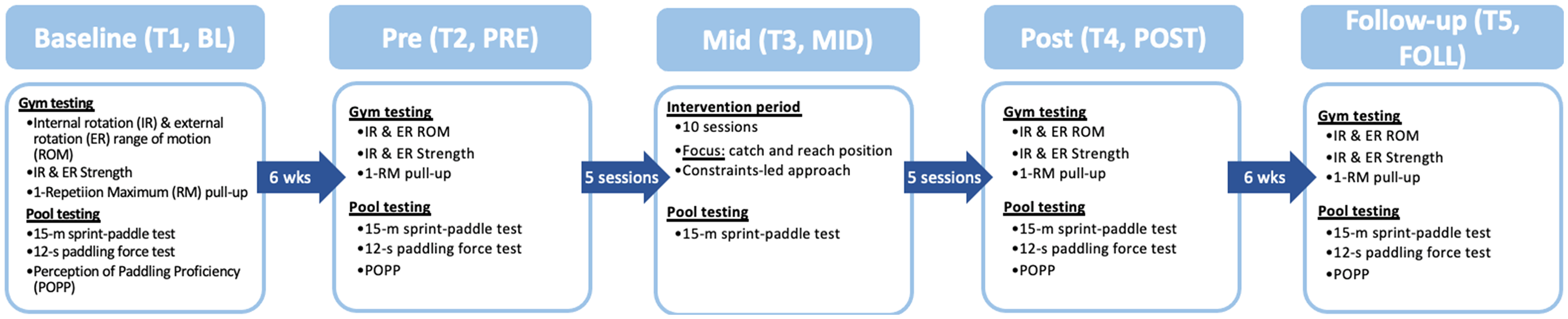
Experimental design including baseline (BL), pre-training (PRE), mid-training (MID, post-training (POST), and follow-up (FOLL) testing.
During BL, PRE, POST, and FOLL testing, pool testing was completed at least 4 h, and not more than 48 h, after dryland tests to allow for adequate recovery, flexible scheduling for the athletes, and to ensure testing was completed within a timeframe that reflected the current training adaptations. 51
Pool-based testing
Surfers conducted pool-based testing in an outdoor 25- or 50-m swimming pool depending on location. Surfers were asked to bring their standard competition surfboard for testing and use the same board for all testing sessions. Additionally, all surfers wore a spring suit (short arm and/or short leg) wetsuit or rash guard of no more than 2 mm and were asked to wear the same suit for all testing sessions. Surfers performed a warm-up consisting of a 100-m continuous paddle at 50% perceived intensity, followed by four efforts of 25 m (60%, 70%, 80%, and 90%) interspersed with 20 s of recovery between each bout, and finally 2 × 3 m at 100% separated by 1 min of rest. 15
As this study is conducted in a pool setting, outcomes are immediately concerned with technique change and how the individual is interacting in this aquatic environment. Therefore, the objective of the current study is to enhance sprint paddling performance over 15 metres in the pool. Transfer of skills to the dynamic ocean environment is anticipated and proposed for future studies.
15-m sprint-paddle test
Each participant completed three maximal effort 15-m sprint-paddling trials, with four min of recovery between each trial. Surfers began from a stationary prone position on their surfboard, with the first two trials incorporating kick, and the fastest time to 15 m was used for ‘with kick’ analysis. The third trial was performed without kick to determine the contribution of arms only (i.e., pull). A horizontal position transducer (IRex, Southport, Australia) was mounted on a standardised frame of approximately 1.2 m above the waterline, adjusted per pool location. Using a bulldog clip, the flywheel line from the IRex was attached to the middle of the posterior neckline of the surfers’ wetsuit. Timestamps were recorded at every 0.02 m of line released from the transducer flywheel, with instantaneous velocity calculated at 2000 Hz using custom software. As the transducer is designed to measure velocity in the horizontal plane, a correction was performed to adjust for the raised flywheel line angle.
For spatiotemporal analysis, sync lights were linked to the IRex system to synchronise velocity data with camera recordings. Two camera angles were utilised: (i) underwater side view (GoPro Hero 10, GoPro Inc., US) was placed 30 cm below the water surface and aligned with the surfer's navel to capture underwater stroke phases (i.e., catch, pull, and push), and (ii) overhead top view (GoPro Hero 11) captured above water view (i.e., recovery and reach), maintaining full-body visibility as trained staff moved alongside the surfer on the pool deck during the 15 m paddling effort.
12-s paddling force test
Three 12 s maximal stationary paddling trials were completed during each testing session with four min of rest between each trial. An IMADA strain gauge (2000 Hz sampling rate) was mounted at 0.84 m to 0.92 m height, depending on pool location. Surfers wore a waist belt and were tethered to the strain gauge via a rope looped at 2.2 m, creating a stationary tether. Surfers began each trial in a prone position on their surfboard and were instructed to paddle maximally for the duration of the effort. Surfers were given a 3-s countdown and verbal encouragement throughout. Force data was recorded using IMADA Force Recorder Standard software, and each trial was videoed with a 2D camcorder (4 K Panasonic HC-VXF1).
Perception of paddling proficiency (POPP)
A task-specific scale (i.e., Likert scale) was developed by the primary author in consultation with a High Performance Sports Psychologist and administered to assess athletes’ self-reported perceptions of their paddling ability before each pool-based testing session. Likert scales are used as an acceptable alternative method of measuring self-efficacy, which is concerned with an individual's perceived capability of a certain task (i.e., paddling ability).52,53 A five-step process was followed inclusive of (a) understanding the construct, (b) developing the items, (c) determining the outcome space (i.e., how items are organised and scored), (d) specifying the measurement model, and (e) gathering feedback and piloting the questionnaire. 54 Each item featured a straightforward, declarative statement, such as “I am good at most sports,” based on the Physical Self-Description Questionnaire (PSDQ). 55 Eight items were identified targeting paddling specific capabilities (See Supplementary Materials). Each item used a five-point rating scale ranging from strongly disagree (1) to strongly agree (5), with a neutral option of ‘neither agree nor disagree’ (3).52,56 Scores were evaluated both individually and as a combined total, with the aggregate score offering a more comprehensive representation of the dynamic nature of surfing, where all recorded elements are crucial for success. To ensure reliability and validity, pilot testing was conducted with five participants, ranging from recreational to former elite female surfers, all of whom were part of the Surfing Australia employee base. Test-retest reliability showed no significant differences between individual and combined scores when measured one week apart. Participants confirmed content was clear, relevant, within scope, and easy to follow.
Gym-based testing
Shoulder internal (IR) and external rotation (ER) range of motion (ROM)
Passive shoulder internal (IR) and external rotation (ER) ROM was assessed with surfers lying supine on a physiotherapy bed with their shoulder abducted at 90˚ and elbow flexed at 90˚. 57 The primary examiner stabilised the trunk and scapular region over the shoulder joint with one hand, and moved the forearm with the other hand, ensuring the 90˚ joint angles were maintained. 57 The secondary examiner measured the degree of IR and ER ROM using a handheld goniometer (Ӧssur, Ӧssur hf., Iceland). 58 Two trials were conducted per arm, with a third trial added if initial measurements differed by more than 5%. The maximum IR and ER ROM was recorded.
Maximal isometric internal and external shoulder rotation strength
The VALD Force Frame (VALD Performance, Brisbane, Australia) was used to assess unilateral, isometric shoulder strength with the shoulder joint abducted at 90˚, the elbow flexed at 90˚, and the torso alongside the crossbar. 59 Surfers commenced each trial lying supine with their legs straight and the non-testing arm across their chest to minimise compensation from other muscles. The warm-up consisted of one trial on each arm of 80% and 90% perceived intensity. Two maximal trials were performed per arm, with a third trial warranted if the initial efforts differed by more than 5%. Each trial involved pressing maximally against the pad internally for 5 s, resting for 10 s, and then pressing externally for 5 s. Maximum force produced in each trial was recorded, and two minutes of rest was required between trials. 60
One repetition maximum (1RM) pull-up
The 1RM pull-up assessed maximum upper body pull strength. Surfers performed a warm-up on a lat pulldown machine with two sets of five repetitions at 60% bodyweight, separated by 2-min rest. 61 They then performed one bodyweight pull-up. Technique required starting in a neutral grip with arms fully extended, pulling until the proximal inferior aspect of the mandible cleared the horizontal aspect of the bar, and returning smoothly without swinging or bouncing. 62 Surfers with successful attempts increased load using certified plate weights suspended from a lifting belt worn around the waist (increments between 1.25 kg and 10 kg). A 2-min rest was observed between each attempt. 62 Once a failed attempt occurred, the successful weight lifted in the previous effort was recorded as the subject's 1RM.
Training intervention
The training intervention was designed in collaboration with a national age swim coach who contributed knowledge of activities aimed at enhancing swimmers’ catch and reach techniques in front-crawl. Initial piloting involved the primary author performing these activities both in front-crawl and on a surfboard to assess their relevance to surfboard paddling. A notable observation was the restricted thoracic rotation caused by the surfboard. Once refined, activities were piloted with experienced competitive to elite female and male Australian surfers and coaches, outside of the study population, to evaluate their practicality and efficacy. Pilot surfers found activities engaging and effective in improving paddling technique, largely due to their gamified, process-oriented structure.
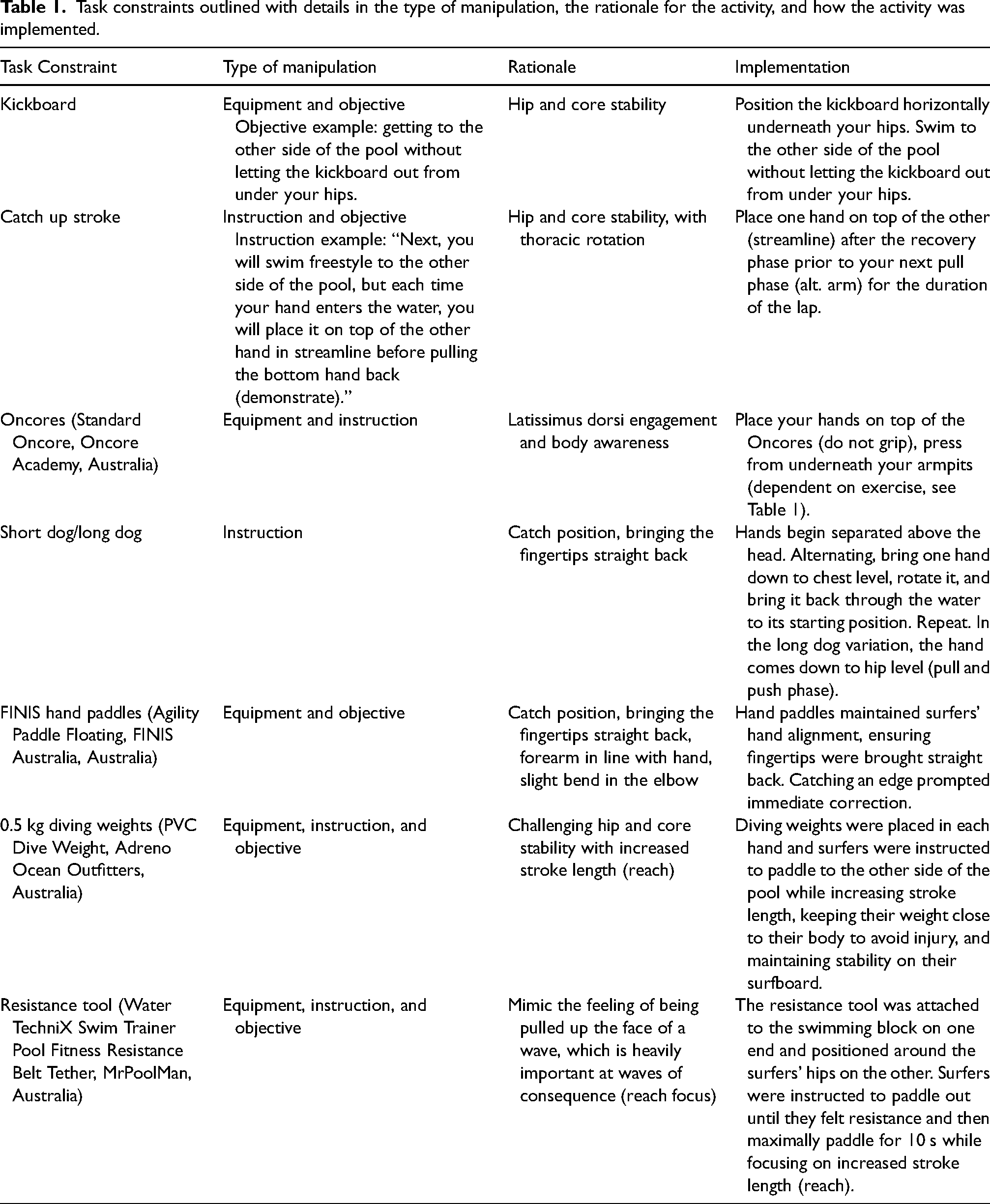
Activities were designed with reference to CLA. 31 Individual and environmental constraints were controlled where possible while task constraints were manipulated. Specifically, individual constraints were not manipulated directly as a part of the training intervention, with any changes (e.g., motivation, confidence) emerging organically based on interaction with the environment and tasks implemented during the intervention. Similarly, environmental constraints were not explicitly modified, and athletes interacted with a consistent pool-based environment during testing and training. Task constraints were directly manipulated and incorporated into the session design in the form of training aids (i.e., equipment), objectives, and instruction. Consequently, athletes were free to individually adapt their movement patterns to fit task constraints and satisfy the objectives (Table 1) of the designated training activity. Implicit (process focused) verbal instructions were provided sparingly by the coach, emphasising precise cues aimed at assisting athletes in developing their unique movement solutions, rather than directly imposing pre-conceived technical changes (Tables 1 and 2).
Task constraints outlined with details in the type of manipulation, the rationale for the activity, and how the activity was implemented.
Example of a training session structure and all activities. Each session lasted a duration of one hour.
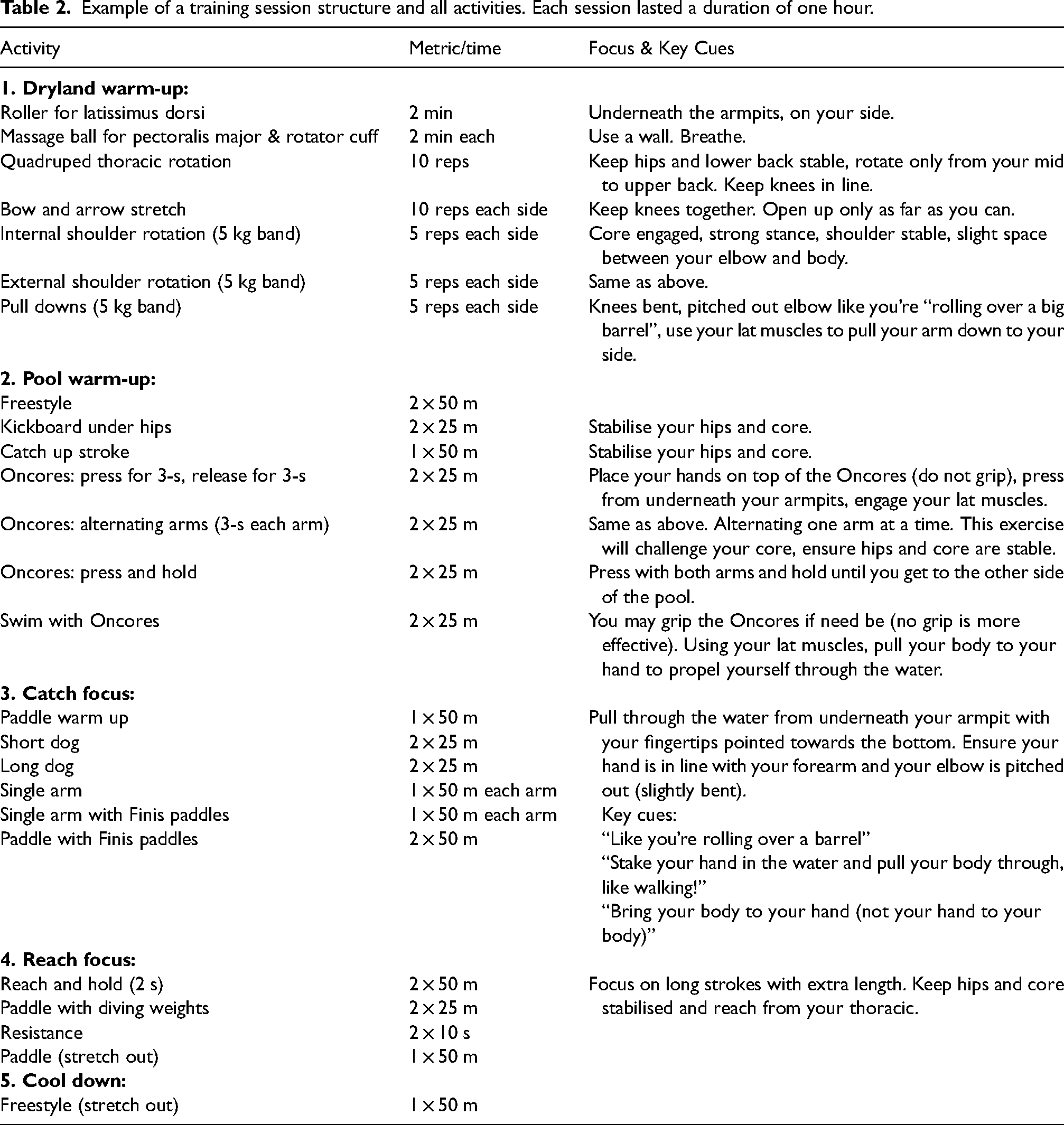
All instructional and coaching interactions were overseen by the primary author (PhD Candidate) due to their extensive coaching background and knowledge and dedication to the subject area. Each training session commenced with a 10-min dryland warm-up consisting of thoracic mobility exercises and a shoulder warm-up routine (Table 2). Surfers then participated in pool-based activities tailored to the session's focus and periodisation (Tables 1 and 2). Sessions were attended individually or in groups dependent on participants’ schedules. All sessions concentrated on refining either catch or reach positions, frequently integrating both aspects concurrently.
Data analyses
15-m sprint-paddle test
Data from the IRex Analyser (v21, Southport, Australia) was exported as a comma-separated value (csv) file and analysed in Microsoft Excel (Version 2301, Microsoft Corporation, Washington, USA). Trigonometric calculations and Pythagoras’ theorem were used to calculate the hypotenuse length for each 0.02-m displacement, based on IRex height above water level and distance from the wall. Additional calculations determined horizontal velocity. Outcome measures including time to 5, 10, and 15 m, the highest 1-m average velocity and the corresponding distance and time at which it occurred, were recorded.
Spatiotemporal
Spatiotemporal analysis aimed to assess stroke count and distance covered per stroke and across specific stroke phases (pull, push, and recovery). Spatiotemporal analysis was determined using AMR RX Motion Player Software (Swordfish v22.6.050, Southport, Australia), coupled with a K-Lite Codec Pack (v 1.9.24.38 Mega), and a Microsoft Excel database. Within AMR RX Motion Player Software, stroke phases were time stamped and segmented at distinct events: hand entry, catch, pull/push transition, and hand exit. Hand entry was identified as the first frame of finger entry, while catch was determined by the frame immediately after fingers ceased moving forward (i.e., pure downward displacement).63,64 The pull/push transition was determined as the frame where metacarpal-phalangeal joints were perpendicular to the glenohumeral joint, and hand exit was recognised at the first frame of full hand exit from water.63,64 Side view footage was utilised for catch and pull/push transition analysis, while top view footage observed hand entry and exit as the left arm was more visible. As side view camera footage was collected from the right side of the participant's body, data from the left arm was only partially visible requiring adequate inter-rater reliability by the current research group, with findings demonstrating moderate to excellent reliability based on Intraclass Correlation Coefficients (ICCs). Stroke events were exported as a csv and input into an automated Excel database for calculating stroke count, distance per stroke phase, and stroke phase durations.
12-s paddling force test
Each trial was exported to MATLAB (v R2023a, The MathWorks Inc., Natick, Massachusetts) and filtered at 21 Hz using a lowpass fourth-order Butterworth filter. Filtered data was then analysed within Microsoft Excel to determine the maximal and average force. Each test commenced at the lowest cell of the lowest trough within 1.5 s of the initial momentum spike and concluded 8 s later.
Statistical analyses
Dependent paired t-tests were used to determine differences between BL (T1) and PRE (T2) testing for the control period (n = 10). Mixed effects models assessed within-subject differences across ‘with kick’ testing sessions (T2, T3, and T4), with fixed effects (e.g., time) determined based on outcome variables (e.g., 15-m sprint time) (n = 10). Additional dependent paired t-tests evaluated PRE vs POST differences across multiple metrics including 15-m sprint pull (without kick) trials (n = 9), spatiotemporal data (n = 6), average and maximal force (n = 8), combined and individual POPP scores (n = 9), and gym metrics (n = 9). Non-normal data was assessed using Wilcoxon signed-rank tests and effect size was calculated via Cohen's d. All statistical analysis was completed using R studio (version 4.0.1). Given the small sample size (n = 4), differences between POST (T4) and FOLL (T5) were assessed and reported using descriptive statistics.
Results
Control period
No significant changes were observed in pool-based testing variables between BL and PRE (n = 10). However, internal rotation strength in the right shoulder significantly increased from BL (M = 133.5, SD = 45.0 N) to PRE (M = 146.5, SD = 37.0 N, t = −2.67, p < 0.05, d = 0.85) in gym-based testing. All other outcome measures, including gym-based and POPP, showed no significant change between BL and PRE.
Intervention
15-m sprint-paddle test
The intervention significantly improved time to 15-m with kick (PRE: M = 1.57 ± 0.07 s, MID: M = 1.61 ± 0.03 s, POST: M = 1.63 ± 0.04 s, estimate = −0.14, SE = 0.059, 95% CI [−0.263, −0.026]) (Figure 3) and best 1-m average velocity (PRE: M = 1.57 ± 0.07 m/s, MID: M = 1.61 ± 0.03 m/s, POST: M = 1.63 ± 0.04 m/s, estimate = 0.03, SE = 0.011, 95% CI [0.009, 0.054]). However, there were no significant changes in time to 5 m, 10 m, or the distance and time to achieve the best 1-m average velocity.
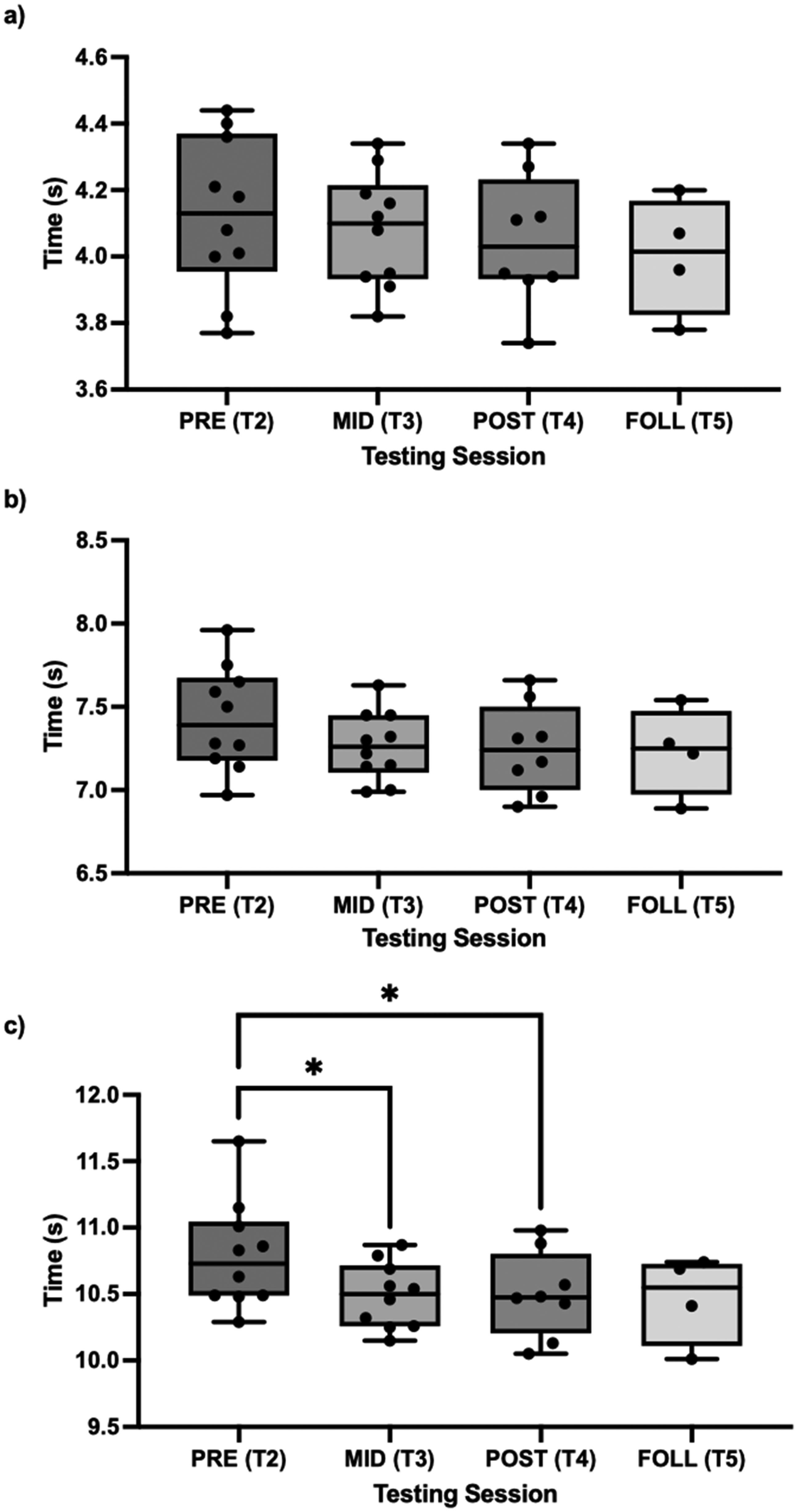
Box and Whisker Plot represents the main effect of time (s) by 5 (a), 10 (b), and 15 m (c) with kick across pre-intervention (PRE, T2), mid-intervention (MID, T3), post-intervention (POST, T4), and follow-up (FOLL, T5) testing sessions (* p ≤ 0.05).
Significant improvements were observed in pull-only (without kick) time to 5 m (PRE: M = 4.42 ± 0.38 s, POST: M = 4.16 ± 0.23 s, t = 2.73, d = 0.98), 10 m (PRE: M = 7.73 ± 0.46 s, POST: M = 7.44 ± 0.35 s, t = 3.13, d = 1.08), and 15 m (PRE: M = 11.07 ± 0.57 s, POST: M = 10.78 ± 0.49 s, t = 2.68, d = 0.91) (Figure 4), as well as time to the best 1-m average velocity (PRE: M = 7.91 ± 0.76 s, POST: M = 6.92 ± 0.72 s, t = 2.68, d = 1.06) (n = 9). However, the best 1-m average velocity itself did not improve, nor did the distance required to achieve it.
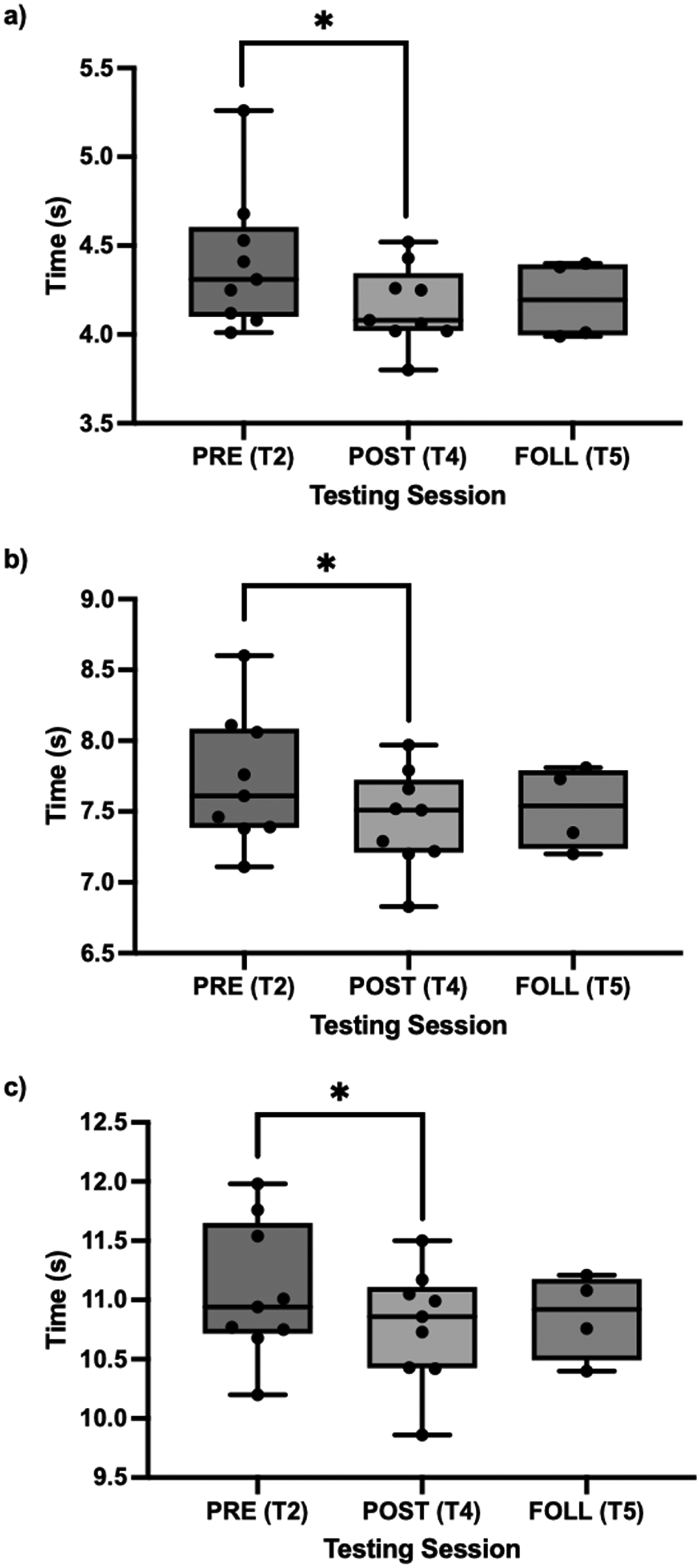
Box and Whisker Plot represents the main effect of time (s) by 5 (a), 10 (b), and 15 m (c) without kick across pre-intervention (PRE, T2), post-intervention (POST, T4), and follow-up (FOLL, T5) testing sessions (* p ≤ 0.05).
Spatiotemporal
Following the intervention (n = 6), stroke count decreased (t = 3.37, d = −1.38), while stroke distance increased for both arms (R: t = −3.68, d = 1.50; L: t = −3.73, d = 1.52). Right arm pull distance (t = −4.57, d = 1.86) and left arm recovery distance also increased (t = −3.27, d = 1.34) (Table 3). No significant changes were found for left arm pull distance, right/left arm push distance, or right arm recovery distance (Table 3; Figure 5 and 6).
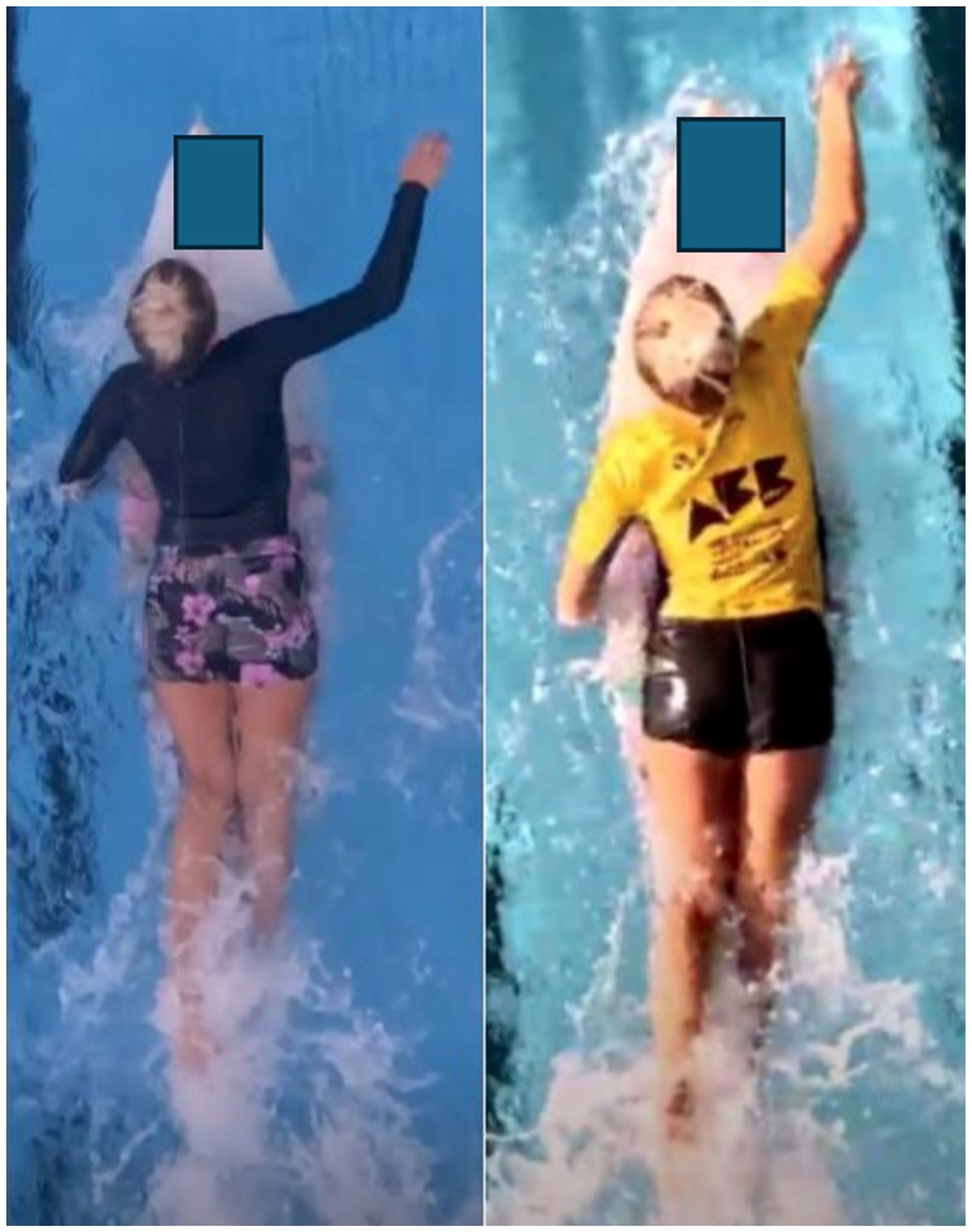
Participant 10 showcasing the reach position during PRE (left) and MID (right) testing. Participant 10 demonstrates an increased reach position and greater thoracic mobility, while maintaining stability in her hips and core during MID testing.
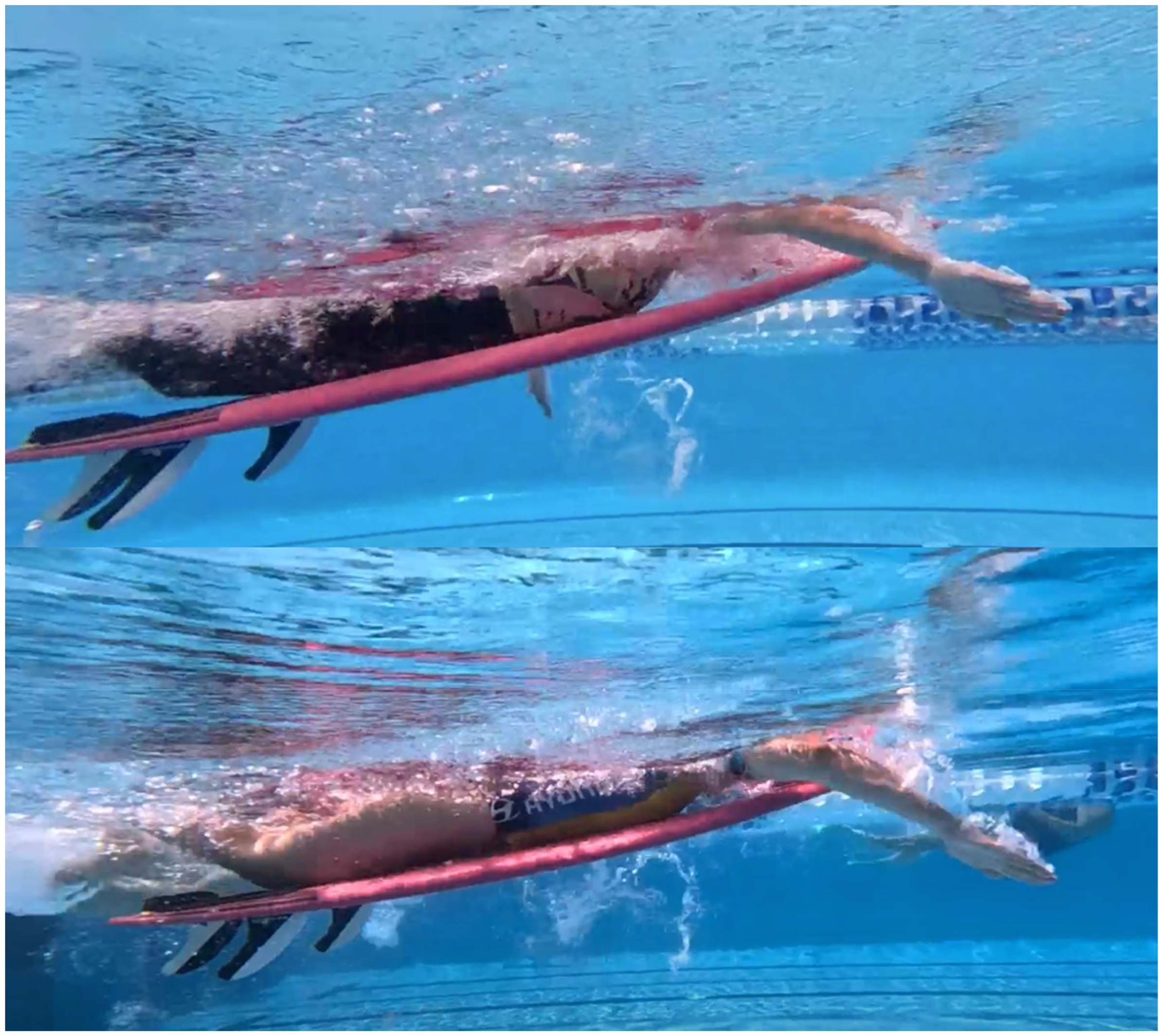
Participant 8 showcasing the catch position during PRE (top) and POST (bottom) testing. Participant 8 displays a stronger wrist position during POST testing, enhancing her ability to catch water with a larger surface area as she transitions into the pull phase. In contrast, during PRE testing, the wrist “slips,” preventing optimal catch and effective pull through the water.
Means ± SD for spatiotemporal data in pre and post pool-based testing.
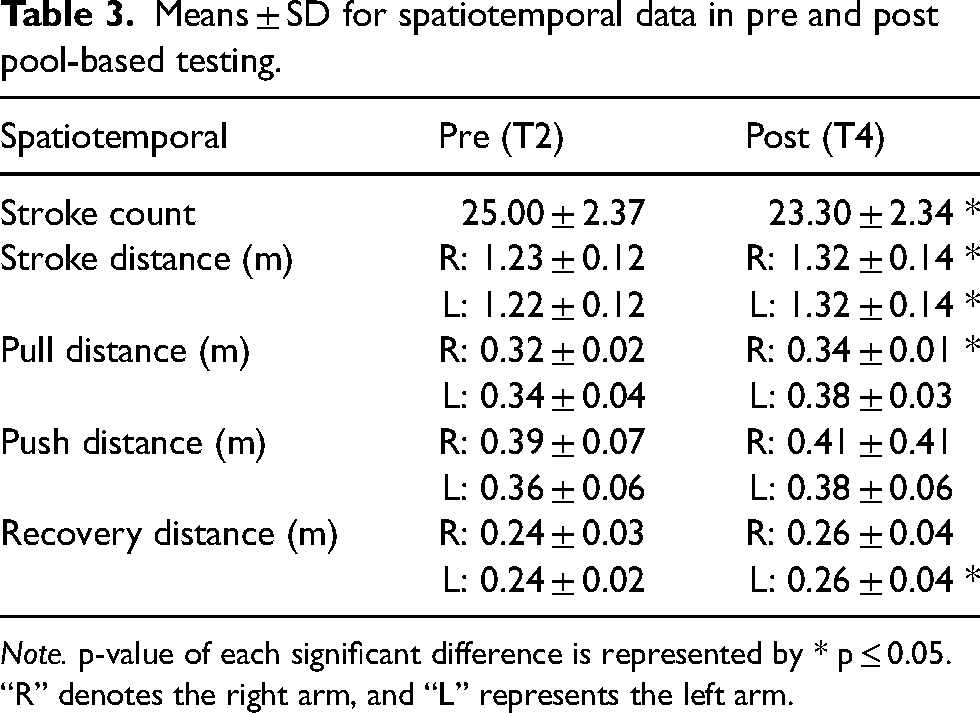
Note. p-value of each significant difference is represented by * p ≤ 0.05.
“R” denotes the right arm, and “L” represents the left arm.
12-s paddling force test
A significant increase in maximal force (PRE: M = 123.69 ± 22.92 N, POST: M = 129.65 ± 25.62 N, t = −2.45, d = 0.87) and average force (PRE: M = 62.52 ± 11.65 N, POST: M = 65.68 ± 10.56 N, V = 3, r = 0.97) was observed post training (n = 8).
Gym-based testing
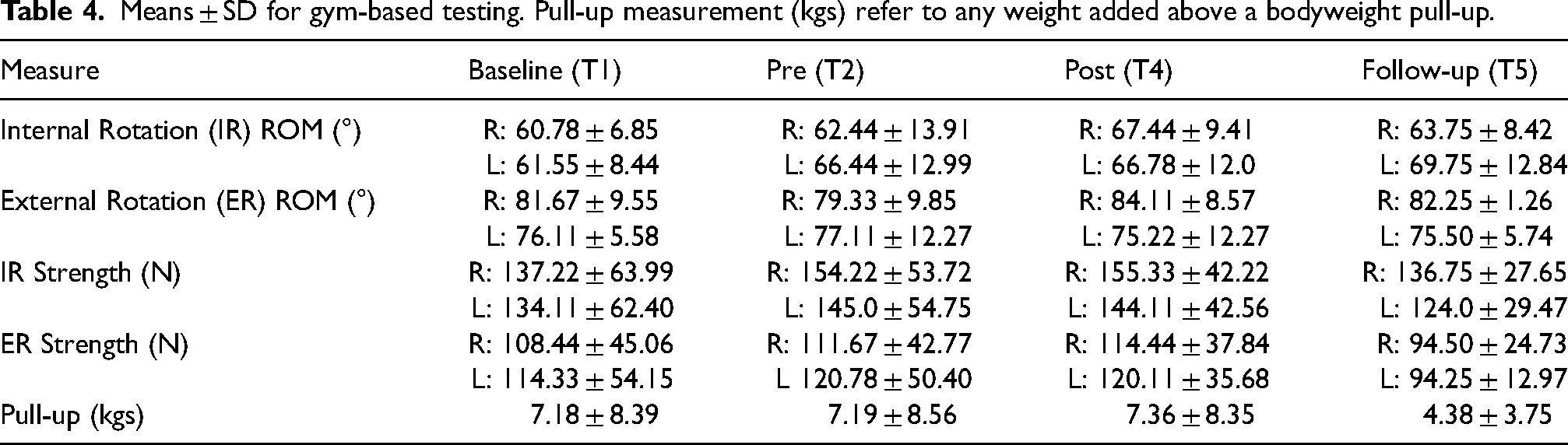
No significant changes were observed between PRE and POST for all gym variables (n = 9) (Table 4).
Means ± SD for gym-based testing. Pull-up measurement (kgs) refer to any weight added above a bodyweight pull-up.
Perception of paddling proficiency (POPP)
Combined POPP scores significantly increased from PRE to POST (t = −2.54, p < 0.05, d = 0.85), while no significant differences were present within individual items (n = 9) (Table 5).
Means ± SD for perception of paddling proficiency (POPP). Significant differences were observed for combined scores between pre- and post-testing.
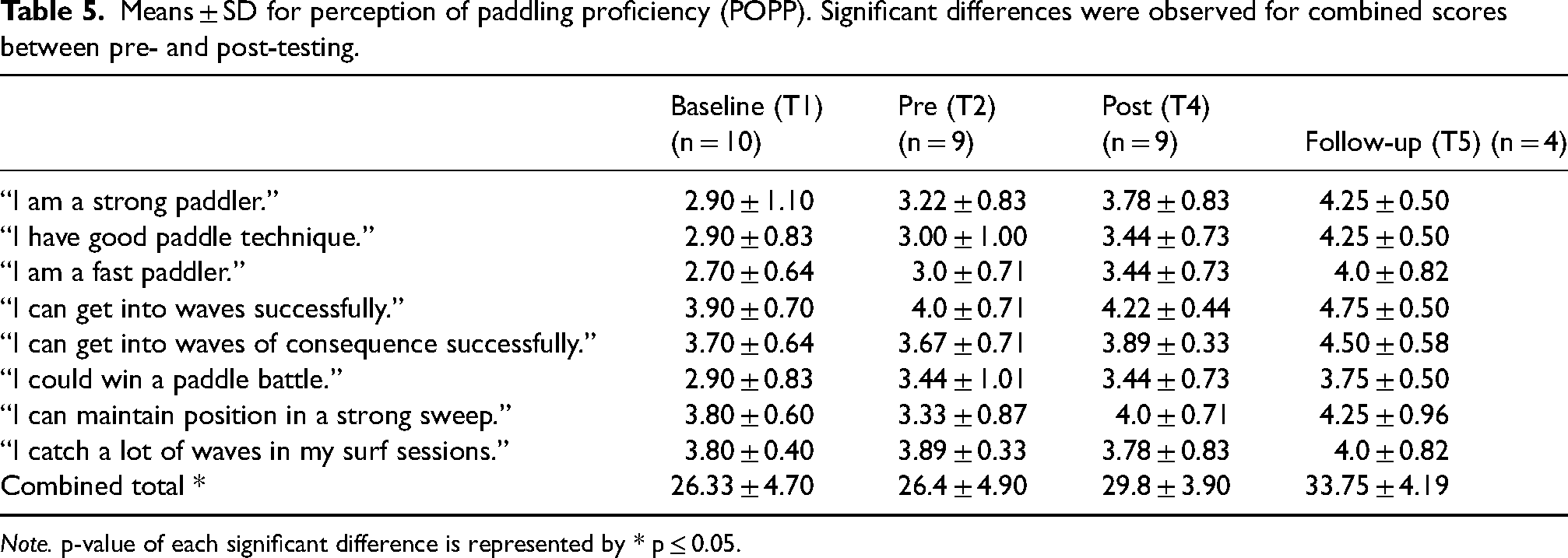
Note. p-value of each significant difference is represented by * p ≤ 0.05.
Follow-up
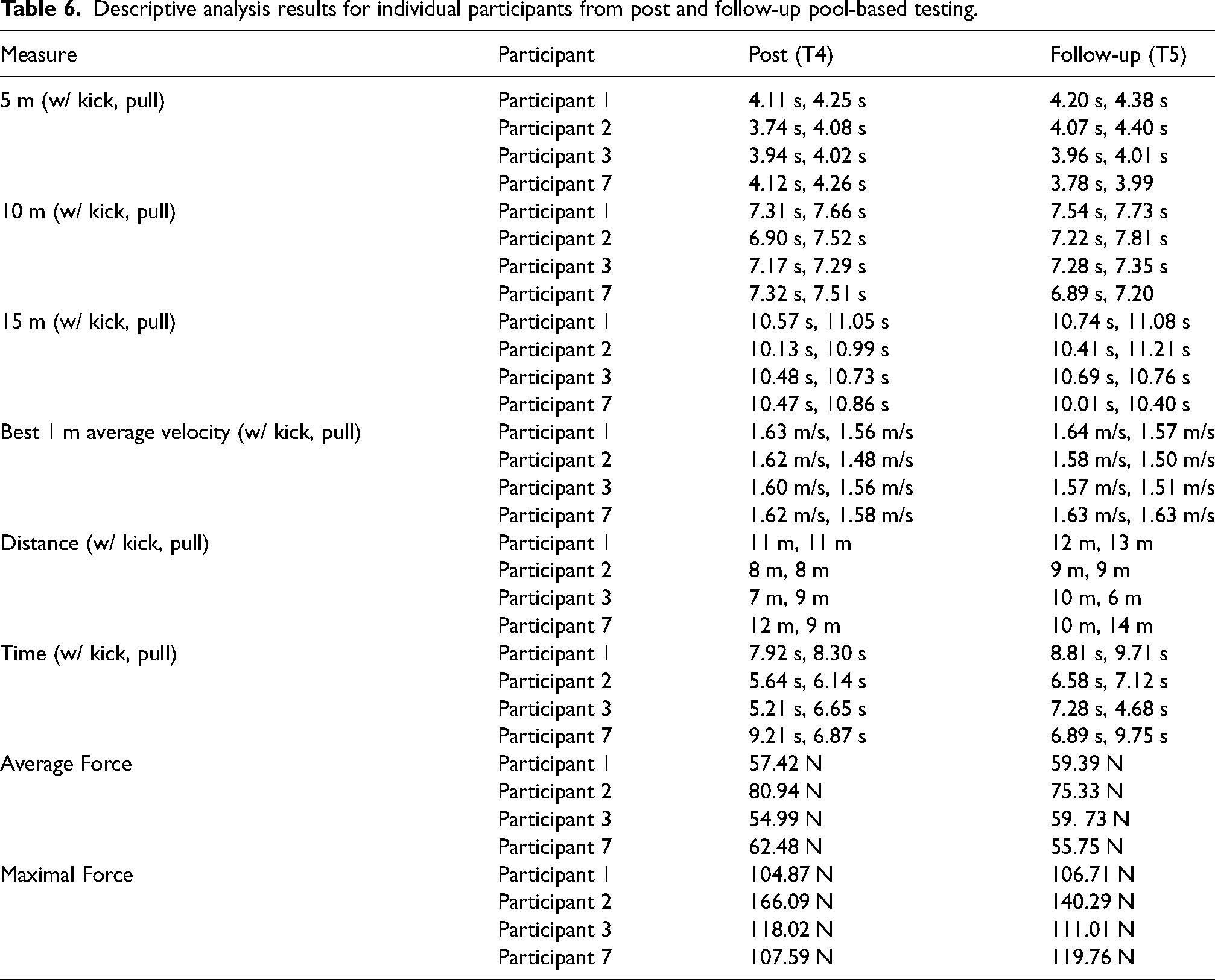
Changes observed between POST and FOLL testing for pool-based assessments are presented in Table 6.
Descriptive analysis results for individual participants from post and follow-up pool-based testing.
Discussion
This study aimed to assess the impact of a constraints-led technique training intervention on sprint paddling performance among competitive female surfers. Supporting our hypothesis, results indicated that the intervention significantly reduced the time to 15 m and increased the best 1-m average velocity for trials ‘with kick’. Additionally, a decrease in all split times (5, 10, and 15 m) and a faster time to the best 1-m average velocity ‘without kick’ was observed. Importantly, spatiotemporal analyses revealed improved paddling efficiency, as evidenced by a reduced average stroke count across 15 m, thereby increasing stroke distances for both arms. Maximum and average force also increased, indicating that technical improvements translated into enhanced force application in the pool setting. Subjectively, surfers reported improved perception of sprint paddling performance. Contrary with our hypothesis, no significant changes were found in gym-based outcome variables following the training intervention. Descriptive analysis during the follow-up period revealed that technique maintenance varied among participants, highlighting the need for a more individualised approach to training in the future.
Velocity
The typical duration of sprint paddling bouts during wave catching in competitive settings ranges from 6.1 to 12.5 s.65,66 Consequently, split times at 5, 10, and 15 m emerge as particularly pertinent for maximising sprint-paddle velocity when catching waves. The current study's findings indicate that optimising catch and reach positions can significantly decrease times to 5, 10, and 15 m when a kick is not adopted; however, improvements were only evident at 15 m when employing a kick. This could be attributed to the training intervention's focus on upper-body technique, which did not specifically encourage kick during technique sessions. The use of kick could be influenced by task (i.e., paddling out to the lineup) and environmental constraints present (i.e., swell and wind direction), thus the individual must be able to adapt to their surroundings and use kick when appropriate. Importantly, sprint paddling times for all surfers were faster with kick compared to without. Loveless and Minahan 67 similarly found that incorporating a kick enables surfers to achieve faster times over 15 m, suggesting its effectiveness in facilitating optimal positioning when catching a wave. This study also revealed a significant improvement in average velocity over 1 m with kick, indicative of improved maximum speed capabilities from the intervention. However, there remains a need for enhancing acceleration while kicking through faster 5- and 10-m split times.
Another noteworthy finding was that the most significant increase in velocity was observed between PRE and MID testing for the ‘with kick’ trials (Figure 3), suggesting that as few as four or five sessions were sufficient in producing noticeable improvements in time to 15 m. This may be attributed to the introduction of constraints between PRE and MID testing sessions, which likely disrupted baseline techniques and encouraged learners to explore more functional task solutions. Given surfers’ dynamic competition schedules, the MID testing results could represent an optimal starting point for technique adaptation. Furthermore, the increase in velocity and decrease in time to 5, 10, and 15 m was sustained throughout POST, with some participants maintaining or further improving performance, while others showed declines during the FOLL testing session.65,66
Stroke kinematics
Findings revealed a significant decrease in stroke count, an increase in stroke distance for both arms, and an increase in pull distance for the right arm only (Figure 5 and 6). Reducing stroke count and increasing stroke distance has been shown to enhance efficiency in front-crawl swimming, allowing athletes to exert less effort over various distances, including sprint efforts.68–70 Additionally, sprint swimmers typically spend more time in the propulsive phases (pull and push) compared to distance swimmers.63,71,72 By increasing stroke distance and decreasing stroke count, athletes could conserve energy during the 42–54% of time spent paddling in a surf session, including the 4–8% specifically dedicated to sprint paddling into a wave.7,65 This conservation of energy may allow an athlete to exert more effort once they are riding the wave, translating to increased scoring potential.
In addition to enhancing performance, reducing stroke count also decreases the overall number of rotational repetitions of the glenohumeral joint, potentially lowering the risk of shoulder overuse injuries. 73 Furthermore, this study observed an increase in pull distance only on the right arm which may be influenced by the cohort's predominant right-hand dominance (R = 11, L = 1). No significant differences were found in push phase duration, which was expected as this was not an area of focus for the training intervention. This study demonstrates that enhancing the catch and reach aspects of paddling technique can positively influence stroke kinematics, potentially improving efficiency, physiological performance, and shoulder health. Future research should explore similar methodologies while targeting different phases of the stroke cycle such as the push phase.
Force
The current study observed significant improvements in both maximal and average force following the intervention. Borgonovo-Santos et al. 74 compared ‘pre’ and ‘post’ paddling tests, separated by a 6-min endurance paddle at 60% maximal velocity. Faster paddlers exhibited lower energy expenditure in both tests despite the increased energetic demand. 74 Additionally, no relationship was found between mean tethered force and maximum sprint paddling velocity. 74 A critical distinction between Borgonovo-Santos et al. 74 and the current study is the absence of kicking within the tethered force test. Since surfers utilise kicking when paddling into waves, Borgonovo-Santos et al.'s 74 findings should be interpreted with caution. The current study suggests that increased force may play a role in enhancing speed, although due to interacting individual, environmental, and task constraints contributing to movement outcomes (i.e., speed enhancement) other factors such as refined technique, stroke kinematics, and the athletes’ perception of action capabilities likely contributed as well. To better understand the relationship between tethered force and sprint paddling velocity, future studies should specifically consider the influence of kicking in force production and other performance variables.
Perception of paddling proficiency
In addition to objective measures of sprint paddling performance, it is essential to consider an athlete's perception of their ability to perform specific tasks, such as paddling fast over 15 m. This understanding provides valuable insight into the athlete's perception of affordances, or the possibilities for action offered by the interaction of individual, environmental, and task constraints. 47 Affordances evolve through the development of perceptual-motor expertise gained from extensive sports training, implying that experts are better able to perceive affordances relevant to their specific skill domain compared to non-experts.47,75 Renshaw et al. 37 suggested that as learners become more skilled, they may encounter increased variability in individual, environmental, and task constraints, which fosters more adaptable behaviour.37,76 Therefore, improving sprint paddling may enhance an athlete's ability to perceive and act on affordances in their environment. Future studies should explore whether pool-based training effectively transfers to the representative environment (ocean).
This study assessed athletes’ perception of paddling proficiency using a Likert scale. Results showed improvement post-intervention for combined scores only, not individual items. This outcome is likely due to the combined scores capturing paddling proficiency in its entirety within the performance environment. Paddling proficiency involves not only direct paddling characteristics such as strength, technique, and speed, but also how these translate to the performance setting (i.e., paddling into waves). Since the study was conducted in a controlled pool setting, this questionnaire provided insight into athletes’ perceptions of their sprint paddling ability as it might apply to dynamic ocean conditions. Future training should focus on targeted exercises within representative contexts, reinforcing athletes’ perception of action capabilities and readiness for the specific demands of their training and competition environments.34,77,78
Constraints-led approach
This innovative training intervention utilised a CLA to encourage technique changes through the implementation of key task constraints. The CLA complemented the surfers’ diverse learning styles, with athletes’ observably responding positively to the tailored activities, particularly game-like exercises conducted in group settings. CLA is well-suited to surfing, where there is no single “correct” way to perform a manoeuvre, and “innovation” is a key judging criterion. 79 By implementing task manipulations, coaches encouraged athletes to discover optimal movement solutions while respecting fundamental technical characteristics that enhance performance and minimise injury. Alongside improvements in technique and speed, increased force production was observed, suggesting that pool-based activities using task constraints allowed athletes to better express their underlying strength capabilities.
Limitations
Within this study, we aimed to enhance athletes’ action capabilities by improving sprint paddling technique, thereby optimising their ability to reach 15 m in a pool as quickly as possible. However, the ultimate challenge for these athletes lies in performing these skills effectively in their actual competitive environment—catching waves, paddling out to the line-up, and engaging in paddle battles. Athletes are continuously perceiving sensory information within their environment and behaving, or moving, based on these key constraints as they attempt to coordinate their actions within their surroundings. 77 Therefore, one limitation of this study was that athletes completed testing and training within a pool setting rather than the dynamic and unpredictable ocean environment. While this approach allowed us to control variables that are uncontrollable in the ocean, it may not fully replicate the complex conditions athletes face during surfing competitions. A valuable next step would be to integrate training sessions in more representative, sport-specific environments. This would enable athletes to practice and refine their skills under conditions that closely resemble those encountered in real-world surfing scenarios, thereby enhancing the applicability of our findings to competitive performance.
Another aspect of the dynamic nature of surfing is the variability in training consistency among surfers. Specifically, some surfers completed their initial four or five sessions relatively quickly (within 1 to 2 weeks), but then took 4 to 5 weeks to finish their final five sessions. This fluctuation in training schedule may have contributed to the pronounced improvements observed during MID testing, followed by a more modest progression thereafter. Factors such as competition schedules, travel commitments, the pursuit of favourable swell conditions, and adherence to a structured training regimen different from their usual practices could account for this variability. As a result, only four surfers were available for FOLL testing, which limited the analysis and generalizability of results. A larger participant pool across all testing sessions, particularly during FOLL testing, would have provided a more robust basis for drawing conclusions. Nevertheless, the effect size was sufficient in all t-tests conducted within the intervention. Lastly, a true control group instead of a single-sample design could have better highlighted group differences.
Practical implications
There are several valuable coaching insights worth highlighting. Firstly, given that FOLL testing revealed a wide range of results including improvements, no changes, and signs of deconditioning, it is crucial that future studies explore individualised training approaches tailored to each athlete's specific needs and their physical and emotional states on a given day. This is particularly important for female athletes, who face the additional challenge of fluctuating hormones and ongoing development.80,81 Moreover, a significant portion of the training focused on lower speeds to prioritise technical nuances and ensure shoulder safety and stability throughout the learning phase. As training progressed through periodisation, intensity gradually increased, ensuring that athletes maintained learned techniques even at higher velocities. However, the coach subjectively observed that as athletes attempted to increase their paddling speed, they often reverted to previous, less efficient techniques. Therefore, it is recommended to incorporate more technical activities at varying speeds to reinforce optimal paddling mechanics at higher velocities, aligning with NLP principles of exploration in dynamic situations. 33 Anecdotally, athletes generally found it easier to grasp and execute the reach positioning within the stroke compared to the intricacies involved in mastering the catch position technique. Thus, coaches are advised to allocate sufficient time to mastering the fundamental aspects of this complex movement pattern before incorporating reach positioning. Lastly, the ‘reach and hold’ exercise overly accentuated the reach position and caused an unnecessary pause between the recovery and glide phases of the stroke. To address this issue, it is recommended to omit this exercise and instead utilise the diving weights to achieve the desired elongation of the reach phase without prolonging recovery duration.
Coaching takeaways
Technique adaptation should be guided by the interaction between individual, task, and environmental constraints.
Manipulating task constraints emerges as particularly effective in promoting technique changes for sprint paddling performance.
Enabling athletes to explore, adapt, and self-organise to determine their unique movement patterns can lead to performance gains and potentially reduce the risk of injury.
Providing athletes with tools for individual practice with periodic refresher sessions could be particularly effective in promoting sustained performance gains.
Improving sprint paddling performance in female surfers could offer a competitive edge in the ocean environment.
Conclusion
Female surfing is experiencing rapid growth, with increasing expectations for athletes aspiring to qualify for the WCT and Olympics. Sprint paddling ability enables a surfer to increase their performance metrics such as catching waves and producing momentum for initial and subsequent manoeuvres.7,10,15 This study aimed to enhance sprint paddling velocity, efficiency, force, gym-based strength and ROM, and perception of paddling proficiency in female surfers through a technique-focused training intervention utilising a CLA. The intervention resulted in significant improvements in sprint paddling performance including faster times to 15 m and increased best 1-m average velocity ‘with kick’, as well as faster times to 5, 10, and 15 m and time to best 1-m average velocity ‘without kick’. Furthermore, stroke efficiency, maximal and average force in the pool, and perceived paddling proficiency also improved. There were no significant changes in gym-based strength and ROM measures. Coaches are encouraged to integrate this novel training into the daily training environment to continue to advance female surfing performance.
Supplemental Material
sj-docx-1-spo-10.1177_17479541251358823 - Supplemental material for Paddle-to-podium: A constraints-led approach to sprint-paddle training in competitive Australian female surfers
Supplemental material, sj-docx-1-spo-10.1177_17479541251358823 for Paddle-to-podium: A constraints-led approach to sprint-paddle training in competitive Australian female surfers by April L Denny, Joanna Parsonage, Daniel Chalkley, Jonathon Headrick, Luke MacDonald, Sienna P Gosney, Justin Keogh and Clare Minahan in International Journal of Sports Science & Coaching
Supplemental Material
sj-docx-2-spo-10.1177_17479541251358823 - Supplemental material for Paddle-to-podium: A constraints-led approach to sprint-paddle training in competitive Australian female surfers
Supplemental material, sj-docx-2-spo-10.1177_17479541251358823 for Paddle-to-podium: A constraints-led approach to sprint-paddle training in competitive Australian female surfers by April L Denny, Joanna Parsonage, Daniel Chalkley, Jonathon Headrick, Luke MacDonald, Sienna P Gosney, Justin Keogh and Clare Minahan in International Journal of Sports Science & Coaching
Footnotes
Acknowledgements
This project was aided by an affiliation of the lead researcher with the Griffith Sports Science unit of Griffith University, the Sport Performance Innovation and Knowledge Excellence (SPIKE) unit of the Queensland Academy of Sport (QAS), the Surfing Australia High Performance Program, and the Australian Institute of Sport (AIS).
Consent to participate
All participants provided written informed consent prior to participating in this study. Participants under the age of 18 were required to provide the consent of a parent or guardian.
Data availability
The authors elect that research data is not shared due to athlete confidentiality.
Declaration of conflicting interests
The authors declared no potential conflicts of interest with respect to the research, authorship, and/or publication of this article.
Funding
The authors disclosed receipt of the following financial support for the research, authorship, and/or publication of this article: This work was supported by the Queensland Academy of Sport (QAS), the Australian Institute of Sport (AIS), and Surfing Australia under QAS Grant #152.
Ethical considerations
This study was approved by the Griffith University Human Research Ethics Committee (Ref. 2023/126).

Supplemental material
Supplemental material for this article is available online.
References
Supplementary Material
Please find the following supplemental material available below.
For Open Access articles published under a Creative Commons License, all supplemental material carries the same license as the article it is associated with.
For non-Open Access articles published, all supplemental material carries a non-exclusive license, and permission requests for re-use of supplemental material or any part of supplemental material shall be sent directly to the copyright owner as specified in the copyright notice associated with the article.
