



Abstract
Coaches utilise augmented feedback to help channel learning and skill acquisition in sports. However, the rationale and pedagogical approaches underpinning feedback (and technology) strategies employed by coaches remain poorly understood. The purpose of this study was to explore cricket coaches understanding towards the role of feedback, and how feedback (and technology) strategies are enacted within practice settings, viewed within pedagogical frameworks. An online questionnaire (Qualtrics) consisted of fixed-text and free-text questions. Fixed-text responses were analysed exploring associations (frequencies, chi-square) or differences (Mann-Whitney U) between coaching groups, with free-text questions examined through reflexive thematic analysis, exploring approaches to presenting athletes with feedback (and technology use). Overall, 134 coaches (94% male, 6% female) aged 18–69 years from 12 countries responded to the questionnaire. Following silhouette and k-modes cluster analysis, results were explored for two coaching groups: community cricket coaches (n = 84, 63%) and higher-performance coaches (n = 50, 37%). Significant differences showed greater coaching experience, qualifications, and time spent coaching per week for the higher-performance coaching group (p < 0.0125), in addition to higher self-efficacy around feedback, albeit with a small effect size (p < 0.001, r = 0.29). Community coaches showed a significant difference in manipulating feedback strategies on motivational factors (p < 0.0125). Reflexive thematic analysis identified different rationales for the perceived role of feedback and use of technology across coaching groups, underpinned by contrasting pedagogical approaches (coach-centred versus athlete-centred). Responses highlighted the co-adaptive properties of coach-athlete dyads (evident in how/why feedback was manipulated). Overall findings present opportunities to further coach education to improve understanding and operationalisation of feedback (and technology).
Introduction
In sports, coaches are an integral aspect of the learning processes underpinning the development of skilled athletes.1,2 In particular, through their role in designing training environments, 3 coaches distinctively shape the opportunities for their athletes to progress a broad repertoire of tactical and technical skills 4 in preparation for competition. The pace of technological change has brought to focus a consideration on how coaches organise and provide augmented feedback; a key influencing factor of the learning process. 5 Unlike task-intrinsic feedback (which may be viewed as an inherent aspect of the performance environment), augmented feedback (referred to as feedback herein) relates to novel information about the action or outcome made available to a learner from an external (and more recently, often technological) source. 6 Coaches make judgements about how they choose to present and manipulate feedback during the learning process, often underpinned by different pedagogical approaches to coaching.
On the one hand, representational approaches to learning (linear pedagogical frameworks) relate skill development to the strengthening of internal representations that define patterns of movement. 2 Coaches adopting such theoretical approaches, often considered coach-centred, view feedback as an important tool to support error correction by reinforcing/calibrating generalised motor patterns 7 ; often operationalised through the need to develop optimal technique in practice,8,9 that is then transferred to game situations. In this sense, feedback supports the learner to understand the task objective, approximate the correct movement and outcome, and finally be able to self-correct in the absence of feedback.7,10 Decisions on how to implement feedback can then be operationalised in terms of what, when, and how the information is provided. 11
On the other hand, non-representational approaches to learning (non-linear pedagogical frameworks) link skill development with a learner’s expanded movement repertoire of solutions.12,13 Skill acquisition is characterised as a change in the information used to solve motor problems that accompanies evolving interacting constraints (such as the learners action capabilities, their task(s), and environment(s)). 14 Feedback is viewed as facilitating perceptual-motor exploration of a task, helping the learner change/discover, attune to, and use performance-relevant information in contexts which are dynamic or highly variable.15–17 From non-representational perspectives, often considered as athlete-centred, feedback helps channel the learner toward acquiring capabilities to efficiently explore and exploit the most relevant information given the constraints at hand.18,19 These different feedback approaches may subsequently influence how athletes act with respect to novel information (for instance, either as a source of interference or an opportunity to support performance). 20 Hence, understanding how coaches apply feedback to their coaching practices (in the context of a rapidly evolving information (technology) landscape) provides valuable insights into the relevance and application of such above-mentioned perspectives.
While exploring how coaches have provided feedback within sport-specific practice settings has been examined, often from coach-observation studies, 21 less is known about coaches understanding of feedback and the rationale behind their choices. One study which has examined this concept, through semi-structured interviews, focused specifically on exploring the knowledge and beliefs underpinning verbal feedback among elite team-sport coaches. 22 Analysis of coach responses indicated a multidimensional understanding that feedback may lead to improved performance outcomes for both the team and individual athletes. Results also highlighted the need for coaches to regulate feedback strategies to meet the needs of the athletes. The effectiveness of feedback strategies in sports may also vary depending on the unique constraints of each sport, 23 and the application of technology. 24 For example, feedback technologies may consist of video-based solutions (such as portable smart devices) that provide instant reviews, applications used within smart devices that support assessment of performance, or the use of micro-sensor devices connected to or embedded within equipment; all of which has the capability to both engage and disengage the learner from their performance environment. 25 Despite the increased availabilities of technology in sport, there are a lack of guidelines surrounding appropriate implementation. 17 To address questions relevant to learning and development, there is a need to investigate sport-specific feedback practices to account for changes in approaches that may be necessary due to evolving constraints. For example, as an individual improves, feedback frequency must often be reduced to optimise learning. 26 Putatively, understanding the reasons for this will be more apparent by focussing on a single sport and considering a diversified sample (experience and skill-wise).
The present study will use cricket as the research vehicle, to consider how coaches utilise feedback (and technology) with athletes across a broad spectrum of experience and skill (both in terms of the coaches and athletes). Current understanding of coach behaviour in cricket is somewhat limited; having mainly focused on elements of training design such as the structure and representative nature of training.27–29 Despite acknowledging the improved performance attributes among training interventions involving augmented feedback, 17 little is known about how coaches provide or manipulate feedback strategies in cricket. Further, given the increasing development and availability of technologies that supplement feedback, understanding how current technologies are used within feedback practices is warranted. Therefore, the aims of this study are threefold. First, the study explored cricket coaches understanding and rationale behind feedback strategies (and technology). Second, it examined how feedback and technology have been operationalised within the teaching and learning process by cricket coaches. Third, responses from coaches were used to evaluate the perceived applied value of theoretical frameworks to understand approaches to providing feedback. We hypothesised that skill level and athlete needs would influence feedback strategies, with pedagogical differences in approaches (such as how technology is utilised) governed by coaching experience.
Methods
Questionnaire development
A cross-sectional study design via an online questionnaire, featuring both fixed-response and free-text questions, was used to understand current knowledge and approaches to feedback practices among cricket coaches. The questionnaire was structured to guide coaches through four sections. The first explored demographic and descriptive information about themselves (coaching qualifications, coaching role) and their coaching experience (number of years coaching, level of cricketer coached (junior cricketers defined as aged <18 years, and senior players aged >18 years), standard of cricket coaching, discipline specialties), consisting of 19 fixed-response questions and one free-text option. The following section explored their understanding of feedback; including a Likert-scale allowing the responder to rate their understanding and knowledge of feedback from 0–10, and three free-text questions exploring the role, advantages, and disadvantages of feedback. Further, a fixed-response question explored how coaches adjusted feedback, followed by free-text options to elaborate on how these adjustments were made. The third section explored how feedback was provided during a typical practice session, consisting of four fixed-response questions, and two free-text responses elaborating on previous responses. The final section included a fixed-response section allowing coaches to select the technology options they used to supplement feedback, with free-text options available to elaborate on selected choices.
Pilot testing was undertaken to establish face and content validity of the questionnaire by five individuals with diverse expertise in research, skill acquisition, physical education teaching, coaching, technology implementation, and cricket (including two local cricket coaches, each with more than five years of coaching experience). Analysis of the pilot testing revealed that all the questions performed as intended, with minor wording refinement completed. Further, a readability assessment was conducted (Flesch Reading Ease = 64.7; Flesch-Kincaid Grade Level = 7.5), 30 to ensure questions were suitable for coaches with varying levels of English proficiency, given the global audience. The online questionnaire was developed and made available through Qualtrics Research Suite (Qualtrics, Provo, UT, USA), with coaches completing the questionnaire from September 2021 to January 2022.
Recruitment
Cricket coaches actively working in the past five years were recruited globally (n = 196), inclusive of all coaching qualifications and standards of cricket coached (community to elite). Ethical approval was obtained from Swinburne University of Technology's Human Research Ethics Committee (project no. 20215870-8145). Informed consent was obtained from participants online, after outlining the study details via the information statement on the questionnaire landing page. Coaches were invited to participate through a link to the questionnaire on social media platforms (Twitter, LinkedIn, and Instagram), or through a link sent to professional cricket networks (e.g. cricket clubs, associations, and known coaches). Responses were included for analysis if coaches completed a minimum of all demographic questions, in addition to questions about their understanding of the role of feedback (four questions), and how feedback is adjusted (two questions). Several respondents (n = 62) were removed as they did not complete any questions beyond demographic information; the remaining 134 responses (male (94%) and female (6%)) were included in the analysis, with 104 coaches answering all questions.
Statistical analysis
Data were downloaded from the Qualtrics platform and exported to Microsoft Excel for initial data inspection and cleaning, where needed. Results were explored based on a silhouette and k-modes cluster analysis. K-modes cluster analysis is a clustering algorithm that is specifically designed to handle categorical data, by grouping data points into distinct clusters based on their similarities in terms of categorical attributes. 31 The goal of k-modes is to find the best way to group the data points, maximizing the similarity within each cluster and minimizing the similarity between different clusters. In identifying the number of clusters to specify, we used the silhouette method. The silhouette method is a clustering evaluation technique that measures how well each data point fits into its assigned cluster. It computes a silhouette score for each data point, which ranges from −1 to 1. A score of 1 means the point is well-matched to its cluster, while a score of −1 indicates that the point might belong to a different cluster. 32 Initially, silhouette analysis was based on five categorical inputs (coaching qualification, experience, role, cohort, and standard of player coached). Subsequently, k-modes cluster analysis enabled the identification of coaching groups allowing comparison and further data exploration.
Fixed-response questions were analysed using frequency statistics and chi-square to explore associations between different groups, where appropriate. Responses to the Likert scale question were assessed using the Mann-Whitney U-test, with medians, range, and standardised test statistics reported. All statistical analysis was completed in R (v4.0.2; R Core Team, https://www.r-project.org/) with alpha set to < 0.05, with a Bonferroni adjustment used where appropriate.
Qualitative analysis of free-text responses was explored to search for patterns of meaning, following a reflexive thematic analysis approach.33,34 Involving an iterative six-step process, the lead author first became familiar with the initial data, making notes about potential themes considering the key outcomes of the research. At this point, response data was organised relative to specific sections being explored (i.e. responses to questions for the ‘understanding and perception of feedback’ section were arranged together). Second, data were coded for each section, with relatively generic codes pertinent to the responses. Initial codes were reworked where needed to further refine ideas, following further exploration of the data. All data were explored within each section, irrespective of the coaching groups aligned to each response. Third, codes were explored to identify patterns of shared meaning that could then be developed into themes; with responses explored within each coaching group (i.e. community coaches and higher-performance coaches). Themes were then developed and reviewed, involving discussion with additional authors. Finally, responses were written, with further refinements to themes where necessary, to best represent coaches’ ideas around feedback practices and strategies.
Results
Responses were received globally, with the majority from Oceania (Australia and New Zealand; 69%), followed by Asia (India and Sri Lanka; 15%), Europe (England, Ireland, Scotland, and Guernsey; 11%), North America (Canada, Caribbean, and the United States, 3%), and Africa (South Africa; 2%). Coaching experience ranged from less than one year to over 10 years, with a large number with more than 10 years experience (55%). The age of coaches ranged from 18 to 69 years, with the majority having previous experience coaching different types of cricketers (i.e. both junior and senior cricketers; 65%), and across different genders (i.e. both female and male cricketers; 72%). Most were currently coaching able-bodied cricketers (99%), with limited previous experience coaching all-abilities cricketers (14%). Most held some form of accredited coaching qualification (86%), with self-reported expertise in coaching batting (57%), bowling (36%), and fielding (7%). The vast majority had previous competitive cricket playing experience (98%); with 77% having played at a sub-elite cricket level or higher.
To explore the results, a statistical approach to grouping data was utilised. Initially, silhouette analysis based on five categorical inputs, from responses to the questionnaire, identified two groups for cluster analysis. K-modes cluster analysis (k = 2) resulted in groups based on the coaching environment closely linked to athlete skill level; a group predominantly coaching at community level cricket (community coaches, n = 84) and often coaching junior cricketers (73%, with 50% having also coached senior cricketers), and a group predominantly coaching at sub-elite and elite levels of cricket (higher-performance coaches, n = 50) and more likely to be coaching senior cricketers (82%, with 90% having also coached junior cricketers). Within this context, elite referred to coaches at international, national, county, or province level; sub-elite referred to coaches at district or grade cricket level; and community referred to coaches within a local club level.
Coaching demographics
Coaching demographic information is presented in Table 1. Significant differences were identified in favour of the higher-performance coaches, with respect to greater coaching qualifications (X2 (5, N = 134) = 48.30, p < 0.0125) and experience (X2 (3, N = 134) = 14.56, p < 0.0125). Higher-performance coaches were also shown to spend more time per week coaching; in terms of both hours (X2 (3, N = 134) = 19.25, p < 0.0125) and training sessions (X2 (3, N = 134) = 20.57, p < 0.0125).
Coaching demographic characteristics for participants by coaching group.
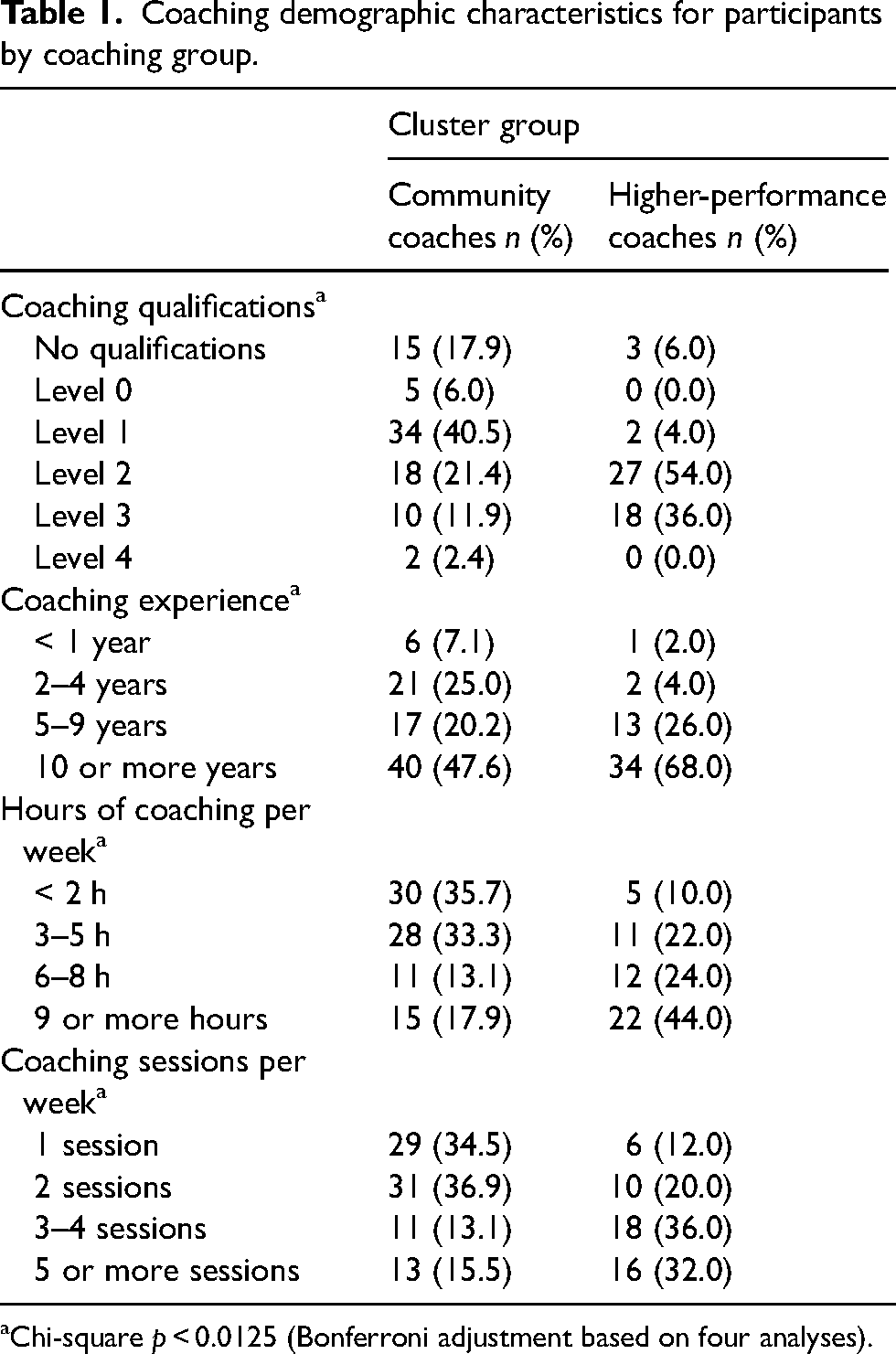
Chi-square p < 0.0125 (Bonferroni adjustment based on four analyses).
Role and understanding of feedback
A significant difference was identified for the self-reported understanding of feedback between the community (median = 8, range = 7) and higher-performance coaches (median = 9, range = 4), Z = 3.37, p < 0.001. The effect size was deemed to be small (r = 0.29).
Responses to free-text questions explored the positive and negative nature of feedback, leading to the emergence of two themes (Supplemental Appendix 1). A positive element of feedback identified ‘Improving skilled behaviour’ which encompassed two sub-themes: ‘enabling knowledge sharing’ and ‘psychosocial development’. Community coaches’ responses focused on enhancing the knowledge and understanding of their players by providing additional information directly to them while touching on building confidence through feedback. Higher-performance coaches responded with a greater focus on developing knowledge through player’s exploration; linking the role of feedback to facilitating and supporting learners to find movement solutions to achieve the task at hand. Feedback was also viewed as a tool to build rapport and dialogue, fostering a better coach–athlete relationship.
The second theme identified, ‘inhibiting learning and performance’, related to negative aspects of providing feedback, and comprised two sub-themes. The first, ‘open to (mis)interpretation’, centred on how the feedback messaging could be misunderstood by players with both coaching groups sharing similar sentiments. Community coaches also reported that error detection may be too big a focus, as opposed to error correction, while higher-performance coaches commented on the quality of the feedback (amount and accuracy) potentially impacting learning. The second theme, ‘interrupts the learning process’, again saw similar comments made by both coaching groups on how feedback, when provided inappropriately, could force players to become dependent on extrinsic information not available within the performance environment.
Operationalising feedback
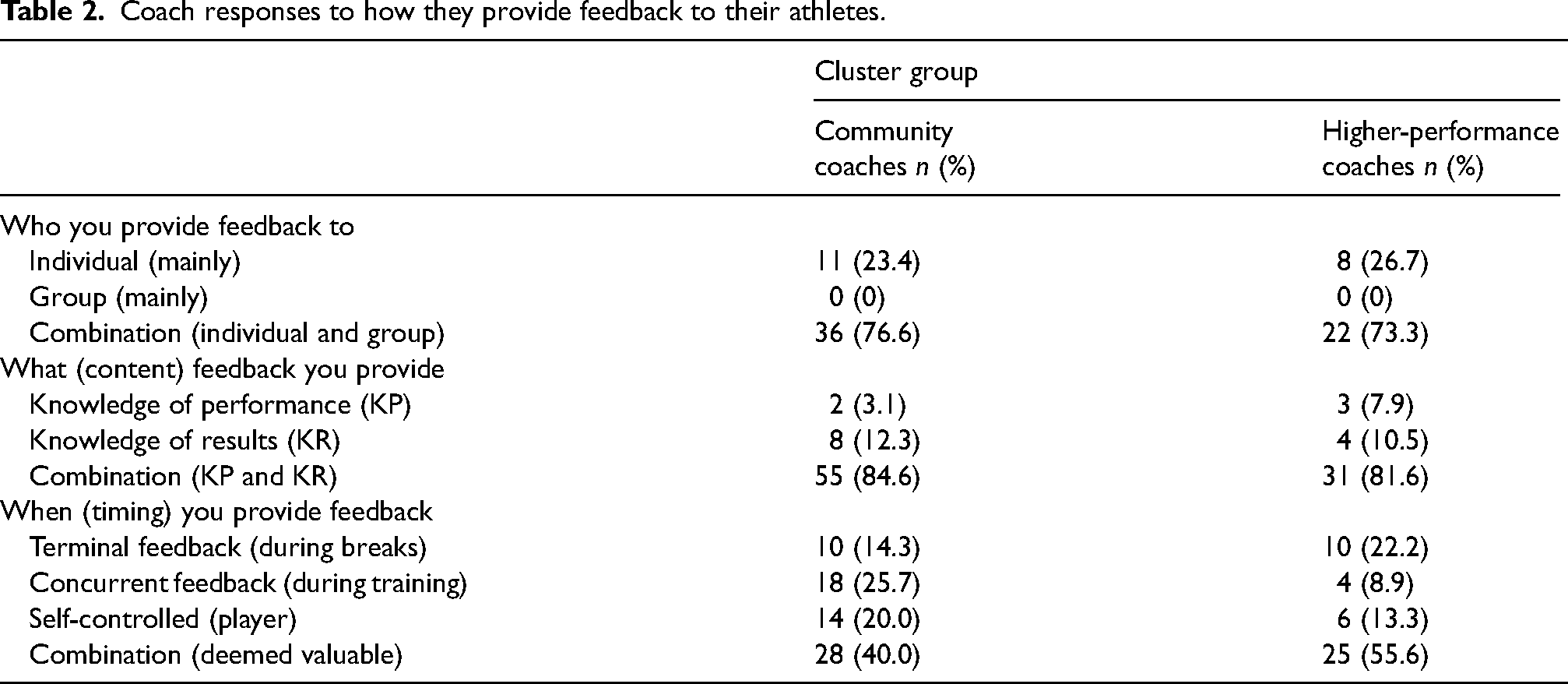
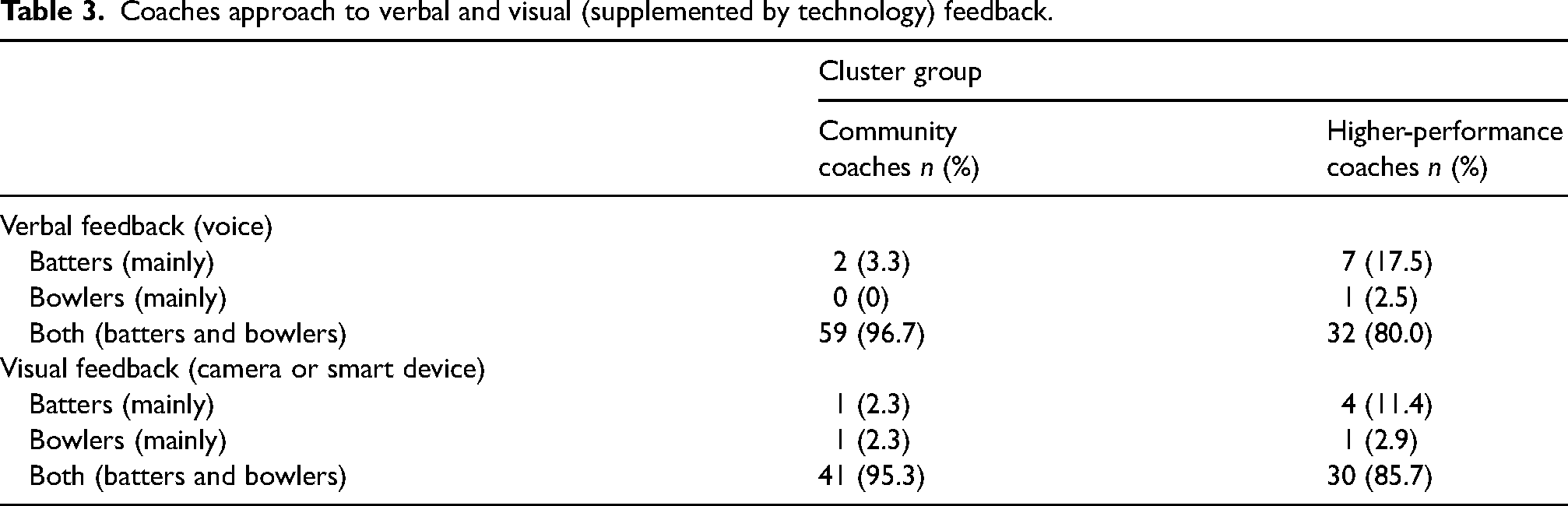
How coaches reported providing feedback is summarised in Table 2, with no significant difference identified between the community and higher-performance coaching groups (p > 0.0125). Further, frequency statistics exploring how coaches provide verbal and visual feedback, supplemented by technology, is summarised in Table 3.
Coach responses to how they provide feedback to their athletes.
Coaches approach to verbal and visual (supplemented by technology) feedback.
Two themes emerged about how coaches operationalised feedback (Supplemental Appendix 2). The first explored different settings in which feedback is provided (‘providing feedback for one vs providing feedback for many’) and resulted in three sub-themes. Two of these sub-themes explored the role of individual feedback, with both coaching groups stating the benefits around the specificity of messaging and connecting with individual players. Higher-performance coaches also touched on the role of questioning within this setting, to support and facilitate learning. The third sub-theme, ‘collaborative leaning opportunity’, was identified when providing feedback in a group setting. Community coaches responded with the practical benefits of group feedback, such as providing feedback to players to address common issues, whereas higher-performance coaches focused on player’s contribution to learning.
The second theme focused on feedback as a performance assessment tool, with sub-themes exploring how it was provided. The first looked at the role of ‘verbal guidance’, with community coaches reflecting on how verbal feedback is used to support error correction with players. Higher-performance coaches commented on the role of exploration and questioning, achieved through verbal feedback. The second sub-theme looked at the use of technology-supplemented feedback for ‘video analysis’. Community coaches again focused on error correction, with video seen as a tool enabling the coach to breakdown the skill. Higher-performance coaches responded with comments around analysing followed by discussing results with their athletes.
Manipulating feedback
Adjusting feedback, based on different attributes (skill, age, motivation level of the athlete, and skill-based discipline), showed a significant difference in motivation (X2 (1, N = 134) = 7.40, p < 0.0125). Community coaches were more likely to adjust feedback based on this attribute (Table 4).
Attributes influencing how coaches adjust feedback, comparing different coaching groups.
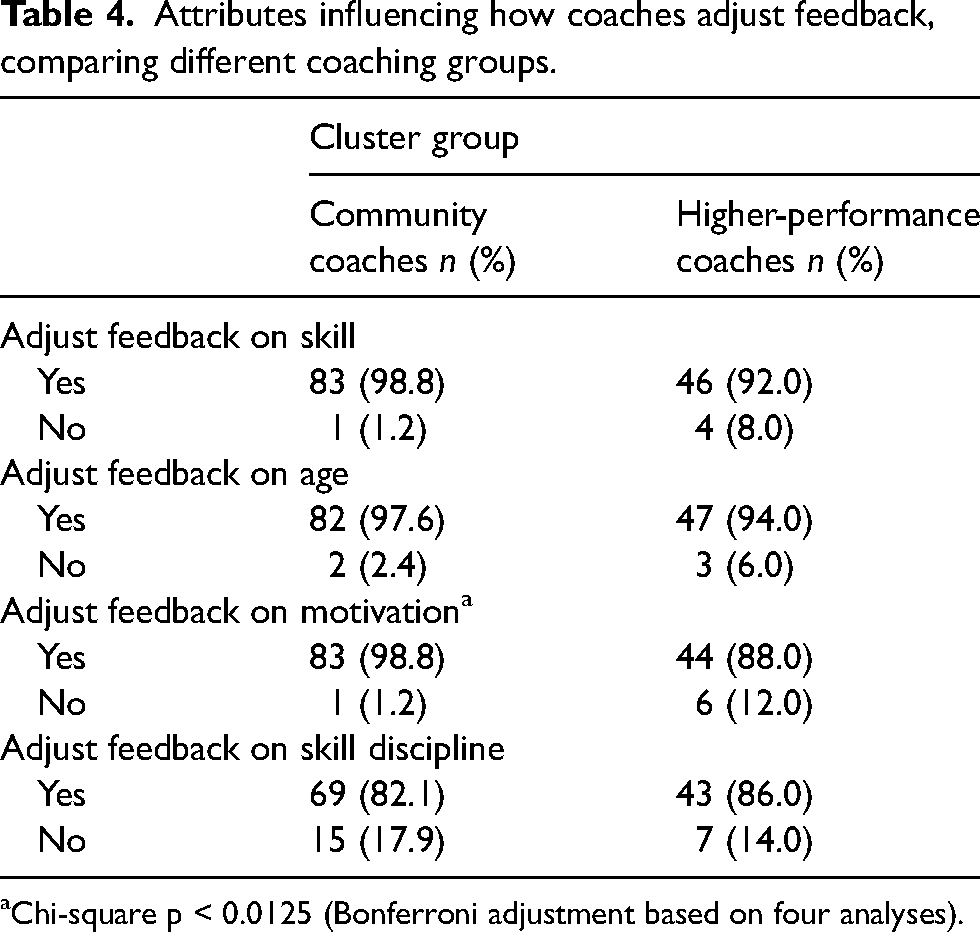
Chi-square p < 0.0125 (Bonferroni adjustment based on four analyses).
How coaches adjusted feedback resulted in one theme about the ‘complexity of feedback’, consisting of three sub-themes (Supplemental Appendix 3). The first centred on the idea of manipulating the amount of feedback based on skill level, with coaches from both groups sharing similar sentiments around simplifying (for lower-skilled players) and increasing the complexity (for higher-skilled players) of feedback.
The second sub-theme focused on the impact of age on how coaches provided feedback. Community coaches highlighted the need for more positive feedback for younger players, with more direct feedback that assesses both strengths and weaknesses of the player’s game for older cricketers. Higher-performance coaches shared similar thoughts around the need to simplify language for younger cricketers, that was understandable, encouraging and had less focus on the technical aspects of the skill. Older players were deemed to require feedback that prompted exploration of their game.
The final sub-theme to emerge considered how the motivation level of the athletes influenced the feedback provided. Coaches from both groups commented that highly motivated players are more willing to engage and receive feedback. Community coaches identified the need to adjust the amount of feedback for both lower and highly-motivated players, noting that highly motivated players might require more individualised feedback depending on what they are seeking to improve. Coaches responded that they were inclined to provide less feedback to players with lower levels of motivation, with a greater focus on positive reinforcement. Higher-performance coaches mainly focused on adjustments in the provision of feedback to players with low motivation; exploring feedback valence (mainly positive feedback, through language and encouragement), and a greater focus on improving effort as opposed to the outcome of skills.
Discussion
The purpose of this study was to understand the rationale and approach to feedback (and technology) among cricket coaches. Responses were compared across two coaching groups; community cricket coaches characterised by less coaching experience and tending to coach lower-skilled athletes, and higher-performance coaches characterised by greater coaching experience and tending to coach higher-skilled athletes. Findings showed contrasting pedagogical underpinnings that shaped coaches’ perceptions and use of feedback (and technology). Results also demonstrated how coaches adapt feedback strategies to meet the needs of their athletes, reflecting the co-adaptive nature of coach-athlete dyads.
Coach experience shapes the perception of feedback (underpinned by a pedagogical approach)
The current study demonstrated that coaching experience plays a crucial role in shaping the perception of feedback. Cluster analysis identified two coaching groups; one characterised by less experienced coaches (more coaches with < 5 years’ experience (32% vs. 6%, Table 1) and less likely to have coached the opposite cohort (senior cricketers, 50%); community coaches) often working with lower-skilled athletes, and another characterised by more experienced coaches (more coaches with 10 or more years’ experience (68% vs. 47.6%, Table 1) and more likely to have coached the opposite cohort (junior cricketers, 90%); higher-performance coaches) often working with higher-skilled athletes. Findings showed that self-reported understanding and self-efficacy of feedback were significantly higher among the higher-performance (more experienced) coaching group, albeit with a small effect size. Differences could be attributed to greater exposure to various coaching methods and athlete development,35,36 given the higher coaching qualifications within this group.
Thematic analysis revealed differences in how coaches from each group perceived and utilised feedback. For example, community coaches predominantly focused on the role of feedback to enhance knowledge and understanding of their players, viewing themselves as the provider of this knowledge and directing information within a more coach-centred approach (e.g. ‘to provide information that can lead the player to understand their own game better and increase performance’ [P2]). Such approaches to the role of feedback are consistent with representational theories that emphasise the importance of explicit knowledge and direct guidance in motor learning.37,38 In addition, feedback was viewed as a tool that enabled confidence building, through positive reinforcement (e.g. ‘for positive reinforcement to develop a sense of confidence and belief in themselves’ [P53]). Conversely, higher-performance coaches emphasised the beneficial nature of feedback in facilitating and supporting learners to explore and find solutions to the task at hand, adopting a more athlete-centred approach (e.g. ‘To help the player solve the current problem in front of them’ [P88]). The use of feedback to support problem-solving is influenced by non-representational approaches to learning that are more athlete-centred, focusing on strengthening the athlete's ability to perceive and act within their performance environment.16,17,39 Additionally, feedback was used to help foster relationships and dialogue with their athletes (e.g. ‘you build a rapport with your athlete and give them positive ways to improve’ [P108]).
Both groups revealed similar sentiments towards the role of individual feedback, touching on the opportunity to address individual athlete needs as well as help athletes feel valued. However, perceptions around the role of group-based feedback differed; and aligned with the pedagogical approaches of each coaching group. Namely, community coaches saw it as an instructive (and practical) tool to provide similar messaging to their players (e.g. ‘Group doing similar things that needs addressing through feedback’ [P2]). Higher-performance coaches viewed group-based feedback as an opportunity and vehicle that enabled group discussion, allowing players to contribute to the learning process by sharing thoughts and ideas (e.g. ‘[It] allows the group to discuss and come up with novel solutions’ [P95]).
Findings support that coaching groups adopt divergent approaches to feedback that are intrinsically linked to differing pedagogical frameworks to underpin learning. As coaching experience increases, the focus of feedback shifts from providing more directing information to channelling learning using emergent processes such as constraint management and manipulation.40,41 This also often focused on involving the athlete to help problem-solve within their feedback strategies. 22
Manipulation of feedback reflects co-adaptive properties of coach–athlete dyads
The study findings support the idea that coaches adjust their feedback strategies based on the skill level and specific needs of their athletes, reflecting the co-adaptive nature of coach-athlete dyads. 2 Both groups of coaches demonstrated an understanding to simplify feedback for lower-skilled players, and equally increase its complexity for higher-skilled players. Specifically, when dealing with lower-skilled players, community coaches emphasised having fewer key points when providing feedback, albeit more frequent and positive in nature. Higher-skilled athletes were considered able to comprehend more complex and technical information (e.g. ‘More feedback for lesser skilled players. More encouragement is required than technical advice’ [P6]; ‘Simplify feedback (e.g. restricted to 1-2 points of focus) for lower skill-level, expand for higher skill-level to more technical points’ [P49]). Higher-performance coaches also stated the need to simplify feedback for lower-skilled athletes, largely to ensure that messages could be understood and enacted. Further, they suggested higher-skilled players could comprehend more individualised and complex feedback, often with less feedback provided (e.g. ‘The lower the skill-level the simpler the message is to allow them to take onboard what your feedback [is] and process it. Higher skilled athletes can process more complex feedback’ [P108]; ‘Be more specific with high skilled players and less feedback’ [P96]). Uniquely, and underpinned by their pedagogical approach, these coaches also valued the use of questioning within the feedback process, to ensure understanding and situate the athlete within the learning process (e.g. ‘Elite [higher-skilled] players require questioning over instructional feedback’ [P123]). Similar value toward the use of questioning within feedback strategies has been shown by elite team-sport coaches. 22
Given the co-adaptive nature of coach-athlete dyads, coaches need to adapt behaviour, such as feedback strategies, to meet individual athlete needs. 42 Saury and Durand 43 emphasised the importance of considering various athlete characteristics when providing feedback. The current study supports these findings, identifying specific ways in which each coaching group adjusted their feedback strategies; based on factors such as age and motivation levels of the athletes. With younger players (aged < 18 years old), both community coaches and higher-performance coaches tended to use more understandable, encouraging language, while older or more experienced players (aged > 18 years old) were provided with more open-ended, exploration-orientated feedback (e.g. ‘My message to a younger player may be more simplistic and opposite [more complex] for an older player’ [P134]; ‘Older players may require feedback with more cognitive and tactical exploration. Younger players need more encouragement and emotional support’ [P91]). Motivation levels also played a role in shaping feedback, with a significant association showing community coaches adjusting feedback on this attribute more than higher-performance coaches. Previous research has identified differences in motivation across age and skill levels, 44 with higher-skilled athletes showing greater motivation than lower-skilled athletes. Hence, community coaches may be required to modulate feedback strategies more often given greater diversity of both attributes. Despite differences, the thematic analysis showed similar feedback strategies across both coaching groups, addressing the specific needs of highly motivated versus less motivated players (e.g. ‘Adjust the specificity of the feedback. For highly motivated players the feedback should be more specific and looking at areas to improve. For players not highly motivated the feedback should be briefer’ [P59]; ‘The less motivated the less outcome based the feedback, more focused on the effort’ [P114]). This would indicate that coaches need to make assessments around the motivation levels of the athletes they are coaching, presumably based on their observations of demonstrated behaviours and relationships built over time, 45 and adjust feedback strategies during each session to tailor to the athletes.
These findings highlight the importance of considering the dynamic nature of coach–athlete relationships and adjusting feedback strategies accordingly to maximise learning and performance. Both coaching groups, irrespective of pedagogical approach, outlined the need to adapt feedback strategies. By understanding the co-adaptive properties of coach–athlete dyads, coaches can develop more effective feedback strategies tailored to the unique needs of their athletes while enabling emergent information and learning opportunities, which may ultimately lead to more innovative skill development. 2
Situating the coach’s use of feedback (and technology) within (non)representational perspectives
A coach’s approach to providing feedback (and using technology) appeared to be influenced by their understanding of feedback shaped by contrasting pedagogical perspectives, albeit moderated to some extent by the skill level and experience of the coach–athlete cohort.46,47 Initially, the quantitative analysis demonstrated no significant differences between feedback approaches among the coaching groups, favouring a combination of methods (Table 2). Coaches also reported using verbal and visual feedback equally with batters and bowlers (Table 3).
However, thematic analysis showed that community coaches, often coaching less-skilled athletes, tended to adopt rationale rooted in representational approaches. Feedback strategies largely focused on elements of error correction (e.g. ‘Error correction is the main role of providing feedback’ [P4]). Technology options identified for use by this cohort included cameras and smart devices, used to support visual feedback through video analysis. The intention with this technology was to breakdown the skill and guide the learner to a putative idealised technique (e.g. ‘To show them technical errors and how to correct them’ [P42]). These coaches aimed to provide feedback that directly addressed the athletes’ technical needs, used to help prescribe information that enables learners to develop internal representations of idealised movement patterns. 2 This approach may have been modulated by the cohort predominantly coached (junior cricketers), and a belief that the use of feedback in this manner would be most effective. 48 However, such concepts were inconsistent with previous responses by this cohort, around the negative and inhibitory aspects of feedback interrupting the learning process if not considered appropriately (e.g. ‘If you are giving them the answers it doesn't provide them with the opportunity to think for themselves’ [P72]).
In contrast, higher-performance coaches tended to coach more skilled and experienced athletes (such as senior cricketers), and appeared to adopt more non-representational perspectives when providing feedback. The athlete-centred approach emphasised the role of exploration and questioning within verbal feedback, aiming to facilitate a broader understanding of the task and encouraging athletes to engage in self-discovery (e.g. ‘As a tool to assist in the guidance or exploration of movement solutions, through [use of] questions, constraining [tasks] to afford and positive reinforcement’ [P83]). Coaches again highlighted similar video-based technology options for use when providing feedback (cameras and smart devices). This was used to support visual feedback, to promote discussion and reflection by drawing attention to technique within contextual aspects, or environmental and task-related constraints (e.g. ‘Technical feedback, players can review visual information on video and choose when to/how to use this information’ [P91]; ‘Using video to highlight differences in execution that result in different outcomes’ [P125]). The technology used in this manner aligns with non-representational frameworks that emphasise the importance of appropriately coupling perception (or affordances) to actions, allowing for and exploiting self-organisation in motor skill development.25,38 Such an approach is consistent with findings that higher-skilled (and more experienced) players are more creative and able to explore and share ideas on problem-solving.13,49 Further, this approach aligned with mitigating stated limitations of feedback, potentially hindering learning (e.g. ‘[It may] interrupt natural exploration and/or curiosity, cognitive rather than embedded learning experience’ [P91]).
Findings support the idea that perception and understanding of feedback influence the adoption of feedback (and technology) strategies. Given this link, community coaches may benefit from exposure to knowledge surrounding non-representational approaches to learning through early coach education, to help broaden understanding and perception of feedback. This, in turn, may further support the development of athletes who are able to respond effectively to dynamic and unpredictable (or more representative) performance environments50,51; an important attribute given the dynamic nature of cricket.
Limitations and future research
The study is not without its limitations. The questionnaire was made available to coaches across the globe, which may be more challenging for coaches where English is not the native language. However, pilot testing and a readability assessment of the questionnaire ensured its suitability for coaches of varying levels of English proficiency, enabling a broader exploration of feedback strategies. While the study investigated perceptions of feedback among coaches, it did not specifically explore knowledge of theoretical frameworks underpinning feedback strategies. Rather, thematic analysis enabled an elucidation of different pedagogical approaches. The nature of a questionnaire also limits the ability to see if responses reflect actual coach behaviours. However, it does allow an exploration of the rationale behind decisions, often limited within in-situ performance environments without undue interference.
The findings from the study have identified future research opportunities. First, the differential impact of representational and non-representational feedback approaches on athlete development, skill acquisition, and performance across various sports, including cricket, and skill levels warrants further investigation. Examining these approaches applied to different skill cohorts may yield new insights into the applied strengths and limitations of each. Second, understanding how different contexts shape coaching practices and feedback strategies could provide valuable insights into understanding the nature of coach–athlete learning. For instance, by observing how feedback strategies in cricket evolve over time may reveal insights into what drives learning in these systems. Third, while capturing responses from both male and female coaches, in addition to coaches from various global regions, a disparity in responses between the different groups limited our ability to undertake further analysis. Future research should look to examine gender, sociocultural, and environmental factors, including access to technology that may impact approaches to coaching and providing feedback. Global approaches to the accreditation of coaches may also be of interest, to better understand how comparison between groups impacts attributes of coaching, such as approaches to feedback. Further, an exploration of coaches' acquisition of knowledge around concepts such as feedback, through coaching accreditation courses or beyond, is warranted to better understand the value of current coach education programs and the needs of coaches at different levels and geographic locations.
We also acknowledge that the integration of technology into coaching practices is an emerging area of interest, given the continued development of various technologies (that provide unique and previously limited information). Investigating how these tools can be used within representational and non-representational feedback approaches may uncover novel ways to enhance athlete learning and performance and consider any detrimental impacts on learning within cricket or other sporting contexts. Finally, the impact of coach education and professional development programs on feedback practices and understanding of representational and non-representational approaches may be a fruitful avenue of inquiry to encourage more effective outcomes for athletes.
Conclusion
The current study provides insights into how cricket coaches experience, view and use feedback (and technology), situated within pedagogical frameworks. Across two coaching groups (community and higher-performance coaches), findings showed that coach experience largely shapes the perception of feedback; from direct information within representational approaches to more emergent learning properties within non-representational approaches to learning. Despite pedagogical differences, both coaching groups showed an understanding of the importance of adjusting feedback strategies to meet the needs of the athlete, highlighting the co-adaptive nature of coach–athlete dyads. Finally, coaches’ strategies for providing feedback (and using technology) again highlighted different pedagogical approaches linked to understanding feedback and coaching experience, situating the coach as either a director of learning or a facilitator and (co)designer of learning.
Practical application
Findings suggest that perception and understanding of feedback influence the types of feedback (and technology) strategies implemented by coaches.
Coaches tend to adopt feedback (and technology) strategies that are linked to pedagogical frameworks that underpin learning, modulated by coaching experience.
Community coaches, often with less coaching experience, focus on feedback (and technology-use) that directs the learner within a more coach-centred approach; whereas higher-performance coaches, often with more coaching experience, focus on feedback (and technology-use) which facilitates problem-solving by the learner within an athlete-centred approach.
Irrespective of the pedagogical approach, coaches alluded to the importance of adapting feedback strategies to the learner to maximise development, highlighting the dynamic nature of the coach–athlete dyad.
Supplemental Material
sj-docx-1-spo-10.1177_17479541231213540 - Supplemental material for A coach's perspective on augmented feedback (and technology) in cricket
Supplemental material, sj-docx-1-spo-10.1177_17479541231213540 for A coach's perspective on augmented feedback (and technology) in cricket by Kevin Tissera, Dominic Orth, Minh Huynh and Amanda C Benson in International Journal of Sports Science & Coaching
Supplemental Material
sj-docx-2-spo-10.1177_17479541231213540 - Supplemental material for A coach's perspective on augmented feedback (and technology) in cricket
Supplemental material, sj-docx-2-spo-10.1177_17479541231213540 for A coach's perspective on augmented feedback (and technology) in cricket by Kevin Tissera, Dominic Orth, Minh Huynh and Amanda C Benson in International Journal of Sports Science & Coaching
Supplemental Material
sj-docx-3-spo-10.1177_17479541231213540 - Supplemental material for A coach's perspective on augmented feedback (and technology) in cricket
Supplemental material, sj-docx-3-spo-10.1177_17479541231213540 for A coach's perspective on augmented feedback (and technology) in cricket by Kevin Tissera, Dominic Orth, Minh Huynh and Amanda C Benson in International Journal of Sports Science & Coaching
Footnotes
Acknowledgments
We would like to thank all the coaches who took part in the questionnaire, as well as the coaching network that helped share the questionnaire.
Availability of data and material
Data used within the study is available upon reasonable request from the corresponding author, however, may be blinded to maintain privacy given ethical considerations.
Declaration of conflicting interests
The author(s) declared no potential conflicts of interest with respect to the research, authorship, and/or publication of this article.
Funding
The author(s) disclosed receipt of the following financial support for the research, authorship, and/or publication of this article: The lead author was supported by an Australian Government Research Training Program (RTP) Scholarship. No other funding was received.

Supplemental material
Supplemental material for this article is available online.
References
Supplementary Material
Please find the following supplemental material available below.
For Open Access articles published under a Creative Commons License, all supplemental material carries the same license as the article it is associated with.
For non-Open Access articles published, all supplemental material carries a non-exclusive license, and permission requests for re-use of supplemental material or any part of supplemental material shall be sent directly to the copyright owner as specified in the copyright notice associated with the article.
