




Abstract
This study examined beliefs and self-confidence regarding performance factors among UK judo athletes and coaches. A total of 97 athletes (42 elite: 19 male, 23 female; 55 non-elite: 36 male, 19 female) and 61 coaches (31 elite: 25 male, 6 female; 30 non-elite: 23 male, 7 female) completed a 30-item scale based on the UK Coaching Framework (2009). The scale assessed perceived importance and confidence in five subscales: physical development, self-understanding, psychological preparation, relationships, and skills. Analysis revealed significant differences between athletes and coaches in their ratings of relationships, psychological preparation, skills, and self-understanding. Additionally, differences emerged based on biological sex for physical development, skills, and self-understanding. Through a mixed methods design qualitative insights highlighted that athletes value supportive coaching for enhancing self-confidence, while coaches emphasise understanding individual needs for effective training. These findings underscore the importance of a co-construction model that promotes athlete-coach collaboration in developing tailored support strategies to optimise overall performance outcomes.
Keywords
Introduction
Judo, a globally recognised Olympic sport, emphasises not only physical prowess but also mental and ethical development. Elite judokas demonstrate advanced technical and tactical skills, alongside a broad range of physiological and psychological attributes, sustained throughout the course of a competition. 1 The physical and mental demands are heightened by the potential extension of a standard 4-min match until a decisive winner emerges. To meet these challenges, judokas must cultivate well-rounded technical, physical, and psychological competencies. 1 As judo has evolved as a competitive sport, there has been a growing recognition of the critical role that science plays in supporting athlete development. Effective translation of scientific findings into practical applications for coaches and athletes is essential, ensuring that training methods are both evidence-based and performance-oriented.1,2 This evolution highlights the need for a collaborative model in which athletes actively participate in the co-construction 3 of knowledge, allowing for tailored solutions that consider their unique experiences, perspectives, and feedback.
Smith et al. 4 provide a comprehensive and practical resource for co-producing research within the sport, exercise, and health sciences, capturing a wide range of theoretical and empirical contributions that underpin co-production. This resource is both recent and authoritative. Their work synthesises key debates and methodological considerations, making it a valuable reference for those adopting co-constructed approaches. The authors argue for the epistemological and ethical value of engaging participants as equal partners, rather than passive subjects, which aligns strongly with the principles of co-construction. Their resource offers detailed guidance on how to operationalise co-production across research stages, thereby justifying its use not only as a participatory ideal but as a methodologically robust and contextually sensitive approach. Smith et al. 4 emphasise researchers should involve participants as active partners in the research process enhances the relevance, applicability, and impact of interventions. Co-construction, as outlined in their framework for co-production, ensures that the knowledge and experiences of participants are integrated into the development and delivery of behaviour change strategies. 4 This collaborative process not only empowers individuals but also leads to more tailored and culturally sensitive interventions, increasing the likelihood of sustained behaviour change. Smith et al. 4 argue that by fostering a sense of ownership and shared responsibility, co-construction enhances participant engagement and motivation, ultimately improving the effectiveness and long-term success of behaviour change efforts. Their work underscores that meaningful partnerships between researchers and participants can address power imbalances and create more equitable and effective solutions in sport, exercise, and health contexts. 4
Traditionally, athletes have been viewed as the final recipients of scientific inquiry, receiving knowledge and interventions designed by researchers and coaches. 5 This top-down approach limits the potential for more impactful solutions. An example of a top-down approach in sport science is a study where researchers implement a predetermined strength training program to investigate its effects on athletic performance. The researchers design the training protocol based on established physiological principles and dictate the exercises, intensity, and frequency without input from the athletes. The athletes follow the prescribed program, and the researchers measure performance outcomes such as increases in muscle strength, power, or endurance. This approach contrasts with a co-constructed model where athletes might provide feedback to adjust the program based on their experiences or individual needs. It is argued that a co-construction approach 3 enhances the relevance and applicability of findings by integrating perspectives from key stakeholders involved in the sport (e.g., athletes, coaches, performance directors) into the research process. This collaboration not only empowers stakeholders but also ensures that scientific research directly addresses their needs and enhances performance outcomes.
It is important to note that a top-down model can be effective when the underlying theory is strong, the measures used are valid, and the evidence-gathering process aligns with established best practices in sport science. For example, if research shows that high-intensity interval training (HIIT) improves anaerobic capacity and performance in team sports, a strength and conditioning coach might implement a structured HIIT program without athlete input, trusting the established evidence base. 6 The program could lead to measurable improvements in performance (e.g., faster sprint times or improved recovery), even if athletes are initially resistant or fail to see the direct link between the intervention and performance gains.
However, athlete buy-in may be low if they do not understand the rationale behind the program or how it benefits them personally. Co-construction—where athletes are involved in adapting the program based on their feedback and experiences—could increase motivation and adherence. For instance, allowing athletes to adjust session timing or intensity within certain parameters may enhance perceived relevance and ownership, leading to greater commitment and improved long-term outcomes. Thus, while a top-down approach can deliver effective results, integrating athlete input could strengthen engagement and maximise the intervention's impact. Given that elite athletes are experts in their own experiences and the demands of their sport, it is essential that their insights and perspectives are considered. 5 This collaborative approach not only fosters a sense of ownership and relevance but also ensures that the intervention is more tailored to the unique psychological needs of the athletes, ultimately enhancing its effectiveness. 7 By engaging athletes in the process, interventions are more likely to resonate with them and yield positive outcomes for both mental health and performance.
From the researcher's perspective, the starting point for effective research in sport science often lies in understanding the key stakeholders involved in the athlete development process. 5 This includes examining how training is structured, how coaches provide support, how athletes learn and respond to feedback, and how performance is monitored and adjusted. In many cases, this leads researchers to sport organisations, which serve as the backbone of elite sport. National governing bodies behind Olympic sports, for example, have extensive organisational structures—spanning coaching, sports science, medical support, and performance analysis—that shape how training and competition are managed. Understanding these structures provides researchers with insight into where interventions could be integrated and how evidence can be gathered and applied effectively.
If we accept that there are multiple starting points for research, gaining access to participants and securing organisational support for data collection will be more effective if the research is endorsed by a central governing body. Starting with the organising body provides a strategic entry point and ensures that the research aligns with existing structures and priorities. In the present study, one of the key stakeholders in elite sport, the UK Coaching Framework (2020), identified key behaviours relevant to sport, such as creating supportive environments and tailoring training to athlete needs. UK Sport serves as the government agency responsible for the strategic development of Olympic and Paralympic sports, ensuring that athletes have access to high-quality sport science and support services designed to enhance their performance. This context serves to: (a) Provide a clear framework for the present study, offering caution regarding how the findings might generalise to different populations, such as athletes from different sports or countries; (b) Make the delimitation of the study explicit from the outset, helping to define the study's scope and ensuring that conclusions are interpreted within the appropriate context.
The present study represents an example where a governing body applies a theory-led approach, specifically using self-efficacy theory, to assess self-confidence and the perceived importance of key behaviours in sport. Self-efficacy theory 8 is well-established and supported by a substantial body of evidence showing that an individual's belief in their ability to succeed influences motivation, effort, and performance outcomes. In the context of elite sport, UK Sport and the UK Coaching Framework have identified behaviours such as creating supportive environments and tailoring training to athlete needs as critical for enhancing performance. 9
Self-confidence plays a vital role in athletic performance, defined as the belief in one's ability to achieve desired outcomes. 8 Coaches significantly influence this confidence-building process, as identifying and emphasising training methods that yield substantial improvements is crucial. 10 For example, judo athletes may gain greater confidence through sparring compared to other forms of training. This alignment between training focus and competitive demands is essential for effective athlete development. Furthermore, the quality of the coach-athlete relationship significantly influences the application of knowledge in practice. Strong relationships are associated with improved motivation and well-being. 11 Nevertheless, discrepancies in how coaches and athletes interpret key success factors can lead to misunderstandings and conflicts. 12 Thus, understanding what both parties deem essential for performance is critical for optimising training outcomes, particularly within the context of UK judo.
The objectives of this study were to assess the perceptions of athletes and coaches regarding key behaviours related to judo performance, factors identified by UK Sport (2020). Conducted over two interlinked stages, firstly a quantitative phase compared self-confidence and perceived importance of key behaviours between elite and non-athlete athletes and coaches and also by sex (as identified at birth). Secondly, qualitative methods were used to sense-check the findings. Qualitative approaches, such as interviews and focus groups, allow for a deeper exploration of the issues identified in the quantitative phase. This phase aims to enrich understandings of how athletes and coaches perceive the importance of various performance factors and how their self-confidence impacts training and competitive experiences. By incorporating these perspectives, the research will be able to highlight nuances that are often overlooked in quantitative measures alone. 13
A grounded approach is instrumental throughout this research process. By allowing the data collected from both quantitative and qualitative phases to inform each other, the study will not only present an evaluation of quantitative findings but also provide practical insights into the translation of scientific knowledge into practice. Furthermore, employing qualitative methods will facilitate the exploration of contextual factors that influence athlete self-confidence, such as coaching behaviours, training environments, and interpersonal relationships. Research 11 highlights how the coach-athlete relationship can significantly affect athletes’ perceptions of their confidence and performance. By understanding these dynamics, coaches can tailor their approaches to enhance the psychological preparedness of their athletes.
When seen collectively, this two-phase study aims to not only capture the perceptions of judo athletes regarding importance of and self-confidence with performance factors but also to provide actionable insights that can directly inform coaching practices and athlete support systems. By grounding the research in both quantitative and qualitative methodologies, the study will contribute to a more holistic understanding of the interplay between self-confidence and performance in elite judo, fostering a more responsive and athlete-centered approach to sport science.
Method
Participants
The study included a total of 158 judo athletes and coaches. Among the 97 athletes who participated (Male: n = 55, Female: n = 42), 25 were members of a World Class Performance Programme, specifically the National Elite Development Squad, while 33 athletes were part of the National Squad at either Junior or Senior levels. Notably, 17 of these athletes had competed at prestigious events such as the Olympics, Paralympics, World Championships, or European Championships. Additionally, 25 athletes came from a Home Nation Programme, one athlete participated in a Performance Pathway Programme, and seven athletes competed at club level.
The study also involved 61 UK judo performance coaches (Male: n = 48, Female: n = 13), who were opportunistically recruited during a coach seminar. Among these coaches, 17 worked with athletes competing at the Olympic, Paralympic, World Championship, or European Championship level. Fourteen coaches were involved with the World Class Performance Programme (National Elite Development Squad), five coached athletes at the National Squad (Junior and/or Senior), seven worked with athletes in the Home Nation Programme, and four coaches were associated with the Performance Pathway Centre. Additionally, 14 coaches focused on club-level athletes.
For analysis, two athlete groups were created based on their current competitive level (see Table 1). The “Elite Athlete” group consisted of 42 judo athletes (Male: n = 19, Female: n = 23) who were actively competing at the Olympic, Paralympic, World Championships, European Championships, and within the World Class Performance Programme. In contrast, the “Non-elite Athlete” group included 55 judo athletes (Male: n = 36, Female: n = 19) competing in the Home Nation Programme, Performance Pathway Programme, and at the club level.
Descriptive statistics for athletes and coaches by group.
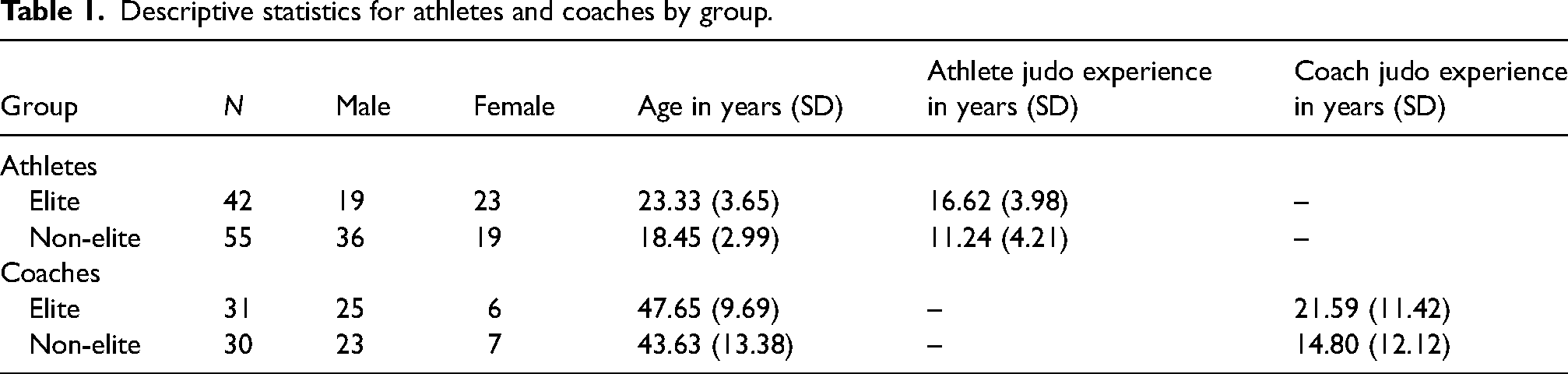
Two coach groups were also established for analysis based on the levels at which they coached. The “Elite Coach” group comprised 31 coaches (Male: n = 25, Female: n = 6) working with athletes at the Olympic, Paralympic, World Championships, and World Class Performance Programme levels. Conversely, the “Non-elite Coach” group consisted of 30 coaches (Male: n = 23, Female: n = 7) who coached athletes within the Home Nation Programme, Pathway Programme, and at club level.
A subgroup of four elite participants (two coaches and two athletes; see Table 2), were interviewed to explore their perceptions of the five categories of performance-related behaviours.
Interview participant demographic details.
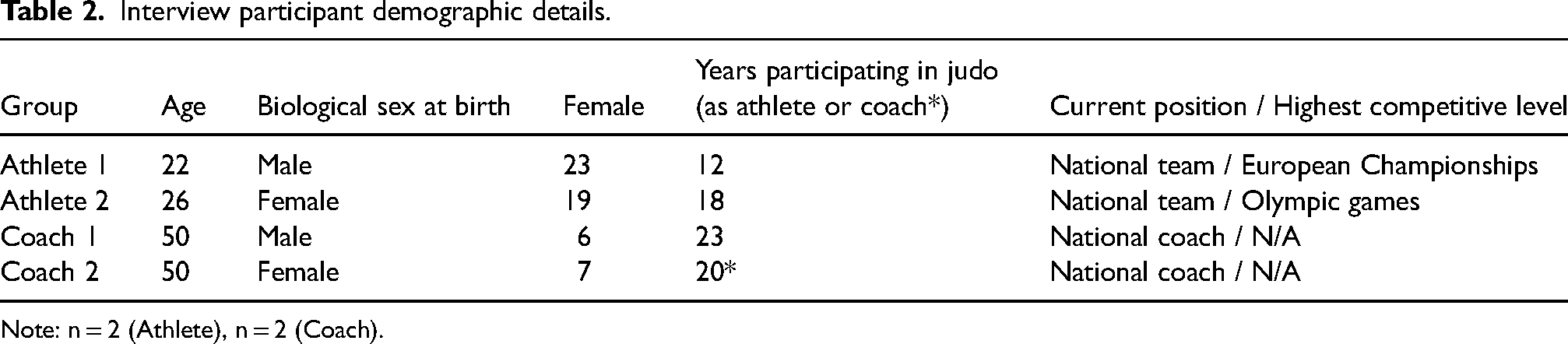
Note: n = 2 (Athlete), n = 2 (Coach).
Measures
We utilised a 30-item scale based on the UK Coaching Framework (2020) to identify the perceived importance of, and confidence with, key behaviours relevant to sport. Fifteen items assess perceived importance, starting with “How important is” in relation to the factor being assessed. Responses are rated on a 1–7 scale, with 1 indicating “not at all” important and 7 “very much so.” The 15 items assessing confidence with key behaviours begin with the prompt, “How confident do you feel” in relation to the specific aspect being assessed. Responses are rated on a 1–7 scale, where 1 indicates “not at all” confident and 7 indicates “very much so.”
Although the measure has not undergone formal validation, it is consistent with the way self-efficacy scales are typically developed—that is, by identifying the key elements of performance relevant to the context. Self-efficacy theory 8 emphasises that confidence is task-specific, and therefore measures should be tailored to the specific behaviours that underpin successful performance. In the present study, the scale items were identified by coaches, who are key stakeholders with direct knowledge of the behaviours that drive athlete performance. This gives the measure strong face validity for the target population, as it reflects the real-world demands of elite sport. While the lack of psychometric validation is a limitation, the scale's alignment with established theory and the involvement of expert practitioners in its development suggest that context-specific validity is the more relevant and practical form of validity in this case.
This scale comprises five subscales, each with three composite items:
Interviews
Following an analysis of quantitative data, semi-structured interviews were undertaken with two international judo athletes (interviewed together) and two national judo coaches (interviewed together). Both coaches had experience of competing internationally as a judo athlete. For both the athlete and coach pairing, they were provided with graphical displays of the findings, showing average ratings by biological sex at birth for coach and athlete on the perceived importance of and confidence with the five categories (Physical Development, Psychological Preparation, Relationships, Skills and Understanding You). In their pairings, they were asked to take time to study and think about the findings. They were then asked to discuss their own perceptions of the importance of, and confidence with the five categories assessed.
Procedure
The protocol was reviewed and approved by the Ethics Committee of Human Research of Nihon University College of Law. Data were collected in the UK by the first author as part of a visiting scholarship with the University of Wolverhampton, who endorsed the project. Ethical approval involved a panel of experts who review the project guided by Internationally recognised procedures stemming from the Declaration of Helsinki. All participants were volunteers, data was anonymised, and participants were free to withdraw without consequence. Participants completed the questionnaire at a national squad training camp, one camp for coaches and a separate camp for athletes. Interviews took place in a room at the judo national training centre that would allow the interviews to be completed without distraction or interruption.
Data analysis
Multivariate Analysis of Variance (MANOVA) was utilised to rigorously test for differences in the scores associated with the perceived importance of and confidence regarding five categories of performance-related behaviours: physical development, understanding oneself, psychological preparation, relationships, and skills. This analysis was conducted separately for coaches and athletes, allowing for comparisons based on coach and athletes, and then their status (elite vs. non-elite) and biological sex at birth. Interaction effects were investigated. These explored whether differences between coaches and athletes were influenced by status and biological sex at birth. Statistical significance was established at p < 0.05.
Following quantitative analysis, a qualitative approach was employed to explore the experiences of coaches and athletes regarding the five categories of behaviour within the elite judo environment. A deductive a priori template of codes was utilised to provide deeper insights into the perspectives of coaches and athletes and the nuances of their experiences in respect of the five categories of performance related behaviours.
Results
Figures 1 and 2 further illustrate the mean scores which are reported in the mean scores for the sum of items for each scale. Importance ranges from 1 (not at all important) to 7 (very important) whilst confidence ranges from 1 (not at all confident) and 7 (very confident). As Figure 1 illustrates, male coaches rated skills as the most important category, while male athletes considered physical development to be the highest priority, viewing relationships as the least important.
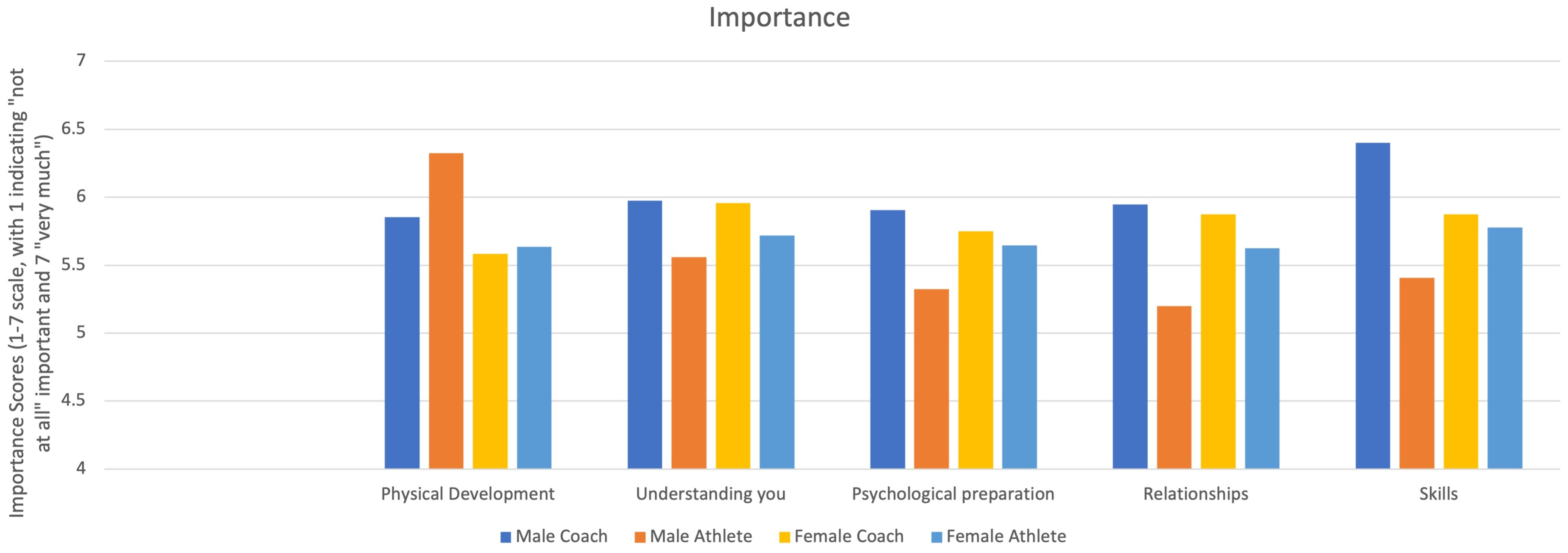
Descriptive statistics for behaviours by importance.
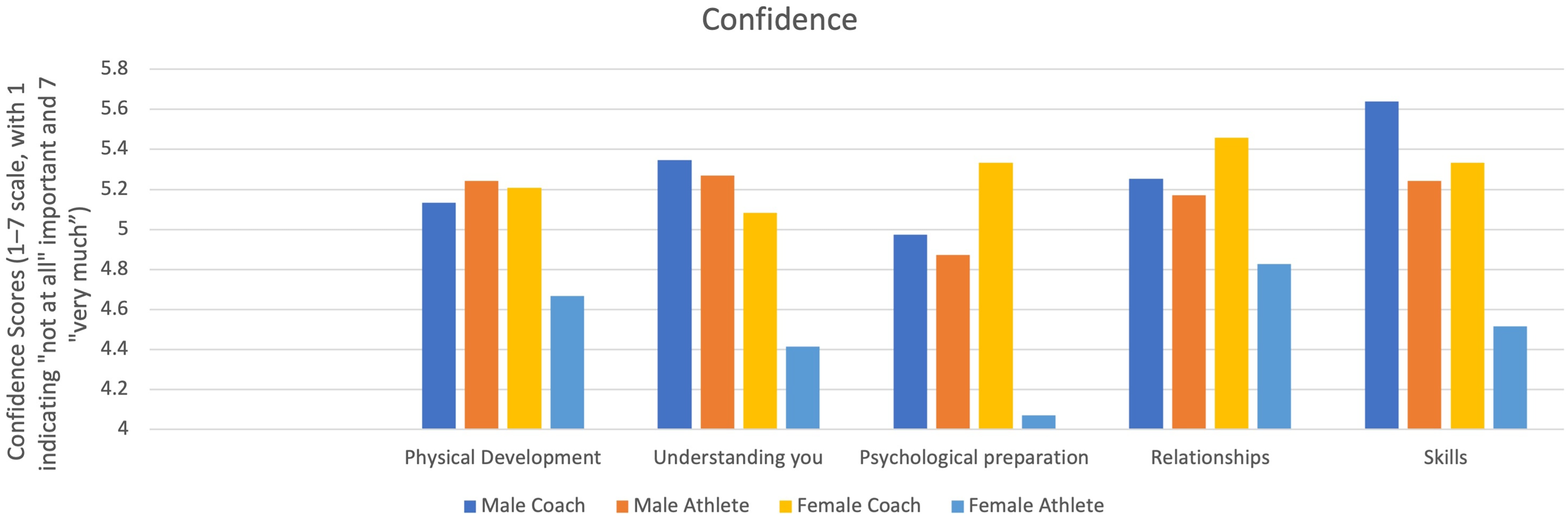
Descriptive statistics for behaviours by confidence.
In contrast, female coaches and female athletes did not show significant differentiation among the categories. Regarding confidence levels, male coaches expressed the greatest confidence in skills but reported the least confidence in psychological preparation. Male athletes demonstrated the highest confidence in understanding you and physical development (to a similar extent), followed by skills, relationships, and finally psychological preparation. Female coaches reported the most confidence in relationships while having the least confidence in understanding you. Female athletes ranked their confidence highest in relationships, followed by physical development, skills, understanding you, and lastly psychological preparation.
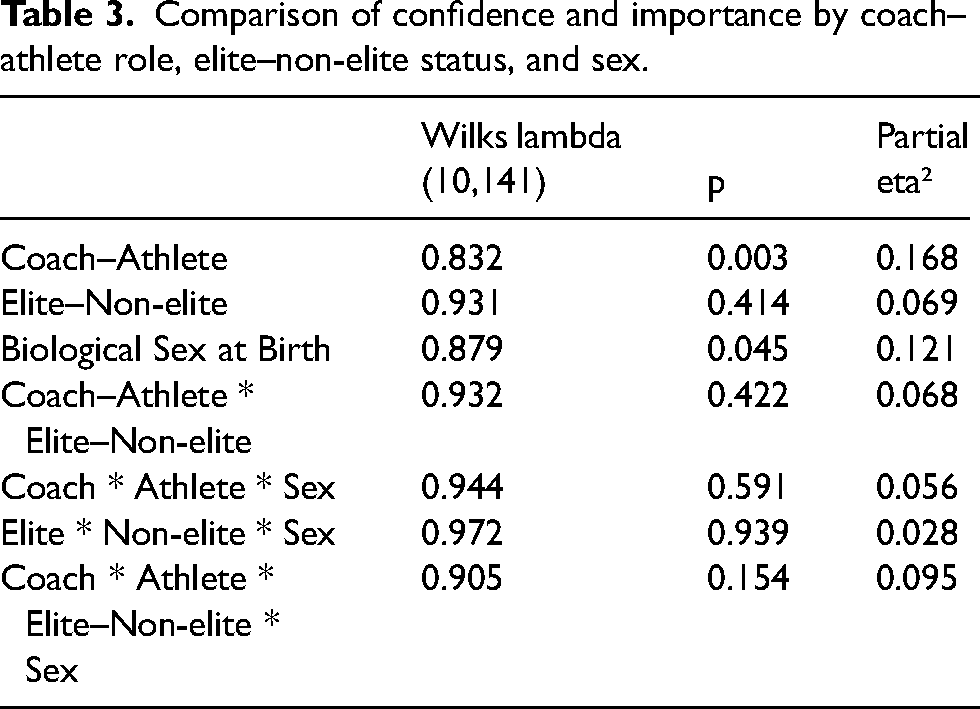
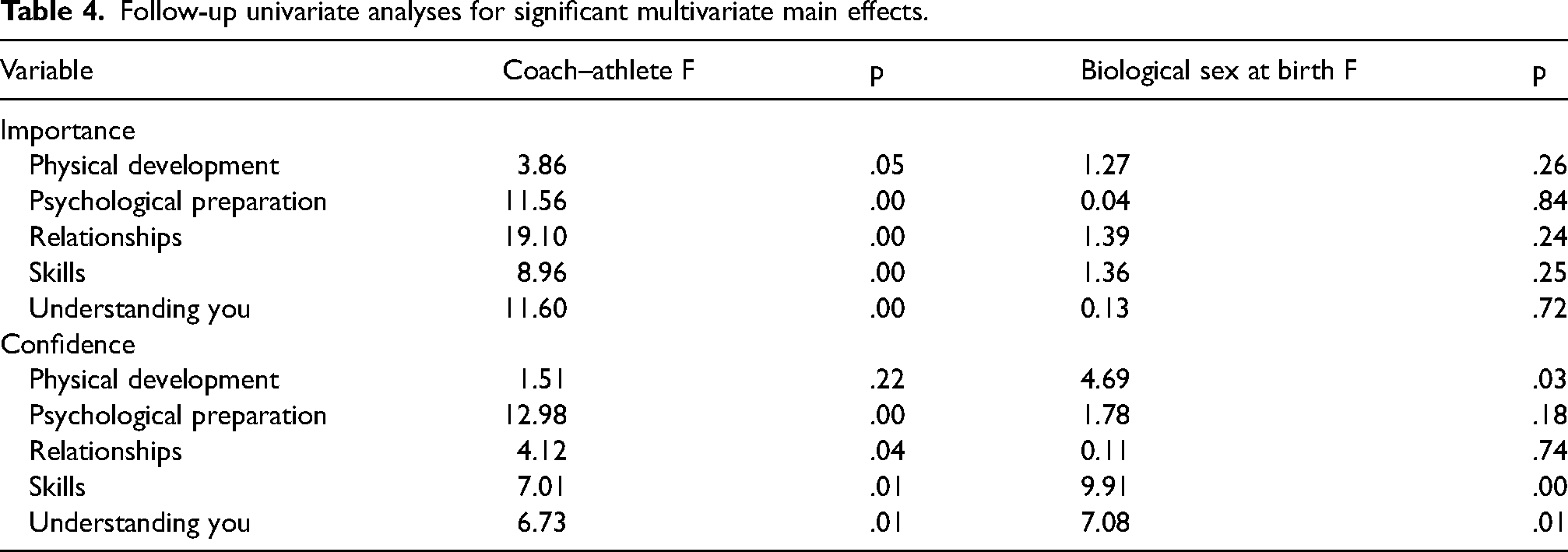
As Table 3 indicates, MANOVA results showed no significant interaction effects. Significant main effects were found for differences between coaches and athletes, and differences and biological sex at birth (see Figure 1). Univariate analysis showed significant differences for coach-athlete for the importance and confidence of physical preparation, relationships, skills and understanding you. For univariate differences in biological sex at birth, results indicated physical preparation and skills.
Comparison of confidence and importance by coach–athlete role, elite–non-elite status, and sex.
Before presenting themes, it is important to note that while participants viewed all five categories of performance behaviours as essential and fundamental to performance in judo, they felt that perceived importance and confidence ratings would vary among individuals and influenced by personal strengths, areas for development, and individual experiences.
Athlete one explained: “there's a lot of different people at a lot of different levels, and different people have different needs. So, like, for me and [names another athlete] probably, we have different needs, so that could have varied across the group”. Coach one felt that a lack of experience may influence individual ratings of perceived importance and confidence:
Some of the athletes they’ll go, ‘understanding you?’ what the hell is that? Especially if they’re young. They don’t understand because they’ve not had the experience and not been exposed to different things yet. Whereas the coach, they’ve probably been through 20 years of judo, then they’re coaching, so they’ve got more of a hand on it and why they’re confident in most things.
Deductive coding organised patterns in the data organised around the five categories of behaviour quantitatively assessed: physical development, understanding you, psychological preparation, relationships, and skills. Although the intention was for discussions regarding the perceived importance and confidence to reflect their roles as either athletes or coaches, coaches predominantly focused on athlete data. This tendency may stem from the fact that the data were collected from their athletes, prompting coaches’ eagerness to interpret and discuss the findings (Table 4).
Follow-up univariate analyses for significant multivariate main effects.
In terms of each theme, illustrative quotes will be presented that highlight the perspectives of participating coaches and athletes regarding each category of behaviour. The first theme presents participant perceptions in respect of physical development accounting for strength and conditioning, understanding physical development, and injury prevention. In discussing the importance of physical development coaches and athletes perceived this, and particularly strength and conditioning, to be prioritised more by male athletes. Coach two noted “Men believe to do good at judo, they have to be big and strong”, whilst athlete one shared; “I think male judo is more physical, so I think that's where athletes might think we need to be more physical and that will bring us up to the higher level”. Coach two elaborated: The male athlete will always think that the strength and conditioning is really, really important to them, so that doesn’t surprise me [being rated more highly for importance by males in the quantitative data] … they love the gym, whereas women don’t like the gym. They do it because they have to do it. Don’t get me wrong, there are always anomalies.
Athletes and coaches all recognised that performance accomplishments could enhance confidence in physical development relative to facilitating success. This was illustrated by coach one; “As soon as you have that big win, you think, ‘Yeah my physical development, I’m fine, I’m fine, I’m fine”. Athlete one felt that the performance accomplishments of other male judoka reinforced in him the importance of, and confidence in physical development: If you see people, especially around your own weight who you train with day in and day out doing well, then that gives you more confidence that we’re doing the right things. It gives you more confidence going into the events, like I am doing all the right training… and it almost changes the atmosphere when you’re training. Everyone is like, ‘they’ve done that, and I am going to train even harder to make sure I get a medal.
The theme understanding you presents coach and athlete perceptions in respect of the importance of, and confidence with self-awareness, self-reflection, and understanding and managing personal stressors. All interviewees deemed these attributes to be of importance for performance success, and there was a notion that self-awareness could be improved through lived experience. “I think in past competitions, I would overthink stuff. So for me, that's important, like to focus, not being nervous, and a lot of that comes with experience. A lot of it you can gain from experience” (Athlete 2). As noted previously, coach one highlighted the importance of experience relative to understanding you when stating “they [younger athletes] don’t understand because they’ve not had the experience”. Coach two deemed it important for coaches to allow athletes to gain experience, and through experience develop their confidence:
So, if you’ve got player A who is with coach A, then they don’t have to think for themselves because coach A is doing their thinking for them. Therefore, their confidence is going to be pretty crap because they’re not thinking for themselves and not learning for themselves to cope with, I don’t know, psychological aspects for example because it's been given to them.
The theme psychological preparation presents participants perceptions of the importance of, and confidence with self-regulation, managing expectations, and developing coping. All participants reflected on the importance of psychological preparation in achieving desired performance outcomes. Athlete one explained:
Psychological prep is definitely one of the top, important ones. When I fight well, like the difference between like when I fight well in competition and how I train, it is all like psychological. Sometimes if I overthink or get nervous and stuff then I can’t deliver my best. I can have all the skills, and be the strongest person, but if I am not in the right mindset to fight or not thinking correctly, then I don’t perform at my best.
Both coaches noted that having seen the data from phase one they intended to have follow-up conversations with their respective athletes about psychological preparation; “I think the first thing is to double-check with the athletes that you work with because obviously as a coach you would have thought it [self-rating scores] would be higher. So, yeah a bit of a conversation” (coach two).
With regards developing confidence in psychological preparation, developing routines and practicing these was considered to be important by athlete one:
Know what you’re doing and having a process, if you’re like, ‘oh, I’m going to the Europeans or Worlds, I need to do extra, I need to do this’, well actually, ‘no, I’m going to stick to the same process that I’ve done for every other comp which has got me medals.’, I’ll stick to that. Doing this throughout the year and repetition might increase your confidence going into the comps and give you better performances, and just keep repeating it then.
The theme relationships included building networks and maintaining relationships, emotional intelligence, and effective communication. All four participants perceived these considerations to be vitally important in developing effective coach-athlete relationships. Put simply, coach one surmised “to be a good coach, you need to understand your athlete”. The following exchange between coaches offers insight into how they looked to develop an understanding of their athletes: Coach one: It's also the coach knowing what to say at a certain time because otherwise you can throw them completely off, and the right thing to say and not the wrong thing. Interviewer: How do you know how much to say? Coach two: That comes down to the relationship. Coach two: I was going to say, all of them are different. You’ve got your chatterbox who gets nervous and wants to talk. You’ve got to let them talk. If they go quiet, then you have got to build a conversation. Then you’ve got the ones who just want to stand there and prepare in their own heads. Interviewer: And they’re the ones that don’t want you to talk to them. Coach two: Yeah, if that's their thing, yeh. Coach one: You get to know them on a day-to-day basis. That routine becomes second nature because you do it [coach two interrupts]. Coach two: But yeah, relationship wise, that is something that you have to build.
This conversation was mirrored by the following exchange between the athletes: Athlete one: For us, it comes down to the relationship that you have with your coach as well, or your teammates, who you can speak to, what they need. I know when I’ve been on trips with [names athlete], she doesn’t stop talking. That's what she does. Athlete two: I think that's a nerves thing. She does talk a lot, but I think she is even more nervous on competition day. Athlete one: Being around her, she’ll like sort of in tunnel she will still be talking to the coaches, whereas some coaches will be like, ‘why are you talking? Concentrate’, but that's her coping mechanism, as an example of where someone could be quite quiet and be like focussing with headphones on or whatever. So that's like where the relationship with the coach is important there.
Athlete two offered insight into the sometimes-tumultuous process of developing a good working relationship, and felt that a good relationship formed the basis of success for the four other themes: From experience, I have had ups and downs with [names coach], but we’ve known each other so long now that if I am tired, or I am angry, I can go and talk to him now. Whereas a few years ago, I would keep everything inside or we would end up falling out. Whereas now, it's very different. Even if I’m upset or anything, then he knows do I need space or do I need to chat, it's more relaxed… if your coach knows you really well, then you trust them, they understand you, you’re more psychologically prepared for stuff. If I was making weight, then I could go to my coach if I needed help. So, I think that one kind of links into the others…. Like, if I have got a good relationship with my coach then my physical development is going to improve and I am going to be more focussed, yeah I just think that's the one that links things together and brings them all into one area.
The final theme skills presents participants perceptions of physical ability and movement, practice meeting individual needs, and skill acquisition through practice. All participants noted the importance of individualised practice informed by injury status, or planning and periodisation relative to major competitions. Athlete one explained:
It definitely changes depending on where you are and what you’re doing. So, say you’re coming back from a long-term injury, I think it would depend as well on the coaching groups. I know the men's group; we’ve got like separate programmes. It's split into like the Paris group and an LA developmental group.
Judo can be considered a highly skilled sport, and participants described ways of developing confidence in physical ability and movement. Repetition was one means of developing skill and confidence in the respective skill; “It's like that repetition that [names athlete two] said. If you keep working on the same thing and you get it right, you go, ‘oh right, it does work.’, and you have more confidence in that” (athlete one). A further means was identified by coach two: “You try and build their confidence by putting them in the right tournaments at the right time. Obviously every now and again you try and stretch them, but yeah, if things went well, you would build that confidence”. The importance of feedback and guidance was also identified in supporting skill development as captured in the following athlete exchange: Athlete two: Erm, practising really. Like repetition, training camps, fighting the best people in the world, going to Japan, and then getting feedback from coaches or after competitions, we do a debrief. Not just looking at things that you could have done, or that need improving, but what you’ve done right. Interviewer: Is that the debrief with the video feedback and looking at that? Athlete two: Yeah, and then you can use that in training to work on what you’ve done wrong and what you need to improve. Athlete one: Yeah similar. Like, you’ll have your skills and if you are confident in what you do and you know it works against the better players in the world, and if you have confidence that you can deliver that, then you’re going to deliver it better than, ‘this might work, I’m not sure.’, but if you’re confident that this will work, then that's how you get better.
Overall, the perceived importance of, and confidence regarding the themes of physical development, understanding oneself, psychological preparation, relationships, and skills paint a complex picture of the judo training environment. The quantitative data revealed biological sex differences in perception, while qualitative insights provided depth, illustrating how personal experiences, coaching dynamics, and gendered perceptions shape athletes’ and coaches’ beliefs and behaviours.
The interplay of these themes indicates that successful performance in judo hinges not just on physical capabilities but also on psychological readiness, relational dynamics, and individualised skill development, creating a multifaceted framework for understanding athlete and coach experiences in this sport.
Discussion
This study investigated key performance factors among judo athletes and coaches, emphasising the significance of incorporating stakeholder perspectives through a co-construction approach. 4 This approach aligns with contemporary views that emphasise the necessity of actively involving athletes in the research process to ensure that findings are relevant and applicable to their unique experiences and training needs. 14 By integrating athletes’ insights, the study not only enhances the practical relevance of the findings but also empowers athletes to take an active role in their development, fostering a collaborative environment between researchers, coaches, and athletes.
Smith et al. 4 provided a detailed case example from community football that highlights the value of collaborative, participant-led approaches in shaping meaningful interventions. Although the sport differs from ours, there are notable parallels between their findings and ours in judo. Specifically, Smith et al. illustrate how co-produced research in community football allowed stakeholders—players, coaches, and facilitators—to contribute equally to decision-making, fostering a sense of shared ownership and contextual relevance. Similarly, our findings from a large-scale mixed methods study with UK judo athletes and coaches indicate meaningful divergence in perceived importance and confidence across several performance domains, including relationships, psychological preparation, and self-understanding. These differences, particularly between coaches and athletes, reinforce the value of collaborative dialogue in aligning support strategies. Moreover, our qualitative data emphasise the importance athletes place on supportive coaching for enhancing self-confidence, while coaches prioritise tailoring training to individual needs—an approach consistent with the co-construction ethos advocated by Smith et al. 4 Their work supports our argument that fostering athlete–coach collaboration through co-construction can bridge perceptual gaps and ultimately enhance performance development in high-performance sport settings.
The qualitative and quantitative findings in this study do not necessarily align, and this discrepancy is important in highlighting how different perspectives on the focus of research can influence the outcomes. For example, the quantitative data revealed significant differences between athletes and coaches in their perceptions of factors like psychological preparation and skills, with coaches rating the importance of these factors higher than athletes. However, the qualitative findings suggested a different focus, with athletes emphasising the role of supportive coaching and personalised feedback in enhancing self-confidence and performance, while coaches highlighted the need for understanding individual athlete needs. This divergence in results underscores the value of exploring both perspectives, as each offers unique insights that enrich the overall understanding of the athlete-coach dynamic. Athletes may view their relationship with coaches more through the lens of emotional support and trust, while coaches may prioritise the technical aspects of performance. The two sides can benefit from sharing this knowledge, as athletes may better appreciate the value of technical feedback and coaches may gain a deeper understanding of how emotional support impacts confidence. 15 Ultimately, these varied perspectives show that there are multiple valid approaches to enhancing performance, and a co-constructive approach that integrates both can lead to more holistic and effective strategies.
The results of the quantitative phase confirmed identified the importance and confidence to attain key performance markers. Our data could be used by coaches to create training environments that prioritise the development of self-confidence alongside physical training. As indicated by the findings, strategies that focus on individualised coaching based on athlete feedback can lead to improved motivation and engagement, which are essential for optimal performance outcomes.16,17 Furthermore, the qualitative phase provided a richer understanding of how athletes interpret their experiences, revealing nuanced insights into the dynamics of self-confidence and performance that may be overlooked in traditional top-down research approaches. 13
Athletes can leverage the data from this study to gain a deeper understanding of how their self-confidence influences their performance. By reflecting on the specific performance factors identified as crucial in the quantitative phase, athletes can work collaboratively with coaches tailoring training focus to address areas where they feel less confident. For example, if self-confidence in sparring correlates with improved competitive outcomes, an athlete may prioritise sparring sessions to build their confidence in real-match scenarios. This could involve increasing the frequency and intensity of sparring, working with different training partners to simulate varied competition styles, and setting specific goals for each session—such as improving reaction time or executing particular techniques under pressure. Additionally, coaches might design sparring sessions to replicate the psychological and physical demands of competition, helping athletes develop both the skills and mental resilience needed to transfer their confidence from training to actual performance. Additionally, qualitative insights gained from fellow athletes can provide motivation and strategies for overcoming self-doubt, fostering a supportive community that encourages open dialogue about confidence-related challenges. 11
Coaches could utilise the findings from this study to refine their coaching strategies and approaches. By understanding the specific performance factors that contribute to athletes’ self-confidence, coaches can create training programs that are more aligned with the athletes’ needs and perspectives.10,18 Our use of co-construction approach helped to ensure findings were relevant to athletes and coaches alike. By actively involving coaches and athletes in the research process, the study demonstrated how their unique perspectives can inform effective coaching strategies and athlete support systems. This collaborative model not only enhances the relevance of scientific inquiry but also ensures that the interventions developed are grounded in the realities of coaches’ and athletes’ experiences. As such, the study contributes to the growing body of literature that emphasises the importance of stakeholder engagement in the co-construction of knowledge, ultimately leading to improved training methodologies and performance outcomes. 19
Thus, the findings from this study not only echo the sentiments of existing literature regarding self-confidence, coaching effectiveness, and the significance of athlete input in the development process,10,16,18 but also pave the way for future research to explore these relationships in even greater depth. By advocating for a more integrated approach to training that acknowledges the complexities of athlete experiences, the sport can better equip its participants for success both on and off the mat.
We argue that future research should build upon the findings of this study by exploring the long-term impacts of self-confidence on performance outcomes in judo and other combat sports. Longitudinal studies could provide valuable insights into how self-confidence develops over time and its correlation with athletes’ competitive success. Understanding these dynamics will allow coaches to design training programs that not only focus on immediate performance but also foster sustained psychological resilience and confidence throughout an athlete's career. Such studies could also examine how changes in self-confidence influence athletes’ engagement in training and competition, potentially leading to better retention and development of talent within the sport.
Additionally, there is a need to investigate the role of different coaching styles in shaping athlete self-confidence and performance. Qualitative research that delves into the experiences of athletes from diverse backgrounds and levels of expertise could highlight the various factors that contribute to effective coaching. Exploring how different approaches—such as authoritative, democratic, or laissez-faire styles—affect athletes’ perceptions of their confidence and motivation will provide coaches with practical strategies for enhancing their interactions with athletes. Furthermore, understanding the interplay between coaching behaviour and athlete self-confidence can help identify best practices that can be shared across sports, thereby enriching the broader field of sports coaching.
Finally, future studies should consider the broader context of mental health and well-being in relation to athlete development. The mental demands placed on athletes, especially in high-pressure environments like elite judo competitions, can significantly affect their self-confidence and performance. Research focusing on mental health interventions, stress management techniques, and the cultivation of a supportive team culture can provide a comprehensive understanding of how to enhance athletes’ psychological preparedness. By integrating mental health considerations into athlete development frameworks, researchers can contribute to creating a holistic approach that prioritises both performance and the overall well-being of athletes, aligning with the objectives of organisations like UK Sport.
Conclusion
This study highlights the value of a co-constructed approach in understanding key performance factors in judo, revealing perceptual differences between athletes and coaches across psychological, relational, and skill-based domains. By integrating both quantitative and qualitative insights, the study underscores the importance of collaboration in shaping tailored support strategies that enhance self-confidence and performance. The findings align with existing literature on co-production in sport and demonstrate how involving stakeholders enriches both the relevance and application of research. Future work should build on these findings by exploring longitudinal outcomes, coaching styles, and the integration of mental health into athlete development frameworks.
Footnotes
Acknowledgements
The authors would like to extend thanks to all those that agreed to take part in the study. These results are part of research undertaken in the UK by Prof Yoko Tanabe, visiting scholar from Nihon University, Japan.
Declaration of conflicting interests
The author(s) declared no potential conflicts of interest with respect to the research, authorship, and/or publication of this article.
Ethical consideration
This study has been reviewed and approved by the Ethics Committee of Human Research of Nihon University College of Law.
Funding
The author(s) received no financial support for the research, authorship, and/or publication of this article.
