



Abstract
A systematic application of behaviour change models in the design and implementation of coach education programmes (CEPs), as well as related research, remains limited. These models could provide valuable insights to enhance the effectiveness of CEPs through targeted behaviour change interventions. The purpose of this study was to provide an understanding of the factors influencing coaches’ behaviour change by assessing the impact of one to two years Vocational Coach Education Programme (vCEP) on perceived capability development and behaviour change of sports coaches. Factors promoting or hindering behaviour change were identified based on the COM-B (Capabilities, Opportunities, Motivation – Behaviour) model. The study was conducted via an online questionnaire among vCEP graduates (n = 65), representing approximately one-third of the eligible population during the data collection period. Findings revealed that coaches rated the effectiveness of vCEP in capability development and behaviour change to be relatively high, particularly in terms of Intrapersonal Knowledge, Developing Coaching Environment, and Athlete-centred Coaching. Based on the coaches’ experience, the primary COM-B–based enabler of behaviour change was the enhanced capability, while the most common barrier to behaviour change was the lack of motivation. This study demonstrates that future interventions should focus on enhancing both capabilities and motivation and should be designed to stimulate a need for change.
Introduction
Formal coach education programmes (CEPs) have been criticised for low effectiveness in changing coaching behaviour.1,2 This has been attributed, among other things, to the detachment of learning from everyday coaching context and the failure to meet participants’ needs. 3 In terms of content, more individualisation has been suggested, as the ‘one size fits all’ approach may not meet the needs of participants. In particular, towards the later stages of the CEP, it is recommended that coaches have the opportunity to tailor their studies according to their motivation and aspirations. 4
The examination of CEPs has attracted increased attention among researchers. Campbell and Waller 5 reviewed 56 CEP studies from 2015–2019 and found that most of them focused on the implementation of the education process (57%), followed by the programme outcomes (22%) and the programme theory and design (21%). Qualitative methods were more common (63%) than quantitative or mixed methods (37%), which mainly used questionnaires (9%). Notably, 29% of programmes were less than one day long, while only 9% extended over a year potentially contributing to the low effectiveness of CEPs in previous studies. 5
A lot has been done in the past decade to enhance the effectiveness of CEPs,6,7 but a more systematic application of behaviour change theories and models could further improve their impact. Allan et al. 8 argued that these theories have not been comprehensively and consistently utilised in the design and implementation of CEPs. One such model, widely used in behaviour change research, is the COM-B model. 9 Originally developed to enhance the design of public health interventions, the COM-B model provides a structured approach to understanding behaviour change. 9 Its empirical foundation is well-established, and it has been applied across various domains, including healthcare, education, coach education and organisational behaviour10–13
The model 9 identifies three core conditions necessary for behaviour change: Capabilities, which refer to the knowledge and skills required to act in a desired manner; Opportunities, which encompass the external factors enabling or restricting behaviour; and motivation, which drives individuals’ intentions and decisions to act. Behaviour change occurs when all three components align, and these factors interact dynamically. For example, having the necessary knowledge and skills (capability) can increase motivation to adopt new behaviours, while external support and resources (opportunity) can reinforce motivation by making change more feasible 9 (Figure 1).
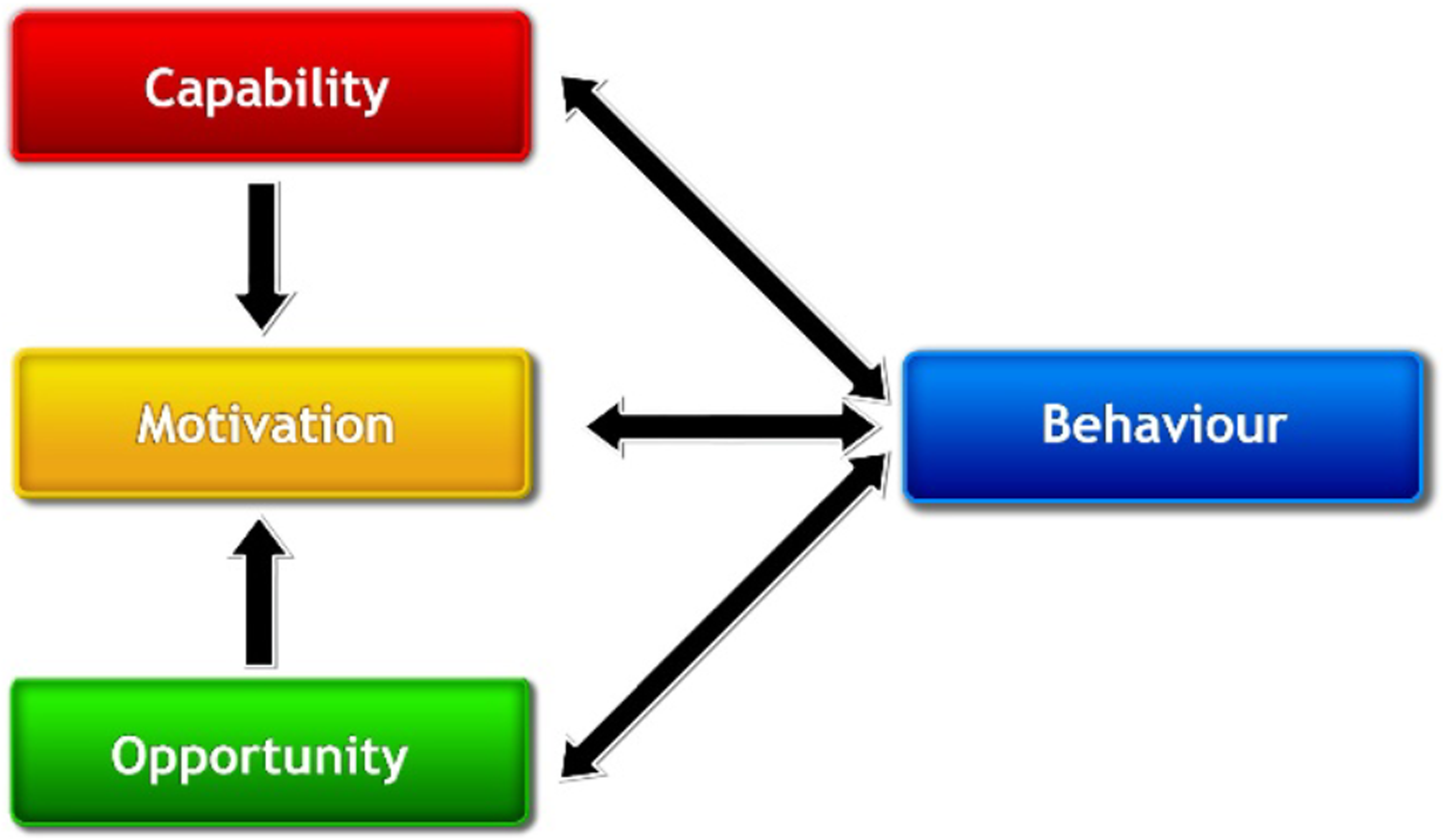
The COM-B model (Michie et al., 2011). This image is used under the terms of the Creative Commons Attribution License (CC BY 2.0).
Given that CEPs aim to facilitate meaningful changes in coaching behaviours, the COM-B model was considered highly relevant for this study. To effectively support behaviour change, it is important to understand the key mechanisms influencing that change. By examining which behavioural factors (capabilities, opportunities, motivation) contribute to or hinder change, the COM-B model provides insights that can inform the design and evaluation of future CEPs. Identifying barriers and enablers supports the development of targeted interventions, helping CEPs better support coaches in transferring their learning into practice.
To guide intervention design, the Behaviour Change Wheel (BCW) was developed as an extension of the COM-B model. 9 The BCW provides a systematic framework for implementing behaviour change interventions by linking COM-B components to nine intervention functions (e.g., education, persuasion, incentivization) and seven policy categories (e.g., legislation, regulation, fiscal measures). 9 This structured approach supports the selection of targeted interventions that are aligned with specific behavioural factors identified through COM-B analysis. As such, the BCW can enhance the design and implementation of CEPs by increasing the likelihood that learning outcomes transfer effectively into coaching practice.
The vocational coach education programme (vCEP)
In the Finnish coach education system, CEPs are divided into three different levels: sports federations’ programmes, vocational programmes, and higher education programmes. The Vocational Coach Education programme (vCEP), officially referred to as the ‘Further Vocational Qualification in Physical Education and Coaching – Competence area of Coaching,’ under study, is designed for coaches working with different age groups in sports clubs. 14 The vCEP is offered by several institutions, either as a multisport or a sport-specific programme (e.g., floorball).
The vCEP aims to achieve impact in all areas of coaching effectiveness and expertise
15
: professional knowledge (e.g., sport science, sport-specific and pedagogical skills), interpersonal knowledge (e.g., interaction with individuals and groups), and intrapersonal knowledge (e.g., self-awareness and reflection skills). The general objective of the qualification is: 'Students who have completed the competence area of coaching have the vocational skills necessary for working as coaches, developing their skills as coaches, and the operating environment of coaching. They have the vocational skills needed for athlete-centred coaching, supporting, and monitoring the overall development of an athlete, and promoting safety in coaching situations.’
16
The qualification of vCEP is designed to be completed in one to two years. It includes a compulsory module of ‘Professional Activities as a Coach’ (60 credits), after which the coach specializes in either coaching children, young people, or adults (90 credits). The programme uses hybrid learning, which combines on-site sessions, distance learning, and in-service learning. The programme consists of multiple, short on-site sessions, typically lasting a few days and held monthly, interspersed with periods where coaches continue working in their coaching environments while completing coursework alongside their practical coaching duties. While all institutions follow the same qualification structure and credit requirements, there are variations in pacing and scheduling across institutions.16,17
The vCEP was selected for this study because its implementation aims to address effectiveness concerns raised in previous research. For instance, the vCEP integrates the everyday coaching context closely with the educational content, allows for individualisation, and has a longer duration compared to many other CEPs studied. In addition, the programme is nationally significant, as 47% of full-time coaches have completed this qualification. 18 Vocational coach education serves as a key pathway for formal coaching qualifications, making vCEP a central part of the Finnish coach education system. However, its effectiveness has not been scientifically studied before.
The purpose of the study
A systematic application of behaviour change models in the design and implementation of CEPs has generally been lacking, and research in this area remains limited. This study aimed to explore the factors influencing coaches’ behaviour change by examining the impact of vCEP on their perceived capability development and behaviour change. Using the COM-B model, the study identifies key enablers and barriers affecting behaviour change to guide the development of more effective interventions in coach education.
Research questions:
How do coaches evaluate the impact of the vCEP on their capabilities and behaviour in relation to the programme objectives? What COM-B-based underlying factors (capabilities, opportunities, motivation) do coaches perceive as enablers of behaviour change in the vCEP objectives where behaviour change was reported? What COM-B-based underlying factors (lack of capabilities, opportunities, or motivation) do coaches perceive as barriers to behaviour change in the vCEP objectives where behaviour change was not reported?
Methods
Recruitment and participants
Participants recruited for the study were coaches who had either completed vCEP within the last six months or had finished at least all on-site sessions of the programme before the start of data collection. This study involved seven educational institutions and used census sampling, 19 inviting all graduating coaches between January 2022 and May 2023 (approximately 200 coaches) to participate. A total of 65 coaches (22 women and 43 men) responded to the questionnaire, representing about a third of those invited. Given that the vCEP is a standardized national programme, the participating coaches are likely to have a relatively homogeneous background in terms of their training and qualifications, which further supports the adequacy of the sample size.
The mean age of the participant was 41 years (SD 9.7; range 20–59) and their mean coaching experience was 13.8 years (SD 8.1; range 1–40). The coaches represented various sports including Finnish baseball, basketball, floorball, volleyball, ice hockey, soccer, figure skating, synchronised skating, track and field, triathlon, gymnastics, equestrian, martial arts, swimming, dance, tennis, motor sports, fitness, ringette, cycling, CrossFit, weightlifting, and alpine skiing. Regarding the optional modules of the vCEP, nine coaches focused on coaching children, 31 on coaching young people and 25 on coaching adults.
Questionnaire design
A questionnaire was selected as the data collection method for this study to examine the impact of vCEP on coaches’ perceived capability development and behaviour change, as well as the perceived enablers and barriers influencing that change. This approach allowed for a larger and more representative sample. Given that previous research on coach education has been predominantly qualitative, employing a questionnaire contributes to the relatively limited body of quantitative research in this field. 5 Furthermore, self-reported data is particularly valuable when examining behaviour change mechanisms, as internal processes such as motivation cannot easily be assessed through observational methods. 20
To achieve construct validity, which requires that questions measure precisely what the questionnaire intends to investigate, 21 the questionnaire was carefully crafted to align with the defined competence requirements of the vCEP, ensuring that the study accurately measures the aspects the programme aims to develop. Developed by researchers with extensive experience in coach education, coach development, and physical education research, the questionnaire was informed by expert input, which guided the decision to assess both capability and behaviour change, as well as the application of the COM-B model as a theoretical framework. Additionally, to ensure alignment with the key competencies of the vCEP, the first author engaged in discussions with vCEP educators to gain deeper insights into the programme's structure and learning objectives.
To obtain valid and reliable results, questions were crafted to be simple and linguistically understandable to participants, also avoiding common problems such as double-barrelled, loaded or leading, negative, unnecessarily detailed, or dead giveaway questions. 22 The questionnaire was created in the participants’ own language, minimising potential challenges related to cultural nuances in understanding the questions. Before the data collection, the questionnaire was piloted with three professional coaches who had previously completed the vCEP. The coaches filled in the questionnaire and assessed the time taken to complete it, the structure of the questionnaire, and the validity and linguistic clarity of the questions. The first author reviewed the pilot data and had further discussions with the participating coaches. Based on the feedback, linguistic changes were made to some of the questions and all the answer options related to the behaviour change were modified to lead to a prompted question about enablers or barriers. The pilot participants’ evaluation of the questionnaire's validity was grounded in their own experience of the vCEP, particularly in assessing how accurately the questions reflected the programme's content and goals.
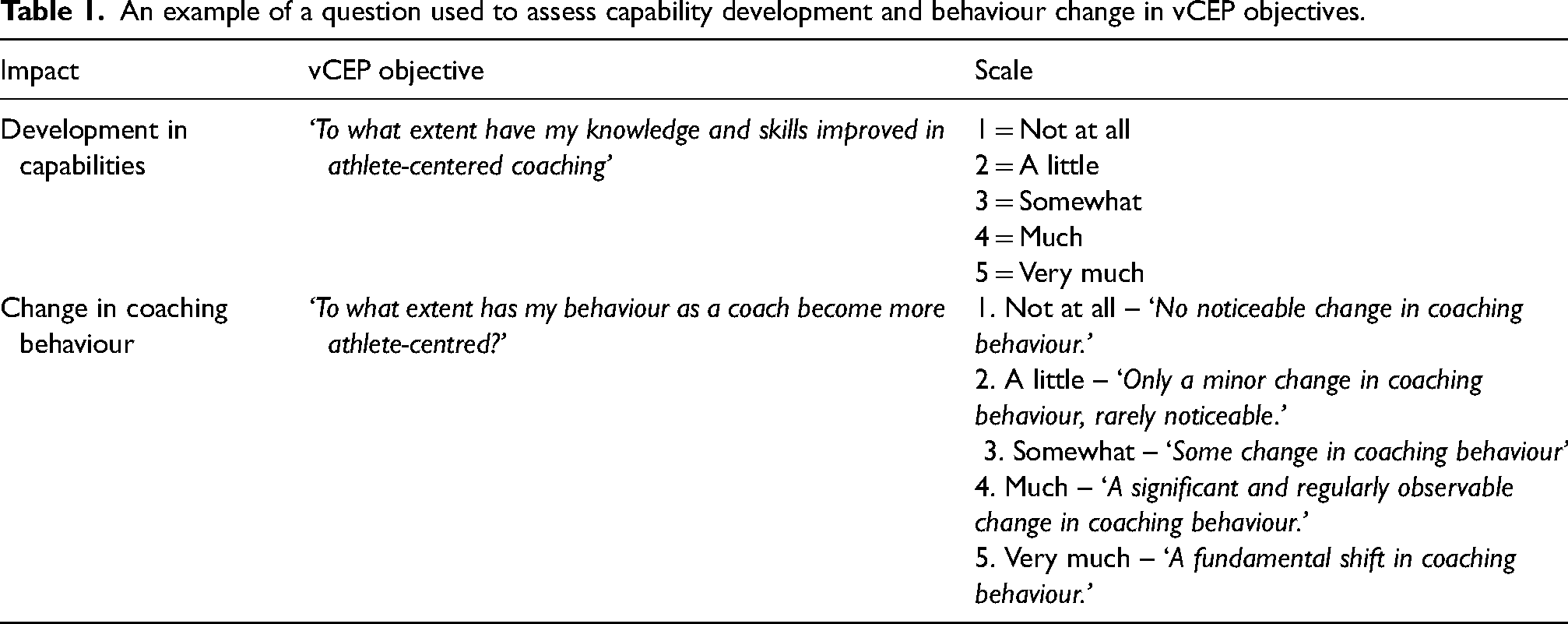
The final questionnaire consisted of three sections. The first section included participants’ demographic information (i.e., age, gender, coaching experience, specialisation). In the second section, coaches assessed their capability development and behaviour change in 23 competence requirements (vCEP objectives), on a five-point, Likert-type scale (Table 1). 16 The questions related to the vCEP objectives were two-fold. For each vCEP objective the participants were instructed first to assess their development in capabilities and then their change in behaviour. In the instructions the term ‘capability’ was explained to participants as ‘knowledge/skills’ for the sake of clarity.
An example of a question used to assess capability development and behaviour change in vCEP objectives.
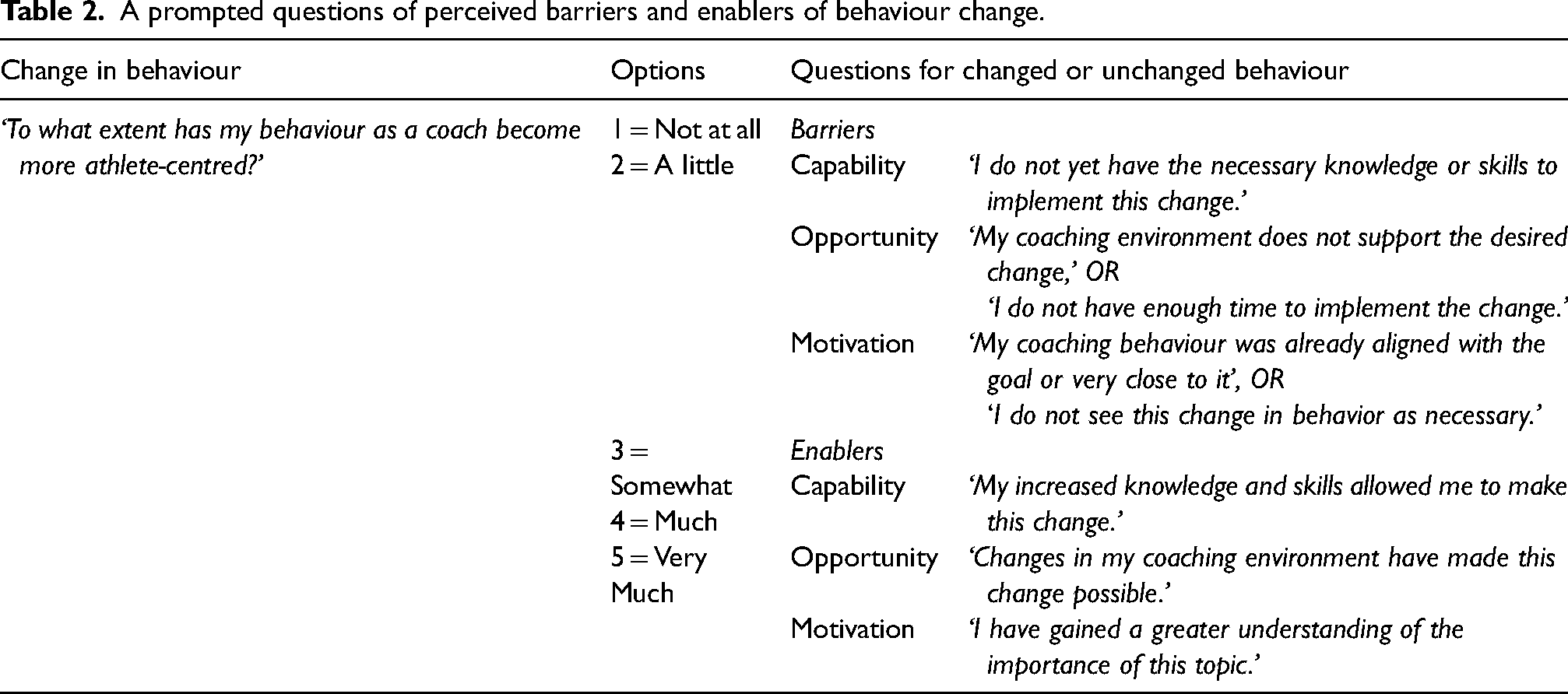
The questions regarding behaviour change led to a prompted question of perceived COM-B based enablers or barriers 9 of behaviour change (Table 2). Options 1 and 2 triggered a prompted question about perceived barriers, and options 3–5 about perceived enablers. For both prompted questions, participants had the possibility to select one or more enablers/barriers that they perceived had influenced most to their changed/unchanged behaviour.
A prompted questions of perceived barriers and enablers of behaviour change.
The third section evaluated coaches’ overall experience of vCEP. This section included three questions, which were assessed on a five-point, Likert-type scale of 1 (not at all) - 5 (very much). The questions addressed 1. the perceived overall capability development, 2. the perceived overall behaviour change, and 3. the perceived alignment of vCEP with the participant's needs.
Questionnaire implementation
This study was conducted in accordance with the International Standards for Authors by the Committee on Publication Ethics. 23 The criteria outlined by the Finnish National Board on Research Integrity 24 confirmed that there was no need for ethical pre-evaluation prior participant recruitment. Before giving informed consent and participating in the study, participants received an information sheet and a privacy notice detailing the purpose of the study and data handling procedures. The authors were not involved in the design or implementation of the vCEP under study, which contributes to the independence and objectivity of the research.
Data collection was conducted using the Webropol platform. 25 The participants received an email invitation to participate in the study after completing at least all on-site sessions of the vCEP, with the response period extending up to six months following their final on-site session. Since the questionnaire was self-administered, it included an introductory page detailing specific instructions for responding. 21 All participants answered questions related to the compulsory module (professional activities as a coach) and to their chosen optional module (coaching children, young people, or adults) of vCEP. The estimated response time was 10 to 30 min.
Data analysis
Descriptive statistics of perceived capability development and behaviour change (mean and standard deviation) were calculated for all vCEP objectives, and participants’ assessments of their overall development. Some of the objectives were module-specific (coaching children/young people/adults) and some applied to all participants. For the vCEP objectives common to all, the responses were combined for analysis (e.g., athlete-centred coaching). Objectives with fewer than ten enablers or barriers were excluded from the analysis.
Behaviour change enablers and barriers were analysed at two levels:
The overall distribution of enablers and barriers across all responses, allowing for an examination of responses at a general level. The total number of COM-B-based selections was 932 for enablers and 376 for barriers, representing all chosen responses across the vCEP objectives. A vCEP objective-specific analysis was conducted to examine the distribution of enablers and barriers within each competence area, allowing for the identification of differences in the factors influencing behaviour change across various coaching competencies.
Côté and Gilbert's 15 framework on coaching expertise (professional, intrapersonal, and interpersonal knowledges) was used as a conceptual reference in the study. While it was not possible to fully classify vCEP's objectives into this model, certain objectives naturally aligned with its domains. The model provided additional insight during the interpretation of results, particularly in identifying patterns of perceived development across its competence areas helping to examine which aspects of coaching expertise showed the most notable changes.
Results
Perceived capability development and behaviour change
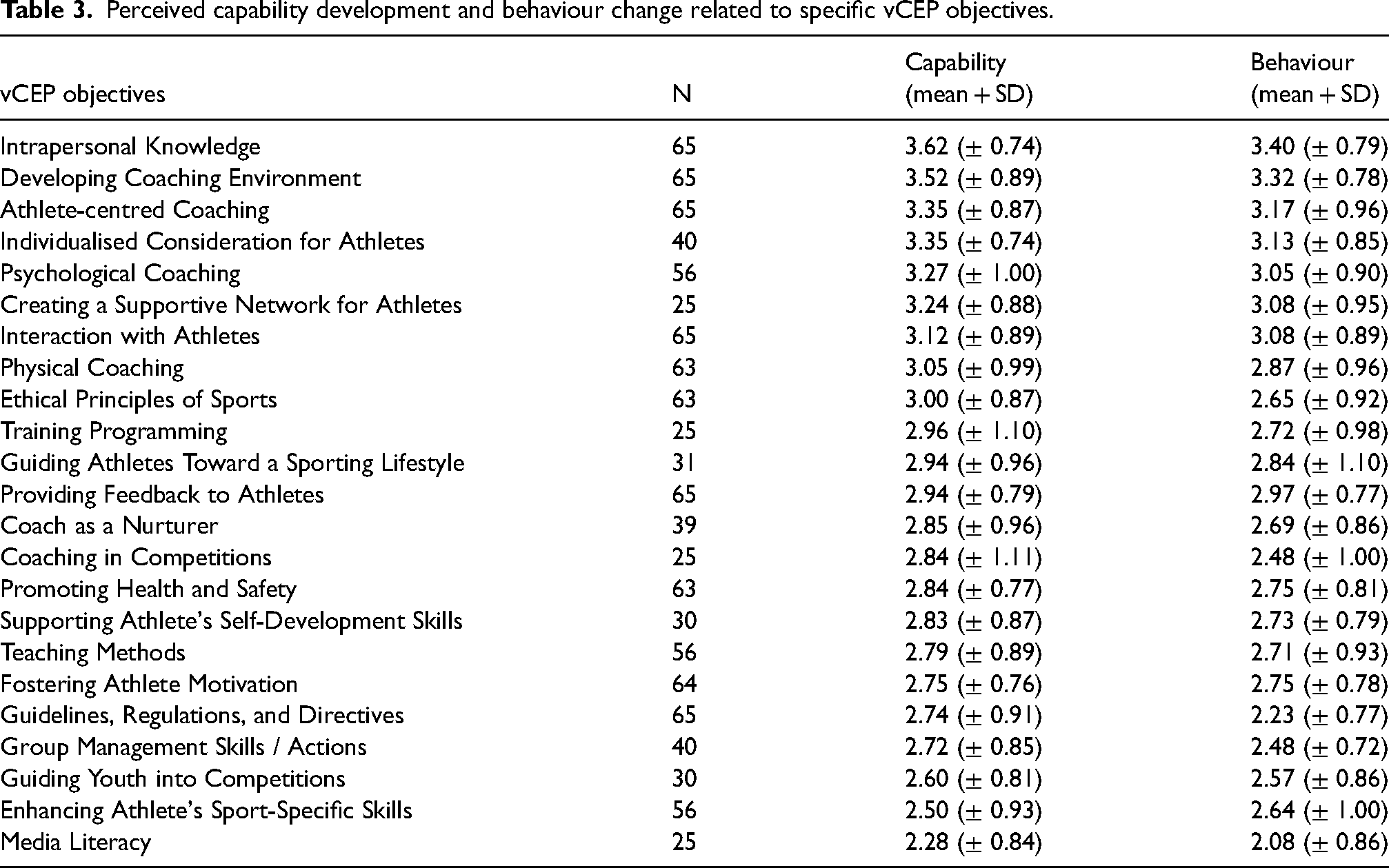
Coaches rated their overall development of perceived capabilities higher (M = 3.7 SD = 0.83) than perceived change in their coaching behaviour (M = 3.4, SD = 0.78). The programme was perceived to align with the needs of the participants (M = 3.8, SD = 0.79).
The means and standard deviations for perceived capability development and behaviour change related to specific vCEP objectives are shown in Table 3. The mean scores for capability development were 3.0 or higher in nine, and for behaviour change, in seven out of the 23 vCEP objectives studied. The greatest perceived changes in both capability development and behaviour change were reported in the areas of Intrapersonal Knowledge, Developing Coaching Environment, and Athlete-centred Coaching. In the area of professional knowledge, 15 the mean score for behaviour change was over 3.0 only in Psychological Coaching.
Perceived capability development and behaviour change related to specific vCEP objectives.
Perceived enablers for behavioural change
(1) The overall distribution of enablers across all responses
The most frequently selected enabler for behaviour change was Capabilities (52.8%, n = 492), followed by Motivation (34.7%, n = 323) and Opportunities (12.5%, n = 117).
(2) The vCEP objective-specific distribution of enablers
Capability development was the most commonly perceived enabler across nearly all vCEP objectives. The percentage of capability development as an enabler of behaviour change was highest in Coaching in Competitions (78.6%), Guidelines, Regulations, and Directives (67.9%), and Teaching Methods (63.6%) (Table 4).
Experienced COM-B based enablers for changed coaching behaviour.
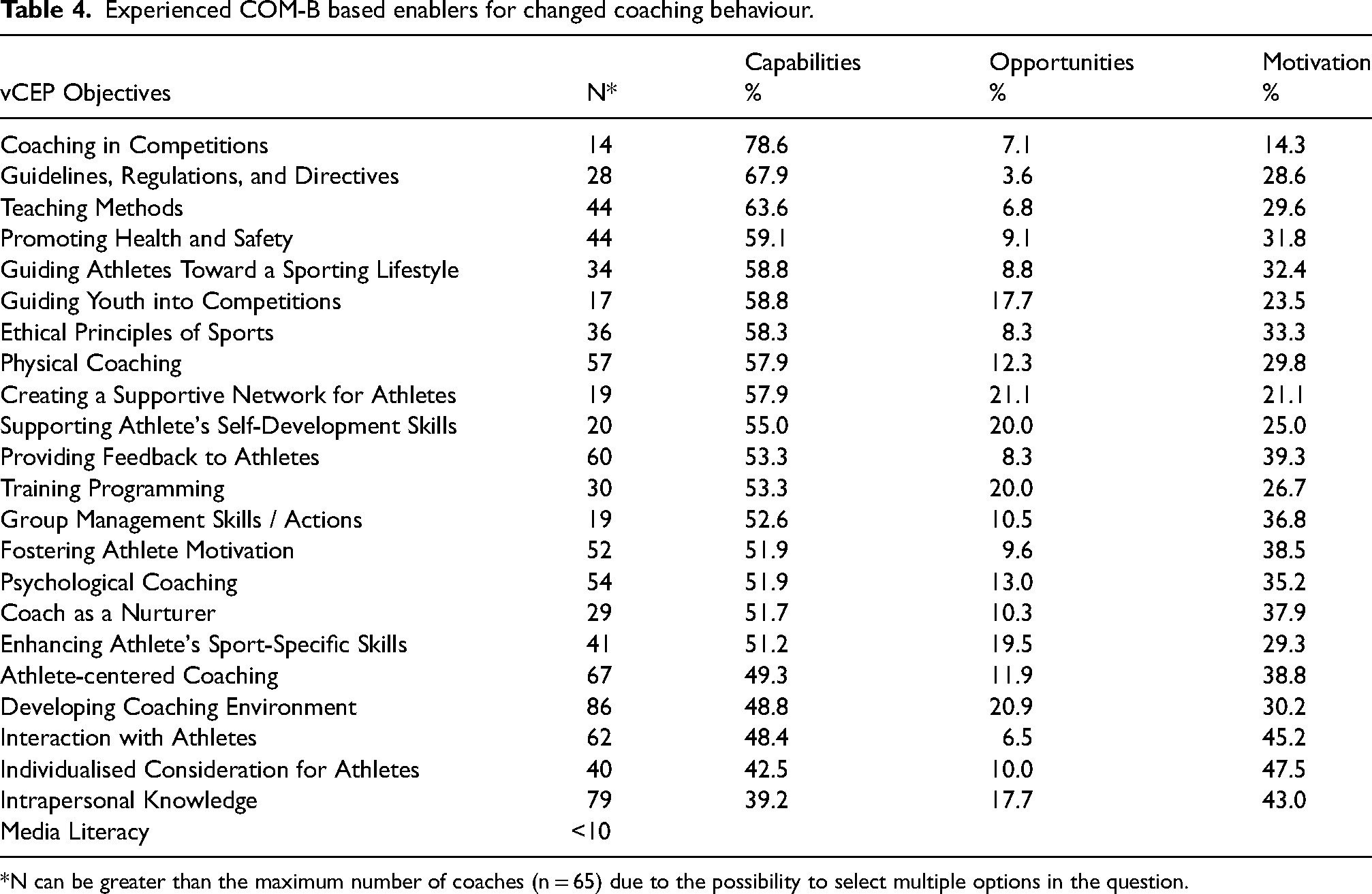
*N can be greater than the maximum number of coaches (n = 65) due to the possibility to select multiple options in the question.
Motivation was the most frequently selected enabler in Individualised Consideration for Athletes (47.5%) and Intrapersonal Knowledge (43.0%), making it the most significant enabler of behaviour change for these objectives. Other vCEP objectives, where the percentage of motivation as an enabler was around 40, were Interaction with Athletes (45.2%), Giving Feedback to Athletes (39.3%) and Athlete-centred Coaching (38.8%).
Opportunities accounted at its highest about one fifth of all enablers of behaviour change in vCEP objectives related to Creating a Supportive Network for Athletes (21.1%), Developing Coaching Environment (20.9%), Training Programming (20.0%) and Supporting Athletes’ Self-Development Skills (20.0%).
Perceived barriers for behavioural change
(1) The overall distribution of barriers across all responses
The most frequently selected barrier for behaviour change was Motivation (83.2%, n = 313), followed by Opportunities (10.9%, n = 41) and Capabilities (5.9%, n = 22).
(2) The vCEP objective-specific distribution of barriers
Motivation was the most commonly perceived barrier across all vCEP objectives. The percentage of motivation as a barrier was highest in Ethical Principles of Sports (96.0%), Providing Feedback to Athletes (94.4%), Athlete-centred Coaching (94.1%), Coach as a Nurturer (94.1%), and Interaction with Athletes (93.8%) (Table 5).
Perceived COM-B based barriers of behaviour change.
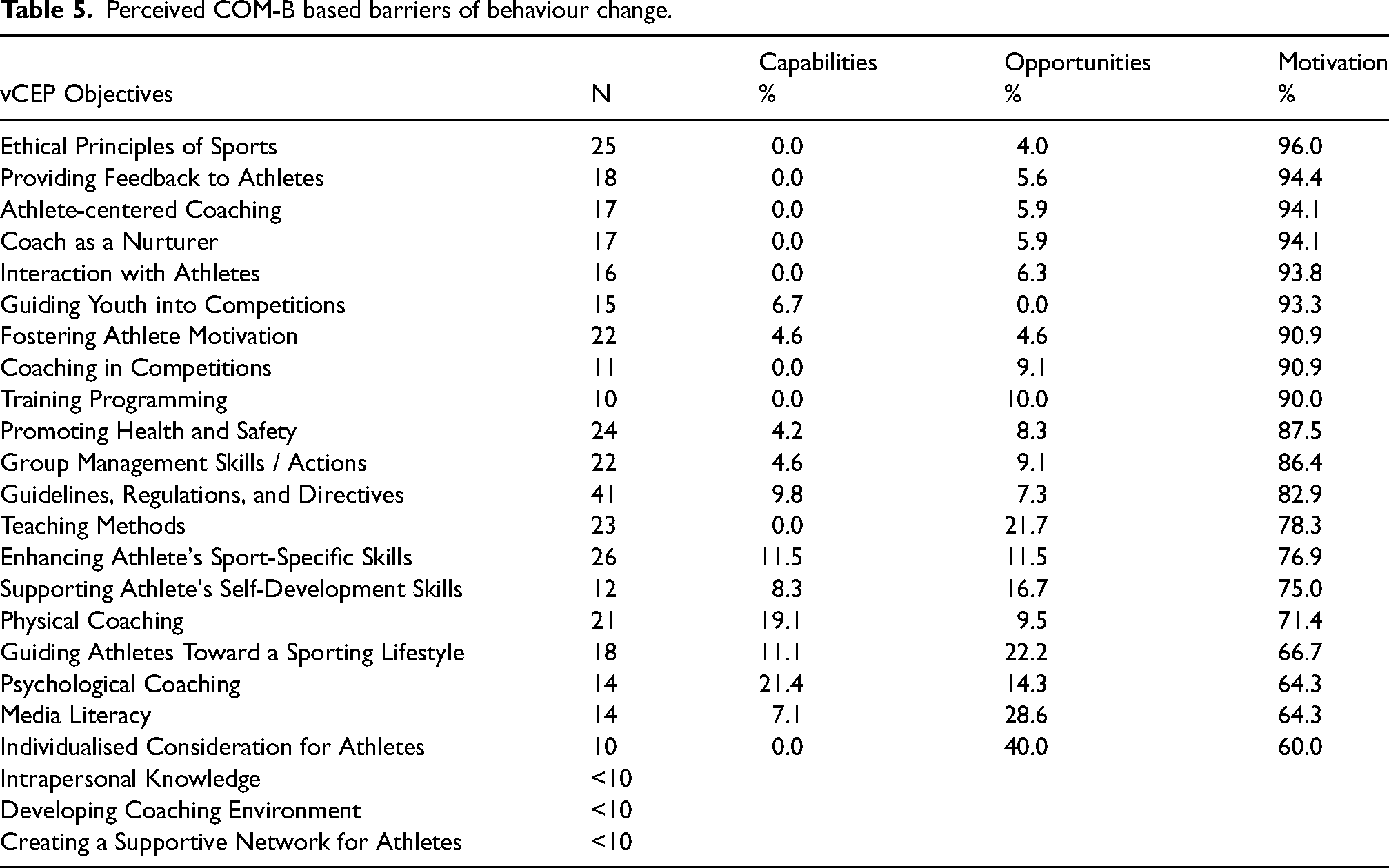
Opportunities were never the most frequently selected barrier in any vCEP objective, but they accounted for a notable proportion of barriers in Individualised Consideration for Athletes (40.0%), Media Literacy (28.6%), Guiding Athletes Toward a Sporting Lifestyle (22.2%), and Teaching Methods (21.7%).
Limitations in capability were the least frequently reported barrier overall but were more commonly selected in Psychological Coaching (21.4%), Physical Coaching (19.1%).
Discussion
The purpose of this study was to explore the factors influencing coaches’ behaviour change by assessing the impact of the vCEP on their perceived capability development and behaviour change. Using the COM-B model, 9 the study aimed to identify perceived key enablers and barriers of behaviour change among vCEP participants, providing insights to support the future design of CEPs based on behaviour change model. Enhanced capability emerged as the primary enabler of behaviour change across most vCEP objectives where behaviour change was perceived. Motivation also played a significant role, particularly in objectives categorized as intra- and interpersonal knowledge. 15 However, lack of motivation was also the most significant perceived barrier, highlighting the importance of interventions that address both capability development and motivation.
In this study, the perceived effectiveness of the vCEP was closely linked to participants’ perceived need for change in relation to programme objectives. Coaches in this study often viewed their actions as already aligned with programme goals, particularly in objectives where perceived effectiveness was limited. Addressing the need for change in these areas may help enhance the overall impact of the programme. To achieve this, interventions should be designed to stimulate a sense of need for change and encourage coaches to critically evaluate their alignment with programme objectives.
The relevance and complexity of programme objectives also influence effectiveness. Objectives with limited perceived relevance or insufficient challenge may fail to optimise learning. Drawing on Vygotsky's 26 concept of the ‘zone of proximal development,’ challenging coaches just beyond their current capabilities can foster meaningful growth. When coaches experience a sense of competence, as Ryan and Deci 27 propose, their motivation and self-efficacy are strengthened.
Additionally, the ability to self-assess and set goals is vital for development. Research suggests that coaches may struggle with objectively evaluating their own actions. 20 Interventions supporting critical self-assessment and goal setting can provide a clearer sense of purpose and increase the perceived need for change. In cases where coaches view certain objectives as unimportant, motivation can be hindered. Utilising Behaviour Change Wheel strategies, such as education, modelling, persuasion, or incentivization, 9 can help address this gap. Education, 9 in particular, equips coaches with knowledge and self-awareness, which narrows the gap between perceived importance and actual impact.
The coaches in this study evaluated the overall effectiveness of the programme positively in terms of both capability development and behaviour change. Additionally, the vCEP was found to meet the coaches’ needs well. It also appeared that the design of the programme was able to address some of the concerns raised in previous studies examining the effectiveness of CEPs, particularly regarding the duration of the programme, 5 the individualisation of learning, 4 and the integration of the training into real-life coaching situations. 3
The greatest progress after the programme in this study was perceived in the objectives related to coach's inter- and intrapersonal knowledge (e.g., Intrapersonal Knowledge, Development of the Coaching Environment and Athlete-centred Coaching). 15 With regard to professional knowledge, a mean behaviour change score higher than 3.0 was observed only in Psychological Coaching. This finding suggests that vCEP may not have been as successful in addressing coaches’ individual needs for professional knowledge as it was for coaches’ intra- and interpersonal knowledge. Also, this discrepancy could be attributed to the multisport nature of some vCEP programmes, which likely reinforced the emphasis on universally applicable coaching skills. When comparing the perceived behaviour change across different vCEP objectives, it is also important to acknowledge that some knowledge and skills might be easier to implement and integrate into coaching behaviour than others or there might yet not be opportunities for some new capabilities to be used in practice (e.g., media literacy).
The COM-B model 9 provided a clear and structured framework for identifying enablers and barriers to behaviour change in coach education. Its accessibility made it a practical tool for coaches to reflect on behaviour, potentially enhancing the reliability of self-reported data. As previously discussed, the BCW provides a useful framework for selecting interventions that address the behavioural factors identified via the COM-B model, thereby supporting the effective implementation of behaviour change in coach education. The model's versatility also allows it to be applied at multiple levels, from individual coaching behaviours to broader programme and policy development. To further strengthen its use in coach education research, future studies should explore which specific components of capability, opportunity, and motivation drive behaviour change.
Strengths, limitations, and directions for further research
This study contributes to the development of evidence-based coach education by addressing an important area for improving its effectiveness. Unlike most previous research, which has rarely incorporated behaviour change theory, 8 this study applied COM-B model to better understand and evaluate the impact of coach education. Additionally, this study strengthens the body of quantitative research in this field, which has been limited, as prior studies have predominantly relied on qualitative methods 5
The use of a questionnaire in this study proved beneficial in capturing coaches’ perceptions of their capability development and behaviour change. The approach facilitated data collection across seven institutions, ensuring a diverse sample that accounted for approximately 30% of the eligible population. Given the predominance of qualitative research in coach education, this study adds to the limited body of quantitative research by providing structured self-reported data. Importantly, self-reported experiences enabled the identification of perceived enablers and barriers to behaviour change, offering insights into internal psychological processes that are difficult to assess through observational methods. 20
However, questionnaires also have inherent limitations. Self-reported data may be influenced by response biases, as individuals’ perceptions of their own behaviour often differ from their actual actions. 20 Furthermore, this study measured perceived behaviour change rather than objective change. While observation or interviews could provide additional insights into actual behavioural shifts, these methods were not feasible due to the large sample size and the multi-institutional nature of the study. 28 Despite these limitations, the questionnaire remains a useful tool for capturing the subjective experiences of coaches and identifying perceived enablers and barriers to change, offering valuable insights into the effectiveness of vCEP.
In future research on CEPs, it would be important to incorporate interventions based on behaviour change models in the design and execution of the programmes. The results of this study can be useful in guiding the design of such interventions. Evaluating programme's impact from multiple perspectives using various research methods, such as observation and interviews with coaches, along with input from external observers such as coach educators and athletes, could be beneficial.
Conclusions
The design and implementation of CEPs have not systematically utilised theories of behaviour change, 8 and related research remains limited. This study aimed to explore the factors influencing coaches’ behaviour change by examining the impact of vCEP on their perceived capability and behaviour, using the COM-B model. 9 The findings aim to support the development of interventions based on behaviour change models to enhance the effectiveness of coach education.
The results emphasized the need for interventions aimed targeting both capabilities and motivation. Developing interventions that stimulate a sense of need for change is recommended. Coaches should be supported in identifying areas of their behaviour requiring development and in perceiving these changes as important. To achieve this, it is recommended that coach education stakeholders critically evaluate the relevance of programme objectives, allow for individualisation in implementation, and support coaches in self-assessment relative to these objectives.
The vCEP was rated effective in developing capabilities and promoting behaviour change, particularly in areas such as Intrapersonal Knowledge, Developing Coaching Environment, and Athlete-centred Coaching. However, changes in professional knowledge15 objectives, such as Physical Coaching, were weaker. This suggests that the vCEP was more successful in addressing the individual needs of coaches in intra- and interpersonal knowledge areas.
Footnotes
Declaration of conflicting interests
The authors declared no potential conflicts of interest with respect to the research, authorship, and/or publication of this article.
Funding
The author(s) disclosed receipt of the following financial support for the research, authorship, and/or publication of this article: The corresponding author received a funding for this study from the Urheiluopisto Foundation and the Kaarina Kari Foundation.
Kaarina Kari's Foundation, Urheiluopisto Foundation, (grant number 20230076).
