



Abstract
In mixed martial arts, punches commonly lead to a knockout (KO) or technical knockout (TKO), though factors influencing such punches are unclear. This study assessed how differences in height, reach, and combined difference (height + reach) influence fight-ending punches. We analysed 264 Ultimate Fighting Championship contests that concluded with a KO/TKO from hooks, straights, uppercuts, or overhand punches. Three multinomial logistic regression analyses assessed the influence of (a) reach, (b) height and (c) combined difference on likelihood of punch type, with overhand punches as the reference category. Pairwise comparisons for punch type were conducted, and probability differences were compared across the lower, middle, and highest point difference for reach (−20, 0, + 20 cm), height (−20, + 10, + 40 cm), and combined (−50, 0, + 50 cm). The punches with the highest frequency were hooks (51%) and straights (35%). For all models, the straight punch was more likely than the overhand (odds ratio: 1.06–1.10, p < 0.05). At 0 cm and 20 cm reach difference, the punch probability differences for straight and uppercut punches compared to uppercut and overhand was between 27–47% (p < 0.05). Similar findings were observed at +10 cm height difference, but at height +40 cm straights were 76% more likely than uppercuts and overhands (p < 0.05) for bouts that concluded with a KO/TKO. The combined model showed similar results to the reach model findings. These results can help inform coaches and fighters to prepare both offensive and defensive tactics by providing information on the most likely fight-ending punch depending on their specific matchups.
Introduction
Mixed martial arts (MMA) is a hybrid-style combat sport that incorporates both striking techniques (such as punches, elbows, kicks, and knees), and grappling techniques (including takedowns, joint locks, and chokes). 1 Unlike many other sports, MMA contests can be resolved through various methods, including judge's decision or earlier by submission, or knockout/technical knockout (KO/TKO). 2 Approximately 46.2% of fights are concluded via KO/TKOs. 3 Winning via KO/TKO is associated with having a more successful overall career compared with winning by judge's decision, highlighting the importance of KO/TKOs in combat sports. 4 Though MMA involves intricate techniques, punching remains a core element, frequently resulting in KO/TKOs. 5 A punch, executed with the knuckles of a clenched fist, typically manifests in four variations. Straight punches travel along the sagittal plane, hook punches move horizontally in a sweeping motion across the transverse axis, uppercuts are thrown upward along both the sagittal plane and longitudinal axis, and overhand punches are a semi-circular and vertical punch thrown at an opponent with at least some downwards trajectory,5,6 As punching is a foundation of striking in MMA and several other combat sports, it is important to understand the factors that influence the ability to apply them in different situations.
Surprisingly there is a paucity of in-depth research on punching during live competition. The biomechanics of punches have been widely studied, with research focusing on optimising various techniques.7,8 Studies have explored punch speed, 8 the phases and kinematics of different punches,9,10 variations across fighting styles, 11 and the stability of stance during punching, 12 among other topics. However, much of this research has been conducted in controlled laboratory environments, where participants hit bags or similar equipment, which may not fully replicate the dynamics of live combat. 13 Pierce et al., (2006) used a proprietary force sensor embedded in the gloves to collect punch force during live combat sports bouts which provided important information on punches in boxing, but did not give information of specific punch techniques. In an effort to develop a better understanding of the intricacies of live combat, a recent study used performance analysis techniques to explore the characteristics of fight-ending punches in high-level MMA, including punch type and foot positioning during punching. 5 This study found that straight and hook punches were the most common for bouts ending by KO/TKOs, with the specific punch type leading to a KO depending on the matchup between orthodox and southpaw stances. 5 Additionally, the study noted that the foot position of the puncher relative to the punch receiver appeared to influence the type of punch that was likely to lead to a KO/TKO. 5 While the topics explored within the study were interesting, there were still several factors that remained unexplored. One such example is the influence of body anthropometrics on fight finishing punches.
Height and reach are factors commonly reported within fight sports broadcasts and theoretically could grant an advantage over an opponent by being able to strike them from positions where they are unable to strike back. 14 The effects of anthropometrics have been somewhat explored by previous research, finding that height and/or reach differences have small to moderate correlations with technique usage between winners and losers in professional MMA.15,16 Taller fighters were found to be more likely to win and lose via strikes than other possible methods such as submission or decision. 16 However, relationships to divisional rank and attainment of word title bouts were less pronounced. 17 More recent research conducted with data over a five year period reported reach to only have an advantage at heavyweight, and greater armspan:stature ratio to be a disadvantage for women. 18 Within boxing, research has reported that in the heavyweight division winners were more often taller and had a greater reach than losers. 19 The research in this area has been far from conclusive, 16 though does justify further exploration using more in depth techniques such as performance analysis of live combat. 5 Previous research has focused on performing statistical analysis on data collected by broadcast companies with unclear reliability, 20 and/or attempting to predict broader winning or losing using general anthropometric data.15–17 While such approaches certainly have value, it is plausible that examining anthropometric differences between competitors during live combat using performance analysis may help clarify the mixed results from previous research. Focusing on striking exchanges specifically may allow for a more precise analysis of anthropometrics influence on striking techniques and applications. If the relationships between anthropometric differences and specific punching techniques can be identified, then it will provide crucial tactical information to combat athletes and support staff when planning their training and tactical approaches to competitive bouts. Therefore, the purpose of this study was to examine the influence of height and reach on punches that result in KO/TKOs in professional MMA.
Methods
Procedures
MMA athletes competing in the Ultimate Fighting Championship (UFC) who won or lost via KO/TKO between the years of 2020–2022 were included in the study. The data was publicly available as videos on the UFC's streaming service (www.ufcfightpass.com), YouTube channel (www.youtube.com/ufc), and the Tapology website (www.Tapology.com). Anthropometric data (i.e., height and reach), competitive history, and several key performance markers during competition were collected by the research team. Performance markers including the time of critical punches, and type of punch, which were all taken from the UFC's streaming service, while anthropometric and competitive history data was taken from Tapology first, and then checked in the fight videos for consistency. In instances where inconsistencies were found between the anthropometric data, the most recent information in a UFC fight stream was used. The project received ethical approval from Edith Cowan University's human research ethics committee (2023-04124-BARLEY).
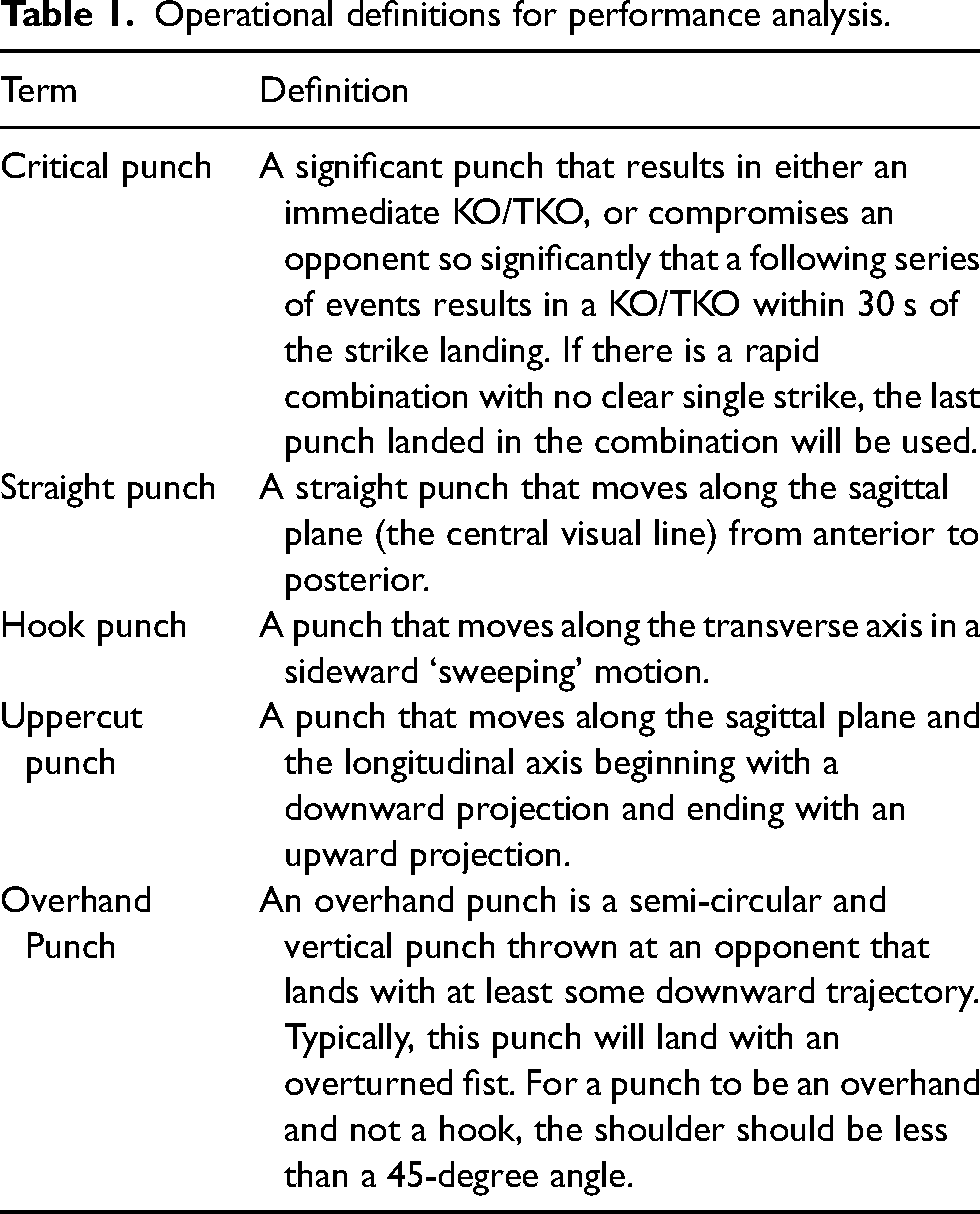
The study focused on the types of critical punches (referred to as punch type), which were defined as “a significant punch that results in either an immediate KO/TKO or impairs an opponent so severely that a KO/TKO occurs within 30 s of the initial strike landing” (Table 1). The punch type was determined using the operational definitions in Table 1, with our definitions being adapted from previous research.5,6 Performance analysis on critical punches was completed by three analysts with at least 3 years’ experience in a striking combat sport and competitive experience in MMA. Each analyst was able to view the footage as many times as needed to record the information, as well as making use of 0.75, 0.5, and 0.25 video playback speeds. The first two analysts conducted concurrent and collaborative analyses of all critical strikes. Throughout this process both analysts examined all punches independently, then met 14 days later to discuss all inconsistencies and come to a consensus on each one. Additionally, they created a “gold-standard” datasheet and refined the operational definitions before a third analyst was then utilised for inter-rater reliability. The third analyst was provided with the final operational definitions (Table 1), and randomly assigned ∼30% of the sample to be independently analysed to assess inter-rater reliability. The reliability of this methodology has been provided in a previous study on this dataset and all performance analysis variables included in the present study had and almost perfect reliability or better. 5
Operational definitions for performance analysis.
Collected data was categorised as either critical strike information or fighter information and compiled in an Excel spreadsheet (Microsoft Office 365, Microsoft, Washington, USA). Critical strike information, in addition to the above-described variables, also included the round number in which the strike took place.
Data analysis
The data were assessed for normality and homogeneity of variances among continuous variables using the Shapiro-Wilk test and Levene's test. The box-violin plots for reach difference, height difference, and combined difference (reach + height), between winners and losers for each contest are presented as median (interquartile range) and mean ± standard deviation, generated using the ggbetweenstats() function from the ggstatsplot package in R Statistical Software (version 4.2.2; R Core Team, 2022).
Three distinct multinomial logistic regression analyses were conducted employing the nnet package to investigate the relationships between three anthropometric variables: (1) reach difference, (2) height difference, and (3) combined differences (reach + height), with punch types (straight, hook, uppercut, with overhand as the reference group). The models were fitted using the multinom() function, and summaries were produced via the summary() and tab_model() functions from the sjPlot package. The output can be interpreted as the likelihood of uppercut, straight, and hook punches relative to the overhand punch for each one-unit (1 cm) increase in reach, height, or combined differences.
Punch-type probabilities were calculated at three key points for each variable: reach differences (−20, 0, 20 cm), height differences (−20, 10, 40 cm), and combined differences (−50, 0, 50 cm). These points represent the lower, middle, and highest values in the dataset, determined by taking the lowest and highest observed values, rounding to the nearest whole number, and selecting the middle point between them. Pairwise contrasts of estimated marginal means for each punch type were computed using the emmeans() function, and differences in punch probabilities across these intervals were evaluated using the contrast() function. To account for multiple comparisons, the False Discovery Rate (FDR) correction was applied. The resulting contrasts were visualised in custom line plots and row charts created with ggplot2, with significant probability differences (**) annotated using ggrepel. Statistical significance was predetermined at p < 0.05. All analyses and visualisations were conducted using R Statistical Software.
Results
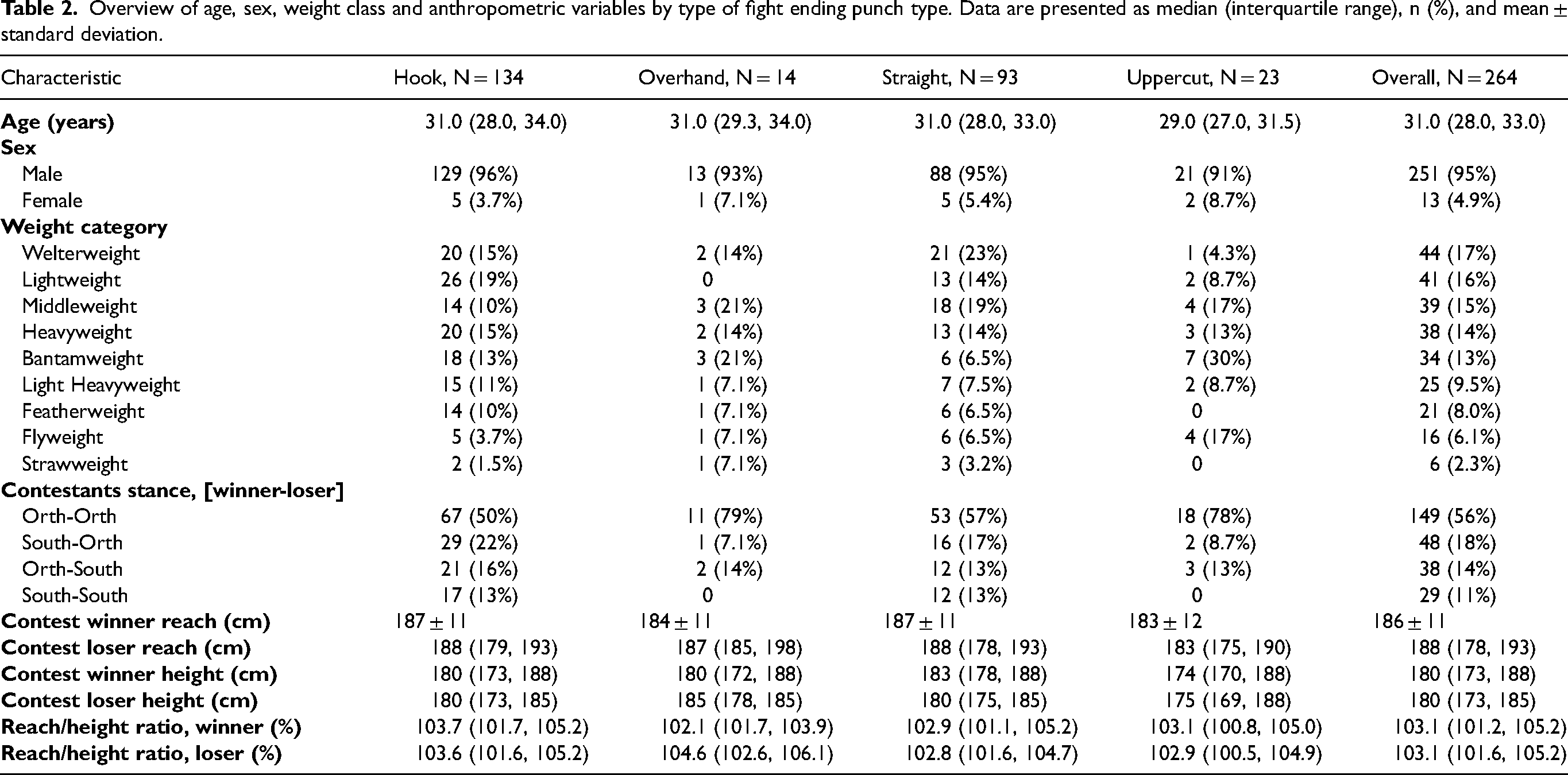
We analysed a dataset comprising 271 UFC contests from 2020 to 2022 that concluded with a KO/TKO resulting from punches. Table 1 defines the key terms used in this study. Seven observations with missing punch-type data were excluded, leaving 264 fights for analysis. The total number of participants was 528, as each fight had a winner (n = 264) and a loser (n = 264). Due to repeated KO/TKOs for some participants, there were 192 unique winners (10 females, 182 males) and 226 unique losers (13 females, 213 males). Table 2 shows the number of male and female participants, weight categories, and participant anthropometric characteristics. Most punches analysed were hooks (51%) and straights (35%).
Overview of age, sex, weight class and anthropometric variables by type of fight ending punch type. Data are presented as median (interquartile range), n (%), and mean ± standard deviation.
Multinominal logistic regressions
Table 3 presents the results of three regression analyses examining the association between anthropometric variables and punch type. The models accounted for 1.6–2% of the variance in punch type.
Three multinomial logistic regression analyses of (1) reach difference, (2) height difference, and (3) combined difference influence on punch type, with overhand as the reference group.
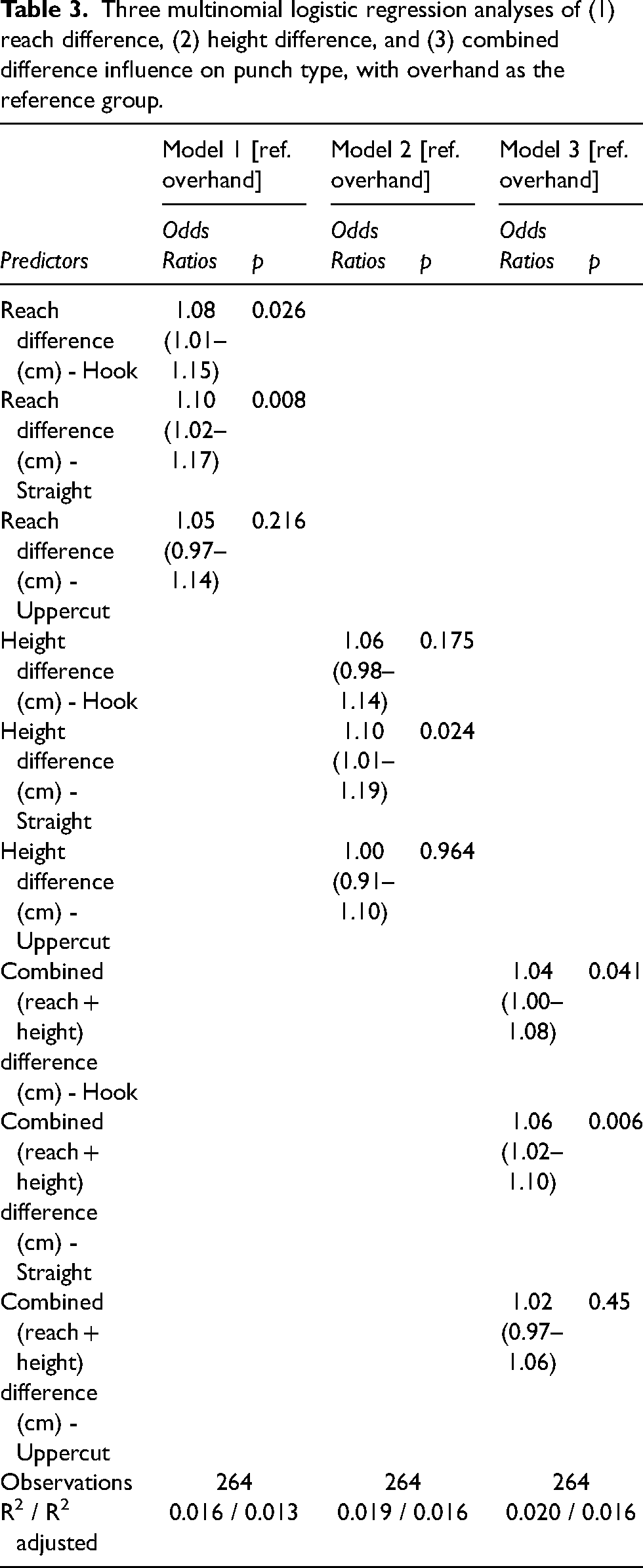
In Model 1 (reach difference), a significant association was identified between reach difference and a hook or straight punch as compared to an overhand punch. Specifically, for each 1 cm increase in reach difference, the odds of a hook increased by 8% (OR = 1.08, 95% CI: 1.01–1.15, p = 0.026), while the odds of a straight punch increased by 10% (OR = 1.10, 95% CI: 1.02–1.17, p = 0.008). In Model 2 (height difference), height difference was significantly associated with the likelihood of a straight punch compared to an overhand punch. For each 1 cm increase in height difference, the odds of a straight punch increased by 10% (OR = 1.10, 95% CI: 1.01–1.19, p = 0.024). In Model 3 (combined difference), the combined difference (reach + height) was significantly associated with both hook and straight punches compared to an overhand punch. For each 1 cm increase in combined difference, the odds of a hook increased by 4% (OR = 1.04, 95% CI: 1.00–1.08, p = 0.041), and the odds of a straight punch increased by 6% (OR = 1.06, 95% CI: 1.02–1.10, p = 0.006).
Pairwise comparisons of punch probabilities for reach differences
For reach differences, significant results were observed at several intervals (Figure 2B). At a 0 cm reach difference, the probability difference for an overhand punch was significantly lower when compared to a hook (−47.2%, p = 0.0001) and a straight punch (−30.8%, p = 0.0002). Additionally, the hook demonstrated a significantly higher probability difference compared to the straight punch (16.4%, p = 0.0345) and the uppercut (42.9%, p = 0.0001), while the straight punch was more likely than the uppercut (26.5%, p = 0.0006).
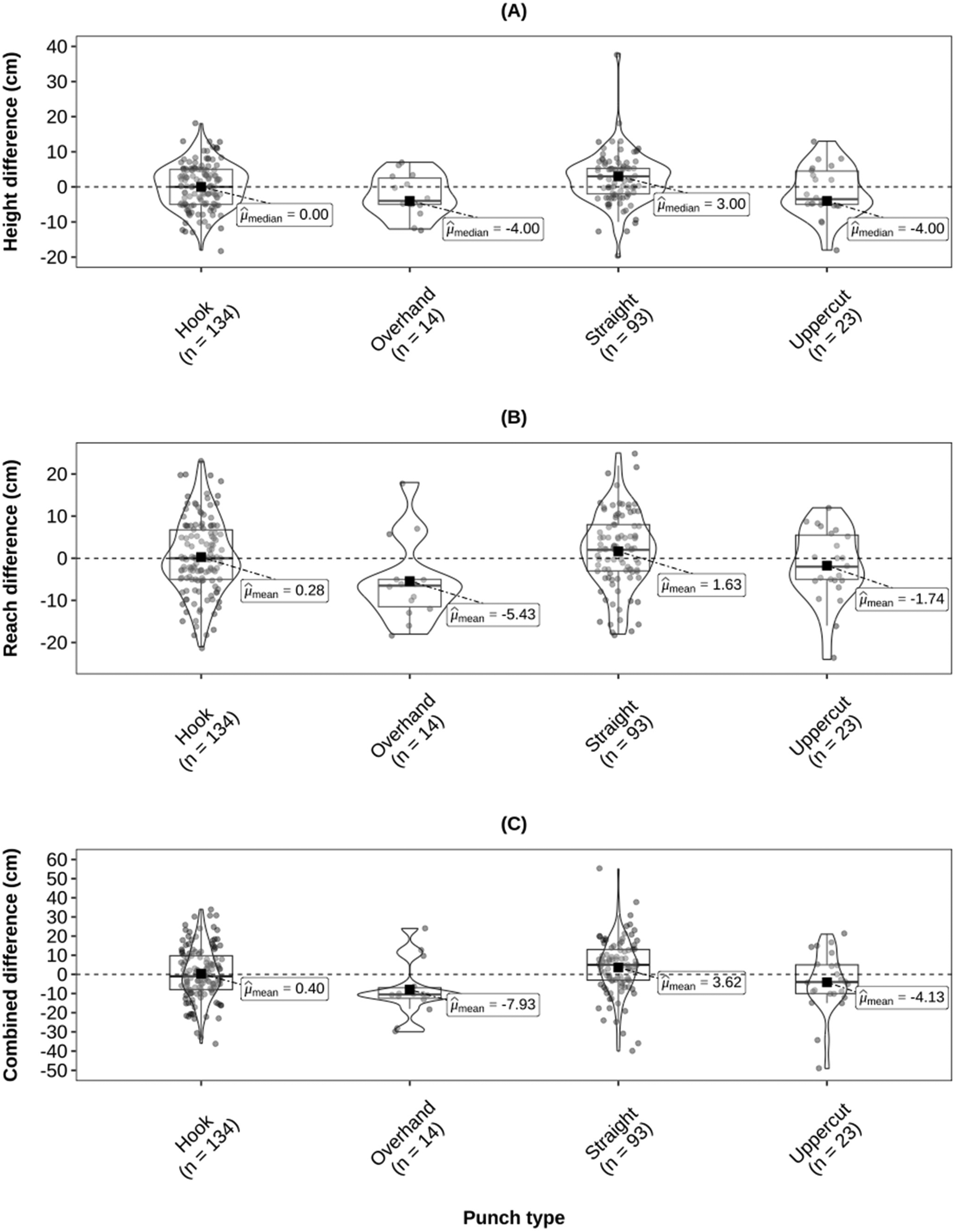
Box-violin plots illustrating (A) height difference, (B) reach difference, and (C) combined difference, stratified by punch type.
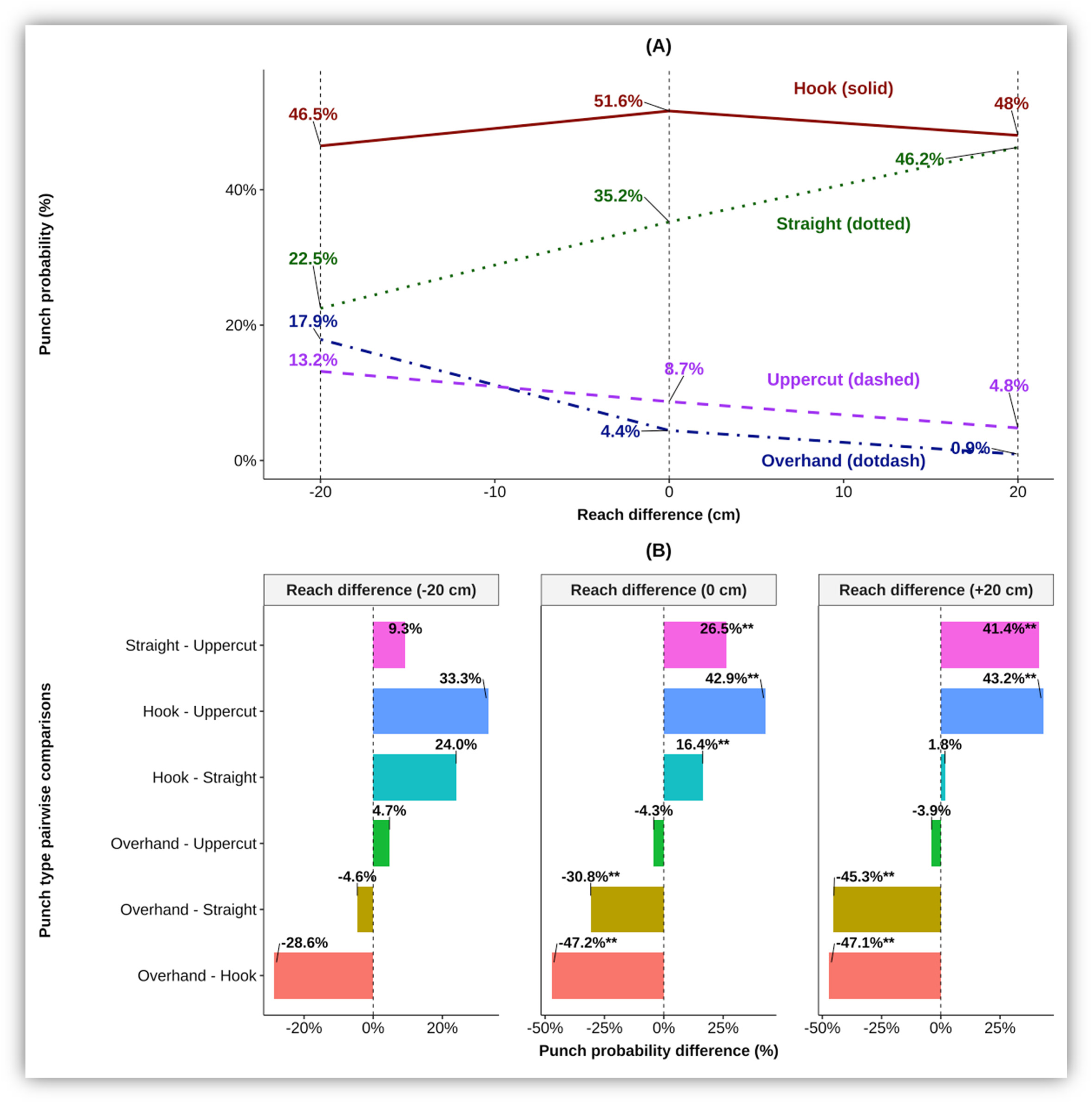
(A) Absolute punch probabilities for Model 1 at lower, middle, and upper points of reach difference (−20 cm, 0 cm, + 20 cm). The line type associated with each punch is indicated in brackets to facilitate clarity in black-and-white printing. (B) Pairwise comparisons of punch probability differences. Statistical significance is denoted by ** p < 0.05.
At a 20 cm reach difference, the probability of executing an overhand punch remained significantly lower in comparison to both the hook (−47.1%, p = 0.0035) and the straight punch (−45.3%, p = 0.0035). The hook exhibited a significantly higher probability than the uppercut (43.2%, p = 0.0043), and similarly, the straight punch was more likely than the uppercut (41.4%, p = 0.0046). No significant differences were observed at the −20 cm reach difference (Figure 2B).
Pairwise comparisons of punch probabilities for height differences
At a height difference of 10 cm (Figure 3B), the probability of an overhand punch was significantly lower compared to both the hook (−43.9%, p = 0.0007) and the straight punch (−43.5%, p = 0.0007). Furthermore, the hook demonstrated a significantly higher probability compared to the uppercut (42.1%, p = 0.0007), and the straight punch also exhibited a significantly greater probability compared to the uppercut (41.7%, p = 0.0007).
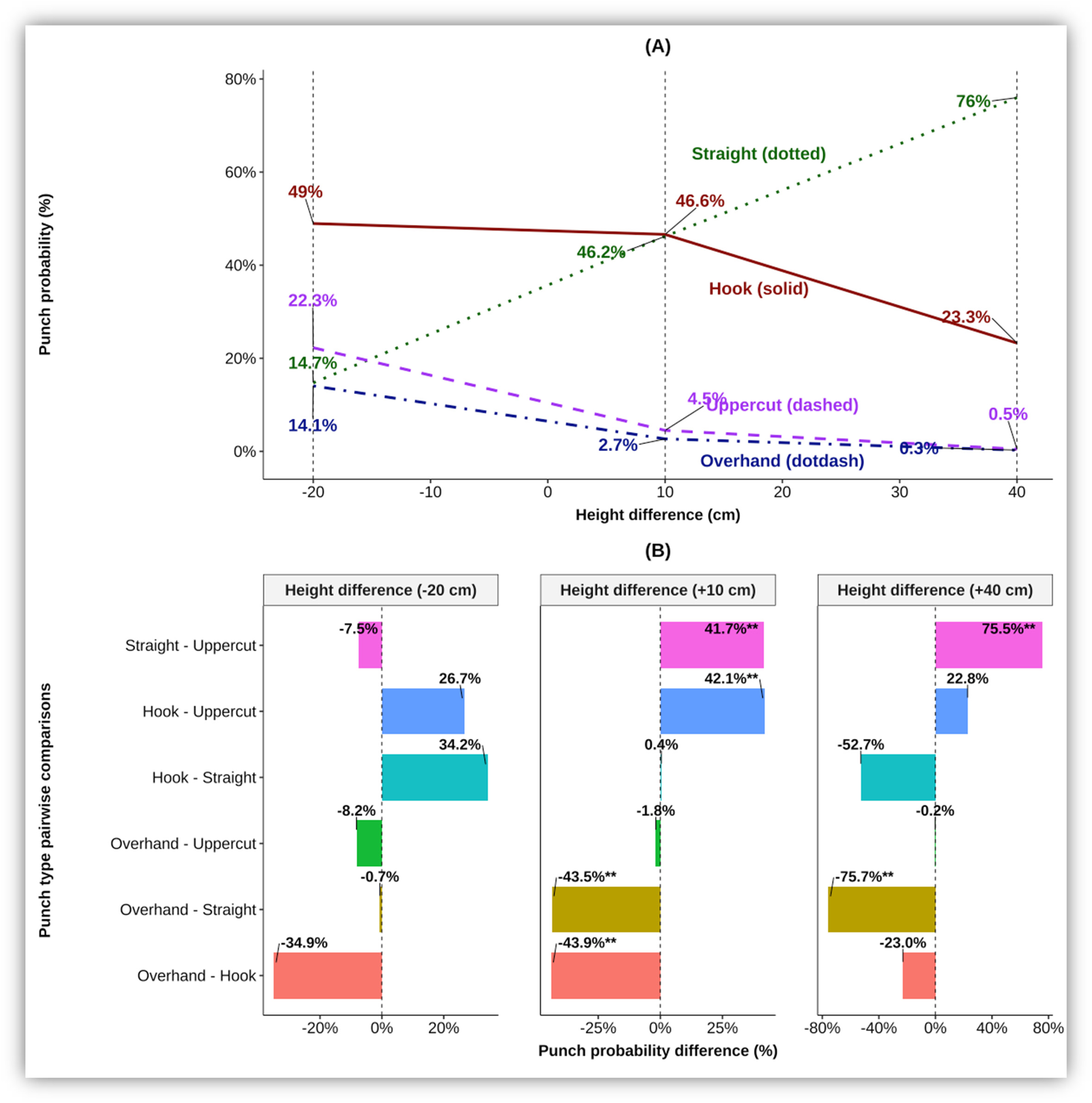
(A) Absolute punch probabilities for Model 2 at varying height differences categorised as lower (−20 cm), middle (10 cm), and upper (+40 cm) points. The line type corresponding to each punch is indicated in brackets to enhance clarity for black-and-white printing. (B) Pairwise comparisons illustrating the differences in punch probabilities. Statistical significance is represented by ** p < 0.05.
At a height difference of 40 cm, a significant difference in punch probability was observed for overhand punches in comparison to straight punches (−75.7%, p = 0.0062), while the straight punch showed a significantly higher probability compared to uppercuts (75.5%, p = 0.0062). No significant differences were observed at a height difference of −20 cm (Figure 3B).
Pairwise comparisons of punch probabilities for combined differences
At a combined difference of 0 cm (Figure 4B), the probability of an overhand punch was significantly lower compared to both the hook (−47.2%, p = 0.0001) and the straight punch (−30.2%, p = 0.0006). Furthermore, the hook exhibited a significantly greater punch probability difference than the uppercut (43.3%, p = 0.0002), and the straight punch demonstrated a higher likelihood than the uppercut (26.3%, p = 0.0019).
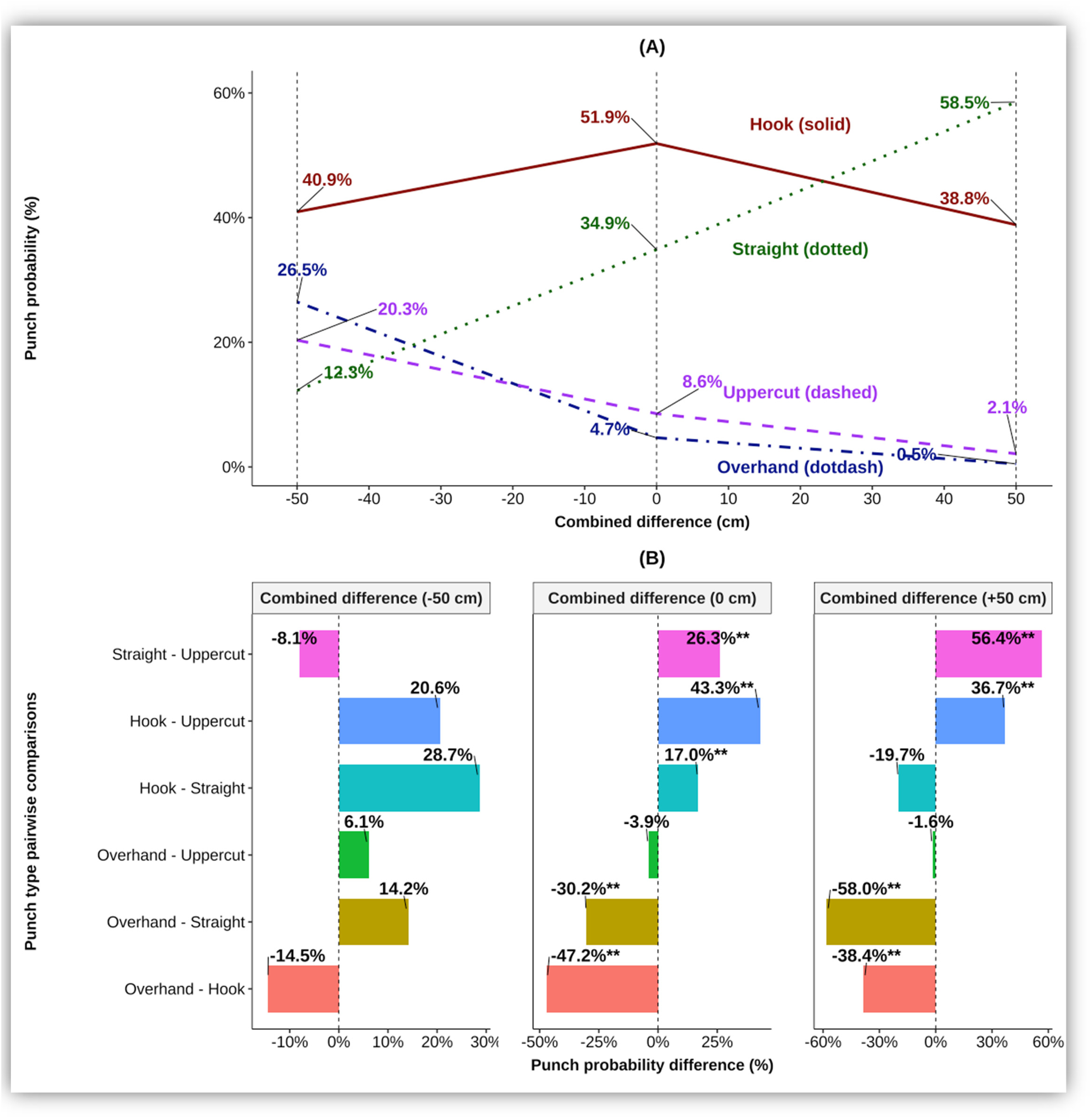
(A) The absolute punch probabilities for Model 3 are examined at three distinct points of combined difference: −50 cm, 0 cm, and +50 cm. The line type corresponding to each punch is specified in brackets to enhance clarity in black-and-white print. (B) Additionally, pairwise comparisons of the differences in punch probabilities are conducted. Statistical significance is indicated by ** p < 0.05.
At a combined difference of 50 cm, the punch probability difference of an overhand was significantly lower than that of a straight punch (−58.0%, p = 0.0095), while the straight punch was significantly more likely to succeed than the uppercut (56.4%, p = 0.0128). Although the comparisons between the overhand and the hook (−38.4%, p = 0.0509) and between the hook and the uppercut (36.7%, p = 0.0620) approached statistical significance, they did not achieve the predetermined threshold. No significant differences were observed at a combined difference of −50 cm (Figure 4B).
Discussion
This study sought to explore the influence of height and reach on the type of fight-ending punches within professional MMA. To the author's knowledge, this is the first study to examine the anthropometric factors underpinning successful punches using performance analysis. The main observations from the multinominal regression analyses are, (a) Model 1 showed that overhand and uppercut punches were less probable than straight and hook punches when there was no reach difference (0 cm) between fighters or when the winner had a reach advantage (+20 cm), while hooks were more probable than straight punches in the absence of a reach difference (Figure 2B), (b) Model 2 identified overhand and hook punches as less probable than straight and hook punches when a small (10 cm) height difference was present, but only the straight punches remained more probable when there was a + 40 cm height difference (Figure 3B), and (c) Model 3 showed that when height and reach differences were combined, overhand and uppercut punches were less probable than straight and hook punches when there was no difference (0 cm) between fighters or when the winner had an advantage (+50 cm), while hooks were more probable than straight punches when no difference was present (Figure 4B). The results of this study indicate that straight and hook punches are generally more effective for finishing fights when athletes possess similar height and reach, or when the attacking athlete has a range advantage. These findings can inform both athletes and coaches in developing both offensive and defensive strategies tailored to the height and reach of their opponent.
Fighters reach has long been a topic of interest within striking combat sports broadcasts, and anecdotally among athletes and coaches. Previous research has observed that the influence of athlete reach has no effect on chances of winning,14,17 with other research showing some relationship, 15 but such research investigated the chances of winning or losing via different methods as opposed to examining the influence of reach on the type of fight-ending punch during specific technical exchanges. Our findings reveal that when a critical strike landed it was 43–47% more probable to be a hook than an uppercut or overhand when there was no reach difference or when the attacker had a 20 cm reach advantage. This trend was similar for straight punches, but their probability difference compared to uppercuts and hooks were less pronounced when there was equal reach between athletes. However, when the puncher had a + 20 cm reach advantage the probability difference was greater than 40% in favour of the straight punch (Table 3; Figures 1 and 2). The findings of this study align with previous research published from this dataset showing straight and hook punches to be the most dominant punch for critical strikes. 5 The lower probability of overhand and uppercut punches in scenarios where there is either equal reach or a reach advantage for the attacker may be attributable to the situational nature of such punches. For example, the uppercut requires the attacker's hand be lowered away from a protective position to execute the punch, while subsequently being raised at an upward angle which may diminish its effective range whereas the overhand punch may position the head in a higher risk location and is more challenging to land from a greater distance. 5
Although straight and hook punches appeared to be dominant overall, we observed that hooks were 16.4% more probable than straights when the athlete reaches were equal (Figures 1 and 2). This slight advantage of hooks over straight punches in situations of equal reach may be attributable to the potentially greater velocity of hooks compared to straights, 21 however, the exact reason remains unclear and warrants further investigation. Surprisingly no significant differences between any punch probabilities were observed when the puncher had a reach disadvantage relative to their opponent. The reason for this lack of differences is unclear, though we hypothesise that when a fighter has a reach disadvantage, the ability to land a critical strike may depend less on the specific punch selection and more on other factors such as positioning in relation to their opponent. It is also important to consider that the present study looked at punches only, there are a range of techniques such as kicks, takedowns, clinches, and grappling that may be getting used in such situations. Regardless, future research should examine in greater detail the underlying factors that influence the type of critical strikes when an athlete is at a reach disadvantage, potentially considering variables such as the distance between the two opponents, as well as head and foot placement relative to the opponent. The findings of this study suggest that straight and hook punches are more likely to be successful in landing fight-ending punches when reach between athletes are equal, or when the attacker has a reach advantage. Consequently, athletes and coaches can use this information to strategically prepare offensive and defensive tactics based on the characteristics of their opponent.
The results when observing height differences were similar to those of reach, albeit with some notable distinctions. At the +10 cm height advantage it appears that straight and hook punches were more probable than uppercut and overhand punches. However, when the height differences were +40 cm, only the straight punch remained more probable than the uppercut and overhand, with straights being over 75% more probable than both punch types, which were the greatest observed differences within the study. Additionally, at no point did hook punches demonstrate a significantly higher probability than straight punches (Table 3; Figures 1 and 3). It is unclear why these trends emerged, it is plausible that the pronounced advantage of straight punches for taller fighters arises from their ability to punch downward at their opponents. In contrast, the overhand punches could be less effective as the opponent's head is considerably lower than that of the attacker. This observation may provide additional context for previous research that found being taller than one's opponent could represent a competitive advantage. 15 However, our study only analysed winners and losers by KO/TKO due to a punch and does not provide insight on the overall likelihood of winning in MMA when an athlete is taller than their opponent. Interestingly, previous studies have shown that taller opponents were more likely to lose their bouts via strikes compared to their shorter counterparts.14,16 Our data did not explore the specific probabilities of athletes winning or losing bouts, it focused solely on the characteristics of fight-ending punches. Nevertheless, we did not find any punches to be more probable when the winner faced a height disadvantage. Therefore, similar to reach, it may be the case that when attacking a taller opponent, punch selection is less important than other technical or tactical factors. The findings of this study do seem to outline the importance of utilising straight punches when an athlete possess a height advantage, or conversely, effectively defending against them when a fighter is at a height disadvantage.
Within the present study reach and height differences were combined to look at a potential total range advantage or disadvantage between athletes. The analysis revealed trends that closely mirrored those observed with reach data alone, indicating that straight punches and hooks were more probable than overhand punches and uppercuts when the ranges were equivalent between athletes or when the attacker possessed a range advantage. The more modest advantage of hooks over straights was observed when the ranges were even, but straight punches appeared to have the largest advantage when the range differences were larger (Table 3; Figures 1 and 4). Although the examination of combined height and reach did not yield any unique insights, it appeared to produce a wider array of results compared to analyses focusing solely on either height or reach. Logically, both factors can work together to influence the ability to land critical punches on opponents, however, it remains unclear whether looking at reach, height, or the two combined provides more useful results. Consequently, the authors recommend coaches and athletes consider them all tentatively when planning for a bout. Additionally, it does appear that overall uppercut and overhand punches have less versatile application and are likely to be situation-specific, whereas hook and straight punches can be used more broadly with greater success, which is supported by previous research. 5 Consistent with findings regarding height or reach alone, no significant probability differences were observed when a winning athlete faced a total range disadvantage. This observation suggests that, as previously postulated, there may be far more important factors beyond anthropometry impacting the ability of shorter fighters to land critical strikes. Given the limited research examining the effects of height and reach on fight outcomes, 16 and to our knowledge, this study represents the first investigation of these factors in relation to specific punches, further research is essential to improve our understanding of these effects and the potential applicability (or lack thereof) of the observed trends.
This study provides valuable insights, however, some limitations must be considered. Our data only included critical strikes and not any unsuccessful punches for comparison. Given that bouts can have hundreds of punches before a single critical strike is achieved, it was impractical to analyse every punch that occurred within the allocated time period. Regardless, the purpose of this study was to examine the underpinning characteristics of the punches that did lead to a KO/TKO. It is important to note that the results of this study do not indicate as to whether reach and height advantages or disadvantages affect the chances an athlete may win or lose a bout, only the more probable punches to be used if an athlete is to win by KO/TKO. It is also important to note that the height and reach data used in this study were obtained from publicly available sources and were not collected by the research team. While these data provide a practical means of analysing large datasets, the methods used to collect anthropometric measurements may lack standardisation and precision. As a result, the findings of this study should be interpreted with caution, and future research should aim to collect in-person anthropometric data using standardised and validated methods where feasible. Additionally, the multinomial logistic regression analyses examining the differences in reach, height, and combined variables accounted for only 1.6–2.0% of the variance in punch types that resulted in a KO or TKO. While significant differences were identified regarding the likelihood of specific punches, it is widely recognised that competitive MMA contests involve complexities that extend beyond punches alone, encompassing various striking and grappling techniques that collectively influence an athlete's probability of success.1,5,16,22 Future research should continue to explore additional factors through performance analysis to develop a more nuanced understanding of MMA and other combat sports.
Conclusion
While the relationship between contestants’ height and reach and the likelihood of winning appears to be inconsequential when looking at large datasets, this study presents evidence that height and reach influence the types of punches that are more likely to be successful during striking exchanges. Specifically, straight and hook punches demonstrate greater utility compared to overhand and uppercut punches when an athlete possesses a reach advantage or simply no disadvantage. When considering height in isolation, only straight punches were more probable when the attacker had an advantage. No significant effects were observed when the attacker faced a height or reach disadvantage, suggesting that in such scenarios, punch selection may be less important than other unexamined factors. We recommend that future research investigates factors such as head height relative to an opponent, and their distance from one another to try to develop a better understanding of punches in MMA. In conclusion, this study contributes to a better understanding of the underpinning factors that lead to fight-finishing punches within the sport of MMA, offering practical implications for developing training and competitive strategies.
Footnotes
Author contributions
OB, CD, MS, and SV conceived of and designed the study. OB, MP, and JG completed the performance analysis. OB, MP, LT, and CW collected and processed all other data. CD and SV completed the data analysis. OB, CD, MS, and SV drafted the manuscript. All authors edited and revised the manuscript before approving the final version.
Competing interests
Authors have no competing interests to declare.
Data availability statement
Data are available on reasonable request to the corresponding author.
Declaration of conflicting interests
The authors declared no potential conflicts of interest with respect to the research, authorship, and/or publication of this article.
Funding
The authors received no financial support for the research, authorship, and/or publication of this article.
