



Abstract
Two alternate loading strategies that are increasingly prevalent within athletic, rehabilitation and general settings are unstable load and variable resistance training. However, the relative effectiveness of these strategies compared with conventional stable load training is unclear. We compared three different 4-week resistance training interventions using unstable loads, variable resistance, or traditional stable loads (i.e., barbells, dumbbells), on measures of strength, power, endurance and stability, as well as acceleration and change of direction performance. Twenty-seven recreationally trained males (age 23.4 ± 2.9 years; resistance training experience 4.1 ± 2.8 years, mean ± SD) participated in this study. A single leg quiet stand; single leg land-and-hold; countermovement jump; 10-metre sprint; modified 5-0-5 change of direction test; the athletic shoulder test; isometric mid-thigh pull; 30° isometric hamstring test; and the 60° trunk flexion test were measured before and after each of the three interventions. There were significant improvements in shoulder strength for all three groups, and improvements in other measures: isometric hamstring strength (stable, variable training) stability (stable and unstable), core endurance (unstable, variable), 10 m sprint (unstable) but not in countermovement jumping, or change of direction running. It appears that training with an unstable load can yield substantial improvements in core endurance, whereas the use of variable resistance loads showed improvements in isometric shoulder strength across a range of positions. All three forms of resistance training loads (stable, unstable, variable) offer athletes and coaches the opportunity to target discrete strength, power, endurance and stability qualities.
Keywords
Introduction
Resistance training is a popular form of exercise aimed at developing physical qualities such as muscle strength and power.1,2 Traditionally, resistance training has been performed with devices or equipment that have a stable centre of mass, such as barbells and dumbbells. However, with an increase in functional training approaches, which utilise natural movements through multiple planes, 3 there has been an increase in the use of alternate loading strategies.3–5 Two alternate loading strategies that are increasingly prevalent within athletic, rehabilitation and general settings are unstable load and variable resistance training.3,4,6
Unstable load training, which is often applied through the use of aqua bags, 5 weights suspended via bands 7 and flexible barbells, 7 has many applications to both sport (e.g., tackling a moving opponent) and activities of daily living (e.g., carrying household items). The reported benefits from unstable load training are largely elicited through an increased activation of the trunk musculature to control and stabilise an unstable load.5,8,9 In contrast, it has been suggested that utilising unstable loads can lead to a decrease in force, power, velocity and range of motion during exercise.8,9 Given maximal or near maximal movement velocities are required to elicit the neural (e.g., rate of activation) and architectural mechanisms (e.g., decreased pennation angle) contributing to power development, these findings are unsurprising. 10 Variable resistance, which is often applied using resistance bands and chains, aims to induce a high variation of stimuli to drive neural adaptations, 11 and can improve maximal strength and power in athletic populations.6,11 These adaptations can be achieved by modifying load throughout the range of motion to match the strength curve 4 ; more specifically, by increasing resistance when an individual's force production capacity is increased, and by reducing resistance when force generating capacities are decreased. 4
Both unstable loads and variable resistance interventions have proven beneficial for specific physical characteristics.5,7–9 However, many studies to date have either assessed the influence of a single exercise (i.e., back squat, shoulder press),3,9 or a specific outcome measure (i.e., muscle activation) following the use of unstable loads or variable resistance. 5 Assessing the influence of different loading strategies on a broad range of physical qualities could highlight the potential benefits and limitations of these training modalities. Therefore, the purpose of this study was to compare three different 4-week resistance training interventions using unstable loads, variable resistance, or traditional stable loads, on markers of strength, power, endurance and stability, and acceleration and change of direction performance.
Methodology
Research design
Using a randomised parallel arm trial, we evaluated the effects of three different short-term training programs on measures of physical performance. Twenty-seven recreationally trained males were randomly allocated via a computer-generated randomiser application (https://www.randomizer.org/) with a 1:1:1 ratio to undertake four weeks of volume-matched resistance training, in one of three conditions (i.e., unstable loads, variable resistance, or stable loads). Four weeks of physical training has been shown previously to improve variables similar to those employed in the present study.12,13 To determine the influence of different training modalities, a battery of performance assessments was conducted pre- and post-intervention. These measures included a single leg quiet stand; single leg land-and-hold; countermovement jump (CMJ); 10-metre sprint; modified 5-0-5 agility test; the athletic shoulder (ASH) test; isometric mid-thigh pull (IMTP); 30° isometric hamstring test (ISO30); and the 60° trunk flexion test. The reliability of each test has previously been reported.14–19
For the duration of the study, participants were asked not to perform any resistance training outside of the study sessions, and were instructed to maintain their routine sport participation and conditioning-based training activities. Participants were asked to refrain from resistance training or intense physical exercise in the 48 h prior to testing sessions. Testing was conducted at the same time each day pre and 48–72 h post intervention to maintain reliability and consistency in the results. Participants were instructed to maintain their regular diet for the duration of the study.
Participants
An a priori power analysis was conducted using G*Power version 3.1.97 20 to determine the minimum sample size for this study. Results indicated the required sample size to achieve 95% power for detecting a small effect (0.2), 21 at a significance level of α = 0.05 was 24 for the two-way mixed ANOVA. To account for potential dropouts, an additional participant was recruited for each condition. Therefore, 27 recreationally trained males (age 23.4 ± 2.9 years; height 178.7 ± 5.7 cm; body mass 88.0 ± 12.2 kg; resistance training experience 4.1 ± 2.8 years, mean ± SD) were recruited to participate in this study. Participants were considered recreationally active by meeting the World Health Organization's minimum activity guidelines, and all participants had a minimum of three months of resistance training experience in the period leading into the study. The study received ethical approval from the University of Canberra's Human Research Ethics Committee (Project ID: 12145).
Procedures
Participants arrived at the testing facility and completed the Exercise and Sports Science Australia's (ESSA) Adult Pre-Exercise Screening System, and an exercise history questionnaire to determine eligibility. Participants then had their height and body mass recorded before completing a 10-min dynamic warm up, which included general movement, joint mobilisation, and muscle activation exercises. Following the warm-up, participants completed baseline performance testing, comprised of single leg quiet stand; single leg land-and-hold; countermovement jump; 10-metre sprint; modified 5-0-5 agility test; the ASH test; IMTP; 30° isometric hamstring test; and the 60° trunk flexion test. 48 h post initial testing, participants commenced a 4-week (12 session) training intervention under one of three conditions (i.e., stable load training, unstable load training, variable resistance training), before completing post-intervention assessments 48–72 h after the final training session.
Performance testing
Single leg quiet stand
The single leg quiet stand was used to assess postural stability,22–25 with the centre of pressure (COP) total excursion (mm) measured using 1000-Hz dual force plates (ForceDecks Max; VALD Performance, QLD, AUS). Participants were instructed to stand on the force plates with hands on hips and eyes looking forward to establish a baseline force. Participants were then provided with a “3, 2, 1, go” command, after which time they performed a single leg stand for 20 s. Participants completed a single familiarisation on both the left and right leg, before completing two trials per leg. The best score, as indicated by the lowest total excursion, was used in the analysis.
Single leg land-and-hold
The single leg land-and-hold test was used to assess the participant's dynamic stability,23,26 which was measured via time to stabilisation (TTS) upon a single leg landing from a 30 cm box. Participants stood on the box positioned adjacent to force decks, in a tall position with hands on hips. They were given a “3, 2, 1, go” command, at which time they dropped from the 30 cm box, landing on a single leg. The time it took each participant to stabilise after the landing was recorded. Stabilisation was deemed to have occurred when changes in the force trace were <15 N over a period of 500 ms. Following a single familiarisation repetition per side, participants completed two landings per side, with the shortest TTS for each landing included in the analysis.
Countermovement jump
The CMJ was used to assess lower-body power. 27 Participants were instructed to stand on the force plates with hands on hips and eyes facing forward. Following the initial weighing period, participants were provided a “3, 2, 1, jump” cue, at which time they were instructed to dip to a self-selected depth and jump as high and as fast as possible. Two practice trials were performed at 50% and 75% of maximal effort, before participants completed two maximal effort jumps with a two-minute passive rest between each repetition. The best jump, determined by jump height via the impulse-momentum method 28 was identified, with jump height (cm) and relative peak power (w/kg) included in the analysis.
10-metre sprint
A 10 m sprint was performed to establish acceleration capabilities. 29 Sprints were performed on an indoor running track, with times measured via dual beam timing gates (SmartSpeed; Fusion Sport, QLD, AUS). Participants commenced in a two-point position and were instructed to cover the 10 m distance as fast as possible, and finish beyond the final 10 m gate. Participants performed a single warm up repetition, followed by two trials performed with maximal intent, with a two-minute passive rest between each repetition. The fastest time across the two trials was used for analysis.
Modified 5-0-5 change of direction test
To assess change of direction (COD) ability, a modified 5-0-5 agility drill was employed. 15 Participants adopted a two-point starting position and were required to sprint 5 m forward to a mark before turning 180-degrees and sprinting 5 m back through the timing gate. The modified 5-0-5 task was performed on an indoor running track, with times collected via dual beam timing gates. Participants performed two warm up repetitions (to allow for a single change of direction per leg) before completing two maximal effort repetitions per side, separated by a two-minute passive rest. The fastest repetition per side was included in the analysis and reported as COD left and COD right, as indicated by the foot that was placed on the 5 m line when performing the 180-degree turn.
The athletic shoulder test
The ASH test was used to assess isometric shoulder strength across a range of positions. 16 Participants adopted a prone position on the floor, placing the hand of the shoulder to be assessed on the force plate to determine baseline measurements. Shoulder strength was assessed in three positions: ASH I, ASH T and ASH Y at 180°, 135° and 90° of shoulder abduction respectively. For each assessment, participants were provided with a “3, 2, 1, go” command, upon which time they exerted maximal force into the force plate for a period of three seconds. A submaximal familiarisation repetition was performed, before two maximal effort trials were completed in each position, each separated by a two-minute passive rest. The highest force output achieved in each position was utilised for analysis.
The isometric mid-thigh pull
The IMTP was used to evaluate lower-body strength. 17 Using a purpose-built force platform. The bar was set at approximately mid-thigh position which allowed for knee and hip angles of 125–140° and 140–150° respectively, 30 as measured by a handheld goniometer. Using lifting straps, the participant secured themselves to the bar and maintained an upright torso position. Following a “3, 2, 1, pull” command, participants performed a maximal effort pull on the bar for three seconds. 30 Participants performed two warm-up repetitions; one at 50% and one at 75% of maximal effort, before completing two maximal repetitions with a two-minute passive rest between each repetition. The highest peak force output achieved across the two maximal repetitions was included for analysis.
30° isometric hamstring strength test
The ISO30 test was employed to assess hamstring strength. 19 Participants assumed a kneeling position on the NordBord device (VALD Performance, QLD, AUS), which samples at frequency of 50 Hz, with hooks around the ankles as per manufacturers guidelines. Participants then placed their upper-body on a front-facing bench at a height that allowed for 30° of knee flexion. Maintaining this position, participants received a “3, 2, 1, go” cue, at which time they were instructed to exert maximum force into the hooks for a duration of three seconds. Prior to conducting two maximal effort trials, participants performed a warm-up trial at 75% effort. A two-minute passive rest was observed between repetitions, with the highest force output across the two repetitions selected for analysis.
60° isometric trunk flexion test
The isometric trunk flexion test was used to assess core endurance. 31 Participants initiated the test on a plinth with a 60° inclined backrest, arms crossed over the chest, 90° knee flexion and feet secured to the plinth via a strap. After a “3, 2, 1, go” signal, the backrest was removed, and participants held the 60° position until the point of technical or muscular failure. A single repetition of the trunk flexion assessment was completed with the time in seconds recorded for analysis.
Exercise interventions
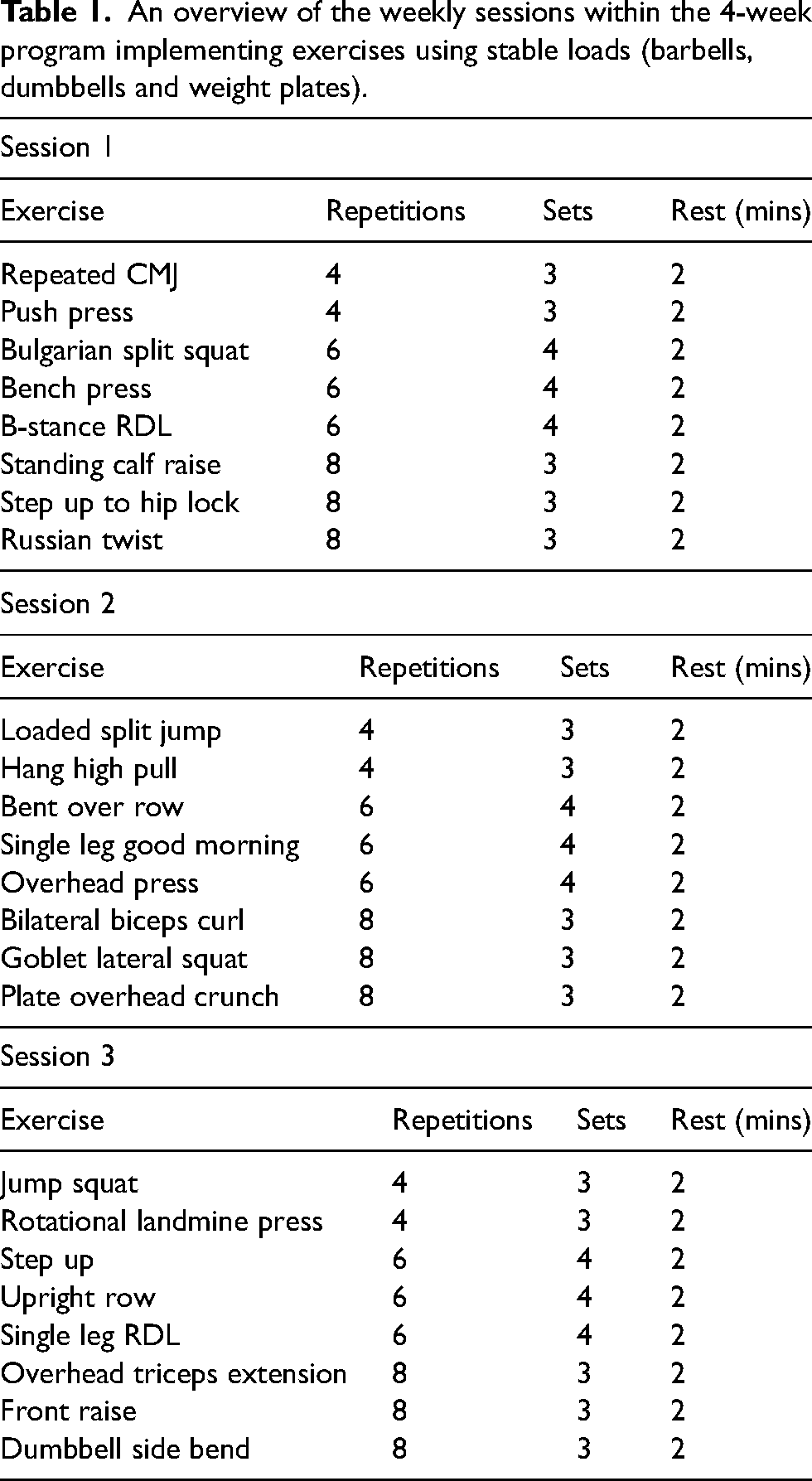
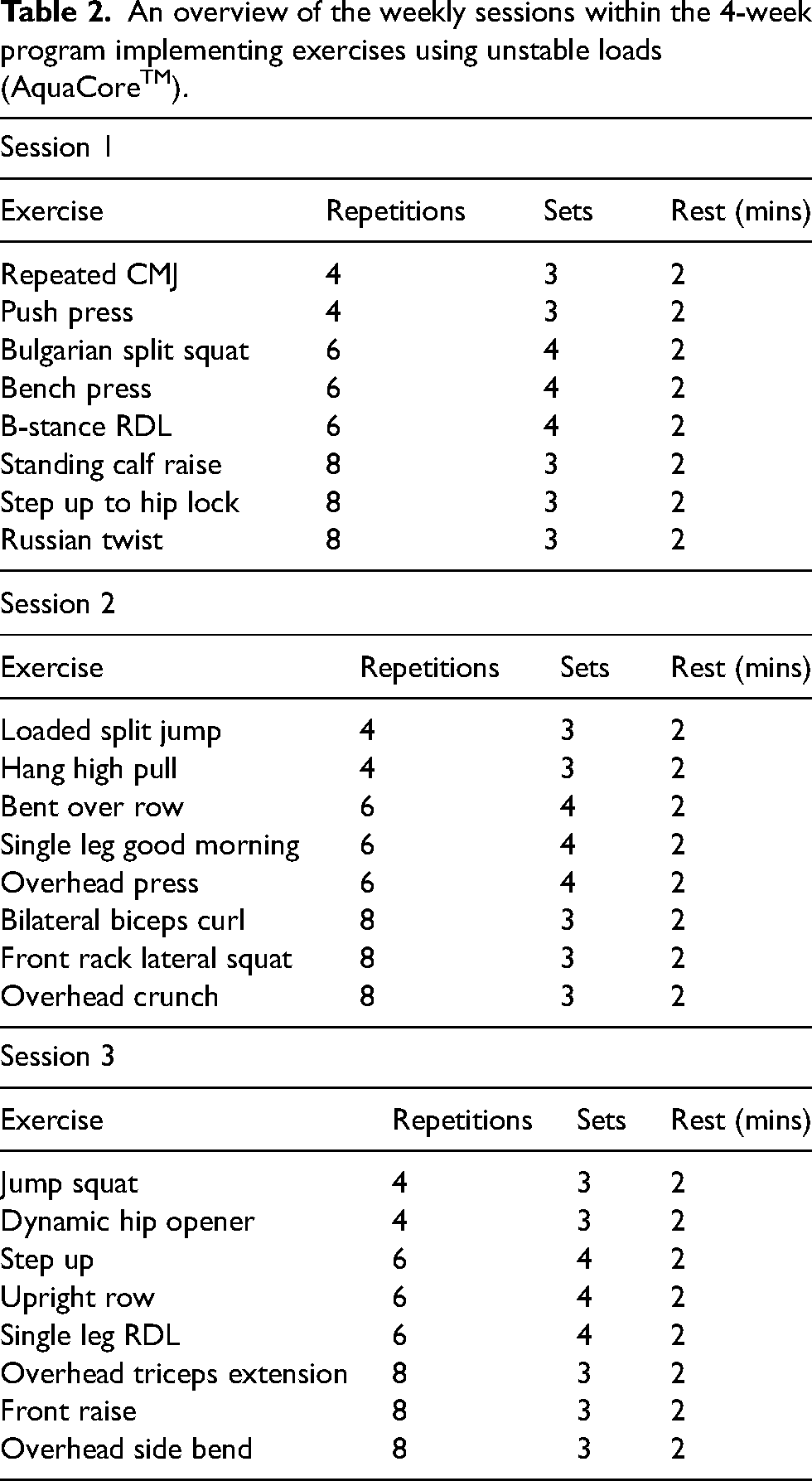
Once baseline assessments were complete, participants were allocated randomly to one of three exercise conditions: stable load training, unstable load training, or variable resistance training. Each condition included three 90-min sessions per week for a period of four weeks (i.e., 12 sessions in total). The training programs are outlined in Tables 1–3. The training sessions were designed as full-body workouts and included a variety of exercise types. Following a 10-min warm up, including five minutes of submaximal cycling followed by mobility and muscle activation exercises, participants completed their allocated training session. Each session included jumping, hinging, squatting, rowing, pressing, rotating, and bracing. The session structure aimed to enhance a range of physical qualities such as strength, power and stability.
An overview of the weekly sessions within the 4-week program implementing exercises using stable loads (barbells, dumbbells and weight plates).
An overview of the weekly sessions within the 4-week program implementing exercises using unstable loads (AquaCoreTM).
An overview of the weekly sessions within the 4-week program implementing exercises using variable resistance (PowerTubes).
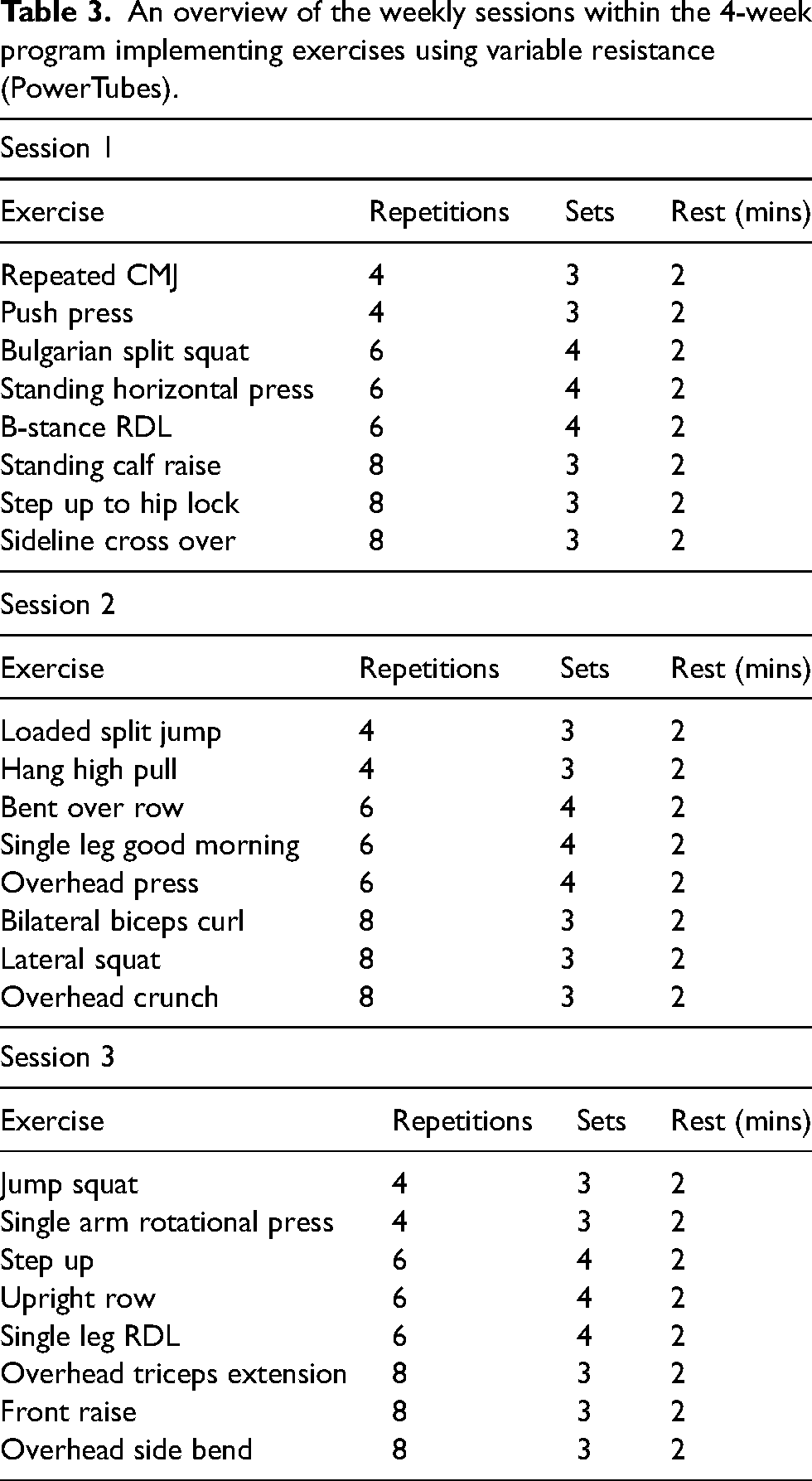
To ensure consistency in training exposure between conditions, programs were matched for volume and movement patterns. Once this framework was established, exercises were allocated using loading strategies specific to each modality (i.e., stable loads, unstable loads or variable resistance). Training volume remained consistent throughout the program, containing two power exercises each session for three sets of four repetitions, three strength exercises for four sets of six repetitions, and three accessory exercises for three sets of eight repetitions. While training volume was matched across conditions, the different methods used to apply external resistance to exercises meant it was challenging to standardise loads across each condition using traditional methods (e.g., kilograms, % of one-repetition-maximum [RM]). By using traditional loading methods, the progressively greater load applied through increased resistance as the PowerTubes lengthened, and the instability of the water in the AquaCoreTM would have been overlooked. Therefore, to account for the differences between stable, unstable and variable loading conditions, training intensity was prescribed and monitored using a rating of perceived exertion (RPE).32–34 Across all exercises and sessions, a target RPE of 7 on a 1–10 scale was prescribed, with participants modifying loads until the appropriate RPE was achieved. To increase the loads in the variable resistance group, PowerTubes of increasing resistance were applied to each exercise. Where the resistance from a single PowerTube was insufficient to reach the target RPE of 7, additional PowerTubes were applied in parallel until the desired resistance (perceived exertion) was achieved. For the unstable training condition, loads were progressed by using water filled bags (AquaCoreTM) of increasing load capacity (15 kg, 25 kg, 40 kg) and volume of water in accordance with the manufacturer's recommendations (PTPFit.com).
The stable load training group employed resistance using barbells, dumbbells and weight plates throughout the training intervention. The unstable load condition performed exercises using the water filled AquaCoreTM (PTP Fitness, Sydney, Australia) at a range of different loads, filled as per the manufacturer's guidelines. Finally, the variable resistance training group used PowerTubes (PTP Fitness, Sydney, Australia) of varying resistances attached to a rack, bench, or placed under the participant's foot as an anchor point. An example exercise implementing the different forms of resistance is provided in Figure 1. All sessions were supervised by an accredited Strength and Conditioning Coach (Australian Strength and Conditioning Association) to ensure safety, adherence, and to assist with load allocation.
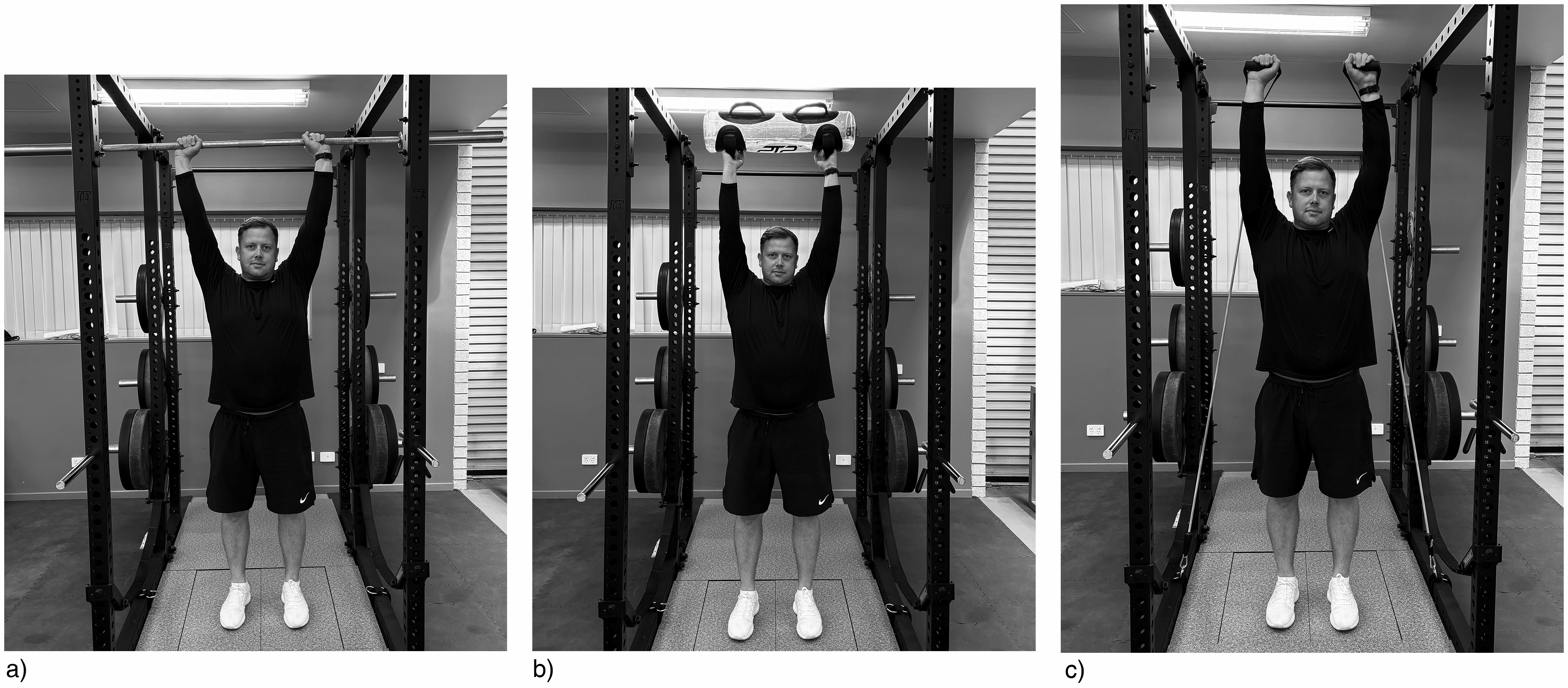
The top position of the overhead press exercise using (a) stable, (b) unstable, and (c) variable resistance loading strategies.
Statistical analyses
Statistical analysis was completed using SPSS (Version 29; IBM Corporation, USA) with significance set at p = <0.05. Each variable was assessed for normality using the Shapiro-Wilks test. Where violations of normality occurred, data were log transformed and compared with non-log transformed results. No differences in statistical outcomes were observed between log transformed and non-log transformed data. On this basis, the original data was included in the analysis to provide greater clarity to the results. Outliers were identified in the data by inspection of a boxplot for values greater than 1.5 box-lengths from the edge of the box. Given the nature of the outliers (e.g., genuine data points), and for full transparency of the data, outliers were included rather than being removed from analysis.
Two-way mixed analysis of variance was used to determine the interaction effect within- (pre intervention, post intervention) and between-groups (stable, unstable, variable) for each variable. Where differences between baseline values were observed, an analysis of covariance was applied. Significant interaction effects were further explored using simple main effects for group and time, and pairwise comparisons with Bonferroni post-hoc adjustments used to determine main effects for group and time. Partial eta squared (η2) effect sizes (ES) were calculated for interaction and main effects and thresholds were interpreted as small (≥0.01), medium (≥0.06) and large (≥0.14). Cohen's D was used for pre- to post-intervention ES calculations and interpreted as trivial (<0.2), small (0.2–0.49), moderate (0.5–0.79) and large (≥0.8) effects. 21 Data are presented as mean and 95% confidence limits (CL) unless otherwise stated.
Results
Postural and dynamic stability
Changes in COP and TTS measures for each of the three groups after 4 weeks of training are shown in Table 4. To account for differences between groups at baseline for COP right, values were corrected using an analysis of covariance with a mean of baseline values across conditions used as a covariate. For COP left, there were no interaction effects for intervention and time (F[2, 24] = 0.047, p = 0.954, partial η2 = 0.004), for time (F[1, 24] = 1.949, p = 0.175, partial η2 = 0.075) and for group (F[2, 24] = 1.267, p = 0.300, partial η2 = 0.005). Similarly, there was no interaction between the intervention and time on COP right (F[2, 20] = 0.049, p = 0.952, partial η2 = 0.005). The main effect of time showed a significant difference in COP right from pre- to post-intervention (F[1, 20] = 11.232, p = 0.003, partial η2 = 0.360) with no marked difference between groups (F[2, 20] = 0.049, p = 0.952, partial η2 = 0.005).
Changes in postural stability, dynamic stability and countermovement jump performance after 4 weeks of stable, unstable and variable training.
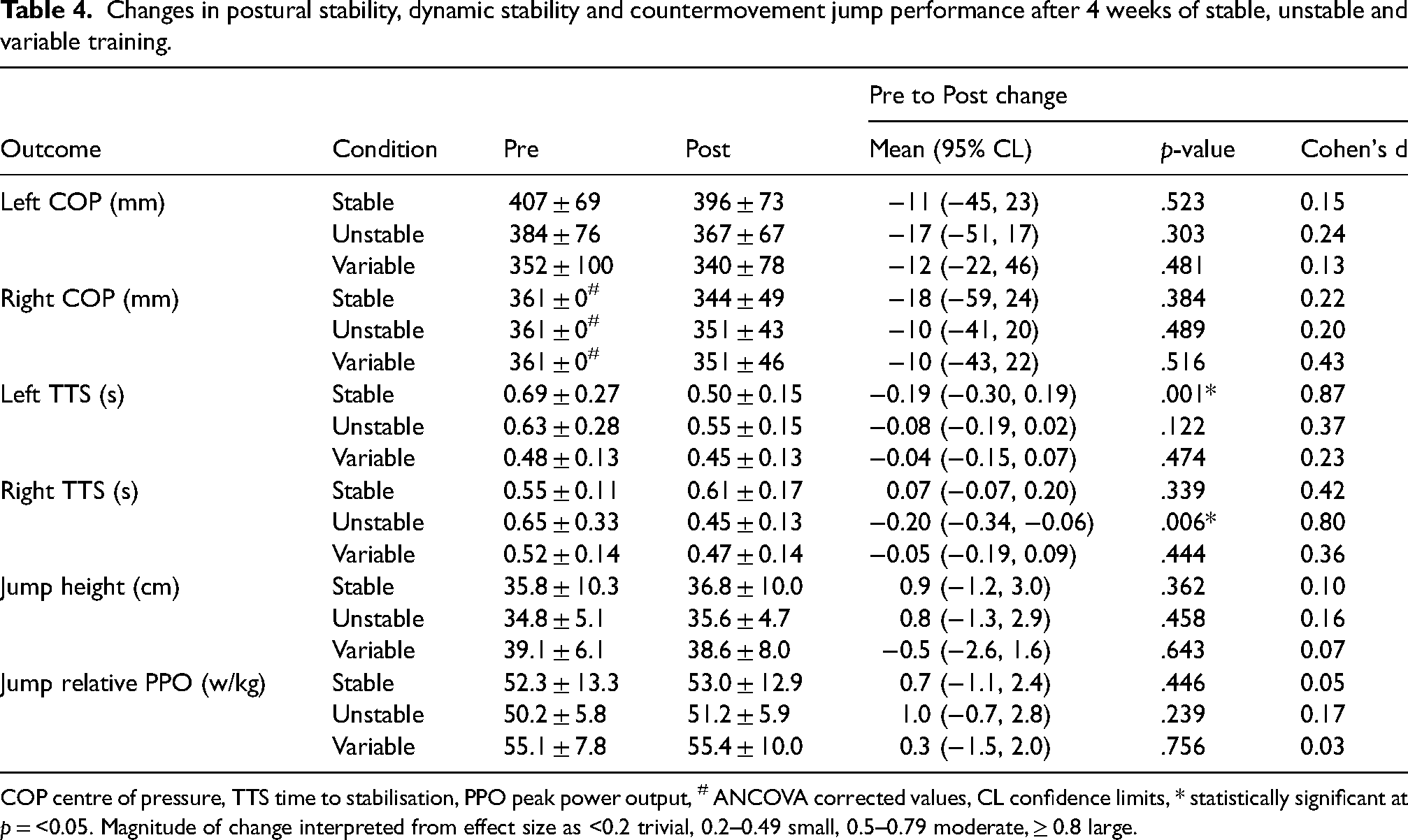
COP centre of pressure, TTS time to stabilisation, PPO peak power output, # ANCOVA corrected values, CL confidence limits, * statistically significant at p = <0.05. Magnitude of change interpreted from effect size as <0.2 trivial, 0.2–0.49 small, 0.5–0.79 moderate, ≥ 0.8 large.
There was a substantial reduction in left TTS following stable training (Table 4). In contrast, there were no changes in left TTS pre- to post intervention following unstable or variable training. There was an interaction effect between the intervention and time on right TTS (F[2, 24] = 3.963, p = 0.033, partial η2 = 0.248), but not on left TTS (F[2, 24] = 2.940, p = 0.130, partial η2 = 0.157). There was no significant differences in right TTS between interventions at pre- (F[1, 24] = 0.879, p = 0.428, partial η2 = 0.068) or post-intervention (F[1, 24] = 3.263, p = 0.056, partial η2 = 0.214). Unstable training led to a reduction in right TTS (Table 4), however no substantial changes were observed in right TTS from pre- to post intervention following stable or variable resistance training. The main effect of time showed a marked improvement in left TTS after training (F[1, 24] = 11.876, p = 0.002, partial η2 = 0.331).
Countermovement jumps
Pairwise comparisons show jump performance was essentially unchanged from pre- to post-intervention following stable, unstable or variable resistance training as outlined in Table 4. There was no interaction effects of intervention and time for jump CMJ height (F[2, 24] = 0.581, p = 0.567, partial η2 = 0.046) or CMJ peak power (F[2, 24] = 0.199, p = 0.821, partial η2 = 0.016). The main effect for group showed similar differences in CMJ height (F[2, 24] = 0.541, p = 0.589, partial η2 = 0.043) and CMJ peak power (F[2, 24] = 0.497, p = 0.614, partial η2 = 0.040) between intervention groups. There were no differences in the main effects for time for CMJ height (F[1, 24] = 0.491, p = 0.490, partial η2 = 0.020) or CMJ peak power (F[1, 24] = 1.758, p = 0.197, partial η2 = 0.068).
Lower-body isometric strength
Stable training elicited an increase in ISO30 left, with no significant changes following unstable or variable resistance training. Similarly, variable training elicited a small increase in ISO30 right, with no significant changes after stable or unstable training. No marked changes were observed in IMTP from pre- to post-intervention following stable, unstable or variable resistance training (see Table 5). IMTP (F[2, 24] = 0.176, p = 0.840, partial η2 = 0.014), ISO30 left (F[2, 24] = 2.891, p = 0.075, partial η2 = 0.194) and ISO30 right (F[2, 24] = 3.234, p = 0.057, partial η2 = 0.212) had no significant interaction between intervention and time. The there were no differences between interventions for IMTP, ISO30 left or ISO30 right. All three training groups exhibited an improvement in mean IMTP (F[1, 24] = 6.236, p = 0.020, partial η2 = 0.206), but not ISO30 left or ISO30 right (Table 5).
Changes in lower-body isometric strength, 10 m sprint and change of direction performance after 4 weeks of stable, unstable and variable training.
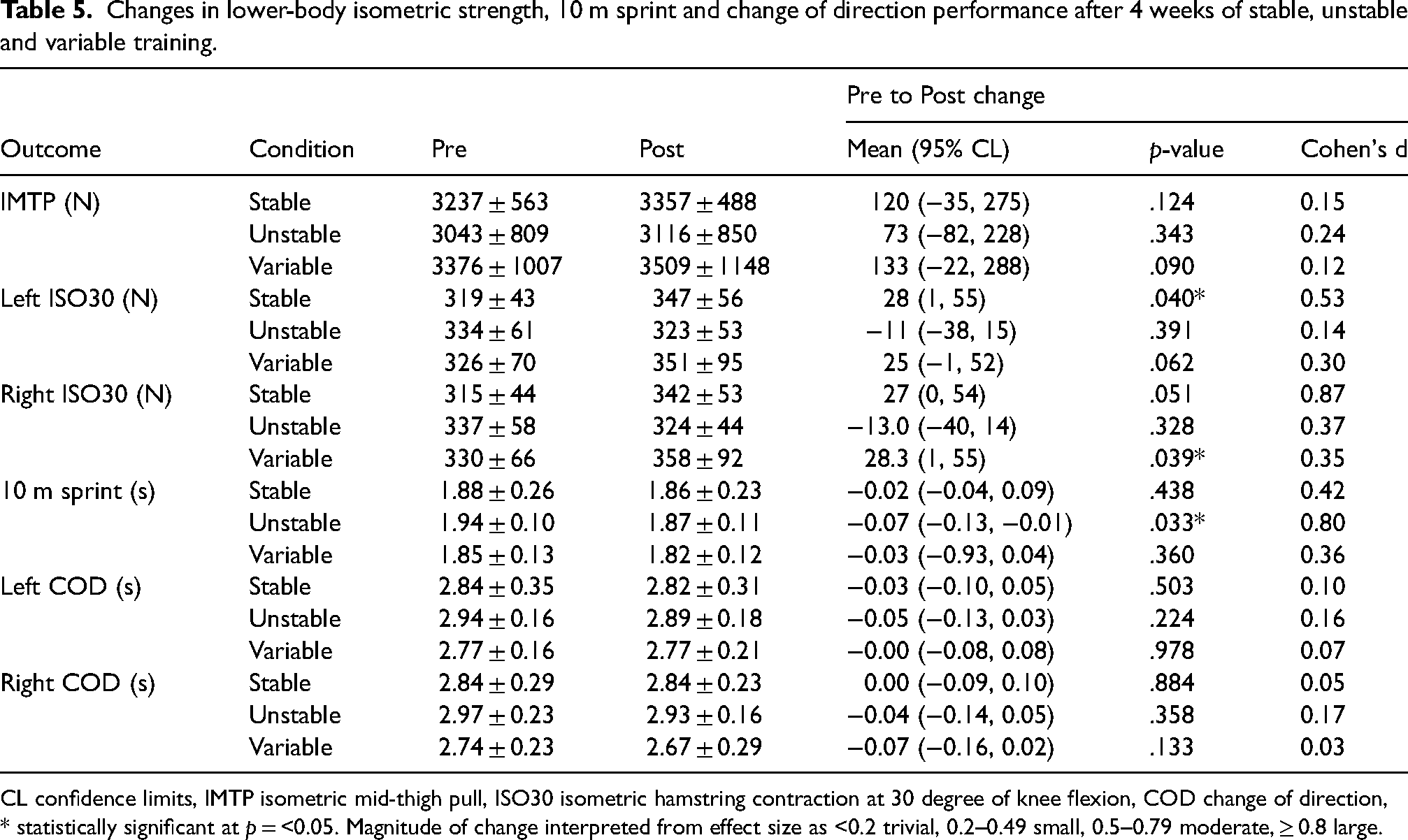
CL confidence limits, IMTP isometric mid-thigh pull, ISO30 isometric hamstring contraction at 30 degree of knee flexion, COD change of direction, * statistically significant at p = <0.05. Magnitude of change interpreted from effect size as <0.2 trivial, 0.2–0.49 small, 0.5–0.79 moderate, ≥ 0.8 large.
Modified 5-0-5 change of direction and 10 m sprint performance
There were no marked improvements in COD in the modified 5-0-5 task for any of the training groups after 4 weeks. Similarly, there were no interaction effects of intervention and time for COD left (F[2, 24] = 0.372, p = 0.693, partial η2 = 0.030), COD right (F[2, 24] = 0.742, p = 0.487, partial η2 = 0.058) or 10 m sprint (F[2, 24] = 0.657, p = 0.527, partial η2 = .052). There were no differences between groups for COD left (F[2, 24] = 0.894, p = 0.422, partial η2 = 0.069), COD right (F[2, 24] = 2.346, p = 0.117, partial η2 = 0.164) or 10 m sprint (F[2, 24] = 0.380, p = .688, partial η2 = 0.031). 10 m sprint time was improved for all three groups (F[1, 24] = 5.283, p = 0.031, partial η2 = .180), but COD left and COD right were largely unchanged from pre- to post-intervention. Following unstable training, there was a marked improvement in 10 m sprint times of .07 s (95% CL [.01, .13], p = 0.033, ES: .80, large), but stable or variable resistance training did not elicit a substantial improvement.
Athletic shoulder test
Shoulder strength levels are presented in Table 6. Strength was increased for the left ASH I (F[1, 24] = 8.944, p = 0.006, partial η2 = 0.271), ASH T (F[1, 24] = 23.279, p < 0.001, partial η2 = 0.492) and ASH Y (F[1, 24] = 22.164, p < 0.001, partial η2 = 0.480), and for right ASH I (F[1, 24] = 23.062, p < 0.001, partial η2 = 0.490), ASH T (F[1, 24] = 22.441, p < 0.001, partial η2 = 0.483), and ASH Y (F[1, 24] = 11.563, p = 0.002, partial η2 = 0.325) in all groups. There were no substantial differences between groups for any ASH tests. Similarly, there were no group × time effects for ASH I left, ASH I right, ASH T left, ASH T right, Ash Y left or ASH Y right (range p = 0.142–0.810),
Changes in isometric shoulder strength and core endurance after 4 weeks of stable, unstable and variable training.
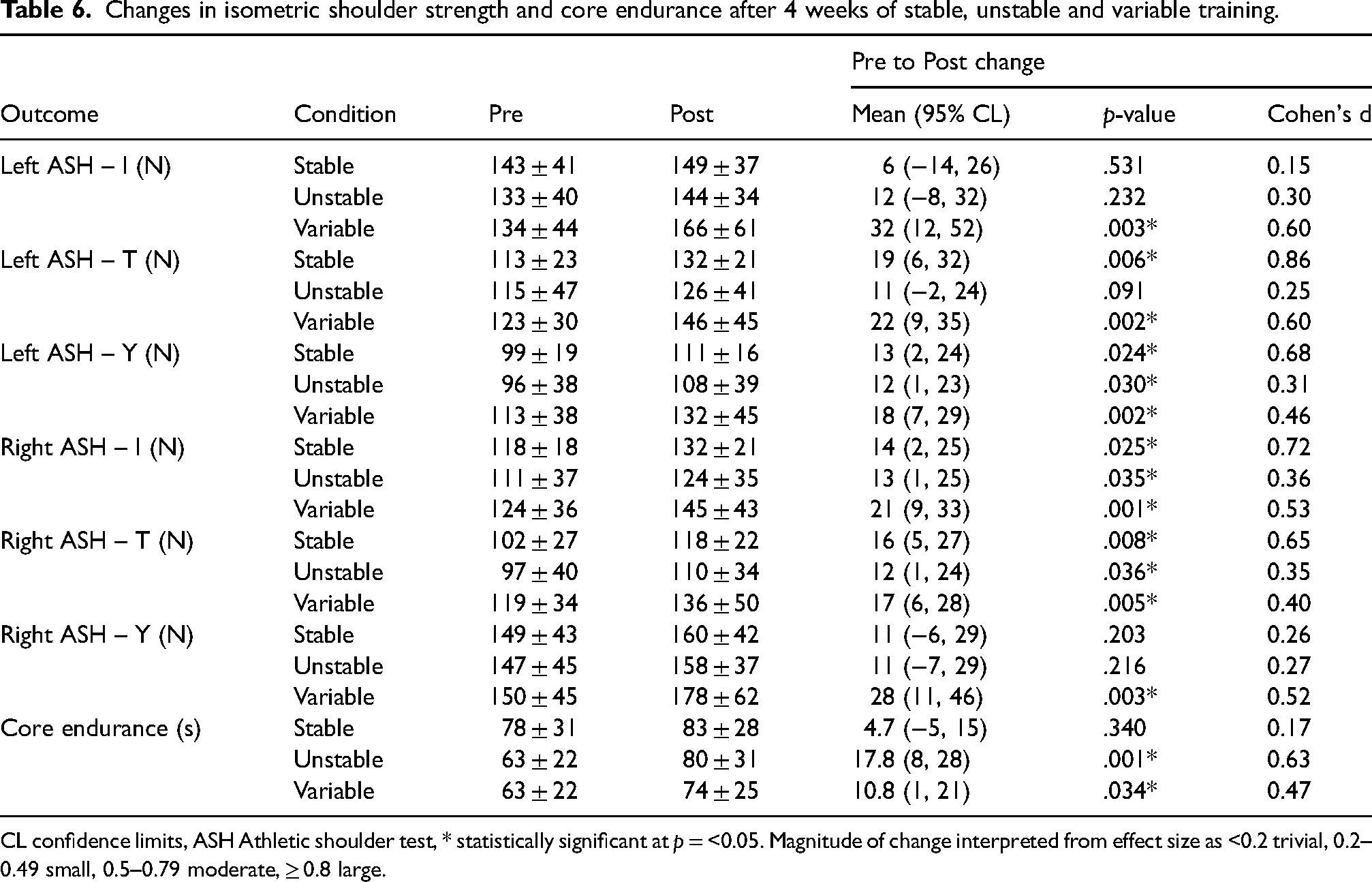
CL confidence limits, ASH Athletic shoulder test, * statistically significant at p = <0.05. Magnitude of change interpreted from effect size as <0.2 trivial, 0.2–0.49 small, 0.5–0.79 moderate, ≥ 0.8 large.
There was a substantial increase in all ASH tests from pre- to post-intervention following variable resistance training (Table 6). Significant improvements were also observed in left ASH T and ASH Y, as well as right ASH I and ASH T following stable training. When comparing pre- to post-intervention measures for the unstable training group, substantial improvements were observed in left ASH Y and right ASH I, ASH T and ASH Y. However, there were no marked pre- to post-intervention changes in left ASH I or right ASH Y following stable training, or in left ASH I, left ASH T, or right ASH Y following unstable training.
Core endurance
There was no interaction between the intervention and time on core endurance (F[2, 24] = 1.875, p = 0.175, partial η2 = 0.135). The main effect of time showed a substantial change in core endurance from pre- to post-intervention (F[1, 24] = 16.031, p < 0.001, partial η2 = 0.400), with little difference between intervention groups (F[2, 24] = 0.556, p = 0.581, partial η2 = 0.044). An increase in core endurance of 17.8 s (95% CL [8, 28], p = 0.001, ES: 0.63, moderate) was observed from pre- to post-intervention following unstable training, and 10.8 s (95% CL [1, 21], p = 0.034, ES: 0.47, small) following variable training. There were no marked changes in core endurance following stable training.
Discussion
We saw an increase in several performance indicators in each of the three training groups (stable, unstable and variable) with four weeks of supervised gym-based training interventions. Training with the unstable load led to large improvements in core endurance, whereas the use of variable resistance loads showed improvements in isometric shoulder strength across a range of positions. It appears that stable, unstable and variable training can elicit improvements in stability, shoulder strength, and core endurance. In contrast, locomotor activities including short sprint performance, countermovement jumps and change of direction likely require a longer more targeted training intervention, and potentially with a higher training stimulus than in the current study. Strength and conditioning coaches, other support staff, and researchers can use this information for targeting discrete athlete qualities in the design, implementation, and review of sports training programs.
The outcomes of this study are consistent with other studies supporting the use of unstable loads to increase trunk and stabiliser activation.3,5 An earlier study reported an increase in muscle activation of the lumbar erector spinae and external obliques when performing squats and step ups using an unstable aquabag when compared to a stable, albeit unweighted, control exercise. 5 Although electromyography was not employed in the present study, the increase of muscle activation associated with training using unstable loads may, at least partially, account for the observed improvements in core endurance. 5 There is support for the use of stable load training with heavy loads to increase trunk musculature, 35 so comparisons between load-matched training modalities may have provided different results. It is important to note there is a level of instability which can influence muscle activation.3,36 In this scenario, trunk and limb muscle activation can increase with moderate levels of instability, yet decrease with high levels of instability. 36 Therefore, the level of instability, coupled with an individual's strength levels relative to the unstable load applied, should be considered by practitioners when designing specific training interventions to maximise performance.
The improvements in isometric shoulder strength at 180°, 135° and 90° positions following variable resistance training likely relates to the force generating capacities required throughout the range of motion.4,6,11 While not investigated in the present study, research shows that training with variable resistance, such as bands, allows for a progressive application of resistance throughout a movement. 4 For example, when variable resistance is applied during exercises with an ascending strength curve, such as a back squat or bench press, load can be increased when an individual's force generating capacities are typically higher. 4 The notion of matching the application of resistance with strength curves allows for an increase in load at specific phases of a movement. 4 This, in turn, can increase exercise intensity and overall training stimuli, and has the potential to improve training adaptations. It is important to acknowledge that most exercises performed in the variable resistance training program were dynamic in nature, yet improvements in isometric strength were observed. While dynamic and isometric strength represent two separate neuromuscular domains, 37 there is a high correlation between the two measures of strength.38,39 Therefore, the improvements in isometric strength following dynamic training using variable resistance may reflect increasing force requirements through the entire range of motion for both horizontal and vertical pressing movements. 4 If implementing training interventions specifically to improve isometric performance outcomes, coaches and practitioners should consider the use of specific joint angles to maximise strength outputs.39,40
There was an improvement in 10 m sprint times follow four weeks of unstable training, however, the overall lack of change across measures of speed and change of direction was somewhat to be expected. Although there is a link between speed and change of direction, and strength and power41–43 the training interventions in the present study were not designed to specifically target running performance. Instead, these assessments were included as an indicator of the transfer of unstable loads and variable resistance to the development of discrete athletic abilities. Changes in measures of postural and dynamic stability may have been improved had the training intervention included a greater proportion of single-limb open-chain exercises. It is also important to consider the skill elements associated with sprinting, change of direction and landing tasks. Although participants were resistance-trained, they were not required to be experienced in athletic movements to be included in this study. Had the present study been conducted with an athletic cohort familiar with jumping and landing tasks, for example basketball or volleyball, the results for these outcome measures may have differed.
A limitation of this study is that EMG data was not collected within testing sessions or training interventions. Given the applied nature of this project, the aim was to compare change in performance outcomes following each 4-week intervention. In hindsight, the use of EMG may have provided a greater insight into possible mechanisms contributing to the results observed in the present study. In addition, while a brief training history of the participants was collected, this information did not specifically quantify the training history specific to each training modality (stable, unstable, variable). It is important to acknowledge that a recent training history with a single modality may have influenced the magnitude of the observed responses. To improve homogeneity across groups, future studies should consider implementing an initial uniform training program before allocating participants into the three experimental conditions applied in the present study. Further studies investigating the influence of unstable loads and variable resistance should also consider the duration of training interventions. We employed a 4-week training program, and extending this period and providing a greater period of progressive overload may yield more substantial effects. Additional work is required to confirm our findings that unstable training using an Aquabag™ can improve core endurance, and variable resistance training (PowerTubes) improves shoulder strength across multiple ranges. We also acknowledge that the RPE clamping method for adjusting training load is notionally subjective, but at least this approach provides a consistent measure of intensity between groups.
In conclusion, participants in all three training groups (stable, unstable and variable) showed improvements in selected athletic qualities after four weeks of supervised training. Variable resistance and unstable load training programs elicited substantial improvements in discrete aspects of physical performance including core endurance and isometric shoulder strength across a 4-week intervention in recreationally trained males. Training with unstable loads elicited a 22% increase in core endurance, whereas training with variable resistance yielded a 15% increase. In comparison, stable load training elicited a change of 6% in core endurance following the 4-week training intervention. Shoulder strength improved in all six isometric assessments following variable resistance training and five out of six following unstable load training, whereas shoulder strength improved in three out of six positions following the stable load training intervention. Athletes can benefit from training with unstable loads and variable resistance to complement traditional stable load training. These outcomes should be considered by health and fitness professionals when designing training programs to elicit specific adaptations.
Footnotes
Acknowledgements
We thank the participants for their cooperation and physical efforts with the testing and training program.
Ethical consideration
This study was approved by the Ethics Committee of the University of Canberra (Ethics Code: 12145) on September 5th, 2023. All participants provided written informed consent prior to enrolment in the study. This research was conducted ethically in accordance with the World Medical Association Declaration of Helsinki.
Data availability statement
The data that support the findings of this study are available from the corresponding author upon reasonable request.
Declaration of conflicting interests
The authors declare the following potential conflicts of interest with respect to the research, authorship, and/or publication of this article: “Fitness Systems United” provided strength training equipment for use in this study and funded an honours scholarship associated with the research. The company had no role in the design of the study, data collection, data analysis, or the interpretation of results. The authors declare that there are no other financial or personal relationships that could have inappropriately influenced this work.
Funding
The authors disclosed receipt of the following financial support for the research, authorship, and/or publication of this article: This work was supported by the Fitness Systems United Pty. Ltd., (grant number 78092858).
