



Abstract
Mentoring plays a critical role in the advancement of gender equity within sport, by addressing the underrepresentation of women in coaching and leadership roles. Women coaches face myriad of barriers within every organisational and administrative facet of sport. A systematic review was conducted to examine how mentorship supports and advances women in sport coaching and leadership. Following the PICo framework and the PRISMA guidelines for a systematic review, twelve articles were identified after undergoing a rigorous process for quality appraisal and inclusion. The review was framed utilising LaVoi and Dutove's (2012) Ecological Model which provided a powerful lens into understanding how individual, interpersonal, organisational and societal factors intersect, influencing the opportunities and challenges women encounter in coaching roles. A key finding was that mentorship is increasingly recognised as a valuable strategy for the professional advancement of women coaches as well as addressing gender disparities within the coaching profession. Mentorship facilitates career development, expands professional pathways, enhances networking opportunities and ultimately serves as a strategic tool for increasing the representation of women in coaching roles. The implementation of mentorship programmes is influenced by various factors including institutional support, financial disparities and resource accessibility. Future studies should focus on these underlying factors within sport federations that are currently implementing or seeking to implement mentorship programmes. Additionally, research examining mentorship and gender equity in coaching remains disproportionality focused on the Global North, with limited scholarly output from the Global South.
Introduction
Women's involvement in football, particularly in coaching, has undergone an upward trend in participation, however support networks and professionalism are still lacking.1,2,3,4,5 Nevertheless, women coaches remain underrepresented despite their increased participation due to factors such as low self-efficacy,6,7,8 low intention to coach, 9 and a higher likelihood of leaving the profession compared to their male counterparts. 10 Serpell, Harrison, Dower and Cook 11 found that women are often perceived as less confident and are less likely to be appointed to positions of leadership and authority. Transitioning from being an athlete to a coach provides additional barriers where women often deal with unfair beliefs about their ability to lead. 12
In Africa, the challenges women face during the transition from athlete to coach are deeply rooted in systemic barriers that perpetuate gender inequities in sport.13,14 Transitional support becomes an imperative for a mentorship programme whereby mentors can assist women in navigating the complexities of this role change, facilitating their entry into coaching and preventing them from leaving their career choice. 9 Additionally, a lack of clearly defined and structured pathways for women to progress into administrative and coaching roles remains a critical issue.15,16,17 Without well-defined career trajectories, women often struggle to find ways to develop into coaching and leadership roles. This creates confusion and limits opportunities for professional growth and development.
These issues are particularly significant in the South African context. Despite a proactive stance by government to address gender equality, women are still underrepresented in key leadership and decision-making positions and sport coaching is dominated by men.7,8,18,19 The idea that coaching and leadership are male dominated professions is further bolstered by cultural norms and societal expectations regarding the role of women. 20 Women are further marginalised with limited opportunities when there are limited opportunities for participation in coach education and mentorship programmes and an absence of gender-specific policies and institution. These systemic barriers undermine attempts to attain gender parity and diversity in African sport leadership by impeding not only personal development but perpetuating a male dominated sport culture. 14
Regardless of the growing number of women entering the sport industry, significant challenges remain in the male-dominated profession. 21 Power imbalances, misogynistic sport organisations and the underrepresentation of women in coaching, management or leadership positions are some of the issues requiring redress. These issues are exacerbated by gender bias and the absence of professional development opportunities. Mentoring could become a vital strategy for supporting and empowering women coaches.2,22 Access to a professional development programme that includes formal training, workshops and networking opportunities are essential to equip women with the skills and self-assurance needed to thrive in the sport industry.17,23
Professional development for coaches involves formal and informal methods, with mentorship as a central theme.24,25 Formal development includes structured programmes such as certification courses, workshops, and seminars. 26 Informal development arises through everyday experiences, self-directed learning, and interactions with colleagues or mentors.26,27,28 Mentorship integrates these approaches, offering personalised guidance, knowledge-sharing, providing emotional and psychological support, facilitating career advancement and instilling a sense of belonging that fosters professional growth and development.
The initial purpose of this review was to explore mentorship programmes in football. However, after conducting the database search, the researchers identified only one article specifically related to football, which was insufficient to fully answer the research question (see Table 2). As a result, this systematic review examines the broader literature on the critical role of mentorship in supporting and advancing women in coaching and leadership roles in sport. Understanding the factors contributing to effective mentorship and its impact on coaches’ professional trajectories, the review seeks to contribute to the development of an inclusive and equitable coaching landscape, where women are empowered to thrive and lead.
Method
Study design
A systematic review was conducted to explore how mentorship supports and advances women coaches and leaders in sport. The PICo framework was utilised as it allowed for a specific focus within a clearly defined research question: What is the influence of mentorship for women football coaches and their career trajectories? In accordance with scientific standards, the review followed the PRISMA guideline for systematic reviews. 29 The complete process is shown in Figure 1.
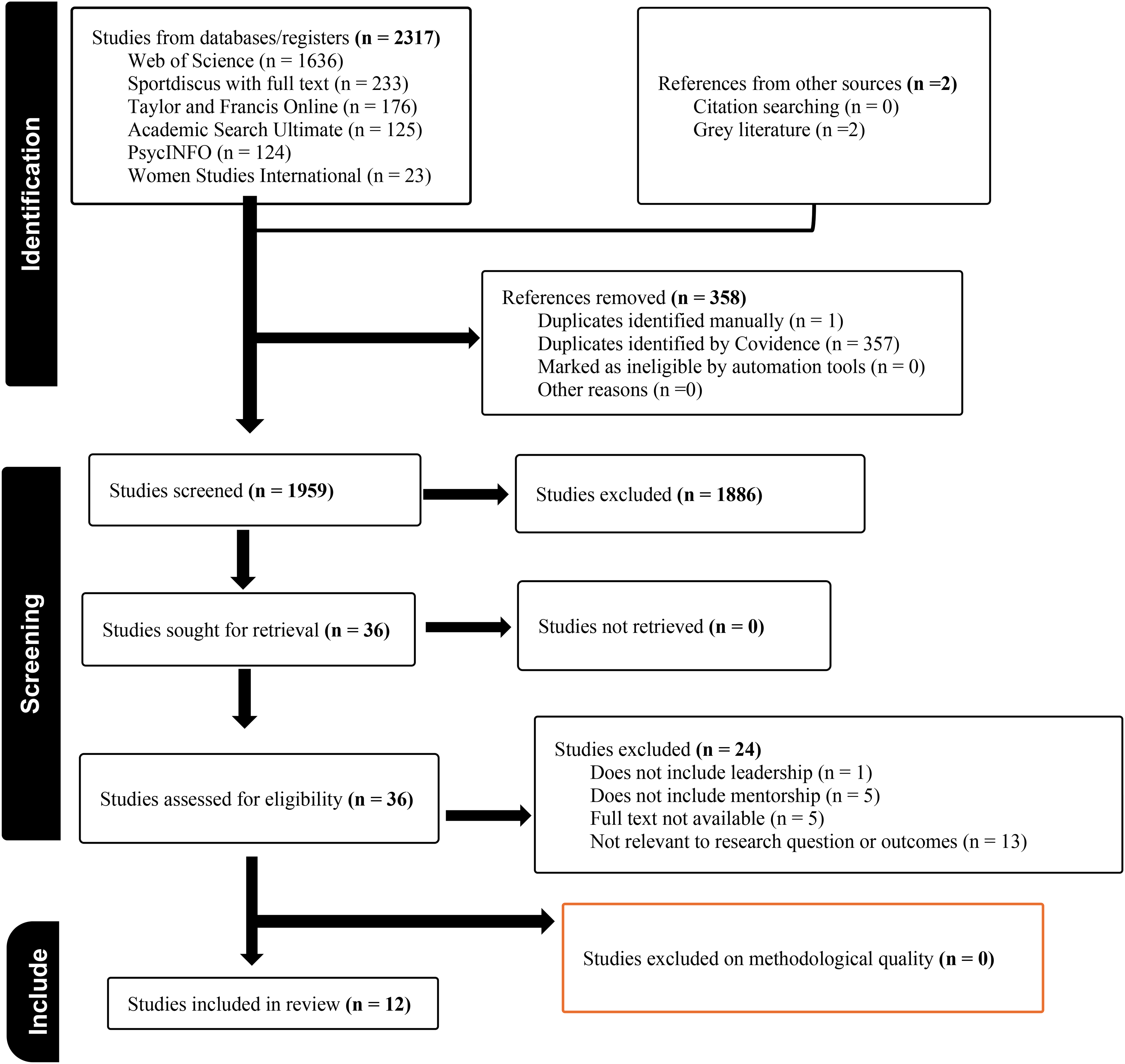
PRISMA flow diagram of study selection.
Search strategy and eligibility criteria
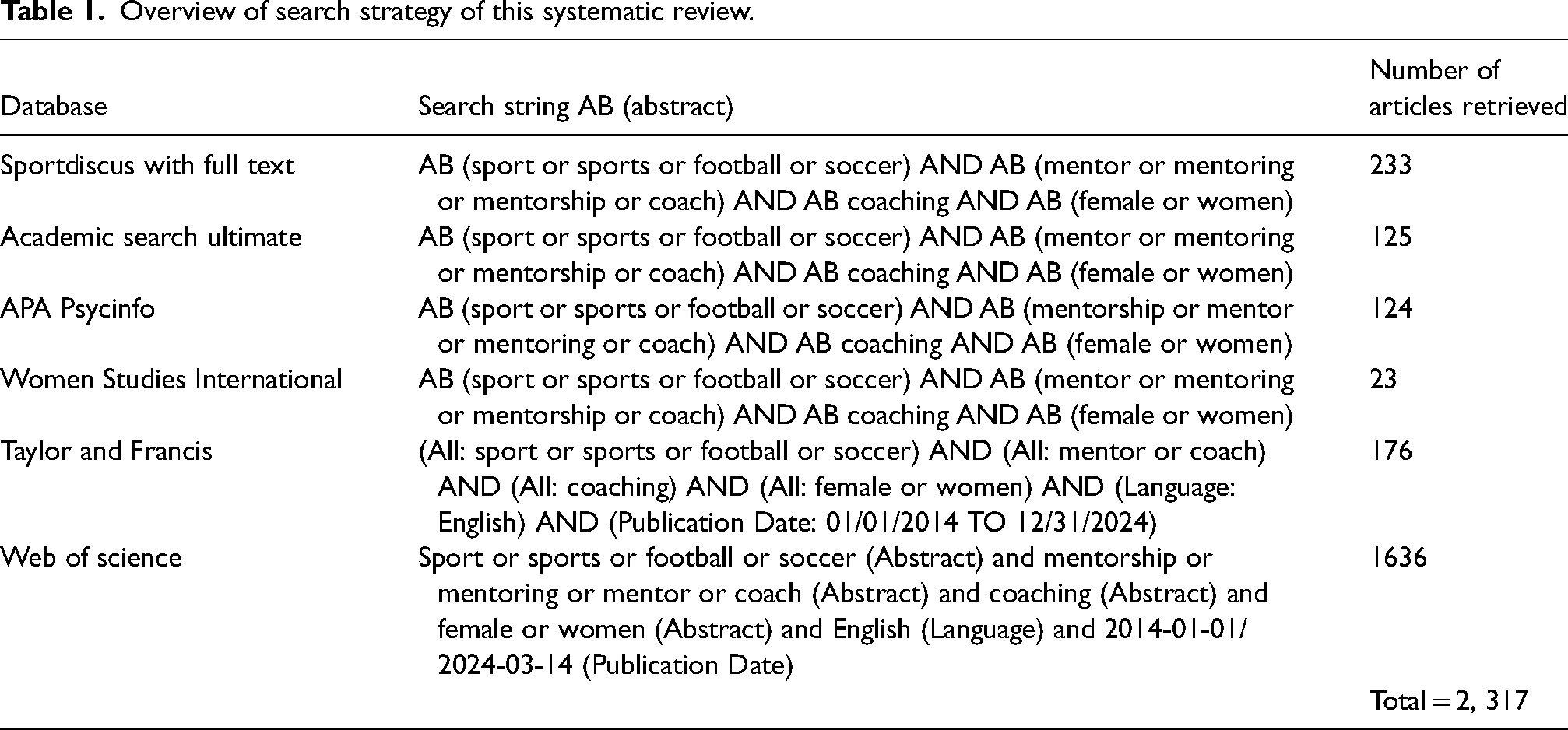
A systematic search was conducted across the following databases: Academic Search Ultimate, Sportdiscus with full text, APA Psycinfo, Taylor and Francis Online, Clarivate Web of Science and Women Studies International. These databases were chosen according to their perceived relevance regarding the research question. The search strings consisted of keywords related to: (1) mentorship, (2) female and or women coaches and, (3) football (refer to Table 1).
Overview of search strategy of this systematic review.
Each database was systematically searched for English peer-reviewed articles and dissertations published between 2014 and 2024. Dissertations (n = 2) were included for relevancy to the research question. Two authors independently assessed all title and abstracts, full-text studies for inclusion, data extraction and quality assessment. Studies were deemed eligible if they met the following inclusion criteria: (1) written in English, (2) participants were female/women coaches, (3) focus on mentorship programmes, leadership or coaching, (4) conducted between 2014–2024, (5) football or soccer, (6) peer reviewed articles and grey literature (dissertation). Articles were excluded if: (1) male coaches, male players, female players, female coaches in other professions or sporting codes were included, (2) the research focused on training programmes, other mentorship programmes not related to football, injury prevention or sport/football development programmes, (3) the articles were not in English.
Study selection and data extraction
Citations were downloaded from the databases (RIS text format), and references imported into Covidence software (used to manage and streamline systematic reviews). 30 Duplicates were eliminated with two authors independently screening the titles and abstracts using the inclusion criteria as a guide. Full texts of each article were uploaded and independently screened, with conflicting decisions discussed to reach consensus. In the full text review phase, EndNote 21 referencing software was used to collect, organise and manage references from difference database sources. 31 The number of articles retrieved from each database is shown in Table 1.
Quality assessment
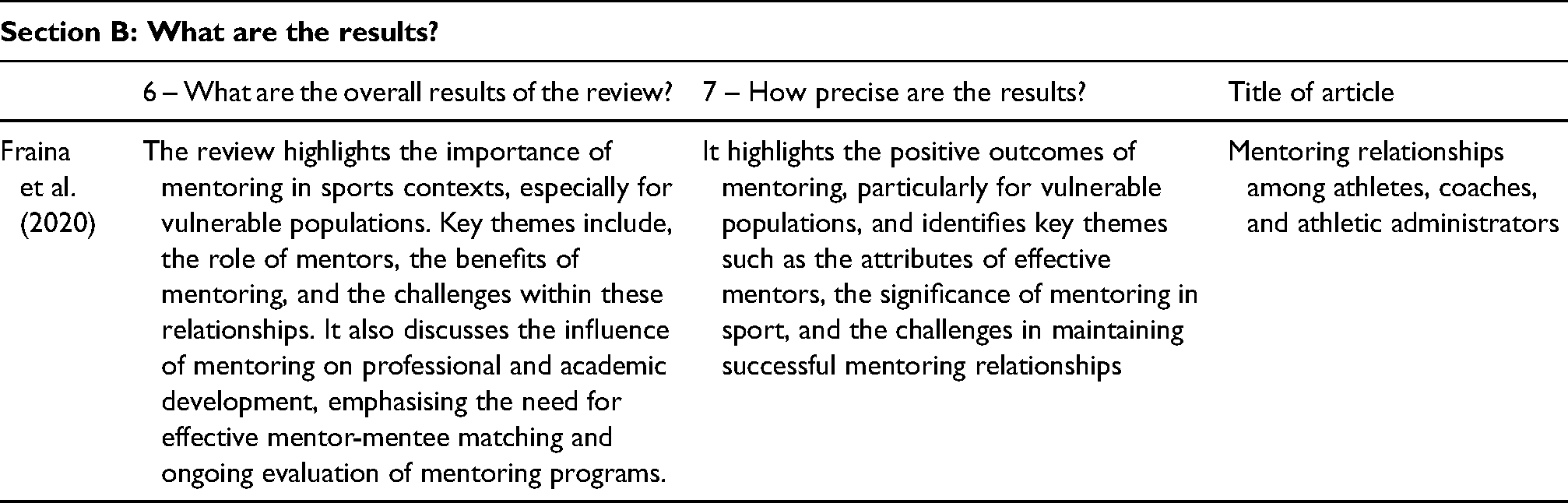
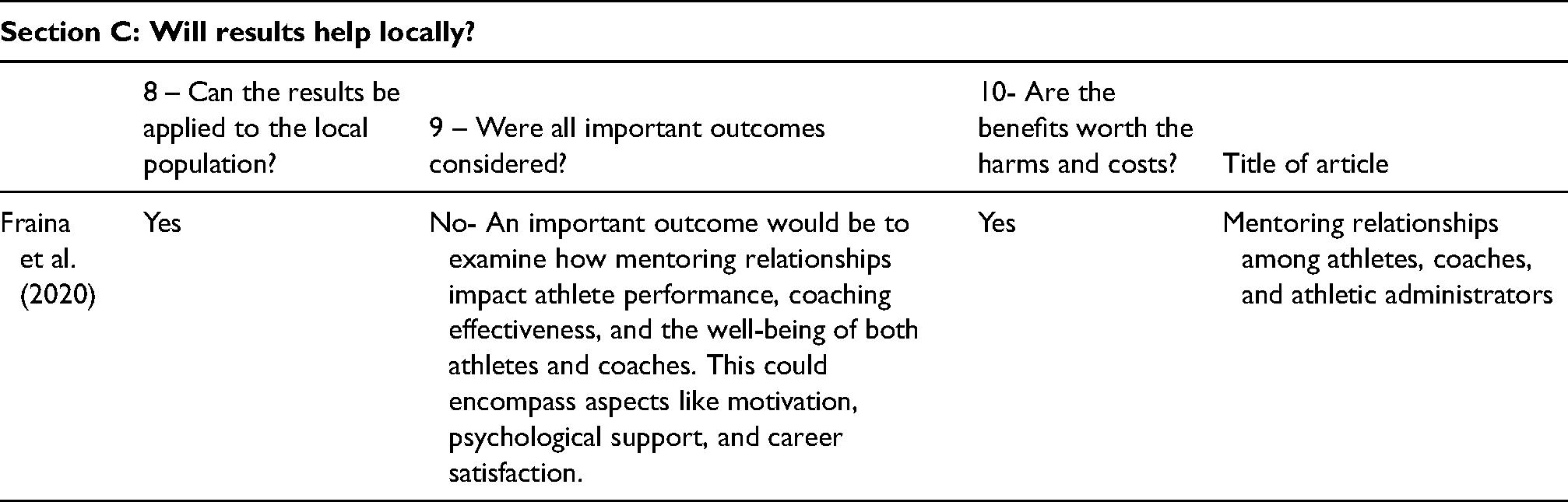
Using the Mixed Method Appraisal Tool (MMAT, 32 ), two authors independently appraised the methodological quality of the included studies. This tool consists of five separate questions for assessing qualitative, quantitative, and mixed methods studies. These relate to; 1) relevance of specific study type, 2) sampling strategy, 3) data collection methods, 4) analysis, and 5) interpretation of results (Table 2). No quantitative studies were included in the review as a preliminary search revealed a scarcity of quantitative studies specifically addressing mentorship programmes for women coaches. A separate tool, Critical Appraisal Skills Programme, 33 was used to assess the quality of a literature review (n = 1). The tool consists of ten questions designed to assess the quality and relevance of systematic reviews in any field (Table 3). Differences in judgements were resolved through discussion between two authors.
Results of the quality appraisal using MMAT. 32
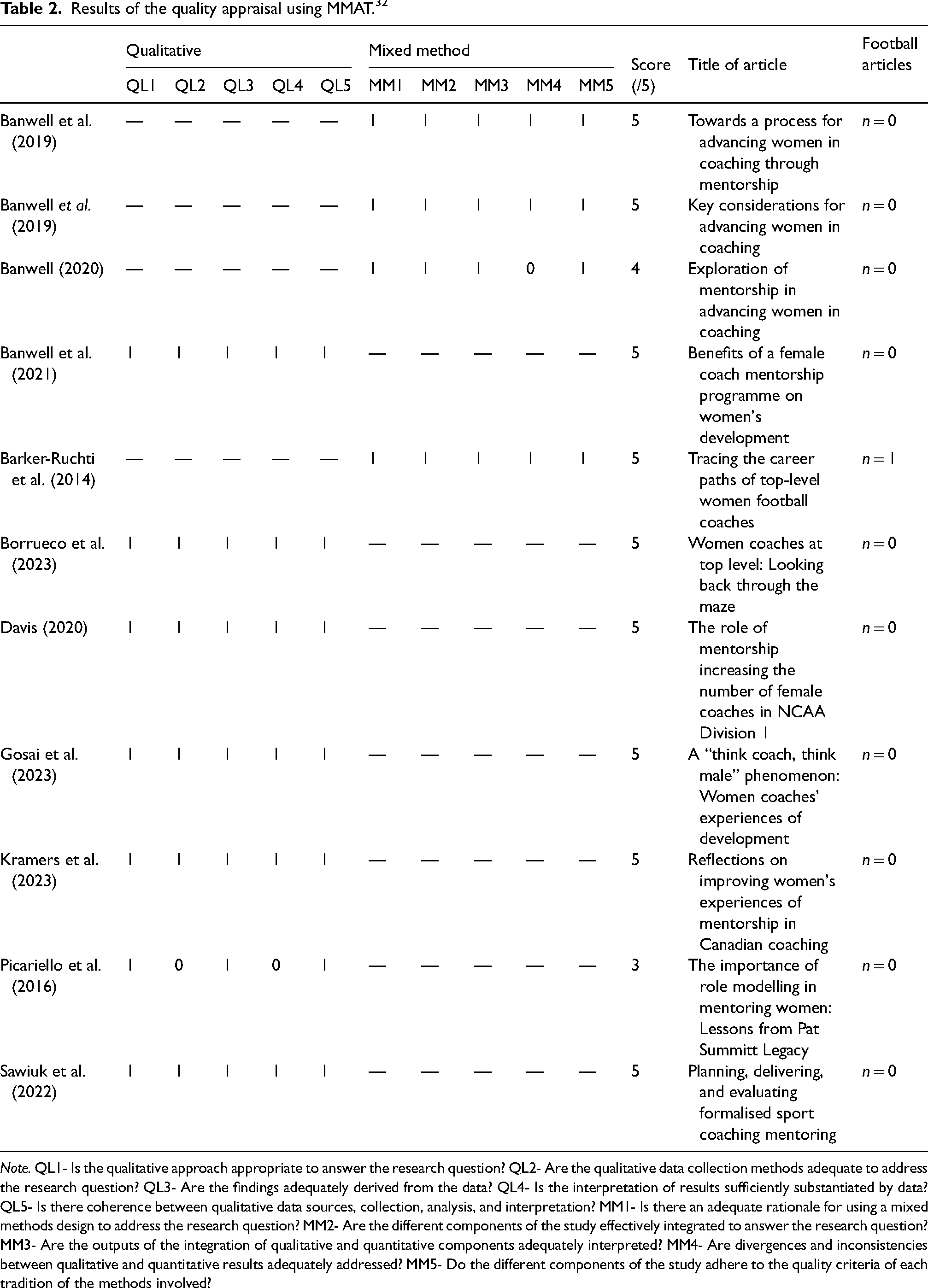
Note. QL1- Is the qualitative approach appropriate to answer the research question? QL2- Are the qualitative data collection methods adequate to address the research question? QL3- Are the findings adequately derived from the data? QL4- Is the interpretation of results sufficiently substantiated by data? QL5- Is there coherence between qualitative data sources, collection, analysis, and interpretation? MM1- Is there an adequate rationale for using a mixed methods design to address the research question? MM2- Are the different components of the study effectively integrated to answer the research question? MM3- Are the outputs of the integration of qualitative and quantitative components adequately interpreted? MM4- Are divergences and inconsistencies between qualitative and quantitative results adequately addressed? MM5- Do the different components of the study adhere to the quality criteria of each tradition of the methods involved?
Results of the quality appraisal using the critical appraisal tool. 33
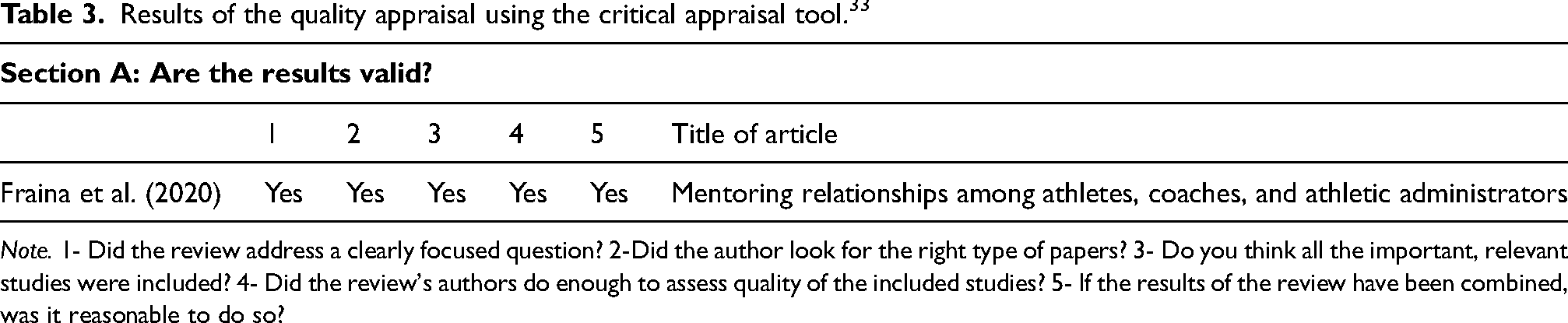
Note. 1- Did the review address a clearly focused question? 2-Did the author look for the right type of papers? 3- Do you think all the important, relevant studies were included? 4- Did the review's authors do enough to assess quality of the included studies? 5- If the results of the review have been combined, was it reasonable to do so?
Summary of included studies.
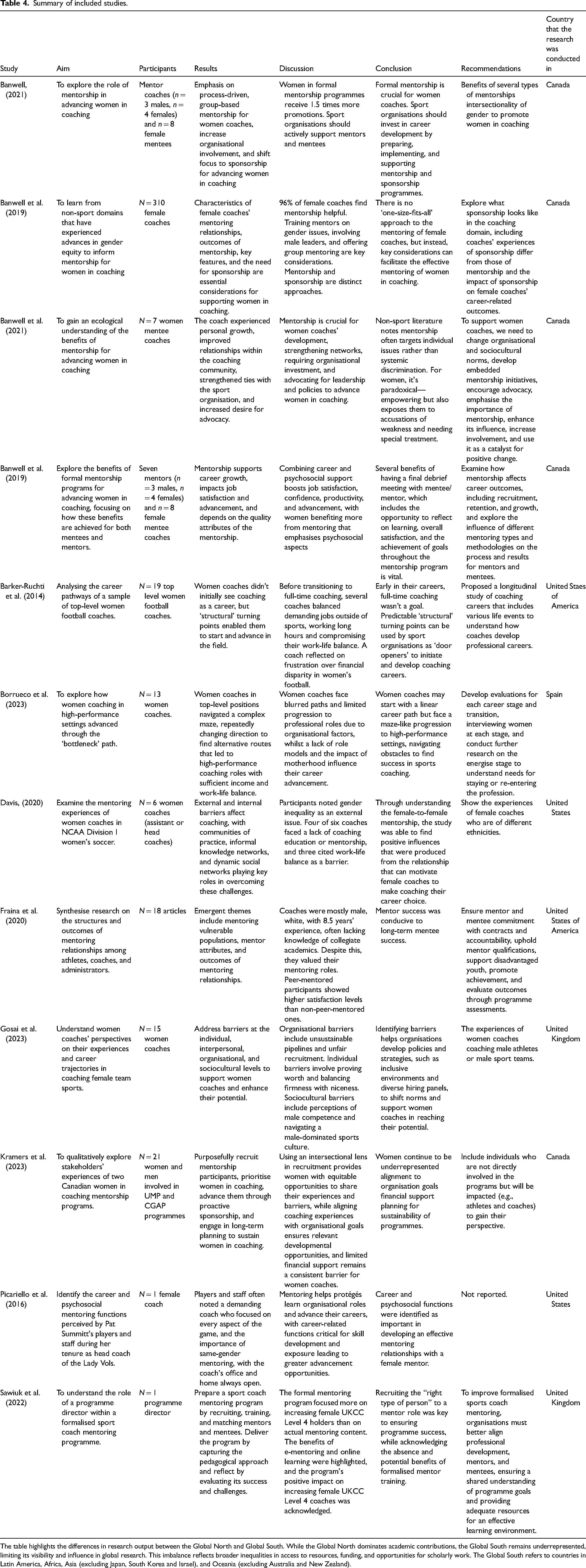
The table highlights the differences in research output between the Global North and Global South. While the Global North dominates academic contributions, the Global South remains underrepresented, limiting its visibility and influence in global research. This imbalance reflects broader inequalities in access to resources, funding, and opportunities for scholarly work. The Global South refers to countries in Latin America, Africa, Asia (excluding Japan, South Korea and Israel), and Oceania (excluding Australia and New Zealand).
Results
Search and journal article selection
During the initial search, 2317 articles were collected from all the databases listed in Table 1 and imported for screening. Of these, 357 duplicates were identified by Covidence with one being manually identified. These were removed before the title and abstract screening review phase. Of the 1959 articles reviewed, 1886 were irrelevant. Covidence classifies articles as irrelevant during the screening process based on the pre-determined inclusion and exclusion criteria. 34 Seventy-three articles were included in the full text review phase to further examine if they met the review inclusion criteria. Twenty-four did not meet these criteria and were excluded in the full text review phase. Thirty-six full text articles were assessed for eligibility. Of these, only twelve were considered to have met the inclusion criteria and were subsequently appraised for methodological quality (Tables 2 and 3). A summary of included studies is referred to in table. The PRISMA flow diagram (Figure 1) shows the process of the review selection.
Quality assessment
The overall quality appraisal of the studies indicated a high level of methodological quality among the included articles (Table 2). Of the four mixed-method studies, three achieved a perfect score of 5/5, while one received a score of 4/5. Among the qualitative studies, six scored 5/5, and one scored 3/5. A binary system was used to record responses, with ‘1’ indicating ‘yes’ and ‘0’ indicating ‘no.’ The second appraisal tool (Table 3) confirmed the review's good quality. Although this tool does not prescribe a scoring system, only one question was marked as ‘no,’ with an explanation provided.
Discussion
Effective mentorship programmes play a pivotal role in supporting women coaches in their professional career trajectories. The identification of barriers can be used to inform strategies and policy decisions to assist women in overcoming systemic barriers caused by a deeply entrenched male-dominated and patriarchal sport structure. The ecological model of barriers and supports, proposed by LaVoi and Dutove, 35 offers a valuable framework for understanding the multiple levels of influence on female coaches’ careers.
Ecological model of barriers and supports for women coaches
Women in sport coaching navigate a complex professional landscape shaped by a distinct set of barriers and supports. This review is framed using the Ecological Model of Barriers and Supports for Women Coaches. 35 The model proposes a comprehensive, multi-level perspective on the factors influencing women's experiences in coaching. By examining the intersection of barriers across the different ecological levels, namely individual, interpersonal, organisational, and sociocultural, the model provides a comprehensive approach to understanding the complex dynamics influencing women's participation, progression and retention in coaching roles. It also provides insight into how this model contributes to developing effective mentorship programmes.
Individual level
The individual or intrapersonal level, which is the first and most proximal level, includes biological, psychological, and personal factors such as the person's personality, beliefs, values, emotions and cognitive abilities. 35 Women coaches often face challenges related to perceptions of their confidence and competence, which are influenced by societal stereotypes that associate leadership qualities with male characteristics. 8 While these biases can create strong interpersonal barriers and raise concerns about women's leadership ability in the coaching environment, 22 intrapersonal barriers may lead to women doubting their own worth and leadership skills. 36
Women coaches are often scrutinised more harshly than their male counterparts, perpetuating a cycle of self-doubt and insecurity. 37 The absence of visible female role models in coaching positions reinforces these stereotypes, creating an invisible wall that discourages women from aspiring to high-performance coaching roles. 38 This lack of representation amplifies feelings of isolation, as women may struggle to envision themselves in leadership positions without relatable role-models or mentors. Fostering inclusive environments where women's leadership qualities are acknowledged and celebrated may assist in dismantling these perceptions and empower women to thrive in coaching roles. 39
One of the supports identified by Gosai et al. 8 was for women being familiar with male-dominated environments whereby a positive experience frequently resulted in increased comfort and confidence in their roles. Women who have worked mostly with men may navigate negative experiences, which has a positive impact on women's coaching practices. 40 By fostering their professional and personal growth, increasing their self-esteem and honing their coaching abilities, and participating in gender-sensitive mentoring programmes are essential to supporting women. 22 These initiatives also establish a network of support that helps women coaches work together, combat isolation, and develop a more resilient women's coaching profession.
Interpersonal level
At the interpersonal level, women coaches face challenges stemming from relationships and interactions within their professional and personal networks. 26 These challenges may come from colleagues, athletes, administrators or family and friends, making it harder for women to succeed and feel supported in their role. 41 According to Serpell, Harrison, Dower and Cook, 11 women in coaching frequently navigate dual responsibilities of professional and personal life, which increases the pressure to perform and meet high expectations in both domains. This dynamic is further complicated by the perception that caregiving duties should take precedence over professional aspirations, leading to conflicting demands and role strain.
Women coaches frequently feel the need to overachieve in their professional roles to counteract biases and demonstrate competence. 42 These compounded stressors not only affect job performance but also contribute to higher rates of burnout among women coaches.9,43 Implementing workplace policies that acknowledge and support the dual responsibilities faced by women coaches can alleviate stress and promote better work-life balance. 44 LaVoi and Dutove 35 argue that interpersonal support through mentorship helps women coaches feel connected and empowered in a field where they are often underrepresented. However, when these relationships are absent, women may feel isolated and lack the professional guidance needed to advance in their coaching careers.
Organisational level
At the organisational level, systemic inequities such as insecure job conditions and inadequate compensation contribute to the attrition of women coaches from the profession. 45 Many women in coaching must engage in multiple jobs to achieve financial stability, compromising their well-being and constraining their ability to sustain long term coaching careers. 46 These financial and structural challenges are exacerbated by gender disparities in remuneration and job security, as coaching positions traditionally occupied by men tend to offer greater stability and higher compensation. 47 The lack of institutional investment in women coaches not only hinders their career progression but also undermines broader efforts to achieve gender equity in sport. Norman 48 argues that while improving pay and job stability is crucial, sport organisations must also implement structured career pathways that facilitate professional development and long-term retention in the workplace for women coaches. As women advance in their coaching careers, the support provided by sport organisations often diminishes, creating additional barriers to career progression.49,50 This lack of institutional support limits access to resources, training and networking opportunities, which are critical for achieving higher-level coaching positions. 37 Entrenched biases and inequitable recruitment practices continue to impede the advancement of women into leadership roles, perpetuating their underrepresentation in high-level coaching positions. 19 While Akinola and Naidoo 51 emphasise the potential of mentorship and advocacy programmes in mitigating these barriers, the primary responsibility lies with sport organisations to implement equitable hiring policies and proactively promote women into leadership roles. Without these systemic reforms, women coaches will continue to face constrained career prospects and structural obstacles for career advancement.
Sociocultural level
At the sociocultural level, prevailing stereotypes and cultural expectations continue to marginalise women in coaching roles, reinforcing gender imbalances within the profession. 52 Leadership qualities such as assertiveness and authority are frequently associated with men, creating implicit biases that undermine perceptions of women's capabilities in leadership positions. 7 These stereotypes impede women's advancement but also perpetuate the assumption that coaching, particularly at elite levels, is more suited for men. The resulting exclusionary cultural environment is particularly challenging for women who do not conform to traditional gender norms, further limiting their professional opportunities. Thelma and Ngulube 53 highlights that these biases affect both external perceptions and internalised self-perceptions, contributing to self-doubt and exacerbating the barriers women face in coaching.
Societal expectations regarding caregiving responsibilities present significant challenges for women pursuing coaching careers. 22 Women are often perceived as primary caregivers, making it more difficult for them to balance personal commitments with professional aspirations.9,17,23 Research by Jowett, Gosai and Slade 54 indicates that male coaches rarely take time off for parenting responsibilities, resulting in an unequal burden on women who must navigate both professional and family demands. These societal pressures are further intensified in male-dominated coaching environments, where women frequently report feelings of exclusion and bias. 19 Such environments often lack the necessary structural support, including workplace flexibility and family-friendly policies, making it even more challenging for women to compete on equal terms with their male counterparts.
Navigating and addressing systemic challenges
Although numerous authors have addressed ecological barriers, challenges such as inclusivity, equal opportunities and access to resources continue to persist.2,55,56 While women coaches may initially follow a linear career trajectory, their progression into high performance settings often becomes increasingly complex, resembling a maze in which they must navigate multiple obstacles to achieve success. 9 Research indicates that barriers faced by women in coaching are predominantly organisational.9,17 Although LaVoi and Dutove's 35 model highlights intrapersonal factors among women coaches, Kubayi et al. 1 emphasise interpersonal factors and organisational challenges as being significant obstacles for South African women coaches. These findings confirm the critical role of institutional support in the advancement and retention of women coaches in South Africa and globally.
A study conducted in the United Kingdom study further highlights the dire need for organisational support and the implementation of policies promoting gender equity. 57 Mentoring has been identified as a key strategy for addressing the underrepresentation of women in leadership and coaching roles.7,58 It provides the guidance, support, and resources necessary to navigate male-dominated environments, enhancing professional growth and visibility. Female mentors, in high-level positions, serve as relatable role models who understand the unique challenges faced by women, while male mentors can offer additional perspectives and advocacy. 8 For mentorship programmes to be effective, sport organisations should actively support both mentors and mentees to foster stronger ties with sport organisations. 25 To promote professional development, Mallett, Rossi, Rynne et al. 59 emphasise the necessity of structured strategies such as clearly defined mentor-mentee guidelines, networking opportunities, and joint training sessions. Mentorship programmes require further development to maximise their impact on women's professional development in coaching.
Mentorship
Definition and importance of mentorship
Mentorship is widely recognised as a structured, collaborative relationship wherein an experienced coach (mentor) provides guidance and support to a less experienced coach (mentee), fostering personal and professional growth. 8 This relationship is crucial for women coaches given their historical underrepresentation in leadership roles despite the increasing participation of female athletes.40,58,60 This structured guidance plays a pivotal role in addressing the challenges faced by women in coaching, enabling them to build skills, establish confidence, and achieve success in their careers.
Mentorship can take various forms, including one-on-one relationships to broader developmental networks, serving as an essential mechanism for navigating professional challenges and access to opportunities.8,61 The one-on-one time spent is crucial for understanding each other's perspectives and fostering a comfortable environment that promotes open dialogue especially in the beginning stages of the mentorship programme. 60
Barrier to effective mentorship
The scarcity of female role models in leadership positions has contributed to a mentorship gap, compounded by the need for women to actively seek or advocate for opportunities in male-dominated coaching environments. 8 Financial constraints further limit access to mentorship programmes and professional development opportunities, accentuating the need for sustainable funding models.40,61 Additionally, cultural and organisational factors, such as entrenched gender biases and traditional norms shape mentorship experiences, potentially hindering women's participation and success in coaching roles. 61
Challenges such as unfulfilled expectations, perceptions of abandonment, and inconsistent communication can contribute to the breakdown of mentoring relationships. Power dynamics may arise when mentors impose their views, limiting the mentee's growth. Effective mentorship requires clear communication, trust and sustained engagement. 26 Feelings of isolation and lack of resources also pose significant barriers, particularly in disadvantaged or underrepresented groups. 63 Furthermore, systemic barriers, including embedded sociocultural norms, necessitate strategic organisational planning to support mentorship initiatives. 22 Picariello and Waller 58 further highlight the limited availability of female mentors, combined with time constraints, often impacts the depth and effectiveness of mentorship relationships.
Mentorship programmes do not adequately address broader sociocultural issues that women face in coaching.9,60 Although mentees expressed a desire to engage in advocacy, existing mentorship programmes have not adequately addressed systemic discrimination and cultural barriers that impede women's advancement in coaching. 22 Despite the increasing recognition of mentorship in the literature for its role in facilitating positive outcomes for women in coaching, a growing body of research suggests that mentorship alone is insufficient. 63 Sponsorship is a longer-term approach to relational networking that fulfils the same goals as mentorship but includes additional functions not inherent to mentorship. 15
Empowering women coaches through mentorship
The role and benefits of mentorship
Mentorship provides mentees with valuable opportunities to situate their learning within real-world contexts, enabling them to develop the skills and knowledge necessary for success as coaches. 61 It challenges traditional coaching education paradigms by emphasising experiential and authentic learning experiences, which are particularly beneficial for long-term career growth.26,64 For women in coaching, mentorship enhances professional visibility and equips them with strategies for navigating industry complexities and providing opportunities for emulating role-models. 58
Research highlights the benefits of mentorship, including improved, enhanced self-esteem, and better behavioural control. 26 Beyond technical coaching skills, mentees develop essential life skills such as teamwork, leadership, resilience, patience, adaptability and the ability to manage diverse personalities, which contribute to improved work-life balance and overall career advancement.22,60,61 Mentors also benefit from these relationships, experiencing personal fulfilment and enhancing their leadership abilities through the mentoring process.26,65 This mutually beneficial dynamic strengthens the overall mentoring experience.
Advancing women through mentorship
Effective mentorship programmes play a critical role in advancing women in coaching by integrating purposeful recruitment, proactive sponsorship, and ongoing programme evaluations. 61 Mentees report significant improvements in coaching skills, including drill repertoire, communication with players and parents, and increased confidence. Mentorship also fosters personal development by enhancing communication, leadership, and adaptability, while contributing to a healthier work-life balance. 60
While insufficient support and mentorship for women is a continuous barrier deterring women from choosing coaching as a profession, one of the initiatives that have been proven to benefit mentees is a mentorship programme.60,66,67 Mentorship has been identified as beneficial for career development, providing career related and psychological support, leading to personal and professional outcomes. 22 Research conducted by Sawiuk et al. 68 emphasise the necessity for effective mentoring to facilitate the career advancement of women in sport coaching by addressing the barriers they face and suggesting improvements to mentorship programmes.
Challenges associated with mentorship
Despite the potential benefits of mentorship and the characteristics that facilitate effective mentor-mentee relationships, several challenges hinder the effectiveness and sustainability of mentorship programmes. 40 One significant issue is the lack of long term follow up with mentors and mentees to assess the lasting impacts of these programmes on career trajectories. 68 This concern is accentuated by Fraina and Hodge 26 who identified a research gap regarding the long-term outcomes and sustainability of mentorship programmes, particularly maintaining positive attitudes and behaviours beyond the duration of the programme. Addressing these challenges requires dedicated funding and policy reforms to support women coaches effectively. 61
Traditional dyadic mentoring relationships have been critiqued for their one-dimensional nature, with limited empirical evidence supporting the widespread effectiveness across global contexts.25,68,73 Systemic barriers, including gender biases, time constraints, and ambiguous role expectations, frequently hinder programme effectiveness. Additionally, insufficient accountability and inconsistent communication can contribute to the breakdown of mentoring relationships.60,69
While mentorship initiatives have demonstrated positive impacts for women at the individual and interpersonal levels, their influence on organisational and sociocultural levels remain limited. 22 Although mentorship initiatives fostered confidence and professional connections, the lack of integration into organisational culture and policies undermine its long-term effectiveness in facilitating career advancement. 22 Additionally, the short duration of many mentorship programmes, coupled with an absence of collective advocacy, failed to challenge embedded gender norms, systemic biases, and dominant power structures, thereby limiting their potential to drive meaningful change in coaching. 22
To address these challenges, Banwell et al. 22 emphasised the need for strategic planning and continuous programme evaluation. Key recommendations include aligning mentor-mentee goals, addressing time constraints, and fostering accountability. 60 Expanding beyond traditional methods, mentorship initiatives should adopt innovative context specific approaches that accommodate diverse needs. By doing so, mentorship programmes can effectively empower women coaches, supporting their professional growth and facilitating greater equity in coaching leadership.
Mentorship models
Informal mentoring
Informal mentorship arises naturally through interactions between mentor and mentee, lacking predefined goals yet fostering meaningful professional relationships.26,27 These relationships are often built on mutual trust and shared experiences, providing essential support for growth and success of women coaches. 61 This mentoring approach is imperative for boosting self-confidence and overcoming unique challenges faced by women in the male dominated sport coaching industry. 8 Informal networks among women coaches hold significant value in providing support and empowerment.26,61 Unstructured discussions and informal exchanges within formal mentorship programmes help foster rapport and trust, enhancing the benefits of structured interactions. 60 Additionally, family and spousal support serve as vital forms of informal mentoring offering women the motivation necessary to pursue coaching careers while balancing professional and personal responsibilities. 9
In contrast to formal mentorship programmes, which provide clear goals and structured frameworks, informal mentoring relies primarily on the initiative of both mentors and mentees. 61 Picaririello 58 suggests that the natural and organic relationships fostered through informal mentoring may be more beneficial to women coaches than formal models. Informal mentorship through networking with colleagues and other professionals can enhance the overall mentorship experience by complementing formal structures. 22 However, an overreliance on informal mentoring can present challenges, particularly when such relationships fail to develop naturally or lack adequate guidance and oversight. 70 These considerations underscore the importance of balancing formal and informal mentorship models to effectively support women coaches.
Formal mentoring
Formal mentorship programmes provide structured goal-orientated support, typically facilitated by institutions or sport governing bodies. Gosai et al. 8 emphasise the value of leadership development programmes designed exclusively for women, incorporating both formal mentorship and sponsorship opportunities to support aspiring women coaches. These structured programmes address the barriers women face in male-dominated coaching environments, actively countering the persistent “think male, think coach” stereotype. Unlike informal mentoring, formal mentorship programmes operate within institutional frameworks, following clearly defined roles, objectives and structures. 61 This model offers a structured pathway for advancing women coaches through planned activities such as workshops and mentorship work plans. 26
The literature highlights that formal mentorship programmes provide organised support, are systematically monitored to assess effectiveness and often include contracts outlining mentor and mentee commitments to ensure accountability and goal alignment. 61 Additionally, Borrecco et al. 9 and Banwell et al. 60 highlight that structured mentorship programmes facilitated through planned development activities such as seminars and networking events, enable experienced mentors to guide less experienced coaches toward professional growth. While this structured approach contrasts with the spontaneous nature of informal mentorship it offers more predictable and measurable outcomes for mentees.
Furthermore, Gosai et al. 8 highlight e-mentoring as a technological extension of formal mentorship, offering increased flexibility and reducing geographic barriers to mentorship through online communication. However, further research is needed to explore its long-term impact and effectiveness.
Non-formal mentoring
Although the reviewed articles did not extensively examine non-formal mentorship, Borrueco et al. 9 highlight its potential, particularly in the form of allyship and support from men in influential organisational positions. While the primary focus remains on informal mentorship through personal networks, such as family support, their findings suggest that non-formal mentorship can play a complementary role in fostering career development and professional advancement for women coaches.
Sponsorship as a complementary strategy
While mentorship is instrumental in supporting women coaches, there is growing recognition of the need for sponsorship as a long-term career advancement strategy. Unlike mentorship, sponsorship represents a more enduring and proactive approach to professional networking, encompassing not only guidance and support but also direct advocacy, increased visibility, and tangible career advancement opportunities. These elements are often absent in traditional mentorship frameworks. Sponsorship, a relatively novel concept within the sport context is recognised as an action-orientated strategy aimed at advancing women's careers in coaching.63,40,61,15 It involves the public endorsement and active support of an individual with latent or underappreciated leadership potential by a powerful and influential advocate.11,61,63 Sponsorship is widely regarded as a critical mechanism for professional growth, with established efficacy in corporate and other professional domains.63,71 Both mentorship and sponsorship are essential in helping women coaches navigate and overcome the systemic gendered and discriminatory barriers prevalent within their profession. 62
Within the coaching profession, sponsorship may involve facilitating connections between women coaches and senior leaders, securing their involvement in pivotal roles and assignments, protecting them from negative workplace interactions, and advocating for their career progression. 72 The necessity of sponsorship as a means to advance women coaches where they can thrive has been highlighted by Banwell. 40 By systematically identifying and addressing these barriers, organisations and stakeholders can implement policies and initiatives, such as structured support networks and equitable hiring practices to challenge and transform the structural and societal norms that hinder women coaches from fulfilling their potential. 8 Prioritising the advancement of women in coaching at an organisational level is imperative for promoting gender equity and ensuring sustainable career paths. 61 Strategies such as strategic networking, continuous professional development and proactive sponsorship can facilitate meaningful connections, provide targeted support and safeguard the positions of women currently navigating the coaching system.17,61
Training
The absence of formal mentor training and support presents a significant challenge in mentoring programmes. 68 The dissolution of mentor-mentee relationships is frequently attributed to a lack of commitment and inconsistent communication between mentors and mentees. 26 To sustain meaningful mentorship partnerships the purposeful recruitment of mentors and mentees is essential. 61 Informal recruitment methods have been associated with difficulties in reaching suitable applicants and the formation of mismatched mentorship pairs, compromising the effectiveness of the programme. The literature by Banwell et al. 22 identifies several challenges associated with mentorship, including power imbalances between mentors and mentees and the potential for formalised mentoring programmes to serve the political agenda of an organisation.73,74 Additionally, mentoring women presents specific challenges, such as performance pressures, professional isolation, family obligations and restrictive role expectations. These are exacerbated when mentors are male. 75 Other difficulties include the failure to consider personality compatibility in mentor-mentee pairings, as these are often based on geographic proximity rather than suitability.23,76 Despite these challenges, mentorship remains widely endorsed within the sport context as an effective strategy for advancing women coaches and addressing gender inequities in coaching.60,77
To ensuring mentorship effectiveness, it is crucial that mentors receive adequate training and institutional support to ensure role clarity and consistency in expectations. 68 Practical recommendations for improving mentorship include: 1) establishing mentor-mentee commitment through signed contracts and accountability measures, 2) implementing minimum qualification requirements for mentors, to mitigate unfulfilled expectations and prevent mentee disengagement, 3) expanding mentorship opportunities to support disadvantaged and at-risk youth, 4) incorporating both career-related and psychosocial support to promote holistic development across physical, academic and professional domains and 5) conducting systematic programme evaluates to assess the long term outcomes of mentoring relationships.
Conclusion
Mentorship plays a critical role in addressing gender disparities in coaching by equipping women with the guidance, support, and resources to navigate professional challenges. While mentorship has demonstrated significant benefits, its effectiveness is contingent on organisational commitment, structured implementation and ongoing programme evaluation. However, several challenges should be addressed to ensure the successful initiation and sustainability of mentorship programmes. These include the lack of formal mentor training and support, the premature dissolution of mentor-mentee relationships, and disproportionate power imbalances within mentoring dynamics.22,61,68,73,74 Additionally, informal recruitment methods have led to difficulties in reaching appropriate candidates, while the mentoring of women presents specific challenges, including performance pressures, professional isolation, family obligations, and restrictive role expectations.23,76 Furthermore, formalised mentorship programmes may risk aligning with organisational political agendas rather than prioritising the genuine development of participants. Another notable limitation is the frequent lack of consideration for personality compatibility in mentor-mentee pairings, as geographic proximity often dictates selection criteria.23,76
Despite these challenges, mentorship remains widely endorsed within the sport sector as a key mechanism for supporting the career progression of women coaches and addressing gender inequities in coaching.60,77 By addressing these structural barriers and implementing strategic improvements, mentorship programmes can more effectively contribute to fostering gender equity in coaching professions.
Future research should explore the comparative effectiveness of formal, informal, and non-formal mentorship models, particularly in relation to professional growth and long-term career advancement. Additionally, integrating sponsorship alongside mentorship could enhance career development opportunities for women in coaching, fostering a more inclusive and equitable sporting environment. Additionally, future studies should explore the underlying factors influencing mentorship programmes within sport federations. Research on mentorship and gender equity in coaching remains heavily skewed toward the Global North, with limited contributions from the Global South (Table 4). Investigating systemic barriers that hinder research output in sport coaching from the Global South will help create a more balanced global perspective on mentorship for women coaches.
Footnotes
Declaration of conflicting interests
The authors declared no potential conflicts of interest with respect to the research, authorship, and/or publication of this article.
Funding
The authors received no financial support for the research, authorship, and/or publication of this article.
