



Abstract
Physical preparation for improving golf performance is a topic of rising interest. However, little is known of how advancements in empirical evidence have integrated with the practices and perceptions of elite professional golfers. To address this shortfall in knowledge, forty-nine (n = 32 European Tour, n = 17 Challenge Tour) professional golfers were surveyed on their physical preparation practices and perceptions. Additionally, golfers’ in-tournament training practices were observed at the 148th Open Championship gym facility. The majority of surveyed golfers had experience of following a “structured resistance training plan” (89.8%). However, players face challenges to incorporate physical preparation throughout a tournament year. In turn, the development of physical attributes including muscular strength, power and muscle mass known to underpin clubhead speed/driver distance, and the training methods typically required to stimulate such adaptations were often not prioritised during the in-season period. Limited engagement with heavy load and high-velocity resistance training methods were observed at the Open Championship. However, in order to maximise their potential, players can enhance key physical qualities on a year-round basis (i.e., during the in-season). Consequently, further education and research on how to effectively organise and optimise resistance training within tournament constraints would be of value.
Introduction
Recent advancements in empirical evidence have contributed to a greater acceptance of the role of physical preparation within the sport. 1 A considerable amount of research has now demonstrated that strength and conditioning (S&C) interventions can positively impact a golfers’ clubhead speed (CHS), 2 and develop key physical attributes associated with high performance including muscular strength, power, impulse, and mass.2,3 Likewise, various dynamic and resistance-based warm-up strategies have shown to significantly improve a golfers’ short-term CHS and driver distance (DD) performances. 4 Anecdotally, many players now engage in physical preparation to improve their performance and reduce their risk of injury, which is supported by the philosophy implemented by the European Tour Health and Performance Institute (ETHPI). 5 In support of this, a recent study investigated the sports science practices and perceptions of Professional Golfers’ Association (PGA) Assistant Professionals (future-qualified coaches, n = 430). The authors reported some golfers perceived S&C as beneficial for performance and injury risk reduction, with most participants training year-round (75.81%). 6 However, no empirical research has investigated how professionals competing at the highest level have integrated physical preparation strategies into their routines, and how they may navigate their training around extensive tournament schedules and throughout busy tournament weeks.
The season structure of a current touring professional golfer includes long competitive seasons. For example, the 2023 European Tour/DP World Tour season comprised 45 events, spanning five continents, and 26 separate countries, with tournaments being scheduled every month of the calendar year. 7 As a result, golfers are facing shorter off-season breaks in which to recuperate and establish physical goals for the subsequent competitive period, with the largest break between tournament scheduling for the DP World Tour often being less than one month. Currently, the typical touring professional will compete in 18 to 30 tournaments over the course of a year. 8 Each golfer's schedule is individually unique, with higher ranked players typically having greater choice in the events they play in, with more freedom to design their season structure. 8 In attempting to maintain their tour status or progress their ranking, lower ranked players may be required to play in more events and have more reactive schedules.
Tournament weeks are also intensive and depending on a player's level of success, they may compete on four consecutive days (Thursday to Sunday) with a minimum of two-tournament rounds if the player were to miss “the cut” (Thursday and Friday). Individual rounds span 4–6 h of play, with tee off times which can range from 6.00 am to 3.00 pm. In the days preceding competition, golfers will need to familiarise themselves with the venue and engage in on and off course practice. Additionally, travel commitments and time zone changes between events are often significant. As such, the delivery of optimal physical development strategies for a touring professional golfer is highly complex, and a greater understanding of how players may organise and approach their physical preparation throughout their annual training cycle is needed. Accordingly, the aims of this study were to investigate if physical preparation practices and perceptions of touring professionals align with scientific recommendations for the sport of golf and to explore how approaches and the barriers to engagement may vary between the in-season and off-season periods, as well as during tournament weeks within the in-season period.
Method
Survey design
A survey was created using Qualtrics™ (Qualtrics, Provo, UT) and developed based on a review of the scientific literature pertaining to the use of physical preparation strategies for golf. Feedback was sought throughout the development of the survey from ETHPI S&C coaches with regards to the content, language used, and duration of the survey so as to maximise the content validity and ensure that the survey questions would be easily interpreted by players prior to distribution and data collection. Ethical approval was granted by the University of Essex Ethics Committee.
Survey questions followed three main topics relating to the golfers’ (1) general physical preparation practices and perceptions, (2) practices and perceptions during the in-season and off-season periods, and (3) practices and perceptions during tournament weeks. All questions were either scaled multiple choice questions whereby a single response could be provided, or multiple-choice questions whereby more than one answer could be selected. Questions for which multiple answers could be selected also contained an ‘other’ response wherein participants could write an open text alternative response. Participants were directed to relevant follow-up questions based upon their responses to specific questions. The survey can be seen in the Supplementary Material section of this work with all questions and definitions written and distributed in English only.
Survey questions
Questions related to players’ general (Table 1), in-season and off-season (Table 2), and in-tournament physical preparation (Table 3) can be found in the respective tables. Each table details the specific questions asked, outlines the range of responses available to players, and describes the process by which players were prompted to provide follow-up answers. For all questions relating to training activities (questions 10, 11, 17 and 19), examples were provided for clarity. Examples included: heavy load/low volume (HL/LV) resistance training (RT) (e.g., 3 × 3 back squats at 85% 1RM), low load/high volume (LL/HV) RT (e.g., 3 × 10–15 lunges), weighted explosive training (e.g., weighted squat jumps/ballistic bench-press throws), bodyweight explosive training (e.g., box jumps / explosive press-ups), resistance-band exercise (e.g., shoulder rotations / crab walk), aerobic exercise (e.g., running / cycling / swimming), proprioception (e.g., balance / co-ordination / movement quality), and mobility (e.g., range of motion exercise / stretching). Examples were constructed through pre-existing knowledge, and through consultation with ETHPI S&C coaches. For the purposes of this survey, RT was defined as any form of active exercise in which a muscular contraction is resisted by an external force, applied manually, mechanically, or by gravity. 9
Surveyed golfers general physical preparation practices and perceptions.
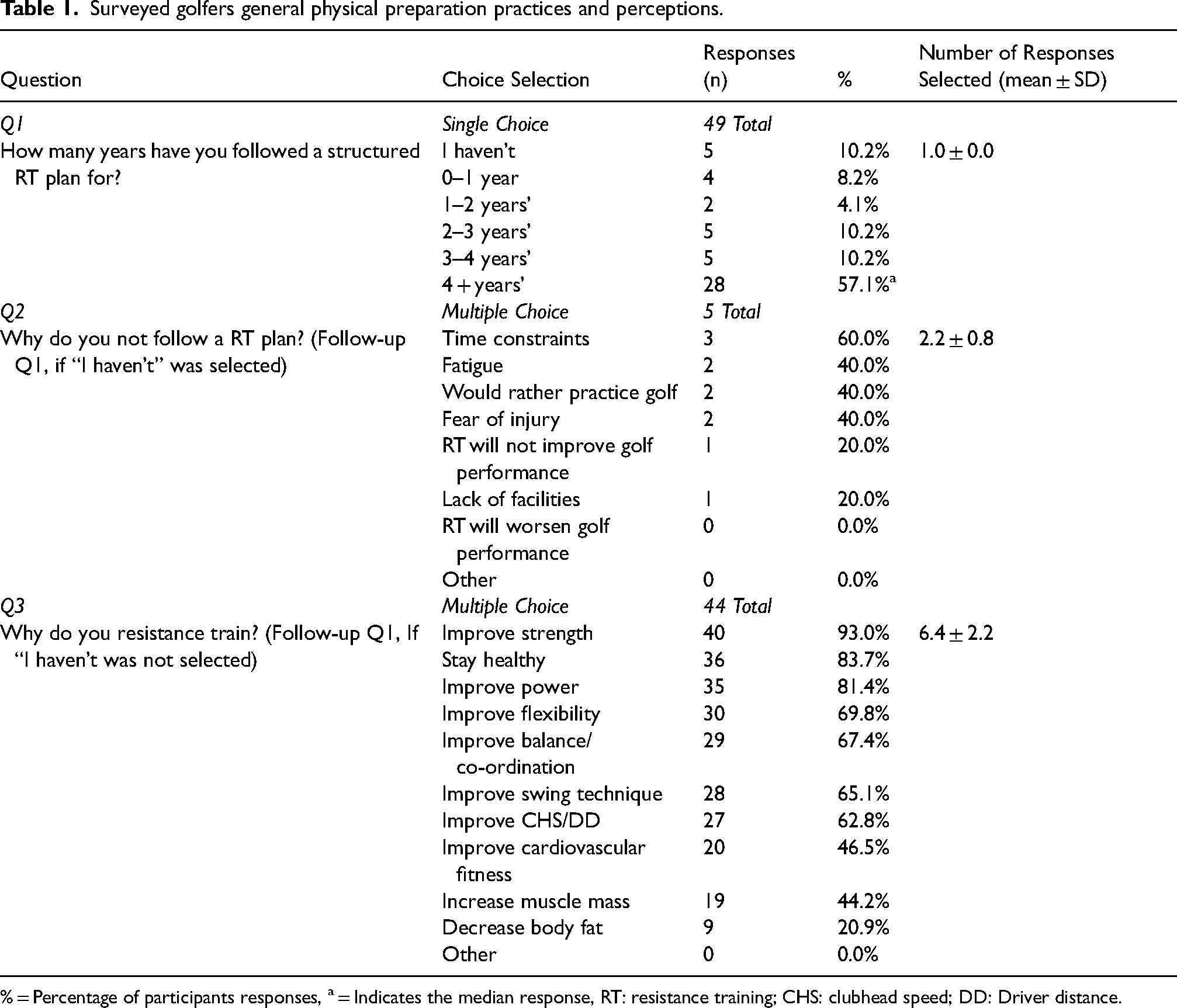
% = Percentage of participants responses, a = Indicates the median response, RT: resistance training; CHS: clubhead speed; DD: Driver distance.
In-season and off-season physical preparation practices and perceptions.
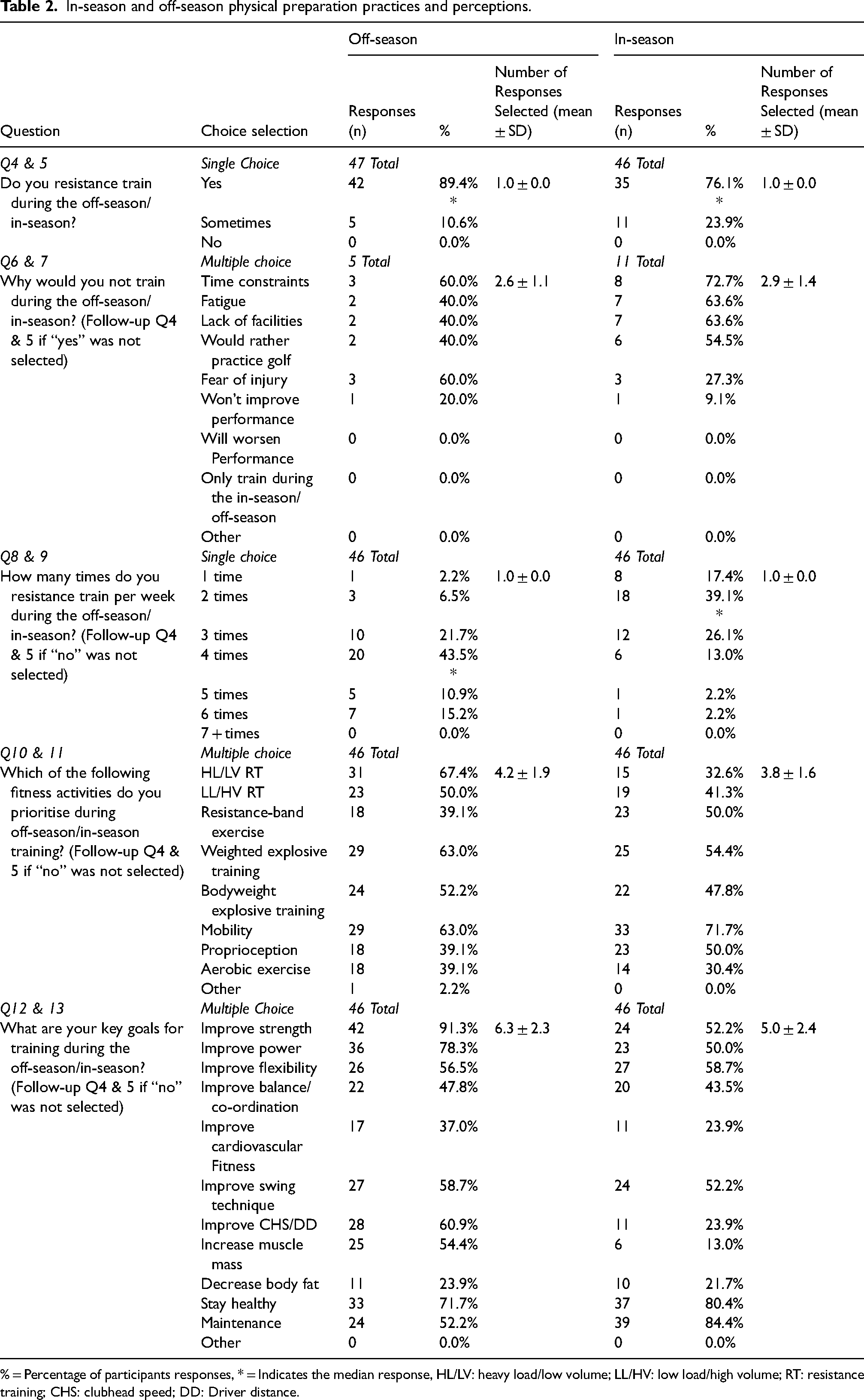
% = Percentage of participants responses, * = Indicates the median response, HL/LV: heavy load/low volume; LL/HV: low load/high volume; RT: resistance training; CHS: clubhead speed; DD: Driver distance.
Self-reported in-tournament physical preparation training practices and perceptions.
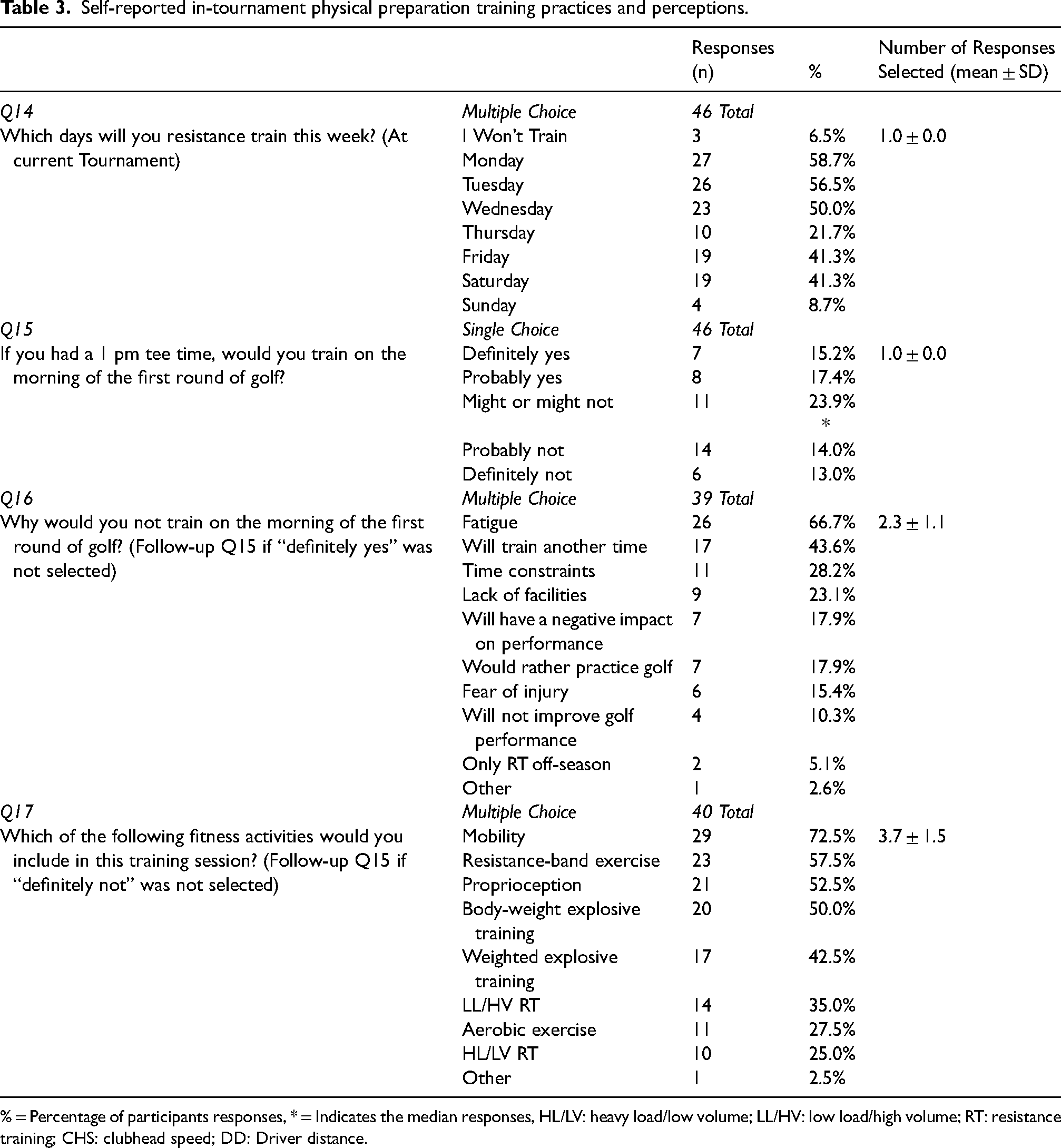
% = Percentage of participants responses, * = Indicates the median responses, HL/LV: heavy load/low volume; LL/HV: low load/high volume; RT: resistance training; CHS: clubhead speed; DD: Driver distance.
Survey recruitment
The survey was primarily distributed online to all registered European Tour Players via direct email on the 24th June 2019. The email provided detail on the purpose of the survey and contained a unique link to the questions and was distributed via the Tour's player relations services. The survey was further promoted by ETHPI staff members to European Tour players throughout tournaments commencing between the 24th June 2019 to 20th July 2019, and to Challenge Tour players at tournaments between 2nd August 2019 to 3rd September 2019. During the tournaments, the survey was made available to all competing players. All survey responses were anonymised, and participants gave their informed consent after reading a survey information sheet. Partially completed surveys were also incorporated in the analysis.
In-tournament observation
Following ethical approval granted by the University of Essex Ethics Committee, information was distributed regarding the onsite gym facility usage at the 148th Open Championship at Royal Portrush, Northern Ireland 2019. The tournament took place between the 18th and 21st July 2019, with 156 players entered to compete. 10 Data were collected with the use of observational records completed by ETHPI staff members at the championships fully equipped gym. The gym was exclusively accessible to Open Championship players, with no other facilities available at the venue. The observational records were split between staff observing players’ training habits from 6am-1pm and 1pm-9pm on Wednesday 17th and Thursday 18th July 2019. Data were anonymised with staff members recording each entry to the gym. Staff members also observed the nature of gym usage, with each exercise recorded to the most appropriate exercise modality from a pre-determined list. The pre-determined list included both exercise modality names and examples for reference and was constructed through pre-existing knowledge and through consultation with ETHPI S&C coaches. The observational record sheet can be seen in the Supplementary material.
Statistical analysis
Survey
Descriptive and frequency analysis for each question were conducted and analysed using SPSS statistics (Version 28.0, SPSS Inc. Chicago, IL, USA) for Microsoft windows. Results are presented as the absolute volume of responses and as percentages. Median response and standard deviation are provided for scaled responses, with individual tables highlighting the range of each scale. The mean, median, and standard deviation are reported for the number of answers selected, for multiple-choice questions wherein multiple answers could be selected. Direct comparisons between in-season and off-season practices and perceptions were made with descriptive and frequency analysis. Partially completed responses wherein answers were not recorded for both in-season and off-season questions were removed from the analysis so as to draw direct comparisons. A Wilcoxon Signed Ranked test was used to compare in-season and off-season practices and perceptions. Specifically, the median number of weekly RT sessions reported between the in-season and off-season, and the number of multiple-choice answers selected for questions pertaining to participants’ key training goals during the in-season/off-season, and participants self-regarded prioritised training modalities in-season and off-season. The Alpha level was set at 0.05.
In-tournament observation
The results are presented as the absolute number of gym entries each day, and were expressed as a percentage of the number of players entered to compete in the tournament (n = 156). 10 The volume of engagement in categorised training modalities was also recorded and expressed as a percentage in relation to the number of players entering the gym.
Results
A total of forty-nine survey responses were collected, with forty-five full responses and four partially completed responses (13–84% completion). Twenty-nine full responses were obtained from European Tour professionals, with three partially completed responses. Sixteen full responses were recorded from Challenge Tour professionals, with one partially completed response. Eleven participants started but did not submit a response for any question.
General physical preparation
Participant responses to questions relating to their general physical preparation practices and perceptions are shown in Table 1. Descriptive statistics indicated that the majority of surveyed golfers had historically followed a structured RT plan, with the median response being “4 + years’” (57.1%). The most frequently reported reasons for having not had experience (n = 5, 10.2%) were due to: “time constraints” (60.0%), “fatigue”(40.0%), “fear of injury” (40.0%) and they “would rather practice golf” (40%). The most commonly selected reasons for engaging with RT were to: “improve strength” (93.0%), “stay healthy” (83.7%), and “improve power” (81.4%).
In-season and off-season physical preparation
Participant responses to questions relating to their in-season and off-season physical preparation practices and perceptions are shown in Table 2. Descriptive statistics indicated that surveyed golfers were more likely to resistance train in the off-season (89.4%) compared to in-season (76.1%). Golfers would only “sometimes” resistance train in the off-season (n = 11; 23.9%) due to: “time constraints” (72.7%), “fatigue” (63.6%), “lack of facilities” (63.6%), and because they “would rather practice golf” (54.4%). Comparatively, during the off-season golfers would only “sometimes” (n = 5, 10.6%) resistance train due to “time constraints” (60.0%), and “fear of injury” (60.0%). Results of the Wilcoxon Signed Ranked test revealed a significant difference between participants weekly RT frequencies (Z = −5.647, p < 0.001), with a median training frequency of “4 times” per week (43.5%) during the off-season and only “2 times” per week (39.1%) in-season.
No statistically significant difference between the volume of answers selected detailing players prioritised training activities during the in-season and off-season periods were observed (Z = −1.342, p < 0.180). However, the most commonly selected training modalities varied. For example, “heavy load/low volume” (HL/LV) RT was commonly perceived to be a training priority in the off-season (67.4%), but not during the in-season (32.6%). Other training modalities including “low load/high volume” (LL/HV) RT, “weighted explosive training” and “aerobic exercise” were also more commonly perceived as a priority during the off-season, whereas “resistance-band exercise”, “proprioception”, and “mobility” were more frequently perceived to be training priorities in-season. The results of the Wilcoxon signed ranked test revealed that golfers selected a significantly greater number of key training goals during the off-season compared to the in-season (Z = −4.060, p < 0.001). Players most commonly reported improving “strength” (91.3%), “power” (78.3%), and to “stay healthy” (71.3%) as their key training goals in the off-season, whereas “maintenance” (84.4%) of condition, and to “stay healthy” (80.4%) were most commonly selected for the in-season. Fewer participants regarded increasing “muscle mass” (13.0%; 54.4%) and improving “strength” (52.2%; 91.3%), “CHS/DD” (23.9%; 60.9%), “power” (50.0%; 78.3%) and “cardiovascular fitness” (23.9%; 37.0%) as key training goals during the in-season period when compared to the off-season.
In-tournament physical preparation
Participant responses to questions relating to their in-tournament physical preparation practices and perceptions are shown in Table 3. Descriptive statistics revealed that 93.5% of players (n = 46) reported that they would resistance train during their current tournament week. Monday to Wednesday were the most commonly selected training days (50.0–58.7%), and Thursday (23.7%) and Sunday (8.7%) were the least common. Players reported mixed perceptions, when asked whether they would partake in a morning training session prior to an afternoon (1pm) tournament round, with the median response being “might or might not” (23.9%). The most commonly selected justification for not wanting to train was due to “fatigue” (66.7%), because they “will train another time” (43.6%), due to “time constraints” (28.2%), and due to a “lack of facilities” (23.1%). When asked what activities golfers would include in this session, mixed perceptions were reported with each of the proposed training modalities being selected by at least 25.0% of players.
Participant responses to questions relating to their in-tournament warm-up practices and perceptions are shown in Table 4. Descriptive statistics indicated that the majority of players would “definitely” warm-up prior to the first round of golf at their current tournament. An average of 3.7 ± 1.2 separate exercise activities would be included in this warm-up, with the most commonly selected being: “Hitting golf balls” and “mobility” (91.1%), followed by “proprioception” and “resistance-band exercise” activities (60.0%). Only one (2.2%) player indicated that they would exclusively “hit golf balls” during their warm-up.
Self-reported in-tournament warm-up practices.
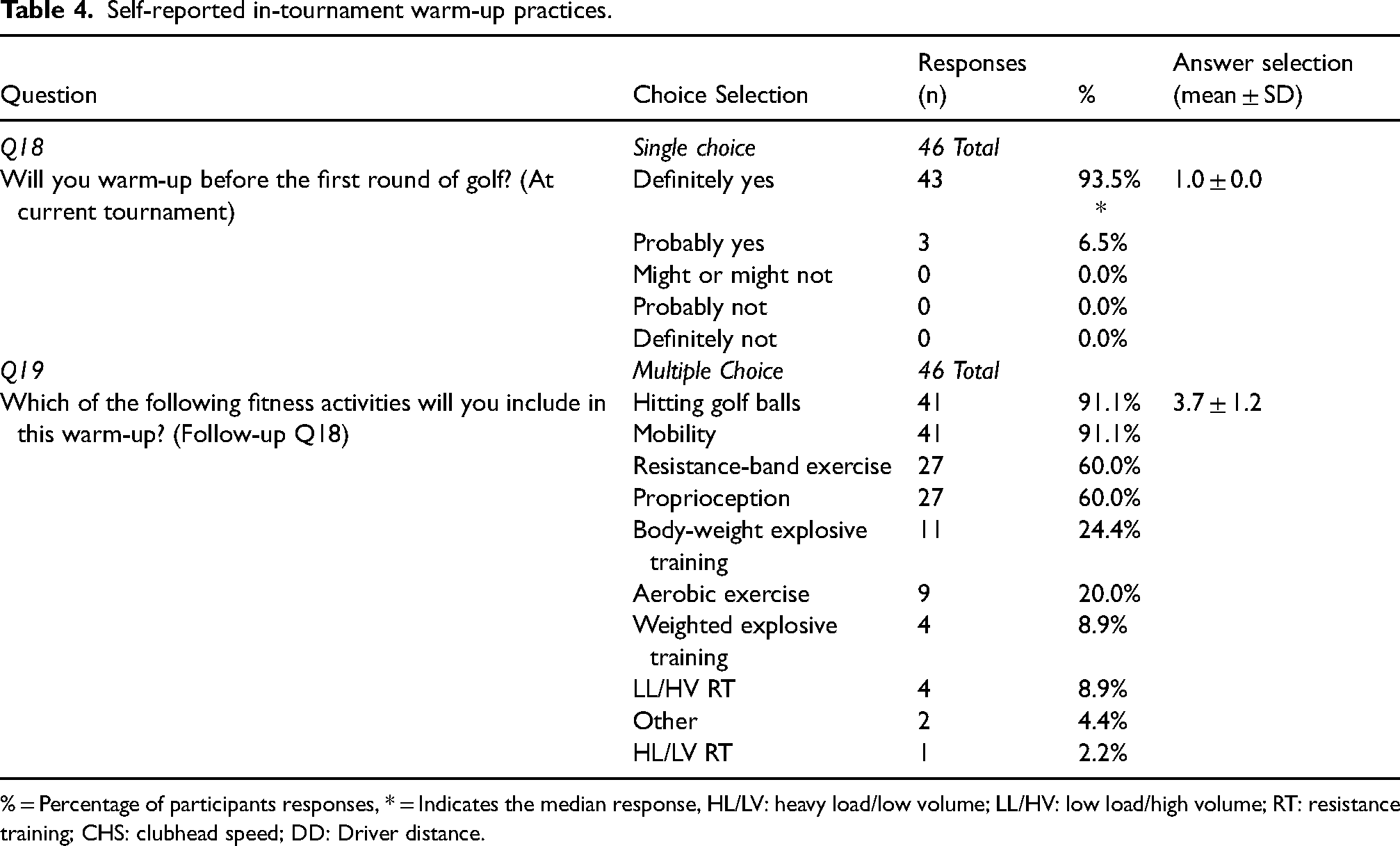
% = Percentage of participants responses, * = Indicates the median response, HL/LV: heavy load/low volume; LL/HV: low load/high volume; RT: resistance training; CHS: clubhead speed; DD: Driver distance.
In-Tournament observation
A total of 72 gym entries were recorded on Wednesday accounting for 46.2% of the total players who competed in the tournament (n = 156) (Figure 1). Comparatively fewer entries were observed on the Thursday in-line with the start of the tournament (20.5%). On the Wednesday, the most commonly observed training activities from players observed to enter the gym were “mobility” (100.0%), “resistance-band” (58.3%), “proprioception” (55.6%), and “LL/HV RT” (47.2%) exercises (Figure 2). Comparatively, fewer golfers partook in all observed training modalities on the Thursday. Limited engagement was observed for “HL/LV RT” (6.9%, 3.1%), “weighted explosive” (22.2%, 0.0%), and “bodyweight explosive” (22.2%, 0.0%) training activities on both the Wednesday and Thursday (Figure 2).
Discussion
The aims of this study were to investigate whether elite professional golfers’ physical preparation practices and perceptions aligned with scientific best practice within the sport and to explore players approaches to physical preparation during the in-season and off-season periods, in-addition to during tournament weeks.
General physical preparation
Physical preparation appears to be part of many elite professional golfers’ routines, with the majority of players reporting having had experience following a structured RT plan (89.8%), RT both during the in-season and off-season periods, warming-up prior to tournament rounds, and making use of gym facilities during events. For the most part, players reasoning for engaging with RT also comply with scientific recommendations. For example, the majority of players resistance train to “stay healthy” (83.7%), complying with the principal recommendations from the ETHPI S&C service, whose primary goal is to assist players in avoiding injury. 5 In their ‘probability of performance-impact model’ Brearley et al. 5 stated that the avoidance of injury (and illness) is likely to have the largest impact on a golfers’ performance in allowing them to train and compete as frequently as they like, thus resulting in a positive and indirect long-term performance effect. In keeping with scientific recommendations, the majority of players also acknowledged the importance of RT for developing muscular “strength” (93.0%) and “power” (81.4%). Muscular strength, impulse, and power qualities have been shown to be the physical attributes with the strongest correlations with CHS, 3 and improvements in golfers CHS, distance, and associated strength and power qualities have been observed to improve following RT interventions.11–14
Currently, improving CHS and DD are the clearest and most researched means through which physical development may directly impact a golfers’ performance. 6 Indeed, PGA Tour players’ who drive the ball further are significantly more likely to achieve lower scores on par-4 and par-5 holes. 15 The importance of DD was also reported by Brodie, 16 who showed that PGA Tour professionals who could drive the ball 20-yards further should save 0.75 strokes per round, equalling a reduction of three shots over the course of a typical four-day tournament. However, over a third of golfers did not regard improving “CHS/DD” as a reason for engaging in RT, and only 23.9% of players considered this to be a key training goal during the in-season period. Given the fine margins of success at the elite level of sport, it would however appear important for players to focus on their physical development to generate greater speed and distance in attempting to gain a competitive advantage over their opposition. Further player education may therefore be of value.
It has been suggested that physical preparation may play a key role in assisting a golfer to make a change in their swing technique. 2 This perception is common amongst surveyed golfers, with over two thirds of players engaging in RT to improve their “swing technique”. While there is some evidence to support that changes in swing kinematics can amount from longitudinal S&C training interventions, this evidence is currently limited.5,17–19 Considering the findings of this study, this highlights the need for further research in this area, particularly with regards to the kinematic and kinetic changes which may underpin developments in players CHS. A common perception among golfers, while not directly examined in this review, is that RT exercises performed in the gym should replicate the golf swing, perhaps to elicit a change in technique. Indeed, Wells et al. 6 reported that 63.25% of surveyed PGA Assistant Professional golfers agreed to some extent, with the statement that S&C training needs to replicate the golf swing under load. However, it has been recommended that the gym is likely not to be an optimal environment for rehearsing golf specific swing movements. 5 The primary focus, instead should likely be on be on enhancing physical capacities, 5 such as muscular force expression, which have been identified through both associative analysis and S&C interventions as key to improving golf performance outcomes such as CHS/DD.2,20 This may be particularly relevant, given that “time constraints” were commonly reported as a barrier to engagement in RT. However, adaptations in muscular force expression gained from such training may need to be coupled with technical training outside the gym environment to refine this capacity and apply it to the golf swing. For example, a golfer who improves their vertical force producing capacity in the lower limb, may also require technical refinement to effectively and efficiently transfer that force through the kinetic chain during the golf swing, to elicit increases in CHS. 21
The results of this study indicate that many golfers prioritise “proprioception” and “mobility” in their training and warm-ups, and train to improve “balance/co-ordination” and “flexibility” qualities. This is not well supported by current empirical evidence, with poor relationships between balance and flexibility characteristics and golfers CHS having been observed,3,20,22 and a current lack of research demonstrating that development of such qualities in isolation can lead to improved golf performance outcomes. 2 For example, Ehlert. 20 reported in a systematic review with quantitative analysis that flexibility characteristics as a whole demonstrated only trivial correlations with CHS (r = 0.03; 95CI: −0.08, 0.14), and in a sub-category analysis only small correlations were found for trunk rotation flexibility (r = 0.17; 95CI: −0.26, 0.60). This may partly be explained in that measures of passive flexibility appear to not adequately reflect the dynamic and fluent movement of the golf swing. 20 With that being said, the importance of rotational ability should not be overlooked entirely, with the degree of separation between the hips and thoracic spine at the top of the backswing (i.e., X-factor), and the maximal X-factor that occurs as the hips rotate back towards to lead leg (X-factor stretch) recognised as important factors for generating CHS.21,23 Comparatively, single leg balance ability has shown to be poorly related to measures of golf performance, 22 likely as this does not reflect the specific balance demands of the golf swing. Indeed, given the task-specific nature of balance adaptations [133], it is questionable whether generalised balance or unstable surface training can effectively translate to improved golf performance outcomes.
In-season and off-season physical preparation
The results of this study indicate that there are large differences between golfers’ approach to in-season and off-season physical preparation. Notably, it appears that while players consistently engage with physical preparation strategies, physical development is often not prioritised on a year-round basis. For example, the development of muscular “strength”, “power”, “muscle mass”, and “CHS/DD” were commonly perceived as key training goals in the off-season, but not during the in-season. Instead, “maintenance” of condition was commonly prioritised in-season (84.4%). In accordance with other professional sports with long in-season periods such as rugby and soccer, it is common practice for athletes to aim to achieve a peak in their physical condition during their off-season preparation. 24 They will then subsequently aim to maintain their physical fitness during competition periods of up to 35 weeks duration. 24 However, with the limited time available for most touring golfers to develop upon key physical qualities aside from competitive commitments, the aspiration of maintenance of condition could be argued to be a poor in-season training goal. In order to maximise their potential, players can also focus on their physical development during the in-season period by maximising adaptations and reducing fatigue through the strategic programming of RT during tournament weeks.
Players prioritising their physical development solely in the off-season may indicate a misconception on the time course required for certain training adaptations to occur. For example, developing “CHS/DD” and increasing “muscle mass” were commonly prioritised in the off-season (54.4%–60.9%), but not during the in-season (13.0%–23.9%). However, highly skilled golfers may require training of a longer duration, greater frequency, higher volume, and/or higher intensity to elicit increases in their physical capacities to contribute to CHS/DD. 2 For instance, Alvarez et al. 11 investigated the effects of a periodised RT intervention within a cohort of skilled golfers. The initial six-week strength phase was sufficient to elicit improvements in participants’ strength and power, but a further six-weeks of power training was required to enhance their driver performance. Likewise, muscle hypertrophy is often stated to take several weeks or months to develop. 25 Contributions to muscular force producing capabilities resulting from hypertrophy will often occur after eight-weeks of training,26,27 approximately twice the duration typically afforded for a break in DP World Tour players tournament scheduling. This further highlights the importance of physical development during the in-season period, or at least during strategically planned periods, to ensure that long-term training adaptations are achieved, and the risk of de-training is minimised. Players’ reluctance may be partly attributed to the challenges of incorporating development strategies alongside their in-season commitments. As such, this issue will be explored in subsequent sections, with potential solutions proposed.
RT frequencies of 2–3 weekly sessions as performed by the majority of surveyed players (67.4%), have shown to be sufficient to develop a golfer's CHS/DD and associated physical qualities,11,12,14,28 and may therefore enable players to progress their physical development during the in-season. However, this speaks nothing of the specific training methods being used, with the high intensity and velocity training methods required to elicit such adaptations often not being prioritised. Further to this, contradictions between players reported training goals and their prioritised training activities were evident. For example, It is generally accepted that improvements in strength are best achieved with lower repetition ranges of 1–5 repetition maximal (RM) exercises (HL/LV RT).29,30 While players acknowledged the importance of “HL/LV RT” methods in the off-season (67.4%), conflicting perceptions were reported in-season (32.6%) despite 52.2% of players seeking to develop their “strength”. Similarly, many players reported to not prioritise the high-velocity “explosive” training modalities (45.6% - 52.2%) during the in-season, which are typically required to develop an athletes’ ballistic capabilities.31,32 In-turn, even if a golfer were to enhance their muscular strength and power in the off-season, a lack of strength and power training during the in-season can result in de-training. 33 For instance, Ronnestad et al. 34 reported that a frequency of once weekly strength training was sufficient to maintain improvements obtained by professional soccer players during pre-season up to 12-weeks after. Comparatively, training only once every two weeks resulted in an average loss of 10% in participants 1RM strength.
In-tournament physical preparation
The significant barriers faced by touring professionals during tournaments may in-part account for the differences between player approaches to in-season and off-season physical development. For instance, players reported facing significant “time constraints” during the in-season period (72.7%) and consequently may benefit from education on how to effectively organise and adapt their RT throughout busy tournament weeks and dense schedules. A “lack of facilities” was also commonly considered as a barrier to engagement in RT. However, even when players had access to fully equipped facilities at the Open Championship, they were reluctant to engage with high-intensity and high-velocity training methods. Players’ reluctance to engage with such activities may therefore be attributed to the potential for reduced competitive performance levels resulting from neuromuscular “fatigue”, 29 and increased muscle soreness and passive tension resulting from exercise-induced muscle damage (EIMD). 35 As such, in professional sports it is common practice for S&C coaches to ensure adequate recovery between strength and power development sessions and competition is provided, with sessions typically being separated by 48 h. 36 RT should therefore in most cases be prioritised earlier in the week to allow sufficient recovery before the first round of golf. Players are also advised to consider the nature and timing of their training sessions during the week, as research indicates that the most EIMD occurs when an exercise is novel, eccentrically oriented, and/or of a higher volume.35,37 In-line with these recommendations, many players already report scheduling RT sessions between Monday and Wednesday (50.0% - 58.7%), however it remains unclear as to what training activities are commonly performed during these sessions.
Opportunities to resistance train later in the week may also present if the golfer were to miss “the cut”, which may in-part account for why players reported to train on a Friday/Saturday (41.3%). However, with travel, practice, and other lifestyle factors this is not always possible, and the more successful golfer will have less obvious opportunities to train during a tournament week. In such circumstances, players may benefit from scheduling short duration RT sessions around tournament play. Evidence suggests that high-intensity strength and power training interventions can be safely administered without resulting in lasting deficits in mechanical performance markers and metabolic measures of fatigue, provided that low-volume sessions (i.e., reduced sets, repetitions, or exercises) are employed.38–40 Pragmatically, players may be able to resistance train on the morning of, or in the day(s) preceding competition and minimise the potential for adverse effects on competitive performance levels by maximising adaptations and reducing fatigue through strategic programming of sets, repetitions, and exercises. Shorter sessions may also encourage greater compliance throughout busy competitive periods whilst also enabling players to make continued physical development via a ‘micro-dosing’ training effect,41,42 recently defined in S&C literature as “the division of total volume within a micro-cycle across frequent, short duration, repeated bouts”. 43 Of further interest, emerging research indicates that neuromuscular performance outcomes can be maintained, and even in some cases, enhanced several hours (1–48 h) after low volume, high intensity strength or externally loaded ballistic ‘resistance priming’ training sessions, 44 although it is currently unclear how this may affect a golfers performance. Survey results indicate that some golfers already perform “explosive” (42.5% - 50.0%) and “HL/LV RT” (25.0%) activities on the morning prior to an afternoon tournament round. Consequently, further research would be of value to determine the potential effects of performing short duration RT session on golf performance outcomes and recovery on the day of and in the day(s) preceding competition.
Surveyed golfers’ warm-up practices appear for the most part to align with conventional recommendations, with various dynamic stretching activities, dynamic exercises, light RT activities, and golf practice having been shown to contribute to immediate improvements in golfers CHS and shot distance outcomes.45–47 Warm-ups also provide an opportunity to include a range of training stimuli to contribute to longer-term training effects, 48 and for the time poor golfer may present an ideal occasion to contribute to developing or maintaining key physical attributes. For example, high velocity jumps and throws as an extension of a golfers’ regular warm-up could contribute to developing a golfers’ long-term ballistic capabilities, 31 without excessive additional time commitments or equipment demands. Some evidence has also shown ballistic jump exercises to elicit immediate short term improvements in golfers’ CHS over that of performing regular warm-ups.49,50 However, only a small percentage of golfers appear to currently be utilising such activities. This may in-part be explained in that the benefits accrued from such strategies will typically dissipate within minutes of the applied stimulus,49–51 which may limit the potential benefits to performance over an entire tournament round which will typically span over several hours of play, unless re-applied on course. Further research and education on the potential longer-term training effects which may occur through warm-up training interventions may encourage the use of more diverse training activities to be performed during a golfers’ warm-up.
Strengths and limitations
This study provides a unique and previously unexplored insight to the physical preparation approaches of golfers’ competing at the elite professional level on the European/Challenge Tour and competitors at the Open Championship. However, the results of this study may not be representative of other professional golfers competing for example on other tours such as the PGA Tour. It is also possible that surveyed players who responded were more interested in physical preparation than those that did not. This potential bias could indicate that the results obtained from this survey may not represent the perceptions of all players, especially those less interested in physical preparation. The survey was constructed in a manner whereby questions and terminology would be easy to understand, and examples were provided as technical terminology could have hindered understanding of the survey questions. While the observational records at The Open Championship offer a unique insight to one of the most prestigious events in golf, it is possible that there were omissions to the data, with players training outside of the observed facility. It is however likely that most training requiring specialised equipment would be performed at the tournament's fully equipped gym facility. The Wednesday and Thursday were the days specifically chosen for observation due to these being the most likely days that the entire tournament field would have access to use the gym facilities, with players arriving sporadically to the event and players being “cut” after Fridays round (n = 83). The days that data were collected may therefore not be representative of other days and may miss players training for example in hotels. Finally, since data collection was anonymised, it is possible that multiple gym entries were recorded for a player in a single day (e.g., warming up in the morning and RT in the evening).
Conclusion
The results of this study indicate that physical preparation is a regular part of elite professional golfers’ routines, with most golfers perceiving that RT can be beneficial for reducing injury risk and improving striking distance/swing technique. Current scientific literature indicates that measures of muscular strength and power have the strongest correlations with CHS, and longitudinal S&C interventions have demonstrated that specific strength and power training can enhance CHS and subsequent shot outcomes. In-line with this, many players appear to acknowledge the value in developing these attributes. However, training approaches vary considerably between the in-season and off-season periods, with physical development seemingly being prioritised by many in the off-season. Given that the in-season period accounts for the majority of most players annual training cycle, there is however limited time available to develop key physical attributes aside from competitive commitments. Consequently, in order to maximise their potential players should prioritise their physical development during the in-season period. As a result, further education and research on the key physical qualities associated with high performance, the necessary training methods required to develop such qualities, and how to organise and effectively implement training strategies during the in-season period would be of value. Due to players limited availability to train around tournament commitments, future research should look to identify methods for optimising RT within the constraints imposed by tournament play.
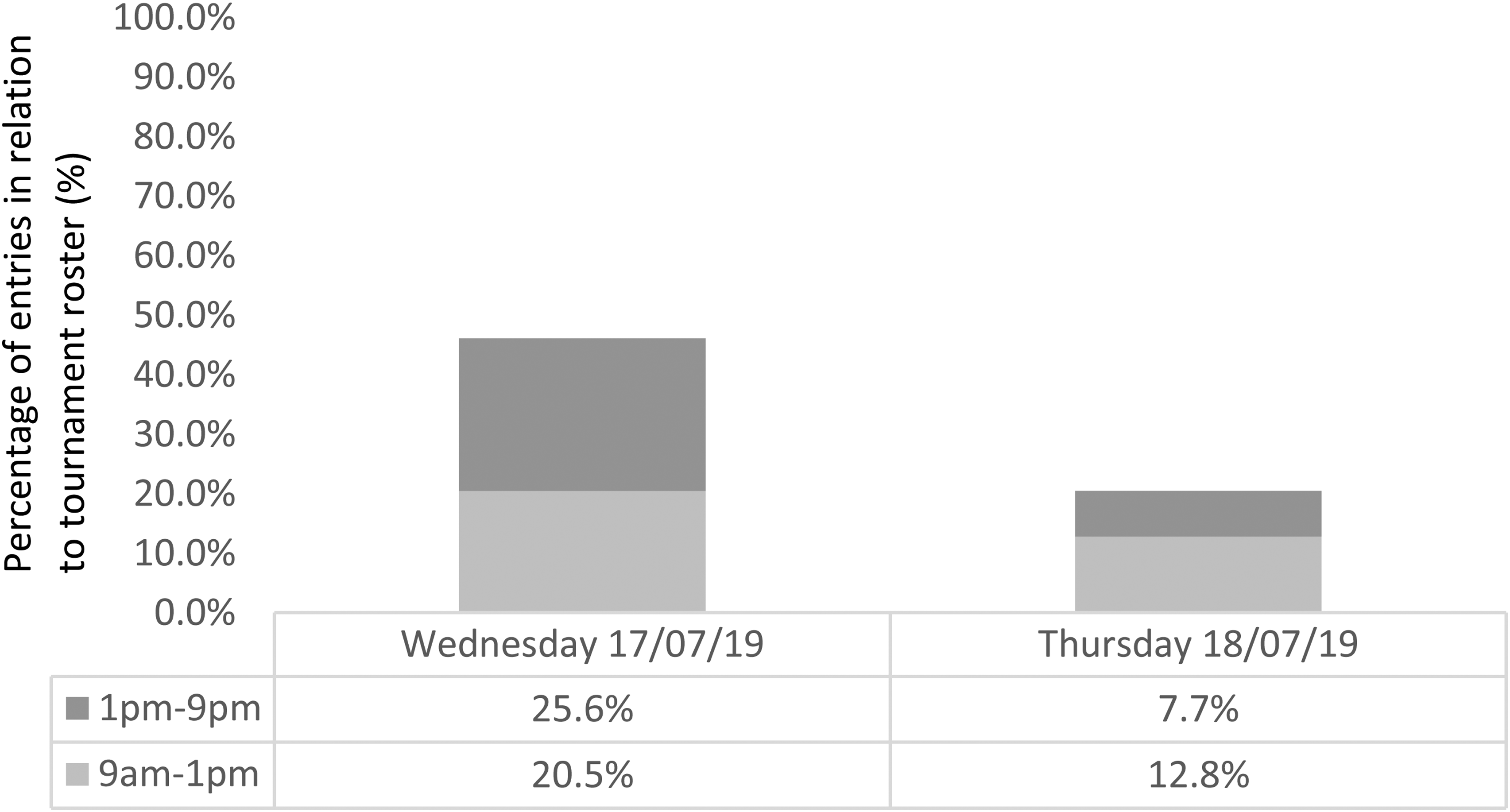
Recorded gym entries at the 148th Open Championship.
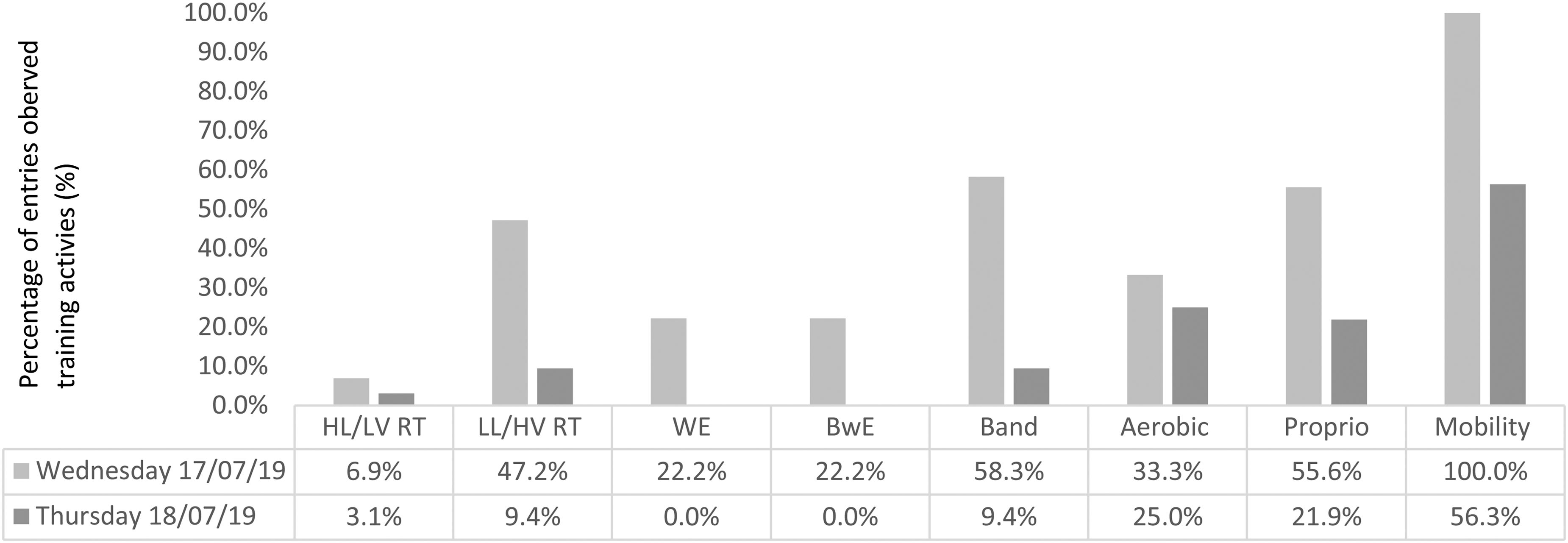
Recorded training activities at the 148th Open Championship gym facility.
Supplemental Material
sj-docx-1-spo-10.1177_17479541251321260 - Supplemental material for Elite professional golfers’ physical preparation practices and perceptions
Supplemental material, sj-docx-1-spo-10.1177_17479541251321260 for Elite professional golfers’ physical preparation practices and perceptions by Sean R White, Daniel A Coughlan, Carly Wood, Jack ET Wells, Andrew Murray, Simon L Brearley and Jason Moran in International Journal of Sports Science & Coaching
Supplemental Material
sj-xlsx-2-spo-10.1177_17479541251321260 - Supplemental material for Elite professional golfers’ physical preparation practices and perceptions
Supplemental material, sj-xlsx-2-spo-10.1177_17479541251321260 for Elite professional golfers’ physical preparation practices and perceptions by Sean R White, Daniel A Coughlan, Carly Wood, Jack ET Wells, Andrew Murray, Simon L Brearley and Jason Moran in International Journal of Sports Science & Coaching
Footnotes
Declaration of conflicting interests
The authors declared no potential conflicts of interest with respect to the research, authorship, and/or publication of this article.
Funding
The authors received no financial support for the research, authorship, and/or publication of this article.

Supplemental material
Supplemental material for this article is available online.
References
Supplementary Material
Please find the following supplemental material available below.
For Open Access articles published under a Creative Commons License, all supplemental material carries the same license as the article it is associated with.
For non-Open Access articles published, all supplemental material carries a non-exclusive license, and permission requests for re-use of supplemental material or any part of supplemental material shall be sent directly to the copyright owner as specified in the copyright notice associated with the article.
