



Abstract
Contemporary evidence has demonstrated strength and conditioning (S&C) training benefits golf performance, primarily by improving clubhead speed. However, no empirical data exist that describe how, or even if, golfers integrate their S&C training and golf practice. Therefore, the aim of this study was to investigate the perceptions and practices of skilled golfers with regards to planning the season and how S&C is structured in the golf year. Sixty-five (male n = 48; female n = 17) Category 1 amateur (n = 50) and professional (n = 15) golfers completed a mixed-methods online survey. Survey answers were either golf practice or S&C training focused. Results showed the majority of golfers engage with S&C training (n = 44; 67.7%) and follow a programme (n = 53. 81.5%). Contrastingly, they reported having little structure for golf practice, choosing to have no annual plan (n = 14; 21.9%), have a reactive approach (n = 22. 34.9%) based on recent performances or training what feels appropriate/enjoyable (n = 15; 23.8%). Golfers reported they adjust their training around competition (n = 47; 74.6%) but with various approaches. The dichotomous and contradictory responses received across multiple answers demonstrate that continued education and research are required to help golfers integrate S&C training with their golf practice.
Introduction
Contemporary evidence has demonstrated that strength and conditioning (S&C) training can have considerable benefits for golf performance, primarily by improving clubhead speed. 1 Both acute physical training interventions such as the manipulation of warm-up to involve S&C activities,2–4 and longer-term training programme engagement1,5 have shown benefits to physical correlates of golf performance. 6 This is particularly true for a golfer's physical capacities that relate to drive distance, which is a crucial determinant of successful play across all levels from elite to amateur.7–9 Indeed, a 20-yard increase in drive distance has been attributed to saving 0.75 strokes per round. 10 However, while there is evidence for the use of S&C as a strategy for supporting better golf in isolation, there is no empirical evidence describing how golfers integrate this type of training into their overall practice schedule or annual plan and as such an exploratory study is warranted.
The integration of all aspects of an athlete's training strategy into a coherent and feasible schedule forms part of the overall planning process. In S&C nomenclature, this process is referred to as organisation of training and is inexorably linked to periodisation. Periodisation concerns incorporating variation into training, typically by dividing the annual plan into smaller training phases, allowing for the pursuit of targeted training goals such as increased muscle size, maximal strength or speed development.11,12 Golfers’ sport-specific practice may be segregated into:
Technical practice: Putting, chipping and greenside bunker play, pitching and wedge play, approach play and long game. Tactical practice: Mapping courses for distances and strategy, and greens for gradients and slope direction. This can be done with course guides and range finder technology. Rounds of golf: Practice or pro-am rounds and competitive golf.
Periodising S&C training may face additional sport-specific complexities in golf. A recent study of highly experienced Professional Golfers’ Association (PGA) golf coaches, who support elite golfers, showed that their long-term approaches to technical training were typically unstructured and the process of planning is secondary to the immediacy of a golfer's acute performance needs.
13
There may also be differences in the planning processes of amateurs and professionals as their season durations and timings are often different. However, currently, there is no empirical evidence that describes how, or even if, skilled golfers plan their physical training around their golf practices.
S&C training for golfers, particularly around competition is complex and evidence on periodisation for golf is lacking. 14 It is reasonable however to suggest that S&C training should aim to complement and enhance existing golf practice, rather than interfere with the ability to perform in competition. As golfers will invariably have a technical coach, the inclusion of S&C training in the overall practice schedule will require discussion between at least three key stakeholders. To date, only one study has published data on coaches’ perceptions of physical fitness for golf suggesting that over 50% of responders thought S&C was not important for their golfers. 15 However, these data are over 10 years old, sampled coaches from a single country, and did not consider the golfer's perspective, potentially omitting crucial information.
There is recent evidence as to the perceptions and practices of golfers. While misconceptions around S&C were still evident, the vast majority (78.5%) of golfers surveyed believed physical training was beneficial for their golf and trained year-round. 16 However, this survey focused primarily on golfers’ selected S&C modalities, the existence of training myths and musculature targeted during training with a paucity of evidence still regarding how S&C practice is planned and implemented throughout the golf year. While there are limited data from golf, other sports show that players are generally supportive of S&C provision. Evidence from a range of NCAA Division I athletes suggests that a player's perception of the relative importance of S&C training to successful performance in their sport may vary substantially depending on the sport, with more traditionally ‘strength focused’ sports showing a higher perceived importance for S&C. 17 A study by Weldon et al. 18 revealed more than 95% of volleyball athletes surveyed believed S&C was either ‘important’ or ‘very important’ when aiming to improve their physical attributes while reducing injury risk. However, neither of these studies investigated how athletes try to incorporate S&C training around their technical practice or competitive play. This appears crucial as a key response from athletes (and coaches) surveyed suggests that periodising training (which requires a longitudinal plan) had the greatest potential to improve their performances. 18 Therefore, the aim of this study was to investigate the perceptions and practices of skilled golfers with regards to planning the season and how S&C is integrated into the golf year.
Methods
Experimental approach
A mixed-methods survey, developed using Microsoft Forms was employed to obtain information about the processes and perceptions of skilled golfers when planning S&C as part of the golf year. Using convenience sampling, the survey was distributed via social media (Twitter, LinkedIn and Facebook), email, correspondence with a golf national body (England Golf) and word of mouth. Questions were either multiple choice or short answer and focused on golf practices or S&C training approaches. Multiple-choice questions (MCQs) contained an ‘other’ response option which allowed participants to write an alternative response, or elaborate where necessary. All responses were anonymised and participants gave their informed consent after reading a pre-survey information sheet. Ethical approval for the study was granted by the University's Ethics Committee and was conducted in accordance with the Declaration of Helsinki (2013).
Participants
Sixty-seven survey responses were collected. To be eligible for the survey, participants must have been ≥18 years of age at the time of completion and a skilled golfer, defined as being a Category 1 amateur (≤5 handicaps) or professional. One participant started the survey but abandoned without answering any questions and one participant's survey responses were removed as they were <18 years of age. This left 65 complete responses. Golfer descriptive characteristics are shown in Table 1.
Descriptive characteristics of golfers completing the survey (n = 65).
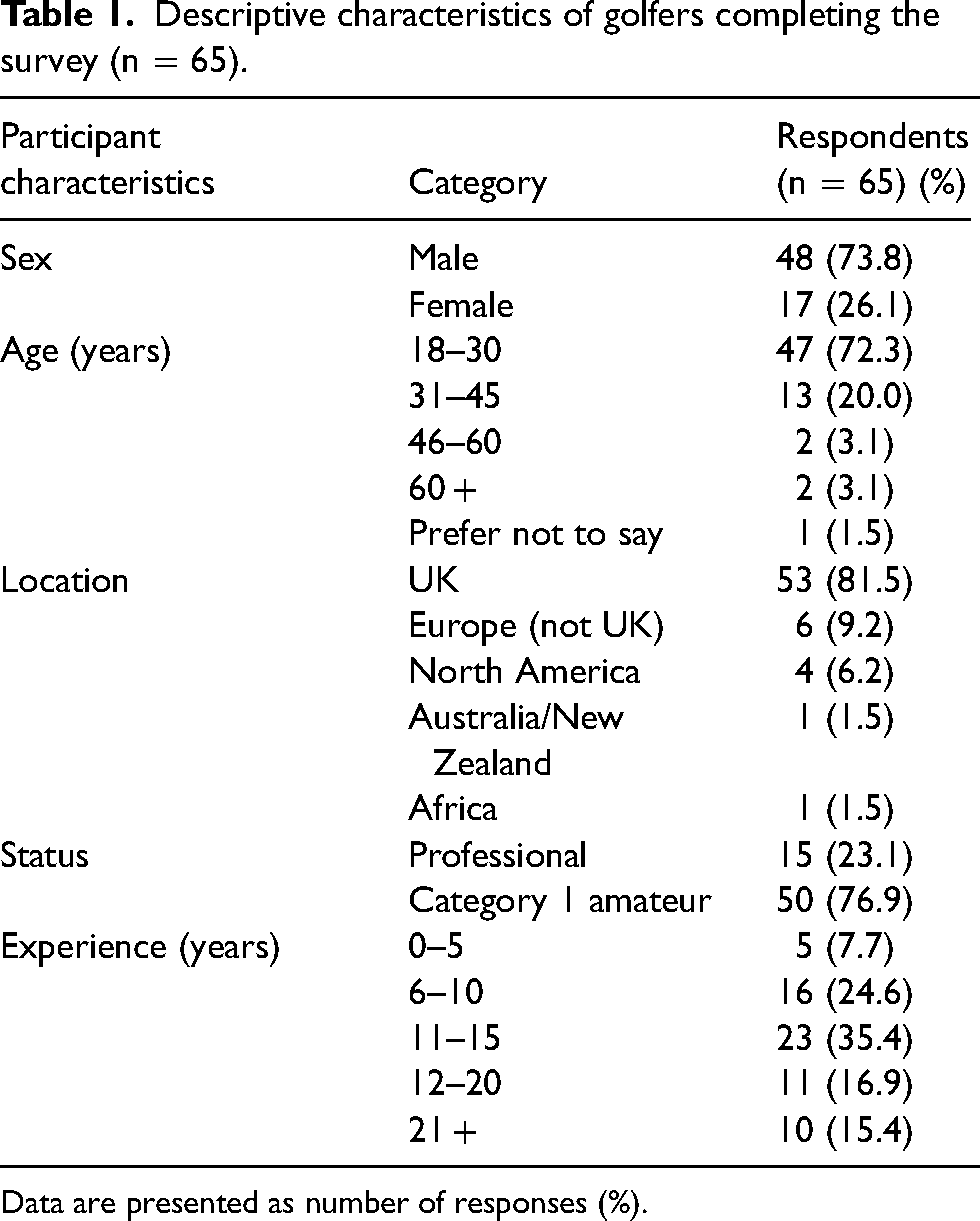
Data are presented as number of responses (%).
Procedures
The survey was administered remotely, which can reduce experimenter bias and allows for anonymity to be preserved for the participant. 19 The survey questions were separated into common themes for all participants. The full question list and possible responses are provided as supplementary information (Supplemental material).
Statistical analysis
All survey data were exported and a frequency analysis was conducted for all fixed response MCQs, with corresponding percentages of responses presented. For short answer questions, a thematic analysis was conducted. The thematic analysis comprised (1) data appraisal and coding, (2) generation of themes from commonly observed answers, (3) review and agreement of themes between authors, (4) defining and naming themes and (5) producing the report. This is a frequently employed methodology in similar research of this nature.18,20,21 A minimum sample size was established as 50 participants a priori to allow for meaningful analysis and to be commensurate with the sample sizes of similar published works.22,23
Results
Golf practice focused responses
The highest proportion of responders plays 16–20 tournaments per year (n = 23; 35.4%), with 23.1% (n = 15) playing 11–15 and 13.8% (n = 9) playing 21–25 tournaments, respectively. The majority (n = 36; 57.1%) of golfers reported that they would choose to play 2–4 tournament weeks consecutively as their maximum. At each end of the spectrum, 10 golfers (15.9%) reported playing fewer consecutive tournaments (1–2) with another 10 (15.9%) playing as many tournaments as possible.
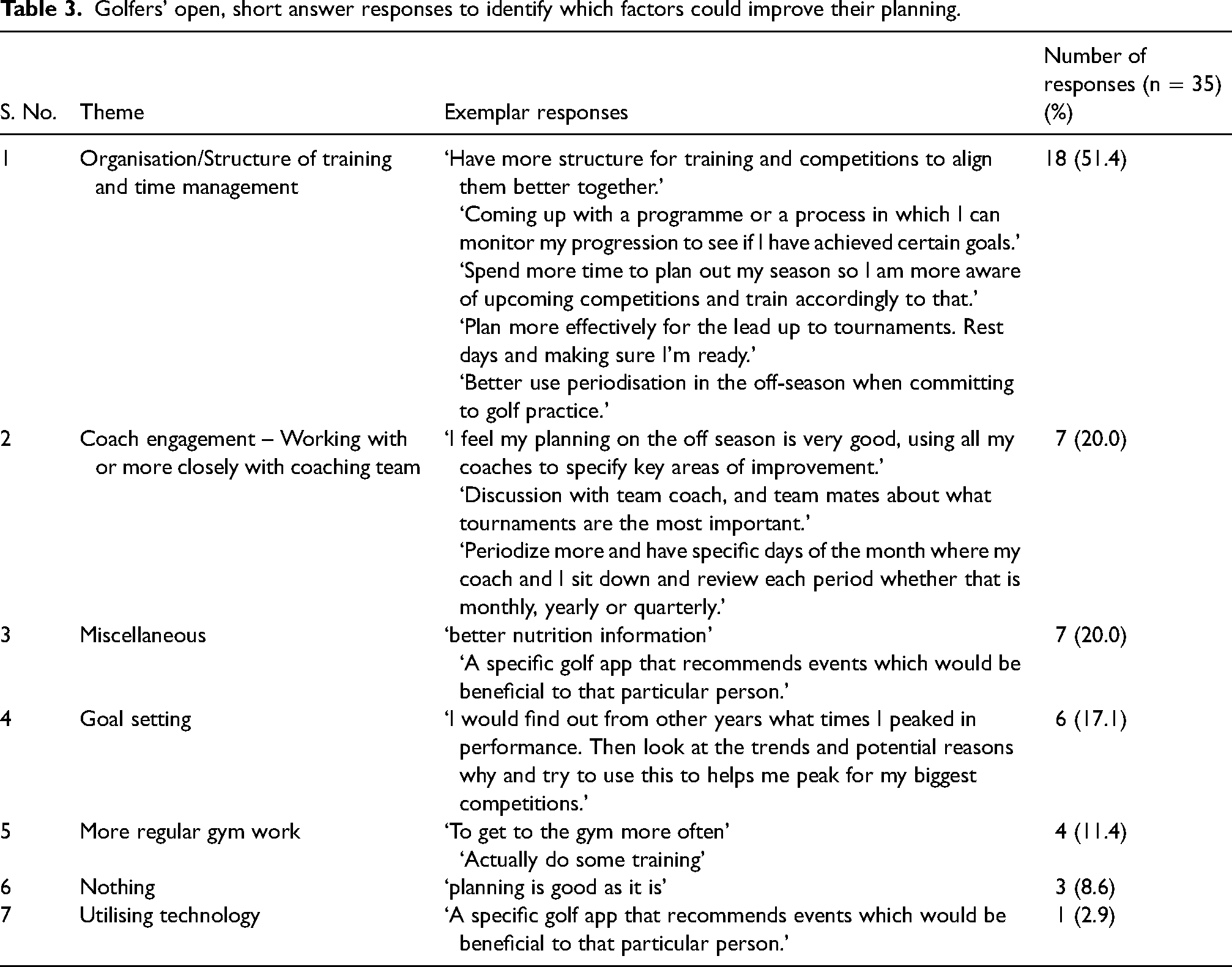
When planning golf practice or competition play throughout the year, over three quarters (n = 50; 78.1%) of responders reported planning their S&C training around competition, mainly by limiting how much training they do, coupled with how hard they train (n = 21; 32.8%) or by exclusively reducing training volume (n = 20; 31.3%). The majority of golfers surveyed (n = 40; 62.5%) reported that they prioritise certain tournaments when planning, with high-profile events as the key focus (n = 36; 90.0%). Almost half (n = 30; 46.9%) identified that their approach was to initially put key events in the diary and then plan around those, with a further 31.3% of responders (n = 20) reporting that they put all events in their diary before planning. Fourteen (21.9%) golfers stated that they do not create an annual plan. Lastly, golfers reported either having a reactive approach to their golf practice (n = 22; 34.9%) based on recent performances, or not having a plan at all, and just focussing on what ‘feels appropriate’ or what is ‘enjoyable’ (n = 15; 23.8%). Fewer golfers reported practicing all aspects of their golf equally throughout the year (n = 12; 19.0%) or focusing on specific practice for upcoming events such as links golf and the typical shots required for the course type (n = 10; 15.9%). Thematic analysis of golfers’ suggestions relating to how they could improve their own planning is provided in Table 3.
Golfers’ responses to S&C-focused questions are shown in Table 2. For two MCQs, golfers were allowed to select more than one answer. Responses to these questions are shown in Figures 1 and 2.
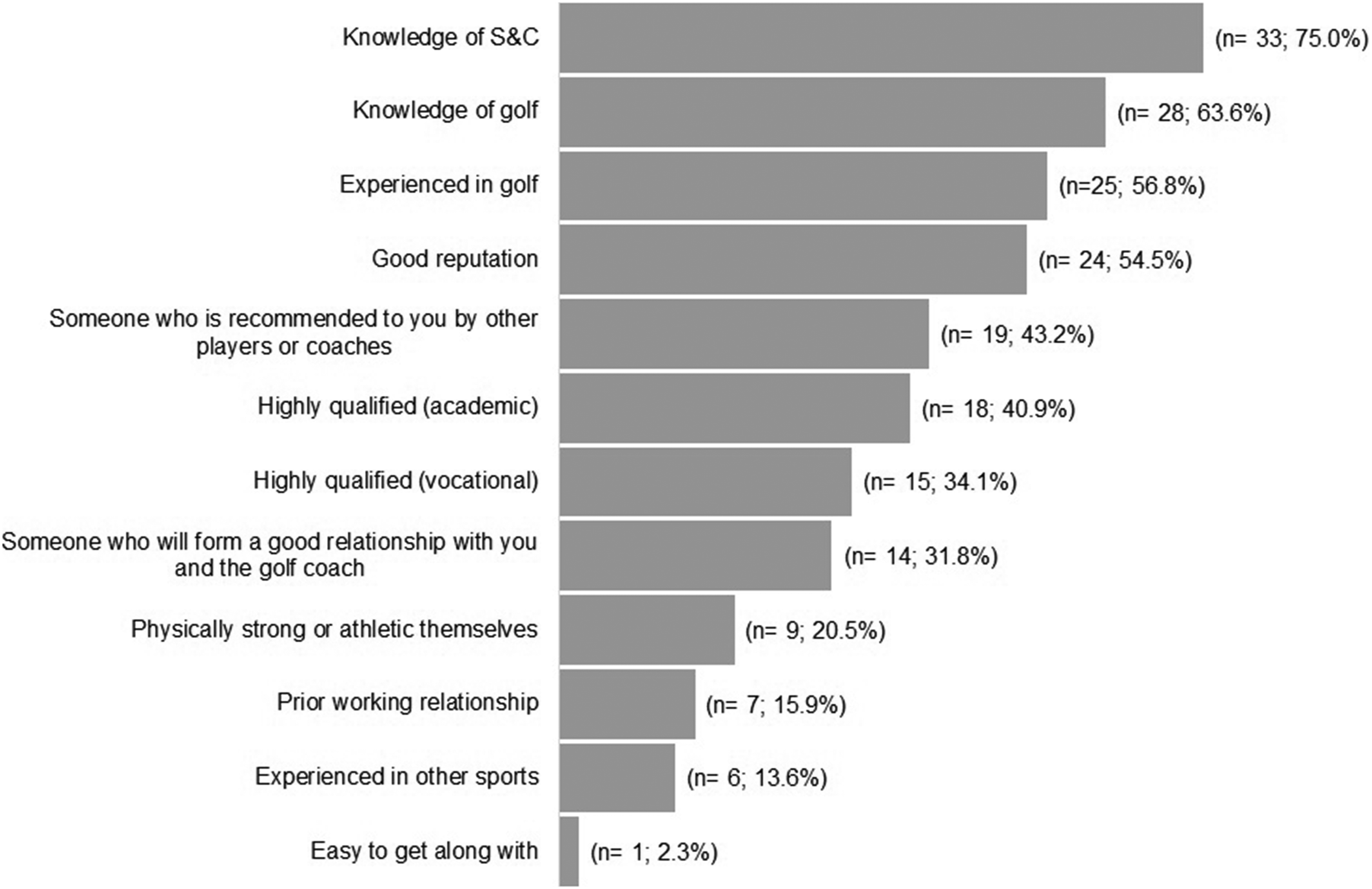
The qualities a golfer looks for when selecting a strength and conditioning (S&C) coach to work with.
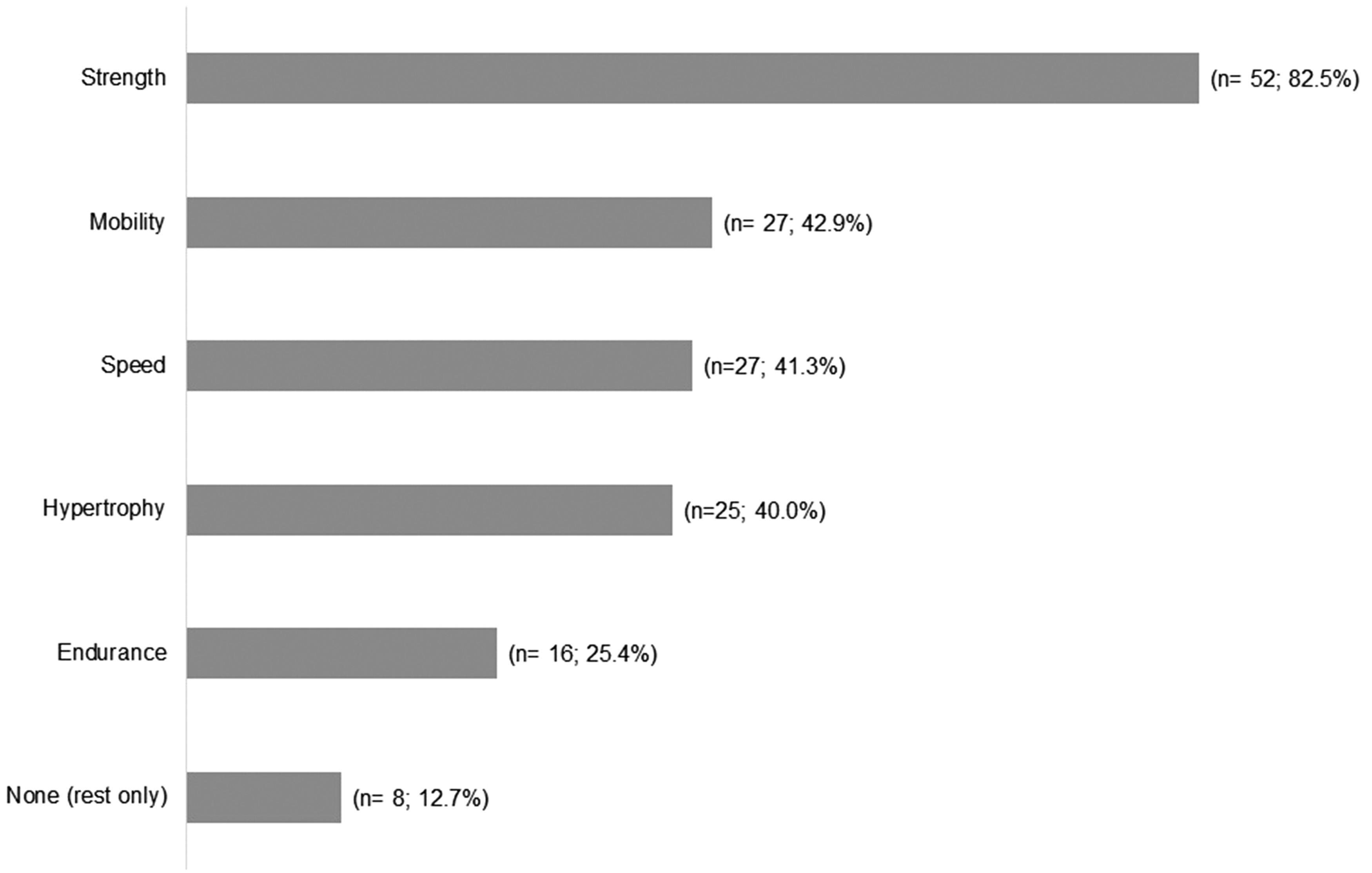
Golfers’ strength and conditioning (S&C) foci during the off-season.
Golfer responses to strength and conditioning (S&C)-focused questions.
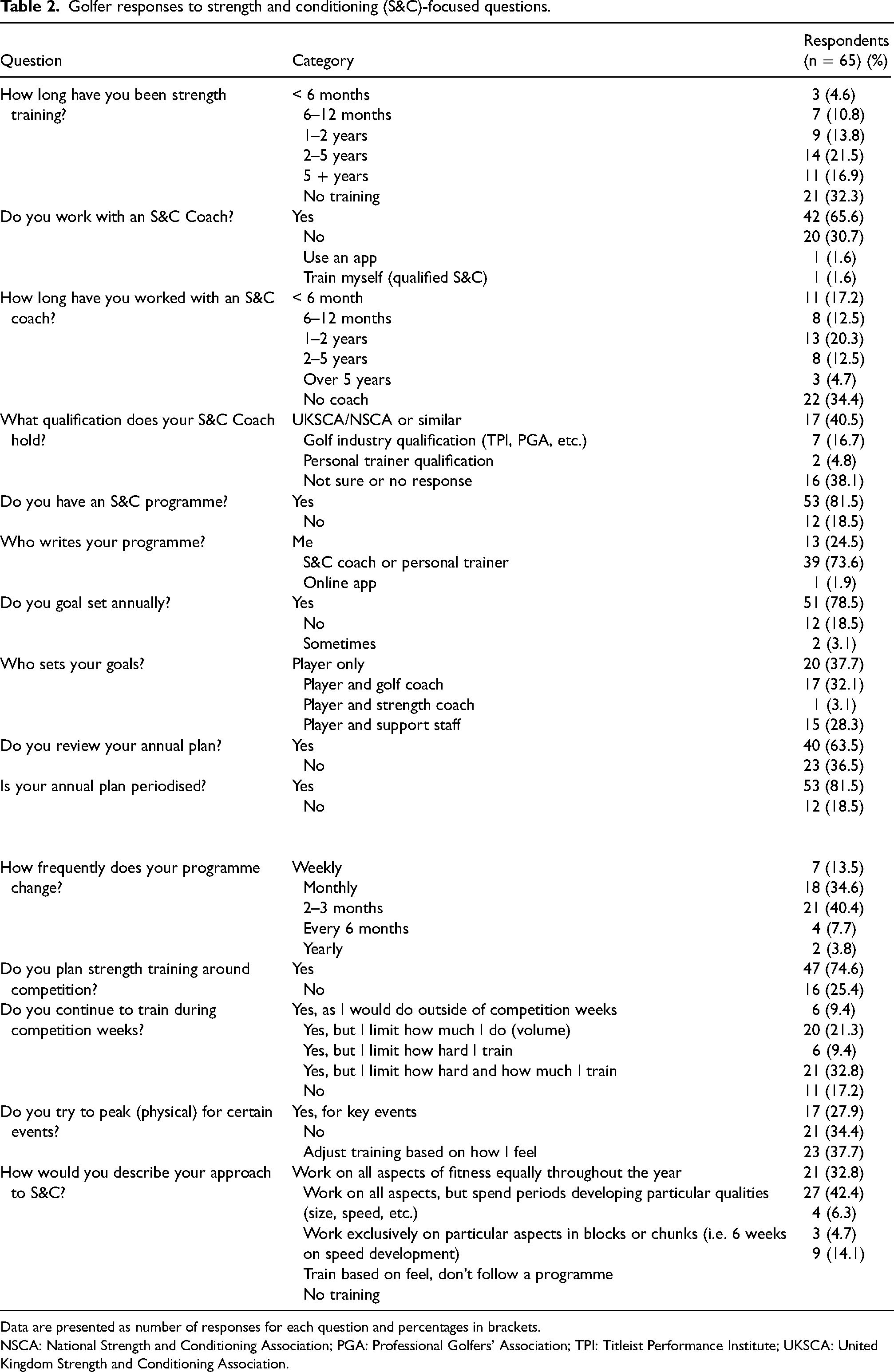
Data are presented as number of responses for each question and percentages in brackets.
NSCA: National Strength and Conditioning Association; PGA: Professional Golfers’ Association; TPI: Titleist Performance Institute; UKSCA: United Kingdom Strength and Conditioning Association.
Discussion
The aim of this study was to provide inaugural, novel data on the processes and perceptions of highly skilled golfers regarding their planning of the golf year, and how S&C training is integrated into this process. Many golfers have engaged with S&C programmes to improve performance and reduce the risk of injury against the demands of their sport. 16 However, there was no empirical evidence describing how golfers integrate interventions into their overall practice schedule or annual plan. A key finding from this research is that in contrast to their S&C training, golfers are often reactive or adopt an unstructured approach to their golf practice. Golfers also reported reducing their S&C training around competitions, but attempted to do this based on ‘feel’ to try and peak for tournaments. With regards to S&C training specifically, a high percentage of golfers reported either not participating in S&C or not having an S&C coach, and those that did were often unsure of their S&C coach's qualification(s). During competition weeks, golfers reported reducing S&C training volume, with the overwhelming majority training all components of fitness concurrently throughout the season. Lastly, a large proportion of the golfers in this study reported not reviewing their season or annual plan at the end of the golfing year, despite most taking the time to construct one, often with their golf coach and/or S&C coach. This overarching trend of golfers to provide, perhaps unknowingly, contradictory or dichotomous responses suggest there is a need for continued education and study in this area.
Constructing an annual training plan is common practice in most sports. Although recently contested as to its definition 24 and efficacy, 25 an annual plan in S&C is typically designed using a periodised approach. In golf specifically, Orr et al. 13 recently described that annual planning and goal setting has multifaceted benefits that extend beyond physical development, including providing focus and motivation for athletes to improve, a realistic grounding for the time course of developmental changes, and a proactive approach to addressing challenges. However, the findings from this current study demonstrate that more than one in five highly skilled golfers (21.6%) either will only ‘sometimes’ goal set or not undertake any goal-setting process. Of the golfers who reported to setting goals, 37.7% said they set their own, with 32.1% stating they set goals in conjunction with their golf coach. In contrast, golfers reported having a structure to their S&C training, with 81.5% saying they currently have a training programme. This discrepancy in planning approaches is likely explained by the relative experience levels of the golfers in each of these disciplines. Highly skilled golfers will have many years’ experience of, and familiarity with, golf practice and, speculatively, may therefore feel they (and possibly their coach) can invest less time in creating a golf practice plan, opting instead to follow unstructured, reactive practice regimens as demonstrated previously in skilled golfers. 13 Where they may be less experienced in S&C (a low training age), they may feel it necessary to follow a set plan to ensure they are training correctly to optimise progressive overload and achieve the physical adaptations associated with their goals. However, having a reactive approach to golf practice may also impact planned S&C training, particularly if a player prioritises their golf practice instead of S&C training. No question in this survey addressed this but further exploration, in future research, would be worthwhile.
The evidence base for the efficacy and effectiveness of S&C training in golf has grown substantially in the past 20 years, in part as a result of evidence suggesting golfers who hit the ball further tend to have better scores9,10 and stronger golfers are able to hit the ball further. 26 However, research in this area is still in its infancy in comparison to other sports and as S&C is still not common practice in golf, previous evidence has shown that there are a number of misconceptions that pervade in this area. 16 In this study, 81.5% of golfers reported having an S&C programme. Interestingly however, 32.3% of responders said they had ‘no training’ history, suggesting that some golfers have an S&C programme, but do not train. 52.2% of golfers reported having trained for >1 year and 65.6% currently work with an S&C coach. However, it was concerning to note that 38.1% of responders were unsure of the qualification that their S&C coach held. This is almost double the level in the work of Wells & Langdown 16 who reported a 20.7% uncertainty in the S&C coach's qualification. The discrepancy is likely explained by the make up of amateurs and professionals in the present study, versus a homogenous group of Assistant PGA Professionals in Wells and Langdown's study. 16 It is reasonable to contend that Assistant PGA Professionals, who are provided with entry-level education in sport science and S&C as part of their higher education, may have greater awareness of the importance of hiring a qualified S&C professional. It is recommended therefore that the importance of seeking support from qualified S&C coaches is relayed to amateur golfers, possibly through the county golf unions (in the UK) or directly through golf coaches themselves.
Perhaps, the area of most contradiction in responses pertains to questions on peaking and tapering around competitions. Three-quarters (74.6%) of golfers reported planning their S&C training around competitions, but with a variety of approaches. A third (32.8%) of golfers reduced their training volume and intensity, 21.3% reduced volume only, while 17.2% completely stop S&C training during competition weeks. Less than 10% of golfers continue their normal S&C training during competition weeks. Furthermore, only 27.9% of golfers indicated that they try to physically peak for key events in the calendar despite aiming to manipulate training in some form during competition weeks, and prioritising certain key events (62.5%), especially when they are high-profile tournaments (90%). The aforementioned research into drive distance as a key performance determinant 7–9 suggests that a seemingly illogical disconnect exists between the desire to peak physically for tournaments, and the desire to prioritise them. This response is of great interest and requires further investigation. Speculatively, some of this disconnect in response may be explained by golf retaining a heavy ‘skill component’ even though physicality has been demonstrated to be a key performance determinant. At the elite level, despite drive distance increasing each year (previously demonstrated to lead to strokes gained over the course of a round), 10 greens in regulation remained the strongest performance determinant on the European Tour over three recent seasons. 9 Therefore, golfers may choose to prioritise technical and tactical preparation in-season as they believe it will have a greater bearing on performance outcome.
When choosing an S&C coach to work with, golfers understandably regarded ‘knowledge of S&C training techniques’, as well as ‘knowledge and experience in golf’ as their most important considerations. ‘Reputation’ and ‘recommendation’ were the next most frequent responses, with ‘academic and vocational qualification’ also popular (Figure 1). Reputation and recommendation have previously been reported as key drivers in the golfer's approach to choosing a technical coach 27 so it is logical that, by extension, they will take this approach to appoint an S&C coach too. Previous research into S&C coach and high-performance athlete interactions have demonstrated agreement with the findings here in that technical knowledge, and quality of instruction and feedback were important considerations for athletes as well as higher-level qualities such as trust and honesty 28 closeness; commitment, complementarity and co-orientation. 29 Despite these similarities, only 31.8% of golfers selected ‘someone who will form a good relationship with you and the golf coach’ as something they considered important when working with an S&C coach. Of great interest is that only one golfer considered having an S&C coach who is ‘easy to get along with’ as an important characteristic. It appears, therefore, that the quality of the coach/athlete relationship is a secondary consideration to an S&C coach's knowledge, previous experience and recommendation. Future research should seek to explore these themes, possibly through detailed interviews of golfers and their S&C coaches.
Data shown in Figure 2 demonstrate that 82.5% of golfers will train strength in the off-season. Speed, hypertrophy and mobility were almost identical in the number of responses, separated by only 3% around 40%. 25.4% of golfers chose to train endurance, with 12.7% not doing any training and choosing to ‘rest’ in the off-season. When systematically reviewed, the rationale for improving strength to support increases in clubhead speed has been well demonstrated across a range of training intervention studies1,30 as short as 6 weeks 31 and up to 18 weeks. 32 Specific speed training has been demonstrated to have acute benefits to clubhead speed in golfers3,4 although the chronic benefits of this type of training is currently unknown in golfers. However, relationships between measures of power and clubhead speed have been well established. 33
Although over 40% of golfers chose to specifically train mobility in the off-season, there is an equivocal empirical evidence base to support this choice. Having a greater range of motion may allow for a longer backswing and therefore increase impulse by providing the opportunity to produce force over a longer period of time.34,35 However, specific stretching or similar interventions aimed at improving mobility have shown mixed results. Lee et al. 36 demonstrated an improvement in shot distance in 20 amateur golfers following a 12-week composite stretching programme. However, the participants in the study began with relatively short driving distances at baseline, and the playing level and training history of the golfers were not reported. This is important as lower-skilled golfers will exhibit considerable variability in their swing mechanics and therefore swing speeds 37 and previously untrained participants are likely to respond positively and more rapidly to any training intervention versus individuals with greater training ages. 38 Other studies have shown improvements in shot distance following an acute dynamic stretching programme, 39 but no change to performance following static stretching training interventions.39,40 Notwithstanding, no data exist from longitudinal training interventions focusing on stretching or mobility exercise exclusively to support improvement in golf swing characteristics. Some studies have incorporated mobility exercise as part of a wider exercise programme41,42 but this creates difficulty in establishing cause and effect. It is therefore recommended, that if golfers choose to focus on mobility in the off-season that it is not performed in isolation, but as part of a strength programme, and that enough time is given to allow technical interventions to take place to facilitate transfer to performance. 43
Similarly, despite many golfers in this survey choosing it as an exercise focus, there is currently no empirical evidence to support hypertrophy or endurance training as strategies for developing clubhead speed and more general performance in golfers. Some authors have contended that hypertrophic development may even be detrimental to golf performance as it may reduce range of motion or increase moment of inertia. 34 The rationale for targeting hypertrophy is grounded in Newtonian law, whereby if a golfer can increase their mass, and maintain acceleration during the swing, they will produce more force. If the golfer can maintain the same length swing (i.e. not lose range of motion), and apply these greater forces over the same (or longer) time period, then they will generate more impulse. Interestingly, Macadam et al. 44 showed that increasing the mass of skilled female golfers through the wearing of weighted vests helped to acutely increase clubhead speed. This was, however, a small study of five participants and the external resistance was only applied to the trail side of the body making extrapolation to S&C training focusing on hypertrophy problematic. Despite this, hypertrophic training has the potential to be a viable strategy for golf, as it is for other sports as part of a strength training programme.
While endurance training may have some benefit for health more generally, the markers of cardiovascular endurance do not correlate with clubhead speed. 6 Notwithstanding, playing golf and walking the course can provide sufficient stimulus to improve aerobic fitness, although other forms of higher-intensity exercise provide greater opportunity for cardiovascular adaptations. 45
Thematic analysis of how golfers may improve their overall planning revealed that 51.4% felt that organisation/structure and time management were their biggest areas of weakness (Table 3). Similar to other results, exemplar responses demonstrate that golfers struggle to conceptualise how to effectively plan when there are competing demands on their time, such as when there are competitions and they wish to train using S&C techniques. In a recent study of perceptions of S&C in football, coaches reported that they felt the time required to invest in S&C may reduce the time afforded to football practice, while players were concerned that without a coach, poorly executed S&C practices might increase injury risk. 20 It is possible that both of these examples apply to golf too. Solutions to this issue may include integrating S&C into the routines of golfers so they become standard practice, increasing the confidence of golfers to engage with planning approaches provided by either their golf coach or ideally their golf and S&C coach. A further approach in the elite game which has been adopted on the European Tour is to have highly qualified and experienced S&C practitioners at all events to allow golfers to seek advice and instruction if required.
Golfers’ open, short answer responses to identify which factors could improve their planning.
Strengths and limitations
The study asked a set series of questions via the survey outlined above. The information obtained was detailed and provided a rich source of evidence in a previously under-explored area. This depth of information obtained was particularly evident where participants could give open responses, and opportunities now exist for researchers to follow up on these themes and the findings from this article to provide further or additional detail or ask new questions. The main limitation of the research presented in this article is the sample size relative to the overall population of golfers internationally. Distributing the survey via the internet and social media also means the return rate is unknown. The results of the study should be interpreted with this in mind but notwithstanding, the data provide unique insights into planning the golf year and will be useful for golfers and coaches who wish to integrate S&C into their overall plan.
Conclusions
The benefits of S&C for golfers is now widely established and evidenced, and although some reservations and misconceptions remain, golfers are beginning to utilise S&C interventions to support their golf development. However, in order for these interventions to be successful in golf (and all sport), they need to be part of the overall training (technical, tactical, physical and mental) programme. The majority of golfers demonstrated within this study that they engage in S&C, but that there are areas where continued education is required. Particular areas include how to support golfers’ organisation of training and golf and to manage their time; how to train effectively around competition; how to peak and taper for competition; how to train effectively in the off-season and how to effectively utilise a review of the annual plan at the end of the golf year. Consideration should be given to the structuring of golf practice and the disconnect with the level of structure applied in S&C interventions. Future research should focus on the areas above, and aim to generate further insight from interviews, or case study examples of successful planning practices of golfers and their coaches.
Supplemental Material
sj-docx-1-spo-10.1177_17479541231166288 - Supplemental material for Integrating strength and conditioning training and golf practice during the golf season: Approaches and perceptions of highly skilled golfers
Supplemental material, sj-docx-1-spo-10.1177_17479541231166288 for Integrating strength and conditioning training and golf practice during the golf season: Approaches and perceptions of highly skilled golfers by Alex Bliss and Ben Langdown in International Journal of Sports Science & Coaching
Footnotes
Acknowledgements
The authors would like to thank Dr Zoë Bliss of Zoë Bliss Administration Services for her assistance with creating and administering the survey.
Declaration of conflicting interests
The authors declared no potential conflicts of interest with respect to the research, authorship, and/or publication of this article.
Funding
The authors received no financial support for the research, authorship, and/or publication of this article.

Supplemental material
Supplemental material for this article is available online.
References
Supplementary Material
Please find the following supplemental material available below.
For Open Access articles published under a Creative Commons License, all supplemental material carries the same license as the article it is associated with.
For non-Open Access articles published, all supplemental material carries a non-exclusive license, and permission requests for re-use of supplemental material or any part of supplemental material shall be sent directly to the copyright owner as specified in the copyright notice associated with the article.
