



Abstract
Objectives
This study aimed to identify and synthesize online information/resources related to resistance training provided by governing bodies of the ten most popular youth sports in Australia.
Design
A scoping review.
Methods
The top 10 organised out-of-school sports were eligible for the review. A systematic search of national sporting organisation and associated websites was conducted, using key search terms. Data were extracted regarding information and/or resources aligning with current international youth muscle-and-bone strengthening activity guidelines (i.e., 5–17 years, three days per week).
Results
For all ten sports, information/resources on resistance training were provided for athletes or coaches, however the type of information and level of detail varied. There was lack of consistency between guidelines and information provided by sports. Age of commencement recommendations ranged from four years (athletics) to 14 years (Australian football), whilst others suggested resistance training for all ages (gymnastics) or did not provide an explicit age range (tennis and cricket). Regarding frequency, few sports organisations provided a recommendation for how many days per week resistance training should be performed. Some sports alluded to the need for youth to develop muscular fitness to enhance fitness and performance, whilst others focused primarily on the need for resistance training as an injury prevention tool.
Conclusions
Our findings highlight the gap that exists in the provision of information in relation to resistance training in Australian sports. It is important that national sporting organisations look to educate athletes and coaches (and parents) from grassroots levels on the need for muscular fitness.
Introduction
Regular participation in physical activity is associated with improved physical, psychological, social and cognitive health.1–3 Beyond these benefits, evidence suggests that physical activity participation during childhood and adolescence 4 may track into adulthood 5 to support lifelong health. International physical activity guidelines 6 recommend 5–17-year-olds participate in an average of 60 min of (mostly aerobic) moderate-to-vigorous intensity activity (MVPA) daily and muscle- and bone-strengthening activity (MSA) on at least three days per week. The MSA guideline was introduced in response to the growing body of evidence supporting the importance of muscular fitness (i.e., muscular strength, muscular endurance, and/or muscular power) for a range of child and adolescent health outcomes. 7 Resistance training (RT) is one form of MSA that can be completed using a range of resistance loads, such as the body, free, and machine weights, as well as elastic bands. Building on the inclusion of MSA in the physical activity guidelines, support for youth participation in RT has been shown at an international 7 and national (i.e., Australia) 8 level. The international consensus statement, penned by leading world experts in pediatric exercise science, paediatric medicine, physical education, strength and conditioning and sports medicine, highlights the benefit of appropriately designed RT programs for children from five years of age. 7 At the national level, the Australian Strength and Conditioning Association provides program design and progression information for athletes from six years of age. 8 It is clear that RT is an important exercise consideration for youth. Specifically, RT has been shown to contribute to unique improvements in muscular fitness 9 and bone health,10–12 while also bolstering physical (cardiovascular disease and diabetes), 9 psychological (e.g., self-esteem) 12 and cognitive health. 13 In addition, young people who participate in RT typically have a reduced risk of sports-related injury 14 and can enhance sports performance. 15 However, enhanced efforts are needed to reduce the risk of sports-related injuries, 16 to ease the burden on emergency rooms and reduce the time out of sport during recovery and rehabilitation. Therefore, the focus on developing strength is critical to prepare youth for the athletic demands of sport17,18 and build the foundations for a physically active life. 19 Physical literacy is the motivation, confidence, physical competence, understanding and knowledge to maintain physical activity at an individually appropriate level, throughout life. 20 The evolution of these individual characteristics has the potential to increase a young person's enjoyment of physical activity.21,22
Approximately one in eight young Australians (aged 15–17 years) participate in the recommended three days per week of MSA. 23 When considering rates of participation in other global regions, this is slightly less than the 19% reported for European adolescents, 24 and considerably lower than the 51% of United States (US) high school students. 25 Although there is a lack research examining this issue, there are a range of factors may explain the low levels of MSA observed among Australian youth. These may include lack of facilities in government schools, lack of training among teachers, and lack of knowledge among parents. Additionally, youth may lack knowledge, skills and/or confidence (i.e., physical literacy), 26 have limited access to equipment or space to perform RT, and fears around common misconceptions that RT is unsafe and can stunt growth. 27 Despite extensive evidence to the contrary,27–30 these common misconceptions surrounding the safety, efficacy, and necessity of RT for young people exist. 27 Unfortunately, these beliefs are often held by those with influence over youth, such as parents, sport coaches, and teachers, 31 and may lead them to regard RT as unsuitable for youth. 32 This may be particularly true in Australia when compared to higher rates of participation in the US, given the structural differences in our schooling systems and infrastructure and funding within various sporting codes (including access to professional coaching). Attitudinal changes are necessary, leading to greater acceptance of RT as a safe and effective form of physical activity for young people. 29 Efforts have been made to improve RT behaviour in Australian schools,28,33–35 with further opportunity to encourage parents and coaches about the benefits of RT for youth via sport. As such, it is imperative that parents and coaches are provided with adequate and accurate information and resources to guide the safe and effective promotion of RT participation in youth. 36
Childhood is the optimal time for young people to develop the movement skills required for participation in physical activities across the lifespan,37,38 and to facilitate lifelong physical activity. 39 A young person with a diversified skill set, including foundational movement skills (i.e., jumping, dodging, push-ups, squats), 40 will be better equipped to participate in physical activity into the future. Without proficiency in these RT specific skills, a young person may find it difficult to participate in structured RT – limiting their ability to benefit from the unique physical, 9 psychological 12 and cognitive 13 health improvements. Organised sport is a popular type of physical activity that presents an ideal opportunity for developing these foundational skills as well as motor competence and confidence in youth participants. 41 Indeed, organised sport is the widest reaching out-of-school setting for youth to be physically active, 42 with 49–66% of young people in Australia participating each week.43,44 However, trends indicate that approximately half of young people discontinue sport in the adolescent (i.e., 13–14) years. 45 In Australia, almost half of community sports participants (spanning ages 4–29 years) drop out within three years. 46 This presents an additional urgency for the development of the aforementioned diverse skillsets prior to age of dropout.
Organised sport is also an environment in which influential adults, such as coaches, 31 officials (i.e., administrators, referees), and parents (who may be all the above) are involved in the planning, design, and implementation of physical activity opportunities for youth. Additionally, sporting organisations are a trusted source of information, influencing the knowledge and understanding of these adults involved in youth sport. In Australia, the sport sector is structured based on a federal system of governance, which provides funding, policy direction, and regulatory frameworks through agencies such as Sport Australia. Connected to Sport Australia are National Sporting Organisations (NSOs) who oversee sports administration, development, and competitions within their jurisdictions. These organisations are governed by diverse leadership teams, with representatives from areas such as business, finance, law, and sport, and work closely with local clubs and associations to operationalise sport from community participation to high-performance levels. These NSOs set standards, pathways, and guidelines for areas such as safety, ethics, tactics, technique, injury prevention and coaching specific to that sport.
Recently, Australian sport policy has recognised the evolving sporting landscape and must continue to do so to meet the meet the population's needs. 47 Given the links between RT and a range of positive health-related outcomes, injury risk reduction, and sporting performance, sport may serve as an appropriate means for practitioners and their respective NSOs to promote RT to young populations. Given their wide reach, sporting organisations may aid in the promotion of national physical activity recommendations (including those pertaining to MSA [such as RT]) through their communication channels and resources. However, there has been no evidence synthesis of the current information or available resources provided by Australian NSOs to parents, coaches, and athletes on RT to date. As such, the aim of this study was to conduct a scoping review to: (i) explore and synthesise RT information and resources currently provided by NSO's for the ten most popular sports in Australia by participation amongst children, and (ii) determine the alignment of RT information and resources with age and frequency recommendations as per current international youth MSA guidelines (i.e., 5–17 years, three days per week). 6
Methods
We determined that a scoping review was the most appropriate methodology for this study, to allow for an overview of the evidence (i.e., information and resources, including programs) provided by NSOs related to RT. A scoping review allows for the identification and mapping of information, as well as the exploration of the types of evidence in a given field. 48 The Preferred Reporting Items for Systematic reviews and Meta-Analyses extension for Scoping Reviews (PRISMA-ScR) 49 were applied to ensure adequate reporting standards.
Eligibility criteria
Using published data in the 2022–2023 AUSPLAY report, 43 the top 10 out-of-school sport and sport-related activities for children aged 0–14 years were included in the review. The age range of 0–14 was chosen, as this includes youth in our target age range (i.e., 5–17). In the Australian context, data for 15–17-year-olds are combined with that of adults, making it impossible to determine the most popular sports for older adolescents from those for adults broadly. The top 10 sports were chosen for inclusion based on the available data in the AUSPLAY report. These sports included swimming (1), football (soccer, 2), gymnastics (3), Australian football (4), basketball (5), netball (6), tennis (7), athletics (8), cricket (9), and rugby league (10). Beyond the top 10 sports (i.e., top 20), data for children and adults is combined. Additionally, these top 10 sports are a diverse range of individual and team sports played across a range of field/court environments. These sports were a likely representative sample of the range of sports participated in by Australians.
Information sources and search strategy
For our search, we used two methods that included: (i) sporting organisation websites and (ii) a Google keyword search. The Australian sports directory was used to find the NSO for each of the top 10 youth sports. The website of each NSO was searched for publicly available information and resources (including specific programs) related to RT for youth. This included information and/or resources related to strength training, weight training, and/or resistance training, as well as muscular fitness for youth participating in the specific sport. This was done through searching all webpages within the NSO website as well as any secondary websites associated with the NSO. These secondary websites include those with a focus on community level participation and/or increasing player numbers, outside of the national level competitions (which were often the focus of the main NSO website). Within the webpages within each website, one reviewer (SM) searched for educational, parent, coach and/or training information or resources that included information related to RT. This search was checked for accuracy and consistency by a second reviewer (SK). If available, the website search bar was also utilised to search the keywords: Strength training; Resistance training; Muscular strength; Muscular fitness. After each NSO website was searched, an additional search was performed on Google, using the string “
Data charting process
Data charting was performed by one reviewer (SM) and checked for accuracy by a second reviewer (SK).
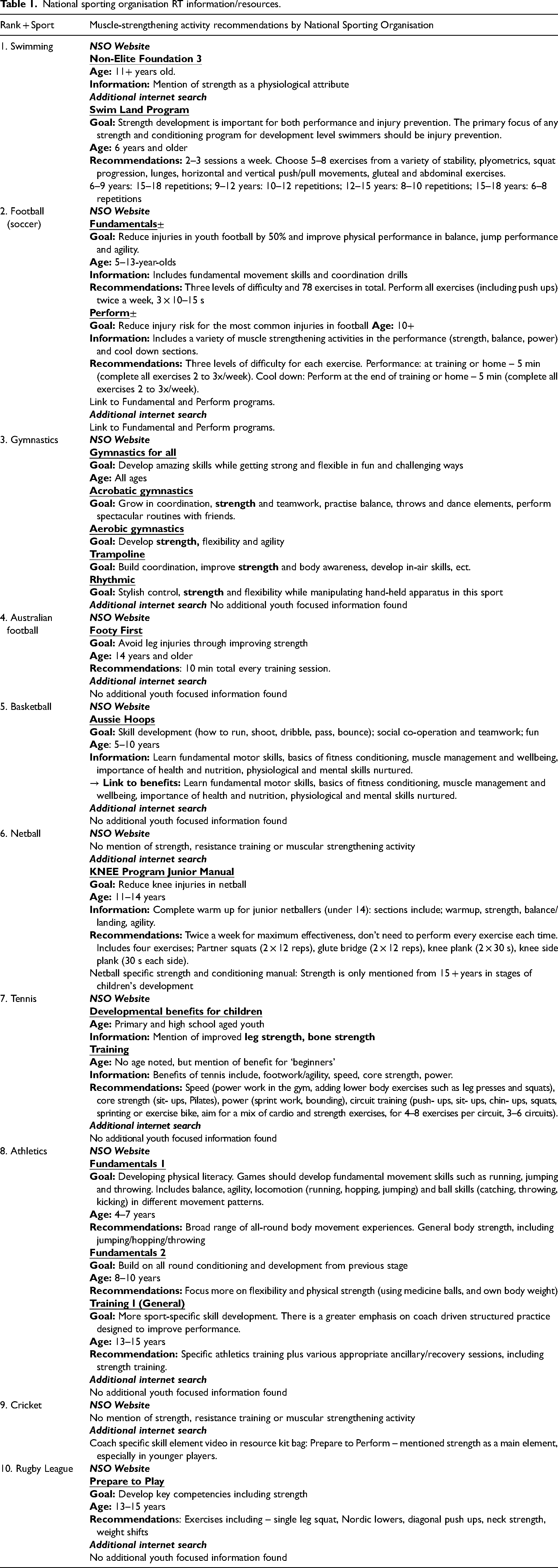
Key information was charted (see Table 1), including: name of program/resource, goal of program (if relevant), target age of participants, RT information included, and recommendations provided (including repetitions, exercise type, number of sessions each week).
National sporting organisation RT information/resources.
Synthesis of results
Information within resources provided by the NSOs in relation to RT was extracted, aligned to both age and frequency. This was in to ascertain alignment with current international youth MSA guidelines (i.e., 5–17 years [age], three days per week [frequency]). 6
Results
Swimming was the most popular sport (n = 1,662,218, participation rate [PR] = 34.3%), followed by football (soccer, n = 705,749, PR = 14.6%), gymnastics (n = 491,753, PR = 10.2%), Australian football (n = 386,824, PR = 8.0%), basketball (n = 370,355, PR = 7.6%), netball (n = 315,403, PR = 6.5%), tennis (n = 283,221, PR = 5.8%), athletics (n = 246,514, PR = 5.1%), cricket (n = 233,177, PR = 4.8%), and rugby league (n = 136,157, PR = 2.8%).
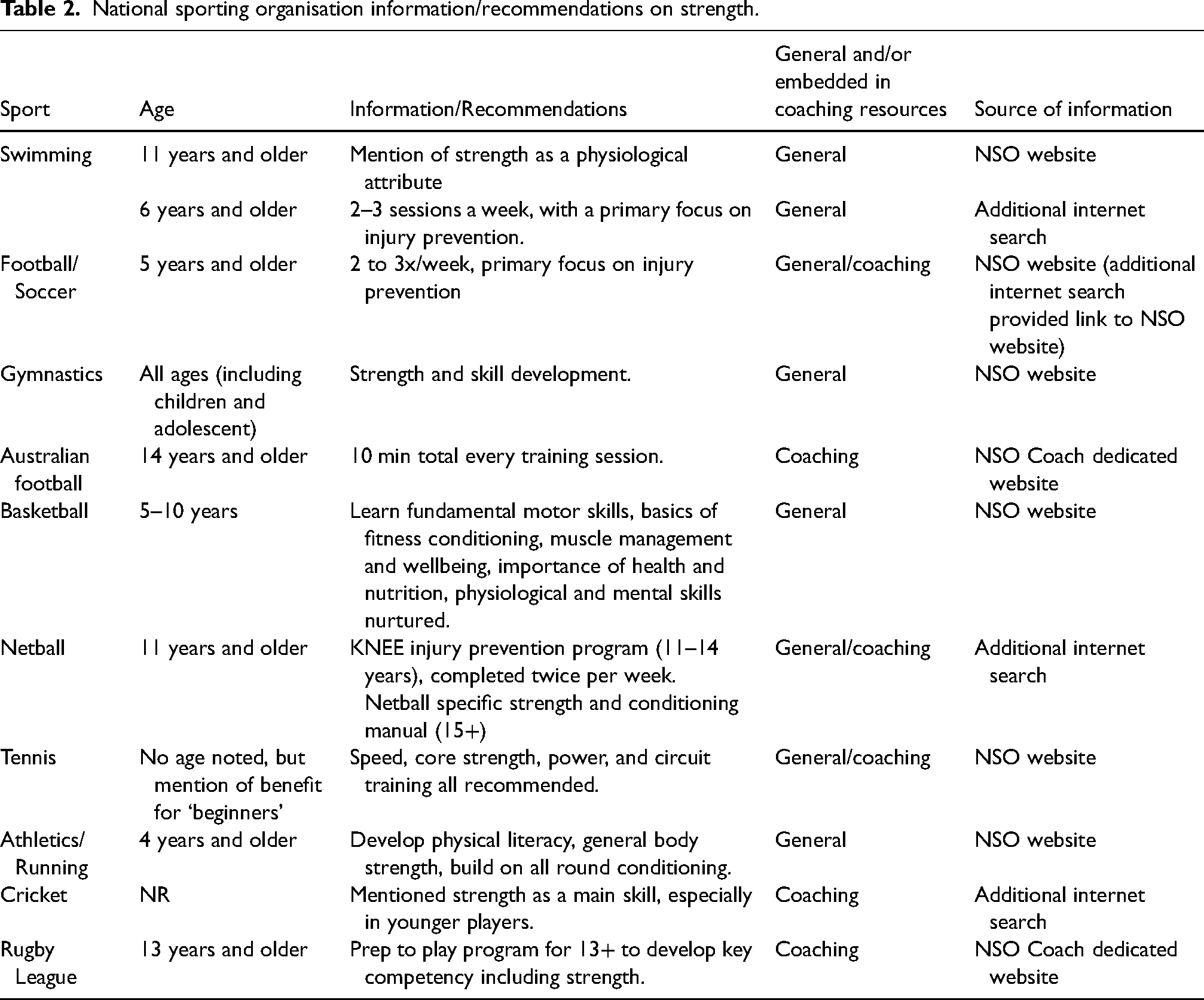
RT information/recommendations for each sport are provided in Table 2. Of the ten NSOs, all provided information/resources on RT for athletes or coaches. NSOs varied in the information provided, with resources from four sports (swimming, football, netball, rugby league) listing recommendations on duration, frequency, and provided example exercises; whilst two others (basketball, cricket) referred to strength as a necessary skill but did not specify further information. The detail within information/resources also varied, with two sports (football, swimming) stipulating extensive resources (i.e., detailed guides including exercise prescription information) for RT implementation, whilst one other (basketball) provided brief information (i.e., wording on website) in reference to fitness and ‘muscle management’. Alignment with age (i.e., 5–17 years) and frequency (i.e., three days per week for all youth) recommendations within current youth physical activity guidelines fluctuated, from low, moderate to high alignment (see Figure 1).
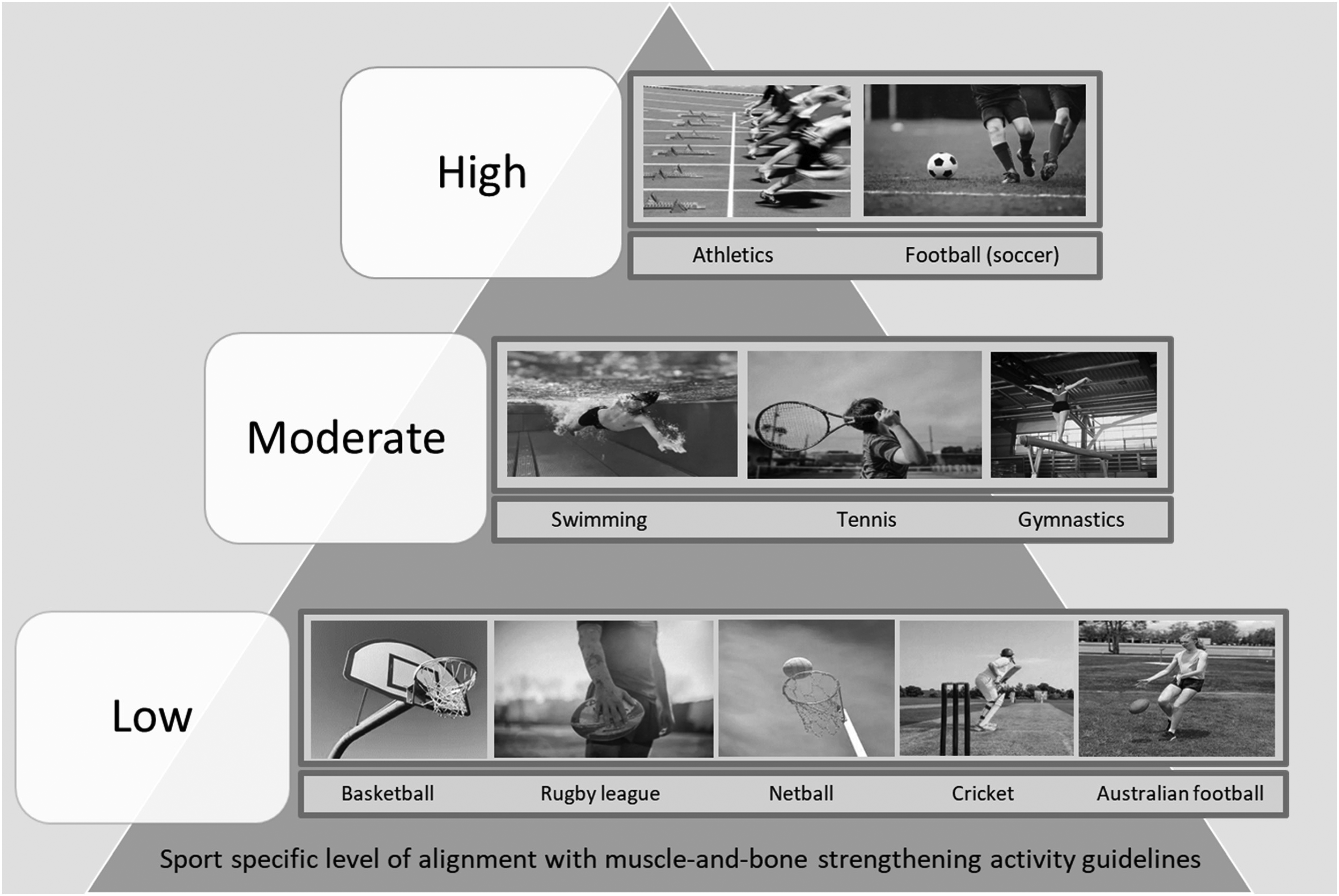
Sport specific alignment with MSA guidelines.
National sporting organisation information/recommendations on strength.
High alignment with MSA guidelines
Football (soccer; second most popular sport) focused on injury prevention and included specific exercises to be performed across the week (two-three times per week for 5–13-year-olds). The Perform + programs (Fundamentals+ and Perform+) were provided for athletes from 5 years old, indicating good alignment with the age component of physical activity guidelines. For frequency, these programs were closely aligned to guidelines, as they were recommended two to three times per week.
Athletics (eighth most popular) included extensive information aligned to the guidelines, recommending the development of physical literacy and general body strength from four years of age in their Fundamentals 1 resource. Frequency in days per week was not explicitly mentioned; however, recommendations within the Fundamentals 1, Fundamentals 2, and Training I (General) programs allude to involvement by all youth to develop necessary strength for participation.
Moderate alignment with MSA guidelines
Swimming (most popular) provided limited information via the NSO website, however the Swim Land Program resource was found during the additional internet search. This program had some alignment with age recommendations, advised for those aged six and older. This program included extensive information on suggested exercises, and how many repetitions to do, with a focus on injury prevention. Like football (soccer), the swimming resource was closely aligned to guidelines, with recommendations for two to three times per week.
Gymnastics (third most popular) offered general information on the development of strength that can occur in the various types of gymnastics. No specific age was mentioned, however RT was signposted as necessary for all ages, with specific mention of strength and “getting strong” as a goal within all gymnastics events. Number of days per week were not provided, however similar to athletics, involvement by all youth was noted to develop necessary strength for participation.
Tennis (seventh most popular) mentioned brief detail on leg and bone strength in their Developmental benefits for children resources. Within the training section, specific RT recommendations were provided with exercise and repetition information. These resources did not include a specific age range but did note the benefit of strength, speed, core strength, power, and circuit training for beginners/primary aged youth. As with athletics and gymnastics, number of days per week were not provided, however link to RT participation and improved health and fitness of all youth was alluded to.
Low alignment with MSA guidelines
For Australian football (fourth most popular), RT information was provided in coach specific resources. The Footy First resource recommended RT to avoid leg injuries for athletes aged 14 years and older. It was suggested that ten minutes of each training session be dedicated to improving strength, to avoid injury. The age recommendation from the Australian football resource was not aligned to guidelines, however the advice to perform in every training session was somewhat aligned to guidelines (however is dependent on the number of training sessions done each week).
Basketball (fifth most popular) alludes to RT through goals of 5–10-year-olds including ‘basics of fitness conditioning and muscle management’. This provides some alignment to the starting age recommendation within the guidelines, yet no link to frequency was evident.
Within netball (seventh most popular) an injury prevention program for 11–14-year-olds was included within resources, along with a strength and conditioning manual for those aged 15 years and older. These age recommendations are not aligned to guidelines, however the suggested frequency of twice per week almost meets the recommended three day guideline.
Cricket (ninth most popular) did not report an age for RT participation; however, mentioned strength as a main skill of the sport – especially in younger players. Similar to basketball, this is somewhat associated with age recommendations, but not with frequency.
Rugby league (tenth most popular) also provided a coach specific resource Prepare to Play, for athletes 13 years and older to develop strength as a key performance competency. Like Australian football, this age recommendation was not in alignment with guidelines, yet the mention of strength as a key competency was a partial link to RT being for all youth.
Discussion
The aim of our study was to explore and synthesise RT information and resources currently offered by the top ten ranked participation sports in Australia for children. A second aim was to determine the alignment of these resources with age and frequency recommendations with current international youth MSA guidelines
6
and consensus on youth RT.
7
Publicly available online resources offered by sports provided information related to RT; however, few were aligned to international MSA guidelines (i.e., performed three days per week for youth aged 5–17 years). To our knowledge, this is the first synthesis of RT related information/resources provided by NSOs within grassroots sport. Findings indicated that better and more consistent utilisation of evidence-based guidelines is needed across Australian
Only two of the top ten sports (football [soccer] and athletics) recommended RT in alignment with the age recommendation of the international guidelines (i.e., 5–17 years). A further five (gymnastics, basketball, tennis, cricket) were somewhat aligned, with some having slightly older start ages or less definitive terminology (i.e., all ages/beginners). The remaining three sports suggested commencement in adolescence. For these popular team sports (netball, rugby league, and Australian football), RT was introduced for adolescent athletes (i.e., by 11, 13, and 14 years of age respectively). This may negatively impact on the perceptions of parents, coaches, and youth themselves, regarding engaging in these types of activities earlier in life, as they might consider the introduction of resources from adolescence onwards as an indication RT should not be started until these ages. Not only is the development of strength necessary to allow for the many physical requirements (running fast, jumping high) that influence athletic performance and sporting success, 50 but it is also essential to reduce the risk of sport-related injury. 51 Focusing only on the technical and tactical aspects of a specific sport falls far short of preparing young athletes for the demands of training and competition and protecting them from injury, 52 as sport participation requires feats of strength, power, and stability from the early years. More specifically, enhanced muscular fitness in netball 53 and rugby players 54 is vital to improved performance, and should be developed from childhood through to later years. 54 Radnor and colleagues 55 support this notion, highlighting the importance of strength and conditioning activities, suited to the ability of the child, being introduced as early as possible during developmental stages – not withheld until adolescence. Although young athletes with suboptimal levels of strength and power may be able to experience early success due to their technical and tactical prowess, eventually they will need to address neuromuscular deficiencies as the intensity and volume of practice and competition increase. 56
An emphasis on injury prevention was another theme that emerged in the resources and information provided by NSOs, which may present a potential avenue for enhanced uptake of programs. Sports not only carry the inherent risk of accidental, non-contact injury, but also the risk of impact with opposition due to the physical contact associated with many of the included sports (e.g., rugby league, Australian football, basketball, netball). Positively, swimming and football (soccer) noted the specific application of RT focused resources as a mechanism to prevent injury from the younger years, whilst netball recommended RT-focused injury prevention from 11 years and older. Whilst it is positive that the RT injury prevention resources exist, as adolescent athletes can benefit from injury-prevention strategies, the best time to implement these programmes may be early in the developmental process.37,38 This will allow young people to develop strong and efficient movement patterns before neuromuscular risk factors associated with the adolescent growth spurt become evident. 57 Given the demands of youth sports, levels of muscular strength and power may be considered limiting factors of performance. In some cases, rehabilitation therapy may be needed to restore the loss of muscle potential that never should have been lost in the first place. 56 As such, all sports should consider the injury prevention benefits of RT and promote further participation in RT during childhood. This may combat the strength and power deficits limiting performance in the later years, as well as combat injury risk14,16 in young athletes of all ages.
Another focus of the information provided by sports was on the importance of muscular fitness and movement skill development to improve performance. Notably, gymnastics, athletics, and cricket all mentioned strength within their resources, with basketball and tennis also alluding to elements of muscular fitness. For gymnastics, this was not surprising as many of the required movements/skills comprise bodyweight RT. Competency in sport-specific skills across other sports requires feats of strength to maximise effective performance (i.e., tackling, landing) and reduce injury, starting from grassroots youth sports participation. It is promising to see these physical requirements and skills mentioned, yet greater detail and directive is needed for athletes, parents, and coaches. It is imperative that youth develop the knowledge, motivation, skills, and confidence to participate in RT in childhood, as this is the life stage that provides the optimal time to develop movement skill proficiency.37,38 Additionally, building on previous injury-related foci, evidence has shown a link between limited skill and sport-related injury. 58 This may provide additional support for the need to introduce RT earlier, and in all sports, to maximise skill and fitness, and positively impact on injury rates. Likewise, physical activity behaviours 4 and markers of health risk 59 present during childhood and adolescence track into adulthood. 5 Literature notes that young people need to develop adequate levels of fitness and motor skill competence to participate safely and effectively in physical activity and sport. 60 As such, it is essential that sporting organisations facilitate this enhanced competence and subsequent safety.
Sport has a key focus on developing young peoples’ physical literacy 61 to enhance physical, social, psychological, and cognitive domains that contribute to a healthy lifestyle. Indeed, the skills and behaviours developed during youth sport extend beyond immediate participation and can provide an essential step in the promotion of lifelong physical activity. The goal is to ensure young people are skilful movers, 62 perceive they are competent, 63 and believe in their abilities 64 as these individual characteristics have the potential to increase a young person's enjoyment of physical activity.21,22 Over time, enjoyment has consistently been shown to be a priority for continued participation in physical activity. 65 Providing young people with opportunities to develop new RT skills that enhance their competency across many daily and sport-specific tasks may be one way to enhance enjoyment. Therefore, developing RT skills in youth may improve the skills required to participate in a diverse range of activities and/or sports over a lifetime, 66 if or when sport is no longer a feasible choice.
The current lack of RT information and resources provided by many NSOs is of concern. Sport provides an already established, real-world setting in which to embed RT promotion initiatives for youth. Between 49–66%43,44 of Australian youth participating in organised sport, yet only ∼13% meet muscle strengthening guidelines – indicating scope for change to positively impact the immediate and lifelong physical activity behaviours of young people. However, many coaches may lack the knowledge, understanding and skills to deliver RT within their sport programs. Coaches within youth sport are often volunteers and or a parent of a participating young person. In most cases, these volunteers have not participated in formal coach training to prepare well for the role at grassroots levels. 67 These coaches likely understand the rules of the sport to enable basic training and match play, however may lack the expertise, knowledge, and skills to allow for holistic long-term athlete development. 68 To highlight the importance of muscular fitness in the long-term development of athletes, 37 coaches should be provided with adequate information, resources, and training to implement RT focused activities within their sport sessions. 68 This may enable youth sport participants to develop physical literacy and enhance sport performance in alignment with broader sport coaching and athlete development guidelines.
Give the lack of information found in sport organisation resources through this scoping review, updated evidence-based, best practice resources and training are needed to assist in upskilling coaches to champion RT initiatives within sport. Resources provided by NSOs could provide information on ways to incorporate RT into warm-ups, training sessions, and movement practice in general to enhance youth motor skills, physical activity behaviour, and reduce injury risk. The provision of these resources, with active training (i.e., coach workshops),69,70 is needed to maximise the potential benefit. Additionally, NSOs could benefit from the available international resources for various sports, including FIFA11+ (football/soccer) and the KNEE program (netball). Population level data has alluded to the impact adults can have over youth RT behaviours, noting health literacy and social norms as potential influences. 24 Likewise, associations have been found between parental/peer social support and youth RT participation. 71 This highlights the need to maximise parent and coach knowledge, via resource provision and professional coach development within grassroots youth sport. Provision of such resources may enhance their knowledge, understanding and skills of the ways to deliver RT and engage youth in these positive health behaviours.
Much of the focus of sports performance research has focused on the ability of athletes to develop and perform the skills linked to success in that activity, at an elite level. In addition to this, a compelling body of work has highlighted the performance and injury-reducing benefits of RT14,16; however less research has investigated the importance of developing muscular fitness and RT skills in grassroots sports. To our knowledge, this is the first synthesis of RT related information/resources within grassroots sport. This, along with the inclusion of national participation data and systematic approaches to the search, highlight the strengths of this study. However, there are several limitations to consider. First, whilst the search was systematic (using commons terms: Strength training; Resistance training; Muscular strength; Muscular fitness), information may have been missed dependent on the diversity of terminology used in relation to RT. Second, our evaluation only considered publicly available NSO information and did not consider academic publications, individual coaching resources or resources are available in other locations, such as paid subscriptions or login restricted content. Third, given available participation data only included the top ten sports, the generalisability of the findings to other sports are limited. Future research might consider broadening research to include personalised coach accounts of RT training activities, which could be obtained via a survey or interviews, academic publications, and a greater diversity of sporting contexts to build on the current rapid review's findings.
Conclusion
Sport participation requires feats of strength, power, and stability from the early years. As such, there is a need to promote the development of these physical attributes in youth sport. Our findings highlight the variation in RT focused information provided by youth sport. There is an opportunity for youth sport organisations to promote RT participation and improve physical activity behaviour, whilst maximising the safety, skills and strength of young people participating in sport. Sporting organisations have the potential to provide this information, given their extensive reach into the youth population, to educate athletes and coaches (and parents) from grassroots levels on the need for muscular fitness. More prescriptive information, aligned with physical activity guidelines, may better equip youth, parents and coaches to participate in and promote RT. Future studies should look to evaluate the impact of updated, guideline concordant information, and the influence on RT behaviour and skills in youth.
Practical implications
This review presents a call to action for the improvement of RT information and resources within grassroots youth sport. Subsequent research arising from these findings may lead to:
Targeted update of national sporting organisation information and resources surrounding resistance training. Improving lifelong physical activity promotion in youth sport. Overcoming misconceptions and promoting importance of resistance training in sport (injury prevention and sport performance) amongst adults and youth.
Footnotes
Credit authorship contribution statement
I, Dr Sarah Grace Kennedy (corresponding author), state and certify that all individual authors contributed to the paper: “Provision of online information and resources for resistance training in Australian youth sports: A scoping review” as listed below: SGK conceived the study, assisted in acquisition of the data, conducted the analysis, and initial interpretation of the data. She drafted the initial manuscript, reviewed subsequent versions, and approved the final manuscript version. SJM acquired the study data, drafted the initial manuscript and approved the final manuscript version. JMG, RSL, DRL, JJS, NE and AB all contributed to the conception of the study and interpretation of data, reviewed the manuscript and approved the final manuscript version. All authors agree to be accountable for all aspects of the work.
Declaration of conflicting interests
The authors declared no potential conflicts of interest with respect to the research, authorship, and/or publication of this article.
Funding
The authors disclosed receipt of the following financial support for the research, authorship, and/or publication of this article: This work was supported by a Western Sydney University School of Health Sciences Early Career Research Start-up grant.
