




Abstract
The recent rise in professionalisation and institutionalisation of competitive surfing has resulted in a dramatic increase in the use of alternative training modalities. These are often employed in an attempt to increase exposure to surf-like activities when appropriate ocean conditions are not available. It is commonly accepted that practice sessions should be grounded in theory, with training content informed by a clear scientific rationale. Despite this, research is yet to offer surfing coaches and surfers effective strategies to assist in implementing appropriate ‘off water’ training modalities. It is widely accepted that integrating a representative learning design is crucial towards the transfer of performance to competition environments. Therefore, the aim of this paper is to promote representative learning design (RLD) as a contemporary, principled framework that can underpin the creation of surfing training design and performance. Examples of constraints relevant to surfing are considered, and the efficacy and rationale of popular training methods are challenged. Finally, practical implications and coaching tools to underpin the implementation of representative learning design in surf training are provided.
Introduction
Competitive surfing has experienced a rise in professionalisation and institutionalisation in recent years.1,2 As a result, surfers now have increased access to high-performance training facilities, specialist technical coaches and high-performance staff. It is also evident, that the sport is becoming an emerging area of research, with a significant increase in surfing literature in the last decade. 3 Despite this, there is currently a lack of empirical knowledge behind creating effective training environments to develop surfing-specific skills.
Surfing organisations are currently investing in the development of dry-land training facilities with the aim to increase exposure to “surf-like” activities for surfers. The use of dry-land facilities follows examples set by more established skill-based Olympic sports such as diving, 4 skiing, 5 and snowboarding.6,7 For surfing, dry-land, means out of the ocean training, and often includes using, in isolation, or combination, skateboard parks, ramps and jumps, gymnastics equipment, trampolines, foam pits, and more recently, virtual reality. 8 Despite the increase in organisational funding and subsequent adoption of these training modalities, there is currently no empirical evidence supporting their effectiveness in terms of skill development and transfer to competitive surfing performance in the ocean.
The current literature involving competitive surfing is heavily weighted towards physiological characteristics and physical preparation requirements for surfers. A recent review 9 identified 36 studies which have investigated the physiological and anthropometric characteristics of surfers. Physiological characteristics of interests include: paddling endurance, paddling power, muscular strength, and mobility. Complimentary anthropometric characteristics such as height, bone breadths, arm span and sitting height have also been identified as being important for surfers, alongside body composition characteristics such as body mass, body mass index and body fat percentage. Only five studies explored specific technical manoeuvres including the bottom turn, 10 aerials 11 and all scoring manoeuvres12–14 and three studies reported on tactical competencies such as wave perception and competitive behaviour. 9 However, these studies were all reviews that focused on scoring and/or technical analysis during ocean-based heats, rather than training design and skill development to prepare for such performance contexts. While the majority of research focuses on physical preparation and technical performance, there is a clear gap in the literature regarding the design of training environments (dry-land or ocean-based) for the purpose of skill development. Subsequently, competitive surfing lacks a bespoke, principled approach underpinning skill acquisition and development practices despite the increasing professionalism in other aspects of the sport.
Due to the inherent unpredictability of weather conditions (such as swell availability and wind direction) that limit quality surfing training in the ocean, it is no surprise that surf coaches and surfers seek alternative training modalities. The premise behind these alternate modalities is that they (are at least believed to) represent movement patterns and conditions experienced in the ocean and facilitate a degree of performance transfer. Predominant dry-land modalities include skateboarding, surf skating, wave pools, gymnastics and trampoline work to supplement, or at times, replace ocean surfing. 8 However, despite the novelty and popularity of these methods, their value and efficacy in terms of preparing surfers for competition in the ocean is not currently supported in the literature.
Recent work has highlighted the gap in the literature surrounding skill acquisition in most action sports including surfing,1–3 and highlighted the importance and potential impact of targeted research in this area.11,13,15–19 A scoping review 3 synthesised the available literature addressing skill learning in action sports, and five key themes emerged; learning in i) social, ii) physical, iii) cultural, iv) cognitive/psychological contexts, and v) the provision of various forms of feedback. The authors suggested that most articles rarely mentioned theoretical and conceptual frameworks, and/or lacked clarity in terms of principled application.
To address these key omissions, the purpose of this paper is to promote representative learning design (RLD) as a contemporary, principled framework that can underpin the discussion of surfing training design and performance. To achieve this, the paper will i) critically explore surfing through the lens of the constraints-led approach (CLA), ii) theoretically challenge the efficacy and rationale of popular dry-land competitive surfing training methods through a representative learning design principles; and iii) provide recommendations for practitioners to inform the design of future principled competitive surfing training environments based on a RLD.
A constraints-led approach to surfing
Previous research in action sports has highlighted the importance of acknowledging the relationships between the performer and their environment when contextualising training behaviours.2,3,20–24 The performer-environment interaction represents the underlying premise of an ecological dynamics (ED) approach whereby perception and action are considered together in a tightly coupled relationship.25–27 A surfer's environment is filled with a variety of constantly changing sources of perceptual information, such as; wave characteristics, weather conditions and water movement. These sources of information offer affordances which can be perceived by the performer as movement solutions in accordance with the environment and task goals. 28 For example, a novice surfer may be unable to ‘read’ (predict) any of the incoming swell, whereas an experienced surfer can attune to subtle changes in environmental information and perceive affordances that functionally satisfy their intentions (e.g., wave or manoeuvre selection to score points). Therefore, an ED approach conceptualises expert skilled performance as the attunement to task-specific information sources within the environment, to afford effective goal-directed movement strategies. Viewing surfing through an ED lens, therefore, considers the dynamic interaction between a performer (surfer), their environment (ocean, training facility), and the requirements of the task (competition regulations, equipment).
Within the ED approach, the constraints model forms an integral component in terms of both identifying and manipulating the interacting influences on skilled behaviour relating to the individual, environment, and task.29,30 The CLA follows a non-linear pedagogy whereby behaviour in any environment is shaped or guided by an individual's interaction with unique combinations of physical and social information sources. 30 The benefits of implementing a CLA approach in training designs have been reported widely across various sporting contexts, including emerging applications in action sports.31–33
A common misconception from traditional skill acquisition approaches is that there is only one correct (i.e., textbook) movement solution for task success. From a competitive surfing context, there is no fixed method to surf a wave or perform a manoeuvre to guarantee a successful outcome/performance. In fact, surfers are encouraged (often required) to adapt their own unique styles, techniques and movement patterns to dynamic environmental conditions to effectively satisfy judging criteria and stand out from their competitors. Therefore, the CLA suggests that surfers adapt to changing constraints and self-organise 34 in an attempt to provide appropriate movement solutions.
Task constraints represent task-specific factors that shape and guide performance such as contextual information (e.g., score, time available, priority), equipment availability and judging criteria (Figure 1). In surfing, the ‘priority’ rule enforced during heats, facilitates the sharing of waves and determines who is entitled to ride a wave that both surfers perceive as offering scoring opportunities. 35 Once a surfer catches a wave, priority shifts to the other surfer to allow them access to choose their preferred wave. This constraint creates affordances for surfers to interact with opponents and implement wave selection strategies with the intention of selecting (attunement) waves offering the highest scoring potential. A surfer without priority, however, is constrained to the actions of their opponent and may not be allowed to surf a wave even if they perceive it as a scoring opportunity.
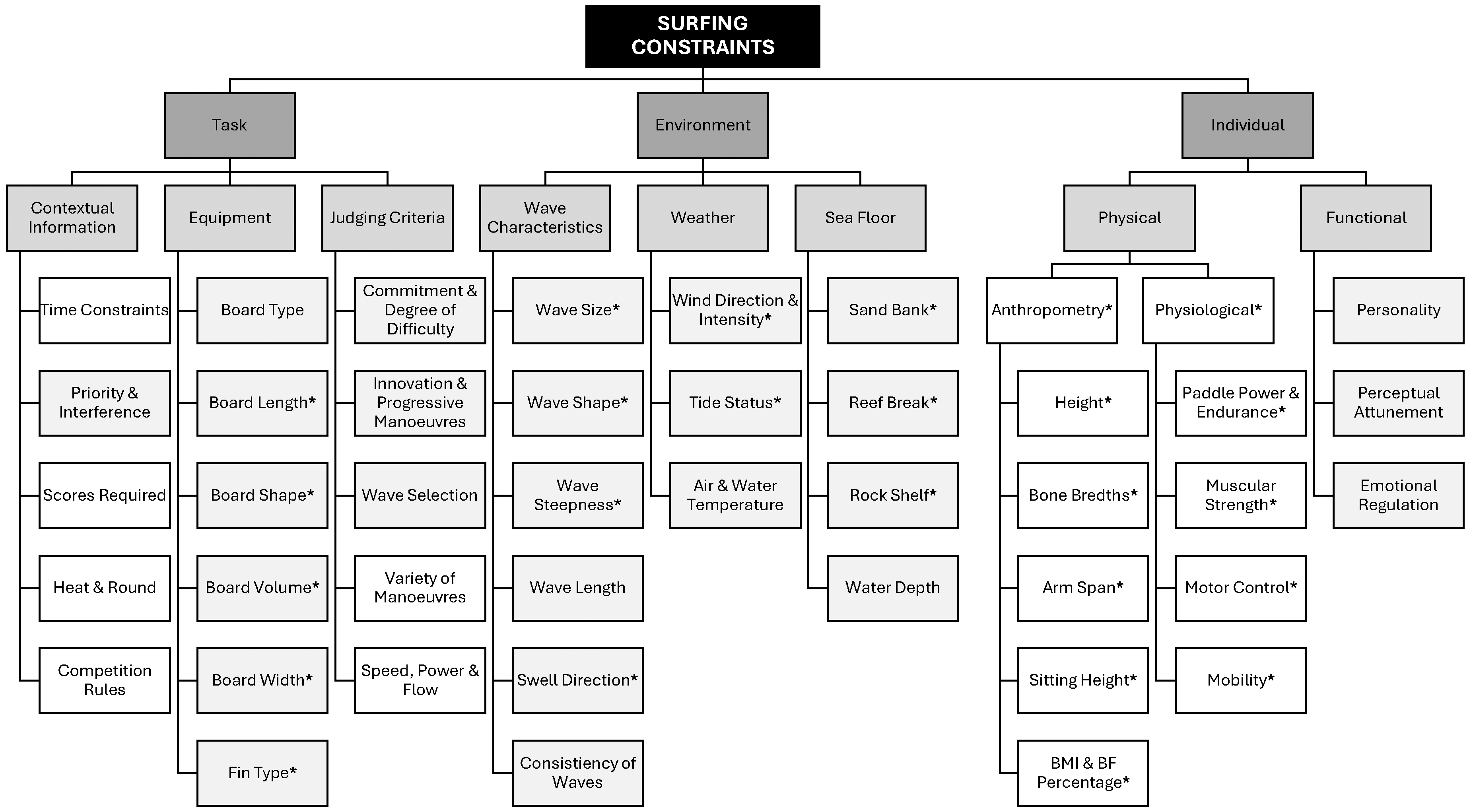
The unique constraints of competitive surfing, highlighting the current available literature in each area.
Another unique aspect of competitive surfing is the lack of pre-determined expectations or requirements regarding the type of manoeuvres (task constraints) surfers can perform during competition. In addition to the lack of defined requirements, surfers are encouraged to create unprecedented manoeuvres through the inclusion of ‘innovation’ within the judging criteria. 35 The innovation element promotes constant modification of the judging criteria as the definition of successful performance can change between events or heats given different geographical locations or varying ocean conditions. One example is the increase in scoring potential for aerial manoeuvres in elite competition over the last decade.11–14 Investigations during the 2007 and 2010, 14 2013 36 and 2014–2016 11 World Championship Tour found significant correlations between performing innovative aerial manoeuvres, and increased wave scores (success). An investigation by Ferrier and colleagues (2015) 11 concluded that waves including one or more successful aerial manoeuvres were scored on average 1.9 points higher (P < .001) than waves without aerials. Critically, the average wave score for surfers in the top 10 of the 2013 World Championship Tour was 1.04 points higher per wave compared to the rest of the field. 36 Therefore, a surfer who cannot successfully adapt to conditions and perform innovative manoeuvres, would be at a disadvantage during competition.
This need for adaptability, highlights the influence task constraints have on performance, and their relationship with different ocean conditions (environmental constraints). These manoeuvre (task) constraints are also seen to vary between event locations and different competitions. Findings from Ferrier and colleagues 11 reported vast differences in the prevalence of turning, aerial and barrel riding manoeuvres across 11 different event locations during the 2015 World Championship Tour. There were significantly more barrel rides completed at the Teahupo’o (Tahiti) event, aerial manoeuvres completed at the Peniche (Portugal) event, and turning manoeuvres completed at the Lower Trestles (California, USA) event when compared to other event locations. Therefore, surfers need to understand, and prepare for, the contextual constraints between events/surfing locations and implement movement strategies in alignment with both the changing environmental and judging constraints.
To account for the change in task and environmental constraints during competitions, surfers commonly make changes to equipment (e.g., fins) and/or select different equipment (e.g., board) before each heat. The differences between equipment often involve modifications to surfboard length, width, volume, thickness, shape, number of fins, stiffness of fins, and depth of fins. The rationale behind equipment changes is mostly to align the equipment's capabilities with the expected environmental conditions. For example, an increase in board length will typically make it easier for a surfer to paddle onto larger waves37,38 and using stiffer fins will allow a surfer to hold their line in steep barrelling conditions.39,40
The physical constraints of an environment are general features that characterise the performance location at a specific time.26,29 Competitive surfing is largely influenced by physical environmental constraints to an extent where events at locations around the world are often delayed, shifted, or even cancelled due to unsuitable ocean conditions. It is widely accepted that the main environmental factors that affect surfing conditions are the sea floor (depth, reef presence), wave characteristics (height, peel angle, breaking intensity) and wind (direction, intensity).41–46 The complex nature of environmental factors must be considered, and at times, can dictate whether a location is suitable and/or viable for training and competition. Previous work11,13 has reported how examples of physical-environmental constraints can significantly change between event locations and are likely to influence the opportunity (affordances) for completing manoeuvres (and the allocation of points). For example, large, steep waves breaking on shallow reefs at low tide may present surfers with more opportunities for barrel rides. Whereas, smaller, pointbreak waves breaking on sand with light onshore winds may provide more opportunities for turns and aerial manoeuvres. Therefore, the nested relationship between the role of such physical constraints and the emergence of task-specific constraints dictated by ocean conditions at the time must be considered in surf training strategies.
Physical capabilities (individual constraints) of surfers have been the focus so far in the literature (see Figure 1). However, there are many unique task (criteria, equipment and context) and environmental (wave characterises, weather/swell conditions and sea floor) constraints that have yet to be fully considered. Further, the targeted manipulation of these constraints in practice may contribute largely towards the transfer of skill into competition. Therefore, an important consideration for competitive surfers, coaches, and support staff is addressing the interconnected relationship between the environment, and task constraints to inform effective skill development tasks that adequately represent and facilitate transfer to competition demands.
Coaching Takeaways
Surf training should recognise and address the dynamic interaction between the performer, environment and task constraints, moving beyond a sole focus on the individual, such as strength and conditioning or physical preparation. Emphasise the coupled relationship between perception and action within the non-linear individual-environment interaction, highlighting that there are multiple ways to perform manoeuvres, which supports creativity in surfing. This approach encourages surfers to attune to task-specific information sources and develop movement strategies that are adaptable to changing conditions, improving performance and skill retention.
Representative learning design in surfing
Considering the unique constraints of competitive surfing discussed above, designing representative learning environments for competitive surfers is extremely challenging. A RLD approach advocates for the principled design of training and learning modalities to align with sport-specific demands and environments experienced within a competition.47,48 There is substantial evidence that integrating a RLD approach is crucial to effectively transfer skills developed in practice into complex performance and competition environments.26,48–52 In the absence of representative tasks, practice risks becoming a stand-alone, artificial environment, resulting in poor translation to competition environments.53,54 Pinder and colleagues 50 proposed a model of RLD founded on two key principles underpinning the design of representative tasks, namely action fidelity, and functionality. See Figure 2.
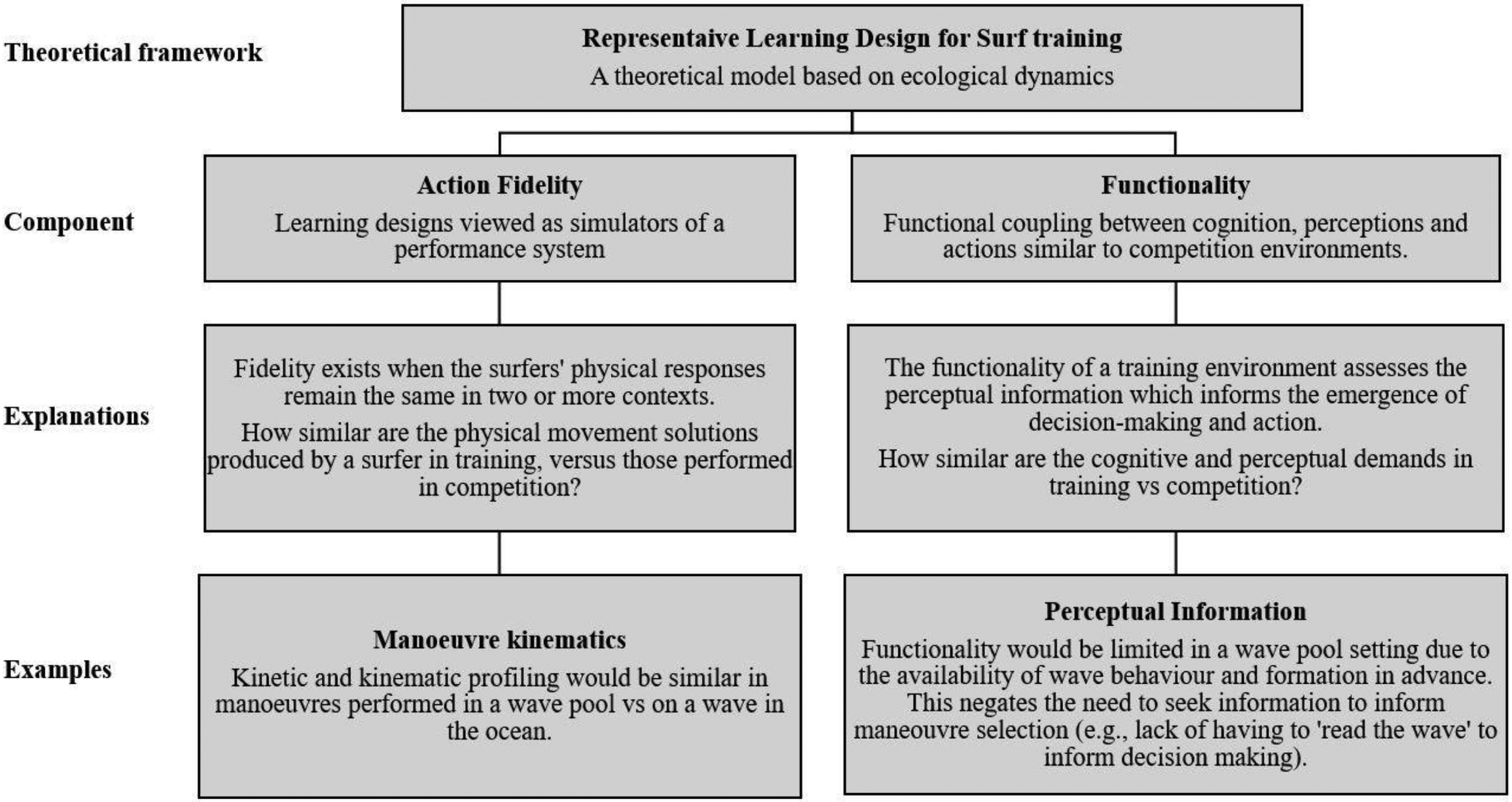
A model of Representative Learning Design (RLD) as applied to competitive surfing. Adapted from Pinder et al., (2011, p.324).
Action fidelity
Action fidelity exists when the performer's emergent behaviour remains the same (high fidelity) between training and competition environments. 50 Fidelity can be determined by the physical movement solutions produced by a surfer in training (e.g., dry-land), and how closely they match movements performed, or required, in competition contexts (ocean). Training modalities such as skateboarding, surf skating, trampoline, foam pits etc., are all intended to allow surfers to reproduce similar movements to those performed while surfing in the ocean. However, due to fundamentally different physical environments (dry-land surface, stationary surface, predictability etc.,) and task constraints (board type, speed, amplitude and complexity of movements), the representative nature and skill development benefits of these training modalities remain questionable.
To date, only one investigation has directly examined a RLD approach in surfing training. Ferrier et al., (2021) 55 investigated the use of a commonly used dry-land training modality (skateboard ramp) to develop aerial manoeuvre performance ability in surfers. Findings suggested that surfers exhibited similar pelvic and sternum sequencing between surf (ocean) and skate conditions (dry-land). The timing of these movements during the initiation phase of a whole-body twist was also comparable in both conditions, indicating action fidelity. The authors concluded that practicing aerial manoeuvres on a skate ramp is representative of performing the same manoeuvre on a wave, and therefore should be considered a viable training modality given the affordances perceived led to comparable emergent behaviours. However, despite this dry-land training modality offering opportunities to perform actions high in fidelity, the perceptual environment itself (i.e., skateboard ramp/park) must also be considered to examine the critical link between perception and action.
Coaching Takeaways
Assess/evaluate action fidelity to determine how closely aligned actions in practice/training are with performance/competition (i.e., are the surfers practicing the same thing as what they are doing in competition?) Fulfilling Action Fidelity enhances skill transfer from training to competition by ensuring that training movements are relevant and effective in actual surfing conditions, ultimately improving performance.
Functionality
Functionality exists when the critical coupling between cognitions, perceptions and actions is upheld, and akin to that of the competitive environment. Therefore, a representative training environment should afford access to comparable (but controlled) sources of perceptual information to those of the competitive environment. 50 Upholding the functionality of a training environment allows surfers to attune to reliable perceptual information affording the emergence of authentic decision-making and action. A major limitation of most dry-land training modalities is the lack of inherent variability that a surfer will be exposed to in the ocean. Surfers are required to ‘read waves’ to predict wave behaviour, make decisions, and then execute, whereas dry-land training often involves a high volume of repetition within environments that are largely static and predictable.
As with other sports, the athlete's level of experience may play a significant role in the success of competitive surfing. Anecdotally, it is common to hear reports of ‘experienced’ surfers predicting how a wave will break before it happens due to the ability to “read the break”. Therefore, an experienced surfer can be characterised as demonstrating functional perceptual attunement, reflecting their ability to identify and exploit key sources of information that an inexperienced surfer may not attune to at all. 56 Specifically, attunement in a surfing context may be predicated on perceiving key information sources that specify how the ocean is likely to behave, such as currents, tides, previous breaks, and winds. An investigation by Furley and colleagues 56 found that highly experienced surfers are significantly more effective in selecting waves offering scoring potential compared with non-surfers. This ability underpins a crucial competitive advantage, as wave selection is a contributing factor towards higher scores. 35
Alongside the benefits of wave prediction prior to take-off, perceptual attunement can also be witnessed in surfers while riding a wave. 57 Knowledge of the wave's behaviour in advance, can allow the surfer to position themselves on the wave in a way that can maximise scoring potential. This is especially important for high-scoring barrel rides, as the score is based on how deep within the barrel a surfer is positioned and how long they can remain out of view (behind the lip of the wave). 35 Barrel riding is largely predicated on the individual's perceptual ability to predict the wave's future movements/state quickly, and accurately. Practically speaking, this is the surfer's ability to read the wave and understand i) when the wave will provide a barrel section, ii) the length of this section, iii) the speed of the barrel, and iv) when it will ‘close-out’ . Luke and colleagues 57 have reported that wave expertise is associated with optimal visual attention and that experts identify key information sources (on the wave) earlier than novices. Key information sources on the wave included the lip, the pocket and the shoulder. 57 In alignment with an ED approach, these characteristics of the wave are of high value due to the affordances for scoring associated with them.
Apart from ocean training, there does not appear to be any dry-land training modalities that comprehensively sample the perceptual-cognitive demands (functionality) of ocean-based competition. As discussed, this is likely due to the inherent difficulties involved with reliably accessing appropriate environmental conditions rich in critical perceptual information to train in (e.g., ocean conditions, and break characteristics). 57 A review by Farley and colleagues 15 supported using virtual reality (VR) for skill acquisition in surfing, in an attempt to improve the functionality of dry-land training. Using VR technology may therefore offer the opportunity for surfers to be immersed in virtual environments that sample selected perceptual information sources, although in a dry-land setting. 15 Despite this, a recent narrative review of VR in sport settings determined there is very limited research to support VR use in any sport. 58 The authors suggest the effectiveness of VR as a training tool can only be determined if the representation of the tool itself has been assessed. This can be assessed by using the modified perceptual training framework, 59 however in surfing's case, this has not yet been completed. Therefore, current evidence indicates that VR should not be prioritised over ocean training, however may be useful as an addition to current training practices (e.g., familiarisation for waves/ locations) in the future as technology develops.
In summary, to uphold representative learning design in competitive surf training environments, the principles of action fidelity and functionality must be referenced when considering the implementation of alternate training modalities. The dynamic nature of the ocean poses great challenges for designing representative surf training tasks. As discussed previously, Ferrier 15 found that the sequencing of body movements during aerial manoeuvres was similar between performance on a skateboard ramp and on a wave in the ocean. Despite evidence suggesting action fidelity may exist between in this dry-land training environment and ocean-based performance, it could be argued that this modality is lacking functionality due to the differing perceptual information (ramp vs wave) available. Using this modality as an example, the representativeness of several widely adopted alternate training modalities must be questioned, or at least approached with caution.
Coaching Takeaways
Design training environments to provide perceptual information that is as similar as possible to competitive settings to enhance surfers’ authentic decision-making and actions. Adopting RLD enhances perceptual attunement to key information sources available in the environment, allowing surfers to better predict wave behaviour and make effective decisions, ultimately improving performance and scoring potential in competitions.
Affective learning design
Building on the founding principles of RLD, the adoption of Affective Learning Design (ALD) is also critical when considering training modalities. Traditionally, the display of emotions has been considered detrimental to performance, and often removed from the acquisition of expertise. 60 However, adopting an ALD approach, invites surfers to harness their emotions to create more affective and effective learning environments. An ALD embraces emotions commonly experienced in performance environments whilst also acknowledging the individual's emotional tendencies throughout the learning process. 61 An ALD approach proposes that using situation-specific task constraints in an effective way can evoke emotional responses, engagement and investment from surfers, akin to what they are likely to experience in competition.48,50,62 Without the targeted manipulation of constraints, it is common for surfers (or other performers) to “go through the motions” in training settings, and bypass the opportunity to develop expertise whilst experiencing and adapting to a range of authentic performance-related emotions. 63
An effective way to implement ALD (and RLD) principles and evoke emotional engagement in training is to create hypothetical, yet immersive scenarios that present challenges and channel surfers’ intentions. 61 Maloney et.al. 61 demonstrated that the incorporation of a scoreboard during professional taekwondo practice led to more engaging practice with higher levels of reported anxiety and arousal. This can be achieved by simulating vignettes of competition during ocean sessions by introducing time restrictions, and scoring differentials that challenge surfers to perform in less-than-ideal contexts that are out of their control. It could be suggested that situational information can also change the affective and behavioural demands in surfing training environments to elicit more affective learning, representative of competition.
Similarly, limiting the number of waves allowed to be surfed within a specified period of time that contribute to a final score (limited waves in competition with the best two contributing to the final score) will place added emphasis on the accurate selection of waves to catch and subsequent performance. Removing the freedom to catch multiple waves increases the stakes, and forces surfers to purposely discriminate between waves they could catch versus those that offer the highest scoring potential. For added emphasis, the inclusion of rewards and/or consequences (e.g., public group leader boards) could be introduced to provide further incentives to perform in these scenarios.
The regulation of fear and anxiety64,65 has also been proposed as important functional considerations for action-sports like surfing. Competitive surfing frequently requires competitors to ride large waves, and often negotiate dangerous ocean conditions. Subsequently, surfers must consider that a poor decision or the incompletion of a manoeuvre, does not only result in poor performance, but can also result in physical harm. This high-risk nature of the sport requires surfers to regulate their emotions and retain control of their focus. It is recommended that competitive surfers practice embrace emotions as part of training to understand and exploit optimal anxiety and arousal states in high-risk competitive environments. 66 Creating high-pressure scenarios in mock heats and practicing in challenging conditions can improve the affective response and improve the overall representativeness within a training session.
Coaching Takeaways
ALD promotes the incorporation of emotions into training, creating environments that mimic competitive conditions and improve emotional regulation and engagement. This approach helps surfers experience and adapt to competition-related emotions, improving their ability to regulate anxiety and arousal, leading to better performance and resilience in emotion-laden competition contexts.
Embracing RLD in surfing: considerations and challenges
The above sections have advocated for a principled approach to surfing training and adopting an ED approach. Further, the current understanding of the unique constraints applicable to surfing has been discussed, suggesting that key environmental and task constraints are yet to be fully appreciated and integrated into training design decisions. Founded on a principled approach to surf training, this section will discuss surfing specific challenges in the implementation of a RLD approach and the importance of variability, adaptability, innovation, and creativity in competitive surfing. These considerations will then be addressed in the coaching tools section, which will critique the representativeness of commonly used training modalities and propose important questions to consider when conceptualising new RLD inspired training designs.
Challenging surfing culture
For many years the wider culture of surfing (competitive and recreational) has commonly been seen as “unstructured”, “laid back” and “unprofessional”. Since its origins in the early 1900's, 67 surfers have typically been portrayed as rebellious, free-spirited and relaxed in nature. 68 The rise in professionalism and institutionalisation1,2 over the last decade, however, has challenged this stereotype and has shifted competitive surfing towards a more high-performance culture akin to more “mainstream” sports. The recent debut of surfing in the Olympics has also resulted in higher participation rates in grassroots competitive surfing, ushering in a new generation of athletes.
Despite the increased professionalism of the sport in competition, training environments (in the ocean) are not regulated and typically lie outside of institutionalised structures. Recent investigations report that this has resulted in a rise in unique sociocultural constraints such as localism, 69 overpowering masculine behaviours,70,71 and detrimental power dynamics 72 in the line-up. A suggested explanation for these issues may simply be a result of overcrowding in popular beach breaks. Unlike traditional sports, which can create more sporting infrastructure to cater for increasing numbers in participation, the number of surf spots remain largely static, as the number of surfers grows.
Gold standard (ocean) training
A critical, yet (on the face of it) obvious consideration for surfing coaching staff is prioritising ocean training when favourable conditions exist. To align with a RLD approach, competitive surfers should capitalise on every opportunity they can to train and develop technical skills in the ocean, immersing themselves in conditions that commonly reflect competition. Further, time spent in the ocean should be enriched through the strategic manipulation of task constraints (e.g., clear intentions, design of mock heats, scenarios), rather than allowing athletes to aimlessly ‘go through the motions’ when conditions are conducive. Other sports that are heavily influenced by environmental factors such as skiing 73 and snowboarding21,22 have also advocated this approach, prioritising ‘on-slope’ training during favourable weather conditions. To account for the uncertainty around forecasting surf conditions and often late notice of conducive conditions, coaching and support staff need to be flexible with scheduling dry-land training around “gold standard” ocean training. Therefore, it is recommended that all other modes of training, such as those discussed herein, complement ocean training in situations where conditions are not conducive and ocean-training is not a viable option.
Variability and adaptability
To further assist the learning process, contextual interference (variability and adaptability of task) has been shown to be an important factor.74–76 Investigations in similar sports to surfing, such as snowboarding7,76 and skateboarding,77,78 have demonstrated the positive learning effects that contextual interference can have on skill retention and performance. Due to the uncertain nature of competitive environments, coaches should re-create irregular and erratic training conditions.53,54 Incorporating deliberately variable conditions allows surfers to practice overcoming uncertain environmental constraints and to adapt their actions accordingly as required in competition, where conditions will not always be favourable. Skill acquisition viewed through this lens, refers to skill ‘adaptability’ or skill ‘attunement’ due to the emphasis on the performer and environment relationship. It could be proposed that ‘acquiring’ certain surfing manoeuvres may progress a surfer to a sub-elite level, whereas the ability of a surfer to attune, and adapt, to frequently changing environmental constraints may characterise expert performance.
With this in mind, it may be favourable for surf coaches to incorporate higher levels of practice variability through manipulating tasks, and individual and environmental constraints during both in-water and dry-land training sessions. For example, coaches can create mock heats/ competitions with varying task constraints (refer to Figure 3) or increase exposure to variable surf conditions. It is recommended that each skills session should promote exploration and invite surfers to perform a range of different manoeuvres, in no particular order, and have the freedom to search and ultimately exploit the available conditions, rather than following structured or prescribed drills emphasising any pre-selected manoeuvre(s).
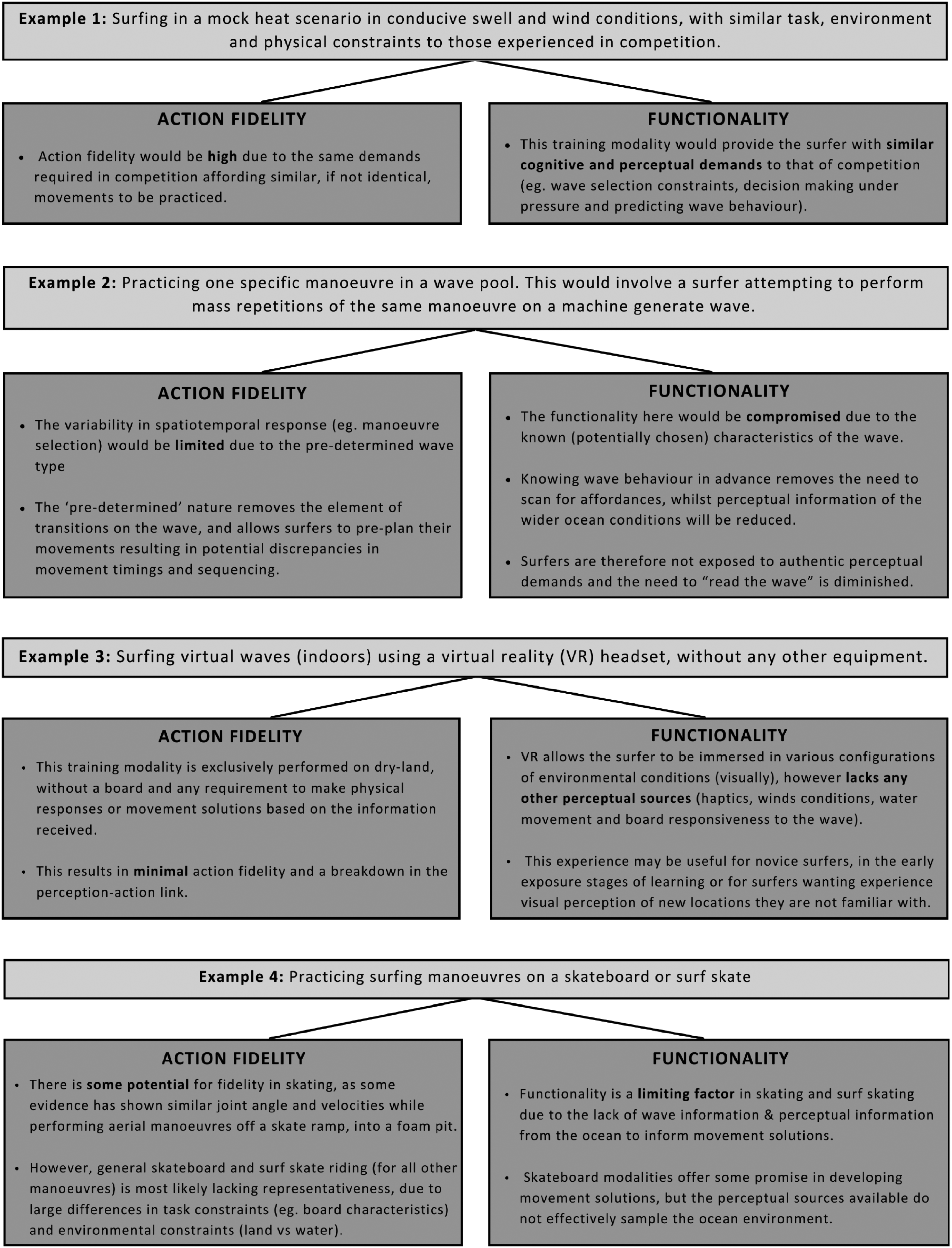
Important questions to pose and specific constraints to consider, when seeking to improve the representativeness of surf-related training.
Innovation and creativity
Surfing performance is determined subjectively, with i) style, ii) flow, iii) variation, and iv) innovation included as pivotal judging criteria. Surfers are therefore encouraged to create unique manoeuvres and demonstrate creativity by capitalising on the lack of restrictions on the type of manoeuvres (task constraints) they can perform. The importance of creativity for skill acquisition in action and adventure sports has been illustrated by Immonen et al. 24 The authors explain that unlike traditional sports where sociocultural tendencies often restrict behaviours (e.g., highly structured training, programming and rules), 79 action and adventure sports often invite high levels of creativity in practice environments. Promoting creativity in training invites surfers to explore and exploit their learning environments to embrace opportunities for innovation and creativity opportunities in competition-like environments. 80 Subsequently, it is recommended that creativity in both coaching and performance solutions should be a major focus in designing practice contexts. 81
In addition to creating unique manoeuvres, surfers often express their creativity through their unique styles of executing common turns and manoeuvres. This suggests surfers may perceive different opportunities for actions, when presented with the same environmental information, which highlights the unique perception-action coupling and non-linear nature of their decision making (55). For example, while performing top turn carves or roundhouse cutbacks, each surfer's individual style and flair can differentiate them from their competition. These variations in style can significantly influence the judges’ scoring, often resulting in higher points for more stylish and creatively executed turns. For instance, while one surfer may perform a top turn carve with a smooth, flowing style, another may employ a more aggressive, sharper angle, highlighting their unique approach. Individuality can be further exemplified in cutbacks, where the timing, power, and fluidity can reflect a surfer's personal style. Moreover, creativity is typically evident in aerial manoeuvres, where variations in height, rotation, and landing techniques make each manoeuvre distinct and reflective of the surfer's unique flair.
Despite the potential lack of action fidelity when practicing skateboarding, snowboarding and wakeboarding, participation in these sports may promote innovative thinking with anecdotal reports suggested that surfers often integrate “tricks” usually performed in these ‘donor’ sports. 82 Some surfers have already been seen practising surfing switch (non-dominant foot forward) which is commonly performed in the three other board sports mentioned. While this cross style of training should not be prioritised, occasional exposure may improve the functionality of training and uphold a RLD approach. However, at this point there is no research to support this notion.
A contentious issue in this space is the novel idea of using artificial intelligence to assist in the creation of new movement patterns. 79 To overcome the limitations in creativity, it is suggested that coaches and athletes observe and analyse AI generated movement patterns whilst immersed in virtual reality. 79 This could allow surfers and support staff to examine different perspectives and visual angles to develop deeper understanding of key manoeuvres, and potentially discover novel variations. Additionally, this type of training may be used to foster creativity in a safe environment that may not be possible in ocean-based training. Approaching manoeuvre innovation in this way could afford athletes a novel and highly functional dry-land training modality which could compliment their in-water training.
Unstable surface training
The use of unstable surface training is a popular training modality within the surfing community, however evidence supporting transfer to surfing performance is lacking. 83 The commercialisation of unstable surface training aids, such as IndoBoards, Revolution boards and Bosu balls has made this type of training accessible, affordable and feasible for surfers of all abilities, whilst social media has further contributed towards the popularity of this training modality by presenting and distributing media of such modalities and/or brand endorsements. As a result, it is common to see high-level surfers posting content of complex and creative tasks on extremely unstable, moving or unpredictable surfaces/environments. Common examples include i) squats, deadlifts, lunges and push-ups on balance boards, ii) standing, squatting, upper body pressing on a Swiss ball, iii) jumping and landing on unstable surfaces, and iv) cognitively demanding tasks (e.g., juggling, decision making, throwing and catching) while simultaneously balancing on balance boards. Exercise selection in this sense is often made in an attempt to re-create surfing-like movements with the aim to improve the fidelity to those of which are performed in surfing and develop relevant sensorimotor abilities that can transfer to surfing. 83
Regardless of the underlying motivation, current evidence suggests there is minimal justification for including this type of training in a surfers program. 83 Unstable surface training is often prescribed to combine strength and power development, increase ‘core’ recruitment and injury prevention into single exercises. 84 The available literature consistently demonstrates that unstable surface training is an inferior training method for strength85–91 and power83,92–94 development when compared to traditional (stable surface) training. In fact, significant reductions in maximal force capacity have been found in the squat, deadlift, chest press, shoulder press and plyometric exercises using unstable surfaces. 83 These outcomes from unstable surface training may be detrimental to surfers, as lower body power has been identified as a crucial physical characteristic of surfers, and associated with improved surfing performance. 95 Therefore, the lack of fidelity in these types of exercises would suggest surfers should prioritise their time in favour of empirically established areas of training (e.g., strength & conditioning or more time in the ocean).
Coaching tools
Considering the theoretical principles and surfing specific considerations discussed above, the following section provides real-world examples of how RLD might be incorporated into surfing practice through targeted training designs. The intention here is to provide coaches and surfers with practical examples along with principled critiques of how RLD principles are applied within a wider ED approach to surfing practice. It is recommended that coaches use these tools to guide the creation of training environments and the selection of surfing-specific training modalities.
Figure 4 visually represents the varied nature of common training modalities used in surfing. It examines how these modalities fulfill the RLD principles of action fidelity and functionality in surf-specific training environments, such as the ocean, wave pools, virtual reality simulations, and on skateboards and surf skates. These examples reinforce the respective strengths and weaknesses of particular modalities, while also highlighting the challenges associated with fulfilling both RLD principles in unison. In contrast, Figure 3 complements this analysis by presenting specific questions for coaches to consider. These questions guide the manipulation of training constraints and contextual factors to enhance the representation and effectiveness of surf-related training sessions.
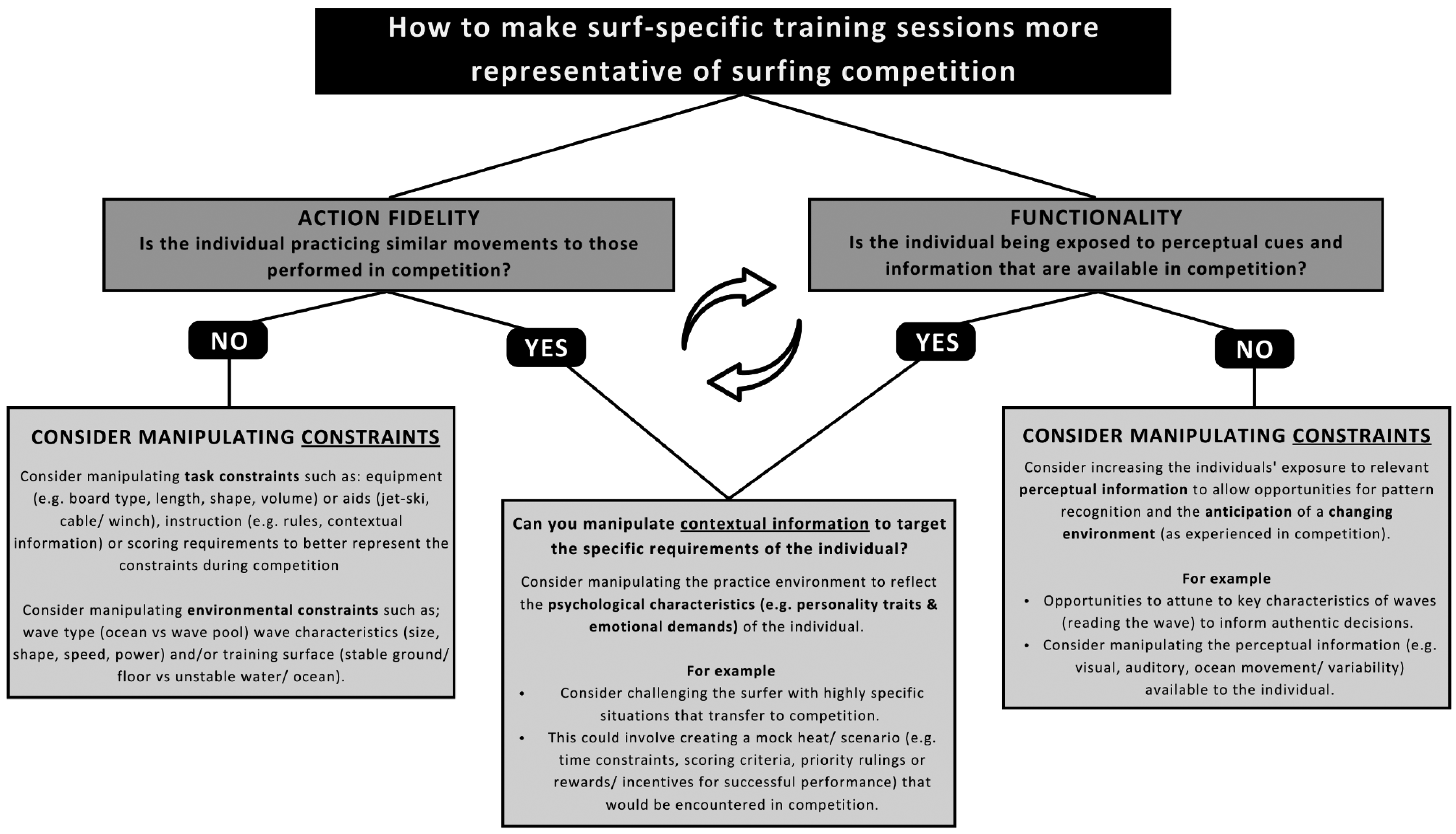
The representative nature (action fidelity and functionality) of common surf training modalities.
Conclusion
Competitive surfing currently lacks a base of evidence informing principled approaches to surf-specific skill development and training design. Surfing athletes are faced with a unique set of constraints in their dynamic performance environments and a plethora of social and environmental challenges to prepare effectively. This paper advocates that surfers and coaching staff should consider the interacting individual, task and environmental constraints when designing and selecting training activities that appropriately sample ocean-based performance contexts. A range of modalities claim to be effective (such as skateboarding, surf skating, virtual reality, unstable surface training), however, are limited in their representative nature. It is recommended that surfers and coaching staff prioritise conducive surfing conditions to maximise effective training time in the ocean, whilst also manipulating individual, task and environmental constraints during dry-land training to align with a RLD approach (as demonstrated in figure 3). Through the strategic integration of RLD principles, competitive surfing learning environments will be enriched and effectively prepare surfers for the unique demands of their rapidly evolving sport. This principled approach has been formulated to serve as a foundational guide for coaches, practitioners and researchers to adopt and refer to when considering training design for competitive surfers.
Footnotes
Abbreviations
Declaration of conflicting interests
The authors declared no potential conflicts of interest with respect to the research, authorship, and/or publication of this article.
Funding
The authors received no financial support for the research, authorship, and/or publication of this article.
