



Abstract
Although research has investigated how appraisals are linked with categories of emotions (e.g. pleasant and unpleasant emotions) in sport, research into how stress appraisal components are associated with specific discrete emotions commonly experienced in sport has received scant attention. This study examined how pre-performance stress appraisals were related to pre-performance anger, anxiety, dejection, excitement, and happiness. Athletes (N = 458) completed measures of pre-performance stress appraisals and emotions in relation to their latest competitive performance. Path analyses revealed challenge appraisal was positively linked to pleasant emotions, and threat appraisal with unpleasant emotions. Specific emotions also possessed discrete links with appraisal components. For example, uncontrollable-by-anyone appraisal was positively linked with anger and dejection but inversely linked with anxiety. Moreover, controllable-by-others appraisal was positively associated, and controllable-by-self appraisal was negatively associated, with anxiety. Excitement and happiness were similarly related with appraisal components. However, controllable-by-self appraisal was positively and more strongly associated with excitement, whereas controllable-by-others appraisal was also positively and directly linked with happiness. These findings highlight how stress appraisals are linked with common emotions in sport and offer applied implications for coaches, sport psychologists and athletes regarding ways that could help regulate pre-performance emotions in sport.
The study of emotions in sports has received significant research interest,1,2 including the key role that pre-performance emotions can play in attentional processes during performance.3,4 Therefore, understanding potential correlates of emotions can inform applied strategies that facilitate pre-performance states which are beneficial for performance. Emotions have been defined as conscious or unconscious cognitively appraised responses to an event that elicit ‘a cascade of response tendencies manifested across loosely coupled response systems, such as subjective experience, facial expression, cognitive processing and physiological changes’ (p. 218). 5 Therefore, emotions play a central role in the stress process as they represent an initial response to specific events which are appraised as meaningful and/or stressful, 6 such as competition in sport.
Appraisals and emotion
Appraisal is posited to be a central cognitive antecedent of emotions, which refers to the elements that provide meaning to the individual when facing a situation, involving two important processes. 7 Primary appraisal, which refers to the importance and meaning individuals posit to an event, and secondary appraisal which reflects an evaluation of the person's ability to deal with a demand. 6 The cognitive motivational relational theory (CMRT) 6 proposes that each emotion can be predicted by a pattern of multiple appraisal components. Based on the transactional stress theory, 7 Peacock and Wong 8 developed the Stress Appraisal Measure (SAM) comprising three components of primary appraisal (centrality, challenge, threat) and three components of secondary appraisal (controllable-by-self, controllably-by-others, uncontrollable). Centrality refers to the perceived importance the event has to one's well-being or goals. Challenge and threat appraisal reflect the motivational congruence in terms of the extent the situation is consistent (e.g. challenge appraisal) or inconsistent (e.g. threatening) with the person's goals. Specifically, a threat appraisal is reflective of an evaluation of future harm, whereas a challenge appraisal is an evaluation of a future gain.6,7 The affective tone of emotions is proposed to be determined by whether the event is evaluated as a threat (i.e. likely leading to unpleasant emotions) or challenge (i.e. likely leading to pleasant emotions).6,9
Secondary appraisal is suggested to determine the specific discrete emotion experienced6,9 and focuses on one's coping potential with a situation whereby perceptions of situational control are argued to play an important role. 7 From the work of Peacock and Wong, 8 secondary appraisal components include controllable-by-self (i.e. whether the situation can be controlled by oneself), controllable-by-others (i.e. whether the situation can be managed with the help or support of accessible others), and uncontrollable-by-anyone (i.e. perceiving no one can control the situation).
It should be noted that primary and secondary appraisals are not termed as such to reflect the order of occurrence in the appraisal process and can occur simultaneously.6,10 That said, Lazarus 9 suggested that challenge and threat appraisal can also be considered as relational meanings of appraisal components, 11 which refers to an overall evaluation or appraisal of the significance of an event. 6 For example, when individuals appraise situations as uncontrollable by oneself and/or others, this could reflect threat, whereas perceiving an event as controllable by oneself and/ or others could reflect challenge.10,11
Researchers have identified that threat appraisals are linked with unpleasant emotions in sports, and challenge appraisals are linked with pleasant emotions,11–14 supporting propositions from the CMRT6,9 and other sport-specific stress and appraisal theoretical frameworks.15,16 Based on the CMRT, discrete emotions are generated by specific appraisals. However, little research has yet to investigate the range of stress appraisal components (especially secondary appraisals) underpinning emotions frequently experienced by athletes. Specifically, some research has examined the link between appraisals and categories of emotions based on their affective tone (i.e. pleasant vs. unpleasant emotions)11,12,14 or qualitatively explored appraisals underpinning emotions identified by Lazarus6,9 in competitive athletes.17,18 However, research has yet to examine how stress appraisal components are directly linked with discrete emotions, including emotions beyond those listed by Lazarus.6,9 These include excitement and dejection, which are frequently experienced by sports performers. 19
Present research
In the present research, we examined the link between pre-performance stress appraisals and the intensity of emotion experienced in athletes. It was predicted that challenge appraisals, and appraisals reflective of having control would be positively related to the intensity of pleasant emotions, whereas threat appraisals alongside appraisals that reflect less control, would be positively related to the intensity of unpleasant emotions. It was also predicted that the intensity of each emotion would be linked with discrete or specific combinations of appraisals. Furthermore, aligning with propositions and previous research that challenge and threat appraisals can be considered as relational meanings,9,11,12 we examined whether centrality, controllable-by-self, controllable-by-others, and uncontrollable-by-anyone appraisals were linked with each emotion directly and indirectly via challenge and threat appraisal.
Method
Participants
Participants were 458 university student-athletes (305 men, 149 women; four did not disclose) with an average age of 19.68 (SD = 1.28) years. They competed in a range of sports for an average of 8.66 (SD = 3.86) years with the most common being soccer (n = 158), rugby (n = 93), athletics (n = 30), netball (n = 28), swimming (n = 18), field hockey (n = 17) and basketball (n = 15). Their highest level of competition was international/national (19%), regional/county (47%) and club (34%), and their current level of competition was international/national (14%), regional/county (28%) and club (58%).
Measures
Procedure
Following ethical approval from the first author's institution, participants were invited to take part in academic sessions. Participants were provided with an information sheet, informed about the voluntary nature of participation, and assured questionnaires were completed anonymously and about their right to withdraw. After completing a consent form, participants completed the measures described above (see note a). a Once completed, participants returned the questionnaire to the researcher in a sealed envelope and were thanked for taking part.
Results
Data screening revealed no extreme outliers or significant deviation from normality for all variables apart from dejection (i.e. skewness > 2). Therefore, we conducted non-parametric analyses for dejection in subsequent analyses. Descriptive statistics, internal consistencies of scales, and correlations between variables are presented in Table 1. To aid interpretation of associations between variables, we used Cohen's (1988) 20 criteria for small (r > .10), medium (r > .30), and large (r > .50) effects. Notable statistically significant correlations included threat appraisal being positively associated with all three unpleasant emotions (with medium- to- large effect sizes), and challenge appraisal being positively associated with the two pleasant emotions (with large effect sizes). Centrality was positively associated with all unpleasant emotions and excitement (mostly with small effect sizes). Also, stress appraisals reflective of having control (by oneself and with support of others) were positively associated with the pleasant emotions (with medium- to- large effect sizes) whereas appraisals reflecting not having such control (e.g. uncontrollable-by-anyone) were associated with the unpleasant emotions (with small-to-medium effect sizes).
Descriptive statistics, correlations and internal consistencies (n = 458).
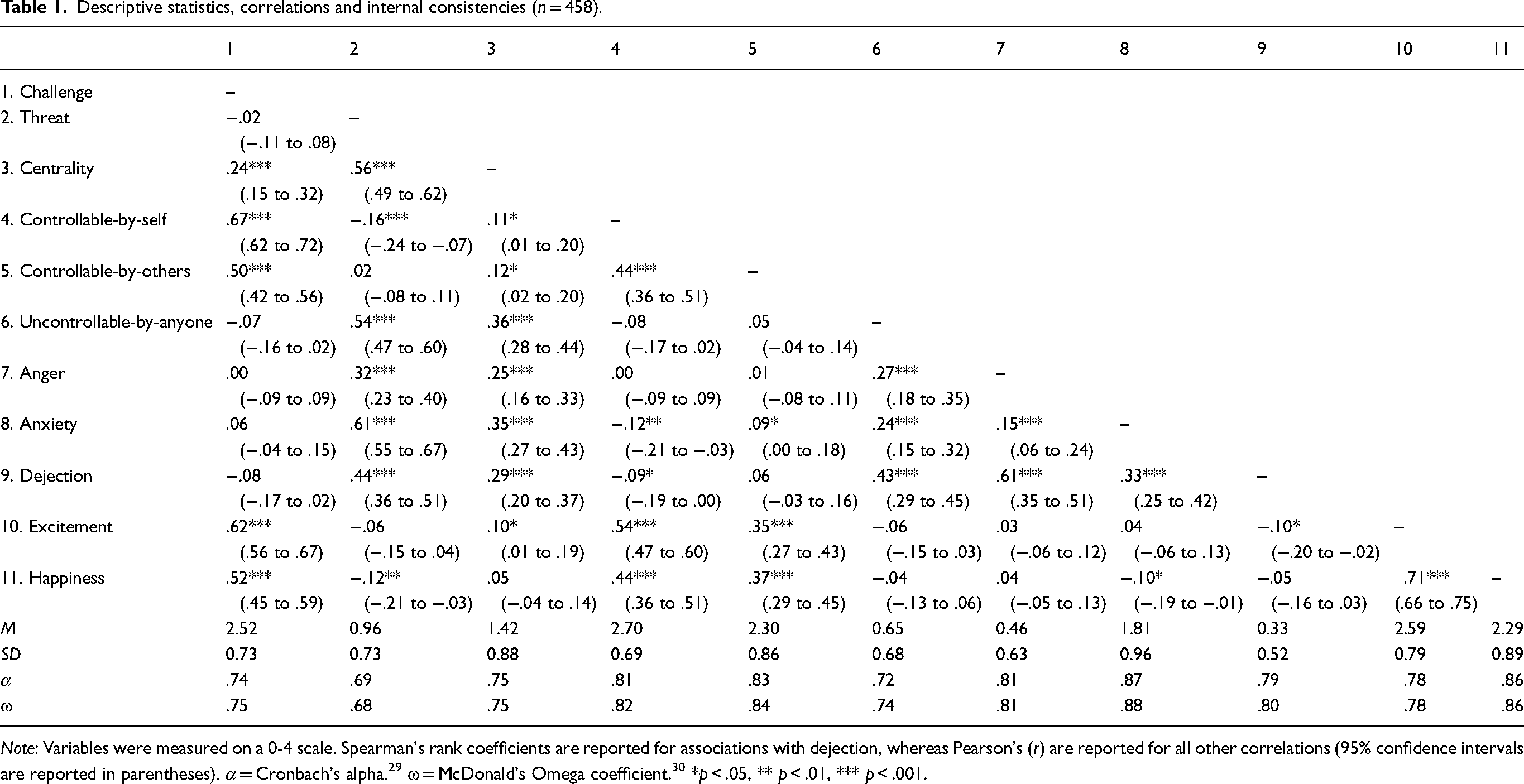
Note: Variables were measured on a 0-4 scale. Spearman's rank coefficients are reported for associations with dejection, whereas Pearson's (r) are reported for all other correlations (95% confidence intervals are reported in parentheses). α = Cronbach's alpha. 29 ω = McDonald's Omega coefficient. 30 *p < .05, ** p < .01, *** p < .001.
To examine how stress appraisals were linked with each emotion, we conducted path analyses aligned with previous research that has examined links between appraisals and categories of emotions,11,12 and theoretical propositions regarding challenge and threat appraisal as relational meanings of other appraisal components.9,11,21 Specifically, centrality, controllable-by-self, controllable-by-others, and uncontrollable-by-anyone appraisals were entered as independent variables, then challenge and threats appraisals as potential mediating variables, and then emotions as outcome variables. For path analysis, to provide robust estimates of model fit, we applied Satorra-Bentler (S-B) estimation. To ensure no significant pathways were missing in the final model, the initial model included direct links between each proposed independent variable (centrality, controllable-by-self, controllable-by-others and uncontrollable) to both mediating variables (challenge and threat appraisal) and each emotion (dependent variables), as well as between challenge and threat appraisals (mediating variables) and each emotion (outcome variables). This model also included bidirectional pathways between the two unpleasant emotions and amongst the three unpleasant emotions due to their relationships in the correlational analyses. This initial model revealed a partially adequate model fit, S-Bχ2 (7) = 24.18, p < .001, CFI = 0.988, TLI = 0.919, RMSEA = 0.073, SRMR = 0.013 (see note b). b
A more parsimonious model was then calculated by removing the statistically non-significant pathways from the model. This revised model is displayed in Figure 1(a) and (b), which revealed an improved, and good model fit, S-Bχ2 (24) = 42.01, p = .01, CFI = 0.988, TLI = 0.975, RMSEA = 0.040, SRMR = 0.023 (see note b).b Figure 1(a) and (b) display the same final model but presented in separate figures for unpleasant (Figure 1(a)) and pleasant (Figure 1(b)) emotions for ease of illustration. In terms of links between appraisal components, centrality, controllable-by-self and controllable-by-others were positively linked, and uncontrollable-by-anyone appraisal was inversely linked, with challenge appraisal. In contrast, centrality and uncontrollable-by-anyone appraisals were positively linked, and controllable-by-self appraisal was inversely linked, with threat appraisal.
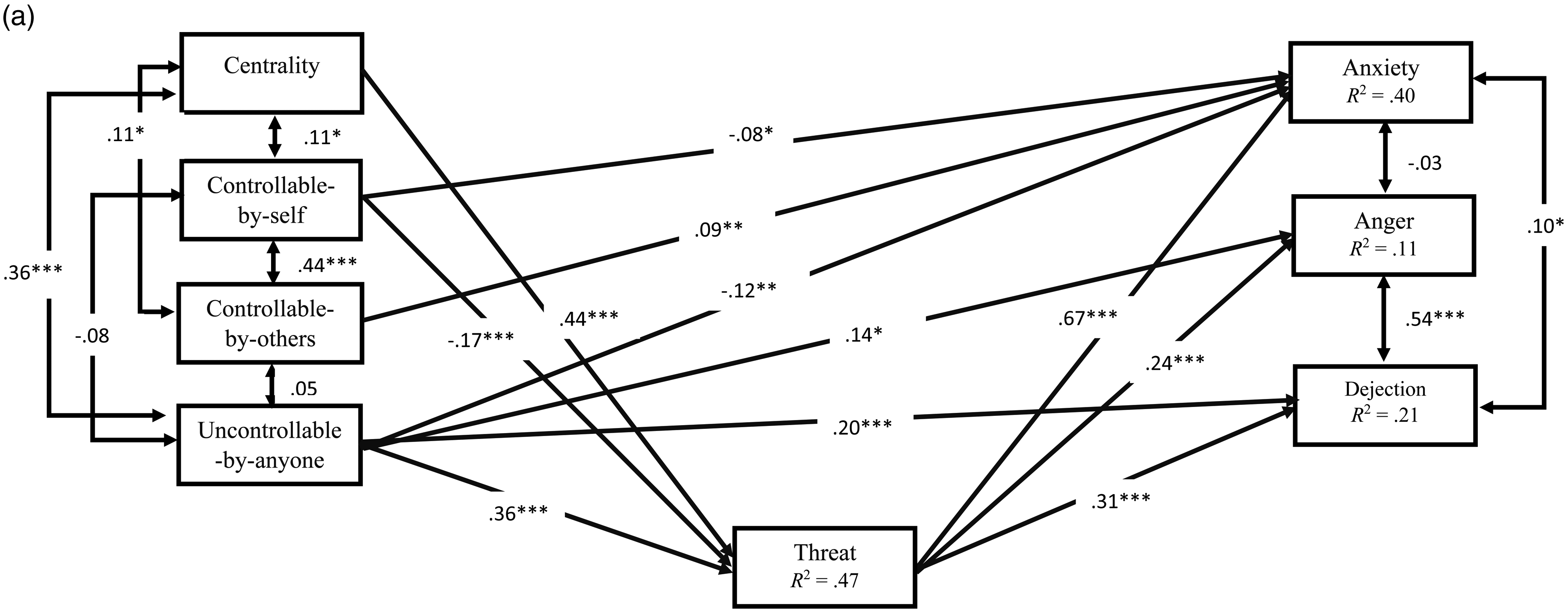
Figure 1. (a). Pathways for the links between appraisal components and unpleasant emotions in the final model. Note: Standardised bootstrap coefficients from path analysis are reported. *p ≤.05, **p < .01, *** p < .001. (b). Pathways for the links between appraisal components and pleasant emotions in the final model. Note: Standardised bootstrap coefficients from path analysis are reported. *p≤ .05, **p < .01, *** p < .001.
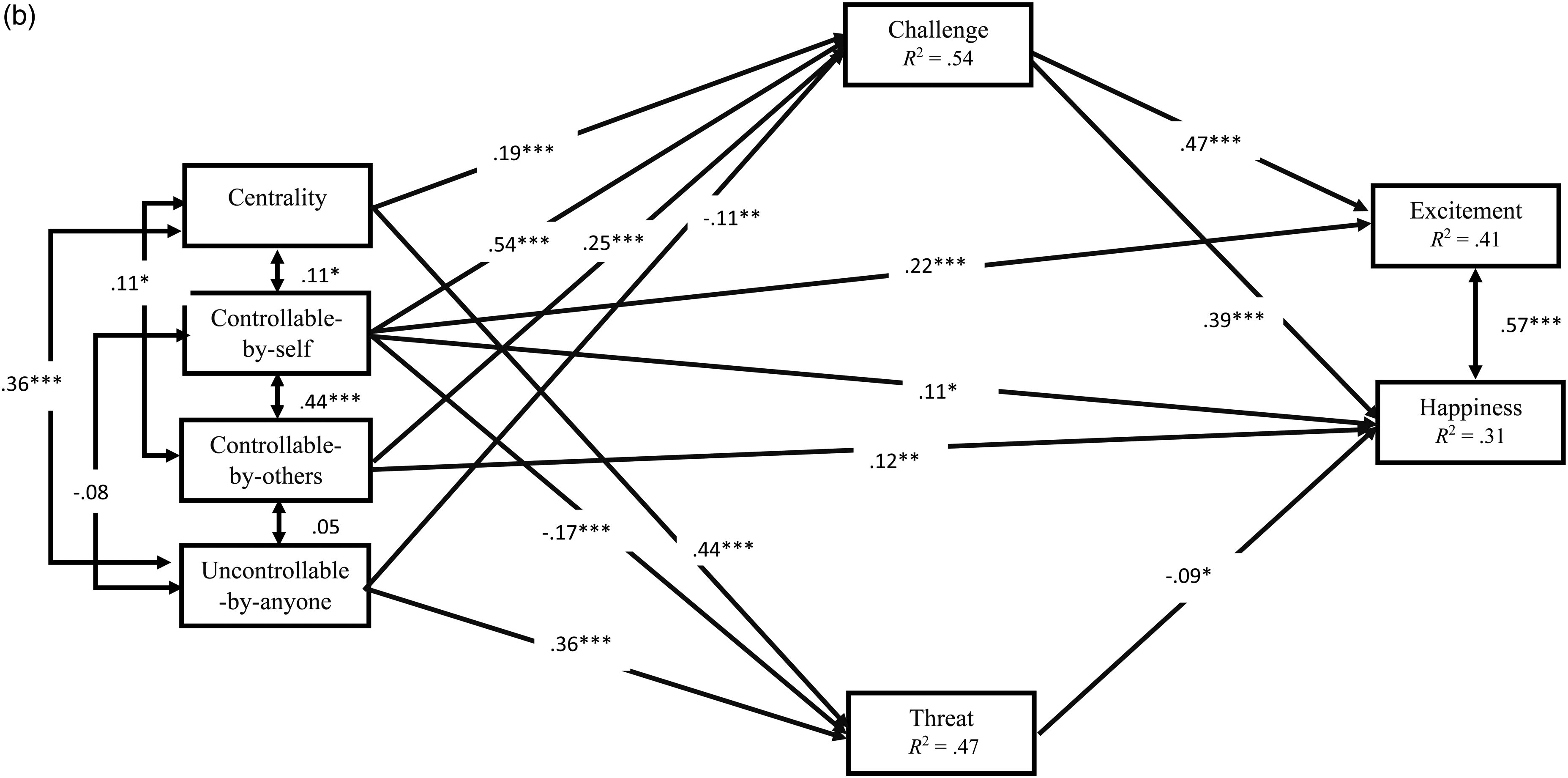
In regard to addressing our aim of examining the appraisal components linked with each emotion. Controllable-by-self and uncontrollable-by-anyone appraisals had direct negative associations, and both controllable-by-others and threat appraisals were positively linked, with anxiety. Uncontrollable-by-anyone and threat appraisals were directly and positively linked with anger and dejection. Controllable-by-self, controllable-by-others and challenge appraisals were positively linked, and threat appraisal was inversely linked, with happiness. Lastly, controllable-by-self and challenge appraisal were positively linked with excitement.
To test for indirect effects for the potential mediating role of challenge and threat appraisals on the relationships between the other appraisal components and emotions, we conducted bootstrapping analyses (with 1000 bootstrap samples) which is considered one of the most powerful methods to test for such effects. 24 When the 95% confidence interval does not cross zero, there is evidence of a significant indirect effect. As shown on Table 2, the indirect effects were significant for each indirect pathway in the final model, apart from centrality was not indirectly associated with happiness via challenge and threat appraisals. Specifically, centrality, controllable-by-self, controllable-by-others, and uncontrollable-by-anyone appraisals were indirectly associated with excitement via challenge appraisal. Controllable-by-self and uncontrollable-by-anyone appraisals were indirectly associated with happiness via challenge and threat appraisals, whereas controllable-by-others was indirectly associated with happiness via challenge appraisal. Centrality, uncontrollable-by-anyone and controllable-by-self appraisals were indirectly linked with anxiety, anger, and dejection via threat appraisal.
Indirect effects of challenge and threat appraisal on the relationship between other appraisals and emotions.
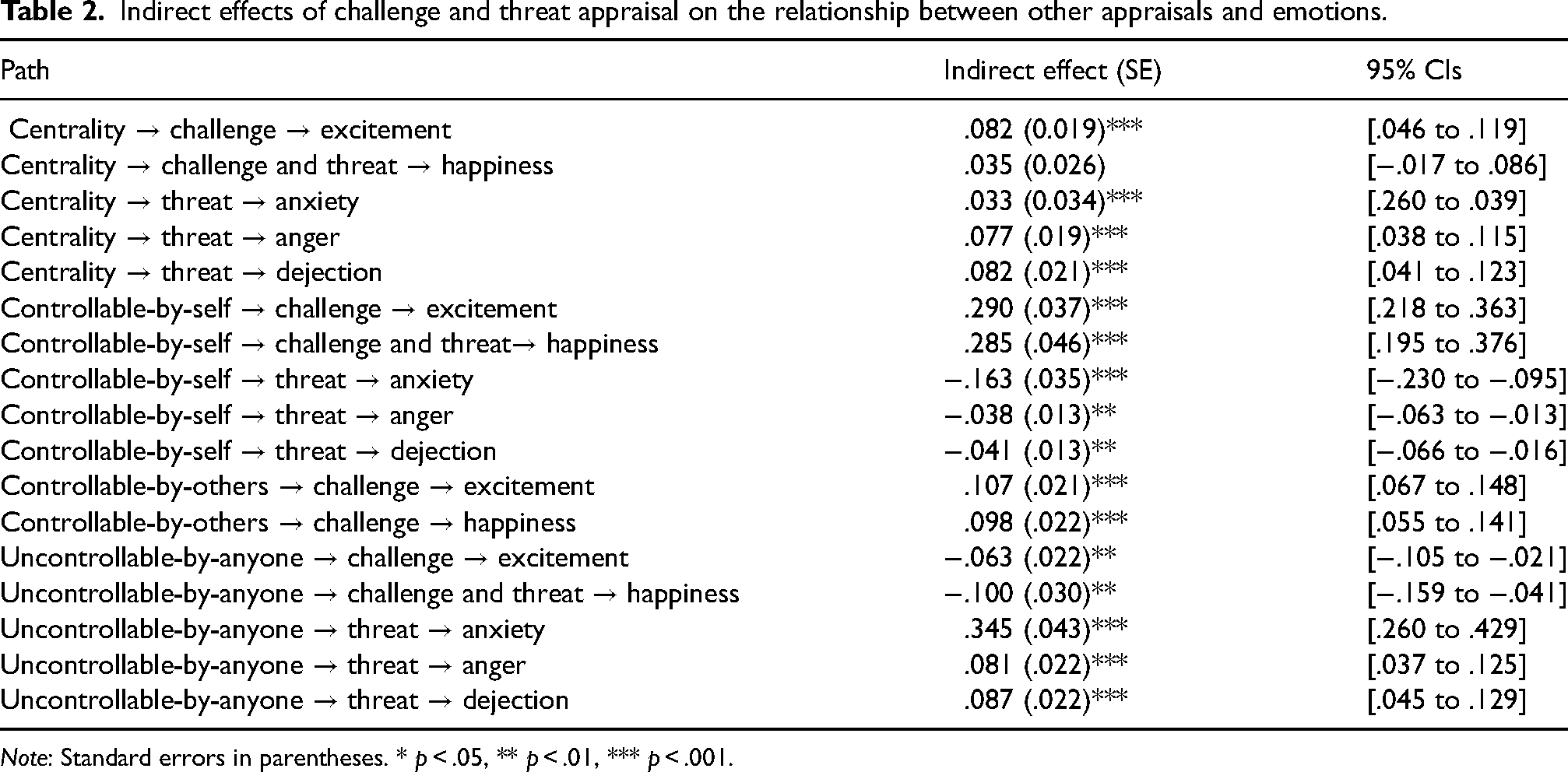
Note: Standard errors in parentheses. * p < .05, ** p < .01, *** p < .001.
Discussion
This study investigated how pre-performance stress appraisals were associated with emotions in sports. Broadly, the results supported the notion9,15,16 and previous research11,12,14 that threat appraisal was positively linked with unpleasant emotions (i.e. anger, anxiety, and dejection) whereas challenge appraisal was positively linked with pleasant emotions (i.e. excitement and happiness). Unpleasant emotions, especially anger and dejection, were also associated with appraising events prior to competition as uncontrollable with these relationships being stronger with dejection. Moreover, a key aspect of the two pleasant emotions was that these were positively associated with appraisals of control, either via appraising events as controllable-by-oneself or controllable-by-others. These results reveal how specific appraisal components were associated with discrete emotions and offer potential implications for practitioners (e.g. coaches, sport psychologists) interested in the regulation of appraisals and pre-performance emotions in sport performers.
Links between appraisal and emotions
In the path analyses, appraising events just prior to competitive performance as uncontrollable-by-anyone and as a threat were directly and positively associated with pre-performance anger and dejection. Moreover, centrality and uncontrollable-by-anyone appraisals were positively, and controllable-by-self appraisals were negatively, associated with anger and dejection via threat. These similarities in associations are perhaps unsurprising given the positive association between dejection and anger with a large effect size (r = .61), consistent with previous research.3,4,19 Therefore, when one experiences anger, one may also experience elements of dejection, and vice versa. The strength of associations with some stress appraisals may offer some, albeit tentative, insight into the distinct appraisals underpinning these two emotions. For example, dejection had a negative relationship with controllable-by-self appraisal (with a small effect size in the correlational analyses) and was more strongly associated with appraising events as uncontrollable-by-anyone compared to anger. In contrast, anger had no relationship with controllable-by-self appraisal (i.e. r = .00). Thus, appraising a lack of personal control over events could be an aspect most closely associated with experiencing dejection, which is an emotion typically associated with poorer and maladaptive attentional processing in previous research.3,4
Another possible reason for the lack of distinction between the stress appraisal components associated with dejection and anger may be due to the low intensity of these emotions being reported prior to the performance by athletes in the present study. It is possible that these emotions are not particularly prominent just prior to performance. 4 Therefore, researchers wishing to further disentangle the appraisal components associated with these emotions could consider asking athletes to reflect on events when these emotions may be more intensely experienced (e.g. post-competition following a defeat) in future research.
Anxiety had more distinct associations with appraisals compared to the other unpleasant emotions. Specifically, controllable-by-others and threat appraisals were directly and positively linked, whereas uncontrollable-by-anyone and controllable-by-self appraisals were directly and inversely linked, with anxiety. Also, centrality and uncontrollable-by-anyone appraisals were positively associated, and controllable-by-self appraisal was negatively, associated with anxiety via threat. Conceptually, anxiety has been considered to reflect uncertainty about reaching a goal or coping with a demand and/or facing an existential threat. 9 Indeed, threat appraisal was more strongly linked with anxiety than other emotions. Interestingly, anxiety was positively associated with appraisals that events were controllable with the support of others, which may contribute to explaining why uncontrollable-by-anyone appraisal had a direct inverse association with anxiety. Such appraisals suggest some potential (albeit uncertainty) to cope with the situation. Thus, experiencing anxiety may be more closely associated when one perceives to have lower self-control over events, but when also appraising such events as potentially controllable with the support of others.
As expected, challenge and controllable-by-self appraisals were directly and positively associated with excitement and happiness. These similar associations maybe expected given the strength of the positive association (r = .71) between these two emotions, similar to previous research.3,4,19 However, the associations noted with other appraisal components could offer deeper insights into the links between appraisals and the pleasant emotion experienced. For example, happiness was directly and inversely associated with threat appraisal, and directly and positively associated with controllable-by-others appraisal, whereas excitement was not directly associated with these stress appraisals. Thus, these findings suggest a key distinction may be in relation to the appraisal of control. Specifically, appraising events as controllable-by-self was more strongly linked with excitement, whereas appraising events controllable-by-others was significantly and positively linked with happiness. These findings highlight that when individuals appraise having the intrapersonal resources to control events, then this would be more closely associated with excitement. In contrast, when appraising one has social resources to help control events, this would be more closely associated with happiness. Previous research has revealed that excitement is more consistently linked with attentional processing facilitative for sport performance compared to happiness which has been inconsistently linked with such outcomes.3,4 Therefore, it is possible that focusing on developing appraisals where one experiences higher intrapersonal control over events could be more helpful for performance than reliance on the available support of others to control events.
Our findings also highlight how appraisal components were linked with challenge and threat appraisals as relational meanings. Specifically, consistent with previous research, 11 centrality was positively linked with challenge and threat appraisal. However, perhaps more pertinently, appraisals reflective of control (by oneself and others) were positively linked with challenge appraisal, whereas appraisals reflective of perceiving events as uncontrollable (including by oneself) were linked with threat appraisal. Alongside these findings aligning with the CMRT,6,9 they also align with the Theory of Challenge and Threat States in Athletes,15,16 whereby high perceived control pre-competition is proposed to represent a challenge state whereas low perceived control is reflective of a threat state. These findings offer additional insight into the importance of perceived control over events prior to competition.
Practical implications, limitations and future research
The current research offers a range of potential practical implications that could assist athletes in eliciting desirable pre-performance states. A key appraisal linked with pre-performance excitement that has been shown to be adaptive for concentration in previous research,3,4 is appraising events as controllable-by-oneself. For example, practices such as mindfulness 25 or focusing on controllable goals such as mastery and approach-focused goals (e.g. aiming to do your best) rather than ego-oriented goals (e.g. focusing purely on outperforming others), 14 may assist athletes in appraising a greater sense of control approaching competition and facilitate a more adaptive emotional state. Moreover, aligning with previous research11,12 and theory,6,9,15,16 appraisals reflective of higher perceived control were also positively linked with challenge appraisals. Therefore, alongside approaches targeting personal control, practitioners could consider strategies targeting other proposed antecedents of challenge states prior to performance. For instance, practitioners could assist athletes in implementing cognitive techniques which aim to facilitate or maintain perceived control, self-efficacy, and adaptive appraisals, such as via self-talk, imagery, or re-appraisal techniques including cognitive reframing to assist athletes with controlling emotions.26,27
There are some limitations that should be noted when interpreting these findings. First, self-report measures were used so only subjective experience of emotions was assessed. Participants also completed measures recalling their latest performance. Although participants were currently involved and competing in their respective sport, we did not specifically ask participants to indicate when their last competitive performance occurred. Therefore, it is possible there were differences between participants in the duration since their latest performance. The study also adopted a cross-sectional design. Although there is theoretical support for the proposed temporal sequencing between appraisal and emotions,6,9 the causal direction of relationships cannot be determined by the present study. Therefore, future research adopting experimental methods that examine the effects of manipulating appraisal components on emotions would advance the current findings. Moreover, the current study comprised student-athletes only. Although the present study offered initial insights about the association between stress appraisals and discrete emotions in sport performers, we are unsure if these findings transfer or generalise to non-student athletes. Therefore, researchers could consider addressing this issue in future research.
We also focused on stress appraisals highlighted by Peacock and Wong. 8 However, there are other secondary appraisals that could contribute to the elicitation of emotions, including accountability, problem-focused coping potential, emotion-focused coping potential and future expectancy. 28 For instance, given the rather lack of differentiation between appraisal components linked with dejection and anger, it is possible that other appraisals such as accountability may provide deeper insights about the appraisal components more closely associated with anger. 28 Therefore, scholars may wish to examine the contribution of such other appraisals in future research.
Conclusion
In conclusion, the present research highlighted appraisal components associated with several pre-performance unpleasant and pleasant emotions in sport. A key implication for relevant practitioners (e.g. coaches, sport psychologists, and athletes) is to understand the effectiveness of different strategies (e.g. cognitive strategies) to help enhance self-control over events and facilitate more adaptive emotions prior to competition. Future experimental research investigating the effects of different appraisal components on emotions and examining the effects of cognitive strategies in enhancing self-control prior to competition is warranted to inform further evidence-based solutions.
Footnotes
Acknowledgements
The authors would like to thank colleagues who helped support the data collection process.
Data availability statement
As public data sharing was not written into the approved ethics application for this study, and we do not have consent from participants to share their individual scores in datasets in the public domain, datasets comprising individual results cannot be made available. We only have consent to report results from analysis for research purposes when combined across the participant sample.
Declaration of conflicting interests
The authors declared no potential conflicts of interest with respect to the research, authorship, and/or publication of this article.
Funding
The authors received no funding support for the research, authorship, and/or publication of this article.
