




Abstract
Female soccer players report that the menstrual cycle (MC) can negatively impact sporting performance, with barriers identified in communicating their MC experiences to coaches and support staff. Whilst research is growing, there are few studies exploring the coaching staff perspective in soccer, and none from those at the youth level. The aim was to explore soccer coaches’ awareness, perceptions and experiences of the MC and the perceived impact on performance. Thirteen coaches (female n = 4; male n = 9, aged 33 ± 9 years) from Scottish elite adult and youth soccer participated in individual semi-structured interviews (average interview time 39 ± 11 min). Interviews were audio recorded and transcribed verbatim, with reflexive thematic analysis (RTA) performed. RTA generated three key themes from 232 meaning units: environment and culture, coach–athlete dynamic, and coach support and education. Coaches perceived a societal culture of the MC being hidden, or taboo, with similar barriers noted within the club environment. Coaches were often embarrassed to discuss the MC with players and believed players were embarrassed. Communication differed depending on the coach–athlete relationship, with trust and familiarity cited as improving comfort in communication. Coach awareness and understanding of the MC both generally and within a sporting context influenced their perceived ability to communicate and support players. Findings highlight the need to support coaches by providing MC education, and practical guidance on how to support players’ health and wellbeing. Improved confidence in communication should allow players to feel supported and normalise conversations about the MC.
Introduction
The rise in professionalism and popularity of women's soccer in the past decade has contributed to improved commercial revenue, investment, and surrounding infrastructure. 1 Whilst commitment to supporting the women's game is progressing, there remains a significant under-representation of females within sport and exercise research which is contributing to a lack of understanding of the female-specific factors underpinning health and performance.2–4 The underlying cause of this under-representation is multi-factorial. Contextual factors such as lower female participation at all levels of female soccer 5 may play a role in conducting research in this area.2,3 In addition, hormonal variation across the menstrual cycle (MC) has been deemed to result in methodological challenges due to the within- and-between-player variability.2,6 The MC is a key consideration, with hormonal fluctuations potentially impacting various bio-psycho-social processes.7,8 While the objective performance data aiming to assess the impacts of the MC remains inconsistent, 9 the perceived impact is widely recognised amongst athletes and in the associated literature.9–15 Within the female athletic population, 74–100% report MC-related symptoms and despite acknowledgement of some positive experiences across the MC, 10 the common experiences tend to be negative.10–15 Athletes report an average of 11 symptoms, including stomach pain, migraines, vomiting and lethargy, with the total number of symptoms associated with an increased risk of outcomes such as missing training or competition. 12 Whilst it is difficult to draw firm conclusions between menstrual phase and exercise outcomes, 9 >50% of women report menstrual symptoms negatively affecting their perceived sporting performance.10–13 Within soccer, players have expressed that menstruation can negatively affect power, fatigue, reaction times, and speed. 14 Moreover, a greater sensitivity to criticism during menstruation, and a reduction in mental sharpness, attentional focus and confidence have all been noted by players.11,14,15 In addition, with heavy menstrual bleeding (HMB) reported by 3–42% of athletes,16–18 the fear of flooding has been described as a distraction to performance, perpetuated by structural barriers such as kit and lack of appropriate facilities within sporting environments.11,13
Whilst the perceived impact the MC can have on performance is widely recognised by athletes and within the literature, the support provided to manage symptoms and associated outcomes within a sporting environment is less understood. Athletes often report difficulties communicating their MC experiences to their coaches and support staff.10,11,13,19,20 Gender has been found to be an impacting factor with Solli et al. 19 citing that 44% of athletes communicated MC information to a female coach compared with only 22% to a male coach. Although reasons for this may be multi-factorial, female athletes have stated that female coaches can empathise with them due to their lived experiences and have more knowledge and understanding. 13 Given only 26% of coaches across all soccer leagues are women, 1 many players may feel that they cannot share pertinent information that may impact their performance. 21 Furthermore, female soccer players have highlighted sharing MC information to support staff for monitoring purposes, yet never discussing it further, describing collecting the information as ‘being for the sake of it’. 22 With potentially sensitive information being disclosed, athletes need to feel their voice is heard and actioned where required.
Within soccer, player pathways are critical to identify talent and develop players to reach the demands of the sport, but whilst research at this elite level is growing, the support and evidence within adolescents remains limited. Physiologically, hormonal variations throughout the pubertal years can result in irregular cycles being more common due to the immature hypothalamic–pituitary–ovarian axis.23,24 Adolescents are also known to report dysmenorrhea (period pain), HMB and other bleeding disorders.25–27 The MC is recognised as limiting sporting participation in adolescents, with 37% of 12–18-year-olds viewing their period as a barrier.
28
Age has been found to limit MC-related communication, with Zipp et al.
29
reporting that adult swimmers increased comfort in communication as they got older
Therefore, the study aims were:
To investigate elite adult and adolescent soccer coaches’ awareness and perceptions of the MC relative to soccer performance. To explore the lived experience of soccer coaches and the influence this has on MC knowledge and communication between coach and athlete.
Methods
Participant information
Thirteen soccer coaches (males n = 9, females n = 4; age 33 ± 9 years) were recruited through purposive and convenience sampling. All participants were, at a minimum, either undergoing or had previously achieved a UEFA C Licence coaching qualification. Participants had between 2 and 16 years in coaching women’s or girls’ soccer, and all were within one club in the Scottish Women's Premier League, working with Under 12s to First Team (elite senior professional) level (youth team coaches = 10, senior team coaches n = 3).
This study was approved by the School of Health and Life Science Ethics Committee, University of the West of Scotland (Approval Code: 2022–17220-14803) on 13 January 2022. All participants were provided with information pertaining to the study and informed consent was attained. To protect anonymity, numbers were used to reference participants throughout the study (e.g. P1 = participant 1).
Data collection
Data was collected through semi-structured interviews, either face-to-face, or online via Microsoft Teams (Microsoft Teams, Microsoft Corporation). The interview questions were derived from relevant literature11,30 and followed four broad categories: (1) participant background, including coaching experience and academic underpinning; (2) awareness and understanding of the MC and hormonal contraception (HC); (3) experiences of the MC and HC from inside and out with their sporting environment, including communication on these topics; and (4) perceived education requirements. The interview guide (Supplemental Table S1) ensured that the fundamental questions relating to the study aims were covered, however the semi-structured nature of the interviews allowed for follow-up questions. Prompting questions were used to explore further thoughts, feelings and experiences based on earlier answers.32–34 The interviews lasted on average 39 ± 11 (28 – 61) minutes, and were recorded via Microsoft Teams. Recordings were transcribed verbatim, resulting in 98,588 words for data analysis.
Analysis
This research was methodologically underpinned by a critical realist ontology and an interpretivist epistemology. Critical realism assumes the thought that a real world exists independent of our construction.35–37 An epistemology of interpretivism, therefore, addresses the subjectivity of the researcher and participants, while maintaining the aim of producing valid, practical outcomes.38,39
Reflexive thematic analysis (RTA) was performed on interview data 40 using NVivo (NVivo 12.7.0; NVivo 12, Qualitative Solutions and Research International, Victoria, Australia). Open coding was inductive and latent. The process of RTA broadly followed the steps of thematic analysis denoted by Braun and Clarke, 41 with slight modifications to allow for the researcher's working method. This was performed as follows: (1) data familiarisation and writing familiarisation notes; (2) data coding; (3) collating like-minded codes under the context of questioning; (4) generating initial themes from coded and collated data; (5) developing and reviewing themes (and revising initial coding where relevant); (6) refining, defining, and naming themes; (7) reflecting on work with fellow researcher; and (8) writing the report. The reflexive nature of the analytic method allowed for flexibility and iteration in this approach, with RTA allowing the lived experiences of participants to be accounted for, plus an understanding of the researcher's role in both the academic field and practical environment. 42 This resulted in the researcher applying meaning to the data due to previous research within the field, despite entering the process with no coding framework or pre-conceptions regarding the final themes generated from the collected data. 43
Research quality and rigour
Two pilot interviews were performed, 44 with a researcher and a coach/researcher and feedback was attained to ensure no leading questions were asked and that the level of questioning allowed for a detailed and accurate portrayal of the participant's feelings and experiences. In addition, following the interviews with the soccer coaches, a ‘critical friend’ (the sixth author) aided the first author to reflect on their analysis throughout the data analysis process by reviewing interview transcripts, examined the categorisation of data and themes, and provided feedback on the wording and categorisation of themes in line with the study aims. 45
Results and discussion
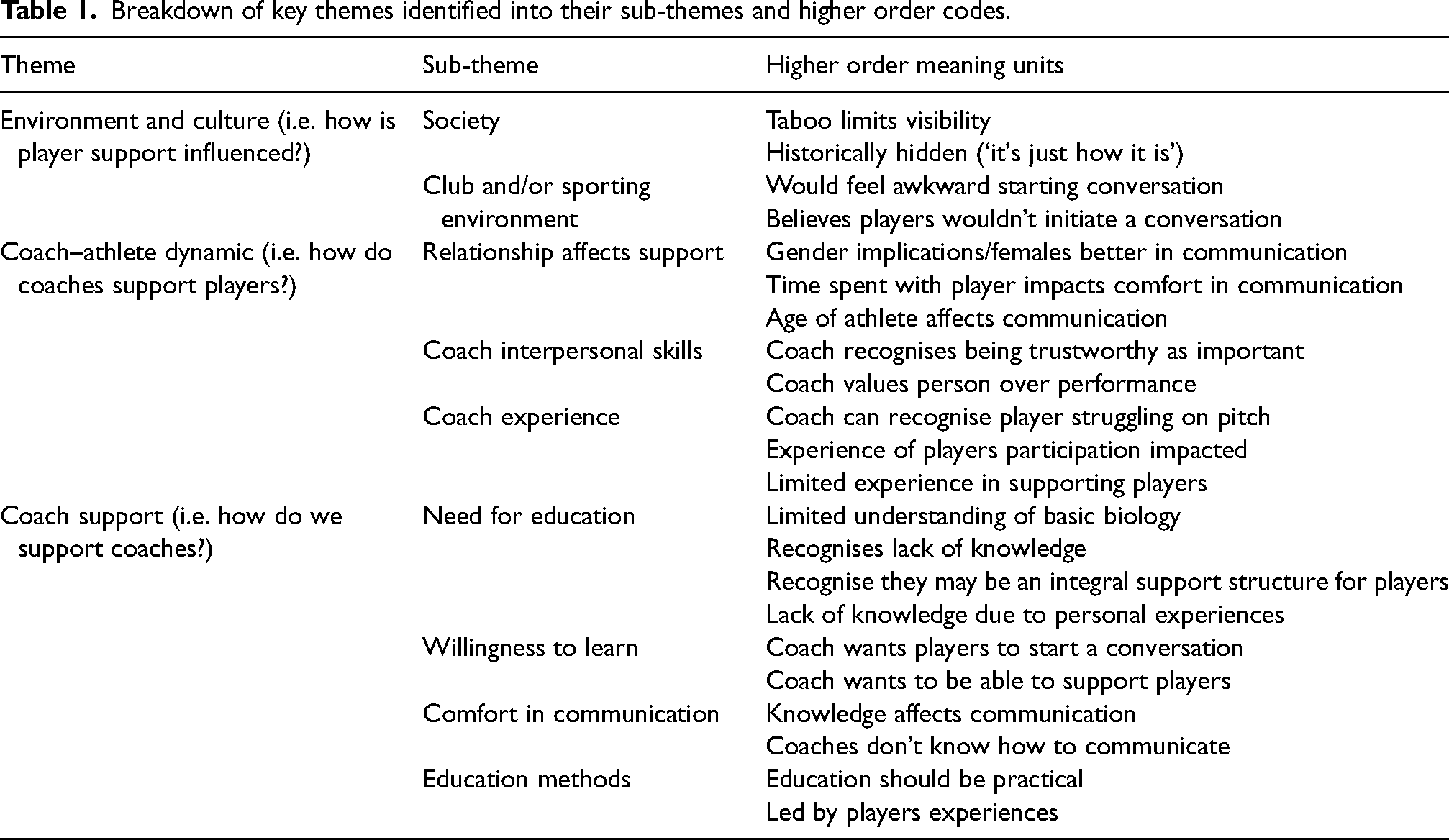
Following RTA, 232 meaning units were generated, leading to 9 sub-themes to support three key themes: environment and culture, coach–athlete dynamic, and coach support (Table 1 and Supplemental Table S2).
Breakdown of key themes identified into their sub-themes and higher order codes.
Environment and culture
Participants often referenced the environment and culture, both within and outwith sport, as influencing communication with athletes, their ability to develop their knowledge of the MC, or ability to support players. Broadly, this was divided into two key issues: the taboo nature within wider society limiting the visibility of the topic; and the club environment, where the topic is hidden on an everyday basis.
Society
The hidden and stigmatised nature of the MC throughout society was thought to perpetuate embarrassment and shame from participants. One youth coach was able to provide an example of the associated taboo presenting itself in society, with period products being covered with discrete wrappers and being hidden within stores, signifying menstrual concealment and secrecy. Growing up (.) I wouldn’t have felt comfortable kinda speaking about periods, or I would look away, I wouldn’t know what to do. (…) I actually worked in a shop that sold products of feminine hygiene, and that section, (…) was located at the very back of the store, like in a corner, so even the taboo of like it's out the way, it's hidden, it's not at the very front of the store (…) maybe it's not what people in general want to see in a sense of society. (P1, Male)
The branding and placement of menstrual products have played a significant role in feeding the menstrual stigma and associated taboos. Teenage magazines have been found to promote secrecy, fear and uncertainty through advertisements, 46 and mainstream media traditionally used blue liquid to represent menstrual blood implying that it should not be visible.46,47 One coach alludes to this, expressing that they ‘wouldn’t like to know the gory stuff (…) that's a private thing’ (P2, Male). With a natural process hidden, it perpetuates the idea of menstrual bleeding being dirty and unclean, and still continues to be a very prominent perception in many communities and cultures.48,49
The hidden nature of the MC was often suggested, with euphemisms replacing words such as ‘menstrual cycle’ or ‘period’: ‘time of the month’ (P1, Male; P6, Male; P12, Male); ‘their time’ (P6, Male, P11, Female; P13, Male); or ‘all that stuff’ (P7, Male; P8, Male; P10, Male) were all referenced multiple times by both youth and senior coaches, showcasing the hidden nature and the discomfort in discussing the MC. Whilst these comments were stated primarily by male coaches in this study, findings from others have highlighted that females use euphemisms.50,51 Participants also often referenced the historical nature of the MC-related taboo, with ‘the way it's always been’ (P1, Male), ‘just the way it is’ (P6, Male) and that it is ‘just a society thing’ (P5, Male), with these statements highlighting coaches reasoning behind the limited discussion and a potential unwillingness to change or challenge this. Several participants, however, felt the narrative shifting, with a perception from coaches that the discussion had progressed positively. Participants cited this as differing from their own adolescence, and the increased willingness to vocalise topics once deemed inappropriate: ‘I think kids in the last maybe 15 years, that generation are so more open, (…) You know, so you can see it changing’ (P1, Male). This has also been seen in society, with the Period Products Act becoming law in Scotland in 2021, requiring free menstrual products in public venues. Therefore, while the stigma and associated taboos are well recognised by coaches as potentially influencing their communication in general, there are signs that this is improving to normalise conversations on the MC.
Club and/or sporting environment
Another influential aspect of the environment which coaches suggested limited their ability to support players was the structural barrier of the soccer club, or sporting environment in general, with the taboo surrounding the MC influencing many coaches. Many referenced the obstacle of communicating with players regarding the MC: ‘I’d maybe feel a wee bit awkward (…), we’ve obviously had loads of conversations about football, about life, and that but not that specifically (…) if you had that conversation then it maybe just opens up and breaks down that barrier’ (P4, Male). The perceived awkward nature of menstruation is corroborated in previous work focusing on athletes,11,13,19 and coaches alike.30,31 Furthermore, ‘breaking the barrier’ was often referenced, with initial conversations thought to normalise future discussion in the hope of improving the club environment. One demonstration of the menstrual taboos limiting discussion in a sporting context is the belief shared by several youth and senior coaches that the MC is a private matter: ‘Some girls might think that's private or myself would think it's kinda private for girls. I don’t know. I would be wrong to say it's not to be talked about, ‘cause it probably has to be talked about, especially in sport’ (P6, Male). Privacy is commonly attributed to the lack of discussion by coaches, with many fearful of encroaching on athletes’ personal lives. 20 Therefore, whilst acknowledging the progression society is making, there is also recognition that the club environment is still lagging in tackling these challenges. Within sport, menstruation can act as a barrier to participation, with well-referenced socio-cultural and personal constraints limiting involvement in physical activities, such as embarrassment or shame over asking for menstrual products. 52 This, coupled with the reinforced idea that bleeding should be hidden, sends a message to young girls to fear leaking, potentially resulting in girls limiting daily activities such as sports participation. 28 Mainstream media has greatly improved coverage of women's sport in recent years, and thus vocalised the challenges athletes face. 53 One example is the movement to remove white shorts in sport, cited by athletes as invoking fear of leaking and distracting to performance.11,13,54 Coaches within Scottish swimming believe the stigma and associated taboo behind not discussing the MC is ‘getting better’. 29 Ensuring coaches understand the impact the associated taboo due to concealment has on restricting the support available to athletes hopefully encourages future involvement in open discussion.
Coach–athlete dynamic
The interactions between coaches and their athletes were seen to impact the coaches’ perceived ability to support players. The coach–athlete relationship, their interpersonal skills and experience were all important to communication, comfort, and overall support (Table 1).
Relationship affects support
Participants often identified that their relationship with players impacted discussion about the MC. These relationships were influenced by several factors, including the gender of the coach, time spent with the athlete, and the age of the athlete.
Gender was seen as a key factor impacting communication, with 11 participants sharing the opinion that players are more likely to disclose information to a female coach. Female coaches were suggested to be able to relate more due to personal experience, with less awkwardness, and greater comfort a female member of staff is also going to give you more awareness of the situation as it's something that I don’t go through (…) I think players could give miscommunication because they don’t want to show what's wrong from (with) them and it would then affect them, whereas a (female) member of staff is going to give you the information that you need. (P1, Male)
Whilst gender was seen as important, several participants stipulated that it is the relationship with players itself that played a more critical role in communication. Participants mentioned familiarity with the player created a successful working relationship to ensure players felt safe to share information. One youth coach stated: I think the younger ones from (club), they maybe felt a wee bit embarrassed about it. And obviously if it was just new to them. And then by the time they get to (under) 16s or (under) 18s (teams), it's just like it's became normal to them and like they don’t necessarily feel as if they need to (talk about their MC). (P13, Male)
Given 14% of schoolgirls feeling that they did not know what was happening when they started bleeding, 28 and a lack of MC education with only 63% of teachers in the United Kingdom reporting that their school delivered MC education, 56 adolescent girls don’t have the knowledge they need. This highlights a key gap in adolescent MC education and support in both school and sporting environments.
Coach interpersonal skills
Participants found the communication and likelihood of players feeling comfortable relies on interpersonal skills displayed by their coach. Having mutual trust and respect embodies the closeness at the heart of a successful relationship.
57
Coaches also identified that maintaining this trust aids future communication, equally as important as initial discussions. Let's just say if another member of staff, that could be turned into a joke (…) You know, ‘Player X is not having a great night, they’re on their period’, and then that could have a detrimental effect on that player because they’ve entrusted me telling me that information (…) I don’t want that could then be misconstrued in a way that puts me in a position where they wouldn’t come to me again with anything. (P1, Male)
Whilst referencing the privacy and secrecy often felt around bleeding, a number of youth coaches also suggest that disclosing such personal information is valued and must be protected. Whilst the progression of open discussion is key to ensure players feel comfortable and confident in communication, understanding the current limitations and the need for individual support and a safe space is recognised. Previous literature has shown that players similarly value trust in a coach, improving comfort in communication as they feel safe in disclosing personal information. 20
Coaches from both youth and senior teams identified their behaviours should be person-centred, as opposed to performance-related. Three participants suggested the potential lack of communication on the MC to be due to players perceiving it would impact team selection: ‘I think too much (of) the time we are seen, seen as coaches, as the selectors more than anything else. (…) I care more about them as a person as I do as a footballer’ (P10, Male). One participant also reported that the importance of game planning and outcomes does not interfere with this duty of care. It is worthwhile to note, however, that this was from a youth coach, and therefore may not be directly applicable to the elite setting which has higher stakes, financial repercussions, and increased pressure to achieve specific results. Evidence from elite rugby players 11 and swimming 29 shows athletes fear that discussing the MC will impact selection. Even for athletes who scored their closeness with their coach at the highest possible rank, discussing topics related to the MC still ‘feels private’. 20 Ensuring players feel supported within performance, but also emotionally, aids comfort in communication.
Coach experience
Participants could often identify menstrual symptoms which could impact players' performance, yet fewer coaches could detail experiences of witnessing these events. For those that could, a variety of descriptors were often used, all of which could affect athletes negatively. Symptoms such as a lack of energy or speed were commonly discussed by both youth and senior coaches, potentially due to the visual differences’ coaches could identify. For example, one senior coach highlighted their experience with a player in their team: ‘one of the things I’ve noticed is a lack of energy or a sudden dramatic (…) fall in the level they are normally comparative with the rest of their team or themselves and that can suddenly just within minutes fall off the end of a cliff, and you know you’re not gonna get any more out of the athlete’ (P1, Male). Feeling lethargic, or fatiguing quickly, has been recognised by athletes themselves, with monitoring within Australian football highlighting perceived fatigue to be significantly greater during the luteal phase of the cycle. 58 However, 87% of elite English soccer players reported greater fatigue during menstruation, highlighting the individual nature of symptomology experienced and difficulties drawing a universal consensus. 14 Therefore, whilst the understanding of how menstrual symptoms impact soccer was limited, common consequences of menstruation such as leaking were identified with over half of coaches recalling at least one experience of players bleeding onto light-coloured shorts and consequently leaving the field: ‘It actually happened in the (club) game, one of the (club) girls ‘cause they were wearing white and she just ran off the pitch, and could be embarrassing for her’ (P4, Male). Recently, some elite teams have removed white shorts to avoid this stressor, but there has yet to be a focus on the youth environment. With the potential for menstrual disorders to be more common within adolescents,26,59 alongside the unexpected nature of bleeding through the immature ovulatory years, leaking could be a key issue. However, we are yet to understand this within the sporting environment due to the lack of research from a young person's perspective.
Both senior and youth coaches reported mixed experiences when detailing their current support to players. Whilst the majority (8/13) stated they have never communicated with players on their MC, coaches expressed the value of being approachable to improve the likelihood of communication, and thus support: ‘they might not be confident talking to me about it, so just making sure that I am open and create a kind of safe space if they want to come to me about it’ (P5, Female). Therefore, the coach recognised the role they have in ensuring players feel like they could bring personal information to their coach and believe it would be handled supportively and compassionately. With women more likely to highlight symptoms they are managing within comfortable environments, the coach's ability to create a ‘safe space’ may be pertinent in opening dialogue with athletes. 60
Coach support
A lack of open conversation on the MC was recognised to be a contributing factor limiting current support for players. Coaches suggested this could be due to their own limited understanding of the MC itself. Therefore, their support was often experiential rather than evidence-based, with future education cited as necessary for driving future conversation and support. Identifying a need for education for support, having a willingness to learn, and identifying methods for further support on the topic were all seen to be crucial in driving the support available for players.
Need for education
The limited understanding of coaches was identified by questions relating to the biological mechanisms underpinning the cycle. No participant was able to detail the hormones involved, and one cited the phases ‘luteal and follicular’ (P9, Female). Knowledge barriers have been recognised widely within sporting literature as limiting communication between coaches and athletes.20,30,31 There was also a lack of recognition of key issues relating to the MC, such as secondary amenorrhea: ‘I don't know. There's that. I didn’t know that happened’ (P4, Male) and ‘No, no idea why that's the case’ (P8, Male). With amenorrhea potentially resulting in both short- and long-term health complications, 61 it is critical coaches understand the severity and vital signs surrounding menstrual health. McHaffie et al. 22 also found parents, coaches and adult players were unaware of the factors leading to secondary amenorrhea, with the ‘convenience’ of missing a period regularly commented upon positively, highlighting the potential limited support available.
This lack of understanding of the MC was recognised by both youth and senior coaches themselves, who were aware their knowledge was not sufficient to support players or understand their needs or experiences: ‘I don’t know enough to be working with women, I definitely don’t know enough’ (P4, Male). This was often reasoned to be due to the lack of formalised education on the topic. Whilst several coaches believed it may have been addressed in school, this was either a considerable time ago, or only delivered to females. Gender was thought to play a role, with coaches perceiving males to know less about the MC due to a lack of experience: ‘(the embarrassment) partly comes from the fact that boys don’t get taught anything about periods’ (P9, Female). The demographics of the club set-up highlight the issues which may arise if this belief were to be true: ‘I don’t know how many guys are coaching in the Academy. (…) There must be about two female coaches or something and the rest are all male. So how many people have an understanding?’ (P11, Male). Having a reliance on female staff and thus not taking ownership of furthering understanding leaves limited MC-related support for players and assumes all female coaches will be able to provide adequate help to players. However, one female coach also felt like they lacked knowledge, partly due to her personal experience with the MC: ‘(I) wouldn’t say I would be knowledgeable on it (…) if it was something that did really affect me, I would probably have found out more about it in terms of stages of the cycle and how I was feeling, but generally I'm neither up nor down’ (P3, Female). Therefore, there cannot be a reliance on female coaches to lead conversations with athletes as their own experiences and understanding can vary considerably.
Similarly, male coaches highlighted their personal lives to have influenced their knowledge on the topic: ‘my wife (…) every month she was essentially out of action. She was in bed for essentially 24 h (…) I had never seen anyone who'd been affected in, in that way, (…) And it was just, I was in shock at that (…) like I just didn't know’ (P10, Male). Therefore, coaches’ knowledge was influenced by their environment and experiences which varied depending on personal circumstances. There was also an awareness that the players’ environment may not provide them the support they may need, referencing the need for coaches to have the toolkit to deal with such instances: ‘you’re not just there to coach kids, you’re there to learn them and be part of their life. So, if it's that or anything in life that they needed, they feel comfortable speaking to you or myself or any kind of coach or teachers rather than speak to their mum or their dad, I don't know’ (P6, Male). Parents were identified as a contributing role in the support of adolescent athletes in previous research, with youth swim coaches reporting parents need education on the topic, as their lack of understanding could ‘undermine’ athlete education. 29 With only 25% of adult female athletes feeling like they had sufficient knowledge on the MC, 62 it is critical that education not only targets players themselves at an early age, but also their wider support structure.
Willingness to learn
Whilst knowledge was cited as a limiting factor to communication, there was evidence to highlight coaches’ desire to improve this, and thus improve the support available to players: ‘I would love for the girls to, to be able to come and say to me and um, you know, “I've just been in the toilet and that, I’ve started my period”, (…) and I can deal with it, I can, confidentially, okay, let's go and deal with it’ (P11, Male). The sense of achievement surrounding players disclosing information regarding their cycle was often commented upon, highlighting the current difficulties in doing so, and the understanding of the work it takes to foster an environment where players feel comfortable.
For those coaches who want to improve their knowledge on the topic to feel better equipped to support players, there were identified barriers. One coach cited the abundance of contradicting information on the internet, with no clear guidance available to gain an understanding of the impact the MC has on players: I had a wee look just to see what the effects are (…) was definitely contradicting ‘cause one was saying that when women were on their period (…) they burned more carbohydrates so they could perform at a higher level. And then there was another one saying that there would be lethargic, and I was like wait. What? What one is it? I was kind of confused. (P8, Male)
This was echoed in the work of Höök et al. 20 where coaches of adult athletes found the individuality of MC between athletes hard to navigate and implementing research into practice a difficult task. Strategies to improve coach education are becoming more common, with sporting organisations creating guidelines or information hubs for coaches to access,63–65 however, none have targeted those coaching at youth level, where further barriers have been identified. Having sport and age-specific education would likely be helpful to coaches to understand the experiences athletes may have within soccer, and the role the academy environment plays.
Both youth and senior coaches reported a willingness to learn more about the MC and be a focal part of the support structure, with one providing an example of when this hasn’t been the case: ‘the sport scientist came back and said (the player) was just getting really bad cramps and came of the pitch (…) she didn't know how to tell us. And that for me is an issue’ (P12, Male). Coaches are therefore understanding the reasons why they need to have better knowledge and utilise this knowledge to create an environment at the club-level where players understand they have support available to them. In environments where the conversation is limited, it is worthwhile to consider support structures which may help to bridge the gap until the coach understanding is sufficient. For example, Findlay et al. 11 highlighted the use of medical or support staff as a point of contact for athletes, as some may find it difficult to speak to their coach. At the youth level, this support mechanism may be more challenging due to limited numbers of staff, however, reiterating to players that there is support available from whoever they feel comfortable with may be useful. Regardless of the support mechanisms in place, it is also worthwhile to consider that for some, they may consider it a sensitive subject and never feel comfortable discussing their MC, and this should be treated with equal respect and understanding.
Comfort in communication
Communication has been detailed as important to improve comfort. Working with adult female athletes has shown coaches cited that having more conversations with their athletes to understand their experiences would benefit their knowledge and support. 20 With youth athletes however, the comfort in doing so may vary. Within interviews, youth coaches seemed unsure of what would be appropriate discussion with younger players: ‘they maybe don't know the right thing to say to somebody else's daughter, you know, without thinking, panicking, have I said the right thing? You know, have I overstepped the mark?’ (P11, Female). The confusion around the navigation of discussion was common between coaches, with many stating the potential issues of guiding conversations on a potentially sensitive topic for some. Male coaches have previously identified they would like to know ‘When and how should we communicate with athletes’, emphasising the uncertainty felt around the communication with adult athletes at the elite level about the MC, let alone youth athletes. 66 Providing education resources that include guidelines on methods and content of communication may improve the confidence of coaches to initiate conversations where required and create an environment where players recognise coaches who are well-informed and can direct them to resources or medical personnel if required. Finally, the manner in which communication occurs with younger athletes may need to be considered with the role of parents and athletes themselves.
Education methods
Finally, coaches were able to provide coach education suggestions, or preferences. All 13 interviewees stated that the sporting National Governing Body should provide more education on the MC within coaching license badges. Understanding how to manage conversations with players was suggested to be a key focus for content. The preference was to ensure practical guidelines relevant to the sporting environment were created, to enhance discussion on the topic, rather than scientific literature where it would be easier to disengage: ‘we have a very clear protocol for what happens if someone gets concussion. But we don't have a clear protocol of what happens if someone comes up to you and says, you know, I have an issue with period cramps’ (P10, Male). Nevertheless, whilst having clear protocols would ensure coaches feel well equipped to deal in conversations, the varying circumstances of individual players would continue to challenge the creation of blanket guidance. 67
Having the knowledge to work in women’s and girls’ sport is critical to ensure optimal support of athletes. Many coaches highlighted the need to have gender-specific coach education focusing on women’s and girl's health considerations for those most likely to be working in this area: ‘I would say a course on it, that would be mandatory (…). I think it gives everybody the level playing field to be able to make sure that anyone that comes into the Academy from top to bottom is being looked after the best way they can’ (P12, Male). Ensuring player wellbeing as a priority was again referenced, with a number of sporting organisations already covering such information. U.K. Coaching has created a ‘Duty of Care’ Learning Hub, 68 with resources targeting basic knowledge on the cycle as visual aids. The method of education delivery was also discussed by coaches. Having a digestible format with quick pointers, and critically, signposting to direct players to further support was a suggestion from coaches to ensure they feel equipped to deal with conversations when they arise. Lastly, having players involved in the education would allow coaches to see real examples and understand the impacts the MC can have on performance: ‘what the players feel, how does it affect them, everything about it. Em, do they like you talking about it? You know, cause that's the only way we are going to learn about it, is if they tell us’ (P8, Male). There are mixed results from athletes in whether they wish to talk to their coach regarding their MC, or would rather go elsewhere, such as GP or club doctor. 11 However, ensuring coaches understand this individuality, and therefore know how to communicate to form an awareness of those individuals who may require targeted support is critical.
Conclusions
This study provides original evidence on the factors influencing current MC-related support coaches provide to Scottish elite and adolescent soccer players. Through investigating the awareness, perceptions and experience of the MC among soccer coaches, several factors must be considered. The environment was perceived to limit the knowledge and communication of coaches due to the awkwardness perpetuated within society which was reflected at the club level. Several aspects impacting the coach–athlete interactions limited conversations, but factors such as time spent with players and trust aided comfort in communication. Lastly, coaches identified they required more support to enhance their knowledge and in turn communication on the topic. Future education is needed, with a focus on the practical aspects of how players are affected by their cycle, and how they can break the communication barrier.
Limitations
Limitations for the present study, and the ability to extend findings to a wider population, should be noted. Recruiting coaches from only one club limits the ability to draw conclusions to other clubs, countries, cultures, or sports. Furthermore, having three coaches from the First Team, significantly less than the youth level, impacted the ability to compare findings between cohorts. Future work may consider larger sample sizes to understand these differences (if any). Performing a singular interview with each participant on a topic many view as sensitive may have restricted the volume and depth of information received due to comfort with the researcher, despite the researcher attending multiple training sessions to familiarise with the participants. 69 Having hybrid collection resulted in two interviews being performed online, however evidence has suggested online interviews are reliable and valid to capture the data required. 70
Practical Applications
Firstly, improving MC education will allow for a greater awareness of the MC, and in turn greater comfort in communication for both coaches and players. This education should be embedded, and effectiveness evaluated within the formal coach education structure, and is imperative for those working with female soccer players, including youth teams. In addition, with the understanding that the coach–athlete relationship is key to comfort in communication, coaches need to ensure time is taken to nurture relationships which allow players to feel comfortable discussing personal matters. With the individual nature of the MC, each athlete will experience symptoms and performance implications differently, and therefore understanding each individual is important. This can be done via approaches such as MC tracking. However, coaches and players need to understand that if teams use MC tracking, team selection is not dependent upon or influenced by reporting their MC and related symptoms. Thus it is important clubs consider the purpose of tracking and the resources available to manage resultant outcomes, such as screening for menstrual dysfunctions or irregularities. 71 However, Brown and Knight 30 reference that due to the surrounding stigma, athletes may not seek support, therefore coaches’ must be pro-active and recognise when signposting, and engaging in discussion is relevant. This involves spending time with the athlete and developing a relationship which involves care for their health and wellbeing as a priority. It is also important, when considering individual athlete preferences, that some may never wish to discuss their MC and this needs to be respected by coaches and support staff.
Clubs and support staff should also recognise that environmental factors are worth considering to improve overall support. Many coaches in this study had awareness of issues such as light-coloured sports kit and had experienced players leaking during training or competition. Equally, players and athletes often report light-coloured training and competition kit to be a distraction during their period due to a fear of leaking.11,54 Thus, ensuring appropriate facilities and kits within both the elite and academy environment is important. For example, Furthermore, having visual signposting with MC information and support mechanisms would aid in developing a more period-positive and supportive environment.
Supplemental Material
sj-docx-1-spo-10.1177_17479541241255280 - Supplemental material for Coaches’ ability to support elite and adolescent soccer players throughout their menstrual cycle
Supplemental material, sj-docx-1-spo-10.1177_17479541241255280 for Coaches’ ability to support elite and adolescent soccer players throughout their menstrual cycle by Julia Donnelly, Eilidh Macrae, Stephanie Valentin, Andrew White, Chris Easton and Laura J. Forrest (née Whyte) in International Journal of Sports Science & Coaching
Supplemental Material
sj-docx-2-spo-10.1177_17479541241255280 - Supplemental material for Coaches’ ability to support elite and adolescent soccer players throughout their menstrual cycle
Supplemental material, sj-docx-2-spo-10.1177_17479541241255280 for Coaches’ ability to support elite and adolescent soccer players throughout their menstrual cycle by Julia Donnelly, Eilidh Macrae, Stephanie Valentin, Andrew White, Chris Easton and Laura J. Forrest (née Whyte) in International Journal of Sports Science & Coaching
Footnotes
Declaration of Conflicting Interests
The authors declared no potential conflicts of interest with respect to the research, authorship, and/or publication of this article.
Funding
The authors received no financial support for the research, authorship, and/or publication of this article.

Supplemental material
Supplemental material for this article is available online.
References
Supplementary Material
Please find the following supplemental material available below.
For Open Access articles published under a Creative Commons License, all supplemental material carries the same license as the article it is associated with.
For non-Open Access articles published, all supplemental material carries a non-exclusive license, and permission requests for re-use of supplemental material or any part of supplemental material shall be sent directly to the copyright owner as specified in the copyright notice associated with the article.
