




Abstract
Objectives
To map and summarise the sports coaches’ and support staff's perspectives on athlete monitoring to explore the breadth of literature, identify knowledge gaps and inform future research.
Design
Scoping review based on the Joanna Briggs Institute (JBI) methodology.
Methods
SPORTDiscus, MEDLINE, APA PsycInfo, and Embase databases were searched in English until 6 September 2022. The inclusion criteria were (1) coach(es) and/or support staff were explicitly questioned about their knowledge, perceptions, understanding, opinions, and/or applied practice of athlete monitoring; (2) results could be directly attributed to coach(es) and/or support staff; (3) primary research projects that are available as full-text. Exclusion criteria were applied for grey literature. The data were extracted into a custom-made data charting spreadsheet.
Results
From the 4381 identified records, 42 met the eligibility criteria. Almost all the studies were conducted within the Anglosphere and at the national or international level. The main reasons for coaches and support staff to implement athlete monitoring were to reduce injury and illness, inform the training program, and improve or maintain performance. While training load monitoring is generally seen as valuable the coaches and support staff acknowledged that there was no perfect scientific approach to monitoring athletes and believed it should be part of the bigger picture, emphasising communication.
Conclusions
There has been a recent surge in research demonstrating that athlete monitoring extends beyond quantitative information and encompasses non-quantified subjective information. This further substantiates that coaches and support staff will remain central to athlete monitoring, even amidst the anticipated technological progress.
Introduction
Athlete monitoring refers to the systematic collection and analysis of information related to an athlete and their training process over time. Athlete monitoring is multifaceted and can involve the collection of a wide range of numerical (i.e., quantitative) and non-numerical (i.e., qualitative) data, including but not limited to training, recovery, health and well-being, and behaviours.1–4 A primary purpose of athlete monitoring is to provide information that can be used to inform decision-making and improve the training process. 5 Therefore, successful athlete monitoring ensures that the training is effective and mitigates risks such as injury, illness, burnout, and overtraining.3,5,6 The potential health and performance benefits of athlete monitoring, along with the increased accessibility and affordability of athlete monitoring tools and software, have led to its widespread adoption across all levels of sports.7–9 The democratisation of athlete monitoring can be attributed to scientific and technological advancements leading to the growth of devices and software with enhanced quantity and quality of data and information.10,11
Central to the sports coaches’ role is the responsibility to make the day-to-day training-related decisions, and athlete monitoring is an integral part of this decision-making process.5,9,12 Many coaches and support staff are adopting and anticipating an increasingly scientific approach to athlete monitoring.3,13 However, as there is no single recipe for success in athlete monitoring,14,15 coaches and support staff are advised to measure what is necessary and sustainable.2,3,16 Recently, West et al. 6 suggested that the most valuable athlete monitoring tools provide accurate data to inform performance-related decisions while minimising athlete and practitioner burden. In a systematic review, McGuigan et al. 17 in 2020 summarised the training monitoring tools that coaches and support staff use in various sports and found that commonly used monitoring tools were inexpensive, non-invasive and could monitor multiple athletes simultaneously. However, only seven studies were included in McGuigan et al. 17 reflecting the limited research on the athlete monitoring practices of sports coaches and support staff.
In 2014, Halson 3 mentioned that much of what is known about athlete monitoring comes from personal experiences and anecdotal information while data remain protected and unpublished. Since then, considerable athlete monitoring research has been conducted leading to multiple reviews and consensus statements mainly on athlete monitoring tools and methods.1,3,6,18–21 Recognising that athlete monitoring is a human-driven process, it is imperative to learn from the coaches and support staff given their extensive knowledge and expertise accrued by working closely with athletes and athlete monitoring data. Consequently, studies on the perspectives, knowledge, beliefs, opinions, and experiences of coaches and support staff are integral to enhance our understanding and knowledge of the athlete monitoring field. However, to date, the perspectives of coaches and support staff on the use of athlete monitoring have not yet been systematically reviewed in the scientific literature.
Therefore, this scoping review aims to explore the breadth of scientific literature, identify knowledge gaps, and inform future research by mapping and summarising the available scientific literature featuring the sports coaches’ and support staff's perspectives on athlete monitoring.
Methodology and methods
A scoping review methodology was chosen because it provides the rigour and transparency of a systematic search with standardised data extraction while allowing a broad topic to be reviewed.22,23 This scoping review is based upon the methodological framework from Arksey & O'Malley 22 which was expanded by Peters et al. 24 in the Joanna Briggs Institute (JBI) Manual for Evidence Synthesis. The reporting guidelines from the Preferred Reporting Items for Systematic Reviews and Meta-Analyses (PRISMA) 2020 statement 25 and the PRISMA-ScR extension 26 have been adhered to. The scoping review protocol has been specified in advance and is registered and publicly available at the Open Science Framework (OSF) Registries https://doi.org/10.17605/OSF.IO/2AH9Z. The PRISMA-ScR checklist, search strategy, records excluded following full-text review, data charting spreadsheet, and training load monitoring perception of effectiveness dataset are openly available at the OSF repository https://doi.org/10.17605/OSF.IO/KZAF7. The Large Language Model (LLM) ChatGPT-4 (OpenAI, San Francisco, CA, USA) was employed for text editing.
Search strategy
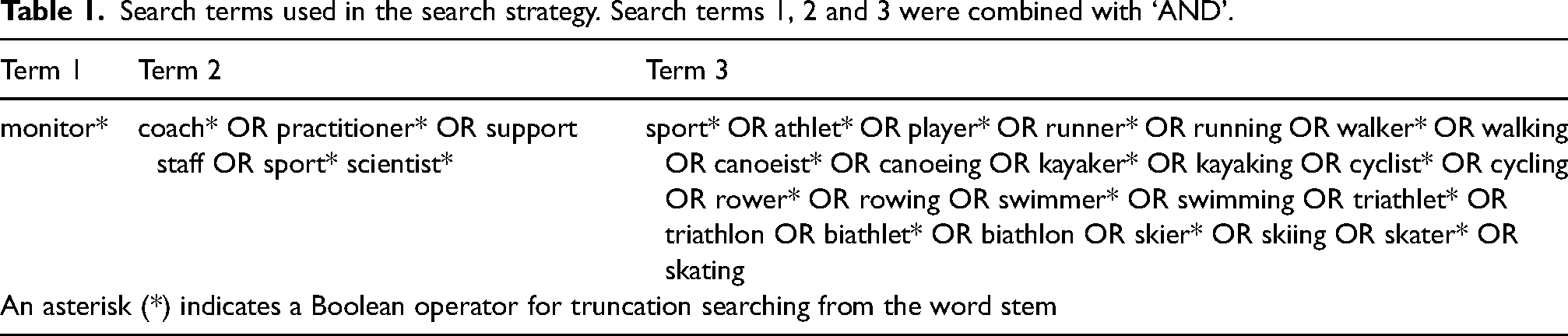
The search strategy was conducted in English and focused on the three concepts: ‘athlete monitoring’, ‘coach and support staff’, and ‘sport’ as shown in Table 1. Additionally, the search strategy was optimised for each individual database (see https://doi.org/10.17605/OSF.IO/KZAF7). SPORTDiscus, MEDLINE, and APA PsycInfo databases were searched through the EBSCOhost research platform (EBSCO Information Services, Ipswich, MA, USA) which automatically removed duplicates and excluded magazines and non-print resources. The Embase database was searched separately, and the Journal of Australian Strength & Conditioning was hand searched via EBSCOhost. All databases were last searched on 06/09/2022. An academic librarian assisted the research team in formulating and validating the search strategy and database inclusion.
Search terms used in the search strategy. Search terms 1, 2 and 3 were combined with ‘AND’.
Evidence screening and inclusion criteria
All identified records were imported into the Covidence (Covidence, Melbourne, VIC, Australia) online systematic review management software, which automatically removed duplicates. Those identified records were then screened based on the following inclusion criteria: (1) coach(es) and/or support staff were explicitly questioned about their knowledge, perceptions, understanding, opinions, and/or applied practice of athlete monitoring; (2) results could be directly attributed to coaches and/or support staff; (3) primary research studies were available as full-text. The only exclusion criterion was for grey literature. In the first screening phase, the titles and abstracts of the identified records were screened independently by two authors to determine advancement to the second screening phase, during which the retrieved full-texts were assessed independently by two authors for eligibility to be included in the review. Any conflicts between two authors were resolved by a third author. A critical appraisal was not performed as scoping review methodology does not include formal assessment of methodological quality criteria. 24
Data charting
For all included studies, the data were independently extracted onto a custom-made Microsoft Excel (Microsoft Corporation, Redmond, WA, USA) data charting spreadsheet by the first author (W.P.T.). The data charting spreadsheet was developed, shared and discussed among the author team and included bibliographic information, the focus of the study, sport, participant information, methodological information, reasons for monitoring, opinions on monitoring, other findings and key findings. The data charting spreadsheet is available in the Open Science Framework repository, https://doi.org/10.17605/OSF.IO/KZAF7.
A comprehensive categorisation system was implemented to organise the extracted data into distinct categories within sport, research methodology, participant roles, participant characteristics, and athlete-level classification. Sports categories distinguished team sports and individual sports, with further subdivision of individual sports into endurance sports and non-endurance sports. In studies where multiple sports categories were present, the study was categorised as mixed sports. Individual sports were defined as sports where individual participation is allowed, whereas endurance sports are sports events with distinct start and finish points during which the athlete performs a maximal, continuous exercise for at least 75 s 27 or submaximal continuous exercise for at least 30 min. 28 Research methodologies were categorised as quantitative, qualitative, or mixed methodology. Participant roles were categorised as either coaches or support staff based on their decision-making responsibility, and support staff were further subdivided into medical staff or sports science staff. Coaches’ responsibility typically involves the day-to-day training-related decisions (i.e., head coaches, assistant coaches, and strength and conditioning coaches), while support staff typically provide their expertise and valuable athlete monitoring information to assist sports coaches with their decision-making.5,12 Medical staff are responsible for the athlete's physical health (i.e., physicians and physiotherapists), resulting in sports science staff encompassing various roles (i.e., sports scientists, physiologists, psychologists, nutritionists, etc.). Additional separate participant role categories were created for managers and for various other roles. Participant characteristics that were extracted included sex or gender, and criteria indicative of expertise in coaching such as formal education including coaching qualifications, years of professional experience, personal athletic experience, and the level of athletes.29,30 The athlete-level classification was based on the Participant Classification Framework of McKay et al. 31
Data analysis
Frequency analysis was performed on quantitative data for publication year, geographical location of the first author, focus of the study, sport, methodology, methods, and participant characteristics.
Data from the qualitative studies were analysed with low-inference interpretation following the guidelines from the JBI Manual for Evidence Synthesis for scoping reviews 24 and Braun & Clarke's 32 notion of topic summaries. Therefore, the analytical process consisted of inductively analysing data segments, without the use of coding, to identify and generate non-predefined topics, subsequently leading to the development of topic summaries. These topics and topic summaries serve to descriptively categorise, map, and summarise the range of findings and insights from different studies, which were then integrated into a coherent, data-driven narrative. Quotes were selected to bring to life the key insights within the topic summaries, while ensuring that these insights were grounded within the data. Strategies to ensure rigour included the lead author's use of reflexivity, collaboration with an experienced qualitative researcher (author M.S.), and multiple rounds of peer debriefing within the author team.
The theoretical underpinnings of this scoping review are grounded in the lead author's pragmatic paradigm encompassing an ontological position of critical realism and an epistemological position of contextualism. Within the pragmatic paradigm, the researcher chooses the approach that is the best fit for the research question. 33 Regarding the theoretical positioning, critical realism posits a singular reality exists independently of our perceptions but our experiences and understanding of reality are socio-culturally mediated.32,34 Meanwhile, contextualism recognises that knowledge is situation-dependent and results will vary according to the context in which the data was collected including the subjective perspectives of the participants, researchers and scientific communities.32,35
Results
A total of 4381 records were identified during the initial database search. After automatic duplicate removal by EBSCOhost and the Covidence software, 3517 titles and abstracts were screened. Following the first screening phase, 127 full-text reports were assessed for eligibility, and 42 studies were included in this scoping review (see Figure 1).
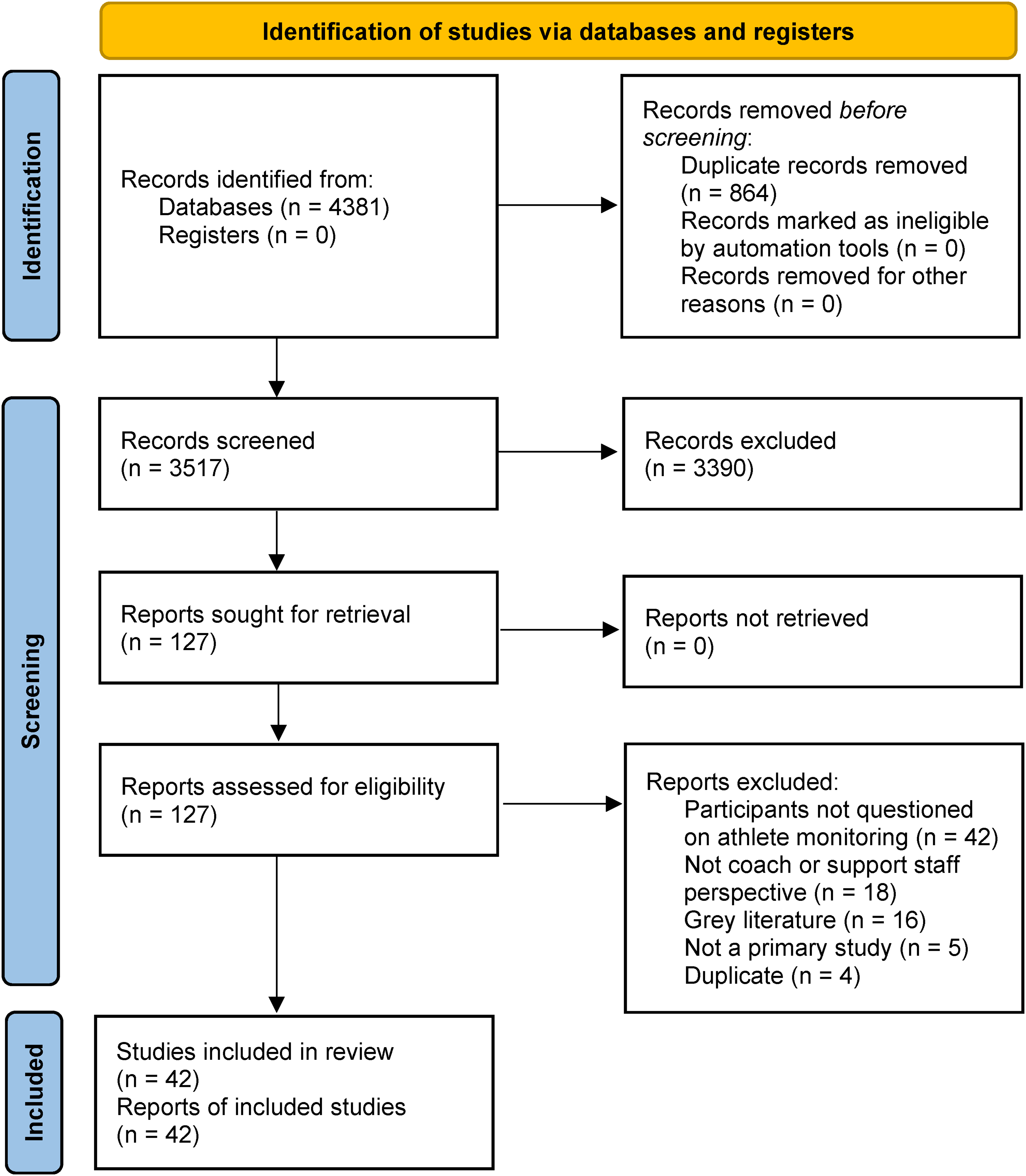
Preferred reporting items for systematic reviews and meta-analyses (PRISMA) flow diagram showing the flow of information through the review process. 25
Table 2 presents an overview of the categorised features for each study, while Supplementary file 1 contains the Table of Characteristics presenting more detail of the characteristics and findings. Additionally, the extracted data can be accessed in the data charting spreadsheet which is openly available at the OSF repository https://doi.org/10.17605/OSF.IO/KZAF7
Features of the 42 included studies. The athlete level is based on the Participant Classification Framework of McKay et al. 31 .
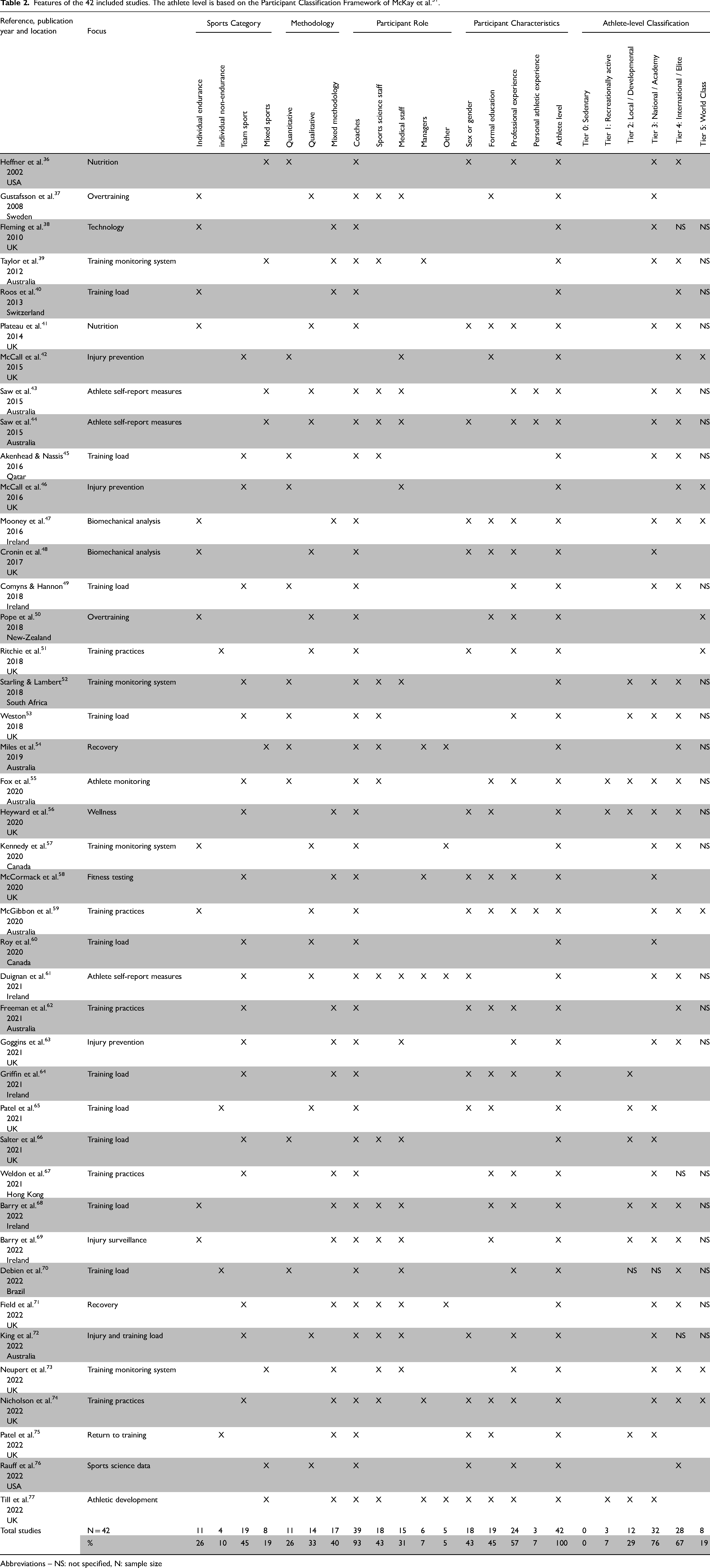
Abbreviations – NS: not specified, N: sample size
Frequency analysis of the characteristics
Study characteristics
Figure 2 shows that the field of athlete monitoring investigating the perspectives of coaches and support staff has seen substantial growth in the number of studies over the last few years, with 55% (23/42) of the included studies being published since 2020.
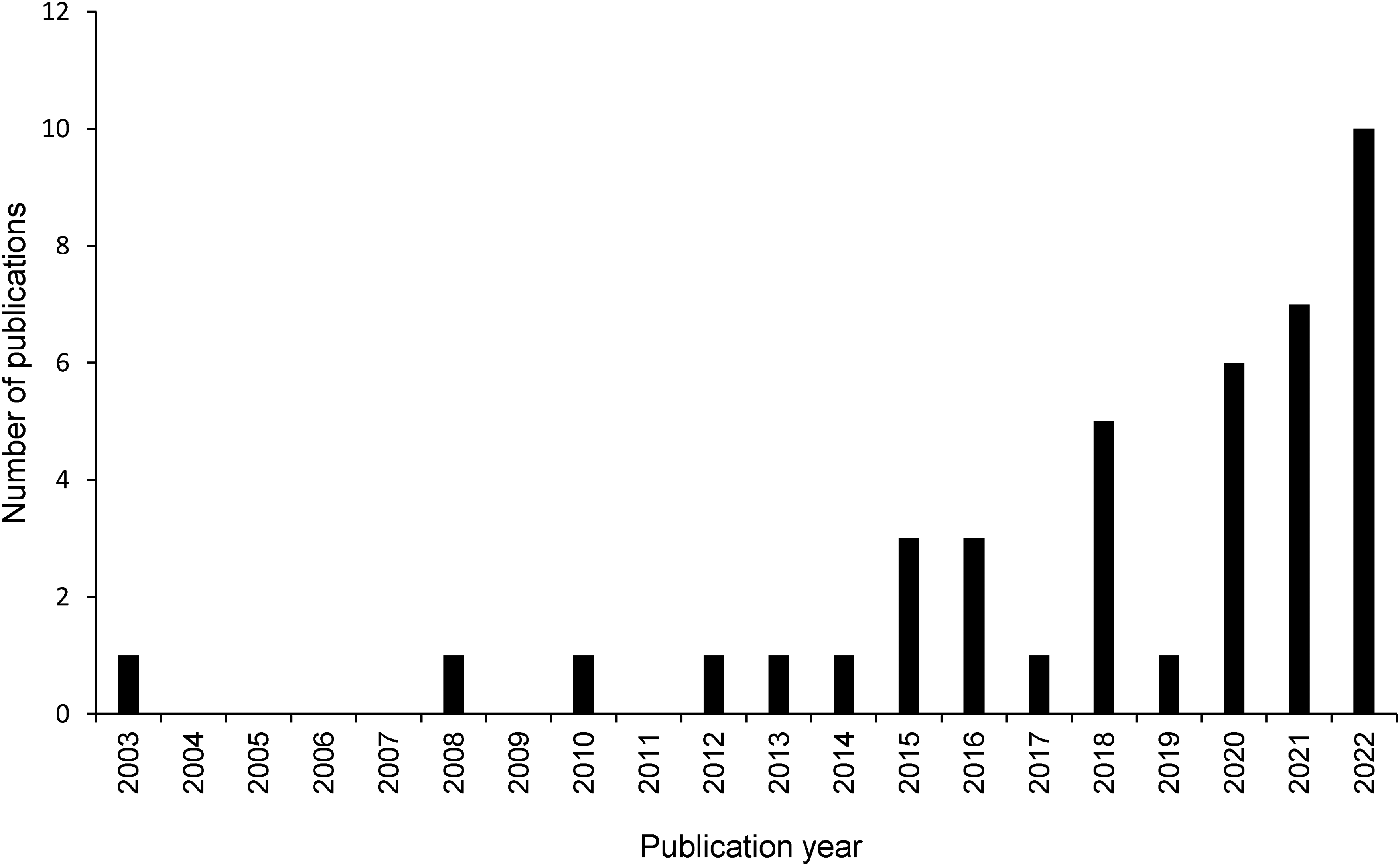
Number of included studies by publication year until 6 September 2022.
Table 2 demonstrates the diversity and wide range of features within the 42 studies. Geographically, the first authors were affiliated with institutions located in six different continents and 12 different countries, primarily in the UK (17/42), Australia (8/42) and Ireland (6/42). The athlete monitoring focus areas of the studies also covered a broad range. Training load emerged as the most researched focus (11/42 studies), followed by injury surveillance, prevention, and management (5/42), and then by training practices (4/42).
Since 2020, team sport studies have grown to become the dominant sports category while a mixed methodology has emerged as the dominant research methodology (See Table 3). Quantitative methodologies predominated in team and mixed sports studies, whereas qualitative methodologies were most common for individual sports with only one out of fifteen individual sports studies employing a quantitative methodology. Nonetheless, an increased adoption of mixed methodology is evident in team, individual and mixed sports studies. The method most widely used was the online questionnaire (26/42), which was equally employed for quantitative and mixed methodology studies (See Supplementary file 1). This was followed by the interview (14/42) which was predominantly used for qualitative studies (10/14) and, to a lesser extent, in mixed methodology studies (4/14).
Frequency analysis of the features of the included studies before and since the substantial growth of publications in 2020.
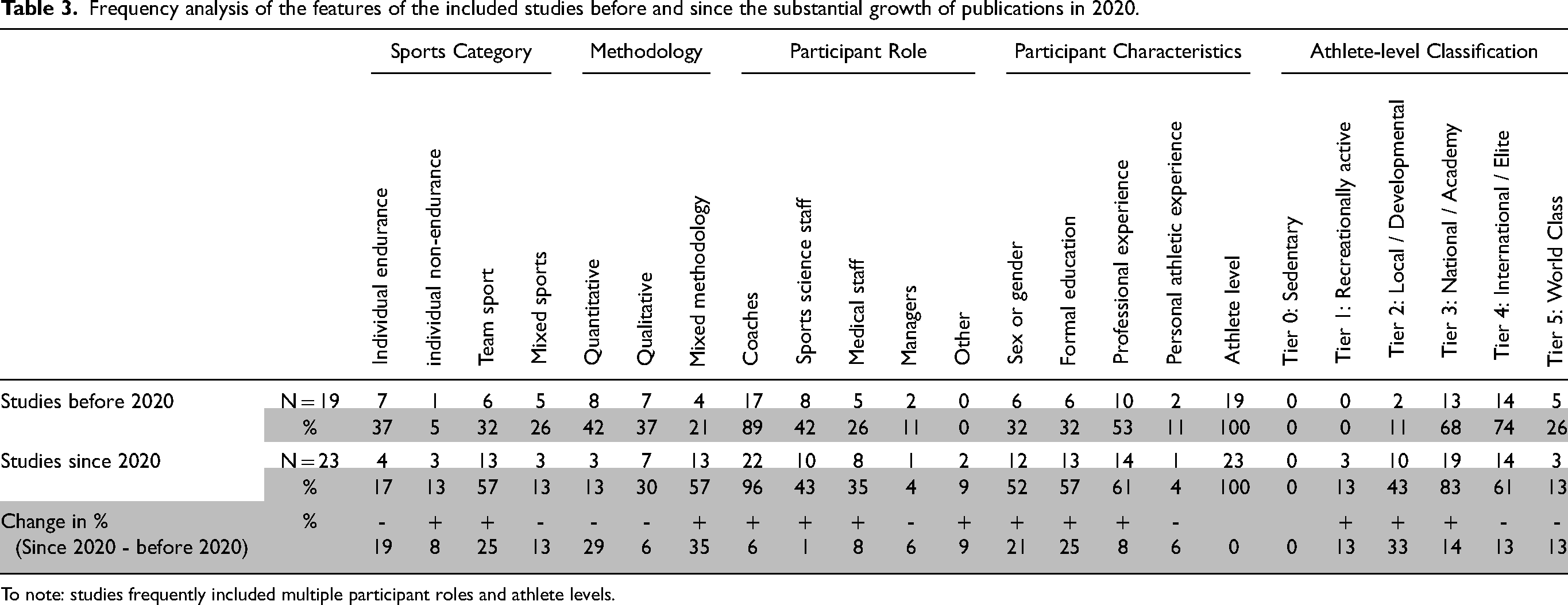
To note: studies frequently included multiple participant roles and athlete levels.
Participants’ role and characteristics
Tables 2 and 3 present the participants’ roles, highlighting that almost all studies in the scoping review included the perspectives of coaches, whilst less than half presented the perspectives of sports science support staff and less than one-third of medical support staff.
Table 2 also provides the reported characteristics of the participants in each study. The sex or gender of the participants was reported in only 18 out of 42 of the studies. In these 18 studies the average representation of females and women was 16%, ranging from 0% to 51%, with four studies reporting no female or woman representation. Furthermore, the athlete-level classification shows that nearly all the studies (39/42) recruited participants working with either national or international level athletes. Notably, eight studies included participants working with world-class level athletes, but only two of these studies focused exclusively on that level.
Since 2020, as shown in Table 3, there has been a general improvement in the frequency and breadth of reporting the participants’ characteristics. There has also been a shift towards recruiting coaches and support staff working with athletes at lower levels.
Purpose of athlete monitoring
Out of the 42 studies, 23 reported the coaches’ and support staff's purposes of athlete monitoring (see Supplementary file 2). The three most reported purposes of athlete monitoring were to reduce injury and illness (12/23), inform the training program (8/23), and improve or maintain performance (8/23). Additionally, athlete monitoring was equally used to prevent overtraining and to assess the effectiveness of training (4/23).
An overview of quantitative results within the studies
Effectiveness of athlete monitoring
The perceived effectiveness of athlete monitoring by coaches and support staff was rated for their training monitoring system as very valuable to the overall performance of the athlete. 39 Furthermore, five studies scored the perceived effectiveness for the athlete monitoring purposes of injury reduction or performance improvement, although exclusively within the context of training load monitoring.45,62,64,68,70 The perceived effectiveness of training load monitoring to reduce injury and improve performance was predominantly scored in the moderately effective range across swimming, rhythmic gymnastics, soccer, Australian rules football and rugby union, and spanned from the local to the international athlete level (see Supplementary file 3 for individual study results dataset).45,62,64,68,70 Four out of the five studies scored the perceived effectiveness for both injury reduction and performance improvement, resulting in similar scores.45,64,68,70 Of these, three studies with a combined sample size of 136 scored injury reduction slightly higher than performance improvement,45,64,70 while in one study with a sample size of 26, performance improvement scored slightly higher. 68
Nevertheless, the expected effectiveness was statistically significantly higher than the perceived effectiveness of training load monitoring to improve performance and reduce injury rates from coaches and support staff working in football at the national and international level. 45 Furthermore, 81 to 91% of the medical support staff working in football at the international and world-class level believed their injury prevention practices were successful but could have been better.42,46 Moreover, while 39% and 35% of the gymnastic coaches and medical support staff scored that training load management is very or extremely effective in reducing injury incidences and improving performance, more than 85% believed it could be very or extremely effective at both. 70
An overview of qualitative findings within the studies: a topic summaries narrative
Figure 3 presents a visual overview of the qualitative topics and subtopics. The organisation and structure of Figure 3 have been consistently followed in the writing of the topic summaries, which are based on the qualitative analysis of the included studies.
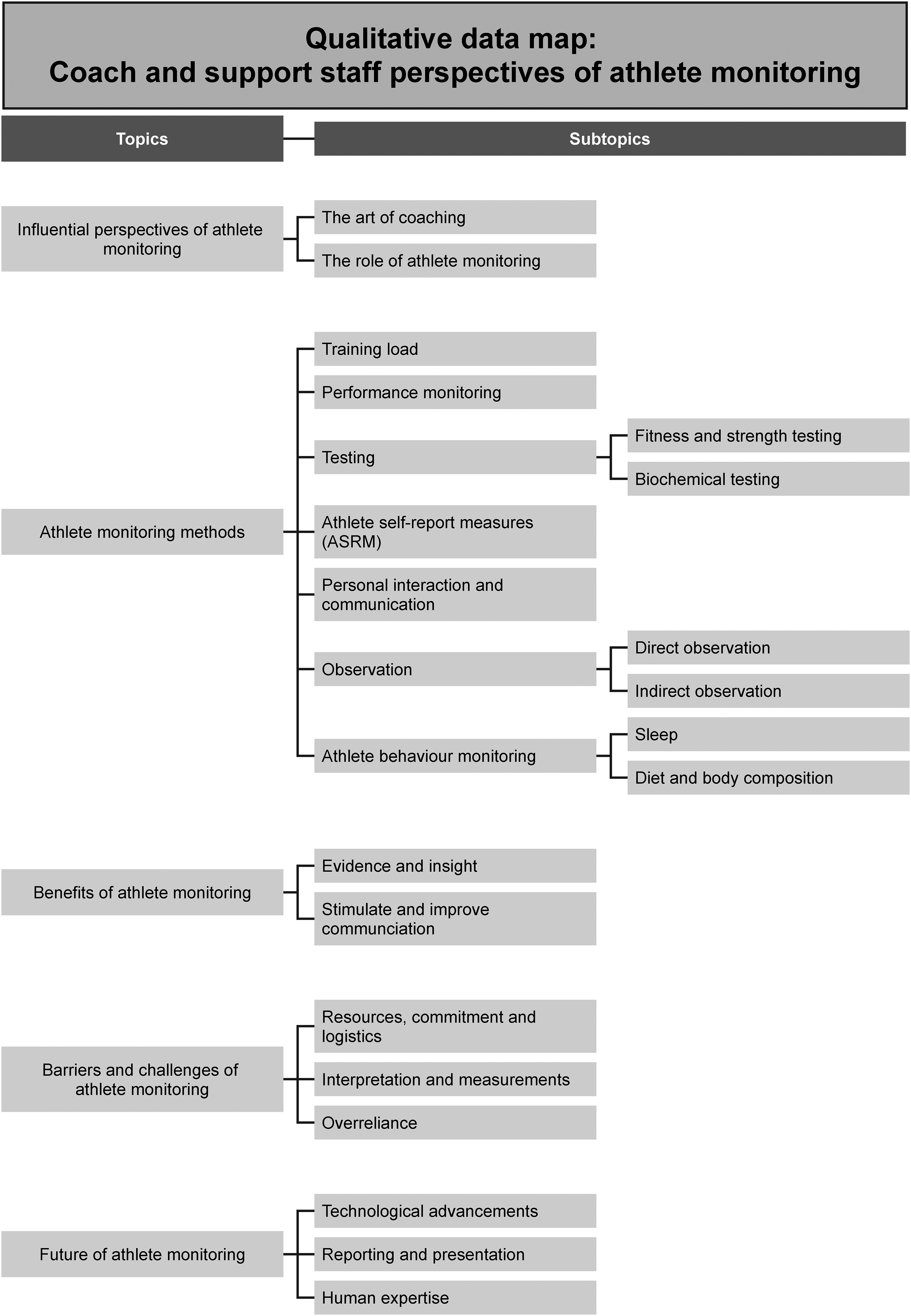
Organisational map of the key topics and subtopics based on the qualitative analysis of the included studies.
Influential perspectives of athlete monitoring
Coaching is more than just knowledge of principles. 48 Getting to know the athletes, fostering effective relationships, picking that nearly impossible time when to stop pushing an athlete, when to say something and when not to were considered part of the art of coaching and crucial for successful athlete monitoring.50,51,58,63
Coaches and support staff perceived that there is no single perfect or optimal scientific approach to monitor training, prevent injury, or create a champion.37,38,47 However, it was evident that athlete monitoring should help both the athlete and the coach, and therefore, athlete monitoring practices are best individualised and sport-specific.38,57 Overall, coaches and support staff viewed athlete monitoring as important but not everything, and it should be part of the bigger picture.58,61,63
Athlete monitoring methods
Training load, typically quantified as a metric combining the volume and intensity metrics of training or competition, has been the most studied athlete monitoring focus with 11 studies out of 42 (see Table 2). In endurance and team sports across levels, the session rating of perceived exertion (sRPE), which integrates the training duration with the rating of perceived exertion (RPE), is a popular training load metric in the reported literature.40,45,49,53,64 Yet, elite water polo coaches and support staff voiced concerns about the uncertainty generated by a single self-reported subjective numerical RPE score to calculate training load with athletes unsure how to rate their perceived exertion and RPE not reflecting the variations in intensity within a session.
72
Various coaches and support staff highlighted the need to continue introducing novel or improved objective training load monitoring measurements.64,65,68,72 However, these quantified subjective and objective training load metrics tend to be regularly combined with a form of non-quantified subjective information such as athlete feedback, athlete-coach interaction, or coach perception.40,53,60,64–66,68,70,72 “On occasion the self-reporting of wellness and internal loads can be at odds with the external loads provided. i.e., there have been times when the data is saying back off a bit but the athlete is saying no I'm good let's go”
68
- Local, national or international level swim coach or support staff
Performance monitoring, which is the monitoring of metrics directly related to the performance outcome during training or competition such as speed, distance, power, or points scored, is considered by some coaches as one of the most important forms of athlete monitoring.39,50,58 "It comes down to performance. If they had come and said to me oh you know look I’m [really tired] I’d go back and say look at this, you’re OK, the numbers are still good, … the boat speed's still there, we’re at a point in the training programme when you should be feeling like this.”
50
– World-class level rowing coach
Testing is considered to be beneficial at specific stages of the season to provide an objective snapshot of a specific area and to determine training loads. 58 Nevertheless, fitness and strength testing was still seen as a singular piece of information, 62 with performance in the field still being more important for team selections. 58 Additionally, there was only one study from 2012 on the coaches’ and support staff's perspectives of biochemical testing reporting it was not a well-accepted monitoring method by coaches and support staff mentioning the complicity to link biochemical outcomes to performance while being time-consuming, costly, and requiring expertise. 39
Athlete self-report measures (ASRM) which typically are short quantitative questionnaires offer a practical method to receive feedback and monitor multiple athletes and are often used in high-performance sports.
39
Athlete self-report measures are used to capture subjective data, some common self-report measures include the rating of perceived exertion (RPE), effort, fatigue, sleep quality, mood, stress, recovery, muscle soreness and generally provide a free comment area for athletes. Monitoring the athlete's wellness, emotional and cognitive states and how they feel about training are also considered beneficial information.56,57 Coaches and support staff use the information from athlete self-report measures as a conversation starter with the athlete or staff and as an “early alert system” to facilitate a proactive approach.44,61 "It [i.e., self-report measures] gave context and content to actually start a conversation rather than just your usual ‘hellos’”
61
– National or international level Gaelic games coach or support staff “If they don’t comment on it, I would probably text just to see what the issue is or how bad it is because sometimes a 2 or a 3 [out of 5] is not enough to go off.”
61
– National or international level Gaelic games coach or support staff “I wonder if constantly asking a player if they feel well makes them feel that maybe they don’t.”
43
– National or international level coach in unspecified sport “If you ask them, they’re always going to be tired, they always have to be tired. If you’ve got someone who's got an injury if you go and ask them, they’ll tell you about the injury you know, you almost want them to forget about it and move on. ‘Don’t think of the pink elephant’, you know, and you think of a pink elephant, ‘how are you feeling?’, well I’m not feeling good now you come to mention it.”
50
– World-class level rowing coach
The personal interactions, communication, and relationships between the athlete, coach, and support staff are perceived as an irreplaceable, effective, and simple way to receive and provide feedback.40,43,50,51,57,58,61,64 The athletes’ personal comments are considered the most important monitoring information for elite endurance coaches,
40
with open communication being seen as crucial to both building and fostering the coach-athlete relationship.41,58,61,64,77 Roos et al.
40
and Kennedy et al.
57
stated that athlete monitoring systems should never and cannot replace personal interaction and very close regular coach-athlete communication. "It's through talking to players, they're normal people, it's what normal people do”
58
– National-level rugby league coach “The best thing to do is to get on a common level of communication with the players and openly chat to them about how they are feeling both physically and mentally.”
64
– Local-level rugby union coach
Direct observation, another widely used monitoring technique across sports and levels, is easily implementable and has been considered particularly useful for biomechanical and technical assessments, as well as the evaluation of body language and behaviours before, during, and after training.41,47,50,51,55,58,65,77 Furthermore, coaches recognise the importance of combining subjective observations with objective data.
50
"You're always watching your rowers, just general mood and things like that, you're always keeping an eye on them but it's all quantified off the [boat speed and rowing ergometer] numbers that you collect.”
50
– World-class level rowing coach
"I could use omegawave [i.e., non-invasive readiness technology to assess both brain and heart], which tells you when you are in the best shape of your life. I haven't got into that at all, I have relied upon what I see and what the athletes are doing throughout the process.” 51 – World-class level track and field coach
Biomechanical analysis, and in particular video analysis, provides the coach and support staff with the ability to see through indirect observation and measure aspects they cannot otherwise capture through direct observation.
47
While the content and insights can be delivered as feedback to the athlete, an endurance coach reported that an athlete may become reliant upon it.
48
“He has the videos and if he doesn’t see any immediate improvement, it affects him. I have in a sense ‘created a monster’, that needs to be fed with external evidence based feedback!”
48
– National-level endurance running coach
Athlete behaviours outside of training, such as sleep and diet, have been acknowledged by coaches and support staff to be important for health, recovery, and performance.36,54,76 Nevertheless, most coaches and support staff did not monitor the sleep of their athletes, mainly due to a lack of resources and knowledge. 54 Dietary behaviour was monitored through observation or information from third parties. 41 Body composition measurements were a delicate topic. The majority of coaches viewed body composition measurements in a negative manner concerning the athlete's well-being, while some coaches argued that they are an important measurement to protect the athlete and keep them safe.41,65,76
Benefits of athlete monitoring
One of the major benefits of athlete monitoring is that it can provide evidence through the objective and subjective information that is collected.41,47,50,70,76 Athlete monitoring can provide greater insight and understanding of the athlete and into the demands of the sport which can inform practice.44,60,63,72,76 Athlete monitoring can also validate a coach's perception and decision or provide additional context and content that otherwise would have been unnoticed.47,50,61,76 “Training prescription was said to be fine-tuned in response to ASRM data with ‘day-to-day manipulation of their training loads based on how they are doing… stressing them as much as we can without putting them over the edge’ (S15).”
44
– National or international level individual sports sports science support staff “You can tell they’ll test you out [to reduce their training load] and when you’ve got the numbers there to back it up it's pretty easy to tell when … they’re trying to have you on.”
50
– World-class level rowing coach
Athlete monitoring can stimulate and improve communication as it provides a starting point to initiate a conversation and allows for quality feedback as the coaches and support staff have a better understanding of the athlete's progress.61,68,70,75,76 Coaches and support staff can use athlete monitoring data to support their explanations and assist an athlete's understanding.47,68 Additionally, by showing the athletes the connections between data and performance, a coach can increase the athlete's buy-in to their training.
76
“It [M-ASRM] gave context and content to actually start a conversation rather than just your usual ‘hellos’”
61
– National or international level Gaelic games coach or support staff “[Video] truly helps a swimmer to see what they are doing or need to do. Sometimes telling them just doesn’t work, but letting them watch it does. [Video] also helps to slow down a stroke and allow you to see things you could not see [otherwise].”
47
– National-level swimming coach
Barriers and challenges of athlete monitoring
Commonly reported barriers to implementing athlete monitoring include a lack of time, expertise, and resources, including financial and human resources.39,43–45,47,54,55,58,63,64,66,68,69,71,74,76,77 Securing buy-in for the athlete monitoring strategy is important but can be challenging with athletes and other staff who are often resistant to the time and effort required for testing and monitoring.37,42,43,45,46,63,64,68,72,73,76 Yet, compliance and adherence from both athletes and staff are considered essential for the success of athlete monitoring strategies.39,40,42,43,46,49,61,63,64,69,77 In addition, staff may face sport-specific constraints and logistical challenges, such as identifying appropriate testing times.39,63,66,68,71,73,76 These challenges tend to be particularly pronounced when working with large groups.59,77
Athlete monitoring might be misleading if the context of data collection is not accurately taken into account, and if the analysis is not well-presented for interpretation.48,57,58,61,76 Moreover, the validity and reliability of athlete monitoring tools can be a serious concern, with technology even limiting what athlete monitoring information can be collected altogether.37–39,43,45,47,72 Given the difficulties in establishing objective cut-off values, it is clear that quantification is not the be-all and end-all of athlete monitoring.50,58,62
Furthermore, athlete monitoring can potentially distance the coach from the athlete and become counterproductive when athletes and staff become over-reliant on athlete monitoring data or when they underestimate the impact this can have on the mental state and well-being of the athletes.41,43,47,48,50,57,61,67
Future of athlete monitoring
Coaches and support staff reported a desire for athlete monitoring methods and systems, both software and hardware, that are user-friendly, accessible, valid, reliable, accurate, time-efficient, cost-effective, and ideally available in real-time.38,40,43,47,52,57,68 Coaches and support staff also expect that technology will allow for measuring new variables, improve the wearability of monitoring devices, and improve the predictive accuracy for performance and injury.38,67 Artificial intelligence (AI) and specifically machine learning (ML), but also automation, may help achieve some of these expectations.40,67
In addition to advancements in technology, progress can be made in the reporting and presentation of athlete monitoring information. Coaches and support staff mentioned training pattern visualisations and intuitive interfaces while keeping athlete monitoring simple, focusing on the basic measures and reducing the total amount of information to what is most relevant.40,43,67
Despite the technological advancements, especially artificial intelligence, which can become part of a decision support system and potentially take over some decision-making, 67 it was stated that the experience and judgement of coaches and support staff will continue to be vital for effective monitoring at the elite level.40,68
Discussion
The purpose of this review was to map and summarise the athlete monitoring perspectives of coaches and support staff in the published literature providing an overview of the current knowledge in this research area. The main findings from this scoping review were that: i) of the 42 identified studies, 55% were published between 2020 and 2022, almost all studies were conducted within the Anglosphere and with participants working with athletes at a national or international level; ii) the main reasons to monitor were to reduce injury and illness, inform the training program, and improve or maintain performance; iii) athlete monitoring was perceived as valuable and effective, although coaches and support staff expected a higher effectiveness they believe in the potential of athlete monitoring; iv) coaches and support staff acknowledging that athlete monitoring, and specifically the quantification, is not an all-encompassing solution, believing it should be part of the bigger picture underscoring the irreplaceable value of close and regular communication.
Study and participants’ characteristics
The scoping review identified 42 studies that have explored the athlete monitoring perspectives of coaches and support staff, with a notable increase in research output in recent years as shown in Figure 2. Despite this recent surge in the number of publications, the existing body of research in this area is still in its early stages. This is particularly the case given that the inclusion criteria within the present study were broad and encompassed all sports, practitioners, and types of monitoring focus, without excluding studies based on publication year. Haugen concluded that coaches are an untapped resource in the sports science literature, having been recruited as participants in less than 0.5% of the more than 1100 published studies in a prominent sports science journal from 2015 to 2021. 78 Furthermore, it was suggested that the low number of studies involving coaches may be related to the reluctance of coaches to participate and a lack of verified methodology. 78 However, the reasons for the relatively low attention given to coaches in the sports science literature are not yet known.
The predominance of Anglospheric contribution in the included studies of this scoping review indicates the gap in culturally diverse perspectives. One possible explanation for the Anglospheric sampling is the connection and accessibility of coaches to research teams at Anglospheric institutions. Additionally, the language barrier that may exist with non-English speaking coaches could limit their participation in research studies.
A further important finding of this scoping review is that nearly all studies recruited participants who worked with athletes at the national or international level as shown in Table 2. However, considerably less research has been conducted with coaches and support staff working at recreational, local, or world-class levels. Interestingly, Table 3 shows that since 2020 there has been an increased contribution of studies with participants working with recreational, local, and national level athletes, while a decreased contribution of studies with international and world-class athlete levels has been present. Moreover, the two studies that focused solely on participants working with world-class athletes were from 2018 and had relatively small sample sizes of 3 and 7.50,51 A potential explanation for this observation is that research groups seek insights into ‘best practices’ and, therefore, aim to recruit coaches and support staff from the highest level possible although access to world-class level participants is rare.
Females or women contributed to an average of 16% of the sample size in the 18 out of 42 studies (43%) that reported the sex or gender, of which none actively excluded female or women participants. This representation is in line with the 13% women coach representation at the 2020 Olympic Games. 79 As such, the limited inclusion of female and women perspectives within the studies reporting sex or gender may be reflective of the female and women underrepresentation in coaching and support staff roles in sports.80,81
Table 2 shows there is a lack of reporting participant characteristics. All studies reported the athlete level, yet only 3 out of 42 studies reported the personal athletic experience. This is surprising given that personal athletic experience is often an advantage or requirement for certain coaching and support staff roles. Table 3 shows that since 2020, there has been an improvement in the reporting frequencies of sex or gender, formal education, and years of professional experience, though each of these is still only reported in 52%, 57%, and 61% of the studies since 2020.
The terminology and categorisation of common demographic characteristics, such as sex and gender, formal education, and athlete level, have been inconsistent across studies in this scoping review and have not always been clearly defined. Due to vague descriptions for the athlete level, such as “elite”, “national level or better”, or “high performance” it is unclear whether 23 out of 42 studies (55%) have coaches or support staff working with world-class athletes in their sample. Moreover, the perspectives and results from participants with a wide variety of characteristics and across different categories or levels were often merged in the original studies. This makes it challenging or in some cases impossible to determine if perspectives and results are widely accepted or unique to specific participants’ characteristics or categorisations. For example, in this scoping review, it was not possible to determine if the perspectives of coaches and support staff differ across the athlete level they work at. The need to better report has been previously highlighted in a systematic review of coach knowledge in talent identification, 82 indicating it is a broader issue in the coaching literature.
Purposes for athlete monitoring
The scoping review presents that the main reported purpose of athlete monitoring by coaches and support staff is to reduce injuries and illness, followed by informing the training program and improving or maintaining performance as listed in Supplementary file 2. It is worth noting that the prevention of injury and illness cannot be seen entirely separate from the focus on athlete performance as a systematic review highlighted that injury and illness impair the chance of successful performances. 83 Furthermore, monitoring to inform the training program is also linked to the athlete's performance. This is demonstrated by an emerging body of research showing that using athlete monitoring to inform individualised training programs tends to outperform predefined training programs, particularly when subjective parameters are included in the monitoring strategy.84–90 This indicates that the three most reported purposes for athlete monitoring by coaches and support staff are either directly or indirectly related to improving or maintaining the athlete's performance.
Effectiveness of athlete monitoring
The results of this scoping review indicate that athlete monitoring is perceived by coaches and support staff as valuable and effective.39,45,53,62,64,68 There are initial results indicating that support staff and strength and conditioning coaches in team sports find training load monitoring and fitness testing more useful than head coaches. More than 95% of the support staff and strength and conditioning coaches in elite soccer and Rugby League academies found respectively training load monitoring and fitness testing beneficial or useful,53,58 while for head coaches in elite soccer this decreased to 75% 53 and in Rugby League academies to 67%. 58 However, rhythmic gymnastics coaches were slightly more positive than the medical support staff of training load monitoring with both groups being generally positive. 70
However, it was also found that coaches and support staff's expected effectiveness of athlete monitoring was significantly higher than their perceived effectiveness. 45 The disparity between the expected and perceived athlete monitoring effectiveness may at least partially result from the various barriers and challenges. These include a lack of time, expertise, and resources, in addition to obtaining buy-in, adherence and compliance, as well as ensuring valid and reliable data collection and accurate interpretation. Despite the reported barriers and challenges, it is important to note that athlete monitoring also offers numerous benefits such as providing evidence, insight, and understanding while also stimulating communication. Other contributing factors to the disparity might be the vigorous marketing claims of athlete monitoring technologies 90 and the disconnect between the simplified pre-dominant mechanistic views and deterministic models of sports performance and injury prediction which inherently underrepresents and in some cases misrepresent the complexity of human health and performance.90,91
Qualitative findings
The qualitative findings of this scoping review indicate that coaching is not an exact science, and coaches and support staff recognise that objective athlete monitoring data provide valuable insights as a component of an overarching, comprehensive athlete monitoring strategy.48,58,61,63 The use of subjectively scored athlete self-report measures (ASRM) to access data beyond objective metrics is a form of quantified subjective monitoring that gained traction in the scientific literature over the past decade, which is also reflected in the focus of the included studies of the scoping review (see Table 2). Especially, since a systematic review by Saw et al. concluded that subjective self-reported measures trump commonly used objective measures to monitor the athlete training response. 92 However, elite athletes have been known to choose to report dishonest data. 93
The scoping review findings indicate that objective and quantified subjective information such as ASRM tends to be regularly combined with a form of non-quantified subjective information such as athlete feedback, athlete-coach interaction, or coach perception.40,53,60,64–66,68,70,72 Further, the findings highlight that communication with the athlete is perceived as an irreplaceable and effective way to regularly receive feedback and athlete monitoring can stimulate this.40,43,50,51,57,58,61,64,68,75,76 These findings further support the conclusion by Jowett that one key factor to successful outcomes in coaching is the quality of the coach-athlete relationship. 94 These findings also challenge the predominant narrative that emphasises a quantitative dominant approach to athlete monitoring in sports science suggesting coaches and support staff employ a more balanced approach where objective, quantified subjective and non-quantified subjective information all have their place.
Limitations
The broad scope of the search as shown by the diversity of the included studies (see Table 2) demonstrates that the search strategy was comprehensive and appropriate for a scoping review. 24 Nevertheless, there were limitations in our search strategy as one of our search terms included ‘practitioner*’ and ‘support staff’ but did not specifically include ‘medical’ and another search term was limited to ‘monitor*’ and did not include variations like ‘assess’ or ‘evaluate’, which may have led to some records not being identified by the search strategy. Even so, 3517 reports were identified from the search strategy for this scoping review. Another limitation, although common practice, is that data extraction has been conducted by a single researcher.
Implications for future research
Future research should focus on improving the reporting standards of the participants’ characteristics and could attempt to increase the diversity and specificity of participants’ characteristics while maintaining the variety of sports studied. We urge future research to report terminology and category definitions related to the participants’ characteristics, as well as to provide more detailed descriptive participants’ characteristics information both at the individual and group levels. Therefore, we suggest when characterising coaches and support staff that researchers consider reporting sex and gender, formal education including coaching qualifications, years of professional experience, personal athletic experience including sports discipline and level, and athlete levels they have worked with. Depending on the research question providing more in-depth reporting of characteristics or including other characteristics such as cultural background and influences may offer valuable contextual information.
We also recommend that future research dedicates effort and attention to studying less researched groups such as world-class and serial winning coaches, female and women coaches, and coaches with cultural and educational backgrounds outside of the Anglosphere. Additionally, we encourage future research to consider allocating results more precisely to a specific individual or demographic group and, when possible, provide individual results. Furthermore, future research might consider comparing the practices and perspectives of participants with different characteristics which can provide valuable insights. For example, studying high-level coaches is useful to determine current perspectives and practices, 95 while a better understanding of the athlete monitoring perspectives and practices of lower-level coaches may give insight into where these groups differ and could inform coach education and development programs. Moreover, differentiating high-level coaches with greater detail might elicit further insights, for which we suggest including categories for world-class coaches, who have an athlete medal at Major Games or Championships, 31 and serial winning coaches, who repeatedly and over a sustained period of time coached athletes to gold medals at the highest level. 96
Future research would be valuable in exploring the role of objective, quantified subjective and non-quantified subjective monitoring information within an athlete monitoring strategy and the impact these have on the training prescription and modification. As the findings of this scoping review findings demonstrate that athlete monitoring extends beyond quantitative information and that one of the major benefits is to stimulate communication, this indicates that further research deserving attention would be on non-quantified subjective monitoring such as athlete feedback, athlete-coach interaction, and coach perception.
Conclusions
Athlete monitoring is a rapidly evolving field, and the perspectives of coaches and support staff on athlete monitoring are gaining importance within the sports sciences. This increase in significance is reflected by the rise in the number of publications in this scoping review across various sports and a broad spectrum of topics. Coaches and support staff reported in the scientific literature that the main reasons to monitor are to reduce injury and illness, inform the training program, and improve or maintain performance. While athlete monitoring has generally been seen as valuable, coaches and support staff tended to expect the effectiveness to be higher and highlight the potential effectiveness to reduce injuries and improve performance.
The coaches and support staff acknowledged that there was no perfect scientific approach to monitoring athletes and believed it should be part of the bigger picture. They also recognised that quantification is not the be-all and end-all, and that athlete monitoring systems should never replace very close regular communication. The benefits of athlete monitoring included providing evidence, offering insights, enhancing understanding, and stimulating communication. Common barriers included a lack of time, expertise, and resources while obtaining “buy-in” and ensuring compliance and adherence can be challenging.
The expectations for technological advancements from coaches and support staff are high with a call for user-friendly technologies, improved data visualisation, and the effective use of artificial intelligence to enhance athlete monitoring. Yet, experienced sports coaches and support staff are still expected to remain pivotal for successful athlete monitoring.
Supplemental Material
sj-docx-1-spo-10.1177_17479541241247131 - Supplemental material for Athlete monitoring perspectives of sports coaches and support staff: A scoping review
Supplemental material, sj-docx-1-spo-10.1177_17479541241247131 for Athlete monitoring perspectives of sports coaches and support staff: A scoping review by Wouter P. Timmerman, Chris R. Abbiss, Nathan G. Lawler, Mandy Stanley and Annette J. Raynor in International Journal of Sports Science & Coaching
Supplemental Material
sj-docx-2-spo-10.1177_17479541241247131 - Supplemental material for Athlete monitoring perspectives of sports coaches and support staff: A scoping review
Supplemental material, sj-docx-2-spo-10.1177_17479541241247131 for Athlete monitoring perspectives of sports coaches and support staff: A scoping review by Wouter P. Timmerman, Chris R. Abbiss, Nathan G. Lawler, Mandy Stanley and Annette J. Raynor in International Journal of Sports Science & Coaching
Supplemental Material
sj-docx-3-spo-10.1177_17479541241247131 - Supplemental material for Athlete monitoring perspectives of sports coaches and support staff: A scoping review
Supplemental material, sj-docx-3-spo-10.1177_17479541241247131 for Athlete monitoring perspectives of sports coaches and support staff: A scoping review by Wouter P. Timmerman, Chris R. Abbiss, Nathan G. Lawler, Mandy Stanley and Annette J. Raynor in International Journal of Sports Science & Coaching
Supplemental Material
sj-xlsx-4-spo-10.1177_17479541241247131 - Supplemental material for Athlete monitoring perspectives of sports coaches and support staff: A scoping review
Supplemental material, sj-xlsx-4-spo-10.1177_17479541241247131 for Athlete monitoring perspectives of sports coaches and support staff: A scoping review by Wouter P. Timmerman, Chris R. Abbiss, Nathan G. Lawler, Mandy Stanley and Annette J. Raynor in International Journal of Sports Science & Coaching
Footnotes
Credit author statement
Conceptualization: Wouter Timmerman, Chris Abbiss, Nathan Lawler, Mandy Stanley, Annette Raynor; Methodology: Wouter Timmerman; Chris Abbiss, Nathan Lawler, Mandy Stanley, Annette Raynor; Formal analysis and investigation: Wouter Timmerman; Data curation: Wouter Timmerman; Writing – original draft: Wouter Timmerman; Writing – review & editing: Wouter Timmerman, Chris Abbiss, Nathan Lawler, Mandy Stanley, Annette Raynor; Visualization: Wouter Timmerman.; Project administration: Wouter Timmerman; Funding acquisition and resources: Wouter Timmerman; Supervision: Chris Abbiss, Nathan Lawler, Mandy Stanley, Annette Raynor.
Declaration of conflicting interests
The authors declared no potential conflicts of interest with respect to the research, authorship, and/or publication of this article.
Ethics approval
Not applicable, as this is a scoping review based on previously published data.
Funding
W.P.T. was funded by a Higher Degree by Research scholarship from the Edith Cowan University.

Research data
The search strategy, records excluded following full-text review, data charting spreadsheet, and PRISMA-ScR checklist are openly available at the OSF repository https://doi.org/10.17605/OSF.IO/KZAF7
Supplemental material
Supplemental material for this article is available online.
References
Supplementary Material
Please find the following supplemental material available below.
For Open Access articles published under a Creative Commons License, all supplemental material carries the same license as the article it is associated with.
For non-Open Access articles published, all supplemental material carries a non-exclusive license, and permission requests for re-use of supplemental material or any part of supplemental material shall be sent directly to the copyright owner as specified in the copyright notice associated with the article.
