




Abstract
Background
In Australia, one-third of people ≥15 years perform regular resistance training and 90% of those do not meet current health guidelines. All age groups should engage in regular resistance exercise, to maintain strength and function.
Objectives
To identify trends in powerlifting competition participation in Australia by sex and age group from 1968 to 2022, and to compare the strength of powerlifting competitors to population age- and sex-based normative values.
Method
The number of unique participants and total competition entries for each year were analysed using Australian powerlifting competition data. Subdomains of age and sex were investigated, and mean ± SD, frequency, range, and trend analyses reported. United Nations age classifications were used to identify age trends. Comparisons to population strength norms were explored descriptively.
Results
We included 21,514 individual competitors from 1942 powerlifting competitions between 1968 and 2022. Exponential growth was seen in competition entries from 115 in 1981, to 759 in 1994, 1014 in 2011, and to 6803 in 2022, (R2 = 0.86). At first participation 18–25-year olds (51.1%) followed by ≥36 years (16%) were most represented. Strength comparison to available population norms demonstrates superior upper- (bench press [most competitors above 70th percentile) and lower-body (squat [majority rated ‘excellent’) strength.
Conclusions
Superior strength levels of powerlifters further the evidence base for this sport as an effective way to develop muscular strength, with low injury. We advocate for public health promotion and additional support for powerlifting as an underutilised community health tool.
Introduction
Powerlifting is a maximum strength-based sport whereby athletes perform the squat, bench press, and deadlift. During three-lift competitions, athletes attempt to accumulate the highest overall total score by summing the best lift from three attempts within each lifting discipline 1 in age, bodyweight and sex categories. Modern powerlifting originated in the 1960s after weightlifting (e.g. clean and jerk and snatch movements). Currently, there are many federations and organisations that coordinate and regulate competitions within nations and globally. 2 Thus, competition rules differ slightly depending on federation affiliation and competition type (e.g. raw/classic versus equipped events). Regardless, performance is based on the maximal expression of upper- and lower-body strength. Importantly, participation in powerlifting is open to a broad age demographic with school-aged children through to older adults (e.g. Master's IV category; > 80 years) who can partake in competitions at various levels (e.g. novice/community-level competitions through to world championship events).
Encouraging lifestyle behaviours that improve health, physical function, and independence is crucial for the individual and community.3,4 Indeed, greater upper- and lower-body muscular strength is associated with a lower mortality risk in adults, irrespective of age. 5 Hence, governing bodies worldwide recommend performing strengthening activities at least 2 days per week.6,7 However, despite the documented benefits of regular physical activity, including, but not limited to, improved quality of life, 8 bone mass, 9 aerobic fitness, 10 cognitive function, 11 muscle strength, 12 coordination and balance, 13 only 32.5% of Australians aged ≥15 years participate in strength-based exercise 14 with up to 90% of this group still not meeting training frequency recommendations. 15 Indeed, poor muscle strength in older adults is a significant contributor to the global healthcare financial burden16,17 and is becoming increasingly recognised as a risk factor in young adult mortality. 18 In school-aged youth, resistance training has been shown to positively affect cognition and academic outcomes, indicating the benefit of including strength-based activities in the school curriculum to support student learning. 19 More promisingly, Australian participation trends across the lifespan show that individuals performing muscle-strengthening activities as part of sport, recreation, or exercise is beginning to increase—almost twofold from 2001 to 2010. 15 Thus, individuals must be continually encouraged to meet or exceed the minimum levels recommended by governing bodies.
Considering this, we sought to examine the longitudinal participation trends of Australian powerlifting, with further analysis to identify age- and sex-based participation trends. Finally, we explored the strength of powerlifting participants within various age classifications compared to reported community-based norms, which has not been previously compared to our knowledge. We hypothesised that powerlifting participation has increased over time and that the strength levels of powerlifting participants overall would be well above the reported norms for community-dwelling people of the same age and sex.
Methods
This study is a retrospective, longitudinal population analysis. We collated individual athlete data from all sanctioned powerlifting competitions held in Australia from 1968 to 2022, sourced from the publicly available records on openpowerlifting.org. Therefore, the data presented here does not include unsanctioned or unaffiliated competitions that may have been held throughout the analysis period. The Edith Cowan University Human Research Ethics Committee provided ethical approval for this investigation.
We present descriptive statistics as mean ± SD, frequency, range [lower limit – upper limit] and trend analyses to explore Powerlifting participation trends in Australia. Independent samples t-tests and one-way ANOVAs were used to determine statistical significance between group means, where data were compared between groups. A p-value of < 0.05 was considered statistically significant. All analyses were completed using SPSS statistical software (v22, IBM). Participants were classified into age categories based on those defined by the United Nations 20 to assess trends by age groups over time. These age classifications are presented below:
Children – aged 1–11 years Adolescents – 12–17 years Young adults – 18–35 years Middle-aged adults – 36–59 years Older adults – 60–79 years Very old adults – 80 + years
Normative data for strength-to-bodyweight ratios of the general population for the squat and bench press were sourced from the Cooper Institute (Dallas, TX) and reported in the American College of Sports Medicine (ACSM) guidelines for exercise testing and prescription.
20
The ACSM does not provide normative data for the deadlift, nor could other peer-reviewed published norms for the deadlift be found. Therefore, this lift was excluded from this part of the analysis. Comparisons of strength-to-bodyweight ratios were only conducted for data where athletes competed in Raw, Wrapped, or Single-ply competition. This was done to minimise the influence of athletes competing in equipped competitions (where the weight able to be lifted is higher due to assistive equipment) on the data and to provide a better comparison to general population norms where such equipment is unlikely to be used. Not all age classifications could be identically matched to data for community strength levels. Hence, groupings were matched as reasonably as possible and are described in each figure.
Results
We collated data from 21,524 individuals (males n = 14,720; females n = 6804) with 62,730 competition entries across 1942 events between 1968 and 2022. Bodyweight and age data were missing for n = 322 individuals and n = 13,321 competition entries, respectively. In the total sample, mean age ± SD [range] and bodyweight at first participation were 28.40 ± 10.26 [8–87.5] years (n = 15,231) and 82.59 ± 20.79 [20.0–215.6] kg (n = 21,367), respectively. Demographic variables for all included cases are presented in Table 1.
Demographic information for the included sample at first recorded competition participation (n = 21,524). ‘Missing’ refers to the number of entries with unavailable data for each metric.
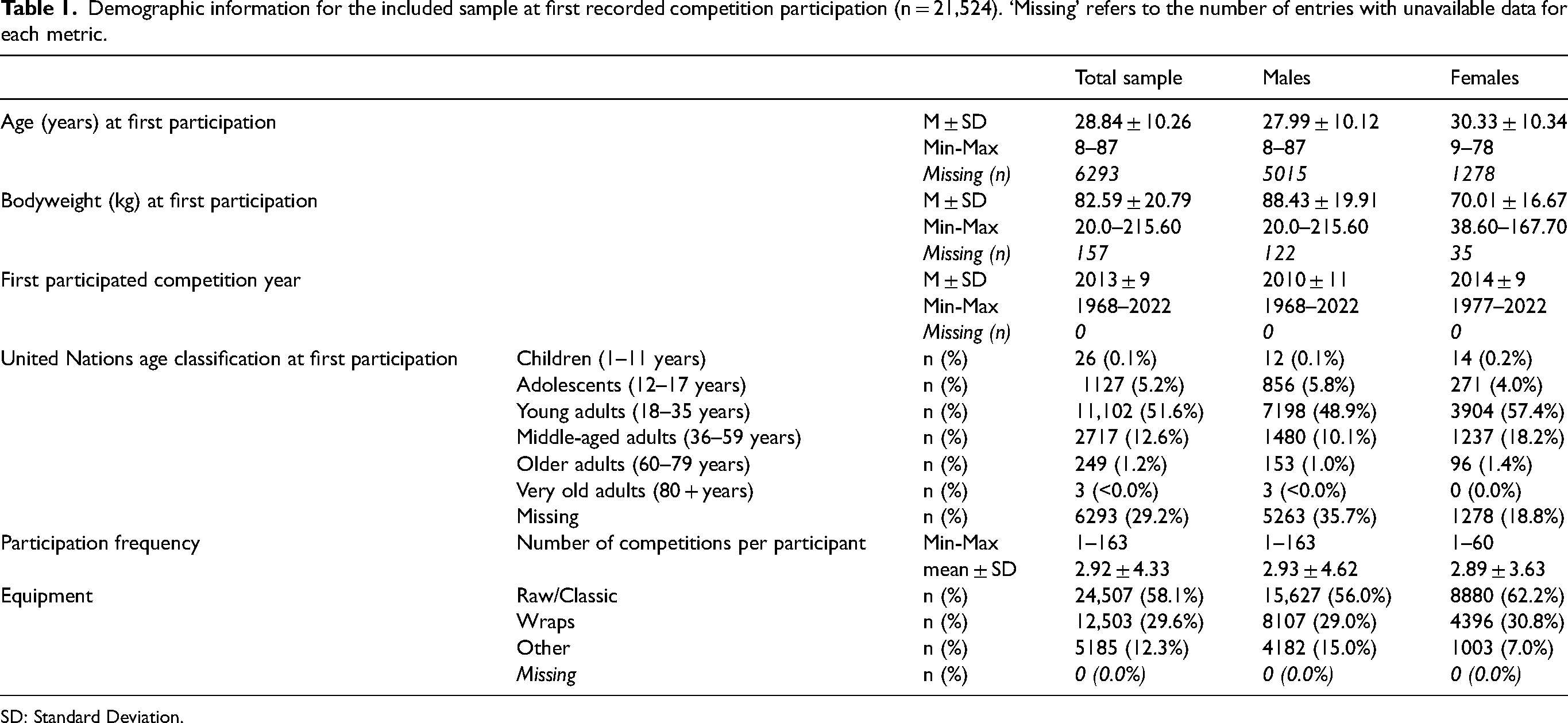
SD: Standard Deviation.
Participation trends
Participation rates increased over time for males and females, with a substantial increase between 2011 and 2019 and a sharp decline in 2020. The number of unique participants per calendar year for the total sample, males and females, is presented in Figure 1a. Overall participation trends in the total sample were best explained by an exponential growth pattern (formula:
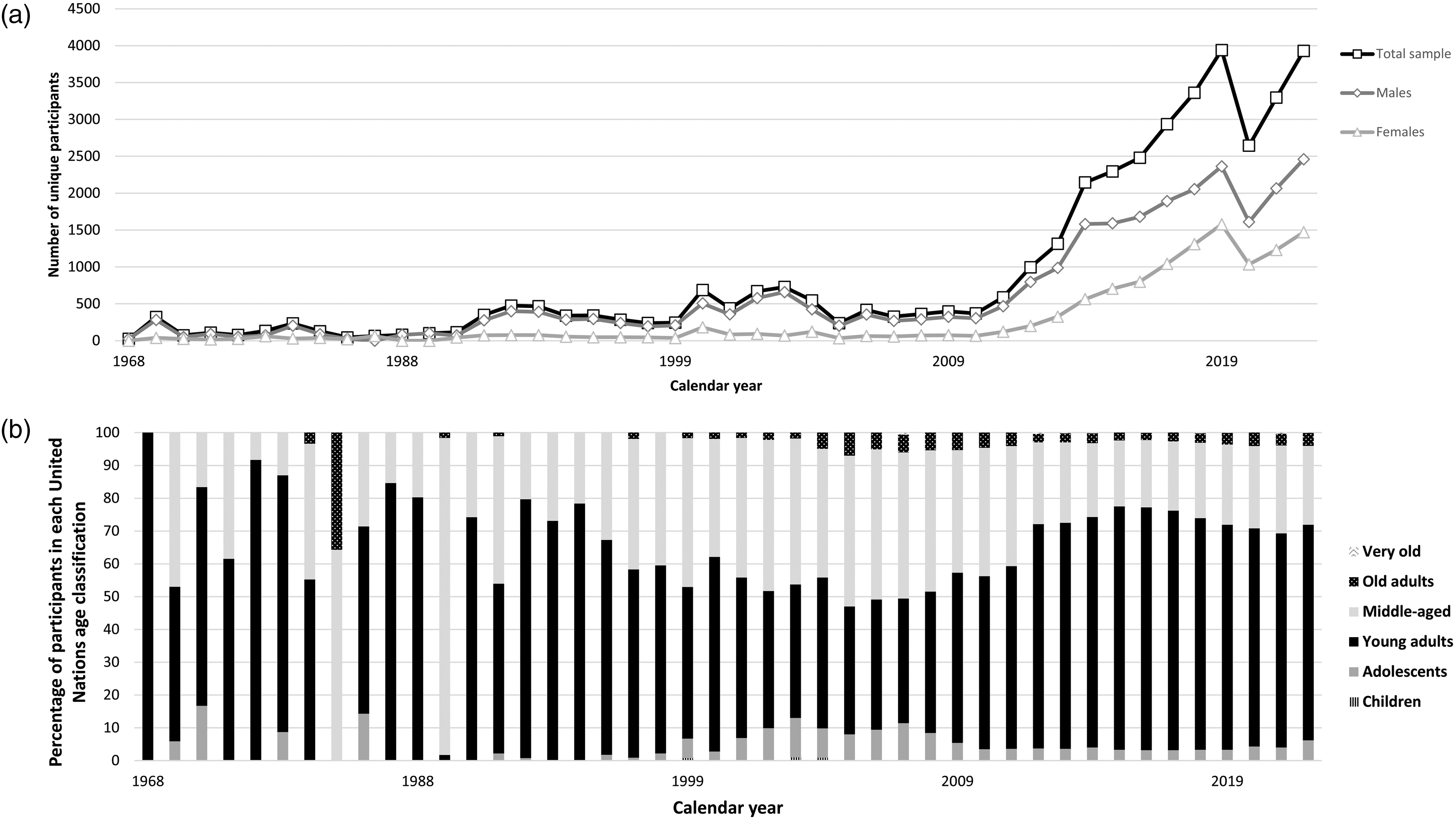
(a) Number of unique participants in Australian powerlifting competitions by year (1968–2022). Exponential growth over the period occurred overall, and third-order polynomial growth occurred for males and females, respectively. (b) Percentage of competitors within each United Nations age classification in Australian powerlifting competitions by year (1968–2022) where age data were available.
In the total sample, athletes participated in 2.92 ± 4.33 powerlifting competitions over an average of 1.82 ± 1.69 years [range: 1–30 years]. For males, the mean number of competition participations was 2.93 ± 4.62 events over a mean duration of 1.85 ± 1.79 years [range: 1–30 years]. For females, the mean number of competition participations was 2.89 ± 3.63 events over a mean duration of 1.78 ± 1.46 years [range: 1–26 years]. In the total sample, 52.2% of participants competed only once, 63.9% of all participants competed only in a single calendar year (Table S1), and 96.2% of all participants competed in ≤5 calendar years (Table S2). When exploring the number and period of participation by sex, 53.6% of males and 49.1% of females competed only once. For males, 95.8% participated in 1–5 calendar years. For females, 97.0% participated in 1–5 calendar years. Table 2 shows trends for competition entries based on age classification at first participation.
The mean number of powerlifting competitions participated in; stratified according to United Nations age classification at first recorded competition participation.
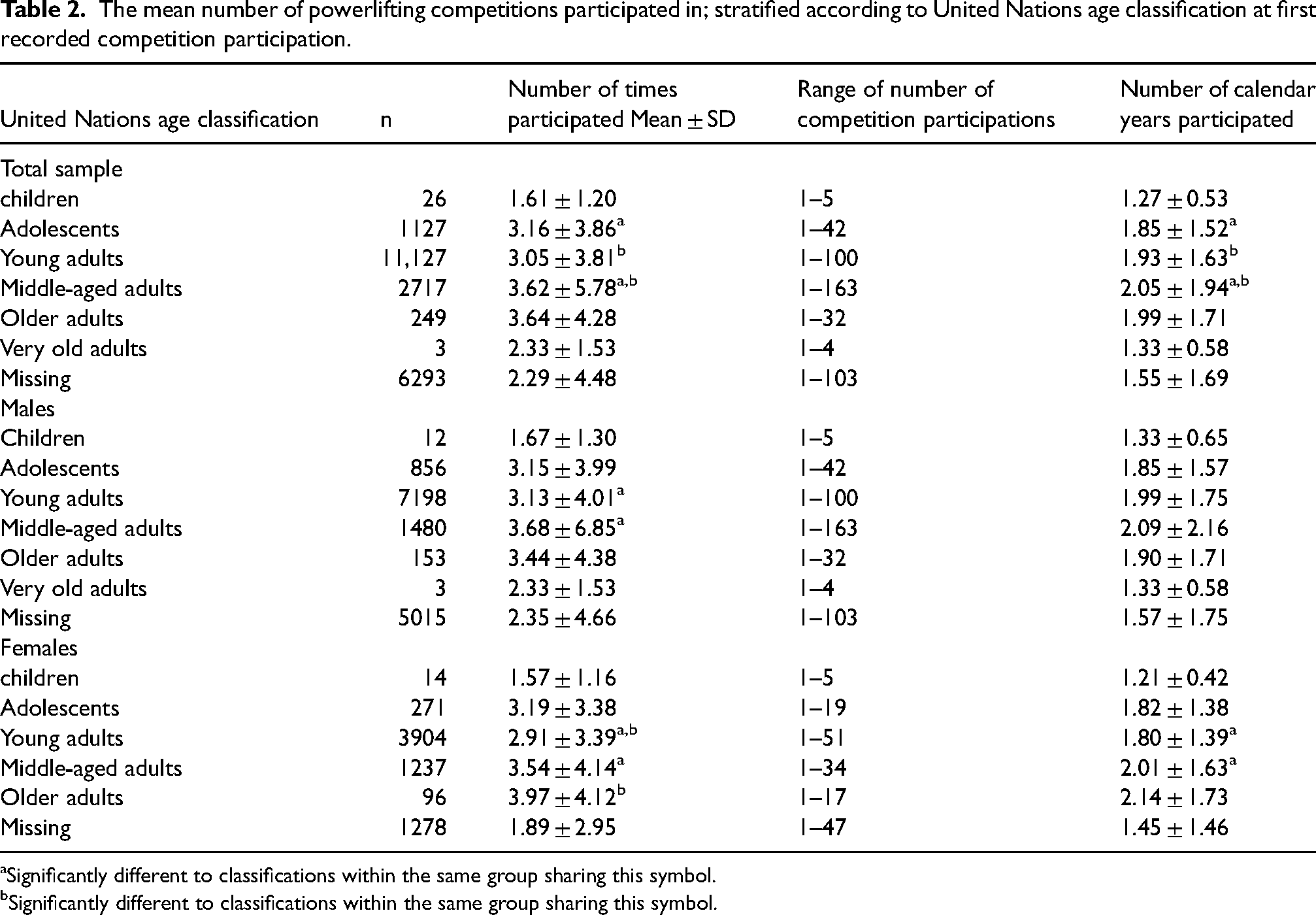
Significantly different to classifications within the same group sharing this symbol.
Significantly different to classifications within the same group sharing this symbol.
In the total sample, across all years, age data was missing for an average of 55.5 ± 30.4% [2.4–93.7%] of competition entries per year. Since 2012, the number of competition entries missing participant age data has decreased to 10.4 ± 10.4%. Across the period 1968–2022, most participants were young adults (61.1 ± 17.3%) in each calendar year. The first record of a competitor from the ‘very old aged’ category occurred in 2007. In the same year, entries within the very old age category accounted for less than 0.5% of all competition entries. A detailed presentation of the percentage of competitors with available age data within each age classification in each calendar year is presented in Figure 1b.
The number of competitions hosted in each calendar year increased over the analysis period (1968–2022) with a trend similar to the number of unique participants. The number of competitions hosted in each calendar year is presented in Supplementary Figure S1. Peak competition density occurred in 2019 (171 competitions). Since 2012, there has been an average of 117 ± 37.49 [55–171] powerlifting competitions yearly.
Strength comparisons to community norms
Bench press strength comparisons between powerlifters and available general population norms are shown in Figures 2a–d (females) and 3a–d (males). For females, bench press strength exceeded the 90th percentile across all years for young adults (18–35 years) and middle-aged adults (36–59 years) compared to similar age groups. For older adults (60–79 years), bench press strength exceeded the 90th percentile in 11/15 years where data was available. No specific general population norms were available for the very old category, with only those aged 60 + available. 20 For adolescents (12–17 years), bench press strength exceeded the 70th percentile in most years for the closest comparison group. For males, bench press strength exceeded the 90th percentile across all years for middle-aged adults (36–59 years), and in most instances for young adults (18–35 years) and older adults (60–79 years). For adolescents (12–17 years), less clear differences were observed in the closest comparison group.
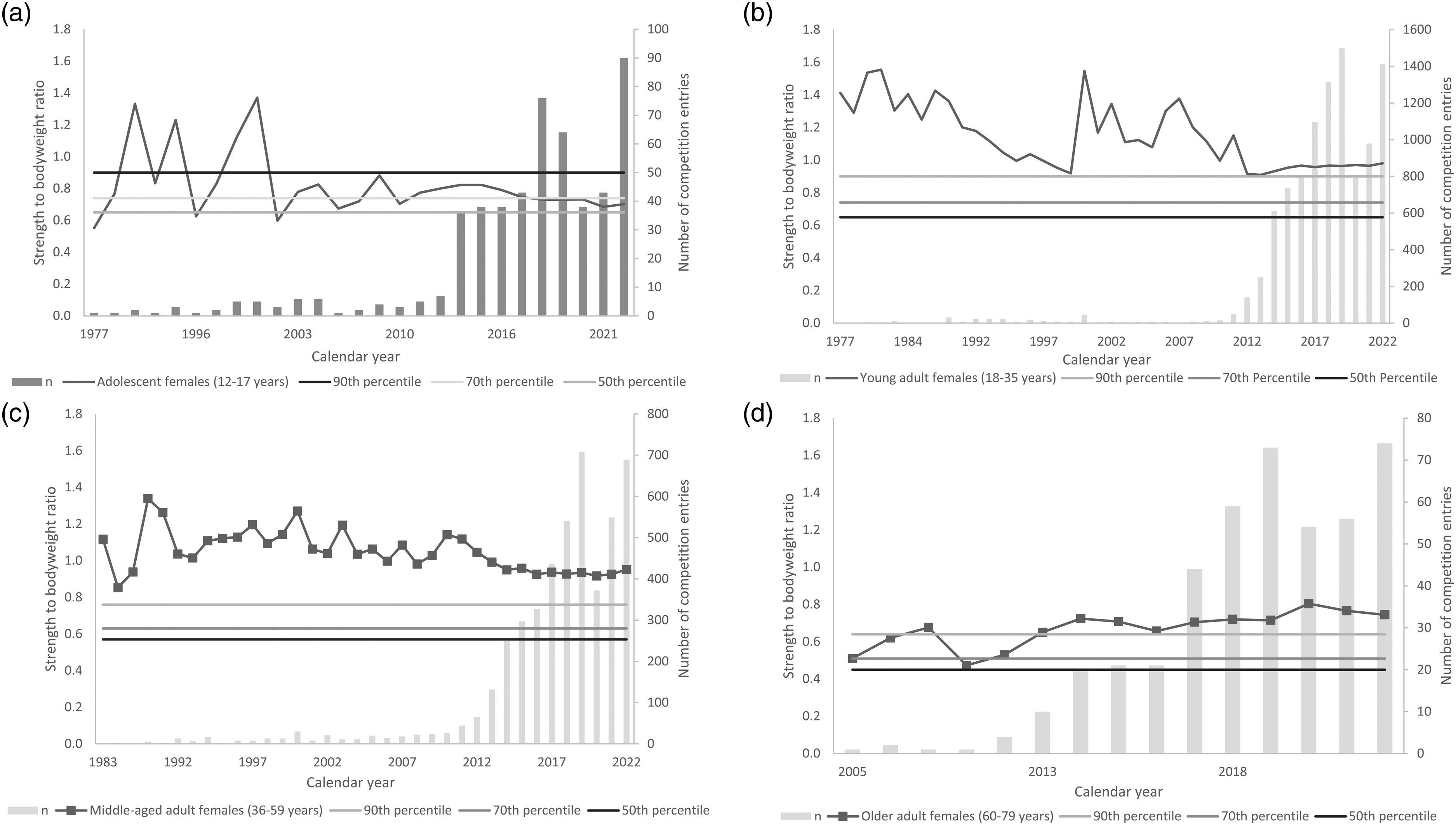
(a) Relative bench press strength for adolescent females (12–17 years) compared to norms for females aged 20–29 years. (b) Relative bench press strength for young adult females (19–35 years) compared to norms for females aged 20–29 years. (c) Relative bench press strength for middle-aged adult females (36–59 years) compared to norms for females aged 30–39 years. (d) Relative bench press strength for older adult females (60–79 years) compared to norms for females aged 60 + years.
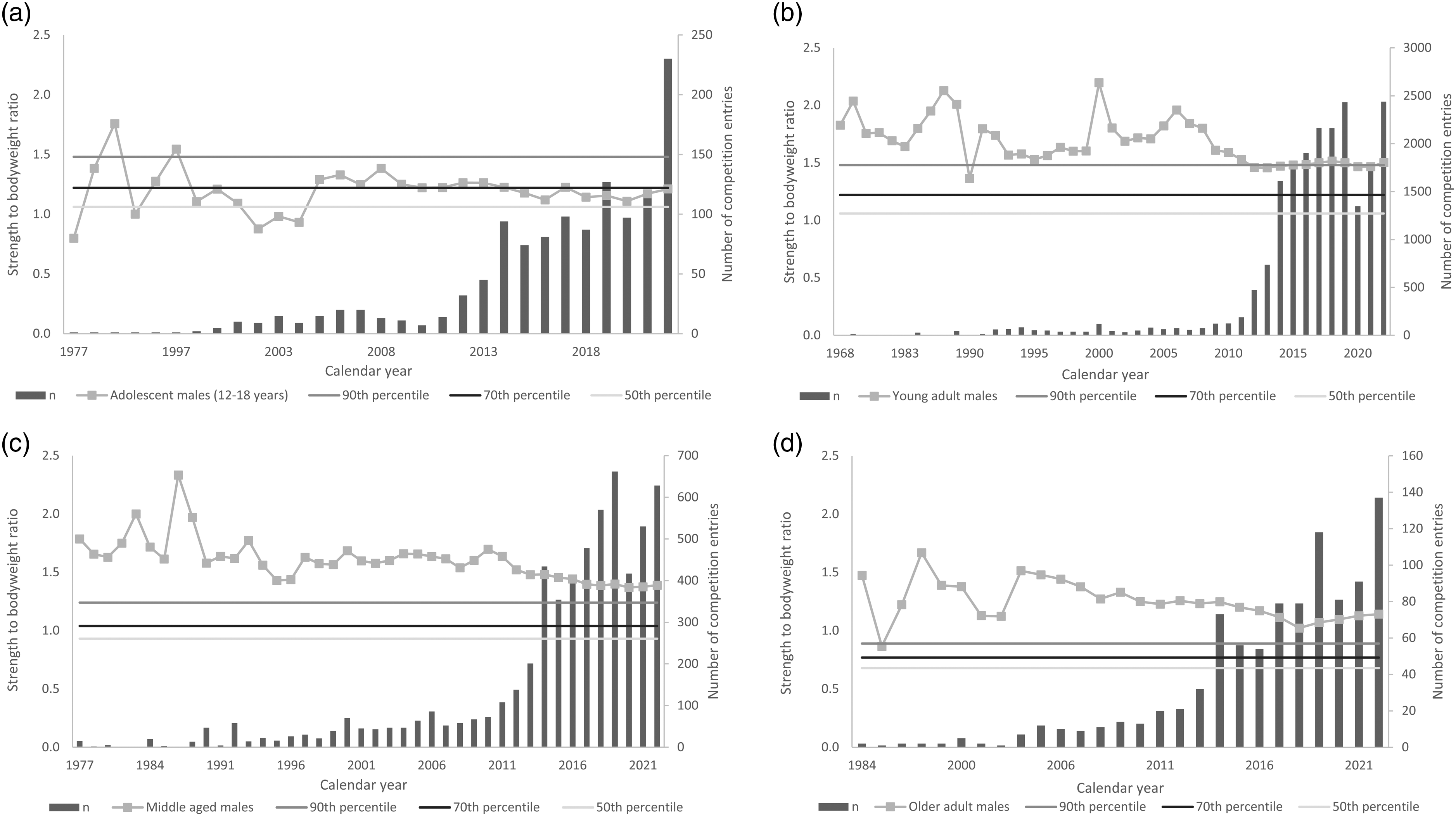
(a) Relative bench press strength for adolescent males (12–17 years) compared to norms for males aged 20–29 years. (b) Relative bench press strength for young adult males (19–35 years) compared to norms for males aged 20–29 years. (c) Relative bench press strength for middle-aged adult males (36–59 years) compared to norms for males aged 30–39 years. (d) Relative bench press strength for older adult males (60–79 years) compared to norms for males aged 60 + years.
Squat strength comparisons between powerlifters and available general population norms are shown in Figures 4a–d (females) and 5a–d (males). For females, squat strength exceeded the excellent category in all years for middle-aged adults (36–59 years) and most years for young adults (18–35 years). Squat strength exceeded the excellent category in 9/15 years for older adults (60–79 years). As with bench press comparisons, less clear differences were observed for adolescents (12–17 years) compared to the closest comparison group. For males, squat strength exceeded the excellent category in all but 1 year for young adults (18–35 years) and in all years for middle-aged adults (36–59 years). Squat strength exceeded the average category for older adults in all but 3 years. Again, squat strength comparisons for adolescent males were less clear when compared to the closest comparison group.
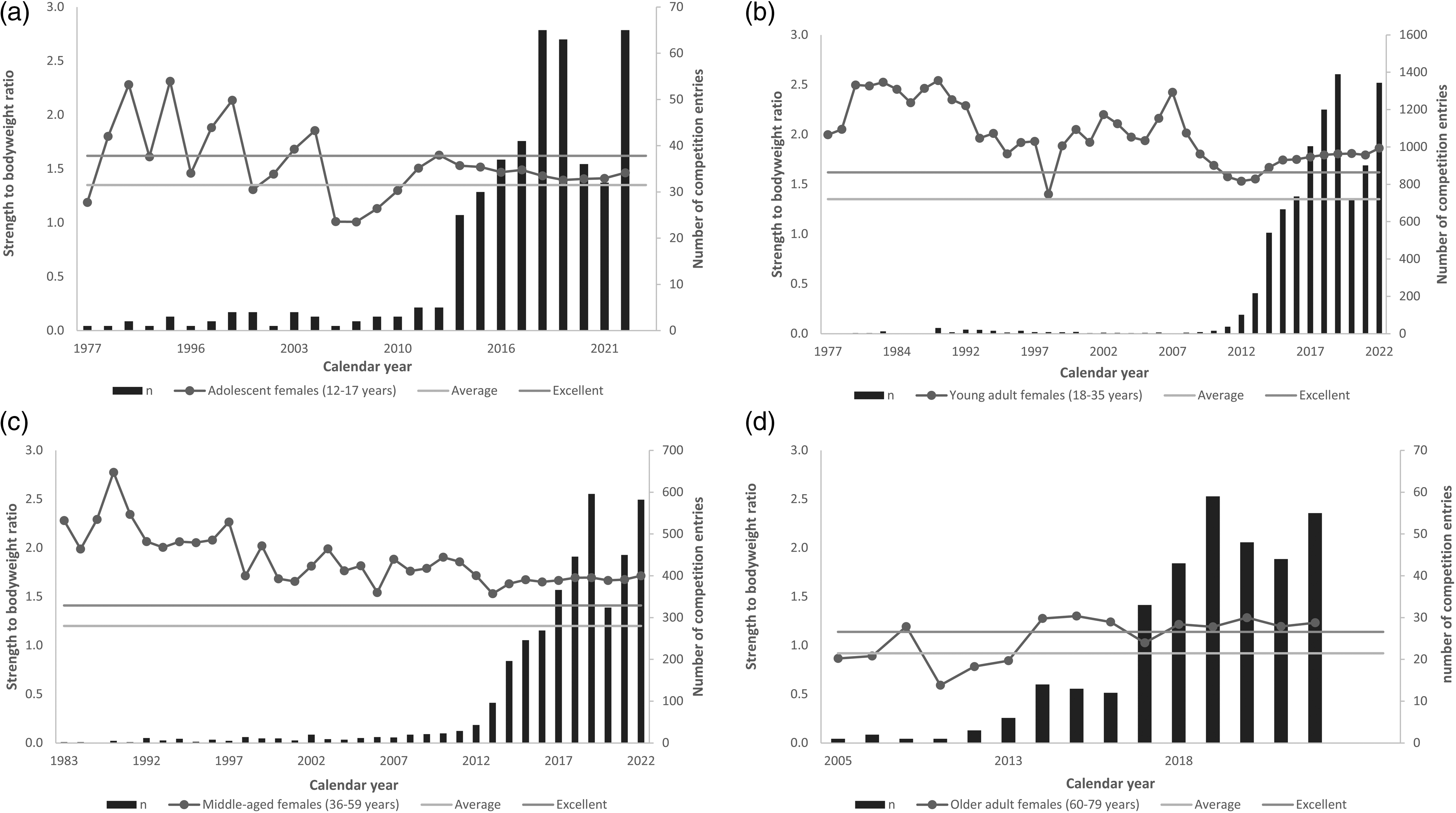
(a) Relative squat strength for adolescent females (12–17 years) compared to norms for females aged 20–29 years. (b) Relative squat strength for young adult females (19–35 years) compared to closest matching group of community norms comprising females aged 20–29 years. (c) Relative squat strength for middle-aged adult females (36–59 years) compared to norms for females aged 30–39 years. (d) Relative squat strength for older adult females (60–79 years) compared to norms for females aged 60 + years.
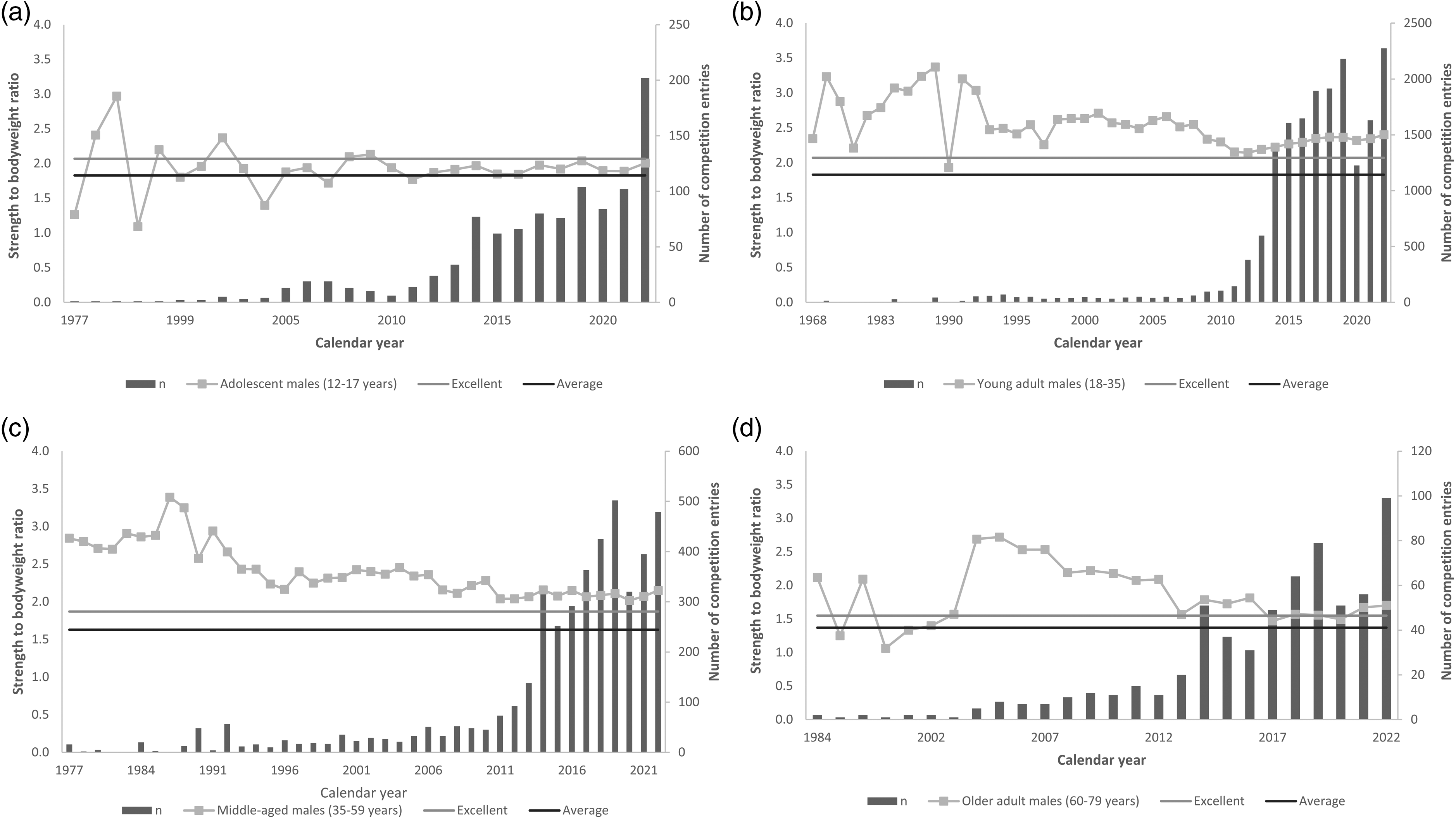
(a) Relative squat strength for adolescent males (12–17 years) compared to norms for males aged 20–29 years. (b) Relative squat strength for young adult males (19–35 years) compared to norms for males aged 20–29 years. (c) Relative squat strength for middle-aged adult males (36–59 years) compared to norms for males aged 30–39 years. (d) Relative squat strength for older adult males (60–79 years) compared to norms for males aged 60 + years.
Discussion
We explored Australian powerlifting participation trends and compared strength levels to available general population strength norms to better understand the growth of this sport and the potential contribution powerlifting could make towards improving population health. Our data demonstrates the substantial, exponential growth of participation in powerlifting events in Australia between 1968 and 2022 and similar non-linear growth between sexes. Further, for the first time to our knowledge, we also demonstrate the superior upper- and lower-body strength of powerlifters across all age categories. Although not surprising given the focus of the sport, we highlight that powerlifting enables individuals from any age to participate ages across the lifespan.
Participation trends
Powerlifting event participation has grown substantially in Australia since its introduction in 1968. From 2011 onwards, there was a marked increase in event participation by both sexes (unique competitors per year = 29.4% increase). This participation peaked in 2019 before a sharp 1-year decline in 2020 (−32.4%), with the latter likely related to the global pandemic (COVID-19) and the subsequent restrictions placed on recreational activity, exercise and sporting competitions within Australia. 21 These effects are reflected by the total number of competitions hosted in 2020 being limited to 55, with 3630 total entries, compared to 171 competitions with 6188 entries in 2019. Indeed, there was a return to similar numbers of unique participants in 2022 (n = 3928) compared to 2019 (n = 3940). Indeed, 2022 resulted in record total participation (154 competitions and 6803 competition entries), noting that the average number of competitions participants entered each year also trended upwards (2019: 1.57 competitions per entrant, 2022: 1.73 competitions per entrant).
The average participation span and the number of competitions related to the athlete's United Nations age classification at their first competition entry was approximately three competitions over 2 years (refer to Table 2). Athletes who were middle-aged at their first competition partook in more competitions (3.61 ± 5.79 events) than those who began as young adults (3.03 ± 3.71 events) or adolescents (3.14 ± 3.81 events). This was true for males and females.
These trends suggest that those who commence participation at middle to older age are more likely to compete for longer periods and in more competitions. Such trends may be at least partly related to life events and their impact on leisure time physical activity (LTPA). 22 For example, the commencement of work is associated with a decrease in LTPA for both sexes. Meanwhile, reduced income and changing work conditions are associated with decreased LTPA in young women but increased LTPA in middle-aged women. In addition, retirement is associated with increased LTPA. 22 Whilst these examples are not exhaustive, they may in understanding Australian powerlifting participation patterns observed here. Of course, one limitation is that the data set analysed has a most recent cut-off (i.e. 2022). Hence, this might not accurately reflect whether younger adults have stopped competing or will continue to compete in upcoming years. Additionally, given the time span of the data collected it is also likely that some athletes progressed into different age categories over this period (e.g. began competing at 17 years of age [adolescent], and after no longer than 12 months would progress to young adult [18–35 years]).
The analysis shows that powerlifting participation occurred across all age classifications. Given the inherent benefits of regular strengthening activities across the lifespan, powerlifting can be promoted as an alternate method for engaging all ages in strengthening exercises. Indeed, local-level competitions are held by many registered community powerlifting gyms across the county that provide accessibility and opportunity for many people to get involved. However, participation has barriers and limitations, including performance, 23 equipment, 24 training and competition preparation. 25 Based on the age profiles of participants, there is apparent support for the growing uptake of powerlifting compared to some of Australia's most popular sports (Australian Rules Football, tennis, hockey, cricket, basketball, lawn bowls, and tennis), where athletes aged 35 years and over represent only 16.2% of all participants. 26 In contrast, in the same calendar year (2011), middle-aged athletes represented 40.8% of all powerlifting participants (see Figure 1b). In 2011–2022, athletes aged 36–59 years represented an average of 24.75 ± 4.3% in any calendar year. Additionally, older adults (aged 60–79 years) represented and average of 3.2 ± 0.67% of participants per year (with age data available) during this time. These data suggest that middle-aged and older adults participate in powerlifting more than invasion and bat and ball sports in Australia compared to their younger counterparts. In part, the decision to participate in powerlifting may be due to the lower injury rates (1.0–4.4 injuries per 1000 h 27 ) when compared to sports like soccer (15 injuries per 1000 h 28 ) and CrossFit (9.5 injuries per 1000 h 29 ). Whilst the ‘competitive’ powerlifting lifespan appears limited (approx., 2–5 years), it is plausible that these middle-aged and older adults continue powerlifting-style training without continuing in competition and/or that considerable time may be spent training before deciding to take the next step in competing. Hence, efforts should be made to engage middle-aged and older adults in strength-based training such as powerlifting, support the growing popularity of community-level participation and identify regions across the nation where accessibility and opportunity are limited (e.g. remote and regional Australia). 19
Along with the benefit to older adults, research in school-aged youths has shown that resistance training can improve cognitive function, academic performance and on-task behaviours. 19 Resistance training may result in changes in coping and self-regulation skills, which can enhance executive function. In the school setting, on-task behaviour is synonymous with self-regulation. Robinson et al. 19 report that improved mathematics and languages were shown to have the strongest relationships to muscular fitness. Therefore, educational settings can provide an avenue to target school-aged youth with prevalent sedentary behaviours. For example, the promotion of and education around resistance training, regardless of whether activities are embedded directly into curricular or extra-curricular activities, or emphasised in other ways, appear warranted. Indeed, these efforts may result in physical health benefits lifetime adoption of resistance training and positively affect learning.
Strength comparisons to community norms and proposed benefits
Importantly, powerlifters’ upper- and lower-body strength exceeded available community norms when matched for the most similar age group(s). Although this may seem unsurprising given the focus of the sport, it provides important supportive information, which, to our knowledge, has not yet been extrapolated. Indeed, greater muscular strength is associated with a lower risk of mortality across the adult lifespan, 5 and poor strength is becoming recognised as a risk factor in young adult mortality. 18 To further emphasise the importance of muscular strength development during adolescence and young adulthood, Karelis 30 reports that high strength levels (knee extension and handgrip) were associated with a 20% lower mortality risk, 35% reduction in cardiovascular disease and 20–30% reduction in suicide, and it seems likely that these effects would extend to bench press and squat strength metrics. Further evidence suggests team sport participation reduces psychological stress in senior high school girls. 31 Although powerlifting is rightly classified as an individual performance sport, the club training environment and competition support can offer a sense of community, facilitate regular social interaction and support emotional wellbeing. 32
As previously highlighted, poor muscle strength in older adults is a major contributor to the financial burden of healthcare.16,17 Muscular strength combats weakness and frailty, preserves bone density independence and reduces the risk of many chronic lifestyle diseases.33,34 Specifically, greater muscular strength observed in powerlifters compared to the general older adult community may act as a ‘strength reserve’ to combat age-related decline into late adulthood. Our prior work 35 demonstrates that even Master's category male and female powerlifters can continue to improve strength or show attenuated age-related reductions compared to known rates of decline (e.g. only 0.35% strength loss per year in the oldest male category). Further, we support that this strength reserve maintains physiological resilience, reduces vulnerability to potentially catastrophic health events and keeps older adults above clinically relevant muscle weakness threshold. 34 However, clinically relevant muscle weakness is often based on handgrip values (e.g. normal strength, intermediate and weak scores) 36 and it is possible that similar meaningful norms identifying at-risk individuals could be developed from squat and bench press community data 20 with additional prospective work that includes health data. Lastly, and similar to adolescents, strength sports participation has benefits beyond physical health. For example, Huebner et al. 37 recently showed that older adults participating in weightlifting reported mental health benefits, reduced stress and improved community connections, further emphasising the important role of muscular strength and strength sport participation in older adults.
Collectively, we demonstrate a continued and growing uptake in powerlifting events by both sexes across all age groups (except ‘very old age’ females). With poor population-level participation rates in strengthening activities, powerlifting offers an opportunity for many individuals, including the general population, to become involved in goal-orientated strength training, regardless of whether it is for competitive or personal health benefits. Further, strength training is associated with physical and mental health benefits,38,39 which is important in a society where the prevalence of clinically significant depression nears 1 in 10 people with estimates of major depressive disorder at ∼1.2%. 40 Therefore, we advocate that powerlifting should be supported by health professionals, sporting organisations, and governing health bodies to increase resistance training uptake, adherence and overall levels in the Australian population. Increased promotion, awareness and endorsement of powerlifting (both organisations and opportunities for participation) should be a focus and requires a collaborative effort between those involved in leadership of the sport and health organisations across the nation.
Limitations
Whilst this investigation has several strengths, it must be acknowledged that the retrospective nature of the records and subsequent analyses and results are subject to some limitations. Because the recording of athlete age at competition entry was not provided for all entries, the trends in participation by athlete age group must be interpreted with caution. However, given the number of years and sample size, we do not think this has significantly affected the identified trends. Instead, this is likely to have provided a more conservative estimate, if anything. Second, this investigation only explores data from Australian competition entries and does not account for international competitions where Australians may have participated or more global powerlifting trends. As discussed above, athlete information about reasons for beginning or ceasing competitive powerlifting was unavailable.
Moreover, we must consider that the population comparative differences observed in this investigation are subject to selection bias. That is, people who choose to participate in competitive powerlifting may already be stronger than the typical normative values, influencing their decision to participate in the sport. We also acknowledge that the performance of each lift (e.g. criteria for a successful lift such as squat depth, bench press pause on chest, number of attempts per testing/competition day, equipment [e.g., knee sleeves]) are not uniform between the compared populations and may contribute to some of the discrepancy in strength scores between general and powerlifting populations. However, the direction of the effect is likely mixed based on specific constraints or facilitation to lift completion that each factor provides. Finally, our data includes participants from powerlifting federations that do not test for the use of performance-enhancing drugs and those that allow some assistive equipment (knee wraps and single-ply sleeves). Each of these factors is likely to positively influence recorded competition strength values for some athletes.
Conclusion
Powerlifting in Australia has undergone exponential growth in participation since its inception in 1968. Whilst there is substantial growth in participation rates, the number of competitions undertaken by individuals remains limited. It is unclear why this issue exists, but it is plausible that individuals cease competitive participation due to competitive training requirements, major life events, or a desire to continue training without competition demands. Demographic data reports that Australians continue to perform less than the recommended amount of strength training. However, our analyses demonstrate that powerlifting engages participation across the lifespan, and these participants show superior upper- and lower-body strength compared to previously published norms.
Practical implications
The sport of powerlifting enables participation from individuals across the age span with various federations and competitions available.
Not surprisingly, powerlifters exhibit greater strength than the general population. Although unclear if inherently stronger people decide to take up powerlifting it provides a tool for muscular strength development and greater engagement in resistance training activities.
Powerlifting federations should develop targeted interventions and strategies to improve community engagement and participant retention continually.
Supplemental Material
sj-pdf-1-spo-10.1177_17479541241244481 - Supplemental material for Powerlifting participation and engagement across all ages: A retrospective, longitudinal, population analysis with comparison to community strength norms
Supplemental material, sj-pdf-1-spo-10.1177_17479541241244481 for Powerlifting participation and engagement across all ages: A retrospective, longitudinal, population analysis with comparison to community strength norms by Daniel J van den Hoek, Alistair Mallard, Joel M Garrett, Patrick L Beaumont, Robert J Howells, Jemima G Spathis, Joshua Pearson and Christopher Latella in International Journal of Sports Science & Coaching
Supplemental Material
sj-docx-2-spo-10.1177_17479541241244481 - Supplemental material for Powerlifting participation and engagement across all ages: A retrospective, longitudinal, population analysis with comparison to community strength norms
Supplemental material, sj-docx-2-spo-10.1177_17479541241244481 for Powerlifting participation and engagement across all ages: A retrospective, longitudinal, population analysis with comparison to community strength norms by Daniel J van den Hoek, Alistair Mallard, Joel M Garrett, Patrick L Beaumont, Robert J Howells, Jemima G Spathis, Joshua Pearson and Christopher Latella in International Journal of Sports Science & Coaching
Footnotes
Data availability
All data utilised in the current investigation are available from the corresponding author upon reasonable request.
Declaration of conflicting interests
The authors declared no potential conflicts of interest with respect to the research, authorship, and/or publication of this article.
Ethics approval
Investigations related to this manuscript were approved by the Edith Cowan Human Research Ethics Committee (Project No. 21408).
Funding
The authors received no financial support for the research, authorship, and/or publication of this article.

Supplemental material
Supplemental material for this article is available online.
References
Supplementary Material
Please find the following supplemental material available below.
For Open Access articles published under a Creative Commons License, all supplemental material carries the same license as the article it is associated with.
For non-Open Access articles published, all supplemental material carries a non-exclusive license, and permission requests for re-use of supplemental material or any part of supplemental material shall be sent directly to the copyright owner as specified in the copyright notice associated with the article.
